Anti-vaccination hysteria
We are living in the midst of a wave of hysteria in which the need for childhood vaccinations is questioned or denied.
[1]
This is not the first such wave. There have been cases of mass hysteria
in virtually every country and every society, from Malaysia to Kosovo
and London to Mexico City.
[2] In 1962 in Tanzania it was an outbreak of laughing;
[3] in 1983 in the West Bank it was an outbreak of fainting.
[4]
In the late seventeenth century in colonial Massachusetts there were
the Salem witch hunts; two-hundred people – the vast majority women –
were accused of serving the devil. Before it was over, nineteen were
hanged, and one was stoned to death.
[5] In the mid-twentieth century a wave of anti-communist hysteria swept this country, culminating in the McCarthy Senate hearings.
[6]
Like any complex sociological phenomenon, there are many factors that created what has become a
de facto anti-vaccine movement.
[7]
These include a perceived lack of knowledge of the severity of the
illness, fear of needles or the pain of vaccination, a distrust of the
information produced by governments, and a belief that vaccines are not
effective or have dangerous side effects.
[8] Since it first began in the 1990s, it has swept across the US, Europe, and the Middle East.
In France over 40% of the population believe that vaccines are not safe.
[9] A quarter
of Greeks and Ukrainians are hostile. And characteristics of the
deniers vary between countries: women in Hungary are more likely than
males to believe that vaccines are effective, but in the Czech Republic,
Germany, and Italy
the reverse is true.
[10]
Anti-vaccination hysteria is also present among a small but vocal number of Orthodox Jews.[11] Among the most widely reported anti-vaccination
declarations is that of Rabbi Shmuel Kamenetzky, Rosh Yeshiva of the
Talmudical Academy of Philadelphia. “I see vaccinations as the problem”
said Rabbi Kamenetzky, who is a member of the Moetzes Gedolei HaTorah,[12]
the rabbinical board of Agudath Israel. “It’s a hoax. Even the Salk
vaccine [against polio] is a hoax. It is just big business.”[13]
In November 2018 the Rosh Yeshiva’s wife, Temi, led a teleconference in
which she compared the German company that produces the MMR vaccine to Amalek, the ancient foe of the Jewish people.[14]
An anonymous group in Lakewood has distributed an eighteen-page color
brochure encouraging parents to refrain from vaccinating their children.[15]
More recently, and in a far more subtle and nuanced way, the Orthodox
Union issued a hesitant statement about the importance of childhood
vaccinations. We will return to that later.
As a first step to combating this hysteria, rabbis of every synagogue
and heads of every Jewish school must issue an unambiguous and
unequivocal statement, declaring that only children who are vaccinated
will be allowed to attend.
[16] The lives of our children depend on it.
The death rates from common infectious diseases
At the beginning of this century measles killed over 550,000 children
worldwide. That number has dropped by 84%. In the US there were about
500 measles deaths each year before the introduction of the vaccine.
There hasn’t been a reported death from the disease since 2015.
[17]
But in 2018 almost every region in the world experienced an increase in
cases of measles. In Europe the number of confirmed cases rose by over
60% compared with the previous year.
[18] In the US this year, the number of confirmed cases almost doubled; so far there have been 15 measles outbreaks. Parts of
Seattle now have lower vaccination rates than
Rwanda.
[19]
In Europe measles killed at least 37 people in the first six month of
this year. And in Israel the incidence of measles (per million
population) increased from 1.3 to over 62, and the number of actual
cases increased from 15 last year to at least 526 this year.
[20] This year in Jerusalem an unvaccinated toddler died of measles. Hers was the first measles death there in 15 years.
Anti-vaccination and conspiratorial thinking
Why is this happening? One clue is from a recently published paper
from an Australian group which examined the psychological roots of
anti-vaccination attitudes among over 5,000 respondents in twenty-four
countries.
[21]
Its results highlight the correlation between (among other things)
conspiratorial thinking and holding an anti-vaccination position.
Perhaps that is no surprise, but most alarming is the finding that
levels of education had no such correlation. “The particularly strong
role of conspiratorial beliefs” conclude the authors, “helps
contextualize why corrective information and myth-busting about
vaccinations has tended to be either ineffective or counterproductive.”
It doesn’t matter what you say, what evidence you provide.
Paradoxically, presenting facts to those who are anti-vaccine is
actually counterproductive. Because it was never about the facts.
[22]
As the statements of Rabbi Kamenetzky and his wife demonstrate,
conspiratorial thinking also plays a significant role within the
Ultra-Orthodox community. But research in Israel has shown that there
are other factors at play. These include having more than six children,
the mother’s level of education, a belief that Judaism forbids
vaccination, a perception that the risk of vaccine preventable diseases
is low, and mistrust of the health authorities.[23]
How are we to frame our thinking about this wave of anti-vaccine
hysteria? How might we learn about a response from our rich Jewish
intellectual heritage? Perhaps by turning to a small
sefer written by a long-forgotten rabbi and published in London over two-hundred and thirty years ago.
Aleh Terufah – the first halakhic work on vaccination
In 1785 Abraham ben Solomon of Hamburg published A
leh Terufah (
Leaf of Healing)
.[24]
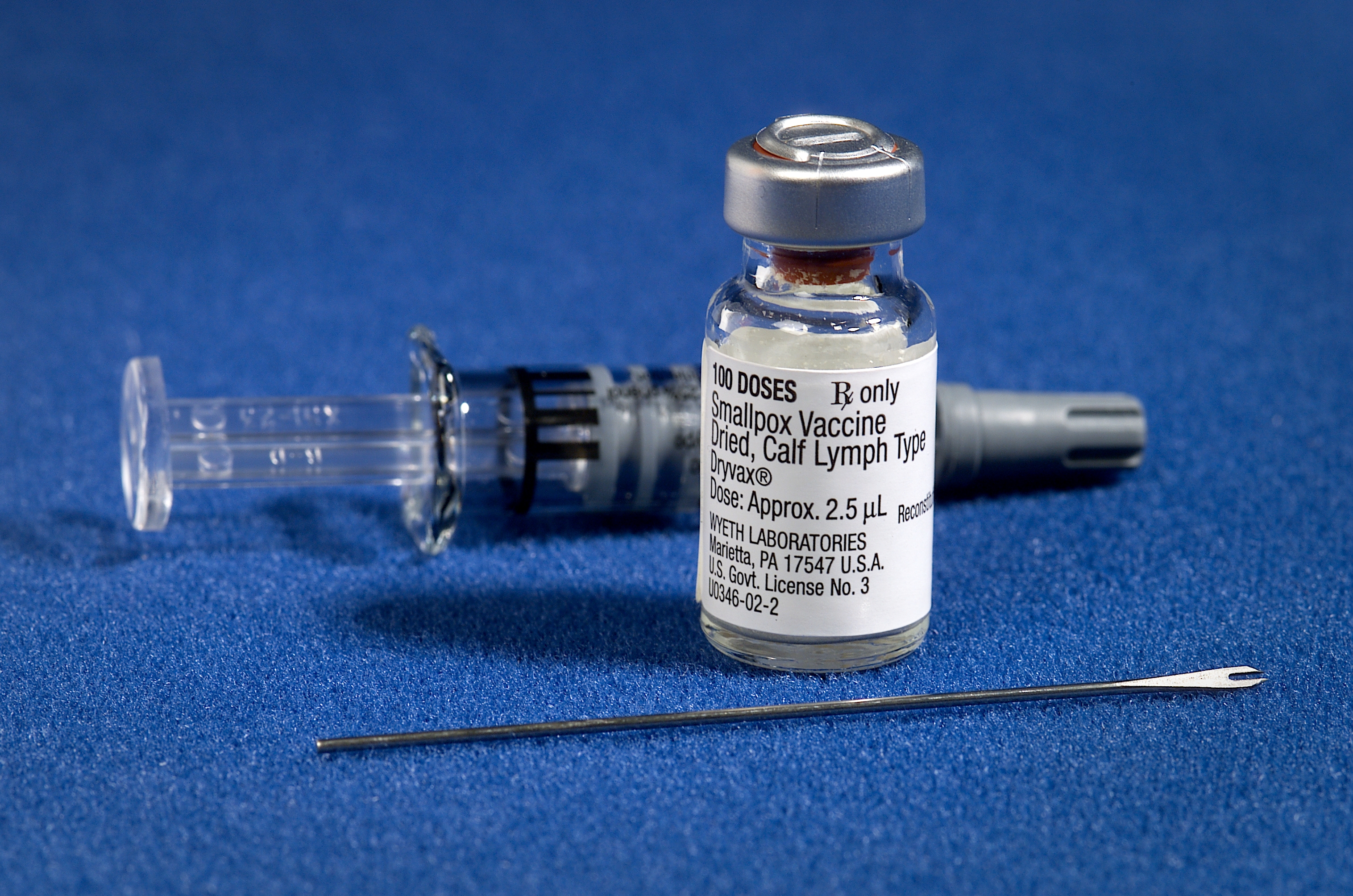
It was a short book which discussed the urgent need to inoculate people
against smallpox. We know very little of Abraham’s biography, and what
we do know comes from the book’s introduction. He was born in Nancy in
north-eastern France, spent some sixteen years in the Hague under the
patronage of a Jewish banker there, and later moved to London where he
was again supported by a member of the Jewish community. There is no
evidence that he obtained rabbinic ordination, nor that he had undergone
an apprenticeship in medicine. “Abraham was clearly not a prominent
figure in either the rabbinic or medical word” wrote the historian David
Ruderman, “so… his publication is all the more unusual, and the book’s
contents were “a rich mixture of rabbinical opinion, medical information
and common sense.”
[25]
Aleh Terufah was written in the most tragic of
circumstances. Abraham had lost two children to smallpox and was
determined to inform other Jews that it was possible to inoculate
against the disease. Some medical history is needed to put this book
into context. Smallpox was a highly contagious disease with a fatality
rate of 30%. In 1980, after an intense international vaccination
campaign, it was completely eliminated. For centuries it had been known
that a degree of protection from the disease could be obtained through
what later became known as
inoculation. In this process, a
pustule from the skin of a person infected with smallpox would be
opened. Some material was then extracted and placed into a small
incision made in the forearm of the recipients, usually a child. There
was inevitably a local reaction, accompanied perhaps with fever and
malaise, but these symptoms soon resolved, and the child would then
become immune to smallpox. The method was widely practiced and had been
brought to England at the start of the eighteenth century (though with
little enthusiasm from physicians, who found the idea too unconventional
for their liking). Although it was Edward Jenner who was credited with
introducing the process, it had in fact been used for decades. In 1798
he published a now classic paper on a variation of the vaccination
process, but as we learn from the publication of A
leh Terufah thirteen years earlier, he neither discovered nor was the only champion of the procedure.
[26],[27]
As Abraham ben Solomon noted, there were many physicians opposed to
the procedure. It’s not hard to understand why. Neither Jenner nor
anyone else had any idea what caused smallpox or why the vaccine worked.
Parents were being asked to allow their healthy child to be
deliberately inoculated with the pus of smallpox victim. It was a leap
of faith that I imagine many of us would have refused to take. And among
Jews there was the question of whether Jewish law permitted it at all.
Abraham did not include a rabbinic approbation to his work, so often
published in similar books of Jewish law. As he explained in the
introduction, he had chosen to do so for two reasons. First, he
considered himself “as a student who teaches in the presence of his
rabbi.” He claimed that he was engaged only in a theoretical discussion
and never intended his book to provide a definitive ruling about the
permissibility of the smallpox vaccine. Despite this commitment, A
leh Terufah
is far from a work of theoretical Halakhah. This is most evident with
Abraham’s instruction to the reader that should he wish to avoid
excessive
pilpul, he should skip certain pages. Evidently
Abraham wanted his readers to read his conclusions, rather than join him
on a journey of exegesis. But he knew exactly what he was really doing.
Despite his proclaimed modesty, “sometimes” he wrote “there is a slip
of the pen” and writes, “it appears to me to rule leniently, or
something similar.”
The second reason for publishing without an approbation was this:
Abraham was not interested in making money from his book. He believed
that rabbinic
haskamot usually served only to remind others of
the issues of copyright. But Abraham never intended for his book to be a
commercial success. “I give full permission” he wrote, “to whomever
wishes, to publish this book at the end of the year 5545 [1785]” – the
very year in which the book was published. The goal was not sales: it
was saving lives.
Abraham’s book was meant to persuade his readers that although
inoculation carried a small risk, it was a far better option than
opening up the possibility of catching smallpox.
[28]
Writing before an understanding of the germ theory of disease, he cited
the opinion of a Jewish physician by the name of Jacob Zahalon of Rome
who identified impure menstrual blood as the cause of smallpox. Zahalon
was of course wrong – but no more wrong than anyone else, writing some
two centuries before Pasteur’s experiments which demonstrated the
correctness of the germ theory.
[29]
But it didn’t much matter what caused smallpox; what mattered was the
success of the vaccination program. Abraham focused on the issue of
doubt and certainty and cases where there may be an element of tiny risk
(
s’feik s’feikah). He cited the Talmud (
Hullin 9), the
Shulkhan Arukh and its commentaries (
Yoreh De’ah 110), and examples from Torah,
Nevi’im, and
Ketuvim.
He was working, he acknowledged, in uncharted territory; inoculation
had not previously been discussed anywhere in the responsa literature.
[30] There was no precedent to be found in the Talmud or the
Gaonim,
but basing himself on what sources might have been germane, he ruled
that any healthy child who had not yet caught smallpox was to be
considered already sick. Halakhah therefore required that the vaccine be
given, even if it carried, as it did, a risk of serious complications
and even death.
Abraham branched out into a discussion of the effectiveness of the vaccination compared with blood-letting or laxatives.
[31]
Both of these well-established procedures had complications that
included death. “Should we” he asked rhetorically “prohibit bloodletting
or laxatives because of this?” And then this prescient sentence: “there
is no medical intervention that is entirely free of risk
”. The question was never about being certain that an intervention is completely safe,
because there is no such thing as a completely safe medical intervention.
After a further discussion on the irrelevance of relying on God to heal
the sick, Abraham concludes with this poetic declaration:
After considering all of this, I sit in
judgement before my teachers and rabbis who are expert adjudicators. In
my humble opinion this medical intervention has been proved effective
and is now widely used.
There were four arguments in support of vaccination in A
leh Terufah.
First, experience had already demonstrated that the vaccine worked.
Second, it was important to act quickly to save the lives of children.
Third, any medical procedure carries risk, but the risk specific to
vaccination was no greater than that associated with other widely
accepted therapies of the time. Vaccines today pose nothing of the risk
that Abraham was discussing of course. They are medicines, so of course
they have side effects. The most common of these are allergic reactions,
and there is no link whatsoever between vaccination and autism.
Finally, Abraham wrote of the deaths of two of his four children from
smallpox to emphasize the risks of not vaccinating. He made his story
personal. But it was the fact that he took a position at all that makes
Abraham’s book so worthy of study. It was an example of leadership at a
time of crisis. Which brings us to the Orthodox Union.
[32]
The OU-RCA statement on vaccinations
In November 2018 the Orthodox Union and the Rabbinical Council of America issued a “
Joint Statement on Vaccinations.”
They “strongly urge[d] all parents to vaccinate their healthy children
on the timetable recommended by their pediatrician.” “Jewish law” they
wrote, “defers to the consensus of medical experts in determining and
prescribing appropriate medical responses to illness and prevention.”
And then this: “…the consensus of major poskim (halachic decisors)
supports the vaccination of children to protect them from disease, to
eradicate illness from the larger community through so-called herd
immunity, and thus to protect others who may be vulnerable.”
What sounds like laudable support for a critical and life-saving
program raises several questions on a second read. “The consensus” of
course, means that there are those who disagree. And that term
“so-called” is laden with meaning. What would you mean if you called
someone a “so-called rabbi”? What would you be trying to communicate if
you called someone a “so-called expert”? You would mean of course, they
are anything but rabbis, and nothing like real experts. That’s at least
how we use the term – and how the Merriam-Webster Dictionary helpfully defines the term: falsely or improperly so named. Or better yet the Oxford Dictionary, which informs us that the phrase is used “to express one’s view that such a name or term is inappropriate.”
Anyone with a modicum of scientific background would know that
herd immunity is as real as
innate immunity or
acquired immunity.
It is not an object but a concept, and one that carries a great deal of
importance in our fight against devastating infectious diseases. Herd
(or group) immunity occurs when a sufficiently large number of members
develop immunity to an infectious disease, due either to vaccinations or
the development of natural immunity after an infection. In this
setting, a bacteria or virus has so few hosts that it fails to penetrate
the group that its ability to infect non-immune members is drastically
reduced. The presence of immune individuals provides indirect protection
to the non-immune.
[33] But the OU-RCA statement questions the very existence of herd immunity.
If indeed, as the OU-RCA statement claims, “Jewish law defers to the
consensus of medical experts,” why does it suggest a paragraph later
that “everyone should consult with his or her religious, medical and
legal advisors in determining what actions to take”? What role might
these religious leaders have, if we were just told that Jewish law
should defer to medical opinion? Why the need to include this disclaimer
at all? Abraham argued in his book that Jewish law required every
parent to vaccinate their child. The OU could have looked to earlier
works – like Aleh Terufah – for a model of rabbinic responsibility. The OU statement prevaricated when it should have been crystal clear. [34]
Prayer and action
The Talmud relates that Reish Lakish, the great
amora of the
third century, and his secretary Yehudah bar Nahmeni went to comfort
Rav Hiyyah bar Abba, who was mourning the death of his child.
[35]
Yehudah bar Nahmeni offered some intended words of comfort, but they
were nothing of the sort; they were words of rebuke. “In a generation in
which fathers abhor the Holy One, Blessed be He, He gets angry at their
sons and their daughters, and they die when they are young.” Reish
Lakish, hearing Yehudah’s insensitivity, told him to change track. Here
is the last of the four blessings with which Yehudah replied.
Master of the worlds, redeem and save, deliver and help your nation
Israel from pestilence, and from the sword, and from plundering, from
the plagues of wind blast and mildew [that destroy the crops], and from
all types of misfortunes that may break out and come into the world.
Before we call, you answer. Blessed are You, who ends the plague.
Blessed are You who ends the plague. Once, all that could be
done when little children died was to pray for God to intervene and end
the plague. It’s an understandable response to the tragedy caused by
infectious disease, when all you can do is watch the children die.
A quite different blessing is made before undergoing a medical
procedure. It was originally said prior to bloodletting (now mercifully a
thing of the past). But it should be said by any patient before and
after undergoing any medical intervention, and it is (or should be) part
of normative Jewish practice to this day, as ruled by the Shulchan
Arukh, which states:
[36]
“May it be your will Lord my God, that
this procedure will heal me, for you are an unconditional healer.” And
when it is finished, he says: “Blessed are you God, healer of the sick.”
In the fight against infectious diseases, we now have more than just
the option of praying for a plague to end. We can vaccinate our children
and offer a prayer to God asking that that the vaccine perform its job. That is the message we need to tell, in every shul, in every Jewish day school, and in every religious organization in the country.
Jeremy
Brown is Director of the Office of Emergency Care Research at the
National Institutes of Health. He trained as an emergency physician in
Boston, and prior to joining the NIH he worked in the Department of
Emergency Medicine at the George Washington University in Washington DC.
He is the author New Heavens and a New Earth: The Jewish Reception of
Copernican Thought published by Oxford University Press. His most recent
book is Influenza: The Hundred Year Hunt to Cure the Deadliest Disease
in History, published last month by Simon and Schuster.
SEE ALL THE SOURCES:
https://www.thelehrhaus.com/commentary/vaccines-hysteria-and-rabbinic-responsibility-a-plea-from-the-trenches/?utm_source=email&utm_medium=link&utm_campaign=january28_brown&utm_content=link