EVERY SIGNATURE MATTERS - THIS BILL MUST PASS!

EVERY SIGNATURE MATTERS - THIS BILL MUST PASS!
CLICK - GOAL - 100,000 NEW SIGNATURES! 75,000 SIGNATURES HAVE ALREADY BEEN SUBMITTED TO GOVERNOR CUOMO!

EFF Urges Court to Block Dragnet Subpoenas Targeting Online Commenters

EFF Urges Court to Block Dragnet Subpoenas Targeting Online Commenters
CLICK! For the full motion to quash: http://www.eff.org/files/filenode/hersh_v_cohen/UOJ-motiontoquashmemo.pdf

Tuesday, April 13, 2021

Religious humanism, on the other hand, embraces the intrinsic dignity of man because he was created in the image of God. . . .


Reconsidering the Jewish Embrace of Humanism in the Shadow of the Holocaust

April 13 2021

Born in Frankfurt-am-Main, Shimon Schwab (1908-1995) spent a formative five years studying in yeshivas in Poland and Lithuania, before returning to his native Germany and then immigrating to the U.S., where he became an influential congregational rabbi. Schwab was very much the heir of Samson Raphael Hirsch, the 19th-century theologian who pioneered the ideal of Torah im Derekh Erets—by which he meant a synthesis of Judaism and Western culture very different from the model of Orthodoxy that prevailed in Eastern Europe. Shmuel Lesher explains Schwab’s struggle with that legacy in the wake of the Shoah:

In a speech he delivered in 1990, [Schwab] recalled how the events of Kristallnacht, and later the Holocaust, shook his belief in Torah im Derekh Erets to the core. How could Hirsch have believed the humanism of Germany would lead to an uplifted and righteous society when the same humanistic society ended up committed genocide without much protest from the “enlightened students of Schiller and Goethe”? Hirsch must not have seen German humanistic Bildung, [character-forming education], as anything more than a time-bound compromise in order to save his community from assimilation.

Later in his life, after reassessing Rabbi Hirsch’s writings, Rabbi Schwab came to believe that his earlier view was incorrect. In this later re-evaluation, Schwab felt that Hirsch did, in fact, wholeheartedly believe in the significance of humanism for society.

Lesher adds some thoughts of his own:

[A]n irreligious or secular humanism is bound not to elevate man, but rather to debase him. Religious humanism, on the other hand, embraces the intrinsic dignity of man because he was created in the image of God. . . . By ceasing to regard man as being of a higher and divine origin, secular humanism paradoxically results in the diminishing of man’s value.

Perhaps the Hirschian response to the Holocaust challenge is that if we do not believe we are the ultimate arbiters of truth and morality, . . . our value system remains sacrosanct even when it is not recognized by society, namely, even in Nazi Germany. The utter failing of a secular humanistic society does not undermine the value of a God-fettered humanism. Even after the horrors of the Holocaust, Hirschian humanism remains intact.

https://mosaicmagazine.com/picks/religion-holidays/2021/04/reconsidering-the-jewish-embrace-of-humanism-in-the-shadow-of-the-holocaust/


Sunday, April 11, 2021

It’s a common belief among Hasidim that Bill Gates designed the vaccines so that a GPS tracking device could be implanted in people’s arms; when Reuven challenged an acquaintance about this claim, “he told me: ‘Just Google it!’”

"This spring, his small, independent Yiddish-language magazine—called Der Veker, meaning “One Who Awakens”—published an investigative report on how the COVID-19 death rates in Hasidic neighborhoods compared with those in other parts of New York State. Based on death notices posted by an establishment Hasidic paper, Der Yid, Reuven and his colleagues concluded that the death rate in their community was three to four times higher than the state average."

Hasidic, Devout, and Mad as Hell About COVID-19

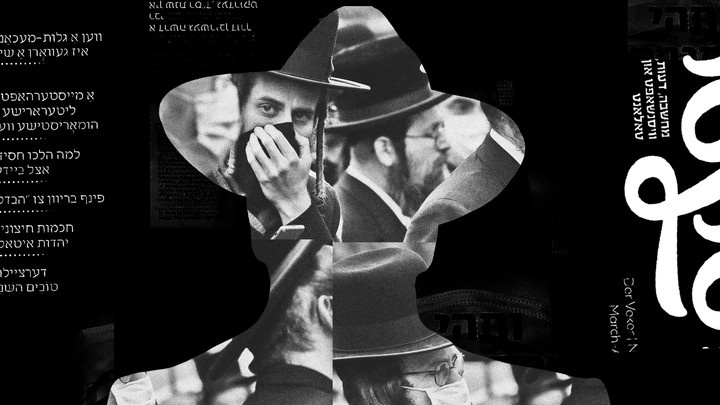
An illustration shows photos of Hasidic men and clips of text from the magazine Der Veker

A few weeks ago, Reuven went to a party. It was indoors. No one wore masks. No one who attended was in any rush to get a vaccine. Reuven and his wife were uncomfortable. But if they hadn’t gone, his relatives would have felt as if he were “judging them” for gathering, “and they judge me back,” he told me. “I have to weigh my options.” Reuven’s parents and siblings roll their eyes when he constantly talks about their risk of getting sick, just as he did at the beginning of the pandemic. He’s meshige far corona, they say. Crazy about the virus.

The Yiddish-speaking, Hasidic Jewish world that Reuven inhabits is intensely communal. Men crowd into synagogues in his Brooklyn neighborhood to pray together three times a day—morning, afternoon, and night. Many large families share small apartments or rowhouses, where they stage elaborate meals each week on Shabbat and during the Jewish calendar’s many holidays, filling their homes with scrambling kids and occasionally the cousins and uncles who live just blocks away. Orthodox Jews in New York are distinctly vulnerable to the virus for many of the same reasons low-income Black and Latino neighborhoods have been hit hard: crowded living spaces, lack of public-health infrastructure, jobs that require in-person work. For many people in these communities, sealing themselves inside their apartments for a year simply wasn’t possible. Reuven knows this; he doesn’t fault the Hasidim for the way they live. “We shouldn't be judged merely on the fact that we feel that some forms of gatherings are important to us, even during a pandemic,” he told me. “What’s so disappointing and depressing, and even shocking, is the fact that we chose to do all this with zero precautions, for which there is absolutely no excuse.”

New York papers have published plenty of criticism of the Hasidic community’s disregard for COVID-19 safety, covering secretive weddings, massive funerals, and violent anti-lockdown protests. Far less common is pushback like Reuven’s, from within the Hasidic world. This spring, his small, independent Yiddish-language magazine—called Der Veker, meaning “One Who Awakens”—published an investigative report on how the COVID-19 death rates in Hasidic neighborhoods compared with those in other parts of New York State. Based on death notices posted by an establishment Hasidic paper, Der Yid, Reuven and his colleagues concluded that the death rate in their community was three to four times higher than the state average. The number of deaths could have been lower, Der Veker implied, if Hasidic leaders had encouraged their followers to take more precautions—and modeled that behavior themselves. Most Hasidim believe that complaining about the community, especially to outsiders, is like “washing your dirty laundry” in public. “There is no mechanism for self-criticism,” Reuven said. Hasidic Jews who follow particular rabbis are accustomed to heeding their leader’s guidance without question, and those rabbis often crack down on criticism from within their ranks. Reuven worries that speaking out might exacerbate the anti-Semitism the community already faces. But after a brutal year filled with dying, Reuven wants a reckoning—one that will happen, he believes, only under external pressure.

Most Americans would find Reuven’s Brooklyn world foreign. But some people might recognize his dilemma, especially if they live in other communities where the risk of contracting the coronavirus is high and regard for restrictions is low. How could a community that prides itself on generosity and kindness fail to protect its most vulnerable members from a deadly pandemic?

On a recent Friday afternoon before Shabbat, I visited a bakery in the heart of Borough Park’s Hasidic area. Men in black coats circulated busily through the small storefront, collecting pastries and braided loaves of challah to eat that evening, children snaking through their legs. At the time, COVID-19 rates in New York City were roughly as high as they had been during some weeks of the first wave of the pandemic last spring. We all stood in line, shoulder to shoulder, raising our voices to give our orders to three women from outside of the community who stood behind the counter, wearing jeans and black masks. Among the other customers, I didn’t see a single mask.

I met Reuven on a brutally cold spring morning, one more intolerable day after an endless winter. He’d requested a spot in Brooklyn’s rambling Prospect Park, not for its convenience, but for its inconvenience. Reuven is not his real name; it’s a pseudonym he chose. A handful of other Hasidim help him edit and publish Der Veker’s thick copies a couple of times a year, but his real identity is unknown to most contributors. Most of Reuven’s own family members don’t know that he runs Der Veker. “If people find out I’m behind it, the consequences can be extremely harsh,” he told me. He worries that his kids would get kicked out of their yeshivas, or Jewish schools; that he would lose his job; that his marriage would collapse from the stress. As we walked, he kept directing us farther toward the interior of the park, away from the street, in case someone he knows happened to drive by. We passed an elderly couple, a man in a yarmulke and a woman in the kind of wig many Orthodox women wear. Reuven didn’t know them, but he instantly stopped speaking, moving away from me to pretend that we weren’t there together. He made me promise to write that I had approached Der Veker, not the other way around. Even anonymously, he doesn’t want to be known as someone who spoke badly of his community.

With a few notable exceptions, secular society’s understanding of Hasidim is shaped by the accounts of people who have left it. Popular television shows such as Unorthodox portray the community as oppressive and harsh, filtered through the perspective of those who could not or did not want to subsume their identity into collective religious life. This is not Reuven’s experience. He believes that many people in the outside world are lost and isolated; he loves that his neighbors routinely raise thousands of dollars to pay for poor Hasidic brides’ wedding dresses, and that everyone has the number for the community’s volunteer ambulance corps saved in their phone. “It’s hard to tackle life when you don’t have this kind of safety net,” he said. “This is the type of luxury we grow up with, and some of us don’t even realize how amazing it is.” As joggers in brightly colored leggings and expensive sneakers streamed around us like schools of fish, Reuven knew he stood out in his dark overcoat and hat, his long curly sideburns, called peyos, swinging alongside his blue surgical mask. Even though he disagrees with how his community has handled the coronavirus pandemic, he still feels judgment targeted at him.

Hasidic rabbis who have made public appearances over the past year or spoken about the pandemic have often been defiant. As the first wave hit in New York City last spring, the Satmar rebbe of Kiryas Joel, a Hasidic village roughly 50 miles north of Manhattan, swore he wouldn’t shut down schools. Secular people “have a family of two or three children, with an apartment with a room for TV, a room for videos, entertainment, and when everyone is not going to school they’ll manage at home,” he said. Hasidic children have many siblings and sleep in rooms crowded with cots; if they stayed home from school, they’d be out in the streets around other people anyway. “A goyish head does not understand this,” he said, using the Yiddish version of a Hebrew word that describes non-Jews, which often carries a derogatory connotation. Rabbi Moishe Indig, a representative of the Satmar community of Kiryas Joel, told me that the rebbe had not ignored the pandemic. He insisted that most Hasidic people had followed CDC guidelines during its early stages. People started loosening up only “after two months, when a big percentage of the community had, already, the antibodies,” he said. Reuven is not impressed by this argument. “Even when people continued to die, they continued to claim that there is no need to do anything, because ‘everyone already had it,’” he said. He felt that, after the first weeks of the pandemic, the rabbis didn’t bother to talk directly about COVID-19 and continued with life as usual. If they had said, “‘We believe the virus doesn’t exist,’ or ‘We believe some crazy, crackpot doctor, and we want to do whatever he says,’ you know, that would have been a little bit better,” Reuven said. “That [would have] meant that they thought about it.”

Since he was a teenager, Reuven has hungered for an intellectual life beyond Jewish texts. In private, he “voraciously” consumed books about evolution written by Orthodox rabbis. (“Did I say the word correctly?” he asked, self-conscious about the English he obsessively reads and rarely speaks.) In his world, it’s a liability to become known as an oifgeklerter, or “enlightened person”—a know-it-all, someone who thinks they’re better than everyone else. No one wants to teach the children of an oifgeklerter. No one wants to marry that person’s kids.

Der Veker grew out of a desire for a literary forum that is both capacious and religious, where Yiddish speakers could, say, publish fiction or debate the community’s practice of not publishing pictures of women. The first edition came out in 2016, and some early issues sold six times as many copies as Reuven and his colleagues were expecting. One copy might be passed around to a dozen members of a family or a hundred boys in a yeshiva. Reuven has seen men in synagogue hide a copy of Der Veker in their prayer book to read during marathon services. In the Yiddish-speaking world, “this is basically the only place in print—not online, but a physical publication—where you can find more critical perspectives that aren’t under the influence of an editor or a censor,” Isaac Bleaman, an assistant professor of linguistics at UC Berkeley who has studied the Hasidic community, told me.

The latest cover of Der Veker features a man with a dark beard and long curls wearing a scarf swept over his shoulder and a velvety black hat. “And there was a plague among the congregation of the Lord,” reads the headline, printed in thick, red Hebrew lettering on a white surgical mask that covers his eyes. The edition’s main investigation—nearly 30,000 words over 79 pages—argues that Hasidic Jews made choices that led to disproportionately high rates of illness and death compared with the rest of New York State. The article uses the decidedly secular language of bar charts and line graphs, crowded alongside passages of dense Yiddish text. I could not replicate their findings—they are based on dozens of weeks’ worth of death notices published in Yiddish—but what matters is that Der Veker’s writers wanted to quantify the effects of behavior they were seeing every day in their neighborhoods. Different Orthodox communities behaved in radically different ways, even among the highly observant Jews of Brooklyn. Der Veker’s data are an attempt to precisely measure COVID-19 deaths in the distinct world of the Hasidim, where many people have claimed that the pandemic is fake or overstated.

What Reuven and his fellow writers agonize over most is the moral posture of the community. “Would we not wear masks on the streets or in the synagogues for months on end if we thought that it would release even a single heimishe person from jail?” the writers say, using the Yiddish word for a member of their community. “Wouldn’t we desist from shaking hands if we knew that it could save one Jew? … So why are the lives of hundreds of our brethren, tens of them, so irrelevant that we will not do the least bit to reduce the chances of us infecting one another?” Small things make Reuven deeply upset: Noticing that there’s no soap in the synagogues for washing hands, or seeing few masks among large groups of praying men. The leader of one Hasidic group, called Bobov-45, made a public show of wearing a blue surgical mask on the afternoon before Yom Kippur in September, but a video shows that he took it off when he went inside a synagogue. A January edition of Der Yid described in rapturous detail the wedding of a grandson of Zalman Teitelbaum, the Satmar rebbe in Williamsburg and one of the most powerful Hasidic leaders in the world. It was as if attendees were “caught up in an electric current when the rebbe appeared,” the article says. He danced with the bride, the groom, and his in-laws, bobbing “up and down with a religious ecstasy.” Teitelbaum had tested positive for COVID-19 just seven days earlier, during the peak of New York City’s third wave.

Der Veker offers a litany of explanations for why Hasidim have mostly ignored public-health guidelines in recent months: a lack of statistical and scientific literacy, an inability to empathize with the suffering of non-Jews, a sense of being at war with the outside world. Reuven also attributed some of this attitude to the “Trump effect” and to the popularity of right-wing talk-radio hosts such as Mark Levin among Hasidim. “There’s no sports in the Hasidic community,” he said. “Politics is our sport.” Most of Brooklyn is deep blue, but in the Hasidic parts of Williamsburg, some precincts went 90 or 95 percent for Donald Trump in 2020. Even among the largely anti-Zionist Hasidim, many people believe Trump was good for Israel, and they appreciated the high-profile prison-sentence commutations he granted to several Orthodox Jews. The Trump administration reached out to Hasidic leaders during the early part of the pandemic, encouraging them to establish safety protocols. But Reuven believes that most Hasidim observed Trump not taking the virus seriously, and saw the pandemic as a joke. When Democratic leaders such as Mayor Bill de Blasio and Governor Andrew Cuomo singled out the Hasidim for condemnation, the backlash was intense. Many people in the community felt as though they were unfairly targeted, especially over the summer as large groups gathered for Black Lives Matter protests. De Blasio is “viewed as Haman or something—really a villain,” Reuven said.

Theoretically, Hasidic Jews are not supposed to use the internet, but many people covertly own a smartphone or install Wi-Fi in their homes. “Some people think, If only people give [Hasidim] some internet, they would be able to see the light, see the information—real information! But most of these people have the internet, and that’s actually where they pick up the garbage,” Reuven said. It’s a common belief among Hasidim that Bill Gates designed the vaccines so that a GPS tracking device could be implanted in people’s arms; when Reuven challenged an acquaintance about this claim, “he told me: ‘Just Google it!’” Reuven said. Reuven subscribes to The Atlantic and, like many Americans, reads The New York Times on different browsers and devices so that he can get past the paywall. He tends to reply to emails within minutes and confidently uses Google Drive. But his acquaintance could not believe that Reuven didn’t know about Gates’s plot. “He was telling me, ‘You for sure don’t have a smartphone.’”

But even if they wanted to, some Hasidim wouldn’t be able to find the kind of information Der Veker hopes to spread in the community. Several Hasidic groups have created filters, which limit what their followers can see when they browse the web. A filter created by the Satmars, the biggest Hasidic community in Brooklyn, blocks the page where Der Veker is sold on Amazon.

A Jewish principle, called pikuach nefesh in Hebrew, instructs Jews to violate religious laws to save a life. The meaning is clear: The preservation of life takes precedence over almost everything else, even when that means you have to act in ways you would otherwise find unthinkable. The question of why Hasidic rabbis have not viewed COVID-19 as this kind of crisis is “really the biggest question,” Reuven said. Many religious communities, not just Orthodox Jewish ones, have determined that meeting for prayer is essential, even during a pandemic—it’s not an optional leisure activity, but an indispensable part of daily life. “You feel you have to gather, so gather,” Reuven said. “But wear masks. Why do you ignore everything? I don’t understand. I can’t answer that.”

In areas of New York City, the pandemic has created a sense of collective pride: In the face of a deadly crisis, people banded together and gave up some of the most precious parts of daily life to stay safe and protect one another. People stopped seeing friends for dinner or visiting their grandchildren. Families missed funerals and canceled weddings and brought new babies home to apartments alone. Reuven experienced the opposite: Life continued as normal. Instead of pride, he feels shame. During the pandemic, he found his community indifferent about protecting people from COVID-19, unwilling to accept internal criticism, and hostile to the scientific debates he loves. So why, I asked, does he stay?

He laughed softly, as though he was surprised the answer wasn’t obvious. “The Hasidic community is my whole world. It’s not my country; it’s my planet,” he said. “I can’t hop off the planet and go to a different planet. It’s the way I grew up, from the first minute I was born.” He spent years building his Jewish knowledge. All of that would be effectively useless in the outside world. He would almost certainly lose his wife and kids, along with any connection to extended family and friends. “I would lose myself, too,” he said. “Because I am a Hasidic Jew.”

And yet, even though this is the place where he fits, the past year has shown how set apart he is from his community. “It’s indescribable. It’s like living in a different reality,” he said. “How would you feel if everybody around you feels that the sky is pink?” Maybe as Der Veker is passed from hand to hand, it will force people to rethink their choices. Maybe in another life, Reuven mused, he would have gone to college and become a scientist. But this is the life he has, if his community will help him keep it.

Thursday, April 08, 2021

March of the Living 2021 ------ V'Higadata L'Bincha....“We all have a duty to pass on the memory of the Holocaust to future generations, not to forget, not to let it be forgotten".

 WATCH VIDEOS: https://www.facebook.com/watch/?v=600395201353668

 YIZKOR: https://youtu.be/qf3891rxSkU


2021 March of the Living: Commemorate Holocaust, COVID victims - LIVE


Join the 2021 March of the Living ceremony in honor of the victims of the Holocaust from your home.


The coronavirus pandemic has had some unexpected positive outcomes, especially when it comes to making certain events more accessible to people who would usually not be able to join them.This year's March of the Living in honor of victims of the Holocaust will be held online and anyone can join and be inspired.

The virtual event will be led by President Reuven Rivlin, Holocaust survivors, Jerusalem Mayor Moshe Lion, Jewish Agency chair Isaac Herzog, Keren Kayemeth LeIsrael (KKL) chair Avraham Duvdevani and Israel's former chief rabbi Israel Meir Lau. Using innovative 3D filming technology, the participants were filmed so it appears they are actually marching along the traditional marching route - a 3.2-kilometer path from Auschwitz to Birkenau.
 
As a tribute to health officials who risked their lives to help those in need during the Holocaust, as well as to those currently risking their lives to combat the coronavirus pandemic, the World Health Organization (WHO) and other notable medical organizations will join the virtual event to show their respect.Among the notable medical experts who will participate in the event is Israel's Coronavirus Commissioner Prof. Nachman Ash, currently leading Israel's national campaign against COVID-19, and a second generation to doctors who survived the Holocaust.“We all have a duty to pass on the memory of the Holocaust to future generations, not to forget, not to let it be forgotten," Rivlin said, noting the unusual circumstances created by the coronavirus pandemic and the responsibility we have to keep the memory alive even when "we are prevented from stepping on the accursed earth, saturated with the blood of six million of our people ... we have vowed never to forget or let go."
 
  Jewish Agency chair Herzog stressed the educational value that the march provides for future generations.“The ‘March of the Living’ connects between those who learned about the Holocaust firsthand and those who did not; between the generation of survivors that is disappearing, and the younger generation that grew up around the world not knowing firsthand the story of the Holocaust and the struggle of the Jewish people as well as the predatory powers of racism and antisemitism,” Herzog said.

"The fact that this is the second year that we will not march in the March of the Living on Holocaust Remembrance Day at the site of the Auschwitz-Birkenau extermination camps is difficult," said March of the Living World Chair, Dr. Shmuel Rosenman and March of the Living President, Phyllis Greenberg Heideman. “However, will never stop the work of remembrance. This year we found a unique way to hold a virtual march in a way that brings us as close as possible to a feeling that cannot be explained in words. We will be in Auschwitz-Birkenau in spirit and soul, and we will be joined by millions of people around the world.”

International March of the Living will hold a Virtual March on Holocaust Remembrance. The Virtual March will premiere Thursday April 8th on Israel media at 3:00PM IL, followed by the global broadcast  at 10:00 AM ET / 4:00 PM CT / 5:00pm IL and will be followed immediately by an online memorial ceremony with the first torch of remembrance lit by President Rivlin. International March of the Living is the largest annual international Holocaust education program which, until the coronavirus outbreak in 2020, has taken place in Poland and Israel without interruption, since its establishment in 1988. Some 300,000 participants, including students from across the globe, have taken place in the march since.

 https://www.jpost.com/international/this-years-march-of-the-living-to-commemorate-holocaust-covid-victims-662232?utm_source=ActiveCampaign&utm_medium=email&utm_content=%F0%9F%94%B4LIVE%3A+Virtual+March+of+the+Living+ceremony&utm_campaign=MOTL+-+the+March%2C+5pm+event&vgo_ee=Jn367jKILnpErXAAhCpdDovy7T5YEJ8ohjC9vauJg30%3D

Wednesday, April 07, 2021

Nobody Asked Eichler To Daven In His Shul Or Accept His Religious Views - The Disgraceful Conduct Of The Haredim For A Fellow Jew In The Knesset!

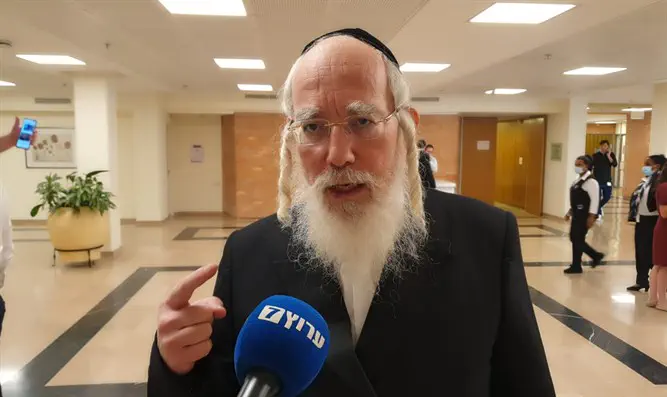
Yisrael Eichler
Yisrael Eichler


Haredi lashes out at new Reform MK : Reform members less truthful than Christians 


MK Israel Eichler lashed out at MK Gilad Kariv and refused to acknowledge his presence, referring to him as 'evil'.


Tensions rise on the first day of newly sworn in Knesset as the Haredi parties set a tone towards negotiating government terms. In an Interview provided to Kikar HaShabbat, MK Yisrael Eichler (UTJ) refused to greet MK Gilad Kariv (Labor), referring to him as 'evil' and claiming the reform movement less truthful than Christians.

Kariv is the previous director of the Israeli Reform movement, former rabbi of its Beit Daniel synagogue and community center in Tel Aviv. He is a first time member of Knesset.

This very well may be a first glance at the Haredi party stance towards negotiating the government terms.

 https://www.israelnationalnews.com/News/News.aspx/299766

Tuesday, April 06, 2021

“For me, there has been no serious difficulty in reconciling the principles of true science with the principles of true religion, for both are concerned with the eternal verities of the Universe,” wrote Henry Eyring, a world-renowned chemist, in his book “The Faith of a Scientist.”


A miracle, or a scientific feat? Vaccines can be both

Science and faith don’t need to present a perennial conflict.

On Tuesday, I received my first dose of the COVID-19 vaccine. Six months ago, I would’ve said having a safe, effective vaccine in my arm by April would be near impossible — even miraculous. Most of us thought so.

But here we are, all beneficiaries of a modern medical miracle. It took only 12 months from the SARS-CoV-2 pathogen being identified to a vaccine being approved, the fastest vaccine ever developed. The brilliant researchers, extensive resources and modern technology are all homages to the wonders of science.

But saying so isn’t always popular. I’ve been dismayed, but not surprised, to see others expecting us to stick to one side, as if being thankful for the vaccines’ miraculous development somehow downplays science, or that acknowledging science degrades the miracle they are.

Even people of faith are feeding that false choice. Ralph Mecklenburger, a rabbi emeritus in the Dallas area, recently wrote for the Fort Worth Star-Telegram, “These drugs are the latest fruits of the study of our immune systems, genetics, and pharmaceutical testing and manufacturing. Medical research and our technological culture, not God, came to the rescue.”

Our understanding of medicine and our modern technology birthed the vaccines, and of course it was mortal humans — much brighter than I — that created them. But could those humans not have been inspired, even aided, by deity? Is our collective knowledge of science and medicine, built upon centuries of research and thought, completely divorced from God’s influence?

Can we not believe in both?

The miracle of medicine

When Jonas Salk developed a polio vaccine in 1955, he was praised as a “miracle worker.” Salk deflected the praise. To him, his vaccine was a discovery, not a creation; he was simply tapping into the universe’s evolutionary process, or “life force.” When a journalist asked him in 1955 who owned the patent on his vaccine, he balked. “There is no patent,” he said. “Could you patent the sun?”

What some call God, Salk called “cosmic consciousness” or dynamism. “Since the Big Bang, he believe(d), the universe has been kaleidoscopically unfolding according to certain deeply ingrained principles,” a New York Times story said of Salk. His polio vaccine was the result of that process, harnessed and directed. 

For believers, that “cosmic consciousness” has a creator and a purpose. The universe is expanding and unfolding according to divine law, and the developments in science and medicine — unraveled by brilliant human minds — likewise increase our understanding of God. A miraculous vaccine, be it for polio or SARS-CoV-2, is not antithetical to the presence or purpose of God; it is congruent with it.

If we constrain God to the realms of only what we cannot explain by science, and make miracles only those things that science, at present, cannot explain, we’ll eventually run out of things to call “miracles,” and in turn, relinquish any need to pursue faith while exploring science. Increasing understanding of God’s creations should draw us closer to the Creator, not distance us from Him.

“For me, there has been no serious difficulty in reconciling the principles of true science with the principles of true religion, for both are concerned with the eternal verities of the Universe,” wrote Henry Eyring, a world-renowned chemist, in his book “The Faith of a Scientist.”

“Here is the spirit of true religion,” he continued, “an honest seeking after knowledge of all things of heaven and earth.”

A God of miracles

Those who believe in a higher power, a God of miracles — myself included — should be careful when prescribing which miracles can and cannot come from the divine.

Attaching a scientific explanation to Moses parting the Red Sea, like “wind setdown,” makes the event no less miraculous for the Israelites who witnessed it. A modern understanding of seagull feeding patterns would not have dampened pioneer settlers’ thanks to God for the “miracle of the gulls.” And knowing that science and technology made our present vaccine miracle possible hardly negates the possibility that God, the author of natural laws, played a role, too.

Some scientists recognize this, but it often takes a question that can’t fully be explained by science to even consider it. Alan Lightman, a physicist at the Massachusetts Institute of Technology, recently wrote about the “multiverse” — the possibility that other universes exist besides ours. It’s called a possibility, not a theory, as no true theorizing is being done. There’s no way to disprove it or prove it. As such, it continues to be an idea interesting to scientists but completely out of reach from science. (For now.)

That should unite people of faith and people of no faith, Lightman writes. “In a sense, the miracle believers and the miracle nonbelievers have found a bit of common ground,” he explained in The Atlantic. “… Both believers and nonbelievers have sworn allegiance to concepts that cannot be proved.”

Belief in the unprovable is the hallmark of religion. Faith itself is a belief in what we cannot fully understand or know. Our limited comprehension of God requires a great deal of faith. But that faith can be an asset, not a hindrance, in understanding the world around us.

Salk, and many scientists, draw their understanding of the universe from their understanding of its creation. Since then, the universe has followed a specific trajectory of continued life and death, creation and destruction, expansion and evolution. Some think adding God to that equation makes things more murky.

Don Page, an expert on cosmology and a devout theist, counters that logic. “One might think that adding the hypothesis that the world (all that exists) includes God would make the theory for the entire world more complex, but it is not obvious that is the case, since it might be that God is even simpler than the universe, so that one would get a simpler explanation starting with God than starting with just the universe,” he wrote.

Where science and miracles meet

No two people deserve credit for the production of COVID-19 vaccines more than Uğur Şahin and Özlem Türeci. The husband and wife, co-founders of German company BioNTech, are pioneers of mRNA technology, and alongside Pfizer, they helped create the first COVID-19 vaccine approved for public use.

Türeci said their motivation to develop a vaccine did not come from money or competition, but “a moral imperative to help the world.” As Muslims, Şahin and Türeci see science as a way to lift all of humanity. Şahin, in an acceptance speech after winning the Mustafa Prize in 2019 (given to top Muslim scientists), described his purpose as “bringing the knowledge and technology of the whole planet for the sake of saving a single individual patient,” in line with his religious belief that “saving one life is like saving the whole humanity.”

In developing lifesaving science, Türeci and Şahin are saving lives. Is it possible that a life-giving God would play a role in producing a life-saving treatment? If life comes from Deity, as many believers believe — if physicist Max Planck is correct in stating that “He and His omnipotent Will are the fountainhead of all life and all happenings” — that assumption hardly seems heretical.

Can we prove God’s role in the miracle of the COVID-19 vaccines? Not any more than we can prove his existence. But as we near the end of this pandemic, both believers and non-believers should seek common ground. Those of faith would do well to recognize the wonders of modern science, and all their merits, as credible. And for all the clarity science brings, we should admit the influence of the divine can be present without being proved.

This Passover week, perhaps more than any, the scientific brilliance God has gifted many of his children astounds me. I have great admiration for medical professionals, scientists and all who are working around the clock to curb the spread of COVID-19,” he said a year ago.

I give thanks to modern medicine and science — and all of its brilliant disciples — for creating a cure. And in the same breath, I give thanks to God. The two need not be mutually exclusive.

https://www.deseret.com/opinion/2021/4/1/22357416/miracle-covid-19-vaccine-worldwide-fast-pandemic-science-faith-easter

Thursday, March 25, 2021

Where are all the politically-connected Haredi 'machers', while the cries of the children go unanswered?


The silent threat to haredi children's safety in Israel


Evidence is mounting that pedophile rings have infiltrated Israel's haredi communities.


ילדים חרדים

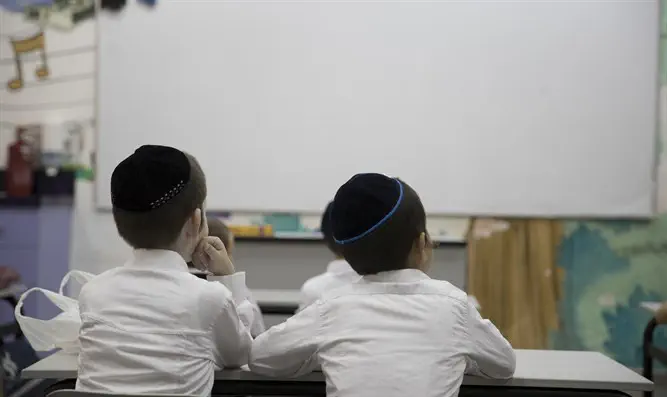
Back in January 2020, 'The hidden crime of pedophilia' was featured at Israel National News. Its overriding basis exposed a growing, although heretofore silent, threat inside the overall Jewish community - both within Israel and outside its borders. At the same time, embedded analyses zeroed in on an especially vulnerable target: children in Haredi communities.

For well over a decade, youngsters within the Jerusalem neighborhoods of Nachlaot and Sanhedria have been victimized by a ring of pedophiles who infiltrated those neighborhoods. How can this be? In no uncertain terms, this is the most urgent question of all. Yes, law enforcement and the political hierarchy have much to account for.

Still yet, even with said unfathomable 'failure to protect' laid bare, there is a modicum of hope to be found in this agonizing and delicate arena - albeit it exists outside of Israel. As stated within last year's article, strides have been made to tackle this insidious scourge, that is, with the assistance of a particularly courageous individual (alongside others) and a leading communal organization: namely, Rabbi Yossi Jacobson, as well as the Jewish Community Watch

The crime of pedophilia is horrific wherever it surfaces, the wreckage (psychological and physical) left in its wake is incalculable. As such, this abject neglect lands smack at the doorsteps of the powers that be. Discomfiting, but no less true.

Fast forward to the here and now, fourteen months from this writer's previous report at Israel National News, and it has come to the attention of these ears - by way of a seasoned investigator in Jerusalem - that the initial crime of pedophilia plaguing Jerusalem via a network of well-coordinated pedophile rings has spread to communities in the center of the country.

More specifically, certain wealthy enclaves in Tel Aviv are currently caught in the cross-fire. Not only that, Haifa - Israel's unofficial northern 'capital' - joins a growing list of targeted cities. For the record, at this juncture, the homey and welcoming neighborhood of Neve Sha'anan finds itself in the grip of a pedophile ring. Though a mix of families from various levels of observance live harmoniously in this lovely part of Haifa, it is Haredi children who, for the most part, find themselves in danger.

Inexorably, while it appears easier to penetrate the Haredi sector (for various complex and not so complex factors), there are indicators that non-Haredi children will become their next victims - if the situation remains as is. And how can any child be left unprotected from pedophile rings??

At its base, the overarching implication is clear: predictably, akin to a cancer diagnosis that is left untreated and allowed to metastasize within the body, it is understood - at the very least, by rational people - that the prognosis is inevitable: prolonged suffering and eventual death. Similarly, when societal cancers are ignored and left to fester, the outcome will be nothing short of dire. Indeed, sooner than later.

But for the above to be truly internalized for the danger that it is - as opposed to being viewed as hysteria-mongering, - it is not for nothing that the Knesset held a special session on this very matter, December 23, 2020. It's about time. But it remains to be seen if anything is done. So far, there is only a cross between lip service and deafening silence. This disheartening assessment is not coming from this end, rather, per the testimony of those who handed the Knesset committee and law enforcement more than enough evidence to squash the rings in their tracks. The full force of the state's tool-box has enough legal ammunition to deploy. Whatever it takes.

Moreover, key Knesset testimonies were given by the following heavy-weights:

Haim Rivlin, a highly regarded investigative journalist for Channel 13, who has been in the forefront of the reporting; two childhood trauma experts (one from Jerusalem, another from Baltimore, Maryland, both of whom interviewed many of the victims and their parents), plus other expert witnesses who, in one capacity or another, dealt with the victimized children.

In addition, one trauma expert attested to evaluating over 85 children in Israel (and there are many others, yet to be clinically evaluated), now suffering from what is clinically-termed "disassociation", coupled with assorted knock-on mental and physical afflictions.

They all testified to a consistent, highly fear-invoking part of the trauma - once the full details poured forth from the children during therapy sessions: pictures! In the most rawest of terms, the serial abuse of said innocents is nothing less than monstrous. Mind-numbing. Over and over again, they were forced to pose for explicit photos. It was determined - through accumulated evidence - that this was done for several reasons; some of which involved blackmailing the families. Many of the photos have been allegedly uploaded via the 'Dark Net' for various motives, including profit. Child trafficking.

The testimony also revealed that a higher-up in the Cyber Crimes Unit was handed a treasure trove of information. Nevertheless, his response was dumbfounding: he had no mandate to pursue it! No mandate?

A few years back, particular law enforcement agents from the Serious Crimes Unit were more than willing to take possession of a mountain of evidence - documents handed to them by the very SAME trauma experts, while behind closed-door interviews for several hours. So far, so good. Still yet, nothing concrete has been done, even after all this time. There are no words....

Aside from the noteworthy, jaw-dropping investigative series by Haim Rivlin (video links are provided below), and with its basis translated from Hebrew, the Investigations and Intelligence Division blew the explosive evidence off, even after promising otherwise!

Haim Rivlin:

Part One: https://www.facebook.com/watch/live/?v=785891978487972&ref=watch_permalink

Part Two: https://www.facebook.com/watch/live/?v=785916805152156&ref=watch_permalink

https://www.facebook.com/Hamakor.tv/posts/2586612364727602/

Haim Rivlin's investigation, as excerpted, January 2, 2020:

Yesterday (Wednesday) we broadcast in the headlines of the 13 News Edition the response of the police to the ′′Dark Secret in Jerusalem′′ investigation in which the police announced that they will re-check the complaints filed in the Sanhedria affair.

The full response formula was:

′′All the complaints presented in the program were investigated by the police in the past, however, following the broadcast of the program, it was decided in the Investigations and Intelligence Division to re-examine the complaints presented. In addition, if new complaints were received or evidence that could shed new light on the events, upon the end of the material exam, it will be decided whether to continue. ′′

We broadcast the comment headline and highlighted the above expression of support throughout the day in a line of media interviews. Except tonight, about two hours before the broadcast, the police chose to send a much more soft response that is their formula::

"As a rule and as has already been said in the past, the complaints presented in the program were carefully investigated by the police from which it has arisen that alongside evidence of the existence of sexual offenses in which they were filed, there is no basis for suspicion of the existence of cults or organized activities for the exploitation of children in the spoken communities.

"Not only this and more. the investigation has raised a suspicion based on the attempt to create a false presentation by stakeholders to encourage rumors of the injury to children.

"It will be emphasized, however, that in light of the sensitivity of the issue, a courtesy has been made to the program, to find out whether new complaints have been received or evidence that can shed new light on the events. And to examine the continuation of their treatment and also now I am appealing to everyone who has such information to pass on to treatment.′′

The program studio was pre-recorded today at noon, which was clarified to the police spokespersons in advance. Compare the comments for yourself and especially watch tonight's ′′The Source′′ show and decide whether ′′the complaints have been carefully investigated."

* * * * * * * * * * * *

Beyond shocking. Stupefying. What's going on?

Adding more heft to what has become an omerta-like, reflexive response from those in charge, along comes Yael Dan - a well-known journalist and radio show host for Israel Army Radio - into the mix. Her two-part interview on this very same explosive topic, dated 2/28/21 and 3/1/21, can be accessed here and here.

Now, what bears particular note is this: even though the aforementioned journalists are left-wing in their outlooks, their rage is palpable; a boiling anger that no one within authority is doing anything to stop this from affecting countless victims in Haredi communities!

Let's be honest: the very fact that more rings are operating with impunity throughout Israel, only supports the mounting charges made against a growing list of authority figures, those who are in position to turn the tide but resist doing anything of substance. Again, what's going on?

Conclusively, the following queries are in need of immediate answers AND action plans:

- Where are the voices of right-wing journalists within Israel, regarding this topic of all topics? The children and families deserve no less!

- Where are relevant law enforcement, officers sworn to pursue and uphold justice? What have they been doing all these years, if anything? It is past time for full transparency.

- Most trenchantly, where are Israel's top political leaders vis-à-vis the 'crime of all crimes' against children? Finally, where are all the politically-connected Haredi 'machers', while the cries of the children go unanswered?

* Haim Rivlin's investigation, as excerpted, January 2, 2020

Part One: https://www.facebook.com/watch/live/?v=785891978487972&ref=watch_permalink

Part Two: https://www.facebook.com/watch/live/?v=785916805152156&ref=watch_permalink

https://www.facebook.com/Hamakor.tv/posts/2586612364727602/


https://www.israelnationalnews.com/News/News.aspx/299084

Tuesday, March 23, 2021

Ilya Hoffman - Be Nice to Christiana Barkley - The Shver Will Slam Dunk Your Rear End If Not - Anyone See Hershel Schachter?


It Was an All-Star Weekend for the Bride and Groom

Sir Charles Needs "All Jews On Deck" To Lift Him Up On The Chair...

Basketball brought Christiana Barkley and Ilya Hoffman together in the first place, but he was far more impressed with her than he was with “the guy from ‘Space Jam.’”

The couple signed the ketubah as the groom’s friend Jacob Althaus watched. Also present were the groom’s mother, Katia Hoffman, and his grandmother Tamara Koliskor and the bride’s parents, Charles and Maureen Barkley.

Though Ilya Hoffman met Christiana Barkley during a basketball game, he wasn’t knocked sideways when he learned the identity of her father.

“I’m not a sports fan,” said Mr. Hoffman, 34, the founder of DemandByte, a marketing technology company in New York. “’I don’t watch sports. I don’t play sports.”

In May 2016, though, his friend Eric Magleby invited him to watch a replay of Villanova’s national championship game that season. A group of Villanova alumni had gathered at Mason Jar, a sports bar in Manhattan, and Mr. Hoffman was on the fence about joining them.

“Villanova grads are crazy, crazy basketball fans,” he said. “I didn’t go to Villanova.” He went to SUNY Albany for two years, then Baruch College, where he received a bachelor’s in finance and economics in 2009. “I thought, ‘I’m not sure this is the place for me.’”

But he went, and when someone pointed to one of the fans in the room and identified her as the daughter of Charles Barkley, the 11-time N.B.A. All Star, Hall of Famer and now television analyst for TNT’s “Inside the NBA,” his reaction was atypical. “I said, ‘Oh, you mean the guy from ‘Space Jam’? That’s where I knew him from. Some people might have been like, ‘Oh my god, Charles Barkley.’ To me it was like, ‘Look at this amazing girl.'”

Later that night, he invited nine Wildcats fans back to his apartment, six blocks away, for an after party. Ms. Barkley, a 2011 Villanova graduate who earned a master’s in journalism from Columbia in 2017, was among them. She thwarted his plan to be a generous host.

The couple were married before 120 friends and family members, who were all tested for Covid-19 just before the ceremony, which was led by Rabbi John Linder.

“I was like, ‘Guys, I have six slices of leftover pizza in the fridge,’” Mr. Hoffman said. “We’re going to throw them in the oven and split them up so everybody gets some. Christy pulled me aside and said, ‘I’m going to need two of those slices.’ We had just met two hours ago. It really showed her personality.”

For Ms. Barkley, 31, the director of writing and senior account manager at the Koppelman Group, a college consulting company, a healthy appetite is something of a calling card. “People love having me to dinner because I never stop eating,” she said. After she and Mr. Hoffman started dating that spring, she endeared herself to his family while at the dinner table. On a first visit to his family’s home in Port Washington, N.Y., she asked Mr. Hoffman’s grandmother, Tamara Koliskor, for more matzo ball soup. That sparked an intergenerational love affair. “She’s a very grateful girl, and she does love matzo ball soup,” Ms. Koliskor said. “It’s impossible not to love her.”

Her affection for Ms. Barkley has since been well established among the family: “My grandmother is an old-school Russian Jew who’s hard to win over, but now I think she loves Christy more than my brother and me,” Mr. Hoffman said.

Mr. Hoffman was born in Moscow and immigrated to the United States in the late 1980s with his parents, Alex and Katia Hoffman, and brother, Ash. He grew up in Queens and later the family moved to Long Island.

Ms. Barkley is an only child. Mr. Hoffman’s first time meeting her parents, Charles and Maureen, in 2017 at their home in Scottsdale, Ariz., reinforced the expected when meeting a star of Mr. Barkley’s stature.

“I walked into their house and I was like, ‘That is a huge guy,’” Mr. Hoffman said of Mr. Barkley. But he left Arizona with a more complete picture. “When you go out to dinner with Charles, people can be pretty rude, like, ‘Hey, Charles, can I take a picture with you?’ But every single time he puts a smile on his face. He’s the most generous person. He never gets annoyed.”

He wasn’t even annoyed when he suspected Mr. Hoffman of dragging his feet about proposing to his daughter. In 2019, the couple moved to Killington, Vt. Both worked from home even prepandemic and loved the access to mountains, Ms. Barkley for hiking and Mr. Hoffman for skiing. “The biggest mountain on the East Coast is 10 minutes away,” Mr. Hoffman said. “I can ski on my lunch hour.”


When Mr. Hoffman first met Ms. Barkley he was more impressed by her than who her father is. “Some people might have been like, ‘Oh my god, Charles Barkley.’ To me it was like, ‘Look at this amazing girl,’” he said.
Credit...Katina Patriquin Photography
 
 
During a Christmas trip to Scottsdale that year, he had asked the Barkleys for permission to marry their daughter.

“I had this vision in my mind of how it was going to go,” he said. “I had saved it for the last night we were there, when we were going to go out to dinner.” When Mr. Barkley announced he had to leave early for a trip and wouldn’t be able to make the dinner, Mr. Hoffman acted fast. “I approached Maureen and said, ‘Hey I want to talk to you. Can you ask Christiana to go to the store so we can have some privacy?’” Instead, Mrs. Barkley yanked him into her bedroom, where Mr. Barkley was preparing for his trip, for a 30-second chat.

Both approved. “I remember being really emotional about it,” Mr. Barkley said. “That’s not something that happens all the time.”

Back in Vermont, Mr. Hoffman gave himself a couple months to figure out the perfect proposal. “And then lo and behold there’s Covid and everything shuts down,” he said. When he still hadn’t proposed at the start of spring, Mr. Barkley started worrying.

“I was like, ‘Uh-oh, maybe he changed his mind,’” Mr. Barkley said.

Instead, Mr. Hoffman was trying to figure out how getting engaged during lockdown might look.

Ms. Barkley provided a hint. “She had mentioned to me that she saw someone on TV propose with a Ring Pop,” Mr. Hoffman said. “She was subtly saying that if I want to propose and I don’t have a ring, she would accept a Ring Pop.” By spring, though, Mr. Hoffman had a better plan in place. Through a family friend, he had found a jeweler in Manhattan to design a diamond engagement ring. On May 14, 2020, the day before Ms. Barkley’s birthday, he drove to New York to pick it up; along the way, he bought a Butterfinger and a Ring Pop.

Butterfinger is Ms. Barkley’s favorite candy bar. So she wasn’t surprised when, after a morning walk on May 15, he presented one to her as part of an at-home birthday celebration. “I was excited,” she said. While she tore into it with the usual gusto, Mr. Hoffman got down on one knee and presented the Ring Pop. That she found annoying.

“I thought he was making fun of me for even suggesting the Ring Pop, and that he was going to say something along the lines of, ‘It’s not going to happen today, but it will be soon,’” she said. Instead, he pulled the diamond ring box from its hiding place under the couch. “I said, ‘I love you, I want to marry you, I don’t feel right about proposing with a Ring Pop,’” he said. “She had chocolate all over her face.” She said yes, with enthusiasm.

On March 6, 120 friends and family members gathered for their wedding at the Andaz Scottsdale Resort and Bungalows. All had been coronavirus-tested just before, either on their own or through the help of Mr. Hoffman’s friend Marcus Howard, who had procured tests and set up a testing site at the resort, where out-of-town guests were staying.

Ms. Barkley, in a floor-length, sleeveless Reem Acra wedding gown, held a bouquet of white and pale peach ranunculus as she was escorted down an outdoor aisle by her father, who skipped his commentating stint during the N.B.A.’s All Star Weekend to be with his daughter instead.

Mr. Hoffman wore a dark suit and white shirt with an open neck and no tie. Beyond the huppah, woven with more ranunculus and greens, was a sweeping desert vista.

After a ceremony, led by Rabbi John Linder, that included the Jewish traditions of signing the ketubah and the bestowing of seven blessings, Mr. Linder pronounced them married. Cheers of “mazel tov!” erupted as Mr. Hoffman stomped a glass to mark the beginning of their new union.

Despite the Covid precautions, weeks before the wedding, Mr. Barkley offered to have medical professionals on site. But, as he explained to Ms. Barkley, and on “Jimmy Kimmel Live” days before the wedding, it wasn’t Covid he was so worried about. It was the hora, the traditional Jewish celebratory dance in which some guests are lifted in a chair.

He felt he needed to slim down before participating; Mr. Barkley is about 6 foot, 5 inches and weighs more than 250 pounds. Ms. Barkley said her father lost “a good amount” of weight before the wedding.

“But he was still very concerned,” she said. “He said, ‘I think it’s possible someone’s going to try and lift me up and they’ll get hurt, or I’ll get hurt.’” Though, while on “Jimmy Kimmel,” Mr. Barkley had called for “all Jewish people on deck” during the hora, it turned out they weren’t needed.

“He really was scared, but he got in the chair, and next thing you know he and my mom were up there,” Ms. Barkley said. “They had a blast.”

“It was the best weekend of my life,” her father said.

Charles talks about his name, his daughter getting married this weekend, trying to lose weight for the wedding, picking a father/daughter dance, his daughter’s fiancé asking him for her hand in marriage, paying for the wedding...Worried about doing the Hora....

 WATCH: https://youtu.be/9Jn_4bNyIG4

https://www.nytimes.com/2021/03/19/fashion/weddings/christiana-barkley-ilya-hoffman.html?searchResultPosition=10


TO SEND A GIFT TO THE CHOSSON & KALLAH:

THE WEDDING REGISTRY OF


https://www.bloomingdales.com/registry/wedding/guest?registryId=7239146&sortBy=PRICE_HIGHEST_FIRST

Monday, March 22, 2021

And while he may have been a very great prophet, and a very great leader; those were his day jobs, and the true purpose of his life could only be achieved by saving others, a purpose embedded into the name given to him by his rescuer, and preferred to all his others by God


Giving to Others Gives Our Life Meaning


Moses Breaking the Tables of the Law (1659), by Rembrandt.


Earlier this week, I read that Barbara Rickles had died at the age of 84. Her late husband, Don — who passed away in 2017, and often used his wife as the butt of his jokes — was one of America’s best-loved ‘insult comedians.’ A regular on Johnny Carson’s “The Tonight Show,” he was a fixture of the Hollywood showbiz circuit for decades. As he once said: “Show business is my life — when I was a kid I sold insurance, but nobody laughed.”

That quip always makes me chuckle, but it contains a powerful truth: there is a destiny which determines what we end up doing in our lives, and what it is that gives meaning to our lives.

We might branch out and try other things, but in the end, we must face up to the fact that the most comfortable fit for us is doing what we are best at, which often translates as what it is we have to offer that benefits others. Most importantly, what we do that satisfies this aspect of who we are may not always be the job which earns us the money we need to live, although it will certainly be the part of our lives that makes our life worth living.

Some people are blessed to find jobs and careers that check all their boxes, but truthfully, even the most fulfilling job leaves gaps, and those who allow their careers to become the totality of their lives will almost certainly experience a nagging vacuum at the heart of who they are — a feeling which only grows worse with time.

A Jewish organization worked tirelessly with non-Jewish allies to help win clemency for indigent prisoners, including many non-Jews, who had...

Emily Esfahani Smith’s 2017 book “The Power of Meaning: Crafting a Life That Matters” made this elusive aspect of the human condition its central theme. Her thesis is simple: “Leading a meaningful life [corresponds] with being a ‘giver,’ and its defining feature [is] connecting and contributing to something beyond the self.”

Smith expands on this powerful idea and offers a beautiful blueprint for creating meaning in our lives: “When people explain what makes their lives meaningful, they describe connecting to and bonding with other people in positive ways. They discuss finding something worthwhile to do with their time … No matter what occupies our days, when we reframe our tasks as opportunities to help others, our lives and our work feel more significant. Each of us has a circle of people — in our families, in our communities, and at work — whose lives we can improve. That’s a legacy everyone can leave behind.”

Judaism offers us a perfect role-model for this paradigm: none other than our very first leader, Moses.

The Book of Vayikra begins with the following verse (Lev. 1:1): וַיִּקְרָא אֶל מֹשֶׁה וַיְדַבֵּר ה אֵלָיו מֵאֹהֶל מוֹעֵד  — “[God] called to Moses and spoke to him from the Tent of Meeting.” The Midrash on this verse points out that Moses had 10 different names, only one of which was Moses, or “Moshe” in Hebrew. According to the Midrash, by calling out to him using his “Moshe” name, God was conveying the message that He would only address him by this particular name and by none of the others.

Curiously, the name Moshe is not actually Hebrew; rather, it was the name given to Moses by Batya, the daughter of Pharaoh, when she rescued him from the river (Ex. 2:10): וַתִּקְרָא שְׁמוֹ מֹשֶׁה וַתֹּאמֶר כִּי מִן הַמַּיִם מְשִׁיתִֽהוּ — “She called his name ‘Moshe’ — for as she said: ‘since I drew him out of the water.’”

The great Hasidic master, Rabbi Shmuel Shmelke Horowitz of Nikolsburg, observes that for this Midrash to appear at this particular point in the Torah is rather strange. After all, this was hardly the first time God had addressed Moses using the name Moshe. At the very beginning of the Exodus story, during their very first encounter at the Burning Bush (Ex. 3:4), God called out to Moses and said “Moshe! Moshe!” — to which Moses replied “here I am.” So why mention that the name Moshe is significant at the beginning of Vayikra?

Rebbe Shmelke cites a well-known and rather quirky Seforno commentary to explain this anomaly. According to Seforno, if one was being strictly grammatical, Moses’ name should not have been Moshe at all. If the reason for his name was that he had been rescued from the waterway — as Batya said: min hamayim meshisihu — his name should have been “Mashui,” which in Hebrew means “the one who was drawn out.” The meaning of “Moshe” is something totally different: it means “the one who draws others out.”

As a result of this grammatical mix-up, Seforno concludes that the Torah is sending us a message: because Moses was saved from certain death, he had a moral lifelong obligation to save others. In fact, for his life to have any meaning, he needed to constantly be “Moshe.” And while he may have been a very great prophet, and a very great leader; those were his day jobs, and the true purpose of his life could only be achieved by saving others, a purpose embedded into the name given to him by his rescuer, and preferred to all his others by God.

To which, Rebbe Shmelke adds, that it was only at this moment in the Torah narrative — after the Exodus, after the Red Sea crossing, after the Mount Sinai revelation, after Moses saved the nation from God’s anger following the sin of the golden calf, and after the sanctuary was built — that this point could be made. Up to this point, Moses was just doing his job, and now he could quite rightfully say: my job is done.

And it is for precisely this reason that the Midrash chooses this juncture to point out that life’s meaning, and all activities in your life that give it meaning, don’t end when your workday is over, nor do they end when your career has come to an end. Those aspects of your life that give it meaning, namely being there for others and helping them in their time of need, are constant — just as Moshe’s name indicated that his life’s purpose never ceased, even when his job was done.

The author is a rabbi in Beverly Hill, California. 

https://www.algemeiner.com/2021/03/19/giving-to-others-gives-our-life-meaning/

Friday, March 19, 2021

Eradicating serial sexual predation from the religious community means coming to grips with the complicit silence of those in the know


Hannah in the tabernacle of Yehuda Meshi Zahav 


Eradicating serial sexual predation from the religious community means coming to grips with the complicit silence of those in the know
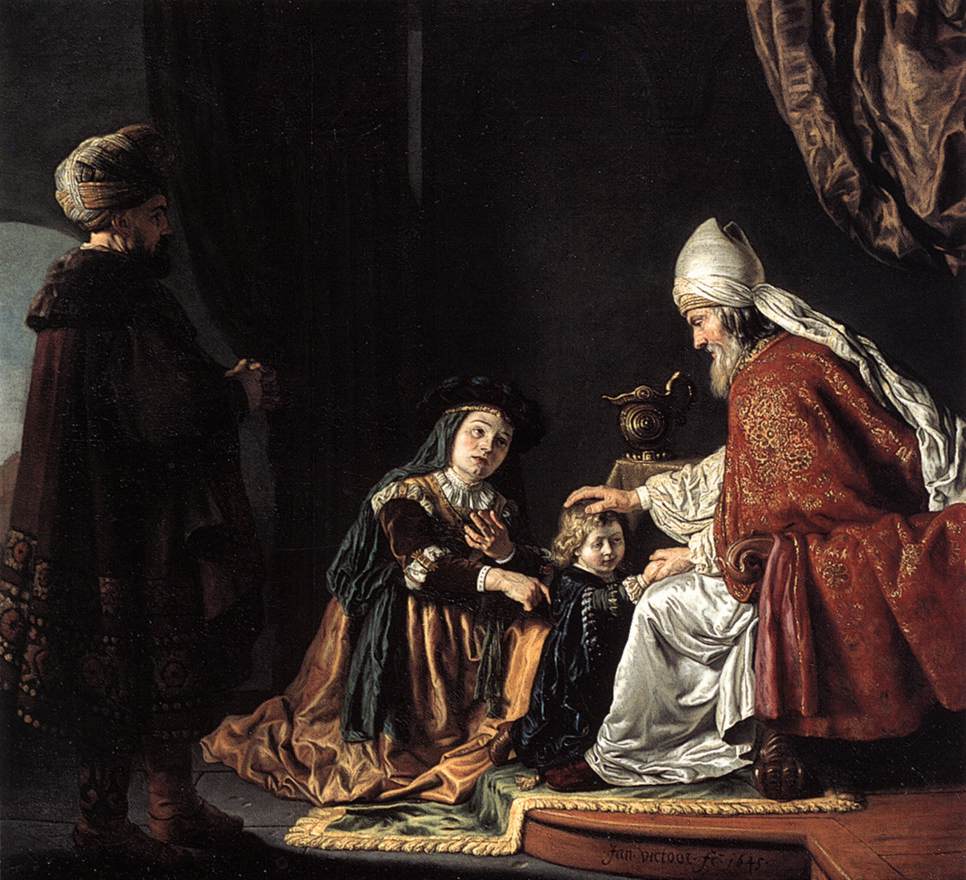
Hannah Giving Her Son Samuel to the Priest. Painting by Jan Victors  (1619–1676) (From the Berlin State Museums gallery via Wikimedia)
Hannah Giving Her Son Samuel to the Priest
 

It takes a village to raise a serial sex offender.

Following reports over the weekend, the founder of one of Israel’s most well-known public charities, Yehuda Meshi Zahav, stands accused of sexual predation against boys, girls and grown women spanning forty years, allegations which he denies. Public indignation has called for an investigation of his actions. But the investigation must not stop there. The reports claim that throughout this long period, many knew of his alleged abuses and that in his community of Meah Shearim it was an open secret. To rid ourselves of the scourge of sexual predation, we must identify the social elements that foster the silence and complicity that are its breeding ground.

As a child in the 1970s, I was groomed by convicted sex offender Stanley Rosenfeld, a teacher and principal in the elementary school I attended. I see the wreckage that he has wrought in the lives of some of my classmates and know that there but for the grace of God go I. Investigations into the communal dynamics that enabled him and others like him to commit atrocities across many years are revealing, and especially so for religiously conservative communities.

The silence in such communities is fostered by multiple factors. First, sexuality generally is a taboo subject, and so even when there are rumors of offense, these are swept under the rug. Second, there is fear that public exposure of the issue will stain the community, or particularly the institutions with which the offender is associated. Third, fear rises within insular communities suspicious of the state, that to bring an alleged offender to the authorities would constitute the treasonous act of moiser, of turning over a fellow Jew to the supposedly ruthless hands of the secular state. And finally, when the offender is a person of power, as is allegedly the case here, many remain silent for fear of retribution.


What is needed, instead, is a culture that acknowledges that these abuses take place. A culture that places the stigma on the offender rather than on the victim. A culture that speaks truth to power. A culture that lauds those that speak up as the defenders of the community, not as its traitors. What is needed in the haredi community is an adaptation of the culture of #metoo, if you will, a culture of #mir-oich.

Community reform is possible. Forum Takanah, established in 2003, provides the Religious Zionist community with a body to handle complaints of sexual harassment without the involvement of law enforcement and legal authorities. Sexual predators are found in every sector of society. But the bold and broad awareness today of sexual predation within the Religious Zionist community means that unchecked serial predation spanning decades, of the type perpetrated by convicted offender Mordecai Elon, seems now to be a thing of the past.

Hannah refused to pretend all was fine

Few of us are communal leaders who can set a new communal agenda. But all of us can learn an important lesson from the first figure in world literature who sought to challenge a culture of sexual predation: the biblical Hannah. Hannah, as she is portrayed in the opening chapter of First Samuel, is usually construed as a barren woman, tormented by her husband’s second, fertile wife while the entire family celebrates its annual pilgrimage to the Tabernacle at Shiloh. Desperate, she flees to the Tabernacle and makes a quid pro quo with the Almighty: give me a son, and I’ll give him to you as a servant in your Tabernacle.

But this conventional reading overlooks a subtle nuance in the story. Scripture tells us that her husband Elkanah would bring the entire family on a pilgrimage to the Tabernacle, where “Hofni and Phineas, the sons of Eli, were ministering to the Lord.” The note is anomalous because, throughout that narrative of that story, these two never figure again. Why then are they mentioned?

Reading much further on in the story, we learn that these two enacted a reign of terror and corruption encompassing all aspects of the Tabernacle service. Women who sought entry into the Tabernacle needed to first provide them with sexual favors. Yet in spite of this, all of Israel dutifully complied; no one spoke out. All were fearful of the power of the two priests and the ticket to access to the Lord that they possessed.

When we read this shocking account, we realize the silence in which we as readers were complicit in chapter 1. Elkanah brings the family to Shiloh, and there is great merriment at the holy pilgrimage. All seems right; even holy. But the text tells us in a subtle way, that “Hofni and Phineas the sons of Eli were ministering to the Lord.” Later we discover just what that means. But we read chapter 1 through the silence of the lambs that allowed their malfeasance to reign free. All accept this as the norm –except for Hannah.

Hannah is put off by the taunting of her husband’s other wife, and by the fact that human dignity and sensitivity are trampled in the name of holy pilgrimage. But Hannah also deplores the wider web of corruption that all fail to see: “Hofni and Phineas ministering to the Lord.” She flees from the emotionally abusive pilgrimage feast to the Tabernacle. There she appeals to the Lord for a son – a son that she will raise with a different set of values, and who will infuse a new and reformed spirit in the Tabernacle service.

Hannah was apparently powerless to even call out the predation she saw. But she took the first step – she saw the truth for what it was and refused to be part of the charade that pretended that all was holy and fine.

The organization Meshi Zahav headed gained renown for performing the holy task of gathering the shattered limbs of the victims of suicide bombings. It is known by its acronym Zaka, which stands for zihui korbanot ason, Identifying the Victims of Tragedy. It is now the community’s responsibility to identify those who were allegedly victimized, to provide their shattered souls a place of dignity, to ensure that the silence of complicity reigns no longer in our village.

https://blogs.timesofisrael.com/hannah-in-the-tabernacle-of-yehuda-meshi-zahav/?utm_source=The+Blogs+Weekly+Highlights&utm_campaign=blogs-weekly-highlights-2021-03-18&utm_medium=email