VATICAN
CITY (RNS) — After a close aid to Ukrainian President Volodymyr
Zelenskyy accused Pope Francis of being a Russophile and the Vatican of
receiving Russian funds, the Catholic Church issued a statement denying
the accusations on Sunday (Sept. 10).
“The IOR does not receive or invest money from Russia,” read a
statement by the Institute for Religious Works, using the Italian
acronym IOR for the institution more commonly referred to as the Vatican
Bank. “The IOR strongly rejects the allegations of the Councilor,
according to whom the IOR would be investing Russian money.”
The Vatican Bank insisted the institute only provides financial
services to Catholic organizations and that it is held to the highest
possible international standards.
“Any statements made to the contrary in the media are based on
nothing and must, therefore, be considered as such,” the statement
concluded.
Mykhaylo Podolyak, a top adviser to Zelenskyy, called Pope Francis a
“Russophile” in an interview on Ukrainian television Channel24 that
aired Sept. 8. “The Vatican can’t have any mediation role, because it
would betray Ukraine and justice,” he said.
Podolyak also stated that the Ukrainian government plans to “look
into the Russian investments that are being made in the Vatican Bank”
and promised to “study this more in detail.”
Pope Francis has promoted peace in Ukraine after the Russian invasion
in February of last year, but has stopped short of openly criticizing
Russia and its leader, Vladimir Putin. Vatican diplomacy has been focused on attempting to build a bridge between the warring factions and to promote a lasting peace.
The pope sent a peace envoy, the experienced diplomat and Cardinal Matteo Zuppi,
to visit Russian elites in Moscow and meet with Ukrainian leaders. The
cardinal also met with members of the United States government, and the
pope hinted that the next stop for Zuppi might be Beijing. While
Zelenskyy has publicly thanked the Vatican for its peace efforts,
especially in helping displaced children to reunite with their families
and other charity work, he has also made it clear Ukraine is not
interested in the pope’s mediation offer and will seek peace “on its own
terms.”
A few diplomatic blunders have also hindered Pope Francis’ chance to bring peace. In a message to young people in Russia in late August,
the pope was quoted praising the great history and legacy of Russia,
including Russian historical figures like Catherine the Great and Peter
the Great, which was interpreted by some as a papal sanctioning of
Russian imperialist aims.
Addressing those comments, Podolyak said that “it doesn’t make sense
to speak of Pope Francis as a mediator, if he takes on a Russophile
position that is obvious to all.”
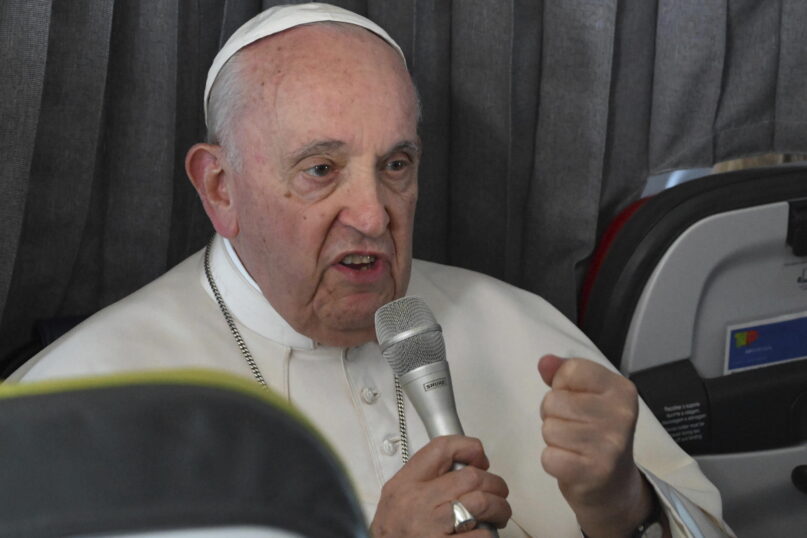
“I was not thinking of imperialism when I said that,” said Pope Francis, while justifying his comments aboard the papal flight returning to Mongolia
(Sept. 4). “Maybe it wasn’t the best way of putting it, but in speaking
of the great Russia, I was thinking not so much geographically but
culturally.”
Francis’ trip to the Central Asian nation was largely seen as an
overture to its larger neighboring countries of China and Russia, which
don’t have official diplomatic relations with the Holy See.
While the pope acknowledged his error, he also underlined that
“Russian culture is so beautiful, so immensely profound, and it must not
be canceled because of political issues.” On a previous occasion, Francis suggested the Russian invasion had been caused by “NATO’s barking at Russia’s door.”
MORE:
https://religionnews.com/2023/09/11/after-accusations-by-top-ukrainian-official-vatican-bank-denies-receiving-funds-from-russia/
The meeting with Chinese officials is the latest step in Pope Francis’ appeals for peace in Ukraine.
VATICAN CITY (RNS) — Pope Francis’ envoy for peace in Ukraine, the
Italian Cardinal Matteo Zuppi, made history on Thursday when he became
the first Vatican prelate to meet with Chinese officials in Beijing. The
meeting was the latest step in the pope’s diplomatic efforts to put an
end to the Russian-Ukrainian conflict.
An experienced diplomat and the president of the Italian Bishops’
Conference, Zuppi met with the Chinese Special Representative for
Eurasian Affairs, Li Hui, who was charged with promoting Beijing’s
12-point peace plan for Ukraine. Hui was also the Chinese ambassador to
Russia and has traveled to Moscow and Kyiv.
“The meeting, which was open and cordial, focused on the war in
Ukraine and its dramatic consequences, underlining the need to join
efforts to favor dialogue and find paths leading to peace,” read a
Vatican statement on Thursday.
MORE:
https://religionnews.com/2023/09/15/vatican-brings-its-message-for-peace-in-ukraine-to-beijing/
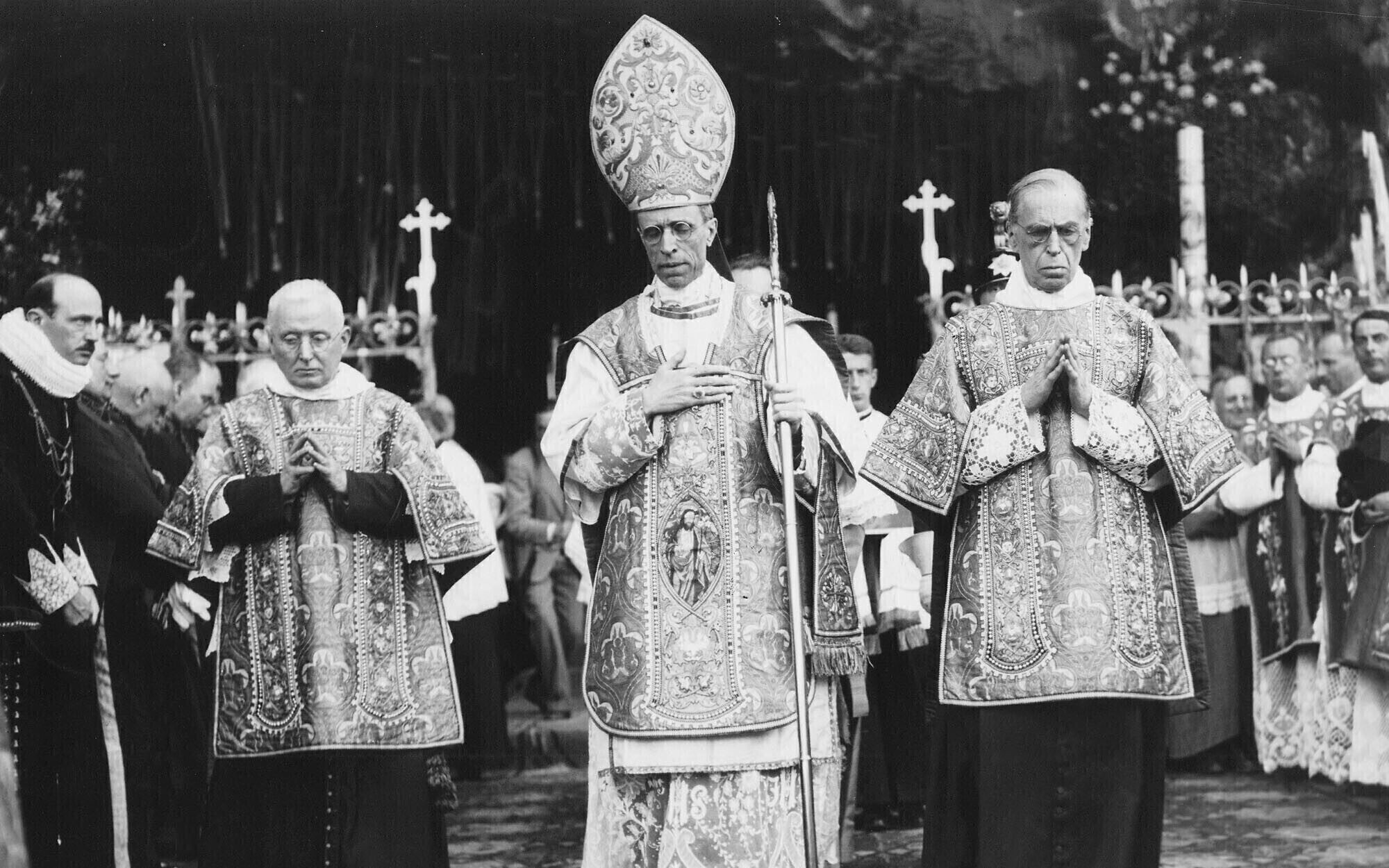
“The novelty and importance of this document comes from this fact: that
on the Holocaust, there is now the certainty that Pius XII was receiving
from the German Catholic Church exact and detailed news about crimes
being perpetrated against Jews,” Coco was quoted by Corriere as saying.
ROME (AP) — Newly discovered correspondence suggests that World War
II-era Pope Pius XII had detailed information from a trusted German
Jesuit that up to 6,000 Jews and Poles were being gassed each day in
German-occupied Poland, undercutting the Holy See’s argument that it
couldn’t verify diplomatic reports of Nazi atrocities to denounce them.
The documentation from the Vatican archives, published this weekend
in Italian daily Corriere della Sera, is likely to further fuel the
debate about Pius’ legacy and his now-stalled beatification campaign.
Historians have long been divided about Pius’ record, with supporters
insisting he used quiet diplomacy to save Jewish lives while critics
say he remained silent amid the Holocaust.
Corriere is reproducing a letter
dated Dec. 14, 1942 from the German Jesuit priest to Pius’ secretary
which is contained in an upcoming book about the newly opened files of
Pius’ pontificate by Giovanni Coco, a researcher and archivist in the
Vatican’s Apostolic Archives.
Coco told Corriere that the letter was significant because it
represented detailed correspondence about the Nazi extermination of Jews
from an informed church source in Germany who was part of the Catholic
anti-Hitler resistance that was able to get otherwise secret information
to the Vatican.
According to the Belzec memorial which opened in 2004, a total of
500,000 Jews perished at the camp. The memorial’s website reports that
as many as 3,500 Jews from Rava Ruska had already been sent to Belzec
earlier in 1942 and that from Dec. 7-11, the city’s Jewish ghetto was
liquidated. “About 3,000-5,000 people were shot on the spot and 2,000-
5,000 people were taken to Bełżec,” the website says.
The date of Koenig’s letter is significant because it suggests the
correspondence from a trusted fellow Jesuit arrived in Pius’ office in
the same three weeks before Christmas 1942 that Pius was receiving
multiple diplomatic notes from the British and Polish envoys to the
Vatican with reports that up to 1 million Jews had been killed so far in
Poland.
While it can’t be certain that Pius saw the letter, Leiber was Pius’
top aide and had served the pope when he was the Vatican’s ambassador to
Germany during the 1920s, suggesting a close working relationship
especially concerning matters related to Germany.
According to “The Pope at War,” by Pulitzer Prize-winning
anthropologist David Kertzer, a top secretariat of state official,
Monsignor Domenico Tardini, told the British envoy to the Vatican in
mid-December that the pope couldn’t speak out about Nazi atrocities
because the Vatican hadn’t been able to verify the information.
“The novelty and importance of this document comes from this fact:
that on the Holocaust, there is now the certainty that Pius XII was
receiving from the German Catholic Church exact and detailed news about
crimes being perpetrated against Jews,” Coco was quoted by Corriere as
saying.
MORE:
https://www.timesofisrael.com/new-letter-reveals-pope-pius-xii-had-detailed-information-on-nazi-killing-of-jews/