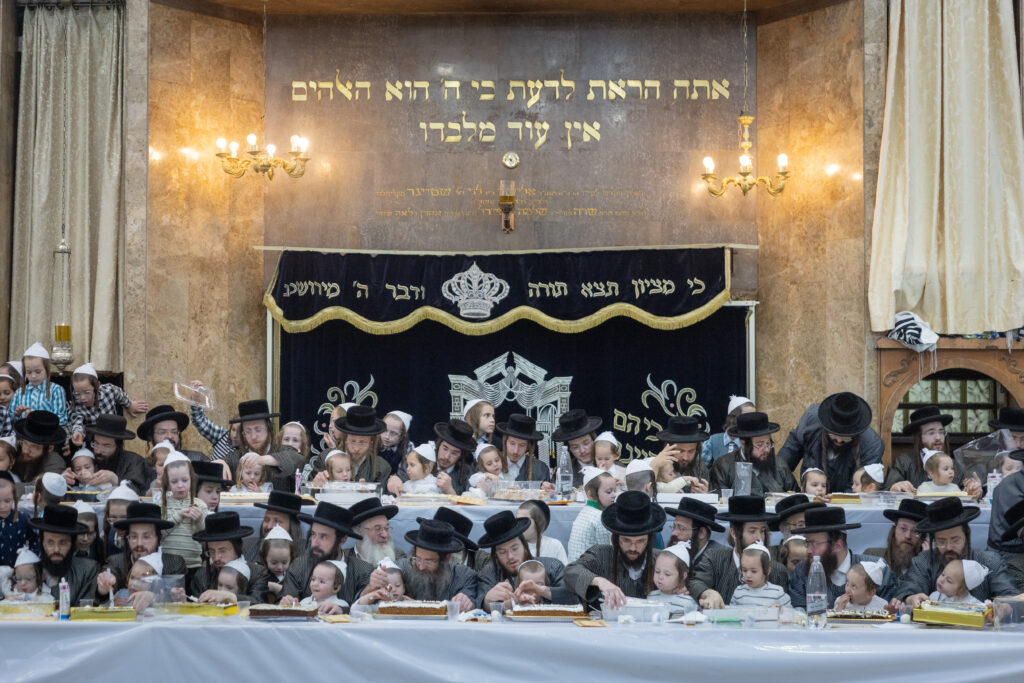
EVERY SIGNATURE MATTERS - THIS BILL MUST PASS!

EVERY SIGNATURE MATTERS - THIS BILL MUST PASS!
CLICK - GOAL - 100,000 NEW SIGNATURES! 75,000 SIGNATURES HAVE ALREADY BEEN SUBMITTED TO GOVERNOR CUOMO!

EFF Urges Court to Block Dragnet Subpoenas Targeting Online Commenters

EFF Urges Court to Block Dragnet Subpoenas Targeting Online Commenters
CLICK! For the full motion to quash: http://www.eff.org/files/filenode/hersh_v_cohen/UOJ-motiontoquashmemo.pdf

Monday, July 14, 2025

Gaza’s Grim Math — What Are We Really Fighting For?


Killed In Gaza - Courtesy Times Of Israel
 

Since the so-called “ceasefire” collapsed in March, 41 Israeli soldiers have been killed and hundreds more wounded. In that same time, the number of living hostages believed to remain in Gaza has dwindled to roughly twenty. Thirty are confirmed dead. Let that sink in: We are trading 41 living soldiers — fathers, sons, husbands, brothers — for the chance, not the certainty, of rescuing twenty possibly living hostages.

What am I missing?

We were told this war, at least in part, was about bringing our people home. That the trauma of October 7 demanded not just justice, but rescue. Yet the rescue is slipping away — one life at a time — and the war machine marches on, largely unchanged.

It’s hard to escape the conclusion that the hostages have become cover for a broader campaign. A war that was once framed as a moral imperative is now increasingly defined by strategic abstraction. “We are dismantling Hamas,” we are told. But what does that mean when Hamas leaders remain at large and its fighting force keeps reappearing — like weeds in ruins?

If this is no longer a hostage rescue mission, then what is it?

The government might say: This is about long-term deterrence. About securing Israel’s borders. About making sure October 7 never happens again. But ask any parent burying a soldier this week whether those goals feel clear, and you’ll get something murkier: confusion, exhaustion, grief.

The Gaza campaign is now a war without end, without metrics, without honesty.

It’s a war where numbers don’t lie, but leaders do.

Because if the truth were spoken plainly — that we are sacrificing dozens of soldiers for hostages who may already be dead, that Gaza will never be fully pacified, that Hamas will likely outlast this government — then the Israeli public would demand something politicians cannot afford: accountability.

This isn’t just a military quagmire. It’s a moral one.

The bitter irony is that every additional soldier lost makes it harder to stop. Politicians don’t want to admit that those 41 lives may have been lost for nothing. So more must be sent. More must die. All to justify the ones who already have.

This is the sunk-cost fallacy written in blood.

What I’m missing isn’t logic — it’s courage. The courage from our leaders to level with the nation, to admit that our objectives have drifted, our goals are unclear, and our young men are dying in a war that no longer makes sense.

Until then, the math will continue to haunt us.

And the dead will keep outnumbering the rescued.


https://blogs.timesofisrael.com/gazas-grim-math-what-are-we-really-fighting-for/


Three more karbonot today! 

Three IDF troops killed, officer seriously wounded in northern Gaza fighting
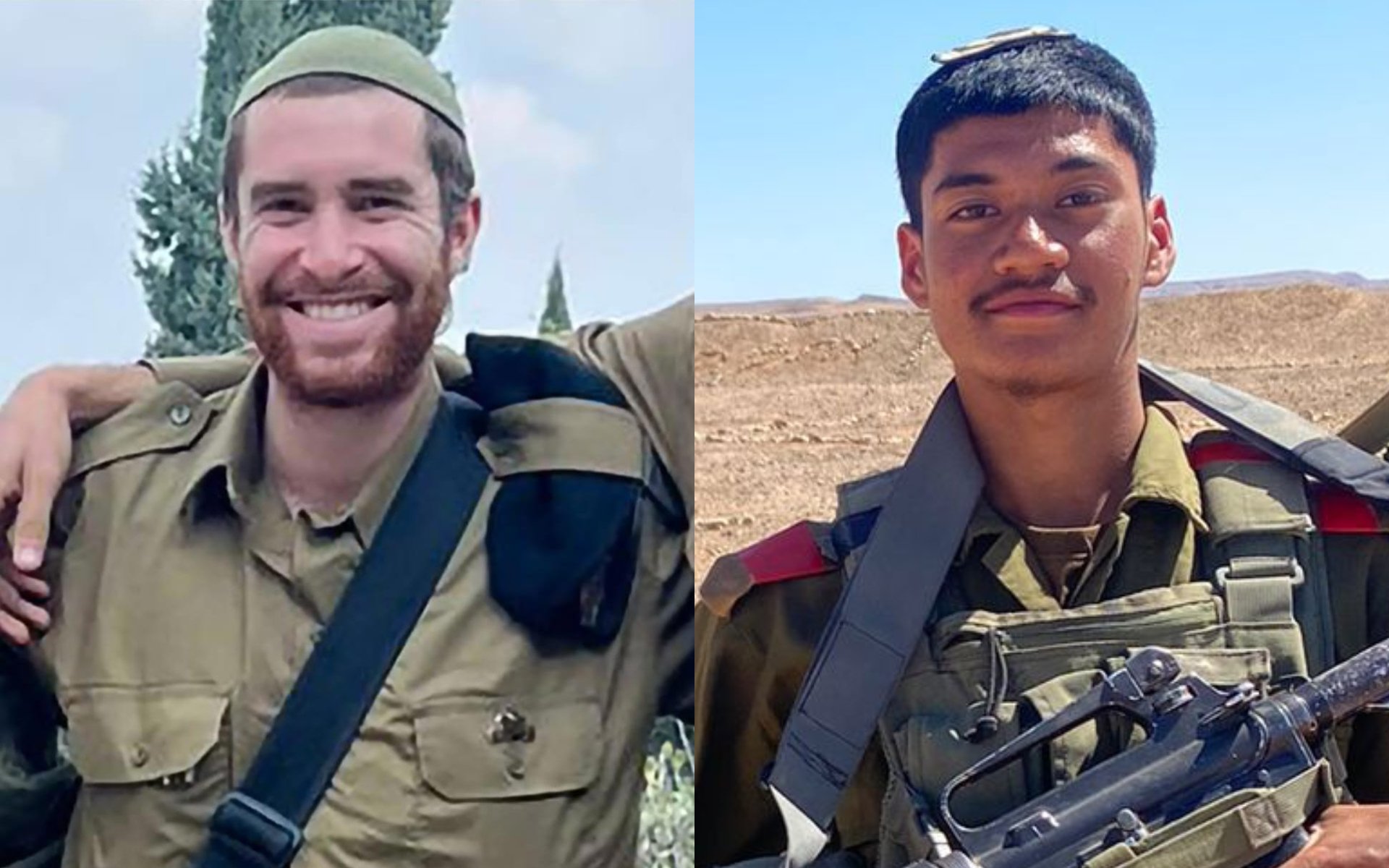
Sgt. Shlomo Yakir Shrem (left) and Staff Sgt. Shoham Menahem (right), killed during fighting in northern Gaza on July 14, 2025, alongside Sgt. Yuliy Faktor who is not pictured. (Israel Defense Forces)

Three IDF troops were killed and an officer was seriously wounded during fighting in the northern Gaza Strip today, the military announces.

The slain troops are named as:

Staff Sgt. Shoham Menahem, 21, from Yardena

Sgt. Shlomo Yakir Shrem, 20, from Efrat

Sgt. Yuliy Faktor, 19, from Rishon Lezion

They all served with the 401st Armored Brigade’s 52nd Battalion.

According to an initial IDF probe, the soldiers were in a tank that was likely hit by anti-tank fire. Other causes of the explosion are being investigated.

The incident took place in northern Gaza’s Jabalia at around noon.

https://www.timesofisrael.com/liveblog_entry/three-idf-troops-killed-officer-seriously-wounded-in-northern-gaza-fighting/?

Thursday, July 10, 2025

How Rabbi Shraga Feivel Mendlowitz Would View Today’s Haredim

What Would Reb Shraga Feivel Say?


Rabbi Shraga Feivel Mendlowitz, the legendary founder of Torah Vodaath and Torah Umesorah, the trailblazer of American Torah Jewry, was a man of vision, balance, and bravery. A man who built Torah in a barren American landscape, not by isolating from the world, but by harnessing the best of it to build a Torah society with integrity. Were he to witness today’s Haredi refusal to accept any form of secular education and the blanket rejection of army service in Israel, one must ask honestly: What would he say?

He would be heartbroken.

Reb Shraga Feivel was not a man of slogans or partisanship. He wasn’t trying to build a community of dependency, nor one allergic to responsibility. He believed in Torah im derech eretz — not just as a slogan, but as a way of preserving Torah in modernity without fear, without compromise, but also without delusion. He didn’t build Torah Vodaath as a ghetto. He built it to teach Jews how to live Torah lives in America. That meant understanding America. That meant knowing English. That meant earning a living, with dignity. That meant raising generations who were both committed to Hashem and capable of supporting their families.

And most of all — it meant taking responsibility.

Today’s Haredi refusal to include basic secular education in the yeshiva curriculum would have troubled him deeply. He fought against assimilation and ignorance — not by walling children off from knowledge, but by giving them the tools to use it properly. He trained students to live as Jews within modernity, not as medieval relics. He believed you could study math and remain a yarei shamayim. That you could master English literature and still bow before the wisdom of Chazal.

The total rejection of secular studies by many in the Israeli Haredi world is not a product of fear of Hashem — it’s a product of fear of the world. And Reb Shraga Feivel never feared the world. He feared sin. He feared mediocrity. But he did not fear exposure to knowledge. He built the Torah community by being in the world but not of it. He believed the Torah could stand up to scrutiny — and that if it couldn’t, we were teaching it wrong.

As for IDF service — the thought of thousands of healthy, capable Jewish men doing nothing while their brethren defend the country would have broken him. Not because he was a militarist. Not because he believed in the sanctity of the state. But because he believed in achrayus — responsibility. He believed that the Jewish people are one body, and no limb can say to the other, “I have no need of you.” He believed that Torah must lead, not hide. And leadership means sacrifice.

Imagine the pain he would feel seeing Torah used as a shield from duty, instead of a source of it. Reb Shraga Feivel knew the Torah world could not survive if it became a caste system of scholars and peasants — where some learn and others carry the burden. He knew Torah must be integrated into a life of service — to one’s family, to one’s community, and yes, to one’s country.

He would be proud of the yeshiva bochur who learns with intensity — and then dons a uniform when duty calls. He would admire the kollel fellow who spends his morning in Gemara and his afternoon teaching science in a frum school. He would respect the man who never stopped learning but also never stopped earning. That was his model.

What we call “Haredi” today, Reb Shraga Feivel would have called a distortion. Not because they lack sincerity — but because they lack the courage to meet the world head-on. Torah was never meant to be a hiding place. It was meant to be a guiding light.

Reb Shraga Feivel Mendlowitz did not come to America to build walls. He came to plant trees. Trees that could weather storms. Trees that could grow in American soil. Trees whose roots were deep, but whose branches could stretch toward the sun.

He would not recognize today’s Haredi refusal to learn math as a defense of Torah. He would call it a betrayal of Torah’s robustness. He would not see the refusal to serve in the IDF as spiritual heroism. He would see it as moral cowardice.

Because he believed in a Torah that elevates — not isolates. A Torah that builds a nation — not just a sect.

And he would expect no less from the Jews of the Jewish State.

by his grandson - Paul (Shraga Feivel) Mendlowitz 

https://en.wikipedia.org/wiki/Shraga_Feivel_Mendlowitz


REPUBLISHED
 

Wednesday, July 09, 2025

Israel, and the Jewish people at large, must learn from this past. Gratitude for friends must always be paired with vigilance. No deal is sacred. No alliance eternal. And the Jewish future cannot depend solely on any one power, party, or president.

That’s the game in the Middle East: what is promised at noon can be revoked by dusk.

The Land of Israel was won not through diplomacy, but resilience; not by White House decrees, but Jewish blood, sweat, and prayer. Promises come and go. 

In the kaleidoscope of Middle Eastern diplomacy, no deal ever truly lasts. Today’s alliance is tomorrow’s liability. Treaties inked in bold are quietly erased in footnotes a decade later. And while Israel is, justifiably, thankful for certain bold moves made by President Donald Trump, it would be foolish for Jews to believe this represents an eternal shift in America’s historical posture toward the Jewish state. History warns otherwise. The record of American presidents regarding the Jews and Israel is, at best, checkered—marked by a strange duality of lifesaving courage and shameful betrayal.

Franklin D. Roosevelt – The Deaf Ear of 1939

Franklin D. Roosevelt is still beloved by many Americans for guiding the country through the Depression and World War II. But his record on the Jews is a stain on his legacy. In 1939, as Nazi Germany's shadow grew darker, the United States refused to accept the St. Louis, a ship carrying more than 900 desperate Jewish refugees. The passengers, many of whom would later perish in the Holocaust, were turned away by FDR’s America. Though Roosevelt later supported the war effort against Hitler, the administration made deliberate choices to limit Jewish immigration, turning a blind eye at the hour of greatest need.

Harry Truman – Recognition and Regret

Harry Truman famously recognized the State of Israel just eleven minutes after it declared independence in 1948, over the objection of many in his own administration. Yet Truman's support came with limits. He imposed an arms embargo on the nascent Jewish state, forcing Israel to rely on black market and Czechoslovak arms to survive the 1948 War of Independence. His humanitarian instincts and biblical sympathies clashed with cold war realpolitik. He gave with one hand and withheld with the other.

Dwight D. Eisenhower – The 1956 Suez Humiliation

In 1956, following Egypt’s nationalization of the Suez Canal, Israel, Britain, and France launched a military campaign to wrest control. Israel succeeded militarily—but was politically betrayed. Eisenhower, fearing Soviet intervention and keen to assert U.S. influence in the region, demanded a full Israeli withdrawal. The U.S. pressured its ally to relinquish strategic gains without securing long-term guarantees. It was a moment that taught Israel a painful truth: American backing is never unconditional.

Richard Nixon – The Paradox of 1972–1973

In 1972, Richard Nixon made overtures to strengthen U.S.-Israel ties, understanding the Jewish vote and geopolitical leverage. But it was only after the shock of the Yom Kippur War in 1973 that Nixon ordered a vital resupply airlift to Israel—Operation Nickel Grass—against resistance within his own administration. Yet this same Nixon, revealed on tape to hold deeply antisemitic views, saw the Jews as a political nuisance and an ethnic stereotype. He aided Israel not out of love, but strategic necessity.

Jimmy Carter – Peace with a Side of Pressure

Jimmy Carter brokered the Camp David Accords in 1978, a landmark peace treaty between Israel and Egypt, for which he deserves credit. But Carter’s legacy is also tarnished by his later writings and rhetoric, accusing Israel of apartheid and consistently blaming it for the lack of peace. He viewed Israel through a moralizing lens that rarely demanded the same ethical rigor from its adversaries. His approach was idealistic but condescending—a peace that lacked understanding of the region’s intractability.

Ronald Reagan – Love in Rhetoric, Restraint in Practice

Ronald Reagan’s rhetoric overflowed with affection for Israel and the Jewish people. Yet in 1981, when Israel bombed Iraq’s Osirak nuclear reactor, Reagan publicly condemned the move. Later, during the 1982 Lebanon War, his administration pressured Israel to withdraw, and he even temporarily froze arms shipments. Reagan’s Holocaust remembrance was sincere, but his visit to Bitburg cemetery—where SS members were buried—betrayed a tone-deafness that cast a shadow on his otherwise warm relationship with Jews.

George H. W. Bush – Cold Calculation and the Loan Guarantee Fight

George H. W. Bush’s relationship with Israel was perhaps the most openly confrontational since Eisenhower. While he led a global coalition in the 1991 Gulf War and asked Israel not to retaliate against Iraqi SCUD missile attacks—a request Israel painfully honored—Bush's legacy with Jews is marred by the 1991 loan guarantees crisis. Israel requested $10 billion in U.S. loan guarantees to absorb Soviet Jewish immigrants, but Bush delayed them, tying the funds to a halt in West Bank settlement activity. In a now infamous moment, he cast himself as “one lonely guy” standing up to “a thousand lobbyists” on Capitol Hill—widely perceived as a dig at the American Jewish community. While pragmatic, Bush’s cold tone and conditional support revealed the limits of America’s strategic friendship.

Barack Obama – Affection and Alienation

Barack Obama’s relationship with Israel was complex and often tense. While he oversaw record levels of military aid and helped fund the Iron Dome missile defense system, his administration clashed repeatedly with the Israeli government over settlements, Iran, and Palestinian statehood. Most controversially, Obama pursued and signed the Iran nuclear deal—JCPOA—despite Israeli objections, seeing diplomacy where Israel saw existential threat. His final act in office—refusing to veto a UN resolution condemning Israeli settlements—was seen by many as a diplomatic slap in the face. Obama's posture was cerebral, cautious, and often emotionally cold toward Israeli security concerns.

The Unchanging Law of the Region

No matter the administration, one lesson recurs: American policy toward the Jewish state swings between affection and aloofness, support and scolding. Each president has, at one time or another, both helped and hindered Israel. Today’s celebration can quickly become tomorrow’s correction.

Israel, and the Jewish people at large, must learn from this past. Gratitude for friends must always be paired with vigilance. No deal is sacred. No alliance eternal. And the Jewish future cannot depend solely on any one power, party, or president. The Land of Israel was won not through diplomacy, but resilience; not by White House decrees, but Jewish blood, sweat, and prayer. Nations come and go. Promises come and go. 

But the Jewish people remain.


REPUBLISHED


https://blogs.timesofisrael.com/no-deal-is-sacred-no-alliance-eternal/

Tuesday, July 08, 2025

"And They Turned the Holy into a Circus" - Torah does not need your clown car of chumras. Torah does not tremble in the face of cholent.


Yitzchok Zilberstein - BANNING CHOLENT ON WEEKDAYS!

WIKIPEDIA: Yitzchok Zilberstein (Hebrew: יצחק זילברשטיין, also spelled Silberstein) (born 1934) is a prominent Orthodox rabbi, posek (Jewish legal authority)[1] and expert in medical ethics.[2] He is the av beis din of the Ramat Elchanan neighborhood of Bnei Brak, the Rosh Kollel of Kollel Bais David in Holon,[3] and the Rav of Mayanei Hayeshua Medical Center in Bnei Brak.[4] His opinion is frequently sought and quoted on all matters of halakha for the Israeli Litvak yeshiva community. 

*

There was a time — not long ago — when the word of a rabbi stirred souls, not soup. When a psak halacha was a reflection of eternity, not a reflection of insecurity. When Torah leadership was defined by humility, by wisdom, by a deep trembling before the Divine — not by fear of being out-pioused by the next bearded bureaucrat in line.

But now… now, my friends, we live in a generation of rabbinic theater. Of halachic clown shows disguised as daas Torah. Of men who wear the garments of greatness but issue rulings that make a mockery of Mount Sinai.

They tell us not to taste the cholent before Shabbos — as if the gates of Gehinnom lie hidden in a spoonful of barley. They tell brides to wear oven mitts at their weddings lest the touch of joy violate some invented stringency. They publish handbooks banning birthday cakes because they resemble foreign cult rituals. They decree that children should not laugh too loudly on Shabbos — because the angels might mistake it for weekday joy.

And I ask you: Is this Torah? Is this Yiddishkeit?

No, my friends. This is not Torah. This is Torah-ainment.
This is not yirat shamayim. This is fear-based fanaticism masquerading as piety.

 Fear Disguised as Frumkeit

 Torah does not need your clown car of chumras. Torah does not tremble in the face of cholent.

Torah is eternal, majestic, deep. It is the song of Moses, the fire of the prophets, the tears of Rabbi Akiva, the logic of the Rambam. And when rabbis turn it into a tool for performative extremism — they do not protect it. They betray it.

Where Are the Sane?

Where are the voices of sanity?
Where are the rabbis who say: “Enough. Enough with the circus. Enough with the petty, the absurd, the desperate need to make headlines by inventing halachic handcuffs.”

The Jew is not a clown. The Shabbos table is not a joke. The Beit Midrash is not a stage.

We need leaders who can tell the difference between kedusha and comedy.


We need teachers who speak with heart and halacha, not with a press release in one hand and a list of new bans in the other.

My friends, the sacred is being buried beneath piles of pamphlets, policies, and proclamations that are as absurd as they are unnecessary. The world is burning, the Jewish people are fracturing — and some of our rabbis are busy banning orange juice with pulp because it might remind someone of a grating instrument on Yom Tov.

We must reclaim Torah from the hands of those who cheapen it with their need to be holier than logic. We must say — with love, but with strength:

The Torah belongs to all of us — not just to the clowns with big brainless mouths!


REPUBLISHED

https://blogs.timesofisrael.com/and-they-turned-the-holy-into-a-circus/

Monday, July 07, 2025

Former Camp Dora Golding Director Accused Of Sex Abuse - The "Light Unto The Nations" Keeps Getting Dimmer!


A well-known Jewish summer camp for boys in Pennsylvania and several members of its leadership are being sued by a former attendee who alleges he was sexually abused by a senior staff member for years at the camp.


The civil complaint, filed in Pennsylvania state court Monday, June 16, names Camp Dora Golding in East Stroudsburg, its executive director Alexander Gold, and former assistant director Binyamin Daiches. The plaintiff, identified anonymously as “John Doe,” is represented by attorneys from Stark & Stark, P.C.

According to the suit, the alleged abuse occurred over multiple summers from 2004 to 2009 while the plaintiff was a minor attending the camp.

The complaint claims that the then-assistant director “groomed and isolated John Doe by showing him excessive attention and excusing him from camp activities for private, one-on-one time in secluded areas of the camp, including Daiches’ office and residence.”

It goes on to allege that Daiches repeatedly sexually abused and raped the boy when the victim was 13 and “particularly vulnerable” following the death of his father.

“These alleged instances include Daiches raping Doe in his camp bungalow and again in his private office, and forcing oral sex on him during a golf cart ride after curfew,” the plaintiff’s attorney, Carin O’Donnell, said in a statement.

The lawsuit alleges that camp officials were negligent in their oversight and failed to implement safeguards that would have protected campers. The suit also claims that other campers and staff observed concerning behavior at the time but that it was not appropriately addressed.

“As we allege in the complaint, this tragic and preventable abuse was the direct result of Camp Dora Golding’s failure to supervise its staff and protect its campers,” said O’Donnell. “Despite clear warning signs and repeated opportunities to intervene, the camp’s leadership ignored Daiches’ blatant grooming behaviors and allowed him unfettered access to vulnerable children, including John Doe.”

The lawsuit outlines several legal claims, including assault and battery, false imprisonment, negligence, and emotional distress, against all three defendants.

Camp Dora Golding is a longstanding private summer camp that serves boys in the Orthodox Jewish community. Its administrative offices are based in Brooklyn, New York.

Gold provided Daily Voice with the following statement in response to the lawsuit: “While we are unable to comment on active litigation, we can assure you that nothing is more important to us than providing every child at Camp Dora Golding with a safe and welcoming environment.”

https://dailyvoice.com/pa/allentown/former-camp-dora-golding-director-accused-of-sex-abuse/

 * 

Lawsuit Filed Against Camp Dora Golding and Its Leadership Alleges Repeated Sexual Abuse of Minor Camper by Assistant Director

Stroudsburg, Pa. (June 17, 2025) – An anonymous former camper of Camp Dora Golding filed a lawsuit in Pennsylvania state court yesterday against the camp, its Executive Director Alexander Gold, and former Assistant Director Binyamin Daiches. The suit alleges that Camp Dora Golding and its leadership were negligent in allowing Daiches to sexually abuse the camper when he was a minor over several years, and that they failed to protect Doe and other campers from unlawful sexual conduct by Daiches.

The complaint is captioned John Doe v. Camp Dora Golding, et al., docket number 003882-CV-2025 in the Monroe County, Pa., Court of Common Pleas. 

https://www.stark-stark.com/news/lawsuit-filed-against-camp-dora-golding-for-sexual-abuse/
 
https://www.stark-stark.com/

Wednesday, July 02, 2025

I write these words with both love and trepidation. Love, because Chabad has done incalculable good for Am Yisrael...


Deeply un-Jewish

 In every generation, we are tested. Not always by persecution or assimilation, but sometimes by something far more subtle: the recasting of our faith in the image of our emotions.

I write these words with both love and trepidation. Love, because Chabad has done incalculable good for Am Yisrael—bringing Torah and mitzvot to the ends of the earth, reaching Jews no one else could reach. But trepidation, because within the heart of that movement has grown something dangerous, something deeply un-Jewish, even as it wears the garments of Judaism: the theology of a dead messiah.

There is a segment within Chabad, and it is growing louder—not fading—who believe that the Lubavitcher Rebbe, zichrono livracha, is not just a tzaddik, not just a leader, but Mashiach himself.

They do not mean this metaphorically.

They sing it in synagogues, declare it on bumper stickers, and print it under every Chabad publication: “Yechi Adoneinu Moreinu v’Rabbeinu Melech HaMashiach…”

This is explicitly rejected in Torah and Rambam’s Yesodei HaTorah (Laws of the Foundations of Torah), where intermediaries are forbidden.

These are deeply theologically problematic within normative Judaism, which forbids any deification of man (Devarim 4:15-16, Isaiah 45:5).

Messianic ideology can easily become idolatrous—not by statues, but by deifying people, confusing agency with divinity, and promoting slogans that functionally replace God.

And when you remind them, gently or not, that the Rebbe passed away in 1994 without rebuilding the Beit HaMikdash, without gathering the exiles, without fulfilling a single messianic prophecy—they smile and say:  “He’s coming back.”

That’s Not Judaism. That’s Christianity.

Forgive the bluntness. I do not say this to offend, but to awaken.

To believe that a man can die, and still return to complete a messianic mission—that is not the Judaism of Moshe Rabbeinu, of Rashi, of the Rambam. That is the theology of another faith.

There is no cult of Moshe, no demand to wait for his return. In fact, the Torah goes out of its way to bury Moshe in secret (Deut. 34:6), perhaps to prevent exactly the kind of personality-centered religion that later messianism creates.

Contrast this with messianic groups today who print photos of dead leaders, chant their names in prayer, and await their second coming.

The Torah’s silence is thunderous. It was the Christians, not our sages, who invented the idea of a messiah who could die and come back. They too had a charismatic teacher. They too were devastated by his death. And rather than let go, they rewrote theology to match their pain.

That path led them away from Torah.

Are we prepared to walk that same road?

The Rambam Was Clear

    “If he dies or is killed, he is not the Messiah.” (Hilchot Melachim 11:4)

There is no asterisk. No footnote. No “unless his followers really believe he is.”The Rebbe himself never claimed to be Mashiach explicitly.  He knew halacha.

So why now do his followers make him into something he never claimed to be—something no Jew can be?

Portraits in Shuls, Prayers in His Name.

Walk into certain Chabad shuls, and you may find the Rebbe’s image above the ark. Ask a meshichist for a blessing, and he may say, “The Rebbe will bless you.” I have heard children say they "daven to the Rebbe." "Fax the Rebbe."

This is not just troubling—it’s tragic. Because these are Jews with fire in their hearts, who love Hashem. But they have been led astray by a theological drift that has crossed a red line.

And it is the job of rabbanim—not historians, not PR men—to say: This is not Torah. This is not Judaism.

We already know. Sabbatai Tzvi. Jacob Frank. Bar Kochba. 


Each time we failed to call madness by its name, the damage multiplied.

But this time the confusion is even more seductive, because it’s wrapped in mitzvot—in tefillin on street corners, in warm Shabbat invitations, in stunning acts of Ahavat Yisrael.

But mitzvot cannot justify heresy. Not even beautiful ones.

To the silent rabbanim in Chabad—where are you?

You know this isn't what the Rebbe wanted. You know the Rambam would never tolerate this. Say it. Stop it. Clean your house. The rest of Klal Yisrael cannot do it for you.

We are not your enemies. But we will not be enablers either.

The Torah does not ask us to wait for Mashiach as an excuse for inaction. It commands us to build a just society, study Torah, keep mitzvot, raise families, fight injustice, and serve Hashem—every day, with no delays.

The Mashiach will come when God wills. Not when we force the issue. Neon Signs on highways and freeways are not part of Hashem's plan! And he will be a man—not a memory.

Until then, let us sanctify the present—not romanticize the past.


REPUBLISHED

https://blogs.timesofisrael.com/habad-has-done-incalculable-good-for-am-yisrael/ 

Tuesday, July 01, 2025

Chabad Plus - Jews Are A Religion Of Allegiance To The Torah - Not One Of Messianic Cults! No Need For Additional Crazies!


Anti-Zionist Haredi Group Prepares for Third Temple: Establishes Study Program for Third Temple


Herod's Temple as imagined in the Holyland Model of Jerusalem. It is currently situated adjacent to the Shrine of the Book exhibit at the Israel Museum in Jerusalem (wikipedia)

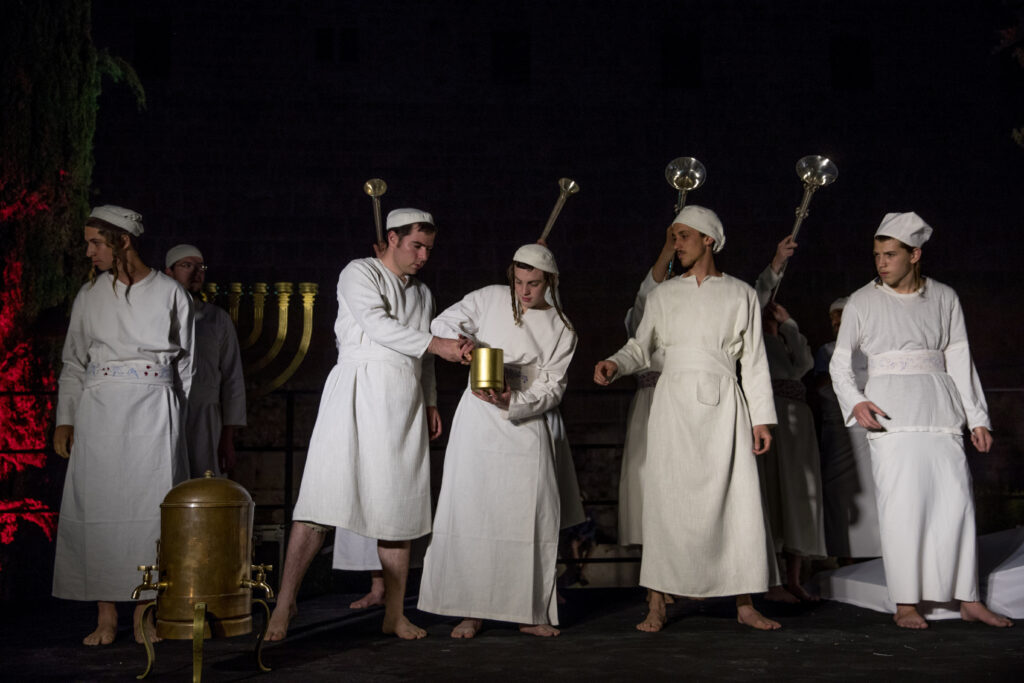
In a remarkable development that highlights the complex relationship between religious belief and political ideology within Orthodox Judaism, the Toldos Aharon chassidic movement has established a specialized study program for Jewish priests (kohanim) to prepare for Temple service, despite the group’s well-known anti-Zionist stance.

Toldos Aharon represents one of the most insular and conservative streams within Haredi Judaism. The chassidic group is characterized by its extreme conservatism and fervent opposition to Zionism, typically rejecting the legitimacy of the modern State of Israel and maintaining strict separation from Israeli society and institutions.

This ideological position makes their recent initiative all the more striking. Under the leadership of the Toldos Aharon Rebbe, Rav Dovid Kohn—himself a kohen—the movement has launched a kollel (study program) exclusively dedicated to learning the intricate laws governing Temple service.

The Rebbe’s decision stems from his belief that current world events signal the approaching arrival of the Moshiach (Messiah). “We clearly see that we’re at the time of Ikvesa d’Meshicha (the final stage of redemption) and the third Beis Hamikdash (Temple) will be built soon in our days,” the Rebbe recently declared, using the Hebrew term for the “footsteps of the Messiah.”

Ultra Orthodox Jews of the chassidic dynasty of ‘Toldos Aharon” take part in a ceremony in Meah Shearim, Jerusalem, on June 12, 2025. 

His reasoning reflects a practical theological concern: “What will the Moshiach think when he appears to redeem Am Yisrael and he won’t have a team of Kohanim ready for their service in the Beis Hamikdash?”

The program operates from 4:40 a.m. to 7:00 a.m., with participants receiving a monthly stipend of $500 to study the complex laws of Temple service until the arrival of the Messiah.

The Paradox of Anti-Zionist Temple Preparation

This initiative presents a fascinating paradox within Orthodox Jewish thought. While Toldos Aharon categorically rejects Zionism and the current State of Israel, they are actively preparing for the rebuilding of the Temple in Jerusalem—the very city that serves as Israel’s capital.

This apparent contradiction reflects a fundamental theological distinction within anti-Zionist Haredi thought: they oppose human efforts to establish Jewish sovereignty before the arrival of the Messiah, but they simultaneously prepare for the divine restoration that they believe will come through messianic intervention, not human political action.

Toldos Aharon’s kollel is not an isolated phenomenon. Several other organizations have launched similar initiatives in recent years, though typically from pro-Zionist or neutral perspectives:

The Temple Institute, founded in 1987, established both a school for kohanim in 2016 and a registry of qualified priests four months earlier. Their program requires participants to have clear priestly lineage, be born and raised in Israel, and maintain the laws of ritual purity incumbent upon priests.

Additionally, the Kehuna Academy, launched five years ago by Rabbis Amichai Cohen and Peretz Rivkin, offers online education for kohanim preparing for Temple service. This initiative echoes historical precedent: until his death in 1933, the renowned Rabbi Yisrael Meir HaKohen Kagan (the Chofetz Chaim) oversaw a similar learning program in Poland.

As part of the Temple Institute, Jewish priests prefrom a Passover Sacrifice ‘practice’ ceremony at Davidson Center in Jerusalem Old City, on March 26, 2018. The Temple Institute is dedicated to every aspect of the Biblical commandment to build the Temple on Mount Moriah (the Temple Mount) in Jerusalem.

Modern science has provided remarkable validation for the preservation of the priestly lineage. Over 98% of Jewish men who identify as kohanim share a specific genetic marker, providing scientific evidence for the integrity of the patrilineal priestly heritage that has been maintained over nearly 2,000 years since the destruction of the Second Temple.

This genetic continuity, combined with the careful preservation of priestly genealogies within Jewish communities, has led to speculation that modern kohanim could indeed serve in a rebuilt Temple, despite the nearly two-millennium gap in practical Temple service.

The Toldos Aharon initiative raises profound questions about the intersection of religious preparation and political ideology within Judaism. While the group maintains its opposition to the current State of Israel, their active preparation for Temple service suggests a complex theological framework that distinguishes between human political endeavors and divine messianic fulfillment.

This development may signal a shift in how some anti-Zionist groups approach the question of Jewish sovereignty and Temple restoration, maintaining their political opposition while simultaneously preparing for what they view as inevitable divine intervention.

The establishment of this kollel represents more than just religious study—it embodies the enduring tension between messianic hope and political reality that continues to shape Orthodox Jewish thought in the modern era.

Thursday, June 26, 2025

"Satmarniks, Agudaniks, Yeshivaniks, lend me your hats; We came to bury Cuomo, not to praise him" - Enter Zohran Kwame Mamdani: If Cuomo tried to regulate your Purim party, Mamdani wants to cancel your homeland.


The Orthodox world thought they fought their battle with the state during COVID. They burned masks, blocked buses, rallied on 13th Avenue. But that was just about public health policy. This is about the erasure of their identity.


Remember when Orthodox Jews in New York thought Andrew Cuomo was the worst thing to hit their neighborhoods since Bloomberg’s soda ban? Back then, Cuomo was the overreaching tyrant who dared to shut down synagogues while keeping liquor stores open. He was the guy who sent inspectors to religious schools but let riots go unchecked. In Williamsburg and Boro Park, he became the face of state-sanctioned hypocrisy, the man who tried to teach Jews how to daven six feet apart while he packed his Emmy shelf and harassed half the women in Albany.

But Cuomo was just the warm-up act.

Enter Zohran Kwame Mamdani, the Democratic Socialist from Astoria — the one-man wrecking ball of everything Orthodox Jews hold dear. If Cuomo tried to regulate your Purim party, Mamdani wants to cancel your homeland. If Cuomo was a nuisance, Mamdani is an ideological crusader on a mission to “liberate” Palestinians by throwing Israel — and the Jews who support it — under your bus, separated by shower curtains.

Cuomo may have closed synagogues. Mamdani wants to close your voice, your values, and your Zionism.

Let’s be clear: Zohran Mamdani is not your typical New York liberal. He’s not just some progressive who wants bike lanes and rent control. No — he’s the poster boy for a new wave of anti-Zionist orthodoxy where Jews are tolerated only if they apologize for existing as a people with a state. He’s proud to back BDS, calls Israel apartheid, and has no problem standing with fringe Jewish groups who think the IDF is worse than Hamas.

And he’s not in a Tel Aviv café shouting into a megaphone — he’s in the New York State Assembly, shaping discourse, rallying young voters, and signaling to your kids that supporting Israel is a sin, but smashing capitalism is a mitzvah.

The Orthodox world thought they fought their battle with the state during COVID. They burned masks, blocked buses, rallied on 13th Avenue. But that was just about public health policy. This is about the erasure of their identity.


Mamdani doesn’t care how many Holocaust survivors live in Midwood. He doesn’t care about rockets on Sderot. To him, Israel is a settler-colonial project and Jewish safety is negotiable. The Jewish story, as far as he’s concerned, needs to be retold — minus the part where Jews fought for survival in their ancestral homeland.

What’s worse? He doesn’t need your vote. He doesn’t want your vote. And he’s not scared of your rabbis, your press releases, or your donor dinners.

Orthodox leaders thought they had seen hostility before. They’ve dealt with tone-deaf bureaucrats, smug liberals, and yes, even self-hating Jews. But Mamdani is a different breed: young, charismatic, and utterly indifferent to Jewish outrage. If anything, Orthodox opposition boosts his street cred.

So now what? You tried working within the system. You backed Eric Adams. You got photo ops with Hochul. But the Zohrans of the world aren’t running to make friends — they’re running to replace you.

If Cuomo was a battle, Mamdani is a war — not on religion, but on the legitimacy of your place in progressive America. A war where the line between anti-Zionism and antisemitism gets blurrier every day — and no one on the Left seems to care.

Orthodox Jews in New York once rallied against a governor who locked their doors.


Now they face a movement that wants to erase their voice.

And if they don’t wake up fast, Zohran Mamdani will be just the beginning.

Good Shabbos Comrades. 

https://blogs.timesofisrael.com/satmars-agudaniks-yeshivaniks-lend-me-your-hats/

Wednesday, June 25, 2025

Germany to Israel: "You're doing what needs to be done, but we'd rather not be seen doing it ourselves."


In a recent and widely noted statement, German Chancellor Friedrich Merz declared that “Israel is doing the dirty work for all of us”—a phrase that instantly triggered debate across Europe and the Middle East. While intended as a form of solidarity with Israel in its ongoing war against Hamas and regional threats, Merz's language raises deep moral, political, and historical questions about Europe's role in the Middle East and the ethics of outsourcing war, responsibility, and justice.

Germany's relationship with Israel is unlike any other nation's, rooted in the unspeakable crimes of the Holocaust and the enduring moral debt Germany owes to the Jewish people. When a German leader speaks of Israel engaging in “dirty work,” it echoes uncomfortably with historical overtones. Merz may have meant that Israel is confronting terrorism and radicalism on behalf of the democratic world. But the phrasing risks portraying Israel as a subcontractor of Western interests—doing morally compromising or violent tasks while others look away.

The irony is striking: Germany, which once perpetrated genocide against Jews, now praises Jews for conducting brutal warfare that Germans feel too conflicted or politically paralyzed to endorse or undertake themselves. In the name of moral support, Merz inadvertently offloads moral ambiguity onto Israel—saying, in effect, "You're doing what needs to be done, but we'd rather not be seen doing it ourselves."

The term “dirty work” is morally loaded. It suggests violence, compromise, actions taken in shadow rather than daylight. In the context of Israel’s military campaign—particularly in Gaza, where thousands of civilians have died—calling it “dirty work” implicitly acknowledges the controversial, even unsavory, nature of the tactics used. If Israel is acting in ways that violate international norms, the West cannot simply applaud from the sidelines while absolving itself of complicity.

Merz’s framing shifts responsibility away from Europe. It allows European leaders to enjoy the strategic benefits of a weakened Hamas or a deterred Iran without confronting their own populations with the bloody consequences of such a campaign. It is a dangerous moral outsourcing: Israel takes the bullets, draws the protests, absorbs the UN resolutions—while Europe maintains a cleaner image.

From a purely realpolitik perspective, Merz’s statement isn’t entirely inaccurate. Israel is on the front lines of a broader struggle against Iran’s regional proxies, militant jihadism, and anti-Western extremism. Many European capitals prefer not to get directly entangled in the region’s chaos. But realpolitik does not excuse moral cowardice. If Europe truly sees Israel’s war as a defense of Western civilization, then it should stand beside Israel not just in words but in shared accountability, humanitarian concern, and post-conflict rebuilding. Instead, Merz’s words reflect a strategy of convenient distance. 

 Instead of framing Israel as the West’s attack dog, Europe should engage more directly in conflict resolution, support diplomatic solutions, and be willing to bear the moral and political costs of its own security doctrine.

Chancellor Merz’s comment was likely meant as praise. But in calling Israel’s actions “dirty work,” he unintentionally admitted what many Western leaders try to hide: they are comfortable letting Israel wage morally fraught wars so long as it keeps European capitals safe. It is a revealing moment of ethical evasion—a statement that tries to express solidarity, but instead exposes the deep imbalance in how the West views war, allies, and its own responsibility.

If the West believes the war is just, then it must also own it. If the war is unjust, it must not be silently condoned. Either way, the phrase “dirty work” is no compliment. It is a confession.

https://blogs.timesofisrael.com/germany-to-israel-thanks-for-doing-our-dirty-work/

Tuesday, June 24, 2025

"Thank You, Mr. Trump – A Note of Gratitude From a Jewish Never-Trumper


I never thought I’d say this, Mr. Trump — and please don’t let it go to your head — but today, I owe you thanks.

I didn’t vote for you. I protested you. I laughed at your spelling, cried at your cruelty, and screamed into the void when you “truth’d” about disinfectant cures. I watched you hug flags, butcher Bible verses and sell Trump bibles, and confuse Iran with Iraq with a map upside-down. I am, proudly, a card-carrying member of the “Never Trump” tribe — mezuzah on the door, and more than a dozen op-eds about why you were dangerous.

But today, I write with a rare and uncomfortable feeling: gratitude.

Because despite your vanity, your Twitter tantrums, your golf obsession, and your strange love letters to dictators — you bombed Iran.

And not for ratings (maybe). Not for oil (we hope). Not even because Mark Levin told you to (okay, maybe a little). But because, at the eleventh hour, with pressure from every direction, you did what needed to be done.

You saw a threat. You recognized the moment. You made the call.

You bombed the regime that funds terror from Damascus to Gaza, from Hezbollah tunnels to Houthi drones. You struck the architects of death who chant “Death to America” while building centrifuges and exporting explosives. You did what others only warned about. You sent a message — not in Hebrew, not in Arabic, but in the universal language of action: "Not on our watch."

And yes, I think about escalation. I fear what comes next. But for one surreal moment, I watched as the world’s most unpredictable man did the most predictable, necessary thing: he defended Israel, the West, and the principle that tyrants don’t get to act without consequence.

So thank you, Mr. Trump.

You’re still the man who cozied up to racists, sabotaged democracy, and made a mockery of decency. I still oppose almost everything you stand for. But even a bleached blonde broken clock — can be right once in a while.

And today, from one very stubborn Jewish never-Trumper: you were right.

Let the record show — in between the chaos and the narcissism — for one moment, you bombed the right bad guys.

Just… please don’t sing and do the ridiculous Trump dance about it at your next rally. Do me a personal favor (if you seek more praise from me), please make Tucker Carlson the US Ambassador to Tehran.

Thanks.

Paul Mendlowitz aka The Unorthodox, Orthodox Jew 

PS:
Now back to fighting you on everything else.


We have received your email.  Thank you for sharing your thoughts with President Donald J. Trump.

The willingness of the American people to stay informed is essential to our enduring democracy.  Please know that President Trump will never stop fighting for the citizens of our great Nation!

For additional information about President Trump’s policy initiatives or current events at the White House, please visit www.WhiteHouse.gov.


FEATURED POST AT THE TIMES OF ISRAEL

 https://blogs.timesofisrael.com/a-note-of-gratitude-from-a-jewish-never-trumper/