EVERY SIGNATURE MATTERS - THIS BILL MUST PASS!

EVERY SIGNATURE MATTERS - THIS BILL MUST PASS!
CLICK - GOAL - 100,000 NEW SIGNATURES! 75,000 SIGNATURES HAVE ALREADY BEEN SUBMITTED TO GOVERNOR CUOMO!

EFF Urges Court to Block Dragnet Subpoenas Targeting Online Commenters

EFF Urges Court to Block Dragnet Subpoenas Targeting Online Commenters
CLICK! For the full motion to quash: http://www.eff.org/files/filenode/hersh_v_cohen/UOJ-motiontoquashmemo.pdf

Thursday, July 09, 2015

America Under O-B-A-M-A ---- and he's got 18 MORE MONTHS!

Ladies and Gentlemen, It's Time to Panic 

Have you noticed anything odd going on this morning? Oh yes. Let us be the first to tell you that the time to panic is upon us. 

ITEM: The New York City subway system suffered an atrocious commute today, with some trains being inexplicably stranded in stations for long periods of time. 

ITEM: The website “The Dissolve” folded today.

ITEM: United Airlines was forced to ground all of its flights after its computer system mysteriously stopped working.

ITEM: The New York Stock Exchange suspended trading today after its computerized trading system mysteriously stopped working. 

ITEM: Immediately after, the Wall Street Journal’s website mysteriously stopped working. 

ITEM: More than 2,500 people in Washington, DC mysteriously lost power. 

It seems our nation’s centers of powers are facing a mysterious and spreading collapse. 

http://gawker.com/ladies-and-gentlemen-its-time-to-panic-1716514222?utm_campaign=socialflow_gawker_facebook&utm_source=gawker_facebook&utm_medium=socialflow

Wednesday, July 08, 2015

Allegations That Orthodox Rabbi's Wife Knew Her Husband Ezra Sheinberg Was Raping Women - Possibly Directly Involved & Present In The Room While Rapes Transpired According To Police!

NEW ALLEGATIONS THAT EZRA SHEINBERG'S WIFE  WAS PRESENT DURING "TREATMENT" OF WOMEN

חשד: אשת "הרב מהצפון" נכחה בביצוע העבירות

התפתחות בחקירת הפרשה שבה חשוד רב מוכר בביצוע עבירות מין נגד נשים: אשתו נחקרה בחשד שידעה על מעשיו ובמקרים מסוימים אף נכחה, לכאורה, בחדר שבו העניק "טיפול" לנשים. סנגורה: היא מכחישה

http://www.mynet.co.il/articles/0,7340,L-4677233,00.html 

Tuesday, July 07, 2015

Three additional complaints of sexual assault were filed Monday night against a well-known rabbi, Ezra Sheinberg, facing accusations of rape...

ezra sheinberg
RABBI EZRA SHEINBERG

Additional complaints filed against Israeli Orthodox rabbi accused of rape


 Rabbi from northern Israel was arrested last week while attempting to flee the country. His identity remains under gag order. Except HERE!


Three additional complaints of sexual assault were filed Monday night against a well-known rabbi facing accusations of rape. ( 8 Women Have Come Forward Thus Far)


The rabbi was arrested Thursday evening at Ben-Gurion International Airport when he tried to leave the country. His remand was extended until Wednesday and a gag order was issued.

Nazereth District Court Judge Ester Helman rejected the rabbi's appeal of the charges filed against him on Tuesday morning, and ruled that his identity can be revealed, though she granted the defense's request to withhold publication until 4:00 P.M. on Wednesday, to allow for an appeal to be filed with the Supreme Court.

In her ruling, the judge wrote "the investigative materials brought forward in this incident are significant and jarring, and include more than one complaint. Further, there is indication of widespread and systematic harm against other victims."

The three complaints filed Monday night bring the total number of complaints to eight. A source with intimate knowledge of the scandal told Haaretz on Monday that other complaints are likely to follow. "It's very safe to assume that the last word hasn't been said."

The story began last week, when three leading rabbis decided to expel the suspect from the city where he runs several religious institutions, after they received information regarding alleged sexual crimes he committed. At that stage, the police had not received any complaints against the rabbi.

Last week, in the wake of reports of his expulsion, a woman filed a police complaint for sexual harassment ostensibly committed 13 years ago. The complaint is being investigated, including whether the statute of limitations applies.

That same night, another woman filed a complaint for rape that allegedly took place a few years ago. A source involved in the story claimed Thursday that more complaints are expected. A spokesman for the Northern District of Israel Police declined to give details.

The suspect’s attorney, Efraim Damari told Haaretz last week that the rabbi denies the acts attributed to him. “He’s cooperating fully with the police, giving his complete version. At this point we’ll wait for the conclusion of the investigation. The rabbi believes that this is groundless slander.”

About The Yeshiva


Yeshivat Orot HaAri was founded in the Safed, Israel in the year 1999 as a pre-army yeshiva by Rabbi Ezra Sheinberg. The yeshiva's name brings together two giants of Torah, Rabbi Isaac Luria, known as the AriZal, who lived in Safed, and Rabbi Abraham Isaac HaCohen Kook, the first Chief Rabbi of Israel. The yeshiva was established according to the instruction of Rabbi Mordechai Eliahu, president and spiritual leader of the yeshiva.

http://www.haaretz.com/news/israel/1.664784

Monday, July 06, 2015

Israeli Orthodox Rabbi Ezra Sheinberg, until recently head of a yeshiva and other institutions in Tzfat and Kiryat Shmona, was arrested by Israeli police at Ben Gurion Airport as he attempted to flee the country. His name may not be reported in Israel according to a judicial gag order obtained by the police. He stands accused by married women among his followers of engaging in sexual acts and rape....

Orthodox Rabbi Accused of Rape Arrested Fleeing Israel, His Identity Under Police Gag Order (Except Here)


ezra sheinberg
Rabbi Ezra Sheinberg, deposed after accusations of rape among married female followers

Israeli Orthodox Rabbi Ezra Sheinberg, until recently head of a yeshiva and other institutions in Tzfat and Kiryat Shmona, was arrested by Israeli police at Ben Gurion Airport as he attempted to flee the country.  His name may not be reported in Israel according to a judicial gag order obtained by the police.  He stands accused by married women among his followers of engaging in sexual acts and rape.  He was removed from his state-funded post after the investigation began.

Sheinberg was ordained by Rabbi Mordechai Eliyahu, then the chief rabbi of Tzfat.  The former founded a pre-military yeshiva in Tzfat in 1999.  This phenomenon has contributed markedly to the massive increases in settler officers and a rightist slant among the IDF officer corps.  He also led 3,000 settlers in prayer at Joseph’s Tomb a holy site in Nablus under contention between radical settlers and Muslims.

eliezer berland
Rabbi Berland on his way to court in full religious regalia (EPA)

Sheinberg has cultivated relationships with the Israeli Orthodox women’s community.  This rebbetzin even boasts of taking spiritual and halachic supervision from him.  I imagine this passage may disappear from her website soon (unless she is one of his victims).

The yeshiva he founded, Yeshivat Ha’Ari, has removed his biographical page, which is preserved here (in Hebrew).

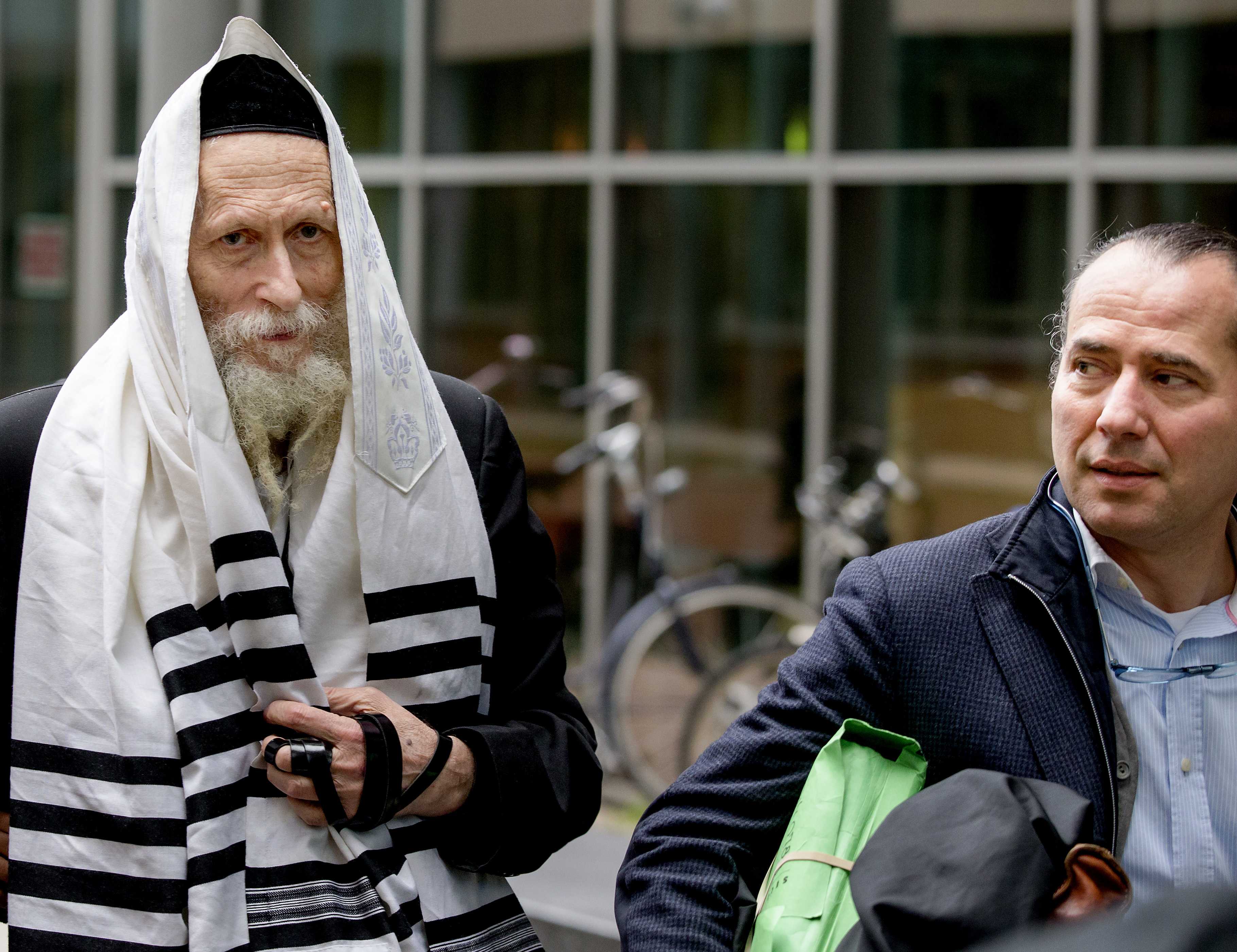
In a similar development, Rabbi Eliezer Berland is resisting deportation from Holland to Israel, where he stands accused of similar sexual crimes.  Berland has taken to donning his full religious regalia in court hearings, including tallit and tefillin.  This is certainly not just an exploitation, but a perversion of Judaism in order to save the neck of an accused sex abuser.  It would make Moses roll over in his grave and should make most Jews sick to their stomach.

http://www.richardsilverstein.com/2015/07/03/orthodox-rabbi-accused-of-rape-arrested-fleeing-israel-his-identity-under-police-gag-order/
 

Thursday, July 02, 2015

“I was an abused child and I didn’t really know it,” said Berg, who is now 18. “I always thought that’s what’s normal. I did not realize that it was not okay.”

Samantha Berg, teen beauty queen, has serious message

Overcame abuse, now she wants to help others 


Samantha Berg, Miss Teen Massachusetts International

 Miss Teen Massachusetts International, Samantha Berg, is more than just a pretty face. The recent Newton South High School graduate is using the pageant world as a platform to promote her cause – helping raise awareness of child abuse. The issue is a personal one for Berg, who was sexually abused by her father from the time she was about three years old until she was 16.

“I was an abused child and I didn’t really know it,” said Berg, who is now 18. “I always thought that’s what’s normal. I did not realize that it was not okay.”

She found comfort in the Jewish community. Berg, who belongs to Temple Beth Avodah in Newton and attends a midrasha (Torah class for women) every week, turned to Jewish Family & Children’s Service’s ( JF&CS) Journey to Safety program to seek counseling and find a way to put a stop to the abuse. “From the outside, we looked like a big, happy family,” she said. “That’s not what it was like [in reality].”

Now she wants to share her story and help other children who are going through a similar struggle. “I wanted to take a stand against abuse and pageants were a way to do that,” she said. “I knew if I could win, I’d have a voice.”

At first, Berg thought beauty contests would be like they are portrayed on the reality TV show “Here Comes Honey Boo Boo.” But to her surprise, “Pageants are nothing like that,” she said. “I thought it was about girls making each other feel bad and that’s not true. We’re all so supportive of each other.” Being a Jewish Miss Teen Massachusetts is not easy. Most other contestants are of different faiths and it is customary to pray before various events. Berg said that she usually joins in, but davens in a Jewish way. “When we have a moment to pray, I do pray because I am so lucky to be where I am and I’m so thankful for it.” Her next pageant is Miss Teen International in July.

Berg, who will attend High Point University in North Carolina in the fall, where she will study special education, is spending her summer making appearances at various events as Miss Teen Massachusetts International. Last week, she hosted an event at Tobey Grey, a clothing store, where 10 percent of the proceeds went toward JF&CS Teen Safe, a program that works to prevent teen dating abuse in the Jewish community. The reason the event centered on clothing was to draw attention to the fact that too often, victims get blamed for bringing on the sexual abuse with what they wear.

She also wanted to give back to the organization that helped her. “JF&CS made me feel like I wasn’t alone,” Berg said. “Through it all I felt so alone, and that it’s only happening to me, and ‘ Why me?’” Through Journey to Safety and Teen Safe programs, she met other girls and women in similar situations. She learned about the prevalence of child abuse. According to the National Center for Victims of Crime, one in five girls is a victim of child sexual abuse.

“Facts like that are so important,” Berg said.

In counseling, she also found out that rape and abuse are not often committed by strangers and these acts do not take the violent form that is often portrayed on TV. “When I thought of abuse, I thought it was about kicking and screaming, but that’s not what it is,” she said. “All my abuse came from someone I trusted so much and knew so well. When I was around him, I didn’t have my guard up.”

Berg was afraid of the family breaking apart, but she eventually worked up the courage to tell her mother. Her parents are currently going through a divorce and Berg took out a restraining order against her father.

For her senior year project, Berg worked together with JF&CS, conducting interviews with the counseling staff on ways to raise awareness of child abuse. “It was empowering because they are the people who helped me and I got to ask them how I can help,” she said.

To contact Samantha Berg for an appearance, please email samantharachael13@gmail.com.

http://www.thejewishadvocate.com/news/2015-07-03/Top_News/Samantha_Berg_teen_beauty_queen_has_serious_messag.html

Wednesday, July 01, 2015

The Psychopath & His Confused Congregation

 Psychopathy (/saɪˈkɒpəθi/), also known as—though sometimes distinguished from—sociopathy (/ˈsoʊsiəˌpæθi/), is traditionally defined as a personality disorder characterized by enduring antisocial behavior, diminished empathy and remorse, and disinhibited or bold behavior. It may also be defined as a continuous aspect of personality, representing scores on different personality dimensions found throughout the population in varying combinations. The definition of psychopathy has varied significantly throughout the history of the concept; different definitions continue to be used that are only partly overlapping and sometimes appear contradictory.[1]

Hervey M. Cleckley, an American psychiatrist, probably influenced the initial diagnostic criteria for antisocial personality reaction/disturbance in the Diagnostic and Statistical Manual of Mental Disorders (DSM), as did American psychologist George E. Partridge.[citation needed] The DSM and International Classification of Diseases (ICD) subsequently introduced the diagnoses of antisocial personality disorder (ASPD) and dissocial personality disorder, stating that these have been referred to (or include what is referred to) as psychopathy or sociopathy.[1][2][3][4] Canadian psychologist Robert D. Hare later repopularised the construct of psychopathy in criminology with his Psychopathy Checklist.[1][5]

Cleckley describes the psychopathic person as outwardly a perfect mimic of a normally functioning person, able to mask or disguise the fundamental lack of internal personality structure, an internal chaos that results in repeatedly purposeful destructive behavior, often more self-destructive than destructive to others. Despite the seemingly sincere, intelligent, even charming external presentation, internally the psychopathic person does not have the ability to experience genuine emotions. Cleckley questions whether this mask of sanity is voluntarily assumed to intentionally hide the lack of internal structure, but concludes it hides a serious, but yet imprecisely unidentified, semantic neuropsychiatric defect.[3] Six editions of the book were produced in total, the final shortly after his death. An expanded fifth edition of the book had been published in 1976 and was re-released by his heirs in 1988 for non-profit educational use. 
Cleckley describes the psychopathic person as outwardly a perfect mimic of a normally functioning person, able to mask or disguise the fundamental lack of internal personality structure, an internal chaos that results in repeatedly purposeful destructive behavior, often more self-destructive than destructive to others. Despite the seemingly sincere, intelligent, even charming external presentation, internally the psychopathic person does not have the ability to experience genuine emotions. Cleckley questions whether this mask of sanity is voluntarily assumed to intentionally hide the lack of internal structure, but concludes it hides a serious, but yet imprecisely unidentified, semantic neuropsychiatric defect.[3] Six editions of the book were produced in total, the final shortly after his death. An expanded fifth edition of the book had been published in 1976 and was re-released by his heirs in 1988 for non-profit educational use. - See more at: http://theunorthodoxjew.blogspot.com/#sthash.CQoMOfuF.dpuf
Rabbi Is Staying; Who Will Go? 

Jonathan Rosenblatt applauded for apology, but some find situation ‘untenable.’


Rabbi Jonathan Rosenblatt
Jonathan Rosenblatt


Rabbi Jonathan Rosenblatt, a leading Modern Orthodox rabbi, was believed to be stepping down from his pulpit at the Riverdale Jewish Center (RJC) after becoming the center of an embarrassing controversy last month. But he is now determined to stay, bolstered by a warm reception to his dramatic public apology last Wednesday evening in front of hundreds of congregants, and a New York law that makes it difficult to oust him.

The rabbi’s attorney, Benjamin Brafman, told The Jewish Week on Tuesday that Rabbi Rosenblatt resumes his full duties this week, at the conclusion of a six-month sabbatical, and plans to fulfill the three years remaining on his contract.

Contrary to persistent rumors that the rabbi’s status with the congregation, which he has led almost 30 years, is still in flux, Brafman said Rabbi Rosenblatt “has no intention of resigning and there is no cause for him to do so.” He added that “the overwhelming majority of his congregants have signed a petition for him to stay, and as for the minority, other than creating a public spectacle, they have accomplished nothing.”

Several weeks ago the synagogue board of directors voted 34-8 to seek a financial settlement and have Rabbi Rosenblatt resign. At the time Brafman indicated discussions were taking place to bring a dignified conclusion to the rabbi’s tenure.

But since then nearly 200 of the congregation’s members signed a petition on his behalf, as did about 70 rabbinic interns he helped mentor over the years. And the New York Religious Corporations Law prohibits a synagogue board from firing a rabbi without involving the congregation in the decision.

As the focus shifts from the rabbi to his congregation, several members told The Jewish Week they did not know of any plans to hold a vote on the rabbi’s status — or what the outcome would be should a vote be held.

The annual election of synagogue officers was scheduled to be held this week, with few changes expected from last year’s slate.

Still, a significant number of congregants in the 700-member synagogue are unhappy with the status quo and feel the rabbi can no longer be their spiritual leader. An estimated 60 members, representing up to 40 families, met at a private home in the neighborhood on Monday night to express their dissatisfaction with the situation. Some said they plan to attend other local synagogues, others spoke of starting a new shul. The immediate focus, though, was where to attend High Holy Day services this fall.

“The sense in the room was that the current situation is untenable,” said one attendee, who like others interviewed, asked to remain anonymous, given the delicacy of the situation.

“People have to decide now” about where to buy seats for Rosh Hashanah and Yom Kippur,” he said. “They are looking for alternatives to RJC.”

In his first address from the pulpit since a story about the controversy in The New York Times was published May 30, Rabbi Rosenblatt said last Wednesday night that he felt “fragile and embarrassed” for the “anguish” and “shame” he has brought to his family and community. 

He described as “lapses of judgment” his longtime practice (30 Years) of inviting boys, and later young men, to play racquetball, and then shower and shmooze in the sauna while naked.

At various times, Rabbi Rosenblatt was told by rabbinic bodies or his congregation’s board to limit such activity.

“That I have been a source of desecration of the Divine Name and of a noble calling brings me nearly to despair,” the rabbi said.

He reiterated that he had committed no crime and that his controversial behavior had no sexual connotations and has ceased.

Rabbi Rosenblatt argued that the punishment he has already received in the court of public opinion is disproportional to what he described as a misguided belief that he could remove the barriers between “rabbi” and “congregant” by meeting young men in various stages of undress in saunas for heart-to-heart talks and counseling.

“I still love being a rabbi,” he said. “I still believe I have contributions to make. In short, with God’s grace, I am ready to serve Him, and with yours, I am ready to continue to serve him here.”

Attendees said that at the conclusion of the 20-minute address, the great majority of people in the packed synagogue stood and applauded.

No one cited in the original New York Times story accused Rabbi Rosenblatt of sexual touching, but several men expressed their discomfort with the practice and described the behavior as deeply inappropriate for a rabbi and mentor, especially with teens and young single men.

The only accuser to publicly speak of his “shock” and discomfort when invited by the rabbi to join him nude in a sauna in 1997 is Yehuda Kurtzer, then a Columbia University student and now president of the Shalom Hartman Institute of North America.

On his Facebook page on Thursday, Kurtzer wrote that he was saddened that “this synagogue … is now stained not just by this scandal but by the stubbornness of a rabbi who will not allow the community to regain its dignity.” He noted that “we get the leaders we deserve” and “we are implicated by the actions of our leaders.”

Kurtzer has been praised and vilified for being the only one of many alleged young men distraught by the rabbi’s personal interactions to have spoken out publicly. He wrote that “whistleblowing yields no rewards for those who do it, but immediately breeds skepticism about motivation and then alienation of the already-lonely voices.”

He expressed anger that “the consequences of this hubris [on the part of the rabbi] is that the victims here are even less likely than before to speak up.”

Rabbi Rosenblatt says he is innocent of any crime. The Bronx district attorney’s office said it is looking into whether any crime was committed and has urged victims to come forward.

http://www.thejewishweek.com/news/new-york/riverdale-rabbi-staying-pulpit-will-others-leave

Tuesday, June 30, 2015

Crime for minister/rabbi to have sex with someone who is seeking spiritual aid — even if minister/rabbi doesn’t know that this is why the person came to him...


That’s what the Minnesota Supreme Court just held Wednesday in State v. Wenthe. Indeed, the minister could be guilty even if he had no reason to know that the person came to him seeking spiritual aid. So if you’re a minister (or a rabbi or anything else), someone — acquaintance or stranger — comes to you to talk, one thing leads to another, and you have sex, you are guilty of a felony if the reason the person approached you was to seek “religious or spiritual advice,” even if that person never stated that desire before you had sex.

The relevant Minnesota statute provides that it’s a felony if
A person who engages in sexual penetration with another person … [and]
(1) the actor is or purports to be a member of the clergy, the complainant is not married to the actor, and:
(i) the sexual penetration occurred during the course of a meeting in which the complainant sought or received religious or spiritual advice, aid, or comfort from the actor in private …
The argument in favor of such laws is similar to the argument for restrictions on psychotherapist-patient sex; indeed, another provision in the same statute applies if “the actor is a psychotherapist and the complainant is a patient of the psychotherapist and the sexual penetration occurred … during the psychotherapy session.”

By analogy, then, sex during a clergy counseling session would be a crime. (Other provisions also make it a crime for clergy or psychotherapists to have sex with people with whom they have an ongoing counseling relationship, even if the sex doesn’t occur during a counseling session.) And the court could have interpreted the statute as applying in situations where there really is a clear counseling session, because the clergy member knows that he is being approached for counseling purposes. (Inferring a required mental state into a statute that is silent on the subject is quite normal in American law.)

But the Minnesota Supreme Court held, by a 4-1 vote, that no mental state is required. Thus, if someone comes to a clergy member — again, it needn’t be that person’s regular clergy member — seeking religious or spiritual advice, and the two have sex, the clergy member is a felon.

 And that’s so even without the government having to show that you knew or had reason to know that you were being approached for such advice. Indeed, the dissent expressly called for reading the statute as requiring such a showing, and the majority expressly rejected the dissent’s argument.

The dissent, it seems to me, has the better statutory interpretation argument. As I mentioned, a general rule of statutory interpretation provides that statutes should be read as requiring at least some culpable mental state for each element, at least when otherwise perfect legal behavior — indeed, here quite likely constitutionally protected behavior (two adults having sex, without any counseling relationship) — would become a serious crime based on just a reasonable mistake on the defendant’s part. There are some exceptions to this, for instance (in many but not all states) for mistake of age in statutory rape cases; but those are exceptions, rather than the rule.

The dissent’s argument is a bit overstated; the dissent claims that the element that makes the conduct a felony — “that the complainant seeks or receives spiritual counsel” “is wholly subjective and may be impossible for the clergy member to ascertain.” In practice, I think that the clergy member often could ascertain it by asking the prospective sexual partner just why the partner approached him.

But I think that calls for a level of investigation that many reasonable people don’t engage in before having sex (again, whether with strangers or acquaintances). And as I read the statute, even if the clergy member asks “by the way, did you come to see me because you wanted spiritual advice?” and the other person says “no” — but is lying (perhaps because she’s shy or embarrassed about her true reasons), because that indeed was the reason for the initial approach — the clergy member would still be guilty. In that respect, the dissent’s argument that the complainant’s purpose is “impossible … to ascertain” may be accurate, albeit in fairly rare circumstances.

So this strikes me that the statute was written too broadly, the court interpreted it too broadly, or both. Whatever one might say about the impropriety of clergy-parishioner sex (and I’m personally skeptical that it should be made a crime, but that’s a separate matter), the statute as interpreted goes far beyond such behavior.

Eugene Volokh teaches free speech law, religious freedom law, church-state relations law, a First Amendment Amicus Brief Clinic, and tort law, at UCLA School of Law, where he has also often taught copyright law, criminal law, and a seminar on firearms regulation policy.

http://www.washingtonpost.com/news/volokh-conspiracy/wp/2015/06/26/crime-for-minister-to-have-sex-with-someone-who-is-seeking-spiritual-aid-even-if-minister-doesnt-know-that-this-is-why-the-person-came-to-him/

Monday, June 29, 2015

ACLU: We DO NOT believe in religious liberty when it conflicts with our antidiscrimination agenda...


The ACLU was one of the primary proponents of the Religious Freedom Restoration Act, and has used the Act in litigation to protect religious freedom. But now, as ACLU deputy legal direct Louis Melling explains, the ACLU wants RFRA to be limited (she uses the term “amended”) “so that it cannot be used as a defense for discrimination.”

Melling argues, “religious liberty doesn’t mean the right to discriminate.”

Why yes, it does, or at least it can.


Take Orthodox Judaism. Orthodox institutions (with a few exceptions) won’t recognize women as clergy, won’t recognize someone as Jewish unless they are Jewish according to halacha, won’t eat food unless the oven was turned on by a Jew, won’t recognize Jewish-Gentile intermarriages as legitimate “Jewish” marriages, won’t recognize same-sex marriages, or, in most cases, the legitimacy of same-sex romantic/sexual relationships, wouldn’t hire a teacher who is pregnant out of wedlock or openly homosexual and sexually active because that individual would have flouted religious law, and so on.

All of these things are “discrimination,” and some of them are, or plausibly could be in the future, illegal (though some would be protected by the so-called “ministerial exception” independent of RFRA).

The ACLU or others are free to argue that the interests of those who may face discrimination from religious organizations, institutions, and individuals should trump the right to religious liberty in some or all cases.
But let’s not pretend that because something constitutes “discrimination,” it can’t also be “religious liberty,” and that by banning the former when does for religious reasons we are limiting the latter.


David Bernstein is the George Mason University Foundation Professor at the George Mason University School of Law in Arlington, VA. His latest book, Lawless: The Obama Administration's Unprecedented Assault on the Constitution and the Rule of Law, will be published in November.

http://www.washingtonpost.com/news/volokh-conspiracy/wp/2015/06/26/aclu-we-dont-believe-in-religious-liberty-when-it-conflicts-with-our-antidiscrimination-agenda/

Thursday, June 25, 2015

“Tell me,” he asked, “why didn’t they bomb them?” It’s no easier to “trust the world” today than it was during the Holocaust....

This is a photo shot on the streets of Munich, Germany on 10th March 1933; just six weeks after Hitler came to power.  The picture, published across the world and later in many history books, was a chilling portent of the hellish events that were about to consume Germany and much of the rest of the planet.  Many have seen this photo, but few know the background behind it.

Dr Michael Siegel, an eminent 50-year-old German Jewish lawyer, is shown in the photo, bruised, barefoot, trousers ripped, being marched by Nazi ‘brown-shirt’ auxiliary police.   The sign hanging from his neck was scrawled with the message,  ‘Ich bin Jude, aber ich werde mich nie mehr bei der Polizei beschweren’ – ‘I am a Jew, but I will never again complain to the police’.

 Michael Oren, the former Israeli ambassador to the U.S. and the author of a controversial new book about his tenure in Washington, said Tuesday that he timed its release expressly to raise alarm bells about President Barack Obama’s nuclear talks with Iran. “This book comes out now for a reason,” Oren said on MSNBC’s “Morning Joe,” speaking about his book “Ally: My Journey Across the American Israeli Divide,” which comes out Tuesday, a week ahead of the June 30 deadline for a nuclear agreement.


**************************************************


 For 20 years, Obama sat quietly in the pews of Jeremiah Wright’s Church listening to his pastor’s anti-Semitic rants. And now, he is really angry at Israeli Prime Minister Benjamin Netanyahu’s obsession with Iran. Think about it. Less than 70 years after the Holocaust, Iran is building nuclear bombs with the express purpose of incinerating Israel’s 8 million citizens and Obama is livid with Israel. What other country on this planet is facing the threat of nuclear annihilation? And what would any other country, including the United States, do if it found itself in Israel’s life and death predicament? Would it bet on Iranian rationality? Of course it wouldn’t. But for the Jews there is another standard all together...

Answering Pope Francis’s question about Auschwitz 


Why the double standard? Why was the Roosevelt administration willing to undertake diversions from standard military policy when medieval artwork, or dancing horses, or Catholic shrines were in danger, but—as Pope Francis noted this week—it refused to “divert” a few bombs to strike the railways that were bringing hundreds of thousands of Jews to their deaths?

Click photo to download. Caption: The railway leading up to the main gate at the Nazis' former Auschwitz II (Birkenau) concentration camp. Credit: Michel Zacharz via Wikimedia Commons. 
The railway leading up to the main gate at the Nazis' former Auschwitz II (Birkenau) concentration camp
“The great powers had photographs of the railway routes that the trains took to… Auschwitz,” Pope Francis remarked this week.

“Tell me,” he asked, “why didn’t they bomb them?”

The pontiff’s question is not merely a matter of historical curiosity. It raises issues of morality, diplomacy, and American foreign policy with profound implications for our own times.

The reason the Allies had photos of the railways leading to Auschwitz is that throughout the spring of 1944, Allied planes conducted surveillance of the area in preparation for bombing German oil factories, some of which were less than five miles from the gas chambers and crematoria.

Yet when Jewish organizations asked the Franklin D. Roosevelt administration to bomb the railway lines or the death camp itself, U.S. officials replied that such an operation was not feasible because it would require “diverting” planes from the battlefield. That was false; those oil factories were very much a part of the battlefield.

Ironically, the administration did repeatedly divert military resources or change military plans for other non-military objectives—just not for the Jews. For example, an Air Force plan to bomb the Japanese city of Kyoto was blocked by Secretary of War Henry Stimson because he admired the city’s artistic treasures.

Assistant Secretary of War McCloy diverted American bombers from striking the German city of Rothenburg in order to spare its famous medieval architecture. Allied ships were diverted to bring thousands of Muslims on a religious pilgrimage to Mecca in 1943—at the same time U.S. officials were saying no ships were available to take Jewish refugees out of Europe.

The Roosevelt administration opposed calls by Jewish groups to create a government agency to rescue Jewish refugees—but it established a government agency “for the protection and salvage of artistic and historic monuments in Europe.” (That episode was chronicled in the recent George Clooney film, “Monuments Men.”) General George Patton even diverted U.S. troops to rescue 150 of the prized Lipizzaner dancing horses in Austria, in April 1945. 

Along these same lines, Pope Francis might ask Vatican historians about Allied policy concerning the bombing of Rome. In the summer of 1943, the Allied High Command was anxious to bomb Rome, since it was, as the New York Times put it, “a railway and communications center for Germany and Italian war material.” But Roosevelt feared Catholic voters would blame him if religious sites were damaged or if many civilians were harmed, so a slew of changes and restrictions were imposed on the military. 

Leaflets were dropped on the city the day before the attack, warning that bombing was imminent, thus surrendering the advantage of surprise. The bombing was carried out in broad daylight, increasing the danger to the pilots’ lives, in order to make it easier to avoid religious shrines. The bombing crews were given maps showing religious and cultural buildings to be avoided, with the words “Must Not Be Harmed” stamped in large red letters. The bombardiers were ordered to refrain from dropping bombs if there was “any doubt” as to where the bombs would land.

Why the double standard? Why was the Roosevelt administration willing to undertake diversions from standard military policy when medieval artwork, or dancing horses, or Catholic shrines were in danger, but—as Pope Francis noted this week—it refused to “divert” a few bombs to strike the railways that were bringing hundreds of thousands of Jews to their deaths?

Internal memoranda between senior officials of the Roosevelt State Department during 1941-1943—the peak of the Holocaust—provide the tragic answer. One official, Cavendish Cannon, opposed rescuing Jews from Rumania because  it was “likely to bring about new pressure for an asylum in the western hemisphere… a migration of the Rumanian Jews would therefore open the question of similar treatment for Jews in Hungary and, by extension, all countries where there has been intense persecution.” His colleague Robert Alexander opposed rescuing Jews on the grounds that it would “take the burden and the curse off Hitler.” And R. Borden Reams warned of “the danger that the German government might agree to turn over to the United States and to Great Britain a large number of Jewish refugees.”

 An administration that viewed Jewish refugees as a “curse” and a “burden” was not going to take any steps that would leave it with large numbers of Jewish refugees on its hands.

Pope Francis made his Auschwitz remark while speaking to a group of young people about why they “find it hard to trust the world.” He was right—but why cite only the 1940s? Young people today see how the international community lets the architect of the Darfur genocide walk free, accuses Israel of war crimes for defending itself against war crimes, and yawns as the Syrian regime uses chemical weapons against civilians. 

It’s no easier to “trust the world” today than it was during the Holocaust.

Dr. Rafael Medoff is the founding director of The David S. Wyman Institute for Holocaust Studies. He recently won a Simon Rockower Award for Excellence in Jewish Journalism.

http://www.jns.org/latest-articles/2015/6/23/answering-pope-franciss-question-about-auschwitz#.VYseL1JcrKg=


Wednesday, June 24, 2015

I was six when a man first touched me. I didn't speak up until I was an adult ...

 
It’s long past time to shine a light on what too many children endure. Photograph: Jens Meyer/AP 

There’s a reason why, when a woman whispers her story of sexual abuse, when she writes about it, when she Tweets about it or carries a mattress around on her back, calls the police or a rape crisis line, I believe her.

The reason is because it happened to me. And you didn’t know, because I didn’t tell you. I didn’t tell anyone.

Uncle “Doug” was an old friend of my parents; he visited our family often and occasionally joined us for holidays. One evening, when I was six, he offered to babysit me and my older sister at his house.

Before bedtime, Uncle Doug told us both a bedtime story about a werewolf who howled at the moon in the bitter cold of winter on top of a snowy hill, just like the hill outside the window over the sink in Uncle Doug’s kitchen. He could do these pitch-perfect character voices, and in that way, he was charismatic and appealing to children. The werewolf would howl, he said, his thirst for the blood of children relentless, until one night he came charging through a window of a house trying to catch the little girl inside. The broken glass pierced his throat, and then he was dead, his head hanging over the sill, blood dripping down the wall to the floor.

And then my sister went to bed, and I sat in his small, dimly lit kitchen, on his lap, as he nuzzled my hair and then my ear and neck, and squeezed me hard and soft at the same time. I remember staring fixedly at the window in his kitchen, into the dark snowy night, through a pane of cold glass, the moon casting shadows, a dark tree, listening for the howl of the werewolf, trying not to pay attention to what was actually happening.
What was actually happening is that he was kissing me, whispering in my ear things I didn’t understand, and rubbing the tops of my 6-year-old thighs, right where my underwear started, while I sat on his lap.

Afterwards, he took to calling me his “wifey” and signed notes to me: “Love, your hubby”. There was never another physical encounter like the one at his house, but when he visited ours, he would request “private” viewings of me practicing my ballet and leer at me longingly in my leotard and tights; he looked for any opportunity to touch me – my hand, my shoulder, the small of my back. After a couple of years, when I started to understand how inappropriate his behavior was, I refused to have anything to do with him.

I never told my parents anything. My only act of acknowledgement that he did something bad was when I crossed out with a ballpoint pen the “Love, your hubby” at the bottom of a poem he had written in my autograph book when I was eight or nine. The poem: “Tulips in the garden, tulips in the park/But the best place for tulips, is tulips in the dark”.

Uncle Doug did not hurt me physically, but he laid the groundwork for who and what I would become with men throughout my adolescence and into my early adulthood – a wreckage of fondled girlhood looking out a dark window whenever a man was on top of me. His adult hand edging up my six-year-old thigh made it seem natural to me when much older men showed interest or pursued me as a teenager. Or perfectly normal for me to try to seduce a 35-year-old when I was 15.

I never felt like a victim – and I might even still argue that I wasn’t victimized enough to claim that label, and instead call myself a product of a premature sexual experience. But for years, every time a man touched me – especially if he was older, even if I pursued him and told myself and him that it was ok – I’d catch myself looking through a non-existent dark window waiting for it to be over. Relationships came and went but never lasted, and I thought both that didn’t have anything to tell, and no one to tell it to.

Eventually, I told someone: after about eight months of dating my now-husband, who was curious and emotionally invested in “us” in a way I’d never experienced, I proudly called myself promiscuous. He looked at me with compassion and confusion and said, “Really?”. I confessed: “Not promiscuous in the way you would think.” And then I told him the truth.

And then I told someone else. And someone else after that. I chose to narrate my own story, rather than let the one Doug told persist any longer in my own mind.

Doug, like most abusers, relied on me not telling. They all rely on us not telling – to save their reputations, avoid consequences, and keep on abusing. Those of us who do tell, who let go of the shame we know we’re supposed to feel, are in such a minority that it enables the rest of you to disbelieve both those that tell and the existence of those who can’t yet. It’s hard for you to imagine being in a group of five women and knowing that one was sexually assaulted. It’s hard for me to believe that we can just go unheard – our experiences unknown – without consequence.

But all of that is why it’s so important for women, for abuse survivors, to tell our stories: because the more of us who do, the more we chip away at the ability to ignore or to choose not to believe. I believe – and I believe that you can choose to as well.

http://www.theguardian.com/commentisfree/2015/jan/29/child-sexual-trauma-telling-the-truth

Tuesday, June 23, 2015

The unchecked growth of Jewish fundamentalism....


 EDITED VERSION:

American Jews are actively supporting a demographic trend that threatens the fabric of American Jewish life: the unchecked growth of Jewish fundamentalism.

Call them what you will — ultra-Orthodox Jews, “fervently Orthodox” Jews, Haredim, black hats. They will soon become the majority of affiliated Jews in the metropolitan New York area, and the religious majority in Israel. The results will be catastrophic.

We’ve read stories recently of Haredim in Israel comparing Israeli politicians to Hitler and throwing stones at women praying at the Kotel; of Haredim in New York fighting to restrict the prosecution of sex abuse claims; of Haredim in Germany threatening the fragile truce on circumcision by defending the practice of adult men sucking blood directly from the penises of infants.


And that is just the tip of the fundamentalist iceberg. In recent months, we've seen the coercion and ignorance prevalent in American ultra-Orthodox communities:  in exposés of Hasidic money laundering, and longer ago the Agriprocessors meat processing plant.

 And of course, “fervently Orthodox” leaders have defended, justified, covered up and explained away sexual predators in a way that would make a Vatican official blush.

What has emerged from all this is a picture of a subculture that looks more like “The Sopranos” than like “Fiddler on the Roof” — a world in which a small elite maintains power at the expense of thousands of serfs.

We’ve learned, for example, that flagship institutions of ultra-Orthodox life are basically on the dole. 

Seventy-six percent of students at one of the most prominent yeshivas in the country, in Lakewood, New Jersey, are receiving Pell grants. Indeed, the top three institutional recipients of these grants are ultra-Orthodox yeshivas.

The Chabad-affiliated Michigan Jewish Institute scored $25 million in federal aid meant to go to low-income students, despite an appalling academic record and due largely to chicanery involving an online application mill.

And of course, Haredim in Israel put their American brothers to shame, diverting millions of shekels to schools that don’t provide a basic Western education, rabbinates filled with cronyism and a welfare system that keeps an entire sector of the population dependent on government subsidies.

In other words, the entire edifice of ultra-Orthodox power rests on gaming the system.

Meanwhile, “modesty brigades” and families willing to disown anyone who dares to leave patrol the walls of this contemporary shtetl. Imagine you’re an 18-year-old woman in a Hasidic enclave. You’re married, with two or three kids already, and you’ve been told that “outside” everyone is evil, depraved and miserable. You barely read English. And you know that when your cousin left, she was destitute, disowned and disgraced. There is no one to help you if you leave. You’re on your own. So of course you stay.

We are abandoning thousands of our fellow Jews to this hierarchy of power and abuse. We are doing nothing to help them.

Demographers tell us that 49% of New York’s Jewish children are Haredi (either Hasidic or “yeshivish”).

Especially in light of non-Orthodox disaffiliation, New York Jewry, within a generation, will be fundamentalist, poor, uneducated and reactionary. Non-Orthodox Jews will look like the secular Persians of Iran: once the complacent majority, now a minority oppressed by fundamentalists.

The good news is that since we are propping up this system, we have the power to weaken it.

First, mainstream American Jewish organizations must stop pretending to have common cause with Jewish fundamentalists. Just as mainline Christian denominations recognize Christian fundamentalism to be a threat to their religious values, so the mainstream of Jewish denominations — including Modern Orthodoxy — must recognize that this distortion of Judaism is actively destructive to Judaism itself.

Like Christian fundamentalism, Jewish fundamentalism is extremely new. It arose in response to modernity, and it radically changed Jewish values. Formerly, the Jewish mainstream balanced strictness and leniency: In the battle between the strict Shammai and the lenient Hillel, Hillel always won. 

But the Haredi world is a phalanx of Shammais. The strictest is always the best. Moses wore a shtreimel, the fur hat that many married Haredi men wear, at the Red Sea. Scientific knowledge is evil. These are radically new Jewish ideas presented as radically old ones. Those of us who do not share them must recognize them as a threat.

And then we can begin to act. Fortunately, we don’t have to fight coercion with coercion. We don’t have to compel anyone to change his or her religious beliefs. We just have to stop artificially propping up a system that otherwise would not exist.

For example? We can demand an end to all federal and state subsidies to yeshivas that do not prepare students for contemporary economic and civic life. We can oppose all Jewish-fundamentalist efforts to take advantage of government or Jewish communal largesse.

We fail to act because, I think, deep in the hearts of non-Orthodox Jews there lingers the belief that the Haredim are the real Jews, or the safeguards of our future, or perhaps the sweet, cuddly Tevyes of our imagined Yiddish roots.

But they are not.

 Of course, there are wonderful Haredi Jews out there. 

But the Haredi system threatens the demographic and cultural stability of the Jewish community, both in the United States and in Israel. Jewish fundamentalism is not good for the Jews.

Jay Michaelson is a contributing editor to the Forward.

Monday, June 22, 2015

“Psychopathic refers to someone without a conscience, who exists on a spectrum from your con man (self-involved, uses others for own benefit, not prone to violence) to the serial killer (predatory, gets aroused by hurting people physically causing suffering)”


....AND YES, JEWS SUFFER FROM MENTAL ILLNESS, JUST LOOK AT THE PEOPLE YOU INTERACT WITH ON A DAILY BASIS....


What It Really Means To Be Psychotic: The Difference Between Psychosis And Psychopathy

A psychotic person suffers from a detachment from reality, though that doesn't mean they're immoral or criminal; psychopaths, on the other hand, tend to lack empathy and morality, and are more likely to be a danger to society. 

“What a psycho.” This could be referring to your crazy, deceptive ex-boyfriend (who is in reality a sociopath), the cat lady next door who does some strange things (who really just has dementia), or someone who has actually been diagnosed with a form of psychosis. Many people also use the word to describe a serial killer who has committed some heinous crime.

Mental illness and personality disorders consist of an array of complex, hard-to-pin-down disorders that are often confused — but avoiding misdiagnosis is crucial in properly treating them. With all the “psycho” in psychosis, psychotic, and psychopathy, it’s often easy to get them all muddled. In reality, psychotic and psychopathic are two separate, distinct disorders — and labeling everyone who falls under these categories as a “psycho” is certainly a faux pas.


The root word, “psych” or “psycho” is actually derived from the Greek word for mind, soul, spirit, or sense of living, breathing being. It’s interesting, then, that now among English speakers, the word “psycho” has such a negative connotation. The Alfred Hitchcock movie, Psycho, certainly colored the word with the feeling that it implies someone we should be afraid of — someone who is out of control emotionally or mentally. Indeed, both psychopaths and psychotic people might pose danger at times, though at completely different levels.

Psychosis

Psychosis is a general umbrella term for a wide variety of disorders. Also referred to as psychotic disorders or psychoses, these disorders typically involve losing touch with reality, manifested by delusions and hallucinations. Delusional thinking often occurs in psychotic people; this consists of believing that people are out to harm you or are plotting against you. Hallucinations (which occur in schizophrenia, for example) are also a symptom of some form of psychosis, and they involve hearing or seeing things that aren’t there.


 Schizophrenia — along with brief psychotic disorder, delusional disorder, and others — is considered a form of psychotic disorder. People with bipolar disorder, depression, or other mental illnesses can often show psychotic symptoms (in the DSM-5, bipolar disorder is actually listed as a bridge between psychotic disorders and depressive disorders). But as with many mental illnesses, psychosis can often be a fluid category and definition, with aspects of it manifested in people who are psychopathic, sociopathic, bipolar, or depressed.


But here’s the major differentiating point between psychosis and psychopathy: People with psychosis aren’t necessarily crazy or immoral serial killers. Psychotic individuals suffer from serious mental disorders that require proper care and treatment, and anti-psychotic medications as well as cognitive behavioral therapy can help mitigate these effects. Psychosis isn’t someone’s fault, and neither does it mean the person lacks a soul or empathy. Instead, it is a mental illness that shouldn’t be stigmatized, just like any other form of physical or mental illness.

“[T]here are a lot of inaccurate perceptions of psychotic people as immoral people,” Scott Barry Kaufman, scientific director of the Imagination Institute in the Positive Psychology Center at the University of Pennsylvania, writes on Psychology Today. “This is simply not true. While some bad people such as serial killers have psychotic episodes… the vast majority of psychotic individuals are not immoral. In fact, many people who are psychosis-prone contribute positively to society.”

Psychopathy


Psychopathy, meanwhile, is generally the term that encompasses people who commit crimes and have no empathy for other humans or animals. Psychopaths begin exhibiting these qualities at a very young age; they have destructive impulses, such as hurting animals or bullying other kids, and they show no remorse, empathy, or sensitivity.

“Psychopathic refers to someone without a conscience, who exists on a spectrum from your con man (self-involved, uses others for own benefit, not prone to violence) to the serial killer (predatory, gets aroused by hurting people physically causing suffering),” Dr. Paul Puri, a psychiatrist and blogger, writes. “Psychopaths are scary because they seemingly have no limits to what they might do, including hurting others, just for their own benefit or enjoyment.”

Psychopaths also are generally considered intelligent, manipulative, and charming — as well as having an inability to learn from mistakes or punishment.

In addition, there seems to be confusion between differentiating psychopathy with sociopathy. There is a difference between the two, however; sociopaths are considered products of their environment or upbringing, while psychopaths are believed to have genetic or biological causes behind their character. Both psychopathy and sociopathy are considered forms of antisocial personality disorder in the DSM-5.

While people with psychosis can generally be treated with proper medication and therapy, it’s difficult to say whether psychopaths can be treated. In fact, most doctors and psychiatrists believe that psychopathy is an untreatable condition, and the only way to stop many such people from harming others is to put them behind bars. But others believe that early intervention is key: When kids begin showing psychopathic signs at a young age, persistent intervention from parents and teachers can hopefully make a difference in the long run.

http://www.medicaldaily.com/what-it-really-means-be-psychotic-difference-between-psychosis-and-psychopathy-338712

Friday, June 19, 2015

Asking Your Rabbi About Vaccinations Is Deadly To Your Child's Health!


“What about the people who clean and sweep in the school?” argued Kamenetzky. “They are mostly Mexican and are unvaccinated. If there was a problem, the children would already have gotten sick.” “I see vaccinations as the problem. It’s a hoax. Even the Salk vaccine [against polio] is a hoax. It is just big business.”

Seventh graders in New York State would be required to be vaccinated for meningitis, a deadly disease spread by saliva droplets, and could be excluded from school if they were not, under a bill passed this week by the State Legislature.

Beginning in September 2016, the bill would require students entering seventh grade to have received the meningitis vaccine, with a booster shot in the 12th grade. The United States Centers for Disease Control and Prevention recommends meningitis vaccination around that time, so many doctors have provided it.

Assemblywoman Aileen M. Gunther, a Democrat from Sullivan County who was the bill’s prime sponsor, said it had been passed after testimony from medical experts and from several people who had lost children to meningitis, or who had been afflicted with meningitis and suffered amputations as a result.

“It’s a disaster,” Ms. Gunther said of the disease. “The science tells us that we can do something.”

The bill was opposed by some people who believe that vaccination can cause autism — a belief discredited by scientific studies. But Ms. Gunther, who is a registered nurse, said that in any case, this particular vaccine would be administered long after the period when autism typically develops and is diagnosed. As with other mandated vaccines, parents can apply to their child’s school for a religious exemption from the requirement.

A spokeswoman for Gov. Andrew M. Cuomo, who can sign the bill into law, said that it was under review.

Among supporters of the bill was Patti Wukovits, whose daughter, Kimberly Coffey, died of meningitis in 2012 when she was 17, just before she was to go to her senior prom for East Islip High School on Long Island.

Ms. Wukovits described how easy it was to confuse meningitis with the flu and how quickly the disease progressed. She said her daughter was feeling achy and had a fever of 101. But overnight, she developed purple spots on one of her ankles, which then progressed to a rash all over her body. Ms. Wukovits took her to the emergency room. She died after being in the hospital for nine days and being declared brain-dead.
“If she had survived, she would have been a quadruple amputee,” Ms. Wukovits said. “She would have had a tough life.”

Ms. Coffey was buried in her prom dress, and her mother began a foundation, the Kimberly Coffey Foundation, to spread awareness of the disease.

Meningitis is an infection of the covering of the brain and the spinal cord, which can also cause blood infections. It can be spread through kissing, or drinking from the same cup. It can lead to death within a few hours, is fatal in one out of 10 cases and leaves one in seven survivors with a severe disability like amputation, paralysis or seizures.

http://www.nytimes.com/2015/06/19/nyregion/meningitis-vaccine-mandate-for-seventh-graders-in-new-york-passes.html?hpw&rref=health&action=click&pgtype=Homepage&module=well-region&region=bottom-well&WT.nav=bottom-well&_r=0