EVERY SIGNATURE MATTERS - THIS BILL MUST PASS!

EVERY SIGNATURE MATTERS - THIS BILL MUST PASS!
CLICK - GOAL - 100,000 NEW SIGNATURES! 75,000 SIGNATURES HAVE ALREADY BEEN SUBMITTED TO GOVERNOR CUOMO!

EFF Urges Court to Block Dragnet Subpoenas Targeting Online Commenters

EFF Urges Court to Block Dragnet Subpoenas Targeting Online Commenters
CLICK! For the full motion to quash: http://www.eff.org/files/filenode/hersh_v_cohen/UOJ-motiontoquashmemo.pdf

Monday, March 25, 2019

“That a rosh yeshiva could say something like that is shocking and unacceptable."

Aviezer Filtz, a  clown in the United Torah Judaism party and head of the religious seminary Yeshivat Toshia in the southern town of Tifrah, speaks at a party campaign event at the Lederman Synagogue in Bnei Brak, March 23, 2019.

  Idiot Haredi rabbi: "Even Nazis knew to separate men and women"


Rabbi Aviezer Piltz of Tushia Yeshiva in Tifrah compares Israel unfavourably to Nazis because Jewish state bans gender separation in public.


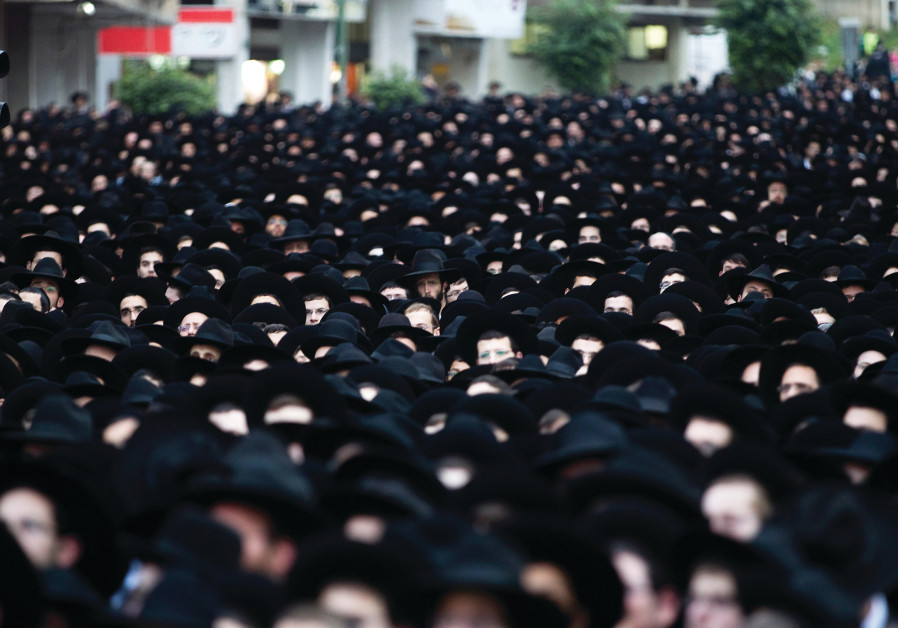
HAREDIM GATHER en masse in Bnei Brak. Is their leadership’s political model sustainable?


Filtz went on to praise activists in the ultra-Orthodox world working to ensure that separate-seating bus lines are available, but warned darkly that the Israeli “regime” was plotting to shut them down. “Thank goodness there are those who stand in the breach, who stand against it! But the regime plots,” he said.


A haredi yeshiva dean compared Israel unfavorably to the Nazis, who he said – unlike the Jewish state – knew it was proper to separate men and women to the Jewish state.

Speaking at an election rally Saturday night for the ultra-Orthodox Degel Hatorah Party, one-half of the United Torah Judaism Knesset faction, dean of the Tushia Yeshiva in Tifrah Rabbi Aviezer Piltz went on a diatribe against Zionism and the State of Israel and its false promise of redemption.
At one point, he addressed secularism in Israel and particularly the legal prohibitions against gender separation in the public domain.

“It’s forbidden to travel on gender-separate buses. Is there a state in the world where they don’t allow [gender] separation on buses?” he demanded. “Apart from this country, here they don’t allow it. This is a state of idol worship. Even the Nazis knew that there should be separate living quarters for men and women.”

Discrimination on the basis of gender is prohibited by law in Israel, and the High Court of Justice ruled in 2011 that gender separation on public buses is prohibited.

Private buses and bus services can be gender separated.

Holocaust scholar and director of the Simon Wiesenthal Center’s Israel office Efraim Zuroff condemned Piltz’s comments, and noted that the Nazis separated men and women in concentration camps as a form of repression and torture.

“This is an unfortunate statement, and I’m hoping that he didn’t really want to convey a message that Israeli society is worse than the Nazis,” said Zuroff. “That a rosh yeshiva could say something like that is shocking and unacceptable. The rabbi should apologize for this comment, which at least would be a constructive step.”

Friday, March 22, 2019

“For more than 40 years, Yeshiva University covered up the sexual abuse of its students, and now finally, our clients have an opportunity to have their day in court,” lawyer Kevin Mulhearn, who represents 34 former pupils from the school, told The Post on Wednesday....

Alleged sexual abuse victims at Yeshiva University prepare lawsuit


A slew of men who claim they were sexually abused at Yeshiva University’s all-boys high school from the 1960s to the ’90s are preparing to sue the school — thanks to a new law that has temporarily lifted the statute of limitations in such cases.

“For more than 40 years, Yeshiva University covered up the sexual abuse of its students, and now finally, our clients have an opportunity to have their day in court,” lawyer Kevin Mulhearn, who represents 34 former pupils from the school, told The Post on Wednesday.

Mulhearn filed a motion in Manhattan Supreme Court this week asking a judge to compel the school to hand over all records from a 2013 internal probe into allegations against former Marsha Stern Talmudical Academy Principal Rabbi George Finkelstein and teacher Rabbi Macy Gordon.

Mulhearn’s clients have been trying to bring legal action against the prestigious school for years, but their suits have been tossed because they were outside the statute of limitations.

But the situation changed dramatically this year when Albany passed the Child Victims Act, which gives alleged victims who were previously time-barred a one-year window to file suit, starting in August.

“We look forward to obtaining vital information about the abuse, cover-up and eventually the justice that our clients richly deserve,” Mulhearn said.

One ex-student claims he was “viciously sodomized” by Gordon, while another alleges he was assaulted by Finkelstein during a “‘wrestling’ incident,” according to court papers. Both say they reported the alleged incidents to the school, but nothing was done.

The university’s then-chancellor, Norman Lamm, was forced to retire in 2013 after admitting the school dealt with “charges of improper sexual activity” by allowing accused staff members to resign quietly, and didn’t report the accusations to police.

Lamm told The Forward he didn’t recall the allegations against Gordon but acknowledged that Finkelstein was allowed to resign following allegations that he had inappropriate contact with students by wrestling with them in his office.

Both teachers have since moved to Israel, and denied any allegations of sexual misconduct to the outlet.

Yeshiva University did not immediately return requests for comment.

https://nypost.com/2019/03/20/alleged-sexual-abuse-victims-at-yeshiva-university-prepare-lawsuit/?fbclid=IwAR0nV9YqWJQroel5rHifBLBnlBtmLHWzWCdvrWDS5AYVt_RyC6tYx8jBOLA


Thursday, March 21, 2019

Another Naked Man Dies In Jump From Borough Park Office Building


From The UOJ Classics - More relevant today than in 2005

A naked man darted from a car into a Borough Park office building at lunchtime yesterday and then jumped to his death from the top floor, officials said.

The man double-parked in the 4800 block of 13th Av. about noon, bolted from his still-running gray 1980 Chevrolet, dashed past a crowd on the street and ran into the lobby of an office building, witnesses said.

Police were still trying to identify the man yesterday and to determine why he jumped. Witnesses also were trying to sort out what happened. The man had no apparent connection to the building, according to people who work there.


"He didn't even have shoes on," said Zalman Teitelbaum , who was working as a temporary security guard at the building until the Satmar mess gets straightened out. Sitting behind the security desk, Teitelbaum first saw the man from the waist up and thought maybe he was a rather strange jogger. But then I stood up and saw the rest of him, and realized he was very Jewish. "I was even able to recognize the mohel, (rabbi that performs the circumcision) by his unique cut", said Teitelbaum. "This man was definitely bent out of shape."

The man told Teitelbaum that he was "desperate and broke," asked him for 50 cents to make a phone call and then spoke incoherently, mumbling something about not being able to support his son in-law in kollel, Teitelbaum said.

Then the man ran to an elevator. Minutes later, he emerged from a stairwell on the top floor. The fire alarm had been set off, presumably by the man, and the office doors on that floor were open as people began to file out, witnesses said.

The man pushed his way into one of the offices, where he said "kollel, kollel, kollel," several times while charging toward a window, witnesses said. He smashed the glass and jumped through the window, falling onto a parapet between two buildings. Some local workers and shoppers saw him fall.

Borough Park firefighters and emergency medical service personnel arrived at the scene, and police quickly cordoned off the block. Women with baby carriages were visibly upset that they could not continue shopping.


Three women with hats on top of their wigs cried out loud, "he could have waited until the stores closed."


Workers in the top floor office said they had not seen the man before and did not believe that he had ties to the offices there. They didn't hear anything he said other than "excuse me, I need money to support my son in-law in the Lakewood kollel" a witness said.

Before it became apparent what was taking place, the city's parking enforcers reacted to the abandoned car, which had badly torn seats, New Jersey plates and no sign of clothing inside other than a beat up Borsalino and a jacket with a shatnes label. They slapped a flyer on the windshield inviting people to attend a parlor meeting for the Lakewood Yeshiva.


The police met with all the various Bobover Rebbes and was told that the man had seven married daughters and was acting strange as of late. Recently the man was seen in shul naked except for a towel on his shoulder, screaming why they moved the mikve.

These acts of desperation have become rather common in the Orthodox Jewish community, since fathers with daughters are expected to support their sons in-law whether they have the ability or not.

Many social workers in the community have noticed a dangerous increase in mental disorders particularly by men over fifty.

We interviewed eight young men who were in the local pizza parlor, all of them noticably obese. We asked them about their reaction to the increase in mental and emotional disorders in men over fifty, particularly by the men with daughters.


We had similar reactions by all eight young men. One fellow said it was "not my fault that the poor putz doesn't know how to make enough money to support thirty people. Summer camps, expensive houses, cars, jewelry, Pesach in Cancun, and tuitions are a father in-law's obligation, even if he has to work three jobs, or steal from his employer." They're just a bunch of whining lazy bums."

Another young fellow said "I am sick and tired of hearing these BS stories from fathers in-law. If they produce the kids, they MUST support them, period, no excuses." This fellow who was not more than twenty years old, was wearing a gold Rolex. I complimented him on his watch; he turned angry and said "he told the shadchan that I would get two Rolexes, one for daily use and one for Yom-Tov, and the SOB finked out on me; what a piece of garbage father in-law I wound up with. If I would have known that, I never would have married his meeskite (extremely ugly) daughter." He said he had to leave, and drove off in a brand new Cadillac Escalade.

The reaction by the others were similar, ranging from anger to dismay about the lack of appreciation and gratefulness to God exhibited by their fathers in-law. They all felt that they could have married anyone in the world, and if their father in-law ever decided to stop giving them "serious" money they would return their daughters to them in a heartbeat, blackmail the family in order for him to give a Get, and get a father in-law who really understands what a catch they are.

Particularly interesting was how they all agreed that they never intended to ever get a job, regardless of how many fathers in-law jumped off buildings. They saw it as a dirty trick and didn't believe the guy was really dead." I find it very interesting that these shameless fathers in-law would go to any lengths to avoid their obligations to us", said the fellow who was the most obese, weighing about three hundred pounds and was not more than five foot three inches tall.

Calls to the rabbis of the Lakewood Kollel were answered by a taped recorded message.


"If you are attempting to join our prestigous institution, the only requirement is that you must be proficient in filling out lengthy government aid forms. These forms are available in all languages and can be filled out at any Lexus dealer in Borough Park or Flatbush; or available on the Internet by the shgatzim uremasim (low-lifes) who have Internet access."


Tuesday, March 19, 2019

Nuch a Dangerous Meshugener --- This Will Not End Well!

The son of a Holocaust refugee, Mr. Cahn was raised in a Jewish family in the New York suburbs - he draws upon his Jewish background, using the title of rabbi or wrapping himself in a prayer shawl emblazoned with the Beth Israel logo.

#MAGA Church: The Doomsday Prophet Who Says the Bible Predicted Trump

“Trump is offering us a window for revival, a window to return to God,” Mr. Cahn said. “What happened in the election was not about Trump but about something much higher, the purposes of God.”

A charismatic pastor in New Jersey (who also calls himself a rabbi) leads a church fixated on end times. Before the apocalypse, however, he’s fitting in a trip to Mar-a-Lago.

On a Sunday morning at Beth Israel Worship Center in Wayne, N.J., a bearded pastor named Jonathan Cahn stood on an elevated platform, gazing over a full house. Stage lights shifted from blue to white as the backing band played a drifting melody. Two men hoisted curled rams’ horns and let out long blasts.

“Some of you have been saying you want to live in biblical times,” Mr. Cahn said, pacing behind a lectern. Then he spread his hands wide. “Well, you are.”

Sitting at the end of a sleepy drive an hour from Manhattan, Beth Israel may look like any common suburban church. But the center has a highly unusual draw. Every weekend, some 1,000 congregants gather for the idiosyncratic teachings of the church’s celebrity pastor, an entrepreneurial doomsday prophet who claims that President Trump’s rise to power was foretold in the Bible.

Mr. Cahn is tapping into a belief more popular than may appear.

A recent Fox News poll found one in four Americans believe “God wanted Donald Trump to become president.” Celebrities like the televangelist Paula White and Franklin Graham have boosted the idea. The president’s own press secretary suggested as much in a January interview. And on the opening day of the Conservative Political Action Conference this month, the millionaire businessman Michael Lindell took to the stage and declared President Trump “chosen by God.”....

READ MORE: 


Monday, March 18, 2019

DESPITE SEXUAL abuse being a topic not often or easily talked about within the haredi community, this rabbi stressed that he felt the need to come forward in order to spread awareness of the epidemic of child sexual abuse and to empower people to overcome the shame so often felt by victims.

A #MeToo haredi hero 
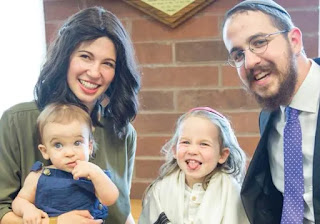
RABBI AVREMI ZIPPEL with wife Sheina and sons Menny and baby Menachem..

Chabad Rabbi Avremi Zippel speaks about the sexual abuse he faced and how he is rising above it to empower survivors in his community and the world.


They seem to have nothing in common: Mormon kidnapping survivor Elizabeth Smart, Olympic Gold Medalist Aly Raisman and Utah Chabad Rabbi Avremi Zippel.
 
But the three, in fact, share a powerful bond – the experience of being powerfully violated as children, sexually assaulted when they had barely any understanding of what sex was and taken advantage of by adults who used their bodies and their innocence for their own pleasure.
 
Earlier this month, Zippel’s story spread across the world as the 27-year-old father of two stood in court with his kippah and his wispy brown beard to testify that his former nanny, 69-year-old Alavina Florreich, had sexually abused him from age eight to 18. 
Smart, a victim of horrific rape by her kidnapper when she was just 14, stood in the courtroom in order to offer her support to the rabbi. Raisman offered hers via Twitter.
 
“Thanks for your bravery and courage Rabbi Zippel,” the Olympian wrote. “You will inspire so many others to share their stories. Thank you for speaking your truth! I support you!”
 
Zippel said that he had been inspired to come forward thanks to the #MeToo movement and after seeing the courage of Raisman to testify against Larry Nassar, the former USA Gymnastics doctor who had allegedly abused hundreds of young girls.
 
Not long after his powerful story spread across the ocean and around the world, Zippel told The Jerusalem Post Magazine that he felt incredibly inspired by the positive responses he received from people from within his community and from without, while also feeling that a huge responsibility had fallen onto his shoulders. A responsibility, he explains, that he is more than ready to embrace.
 
“Since the story came out, I feel so relieved to be able to talk about it and I can finally move on and heal,” he says. “But at the same time, it sets a precedent for me and it reinforces the responsibility I have for others to help them come forward. It both felt really good and like I took on a really big commitment.”

DESPITE SEXUAL abuse being a topic not often or easily talked about within the haredi community, this rabbi stressed that he felt the need to come forward in order to spread awareness of the epidemic of child sexual abuse and to empower people to overcome the shame so often felt by victims.
 
Studies show that child sexual abuse is rampant across all societies and cultures. Research published by the National Institutes for Health in 2009 showed that nearly one in five girls and one in 12 boys have been sexually abused before the age of 18, with experts saying that there is little division among class, race or religion. Another study published by the institute in 2018 found that there was no indication that sexual abuse was more or less prevalent among the religious Jewish community. It did, however, find a link between experiencing sexual abuse and leaving the community. In fact, the study found that individuals who were raised in the Orthodox community and then left are more than four times as likely to have been molested as children than those who stay in the community.
 
As the founder of Jewish Community Watch (JCW), an organization that works to combat child sexual abuse within the Orthodox Jewish community, Meyer Seewald described slightly different findings within his organization regarding the statistics.
 
“By us, in our community, I have found there to be more male victims than females. Because of the separation between the sexes, male predators don’t necessarily have as much access to females unless they are family members or close friends. But with males we see many cases of boys having been abused by their male teachers, rabbis, mentors, camp counselors or other children. 
 
“Furthermore, when a child is abused by someone well-respected within a tight-knit community, there are real risks that the child faces by coming forward and telling people. The community may ostracize him or call him a troublemaker. People often cannot believe that someone they respect can be guilty of such a heinous crime.”
 
This was not exactly the case for Zippel.
 
“My story is different from many others, especially within the religious Jewish community,” Zippel told the Magazine. “I wasn’t abused by a Jew and I wasn’t abused by a rabbi, but a lot of the experience of what survivors go through is universal.”
 
To indicate this point, Zippel explained the feeling he had as he watched Raisman’s testimony in court against her abuser.
 
“Aly’s story really touched me,” he said. “It seems to me that Aly’s life would have been fine without coming forward. She was already a gold-medal gymnast with or without this. She could have lived a perfectly happy life without talking about this.
 
“But she got up there – first, because she thought it would be healing to herself and second, she came forward to empower others to not feel ashamed to tell their stories.
 
“There is a certain level of lack of control that survivors of abuse go through because you never know when you’ll encounter your abuser. There is a certain level of power that your abuser holds over you. They have this secret and you have this secret and its that power of secrecy that they hold on you.
 
“To break through that cycle and to get that secret off your chest, it breaks the power. Every minute Aly talked, it felt like buckles were busting and ropes were coming undone; it gave me the thought that I can also do it myself one day.”
 
Zippel had lived with the shame of the abuse for years, saying the fear of people finding out about his past haunted him. He felt that because he experienced pleasure during some of the encounters and that sexual activity before marriage was sin, he was a sinner and a bad person.
 
“Most of my childhood I thought I was going to die imminently because I was doing these terrible sins. To me, the world was simple: there are good things and there are sins. I was like Satan in my head… so I lived in this turmoil,” he told Deseret News.
 
IT IS exactly for this reason that it’s crucial for rabbis like Zippel to come forward and talk about these topics and for there to exist organizations like Jewish Community Watch, which has created a space within this community where haredim can learn about the extent to which sexual abuse causes harm and to provide an outlet for those who have been abused so that they can come forward and share their story and begin the journey toward ridding themselves of the shame.
 
JCW has created dozens of educational events in synagogues and schools within haredi communities both in Israel and around the world where people can hear from survivors of abuse, government officials and experts in the field of mental health. The events act as an education for parents who need to know what to look out for in their children and to create a conversation so that those who have been abused feel comfortable to come forward.
 
However, while private organizations like JCW exist to help haredi survivors of abuse, a representative from Jewish Community Watch explained that there is not enough being done by the government of Israel to fight this epidemic within this sect.
 
The blind spot of the government toward this issue became abundantly clear recently when the police announced they suspect that Deputy Health Minister Ya’acov Litzman, head of the haredi United Torah Judaism Party, worked with a psychiatrist to create documents saying that suspected child molester Malka Leifer was psychologically unwell and therefore unable to be extradited to Australia to face a trial.
 
Leifer is accused of having sexually abused numerous young girls while she was principal of a religious Melbourne girls’ school.
 
It was, in fact, the privately funded Jewish Community Watch that hired a private investigator to research Leifer and uncovered that she had been faking her psychological diagnosis.
 
DESPITE THE efforts to combat sexual abuse by groups like JCW, Zippel, a father to two young children, believes that the most important message to take from his story is one of love.
 
“I’ve had people respond to me, telling me that since they heard my story they have fired their babysitters and installed cameras in their homes and schools, but I really don’t think that’s the solution. Doing this is almost lulling ourselves into a false sense of security. It’s the natural human reaction to flail out at everything in arms reach, but this is not going to be that simple.
 
“To a certain extent, you can’t prevent this from happening. I know that sounds pessimistic, but I believe it’s true. My abuser was loved and cherished by my family. Nobody would have considered that she was a sexual predator. Short of locking your kids in your home, you can’t keep them in bubble wrap.
 
“What you can do is put the infrastructure in place that the first time something happens to them they aren’t comfortable with, they can come to you and tell you. We need to instill in our children that no matter what happens, nothing can blemish who you are and hurt who you can become. We have to show them that we love them unconditionally despite anything that could have been done to them or that they could have done.
 
“I always thought abuse meant torture and I couldn’t accept that what I had been through was abuse because as a child, it felt ‘consensual.’ We need to tell children that you never have to feel ashamed to talk about anything to us. You should never hide anything.”
 
Seewald also believes that to a certain extent it is impossible to truly prevent children from being abused.
 
“Can you actually prevent every single incident? No, you can’t. But when there are murders on the street, you hire more police officers and it slows it down. This is why JCW exists. To give victims the support they need to bring their abuser to justice – to hold abusers accountable. The knowledge that they may run into us and be exposed in front of the community offers some deterrence.”
 
But the most impactful way to help those who have been abused is to show them that it is okay to talk about what they have gone through.
 
“It is very important for victims of child sexual abuse to come out and tell their story,” says Seewald. “It is especially heartening to see a rabbi do it. By talking about his abuse, Rabbi Zippel is paving the way for the next person to come forward and talk about what they have been through. By bravely expressing his pain and everything he went through, Zippel is empowering others to use their voices and know that it is OK for them to tell their story.”
 
The weight of the responsibility is not lost on the rabbi.
 
“I don’t know why me. I don’t think I’ll ever know why me,” he told Deseret News about everything that he had been through. “I believe that God gave certain people a certain journey in life for a reason. I believe that when you are given a certain path in life, you have a spiritual responsibility, a spiritual opportunity, to walk that path. It’s an inescapable part of my past and now I have the opportunity to do something about it – to walk that path and to bring some good into the world as a result of it.”
 

Friday, March 15, 2019

The religious authorities became aware of what they considered an inappropriate association with a married woman....Destroying Trust In Rabbis Brick by Brick...

Dayan Abraham's departure has been a 'shameful episode', says Chief Rabbi

Ephraim Mirvis has written to community rabbis saying the resignation has 'shaken us to the core'


The Chief Rabbi Ephraim Mirvis has referred to the sudden departure of Dayan Yonason Abraham from the London Beth Din last week as a “shameful episode” and a “painful ordeal”.

The dayan left the Beth Din and his synagogue Toras Chaim in Hendon last week. The JC understands that this was after the religious authorities became aware of what they considered an inappropriate association with a married woman.

Without referring to the reason for his exit, the Chief Rabbi wrote to rabbis today to say: “To have discovered that one of our dayanim had, in his own words, ‘fallen short of the standards expected’ of him, has shaken us to the core.

“When one of us fails in this manner, we are all greatly diminished. A Beth Din must be unimpeachable in its embodiment of Torah values - anything less is entirely unacceptable.”

He said it was for that reason that he, the Beth Din head Dayan Menachem Gelley and the United Synagogue had dealt with the matter “so swiftly” last week.

Rabbis were told of Dayan Abraham’s departure last week in a short memo on Wednesday which gave no further explanation.

“This shameful episode has been met by many with disbelief and has caused great pain,” the Chief Rabbi wrote. “In addition, there are innocent family members who have been directly affected and whose lives have been devastated by it.  As a community, we have a responsibility to look after them, to respect their privacy and to offer appropriate support.”

He said he had “great faith in the capacity of our wonderful community to come through this painful ordeal, strengthened by one another and ever more aware of our privilege to lead a life of Torah and kedushah (holiness)."

Rabbi Mirvis has arranged a meeting for rebbetzins on Sunday and for rabbis on Monday to offer divrei chizuk (words of strength).

https://www.thejc.com/news/uk-news/dayan-abraham-s-departure-has-been-a-shameful-episode-says-chief-rabbi-1.481432?fbclid=IwAR2XK5OJjRQvyErSBTbKeEdTAfxZXC8UUkKDJinmFHDVsr23hitQuFe44aI


Leifer is a former girls schools principal who stands officially accused on more than 74 counts of molestation of girls from Australia in Australia, and unofficially of many more girls in Israel and Australia.

MALKA LEIFER IN COURT

Litzman, Leifer and the rabbis against justice 


The alleged pedophile should be extradited so her accusers can seek justice in a fair trial and her potential victims can stay safe


Ellie Sapper, Nicole Meyer, me, and Dassi Erlich, in Jerusalem, in November 2018. (courtesy)
Ellie Sapper, Nicole Meyer, and Dassi Erlich, in Jerusalem

In November 2018, I sat with Elly Sapper, Dassi Erlich and Nicole Meyer, the three sisters from Australia who have been working for years to bring their alleged sexual abuser, Malka Leifer, to justice. They were in Israel to try and pressure a justice system that they knew was being manipulated, even if they didn’t know by whom.
 
We sat there discussing possible culprits. Health Minister Yaakov Litzman was at the head of the list, along with a number of other rabbinic leaders in the Haredi world. As it turns out, we were right. It became clear this past month that numerous rabbis have been working to prevent Leifer’s extradition.
 
Who Is Malka Leifer?

Leifer is a former girls schools principal who stands officially accused on more than 74 counts of molestation of girls from Australia in Australia, and unofficially of many more girls in Israel and Australia.

She headed the ultra-Orthodox Adass Israel girls’ school in Melbourne from 2003 to 2008, with some saying she moved to Australia to begin with because of accusations of abuse in Israel. 

When allegations began to emerge in Australia that she had sexually abused between eight and 15 of her students, a plan hatched by the school’s administration had Leifer on a plane back to Israel.

Australia officially filed an extradition request in 2012, yet Leifer was first taken into custody in Israel in 2014, and later released to house arrest.  She evaded justice here in Israel with delays and claims of ill health. Most recently, in June 2016, testimony from a state-appointed psychiatrist claimed that Leifer was unfit to stand trial. This led to a Jerusalem District Court halting extradition efforts, citing a law that permits stopping proceedings when a defendant is deemed unfit to stand trial.

Many doubted the mental health declaration and indeed, a private investigation run by Jewish Community Watch, a US-based group, tracked Leifer and showed conclusively that she was indeed mentally fit. As a result, she was re-arrested last February. 

Who Is Helping Malka Leifer?

The following figures of the Haredi world are supporting the alleged abuser, some behind the scenes, some in the open.

Health Minister Rabbi Yaakov Litzman of United Torah Judaism: After a months-long undercover operation, the police questioned Litzman on suspicion of pressuring a court psychiatrist to falsify his psychiatric report that prevented Leifer’s extradition on medical grounds. Police supposedly have recordings of Litzman and officials speaking to Health Ministry employees and pressing them to act on Leifer’s behalf.

Rabbi Menachem Mendel Shafran of Bnei Brak: Shafran came to court to support Leifer and gave his blessing to have Leifer put under house arrest at the home of girls’ school principals. 

Rabbi Yitzchak Dovid Grossman of Migdal Ohr: testified on her behalf and offered to house Leifer until he came under tremendous fire from supporters of his network of programs for orphans.

Rabbi Yosef Direnfeld of the Belz community in Ashdod:  Direnfeld put out a heartfelt plea call for donations to “save” Leifer. “An important woman, the daughter of the great and the righteous… has been imprisoned for a long time under harsh and cruel conditions… for the purpose of extraditing her to a gentile state.”

Why Are Rabbis Helping Malka Leifer?

Support for Leifer is being deemed “Pidyon Shvuim” — a serious commandment of redeeming captives that effectively created a moral imperative to save young Jews enslaved by the Romans, held by the Spanish Inquisition, in the Russian Gulag or even modern day Iran, but would be hard to apply to this case of an accused pedophile being extradited to a democratic country to face her accusers in a fair trial. 

And those of us with knowledge of Jewish history might be tempted to sympathize — IF these Hasidic leaders showed any attempt at safeguarding children from Leifer by ensuring that she be prevented from access to them.

Note: It is important that Leifer’s protectors are Hasidic. Because Hasidic communities are predominantly insular, they often have their own rules. Each sect is run according to the word of its Rebbe. What he says, goes.  If the Rebbe says to exclude children from school, they are excluded. If he says shun this woman for asking for a divorce, she is shunned, and if he says raise money for a woman who is righteous and being persecuted unfairly, the Hasidim raise money. This can also work to the benefit of the community, rallying around those in need, but only if the rebbe chooses.

Had the Rebbes decided to shun Leifer and protect their community- they could have done so. It is within their power. But, instead, they chose to protect Leifer, and in so doing dismissed the sisters and their claims of child sexual abuse.

The Response to the Sisters

In January, when the sisters were in Israel, they were at the Knesset to drum up support for extradition with lawmakers. MK Yehuda Glick was their guide through the hallways, and when their paths crossed with that of MK Litzman, Glick introduced them. It seemed providential, since Litzman had repeatedly refused the sisters’ requests to meet with them. Until he exclaimed: “I want nothing to do with this! I’ve heard the other side of the story. I will not support the extradition!” The women maintain that he did tell them he would “not interfere with the extradition either.” which, according to police and their recordings, was a boldfaced lie.  

And last week, here again for another hearing on Leifer’s health and possible extradition, they met with Rabbi Shafran. In a heartbreaking Facebook post, Dassi Erlich described their meeting. They asked the rabbi why he supported Leifer. Shafran replied: 

“It’s my duty as a rabbi to support a fellow Jew”.

When asked why Leifer’s Jewishness deserved his sympathy over their own, he refused to answer them. Instead, he explained the importance of supporting the underdog — in this case, he estimated, the alleged abuser. The girls were left deeply pained by this meeting.

I am not a Hasid, and do not live in the Hasidic world. Yet, I and others in the broader community are left asking how rabbis, supposed caretakers of our physical and spiritual well being, trade the freedom of one alleged abuser for the well being and safety of her victims, and the many more children to whom she has access.

The safety of the community’s own children has been disregarded in the rabbis’ push for Leifer’s protection. Indeed, according to parents in Immanuel, the town that offered her shelter and its trust largely based on the support of these rabbis, she has done it again.

Public Benefit or Public Harm? 

Litzman, in his only public statement since the accusations against him, claimed to be working for the public’s benefit and according to the law.  What public and whose law??

This battle to protect an alleged abuser proclaims to all abusers that they can find a safe haven among the Hasidim in Israel. It is an painful declaration to all victims, letting them know they will not be believed nor protected. 

What Can the Concerned Public do?

It is clear to me that the right thing to do is extradite Leifer to Australia so that her alleged victims can seek justice in a fair trial, and to caution every abuser and anyone thinking of abusing children that the Jewish community will not allow our children to be harmed — not even if it means facing a non-Jewish court.

Our children must mean this much.

 The demand was that Leifer be extradited, and our protest is that the abuse of children and the protection of their abusers will not be tolerated.

Follow the sisters’ journey and offer them your support.

https://blogs.timesofisrael.com/litzman-leifer-and-the-rabbis-against-justice/?utm_source=The+Blogs+Weekly+Highlights&utm_campaign=blogs-weekly-highlights-2019-03-14&utm_medium=email


Thursday, March 14, 2019

As much as we would like to believe otherwise, clergy abuse of women is a reality in the Jewish community, as it is in many other religious and spiritual communities.


Don’t Call It an Affair: The Truth about Clergy Abuse


“Although clergy of any denomination can sexually exploit children, teens, men, or women, many experts estimate that over 95% of victims of sexual exploitation by clergy are adult women.”  — The Silent Majority: Adult Victims of Sexual Exploitation by Clergy
 
As much as we would like to believe otherwise, clergy abuse of women is a reality in the Jewish community, as it is in many other religious and spiritual communities. Consider the following representative examples: 

Rabbi Robert Kirschner resigned from his position at Congregation Emanu-El in San Francisco in 1992 after several women reported him for sexual misconduct. Nearly five years later, he admitted to his actions and apologized.

Rabbi Sheldon Zimmerman was suspended from the Central Conference of American Rabbis in 2000 for violating “sexual ethics and sexual boundaries” in “personal relationships” and resigned his position as president of the Hebrew Union College-Jewish Institute of Religion.

Rabbi Mordecai Tendler was expelled from the Rabbinical Council of America in 2005 over reports that he “engaged in sexual affairs with several women, among them women who had come to him for rabbinic counseling.” He proclaimed his innocence, but a number of his colleagues did not find his claims credible.

Rabbi Mordechai Gafni was fired from Bayit Chadash, a Tel Aviv-based spiritual community, in 2006 “amid allegations of sexual misconduct and exploitation of employee-employer relations” and after many years of reports of sexual misconduct by multiple women. Reb Zalman Schachter-Shalomi revoked his rabbinical ordination.

Rabbi Erik Siroka was expelled from the Central Conference of American Rabbis in 2014 after a woman lodged a sexual misconduct complaint against him when he was employed by a synagogue in South Bend, Indiana. Three other women say that they were “sexually harassed or had an inappropriate relationship with Siroka” between 2000 and 2015.

And just this year, Rabbi Larry Bach of Judea Reform in Raleigh-Durham, NC resigned after being censured for having a sexual relationship with a woman who attended his synagogue. He was suspended from the Central Conference of American Rabbis this past August, after having been privately reprimanded in the past for similar behavior. He asked for the forgiveness of his congregation.

For over 20 years, concerned parties have been talking and writing about the issue of rabbinic abuse of women. And yet, for all of the publicity that surrounds these kinds of cases, having a conversation about rabbinic abuse remains difficult.

Part of the reason is the fear and shame that adult victims suffer, making them hesitant to talk about what happened to them. Part of the reason is the scapegoating that they encounter when they do disclose.

And part of the reason derives from confusion over how we define clergy sexual abuse itself. Of course, sexual violence by a clergy person is always abuse, but not all clergy abuse involves physical coercion. Indeed, to family, friends, and community, the abuse may look simply like a case of the rabbi and the congregant having an “affair.”

But labeling sexual contact between a rabbi and a congregant an “affair” hides the abusive nature of the relationship. An “affair” suggests activity between equal partners. Because the rabbi occupies a position of authority over a congregant, such an equal partnership is not possible. Given the tremendous difference in power between the two parties, a sexual relationship between a rabbi and a congregant is always an abuse of power.

A rabbi wields the power of his authority in a variety of ways:

Spiritual. It goes without saying that rabbis are considered the spiritual leaders of their communities. Congregants go to their rabbis regarding a wide variety of personal concerns, and they entrust them with their vulnerabilities. In return, they expect their rabbis to guide them with wisdom and sensitivity.

Moral. Most congregants look up to their rabbis as the moral compass for their communities. They expect their rabbis to behave in ethical ways, and they assume that their rabbis will do so.
Professional. As Patricia Liberty, the Executive Director of Associates in Education and Prevention in Pastoral Practice in North Kingston, Rhode Island points out, clergy people occupy a professional role, bringing greater knowledge and skill to the table than congregants. Rabbis are hired because they have been trained in ways that exceed the learning of their congregants, and they occupy a role of professional leadership, with all the power and respect that role commands.

Emotional. As Mark Scheffers, M.Div., M.S.W. at the Child Trauma Assessment Center at Western Michigan University notes, it is common for congregants to idealize and to feel emotionally attached to their clergy people.

It is not an exaggeration to say that most rabbis, like most clergy people, are beloved by the people in their communities. Brian Leggiere, a clinical psychologist who works with abuse survivors in the Orthodox community says, “We imbue our leaders with a great sense of kavod, respect, and usually it’s deserved…but when you have a community that over-idealizes [its leaders at times,] that’s a recipe that allows abuse to occur.”

Social. In order to maintain the cohesion of their communities, congregants look to their rabbis as the focal point of their loyalty and as linchpins of congregational stability.

When a rabbi uses his power in a way that serves himself rather than his congregant, the victim undergoes a confusing and traumatic experience. Whether he takes advantage of his congregant’s vulnerability in a counseling session, her emotional attachment to him as her rabbi, or the respect that others have for him as a leader, he betrays his congregant’s trust. Rabbi Arthur Gross Schaeffer, a law professor who has written extensively about rabbinic misconduct writes, “We should appreciate that survivors of rabbi sexual boundary violations have experienced significant and long lasting trauma. Similar to victims of sexual abuse by a therapist, victims of clergy sexual misconduct experience a deception of a trusted relationship.”

The power differential between rabbi and congregant becomes especially clear when the clergy abuse comes to light. Congregants commonly react by denying the abuse, scapegoating the victim, and defending the rabbi. A rabbi who allows a congregation to blame a victim in order to protect himself is continuing to abuse his power. A community that participates in this kind of scapegoating becomes complicit in this abuse.

Why do community members become complicit?

In cases of clergy abuse, most congregants experience a cognitive dissonance between their previous beliefs about the rabbi’s trustworthiness and new information about what the rabbi has done.

On the one hand, they believe in the spiritual authority, moral example, and professional leadership of their rabbi, and they are attached to him as a beloved figure. On the other hand, they must come to terms with the fact that the rabbi may have spiritually manipulated a congregant, broken professional boundaries, and caused harm to a vulnerable person.

Cognitive psychologist Art Markman writes that, in cases of clergy abuse, many people resolve the tension of this cognitive dissonance by supporting the clergy person and blaming the victim because “the belief that clergy are good and powerful is so strong that it is easier for many people…to try to resolve this dissonance by denigrating the people who come forward.”

Thus, congregants commonly err on the side of maintaining their idealized view of their rabbi. As a result, they will deny that the rabbi did anything wrong and blame the victim for the rabbi’s actions. Rabbi Gross Schaefer notes, “No one wants to hear that a beloved clergy person has acted inappropriately. Other rabbis, either within the institution or outside, keep their distance and their mouths closed. And other institutional members usually shun, and begin blaming, the victim.”
Professor Diana Garland, Dean of the Baylor University School of Social Work, discovered similar patterns in her 2009 cross-denominational work on clergy sexual misconduct and described the resulting impact on victims in these succinct terms: “Victims were ‘hurt’ by a religious leader, but they were ‘destroyed’ by the congregation.”

Given a rabbi’s power and authority in a community, any relationship between a rabbi and a congregant is, by its nature, an abuse of power. It is never an “affair.” It cannot be a relationship of equals. To deny the abuse and to blame the victim only revictimizes the very people who need our support.

We must do better — not only for the healing of those who have already been victimized, but for the safety of us all.

https://blogs.timesofisrael.com/dont-call-it-an-affair-the-truth-about-clergy-abuse/?fbclid=IwAR2jHl3RFFaZJO6OikZ6hvOMZOAiXkP5aQihTGIB2NvnW86lNYBpndL9igk

Wednesday, March 13, 2019

Jewish Parents ...Chosen Ones... Light Unto Nations --- If Your Kids Get Sexually Abused or Gets Sick ---- PLEASE GO TO YOUR RABBIS!

    Facing Measles Outbreak, N.Y. Lawmakers Want to Let Teenagers Get Vaccines on Their Own


    If passed and signed into law, the bill would make New York part of a group of states — including Oregon, South Carolina and Pennsylvania — that allow minors to ask for vaccinations without parental approval.

    A measles outbreak occurred at Yeshiva Kehilath Yakov in Brooklyn, New York after an unvaccinated child went to school.

    ALBANY — After a measles outbreak in Brooklyn and Rockland County and amid growing concerns about the anti-vaccine movement, a pair of state legislators are proposing allowing minors to receive vaccinations without permission from their parents.

    The bill would allow any child 14 years or older to be vaccinated and given booster shots for a range of diseases including mumps, diphtheria, whooping cough, tetanus, influenza, hepatitis B and measles, which seemed to be the primary reason for alarm after the recent outbreaks.

    “We are on the verge of a public health crisis,” said one of the bill’s sponsors, Assemblywoman Patricia Fahy, a Democrat from Albany, citing lower-than-recommended inoculation rates in some communities, spurred by unconfirmed suspicions about vaccines causing autism. “We’ve become complacent over the last couple of decades.”

    That sentiment was amplified recently by the likes of the World Health Organization, which listed “vaccine hesitancy,” as one of the Top 10 global threats. In Rockland County, officials are reporting 145 confirmed cases of measles, with the vast majority of those afflicted aged 18 and under. Of those, four out of five have received no vaccinations for measles, mumps and rubella.


    City health officials have also reported more than 100 cases of measles in Brooklyn, and a single case in Queens as well. As in Rockland County, most of those cases involved members of the Orthodox Jewish communities where vaccination rates typically lag well behind the norm.


    If passed and signed into law, the bill would make New York part of a group of states — ranging from liberal Oregon to conservative South Carolina — that allow minors to ask for vaccinations without parental approval, though some states also require minors to be evaluated to determine if they are mature enough to make such a decision. The New York bill would not require such an evaluation.

    Even more states, including New York, allow minors to seek out health care services on issues like substance abuse, mental health issues or reproductive health services.

    The introduction of the bill came just days after dramatic Congressional testimony from an Ohio teenager, Ethan Lindenberger, who defied his mother’s wishes and got vaccinated after he became convinced that she had fallen prey to online conspiracy theories about the dangers of vaccines. Multiple studies have debunked such theories, including a major European report issued last week, which showed that the measles, mumps and rubella vaccination does not increase the risk for autism.

    On Monday, the New York chapters of the American Academy of Pediatrics came out in favor of the bill, saying it comported with a longstanding idea known as the “mature minor” exception to parental consent as well as a more recent realization that young people are better at recognizing false online reports.

    “Young people are often more conscious about the misinformation on the internet and can in many cases disagree with parents who have bought into unfounded and dangerous anti-immunization diatribes and pseudoscience,” said a memo from the organization in support of the bill. “These young people have a right to protect themselves.”

    Highly contagious, measles can contribute to a range of serious health complications, particularly in children, including pneumonia and swelling of the brain. It can also be fatal in rare cases. The measles vaccine came into use in the 1960s and the disease was declared eradicated in the United States in 2000.

    Most states allow religious exemptions to vaccination requirements, but some states have pushed back on such exemptions, including California, which barred them in 2015 after a measles outbreak and eroding rates of vaccination. Democratic lawmakers in Albany have also introduced a bill to eliminate religious exemptions, though it is not clear whether it will receive a vote.

    Nationwide, vaccination rates for measles, mumps and rubella are still above 90 percent, according to the Centers for Disease Control and Prevention, though the numbers are down incrementally from two decades ago. But as evidenced in Rockland County, some communities are practically uninoculated.

    State Senator Liz Krueger, a Manhattan Democrat who is sponsoring the bill in Albany’s upper chamber, said that the bill would address not only minors put at risk by their parents’ prejudices against vaccines but also those without engaged adults in their lives.


    “You’re talking about a pretty heavy level of maturity if you’re saying, ‘I want to get vaccinated even though I can’t get any adults in my family to understand why this is important,’” she said.

    Ms. Fahy said she was “very sensitive to the rights of parents” to oversee their children’s health care but felt that the broader public health concerns were overwhelming.

    “It’s not just the individual who is at risk when they are not immunized,” she said. “You are putting other people at risk.”

    https://www.nytimes.com/2019/03/11/nyregion/measles-vaccination-laws-ny.html

Tuesday, March 12, 2019

This Post Serves The Two Types Of Jewish Communities - The Ones That Can Read and The Ones Who Can't! For the Can'ts, Click The Link At The End To Watch The Cartoon!

Measles and Polio set out on an adventure to infect someone after the C.D.C. considers measles eradicated in the United States. Polio teaches Measles how several logical fallacies prevent many people from taking the vaccine, and that there is always a hope of going viral.

Measles Is Making a Comeback. Here’s How to Stop It.

Lawmakers and social media platforms each have a role to play in fighting back.

The cartoon from Times Opinion tells the story of an infectious disease named Measles. Lucky for her, there are many adults who doubt the scientific evidence that supports vaccination.

Measles, a virus that invades the nose and throat, causing fever, cough and phlegm, is one of the most contagious pathogens on the planet. Before 1963, it infected some four million people every year in the United States alone. Nearly 50,000 of them would land in the hospital with complications like severe diarrhea, pneumonia and brain inflammation that sometimes resulted in lifelong disability. Of the 500 or so patients who died from these complications each year, most were children younger than 5.

Until recently, those numbers were a matter of history. The measles vaccine, which was introduced to the United States in 1963, drove the annual case count from four million to zero inside of four decades. Measles was officially eradicated in America in 2000 and was largely wiped from our collective memory soon after.

But in the shadow of that memory lapse, a different virus has spread: anti-vaccine propaganda and vaccine misinformation. Both have persuaded a small but growing number of parents that vaccines designed to inoculate against infectious diseases pose a greater health risk than the diseases themselves. As a result, these parents are skipping crucial shots for their children. And as the number of unvaccinated children grows, some vaccine-preventable diseases are making a comeback.

The Centers for Disease Control and Prevention has logged at least six measles outbreaks so far this year, across five states, involving more than 100 patients. In recent weeks, as those numbers have ticked upward, both houses of Congress have held hearings to discuss the issue, while more states have considered limiting vaccine exemptions for school-age children and several prominent social media platforms have pledged to block anti-vaccine propaganda and vaccine misinformation from their sites.

For a while, it was easy to dismiss the nation’s anti-vaccine contingent. The vast majority of Americans still recognize vaccines as a crucial element of personal and public health. Some 92 percent of vaccine-eligible people in the United States have been inoculated against measles, and nearly as many have had shots to protect against the other vaccine-preventable diseases, including diphtheria, tetanus and pertussis.

But the new rash of outbreaks has made clear that even small pockets of vaccine hesitancy and refusal can have grave consequences. And health officials say that if left unchecked, this outbreak crisis will only worsen.

The steps taken in recent weeks mark a good start to addressing a problem that can no longer be ignored. But much more is still needed:

Every dollar spent on childhood immunization saves between $10 and $16 in future costs to the health care system. Yet funding for the federal immunization grant program, part of the Public Health Service Act, has been relatively flat for a decade. The Pandemic and All-Hazards Preparedness Act, which includes funding to help states respond to public health emergencies, has lapsed and is awaiting reauthorization. And the C.D.C., the nation’s leading public health agency, is in urgent need of a budget increase. For health officials to combat current outbreaks and prevent future ones, all of these programs will need more money.

Pinterest, YouTube and Facebook have made a good start in acknowledging the problem of vaccine misinformation on their platforms, and they’ve all taken at least some steps to address it. Pinterest has restricted vaccine search results, YouTube has barred anti-vaccine channels from running advertisements and Facebook has said that it will no longer allow anti-vaccine advertisements on its pages. Other sites — like Google, Amazon and Twitter  — should follow these examples, and all social media platforms should consider having scientists vet vaccine content for accuracy.
A partnership between federal agencies and private internet behemoths — to better understand and more quickly dismantle the anti-vaccine movement — also would help. As Vox points out, this movement has an outsize media footprint and an impressive lobbying arm; it will take more than a few websites acting independently to defeat it.
As health care workers struggle to persuade wary parents that vaccines are safe, elected officials who understand the importance of this work ought to stop undermining it. In one recent congressional hearing, Senator Rand Paul, a medical doctor, acknowledged that the benefits of vaccines far outweigh the risks. But instead of taking a stand for vaccination mandates, he warned of sacrificing “liberty for a false sense of security.” Such statements — and the lax exemption policies that Mr. Paul and several of his colleagues support — might please some voters, but they will not nudge diseases like measles back into history.