EVERY SIGNATURE MATTERS - THIS BILL MUST PASS!

EVERY SIGNATURE MATTERS - THIS BILL MUST PASS!
CLICK - GOAL - 100,000 NEW SIGNATURES! 75,000 SIGNATURES HAVE ALREADY BEEN SUBMITTED TO GOVERNOR CUOMO!

EFF Urges Court to Block Dragnet Subpoenas Targeting Online Commenters

EFF Urges Court to Block Dragnet Subpoenas Targeting Online Commenters
CLICK! For the full motion to quash: http://www.eff.org/files/filenode/hersh_v_cohen/UOJ-motiontoquashmemo.pdf

Wednesday, April 03, 2019

'There's a Hole in the System. Israel Became a Haven for Suspected Jewish Sex Offenders'


FILE:  Malka Leifer is brought to a courtroom in Jerusalem, Tuesday, Feb. 27, 2018.

'There's a Hole in the System. Israel Became a Haven for Suspected Jewish Sex Offenders' 


The case of Malka Leifer, one of 65 suspected sexual offenders allegedly seeking refuge in Israel, has highlighted how Israeli law and the insular world of the ultra-Orthodox can at times shield them from justice, activists and prison officials tell Haaretz

Y. grew up the 13th of 14 children in a Hasidic family where money and parental attention were in short supply. He says that when he was 12, a rabbi who taught at his New York state yeshiva sexually abused him.

The trauma he still lives with began with the teacher buying him ice cream and later invitations home for lunch — seeming kindnesses that, Y. alleges, morphed into sexual abuse.

Years passed, but when he was 27, Y. (Haaretz is in possession of his real name) says he saw his alleged abuser again when he came to Y.’s father’s shivah. Something snapped inside. Y., now 38, recalls feeling a surge of rage and approaching the rabbi. “If I did not forget, you still remember,” he recalls telling him.

When Y. then started making his allegations known within the community, he says the rabbi moved to Israel. Activists say the man eventually got a job in Jerusalem, again teaching boys, until they made the accusations against him public.

Also in New York state, A., 29, alleges that an older cousin started abusing him when he was 6 and the cousin was also a minor. The two were part of the Chabad community and in 2013, A. won a U.S. lawsuit against his cousin, who was ordered to pay him $3.5 million in damages. But A. says his alleged abuser immigrated to Israel after the decision, aided by some of their joint relatives and some members of the community, and the damages were never paid.

“More than half of my life has included dealing with the fallout from what this person did to me,” A. tells Haaretz. “He never had to answer to anyone for the harm he inflicted on me and was protected by our community and even by members of my own immediate family. Despite this, and despite the pressure that has been placed on me to just ‘move on,’ I took every step possible to get justice and I’m proud of that decision — despite the steep price I paid for it."


One of Israel’s foundational laws is the Law of Return, which gives Jews the right to immigrate to Israel and become citizens — unless they are deemed a danger to Israeli society, security or the Jewish people. Israeli law, however, does not define what that means.

According to advocates for victims of child sex abuse, it is the exploitation of this law that has potentially made the country an unintentional haven for Jewish alleged sex offenders who flee here.

This issue of Israel becoming a haven, for those seeking citizenship or those who already have it, has taken center stage with the high-profile case of Malka Leifer. The headmistress of an ultra-Orthodox girls’ school in Melbourne fled to Israel in 2008 after allegations surfaced of her sexually abusing several of her female students. Leifer is facing possible extradition to Australia on 74 counts of suspected sexual abuse, including indecent assault of a minor and rape.


FILE:  Malka Leifer is brought to a courtroom in Jerusalem, Tuesday, Feb. 27, 2018.
Malka Leifer is brought to a courtroom in Jerusalem

“The Law of Return is basically why it’s so easy for people to come here,” says Shana Aaronson, the chief operating officer of Jewish Community Watch — an advocacy group for victims of child sexual abuse everywhere in the Jewish world, with offices in the United States and Israel.

“There is certainly more focus on whether or not the person is Jewish than there is on a possible criminal record,” she charges, alleging that criminal background checks run on individuals looking to immigrate are not as thorough as they should be.

Interior Ministry spokeswoman Sabine Haddad tells Haaretz that, in order to act, Israel is reliant on information tipping it off about a potentially dangerous applicant for immigration, such as an alert by an international crime-fighting organization.

And if a convicted sex offender manages to immigrate to Israel, officials say there is no legal way for Israel to impose supervision — which would often be mandatory if they were still living in their home country — unless they are convicted of reoffending in Israel.

‘A hole in the system’

Jewish Community Watch says Leifer and Y.’s alleged abuser are among 65 people in the last decade, most of them either ultra-Orthodox or Orthodox Jews, who they know fled to Israel. They were either already Israeli citizens, began the immigration process here, or came and stayed here on tourist visas. Though they say it is impossible to be precise about the number of convicted or alleged child sex offenders seeking refuge in Israel, they believe about half of those 65 faced criminal charges concerning sexual abuse of children or have seen proceedings started against them in their home countries. The other half have been accused by alleged victims but not prosecuted.

However, the Jewish Agency, which helps facilitate the aliyah process for many potential immigrants, counters that its staff conducts what it calls “extensive background research on applicants.” Every year, it says, cases are found where some of the applicants have lied and their applications rejected, although it could not say precisely how many were found to be lying in any specific year.

The Israeli police do not keep data on such alleged child sex offenders, making it nearly impossible to verify their number.

Aaronson says that of those alleged offenders who have faced criminal proceedings, some have served time and others took plea deals that included parole time in their home country or state — where they were supposed to be monitored by local police under the terms of their probation.
It is illegal for those on parole to leave their country of residence. Others, as a condition of their release or plea deal, may have been ordered to be registered on a sex offenders list. However, according to Aaronson, as long as registered sex offenders provide a forwarding address, they are legally allowed to move.

“The problem is the forwarding address given in Israel in such cases is never accurate, in my experience,” she says. “And the U.S. Registry is powerless to enforce that in Israel, because it’s beyond its jurisdiction.”

When any such individual is in Israel, the Israel Prison Service (which oversees parolees) says there is no monitoring unless the person is convicted of a crime in the Jewish state. “If the individual was never a prisoner in our system, there is no supervision,” prison service spokesman Assaf Librati tells Haaretz. “It’s a hole in the system — and it’s truly problematic.”


READ MUCH MORE:

Tuesday, April 02, 2019

For years, the Jewish community denied the prevalence of sexual abuse, so it is undeniable that this discussion is progress....


Changes in the communal response to sexual abuse


Not a week goes by without a new case of sexual abuse being reported in mainstream media. Almost every heartbreaking story is accompanied by numerous articles exposing the layers and layers of institutional, community, and leadership cover-up of those same cases. The community protection of perpetrators, which has allowed the devastating life-altering crime of child sexual abuse to thrive, is now finally being publically acknowledged.

The unprecedented level of exposure has forced our community to stare the ugly truth in the face. It is unfortunate that it has taken such a public explosion, which has brought tremendous pain, shame, fear, conflict, and the shattering of communal myths, for this issue to finally be seen and spoken about. For years, the Jewish community denied the prevalence of sexual abuse, so it is undeniable that this discussion is progress. 


However, the presence, weight and lengthy continuation of the ‘speaking about the problem’ stage, has created a distraction, allowing many individuals, communities, and organizations to hide behind or disappear within the emotions and details of the chaos.  It is clearly much easier to discuss, criticize, and get angry, then it is to take direct and responsible action to prevent abuse from occurring again.  However, we need to recognize that if we remain comfortable or paralyzed in the analytical space of this painful and shameful history, stuck in the wounds after the Band-Aid has been ripped off, the injury will continue to bleed and children will continue to be abused.

It takes bravery and leadership to step up and set standards, and instead of just hoping and discussing that it shouldn’t happen again, implementing training and concrete policies and changes to ensure that it won’t.

Many Jewish summer camps have been taking a strong step forward in the area of abuse prevention by partnering with ASAP’s Camp Safety Program to ensure all their staff are trained before camp even begins. Moving one step forward, a new trend is developing – leaders of the different camping communities, Bnei Akiva of the US and Canada for example, are creating this partnership from the top down, and bestowing the abuse-prevention program as a gift for all of their affiliated independent summer programs. Through this pioneering act, these umbrella organizations have prioritized the safety of the children and youth entrusted in their care above all else, sending a clear message throughout their chain of impact that safety is the new standard.

It is time for us as a community to move to the next stage. We are ready to transition beyond discussions and cultural shifts, and instead take concrete actions that are practical, simple, and most importantly, proven to prevent the next generation of pain, suffering, and public explosions of shame. Preventing abuse is simple, all it takes is willingness and a small amount of effort.

About the Author:

Department of Development and Oversight at Yedidut Toronto, supported by the Friedberg Charitable Foundation. Program manager for ASAP: The Association for Sexual Abuse Prevention and Treatment.

https://blogs.timesofisrael.com/changes-in-the-communal-response-to-sexual-abuse/?fbclid=IwAR3sIXF_2gwixE7bTvEtQsfNjxWiv6ZFwwkF4GZnu0J5JCcO7jqL-mn3zms


Monday, April 01, 2019

The (Pre) Easter Post!


A man and his ever-nagging wife went on vacation in Jerusalem . While they were there, the wife passed away. The undertaker told the husband, "You can have her buried here in the Holy Land for $150 or we can have her shipped back home for $5000.

The husband thought about it and told the undertaker he would have her shipped back home. The undertaker asked him, "why would you spend $5000 to have her shipped home when you could have a beautiful burial here, and it would only cost $150???"

The husband replied, "Long ago, a man died here, was buried here, and three days later, rose from the dead.

 I just can’t take that chance!"


It's Those Self-Hating Jews Again at The New York Times...What Can They Possibly Know Without Torah?

An Outbreak Spreads Fear: Of Measles, of Ultra-Orthodox Jews, of Anti-Semitism


A measles outbreak in a New York suburb has sickened scores of people and stoked long-smoldering tensions between the ultra-Orthodox Jewish community and the secular world at large.

In Rockland County, children under 18 who have not been vaccinated against measles are barred from public places

In Rockland County, children under 18 who have not been vaccinated against measles are barred from public places


SPRING VALLEY, N.Y. — Erica Wingate was working at a clothing store in town this week when a male customer, with the black hat and sidelocks typically worn by ultra-Orthodox Jews, started coughing. 

Another shopper standing next to him suddenly dropped the item she had been holding and clutched her child. “She was buying something, and she just threw it down,” Ms. Wingate recalled. “She said, ‘Let’s go, let’s go! Jews don’t have shots!’”

A measles outbreak in this suburban New York county has sickened scores of people and alarmed public health experts who fear it may be a harbinger of the growing influence of the anti-vaccine movement. But it has also intensified long-smoldering tensions between the rapidly expanding and insular ultra-Orthodox Jewish community and secular society. 

The authorities here in Rockland County have traced the spread of measles to ultra-Orthodox families whose children have not been vaccinated.

And so some residents say they now wipe public bus seats and cross the street when they see ultra-Orthodox Jews. Hasidic leaders said they feared not only a rise in anti-Semitism but an invasion of their cloistered community by the authorities under the guise of public health.

On Tuesday, county officials took the extraordinary step of announcing a state of emergency, barring unvaccinated children under 18 from public places, including restaurants, shopping centers, houses of worship and schools. 

“They did it to themselves,” Ms. Wingate said, referring to the Hasidic people who have refused to vaccinate. “But I feel terrible for everyone.”

The emergency order has emerged as a flash point in a continuing clash in Rockland County, a collection of five towns just northwest of New York City with a combined population of more than 300,000 people. 


About 31 percent of the population is Jewish, according to the state, and includes one of the largest concentrations of ultra-Orthodox Jews in the country. The surge in the ultra-Orthodox population has been driven in part by Hasidic families from Queens and Brooklyn, where there has also been an outbreak.

Some suburbanites are concerned about the changes to their neighborhoods caused by new enclaves of high density developments intended to accommodate the often large size of Hasidic families. In some places, the influx has upended the housing market, causing some non-Orthodox buyers to seek homes elsewhere. Parents have also clashed over whether the Orthodox community has exerted disproportionate influence on public schools and siphoned funding to its yeshivas

But while those tensions were once buffered by yeshiva walls and eruvim, the symbolic perimeters around Hasidic enclaves, the outbreak of measles, which is highly contagious, cannot be kept to such boundaries. 

“I think that for the most part people have been just annoyed — in certain parts of the county you can’t buy a house or can’t sell your house,” said Jessica Finnegan, 32, who was pushing her eight-month-old son, Kieran, in his stroller through a Target store in Spring Valley. The store had been previously identified by officials as one place where people may have been exposed to measles. The outbreak of the disease began in October.


Erica Wingate, right, said she felt “terrible for everyone” involved in the measles outbreak in Rockland County
 
 
She had Kieran immunized six months earlier than the recommended age, because of the outbreak, she said. “But now they are affecting us, which I think could get nasty.”

Still, Ms. Finnegan said she feared the emergency measure would spur a backlash against her Orthodox friends and neighbors. “I think this could really start something,” she said. “What if someone decided to take this into their own hands?”


Ever since the public health declaration, Aron B. Wieder, a legislator in Rockland County and a prominent member of the Hasidic community, has fielded nonstop phone calls from fellow Hasidim fearful of being vilified, he said. 

“The conception that is out there is completely distorted, and that is, that the Orthodox community for the most part don’t vaccinate their children, and that is not true,” Mr. Wieder added. “The county executive had a moral obligation to point these things out.”

An unfounded fear of vaccines has spread around the world in recent years, with childhood vaccination rates reportedly declining in several countries as a result. Nothing in the belief system of Orthodox Jews makes them any more likely to oppose vaccines, and several Orthodox rabbinical organizations have called on parents to vaccinate their children. But Hasidic Jews are prey to the same misinformation that has affected others, and some ultra-Orthodox rabbis have come out against vaccines.  This is the same genius who tells sexual abuse victims to go to their rabbis for discussions...maybe tosfos says somewhere that it's not really abuse!


“What about the people who clean and sweep in the school?” argued Kamenetzky. “They are mostly Mexican and are unvaccinated. If there was a problem, the children would already have gotten sick.” “I see vaccinations as the problem. It’s a hoax. Even the Salk vaccine [against polio] is a hoax. It is just big business.”


(Anyone ask R' Shmuel Kaminetzky of the Philadelphia Yeshiva, if he has one kid in their school that has not been vaccinated?)

Mr. Wieder, who said he first learned about the order in news reports, felt that the exclusion of the Hasidim from the decision-making process was emblematic of the divisions in the county and would only sow more mistrust. “When you have people who are true haters,” he said, “they will take advantage of this type of situation and it just pours fuel on the fire.”

 READ MORE FROM THE SELF-HATING MEASLES SPREADING  JEWS AT THE NY TIMES:


Friday, March 29, 2019

"This is the real disease in our community – knowing that sexual abuse is happening, and doing nothing, or worse, defending the abuser."

Don’t use ‘anti-Semitism’ to protect sexual abusers


On the Steinhardt allegations: Why should the needs of the Jewish People come before the wellbeing of Jewish women?


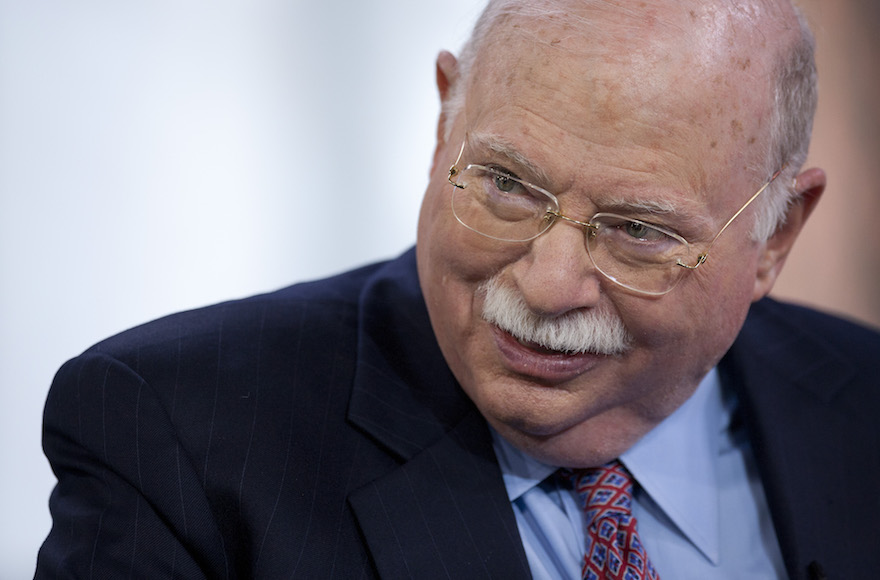
Michael Steinhardt, chairman of WisdomTree Investments Inc., speaks during an interview in New York, US, on April 12, 2012. (Scott Eells/Bloomberg via JTA)
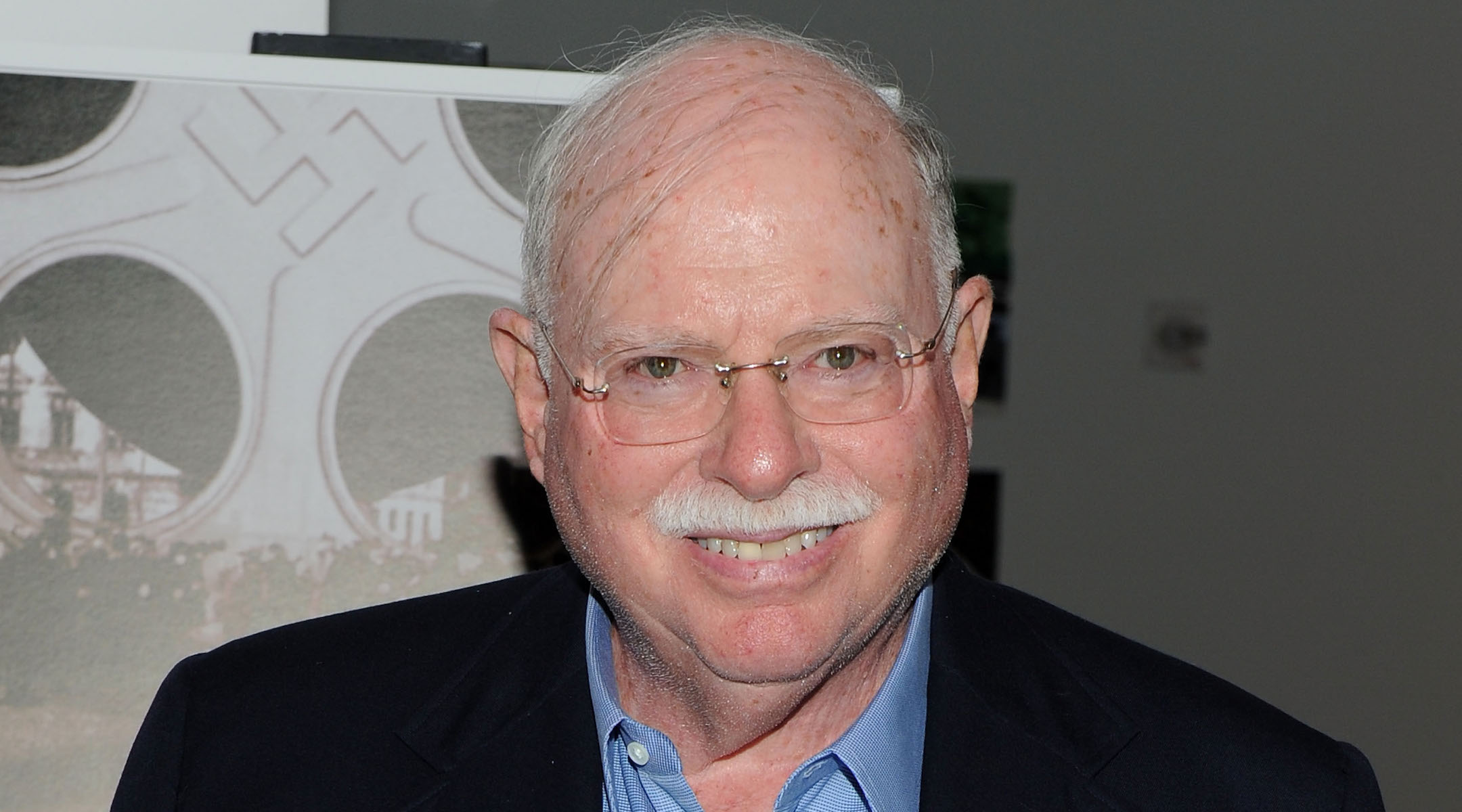
Michael Steinhardt


The New York Times report about megadonor Michael Steinhardt’s history of sexual harassment should come as no surprise to anyone following the #metoo movement or the excellent reporting of Hannah Dreyfus. The Jewish Week published an investigative story by Dreyfus about Steinhardt last year, although there was very little tangible fallout from the piece – which should give a sense of how well-protected donors are in our community. This story, coming on the heels of the Genesis Foundation’s refusal to part ways with Robert Kraft even after his arrest for using sex-trafficked girls for sex – and the foundation’s preference for cutting ties with programs to fight sexual harassment rather than lose a megadonor – tells us everything we need to know about how fundraising culture contributes to the problem of sexual abuse in our community, as Barbara Dobkin wrote earlier this week. Where donors are king, women’s well-being just doesn’t matter.

There are many other important insights that emerge from this invaluable article. For one, according to the testimonies in the article, Steinhardt usually did not touch any of his victims — he just propositioned them and pressured them, from a position of power and authority. As we learned with Barry Freundel’s conviction on video voyeurism in the mikveh, sexual abuse does not always involve touching, and yet can still have traumatizing impacts. Sybil Sanchez wrote an excellent piece about this last year.

Another important insight is that high-profile men tend to protect high-profile abusers — especially if they are donors. According to the report, people around Steinhardt knew about all his proclivities.

People running his organizations knew. People taking his money knew. Occasionally they would pay lip service to victims. More often, victims were nor heard or heeded in any meaningful way. This is the real disease in our community – knowing that sexual abuse is happening, and doing nothing, or worse, defending the abuser.

Another key issue is understanding that the role of ‘donor’ is just as powerful as the role of ‘boss’ or ‘teacher’ or ‘rabbi’ in terms of the ability to engage in abusive behavior. Our policies, procedures and laws on sexual harassment do not really address this, as Cheryl Moore so powerfully explained. The connection between money, philanthropy and sexual harassment needs more attention and clarification in our community.

Perhaps the most striking aspect of the Steinhardt report can be seen most glaringly in the comments section of the New York Times. The most pronounced debates revolve around the Jewishness of the story, about why the Times put the descriptor “Jewish” into the headline, and emphasized his Jewish-connected philanthropy in the story.

“This article is plain and simple anti-Semitism!” wrote one commenter from Texas, a sentiment that was repeated in at least a dozen other comments. “No other people accused of sexual harassment were identified by their religion. This flames anti- Semitism,” wrote someone named Abby. “In this volatile and divisive time, please use your heads!” wrote Edward of London. Sue Mee from Hartford called the article a “hit piece”, and added that it “appears to be the side door entrance from the BDS movement.” Significantly, she continued to dismiss sexual harassment in general by saying, “These women are so threatened by a few jokes with sexual innuendo from one of the most well known Jewish philanthropists at the same moment J Street is promoting its alternative “view point” trip to Israel. It is all very convenient.” And someone named WiseNewYorker of New York City wrote “The headline of this news story is blatantly anti-Semitic. ….An apology is owed to the entire readership of this paper.”

At the risk of stating the obvious, I would like to point out that the women sharing their stories of abuse were clearly not motivated by anti-Semitism but rather by the desire to tell the truth and promote justice. Moreover, it is worth pointing out that the victims are all Jewish themselves, which makes the anti-Semitism accusation ridiculous – almost as ridiculous as painting the story as some kind of BDS conspiracy. It’s ridiculous, of course, unless we forget that the women are Jews, too. Perhaps when these commenters talk about Jews being under attack, they are not really considering women part of the collective, which is a definite possibility in our community. So suddenly the victims morph into Enemies of The Jewish People, as if the women are outsiders looking in.

The reason why this is a Jewish story is because Steinhardt himself is a Jewish story. His whole identity and persona are wrapped up in acting on behalf of the Jews. The (alleged) incidents took place in Jewish cultural settings, and were often wrapped up in Jewish language – such as the need to propagate the people. Moreover, his actions were justified by so many of his enablers based on his Jewish record, on the importance of his “generosity” for the Jewish people. The culture of supporting abusers instead of victims because of the perceived needs of the Jewish collective is a quintessential Jewish story.

One of the key takeaways from this report, then, is, the way “the Jewish People” is co-opted as an excuse and a cover. Like, it was okay for Steinhardt to demand sex because Jewish women need to make babies for The People. Or, it’s okay for the donor to be brash because, you know, he’s the great Protector of the People. Or, when a victim wants to report, she is told, “Don’t make waves” because the Jewish People – or, perhaps the surrounding organization – needs this great donor for our existential survival.

Whatever it is, what we see over and over again is that we are told that the needs of the People come before the needs of the woman. As if the woman whose life and livelihood is on the line isn’t quite the same as the tribe. She is expendable. That is the core message. The donor is king, the donor is irreplaceable, but the woman – meh.

Since the advent of #MeToo, the world is finally starting to get a portrait of sexual abuse, an understanding of just how hard it is to deal with abuse, and how hard it is to report it. But we as a community have not yet come to terms with how these dynamics play out in our own institutions and communities. The Steinhardt story provides us with some crucial insights about the extra challenges that victims have in our own community. The co-opting of the Jewish narrative as a cover for abuse is clearly a central theme. Let’s not let that narrative take the place of the real lives and real needs of the women in our midst who, actually, are just as invaluable as any donor.

https://blogs.timesofisrael.com/dont-use-anti-semitism-to-protect-sexual-abusers/?utm_source=The+Blogs+Weekly+Highlights&utm_campaign=blogs-weekly-highlights-2019-03-28&utm_medium=email


Thursday, March 28, 2019

Michael Steinhardt sexually harassed me. I spent the next 4 years trying to hold him accountable.

 If Harvey Weinstein – and rape – are our only standard for what constitutes inappropriate sexual behavior, then we’ve got a serious problem. 

Sheila Katz, vice president of Hillel International, and Michael Steinhardt

WASHINGTON (JTA) – It wasn’t funny the first time prominent philanthropist Michael Steinhardt asked me to have sex with him. It wasn’t funny the second time, either. It wasn’t funny the third time, or the fourth. It wasn’t funny when he attempted to auction me off to two men in his office for $1 million and told me it was an “abomination” that I was unmarried and childless. It wasn’t funny when he told me because of that, he would not fund my work.

Despite what Steinhardt told The New York Jewish Week, The New York Times or issued in a public statement last week – that this sort of behavior is just part of his “schtick,” as he put it — none of this is a joke. It’s sexual harassment. 

My nearly four-year struggle to hold Steinhardt accountable for his sexual harassment of me while I worked at Hillel International illustrates how powerful harassers continue to be protected, enabled and immunized, even in the #MeToo era. 
 
By most measures, I did all the “right” things after being targeted. I reported Steinhardt’s conduct to my supervisor immediately, participated in an investigation and had my account confirmed by its findings. I am grateful that Hillel International took on the responsibility to pursue an investigation into someone as powerful as Steinhardt, yet in the face of proven harassment, my community and Steinhardt himself have taken no real responsibility for behavior that has been an open secret for decades. Instead, at nearly every turn in this experience, the profound humiliation of sexual harassment has been dismissed as harmless banter.   

“Just words,” as Steinhardt has stated publicly; “teasing,” according to Charles Bronfman. As one person put it, “at least he’s not Harvey Weinstein.” Is it any wonder that Steinhardt declared himself “the King of Israel” when he sexually propositioned me, surrounded by people who reinforce the idea that his words can do no wrong?   

Words matter — under the law and the values of Judaism — and pretending otherwise is a tactic to shame victims into silence. Sexual harassment is extraordinarily stressful, impacting victims’ professional development, emotional well-being, physical health, personal relationships and sometimes their entire career path. 

Negative effects can last far past the harassment itself. In my case, stress and anxiety were magnified by an individual who shared my story with the press, by others who revealed my identity to co-workers and a handful of people who belittled my experience, writing it off as “part of the job.” The horror of sexual assault should not erase the very real harm of verbal harassment, and no one should be forced to accept sexual propositions and objectification as part of their job.  

If Harvey Weinstein – and rape – are our only standard for what constitutes inappropriate sexual behavior, then we’ve got a serious problem. Collective behavior that allows harassers to get a pass because their behavior does not become physical enables the type of humiliation and abuse women are expected to endure. And collective voices that write off such behavior as mere jokes enforce the erroneous idea that women are simply complaining about behavior they should be brushing off.

The uncomfortable fact is that Steinhardt is not an anomaly. 

Others, like Professor Steven M. Cohen, former Israeli government spokesman David Keyes and journalist Ari Shavit, have abused their positions to target women. Whether they have verbally harassed women like Steinhardt or been accused of physical acts like the others, harassers must be held responsible and face consequences for their actions. But we also must look into the collective mirror and confront how our Jewish institutions have been complicit in harassment and can do more to be safe places for all of us.  

If we want to build a culture in which sexual harassment and assault are unthinkable, the responsibility cannot be placed solely on those who experience it and are most vulnerable in coming forward. Witnesses, bystanders and leaders each must take unpleasant risks to deter and confront sexual harassment so that victims and survivors do not have to.

When harassment comes from powerful people who are writing the check, there must be no hesitation about publicly acknowledging wrongdoing and no effort made to sweep things under the rug. And when faced with donors who abuse their power at the expense of employees’ dignity and well-being, values-based institutions, including faith-based organizations, must be willing to pay a literal price. After all, choosing between a grant or endowment and the safety of employees is no real choice if we take our moral duties seriously. I am worth more. We are worth more.  

It’s time to put an end to the open secrets about certain people in power. It’s time to stop dismissing abusive men as “just part of another generation.” And it’s long past time for our Jewish institutions to implement systems to deal with harassment and abuse when they occur.

As part of the Safety Respect Equity Coalition, Hillel International has implemented new systems for reporting harassment, training for all supervisors so they know how to respond if harassment is reported and prevention training. We must do the work to change organizational culture and prevent anyone from experiencing what I and so many others have endured. 

Only when we all do that – when we choose to honor every person’s dignity over some people’s deep pockets – will our collective action and voices become louder than the few who behave so atrociously. And only then will individuals lose their power to prey on members of the very communities they claim to serve.

https://www.jta.org/2019/03/26/opinion/michael-steinhardt-sexually-harassed-me-i-spent-the-next-4-years-trying-to-hold-him-accountable?utm_source=JTA%20Maropost&utm_campaign=JTA&utm_medium=email&mpweb=1161-9780-21723


Wednesday, March 27, 2019

Harvey Weinstein Gave Jobs to Lots of Jewish Women right Abe Foxman....? “Michael is very passionate, and he is passionate in everything,” Foxman is quoted as saying. “Call it a passion, call it an obsession, call it a perversion. Some may. I don’t — I understand it. It’s just the way it comes out, which may disturb people.”

After allegations against Michael Steinhardt, beneficiaries are not eager to talk

WASHINGTON (JTA) — Michael Steinhardt has loomed large for a generation as one of the most important givers to Jewish causes. A number of them bear his name.

And this week, The New York Times and ProPublica, the journalism nonprofit, interviewed seven women who said that “Steinhardt asked them to have sex with him, or made sexual requests of them, while they were relying on or seeking his support.”

No one on the two lists of 11 extant beneficiaries on the website of The Steinhardt Foundation for Jewish Life had much to tell the Jewish Telegraphic Agency, from projects as niche as the Hebrew language instruction course at the famed Middlebury College in Vermont (“I cannot speak to that, I’m sorry,” said the unidentified woman who answered) to the far-reaching, like Birthright Israel, the program that sends young Jewish adults on free educational tours of the country.

Some replies trickled in late in the day. The Foundation for Jewish Camp said it did not anticipate funding for this year. “As far as I can see, FJC received funding of approximately $90k in 2018 from the Areivim Philanthropic Group — a consortium of philanthropists which includes the Steinhardt Foundation — for branding and marketing support of Kayitz Kef, Hebrew immersion in day camps, completing their three-year funding commitment for this program,” a spokeswoman, Aimee Lerner, said in an email. “We do not have any funding committed for 2019 from the Areivim Philanthropic Group nor The Steinhardt Foundation directly.”

The Steinhardt Social Research Institute at Brandeis University did not say whether it would seek funds from Steinhardt, or whether it was reconsidering its name. “The Institute was founded in 2005 with a set of gifts that formed an endowment,” Leonard Saxe, its director, said in an email. “The endowment provided by the Steinhardts and their foundation has allowed us to conduct cutting-edge quantitative research on Jewish life in America. No funding has been received in the last year from the Steinhardt Foundation for Jewish Life.”

70 Faces Media, JTA’s parent organization, received a $5,000 gift from Steinhardt’s foundation last year.

“At this time our organizational focus is on covering this important story and the issues that it raises, including claims of sexual harassment and the treatment of professional staff at Jewish organizations,” said Ami Eden, 70 Faces’ CEO and executive editor.

As for other groups, messages went unanswered; at least one person hung up abruptly upon hearing what the call was about.

The seven women interviewed by The Times shared allegations going back to the 1990s in which they said Steinhardt propositioned them or said sexually charged things while they engaged in their roles in Jewish institutions or the arts.

In his response, Steinhardt acknowledged a pattern of comments made in “jest” while denying the specific allegations made in the story. The comments, he said, “were boorish, disrespectful, and just plain dumb. They were part of my shtick since before I had a penny to my name.”

His family and foundations, too, spoke about his “well-known sense of humor,” saying in a statement it “can be insensitive, and he has apologized for the unintended bad feelings his remarks have caused.” The statement also said The Times story left “the false impression that Michael propositioned a handful of women.”

Lila Corwin Berman, a professor of history and director of the Feinstein Center for American Jewish History at Temple University, wrote Friday in The Washington Post that the tolerance for a leader’s “boorish, disrespectful” behavior may be the consequence of a trend that gave megadonors like Steinhardt, who launched his foundations in the 1980s, inordinate power.

“A clear line connects Steinhardt’s philanthropic power and a long-standing pattern of tolerance by the Jewish community of his alleged conduct toward women and their bodies,” Berman wrote. “The power he wields, and the belief among many Jewish organizations and their leaders that he was too powerful to rebuke, is the result of a historical shift that has seen many Jewish communal structures becoming beholden to megadonors.”

The notion that Steinhardt’s behavior was forgiven in service of the greater good was reinforced by some of the comments made by Jewish leaders in The Times article. Abraham Foxman, the former national director of the Anti-Defamation League, suggested that Steinhardt’s sexually charged language was of a piece with his commitment to programs, like Birthright Israel, that encouraged young Jews to marry and have children.

“Michael is very passionate, and he is passionate in everything,” Foxman is quoted as saying. “Call it a passion, call it an obsession, call it a perversion. Some may. I don’t — I understand it. It’s just the way it comes out, which may disturb people.”

A couple of beneficiaries have issued statements, although none of the Jewish groups issued statements like the one by the NYU Steinhardt School of Culture, Education, and Human Development, saying it is going to review his interactions with students and staff.

Birthright Israel said, “To the best of our knowledge, we do not have any record of a complaint made by the former employee noted against Michael Steinhardt.” One of Steinhardt’s accusers is Deborah Mohile Goldberg, for nine years Birthright’s director of communications.

“Birthright Israel’s policies, in compliance with law and industry best practices, support a workplace free from harassment by any individual who employees engage with, together with an established protocol for reporting any such experiences and a mechanism for investigating allegations. Any employee who ever experiences harassment of any sort should report it immediately in accordance with our policies,” the organization said.

Earlier this year, Hillel International issued the results of an investigation into sexual harassment allegations made by staff. Without naming Steinhardt, it found that the complaints about a donor’s behavior “were justified,” and apologized to the complainants for not responding in a timely manner. The Times reported that Hillel did not “pursue” a $50,000 donation pledged by Steinhardt and removed his name from its international board of governors.

There were expressions of Jewish outrage, of course, albeit from groups that were not recipients of Steinhardt’s largess. They included the Wexner FoundationLippman Kanfer Foundation for Living Torah, the Union for Reform Judaism, the Reform movement’s NFTY Jewish youth group, American Jewish World Service and Keshet, a Jewish LGBTQ group.

Jewish Women International said Steinhardt’s behavior was no joke.

“Those who brush off his words as jokes, or excuse his words as a reflection of his zeal for Jewish continuity, is to demean the personal and professional value of all women working in the Jewish community,” Lori Weinstein, the group’s CEO, said in a statement. “To give excuse to an older generation is to ignore that young men are watching and learning.”

https://www.jta.org/2019/03/22/united-states/after-allegations-against-michael-steinhardt-beneficiaries-are-not-eager-to-talk?utm_source=JTA%20Maropost&utm_campaign=JTA&utm_medium=email&mpweb=1161-9752-21723
 

Tuesday, March 26, 2019

"If we lose our capacity for solitude, our ability to be alone with ourselves, then we lose our very ability to think. We risk getting caught up in the crowd. We risk being ‘swept away’, as she put it, ‘by what everybody else does and believes in’ – no longer able, in the cage of thoughtless conformity, to distinguish ‘right from wrong, beautiful from ugly’.


by Jennifer Stitt


In 1840, Edgar Allan Poe described the ‘mad energy’ of an ageing man who roved the streets of London from dusk till dawn. His excruciating despair could be temporarily relieved only by immersing himself in a tumultuous throng of city-dwellers. ‘He refuses to be alone,’ Poe wrote. He ‘is the type and the genius of deep crime … He is the man of the crowd.’

Like many poets and philosophers through the ages, Poe stressed the significance of solitude. It was ‘such a great misfortune’, he thought, to lose the capacity to be alone with oneself, to get caught up in the crowd, to surrender one’s singularity to mind-numbing conformity. Two decades later, the idea of solitude captured Ralph Waldo Emerson’s imagination in a slightly different way: quoting Pythagoras, he wrote: ‘In the morning, – solitude; … that nature may speak to the imagination, as she does never in company.’ Emerson encouraged the wisest teachers to press upon their pupils the importance of ‘periods and habits of solitude’, habits that made ‘serious and abstracted thought’ possible.

In the 20th century, the idea of solitude formed the centre of Hannah Arendt’s thought. A German-Jewish émigré who fled Nazism and found refuge in the United States, Arendt spent much of her life studying the relationship between the individual and the polis. For her, freedom was tethered to both the private sphere – the vita contemplativa – and the public, political sphere – the vita activa. She understood that freedom entailed more than the human capacity to act spontaneously and creatively in public. It also entailed the capacity to think and to judge in private, where solitude empowers the individual to contemplate her actions and develop her conscience, to escape the cacophony of the crowd – to finally hear herself think.

In 1961, The New Yorker commissioned Arendt to cover the trial of Adolf Eichmann, a Nazi SS officer who helped to orchestrate the Holocaust. How could anyone, she wanted to know, perpetrate such evil? Surely only a wicked sociopath could participate in the Shoah. But Arendt was surprised by Eichmann’s lack of imagination, his consummate conventionality. She argued that while Eichmann’s actions were evil, Eichmann himself – the person – ‘was quite ordinary, commonplace, and neither demonic nor monstrous. There was no sign in him of firm ideological convictions.’ She attributed his immorality – his capacity, even his eagerness, to commit crimes – to his ‘thoughtlessness’. It was his inability to stop and think that permitted Eichmann to participate in mass murder.

Just as Poe suspected that something sinister lurked deep within the man of the crowd, Arendt recognised that: ‘A person who does not know that silent intercourse (in which we examine what we say and what we do) will not mind contradicting himself, and this means he will never be either able or willing to account for what he says or does; nor will he mind committing any crime, since he can count on its being forgotten the next moment.’ Eichmann had shunned Socratic self-reflection. He had failed to return home to himself, to a state of solitude. He had discarded the vita contemplativa, and thus he had failed to embark upon the essential question-and-answering process that would have allowed him to examine the meaning of things, to distinguish between fact and fiction, truth and falsehood, good and evil.

‘It is better to suffer wrong than to do wrong,’ Arendt wrote, ‘because you can remain the friend of the sufferer; who would want to be the friend of and have to live together with a murderer? Not even another murderer.’ It is not that unthinking men are monsters, that the sad sleepwalkers of the world would sooner commit murder than face themselves in solitude. What Eichmann showed Arendt was that society could function freely and democratically only if it were made up of individuals engaged in the thinking activity – an activity that required solitude. Arendt believed that ‘living together with others begins with living together with oneself’.

But what if, we might ask, we become lonely in our solitude? Isn’t there some danger that we will become isolated individuals, cut off from the pleasures of friendship? Philosophers have long made a careful, and important, distinction between solitude and loneliness. In The Republic (c380 BCE), Plato proffered a parable in which Socrates celebrates the solitary philosopher. In the allegory of the cave, the philosopher escapes from the darkness of an underground den – and from the company of other humans – into the sunlight of contemplative thought. Alone but not lonely, the philosopher becomes attuned to her inner self and the world. In solitude, the soundless dialogue ‘which the soul holds with herself’ finally becomes audible.

Echoing Plato, Arendt observed: ‘Thinking, existentially speaking, is a solitary but not a lonely business; solitude is that human situation in which I keep myself company. Loneliness comes about … when I am one and without company’ but desire it and cannot find it. In solitude, Arendt never longed for companionship or craved camaraderie because she was never truly alone. Her inner self was a friend with whom she could carry on a conversation, that silent voice who posed the vital Socratic question: ‘What do you mean when you say …? The self, Arendt declared, ‘is the only one from whom you can never get away – except by ceasing to think.’

Arendt’s warning is well worth remembering in our own time. In our hyper-connected world, a world in which we can communicate constantly and instantly over the internet, we rarely remember to carve out spaces for solitary contemplation. We check our email hundreds of times per day; we shoot off thousands of text messages per month; we obsessively thumb through Twitter, Facebook and Instagram, aching to connect at all hours with close and casual acquaintances alike. We search for friends of friends, people we barely know, people we have no business knowing. We crave constant companionship.

But, Arendt reminds us, if we lose our capacity for solitude, our ability to be alone with ourselves, then we lose our very ability to think. We risk getting caught up in the crowd. We risk being ‘swept away’, as she put it, ‘by what everybody else does and believes in’ – no longer able, in the cage of thoughtless conformity, to distinguish ‘right from wrong, beautiful from ugly’. Solitude is not only a state of mind essential to the development of an individual’s consciousness – and conscience – but also a practice that prepares one for participation in social and political life. Before we can keep company with others, we must learn to keep company with ourselves.

https://getpocket.com/explore/item/before-you-can-be-with-others-first-learn-to-be-alone


Anonymous Jennifer Stitt said...
Thank you, UOJ, for posting the article. Please read my full solitude series here (that also explains my personal view on shidduchim):

1. Listening to Silence, Hearing the Unspeakable
2. A Short History of Walking
3. The Difference between Loneliness and Solitude
4. The Courage to Be in Solitude
5. Solitary Encounters

Jennifer Stitt is a historian of modern American thought, culture, and politics. She earned a B.A. and M.A. in history from the University of Alabama at Birmingham and is a Ph.D. candidate in U.S. intellectual history at the University of Wisconsin-Madison. Her work has appeared in Aeon, Big Think, The Garrison Institute, On Being, Quartz, Quiet Storm Literary Magazine, Public Seminar, and others. She lives and writes in Birmingham, Alabama.

Monday, March 25, 2019

“That a rosh yeshiva could say something like that is shocking and unacceptable."

Aviezer Filtz, a  clown in the United Torah Judaism party and head of the religious seminary Yeshivat Toshia in the southern town of Tifrah, speaks at a party campaign event at the Lederman Synagogue in Bnei Brak, March 23, 2019.

  Idiot Haredi rabbi: "Even Nazis knew to separate men and women"


Rabbi Aviezer Piltz of Tushia Yeshiva in Tifrah compares Israel unfavourably to Nazis because Jewish state bans gender separation in public.


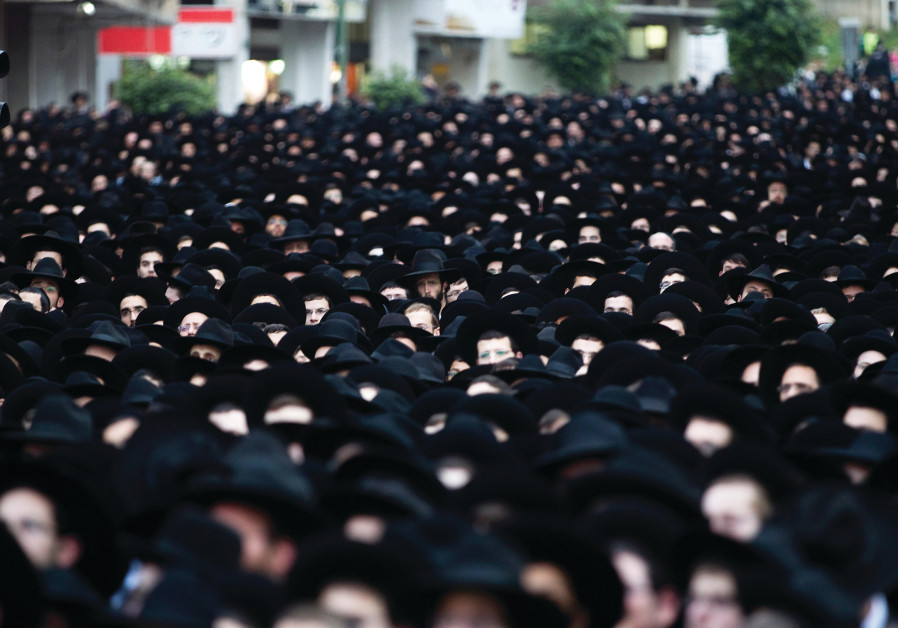
HAREDIM GATHER en masse in Bnei Brak. Is their leadership’s political model sustainable?


Filtz went on to praise activists in the ultra-Orthodox world working to ensure that separate-seating bus lines are available, but warned darkly that the Israeli “regime” was plotting to shut them down. “Thank goodness there are those who stand in the breach, who stand against it! But the regime plots,” he said.


A haredi yeshiva dean compared Israel unfavorably to the Nazis, who he said – unlike the Jewish state – knew it was proper to separate men and women to the Jewish state.

Speaking at an election rally Saturday night for the ultra-Orthodox Degel Hatorah Party, one-half of the United Torah Judaism Knesset faction, dean of the Tushia Yeshiva in Tifrah Rabbi Aviezer Piltz went on a diatribe against Zionism and the State of Israel and its false promise of redemption.
At one point, he addressed secularism in Israel and particularly the legal prohibitions against gender separation in the public domain.

“It’s forbidden to travel on gender-separate buses. Is there a state in the world where they don’t allow [gender] separation on buses?” he demanded. “Apart from this country, here they don’t allow it. This is a state of idol worship. Even the Nazis knew that there should be separate living quarters for men and women.”

Discrimination on the basis of gender is prohibited by law in Israel, and the High Court of Justice ruled in 2011 that gender separation on public buses is prohibited.

Private buses and bus services can be gender separated.

Holocaust scholar and director of the Simon Wiesenthal Center’s Israel office Efraim Zuroff condemned Piltz’s comments, and noted that the Nazis separated men and women in concentration camps as a form of repression and torture.

“This is an unfortunate statement, and I’m hoping that he didn’t really want to convey a message that Israeli society is worse than the Nazis,” said Zuroff. “That a rosh yeshiva could say something like that is shocking and unacceptable. The rabbi should apologize for this comment, which at least would be a constructive step.”

Friday, March 22, 2019

“For more than 40 years, Yeshiva University covered up the sexual abuse of its students, and now finally, our clients have an opportunity to have their day in court,” lawyer Kevin Mulhearn, who represents 34 former pupils from the school, told The Post on Wednesday....

Alleged sexual abuse victims at Yeshiva University prepare lawsuit


A slew of men who claim they were sexually abused at Yeshiva University’s all-boys high school from the 1960s to the ’90s are preparing to sue the school — thanks to a new law that has temporarily lifted the statute of limitations in such cases.

“For more than 40 years, Yeshiva University covered up the sexual abuse of its students, and now finally, our clients have an opportunity to have their day in court,” lawyer Kevin Mulhearn, who represents 34 former pupils from the school, told The Post on Wednesday.

Mulhearn filed a motion in Manhattan Supreme Court this week asking a judge to compel the school to hand over all records from a 2013 internal probe into allegations against former Marsha Stern Talmudical Academy Principal Rabbi George Finkelstein and teacher Rabbi Macy Gordon.

Mulhearn’s clients have been trying to bring legal action against the prestigious school for years, but their suits have been tossed because they were outside the statute of limitations.

But the situation changed dramatically this year when Albany passed the Child Victims Act, which gives alleged victims who were previously time-barred a one-year window to file suit, starting in August.

“We look forward to obtaining vital information about the abuse, cover-up and eventually the justice that our clients richly deserve,” Mulhearn said.

One ex-student claims he was “viciously sodomized” by Gordon, while another alleges he was assaulted by Finkelstein during a “‘wrestling’ incident,” according to court papers. Both say they reported the alleged incidents to the school, but nothing was done.

The university’s then-chancellor, Norman Lamm, was forced to retire in 2013 after admitting the school dealt with “charges of improper sexual activity” by allowing accused staff members to resign quietly, and didn’t report the accusations to police.

Lamm told The Forward he didn’t recall the allegations against Gordon but acknowledged that Finkelstein was allowed to resign following allegations that he had inappropriate contact with students by wrestling with them in his office.

Both teachers have since moved to Israel, and denied any allegations of sexual misconduct to the outlet.

Yeshiva University did not immediately return requests for comment.

https://nypost.com/2019/03/20/alleged-sexual-abuse-victims-at-yeshiva-university-prepare-lawsuit/?fbclid=IwAR0nV9YqWJQroel5rHifBLBnlBtmLHWzWCdvrWDS5AYVt_RyC6tYx8jBOLA


Thursday, March 21, 2019

Another Naked Man Dies In Jump From Borough Park Office Building


From The UOJ Classics - More relevant today than in 2005

A naked man darted from a car into a Borough Park office building at lunchtime yesterday and then jumped to his death from the top floor, officials said.

The man double-parked in the 4800 block of 13th Av. about noon, bolted from his still-running gray 1980 Chevrolet, dashed past a crowd on the street and ran into the lobby of an office building, witnesses said.

Police were still trying to identify the man yesterday and to determine why he jumped. Witnesses also were trying to sort out what happened. The man had no apparent connection to the building, according to people who work there.


"He didn't even have shoes on," said Zalman Teitelbaum , who was working as a temporary security guard at the building until the Satmar mess gets straightened out. Sitting behind the security desk, Teitelbaum first saw the man from the waist up and thought maybe he was a rather strange jogger. But then I stood up and saw the rest of him, and realized he was very Jewish. "I was even able to recognize the mohel, (rabbi that performs the circumcision) by his unique cut", said Teitelbaum. "This man was definitely bent out of shape."

The man told Teitelbaum that he was "desperate and broke," asked him for 50 cents to make a phone call and then spoke incoherently, mumbling something about not being able to support his son in-law in kollel, Teitelbaum said.

Then the man ran to an elevator. Minutes later, he emerged from a stairwell on the top floor. The fire alarm had been set off, presumably by the man, and the office doors on that floor were open as people began to file out, witnesses said.

The man pushed his way into one of the offices, where he said "kollel, kollel, kollel," several times while charging toward a window, witnesses said. He smashed the glass and jumped through the window, falling onto a parapet between two buildings. Some local workers and shoppers saw him fall.

Borough Park firefighters and emergency medical service personnel arrived at the scene, and police quickly cordoned off the block. Women with baby carriages were visibly upset that they could not continue shopping.


Three women with hats on top of their wigs cried out loud, "he could have waited until the stores closed."


Workers in the top floor office said they had not seen the man before and did not believe that he had ties to the offices there. They didn't hear anything he said other than "excuse me, I need money to support my son in-law in the Lakewood kollel" a witness said.

Before it became apparent what was taking place, the city's parking enforcers reacted to the abandoned car, which had badly torn seats, New Jersey plates and no sign of clothing inside other than a beat up Borsalino and a jacket with a shatnes label. They slapped a flyer on the windshield inviting people to attend a parlor meeting for the Lakewood Yeshiva.


The police met with all the various Bobover Rebbes and was told that the man had seven married daughters and was acting strange as of late. Recently the man was seen in shul naked except for a towel on his shoulder, screaming why they moved the mikve.

These acts of desperation have become rather common in the Orthodox Jewish community, since fathers with daughters are expected to support their sons in-law whether they have the ability or not.

Many social workers in the community have noticed a dangerous increase in mental disorders particularly by men over fifty.

We interviewed eight young men who were in the local pizza parlor, all of them noticably obese. We asked them about their reaction to the increase in mental and emotional disorders in men over fifty, particularly by the men with daughters.


We had similar reactions by all eight young men. One fellow said it was "not my fault that the poor putz doesn't know how to make enough money to support thirty people. Summer camps, expensive houses, cars, jewelry, Pesach in Cancun, and tuitions are a father in-law's obligation, even if he has to work three jobs, or steal from his employer." They're just a bunch of whining lazy bums."

Another young fellow said "I am sick and tired of hearing these BS stories from fathers in-law. If they produce the kids, they MUST support them, period, no excuses." This fellow who was not more than twenty years old, was wearing a gold Rolex. I complimented him on his watch; he turned angry and said "he told the shadchan that I would get two Rolexes, one for daily use and one for Yom-Tov, and the SOB finked out on me; what a piece of garbage father in-law I wound up with. If I would have known that, I never would have married his meeskite (extremely ugly) daughter." He said he had to leave, and drove off in a brand new Cadillac Escalade.

The reaction by the others were similar, ranging from anger to dismay about the lack of appreciation and gratefulness to God exhibited by their fathers in-law. They all felt that they could have married anyone in the world, and if their father in-law ever decided to stop giving them "serious" money they would return their daughters to them in a heartbeat, blackmail the family in order for him to give a Get, and get a father in-law who really understands what a catch they are.

Particularly interesting was how they all agreed that they never intended to ever get a job, regardless of how many fathers in-law jumped off buildings. They saw it as a dirty trick and didn't believe the guy was really dead." I find it very interesting that these shameless fathers in-law would go to any lengths to avoid their obligations to us", said the fellow who was the most obese, weighing about three hundred pounds and was not more than five foot three inches tall.

Calls to the rabbis of the Lakewood Kollel were answered by a taped recorded message.


"If you are attempting to join our prestigous institution, the only requirement is that you must be proficient in filling out lengthy government aid forms. These forms are available in all languages and can be filled out at any Lexus dealer in Borough Park or Flatbush; or available on the Internet by the shgatzim uremasim (low-lifes) who have Internet access."