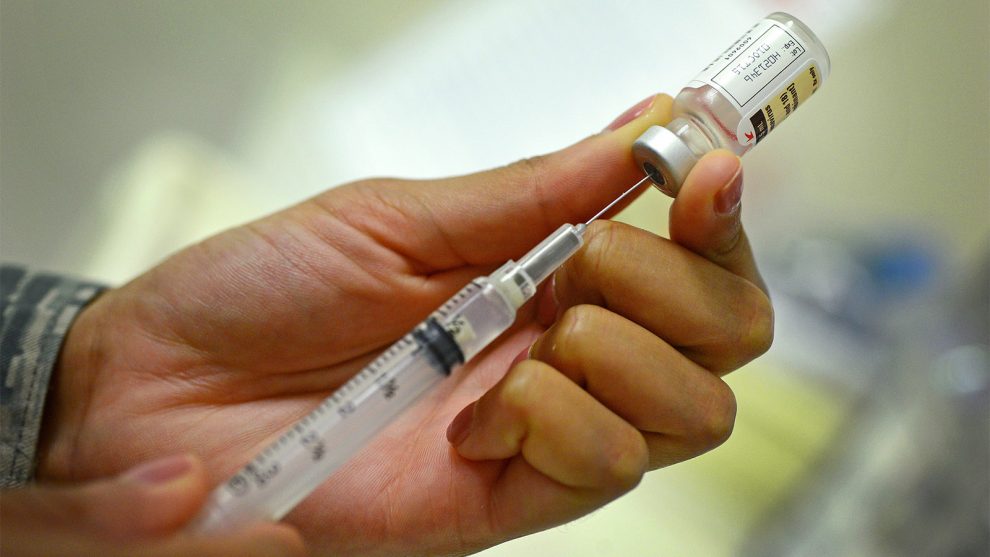
EVERY SIGNATURE MATTERS - THIS BILL MUST PASS!

EVERY SIGNATURE MATTERS - THIS BILL MUST PASS!
CLICK - GOAL - 100,000 NEW SIGNATURES! 75,000 SIGNATURES HAVE ALREADY BEEN SUBMITTED TO GOVERNOR CUOMO!

EFF Urges Court to Block Dragnet Subpoenas Targeting Online Commenters

EFF Urges Court to Block Dragnet Subpoenas Targeting Online Commenters
CLICK! For the full motion to quash: http://www.eff.org/files/filenode/hersh_v_cohen/UOJ-motiontoquashmemo.pdf

Wednesday, June 05, 2019

When did our priorities become so warped? -- Almost 50 percent of participants shared that they knew of someone else abused in the same religious institution compared to 35 percent in non-religious spheres.


The recent IICSA report into child sexual abuse rings true

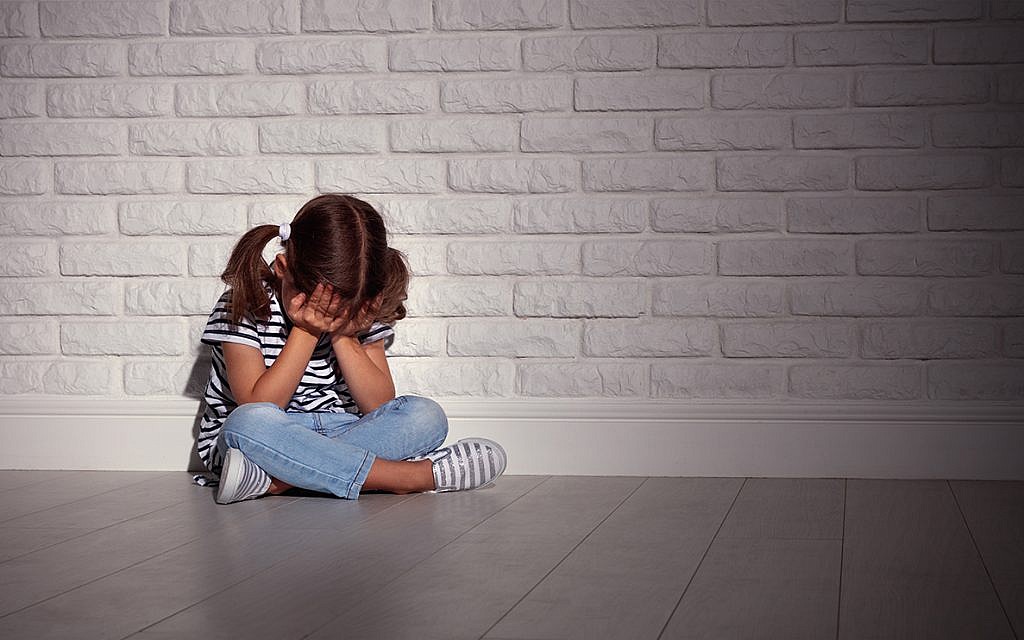
Upset child (Jewish News)

Last week the UK’s Independent Inquiry into Child Sexual Abuse issued an in depth report into victims’ and survivors’ experiences of sexual abuse in religious institutions. It provides valuable data that confirms what many of our clients at Migdal Emunah have shared with us, as well as my own experience. 

Some of the key findings are on par with what we see, including shame and embarrassment preventing victims from reporting the sexual abuse. However, what is specific to this survivor group is the reported level of power and authority bestowed upon religious institutions as well as those working within them. This often meant that perpetrators were not questioned when allegations were first raised, which left offenders with further opportunities to abuse others. 

Not surprisingly, almost 50 percent of participants shared that they knew of someone else abused in the same institution compared to 35 percent in non-religious spheres. This is a familiar phenomenon within our own community, where numerous known offenders went unquestioned or unreported to the authorities for a variety of reasons, but mostly because we do not offer victims and survivors support in order to report abuse. Furthermore, we don’t support those with abuse concerns, such as youth workers and educators.
 
We are proud that a high proportion of Jewish children now attend Jewish schools. Yet while this may be seen as a positive development, what happens when the school, synagogue and home life become too entwined? We have no infrastructure to handle safeguarding concerns, and more often than not they go unreported, leaving children at further risk.

Victims and survivors reported that the high level of involvement that religious institutions had over their communities’ daily lives provided perpetrators with the prospect of using the child’s spirituality and religious practices for manipulation. How easy this becomes when we have religious institutions providing all our cultural lifestyle needs.

Priority was always given to the protection of the religious institution and the perpetrator, often at all costs. This meant victims and survivors were unsupported at best, discredited at worst, whether they were children or adults. Communal leaders and institutions are more focused on the offender’s rights than safeguarding children and young people. Indeed, numerous synagogues and communal institutions are more focused on the reintegration of convicted sex offenders into communal life or on protecting the rights of alleged offenders (without conviction) than they are about safeguarding children and young people. When did our priorities become so warped?

There is a stark difference in who victims and survivors reported the sexual abuse to when abused in a religious institution compared to abuse that didn’t occur in a religious institution. Almost half – 48 percent – chose to report to a person of authority within the institution compared to 29 percent in non-religious institutions.

We must question this disparity, and stop pointing fingers at other sectors within our community, as this is prevalent across the Jewish community; research participants were from across the spectrum of the community and religions.

Victims and survivors reported barriers to recovery when abused in a religious setting, as the abuse was associated with their religious faith as well as their communal infrastructure. This was compounded with the obvious respect still received by perpetrators while victims were ostracised and discredited. This left vulnerable children and adults with a greater sense of loss than just the absence of support.

Everyone in the Jewish community who is in contact with children and young people needs better training that goes beyond tick boxes and safeguarding policies. Many victims reported that the adults around them failed to identify abuse, act appropriately, respond efficiently, and in some cases caused further harm by responding inappropriately. If institutions won’t take responsibility for this then responsibility lies with our grant-making bodies to ensure that standards are raised in how we respond to the sexual abuse of children and young people.

Tuesday, June 04, 2019

Children at Risk!

On YouTube’s Digital Playground, an Open Gate for Pedophiles


“I got scared by the number of views,” said a Brazilian woman, Christiane C., whose young daughter posted a video of herself


Christiane C. didn’t think anything of it when her 10-year-old daughter and a friend uploaded a video of themselves playing in a backyard pool.

“The video is innocent, it’s not a big deal,” said Christiane, who lives in a Rio de Janeiro suburb.

A few days later, her daughter shared exciting news: The video had thousands of views. Before long, it had ticked up to 400,000 — a staggering number for a video of a child in a two-piece bathing suit with her friend.

“I saw the video again and I got scared by the number of views,” Christiane said.


She had reason to be.


YouTube’s automated recommendation system — which drives most of the platform’s billions of views by suggesting what users should watch next — had begun showing the video to users who watched other videos of prepubescent, partially clothed children, a team of researchers has found.

YouTube had curated the videos from across its archives, at times plucking out the otherwise innocuous home movies of unwitting families, the researchers say. In many cases, its algorithm referred users to the videos after they watched sexually themed content.

The video of Christiane’s daughter was promoted by YouTube’s systems months after the company was alerted that it had a pedophile problem. In February, Wired and other news outlets reported that predators were using the comment section of YouTube videos with children to guide other pedophiles.

READ THE ENTIRE ARTICLE:


Monday, June 03, 2019

Wasssuppp With The Holy Spirits Lately?

Top rabbi blows lid off rabbinic scandal, rocking national religious public

Shmuel Eliyahu accuses spiritual leader Shmuel Tal of having inappropriate relationships with female followers, justifying them by claiming ‘holy spirit’ was revealed to him


Yeshivat Torah HaChaim head Rabbi Shmuel Tal gives a sermon on December 27, 2018. (Screen capture/Youtube)
Yeshivat Torah HaChaim head Rabbi Shmuel Tal

In an open letter Wednesday that blew the lid off of a hushed misconduct accusation involving a prominent spiritual leader in the national religious camp, the chief rabbi of Safed called on the public to stay away from a respected counterpart, accusing him of carrying out several inappropriate relationships with female followers, among them an adherent whom he convinced to divorce her husband. 

Three weeks after the national religious Srugim news site broke a story about an unnamed yeshiva head who had been asked to resign due to “personal entanglements,” Safed’s Chief Rabbi Shmuel Eliyahu publicly identified the embroiled individual as Rabbi Shmuel Tal, the head of of the Torat HaChaim yeshiva as well as several other religious institutions in the central town of Yad Binyamin.
In his open letter referring to Tal, Eliyahu wrote: “I do not recommend that anyone learn any halacha (Jewish law) from him, nor seek any guidance from him. I do not recommend studying at his yeshiva or at his seminary for women or at his counseling academy.”

Eliyahu opened the letter saying that roughly four years ago, he learned about an improper relationship that Tal, 56, was having with a married woman, who had approached the Torat HaChaim leader seeking marriage counseling.
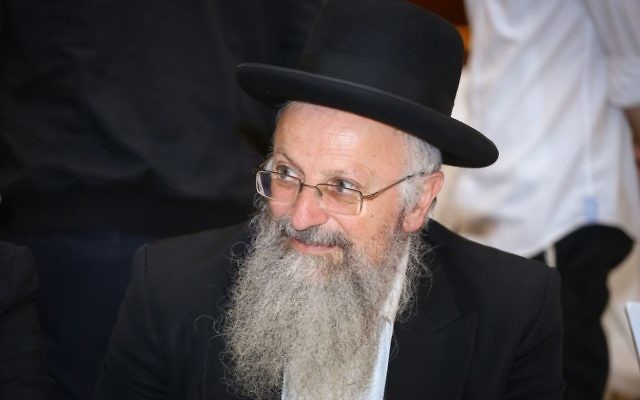

Safed Chief Rabbi Shmuel Eliyahu in Jerusalem
 
“I reached out to [Tal] and warned him against the forbidden relationship, the great desecration of God’s name that would come out of it as a result and against coaxing the woman to divorce her husband on the pretext that they were not compatible. He does not have permission to do so while he is having an illicit relationship with her. This is the definition of ‘stealing the poor man’s lamb,'” Eliyahu wrote, referring to the biblical fable cautioning against taking advantage of the weak.

Safed’s chief rabbi said that Tal refused to comply with his request and continued his contact with the woman, even successfully convincing her to divorce her husband. Tal told the woman that the “holy spirit” had informed him that his own wife, Yifat, would soon pass, after which he would marry her in Yifat’s stead.

According to Eliyahu, the still-alive Yifat rejected the subsequent proposal that Tal wed the female follower while remaining married to his first wife.

Upon learning that Tal was not going to marry her, the follower “understood the mistake she had made” and managed to remarry her ex-husband. At which point, however, Tal’s associates began spreading slander about her in the woman’s community, Eliyahu claimed.

“It became clear what was evident from the beginning, that what had caused the woman to separate from her husband was Rabbi Tal’s seduction,” he wrote.

After remarrying, the woman and her husband chose to sue Tal for damages. Eliyahu said that the Tals reached out to him for help reconciling between them and the remarried couple. Tal admitted wrongdoing and agreed to pay NIS 500,000 ($138,287) as reparations. At which point, Eliyahu wrote that he believed Tal had adequately repented and issued a private letter stating that Tal could continue leading Torat HaChaim. (It was later discovered that Tal did not pay the NIS 500,000 in full.)
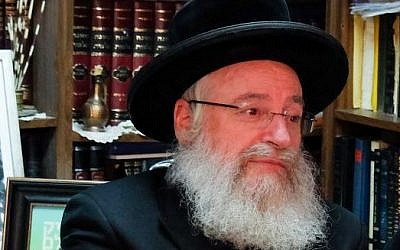

Rabbi Asher Weiss
 
Several days later, Eliyahu said he discovered that Tal had “unhealthy relationships” with other women, both married and unmarried. Moreover, he learned that Tal’s computer contained “obscene content” on it. “Therefore, I agreed with other rabbis from Torat HaChaim that he could no longer be the Rosh Yeshiva there.”

In consultations with Rabbi Asher Weiss — a prominent ultra-Orthodox rabbi whose rulings have been accepted by members in the national religious camp as well — Eliyahu said that it was decided that a special rabbinic court be assembled in order to rule on the allegations made against Tal.

In the meantime, Weiss issued a ruling of his own stating that Tal could continue functioning as head of Torat HaChaim before the court of three rabbis debated his fate. In addition, he called on members of the Yad Binyamin community to come forward before this coming Friday if they had any allegations against Tal.

However, the Kan public broadcaster reported that confidantes of the original female complainant against Tal had discovered a video of Weiss praising the Torat HaChaim leader and argued that he should not be entrusted in putting together a rabbinic court that would rule objectively. Nonetheless, Weiss hasn’t been removed from the case.

In his open letter, Eliyahu wrote that he had notified the rabbinic court of the possibility that Tal would try to destroy the computer and its “obscene content,” and that was in fact what happened. “In such a situation it is difficult for the court to see the clear evidence of its misdeeds,” he wrote.

Explaining his decision to go public with the details of the affair, Eliyahu said that in conversations with Tal, the latter rabbi continually said that he was guided by a “holy spirit.”

“I looked into the matter of the ‘holy spirit’ and found that he had for years been giving many people advice based on his belief he was in contact with the ‘holy spirit,’ causing great harm,” Eliyahu wrote, adding that the misguided advice was endangering the hundreds of people in Yad Binyamin and around the country who are followers of Tal’s.

Also on Wednesday, a former student of Tal’s by the name of Joe Axelrod posted on Facebook that the Torat HaChaim rabbi had tried to convince his wife — using the “holy spirit” — to divorce him in order for them to marry and have a child together who would go on to become the messiah.

Tal established Torat HaChaim in 1996 in the Gaza Strip settlement of Neve Dekalim. After Israel’s unilateral disengagement from the coastal enclave, Tal moved the yeshiva to Yad Binyamin where it remains to this day, expanding it to  include a seminary for female students, a counseling school, a theater school, and more. However, along with the disengagement, Tal underwent an ideological shift in which the national religious rabbi stated that the State of Israel could no longer be considered part of the messianic redemption, but rather an inhibitor.

In response to Eliyahu’s letter, Tal issued a statement calling it “strange that various elements not from the [Yad Binyamin] community, which are motivated by personal interests and whose purpose is harming the community institutions and the head of the community, are the ones to spread vicious rumors that have nothing to do with the truth.”

Tal claimed those elements had hacked computers at his yeshiva, thrown eggs at his home and slashed the tires of cars belonging to his followers. Nonetheless, he said he remained committed to hearing out the rabbinic court’s decision pertaining to him.
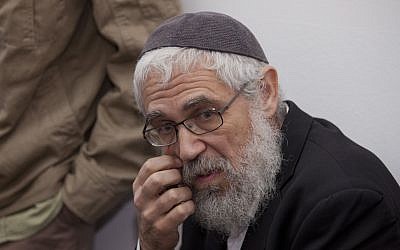

Rabbi Moti Elon, who was convicted in 2013 of sexual assault by force against a minor, is seen at the courtroom of the Magistrates Court in Jerusalem, prior to his sentence hearing
 
 
In an apparent response to speculation in the national religious camp over whether the relationship he had with the female follower had been of a sexual nature, Tal’s statement claimed that it had not been an “intimate” one.

The statement concluded by castigating Eliyahu for “undermining” the rabbinic court’s job by going public with the details of the matter, “giving the affair public attention.”

On Wednesday night, Kan reported that the scandal had caused a rupture in Yad Binyamin between supporters and opponents of Tal. However, even among the accused spiritual leader’s advocates, calls are being made behind closed doors for Tal to step down immediately from his position so he does not take the entire community down with him.

This is the third allegation of misconduct against a prominent rabbi in the national religious community that Eliyahu has been tasked with resolving.

Last year, a young student approached him to accuse Rabbi Mordechai “Moti” Elon of sexually inappropriate behavior, in a new claim that came five years after Jerusalem’s Yeshivat HaKotel head was convicted on two counts of sexual assault. Confronted by Eliyahu and other senior national religious camp rabbis, Elon confessed to the misconduct, agreed to cease all public activity and seek treatment.

Eliyahu also led a team of rabbis that investigated sex crime accusations made by a dozen women against Safed’s Orot Ha’ari yeshiva chairman Ezra Sheinberg. The team opened its probe in 2015 and reported the rabbi to the police several months later, which nabbed Sheinberg as he was attempting to flee the country. Two years later, he was convicted and sentenced to seven and a half years in prison.

https://www.timesofisrael.com/top-rabbi-blows-lid-off-rabbinic-scandal-rocking-national-religious-public/


Friday, May 31, 2019

Every Day I Say To Myself "I heard It all" ---- And Every Day I Realize I Did Not!

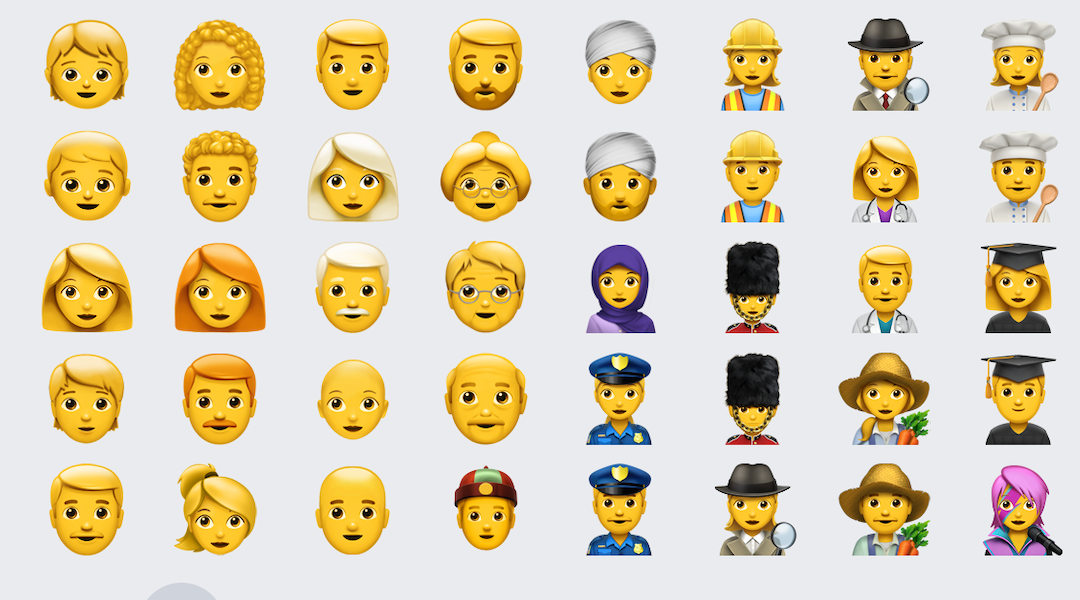
European rabbis call on world body that regulates emojis to add images that represent Jews


(JTA) — An organization of European rabbis has called on the world body that regulates emojis to add images that represent Jews.

The Conference of European Rabbis in a letter to the Unicode Consortium called for new emojis that show men in kippahs and women in head coverings.

In addition to its main function of developing a universal character encoding scheme allowing people around the world to use computers in any language, the nonprofit consortium also selects the emoji icons used by the world’s smartphones based on submissions from individuals and organizations who present their case with evidence for why each one is essential.

“There are emojis of women in the hijab and Arab clerics, and the Jews have been forgotten,” a statement from the Conference of European Rabbis read.

“The need for equality and non-discrimination begins with the small things, which in this case may seem minor but have enormous significance and long-term effects. The WhatsApp application is used daily by millions of citizens around the world, especially the young,” the letter said.

Making emojis more inclusive by including some that look like traditional Jews is a way to make the world more inclusive, the letter said.

“If it is legitimate to present a family consisting of two men or two women, and to present the traditional attire of the Islamic religion, we believe that there is room for presenting Jewish symbols as well,” it also said. “The Jewish religion should not be left behind; it should be brought to the center of public discourse and made equal among the other religions.”

https://www.jta.org/quick-reads/european-rabbis-call-on-world-body-that-regulates-emojis-to-add-images-that-represent-jews

Thursday, May 30, 2019

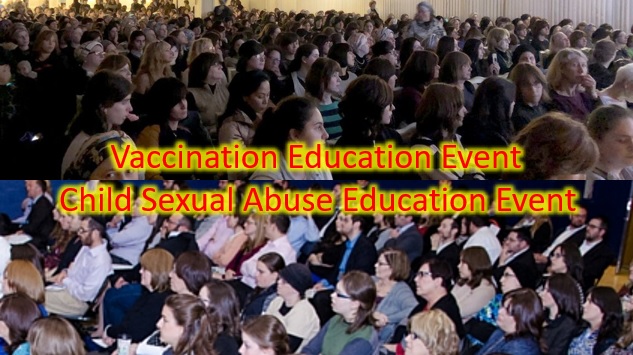
A child who has been abused doesn’t wear the evidence of abuse as obviously as a child who has been infected with the measles. However, anecdotes are not science, and child sexual abuse is far more prevalent and perhaps more deadly than measles.....

The Danger of a Little Knowledge – Vaccinations and Child Sexual Abuse


As measles rages through major Orthodox Jewish communities, the vaccination debate naturally follows. It is a story of personal anecdote and a presumed expertise versus the scientific method and evidence based medicine. Our ignorance on vaccination efficacy mirrors our ignorance on child sexual abuse, where evidence based scientific studies in immunology (the former) and sociology (the latter) are valued less than our own personal beliefs. The biggest irony is that those who rightfully lecture anti-vaxxers on the value of science are often similarly blind when it comes to child sexual abuse. While many like to blame prominent Rabbis, the fault doesn’t truly lie with them. Rabbis can be blamed for not leading, but much of the fault lies within our own culture.

In fact, this blog post was inspired by reading online debate about vaccination, and noting how similar it was to debate on abuse (including some outspoken abuse defenders mocking anti-vaxxers for being unscientific). Of course, people rarely feel their own position is extreme. Nobody call themselves “abuse-defenders” or “anti-vaxx”.  They try to minimize and gaslight their own positions. Those who oppose vaccination don’t say things like, “Vaccines are poison, a conspiracy, and don’t work”.  Rather, they say:
I’m not anti-vaccination. I just feel there are some vaccines that my child doesn’t need, and I have questions I feel haven’t been legitimately answered.

I’m not anti-vaccination. I just know someone whose kid got autism and I just don’t know if there’s a link, so I want to be careful and follow my own schedule.

I’m not anti-vaccination. But I know what’s best for my own kid and don’t like the government telling me what to do.
Likewise, nobody says, “I love child molesters and think they should be protected.”  Rather they say:
Nobody is more anti-child molester than me! But you have to understand that in this case the allegations aren’t even sexual, and besides, they were all from a misunderstanding that took place 20 years ago. Maybe it was a bit inappropriate but not illegal. I need 100% proof.

I totally think child molesters belong in jail, but since this alleged abuser is not in jail, we have to trust him/her with our kids.  Besides, I know the alleged abuser personally and he/she would never do such a thing! He has done so much good.

I am totally against child abusers. But you have to understand that there is bad blood with this kid and she is a constant trouble maker. And the alleged abuser has kids to marry off. Since we aren’t sure, let’s just keep an eye on him
Am I making a false equivalency? I don’t think so because the same erroneous thinking and pattern of positional gaslighting underpins both arguments.

If you think this post doesn’t apply to you because you vaccinate, ask yourself why you trust the scientific method on measles, but not on child sexual abuse protection. For those who do believe in vaccination but not child safety, ask yourself why?

If we treated measles the way we treat child sexual abuse, here is what we’d say:
  • Teach your kids to be careful around those who have the measles.
  • Tell your kids to learn how not to get infected when they are near measles
  • Request those who get the measles to daven at a different shul where people don’t know they are sick.
  • When someone gets the measles, make sure to point out that he or she went 30 years without getting the measles.
  • Have the Rabbis keep an eye on people with measles to make sure they don’t cough.
  • Assign a shomer so the person with measles can attend community events with the unvaccinated.
  • Tell the child he or she does not really have measles at all, but just a rash, and that they are being reactionary to believe their doctor.
It is impossible to argue with someone when you don’t have a common basis for truth. To enter any argument, we must agree on the validity of the scientific method. Sadly, speakers at frum events on child safety and vaccination often offer tiny morsels of information to their audience. Those dispensing poor advise often have titles like PhD, MD and LCSW, impressing the audience. This leads to the listeners learning “a little bit of knowledge”, and confidently make poor choices for their
children.


The scientific method is a way of thinking, a process where we ask questions, form a hypothesis, test that hypothesis, analyze the results, share the results, and most importantly, continue to study and analyze. Scientific studies are designed to test the success (or failure) of everything from medicine to social programs. They are shared with colleagues for critical review that feeds into new questions and new tests. Evidence based medicine is our term for learning from science, constantly reviewing and questioning our results. It is a continuous process of questioning core ideas and challenging their truth, an idea which can be foreign to any fundamentalist worldview.
 
In the study of vaccination or immunology, new vaccines can only be declared successful after large studies with thousands of people. There is a closed loop process, where failures are analyzed for root cause and success is constantly questioned to be sure it is real. Scientists know that even success needs to be studied.


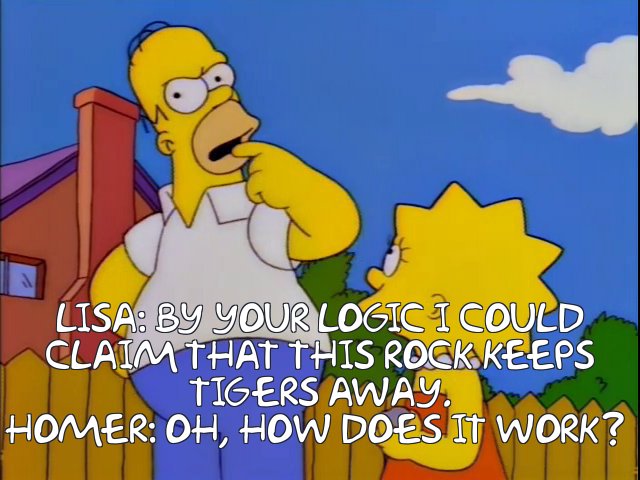
To borrow from the Simpsons, there are no tigers in my backyard, but I don’t attribute that to my magic tiger repelling rock. However, there are also few mosquitoes in my backyard which I attribute to my work to reduce standing water. Thanks to science, I can tell you that a lack of mosquitoes is due to my own action, and a lack of tigers is not. While those who oppose vaccination try to insinuate scientists are blind to the natural decline in polio and measles, in fact, proper scientific method means even questioning success.  Studies must test a hypothesis, reduce biases, and most importantly must be repeatable and open to the scrutiny of peer review.


As an activist for child safety in our schools, camps, and synagogues, the same thinking must apply to sociology. When a recent homegrown child safety program came to town, I asked a Rabbi why he was sponsoring it. The answer was an anecdote – that he heard from someone else that it was a good program. I proceeded to follow the chain of “heard from someone else”, and quickly found that just like “vaccines cause autism”, nobody could point to the person who actually studied and approved the program. Everybody just assumed it was effective (and not harmful) because everybody else assumed it was effective (and not harmful).

I figured the person who invented the program might be of some help, so I asked the presenter directly. This person who travels the world peddling a program not only failed to point to scientific studies and peer review, but refused to share the materials at all. Evidence based medicine only works when the evidence is open for peer review. The same goes for sociological problems in our schools and synagogues.  Is it possible this community program only worked to stop child abuse in the same way that a rock can keep tigers away? The organizers would show me no test or study to see if the program actually had a positive impact.


The scientific method is not about test tubes and beakers but solving problems in the real world. You can analyze the base rate of measles in a population before and after a vaccination program to see if it works. In the same way, you can find other metrics in a school setting to see if a proposed program works to reduce child abuse. When a vaccine fails or causes injury, millions of dollars are spent to analyze why and prevent it in the future. What happens when an institution using a homegrown child safety program has a failure? Those millions aren’t spent analyzing the failure, but often on PR and lawyers to protect the institution, and sometimes even the abuser.

If you are going to invite one of the Jewish community safety organizations to your school, ask them about independent research such as that published by Darkness To Light.  You wouldn’t put a syringe in your child full of medicine that wasn’t tested, so why trust your child’s safety to programs that aren’t published and haven’t stood up to scientific scrutiny?

The same community failure occurs when we doubt the stories of abuse survivors, based on our affinity for the abuser or the abuser’s institution. While it can be easy for those not versed in clinical practice and the study of forensic interviews to say, “It’s the kid’s word against the adult”, those who work in the field of child sexual abuse understand child disclosure. A forensic interview is a controlled process to document a report of abuse. Our Rabbis and Principals are not trained to provide these interviews, and abuse policies that require a school director or synagogue Rabbi to evaluate if a claim should be reported to police risk contaminating future investigations.


It should be no surprise that the same Rabbinic Authorities that declare child abuse must be reported first to the School Principal/Rabbi are also the ones on the forefront of questioning the efficacy of vaccines. Many of the communities that are in the news today with measles outbreaks were in the news yesterday with child abuse cover-ups.

But ask yourself – if you believe strongly in the importance of vaccination and deride those who question it, are you committing the same logical errors on child abuse? Relying on lack of police action to defend inaction on child abuse is potentially just as negligent as permitting religious exemptions for non vaccination. In both cases, the law is being followed to its bare minimum, disregarding the value of public health and possibly putting children at risk. While it is true that most states provide “religious exemptions” for not vaccinating in public schools, our private schools (which are supposed to teach us our religion) should not be allowing them! Are they breaking the law? No. Are they putting our children at risk? In my opinion, yes. Our private schools should not have religious exemptions for vaccination.

And oddly enough, statements from clerical leadership use platitudes that could be copy/pasted between vaccination and child abuse. These are not exact quotes but amalgamations of statements I have read on both vaccination and child safety:
  • This is an issue of great concern to us, but we don’t want to do anything unless we are 100% sure.
  • There haven’t been enough studies to prove what you are saying.
  • We oppose people who believe/act this way, but it is very rare in our communities.
  • We are doing fantastically effective things to reduce this rare problem.
  • Those who say we aren’t doing a good job are just anti-Semites who are making the non-existent problem worse.
The truth is, we see more action on vaccination than on child abuse because when it comes to measles, it is harder to shut our collective eyes. A child who has been abused doesn’t wear the evidence of abuse as obviously as a child who has been infected with the measles. However, anecdotes are not science, and child sexual abuse is far more prevalent and perhaps more deadly than measles. It is time our community honor evidence based medicine and the scientific method, and apply it with the same care in all matters to keep our children safe.

https://blogs.timesofisrael.com/the-danger-of-a-little-knowledge-vaccinations-and-child-sexual-abuse/?fbclid=IwAR0H6vX8ePdebFzQmkKvVOgNw7umQ2O2gOAzw1UoNcx189WxLPar2eF_sJ0


Wednesday, May 29, 2019

“The Jewish community is not immune to—and I’ll put it nicely—nuts.” A handful of high-profile leaders, including an influential rabbi in Lakewood, New Jersey, (a nursing home escapee from Philadelphia) oppose vaccination, often offering justifications on religious grounds. Despite warnings from Orthodox rabbis, a recent gathering of anti-vaxxers in Rockland County drew an audience of hundreds, many of whom were Jewish....

Measles Can Be Contained. Anti-Semitism Cannot.


As the measles has spread in and around New York, so has anti-Semitism.

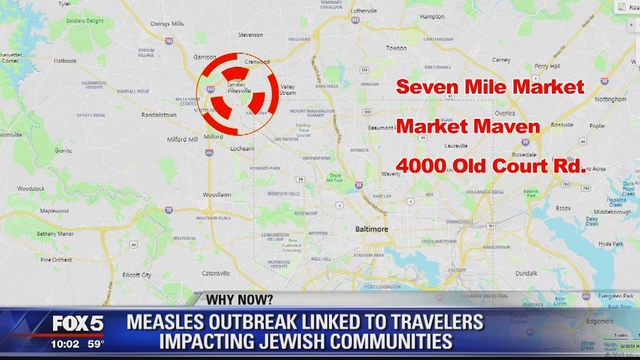
Amid an outbreak largely attributed to the anti-vax movement, the Centers for Disease Control and Prevention disclosed that, as of mid-May, 880 cases have been confirmed nationwide in 2019, “the greatest number of cases reported in the U.S. since 1994 and since measles was declared eliminated in 2000.” Since September 2018, 535 cases have been confirmed in Brooklyn and Queens alone, largely concentrated in Orthodox Jewish communities. Another 247 cases have been confirmed in Rockland County, north of New York City, also largely among Orthodox Jews.

The spread of measles is matched by a twin pathology. Since the start of the latest measles outbreak last fall, the Anti-Defamation League has seen a spike in reports of harassment specifically related to measles, yet another expression of rising anti-Semitism in the U.S.: pedestrians crossing the street to get away from visibly Jewish people, bus drivers barring Jews from boarding, and people tossing out slurs such as “dirty Jew.”

The distinctive demographics of the Orthodox world—lots of babies, tight-knit neighborhoods, frequent international travel—have compounded the recent measles outbreak. But just as the anti-vaccination movement feeds off a handful of fringe outsiders, long-standing stereotypes about Jews have found a new vector in this disease. Rabbis, community leaders, and public-health officials are working desperately to educate people in the Orthodox population who are scared or uncertain about vaccines, hoping to curb the spread of this dangerous illness. The outbreak of anti-Semitism, however, might prove much harder to contain.


Anti-Semites have long associated Jews with disease: Scholars have theorized that Dracula, the titular character in Bram Stoker’s story about a parasitic, deadly vampire who travels from Transylvania to England in search of new blood, might have been crafted to evoke insidious stereotypes of Jews. In New York, a very real public-health crisis has fed the image that Orthodox Jews are insular, ignorant, and against vaccines, when in reality the vast majority of this community—and Jews more broadly—support vaccination.

Rivkie Feiner, a community volunteer in Monsey, a town in Rockland County, told me she’s heard numerous stories of people yelling about measles or making derogatory comments when they see Jews. A man walked by her son in Costco and said, “I guess if I get the measles, I’m getting it here.” One local rabbi told her that during a visit to Rite Aid with his family, a group of teenagers screamed at them from the parking lot, “Hitler should have killed you all with the measles.” Feiner has lived in Monsey for basically all her life, she said, and in the past few years, “there have been more anti-Semitic incidents than in [her] entire life combined.”

The reasons behind the recent measles outbreak are complicated. The New York cases likely have origins in Israel and Ukraine, both of which are experiencing their own outbreaks of the disease. 
 
CDC officials have traced a handful of October cases in Rockland County to unvaccinated travelers arriving to the United States from Israel. The contagion there, according to the World Health Organization and The New York Times, was likely exacerbated by travelers returning from a pilgrimage to Uman, Ukraine, where some Jews pay respects to the grave of an important rabbi, Nachman of Breslov, on the holiday of Rosh Hashanah. Ukraine is currently experiencing an unprecedented measles outbreak, with 54,000 cases reported in 2018, according to Science magazine.

Orthodox Jews frequently travel back and forth between Israel and the United States, creating opportunities for the disease to spread, especially among unvaccinated people. On a recent press call, Nancy Messonnier, the CDC’s vaccine director, reported that 44 cases of measles have been brought to the U.S. by international travelers this year. More than 90 percent of those travelers, she said, were either unvaccinated or had an unknown vaccination status.

While unvaccinated people seeded the outbreak, the number of small children in Orthodox communities has helped it spread. Aaron Glatt, the chief of infectious diseases and the resident epidemiologist at the South Nassau Communities hospital on Long Island, told me that “even in relatively highly vaccinated communities, if you have a lot of little children under the age of one … you’re going to have an awful lot of young children at high risk for contagion.” The standard CDC guidelines on the measles, mumps, and rubella, or MMR, vaccine recommends that children receive a first dose at around 12 months and a second dose four to six years later. But for young children who might be exposed to the disease, especially through travel, the CDC recommends getting vaccinated sooner: as early as six months, with a second dose just four weeks later. Glatt has been working with public-health officials to share information about these updated guidelines, which could make a big difference in Orthodox neighborhoods with lots of babies.


In addition to his role as a doctor and an epidemiologist, Glatt is the assistant rabbi at Young Israel of Woodmere, a large Orthodox Jewish congregation on Long Island’s south shore. Communities like his are tight-knit, he said, and “unbelievably caring.” But this can have negative side effects: “There are many communal events, where, unfortunately, if somebody’s contagious, there will be tons of opportunities to spread that,” he said. “The nature of the community—so compassionate and close with each other—facilitates the spread of kindness, but also contagion.”

In Brooklyn, where the largest number of cases among the Orthodox has occurred, public-health statistics suggest that vaccination rates are actually quite high, even in two of the neighborhoods that have been hit hardest by the outbreak. According to New York State data for the 2017 to 2018 school year, 94 percent of kids at Orthodox Jewish schools in Williamsburg, along with 97 percent in Borough Park, have gotten their MMR vaccines. (These numbers do not include preschool-age kids, however.) Current vaccination rates might be even higher, given the recent vaccination push in these communities.

Rabbis and other Jewish communal leaders have played central roles in these efforts to encourage vaccination. A number of high-profile Orthodox rabbis have said that according to Jewish law, vaccinating is not just acceptable, it is required, because it protects and preserves life. A prominent Orthodox newspaper, Hamodia, has been running ads encouraging people to get vaccinated. Women in the community have also been working to distribute accurate medical information to Orthodox mothers, who often make medical decisions for their kids. Shoshana Bernstein, a mom in Monsey, collaborated with public-health officials on a handbook called Tzim Gezint—Yiddish for “good health,” often said after people sneeze—which offers culturally sensitive information about vaccines.
Despite these efforts, Glatt said, “the Jewish community is not immune to—and I’ll put it nicely—nuts.” A handful of high-profile leaders, including an influential rabbi in Lakewood, New Jersey, oppose vaccination, often offering justifications on religious grounds. Despite warnings from Orthodox rabbis, a recent gathering of anti-vaxxers in Rockland County drew an audience of hundreds, many of whom were Jewish.

Once a rumor about the danger of vaccines starts spreading, it can be powerful, regardless of a community’s faith background. Members of Orthodox communities are often suspicious of outsiders, including non-Jewish public-health officials, and many don’t have access to the internet to do their own research. People are scared, says Israel Zyskind, a pediatrician in Borough Park who mostly treats the Orthodox. “Patients [who] were previously for vaccinating, or happily vaccinating their child and trusting their pediatrician, are now questioning … whether they should be worried, and should be concerned,” he told me. One young couple I met in Borough Park on a recent visit said they asked their rabbi before vaccinating their children; the father said he often hears men speculate about the danger of vaccines in synagogue after they meet for morning prayers.


All of this is happening at a time when Jews feel under attack. Deadly shootings at the Tree of Life synagogue in Pittsburgh and the Chabad of Poway in Southern California have shaken the country. Several New England Chabad houses, which serve as Orthodox Jewish welcome centers, have recently been targeted with arson; a man threw Molotov cocktails at a synagogue in Chicago. In the very neighborhoods in Brooklyn where the measles is now spreading, more than a dozen Jews have been violently assaulted in recent months. Whether or not they’re Orthodox, the people who are visibly Jewish—because they wear a yarmulke or a wig, for example—are the most vulnerable. “It’s the easiest person to target,” says Evan Bernstein, the New York and New Jersey regional director at the ADL. “People that are overtly Orthodox are being somewhat ostracized because of the measles epidemic.”

The measles has spread among Orthodox Jews for complicated reasons, and the public-health conditions in those communities are nuanced. The thing about anti-Semitism, though, is that it’s not typically compatible with nuance. Vaccines are embraced by the vast majority of Jews and Jewish leaders; anti-vax conspiracy theories are a human phenomenon, not a Jewish one. And yet associations have staying power. With every new case of measles in Jewish Brooklyn, with every photograph of an Orthodox school paired with an article on the outbreak, the perceived connection between Jews and disease grows a little stronger. And no vaccine can eradicate that.

https://www.theatlantic.com/politics/archive/2019/05/orthodox-jews-face-anti-semitism-after-measles-outbreak/590311/?utm_source=JTA%20Maropost&utm_campaign=JTA&utm_medium=email

Tuesday, May 28, 2019

TELL NO ONE (2019) | Full Documentary Movie by Tomasz Sekielski | English Subtitles --- Not For The Faint of Heart!


WARSAW, Poland (AP) — One victim spoke out, and then another, and another. A statue of a pedophile priest was toppled in Gdansk, put back by his supporters, and finally dismantled for good. A feature film about clerical abuse was a box office hit.

Poland thought it had started confronting the problem of clerical abuse and its cover-up by church authorities. Then a bombshell came: A documentary with victim testimony so harrowing it has forced an unprecedented reckoning with pedophile priests in one of Europe’s most deeply Catholic societies.

Poland’s bishops acknowledged this week they face a crisis and made a rare admission that they have failed to protect the young. It’s also a crisis for the country’s conservative government, which is closely aligned with the Catholic Church, putting the ruling Law and Justice party on the defensive before Sunday’s European Parliament vote in Poland.

The documentary ”Tell No One ” was directed by journalist Tomasz Sekielski. Before its release on May 11, ruling party leader Jaroslaw Kaczynski had described discussion about clerical abuse as a “brutal attack” on the church and portrayed the LGBT rights movement as the key threat to children in the country. But the revelations in the documentary have pushed the party to face up to the cleric abuse crisis. It has vowed stiffer penalties for pedophilia, although its leaders have avoided pointing a finger at the church specifically.

Across the country, the film has triggered soul searching and raised questions, including whether the same bishops who moved perpetrators from parish to parish for years will be capable of cleansing the church. Some wonder if Poland, which is already being reshaped by economic growth and secularization, could eventually follow Ireland, where the abuse crisis broke the Catholic Church’s hold on society.

Crowdfunded and free on YouTube, “Tell No One” has gotten more than 21 million views so far and has prompted a new wave of survivors to come forward. About 150 people have contacted a foundation helping victims of clerical abuse, “Have No Fear.”

 One was an 86-year-old man who was molested when he was 6 and had never told anyone until now.

“He finally understood that he is not alone,” said Anna Frankowska, a lawyer for the organization who took his call.

“A huge tsunami has come, and there is no way this issue can be swept under the rug now,” she said. “It has to be addressed.”

Michal Wojciechowicz, a 54-year-old abused in his youth by a prominent Solidarity-era priest, the late Rev. Henryk Jankowski, sees a “revolution” whose time has come thanks to clerical sexual abuse revelations elsewhere as well as reforms by Pope Francis.

“The Catholic Church had power over people for centuries. We needed to wait for the right time, and this is the right time,” said Wojciechowicz, a writer. “The most important thing is that people are now willing to listen.”

The church has played an inspirational role in Poland, keeping its language and culture alive during a long era of occupation and foreign rule and supporting the anti-communist Solidarity movement in the 1980s. To generations, the church has been an advocate for freedom and a source of solace under hardship, and to many, Catholic faith and traditions are synonymous with Polishness itself.

A Polish pope who is now a saint, John Paul II, was a moral authority and a political hero for opposing communism, but even his legacy is now in question due to his failure to tackle clerical abuse.

Recognition of the problem came slowly at first. A book published six years ago by a Dutch journalist had the accounts of Polish victims and five years ago ”Have No Fear ” was founded to offer victims counseling and legal help. But the last eight months have brought the most dramatic milestones. A feature film about corrupt, abusive priests, “Clergy,” was a blockbuster after its September release.

Then in December, Barbara Borowiecka, 62, told Polish media about being abused when she was 11 by Jankowski, a prominent prelate in Lech Walesa’s anti-communist Solidarity movement in Gdansk, where a monument of him stood.

Borowiecka was encouraged to tell her story by another priest who brought her back to the church after a nearly five-decade break. Before his death in 2016, he made her promise to publicly name her aggressor when she was strong enough.

Shaken by Borowiecka’s story, three activists from Warsaw — Konrad Korzeniowski, Rafal Suszek i Michal Wojcieszczuk — traveled to Gdansk in February and in the middle of the night put a rope around the Jankowski monument and pulled it down.

“There was something in Borowiecka’s story that chilled me to the bone. It was shocking. The length of her isolation, the embarrassment she had to feel, that her own mother didn’t believe her,” said Korzeniowski, a computer programmer. “Even though I was aware of what is happening in the church with pedophilia, it put a face to it, and I was crying.”

They placed children’s underwear, shoes and white lace church vestments on the toppled statue to symbolize his victims’ suffering, then called police to turn themselves in. They also accused Jankowski, the church and society at large for remaining indifferent to his crimes and the venomous anti-Semitism he spread in his sermons.

Poles awoke to news of the toppled statue as the Vatican began hosting a landmark meeting on clerical sex abuse.

Two days later, the priest’s supporters, shipyard workers in Gdansk, re-erected the statue. During a Mass in his former church, the parish priest recalled the good done by Jankowski, who died in 2010. Pressured to act, the city dismantled the statue.

Borowiecka was touched and incredulous that three strangers risked prison — they have been charged with “insulting a monument” though no trial date has been set — to give her the relief she that feels now that the statue is gone. She met them in Warsaw this month, a warm encounter that sealed new friendships.

Days later, “Tell No One” came out, showing victims psychologically destroyed even in adulthood by their childhood abuse, priests caught by hidden cameras confessing to wrongdoing and convicted offenders still working with children.

Sekielski, the director, has been taken aback by the response, which has included new investigations and at least one priest asking to be laicized.

“A mental revolution is happening in front of our eyes. Victims are being called victims and perpetrators called perpetrators,” he told the weekly magazine Polityka.

Suszek welcomed Poland’s new awareness of clerical abuse but disagreed a revolution is underway, saying there is no mass of rebels and fearing instead a wave of emotion that could easily die down.

“If you are about to start a revolution, then you’d better have a plan for the aftermath,” Suszek said. “And nobody has a clear-cut idea about how to deal with the void that would inevitably come about when you remove the institutional church from the public sphere.”

https://www.apnews.com/8fbab7877b7844b39e2e257f114c8a4a


Friday, May 24, 2019

An Orthodox Group Releases Brave PSA Video About Sexual Abuse --- Abuse happens, and it certainly happens in our communities. But it thrives the most, as this organization bravely points out, when we refuse to acknowledge it.


Amudim, the Orthodox Jewish organization that supports Orthodox youth in crisis, just released a powerful video campaign about sexual abuse, produced by Yeeshai Gross — and it’s required viewing for anyone affiliated with just about any faith community.

A mother, father and teenage daughter sit facing an authority figure — a principal, a rabbi, an educator — having a conversation that happens in every community. In each scene, the family is played by the same actors, but each time dressed differently, shuffling identities that we Jews so love to differentiate ourselves between, as Hasidic, as modern Orthodox, as yeshivish, as Masorti.

Headscarf or sheitel or bare head, black hat or velvet yarmulke or knitted kippah — it’s all the same when it comes to abuse:

“This sort of thing doesn’t happen by us. Not in our community.”
“I’ve known him for fifteen years, and he would never do that.”
“If he’s been with us for so many years — why only now did this come up?
“We need one-hundred percent proof!”
“He has a family! Children to marry off!”
“He’s done so much good. This can ruin his life.”
“We don’t air our dirty laundry.”

The look of betrayal on the young girl’s face, the parents’ horrors at witnessing their child being dismissed, the principal’s head shaking — these scenes are far from fiction. They are lifted directly from real life. Anyone who has interacted with abuse victims in a religious community has heard these phrases before, time and time again.

Ask anyone in our community who has been in the unfortunate — yet necessary — position of having to inquire about an abuser, in order to report the crime. The responses are identical, predictable almost: “But his family! But his organization! What he’s done for our people! How dare you!” Listening to a person virulently defend an alleged perpetrator’s Importance In Our Community causes a sense of vertigo. In the back of one’s mind, images flash from the private testimonies that victims have painstakingly divulged: A locked door, an unwanted hand, a lifted skirt, a hand on the mouth.

There is something particularly brave about Amudim’s depiction of these behind-closed-doors conversations. Perhaps because instead of yet another op-ed or tweet calling for reforms, Amudim harnesses the power of art, a tool too rarely used in the Orthodox community to drive change. The choice to portray these secret conversations with little commentary — simply as if we are sitting right there, in those rabbinic offices — is brilliant. Let us hope that this wakes our community up, and most importantly, that the victims among us feel seen.

Abuse happens, and it certainly happens in our communities. But it thrives the most, as this organization bravely points out, when we refuse to acknowledge it.

https://forward.com/schmooze/424877/an-orthodox-group-releases-brave-psa-video-about-sexual-abuse-heres-why/


Thursday, May 23, 2019

Many people around the world have never seen iron lungs, smallpox scars, or the blindness caused by measles. For some, not seeing these physical reminders makes it harder to weigh up the risks and benefits of vaccination....

Experiment Reveals How to Make Nearly 70% of Vaccine-Hesitant People Change Their Mind

A new study has shown it's possible to persuade members of our community who oppose vaccines to change their opinion by confronting them with the costs of their hesitation.

Many people around the world have never seen iron lungs, smallpox scars, or the blindness caused by measles. For some, not seeing these physical reminders makes it harder to weigh up the risks and benefits of vaccination.

Researchers from Brigham Young University in the US surveyed nearly 600 students with diverse positions on vaccination, and found that meeting a person with first-hand experience of a vaccine-preventable illness could provide an opportunity for a rethink.

It's wild that measles is making a booming comeback after the US Centers for Disease Control and Prevention (CDC) had optimistically set a target for its elimination within the country's borders in the early eighties.

Harder to believe still, that the CDC's goal was actually met in 2000 as experts declared the disease was no longer endemic, meaning new cases would primarily come from abroad.

Polio's story is much the same. In the 1950s, thousands of individuals risked being paralysed by the disease. Thanks to vaccination, this is also an illness few of us will ever encounter in our lifetimes.
While global efforts to wipe out polio have managed to keep outbreaks relatively low, the same can't be said for other vaccine-preventable infections, such as measles and whooping cough.

Where most people were once keen to stick to vaccination schedules, today an increasing number of people are asking if the risks are really worth it.

"Vaccines are victims of their own success," says microbiologist Brian Poole.

"They're so effective that most people have no experience with vaccine preventable diseases. We need to reacquaint people with the dangers of those diseases."

It's a neat idea. There are good reasons to think an emotional reminder of a threat is far more likely to drive home the cost of vaccine hesitation than the cold numbers of graphs and tables.

But the human brain can be finicky when it comes to swapping teams, and our decisions on whether or not to vaccinate can be varied and complex, influenced by cultural forces as well as personal ones.

To test the extent to which an emotional reminder of 'unfashionable' diseases could work, researchers solicited the help of 56 college students who admitted to being somewhat dubious about vaccines in a survey.

Finding students with such a perspective probably wasn't much of a challenge, since they largely came from a part of Utah where vaccine coverage was among the lowest in the country.

An additional 369 students who expressed confidence in the benefits of vaccines also participated for course credits. Both groups included a number of volunteers enrolled in a course that featured content on vaccinations.

The combined sample was randomly divided into one of two groups. One half would interview a person diagnosed with an auto-immune disease; the other would talk to a person who had experience of a disease that could have been prevented by a modern vaccination program.

Both groups asked the same nine questions, seeking details on the type of illness they had, its impact on their lives, their family, and their finances.

The responses had quite an effect on some of the students.

"The pain was so bad that she ended up at a pain management clinic where they did steroid shots into her spine," reported a student who had interviewed a lady with shingles, a persistent effect from chicken pox.

"The pain meds didn't even touch her pain, even the heavy ones. For months, she couldn't leave the house."

A follow-up survey re-evaluated the volunteer's attitudes towards vaccines, while touching on their experience with their interview subject.

Of the 19 individuals who weren't studying vaccinations as part of their college curriculum and who also interviewed somebody who'd had a vaccine-preventable illness, 13 changed their minds in favour of vaccination.

Studies that included information on vaccinations also seemed to help, with all five hesitant students enrolled in a vaccine-related course shifting their opinions.

The numbers themselves aren't exactly earth-shattering, and it's important to keep in mind the study was confined to a rather limited an potentially 'WEIRD' demographic.

But taken in line with the growing pool of research claiming human narratives need to be at the centre of health education, this study shows the role personal story-telling can play in controlling the spread of disease.

"If your goal is to affect people's decisions about vaccines, this process works much better than trying to combat anti-vaccine information," says Poole.

Let's hope one day finding anybody who can tell such a story will be impossible.

This research was published in Vaccines.

https://www.sciencealert.com/experiment-suggests-how-to-make-70-percent-of-vaccine-hesitant-people-change-their-thinking?fbclid=IwAR3f9GgYS7LKcXAq1VJaA1L79nnuDI5GjcZp3QoyDT1qYDgb-cbzPIQTUD8

Wednesday, May 22, 2019

The measles outbreak makes it vital for New York lawmakers to end religious exemptions for vaccinations....

Infecting People Isn’t a Religious Right

The measles outbreak makes it vital for New York lawmakers to end religious exemptions for vaccinations.


It’s no coincidence that measles is spreading across the United States after a decade in which the number of parents claiming exemption for their children from vaccination has grown. The outbreak has been most intense in New York, particularly in deeply insular ultra-Orthodox Jewish communities in Brooklyn and upstate that have been vulnerable to misinformation and resistant to vaccination. 

To halt the spread of the disease, bills in the State Senate and Assembly would prevent parents from claiming that their religious beliefs exempt them from legal requirements that their children be vaccinated before going to school. The American Academy of Pediatrics has made the elimination of such nonmedical exemptions its top priority this year.

The legislation would allow exemptions only if a licensed doctor certified that the immunization was detrimental to the child’s health, as is the case in current law.

Action on these sensible bills has stalled, however, just weeks before legislators leave for the summer —  even as the latest cases of the highly contagious and sometimes fatal disease were diagnosed in New York last week. 


While bills in both chambers are in committee, opposition to the legislation is centered on the Assembly, where a bill before the Health Committee has not received a vote and the committee chairman, Richard Gottfried, said it would not until a majority in the Assembly supported it. More disturbingly, Mr. Gottfried said he and other committee members thought the legislation could violate the First Amendment, echoing one of the anti-vaccine movement’s favored talking points — that beliefs about vaccines are protected by the Constitution. Mr. Gottfried said he was still wrestling with where he stood on the issue.

And while Gov. Andrew Cuomo says he opposes religious exemptions for vaccines, last month he hedged that stance, also expressing concern for First Amendment protections.

Religious freedom is important to protect, but the courts have ruled it doesn’t apply here. In upholding a California law that removed religious exemptions, a federal appeals court last year noted an earlier ruling that, “The right to practice religion freely does not include liberty to expose the community or the child to communicable disease or the latter to ill health or death.”

Mr. Gottfried said he was uneasy anyway. “There are probably several issues where views on the Constitution and constitutional values may differ from what the Supreme Court majority thinks,” he said.

It’s not clear what these concerns are even based on. Faith leaders themselves have acknowledged that the grounds for religious opposition to vaccines are shaky, at best. The Orthodox Union and the Rabbinical Council of America have organized a public health campaign to get parents to vaccinate their children.

Legal mandates are one of the best ways to accomplish that goal. They increase the likelihood that vaccine-wary parents will consult legitimate medical professionals who have the capacity to allay their fears. They provide a crucial counter to the factually vacuous anti-vaccine campaign, which is being waged not only on social media platforms like Facebook, but also in statehouses across the country. And, as recent experience shows, they work: When legislators in California and Michigan strengthened their mandates, vaccination rates in those states went up. 

New York City has declared a public health emergency around the measles outbreaks in Brooklyn and Queens, even closing several yeshivas — and threatening to close others — that did not comply with mandatory vaccination orders. But children throughout New York State remain vulnerable. State Senator Brad Hoylman, a lead sponsor of the legislation to end the religious exemption, said in a phone interview on Tuesday that he didn’t want to wait for tragedy to act. 

Mr. Hoylman is right, and New York’s leaders must not let this legislation continue to languish. The bill could go further — as currently written, it wouldn’t impose any penalties, for instance, on parents who violate the law and send their children to school unvaccinated. Yet, in a state with an urgent public health crisis, this is the best place to begin.


Tuesday, May 21, 2019

The prayer asks that the vaccines being given “bring health, blessing and redemption, and protect us from suffering and terrible diseases” and asks God to bless the nurses and doctors who provide vaccines with a “long and peaceful life, financial security and success.”

Israeli health advocate pens prayer to encourage vaccination


JERUSALEM (RNS) — In early spring, as the worldwide measles outbreak was raging, an Orthodox Israeli woman wrote a prayer to encourage religious parents to vaccinate their children.

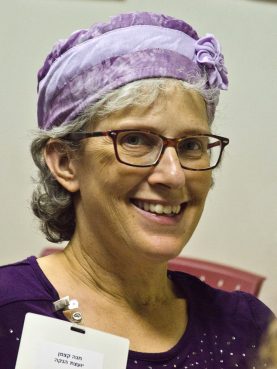
“I’ve come across a lot of people who do vaccinate, but they often feel conflicted,” said the prayer’s author, Hannah Katsman, a lactation therapist in central Israel. “I wrote the prayer to help them see vaccines as a positive thing to be grateful for and not something to fear.”

Prayer Before a Vaccination” was published in English and Hebrew by the Open Siddur Project.


Hannah Katsman, an Orthodox Israeli lactation therapist, has written a prayer on the occasion of vaccination. She wrote the prayer to help parents see vaccines as a positive thing to be grateful for and not something to fear.


The prayer asks that the vaccines being given “bring health, blessing and redemption, and protect us from suffering and terrible diseases” and asks God to bless the nurses and doctors who provide vaccines with a “long and peaceful life, financial security and success.”

Katsman said members of a Hebrew-language pro-vaccination Facebook group, where she is active, urged her to write the prayer as the number of measles cases in Israel and elsewhere — particularly in some ultra-Orthodox enclaves — began to skyrocket. Jerusalem, New York and New Jersey have had serious outbreaks.

“These outbreaks were an impetus,” Katsman told Religion News Service. “Pockets of the Orthodox community were being hit hard,” largely due to the communities’ high birthrates and higher-than-average percentage of babies too young to vaccinate.


Although a small number of rabbis forbade their followers from vaccinating their children, the vast majority of community leaders openly endorsed vaccination.

Katsman, a public-health advocate, also wanted to pay tribute to the health professionals “who are working on the front lines, sometimes under threat,” to eradicate preventable diseases like measles and polio.

She dedicated the prayer to the memory of her brother Dr. Sholom Wacholder, a biostatistician “who was instrumental in the development of the vaccine to prevent cancers caused by HPV.”


This week, an official at one of Israel’s four HMOs asked Katsman’s permission to post the prayer in well-baby clinics throughout the country.

“This is exactly what I was hoping for,” Katsman said. “I also hope the prayer will be translated into Yiddish.”

That language is spoken by many ultra-Orthodox Jews.

Katsman doesn’t expect to change the opinion of the strongest anti-vaxxers.

“My hope is that I can give comfort to those seeking it.”

https://religionnews.com/2019/05/17/israeli-health-advocates-urge-compliance-via-prayer-before-a-vaccination/