EVERY SIGNATURE MATTERS - THIS BILL MUST PASS!

EVERY SIGNATURE MATTERS - THIS BILL MUST PASS!
CLICK - GOAL - 100,000 NEW SIGNATURES! 75,000 SIGNATURES HAVE ALREADY BEEN SUBMITTED TO GOVERNOR CUOMO!

EFF Urges Court to Block Dragnet Subpoenas Targeting Online Commenters

EFF Urges Court to Block Dragnet Subpoenas Targeting Online Commenters
CLICK! For the full motion to quash: http://www.eff.org/files/filenode/hersh_v_cohen/UOJ-motiontoquashmemo.pdf

Wednesday, April 28, 2021

Oy Vey! Now The Reform Giant? Gedolim Aint What It Used To Be...No Kidding!


Reform rabbinic giant disciplined for inappropriate relationships now accused of ‘sexually predatory behavior’

A senior leader of the Reform movement whose rabbinic privileges were briefly suspended two decades ago for “personal relationships” that violated ethical codes in fact sexually harassed or assaulted at least three women, including one who was a minor when the misconduct began, an independent investigation by Manhattan’s Central Synagogue has found.

Rabbi Sheldon Zimmerman, who was senior rabbi at Central from 1972 to 1985, resigned his position as president of Hebrew Union College-Jewish Institute of Religion in 2000 after the Reform movement’s Central Conference of American Rabbis ruled that his relationships had broken its rules. But neither CCAR or HUC provided details of the misconduct at the time, leaving the impression that Zimmerman had simply had consensual affairs, and he went on to serve as vice president of the Birthright Israel program and rabbi of the Jewish Center of the Hamptons.

Now, lawyers hired by Central have found credible evidence that Zimmerman engaged in “sexually predatory” behavior and used the philosopher Martin Buber’s I/Thou theology, which describes the relationship between man and the divine, as a way to justify his sexual behavior, according to a letter sent to congregants Tuesday afternoon.

“We are devastated that a member of our clergy could abuse our (or any) pulpit and position of power within our community the way that Rabbi Zimmerman did,” said the letter, which is signed by Rabbi Angela Buchdahl, Central’s senior rabbi, as well as its executive director and board president. “This was a gross manipulation of his spiritual authority.”

Nancy Levy, who taught at Central Synagogue’s youth program in 1974, told the Forward in an interview that she was manipulated into a sexual relationship with Zimmerman, who was her boss.

“How could he have done this as a rabbi? How could he have trapped us with the ‘I/Thou?’” Levy, now 74, said in an emotional phone interview. “He so misused Buber’s words,” she added. “He told me he was looking to get to God through me.

“It’s just like the Catholic priests — he used religion to justify his predation and tore down Judaism and a part of me in the process.”

The lead investigator hired by Central Synagogue confirmed that a second victim was 15 years old and a member of Central Synagogue’s youth group when Zimmerman first struck up a relationship with her in 1970. According to the investigator, the woman was 17 when Zimmerman first began to fondle and kiss her.

Central’s letter to congregants said that it would continue to investigate any new allegations of women who come forward, review its policies and procedures around sexual misconduct, and, in the next two months ”make necessary adjustment” to ensure that Rabbi Zimmerman’s tenure in the community not be “lauded” in its building, archives or website.

“We have to challenge ourselves as a congregation to speak the truth and to never let any of us be bystanders,” the letter said. “May we walk forward with humility, repentance, and a determination to never allow the leadership positions of our community to be perverted or misused.”

Rabbi Zimmerman now lives outside Dallas, where he was senior rabbi of Temple Emanuel from 1985 to 1996, and where he is listed on the website as teaching a Kabbalah course. He did not respond to requests for comment.

The revelations about Rabbi Zimmerman have prompted a review of policies around sexual misconduct not only at Central but also at HUC and CCAR. They come amid a broader reckoning over sexual harassment and assault at HUC and the world of Jewish Studies after some scholars attempted earlier this year to help the sociologist Steven M. Cohen, who was shunned by the Jewish world after five women accused him of misconduct in 2018, re-enter academic discussion circles.

CCAR, the Reform movement’s rabbinical organization and the body that originally sanctioned Zimmerman in 2000, said in a statement on Tuesday that it had moved five months ago to conduct “an audit and assessment of our ethics system” and promised that review would “result in meaningful change.” The statement called the revelations about Zimmerman “devastating” and said it sparked “institutional self-reflection” over the group’s original investigation of his behavior.

“When a rabbi misuses the power and trust of their title, we are all harmed,” said the statement, signed by the organization’s president and chief executive. “We know that we are at an inflection point. We know, too, that our commitment to real change means that there is difficult but necessary work ahead. The road in front of us will not be easy, but the safety and well-being of the communities our rabbis serve is a priority.

An HUC spokesperson said the rabbinical college had decided this month to engage an independent law firm to conduct a review and analysis of allegations relating to sexual misconduct and gender bias. This follows the creation in January 2020 of a presidential task force to address instances of harassment and bias.

Andrew Rehfeld, president of HUC, wrote in an April 23 email to faculty, staff, students, alumni and board members that the new investigation would be “thorough,” “impartial” and “undertaken with thoughtfulness and urgency,” promising more specific details “in the weeks ahead.”

“Our board and administration is really distressed by the accounts coming forward,” Jeanie Rosensaft, the HUC spokesperson, said in an interview. “We’re committed to ensuring the wellbeing, dignity and respect of every individual in our community,” she added. We are seeking to hear people’s truths and we are seeking teshuva with thoughtfulness and urgency.”

Levy, telling her story publicly for the first time, said in the interview that the inappropriate relationship with Rabbi Zimmerman began in 1974 and took a turn one day in the fall of 1975 when he called her and said he was coming over to her apartment after dropping his wife off at the airport.

“Then, I knew he was going to ask me to have sex — that he intended to consummate what had been going on,” she recalled. When Zimmerman arrived, Levy said, the two of them got undressed but did not have sex because Zimmerman was unable to have an erection.

“He told me then that I was the only person he’d ever done this with before aside from a nun,” she recalled. “In my mind, I was like, this is really weird.”

Levy said Zimmerman continued to try and reach out to her after the incident in her apartment, but she declined his overtures, quit her teaching position at the synagogue and parted ways with Reform Judaism, working instead as an educator at a church in Manhattan.

“I would be seriously surprised if I could ever affiliate with the institution of Judaism again after what happened,” she said. “I can go there for my mother’s yahrtzeit and for all the members of my family whose names are on those plaques,” she said, referring to Central Synagogue. “But after being made to feel so unsafe in that place, my relationship with that synagogue and my Judaism is permanently damaged.”

Levy spurred Central’s investigation last fall when she decided to come forward with her never-before-heard allegations against Zimmerman after happening upon a Rosh Hashanah Zoom service led by Buchdahl. “In her drasha, Rabbi Buchdahl spoke about confronting racism in our community,” Levy recalled. “Even though I hadn’t thought about Shelly for years — decades — it all came rushing to the surface. I realized it was my turn to confront the injustice that I had experienced, as our nation confronts its own legacy of slavery and racism.”

Rabbi Rick Jacobs, president of the Union for Reform Judaism said he was “profoundly saddened to learn of the painful violations endured” by members of the movement.

“Sexual misconduct has no place in our houses of worship, where our holiest ethical teachings should be lived by all especially by our clergy who care for us at the most vulnerable moments in our lives,” Jacobs said in an emailed statement.

“Our Jewish tradition is unyielding in holding all of us responsible to create safe environments where the culture of respect prevails and where there is openness to hear - and address - the failings of our leaders,” he added. “We will not rest until every space within the Reform Movement is safe and those culpable are held accountable.”

Rabbi Buchdahl said in an interview that she felt “morally compelled” to investigate after Levy came forward, followed by two other women who shared their experiences and what she described as “the lasting harm.”

“Their stories were devastating and our investigation deemed their accounts to be credible,” she noted. “We asked these women directly what could bring any measure of closure or healing, and they shared how important it would be for us to make the past public so there is no sense that a transgression this serious can be swept under the rug by the wider Jewish community.”

Part of that reckoning will include “amending” Rabbi Zimmerman’s legacy at Central “to reflect the entire truth of his rabbinate,” said Rabbi Buchdahl.

“As painful as the reckoning may be, it is necessary for any religious institution to face its history in full. As our tradition teaches, we cannot shape our future if we ignore our past. For serious sexual misconduct, no one should want to cover up the abuse, no matter how long ago it occurred,” she said.

https://forward.com/news/468535/reform-cover-up-rabbi-sheldon-zimmerman-sexually-predatory-behavior/

Tuesday, April 27, 2021

Seriously --- How Many Holocaust Museums Does The World Need ? The Pathetic Race To Create Museum Disneyland Judaism!


After years of delays and strife, Jerusalem Tolerance Museum nears completion


The Simon Wiesenthal Center’s building, slated to be 4 times larger than Yad Vashem, is already an imposing presence as it readies to open next year. But is it also an imposition?


In addition, there will be two theaters, an international conference center, a grand hall, an indoor/outdoor café, a gift shop, a library (including a display of special archival letters), classrooms, a public plaza, a sunken 1,200-seat outdoor amphitheater built around the remains of a Roman aqueduct, and underground parking.

Inside the exhibit spaces, the museum’s backers promise a new, cutting-edge museum experience, along with a lavish sprinkling of Hollywood style.

The center prizes its place as part of the Tinseltown ecosystem, hosting movie stars and other celebrities. Photographs supplied by the center for this article featured well-known actors and other VIPs, and Hier, like many fundraisers, is no stranger to hobnobbing with celebrities. ....

 READ:

https://www.timesofisrael.com/after-years-of-delays-and-strife-jerusalem-tolerance-museum-nears-completion/

Monday, April 26, 2021

The Only "Hoax" Is the Guy Who Called It One!


‘Albert Sabin’ isn’t a household name, like ‘Jonas Salk,’ but maybe it should be 


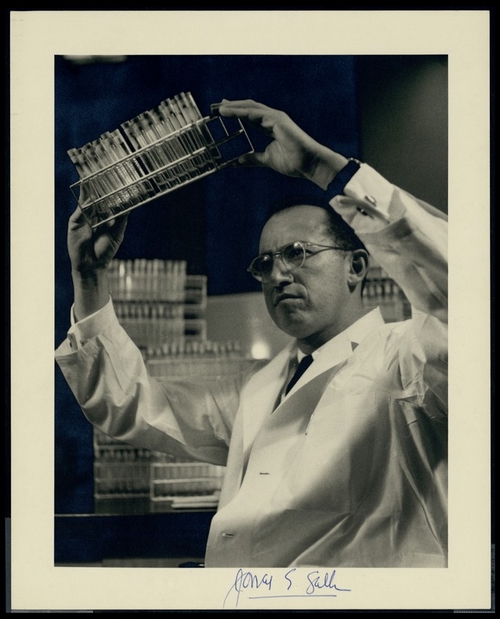
Jonas Salk is rightfully credited with developing the first safe and effective polio vaccine, yet his inoculation was not the one that ultimately brought about the near total eradication of the terrible infectious disease known as “poliomyelitis” or “infantile paralysis.” 


Signed photo of Jonas Salk, which the famous researcher donated to Jerusalem’s Jewish National and University Library (today’s National Library of Israel) in 1958. From the National Library of Israel archives

Superseding Jonas

Salk’s vaccine, administered by injection, was first approved and widely distributed in the United States in 1955.

Around the same time, another Jewish medical researcher named Albert Sabin was busy developing a different type of polio vaccine — one that could be administered orally and provide significant benefits over Salk’s, including cheaper production costs and longer-lasting immunity from polio without the need for “boosters.”

An oral vaccine, as opposed to an injected one, also meant that it would be much easier and more practical to use for massive inoculation drives, especially in poorer countries and regions where sterile syringes were not readily available.

Sabin’s vaccine used a weakened “live” polio virus, as opposed to the “dead” virus used by Salk. This made it theoretically more risky, yet with the benefits far outweighing the risks, the Sabin vaccine largely replaced the Salk vaccine worldwide from the early 1960s.

Salk’s vaccine has remained in use and was certainly a critical breakthrough in terms of dramatically reducing the debilitating infectious disease’s prevalence, yet for most of the second half of the 20th century, the oral vaccine developed by Sabin is what facilitated the nearly complete global eradication of polio.

Neither of the men ever attempted to patent their discoveries, seeing it as their privilege and purpose in life to help save millions of people from polio and other ailments.

On the day his vaccine was declared safe and effective for use, Salk was asked who owned the patent. He famously retorted, “Well, the people, I would say… There is no patent. Could you patent the sun?”

Sabin once quipped, “A scientist who is also a human being cannot rest while knowledge which might be used to reduce suffering rests on the shelf.”

From immigrant to global hero

Born in Bialystock in 1906, Albert Sabin moved with his family to the United States in 1921, fleeing the poverty and violent anti-Semitism of their native Poland. Shortly after receiving his medical degree ten years later, Sabin became specifically interested in studying polio.

His research into polio and other ailments continued throughout the 1930s and 1940s. As a high-ranking officer in the US Army Medical Corps during World War II, Sabin traveled the globe studying viral diseases, even developing vaccines for some, including dengue fever and encephalitis.

Sabin receiving an award from Shaare Zedek Hospital in Jerusalem, presented by a 10 year-old girl “representing a generation freed from the fear of polio.” Published in the B’nai B’rith Messenger⁩⁩, December 15, 1972. From the National Library of Israel Digital Collection    
 

After the war, he settled back into civilian life and his research on polio. Determined to better understand the polio virus, Sabin and his colleagues performed autopsies on everyone who died of poliomyelitis within a 400 mile (650 km) radius of his home in Cincinnati. Sabin and his team discovered that the poliovirus was found in the intestinal tract — meaning that an oral vaccine could theoretically be developed for it.

Ultimately one was......

 READ ENTIRE ARTICLE:

https://blog.nli.org.il/en/his-sugar-cube-vaccine-beat-polio-then-he-took-a-shot-at-middle-east-peace/

Friday, April 23, 2021

Yaakov Litzman - A Real Piece of Work!


A-G leaning toward indicting UTJ MK Ya’acov Litzman


If the accusations are true, Litzman’s meeting with a key witness in the Malka Leifer extradition case would constitute witness tampering.


Malka Liefer - United Torah Judaism MK and Construction and Housing Minister Ya’acov Litzman

 Attorney-General Avichai Mandelblit is leaning toward indicting top United Torah Judaism MK and Construction and Housing Minister Ya’acov Litzman for fraud, witness tampering and breach of public trust for allegedly interfering in the extradition of alleged pedophile Malka Leifer, subject to a pre-indictment hearing.

Officials would not confirm the leak, though there was a clear sense that the decision was impending.

In August 2019, police recommended indicting then-deputy health minister Litzman.In a second case, the police had recommended indicting Litzman for bribery, while police had closed a third case against Litzman due to a combination of insufficient evidence and charges which had expired due to the statute of limitations for when a case could be brought.Despite police recommendations, Mandelblit makes the final decision about whether or not to accept the prosecution’s and the police recommendations.In 2019, the police said that they found sufficient evidence to charge Litzman with trying to influence the opinion of psychiatrists appointed by the Ministry of Health in order to aid Leifer and prevent her extradition to Australia where she was wanted for dozens of cases of sexual abuse that she is accused of committing while serving as a head of school in Melbourne.In a statement, the police said that Litzman, a Gur hassid, attempted to pressure the Jerusalem district psychiatrist into falsely stating that Leifer was mentally unfit to be extradited to Australia to stand trial.

The same psychiatrist who originally filed an opinion stating that Leifer was competent to stand trial, allegedly switched his opinion completely after pressure by Litzman.If true, Litzman’s meeting with the key witness in the extradition case would constitute witness tampering.

He also is accused of threatening other medical professionals at the ministry if they did not write reports in a way favorable to Leifer.Leifer fled to Israel in 2008 amid allegations that she had sexually abused students at the Adass Yisroel school in Melbourne.She is wanted on 74 charges of child sexual abuse.Leifer was arrested in Israel in 2014, but was released after being deemed mentally unfit for the legal proceedings. She was later rearrested after an undercover investigation found that she lived a normal life and was mentally fit to face extradition.In January, Leifer was finally extradited.

A second case investigated by police was about Litzman’s alleged involvement in trying to influence officials in the ministry to work on behalf of a food establishment whose owner is close to the haredi (ultra-Orthodox) politician.Litzman allegedly frequented the establishment during the period in dispute and allegedly tried to prevent the closure of the company, which had been found to pose a health hazard to the public after several people became sick by consuming its products.After health ministry inspectors initially closed the establishment, Litzman ordered a new on-site tour including both him and the officials who had closed it.

As part of the tour he told the officials that it should be reopened and that he personally had been eating the food and was fine.Allegedly Litzman even asked about the officials’ salaries in order to probe whether they could be bribed.Though the officials did not go for this offer, Litzman could still be indicted for attempted bribery.The police said that the investigation found sufficient evidence against Litzman to charge him with bribery, fraud, obstruction of justice and breach of trust.

The third case, which was closed by police, included potential charges that Litzman tried to influence officials in the health and other ministries to help various prisoners, especially those with sex-crime convictions, to get early releases.While many convicts get early releases, ministers are prohibited from involvement in the process which is based on a series of recommendations by professionals about different issues coming from different ministries.Multiple officials on Litzman’s staff who were also suspects in some of the above cases will also reportedly get off.After the 2019 police recommendation, Litzman’s office responded, “[Deputy] Minister Litzman has worked throughout his years for the benefit of Israeli citizens, with complete transparency and by law. The office of Litzman has a clear, open-door policy to assist the public. This is without discrimination against anyone, and without clarifying the status of those who call for assistance, except under the law and [with] integrity.”


https://www.jpost.com/israel-news/ag-leaning-toward-indicting-utj-mk-yaacov-litzman-666080?utm_source=ActiveCampaign&utm_medium=email&utm_content=President+Reuven+Rivlin+set+to+give+Yair+Lapid+next+mandate&utm_campaign=April+22%2C+2021+Night&vgo_ee=Jn367jKILnpErXAAhCpdDovy7T5YEJ8ohjC9vauJg30%3D


Thursday, April 22, 2021

If You Don't Succeed at First, Try, Try Again!

Yehuda Meshi-Zahav, former ZAKA head, attempts suicide


 SUICIDE NOTE - "I am sorry.
My punishment I have received already.
Try to remember the good that I did;
try to always remember what I forgot:
'There is an Eye that sees, an Ear that hears, and all your deeds are written in a Book.'

My love always,
and I am very humiliated,
Yehuda."


Yehuda Meshi-Zahav, accused sex offender and former ZAKA head, attempted to commit suicide Thursday morning.Medical reports from Shaare Zedek Medical Center in Jerusalem indicate that he is currently in critical condition, but doctors have managed to stabilize him.

Shaare Zedek head Ofer Merin said that the outcome of the situation will only be understood within the next day, and only then we "can ask what damage was caused and to what extent."His son reportedly called for emergency services after he found his father at home where he had hung himself.

 Medics evacuated him to the hospital after performing life-saving treatments at the scene.Police found a suicide note in his house. Meshi-Zahav's sons have been starkly divided about it, with one of them saying it is written in his father's handwriting, and another saying it isn't. His sons are also claiming that the letter is actually forged. Meshi-Zahav's lawyer said that he is planning on suing for the "severe act," N12 reported. A neighbor told Channel 12 that Meshi-Zahav looked forlorn on Wednesday and that although he had met him in synagogue on Saturday, weeks after police interrogations, he would not leave the house. 

Israeli police officers and paramedics are seen outside the house of the former Chairman Israel's Zaka rescue unit, Yehuda Meshi Zahav,in Givaat Zeev. (Credit: Yonatan Sindel/Flash 90) 

Israeli police officers and paramedics are seen outside the house of the former Chairman Israel's Zaka rescue unit, Yehuda Meshi Zahav,in Givaat Zeev


Meshi-Zahav, 59, had been accused of sexually assaulting women and children over a period of decades from his position of power, using tactics of fear and intimidation to silence his victims.
 

In March, a police investigation was officially launched, after an initial report opened a floodgate of abusive accusations against him, from men, women, and teenage boys and girls of all ages.ZAKA Special Units Director Haim Otmezgin claimed Thursday morning that many of the allegations against Meshi-Zahav came from sources who had tried to blackmail him. "There needed to be a trial; people didn't have to base things on rumors," Otmezgin said, adding that he himself had witnessed threats that the former ZAKA head had received: "If you don't agree to let us fundraise for the organization, we will bury you and destroy your family."The man who threatened Meshi-Zahav, according to Otmezgin, was attempting to fundraise for ZAKA, but pocket some of the money himself. Meshi-Zahav apparently knew of the scheme, and was threatened for it. "Whoever knows Meshi-Zahav knows that he could never hurt a soul," he insisted, "I've known him for 25 years."

 Channel 12 was preparing an in-depth investigative article for the Thursday night news about the sexual assault allegations facing Meshi-Zahav when the news broke of his attempted suicide, telling The Jerusalem Post that it has yet to make a decision as to whether or not it will run the program as planned.Rabbi Yuval Sherlow, head of the Ethics Center at the Tzohar Rabbinical Organization, called on Channel 12 to cancel the program in light of today's developments."Investigations about injustices are an essential action designed to increase the moral path of society," he said. "But the broadcasting of Uvda [Fact] tonight, while the person the interrogation is about is fighting for his life, would be an immoral and insensitive step, and therefore should not be broadcast."Following the investigation, Meshi-Zahav stepped down as head of the organization he had founded in 1989 and forfeited the Israel Prize he was set to receive this year.Two months ago, in January, he lost his parents to the coronavirus, just a month after having lost his brother to the same disease.

He lost his father, Rabbi Menachem Mendel Meshi-Zahav, while sitting shiva (the weeklong mourning period) for his mother Sara Zisl Meshi-Zahav, who had passed away only three days prior – all this within 30 days of the passing of his brother, Moshe.

https://www.jpost.com/israel-news/zaka-head-meshi-zahav-committed-suicide-665991?utm_source=ActiveCampaign&utm_medium=email&utm_content=Syrian+missile+lands+near+Dimona+nuclear+reactor%2C+interception+fails&utm_campaign=April+22%2C+2021+Day&vgo_ee=Jn367jKILnpErXAAhCpdDovy7T5YEJ8ohjC9vauJg30%3D


ZAKA founder, an alleged serial rapist, rushed to hospital after suicide attempt

Yehuda Meshi-Zahav tries to hang himself less than 2 months after bombshell reports of allegations against him


https://www.timesofisrael.com/zaka-founder-alleged-serial-rapist-rushed-to-hospital-after-suicide-attempt/?utm_source=The+Daily+Edition&utm_campaign=daily-edition-2021-04-22&utm_medium=email

Wednesday, April 21, 2021

The Yeshiva & The Shiksa.... Zeidy Yossel Kushner Would Be Proud...Hershel Schachter's Slippery Slope...


Israeli yeshiva leaks name of model Karlie Kloss' baby


Yeshivat Reishit, where Jared Kushner's brother Josh studied, leaked name of baby born to Josh Kushner and his wife, Karlie Kloss.


Karlie Kloss
Karlie Kloss

It’s common practice in Jewish circles to wait until eight days after a baby boy is born before publicly sharing the baby’s name at the time of circumcision.

Josh Kushner and Karlie Kloss, the brother and sister-in-law of Jared Kushner and Ivanka Trump, wanted to wait even longer than that to make the baby’s name, Levi Joseph, public.

But Kushner’s Israeli yeshiva had other plans.

Yeshivat Reishit, where Kushner was a student in 2003, congratulated the couple in an alumni email, announcing the baby’s name in the process. The yeshiva, located in Jerusalem and Beit Shemesh, runs a Modern Orthodox post-high school gap year program for American boys.

When the New York Post, which first reported on the leak, asked Kushner and Kloss for comment, Kloss posted the name to Instagram herself on Saturday.

Born in March, the baby may be named for Kushner’s grandfather, real estate scion and philanthropist Joseph Kushner, who died in 1985. The Joseph Kushner Hebrew Academy in Livingston, New Jersey, is named for him.

Kushner, who founded the Oscar Health insurance company, and Kloss, a supermodel and TV star, married in 2018.


https://www.israelnationalnews.com/News/News.aspx/304670


Tuesday, April 20, 2021

Having a book of complaints is a good idea for everyone. It releases tensions and provides a touch of lightheadedness to matters which can be unnecessarily weighty. And, if we read the book of complaints often, it will give us a clear indication of the pettiness of most of the issues that are revealed and obvious.


The book of complaints


Notebook

Israelis are said to have a tendency to complain - but maybe it is Jews who have that habit.

When our children reached the age and stage of life when they were ready to get married, my wife and I were privileged to organize and participate in four weddings in a rather short space of years. Being a congregational rabbi, I naturally had to invite all the members of my congregation to the wedding ceremony and dinner.

My wife and I labored long and hard over the invitation list and over the seating arrangements for the wedding dinner. We invested a great deal of effort and energy in trying to make sure that, to the best of our ability, everyone would be satisfied, and no one would be unduly disappointed.

Nevertheless, people being people, there were those who felt that they were not seated in a manner appropriate to their standing and social status. Or, they wanted to be seated with certain friends of theirs and somehow my wife and I were unaware of these relationships. There also were some people who were unhappy because they were too close to the band while others were not so happy because they were too distant from the dance floor itself.

Because of these occurrences, we developed a family tradition. We kept a book of complaints and we dutifully wrote down everyone's complaint in that book so that it would be preserved for posterity. Naturally, since our awareness of these problems were not apparent until after the wedding had already taken place, there was nothing that we could do to redress the situation, but since we noted it in our book of complaints, we felt that we had addressed the situation to the best of our abilities.

There are people who are, because of their very nature, complainers. I will admit that there is much to complain about in our daily lives and in our social circumstances. However, complaining and carping about the frustrations that confront us daily, is of little avail and the cause of much damage in society at large and to the complainers particularly.

We read in the Book of Eicha, a book of sadness and tragedy, that human beings should not complain regarding their lot in life and circumstance that befalls them – as is it not sufficient for them that they are still alive?

This is a strong statement and is meant to bring us up short when we start complaining about matters in life and society that, in most cases, are unimportant. Nevertheless, one must always be provided with an outlet for one's frustrations and not to keep them permanently bottled up.

If we do so, then we corrode the entire structure of our personality and will always have a jaundiced view of life and of others. Having a book of complaints is a good idea for everyone. It releases tensions and provides a touch of lightheadedness to matters which can be unnecessarily weighty. And, if we read the book of complaints often, it will give us a clear indication of the pettiness of most of the issues that are revealed and obvious.

We have passed through a very bitter year due to the Corona pandemic and its deleterious effects on society and our personal lives. As we emerge from it now, with the effectiveness of the vaccines being proven daily, people looking back on what has occurred, naturally have different reactions.

A great deal of this is dependent upon how severely we were impacted in our families, physically, economically, and psychologically. I notice that there are those who are given to complaining, even bitter complaints over what they deem to be a lost year of opportunity and, for some, of income. I notice also that there are others who somehow, almost cheerfully, pick up the pieces and put their lives, businesses, and families back together again without complaint or bitterness.

I have come to realize that there are many for whom even having a book of complaints to release their tensions, refused to do so and would prefer to nurture their hurts and frustrations rather than moving on in life.

But what is clear, is that we proceed with our lives and our mission. As such, keeping a book of complaints can sometimes be a valuable asset in this task.

Rabbi Berel Wein is a noted scholar, historian, speaker and educator, admired the world over for his audio tapes/CDs, videos and books, particularly on Jewish history. After many years serving as a community rabbi in Monsey, NY, he made aliya and is rabbi of Beit Knesset Hanassi in Jerusalem.

https://www.israelnationalnews.com/News/News.aspx/304195

Monday, April 19, 2021

Science Versus Fundamentalism --- “That’s what science is — it’s a process of abandoning your old hypotheses in favor of a better hypothesis,” she said. Many initially promising drugs fail in clinical trials. “That’s just the way the cookie crumbles.”


The Covid-19 Plasma Boom Is Over. What Did We Learn From It?


The U.S. government invested $800 million in plasma when the country was desperate for Covid-19 treatments. A year later, the program has fizzled.

By the fall, accumulating evidence was showing that plasma was not the miracle that some early boosters had believed it to be. In September, the Infectious Diseases Society of America recommended that plasma not be used in hospitalized patients outside of a clinical trial. (On Wednesday, the society restricted its advice further, saying plasma should not be used at all in hospitalized patients.) In January, a highly anticipated trial in Britain was halted early because there was not strong evidence of a benefit in hospitalized patients.

In February, the F.D.A. narrowed the authorization for plasma so that it applied only to people who were early in the course of their disease or who couldn’t make their own antibodies.

Dr. Marks, the F.D.A. regulator, said that in retrospect, scientists had been too slow to adapt to those recommendations. They had known from previous disease outbreaks that plasma treatment is likely to work best when given early, and when it contained high levels of antibodies, he said.

“Somehow we didn’t really take that as seriously as perhaps we should have,” he said. “If there was a lesson in this, it’s that history actually can teach you something.”


READ ARTICLE:

https://www.nytimes.com/2021/04/17/health/covid-convalescent-plasma.html?action=click&module=Well&pgtype=Homepage&section=Health

Friday, April 16, 2021

"These People & Their F***** Sickness" --- Defacing images of women and girls by haredi men is now a common occurrence. While it is tempting to say that it is the work of a few extremists, the fact is that this destruction is now so expected that ad companies refuse to show women’s pictures in certain areas knowing that they will be destroyed, and that the police are unlikely to chase the perpetrators.


Erased: Why the removal of female faces in the haredi world is a problem


“Wanton destruction of property is a sin... Yet certain individuals have decided, against all halachic literature, that vandalism is excusable when it makes women disappear.”

A father shows his son how to pull a woman's face off an anti-abortion organization's bus ad (photo credit: ISRAEL COHEN ON TWITTER)
A father shows his son how to pull a woman's face off an anti-abortion organization's bus ad


The image of a father holding his child’s hand has always been touching to me. Perhaps it makes me think of my own childhood, walking with my father, as he explained how the world works, telling me silly stories, or letting me explore the rough ocean waves while making sure I was safe.
 
There is something so loving and right about seeing a child’s small hand tucked in the grip of a father’s stronger one. And there is something about a father’s love and guidance that can be so influential on a child.
 
I suppose that is why this image is so painful for me to see.
 
In it, a religious man holds his child with one hand while using the other to rip an advertisement off the side of a bus. On a public street. In broad daylight.
 
Why? Because it has a woman’s face on it.
 
Defacing images of women and girls by haredi men is now a common occurrence. While it is tempting to say that it is the work of a few extremists, the fact is that this destruction is now so expected that ad companies refuse to show women’s pictures in certain areas knowing that they will be destroyed, and that the police are unlikely to chase the perpetrators. The Knesset even convened a committee meeting to discuss the horrific vandalization of a billboard campaign to raise awareness of violence against women.
 
“Wanton destruction of property is a sin. That’s a basic tenet of civilized society and fundamental in Jewish law. Yet certain individuals have decided, against all halachic literature, that vandalism is excusable when it makes women disappear,” says Rabbi Scott Kahn, host of the Orthodox Conundrum podcast.  
 
How did we get to the point that religious Jewish men destroy personal and public property, without shame, in broad daylight, while educating their small boys to do the same? What inspires this horrific behavior and what else may it be causing that we cannot see?
 
IN THE past few years, the Jewish community has experienced a lightning fast slide toward extreme notions of shmirat eynaim, or “guarding one’s eyes” from seeing things that may lead them to sin. The concept, meant to help men avoid situations that may lead to sexual thoughts and thus sin, has been recrafted as total segregation of the sexes outside of marriage and the erasure of anything female, anywhere.
 
Events such as weddings, which were once prime opportunities for people to meet and form their own marriages, are now strictly segregated. Printed depictions of Jewish life are devoid of Jewish women and girls. Even higher education and places of employment are segregated to fit this new demand.
 
This extreme segregation has led to magazines, school books, dinner ads, charity brochures, illustrated megillot and Shabbat books that show only men and boys. Cartoons and comic strips leave women out with the occasional mother represented by the back of her head. Even Artscroll has adopted this approach and made influencer Daniella Renov remove her image from her own cookbook.
 
While insular hassidic communities have had this policy in place for some time, the phenomenon of erasing women in the greater Orthodox community has existed for only 15 years or so. By not forcefully rejecting this practice, the Orthodox community has tacitly accepted that women should not be seen and that men are entitled to a female-free environment.
 
In 2015, in these pages, we discussed the trend and how it was being enforced with mafia-like tactics in some places in Israel. Since then, many articles have delineated the impact the erasure has on women’s financial, physical, and representative health. The lack of images of women coupled with the dearth of information on women’s health plus cultural norms has created a reality where haredi women’s health was ranked eighth vs. haredi men’s second place.
 
Female business owners have a distinct disadvantage when they cannot advertise with their faces or with real life models. The lack of women’s images as part and parcel of the average Jewish family and community leads to a lack of women’s voices being heard and directly to policies that are detrimental to them. Erasing women removes our humanity and redefines us as objects, sexual objects, to be hidden.
The impact of being seen mainly as a sexual object has been defined by many girls as traumatic. 
 
 R. from New York says, “I internalized the message I was inherently, in my essence, temptation first and foremost. I associated my being and my body with being an object for others’ sexual gratification, sins and fantasies. Before I could develop a healthy sense of self in being female, my identity became shame. I was told I was responsible for men. Their sins were my sins. And their thoughts were my sins. 
 
And I would be held accountable one day. As a young girl it was a burden too suffocating and too shameful for me to carry day to day and as I reached my teens I developed an eating disorder in an effort to change my body and to just be seen less. It took me a long time to recover from this.”
Despite the evidence of the damage done to women and girls, increasing numbers of institutions, charities, and publications censor images of females, aged six or older.
 
 
Original ad for plastic dolls (left) and in 'AMI' magazine, with mother and daughters removed (Canva.com) 
Original ad for plastic dolls (left) and in 'AMI' magazine, with mother and daughters removed 
 
 
TO UNDERSTAND how this erasure and increased segregation affects Jewish men and the Jewish family, The Magazine spoke to a number of men and therapists.
 
Most requested anonymity due to the personal nature of the subject matter and for patient confidentiality.
 
“Moshe,” 19, is from a Modern Orthodox community. “By redefining women as nothing more than the object of male desire, men have become forcefully hypersexualized. This puts men in a very uncomfortable position in which we are reduced to little more than our base desires and not allowed any emotional depth. The insinuation that I have no agency over my own sexual urges is insulting and this apparent lack of control is used to explain away any actual issues I may be struggling with. The effect religious guilt has on men and its contribution to the growing men’s mental health crisis cannot be understated.
 
“When men are told that sexualizing women is both inherent in their nature and also incredibly sinful, we internalize that... when we do something that, in our minds, constitutes engaging with our sexuality, which thanks to the culture of erasure can mean even seeing the image of a woman, the religious guilt crashes down full force. The desire to avoid this guilt causes more anxiety, which makes every interaction more guilt-inducing.”
 
“Aaron,” in his early 20’s, spoke candidly about his struggles.”I’m married and have struggled with a pornography addiction for over a decade. It’s unfortunately extremely common for young men, and in my personal experience it’s been entirely due to the frum societal culture of extreme separation of the sexes.” He acknowledged the importance of halachic boundaries but says, “the social creation of separation is what creates toxic relationships, unhealthy marriages, warped senses of oneself, and sadly, pornography addictions.”
 
Shlomo Lieberman, a clinical social worker in New York, has worked with the frum community for over 30 years. He says that in his experience the extreme segregation and erasure has “turned women, literally, into the forbidden fruit and has contributed significantly to the sex-addiction I see in my patients.”
 
Additionally, he says, it deeply impacts the marital dynamic. “Men aren’t learning what women’s needs are. They don’t even recognize that they have needs. It’s not out of maliciousness, it’s simply that they haven’t learned to see them as whole beings with needs. Where do they interact with them? Girls’ and boys’ schools now have different vacations, brothers and sisters don’t spend much time together. Where will they learn to speak to girls, to understand them or to value their opinions? Not in school, not via books or magazines, and now not in the family.”
 
He says that the majority of a person’s learning is passive learning, “If they don’t see women represented in society, in magazines, in the family... they learn very clearly that their opinions simply aren’t that important.”
 
Elementary school educators see the results of this in their students. Rabbi Moshe Nachbar says that the erasure of all things female in frum publications normalizes something that isn’t normal: the idea that women can’t succeed or achieve. In his role as an educator in a Modern Orthodox school in Florida, he feels it “breeds a dismissiveness in boys’ attitudes towards girls, their intelligence and achievements.”
 
Another school administrator of an elementary school in the New York area that has both girls and boys (separately) agrees, “males exposed to a segregated gender system compounded by a lack of female representation in publications lose the ability to identify the real value of women, often overlooking or devaluing their qualities. Worse, this leads to men stripping themselves of the unique human feature of forming interdependent relationships to combine forces and reach levels beyond their own.
 
 Lack of empathy and selfishness are just a few of the many issues I see as a result.” He sees that it causes girls to lack confidence in their own opinions and abilities. It is something he works actively to counter.
 
Liebermen says that as the extremism gets worse, the issue gets worse and he sees more and more couples ready for divorce mere months after getting married. Lieberman says he helps men unlearn what they have passively acquired and to learn that women’s needs, opinions and perspectives matter.
 
A hassidic husband and father who grew up in the hassidic world, where segregation and erasure are an ingrained part of the culture, says, “Even when you’re living on the margins of the community – doing things that make you a rebel, the female aspect of worldview stays with you. Wives were part of the system, something that had to be done, dealt with.”
 
He says, “Girls were to be chased, manipulated and experienced, not dated or thought of as a partner. It wasn’t possible to think of women as anything other than a function to be managed/exploited. We simply aren’t trained to see the female experience or to consider her perspective. It takes a long time to unlearn this and realize that there is an entire other experience that women have – I’m actually embarrassed to say that this conversation has made me aware of the fact that while I am active in helping boys deal with the system, I haven’t even thought of how much worse it must be for the girls.”
 
Talli Rosenbaum, individual and couples therapist and certified sex therapist, explains why erasure carries into marriage in this way. “Creating intimacy requires seeing a person as a human being and not an object. Complete gender separation creates an environment where women and men are mysterious to one another, and that makes the experience of understanding one another very difficult and often requires skill building after the fact. The erasure of women acts to perpetuate the idea of a woman as an object. This actually detracts from the authentic goal of Jewish marriage as two people who are reim ahuvim who connect with mutual respect and love.”
 
Another therapist who works in the yeshivish world says, “I grew up with hassidim who called women a ‘dus.’ A dus is a ‘thing.’ What’s the effect? Erasure of women means literally seeing a woman as a nobody, a thing. Opinionless. Someone who serves my needs of being holy and superior.”
 
“Yosef,” a hassidic man from New York described a painful marriage dynamic where, despite being in terrible physical pain during intimate relations, his wife insisted they continue, “because she was taught that men need sex and it was her job to provide it.” He had to insist that she see a doctor.
 
“She had no sense of self, of her own worth.” He says it took them years of therapy to get to a place where they communicated fully, expressed their needs and unlearned the damaging results of severe segregation. “We are human. We need emotional connection to our spouses.”
 
When asked if it’s truly important for women to be seen in depictions of society for a healthy community, Liebermen says, “If we want our boys to see women as people, not as sexual objects – and that’s how we treat women when we erase them, as sexual objects that need to be hidden lest we sin or until we marry them – then we cannot treat them as such.”
 
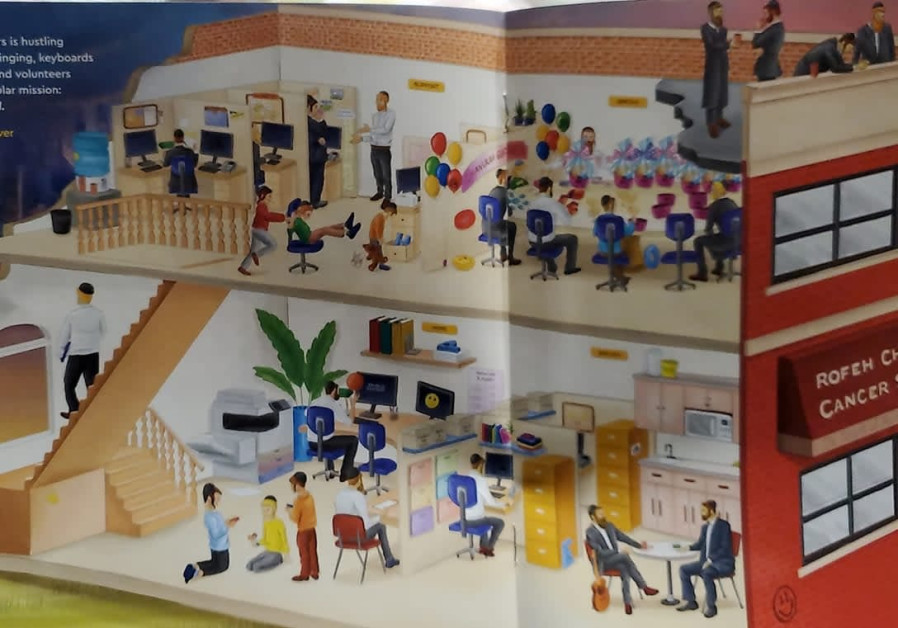
IN THIS Rofeh Cholim Cancer Society illustrated ad, all patients and medical staff are male. (Courtesy) 
IN THIS Rofeh Cholim Cancer Society illustrated ad, all patients and medical staff are male. 
 
 
SOME CLAIM that not showing women and girls protects them. A haredi social worker in Israel says his wife does not allow her picture to be shown to prevent it from being used by groups which share images of religious women’s faces, taken from their social media accounts and photoshopped onto other women’s – often nude – bodies. “The groups are almost certainly religious,” he says. “There are Hebrew groups, English groups and Yiddish groups. Some require that you prove you’re religious before you get accepted. Once a single person creates the image, it will be viewed by thousands.”
 
There are also channels and accounts dedicated to what is called “frum porn” where images of women are shared unbeknownst to them. He believes it is very possible that those who most loudly insist on the erasure of women do so to cover up this deviant behavior – “just as some of the most vehemently homophobic people are themselves homosexual.”
 
Rabbi Efrem Goldberg of Boca Raton, on a recent Headlines podcast, told host David Lichtenstein of the policy of erasure, “I think it’s a mistake. If we want the young women in our community to grow up to see images of role models... They need to not be erased. They need to know that they matter and they need to know that the Torah doesn’t demand that they hide in the shadows or that their faces be blotted out.”
 
Mishpacha magazine prints in Hebrew and English and is arguably the flagship monthly publication of the Orthodox world with a global readership of over 250,000. It shows no images of women or girls above the age of six in its publications, Mishpacha and Family First, but does on the online version of Mishpacha.
 
According to its publisher, Eli Paley, the main role of the magazine is to unify and elevate Jewish society.
 
In an interview with Rabbi Efrem Goldberg, on his podcast Behind the Bima, Paley stated that according to rabbis, there is no halachic basis for not showing women’s images. He says that he chooses to censor women and girls in order to enable the magazine to influence as many people as possible, including those with the most extreme views.
 
 As Mishpacha gained popularity, it set the trend for smaller publications and institutions – even women’s health organizations – that cater to the Orthodox world. Now, Torah websites have replaced women with images of chairs and flowers. In advertisements for breast cancer screening, women are replaced with lettuce, and in depictions of health clinics, men run the office, are all of the healthcare givers and indeed, all of the patients. Women do not exist even in caricatures of Jewish life.
 
Numerous emails requesting a conversation with Paley, prior to the writing of this article to discuss concerns for the community went unanswered and Mishpacha declined to comment for this article. It would seem that in attempting to moderate the extreme, Mishpacha has unwittingly brought extremism to the moderate – to the detriment of us all.
 
The Jewish family has always been the strength of the Jewish community. And it is this strength that is being torn asunder with the erasure of women and girls. Extreme segregation and erasure of women harms us. It dehumanizes our girls, hypersexualizes our boys, leads our fathers to destroy, and removes the influence of our mothers. The erasure of women upends the balance placed into the world.
 
Extremism can’t be fought with extremism and intolerance can’t be beaten by intolerance. To unify and elevate Jewish society, to help men and women have healthy notions of self, and of how to deal with the opposite sex, we must honor the place of both women and men in the community. It is time to realize that the erasure of women was a failed experiment and bring the gantza misphacha, the entire Jewish family, back into the picture. 
 

Thursday, April 15, 2021

Agudah Convention on Drugs Versus Drashas & Fresserai --- Kamenetz has a vision. He dreams of a world in which the trauma of the Jewish past can be healed through psychedelic experiences, a world in which chemically assisted mystical encounters are a normative part of Jewish spirituality.


First Jewish psychedelics conference looks to put spiritual drug use on the map


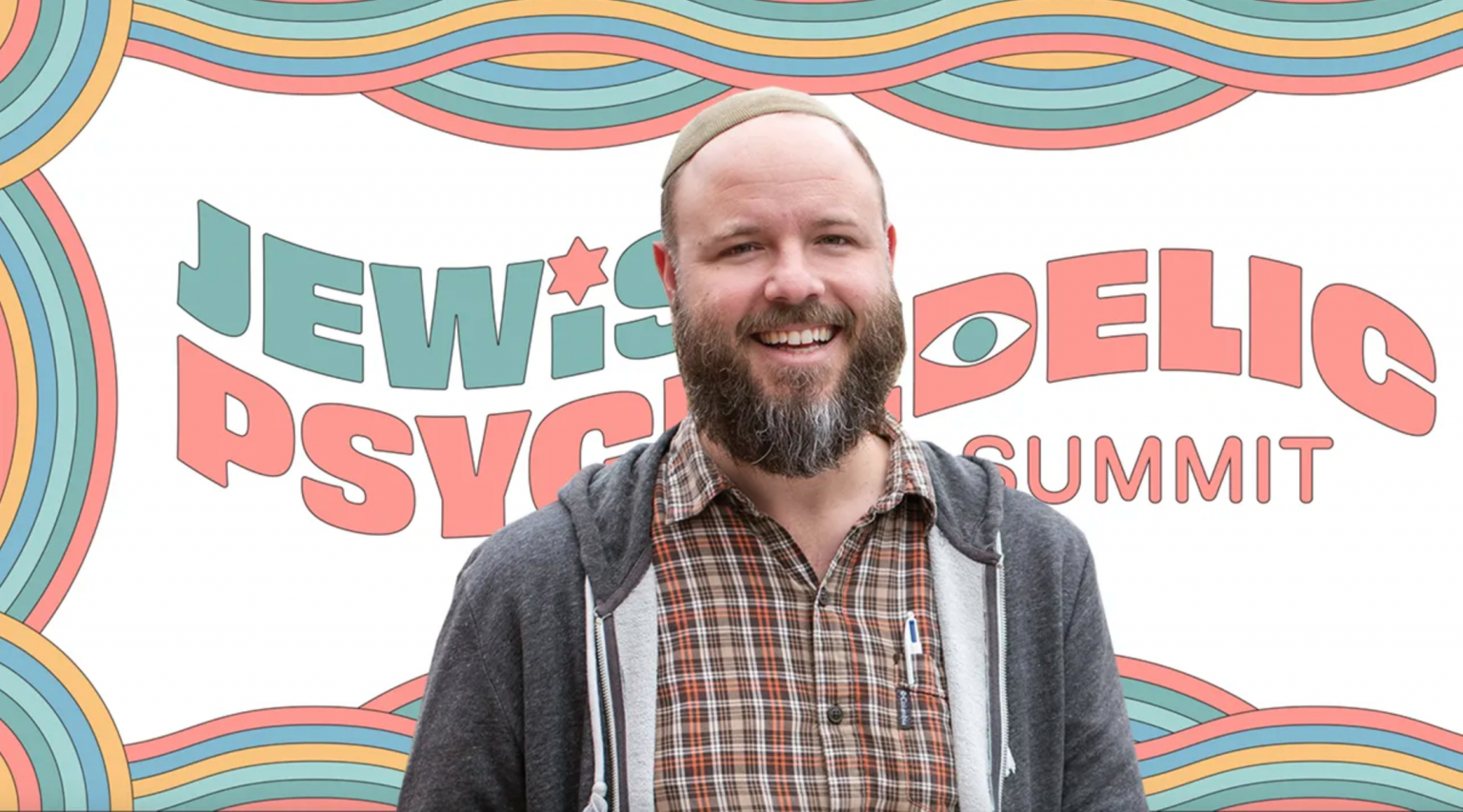
Rabbi Zac Kamenetz is one of the organizers of the landmark Jewish Psychedelic Summit. (J. the Jewish News of Northern California; background courtesy of Shefa/Shannon Levin)
Rabbi Zac Kamenetz is one of the organizers of the landmark Jewish Psychedelic Summit
 

(J. the Jewish News of Northern California via JTA) — Early in the COVID-19 pandemic, while some people were dabbling with new hobbies, Rabbi Zac Kamenetz was going all in on a lifelong fantasy.

Kamenetz has a vision. He dreams of a world in which the trauma of the Jewish past can be healed through psychedelic experiences, a world in which chemically assisted mystical encounters are a normative part of Jewish spirituality.

“Someday I see a space, maybe in the East Bay, where people can have safe and supported psychedelic experiences individually, and then integrate those experiences in a community that is invested in the application of mystical experiences with other people,” he told J. the Jewish News of Northern California, in 2019. “This is total science fiction because it doesn’t exist.”

It does now. After losing his job as the director of Jewish learning and living at the Jewish Community Center of San Francisco during a round of pandemic layoffs, Kamenetz decided to go for it. He founded Shefa, which means “flow” in Hebrew; the organization’s tagline is “Connect With Divine Flow.”

In less than a year, Kamenetz has secured funding from Jewish donors, as well as Dr. Bronner’s Family Foundation (as in Dr. Bronner’s Magic Soaps, the earthy brand with fine print all over the bottle) and the Riverstyx Foundation, which funds a number of “psycho-spiritual” projects.

He also has begun to hold regular “integration circles,” support group-like gatherings in which fellow travelers discuss and come to terms with their psychedelic experiences.

Later this spring Kamenetz is staging a two-day event that promises to put Shefa on the map — the first-ever Jewish Psychedelic Summit. It’s a collaboration among Kamenetz; Madison Margolin, editor of the psychedelics magazine DoubleBlind; and Natalie Lyla Ginsberg, director of policy and advocacy at the Multidisciplinary Association for Psychedelic Studies.

Ginsberg’s group, MAPS, has deep Jewish roots. Its founder, Rick Doblin, was inspired by a dream about surviving the Nazis to devote his life to promoting psychedelics as a cure for human ills and an insurance policy against another Holocaust. The organization has supported research and policy to advance psychedelics as a therapeutic tool.

Shefa’s summit will zoom in on uniquely Jewish questions related to psychedelics. To be held virtually with four sessions each on May 2-3, the summit will bring together dozens of rabbis, scholars, artists and more for panels with topics such as “Did Psychedelics Play a Role in Ancient Jewish Practice?” “What Draws so Many Jews to India?” and “Jewish Trauma and Psychedelic Therapy: What Is Culturally Informed Care?”

Psychedelic substances — whether organic, such as psilocybin (magic mushrooms) or synthetic (such as LSD) — are illegal virtually everywhere in the country, although some have been decriminalized to varying degrees in Oakland and Santa Cruz, California; Denver, Colorado; Ann Arbor, Michigan; and the state of Oregon. But that hasn’t stopped researchers and other practitioners — some funded by MAPS — from beginning to delve into the medical applications of these substances, such as treating PTSD, anxiety, depression and other conditions.

Kamenetz has had two experiences with psilocybin, and both were done legally as part of a Johns Hopkins University study of psychedelic experiences in clergy of various religions.

Those experiences were among the most powerful of his life, he said, and convinced him of the need for psychedelic-assisted healing in the Jewish community.

“I’m one of the very few people who can say they’ve had a legal experience with psychedelics in this country,” Kamenetz said. “To be able to speak freely about it without the stigma — because it’s not just people talking about doing illegal things — it’s allowed people to start having a more open conversation about it. When there’s the opportunity to hear from someone who did this in a legal environment, people will listen more.”

And for Jews who have already been working with or using psychedelics, Kamenetz is proud to be creating a platform where they can talk about it more openly.

“I think we’ve gotten ahead of the market,” he said. “If it wasn’t me, it would’ve been someone else.”

Ben, a 34-year-old graduate student who didn’t want to use his full name, is one of the many Jews who have used psychedelic substances. He’s attended two Shefa integration circles, 90-minute affairs that can include some Jewish chanting, brief text study and discussion of personal psychedelic experiences.

He appreciates the open, nonhierarchical vibe.

“People are encouraged to share about their experiences, ask questions, receive feedback,” Ben said.

“I have a significant and long-standing psychedelic background. I have had a lot of conversations about it with similarly inclined Jews.”

Ben first heard about Shefa when Kamenetz was interviewed on the Judaism Unbound podcast.

“I knew right away this is a conversation I want to be part of,” he said. “And I sort of got the same sense from a lot of other people, a shared sense that it was important to talk about and do and explore this, to create spaces where we can talk about it.”

When the Jewish Psychedelic Summit was announced, Ben didn’t even bother looking at the list of speakers.

“I just saw the name [of the conference] and said sign me up,” he said, though he admits he’s excited about hearing from Rodger Kamenetz, the poet and author of “The Jew in The Lotus.”

Rabbi Kamenetz (no relation) is excited, too.

“We’ve got this big Jewish family of psychedelic enthusiasts who are coming and contributing to making this thing happen,” he said. “That’s why it feels so significant to me. I’ve never been part of something that really felt like a movement.”


https://jewishstandard.timesofisrael.com/first-jewish-psychedelics-conference-looks-to-put-spiritual-drug-use-on-the-map/?utm_source=Jewish+Standard+Daily&utm_campaign=47f4f4a871-EMAIL_CAMPAIGN_2018_07_26_08_03_COPY_01&utm_medium=email&utm_term=0_1d7094cc43-47f4f4a871-407694561

Wednesday, April 14, 2021

I found no mainstream media that identified the girls as black - Why is this significant? Because white perpetrators of violence are always identified as such. When a white man engages in a mass killing, the first thing we learn, and are told over and over, is that he is white.


Why the Left Ignores the Killing of a Pakistani Immigrant Uber Driver


Why the Left Ignores the Killing of a Pakistani Immigrant Uber Driver
	 
Mohammad Anwar, dead, ignored Uber driver.
On March 23, Mohammad Anwar of Springfield, Virginia, a 66-year-old immigrant from Pakistan earning his living as an Uber Eats driver, was killed by two girls, ages 13 and 15. They carjacked Anwar, Tasered him and then, as he held on to the car (the source of his livelihood) in an attempt to stop them from stealing it, floored the gas pedal and crashed the car, killing him when he was thrown from the vehicle.

As reported the next day in The Washington Post:

"Anwar tried to force his way back into the car by climbing on top of the teen in the driver's seat, (Detective Chad Leo of the Washington, D.C., police homicide unit) said. Before he could get all the way in, though, the 13-year-old reached over from the passenger seat, turned on the ignition and 'manipulated' the gear shift, Leo said. With Anwar 'hanging outside the car' through the open driver's door, Leo said, the vehicle lurched forward and accelerated down the block, made a sharp right turn, struck a curb and overturned, landing passenger side up. Anwar was ejected and suffered broken bones and injury to his head."

After the unharmed girls climbed out and joined the onlookers milling around the car, one of them could be heard yelling, "My phone is in there!" (The Washington Post, March 31) and, "He has my phone!" (CBS News, March 30).

I found no mainstream media that identified the girls as black.

In The Washington Post report cited above, there was no mention of the girls' race, just, "Two girls ages 13 and 15 have been charged with felony murder."

CNN's report on March 27 made no mention of race: "Two teenage girls have been charged in the carjacking death of an Uber Eats driver ... The girls, 13 and 15, assaulted Anwar with a Taser while carjacking him ... The younger girl is from the southeast section of DC, the older from Fort Washington, Maryland, police said."

In a March 31 Washington Post editorial on the subject, there was no mention of the girls' race.

The New York Times never even reported the incident.

Why is this significant? Because white perpetrators of violence are always identified as such. When a white man engages in a mass killing, the first thing we learn, and are told over and over, is that he is white. If a white policeman kills a black man, no matter how justified (as in Ferguson, Missouri) or morally ambiguous (as in most other cases), we are reminded in every news story that the officer was white. In the very first New York Times report on the Atlanta massage parlor killings, the Times reported, "The suspect in custody is white."

The mainstream media have a mission that has nothing to do with reporting truth. Along with the Democratic Party and the rest of the left, their mission is to portray America — that is, its white population — as racist. Reporting that nonwhites have perpetrated violence — particularly against nonwhites — undermines that narrative, and these inconvenient facts are therefore consciously omitted. Or worse: The implication placed in people's minds is that whites are the perpetrators.

This was my point in a previous column when I wrote: "Another New York Times article (about anti-Asian-American violence), under the headline 'A Tense Lunar New Year for the Bay Area After Attacks on Asian-Americans,' opens with this: 'The videos are graphic and shocking. In January, a local television station showed footage of a young man sprinting toward, then violently shoving to the ground, a man identified as Vicha Ratanapakdee, 84, who had been out for a morning walk in the Anza Vista neighborhood of San Francisco. He later died.' The Times piece never reveals the name or race of the perpetrator: Antoine Watson, a 19-year-old black man."

Why? Because the Times wanted its readers to believe that Ratanapakdee, the elderly Asian American, was murdered by a white.

Truth, it is necessary to say again and again, is a liberal value and a conservative value, but it has never been a left-wing value.

Here is another example from just the past two weeks:

Last week, anti-black and anti-Semitic graffiti were discovered at Albion College, a school about 100 miles to the west of Detroit. As is usually the case with such incidents, police soon discovered that the culprit was not a white racist but a black person seeking to inflame anti-white hatred. Yet, here was how the Detroit Free Press headlined the discovery: "Albion Student Suspended Over Racist Graffiti."

Nowhere in the article did the Detroit Free Press note that the suspended student was black.

America is drowning in left-wing lies. And it is being asphyxiated by the left's substitution of "social justice" for justice. The two girls, who committed a very adult crime, will not be charged as adults, will likely not be imprisoned and very possibly will not even be punished.

And the Albion student — whose name has not been released — most likely won't be punished either.

http://www.jewishworldreview.com/0421/prager041321.php3

Tuesday, April 13, 2021

Religious humanism, on the other hand, embraces the intrinsic dignity of man because he was created in the image of God. . . .


Reconsidering the Jewish Embrace of Humanism in the Shadow of the Holocaust

April 13 2021

Born in Frankfurt-am-Main, Shimon Schwab (1908-1995) spent a formative five years studying in yeshivas in Poland and Lithuania, before returning to his native Germany and then immigrating to the U.S., where he became an influential congregational rabbi. Schwab was very much the heir of Samson Raphael Hirsch, the 19th-century theologian who pioneered the ideal of Torah im Derekh Erets—by which he meant a synthesis of Judaism and Western culture very different from the model of Orthodoxy that prevailed in Eastern Europe. Shmuel Lesher explains Schwab’s struggle with that legacy in the wake of the Shoah:

In a speech he delivered in 1990, [Schwab] recalled how the events of Kristallnacht, and later the Holocaust, shook his belief in Torah im Derekh Erets to the core. How could Hirsch have believed the humanism of Germany would lead to an uplifted and righteous society when the same humanistic society ended up committed genocide without much protest from the “enlightened students of Schiller and Goethe”? Hirsch must not have seen German humanistic Bildung, [character-forming education], as anything more than a time-bound compromise in order to save his community from assimilation.

Later in his life, after reassessing Rabbi Hirsch’s writings, Rabbi Schwab came to believe that his earlier view was incorrect. In this later re-evaluation, Schwab felt that Hirsch did, in fact, wholeheartedly believe in the significance of humanism for society.

Lesher adds some thoughts of his own:

[A]n irreligious or secular humanism is bound not to elevate man, but rather to debase him. Religious humanism, on the other hand, embraces the intrinsic dignity of man because he was created in the image of God. . . . By ceasing to regard man as being of a higher and divine origin, secular humanism paradoxically results in the diminishing of man’s value.

Perhaps the Hirschian response to the Holocaust challenge is that if we do not believe we are the ultimate arbiters of truth and morality, . . . our value system remains sacrosanct even when it is not recognized by society, namely, even in Nazi Germany. The utter failing of a secular humanistic society does not undermine the value of a God-fettered humanism. Even after the horrors of the Holocaust, Hirschian humanism remains intact.

https://mosaicmagazine.com/picks/religion-holidays/2021/04/reconsidering-the-jewish-embrace-of-humanism-in-the-shadow-of-the-holocaust/


Sunday, April 11, 2021

It’s a common belief among Hasidim that Bill Gates designed the vaccines so that a GPS tracking device could be implanted in people’s arms; when Reuven challenged an acquaintance about this claim, “he told me: ‘Just Google it!’”

"This spring, his small, independent Yiddish-language magazine—called Der Veker, meaning “One Who Awakens”—published an investigative report on how the COVID-19 death rates in Hasidic neighborhoods compared with those in other parts of New York State. Based on death notices posted by an establishment Hasidic paper, Der Yid, Reuven and his colleagues concluded that the death rate in their community was three to four times higher than the state average."

Hasidic, Devout, and Mad as Hell About COVID-19

An illustration shows photos of Hasidic men and clips of text from the magazine Der Veker

A few weeks ago, Reuven went to a party. It was indoors. No one wore masks. No one who attended was in any rush to get a vaccine. Reuven and his wife were uncomfortable. But if they hadn’t gone, his relatives would have felt as if he were “judging them” for gathering, “and they judge me back,” he told me. “I have to weigh my options.” Reuven’s parents and siblings roll their eyes when he constantly talks about their risk of getting sick, just as he did at the beginning of the pandemic. He’s meshige far corona, they say. Crazy about the virus.

The Yiddish-speaking, Hasidic Jewish world that Reuven inhabits is intensely communal. Men crowd into synagogues in his Brooklyn neighborhood to pray together three times a day—morning, afternoon, and night. Many large families share small apartments or rowhouses, where they stage elaborate meals each week on Shabbat and during the Jewish calendar’s many holidays, filling their homes with scrambling kids and occasionally the cousins and uncles who live just blocks away. Orthodox Jews in New York are distinctly vulnerable to the virus for many of the same reasons low-income Black and Latino neighborhoods have been hit hard: crowded living spaces, lack of public-health infrastructure, jobs that require in-person work. For many people in these communities, sealing themselves inside their apartments for a year simply wasn’t possible. Reuven knows this; he doesn’t fault the Hasidim for the way they live. “We shouldn't be judged merely on the fact that we feel that some forms of gatherings are important to us, even during a pandemic,” he told me. “What’s so disappointing and depressing, and even shocking, is the fact that we chose to do all this with zero precautions, for which there is absolutely no excuse.”

New York papers have published plenty of criticism of the Hasidic community’s disregard for COVID-19 safety, covering secretive weddings, massive funerals, and violent anti-lockdown protests. Far less common is pushback like Reuven’s, from within the Hasidic world. This spring, his small, independent Yiddish-language magazine—called Der Veker, meaning “One Who Awakens”—published an investigative report on how the COVID-19 death rates in Hasidic neighborhoods compared with those in other parts of New York State. Based on death notices posted by an establishment Hasidic paper, Der Yid, Reuven and his colleagues concluded that the death rate in their community was three to four times higher than the state average. The number of deaths could have been lower, Der Veker implied, if Hasidic leaders had encouraged their followers to take more precautions—and modeled that behavior themselves. Most Hasidim believe that complaining about the community, especially to outsiders, is like “washing your dirty laundry” in public. “There is no mechanism for self-criticism,” Reuven said. Hasidic Jews who follow particular rabbis are accustomed to heeding their leader’s guidance without question, and those rabbis often crack down on criticism from within their ranks. Reuven worries that speaking out might exacerbate the anti-Semitism the community already faces. But after a brutal year filled with dying, Reuven wants a reckoning—one that will happen, he believes, only under external pressure.

Most Americans would find Reuven’s Brooklyn world foreign. But some people might recognize his dilemma, especially if they live in other communities where the risk of contracting the coronavirus is high and regard for restrictions is low. How could a community that prides itself on generosity and kindness fail to protect its most vulnerable members from a deadly pandemic?

On a recent Friday afternoon before Shabbat, I visited a bakery in the heart of Borough Park’s Hasidic area. Men in black coats circulated busily through the small storefront, collecting pastries and braided loaves of challah to eat that evening, children snaking through their legs. At the time, COVID-19 rates in New York City were roughly as high as they had been during some weeks of the first wave of the pandemic last spring. We all stood in line, shoulder to shoulder, raising our voices to give our orders to three women from outside of the community who stood behind the counter, wearing jeans and black masks. Among the other customers, I didn’t see a single mask.

I met Reuven on a brutally cold spring morning, one more intolerable day after an endless winter. He’d requested a spot in Brooklyn’s rambling Prospect Park, not for its convenience, but for its inconvenience. Reuven is not his real name; it’s a pseudonym he chose. A handful of other Hasidim help him edit and publish Der Veker’s thick copies a couple of times a year, but his real identity is unknown to most contributors. Most of Reuven’s own family members don’t know that he runs Der Veker. “If people find out I’m behind it, the consequences can be extremely harsh,” he told me. He worries that his kids would get kicked out of their yeshivas, or Jewish schools; that he would lose his job; that his marriage would collapse from the stress. As we walked, he kept directing us farther toward the interior of the park, away from the street, in case someone he knows happened to drive by. We passed an elderly couple, a man in a yarmulke and a woman in the kind of wig many Orthodox women wear. Reuven didn’t know them, but he instantly stopped speaking, moving away from me to pretend that we weren’t there together. He made me promise to write that I had approached Der Veker, not the other way around. Even anonymously, he doesn’t want to be known as someone who spoke badly of his community.

With a few notable exceptions, secular society’s understanding of Hasidim is shaped by the accounts of people who have left it. Popular television shows such as Unorthodox portray the community as oppressive and harsh, filtered through the perspective of those who could not or did not want to subsume their identity into collective religious life. This is not Reuven’s experience. He believes that many people in the outside world are lost and isolated; he loves that his neighbors routinely raise thousands of dollars to pay for poor Hasidic brides’ wedding dresses, and that everyone has the number for the community’s volunteer ambulance corps saved in their phone. “It’s hard to tackle life when you don’t have this kind of safety net,” he said. “This is the type of luxury we grow up with, and some of us don’t even realize how amazing it is.” As joggers in brightly colored leggings and expensive sneakers streamed around us like schools of fish, Reuven knew he stood out in his dark overcoat and hat, his long curly sideburns, called peyos, swinging alongside his blue surgical mask. Even though he disagrees with how his community has handled the coronavirus pandemic, he still feels judgment targeted at him.

Hasidic rabbis who have made public appearances over the past year or spoken about the pandemic have often been defiant. As the first wave hit in New York City last spring, the Satmar rebbe of Kiryas Joel, a Hasidic village roughly 50 miles north of Manhattan, swore he wouldn’t shut down schools. Secular people “have a family of two or three children, with an apartment with a room for TV, a room for videos, entertainment, and when everyone is not going to school they’ll manage at home,” he said. Hasidic children have many siblings and sleep in rooms crowded with cots; if they stayed home from school, they’d be out in the streets around other people anyway. “A goyish head does not understand this,” he said, using the Yiddish version of a Hebrew word that describes non-Jews, which often carries a derogatory connotation. Rabbi Moishe Indig, a representative of the Satmar community of Kiryas Joel, told me that the rebbe had not ignored the pandemic. He insisted that most Hasidic people had followed CDC guidelines during its early stages. People started loosening up only “after two months, when a big percentage of the community had, already, the antibodies,” he said. Reuven is not impressed by this argument. “Even when people continued to die, they continued to claim that there is no need to do anything, because ‘everyone already had it,’” he said. He felt that, after the first weeks of the pandemic, the rabbis didn’t bother to talk directly about COVID-19 and continued with life as usual. If they had said, “‘We believe the virus doesn’t exist,’ or ‘We believe some crazy, crackpot doctor, and we want to do whatever he says,’ you know, that would have been a little bit better,” Reuven said. “That [would have] meant that they thought about it.”

Since he was a teenager, Reuven has hungered for an intellectual life beyond Jewish texts. In private, he “voraciously” consumed books about evolution written by Orthodox rabbis. (“Did I say the word correctly?” he asked, self-conscious about the English he obsessively reads and rarely speaks.) In his world, it’s a liability to become known as an oifgeklerter, or “enlightened person”—a know-it-all, someone who thinks they’re better than everyone else. No one wants to teach the children of an oifgeklerter. No one wants to marry that person’s kids.

Der Veker grew out of a desire for a literary forum that is both capacious and religious, where Yiddish speakers could, say, publish fiction or debate the community’s practice of not publishing pictures of women. The first edition came out in 2016, and some early issues sold six times as many copies as Reuven and his colleagues were expecting. One copy might be passed around to a dozen members of a family or a hundred boys in a yeshiva. Reuven has seen men in synagogue hide a copy of Der Veker in their prayer book to read during marathon services. In the Yiddish-speaking world, “this is basically the only place in print—not online, but a physical publication—where you can find more critical perspectives that aren’t under the influence of an editor or a censor,” Isaac Bleaman, an assistant professor of linguistics at UC Berkeley who has studied the Hasidic community, told me.

The latest cover of Der Veker features a man with a dark beard and long curls wearing a scarf swept over his shoulder and a velvety black hat. “And there was a plague among the congregation of the Lord,” reads the headline, printed in thick, red Hebrew lettering on a white surgical mask that covers his eyes. The edition’s main investigation—nearly 30,000 words over 79 pages—argues that Hasidic Jews made choices that led to disproportionately high rates of illness and death compared with the rest of New York State. The article uses the decidedly secular language of bar charts and line graphs, crowded alongside passages of dense Yiddish text. I could not replicate their findings—they are based on dozens of weeks’ worth of death notices published in Yiddish—but what matters is that Der Veker’s writers wanted to quantify the effects of behavior they were seeing every day in their neighborhoods. Different Orthodox communities behaved in radically different ways, even among the highly observant Jews of Brooklyn. Der Veker’s data are an attempt to precisely measure COVID-19 deaths in the distinct world of the Hasidim, where many people have claimed that the pandemic is fake or overstated.

What Reuven and his fellow writers agonize over most is the moral posture of the community. “Would we not wear masks on the streets or in the synagogues for months on end if we thought that it would release even a single heimishe person from jail?” the writers say, using the Yiddish word for a member of their community. “Wouldn’t we desist from shaking hands if we knew that it could save one Jew? … So why are the lives of hundreds of our brethren, tens of them, so irrelevant that we will not do the least bit to reduce the chances of us infecting one another?” Small things make Reuven deeply upset: Noticing that there’s no soap in the synagogues for washing hands, or seeing few masks among large groups of praying men. The leader of one Hasidic group, called Bobov-45, made a public show of wearing a blue surgical mask on the afternoon before Yom Kippur in September, but a video shows that he took it off when he went inside a synagogue. A January edition of Der Yid described in rapturous detail the wedding of a grandson of Zalman Teitelbaum, the Satmar rebbe in Williamsburg and one of the most powerful Hasidic leaders in the world. It was as if attendees were “caught up in an electric current when the rebbe appeared,” the article says. He danced with the bride, the groom, and his in-laws, bobbing “up and down with a religious ecstasy.” Teitelbaum had tested positive for COVID-19 just seven days earlier, during the peak of New York City’s third wave.

Der Veker offers a litany of explanations for why Hasidim have mostly ignored public-health guidelines in recent months: a lack of statistical and scientific literacy, an inability to empathize with the suffering of non-Jews, a sense of being at war with the outside world. Reuven also attributed some of this attitude to the “Trump effect” and to the popularity of right-wing talk-radio hosts such as Mark Levin among Hasidim. “There’s no sports in the Hasidic community,” he said. “Politics is our sport.” Most of Brooklyn is deep blue, but in the Hasidic parts of Williamsburg, some precincts went 90 or 95 percent for Donald Trump in 2020. Even among the largely anti-Zionist Hasidim, many people believe Trump was good for Israel, and they appreciated the high-profile prison-sentence commutations he granted to several Orthodox Jews. The Trump administration reached out to Hasidic leaders during the early part of the pandemic, encouraging them to establish safety protocols. But Reuven believes that most Hasidim observed Trump not taking the virus seriously, and saw the pandemic as a joke. When Democratic leaders such as Mayor Bill de Blasio and Governor Andrew Cuomo singled out the Hasidim for condemnation, the backlash was intense. Many people in the community felt as though they were unfairly targeted, especially over the summer as large groups gathered for Black Lives Matter protests. De Blasio is “viewed as Haman or something—really a villain,” Reuven said.

Theoretically, Hasidic Jews are not supposed to use the internet, but many people covertly own a smartphone or install Wi-Fi in their homes. “Some people think, If only people give [Hasidim] some internet, they would be able to see the light, see the information—real information! But most of these people have the internet, and that’s actually where they pick up the garbage,” Reuven said. It’s a common belief among Hasidim that Bill Gates designed the vaccines so that a GPS tracking device could be implanted in people’s arms; when Reuven challenged an acquaintance about this claim, “he told me: ‘Just Google it!’” Reuven said. Reuven subscribes to The Atlantic and, like many Americans, reads The New York Times on different browsers and devices so that he can get past the paywall. He tends to reply to emails within minutes and confidently uses Google Drive. But his acquaintance could not believe that Reuven didn’t know about Gates’s plot. “He was telling me, ‘You for sure don’t have a smartphone.’”

But even if they wanted to, some Hasidim wouldn’t be able to find the kind of information Der Veker hopes to spread in the community. Several Hasidic groups have created filters, which limit what their followers can see when they browse the web. A filter created by the Satmars, the biggest Hasidic community in Brooklyn, blocks the page where Der Veker is sold on Amazon.

A Jewish principle, called pikuach nefesh in Hebrew, instructs Jews to violate religious laws to save a life. The meaning is clear: The preservation of life takes precedence over almost everything else, even when that means you have to act in ways you would otherwise find unthinkable. The question of why Hasidic rabbis have not viewed COVID-19 as this kind of crisis is “really the biggest question,” Reuven said. Many religious communities, not just Orthodox Jewish ones, have determined that meeting for prayer is essential, even during a pandemic—it’s not an optional leisure activity, but an indispensable part of daily life. “You feel you have to gather, so gather,” Reuven said. “But wear masks. Why do you ignore everything? I don’t understand. I can’t answer that.”

In areas of New York City, the pandemic has created a sense of collective pride: In the face of a deadly crisis, people banded together and gave up some of the most precious parts of daily life to stay safe and protect one another. People stopped seeing friends for dinner or visiting their grandchildren. Families missed funerals and canceled weddings and brought new babies home to apartments alone. Reuven experienced the opposite: Life continued as normal. Instead of pride, he feels shame. During the pandemic, he found his community indifferent about protecting people from COVID-19, unwilling to accept internal criticism, and hostile to the scientific debates he loves. So why, I asked, does he stay?

He laughed softly, as though he was surprised the answer wasn’t obvious. “The Hasidic community is my whole world. It’s not my country; it’s my planet,” he said. “I can’t hop off the planet and go to a different planet. It’s the way I grew up, from the first minute I was born.” He spent years building his Jewish knowledge. All of that would be effectively useless in the outside world. He would almost certainly lose his wife and kids, along with any connection to extended family and friends. “I would lose myself, too,” he said. “Because I am a Hasidic Jew.”

And yet, even though this is the place where he fits, the past year has shown how set apart he is from his community. “It’s indescribable. It’s like living in a different reality,” he said. “How would you feel if everybody around you feels that the sky is pink?” Maybe as Der Veker is passed from hand to hand, it will force people to rethink their choices. Maybe in another life, Reuven mused, he would have gone to college and become a scientist. But this is the life he has, if his community will help him keep it.