EVERY SIGNATURE MATTERS - THIS BILL MUST PASS!

EVERY SIGNATURE MATTERS - THIS BILL MUST PASS!
CLICK - GOAL - 100,000 NEW SIGNATURES! 75,000 SIGNATURES HAVE ALREADY BEEN SUBMITTED TO GOVERNOR CUOMO!

EFF Urges Court to Block Dragnet Subpoenas Targeting Online Commenters

EFF Urges Court to Block Dragnet Subpoenas Targeting Online Commenters
CLICK! For the full motion to quash: http://www.eff.org/files/filenode/hersh_v_cohen/UOJ-motiontoquashmemo.pdf

Monday, March 14, 2022

Ukraine, even under Zelensky, has not once voted in support of Israel at the UN! But...... standing by while civilians are being massacred, and sufficing with unleashing a torrent of verbal condemnations, makes the bystanders feel better about themselves but does little to help the victims.


U.N. Votes Overwhelmingly To Condemn U.S. Decision On Jerusalem - Ukraine Nowhere To Be Found!

 UOJ & Haley's threat that she'll take note of "those countries who vote against us."

https://www.npr.org/sections/thetwo-way/2017/12/21/572565091/u-n-votes-overwhelmingly-to-condemn-trumps-jerusalem-decision


"Never again" again?


What has become the norm is that after every atrocity, someone will piously intone “never again,” and then someone else will piously intone “never again” after the next atrocity. But what about right now?


Russia’s invasion of Ukraine, unprovoked except by paranoia, has been devastating and deadly for Ukrainians and Russians but has also exposed the moral weakness of the West. 

Ukraine has been overrun by clichés – Western expressions of sympathy, empathy, compassion, commiseration, concern, condolences, solidarity, respect, admiration, and warmth. Ukrainians have been the focus of an infinite number of prayers and the beneficiaries of the newest Western sign of support – hashtags.

In place of weapons they have received words, and even with weapons now pouring in to Ukraine, it seems evident that this is being done to assuage Western consciences more than to change the strategic equation or enable Ukraine to survive.

With the West having from the beginning ruled out the use of force, and currently even rejecting repeated pleas for the creation of a no-fly zone, the carnage in Ukraine continues unabated. Its ultimate conclusion rests in the hands of one unpredictable Russian man who can either look for a settlement that preserves some of his interests or carry on with an invasion that will result in the deaths of tens of thousands and the destruction of a country.

If Russia prevails, it is hard to conceive of a more Pyrrhic victory. If Putin assumed that Ukraine did not constitute a legitimate nation, Ukraine’s spirited defense of its territory and people proves otherwise and will make for one very unpleasant occupation.

It is hard to say that war could have been avoided. I was in the camp of those who believed that Putin would not invade but would succeed in gaining most of his strategic objectives without the need for an invasion. After all, prior territorial seizures in Ukraine were tacitly accepted by the West with strong words but little else. The immediate response to the invasion – sanctions (which for decades now have not deterred Cuba, North Korea or Iran from seeking their strategic aims) – was extremely unlikely to deter Russia which, after all, withstood the 872 day Nazi siege of Leningrad that claimed one million Russian lives.

Projecting Western notions of morality or politics onto Putin – he’s down in the polls, he’s losing popularity, he doesn’t care about the material welfare of his people – was always fanciful, and irrelevant in any dictatorship whose survival depends not on popularity but on raw power

Ukraine, even under Zelensky, has not once voted in support of Israel at the UN. There is also a sizable Jewish community in Russia that is protected but still vulnerable Putin was certainly emboldened by the fecklessness of Western leadership – a feeble American president, a Europe dependent on Russian energy, and a materialistic, flaccid West tired of war and even tired of paying for defense. When you continually announce ahead of time what you will not do, what troops or weapons you will not send, and even wink at acquiescing to a “minor incursion,” you have essentially invited aggression. Then again, this war was unnecessary, the product of Putin’s paranoia that somehow, for some inexplicable reason, NATO wishes to invade Russia and Putin’s job is to prevent that.

But why would NATO – which has never invaded anything – want to invade Russia? It is a concise application of the Talmudic principle (Kiddushin 70a) that “He who disqualifies others…does so with his own flaws.” A revanchist aggressor sees everyone around him as a revanchist aggressor as well.

And what Putin also failed to anticipate was the resolute courage of President Zelenskyy, a stark contrast in vigor and values to most Western leaders for whom courage usually consists of a snarky tweet against a universally accepted and convenient target. Zelenskyy’s fearlessness is extraordinary in modern times, especially given the stakes and his options.

But what of the West – and what of Israel and the Jewish people? Focusing on the humanitarian crisis is an appropriate response but it is post facto and serves to deflect from the main problem. To be sure, it is complicated. It was Lord Palmerston, the 19th century British Prime Minister, who declared with great perspicacity that nations "have no permanent alliances, only permanent interests.." And each country responds according to those interests. That the West (not to mention Russia) guaranteed Ukraine’s territorial integrity in the Budapest Agreement when Ukraine relinquished its nuclear arsenal in 1994 is as relevant as was Eisenhower’s 1957 guarantee to maintain Israel’s freedom of passage through the Straits of Tiran (a guarantee forgotten a decade later and provoked the Six Day War).

The Western focus on saving refugees – while pursuing policies that do nothing to inhibit the creation of more refugees – is benevolent but hollow. Standing by while civilians are being massacred, and sufficing with unleashing a torrent of verbal condemnations, makes the bystanders feel better about themselves but does little to help the victims. The purveyors of platitudes are talking to themselves far more than they are talking to the aggressor. Raising funds for refugees is noble but preventing the creation of more refugees is even nobler.

Israel’s role is certainly, and mindbogglingly, complex. On the one hand, the moral outrage cries out for action, not just words. On the other hand, Israel has pursued good relations with Russia for over a decade now, as a counterforce to US vacillations and the encroachment of Iran. It is not an alliance but the occasional convergence of interests. In 2016, Russia allegedly quashed an Obama-proposed UN Security Council resolution endorsing the creation of a Palestinian state.

Ukraine, even under Zelensky, has not once voted in support of Israel at the UN. There is also a sizable Jewish community in Russia that is protected but still vulnerable. To condemn Russia outright jeopardizes Israel’s interests. To ignore wanton attacks on civilians jeopardizes Israel’s moral posture. It is realpolitik at its most agonizing.

And yet. Doing the right thing always entails some risk; otherwise it would be simple and unremarkable. In six weeks, when Jews commemorate Yom Hashoah (Holocaust Remembrance Day) one of the persistent themes we enunciate is how the world stood by and did nothing, how they heard the cries of the victims and were silent. Well, yes, that is so because the world usually stands by and does nothing. The “world” is amoral; it is the responsibility of the human beings who inhabit that world to infuse it with morality. When those human beings make their calculations, and struggle over the complexities, and weigh their interests and their values on opposite sides of the scale when confronted with unfolding atrocities, we easily discern how evil can proliferate. During the Holocaust, each nation – and each individual – also wrestled with competing interests and values and the results were painfully evident.

There are three possible responses to evil: public protests against the crimes, apathy in the face of human suffering or even hostility to the victims. But when all three responses eventuate in passivity and inaction, the protests are not much more than virtue-signaling, and are not much more edifying than the latter two reactions. We don’t have much to complain about if our reactions are similar to the reactions of others. And it should make us even more awestruck by the actions of the Righteous Gentiles who risked their lives to shelter Jews. That has never been the norm of human behavior.

What has become the norm is that after every atrocity, someone will piously intone “never again,” and then someone else will piously intone “never again” after the next atrocity, and so on. It is certainly better than indifference. How much better? That is a question each person has to answer. It would seem that a no-fly zone is the least the West should do at this point. There is a slight risk of a nuclear exchange (Putin, I hope, is not suicidal), but the alternative is to give nuclear powers carte blanche to indulge in mischief around the world. This is a notion that Russia is testing, and which Iran is watching carefully. Israel should take note as well.


https://www.israelnationalnews.com/news/323834?utm_source=activetrail&utm_medium=email&utm_campaign=nl

Sunday, March 13, 2022

Remember that China still considers Russia its chief ally, despite its atrocious and extremely visible violations of human rights. If that doesn’t send chills down your spine, I don’t know what will. Between Russia and China, American hubris is sadly outmatched.


Vladimir Putin Has Already Won, but Nobody Wants to Admit It


Russia is too big to fail.

Putin knows exactly what he’s doing.

Putin is taking extreme, calculated risks.

Putin has divided us all.

Putin doesn’t need to conquer Europe.

  • Oil
  • Steel
  • Cereals
  • Grains
  • Wood
  • Fertilizer
  • Aluminum

Welcome to the climate wars.

Friday, March 11, 2022

It ain't over till the fat lady sings


 "It ain't over till (or until) the fat lady sings" is a colloquialism which is often used as a proverb. It means that one should not presume to know the outcome of an event which is still in progress. More specifically, the phrase is used when a situation is (or appears to be) nearing its conclusion. It cautions against assuming that the current state of an event is irreversible and clearly determines how or when the event will end.

Lockdowns spread in China as Covid surges in Shanghai and over a dozen provinces.


Lining up for coronavirus tests in a residential neighborhood in Shanghai on Thursday.


BEIJING — Cinemas, theaters and museums have closed in downtown Shanghai, and tickets have been refunded. The vast city’s school system announced late Friday that it would switch to online learning. And across China, more than 100 neighborhoods have been labeled medium-risk or high-risk Covid zones, with frequent mandatory testing and partial or complete lockdowns.

After two years of posting one of the world’s most successful track records in managing the coronavirus, China suddenly faces a wave of cases. The country’s National Health Commission said Friday that 1,100 new cases had been detected nationwide the day before.

Three-fifths of the cases this week are in people with no symptoms, a pattern that Chinese officials attribute to the country’s high vaccination rate, and to extensive testing that is uncovering infections in people who appear healthy. But health officials caution that the high proportion of asymptomatic infections is no cause for complacency.

“From a clinical point of view, no matter whether it is a clinically confirmed case or a clinically asymptomatic infection, they are all virus-positive infected people, and they are all contagious,” said Wu Jinglei, the director of the Shanghai Health Commission.

Most of China’s new cases have been in cities that attribute their outbreaks to the Omicron variant. Tiny pockets of the Delta variant are still occurring along China’s borders.

Each day, the National Health Commission announces the number of new cases from the day before, and it shows a steep ascent. Looking just at the announcements on Fridays, there were 60 cases nationwide three weeks ago, 104 cases two weeks ago, 117 a week ago and then 1,100 on Friday.

The cases reported on Friday were in 17 of China’s 31 provinces. The National Health Commission announced Friday that it would allow the commercial sale of Covid rapid test kits, which China has avoided until now in favor of nasal or throat swabs that are processed at government-approved laboratories. Pharmacies and online stores are now allowed to sell them.

Several entire cities in northeastern China have gone into lockdown despite urgings from national officials to be more selective in choosing how extensively to restrict people’s movements. The latest city to do so was Changchun, a large car-manufacturing center, which locked down on Friday.

China has kept the virus under tight control until now with a national system of quickly detecting and quarantining anyone with a fever, along with all of that person’s contacts. Even the contacts of these contacts are sometimes required to quarantine.

But finding healthy yet infectious people and quickly tracing their movements has proved more difficult. “We need to dig out the asymptomatic people, and it is sometimes more difficult to trace,” Mr. Wu said.

COVID’s true toll: 18 million dead

The number of people who have died because of the COVID-19 pandemic could be close to 18 million — roughly three times higher than official figures. The difference is down to significant undercounts in official statistics due to delayed and incomplete reporting and a lack of data in dozens of countries. The true toll is based on excess mortality, a comparison of the total reported deaths from all causes in a region or country with how many deaths would be expected given trends in the past few years. Such estimates include deaths from indirect causes, such as people who died because of inadequate medical care in overwhelmed hospitals.


https://www.nytimes.com/2022/03/11/world/asia/china-covid-shanghai.html?

Thursday, March 10, 2022

A Difficult Point of View for Many Reasons --- However, It Is Worth A Robust Debate While You're Drinking At The Kiddush Club, Shmoozing During Chazaras Hashatz & Kriat HaTorah... This Shabbos.....


Time for Jews to abandon Ukraine 


Don’t let the media fool you. This is not a war for freedom, we do not owe anyone anything there, and we have to get the Jews out.


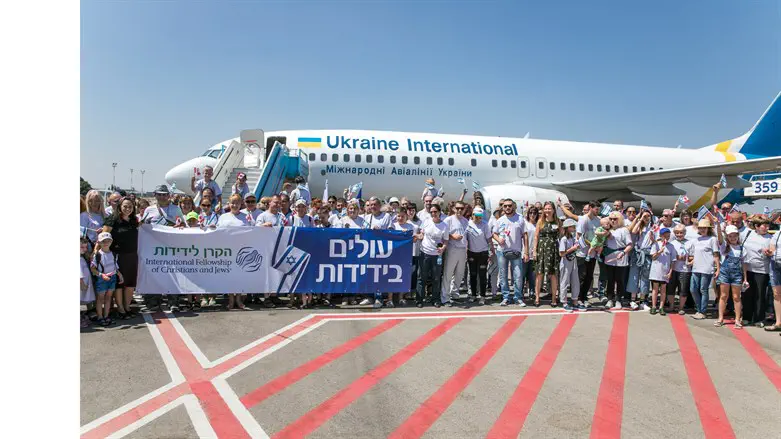
Olim plane from Ukraine

Ukrainians have a long history of murdering Jews. We do not need to save them. We need to save the Jews and get out of there. Time to abandon Ukraine.

There are about 200,000 Jews in Ukraine, but there are about 10 times more Jews who were murdered and buried there, and in the last century alone. Ukraine is a Jewish graveyard. We need to get out of there.

In fact, Jewish graves have been attracting Jews back to Ukraine, particularly to Uman, where Rebbe Nachman of Breslov is buried. We haven’t been able to escape yet because a large part of our nation is buried there. Many Jews still feel a strong attachment to them.

The dead will forgive us if we move on towards our Redemption. We do not need to live with the dead in that graveyard of a nation. Rise up from the ashes, O Israel, and abandon the lands of your torment. Time for all Jews to come to Israel, to the Land of the living.

A Jewish President in Ukraine

Ironically, we now have a Jew in charge of Ukraine (Volodymyr Zelensky). He is fighting for them and has chosen to remain. He might even be blocking Jewish men from leaving. He needs all men of fighting age to remain, to resist the Russian invasion. He is even calling for other Jews to fight for Ukraine.

We don’t need a Jew to fight for Ukraine. If anything, it could only make matters worse for Jews everywhere. The main benefit of a Jewish Ukrainian president would be if he had enough compassion for the Jews of that country to help them escape to Israel.

A Gentile leader could be ruthless to the Jews of Ukraine. He could blame them for all his problems. He could let the Ukrainians vent their anger upon them, or trap them in the crossfire, blocking their escape. Zelensky can help facilitate the exodus of hundreds of thousands of imperiled Jews to Israel.

Putin is Not Our Enemy

Vladimir Putin, the leader of Russia for the past 22 years, is not our enemy and we do not need to make him our enemy. He has been good to the Jews of Russia, raising up Jewish oligarchs to serve him and forcing Russians to respect the Jews there.

There are roughly 265,000 Jews in Russia, according to 2010 figures. Those Jews were previously free to traverse the world and come to Israel. With the tough sanctions currently in place, it is hard to fly out of Russia these days.

Bennett flew to Russia on a private jet, with US approval, to secure humanitarian corridors for Jews to escape the conflict, among other things. But it is not only the Jews of Ukraine who are at risk.

We need Putin as a friend to help secure the safety of Russian Jews. If possible, we need to help them escape as well, since US President Joe Biden seems hellbent on raising up a new iron curtain that could cut them off from Israel. This could include other nations with Jewish populations under Russian influence.

Putin helps secure the safety of many Jews who would otherwise be at risk. We should not be fighting against him to save Ukraine, and we certainly should not want to topple him. Ukrainian Jews would be safe under Putin’s protection. The same cannot be said of the Ukrainian militias rising up to resist a Russian occupation.

Ukraine Under Russian Occupation

Biden seems to have accepted that Russia would occupy Ukraine. He did so, even before the invasion, when Putin amassed a huge army at its borders. Biden encouraged Russia to attack when he said an attack was inevitable, and that America would not send troops to defend Ukraine.

What surprised the world was Zelensky’s fighting spirit. He roused Ukrainians to powerfully resist the Russian invasion. This was not expected, and it has only made matters worse. Now the West is strangling Russia with sanctions and supplying Ukraine with enough weapons to fuel a protracted war. Zelensky, a Jew, has become Putin’s foremost enemy.

Russia had mechanisms in place to control Ukraine, which were further upended by Zelenksy’s populist rise to power. How does a Jew rise to power in a place like Ukraine? Zelensky produced and starred in a tv series, ‘Servant of the People,’ in which he depicts a high school teacher who unexpectedly rises to power, after a video of him ranting against government corruption goes viral.

The tv show aired for three seasons, from 2015 to 2019. In 2018, Zelensky took advantage of its popularity, and his production team formed a political party under the same name as the tv show. In 2019, Zelensky was elected the president of Ukraine in a landslide victory.

Zelensky rose to power on an anti-corruption platform. Corruption in the former Soviet states is tied to the sale of state assets at huge discounts and the granting of monopolies to favorable parties, known as oligarchs.

The rise of the oligarchs is connected to Russia, and Russia wields political influence outside its borders through them. In the shadow of their demise, Russia is losing control. Zelensky has been steering Ukraine into the hands of the West, a process that is unacceptable to Putin.

Russians are willing to fight for Ukraine because it has been theirs for hundreds of years, and historically, Russian civilization originated there, in the Kievan Rus’. Kyiv is the capital of Ukraine, but ‘Rus’ is phonetically related to Russia, along with neighboring Belarus. Russians consider that region their historic heartland, and they refuse to see it fall to the West.

Russia has been “occupying” Ukraine for hundreds of years already. Perhaps Putin was willing to accept an independent and neutral Ukraine, but not a Ukraine aligned with the West, and certainly not one allied with NATO against him.

The Euromaidan protests, beginning in late 2013, lead to the ousting of the Russian-leaning Ukrainian President, Viktor Yanukovych, in early 2014. This was the impetus for Russia’s invasion of Ukraine in 2014 and its annexation of Crimea, which it feared would fall into Western hands. Zelensky’s rise to power in 2019 marked an even greater threat to Russia.

In 2019, Donald Trump was the President of the US. He helped reduce the tensions surrounding Ukraine. When Biden came to power in 2021, everything changed. Biden started off with a slap in the face to Putin, calling him a killer in March 2021. Tensions rapidly escalated after that concerning Ukraine, to the point of international crisis and ultimately war.

Not Our War

Western paramours have been seducing Ukraine to run off with them. They offer many economic incentives to the impoverished Ukrainians. Russia is not pleased with its estranged Ukrainian wife. We do not need to stand between them and take the fire. We need to get our people out of there.

It might even be in our interests to help Putin at this juncture, to let him end the war quickly and claim some sort of victory, not to turn this into a bloodbath that could topple him and destabilize the region.

Contrary to what people are saying these days, Putin remains a voice of reason and a friend of Jews in that dark region. Don’t expect there to be anyone better than him there.

And don’t let the media fool you. This is not a war for freedom. Ukraine will be subjected and exploited either way, most likely for its grain. Either Ukraine will serve the West and enrage the Russians, or it will realign its interests with Russia and the threat of a major conflict may be averted.

Our interests do not necessarily align with the interests of other nations in this conflict. Best if we stay out of it. Ukraine is not our war. Saving the Jews is. Time for Jews to abandon Ukraine.

Yshai Amichai is a father of six and an author with a legal education, whose books advocate upholding the Torah as a national Constitution. He may be contacted at: yshaia@gmail.com


https://www.israelnationalnews.com/news/323510?utm_source=activetrail&utm_medium=email&utm_campaign=nl

Wednesday, March 09, 2022

“On Thursday, the Ukrainians who worked at the orphanage began looting and beating the local Jews,” Lev Layeled said in a statement, according to the report. “The Ukrainian authorities called Chabad and told them they needed to [flee] urgently in order to save their lives.”


Ukrainian rabbi denies reports they left Ukraine because of antisemitism - (Rabbis Lie - Again - Jews Die - Again)


Rabbi Shlomo Wilhelm claims: "The Jews of Ukraine are leaving solely because of the war."

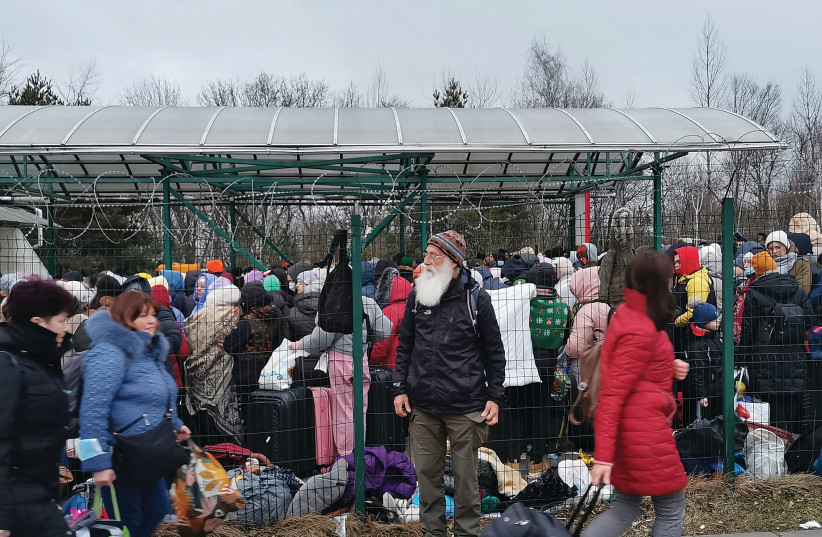
UKRAINIAN REFUGEES this week at the border with Poland in Medyka. (photo credit: Hilik Magnus/Passport Card)
UKRAINIAN REFUGEES this week at the border with Poland in Medyka.

Ukrainian rabbi Shlomo Wilhelm of Zhytomyr says that reports in the Israeli media claiming that Jews of his city ran away because of antisemitism are false.

"Hundreds of Jewish families in Ukraine were forced to flee their homesnot due to the Russian invasion, but because of Ukrainians looting their properties and physically attacking them," Hebrew-language news site 0404 reported Sunday - which was picked up by English speaking media outlets.

The NGO Lev Layeled (Heart for the Child) told 0404 that Jews in the town of Zhytomyr were threatened, harassed and physically beaten by locals looking to take advantage of the chaos caused by the war between Ukraine and Russia.

Wilhelm spoke to the Jerusalem Post on Wednesday and denied the report. "This is a complete, utter lie; there were no beatings and nothing of the sort. The only reason we left is this damn war: because of the sirens and missiles that fell nearby. There is no other reason for us to leave Ukraine."

The rabbi asked the following from the media: "Please publish this everywhere: The report is a complete lie that harms the Jewish community in Zhytomyr and Ukrainian Jews in general. The Jews of Ukraine are leaving solely because of the war. To say that there has been no antisemitism in recent years - this is a complete lie."

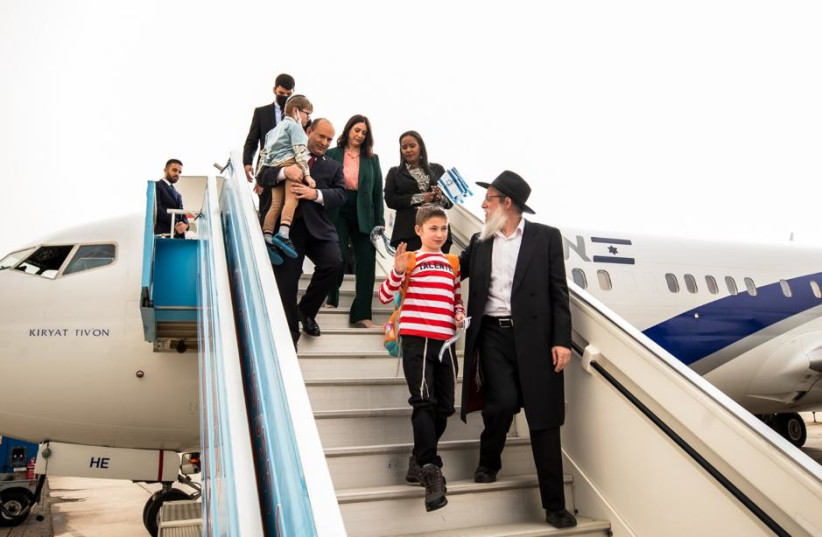
Plane of Ukrainian orphans arriving in Israel, March 6, 2022.  (credit: ALIYAH AND INTEGRATION MINISTRY) 

Plane of Ukrainian orphans arriving in Israel, March 6, 2022. 


Wilhelm, who is now in Israel, asked to thank all Israelis and Jews around the world for helping them: "Thank you to all the people of Israel for all the reinforcements and prayers." 

“On Thursday, the Ukrainians who worked at the orphanage began looting and beating the local Jews,” Lev Layeled said in a statement, according to the report. “The Ukrainian authorities called Chabad and told them they needed to [flee] urgently in order to save their lives.” 

https://www.jpost.com/diaspora/article-700748?_ga=2.73187984.204076135.1645275685-449294072.1564573179&utm_source=ActiveCampaign&utm_medium=email&utm_content=What+is+going+on+in+negotiations+between+Russia+and+Ukraine%3F&utm_campaign=March+9%2C+2022&vgo_ee=Jn367jKILnpErXAAhCpdDovy7T5YEJ8ohjC9vauJg30%3D


Tuesday, March 08, 2022

But Tatty...... Rabbi Shmuel Kamenetsky said "Even The Polio Vaccine Is A Hoax"


 “I see vaccinations as the problem,” Rabbi Shmuel Kamenetzky told the Baltimore Jewish Times in a story published in late August. “It’s a hoax. Even the Salk [polio] vaccine is a hoax. It’s just big business.”


https://forward.com/news/breaking-news/205615/prominent-orthodox-rabbi-condemns-vaccines-as-a-ho/


In First Case in Three Decades, 4-year-old Israeli Diagnosed With Polio 

 
An  Unvaccinated Child Who Contracted Polio

The child, a Jerusalem resident, had not received routine vaccinations for the virus


A four-year-old boy from Jerusalem, who has not been vaccinated against Polio, was diagnosed with the virus, marking the first case in Israel since 1988, the Health Ministry said on Sunday. The child’s case was caused by a mutant polio strain that can infect those who are unvaccinated. Doctors fear that the child will suffer permanent damage, including paralysis in half of her body, Channel 12 News reported.

The Jerusalem Municipality reported that the child is a 4-year-old girl from Mea Shearim. As Health Ministry officials believe that the case is not an isolated one and may be just the tip of the iceberg of dozens and perhaps even hundreds of asymptomatic cases, an emergency meeting with the participation of the dayanim of the Eidah Chareidis is taking place on Monday afternoon.

The Emergency and Public Health Department already contacted the Rabbanim of the Eidah HaChareidis, who have instructed all residents to vaccinate their children immediately. Cars with loudspeakers are circling in the neighborhood informing residents of the need to vaccinate. The Jerusalem District Health Office is carrying out an epidemiological investigation and is notifying anyone suspected of coming into close contact with the child. Additionally, municipality workers contacted all parents of children in the polio victim’s gan and arranged for the children to be tested immediately in order to thwart the spread of the virus.

Emergency centers have been established in Mea Shearim and residents are frightened, especially since the Health Ministry believes that there are hundreds or even thousands of additional children who may have been exposed to a mutant polio strain.

According to the statement, the ministry's Jerusalem bureau has opened an epidemiological investigation into the case and will be in close contact with the child and his family to provide specific instructions. At this stage the symptoms developed by the infected boy are unclear, though he has not been hospitalized. Based on the findings of the investigation, further recommendations will be given.

According to an infectious diseases expert, this is a significant incident. “The last time a clinical case of polio was diagnosed was in the 1980s, when a teacher from Or Akiva contracted polio under similar circumstances. While less dramatic than polio caused by a feral strain of the virus, which is hardly ever seen today, we do know that the vaccine strain can – at a chance of one in a million or more – undergo such a mutation.

Prof. Haggai Levin, Chairman of the Public Health Physicians’ Union, says “This is a very abnormal occurrence, and all the details matter: The results of this investigation, the strain, the vaccination coverage in the population of origin.

The case was found following the monitoring of sewage water for the virus in the area – findings that occur from time to time, but have previously not led to a clinical case of illness. The outbreak of polio in 2013, which led to a national vaccination drive of nearly a million children – was based entirely on samples of the virus in the wastewater, indicating the presence and spread of the virus in Israel.

In that drive, close to a million children were vaccinated within about four months, many of them in loci where vaccination rates were low. Following this, the vaccination rate rose and Israel once again enjoyed herd immunity.

Polio disease, or Poliomyelitis in scientific terms, is caused by infection with the poliovirus, generally transmitted from person to person via saliva or feces. The virus has three [known] strains and most of those infected develop no symptoms at all, or mild symptoms typical of many illnesses, such as fever, loss of appetite, sore throat, and weakness. Some 4-8 percent of those infected contract a mild case of meningitis, characterized by full spontaneous recovery within days. A fraction of cases – about one in a thousand people infected – will develop paralysis symptoms.

According to Israeli experts, in cases where paralysis presents, the virus penetrates from the colon through the blood stream to the central nervous system. When the poliovirus attacks the nerves in charge of muscular movement in the spine, paralysis appears suddenly in one or more limb. The paralysis is sometimes accompanied by severe pain in the infected muscle.

The paralysis usually involves the lower limbs. A spontaneous improvement in the severity of the paralysis is possible in the months following the infection, but in over half of all cases, some degree of permanent weakness to full paralysis remains.

In addition, the penetration of the virus to the nervous system may lead to respiratory failure, which is one of the most common and threatening complications of the disease.

The polio vaccine is administered in four doses – at age two months, four months, six months, and twelve months, and another booster shot is given as part of second-grade vaccinations around age
seven.

Until the age of one, the polio vaccine is administered as part of the “quintuple” vaccine which also includes inoculations against diphtheria, tetanus, pertussis (whooping cough) and hemophilus influenza.

At least two doses are needed to attain sufficient protection (over 90 percent) against the disease. Three doses provide 95 percent protection, and four doses provide protection approaching 100 percent.

https://www.haaretz.com/israel-news/.premium-in-first-case-in-three-decades-4-year-old-israeli-diagnosed-with-polio-1.10656671


Monday, March 07, 2022

The Fickle Media --- Nobody is reporting that the Russian army is already in Moldova (in red)


 From Wiki: Currently, the Russian Federation holds an unknown number of soldiers in Transnistria, an unrecognized breakaway state internationally recognized as part of Moldova. This Russian military presence dates back to 1992, when the Soviet 14th Guards Army intervened in the Transnistria War on support of the Transnistrian separatist forces. Following the end of the war, which ended in a Russian-backed Transnistrian victory and in the de facto independence of the region, the Russian forces stayed in a purportedly peacekeeping mission and reorganized in 1995 into the Operational Group of Russian Forces (OGRF), part of which is currently guarding the Cobasna ammunition depot. Today, the Government of Moldova views the presence of these Russian troops as illegitimate and has called for their withdrawal and replacement by international forces. Russia however has opposed this. 

 *********


I fully support Rabbi Bender's fundraising efforts - You can be certain every dollar raised goes to help the refugees! PM


Rabbi Yaakov Bender

Dear Parents, Alumni and Friends,

Many people have inquired as to how they can help ameliorate the awful situation in Ukraine. I am hoping that you will join me in supporting Yad Yisroel, which are the boots on the ground facilitating rescue operations out of Ukraine.

The costs are a staggering $2,500 minimum per person just for the rescue--plus thousands more for the refugee needs following their rescue.

Thus far they have rescued over 2,500 Jews--but the requests are pouring in, 24 hours a day.

We all grew up thinking that, had we been around in the 1940s, we would definitely have done more to save Jews.

Well, now we can.

Every $2,500 saves another Jew! It's that clear!

But there's more.

Once they are taken out of Ukraine there is the need to house them.

Until now many of them were being put up in facilities with no heat, sleeping on the floor. These are Yidden who left everything behind, traveling 30 hours or more in harrowing, fearful conditions. Sleeping on the cold floor is not acceptable. At least not for us.

CLICK HERE TO DONATE!

Yad Yisroel is therefore allocating funds to set up heated facilities with more amenities for these people, so that they can suffer just a little bit less.

They are working literally around the clock. This isn't anything less than life and death.

They have been working 24/7, including Shabbos, because this is war. These are refugees. These are people who cannot be left behind. Lives are at stake.

Every penny raised goes to them. There are no administrative costs or salaries. There are no gimmicks or games. There is nothing other than saving lives. This is a verified, legitimate cause.

Your generosity can literally help save lives -- please contribute now at this link.

May we all hear besuros tovos very soon.

Sincerely,

Rabbi Yaakov Bender

DONATE NOW!


https://thechesedfund.com/kiev/kievemergencyfund?aff=12&fbclid=IwAR0-1vHPwKJB5PIH8Zr8NhMsaWisPX8EQ-Sy-ouspe0HMcskcqHmjHsi0aM

Sunday, March 06, 2022

That means yes to defending any NATO ally, yes to supporting Ukraine with sanctions and weaponry, and absolutely no to a no-fly zone or any measure that might obligate us to fire the first shot against the Russians.


How to Stop a Nuclear War!

In September 1983, Stanislav Petrov was a lieutenant colonel in the Soviet military, assigned to the command center that monitored early-warning satellites over the United States. During one of his shifts, the alarms went off: The Americans had seemingly launched five Minuteman intercontinental ballistic missiles.

This was at a peak of Cold War tension, just a few weeks after the U.S.S.R. shot down a Korean airliner that strayed into Soviet airspace. With only minutes until the missiles were predicted to hit their targets, Petrov had to decide whether to report the attack up the chain of command, potentially triggering a swift retaliatory strike.

Following both intuition and the assumption that a real first strike would feature more than five missiles, he decided to report the alert as a malfunction, a false alarm. Which it was: The satellite had misread sunlight reflecting off clouds as a missile launch.

Petrov passed to his reward in 2017 — a suitable one, hopefully, for a man who saved millions of lives — but there are two reasons to reflect on his choices now, as the West tries to respond to Russia’s Ukrainian invasion with the Russian nuclear arsenal in the background.

The first is simply to be reminded how fortunate the world was to escape a nuclear exchange during the Cold War, when near-misses happened not just during moments of maximal brinkmanship like the Cuban Missile Crisis but also through randomness, coincidence and error. If there’s a path to nuclear war in this century, it will probably feature a similar kind of contingency and accident, the devil taking a hand in ways that can’t be predicted in advance.

But it’s also worth considering exactly what made Petrov’s position so excruciating: He had to decide whether to escalate toward Armageddon in a situation where not to escalate threatened his entire society with defeat. And then also to consider how he found a way out of his predicament: Through the fact that five missiles was not actually a defeating blow, which was both evidence that the satellites were erring and also a sign that he didn’t actually hold the final fate of his country in his hands.

His specific experience vindicates a general doctrine for confrontations between nuclear-armed powers: It’s often better to constrain yourself than to limit your enemy’s choices, pushing them toward a doom-laden decision between escalation and defeat.

Clear commitments — we will fight here, we won’t fight there — are the coin of the nuclear realm, since the goal is to give the enemy the responsibility for escalation, to make it feel its apocalyptic weight, while also feeling that it can always choose another path. Whereas unpredictable escalations and maximalist objectives, often useful in conventional warfare, are the enemy of nuclear peace, insofar as they threaten the enemy with the no-win scenario that Petrov almost found himself in that day in 1983.

These insights have several implications for our strategy right now. First, they suggest that even if you believe the United States should have extended security guarantees to Ukraine before the Russian invasion, now that war is begun we must stick by the lines we drew in advance. That means yes to defending any NATO ally, yes to supporting Ukraine with sanctions and weaponry, and absolutely no to a no-fly zone or any measure that might obligate us to fire the first shot against the Russians.

Second, they mean that it’s extremely dangerous for U.S. officials to talk about regime change in Moscow — in the style of the reckless Senator Lindsey Graham, for instance, who has called on a “Brutus” or “Stauffenberg” to rid the world of Vladimir Putin. If you make your nuclear-armed enemy believe your strategy requires the end of their regime (or very life), you are pushing them, again, toward the no-choice zone that almost trapped Colonel Petrov.

Third, they imply that the odds of nuclear war might be higher today than in the Soviet era, because Russia is much weaker. The Soviet Union simply had more ground to give up in a conventional war before defeat appeared existential than does Putin’s smaller empire — which may be a reason why current Russian strategy increasingly prioritizes tactical nuclear weapons in the event of a conventional-war retreat.

But if that makes our situation more dangerous, it also should give us confidence that we don’t need to take wild nuclear risks to defeat Putin in the long run. The voices arguing for escalating now because we’ll have to fight him sooner or later need to recognize that containment, proxy wars and careful line-drawing defeated a Soviet adversary whose armies threatened to sweep across West Germany and France, whereas now we’re facing a Russian army that’s bogged down outside Kyiv.

We were extremely careful about direct escalation with the Soviets even when they invaded Hungary or Czechoslovakia or Afghanistan, and the result was a Cold War victory without a nuclear war. To escalate now against a weaker adversary, one less likely to ultimately defeat us and more likely to engage in atomic recklessness if cornered, would be a grave and existential folly.

https://www.nytimes.com/2022/03/05/opinion/russia-nuclear-war.html


Friday, March 04, 2022

“ The Cornered Putin Problem.”


Washington’s Newest Worry: The Dangers of Cornering Putin


Surprised by the speed at which sanctions have been poured on Russia, Biden’s top aides suspect that Putin’s reaction will be to double down and lash out — and perhaps expand the war.


Russian President Vladimir V. Putin has a tendency, American intelligence officials have told the White House and Congress, to double down when he feels trapped by his own overreach.


WASHINGTON — Senior White House officials designing the strategy to confront Russia have begun quietly debating a new concern: that the avalanche of sanctions directed at Moscow, which have gained speed faster than they imagined, is cornering President Vladimir V. Putin and may prompt him to lash out, perhaps expanding the conflict beyond Ukraine.

In Situation Room meetings in recent days, the issue has come up repeatedly, according to three officials. Mr. Putin’s tendency, American intelligence officials have told the White House and Congress, is to double down when he feels trapped by his own overreach. So they have described a series of possible reactions, ranging from indiscriminate shelling of Ukrainian cities to compensate for the early mistakes made by his invading force, to cyberattacks directed at the American financial system, to more nuclear threats and perhaps moves to take the war beyond Ukraine’s borders.

The debate over Mr. Putin’s next moves is linked to an urgent re-examination by intelligence agencies of the Russian leader’s mental state, and whether his ambitions and appetite for risk have been altered by two years of Covid isolation.

Those concerns accelerated after Mr. Putin’s order on Sunday to place the country’s strategic nuclear weapons on a “combat ready” alert to respond to the West’s “aggressive comments.” (In the ensuing days, however, national security officials say they have seen little evidence on the ground that Russia’s nuclear forces have actually moved to a different state of readiness.)

It was a sign of the depth of American concern that Defense Secretary Lloyd J. Austin III announced Wednesday that he was canceling a previously scheduled Minuteman nuclear missile test, to avoid escalating direct challenges to Moscow or giving Mr. Putin an excuse to once again invoke the power of the country’s nuclear arsenal.

“We did not take this decision lightly, but instead, to demonstrate that we are a responsible nuclear power,” John F. Kirby, the Pentagon press secretary, said Wednesday. “We recognize at this moment of tension how critical it is that both the United States and Russia bear in mind the risk of miscalculation, and take steps to reduce those risks.”

Nonetheless, Mr. Putin’s reaction to the initial wave of sanctions has provoked a range of concerns that one senior official called the “Cornered Putin Problem.” Those concerns center on a series of recent announcements: the pullout of oil companies like Exxon and Shell from developing Russia’s oil fields, the moves against Russia’s central bank that sent the ruble plunging, and Germany’s surprise announcement that it would drop its ban on sending lethal weapons to the Ukrainian forces and ramp up its defense spending.

But beyond canceling the missile test, there is no evidence that the United States is considering steps to reduce tensions, and a senior official said there was no interest in backing off sanctions.

“Quite the contrary,’’ said the official, who, like other American officials interviewed for this story, asked for anonymity to discuss the internal debates among Mr. Biden’s advisers.

In fact, President Biden announced expanded sanctions on Thursday, aimed at Russia’s oligarch class. Many of those named — including Dmitry Peskov, Mr. Putin’s spokesman and one of his close advisers — rank among his most influential defenders and the beneficiaries of the system he has created.

Mr. Biden, reading a prepared statement and taking no questions, said the sanctions have had “a profound impact already.”

A few hours after he spoke, S&P dropped Russia’s credit rating to CCC-, the credit-rating agency said in a statement. That is far below the junk bond levels Russia was ranked at a few days after the invasion, and just two notches above a warning that the country was going into default.

It suggested that Mr. Putin’s effort to “sanctions-proof” his economy had largely failed. And at least for now, there is no discernible off-ramp for the Russian leader short of declaring a cease-fire or pulling back his forces — steps he has so far shown no interest in taking.

At a news briefing at the White House on Thursday afternoon, Jen Psaki, the press secretary, said that she knew of no efforts to show Mr. Putin a way out. “I think right in this moment, they are marching toward Kyiv with a convoy and continuing to take reportedly barbaric steps against the people of Ukraine. So now is not the moment where we are offering options for reducing sanctions.”

Yet a senior State Department official, asked about the debates inside the administration on the risks ahead, said there were nuances in the administration’s approach that point to possible outs for the Russian leader.

Mr. Biden’s policy, the official said, was not one of seeking regime change in Russia. The idea, he said, was to influence Mr. Putin’s actions, not his grip on power. And the sanctions, the official noted, were designed not as a punishment, but as leverage to end the war. They will escalate if Mr. Putin escalates, the official said. But the administration would calibrate its sanctions, and perhaps reduce them, if Mr. Putin begins to de-escalate.

And the official said that because Mr. Putin has now exerted such control over Russian media, closing down the last vestiges of independent news organizations, he could spin some kind of de-escalation into a victory.

Yet that hope collides with the assessments of Mr. Putin’s instincts, many of which are based on open, unclassified observations.

William J. Burns, the C.I.A. director, was an early advocate of the view that the Russian leader planned to invade, and was not massing troops around Ukraine simply to gain leverage in some kind of bargaining game.

“I would never underestimate President Putin’s risk appetite on Ukraine,” Mr. Burns, a former American ambassador to Moscow, who has dealt with Mr. Putin for more than two decades, said in December.

Mr. Putin’s views on Ukraine are fiercely held. He seems unlikely to accept any result that does not achieve his goal of bringing Ukraine closer to the Russian fold. And, especially after the Russian military’s poor performance in the first week of the war, he may be concerned that any whiff of failure could weaken his hold on power.

His strategy in coming weeks, some other American officials have warned in closed meetings since the crisis accelerated, could be to redirect the conflict toward Washington, hoping to distract from the Russian forces’ attacks on civilians in Ukraine and rouse a nationalistic response to the actions of a longtime adversary.

If Mr. Putin wants to strike at the American financial system, as Mr. Biden has struck at his, he has only one significant pathway in: his well-trained army of hackers, and an adjacent group of criminal ransomware operators, some of whom have publicly pledged to help him in his battle.

Tatyana Bolton, the policy director for cybersecurity and emerging threats at the R Street Institute, expressed confidence on Thursday that the financial industry was ready.

“The J.P. Morgans of the world spend more on cybersecurity than many government agencies,’’ said Ms. Bolton, a former senior official in the Department of Homeland Security whose family immigrated from Russia.

But she was concerned about the possibility that Mr. Putin would finally activate “pre-positioned malware in the energy sector, as a means of getting back at the United States.”

Members of Congress have also raised concerns that Mr. Putin could unleash Moscow’s network of criminal hackers, who have conducted ransomware attacks that have shut down hospitals, meat processing plants and the Colonial Pipeline network that carried nearly half of the gasoline, diesel and jet fuel on the East Coast.

“If the situation escalates further, I think we are going to see Russian cyberattacks against our critical infrastructure,” said Representative Mike Gallagher, Republican of Wisconsin, a member of the House Intelligence Committee who served as co-chairman of an influential cyberspace commission.

Another possibility is that Mr. Putin will threaten to push further into Moldova or Georgia, which, like Ukraine, are not members of NATO — and thus territory that the American and NATO forces would not enter. Secretary of State Antony J. Blinken is making Moldova one of his stops on a reassurance tour that began on Thursday.

There are larger worries, involving potential nuclear threats. Last Sunday, as the fighting accelerated, Belarus passed a referendum that amended its constitution to allow for nuclear weapons to be based, once again, on its territory. American officials are expecting that President Aleksandr G. Lukashenko may well ask Mr. Putin to place tactical weapons in his country, where they would be closer to European capitals. And Mr. Putin has shown, twice this week, that he is ready to remind the world of the powers of his arsenal.

But the next move for Mr. Putin is likely to further intensify his operations in Ukraine, which would almost certainly result in more civilian casualties and destruction.

“It wasn’t a cakewalk for Putin and now he has no choice but to double down,” said Beth Sanner, a former top intelligence official. “This is what autocrats do. You cannot walk away or you look weak.”


 READ MORE:

https://www.nytimes.com/2022/03/03/us/politics/white-house-putin-sanctions.html