EVERY SIGNATURE MATTERS - THIS BILL MUST PASS!

EVERY SIGNATURE MATTERS - THIS BILL MUST PASS!
CLICK - GOAL - 100,000 NEW SIGNATURES! 75,000 SIGNATURES HAVE ALREADY BEEN SUBMITTED TO GOVERNOR CUOMO!

EFF Urges Court to Block Dragnet Subpoenas Targeting Online Commenters

EFF Urges Court to Block Dragnet Subpoenas Targeting Online Commenters
CLICK! For the full motion to quash: http://www.eff.org/files/filenode/hersh_v_cohen/UOJ-motiontoquashmemo.pdf

Monday, October 24, 2022

The fraud included the fabrication of records and dozens of sworn misrepresentations to government agencies, the authorities noted.

Hasidic School to Pay $8 Million After Admitting to Widespread Fraud


Department of Justice
U.S. Attorney’s Office
Eastern District of New York

FOR IMMEDIATE RELEASE
Monday, October 24, 2022

ברוקלין ישיבה איז זיך מודה צו שטארק פארשפרייטע פראגראם און בענעפיט שווינדל קאנספיראציע

שולע איז מסכים צו באצאלן 5 מיליאן דאלאר שטראפגעלט אין אפגעלייגטע משפט הסכם

https://www.justice.gov/usao-edny/pr-5
Eastern District of New York

The Central United Talmudical Academy, which operates the largest all-boys yeshiva in New York State, acknowledged illegally diverting money from federal food aid and other programs.


The operators of the Central United Talmudical Academy in Brooklyn admitted in federal court to diverting government money in a wide-ranging fraud.


For years, the largest private Hasidic Jewish school in New York State illegally diverted millions of dollars from a variety of government programs, paid teachers off the books and requested reimbursements for meals for students that it never actually provided, the yeshiva’s operators admitted in federal court on Monday.

As part of the widespread fraud, school officials took money intended to feed children and used it to subsidize parties for adults, federal prosecutors said.

In order to avoid facing criminal charges, the school, the Central United Talmudical Academy in Williamsburg, Brooklyn, agreed to pay fines and restitution totaling more than $8 million, according to a deferred prosecution agreement filed Monday in Federal District Court in Brooklyn.

“Today’s admission makes clear there was a pervasive culture of fraud and greed in place at C.U.T.A.,” said Michael J. Driscoll, assistant director in charge of the F.B.I.’s New York office, referring to the school by its initials in a statement. “We expect schools to be places where students are taught how to do things properly. The leaders of C.U.T.A. went out of their way to do the opposite.”

In court on Monday, a lawyer representing the yeshiva, Marc Mukasey, said school leaders would work collaboratively with the government to fulfill its obligations under the agreement, which has been in the works since 2019. After the hearing, Mr. Mukasey declined to comment further. School leaders did not respond to phone and email messages seeking comment.

The filing came six weeks after a New York Times investigation revealed that about 100 all-boys Hasidic schools across the state had received more than $1 billion in taxpayer funding in recent years while most were denying their students a basic secular education. The Central United Talmudical Academy figured prominently in that article.

Since then, Hasidic schools have come under intensifying government pressure on multiple fronts, with officials scrutinizing what the schools teach and how they manage their finances.

In September, the State Board of Regents approved a set of rules requiring all private schools, including yeshivas, to prove they are teaching nonreligious subjects like English and math or face a loss of funding.

The state education commissioner ruled this month that one Brooklyn boy’s yeshiva that had been the subject of a lawsuit was not complying with the state law requiring all private schools to provide a basic secular education. That school will have to work with the New York City Education Department to improve.

As part of the agreement filed in court on Monday, the Central United Talmudical Academy will be subject to an independent monitor for the next three years, after which prosecutors will dismiss the charges. The school will be able to submit a list of potential monitors for the government to approve.

The school has more than 2,000 male students enrolled at one location and 2,500 female students at separate buildings nearby. It is the flagship organization of a powerful faction of the Satmar group of Hasidic Judaism run by Grand Rabbi Aaron Teitelbaum. The faction operates several other schools in Brooklyn and the lower Hudson Valley.

The Williamsburg school received about $10 million in government funding in the year before the pandemic, according to a Times analysis of city, state and federal funding records.

During a hearing on Monday, U.S. District Judge Nicholas G. Garaufis said he was “deeply concerned” about the behavior the yeshiva admitted to engaging in. “It is my hope that this is a new beginning,” he added.

Judge Garaufis implored two school representatives, Cheskel Berkowitz and Yoel Weisz, to follow through on the promises the school had made to eliminate any financial impropriety, “for the good of the community.”

The federal investigation into the school, led by the U.S. attorney’s office for the Eastern District of New York, stemmed from a criminal case against two of its former leaders, Elozer Porges and Joel Lowy. Both men pleaded guilty in March 2018 for their roles in a conspiracy to defraud the government through school nutrition programs.

During that case, the investigators found evidence of other fraud and broadened the scope of their inquiry, the federal authorities said.

The documents filed on Monday revealed that the school was at the center of a varied and wide-ranging fraud scheme.

For years, the documents showed, the school paid many of its teachers and other employees in part with cash, coupons and life insurance policies, making it seem as if the employees were earning less than they really were and allowing them to pay lower taxes and qualify for welfare.

From 2010 to 2015, the school paid employees with at least $12 million in coupons — 17 percent of its total employee compensation — which the workers could use as cash in Hasidic grocery stores and other shops, the investigators found.

The school also set up no-show jobs for friends of employees and other community members, the documents said.

The yeshiva also benefited from its fraudulent payment practices because many employees and other community members used their welfare status to receive New York City vouchers for child care — and then used them to pay the school, according to the documents. The Times reported last month that a city voucher program sent nearly a third of its total funding to Hasidic neighborhoods last year.

The federal investigation found that the school defrauded government programs meant to provide meals to low-income children, receiving more than $3.2 million from 2014 to 2016 in reimbursement for what the authorities said was an “almost entirely fictitious” meal program.

The fraud included the fabrication of records and dozens of sworn misrepresentations to government agencies, the authorities noted.

In some cases, the court documents said, yeshiva officials claimed that they provided meals to children on days when the school was not in session.

In recent years, as the school has negotiated with the prosecutors, it has replaced its executive management team and developed a new set of controls, among other changes, the authorities said.

“Today’s resolution accounts for C.U.T.A.’s involvement in those crimes and provides a path forward to repay and repair the damage done to the community, while also allowing C.U.T.A. to continue to provide education for children in the community,” said Breon Peace, the U.S. attorney for the Eastern District of New York, in a statement.

The Times investigation found that the Central United Talmudical Academy, like other Hasidic schools, focused almost exclusively on providing religious education, with little instruction in English, reading and math and almost no classes in history, science or civics.

The Times also reported that Hasidic boys’ schools tend to score much lower on state standardized exams than other schools in New York.

In 2019, the Central United Talmudical Academy agreed to give state standardized tests in reading and math to more than 1,000 students, The Times found. Every one of them failed.

https://www.nytimes.com/2022/10/24/nyregion/hasidic-yeshiva-fraud-central-united-talmudical-academy.html
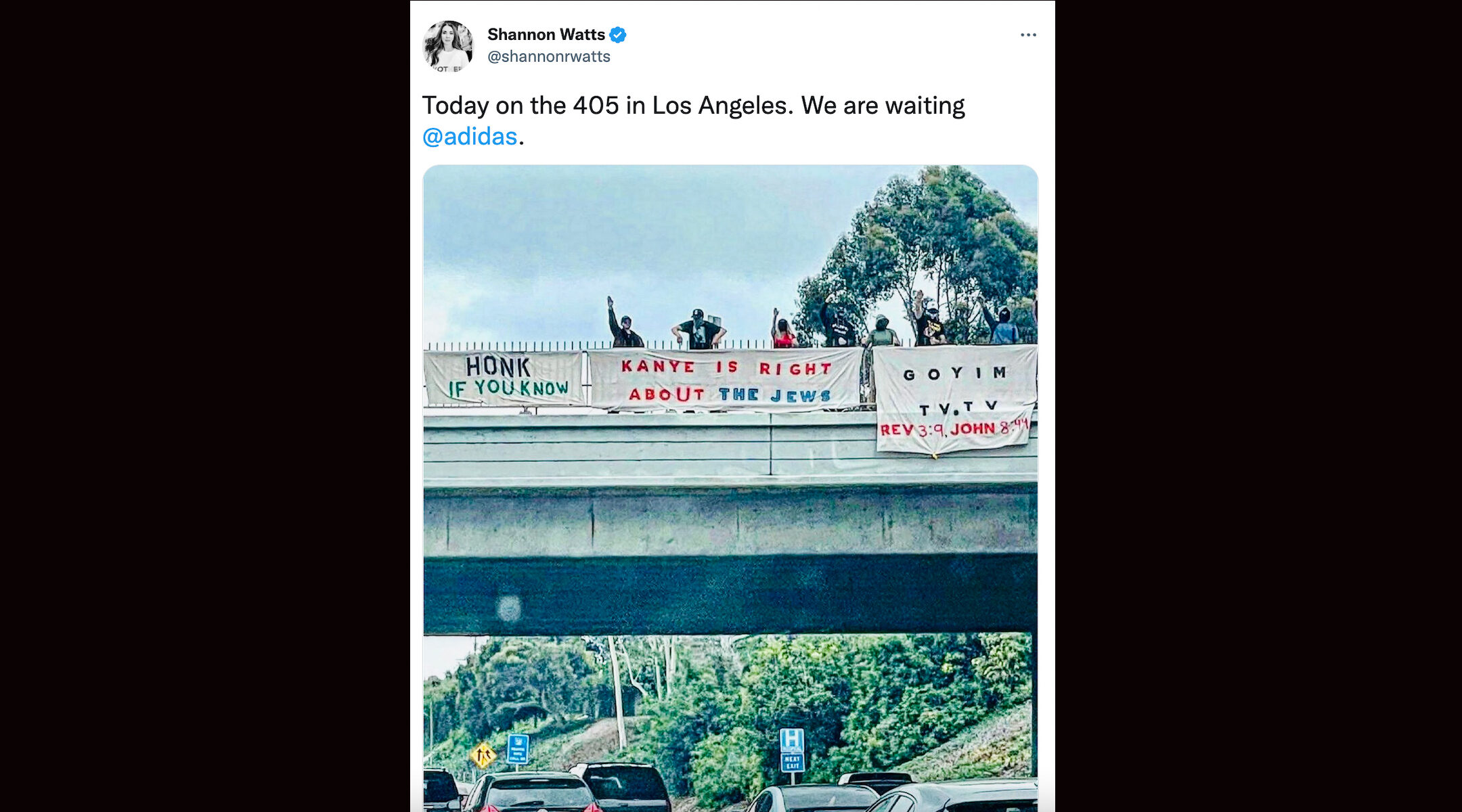
Anyone $ee Midget Marvin - Members of the Goyim Defense League, including its founder Jon Minadeo, stood on an overpass while the banners hung, according to pictures taken by drivers and shared widely on social media this weekend. Several of them appeared to be giving Nazi salutes.


‘Kanye was right about the Jews,’ antisemitic group says on Los Angeles highway banner

(JTA) — Drivers heading south on the freeway in Los Angeles Saturday could view a Kanye West-related provocation by a vocal group of antisemites.

“Kanye was right about the Jews,” read a banner hung by members of the Goyim Defense League, a white supremacist group, over the 405 freeway. It was a comment on the rapper and conservative figure’s string of antisemitic comments on social media and in interviews in recent weeks, beginning with a vow to “go death con 3 on Jewish people.”

The banner appeared alongside another crediting Goyim TV, one of several calling cards of the Goyim Defense League, alongside distributing antisemitic literature in local communities. The group has hung prominent antisemitic banners before, including in Los Angeles (“Jews want a race war,” 2020) and Austin, Texas (“Vax the Jews,” 2021). Shortly after the Austin demonstration, a teenager was arrested after allegedly setting fire to a synagogue there.

Members of the Goyim Defense League, including its founder Jon Minadeo, stood on an overpass while the banners hung, according to pictures taken by drivers and shared widely on social media this weekend. Several of them appeared to be giving Nazi salutes.

The group is reportedly pleased by outrage over its stunts because it calls attention to them. And indeed, the latest display appears to have drawn more widespread attention than some of the group’s other stunts in large part because the frenzy over West’s recent comments has caused more than antisemitism watchdogs to decry it.

“Really great to see slurs about Jews shared across social media because a few parasites went on a bridge over the 405 and spread propaganda,” tweeted Elad Nehorai, a Jewish activist who lives in Los Angeles, on Sunday. “Congrats to those who’ve shared it: you’ve done their work for them and spread it to millions.”

Many of the people sharing the photos — including the gun control activist Shannon Watts, actress Busy Phillips and artist Zoe Buckman — included criticism of Adidas, the athletic company that maintains a lucrative partnership with West.

Adidas, whose founders were Nazis, has said it has placed its contract with West “under review” but has not severed its ties, despite calls to do so by the Anti-Defamation League and others. The West collaboration reportedly brings in $2 billion a year, 10% of the company’s revenue.

“I can literally say antisemitic s— and they cannot drop me,” West bragged last week.

Oren Segal, the head of the ADL’s Center on Extremism, noted on Twitter that the Goyim Defense League frequently livestreams its activity and solicits donations during those broadcasts, as it did on Saturday. He said the group’s ability to springboard off of West’s comments represented a potent danger.

“While Ye (formerly Kanye West) has been no stranger to controversy in recent years, his most recent rhetoric has helped advance the spread of longstanding hateful and false narratives shared by extremist groups,” Segal tweeted.


Sunday, October 23, 2022

More also must be done Rabbi Mirvis said, "to educate our entire community, particularly our children, so that we better understand how to identify, challenge and report inappropriate physical contact with others, as well as the patterns of behaviour that can lead to child sexual abuse and any other form of abuse --- המסר הסמוי לאגודת ישראל - אתם אחראים למותם הרוחני ולהתאבדויות של אלפי ילדים!


Chief Rabbi backs inquiry call for mandatory reporting of sexual abuse


'We must not stand idly by, while our children are in danger' says Rabbi Mirvis


articlemain
Chief Rabbi Ephraim Mirvis


Chief Rabbi Ephraim Mirvis has issued a strong statement in support of the call by the Independent Inquiry into Child Sexual Abuse for mandatory reporting of suspected abuse.

 On Thursday, the IICSA published its final report after a seven year investigation, recommending that people who work with children in positions of responsibility should face prosecution if they do not report incidents of abuse.

 The inquiry, said Rabbi Mirvis, "has issued a clarion call, urging us to do more to protect our children from the scourge of sexual abuse. Its recommendation for a new law, creating a duty to report abuse provides a next vital step forward in this regard and is to be welcomed.”

Its final report, he said, “describes how shame, honour and victim blaming, create barriers to reporting, particularly in faith communities. Tragically, we have seen evidence of such barriers in a Jewish context and it is essential that we work together to rid the Jewish community of them. 

 “We must do more to ensure child protection policies and procedures are up to date, actionable and effective across our communal organisations.”

More also must be done, he said, "to educate our entire community, particularly our children, so that we better understand how to identify, challenge and report inappropriate physical contact with others, as well as the patterns of behaviour that can lead to child sexual abuse and any other form of abuse.

 “We have seen the consequences of failing to afford these protections to our children both at home and abroad and if we fail to act, I fear that yet more innocent lives will be destroyed. We must not stand idly by, while our children are in danger.”

 Erica Marks, chief executive of the charity Migdal Emunah which was founded nine years ago to support victims of abuse in the Jewish community, welcomed the inquiry’s recommendations.

 Migdal Emunah was one of the Jewish organisations which gave evidence to the inquiry.

 The issues arising from the report would be “challenging for police, statutory services and communities to resolve,” she said.

“Achieving the aims of this report, and ensuring that child protection is given top priority, will require sustained funding to agencies across all communities who support children and families.”

It would “require swift changes to the law - especially around mandatory reporting and obligations for professionals - and a commitment to training and oversight of communities, which the commission proposes is led by a Children’s Minister.”

The costs of making the changes would, she said, be “recouped by better physical and mental health, as fewer people will experience sexual abuse”.


READ MORE: Religious figures should not be 'exempt' from mandatory reporting of abuse

https://www.thejc.com/news/news/chief-rabbi-backs-inquiry-call-for-mandatory-reporting-of-sexual-abuse-51z3tvAMC0xKv9j7BfPw3C

Friday, October 21, 2022

Chief Rabbi Ephraim Mirvis has previously said that failure to report abuse is “a complete abnegation of our responsibility to God and to one another”.


Child sex abuse: The horrific findings of a seven-year inquiry

"Professor Alexis Jay, chairwoman of the inquiry, said: “For too long, child sexual abuse has been considered a problem of the past, despite lifelong impacts on its young victims.

“Its extent cannot be underestimated; the sexual abuse of children is an epidemic that leaves tens of thousands of victims in its poisonous wake and some will never recover.

“Across our investigations … we heard time and time again how allegations of abuse were ignored, victims were blamed and institutions prioritised their reputations over the protection of children.

“The nature and scale of the abuse we encountered were horrifying and deeply disturbing. As a society, we simply cannot file it away and consider it a historical aberration when so much of what we learned suggests it is an ever-growing problem, exacerbated by the current and future threat of the internet."


Religious figures should not be exempt from 'mandatory reporting' of child sexual abuse


Recommendations of seven-year inquiry would make it compulsory for rabbis to report abuse to the authorities


articlemain 
 

People who work with children should be compelled to report incidences of sexual abuse to the relevant authorities, a national inquiry has recommended.

If the findings of the seven-year Independent Inquiry into Child Sexual Abuse (IICSA) are accepted by government, it would become mandatory for rabbis or teachers in Jewish schools to report suspicions of abuse.

The inquiry has already published a number of reports including one on religious organisations after hearing evidence from several Jewish institutions.

In its final report published on Thursday, the inquiry has recommended mandatory reporting as well as the creation of a Child Protection Authority.

It rejected the case for exempting religious figures from the requirement to report abuse.

“Some core participants and witnesses argued that a mandatory reporting law ought to provide exemptions for some faith-based settings or personnel,” it noted.

Instead, it took the view that “neither the freedom of religion or belief nor the rights of parents with regard to the education of their children can ever justify the ill-treatment of children or prevent governmental authorities from taking measures necessary to protect children from harm.” Mandatory reporting should be “an absolute obligation”.

Chief Rabbi Ephraim Mirvis has previously said that failure to report abuse is “a complete abnegation of our responsibility to God and to one another”.

The inquiry, chaired by Professor Alexis Jay, “repeatedly found that allegations and indicators of child sexual abuse were under-reported by adults who ought to have reported them,” the report stated.

Evidence from other countries “supports the view that England and Wales ought to introduce mandatory reporting laws to enable the police and local authorities to better identify children in need of protection”.

Summarising the conclusions of its earlier report on religious organisations, IICSA said that “there were significant barriers to effective reporting of child sexual abuse, including victim-blaming and notions of shame and honour. In some religious traditions and communities, children are not taught about sex or sexual relationships.”

While some communities had effective systems in place for responding to child sexual abuse, “this was not the case across the board”. Very few had arrangements in place for providing counselling or therapy sessions for victims and survivors.

Responding to the report, Sharon Daniels, head of safeguarding and wellbeing for the Movement for Reform Judaism, supported the call for mandatory reporting..

"At MRJ we have the expectation that our rabbis and cantors, lay leaders and youth leaders would always report any safeguarding concerns through the statutory authorities," she said.

"We have a robust audit policy to ensure all of our synagogues and MRJ ourselves, have appropriate preventative and responsive measures in place, in line with best practice. Furthermore, we are continuously working to improve our practice in this area." 


https://www.thejc.com/news/news/religious-figures-should-not-be-exempt-from-mandatory-reporting-of-child-sexual-abuse-2rXi2oUcEpHrSU6GwwNCL1


READ MORE: Sex abuse inquiry blasts religious institutions

Victims of child sex abuse face ostracism, inquiry told

Inquiry flags police 'failings' over allegations against Lord Janner

Thursday, October 20, 2022

As surprising as it may seem that Maimonides equates the deepest level of Torah knowledge with the Greek sciences of physics and metaphysics,[30] and that the rabbis hid this fact from the masses, Maimonides makes the radical claim in his Guide of the Perplexed that this secret was actually lost ...

 It is known that each person by nature desires all the sciences,[25] whether he be an ignoramus or a sage. [It is further known] that it is impossible for a person to begin the study of these sciences, and direct his thought towards them, without the appropriate premises, and without entering the stages of science; they therefore forbade this and warned against it.[26]


Why Is Creation in the Torah?


History according to Rashi, science according to Maimonides. In Maimonides’ view, the Sages knew that hidden behind the allegorical language of the creation account is Aristotelian physics. This knowledge was lost until he (Maimonides) figured out the secret on his own.


Why Is Creation in the Torah?


Why does the Torah begin with the account of creation?[1]The answer depends on the nature and purpose of the Torah.[2]

In traditional circles, the best-known explanation is that of Rashi (Rabbi Solomon Yitzhaki, ca. 1040–1105), whose question makes it clear that he sees the Torah as primarily a book of commandments,

אמר ר' יצחק: לא היה צריך להתחיל התורה אלא מהחדש הזה לכם (שמות י"ב:ב'), שהיא מצוה ראשונה שנצטוו ישראל. ומה טעם פתח בבראשית,
Rabbi Isaac (3rd/4th cent. C.E.) [3] said: The Torah should have commenced with the verse (Exodus 12:2) “This month shall be unto you the first of the months” which is the first commandment given to Israel. What is the reason, then, that it commences with the account of the Creation?

Rashi (still quoting R. Isaac) answers that the Torah wishes to support the people of Israel’s claim to the land:

משום: כח מעשיו הגיד לעמו לתת להם נחלת גוים (תהלים קי"א:ו').
Because of [the thought expressed in the text] (Psalms 111:6) “He declared to His people the strength of His works (i.e., He gave an account of the work of Creation), in order that He might give them the heritage of the nations.”
שאם יאמרו אומות העולם לישראל: לסטים אתם שכבשתם ארצות שבעה גוים, והם אומרים להם: כל הארץ של הקב"ה היא, והוא בראה והוא נתנה לאשר ישר בעיניו, ברצותו נתנה להם וברצותו נטלה מהם ונתנה לנו.
For should the peoples of the world say to Israel, “You are robbers, because you took by force the lands of the seven nations of Canaan,” Israel may reply to them, “All the earth belongs to the Holy One, blessed be He; He created it and gave it to whom He pleased. When He willed, He gave it to them, and when He willed He took it from them and gave it to us.”[4]

Not About History but Science: Maimonides

In contrast, Moses Maimonides (1138–1204) argues that the creation story is meant to teach us science.[5] This is important, Maimonides argues, because correct knowledge of the physical world is necessary in order to have knowledge of God (Guide of the Perplexed, introduction):

God, you see, chose to improve us and enhance our lives in society with His practical norms. But this could not be done without our reaching certain intellectual convictions – chiefly, an awareness of Him, so far as we are able. That depends on metaphysics, theological knowledge, which is won only after study of natural science. For physics borders on metaphysics and is its prerequisite, as its students clearly see.[6]

For Maimonides, the Torah is not merely or even primarily a law book, as Rashi believes, but aims at the overall improvement of individuals’ and society’s moral and intellectual life. Since Maimonides’s Judaism is orthodox, not orthoprax,[7] practical norms (mizvot) rely upon certain intellectual convictions, the first of which is knowledge of God to the greatest extent possible.[8] This, he argues, requires knowledge of metaphysics, the prerequisite for which is the study of natural science:[9]

That is why God opens His book with the Account of Creation, which belongs to physics, as I’ve explained.[10]

Thus, the Torah opens with ma’aseh bereshit, i.e., the science of physics.


WORTH READING IN ITS ENTIRETY:

https://www.thetorah.com/article/why-is-creation-in-the-torah

Wednesday, October 19, 2022

My Sentiments Exactly - Every Time I'm On An Airplane Even After Decades of Flying - Being A Million(s) Mile Flyer. "Humans are 'insignificant'!


Humans are 'insignificant'! 


William Shatner & Jeff Bezos


"I looked down and I could see the hole that our spaceship had punched in the thin, blue-tinged layer of oxygen around Earth. It was as if there was a wake trailing behind where we had just been, and just as soon as I’d noticed it, it disappeared.

I continued my self-guided tour and turned my head to face the other direction, to stare into space. I love the mystery of the universe. I love all the questions that have come to us over thousands of years of exploration and hypotheses. Stars exploding years ago, their light traveling to us years later; black holes absorbing energy; satellites showing us entire galaxies in areas thought to be devoid of matter entirely… all of that has thrilled me for years… but when I looked in the opposite direction, into space, there was no mystery, no majestic awe to behold . . . all I saw was death.

I saw a cold, dark, black emptiness. It was unlike any blackness you can see or feel on Earth. It was deep, enveloping, all-encompassing. I turned back toward the light of home. I could see the curvature of Earth, the beige of the desert, the white of the clouds and the blue of the sky. It was life. Nurturing, sustaining, life. Mother Earth. Gaia. And I was leaving her.

Everything I had thought was wrong. Everything I had expected to see was wrong.

I had thought that going into space would be the ultimate catharsis of that connection I had been looking for between all living things—that being up there would be the next beautiful step to understanding the harmony of the universe. In the film “Contact,” when Jodie Foster’s character goes to space and looks out into the heavens, she lets out an astonished whisper, “They should’ve sent a poet.” I had a different experience, because I discovered that the beauty isn’t out there, it’s down here, with all of us. Leaving that behind made my connection to our tiny planet even more profound.

It was among the strongest feelings of grief I have ever encountered. The contrast between the vicious coldness of space and the warm nurturing of Earth below filled me with overwhelming sadness. Every day, we are confronted with the knowledge of further destruction of Earth at our hands: the extinction of animal species, of flora and fauna . . . things that took five billion years to evolve, and suddenly we will never see them again because of the interference of mankind. It filled me with dread. My trip to space was supposed to be a celebration; instead, it felt like a funeral.

I learned later that I was not alone in this feeling. It is called the “Overview Effect” and is not uncommon among astronauts, including Yuri Gagarin, Michael Collins, Sally Ride, and many others. Essentially, when someone travels to space and views Earth from orbit, a sense of the planet’s fragility takes hold in an ineffable, instinctive manner. Author Frank White first coined the term in 1987: “There are no borders or boundaries on our planet except those that we create in our minds or through human behaviors. All the ideas and concepts that divide us when we are on the surface begin to fade from orbit and the moon. The result is a shift in worldview, and in identity.”

It can change the way we look at the planet but also other things like countries, ethnicities, religions; it can prompt an instant reevaluation of our shared harmony and a shift in focus to all the wonderful things we have in common instead of what makes us different. It reinforced tenfold my own view on the power of our beautiful, mysterious collective human entanglement, and eventually, it returned a feeling of hope to my heart. In this insignificance we share, we have one gift that other species perhaps do not: we are aware—not only of our insignificance, but the grandeur around us that makes us insignificant. 

That allows us perhaps a chance to rededicate ourselves to our planet, to each other, to life and love all around us. If we seize that chance."

William Shatner had an epiphany about how "insignificant" human beings really are when he travelled into space.

The 90-year-old actor – who is best known for his role as Captain James T. Kirk in the 'Star Trek' TV series and movies - became the oldest person to go up into space when he blasted off on Jeff Bezos' New Shepard NS-18 rocket alongside Audrey Powers, Blue Origin's Vice President of Mission and Flight Operation, and crew members Chris Boshuizen and Glen de Vries back in October.

The crew made it up to an altitude of around 66 miles on the suborbital flight and felt weightlessness due to a lack of gravity before heading back down to Earth after approximately 10 minutes thanks to three parachutes which aided the capsule's descent back to land.

Shatner admits seeing the entire planet from space made had a profound effect on him and made him realise the futile nature of humanity 's existence.

Appearing on UK TV show 'Loose Women', he said: "I saw the vague white blue of Earth, the nurturing Earth, the life of Earth, then I saw the circumference of Earth.

“You get to see the beginning and the end of the Earth and how small and insignificant it is and we live on an insignificant pile of rock.

“We are insignificant."

https://variety.com/2022/tv/news/william-shatner-space-boldly-go-excerpt-1235395113/

https://uk.style.yahoo.com/humans-insignificant-star-treks-william-150000407.html


Thursday, October 13, 2022

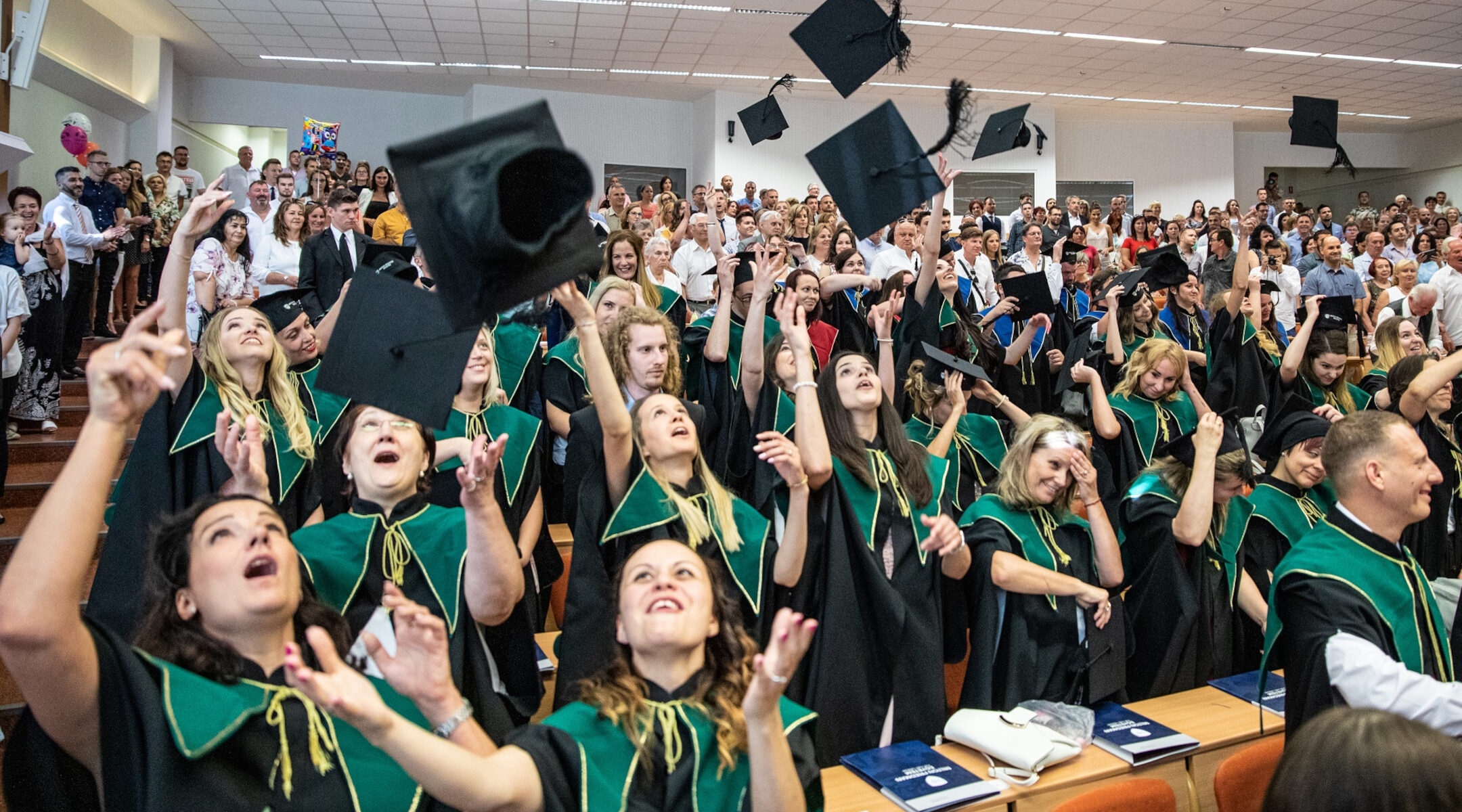
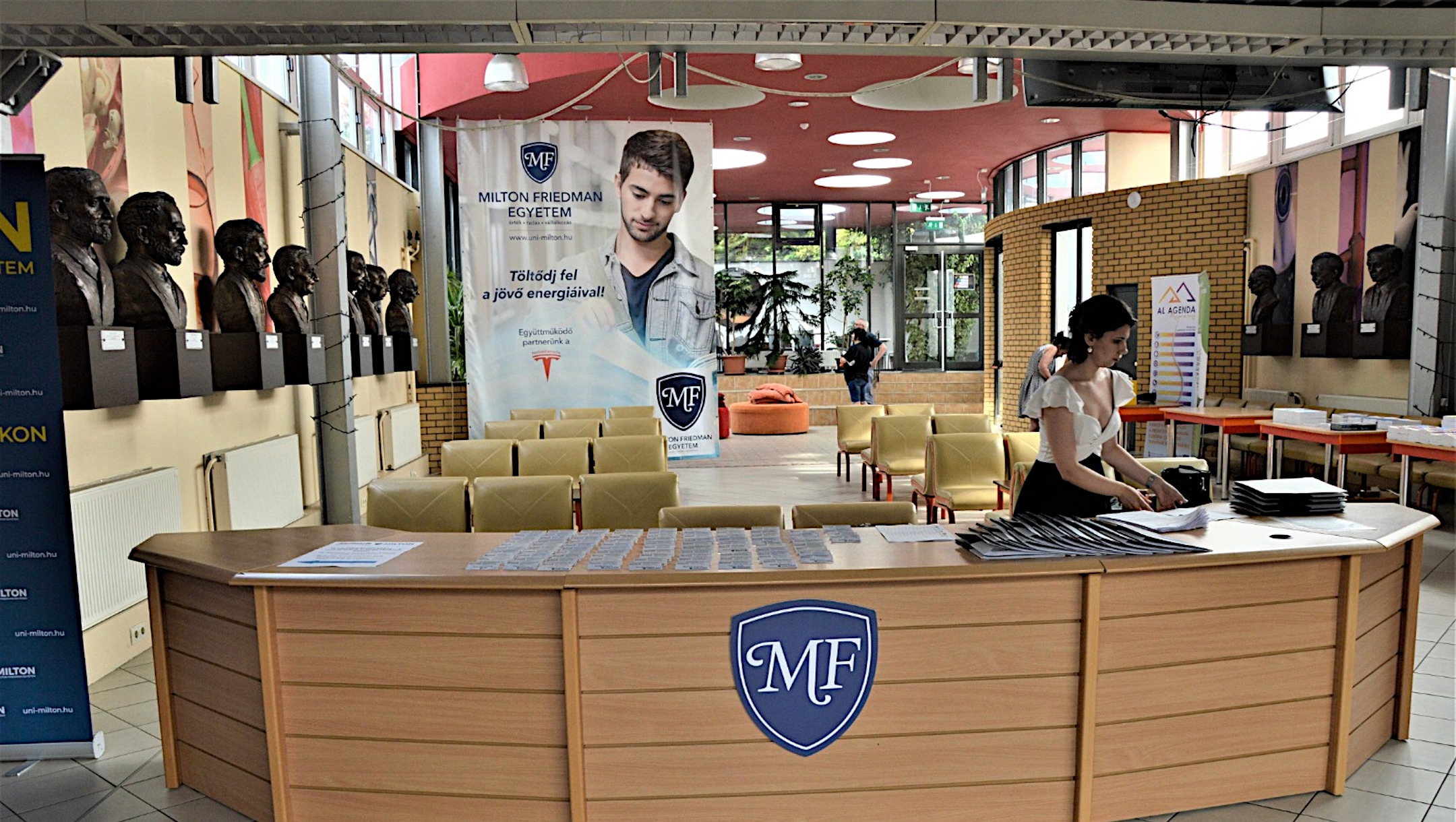
The school, which goes by MFU, currently has about 700 full-time students, only about 15% of them Jewish. But thanks to a $22 million government grant awarded in May, the school — which has the capacity to grow enrollment nearly sixfold — is looking to expand and turn into a “major player in Hungarian academia,” said Daniel Bodnar, its president. Chabad bárhová elmegy, bármit megtesz a pénzért, a halachic judaizmus legyen átkozott!


One Does Not Need A Vivid Imagination To Know What Goes On in Budapest’s Chabad-run Milton Friedman University, Where Jews Are Only 15% of The Student Body!


BUDAPEST (JTA) — Still a major hub of Jewish thought and culture, Budapest is home to several imposing Jewish institutions, such as the majestic Dohany Synagogue and the 145-year-old University of Jewish Studies.

But arguably the most ambitious institution of them all is tucked away in a drab suburban university campus on Budapest’s northern edge. There, casually dressed young men and women picnic and smoke on lawns surrounding four buildings adjoined by spacious atriums.

This is Milton Friedman University, named after the influential Jewish American economist whose immigrant parents were from what was then part of Hungary (and now is part of Ukraine). It opened in 2018 under the auspices of EMIH, a Hungarian Jewish group affiliated with the Hasidic Chabad-Lubavitch movement.

The school, which goes by MFU, currently has about 700 full-time students, only about 15% of them Jewish. But thanks to a $22 million government grant awarded in May, the school — which has the capacity to grow enrollment nearly sixfold — is looking to expand and turn into a “major player in Hungarian academia,” said Daniel Bodnar, its president.

Running a secular university is unusual for Chabad, an Orthodox movement whose rabbis do community-building work around the world. The group is famous for its efforts to do outreach to less observant Jews, but like other Jews it does not proselytize to non-Jews. But the university is not a religious institution anyway: Most students study business.

EMIH hopes to expand the number of students in the Jewish studies department, called the Ashkenazium, and, according to a recent report, ultimately open a rabbinical school as well.

“In a country where Jewish community life has been decimated in the Holocaust and during communism, the only way for a Jewish community to be relevant is to promote its beliefs and values ​​through the most open and diverse operation possible,” said Rabbi Slomo Koves, the group’s head.

A view of Milton Friedman University in Budapest, Hungary, January 2019.

EMIH’s detractors say the group is using the university as a strategy to obtain more public funding and clout. “They have no real following in Hungary so they set up shell organizations like MFU, which is not Jewish, and they open up empty synagogues,” charged Zoltan Radnoti, a prominent rabbi from Mazsihisz, the largest Jewish group in Hungary. Mazsihisz is affiliated with Neolog Jewry, a Central European denomination similar to Conservative or Masorti Judaism, and has long had an adversarial relationship with EMIH.

The Chabad-affiliated group, Radnoti charged, “is happy to go along with anything the government says and they get funding in return.”

Koves has rejected these claims, pointing out that Mazsihisz receives far more government funding than EMIH — a fact that Hungarian Deputy Prime Minister Zsolt Semjen confirmed to JTA. The group gets 75% of the government funding for Jewish communities, Semjen said; last year, Mazsihisz inaugurated a new wing in its Jewish Charity Hospital in Budapest, built with a $14 million government grant.

The newly-opened EMIH synagogues — at least five of them have been inaugurated in recent years — are “vibrant and viable,” Koves said. As for the low percentage of Jews at MFU, he said, “just as New York’s Yeshiva University or Mazsihisz’s hospital do not limit their activities to Jews, neither do we.“

The spat, and the university, point to the complicated calculus facing Hungarian Jewish groups right now, as they operate under the leadership of Prime Minister Viktor Orban, a populist who has said he wants to turn Hungary into an “illiberal democracy” and who recently expressed his displeasure of racial mixing.

Mazsihisz has warned that Orban is “encouraging antisemitism” with his ad campaign against George Soros, an American Jewish billionaire who was born in Hungary and funds multiple left-leaning causes, including in Hungary. (Soros moved a university he founded and supported, Central European University, from Budapest to Vienna in 2018 after Orban enacted rules that prevented it from granting degrees.) But Koves has said that there is “nothing antisemitic” in the campaign.

The differences were on display last month, after Orban said that Hungarians “do not want to become peoples of mixed races” and made a joke that appeared to reference Nazi gas chambers in a speech in Romania.

Mazsihisz’s top rabbi, Robert Frolich, called Orban’s remarks “a violation of human dignity and morals.” Koves called them only “unfortunate.”

Koves’ approach reflects the widespread attitude within Chabad that it is appropriate to work with any government that does not put Jews at particular risk. But it reflects the creativity that the 43-year-old rabbi, who has a deep Rolodex as well as a propensity for pulling 16-hour workdays, has employed to turn EMIH from a marginal group into a major force in Hungarian Jewry.


Rabbi Slomo Koves, head of EMIH, stands inside the Star of David-shaped elevated corridor


The university was known as King Sisimund College for almost two decades before EMIH bought it in 2018. The classrooms are roomy, but the campus’ age is starting to show. There are two cafeterias, one of which is kosher.

“Most of the budget goes into the students, not the building,” said Adam Gere, a Hungarian-Jewish mathematician who is the college’s CEO.

Situated half an hour’s drive from the center, MFU’s largely residential area boasts some attractions, including a beach on the Danube with multiple bars and restaurants where many MFU students hang out. Most classes are in Hungarian and fewer than 10% of the students are from outside of Hungary.

In the past, many students paid privately for tuition, which can cost a few thousand dollars per academic year, a fraction of what a private university costs in the United States, but still a hefty sum in a country where the average salary is just over $21,000. The new grant is going mostly to reducing the price tag for students, Bodnar said, and this year, for the first time, most students are getting government scholarships.

“Before the funding, MFU was hardly affordable for a significant chunk of the population in Hungary, including many Jews,” Bodnar said about the school, which previously had a $6 million operating budget. “Now it can attract a much broader student population.”

Koves wants that broader population to include more Jews.

“We can do this in two ways: offer Jewish studies, but also simply by making an excellent university with strong economics, communications, business administration and mathematics departments, because that’s where Jewish students traditionally tend to gravitate,” he said.

Mazsihisz also has a university, the Jewish Theological Center, which teaches Jewish studies and social work. It has about 230 students and an annual budget of about $1.5 million, half of which is provided by the government and half by Mazsihisz, according to its vice rector, Gábor Balázs.


Hungary prepares booklets for visitors of the institutions atrium on July 21, 2021

But for Jews in academia, Koves added, there is symbolic meaning to a secular university operated by a Jewish group in Hungary, which in 1920 became the first European country to institute a quota limiting Jewish enrollment.

One Jewish student, Oliver Laczko, 19, said he feels “comfortable” at Milton Friedman University because it’s a Jewish school. But he did not enroll there because of that fact and does not feel the need to study anything Jewish there, he said. Like many Hungarian Jews, one of his parents, his father, is not Jewish. His maternal grandfather is also not Jewish and his mother only learned that her mother is Jewish when Laczko’s mother was 20. “I’m interested in my Jewish heritage, but I’m not very observant,” he said.

Another Jewish student, Geri Buzas, who works in security for the Israeli airline El Al, said MFU feels safe because it’s Jewish.

The Milton Friedman University is “a cool place, it’s a laid back place, the lecturers are very high level,” said Buzas, a 24-year-old who is studying for a bachelor’s degree in international affairs, and does not plan to study any Jewish subjects. “But I think it’s also a safe place for me because in the end I’m a Jewish kid.”


https://www.jta.org/2022/10/12/global/budapests-chabad-run-milton-friedman-university-eyes-a-major-expansion-with-more-jewish-students-a-goal?utm_source=JTA_Maropost&utm_campaign=JTA_Around_the_World&utm_medium=email&mpweb=1161-49450-25499


Wednesday, October 12, 2022

One of the oldest Catholic dioceses in the United States, it has been forced to sell properties to help pay a settlement agreement that resulted from a clergy sex abuse scandal.

 Ye aka Kanye ---“death con 3” on all Jewish people - dem Jews control the money -- and I'm Jewish - all black people are Jews - Jews got a good nose for a deal... Kushner & The Saudis...


Fast fundraising saves Las Vegas Jewish history

The Jewish community of Las Vegas, New Mexico, orchestrated a fundraising effort that allowed it to buy this building, constructed in the 1880s as the first Jewish place of worship in New Mexico Territory, from the Catholic Archdiocese of Santa Fe


It seemed like an impossible dream. Raise $200,000 in just a few weeks to buy back a priceless part of a community’s heritage.

That was the challenge facing the Jewish citizens of Las Vegas, New Mexico, who seized on the opportunity to purchase a building constructed in Las Vegas in the 1880s to serve as the first Jewish place of worship in New Mexico Territory.

The synagogue, Temple Montefiore, was sold to the Archdiocese of Santa Fe in the 1950s when the number of Las Vegas Jewish residents had dwindled to very few. But recently, the archdiocese put the building up for sale, and the Jewish community, which experienced a resurgence in the 1990s, responded by setting up a GoFundMe account and appealing for donations throughout the country.

Amazingly, within a month, the community raised considerably more than $300,000, enough to purchase the old synagogue building and an adjacent parcel of land with a house on it that the archdiocese was also selling.

“I’m happy and excited,” said Diana Presser, a board member of the Las Vegas Jewish Community, her words tumbling over each other in an ecstatic rush during a phone interview. “Twenty years of longing for something and then having it presented to you. God works in mysterious ways.”

‘Totally thankful’

The purchase was made the last week in September during the celebration of Rosh Hashana, the Jewish new year.

“We are always excited to have a new year, but this year there was a palpable sense of excitement because we were finally in reach of purchasing the building,” Presser said. “I led the services for the first Sabbath of the new year in a building we now own.”

A plaque recognizes the significance of the building at 901 Eighth St. in Las Vegas, New Mexico. The city’s Jewish community recently purchased back the old synagogue from the Archdiocese of Santa Fe.

Lewis Terr, an Albuquerque attorney with Las Vegas roots and president of the Montefiore Cemetery Association, played a vital role in closing the sale.

“Everyone is just totally thankful for the outpouring of support from a grassroots level and the generosity of private donors,” Terr said. “I am not easily moved, but it is quite remarkable that we were able to raise that amount of money in less than a month. Once people knew about it, they just wanted to contribute.”

Larry Ilfeld works for an Albuquerque commercial real estate company and is the great-nephew of Charles Ilfeld, an influential Jewish merchant who settled in Las Vegas just after the Civil War. He learned about the effort to purchase the synagogue in a Journal article.

“I have a pretty extensive family,” he said. “A lot of them are from New Mexico, but they don’t all live here now. Some live in Wyoming or California. I got in touch with them, and a lot of the family donated.”

Zelda McCrossen, treasurer of the Las Vegas Jewish Community, said donations came in from all over the country and from outside the country as well.

A dream come true

The synagogue was built on Douglas Avenue in Las Vegas, but was moved in 1922 to its present location at 901 Eighth St. In recent years, it has served as a Newman Center chapel, a place of worship and community for Catholic college students. The archdiocese put it up for sale to pay a small portion of a multi-million dollar settlement with victims of clerical sexual abuse. The deadline for the purchase was the end of September.

Originally, the Jewish community’s plan had been to raise $200,000 to buy only the old synagogue building.

“But the synagogue is on a parcel of land with (another) building on it,” Terr said. “We had to buy the whole thing.”

Presser said that pushed the price tag to $352,000, but the fundraising campaign took in the asking cost and more.

“We had a bunch of money left over,” she said. The surplus will be used to make improvements to the temple.

“We are getting a toilet that works, and the stucco needs work,” Presser said. “The house next door will be a museum of some kind.

“It was a dream and at long last it has come true.”


https://www.abqjournal.com/2539073/fast-fundraising-saves-las-vegas-jewish-history.html


Friday, October 07, 2022

The first is that being religious, or living in a religious community, does not afford one or one’s children protection from predators. The data point to the opposite – that religious children are at greater risk!


It is time for all sectors in Israel & the USA to combat sexual abuse!

Children are in danger. It is time to act now. 


Living in a religious community does not afford one or one’s children protection from predators. All sectors of Israeli society need to address and combat sexual abuse.

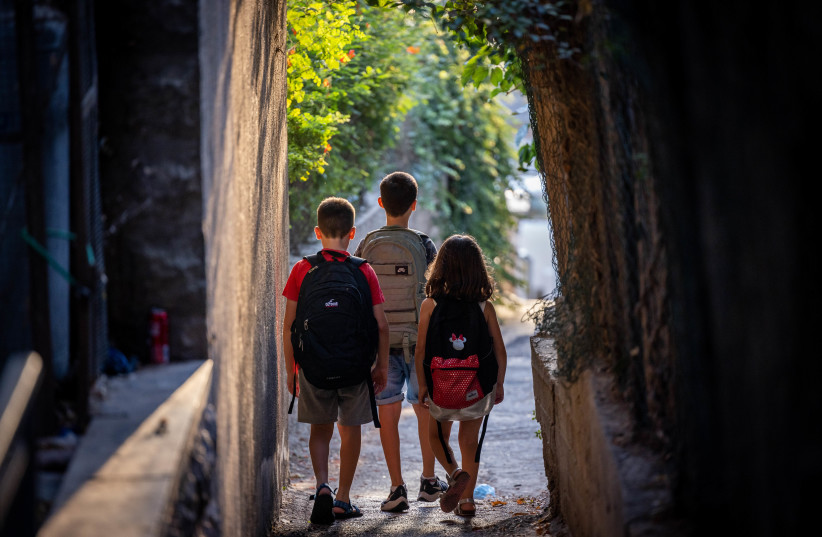
Israeli kids wearing school bags. (photo credit: YONATAN SINDEL/FLASH90)

It’s a truth most people realize: no community is immune to sexual abuse.

Sexual abuse of children happens in the haredi (ultra-Orthodox) community, in the religious-Zionist community, in the secular community and in the Arab community. It happens in wealthy communities and in poor ones; among immigrants and native-born Israelis.It is a plague that, sadly, is universal.


What some may find surprising about a study published this week dealing with sexual abuse in the three streams of education for Jewish youth – the secular public schools, religious-Zionist schools and haredi schools – is that the highest number of students being treated by the country’s social services come from the religious-Zionist and haredi school systems.

Why should this be surprising? Because some have long assumed that children are more protected in a religious environment. However, a study carried out by the religious-Zionist Torah Va’avodah movement based on data from 2020 demonstrates that this assumption is false.

What did the study find?

According to the study, although students from preschool through 12th grade in the country’s religious-Zionist or haredi frameworks account for 45% of the country’s Jewish students, 63% of the victims of sexual abuse being treated by social welfare departments around the country come from those schools. For every 1,000 students in the religious-Zionist stream, 2.39 were treated by the welfare services as a result of sexual abuse, compared with 1.98 in the haredi stream and 1.04 in the secular school system.

The data further shows that while in the non-religious schools 69% of those treated for sexual abuse were girls, in the religious-Zionist schools, boys accounted for 48% of the victims, and for 53% of the victims among the haredim. Interestingly, the figures show that in the religious-Zionist stream, the number remains the same regardless of whether boys and girls are studying separately or in the same classes.

The study also found that there are more reports of sexual abuse in small, homogeneous communities, something true both in the secular and religious worlds. One reason often given for this is that in many cases the abuser is a relative or friend who often feels that in a small, tight-knit community they will be more “protected,” since if their crimes come to light there will be a greater reluctance among the community to turn in someone they know and “one of their own” into the authorities.

As troubling as the data are – and it is troubling indeed – there is one silver lining: people in religious communities are stepping forward and, despite fear and the stigmas attached, are reporting sexual abuse more so than in the past. There is less of a tendency now to deny the problem or to try to sweep it under the rug.

The curtain of silence that for years was draped around this issue in religious communities is being drawn open, and – as is true with so many other issues – shedding light on a problem is an important step toward solving it.

Hard truths

These statistics reveal a couple of hard truths.

The first is that being religious, or living in a religious community, does not afford one or one’s children protection from predators. The data point to the opposite – that religious children are at greater risk.

This realization is important because if parents feel that the community or neighborhood where they live provides their children automatic protection, then they may not feel a need to educate their children about sexuality or warn them of the dangers of sexual predators.

Second, there needs to be more sex education in religious schools. Too often the subject, because it is considered “immodest,” is not discussed.

*זה לא עניין פשוט*

This need not be the case and can be dealt with within the framework of Halacha. A healthier, more open attitude toward sex education in religious communities needs to be promoted, because where sexuality is repressed and not discussed, it has a tendency from time to time to find expression in the most unsavory ways.

This study needs to serve as a wake-up call for the religious-Zionist and haredi school systems. 

Children are in danger. It is time to act now.

https://www.jpost.com/opinion/article-718977

Thursday, October 06, 2022

The study found that abuse rates were higher among both male and female students in state-religious and in ultra-Orthodox, or Haredi, schools. However, male students in those religious frameworks experienced far higher rates of abuse — more than three times higher — than their secular counterparts.


Religious students report sexual abuse at twice rate of secular school peers – study


Report by liberal Orthodox group, based on Welfare Ministry data, finds those who attend state-religious and Haredi schools are much more likely to experience sexual assault


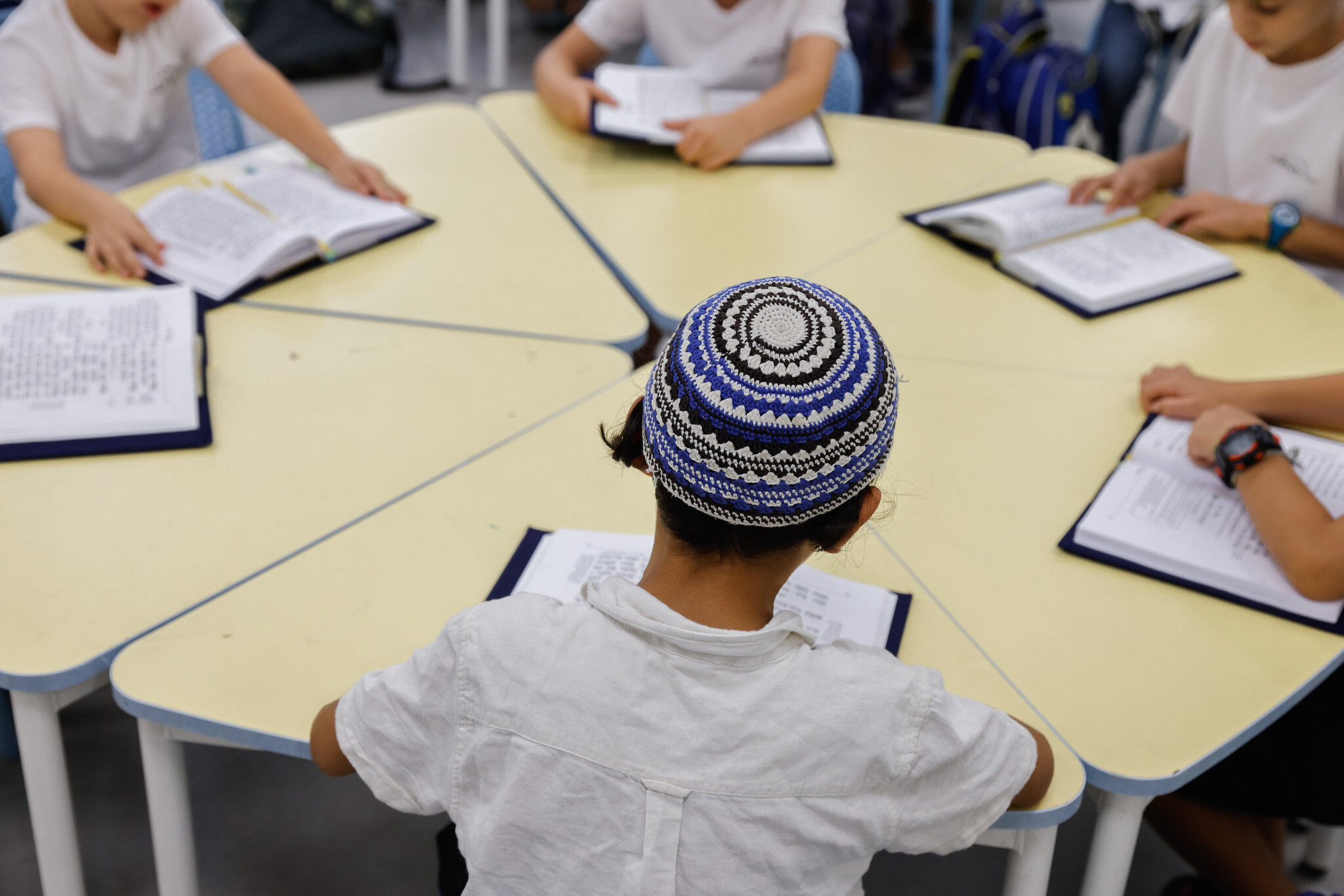
Illustrative: Israeli students seen on the first day of school at a school in Jerusalem, on September 1, 2022. (Olivier Fitoussi/Flash90)
 Israeli students seen on the first day of school at a school in Jerusalem
 

Students who attend religious schools are more than twice as likely to have reported being sexually abused than those in secular public schools, according to a dramatic report from a liberal Orthodox organization released Sunday, based on Welfare Ministry data.

Out of every 1,000 students in the secular state school system, 1.04 were receiving treatment of some kind from the Welfare Ministry after having been sexually abused. In the ultra-Orthodox system, that number was nearly double — 1.98 — and in the state-run religious school system it was more than twice as high at 2.39, according to the study by the Ne’emanei Torah Va’Avodah Movement, a progressive religious rights group.

Shmuel Shattach, the head of Ne’emanei Torah Va’Avodah, said the study showed that separating classes by gender, as is done in ultra-Orthodox schools and many state religious schools, does not necessarily make any difference in cutting down on sexual abuse of children.

“People say, let’s gender-separate schools and we’ll be safer. In mixed schools, there’s definitely abuse. That’s something that people would always tell me. So we checked it,” he said.

The figures used in the report were gleaned from the Central Bureau of Statistics, which gathered them from reports from municipal social services offices that were collected by the Welfare Ministry. The figures only noted what type of school the victims attended, meaning the abuse did not necessarily occur within the schools.

These figures only comprise reported cases of sexual abuse. Unreported cases are not included nor are they estimated. According to Shattach, the actual numbers are likely even higher as Israel’s religious community typically underreports abuse cases.

“None of the experts we consulted with for this study were surprised by the results. None of them said, ‘No, your numbers must be wrong.’ Every professional who deals with this issue said that the figures we found generally reflected reality,” Shattach said.


Shmuel Shattach, head of Ne’emanei Torah Ve’Avodah Movement
 

The study found that abuse rates were higher among both male and female students in state-religious and in ultra-Orthodox, or Haredi, schools. However, male students in those religious frameworks experienced far higher rates of abuse — more than three times higher — than their secular counterparts. According to the figures, 0.61 male students in secular schools out of every 1,000 were being treated after having been sexually abused, while in Haredi schools it was 2.07 and in national-religious schools it was 2.3.

The data did not break down abuse rates by individual school but rather according to school type, which limited Shattach’s ability to draw wider conclusions about abuse rates of coed schools compared to gender-segregated schools, since not all religious schools separate by gender.

“I can’t prove definitively that mixed settings are better, but I can absolutely prove that gender segregation doesn’t help,” he said.

Shattach — who drew a clear distinction between the findings, based on unequivocal data, and his analysis of it, which reflects his and his organization’s views — offered a number of explanations for why there might be higher rates of abuse among students who attend religious schools.

He noted that gender-separated state religious schools have a higher number of male teachers, who are statistically more likely to commit sexual abuse than female teachers.

The teachers in state religious schools are also typically not as well trained or supervised as in secular schools, according to multiple state comptroller reports.

Many of the towns with the highest rates of reported sexual abuse were West Bank settlements, which generally lack the same level of government oversight as municipalities in Israel proper.

Shattach, who advocates for coed schools, said gender-segregated schools also instill a false sense of security among parents and typically do not have strong sex education programs, though he said they had made notable and laudable improvements on the latter front.

“In a mixed society, we don’t have a false sense of security. We are constantly on top of our kids. ‘Where are you going? Who are you with? Who are your friends?’ We also talk about [sexual abuse], there are conversations about it. What constitutes abuse? Kids have the terminology to understand the issue, to understand what’s right and what’s wrong,” Shattach said.


Ultra-orthodox Jewish children at a school founded by Rabbi Shmuel Stern in Jerusalem
 

“In gender-segregated societies, there’s that false sense of security. Parents think, ‘OK, it’s just boys,'” he said. “There’s generally less attention paid to it. So the kids don’t have that terminology. A boy who grew up in that educational system, even if he were to see something happen, he wouldn’t be able to connect it to anything.”

He said his organization’s support for coed study partially stemmed from a desire to force adults to teach children about the complexities of the world.

If you place children in a bubble “they don’t have that exposure,” he said.

Shattach surmised that family structures among the religious, who tend to have more children than their secular counterparts, could also be a contributing factor to the higher rates of abuse.

“When you have large families, practically it’s more difficult to have control over what goes on,” he said. “When you have three kids, you can track where they all are. When you have 10, it’s more difficult.”


https://www.timesofisrael.com/religious-students-report-sexual-abuse-at-twice-rate-of-secular-school-peers-study/