I see a profound connection between Matan Torah, Shavuot, and the ongoing war in Israel, integrating them into a unified narrative of faith, identity, and defense.
The concept of Milchemet Mitzvah underscores the sanctity of defending the land of Israel. The struggles and wars faced by Israel are not merely political but are imbued with spiritual significance. Defending the land and its people aligns with the Torah’s commandments to protect life and pursue justice.
The Mishna adds: In what case are all of these statements, with regard to the various exemptions from war, said? They are said with regard to elective wars. But in wars whose mandate is a mitzva, everyone goes, even a groom from his room and a bride from her wedding canopy. Rabbi Yehuda said: In what case are all of these statements, with regard to the various exemptions from war, said? They are said with regard to wars whose mandate is a mitzva. But in obligatory wars, everyone goes, even a groom from his room and a bride from her wedding canopy.
The concept of Milchemet Mitzvah (obligatory war) and Milchemet Reshut (optional war), as discussed in the Talmud (Sotah 44b), provides a framework for understanding the Jewish approach to warfare. Defending the land of Israel, especially in existential conflicts, is seen as a mitzvah, a divinely mandated obligation.
The current security situation in Israel is viewed through this lens. The continuous threats and acts of aggression necessitate a response that is both just and effective, aligning with the Torah’s teachings on preserving life and justice.
The interplay between Matan Torah, Shavuot, and the war in Israel encapsulates the holistic vision of the Orthodox Jewish perspective. It sees the divine revelation at Sinai and its annual commemoration during Shavuot as foundational to Jewish life and faith. Simultaneously, it recognizes the sanctity and necessity of defending the Jewish homeland, viewing these actions as a continuation of the covenantal relationship with God.
In this unified narrative, the Jewish people’s commitment to Torah and their resilience in the face of conflict are intertwined, reflecting an enduring legacy of faith, identity, and survival. This perspective not only honors the past but also provides a guiding framework for navigating contemporary challenges, ensuring the continuity and vitality of Jewish life in Israel and throughout the diaspora.
‘Hero of Israel’: Thousands pay last respects to officer killed in hostage rescue operation
Arnon Zmora’s widow eulogizes ‘a sweet man full of
laughter, sensitivity and compassion’; in tearful tribute, uncle of
rescued hostage says families have ‘unbreakable alliance’
People
wave the Israeli flag as they pay their respect to counter-terror
officer Arnon Zamora, who was killed in battle on June 8 during a
special operation to rescue four Israeli hostages from Gaza, outside his
family home in Mevasseret Zion, June 9, 2024. (Yonatan Sindel/Flash90)
Thousands of mourners, among them family members of hostages held in
Gaza, flocked to Jerusalem on Sunday to attend the funeral of Arnon Zmora, the police counter-terror officer killed Saturday during an operation that rescued four captives from central Gaza.
Zmora, an officer of the elite Yamam counter-terrorism unit, was shot
and critically injured by Hamas terrorists guarding three of the four
hostages. He succumbed to his wounds shortly upon arriving at a hospital
in Israel.
He was part of the mission to rescue Almog Meir Jan, Andrey Kozlov,
Shlomi Ziv and Noa Argamani, which was subsequently renamed “Operation
Arnon” in his honor.
Even before the arrival of the funeral procession at Jerusalem’s
Mount Herzl military cemetery, Israelis lined the street outside the
Zmora family’s home in the nearby town of Mevasseret Zion, waving
Israeli flags in tribute.
Inside the cemetery, Zmora’s mother Ruti eulogized her son, whom she
said was not only “your mother’s hero,” but also “an entire country’s
hero.”
“Your favorite movie as a child was ‘Robin Hood.’ In second grade,
you dressed up as a paratrooper. You looked up to Yoni Netanyahu for
Operation Entebbe,” Channel 12 news quoted Ruti as saying, referring to
the IDF hero — brother of the current prime minister — killed during the
1976 mission that saved over 100 Israeli hostages kidnapped to Uganda.
“My boy, full of joy, of life, with a kind gaze and a rolling laugh
that remains in my heart,” she said. “An imaginative, creative child who
knows that even if the road is difficult, the sky is the limit.
“My beloved child,” she continued, “I am so happy that last Friday I
was able to say to you: ‘Arnon, take care of yourself and your friends. I
love you.’ You answered me: ‘Mom, I love you too.'”
“I knew it was Russian roulette,” she said. “You sacrificed your life for the country.”
The head of the Yamam counter-terror unit said of Zmora that he was
“always first, and during the heroic operation he led, he acted with
courage and was a model for his fighters.
Chief Inspector Arnon Zmora, who was killed
in a mission to rescue hostages held in the Gaza Strip, June 8, 2024
“His actions brought light to the people of Israel and unfortunately
he paid for it with his life,” he added. “Instead of being part of the
national jubilation, we are going into deep mourning.”
The funeral was attended by Israel Police Commissioner Kobi Shabtai, who delivered a eulogy on behalf of the Israel Police.
“Arnon, I knew you and heard a lot about you. You fought on October 7
in the kibbutzim surrounding Gaza, you participated in countless
activities and operations that will forever be hidden from the public
eye,” Shabtai said. “You always understood the mission that was before
you, you strove for contact, you acted with the courage reserved for
outstanding people, and I believe you deeply felt the magnitude of the
hour.
“Arnon, we agreed that we would parachute together at the end of my
term,” said Shabtai, whose tenure will end on July 17. “Unfortunately,
we didn’t have time to do it.”
Among those paying tribute to Zmora was Aviram Meir, the uncle of
Almog Meir Jan, one of the hostages rescued during Saturday’s daylight
operation.
Arnon “brought joy to the families, you brought joy to the people of Israel,” Aviram Meir said through tears.
“I would like to address the Zmora family and tell you that the blood
of your children is mixed with ours. This is an unbreakable alliance. I
thank you from the bottom of my heart.”
Arnon’s widow Michal Zmora was the last to speak and said she had chosen to do so intentionally.
“I asked to speak last because the commanders were talking about how
much of a hero you are… now everyone knows about your heroism,” she
said. “More than everything, though, you were a sweet man, full of
laughter, sensitivity and compassion. You have been my spouse for the
last 12 years. For the last eight years, you have also been the perfect
father.
“It’s important that these things be said last, after the stories of heroism. That’s what will resonate from you.”
Michal continued: “There is no other love like ours, there isn’t any.
You don’t see that kind of love anymore, a love that involves choosing
each other every morning. A love that involves dialogue and listening —
with each passing day, we loved each other more.
“We raised two wonderful children together, my love, whose worlds
fell apart in an instant. I am enveloping them and protecting them. I
know you know that, and I also know that you thought about us in the
split second when you realized that death was coming.
“In the end, the children and I will be fine,” she said through
tears. “They will know how much of a hero their father was, how many
lives he saved… but much more than that, they will remember how much fun
they had with you. Riding bikes, playing the guitar, lighting a
bonfire, eating ice cream, having fun together, and being a family.”
Earlier on Sunday, Prime Minister Benjamin Netanyahu eulogized Zmora at the outset of the weekly cabinet meeting.
“The massive achievement yesterday caused the nation to stand up
taller,” said Netanyahu, “and I must say, it caused Israel’s supporters
around the world to stand taller as well.”
“But it came with great pain, the fall of the hero of Israel, the IDF warrior, the late commander Arnon Zmora,” he continued.
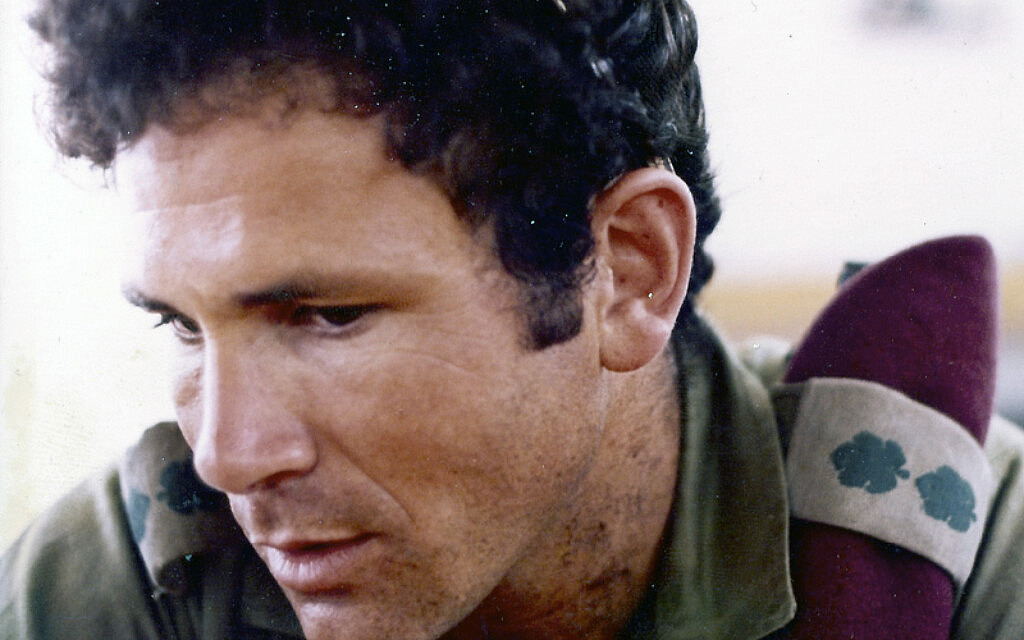
Yoni Netanyahu, in a photograph taken shortly before his death at Entebbe in 1976. (GPO, Wikimedia)
He related a story told by Amir Ofer, a commando who freed hostages
from Entebbe Airport in 1976 under the command of Netanyahu’s brother
Yoni, about meeting Zmora.
After October 7, Zmora called Ofer to recount the battles he took
part in against Hamas terrorists in Israeli towns and on roads near the
border. “How did you succeed and we didn’t?” Zmora asked Ofer.
“It took me a few hours to digest your story. You were really heroes
and you performed in an extraordinary way under the most difficult
conditions,” Ofer wrote to Zmora.
“Arnon will forever be remembered in the history of our people,” said
Netanyahu. “Just like the [Yitzhak] Rabin government supported the
proposal to call the operation to free the hostage in Entebbe ‘Operation
Yonatan,’ after the commander of the assault force who fell in battle, I
am sure that our government also unanimously supports the proposal to
name the operation to free the hostages in Gaza ‘Operation Arnon’ after
the commander of the force who fell in battle — the hero of Israel Arnon
Zmora.”
....It was first in 1921 that Reb Elchonon returned to Poland, to
Baranovitch, where he was asked to head the local yeshiva, Ohel Torah.
He was to head the yeshiva till the war years when he, together with
hundreds of his students sanctified the Almighty's name. Witnesses have
recounted that dreadful day--eleventh day in Tamuz, 5701 when the
murderers came in. He was in the midst of learning Tractate Nidoh. Reb
Elchonon spoke quietly and calmly, as was his practice. Not even the
sound of his voice was changed. On his face, his customary earnestness.
His tone betrayed no feeling for self, and he did not attempt to say
good-bye to his son, Reb Naftali. He spoke to everyone, to the whole
House of Israel.
"In Heaven it appears that they deem us to be righteous because our
bodies have been chosen to stone for the Jewish people. Therefore, we
must repent now, immediately. There is not much time. We must keep in
mind that we will be better offerings if we repent. In this way we will
save the lives of our brethren overseas. "Let no thought enter our
minds, G-d forbid, which is abominable and which renders an offering
unfit. We are now fulfilling the greatest mizvah. With fire she was
destroyed and with fire she will be rebuilt. The very fire which
consumes our bodies will one day rebuild the Jewish people."
In the summer of 1937 at the third convention of the rabbinical leaders
of Agudath Israel held in Mariband, which included hundreds of rabbis,
heads of yeshiva religious academies and grand rabbis of Chassidic
communities from a number of countries, Rabbi Elchonon Wasserman stood
out from among all of them.
Rabbi Shmuel Aharon Pardes of Chicago, the editor of the rabbinical
journal Hapardes, who participated at this convention and who was
present at meetings of the Council of Torah Sages that were held during
the convention, describes Rabbi Wasserman as follows: “Rabbi Elchonon
Wasserman, who stood above all the other participants walked with his
face towards the ground. His long beard has turned white, and his fear
of G-d preceded his scholarly wisdom. He reigns supreme above all the
other members of the Council of Torah Sages and the convention itself.
He intersperses his speech with simple metaphors hidden with great
wisdom that penetrates the hearts of each person according to his level.
He is the major disciple of Rabbi Israel Meir Kagan, the author of the
halachic work, Mishna Brurah, and every word he utters is spiced with
teachings and wise metaphors from his teacher. When Rabbi Wasserman
enters the meeting of the Council, everyone stands in respect, and he
asked to speak before anyone else.
On Sunday on the evening of 16th of the Hebrew month of Elul [August 23,
1937], the rabbinical leaders met to discuss the issue of a “Jewish
State.” The meeting was stormy, and it dealt with the issue of the Three
Oaths. A great dispute broke out in the session, and Rabbi Wasserman
expressed pungent words that shocked his listeners. The following is
what he said:
“We
must emphasize and declare the position of our holy Torah in order to
banish any confusion of ideas. Inasmuch as there are Jews who are
Torah-observant who say that a Jewish State would be the “beginning of
the Redemption,” we must inform them of the position of our Torah that
this is nothing less than the beginning of a new Exile! What do I mean?
After all, Jews have been living in Exile for some two thousand years,
so how can this be a “beginning” of a new Exile? My intention is to
expose the so-called Jewish Communists. An Exile such as this has never
existed until today. None of us can even describe such an exile, an
Exile under Jews! Only Jews from Russia have a slight sense of this
situation, even though the regime there is not a “Jewish” one. One of
the great rabbis of this generation recently told me that the term
“beginning of the Redemption” in reference to the Zionist movement makes
his hair stand on end!
In Hapardes (Year 11, Issue 7) Rabbi Pardes describes what he saw at the Convention:
“Rabbi Wasserman, Rabbi Kotler, Rabbi Rottenberg from
Antwerp, rabbis from Czechoslovakia and Hungary were unanimous in
rejecting any proposal for a “Jewish State” on either side of the Jordan
River, even if it were established as a religious state because such a
regime would be a form of heresy in our faith in the belief in the
coming of the Messiah, and especially since this little “Jewish” state
would be built on heresy and desecration of the Name of G-d.
Who Has Destroyed More, the Arabs or the Zionists? http://www.jewsagainstzionism.com/rabbi_quotes/WhoHasDestroyedMore.pdf (This
essay was written by Rabbi Elchonon Wasserman zt'l after the
disturbances in Hebron in 1929 which left some 50-60 yeshiva students
dead and is very apropos the most recent events on the West Bank. Ed.)
Haredi minister upbraids national religious for opposing military draft exemptions
Speaking at flagship yeshiva of religious Zionist
movement, Meir Porush says it ‘is not appropriate to criticize the order
of our conduct’
Minister
of Jerusalem Affairs and Jewish Heritage Meir Porush - Makes Arye Deri Look Like a Saint!
Addressing students at the flagship yeshiva of the religious Zionist movement on Wednesday, Jerusalem Affairs Minister Meir Porush
condemned members of the more modern religious community who criticize
the ultra-Orthodox effort to secure widespread military exemptions for
their youth.
“I don’t deny the complexities between us, the differences in
attitudes, but we need to resolve this between us. On both sides, there
are public figures of sufficient stature, who can gather in a room, and
reach a proper and respectful solution that preserves the world of Torah
and yeshivas,” the senior United Torah Judaism lawmaker declared during
a Jerusalem Day speech at Mercaz Harav Yeshiva in Jerusalem.
“But it is not appropriate for individuals from religious Zionism to
criticize our conduct and our policies of continuous Torah study,” he
insisted.
He added his best wishes to students of the yeshiva currently serving
and engaged in the “battle against the vile murderers” of Hamas.
Haredi women and male yeshiva students are generally exempt from
military service due to controversial longstanding arrangements that
have generated significant criticism and resentment among the general
population.
With the courts deeming those arrangements illegitimate, the
government is currently caught in a contentious public dispute over the
future of the Haredi draft.
Responding to Porush’s comments, Yehuda Veld, the director general of
the Religious Zionism party, tweeted a quote from Rabbi Zvi Yehuda Kook
— the former dean of the yeshiva and the son of its founder — stating
that exemptions from army service constituted a “dishonor of the Torah.”
“To come to his yeshiva and speak against him is simply impudence and contempt for scholars,” Veld declared.
In 2017, the High Court of Justice invalidated the Haredi draft
exemptions as discriminatory and ordered the government to pass a new
conscription law. The government has since been unable to agree on
legislation, repeatedly extending the non-conscription policy, while
Haredi politicians have sought to pass legislation cementing the
exemptions.
On March 28, the High Court ordered the state to cut funding for
yeshiva students eligible for the draft who do not enlist as of April 1,
prompting Porush to accuse it of “imposing economic sanctions against
those who chose to study the Holy Torah.”
“This is a serious violation of our right to exist in the Land of
Israel – the highest judicial authority of the State of Israel seeks to
throw Torah scholars into prison,” he declared at the time. “We will not
put up with this situation and will fight to cancel the decision
immediately, along with the effort to quickly regulate the status of
yeshiva members so that they can observe the Torah without
interruption.”
Students pray at Mercaz Harav yeshiva in Jerusalem
During a high-stakes hearing
Sunday on petitions demanding the immediate conscription of thousands
of yeshiva students, a panel of nine High Court justices was sharply and
unambiguously critical of the government’s claims that ultra-Orthodox
yeshiva students should not be drafted into the army.
The nine justices presiding over the hearing, including
conservatives, expressed intense skepticism — bordering at times on
anger — toward the claims and remarks of the legal representatives of
the government and the state-funded Haredi yeshivas, accusing them of
“word games” and “going round in circles,” and even appearing to mock
their arguments.
The sharp and at times caustic responses of the justices to the
government’s arguments appeared to suggest the court’s patience with the
decades-long failure of successive governments to deal with the Haredi
enlistment conundrum has run out.
SBC abuse reform task force ends its work with no names on database and no long-term plan
Their report marks the second time a proposed database for abusive pastors has been derailed.
(RNS) — A volunteer Southern Baptist task force charged with
implementing abuse reforms in the nation’s largest Protestant
denomination will end its work next week without a single name published
on a database of abusers.
The task force’s report
marks the second time a proposed database for abusive pastors has been
derailed by denominational apathy, legal worries and a desire to protect
donations to the Southern Baptist Convention’s mission programs.
Leaders of the SBC’s Abuse Reform Implementation Task Force say a
lack of funding, concerns about insurance and other unnamed difficulties
hindered the group’s work.
“The process has been more difficult than we could have imagined,”
the task force said in a report published Tuesday (June 4). “And in
truth, we made less progress than we desired due to the myriad obstacles
and challenges we encountered in the course of our work.”
To date, no names appear on the “Ministry Check” website designed to
track abusive pastors, despite a mandate from Southern Baptists to
create the database. The committee has also found no permanent home or
funding for abuse reforms, meaning that two of the task force’s chief
tasks remain unfinished.
Because of liability concerns about the database, the task force set
up a separate nonprofit to oversee the Ministry Check website. That new
nonprofit, known as the Abuse Response Committee, has been unable to
publish any names because of objections raised by SBC leaders.
“At present, ARC has secured multiple affordable insurance bids and
successfully completed the vetting and legal review of nearly 100 names
for inclusion on Ministry Check at our own expense with additional names
to be vetted pending the successful launch of the website,” the task
force said in its report.
Josh Wester, the North Carolina pastor who chairs the ARITF, said the
Abuse Response Committee — whose leaders include four task force
members — could independently publish names to Ministry Check in the
future but wants to make a good-faith effort to address the Executive
Committee’s concerns.
Task force leaders say they raised $75,000 outside of the SBC to vet
the initial names of abusers. That list includes names of sexual
offenders who were either convicted of abuse in a criminal court or who
have had a civil judgment against them.
“To date, the SBC has contributed zero funding toward the vetting of
names for Ministry Check,” according to a footnote in the task force
report.
Earlier this year, the SBC’s Ethics and Religious Liberty Commission
designated $250,000 toward abuse reform to be used by the ARITF. Wester
hopes those funds will be made available to ARC for the Ministry Check
site. The SBC’s two mission boards pledged nearly $4 million to assist
churches in responding to abuse but have said none of that money can be given to ARC.
The lack of progress on reforms has abuse survivor and activist Christa Brown shaking her head.
“Why can’t a billion-dollar organization come up with the resources
to do this?” asked Brown, who for years ran a list of convicted Baptist
abusers at a website, StopBaptistPredators.org, which aggregated stories
about cases of abuse.
Brown sees the lack of progress on reforms as part of a larger pattern
in the SBC. While church messengers and volunteers like those on the
ARITF want reform and work hard to address the issue of reforms, there’s
no help from SBC leaders or institutions. Instead, she said, SBC
leaders do just enough to make it look like they care, without any real
progress.
Debi Fry, a professor of international child protection at the
university, said the issue affects children “in every classroom, in
every school, in every country”.
More than 300m children victims of online sexual abuse every year
First global study of its kind exposes ‘staggering scale’ of crime, with one in nine men in the US admitting to the offence
In
what is believed to be the first global estimate of the scale of the
crisis, researchers at the University of Edinburgh found that 12.6% of
the world’s children have been victims of nonconsensual talking, sharing
and exposure to sexual images and video in the past year, equivalent to
about 302 million young people.
A
similar proportion – 12.5% – had been subject to online solicitation,
such as unwanted sexual talk that can include sexting, sexual questions
and sexual act requests by adults or other youths.
The
research suggested that the US is a particularly high-risk area. The
university’s Childlight initiative – which aims to understand the
prevalence of child abuse – includes a new global index, which found
that one in nine men in the US (equivalent to almost 14 million)
admitted online offending against children at some point.
Surveys found 7% of British men, equivalent to 1.8 million, admitted the same.
The
research also found many men admitted they would seek to commit
physical sexual offences against children if they thought it would be
kept secret.
The chief executive of Childlight,
Paul Stanfield, said: “This is on a staggering scale that in the UK
alone equates to forming a line of male offenders that could stretch all
the way from Glasgow to London – or filling Wembley Stadium 20 times
over.
“Child abuse material is so prevalent
that files are on average reported to watchdog and policing
organisations once every second.
“This is a
global health pandemic that has remained hidden for far too long. It
occurs in every country, it’s growing exponentially, and it requires a
global response.
“We need to act urgently and treat it as a public health issue that can be prevented. Children can’t wait.”
Stephen
Kavanagh, the executive director of Interpol, said traditional law
enforcement approaches were struggling to keep up. “We must do much more
together at a global level, including specialist investigator training,
better data sharing and equipment to effectively fight this pandemic
and the harm it inflicts on millions of young lives around the world,”
he said.
Grace Tame, a child sexual abuse
survivor, who founded the Grace Tame Foundation, said a centralised
global research database was essential to safeguarding children.
Rabbi Pinchas Scheinberg, an Orthodox Jewish rabbi and bais din judge.
"If he doesn't penetrate, you can wait" "If the pants don't fit, you must acquit"
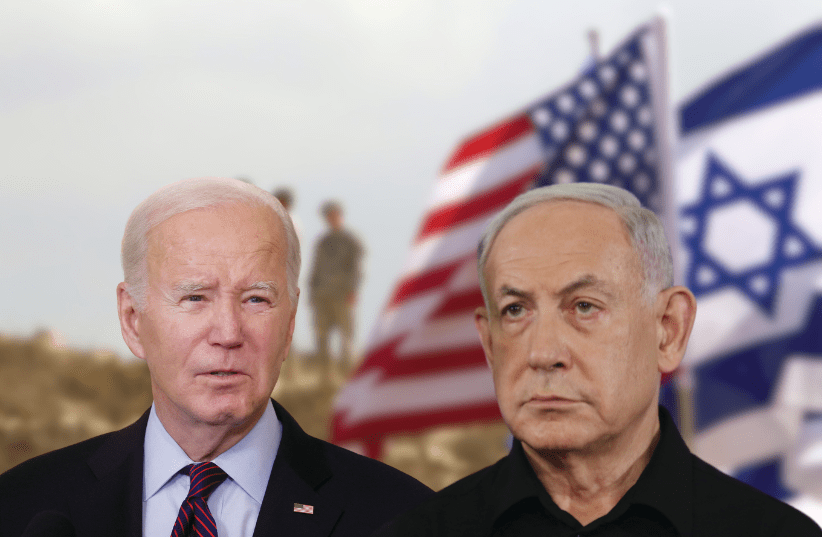
Israel Says Biden Omitted Key Detail From Gaza Ceasefire Plan, No Long-Term Truce With Hamas in Power
Israeli Prime Minister Benjamin Netanyahu on Monday said that US President Joe Biden
had disclosed only part of the proposal aimed at achieving a ceasefire
in Gaza and securing the release of Israeli hostages, and added that he
had not agreed to end Israel’s military operations against Hamas.
“The proposal contains more details that Biden did not mention,”
Netanyahu was cited in Israeli media reports as saying at the Foreign
Affairs and Defense Committee of Israel’s parliament, the Knesset.
“Biden omitted one crucial detail regarding the second stage” of the
deal, Netanyahu said. “Israel didn’t agree to end the war, but only to
‘discuss’ its end,” Netanyahu said, adding that such a discussion would
occur after the hostages were returned and “only on our terms.”
“Despite what President Biden said, the number of hostages that will
be released in the first phase has not yet been agreed upon. There are
many details in the deal, and the war will not end without us achieving
all of our objectives. We will not give up on absolute victory,” he
said.
In a speech on Friday, Biden disclosed that a day earlier, a new three-phase Israeli proposal for a hostage deal was passed onto Hamas through Qatar and detailed some of its main terms.
Biden said the deal would “bring all the hostages home, ensure
Israel’s security, create a better day after in Gaza without Hamas in
power, and set the stage for a political settlement that provides a
better future for Israelis and Palestinians alike.”
There is widespread dissatisfaction among senior Israeli officials
who feel Biden’s remarks lacked specifics on how the stated goal of
dismantling Hamas would be accomplished, fueling criticism that the US
president misrepresented the full scope of Israel’s uncompromising
stance in fully defeating the Palestinian terror group.
“People have unfortunately been led to believe that a permanent
ceasefire kicks in without Israel’s conditions being met,” senior
Netanyahu adviser Ophir Falk told The Algemeiner.
“The notion that there will be a permanent ceasefire before Hamas’
military and governing capabilities are destroyed and all our hostages
are home is a non-starter,” he added.
Hours after Netanyahu charged Biden with omitting key elements of the
deal, US National Security Council spokesperson John Kirby told
reporters: “We’re confident that [Biden’s speech] accurately reflects
that proposal — a proposal that we worked with the Israelis on, so I
know of no gaps to speak of.”
Kirby said that Biden’s decision to disclose details about the deal was “about putting some public pressure on Mr. [Yahya] Sinwar and Hamas, who have repeatedly refused to accept what Israel has put forward.”
“We don’t typically go through the details of these kinds of
proposals,” Kirby said. “But in this case, given where we are, given how
much longer the hostages have now been held, given the fact that Hamas
has reneged on several past occasions, on proposals that were sent to
them, and given the fact that the Israelis really did work hard to come
up with this proposal, and did so in good faith, the president felt it
was important for the first time to publicly lay that out.”
“This wasn’t about jamming the prime minister or the war cabinet,” he said.
The far-right flank of Netanyahu’s governing coalition has sworn to
collapse the government if a deal falls short of allowing the complete
destruction of Hamas, which rules Gaza and launched the ongoing war with
its Oct. 7 onslaught across southern Israel.
“This was about laying bare for the public to see how well and how
faithfully and how assertively the Israelis came up with a new proposal —
how it shows how much they really want to get this done,” Kirby said.
The Israel Defense Forces (IDF) on Monday confirmed the deaths of
four more hostages: Haim Perry, Yoram Metzger, Amiram Cooper, and Nadav
Popplewell, all from Kibbutz Nir Oz.
Three of the four — Perry, Metzger, and Cooper — appeared in a propaganda video released by Hamas on Dec. 18, in which the hostages urged Netanyahu “not to let us grow old here.”
According to the IDF, the four were murdered in Khan Younis shortly after the video was filmed.
Osnat Perry, the wife of Haim Perry and chairwoman of Nir Oz,
released an open letter on Monday to Netanyahu calling on him to make
the “moral, courageous, and correct decision” to bring home the
hostages.
“The outline of your proposal, as presented this week by the
president of the United States, is a sustainable and feasible outline
that can put an end to the ongoing suffering that we and our friends
from the Western Negev are experiencing,” Perry wrote.
On Oct. 7, Haim saved Osnat’s life by confronting the terrorists,
purposefully leading them outside so that she had time to run and hide. A
quarter of Nir Oz’s residents were murdered or taken as hostages to
Gaza.
Israel, United States await Hamas's response on proposed Gaza ceasefire deal
Israel agreed to a tentative
ceasefire deal laid out by Biden that calls for the release of all the
hostages, an aide to Prime Minister Benjamin Netanyahu confirmed.
Israel has accepted a framework deal
for winding down the Gaza war now being advanced by US President Joe
Biden, an aid to Prime Minister Benjamin Netanyahu confirmed on Sunday,
as Jerusalem waited for a Hamas response.
The
three-phase proposal, which Hamas has yet to accept and which the war
cabinet discussed on Sunday night, would see the return of the remaining
125 hostages.
In
an interview with Britain’s Sunday Times, Ophir Falk, chief foreign
policy advisor to Netanyahu, said Biden’s proposal unveiled on Friday,
was “a deal we agreed to – it’s not a good deal but we dearly want the
hostages released, all of them.
The proposed deal
“There
are a lot of details to be worked out,” he said, adding that Israel’s
conditions, including “the release of the hostages and the destruction of Hamas as a genocidal terrorist organization,” have not changed.
US
National Security Communications Adviser John Kirby told ABC that the
proposal itself was an Israeli one, which was transmitted to Hamas
already on Thursday night.
“We’re
waiting for an official response from Hamas. We would note that
publicly, Hamas officials came out and welcomed this proposal,” Kirby
said.
“So what
would we hope would happen is they would agree to start phase one as
soon as possible,” Kirby said, explaining that “phase one would allow
for some hostages – the elderly, sick, women – to get out over a period
of six weeks.
“While
that’s all going on, the two sides would sit down and try to negotiate
with Phase Two could look like and when that could begin,” Kirby said.
“We
have every expectation that if Hamas agrees to the proposal as was
transmitted to them and Israeli proposal that Israel would say yes,”
Kirby added.
Defense
Minister Yoav Gallant said that the defense establishment was exploring
day-after governing plans for Gaza that did not include Hamas.
“We
will isolate areas [in Gaza], remove Hamas operatives from these areas,
and introduce forces that will enable an alternative government to form
– an alternative that threatens Hamas,” he said.
He stressed that Israel would not accept the rule of Hamas in Gaza at any stage in any process aimed at ending the war.
Biden,
whose initial lockstep support for Israel’s military campaign in Gaza
has given way to open censure of the operation’s high civilian death
toll, on Friday aired what he described as a three-phase plan submitted
by the Netanyahu government to end the war.
The
first phase entails a truce and the return of some hostages, after
which the sides would negotiate on an open-ended cessation of
hostilities for a second phase, in which remaining live captives would
go free, Biden said.
That
sequencing appears to imply that Hamas would continue to play a role in
incremental arrangements mediated by Egypt and Qatar – a potential
clash with Israel’s determination to resume the campaign to eliminate
the Iranian-backed extremist Islamist terrorist group.
Biden
has hailed several ceasefire proposals over the past several months,
each with similar frameworks to the one he outlined on Friday, all of
which collapsed.
The
primary sticking point has been Israel’s insistence that it would
discuss only temporary pauses to fighting until Hamas is destroyed.
Hamas, which shows no sign of stepping aside, says that it will free
hostages only under a path to a permanent end to the war.
In
his speech, Biden said his latest proposal “creates a better
‘day-after’ in Gaza without Hamas in power.” He did not elaborate on how
this would be achieved, and acknowledged that “there are a number of
details to negotiate to move from phase one to phase two.”
Falk reiterated Netanyahu’s position that “there will not be a permanent ceasefire until all our objectives are met.”
Netanyahu
is under pressure to keep his coalition government intact. Two
far-right partners, the Religious Zionist Party and Otzma Yehudit
parties, have threatened to bolt in protest at any deal they deem would
spare Hamas.
Minister-without-portfolio
Benny Gantz, who heads the National Unity and is a member of the war
cabinet, wants the deal considered.
Hamas
has provisionally welcomed the Biden initiative, though a senior
official from the group, Sami Abu Zuhri, said on Sunday that “Hamas is
too big to be bypassed or sidelined by Netanyahu or Biden.”
A
day earlier, another Hamas official, Osama Hamdan, told Al Jazeera,
“Biden’s speech included positive ideas, but we want this to materialize
within the framework of a comprehensive agreement that meets our
demands.”
Hamas
wants a guaranteed end to the Gaza offensive, withdrawal of all
invading forces, free movement for Palestinians, and reconstruction aid.
Israeli
officials have rejected that, as an effective return to the situation
in place before October 7, when Hamas, committed to Israel’s
destruction, ruled Gaza. Its fighters precipitated the war by storming
across the border fence into Israel, killing 1,200 people and seizing
252 hostages.
In
the ensuing Israeli assault that has laid waste to much of the
impoverished and besieged coastal enclave, Hamas has reported that
36,000 Palestinians have been killed, verifying only close to 25,000
deaths so far. Israel has said that 14,000 of the fatalities are Hamas
combatants.
Officials
from the United States, Israel, and Egypt ended a meeting in Cairo on
Sunday, with Egypt sticking to its position that Israel must withdraw
from the Palestinian side of the Rafah crossing for it to operate again,
according to two Egyptian security sources.
Israel
seized the crossing on the Gaza side in May during its offensive in
Rafah along the enclave’s southern edge, angering Egypt, which said it
would stop cooperating with Israel on the crucial artery for aid into
the enclave, and evacuations out of it.
The
Egyptian security sources said Sunday’s meeting was positive despite
there being no agreement on reopening the crossing. Egypt’s delegation
at the meeting said it would be open to European monitors at the border
to oversee its operation by Palestinian authorities if they agreed to
resume work.
Israeli
and American officials said they would work quickly to remove the
obstacles to the operation of the crossing, the Egyptian sources said.
Tensions
have risen between Egypt and Israel over the takeover of the southern
border, which Israel said had been completed on Wednesday.
While
Egypt facilitated the entrance of aid through the Kerem Shalom crossing
last week, the re-opening of Rafah is crucial as humanitarian agencies
warn of looming famine in Gaza.
High Court justices demand to know why 3,000 Haredi men can’t be conscripted immediately - (That would be a fraction of the alleged "bench kvetchers" pounding the pavement on the streets of Tel-Aviv)
Israel's High Court of Justice began on Sunday morning a hearing on the contentious issue of the long-standing exemption of ultra-Orthodox men from IDF service.
The hearing could lead the court to give a final order to the state to
begin drafting haredi men, a move that could have dramatic social and
political ramifications.
The two issues at the heart of the hearing
The
hearing centered on two issues: First, whether or not the government
could continue to avoid recruiting haredi men into the IDF; and second,
whether or not the government could continue providing funding for
haredi yeshivot for students of military age who no longer had a legal
exemption from IDF service.
These
two issues were first heard on March 28. The High Court ruled following
that hearing that the government must begin drafting haredi men, and
that it could no longer provide funding for haredi students whose
exemption had expired. However, this ruling was temporary, and the
question at the heart of the hearing on Sunday was whether to turn this
temporary order into a permanent one.
Adv.
Doron Taubman, who represented the government, argued that the
government did not dispute the fact that it was legally required to
draft haredi men, and to refrain from doing so was illegal. However, the
defense ministry had the prerogative to decide when and how to enlist
these haredi men into the IDF, and that the court should not intervene.
On the issue of funding, Taubman agreed that yeshivot should not receive funding
for haredi men who ignored draft orders. However, even though the law
exempting haredi men expired, they had not actually been summoned yet,
and therefore were not violating any draft orders. The government could
thus continue issuing the funding, Taubman argued.
The
hearing was held in a packed courtroom, and in front of an enlarged
bench comprising nine justices. Some of the exchanges between the
attorneys and the judges were heated, and at a certain point Likud MK
Tally Gotliv, who sat in on the hearing but was not a side to it,
attempted to interrupt the judges and make an argument. Some statements
by Taubman were met with incredulous laughter from the crowd.
The
case was heard by an extended nine-member bench led by Interim Chief
Justice Uzi Fogelman. The judges constantly interrupted Taubman with a
number of questions. On the issue of the general exemption, the judges
pressed Taubman on whether the defense ministry could continue delaying
the exemption indefinitely. The Attorney General's Office wrote in a
submission to the court on Thursday that the IDF was prepared to draft
3,000 haredi men into the IDF until the end of 2024, and the judges
pressed Taubman on whether, for example, the defense ministry had the
legal prerogative to refrain from doing so.
Israel's
Supreme Court ruled in the famous "Rubinstein principle" in 1998 that
the government did not have the authority to exempt an entire group from
service in the IDF,
as this amounted to discrimination. A number of laws have been proposed
since then to regulate the issue. The most recent law, which granted
haredi men the ability to delay their service annually until receiving a
final exemption at age 26, expired on July 1, 2023. The government, on
June 25, decided to give itself until April 1, 2024, to come up with a
new law. With this decision having expired, there is no longer a legal
basis for the exemption.
The
hearing also touched on the government's controversial judicial
reforms, which it attempted to promote in 2023. Deputy Attorney General
Aner Hellman argued during the hearing that the government's conduct
during the case served the same purpose as the judicial reforms – to
relieve itself of the duty to adhere to the attorney general's
interpretation of the law. On at least two occasions in proceedings
relating to the case, the government approved proposals that the AG
deemed unlawful.
Torah Umesorah - The National Society for Hebrew Day Schools
Dear Mr. Trump,
We hope this letter finds you in good health and high spirits. Torah Umesorah – The National Society for Hebrew Day Schools, is dedicated to the advancement and support of Jewish education across the United States. For many years, our organization has worked tirelessly to ensure that Jewish children receive a high-quality education rooted in Jewish values and traditions.
It is with great pleasure and respect that we extend an invitation to you to be the Guest of Honor at our Annual Torah Umesorah Dinner, to be held on Rikers Island. This event is one of our most significant gatherings of the year, bringing together leaders, educators, and supporters of Jewish education from across the country.
Your presence as Guest of Honor would be an exceptional highlight of the evening. We recognize your longstanding support for educational initiatives and your contributions to the Jewish community. It would be an honor to have you join us and share your insights and experiences with our attendees.
The evening will commence with a reception at Block 45 (there are no coincidences), followed by dinner and a formal program. We would be deeply honored if you could deliver a keynote address, reflecting on the importance of education, respectful dating advice for our teenagers, and community support. We will have red hats to be distributed at the dinner for the mega donors, with the logo - "GRAB 'EM BY THE TORAH"!
Please find enclosed additional details about the event and our organization. We would be delighted to discuss any specific arrangements or accommodations you might require. Kindly let us know your availability at your earliest convenience.
We are eagerly looking forward to the possibility of welcoming you and would be grateful for your consideration of our invitation. Your participation would significantly contribute to the success of our event and further our mission to enhance Jewish education.
Thank you for your time and consideration. We hope to hear from you soon.
Warm regards,
Vaad Roshei Yeshiva - Torah Umesorah - The National Society for Hebrew Day Schools
VAAD ROSHEI YESHIVA
HaRav Hillel David
HaRav Shmuel Kamenetsky
HaRav Aryeh Malkiel Kotler
Every
period on the Jewish calendar holds some special significance, and
Sefirah is no different. No weddings, no haircuts, and — sorry, no
music. It seems that people find it particularly difficult to come to
terms with the ban on music during this time.
When I was a child,
my father owned an orchestra, and I grew up around singers and concerts,
so I totally get it. This was always a difficult challenge for me. And
clearly, I was not alone. Today we have an entire industry of a cappella
music CDs, designed specifically for the Sefirah period.
The
kinds of questions rabbanim receive during these weeks clearly indicates
an intense thirst to circumvent this restriction against music. Can I
just practice my instrument? Can I listen to music while I work out at
the gym? While traveling in the car to keep from falling asleep? What
about slow, emotional music? What if I make a siyum? And the list goes on and on. To keep away from music for just a few weeks proves to be quite the feat.
But
I want to reflect, if I may, on a message that we can all learn from
this ban against music during Sefirah. What is the practical takeaway
here?
Music’s Connection to Torah
To arrive at our point, we must first appreciate, on a more general level, music’s special place in Yiddishkeit.
The author of Pe’as Hashulchan
(in his introduction) quotes the following incredibly bold statement
made by his rebbi, the Vilna Gaon: Most secrets of the Torah can best be
understood and appreciated only through the art of music. Only music
has the unique power that enables a person to fully delve into the
profound and esoteric ideas of the Torah and properly understand them.
But how does this work? What is this profound connection between music and Torah?
Rav
Shraga Feivel Mendlowitz explained this connection. Music is more
abstract than any other art. It affects us not on an intellectual,
rational level but on a deep spiritual level. It washes over us and
affects us in ways that are impossible to explain. Think about the times
a beat has got you tapping your feet before you even realized it. Or
the way background music is used in plays, shows, or videos to heighten
every kind of emotion you can name. Why does music possess that unique
power?
Music is the most direct route to the soul. That’s its
power. That’s how it affects us. It touches us in ways we can’t find
words to express — because it enables us to connect to our neshamah. The transcendent job of a song’s melody is to open up one’s neshamah to the deeper message that is at the heart of that song.
Yaakov
Shwekey, the world-renowned singer, recalls a moving story about the
power of music he heard from the chief rabbi of Tiberias. The rabbi’s
wife was diagnosed with a rare brain tumor, and the doctors decided to
perform a very complex and dangerous surgery to try to save her. They
told her husband that if she didn’t regain consciousness by seven days
post-surgery, her chances of recovery would become extremely minuscule.
The
surgery was done and the days started to pass, and the rebbetzin was
not waking up. The rabbi and his family understandably were feeling
anxious and fearful, but there was little they could do besides pour out
their hearts in prayer. On the seventh day post-surgery, with feelings
of desperation creeping in, the rabbi passed by a marketplace on the
street where he overheard the beautiful song “Rachem” piercing the air —
the heartful, penetrating melody of a Yid pleading with Hashem to send
forth salvation.
In a spontaneous reaction, he ran into the store,
bought the CD, and made a quick dash to the hospital. With time running
out, he sprinted into his wife’s hospital room, put the headphones over
her ears, and started to play the song. His wife suddenly and
miraculously woke up at the very moment the song ended. She later told
her husband that somehow the song “Rachem” had aroused her soul,
prompting her to immediately wake up. Genuine Jewish music is truly the
song of the soul.
That, according to the Vilna Gaon, is why music is intrinsically connected to Torah understanding. Music can open a person’s neshamah, and certain profound concepts of Torah can only be appreciated and absorbed when the neshamah
has been activated in its full glory. Music can thus be used as a
medium of enabling the Torah to penetrate the soul. In other words,
music is the window to the soul, and the soul is the window to the
Torah.
Rav Shraga Feivel Mendlowitz explained that each of the instruments used to praise Hashem mentioned inTehillim 150 —
shofar, harp, and flute, among others — elicits a different emotional
response; one arouses happiness, another evokes tears, and another
encourages deep reflection. The general message here is that one must
serve Hashem with every emotion in his system.
The Radak (Tehillim 4)
explains that each chapter of Tehillim was intended to be sung with
musical accompaniment, each with its own designated instruments and
melody. The reason for this is that Dovid Hamelech composed each chapter
with the intent to arouse very specific thoughts, understandings, and
emotions.
Refreshing Our Relationship with Music
To sum up, music is the window to the soul, and through tapping into the soul, one is able to better acquire the Torah.
Now
we can return to the message of Sefirah. As an expression of mourning
over the deaths of 24,000 holy students of Rabi Akiva, we don’t listen
to music during this period of the year. But perhaps we can also take
with us a deeper message about our general relationship with music.
We
are now approaching the day of Matan Torah, that special day on which
we recommit to accepting, fulfilling, and learning the Torah. Perhaps
during the weeks leading up to Kabbalas HaTorah, we are meant to
re-invent our relationship with music as well, which will enhance our
ability to succeed in acquiring the Torah.
To renew our
relationship with music, we need a few weeks to totally disengage from
it. We need a complete reboot of our system, total abstention from all
music, to think about what real music is and isn’t. Which music is
actually soul-penetrating, which music is just noise?
Is the song
being played in my home something that helps me get more in touch with
my soul, or is it something that pulls me away? Is the deeper message of
this melody something that I want to integrate into my soul? During
this period we stop listening to all music cold-turkey in order to
reflect and perhaps refresh our relationship with it — before applying
ourselves to the ultimate soul-service, Hashem’s Torah.
Let’s all
take stock at this moment to ensure that we are utilizing the tremendous
gift of genuine soul-stirring melody, rather than being infiltrated by
the “music” loaded with impurities stemming from the outside world. Now
is the perfect time, while we prepare for Kabbalas HaTorah, to ensure
that our neshamos are properly fine-tuned, in top form, at full
strength, and ready to delight in the most sublime and exalted
existence, the holy Torah.
The movie “1506 – The Lisbon Genocide” shows a massacre against the Jews that has been forgotten. 19th April is the anniversary of the start of the massacre which for three days assassinated about three thousand Jews in Lisbon. The bonfires went as high as the houses, in a city filled with quartered bodies where heads were paraded on the points of spears.
The documentary film was made as short as possible, about 20 minutes long, so that it may be seen by everyone of all ages, even those who prefer not to watch long movies.
Research was carried out by the Community’s historical research centre and reviewed by the holder of the Alberto Benveniste Chair of Sephardic Studies of the University of Lisbon.
Identifying and combating antisemitism
Regarding the story of
the 2,000 children, the director of the Porto Jewish Museum, Michael
Rothwell, said, “This dark episode demonstrates the depths that many
went to in order to try and defeat and destroy our people."
“We
are once again living in a dark time when the Jewish people are under
attack around the world. That is why education is so important,
especially targeting young schoolchildren. They must be taught tolerance
and acceptance and how to identify and combat antisemitism,” he added.
President
of the Porto Jewish community, Gabriel Senderowicz, stated, “Today,
children react more to visual media, so it is vital to create tools that
depict with historical accuracy the pain and suffering Jews went
through in the past so they can recognize it in the present."
Addressing
the October 7 massacre, Senderowicz noted, "It is important to show the
context of current antisemitism as a continuation of what has gone
before. Sadly, there is nothing new under the sun, and even today,
Jewish children were hunted and kidnapped as we saw in the south of
Israel on October 7.”
Western
analysts think otherwise, because they are seeing Israel’s war through
the lens of America’s own failed counterinsurgency doctrines
As the Israel Defense Forces (IDF) conducts another assault in the north of Gaza, they face significant criticism from Western officials
and analysts who are asking why the IDF is repeatedly going into areas
they have already cleared and conducting further operations. Critics
claim this behavior reflects a flaw in operational design, or is even
proof that Israel’s campaign against Hamas has failed. The flaw,
however, lies in their own assumptions.
These
critics are looking at IDF tactics through the lens of Western
counterinsurgency (COIN), the doctrine that U.S. and European militaries
applied in the failed campaigns in Afghanistan and Iraq. In the “global
war on terror,” Western tactics were to seize a chunk of territory and
clear it of enemies through military force. The plan was then to hold
the territory through forward operating bases (or FOBs) and try to
conduct alternative governance in those areas while providing security.
The system of FOBs meant that our enemies, embedded in the local
civilian population, always knew where we were and what routes we were
likely to use. They could mortar, rocket, and IED us at will. It was a
recipe for endless violence and huge numbers of casualties.
In
the case of the 2023-24 Gaza war, Western critics have almost comically
misunderstood what the Israeli military is trying to do. The flaw in
Western analysis is always the same: “We wouldn’t do it that way.” Yet
the IDF has absolutely no intention of using the clear-hold-build COIN
tactics the West tried in Afghanistan and Iraq. Why would it? Those
tactics were an unmitigated disaster in both campaigns, which ended in
humiliating defeats at the hands of technologically inferior armies.
COIN
tactics are time consuming and costly. They also require huge troop
levels to “hold” ground, for years if not indefinitely. Assuming Western
doctrinal ratios of 1 soldier to every 40 civilians, Gaza would require
an enduring deployment of 50,000 combat troops, before we even consider
enabling logistics, engineers, artillery and the like. The economic
costs of mobilizing the IDF’s reservist army on an enduring basis would
be astronomical. Such tactics would also be insanely wasteful, since
Israel has a safe base on the Israeli side of the Gaza border, and can
therefore enjoy the luxury of only committing to intelligence-led
operations at times and on ground of their choosing—advantages that the
West did not have in either Iraq or Afghanistan.
So
why is the IDF repeating operations in areas that it has already
cleared—for example, in the Shifa hospital, or in ongoing operations in
Jabalia, which they struck from the air at the start of the conflict.
Critics call this approach “mowing the grass,” a phrase adopted in the
West to describe the failure to deploy sufficient troops in Iraq or
Afghanistan, leading to repeated clearances of the same areas after they
were thought to have been “cleared.” I contend that the IDF is trying
something completely different, and it makes sense.
The
IDF has absolutely no intention of using the clear-hold-build COIN
tactics the West tried in Afghanistan and Iraq. Those tactics were an
unmitigated disaster in both campaigns, which ended in humiliating
defeats at the hands of technologically inferior armies.
Israel’s
strategic aims are defeating Hamas and securing the Gaza border with
Israel to prevent a repeat of Oct. 7. “Never again is now” isn’t just an
empty slogan. IDF operational design is built around making sure Oct. 7
can never happen again. Absent the possibility of any enduring
political solution, that is simply what success looks like.
In
military terms, Hamas will not be destroyed, which means rendered
totally combat ineffective. Hamas is too numerous and too entrenched
within Gaza—where every male of fighting age is a potential future Hamas
fighter. Their cellular structure makes them hard to target, and when a
commander is killed, they have shown the flexibility to promote the
next man up. They are also mainly backing away from a fight in Gaza,
relying on booby traps, IEDs, and small arms engagements before melting
away from decisive engagements. This makes them hard to kill.
What
is possible, however, is defeating Hamas. In Western doctrinal terms,
“defeating” an enemy means reducing it to 50%-69% of its fighting
strength. As Gaza is neither a conventional war nor a counterterrorism
operation in the classic senses of each, we can frame that percentage as
the removal of Hamas’ ability to repeat Oct. 7.
So
how does the IDF plan to achieve the aim of defeating Hamas? Through a
political solution? Definitely not. No one on the international stage
has expressed any interest in helping with governance in Gaza. Nor is
there any evidence that these nonexistent partners would do anything
other than act as human shields for Hamas, making it impossible for
Israel to attack its foes when necessary. The idea that there exists
some magic device to convert any sizable number of Gazans to embrace a
political alternative to Hamas that would be in any way favorable for
Israel can be generously termed a fantasy. According to polling, 2% of
Gazans support an Israeli-backed administration. The majority want Hamas back.
Israel’s
war cabinet has received significant domestic and international
criticism for their lack of a “day after” plan for governance in Gaza,
which has been echoed in recent days by Defense Minister Yoav Gallant
and war cabinet member Benny Gantz. IDF planners are therefore faced
with designing operations to achieve a loosely defined goal, with no
clearly articulated strategic end state for the operation from their
political leadership—in part perhaps because the “end state” may be
unsatisfying to Western ears. So how have they met this challenge?
If
you look at what is possible, what the best version of “success” looks
like, and what Israel is doing, I contend that in Gaza we are seeing a
masterpiece of operational design within severe politically imposed
limitations. The IDF is not trying to clear Gaza. With no ability to
impose a political arrangement in Gaza, and a Gazan desire for continued
Hamas rule, the IDF answer is: Let them have Hamas. But the version of
Hamas that Gazans will get is one heavily degraded militarily, and, most
importantly, with vast swaths of their tunnels and civilian-embedded
infrastructure destroyed. In other words, the IDF aims to replace Hamas
3.0—the version that fought three wars against Israel and then launched
the brutal Oct. 7 surprise attacks—with Hamas 1.0, which took over the
Gaza Strip from Fatah in June 2007.
To
accomplish that end, the IDF has methodically razed what Hamas
infrastructure they could find in Gaza City, Khan Yunis, and now Rafah.
They have secured the Netzarim corridor to control freedom of movement
from south to north. It looks like they are trying to do the same thing
along the Philadelphi Corridor and Gaza’s southern border with Egypt, to
cut off the inflow of weapons and supplies to Hamas.
Facial
recognition software in controlled areas allows the IDF to stop known
Hamas commanders moving around. This posture also allows the IDF to
strike when concentrations of Hamas are identified, to degrade their
manpower, and then withdraw again: And that is what we saw at Shifa
hospital and are seeing now in Jabalia.
At
the same time, the IDF has methodically destroyed buildings to create a
1-kilometer buffer zone around the Gaza border—a measure that if
enforced would indeed prevent a repeat of Oct. 7. If Israel has its way,
nobody in Gaza is getting anywhere near the border again. However,
whether Washington will come down against this policy remains to be
seen, which is why for Israel, the key strategic goal in Gaza is
arguably to limit as much as possible the internationalization of the
Strip through fantastical plans for “the day after.”
As
things stand, the operational end state looks like significant Hamas
infrastructure is destroyed, its fighting capability severely degraded,
and the border secured, with the IDF retaining the capability to strike
into Gaza at will. All of this has occurred while shifting hundreds of
thousands of civilians out of harm’s way and minimizing innocent
casualties (Hamas’ human shield tactics aside). As John Spencer, chair
of urban warfare studies at the Modern War Institute at West Point, has
repeatedly pointed out, the efforts the IDF has made to protect civilians is unprecedented in modern urban warfare.
Both
the tactical and strategic accomplishments of the IDF campaign in Gaza
are entirely real. The operational design that allowed for these
accomplishments does, of course, come with disadvantages. First, the
destruction of civil infrastructure will require a massive
reconstruction effort. While innocent civilian deaths are real and
tragic, the almost 1-to-1 combatant-to-civilian death ratio remains very
low compared to other conflicts. Second, the Egyptians have been very
twitchy about Israeli control of the southern border.
However,
we now know why. Since the start of the Rafah operation, the IDF has
uncovered some 50 tunnels that run from Gaza into Egypt, suggesting a
high and ongoing degree of complicity between the Hamas leadership and
the military and political leadership in Cairo.
Militarily,
the IDF is hamstrung by international pressure to slow operations, and
uncertainty about what comes next in Gaza—a choice that may at least
partially lie outside of Israel’s control. For our part, Western critics
need to eat humble pie and accept that, on the evidence of the last 20
years, our tactics are not to be recommended. What we are seeing in Gaza
is not a failure. It’s a quite brilliant IDF operational design, within
the bounds of what is realistically possible.