EVERY SIGNATURE MATTERS - THIS BILL MUST PASS!

EVERY SIGNATURE MATTERS - THIS BILL MUST PASS!
CLICK - GOAL - 100,000 NEW SIGNATURES! 75,000 SIGNATURES HAVE ALREADY BEEN SUBMITTED TO GOVERNOR CUOMO!

EFF Urges Court to Block Dragnet Subpoenas Targeting Online Commenters

EFF Urges Court to Block Dragnet Subpoenas Targeting Online Commenters
CLICK! For the full motion to quash: http://www.eff.org/files/filenode/hersh_v_cohen/UOJ-motiontoquashmemo.pdf

Monday, January 13, 2025

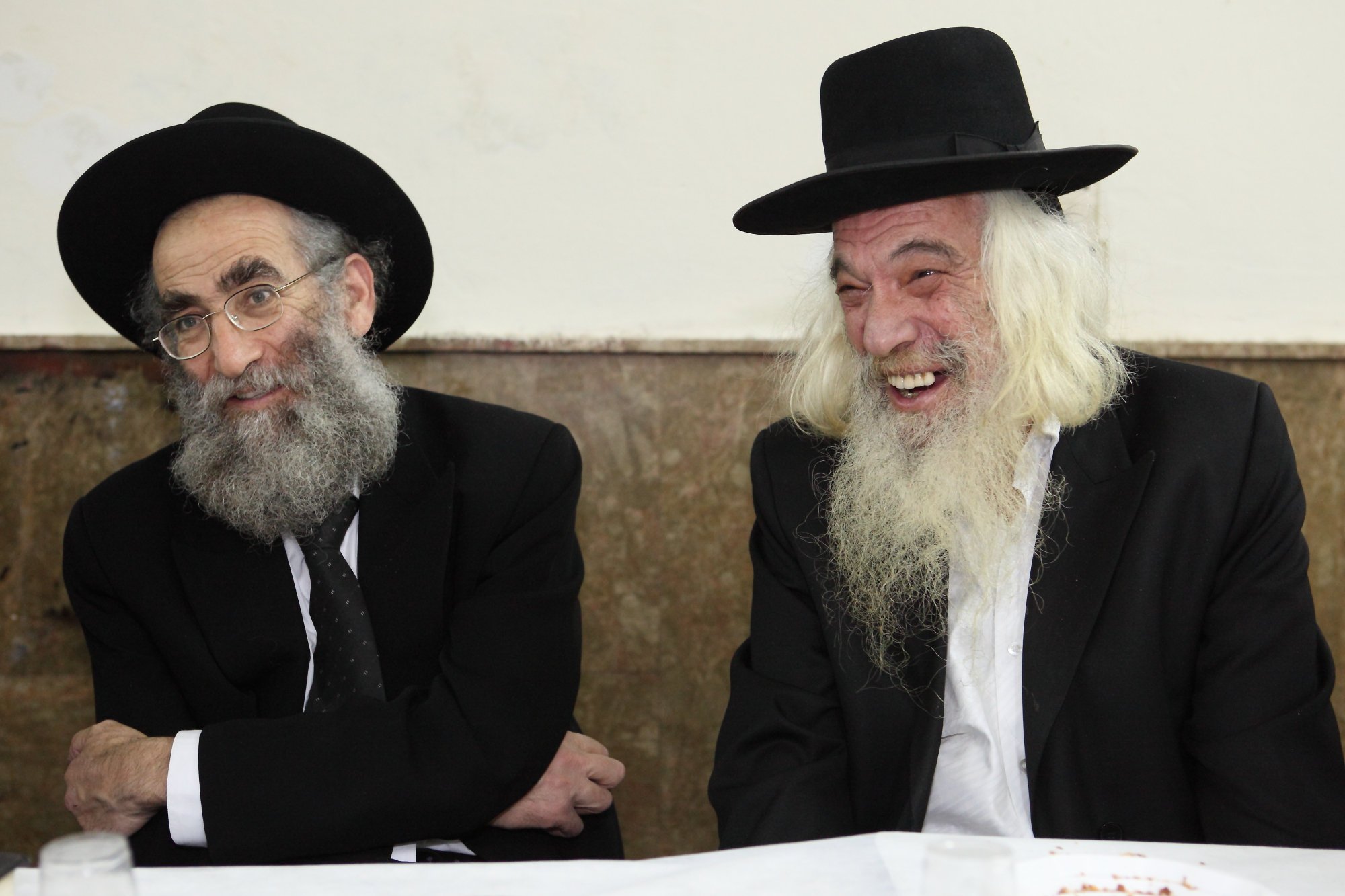
The previous government’s Independent Inquiry into Child Sexual Abuse found that the lack of regulation of unregistered educational settings – which Charedi yeshivas largely are – leaves children vulnerable to abuse. But extremist elements of our community are attempting to persuade the government to ignore these findings, brandishing the only card they have: religious exceptionalism.


Charedi leaders don’t believe their own rhetoric and neither should you


The Children’s Wellbeing and Schools Bill is urgent and does what it says on the tin: it ensures the wellbeing of all youngsters, including Charedi children


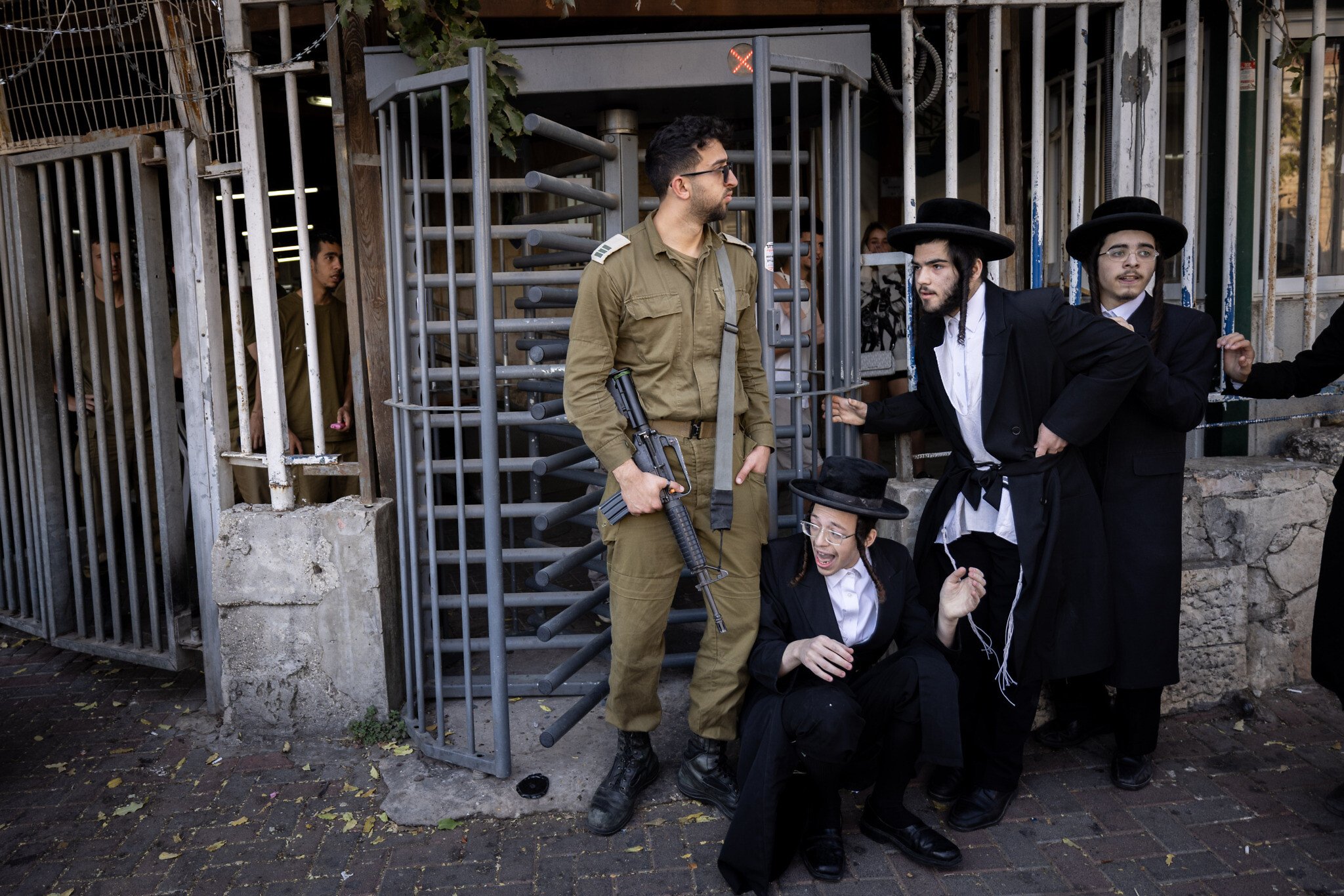
Hundreds of Strictly Orthodox Jews protested outside Westminster as MPs inside Parliament debated a bill which could outlaw the Charedi practice of educating their children in religious Jewish institutions not currently recognised by the government
 

The second reading of the Children’s Wellbeing and School’s Bill has drawn a fresh round of protests that have been both feverish and tone-deaf.

London protests were mirrored by parallel demonstrations at the British Consulate in New York, with protesters wearing black and white scrubs reminiscent of concentration camp uniforms. One widely circulated explainer of the draft Bill drew a sickening comparison between the Nazi practice of tattooing numbers on the arms of Jewish people and the Bill’s intention to allocate single unique identifiers to children, which will enable health, education, and other public services to work together to safeguard children.

The previous government’s Independent Inquiry into Child Sexual Abuse found that the lack of regulation of unregistered educational settings – which Charedi yeshivas largely are – leaves children vulnerable to abuse. But extremist elements of our community are attempting to persuade the government to ignore these findings, brandishing the only card they have: religious exceptionalism.

Determined to prevent children from accessing a basic, secular education, crowds of Charedi men and boys outside parliament have protested a bill that has children’s wellbeing at its heart, in order to undermine the wellbeing and prevent the safeguarding of Charedi children. This dismal situation should invite the urgent and critical attention of the wider Jewish community.

The regulatory improvements that this Bill provides, as they pertain to Charedi children, are simple: Yeshivas will no longer be able to continue to claim that they are not schools, despite being places of education for children of school age, and will be required to register, bringing children into line of sight of safeguarding authorities. In addition, the Bill proposes a register of homeschooled children.

It makes provisions for local authorities to ensure that parents who are genuinely educating their children at home are free to continue to exercise that right. There are also provisions to identify those who are cynically claiming to do so, when their children are, in fact, spending long days studying exclusively religious studies with no access to maths, English, or science education.

Yeshivas run on schedules that do not plausibly allow for adequate home education once the Yeshiva day has ended, even for parents who are inclined to arrange it.

This dismal situation should invite the urgent and critical attention of the wider Jewish community

Home education has long been the go-to, if implausible, explanation rolled out to explain how Charedi parents whose children are not on any school register are fulfilling their legal duty to educate their children. But those who assert that children are genuinely being homeschooled rely on challengers being inhibited in further investigating such obvious inconsistencies. They also rely on the rest of the Jewish community, who would never accept their own children suffering the indignity of such neglect, not being willing or confident enough to draw attention to the way Charedi children are treated.

The Children’s Wellbeing and Schools Bill is urgent and it does what it says on the tin: it ensures the wellbeing of all children, including Charedi children. The Bill ensures they are known to the authorities, so that they can be certain that these children have proper access to education. There is nothing controversial about supporting it. Those who ask you not to are relying on you doing a cost benefit analysis in which you attach less value to the wellbeing of Charedi children than you do to smooth inter- and intra-community relations.

What the “Yellow Star” protestors want you to forget is that ordinary Charedi parents want their children to have access to adequate schooling, but the social cost of expressing this desire is extremely high

What the “Yellow Star” protestors want you to forget is that ordinary Charedi parents want their children to have access to safe, adequate schooling, but that the social cost of even expressing this desire has intentionally been made extremely high. It is simply not safe for Charedi parents to say, out loud or in writing, that they want their children to be educated in a Jewish school where they learn as much about their faith as possible, whilst simultaneously receiving a broad and balanced secular education. On the day of the second reading, a Charedi father of eight with children in yeshivas and Charedi (registered, independent) primary schools texted me to say: “Most people want the changes, but we are scared and silenced. We are under tight control, with no freedom and no ability to voice independent opinions”.

The control this man speaks of is by design and, I argue, testifies to the lack of faith that Charedi leaders photographed protesting at the second reading have in their own rhetoric: it appears they do not believe that anyone able to make an educated choice would actually stay within the community.


https://www.jewishnews.co.uk/opinion-charedi-leaders-dont-believe-their-own-rhetoric-and-neither-should-you/

Sunday, January 12, 2025

Orthodoxies are not without their legitimate uses. We need them to make sense of the world at times. But they need to be held loosely, and be capable of adjusting to new facts. When they become ways to deny reality, to exculpate criminals, to censor dissent, and to take the souls and bodies of the least of our fellow humans, we need to re-examine them too. Before they consume more victims.

 WARNING : EXPLICIT CONTENT - NOT FOR THE SENSITIVE!

Forwarded this email? Subscribe here for more

The Price Of Orthodoxies

They can blind us to uncomfortable reality, hideous crimes, and powerless victims.

Jan 10


READ IN APP


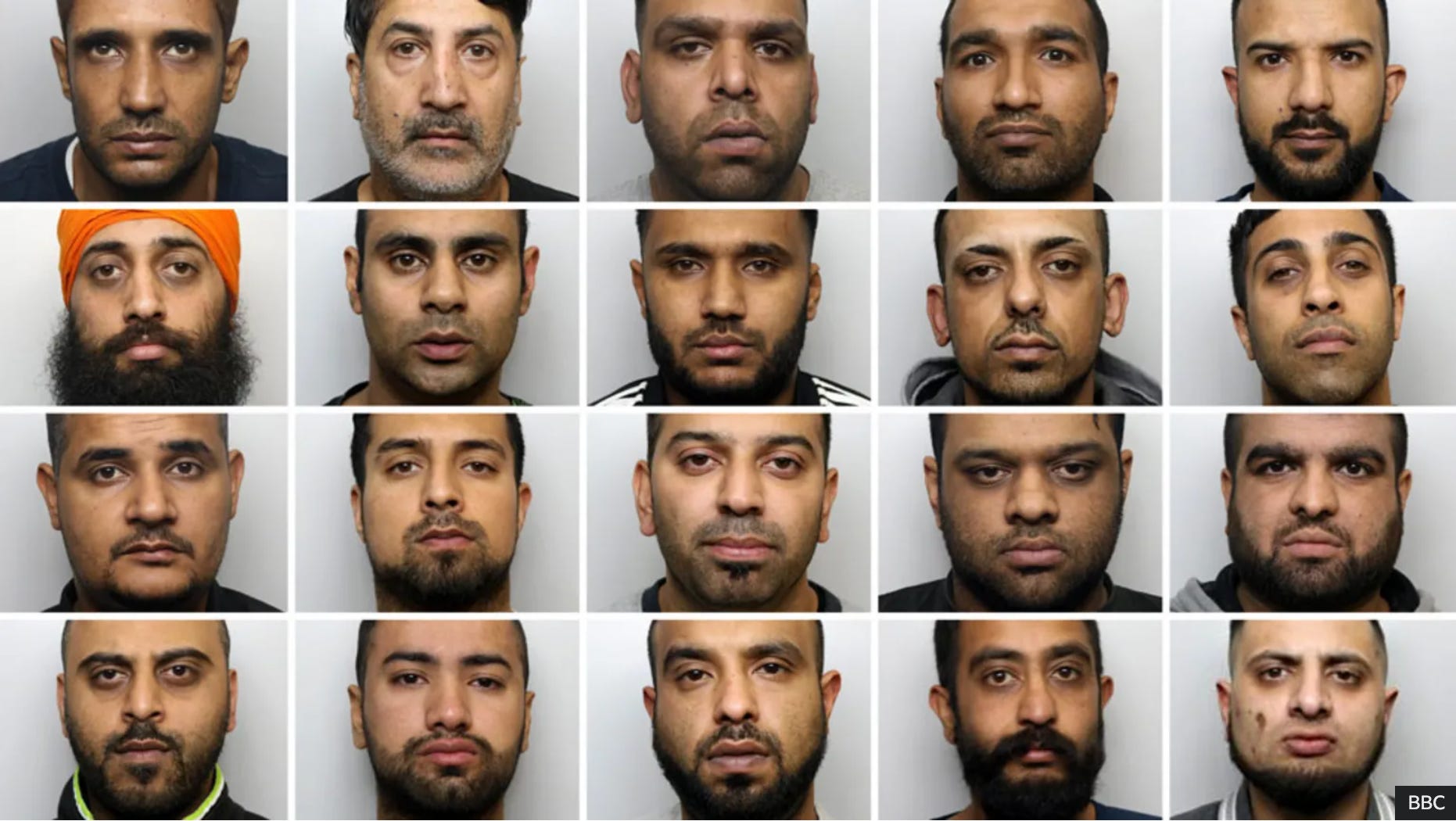
Mugshots of 20 men “found guilty of being part of a grooming gang that raped and abused girls as young as 11 in Huddersfield. The men were convicted of more than 120 offences against 15 girls.” (BBC / West Yorkshire Police)

The first response of most human beings to news of irredeemably evil acts is to ask who committed them. And if the answer makes us deeply uncomfortable, we tend to move on pronto. You see this most obviously on social media with news of an atrocity. Was the shooter white, a Democrat, a Republican, Muslim, MAGA, woke, trans? And where did the victim fit into these categories?

Our priors instantly color our moral judgment, and even our sense of the seriousness of the offense. And the temptation simply to deny what seems to be in front of our nose can be overwhelming.

As a passionate enthusiast for the Iraq War, I remember very, very distinctly when I first heard the rumors about alleged war crimes by US forces during the occupation. I assumed they were enemy propaganda and didn’t look into it any further. In November 2003, I even described Robert Fisk as “nutty” because the Spectator reported that he had “haunted the prison of Abu Ghraib ... exclusively searching for American brutality.” My view of the ethics of the US military simply precluded such barbarism. But more importantly, I didn’t want it to be true because it would destroy the entire moral rationale for the war, in which I’d invested a huge amount. It took the images of Abu Ghraib many months later for me to wake  up.

The more intense the horror, the more powerful the instinct to doubt when you first hear of it. The sex-abuse scandal in my own church first numbed and incapacitated me. It took some time for me to see the totality of what had happened, and how deeply it had destroyed Catholic moral authority. Again, when I first read about, say, the Catholic school for deaf children where a priest had picked his victims among those whose parents did not know sign language, the feeling of horror was almost too much to process at all. And as with the Bush administration’s torture policy, it took even more time to grasp how this moral rot had been enabled by the very top.

This is why, I think, the scandal of Britain’s Pakistani rape-gangs, and the institutional negligence toward tens of thousands of underage victims over several years, has had a second burst of life. A serious national inquiry on the scandal was conducted years ago (its recommendations not yet implemented). But several towns with the worst records were omitted from that inquiry; and the sheer scale and depravity of what happened has finally begun to sink in. The precipitant was Elon Musk pontificating about the scandal on X, as part of his campaign to bring down Keir Starmer.

The details are hard to absorb. Think of the hideous abuse suffered by that extraordinary French woman, Gisèle Pelicot, sedated and raped by dozens of French men, organized by her husband. Now think of that kind of organized gang-bang — but make it close to ubiquitous in some towns and the victims under-age girls: raped, brutalized, mutilated, beaten, their lives destroyed. Yes, it was that bad. Tens of thousands of rape victims across the country. This is how one British judge addressed some culprits at sentencing:

You coerced her into providing sex to vast numbers of strangers. Up to four or five men would be invited to addresses so they could have sex with her ... Threats were made to kill her ... If she resisted, she would be coerced. Customers would become angry … If oral sex was required, her head would be pushed down, her hair pulled and she would be slapped. Strangers would burn her with cigarettes. A stranger almost throttled her. One deliberately scratched her vagina with his nails. One inserted a hairbrush into her vagina.

The victim was just 13 years old. And she wasn’t unconscious. In just one town, a “conservative estimate is that approximately 1,400 children were sexually exploited” between 1997 and 2013. And in communities dominated by men of Pakistani origin, largely from the Mirpuri region of Kashmir, who held huge sway over the police and local community — just like the Catholic Church in Boston — cover-ups were routine.

Among the abuse concealed: gang-rapes of a single minor by 20 men; putting a pump into a girl’s anus so more men could penetrate her at once; and constant threats of murder of the girls or their families if anyone spoke up. In one case, a minor was arrested and charged with prostitution for having oral sex in a car with a john. When she attended her trial, she discovered that the magistrate in charge of her case was the man she’d fellated. No one knows the full number of minor girls affected, but it is in at least the tens of thousands, and possibly in the six figures.

Why was this allowed to go on for so long? For the same reason the Catholic Church covered up child rape for decades, and Dick Cheney covered up torture. Because the orthodoxies of Catholicism, of the American military, and, in this case, the multicultural experiment were respectively involved. These orthodoxies were sacred, their cultural power extreme. Catholic Boston, conservative America, and elite liberal Britain therefore defended their own orthodoxies for a very long time. And with every successful deflection of responsibility, the number of victims increased.

The truth damns the multicultural project in Britain. Rather than integrating these men of Pakistani heritage, insisting that they adopt the laws and mores of the native population, and treating them like everyone else, the UK elites celebrated cultural difference, enabled the siloing of these populations, bemoaned their own white working-class populations, and forbade any criticism of Islam. So if you called out this stuff, you were instantly called racist. After all, to accuse a non-white minority of raping white girls was a trope right out of white-supremacist fever dreams. And yes, it is a hideous racist trope — from the depths of the American South. But sometimes the trope is the truth.

In all the major cases, I’ve found no reported evidence of Pakistani or Muslim girls being groomed and raped — only poor, white natives. The justification among the rapists, moreover, was that these non-Muslims were sluts who were asking for it and beneath contempt. Racist insults were common as these girls were brutally abused. These were not just rapes, but hate crimes of a grisly sort.

It’s not true that the Brit media ignored the scandal. But it is also true that the space they gave it was trivial compared with, say, coverage of the George Floyd murder, thousands of miles away. And ask yourself: if it had been discovered that there were gangs of white nationalists singling out Pakistani-heritage girls for rape and abuse, with racist and Islamophobic slurs added for good measure, what would the media response have been? The question answers itself.

And if a white Brit had been found guilty of organizing the brutal gang-rape of a Pakistani 12-year-old girl, it’s hard to imagine him receiving a sentence of just three years. To get a sense of why the British public is pissed, it’s worth noting that last year, a white Brit was sentenced to a longer 38-month sentence for writing a social media post. More punishment for a white man’s inflammatory speech than for a non-white man’s gang-rape of a child: a near definition of wokeness. And you wonder why they call him Two-Tier Keir.

I think it’s the accumulated frustration at these things that has led to the new outburst of attention. Musk’s rescue of Twitter from woke control and censorship has allowed the story to gain new oxygen. Trump’s re-election and the collapse of woke credibility (if not power) has disinhibited many. The “racist” accusations have lost their power to silence dissenters, as the consequences of that silence have played out.

And this is a good thing for two reasons.

The first is that we haven’t had real accountability at the top for any of these atrocities. No one in the police or local government has faced legal consequences for their enabling of the gang-rapes. Many have gone on to have new careers in government. Just as the entire Catholic hierarchy escaped any legal punishment for their crimes of negligence and complicity in child abuse, so too did Dick Cheney and George W Bush bust open the Geneva Conventions only to be protected by Obama. One of the key architects of the torture regime, Gina Haspel, even became CIA director.

The second is that in all these cases, the victims were among the least powerful in the world: dark-skinned prisoners accused of terrorism, young boys whose word was usually dismissed in favor of the priest’s, and white, uncouth girls of the British underclass. I also cannot stop thinking of the countless gay and lesbian children with gender dysphoria who have been recklessly experimented on these past several years, fed lies by their doctors, and abandoned by gay and lesbian adults: all to sustain the orthodoxy of critical queer and gender theory. And you know full well that none of these cowards and quislings will ever be held to account.

So let it rip. Expose it all. After all, 76 percent of the British public want the new, more focused inquiry that Starmer just denied them: 91 percent of Reform voters, 84 percent of Tories, 71 percent of Liberal Democrats, and 65 percent of Labour voters. And don’t balk at legal prosecution of the enablers. It takes time to absorb horror, and hold it properly to account.

Orthodoxies are not without their legitimate uses. We need them to make sense of the world at times. But they need to be held loosely, and be capable of adjusting to new facts. When they become ways to deny reality, to exculpate criminals, to censor dissent, and to take the souls and bodies of the least of our fellow humans, we need to re-examine them too. Before they consume more victims.

 
The Biggest Peacetime Crime—and Cover-up—in British History
Britain’s prime minister Keir Starmer during a meeting at 10 Downing Street on December 12, 2024, in London. Starmer has come under fire this week for his role in an alleged cover-up of a serial rape scandal
The serial rape of thousands of English girls went on for many years. Few in power cared. Then Elon Musk started tweeting.
 

Friday, January 10, 2025

Most of us, as adults, live in a state of spiritual confusion and uncertainty. We rarely get to choose between good and evil but often face a frustrating choice between actions that lead to marginally better or worse consequences. Rewards for good behavior are often ephemeral, and punishment for bad decisions is mostly of our own making.


Shamsud-Din Jabbar   
Years after its zenith, ISIS has demonstrated remarkable adaptability. As an organization, it may yet grow stronger. After its territorial defeat in 2019, stated U.S. military strategy shifted its focus from counterterrorism in the Middle East toward nation-state adversaries, notably China and Russia. But the underlying conditions that first enabled ISIS’ rise in the region persist: Weak states, unstable governments, large populations of underemployed youth, and religious and ethnic conflicts all continue to create fertile ground for extremism.

Don’t Underestimate the Enduring Power of ISIS

Yellow roses wrapped in red paper lean against a wall on a brick walkway.
A memorial on Bourbon Street in New Orleans
 
Listen to this article · 7:56 min Learn more

On New Year’s Day, a confused, disgruntled and indebted veteran drove into a crowd of joyful celebrants in New Orleans, killing 14 and injuring 35 more. The assailant said shortly before the attack that he had joined the Islamic State, the brutal terrorist movement that at one point controlled an area in the Middle East the size of Britain.

In its heyday, ISIS marketed itself as offering what one fighter called a “five-star jihad,” promising recruits a paradoxical mix of religious authenticity and material rewards, from free housing to a glamorous new identity to access to wives. At its height, it was the wealthiest terrorist organization in modern history.

Today, while the ISIS caliphate is gone, the group has cells and affiliates scattered across Africa, Southeast Asia, Afghanistan and Syria. It maintains an active online presence, and is still a threat: With the fall of the Assad regime in Syria, the authorities are concerned about a potential resurgence by ISIS there, while an offshoot in Afghanistan, ISIS-K, claimed responsibility for a significant attack last year in Russia and is believed to be behind another in Iran.

But the twisted heart of the utopia ISIS was trying to build, and all that it claimed to offer, no longer exists. So why would the group’s extreme ideology — rejected by the overwhelming majority of the world’s Muslims — appeal to a down-on-his-luck American veteran, five years after the caliphate’s fall?

For 20 years, I’ve been studying Western recruits to domestic and transnational terrorist organizations. I’ve interviewed jihadis, white-nationalist terrorists and eco-terrorists to understand their motivations and to prevent future violence. In my view, the appeal of some of the most crucial elements that ISIS offered to vulnerable or confused Western recruits — doctrinal certainty, identity, redemption and revenge — is as strong as ever, and will continue to resonate with people who can find it online.

Most of us, as adults, live in a state of spiritual confusion and uncertainty. We rarely get to choose between good and evil but often face a frustrating choice between actions that lead to marginally better or worse consequences. Rewards for good behavior are often ephemeral, and punishment for bad decisions is mostly of our own making.

To some, ISIS offered a seductive alternative: moral certitude, backed by brutal enforcement. From 2013 to 2019, an estimated 53,000 fighters from 80 countries traveled to ISIS-held territories in Syria and Iraq to be a part of what the group sold as an idealized Islamic state. An estimated 300 individuals from the United States either made their way to ISIS-held territory or tried to. Some foreign fighters became notorious for perpetrating the caliphate’s worst atrocities.

For sympathizers unable to make the journey, ISIS’ chief spokesman, Abu Muhammad al-Adnani, called for supporters around the world to attack nonbelievers at home. In a September 2014 speech, Mr. al-Adnani said that if you are unable to bomb or shoot the enemy disbeliever, “smash his head with a rock, or slaughter him with a knife, or run him over with your car.” ISIS sympathizers began undertaking such vehicle attacks, including a truck assault in Nice, France, in 2016 that killed 86 people and injured 450. It was followed by many others.

In the last few hours before his suicidal rampage in New Orleans, the attacker, Shamsud-Din Jabbar, posted about his plans on Facebook. Perhaps the most telling recording was his confession that he had considered harming his family. “I don’t want you to think I spared you willingly,” he said. But Mr. Jabbar apparently worried that if he hurt only his family, news headlines might not focus on the “war between the believers and disbelievers” that he thought was taking place.

In my work, I have found that self-recruited, lone-actor terrorists are often motivated at least as much by personal grievance as their claimed ideals. In one recent study, many former violent extremists said that underlying social and emotional distress was as strong a factor in their radicalization as intellectual or religious adherence to extremist ideologies. Most reported having a history of mental health problems, such as depression, and suicidal ideation was common.

Obviously, most people experiencing a mental-health crisis do not become lone-actor terrorists. But there is often so much distress in individuals carrying out attacks on their own that it is reasonable, in my view, to think of lone-actor terrorism as a crime of despair.

There is no single pathway into violent extremism, but many of the risk factors I’ve observed in my research seem to apply to Mr. Jabbar. He was a veteran who appeared to be having difficulty adjusting back to civilian life. He had been divorced for the third time. He had run-ins with the law. He may have been deeply distressed over his financial burdens. Revenge against his family — and a world that had disappointed him — appears to have been a significant part of his underlying motivation, with his allegiance to ISIS providing a perverse spiritual gloss.

The persistent appeal of ISIS in America was evident in a disturbing series of alleged plots in the last year alone: the arrest of an Afghan in Oklahoma accused of conspiring to commit an attack on Election Day; the arrest of an Arizona teenager accused of planning an attack on a Pride parade using a remote-controlled drone armed with explosives; the indictment of a Houston man on charges of attempting to provide material support to ISIS; and the arrest of an Idaho teenager accused of plotting to attack churches on behalf of ISIS. In December, the F.B.I., the National Counterterrorism Center and Department of Homeland Security warned law enforcement that pro-ISIS messages were calling for attacks at large holiday gatherings, pointing out the previous use of vehicles to ram victims.

Years after its zenith, ISIS has demonstrated remarkable adaptability. As an organization, it may yet grow stronger. After its territorial defeat in 2019, stated U.S. military strategy shifted its focus from counterterrorism in the Middle East toward nation-state adversaries, notably China and Russia. But the underlying conditions that first enabled ISIS’ rise in the region persist: Weak states, unstable governments, large populations of underemployed youth, and religious and ethnic conflicts all continue to create fertile ground for extremism.

No single solution exists for preventing terrorist attacks. But actions can be taken to reduce their impact, as well as their frequency. For cases like New Orleans, prevention is critical.

Perpetrators of targeted violence often “leak” their intentions ahead of time to family, friends, social media and even to the authorities, creating the opportunity for communities to step in to help people who are at risk. One approach to preventing violence like the attack in New Orleans builds on public-health models that aim to reduce the rates of suicide, domestic violence and drunken driving. For it to prevent terrorist attacks, the authorities have to educate the public about the importance of bystander reporting and “off ramps” from violent radicalization.

The New Orleans attack serves as a grim reminder that the ISIS digital caliphate is still able to transform personal crises into public tragedy. The alarming reality is that many other people remain vulnerable to similar paths of radicalization.

https://www.nytimes.com/2025/01/09/opinion/isis-new-orleans-attack.html


Israel Suffered Over 18,000 Terror Attacks in 2024, New Government Report Says


Israeli forces stand near the scene of a shooting attack in Jaffa, Israel, Oct. 1, 2024

Israel endured over 18,000 terrorist attacks last year in which nearly 150 people were killed as the Jewish state faced an onslaught of terrorism from seven fronts in the Middle East, according to a new Israeli government report.

The National Public Diplomacy Directorate in the Israeli Prime Minister’s Office on Thursday released its annual “Summary Report on Terrorism Against Israel” for 2024. The report gathers information and data from the Israel Defense Forces (IDF), Israel Police, the Israeli Security Agency (ISA), and the emergency and rescue authorities.

In total, there were 18,665 terrorist attacks in Israel last year in which 134 people were murdered and another 1,277 were injured. A summary of the report noted that Israel “was attacked from seven fronts: Iran, Lebanon, Syria, Gaza, Iraq, Yemen, and from within Israel.”

MORE: https://www.algemeiner.com/2025/01/09/israel-suffered-over-18000-terror-attacks-2024-new-government-report-says/


Thursday, January 09, 2025

Bnei Torah continues to lead an uncompromising battle against the drafting of Haredi men, including those not learning in yeshiva. Bnei Torah also has a daily mouthpiece called Hapeles, or Leveler in English, which advances the party’s political agenda — namely, not serving the country.


Till death do them part: After top rabbi dies, power struggle blazes at elite Haredi yeshiva


The split at Ponevezh Yeshiva runs so deep that it delayed the head rabbi’s funeral last month, but when it comes to the army, the question is not ‘if’ but ‘how’ to evade the draft

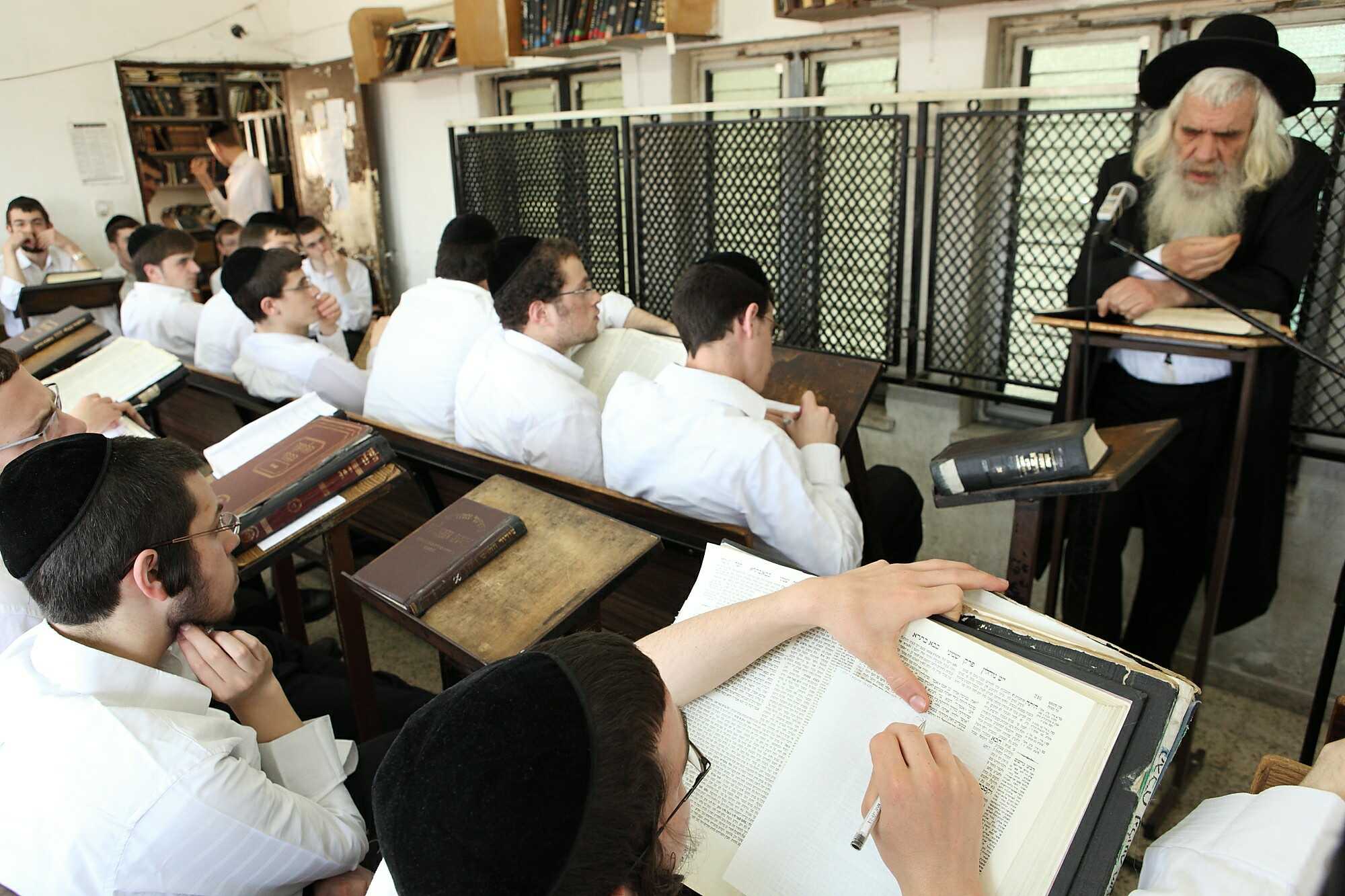
Rabbi Asher Deutsch teaches a class in Ponevezh Yeshiva in Bnai Brak in an undated photo. (Givat Hayeshiva)
Rabbi Asher Deutsch teaches a class in Ponevezh Yeshiva in Bnai Brak 
 

A sacrilegious tug-of-war over the body of a brilliant Talmud scholar and firebrand as he was being brought to rest has unleashed a new bout of violence in a decades-old power struggle at Ponevezh Yeshiva, where young men belonging to the intellectual elite of the Haredi community are educated.

Divisive in his lifetime, the head rabbi of Ponevezh, Rabbi Asher Deutsch, was no less so in his death.

On December 16, Deutsch’s body awaited burial at his apartment at Rabbi Wasserman Street 5 in Bnei Brak, a short walk from Ponevezh Yeshiva. Ponevezh is the Haredi equivalent of an Ivy League university where Deutsch taught since 1988.

Meanwhile, two warring yeshiva factions bickered over where to bury his remains.

Deutsch’s detractors, aligned with Rabbi Eliezer Kahaneman, the 77-year-old grandson of Ponevezh’s founder — and who has property rights over most of Ponevezh’s assets, including the Ponevezh Cemetery — opposed allowing Deutsch’s burial anywhere in the cemetery, let alone in the VIP section.

Deutsch’s supporters, led by 77-year-old Rabbi Shmuel Markovitz, who is married to Kahaneman’s sister, insisted that Deutsch’s body be buried in the section of Ponevezh Cemetery reserved for the yeshiva’s most illustrious rabbis.

A secular former judge was called in to mediate.

Retired Jerusalem District Court judge David Cheshin, who was born into a well-connected Haredi family and speaks Yiddish but left religious observance after IDF service, has been serving as mediator in a myriad of conflicts between the two brothers-in-law for three years.

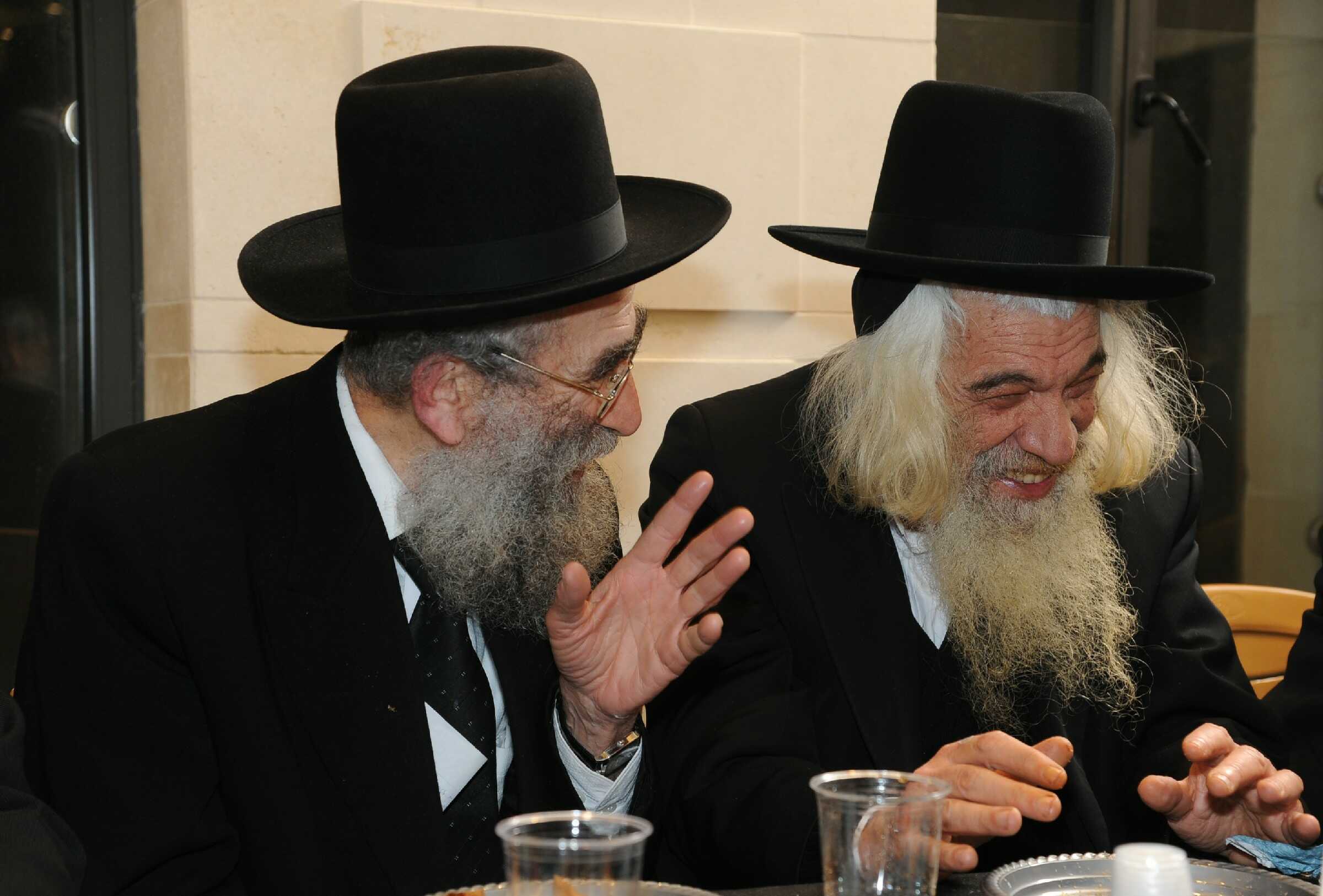
Rabbi Shmuel Markovitz, left, and Rabbi Asher Deutsch in an undated photo. (Givat Hayeshiva)

As the recitation of Psalms by tens of thousands of Deutsch’s students, followers and admirers through a vast PA system dragged on, Cheshin called an impromptu Zoom meeting that brought together representatives of the Deutsch family and representatives of Kahaneman and Markovitz in an attempt to reach a compromise that would enable Deutsch’s body to be laid to rest in a dignified manner.

The hatchet was not buried

After over two hours of back-and-forth, Cheshin finally got the sides to agree that Deutsch would be buried in Ponevezh Cemetery, but not in the coveted “Tet” section, but rather in the neighboring “Yud” section.

But even after Cheshin’s ruling and Deutsch’s subsequent burial, the sides remained split over whether or not Deutsch ended up buried in the plot agreed upon in Cheshin’s arbitration decision.

Kahaneman’s camp said in an affidavit written on December 25 that Deutsch’s followers buried him in the Tet section in a stolen plot in direct violation of the agreement.

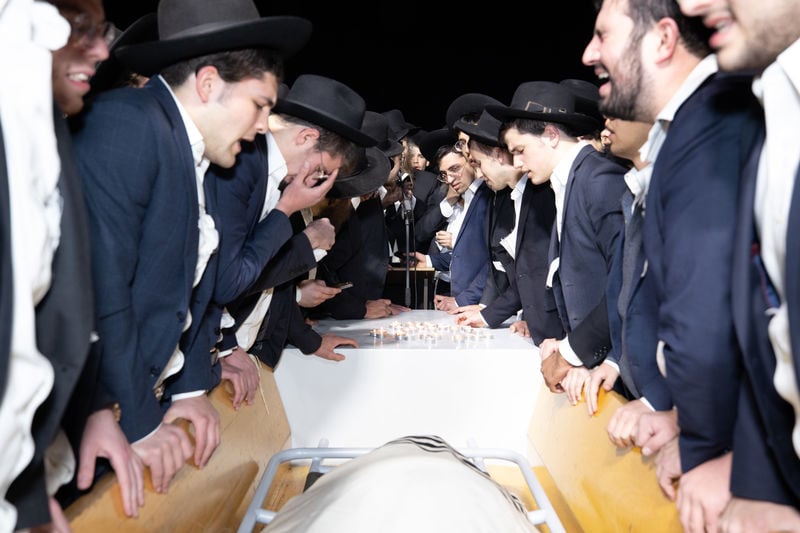
Students cry over the casket of Rabbi Asher Deutsch, head rabbi of Ponevezh Yeshiva, in Bnai Brak, December 16, 2024

Markovitz’s camp responded in an affidavit on January 2 that it was Kahaneman who attempted to renege on the arbitration agreement and that Deutsch was buried as stipulated in Cheshin’s ruling.

The bickering escalated during Deutsch’s shiva — the seven days of ritual mourning following burial.

Yeshiva students from Markovitz’s camp hurled metal lecterns at Kahaneman, his son Yosef and members of the Kahaneman camp and used a fire hose to disrupt a Torah lesson, according to Kahaneman’s affidavit, which said that rabbis and students needed medical treatment.

Both sides accused the other of brandishing pepper spray and tear gas during the altercations.

An aide to Markovitz who asked to remain anonymous blamed Yosef Kahaneman for provoking the violence by bragging that Deutsch would soon be disinterred from the “stolen” grave.

The aide condemned the violence, which he said hurt Markovitz’s cause, adding those responsible, if found, would be expelled from Ponevezh.

A former Ponevezh student aligned with Kahaneman who is familiar with the recent turmoil and asked to remain anonymous, denied that Yosef Kahaneman threatened to disinter Deutsch.

Rabbi Asher Deutsch teaches a class in Ponevezh Yeshiva in Bnai Brak
 

Brothers in (not bearing) arms

The newest ignominious chapter in Ponevezh’s long-running power struggle takes place against the backdrop of an unprecedented public outcry over sweeping exemptions from mandatory military service for some 66,000 military-age yeshiva men — some 4,000 of whom at Ponevezh — as the manpower-strapped IDF fights a multi-front war that is the longest in Israel’s history.

Both sides of Ponevezh’s conflict are aware of how media coverage hurts their public image and are particularly concerned about the negative impact on their fundraising efforts, which is a major source of the yeshiva’s budget.

But spokesmen from both sides, convinced of the rightness of their respectful causes, talked not of contrition, but of the proper framing of the conflict so that the worthiest side — their own — is given fair media coverage.

Illustrative: Rabbi Shmuel Markovitz addresses students at Ponevezh Yeshiva
 

“It’s really bad timing for Rabbi Deutsch to pass away and have this ugly fight come to the public’s attention now,” admitted a spokesman for Kahaneman’s camp. “But what choice did Rabbi Kahaneman have? Should he have given in and let Rabbi Deutsch be buried next to the Rabbi of Ponevezh [Yosef Shlomo Kahaneman] or next to Rabbi David Povarsky in the place reserved for his son, the present dean, Rabbi Baruch Dov Povarsky?”

“It wouldn’t have ended at that. We have 30 years of experience with them. They [Markovitz’s camp] are a problematic bunch who seek out conflict and strife and violence. We can’t give in to them every time,” he said. “Rabbi Kahaneman tried to prevent them from setting precedents in the cemetery so there won’t be fights all the time there too.”

Meanwhile, a Markovitz spokesman said that his camp was battling for the integrity of the yeshiva.

“We are fighting to protect the continuity of Ponevezh Yeshiva as envisioned by its founder [Rabbi Yosef Shlomo Kahaneman],” said the Markovitz spokesman. “Rabbi Markovitz was the faithful servant of Ponevezh’s former deans Rabbi Elazar Shach, and Rabbi Shmuel Rozovsky and its spiritual advisors. He is the torchbearer of their legacy and he is the worthiest to lead Ponevezh.”

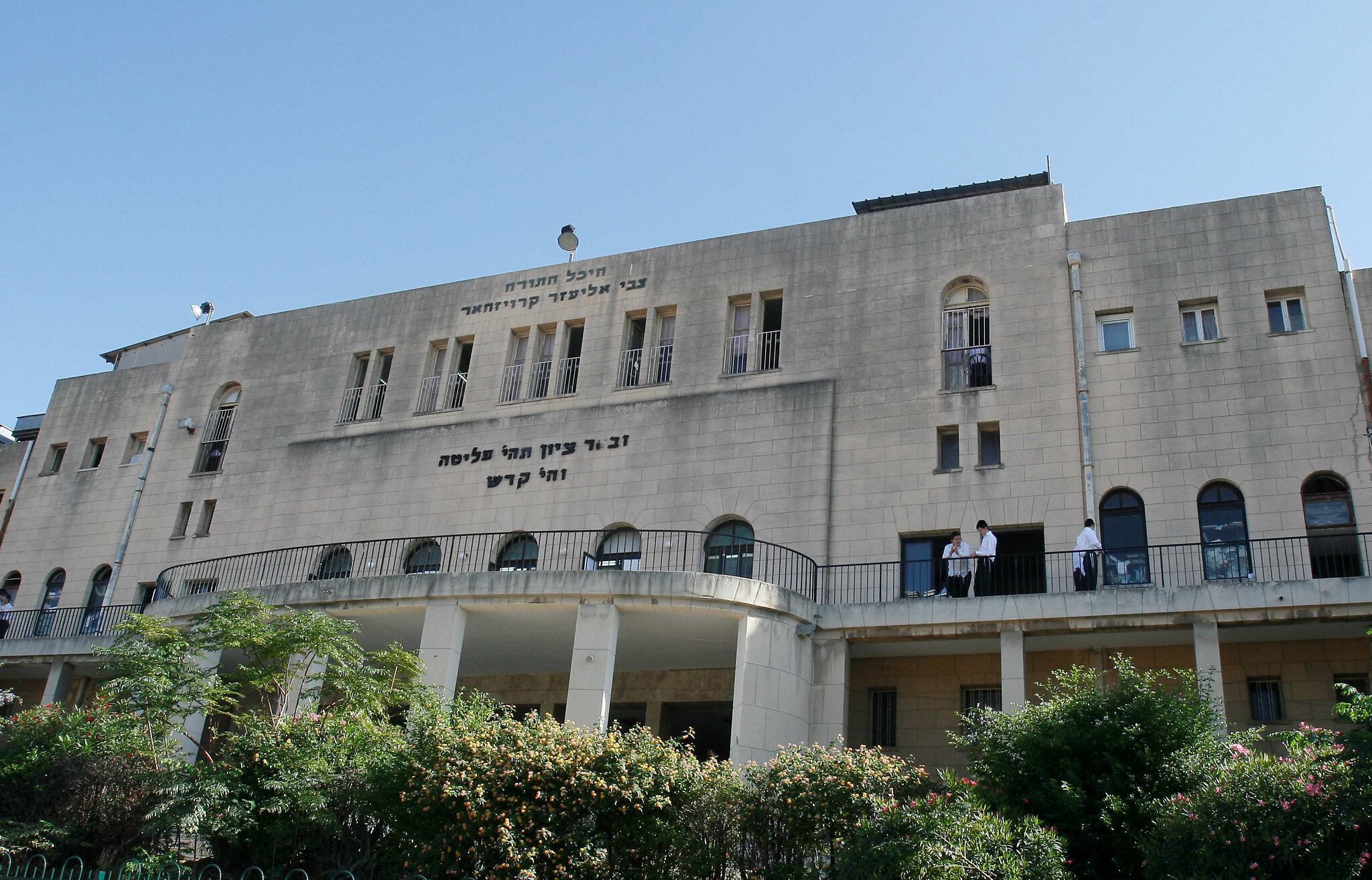
Exterior of the Ponevezh Yeshiva in Bnai Brak


A separate peace?

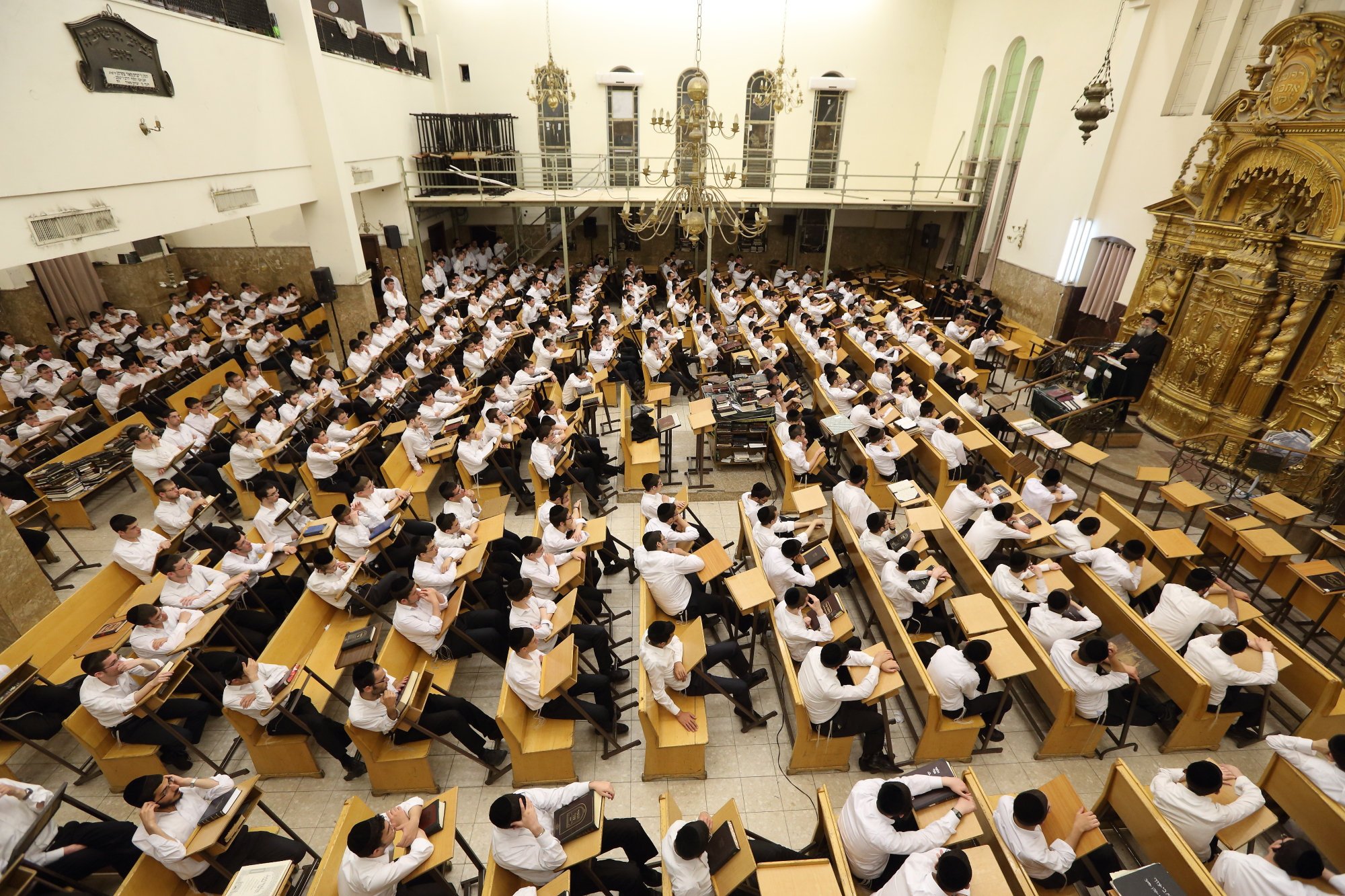
A tense truce now reigns at “Yeshiva Hill,” the name used for the complex of offices, study halls and dormitories where 2,500 unmarried young men aged 18 and up and another 1,500 married men spend as many as 18 hours a day learning Talmud.

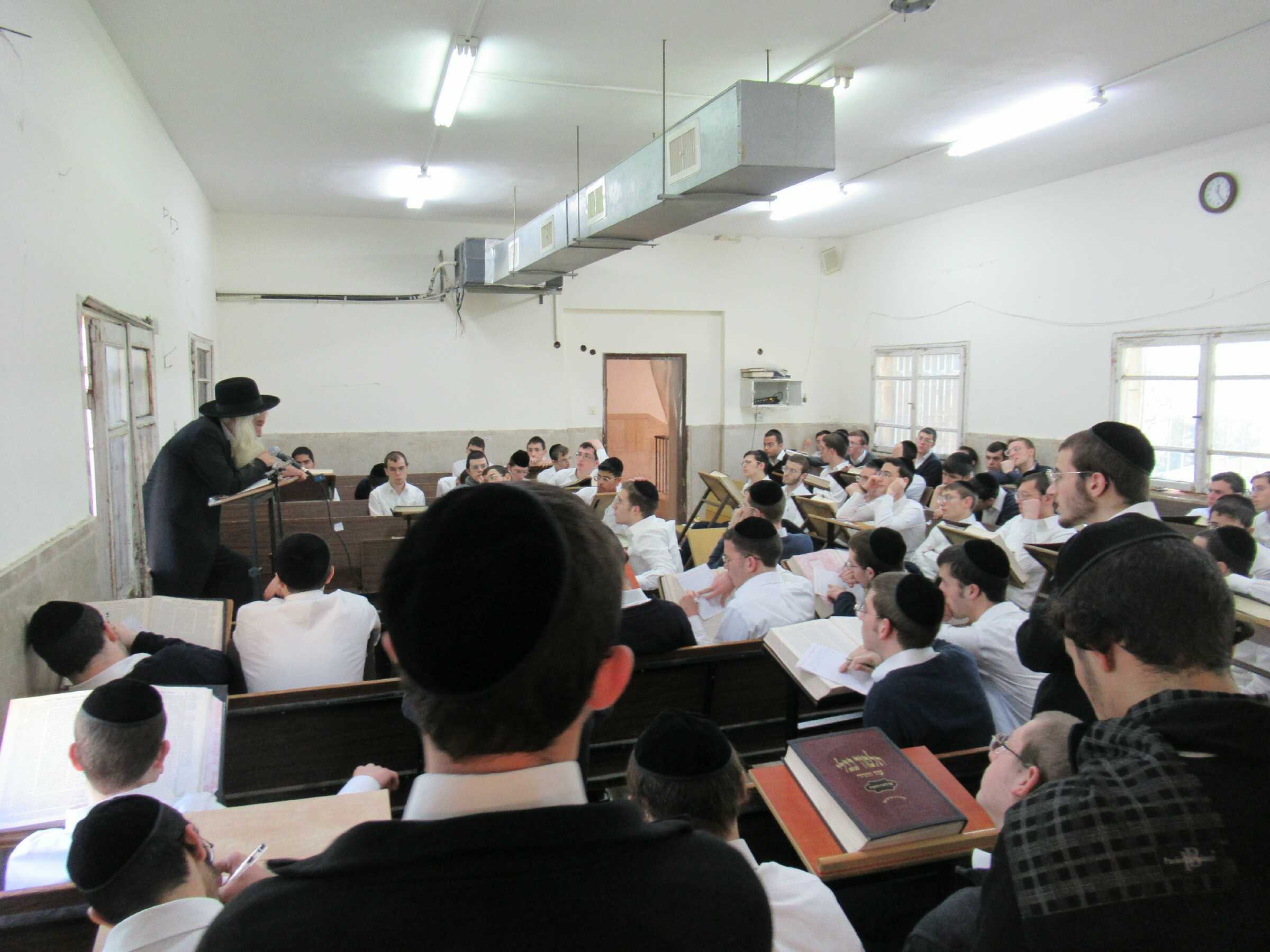
During a recent visit to Ponevezh, The Times of Israel saw hundreds of young men enthusiastically debating the intricacies of ancient rabbinic arguments and the myriad commentaries on these debates in Ponevezh’s main study hall, which is adorned by a large and ancient gilded Ark inscribed with the verse from the book of Ezra “To exalt the house of God.”

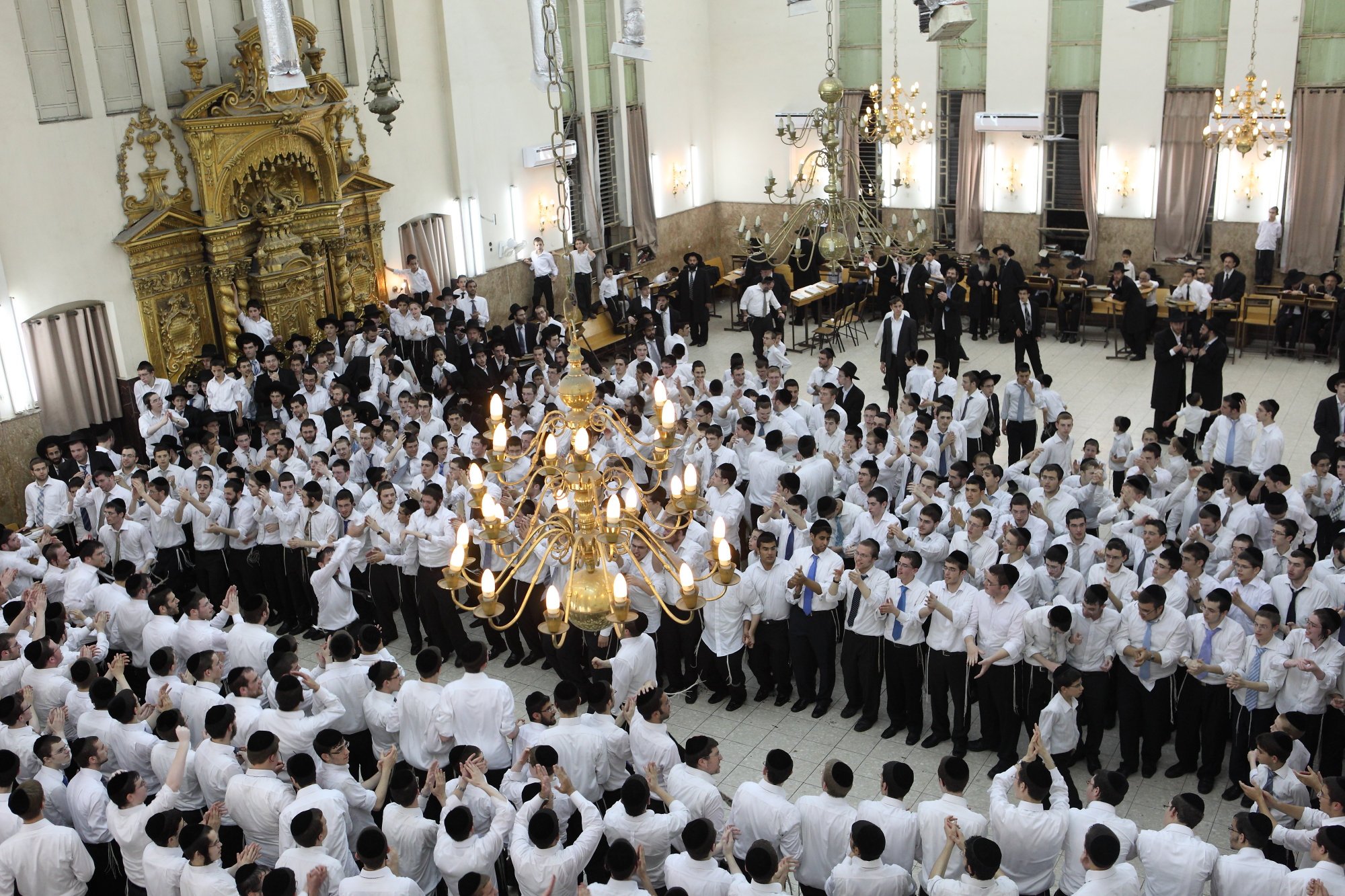
Ponevezh Yeshiva students dance at the end of the Jewish holiday of Simhat Torah in Bnei Brak, near Tel Aviv

The hall is split down the middle by an imaginary boundary. Markvotiz’s faithful, known in the Haredi world as “m’chablim,” or terrorists, sit to the left of the Ark, Kahaneman’s followers, called “sonim,” or haters, sit to the right.

M’chablim and sonim also have separate dormitories.

There is little if any day-to-day interaction between the m’chablim and the sonim. Ponevezh has effectively split into two distinct institutes of learning under the same roof using the same buildings.

M’chablim and sonim said they were educated from a young age to identify with their respective camps. Over the course of more than two generations of conflict, the warring sides have set up separate elementary schools, as well as yeshivas for those not accepted to the flagship Ponevezh. There are also separate educational institutions for the females of the respective camps.

Today, said the students, who asked to remain anonymous, there is little if any intermarriage between the sides in order to avoid unnecessary family conflicts — except for “30-year-old bachelors that are desperate to marry.”

Asked to describe their ideological differences, a group of sonim said they had a more tolerant attitude to secular Israeli society while the m’chablim were more extreme.

 Haredi men clash with police during the funeral of Rabbi Gershon Edelstein, head of the Ponevezh Yeshiva and spiritual leader of the Degel HaTorah party, in Bnei Brak

“They don’t even show up at the IDF induction office to ask for a deferral, while we do,” said one of the students. “They take part in demonstrations against the draft, while we don’t demonstrate, and when secular female tourists visit Ponevezh, the m’chablim scream at them ‘shiksa’ [a pejorative for a non-Jewish woman]. They are more aggressive, but except for a few guys on the fringe they are not violent.”

Meanwhile, members of the m’chablim took pride in the fact that they had no political representation in the Knesset. They said that members of the group did not vote in recent elections.

In the eyes of the m’chablim, Degel HaTorah, a party with seats in the Knesset that represents non-Hassidic, Lithuanian ultra-Orthodoxy, is not zealous enough in its defense of yeshiva students’ right to exemption from military service.

“The Degel representatives that were sent to the Knesset are under too much pressure to compromise, they can’t really fight for maintaining the status quo providing Haredim with exemption from military service, so it’s better not to be there,” said a member of the m’chablim.

Ponevezh Yeshiva head Rabbi Asher Deutsch, right, and Rabbi Shmuel Markovitz

Deutsch was a rare combination of erudite scholar and teacher intimately familiar with the vast corpus of Talmud and a charismatic political leader with the moral authority to mobilize tens of thousands.

As a teacher at Ponevezh, Deutsch was known for his intricate Talmudic lessons geared toward Ponevezh’s advanced students during which he would lose track of time and would have to be reminded by students to conclude.

Deutsch was also a pragmatic political leader who co-founded with the late Rabbi Shmuel Auerbach the Bnei Torah political party, also known as the Jerusalem Faction, which split the non-Hassidic Orthodox community and ran in a number of municipal elections.

Bnei Torah continues to lead an uncompromising battle against the drafting of Haredi men, including those not learning in yeshiva. Bnei Torah also has a daily mouthpiece called Hapeles, or Leveler in English, which advances the party’s political agenda — namely, not serving the country.

https://www.timesofisrael.com/till-death-do-them-part-after-top-rabbi-dies-power-struggle-blazes-at-elite-haredi-yeshiva/

Wednesday, January 08, 2025

Time To Put This Guy Away Permanently! Rabbi Yosef stated because a gay man is serving as Knesset speaker, the government lacks "Siyata Dishmaya" (divine assistance)


Rabbi Yosef claims gay Knesset speaker blocking ultra-Orthodox draft law


The spiritual leader of Shas attributes the government's failure to pass ultra-Orthodox military exemptions to Amir Ohana's role as Knesset speaker, while his office denies he made such statements.


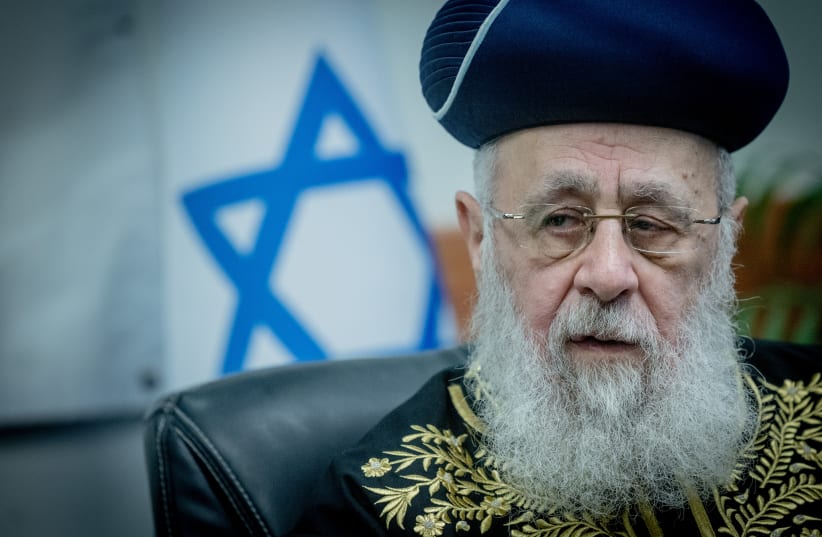
 Sephardi Chief Rabbi Yitzhak Yosef sells the hametz (leavened food) of the State of Israel to Arab Israeli Mr Jaber before the upcoming Passover holiday in Jerusalem, April 21, 2024. (photo credit: Chaim Goldberg/Flash90)
Sephardi Chief Rabbi Yitzhak Yosef

Former Chief Rabbi and spiritual leader of Shas, Yitzhak Yosef, has claimed that the reason the government is failing to pass the ultra-Orthodox draft exemption law is that Knesset speaker MK Amir Ohana is an openly gay man, Army Radio reported on Monday.

According to Army Radio, Rabbi Yosef stated because a gay man is serving as Knesset speaker, the government lacks "Siyata Dishmaya" (divine assistance)

He reportedly expressed this sentiment multiple times.

"The Rabbi does not comment on such matters where silence is preferable,” The office of the Rishon LeZion Rabbi Yitzhak Yosef responded in a statement.

“Any publication on this matter is based on falsehood."

Ohana became the first openly gay man to be appointed minister in the Knesset in 2019, when he served as Justice Minister, and is currently the first gay Knesset speaker.

Ohana has yet to respond to the report. 


https://www.jpost.com/israel-news/politics-and-diplomacy/article-836378?

Tuesday, January 07, 2025

The IDF has previously told Katz that it can handle drafting 100% of those turning 18 within a year and a half. This past year, some 70,000 Haredi males were listed as eligible for military service.

First 50 ultra-Orthodox soldiers drafted to IDF’s new Haredi brigade


Military hails ‘significant milestone,’ says another 100 older Haredi men join Hasmonean Brigade’s first reservist company


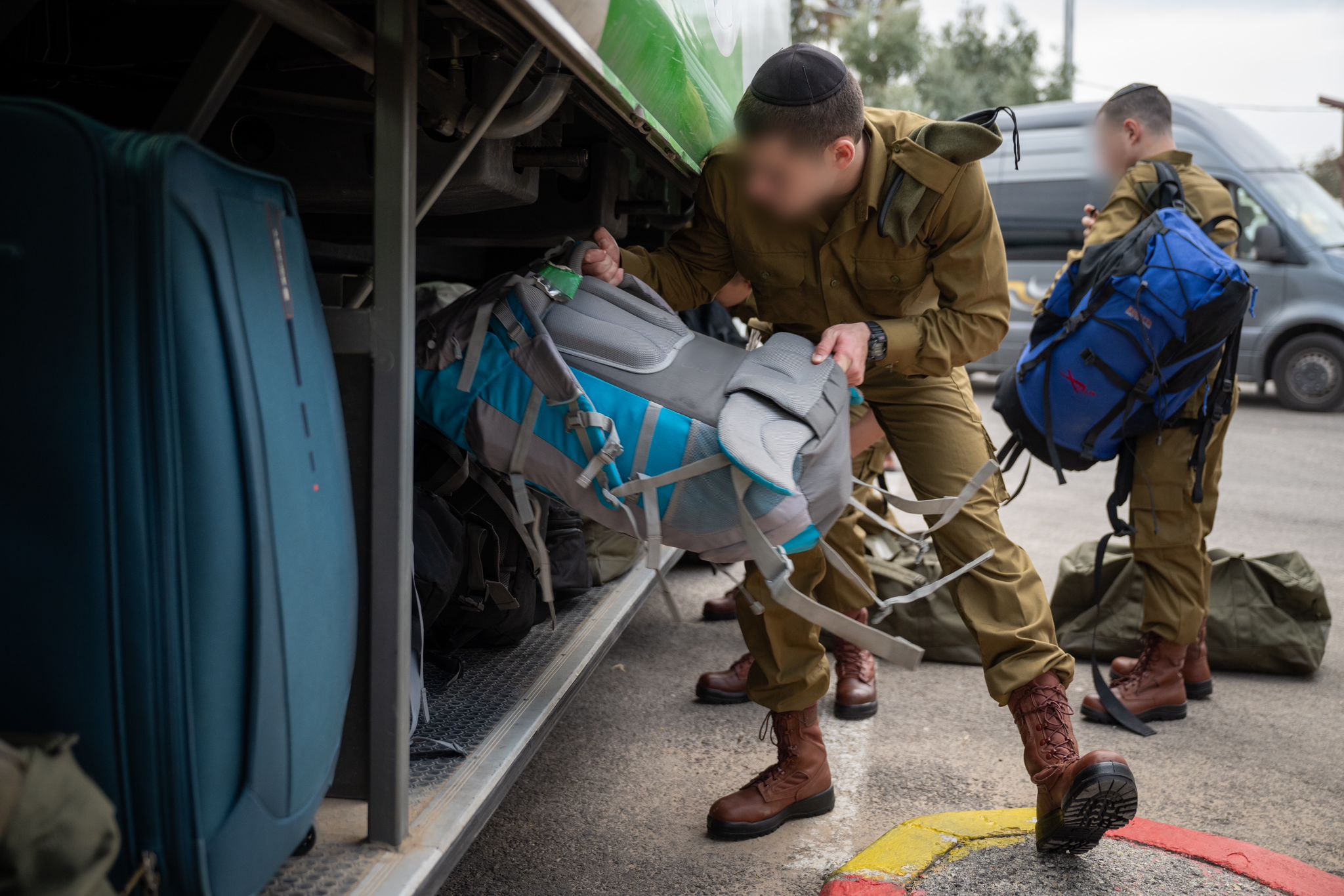
Ultra-Orthodox soldiers draft to the IDF's new Haredi brigade, known as the Hasmonean Brigade, January 5, 2025. (Israel Defense Forces)

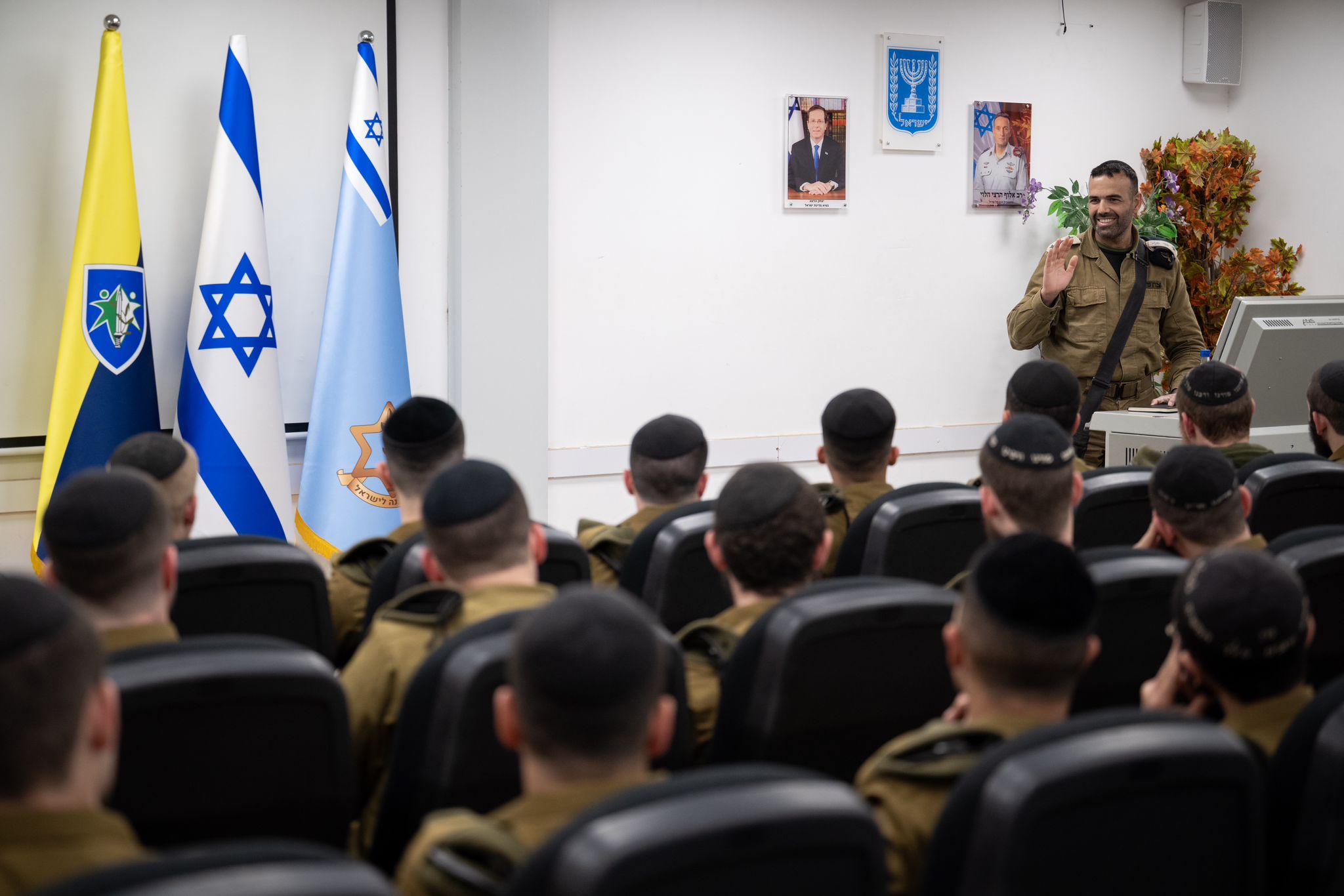
The first 50 ultra-Orthodox soldiers were drafted for regular service in the Israel Defense Forces’ new Haredi brigade, known as the Hasmonean Brigade, the military said on Sunday.

The establishment of the brigade comes as part of the efforts in the IDF to expand the draft of ultra-Orthodox men, as it faces personnel shortages caused by the ongoing war.

The IDF has been opening new units, as well as considering building a separate induction center, for Haredi troops, to meet the army’s needs of at least 10,000 additional troops per year.

The dispute about the ultra-Orthodox community serving in the military is one of the most contentious in Israel, with decades of governmental and judicial attempts to settle the issue, having failed to achieve a resolution.

The Haredi religious and political leadership fiercely resists any effort to draft young men, who have in the past been granted exemptions from serving. The issue has come to a head, in light of recent High Court rulings demanding an end to blanket exemptions, and public pressure has risen, due to the manpower shortages caused by the long ongoing war.

The 50 soldiers drafted on Sunday were set to be part of the Hasmonean Brigade’s first regular company. Meanwhile, another 100 older Haredi men were being drafted into the brigade’s first reserve company.


Ultra-Orthodox soldiers draft to the IDF’s new Haredi brigade, known as the Hasmonean Brigade, January 5, 2025. (Israel Defense Forces)

The reserve company was set to be made up of people who have already completed the so-called Shlav Bet (Stage B) track, in which older people are put through two weeks of basic training before being sent to serve in noncombat roles. The reservists will undergo an additional six-month combat training period before being sent to the Hasmonean Brigade’s reserve company, according to the IDF.

Additional soldiers are expected to be drafted in the coming month, and will join those who began their training on Sunday.

The IDF said the recruitment of the 150 soldiers was a “significant milestone” in establishing the Hasmonean Brigade and “the process of expanding [the number of] members of the ultra-Orthodox community in IDF service, especially in light of the operational needs arising from the needs of the war.”

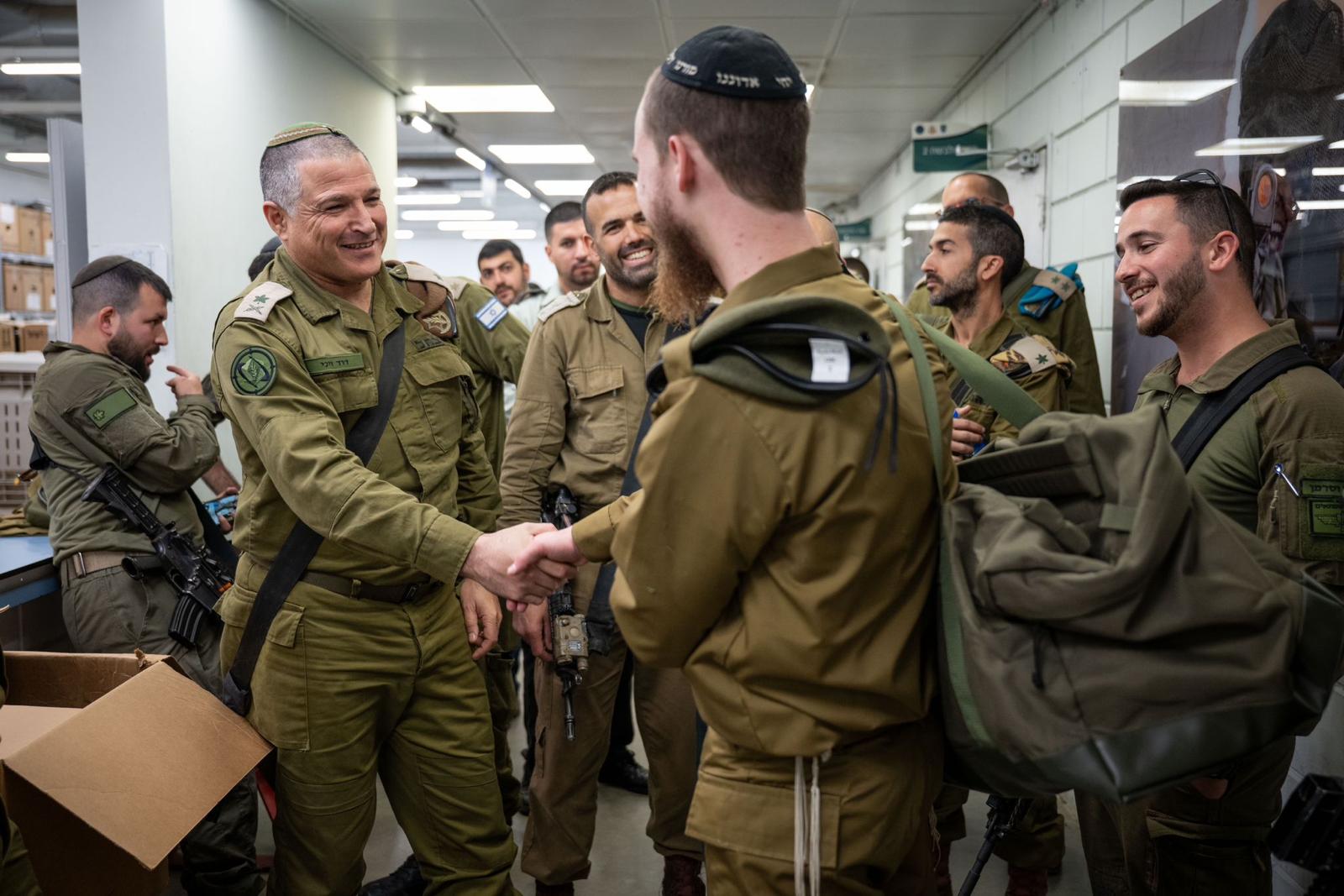
Maj. Gen. David Zini, the head of the IDF’s Training Command, greets an ultra-Orthodox soldier drafting to the IDF’s new Haredi brigade, known as the Hasmonean Brigade, January 5, 2025. (Israel Defense Forces)

Ahead of the draft, the IDF said it carried out a “wide-ranging preparation process,” including recruiting staff for the brigade, renovating an old training base — the Tebetz Camp in the Jordan Valley —  and “adapting it to the ultra-Orthodox lifestyle.”

According to a report by the Israel Hayom daily, soldiers serving in the new brigade will be permitted to wear “Sabbath clothes” on Saturdays, when not on duty, instead of military uniforms, and will be required to attend prayers and a mandatory hour of Torah study daily.

The troops will also be required to have phones that are “kosher” — devices on which social media and most other apps are blocked.

The first commander of the Haredi brigade is Col. Avinoam Emunah, an Orthodox senior officer. Maj. Gen. David Zini, the head of the IDF’s Training Command and General Staff Corps, is the “project manager” of the drafting of Haredi soldiers.

Col. Avinoam Emunah speaks to ultra-Orthodox soldiers drafting to the IDF’s new Haredi brigade, known as the Hasmonean Brigade, January 5, 2025. (Israel Defense Forces)

Also on Sunday, the IDF said additional members of the ultra-Orthodox community were drafted to other units for Haredi troops.

The existing IDF units for Haredi soldiers include the Netzah Yehuda Battalion in the Kfir Brigade, the Tomer Company in the Givati Brigade’s Rotem Battalion, the Hetz Company in the Paratroopers Brigade’s 202nd Battalion, and the Nevatim Airbase’s ground defense unit, as well as numerous other non-combat roles.

Last month, the IDF established a first-ever Israeli Air Force technicians unit for young men of the ultra-Orthodox community, allowing them to maintain their religious lifestyle while serving in the army.

A landmark High Court ruling in June said there was no longer any legal framework allowing the state to refrain from drafting Haredi yeshiva students into military service.

In November, the IDF said it was sending out 7,000 draft orders to members of the ultra-Orthodox community after the first phase of a plan to draft Haredi soldiers was largely unsuccessful. The IDF had sent out 3,000 draft orders in the first stage over the summer, but just 230 showed up at induction centers.

Many ultra-Orthodox Jews believe that military service is incompatible with their way of life, and fear that those who enlist will be secularized.

Ultra-Orthodox Israelis protest against mandatory military service, outside IDF Recruitment Center in Jerusalem, October 31, 2024.

Israelis who do serve, however, say the decades-long arrangement of mass exemptions unfairly burdens them, a sentiment that has intensified since the October 7 onslaught and the ensuing war, in which more than 825 soldiers have been killed and some 300,000 citizens called up to reserve duty.

Last week, during a meeting with military officials on the efforts to draft ultra-Orthodox men, Defense Minister Israel Katz said a new outline for a Haredi draft law was being formulated and would soon be brought to the Knesset to advance a legislative process.

Also in the meeting, Katz said his target was to reach at least 50 percent of Haredi men turning 18 each year to draft to the military within seven years.

The IDF has previously told Katz that it can handle drafting 100% of those turning 18 within a year and a half.

This past year, some 70,000 Haredi males were listed as eligible for military service.

https://www.timesofisrael.com/first-50-ultra-orthodox-soldiers-drafted-to-idfs-new-haredi-brigade/?utm_source=The+Daily+Edition&utm_campaign=daily-edition-2025-01-06&utm_medium=email

Monday, January 06, 2025

Asked if this kind of (Christian) threat gives her anxiety about the place of Jews in the United States, she said, “Firstly, I’m Jewish. There’s always anxiety. So, fair question.”

Puritans in America

In the Massachusetts Bay, Plymouth, and other colonies, Puritans set up new governments with the same source of power - religious authority. These governments claimed that their right to rule was granted to them by the Christian God, and therefore they had absolute power to punish people for their thoughts, beliefs, words, actions, and even their bad luck. People were humiliated, shunned out of town, fined, beaten, mutilated, tortured, and killed. These acts of punishment weren’t for violating civil laws, but interpretations of divine laws.
 
Democracy

Most people believe their god is flawless. If a government claims to derive its authority from a flawless God, then any decision made by the head of state must also be flawless. Therefore, the power of that government is unlimited....  

The Constitution

Thomas Jefferson, in his letter to the Danbury Baptists reiterates that:
religion is a matter which lies solely between Man & his God, that he owes account to none other for his faith or his worship, that the legitimate powers of government reach actions only, & not opinions, I contemplate with sovereign reverence that act of the whole American people which declared that their legislature should "make no law respecting an establishment of religion, or prohibiting the free exercise thereof," thus building a wall of separation between Church & State..
 
 
According to current estimates, approximately 0.2% of the world's population is Jewish. This means that out of the global population, only a small fraction identifies as Jewish


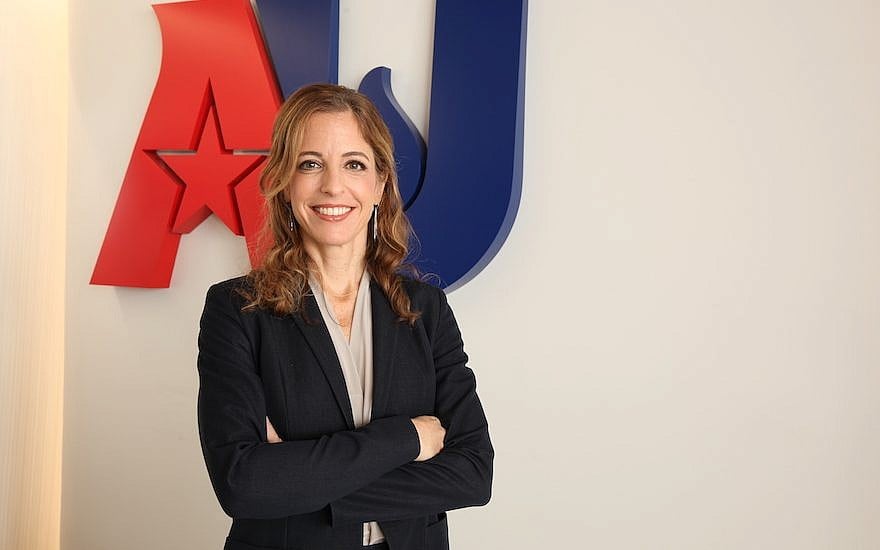
The Jewish woman leading the fight against American Christian nationalism


Since 2018, Rachel Laser, the first Jew to lead Americans United for Separation of Church and State, has worked with Christian allies to keep religion from influencing US laws


JTA — For decades, Americans United for Separation of Church and State called its adversaries “religious extremists.” Today, the group has a more specific target: fighting Christian nationalism.

The decision to sharpen the language was made by Rachel Laser, the group’s president for the last six years. A Jew and the first member of a religious minority to lead Americans United since its founding in 1947, Laser wanted the group to be more clear-eyed about what she sees as a growing threat to religious pluralism in the United States: the belief that American laws should favor Christian values over those of other religions.

But it was not an easy decision for her to make.

“On some deep level, I worry about alienating Christians, as many Jews do,” Laser wrote last year in the group’s magazine. “When you are part of a mere 2% of the population, it can feel perilous to risk fostering adversity with 65% of the population.”

That anxiety about the optics of her leadership surfaced even before she took the job. During her interview, Laser recounted to the Jewish Telegraphic Agency, she asked the board outright: “Why aren’t you hiring Christian clergy?”

Americans United had always been led by pastors, but Barry Lynn, who served as the organization’s previous leader, from 1992 to 2018, said he welcomes a departure. If there were any concerns about having a Jew lead a fight against Christian nationalism, Laser has proven it’s possible to do so, he said.
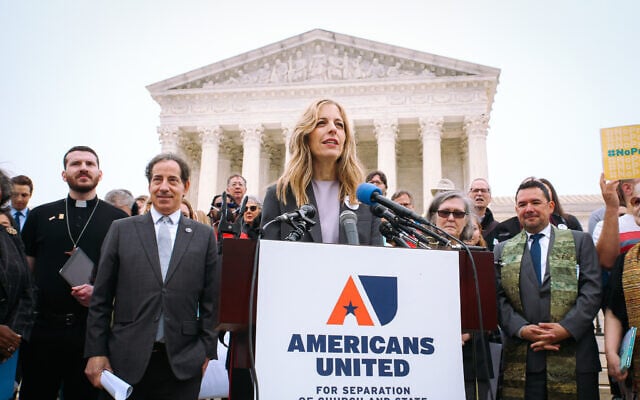
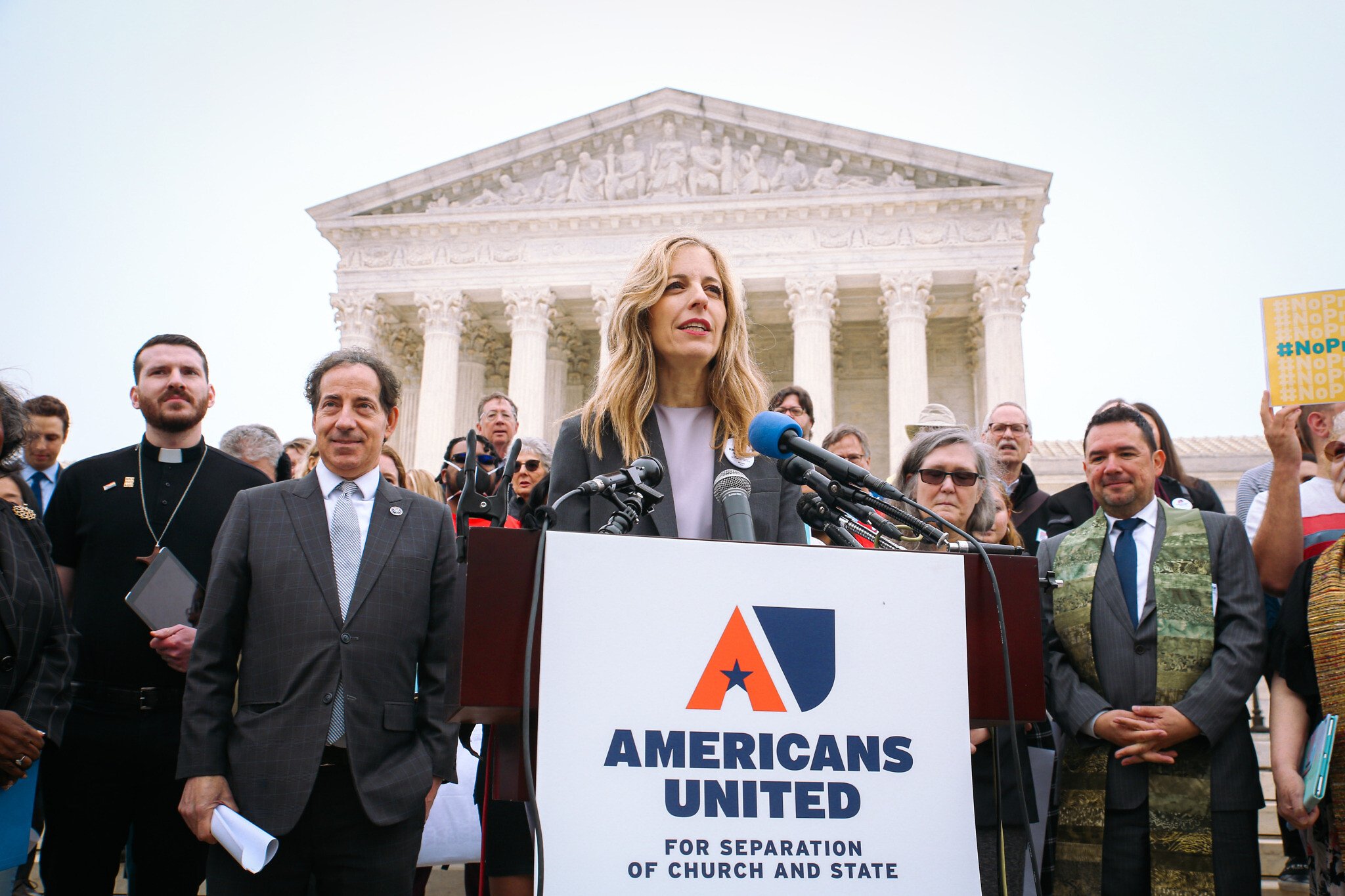
Rachel Laser, president and CEO of Americans United for Separation of Church and State, speaks in front of the US Supreme Court with Rep. Jamie Raskin

“I’ve thought about that a lot, but I just don’t think it’s a burden or a problem because she works very collaboratively with board members who are themselves Christians and she works in coalitions,” Lynn said. “She understands the depths of the danger that Christian nationalism presents to both Christianity and to religious minorities.”

Laser, 55, is married to intellectual property lawyer Mark Davies. They have three children and the family belongs to Adas Israel, a Conservative congregation in Washington, DC. She began her journey in Chicago, where she grew up with Jewish activist parents who didn’t prioritize religious life. But when she followed a friend to Sunday school, she encountered Rabbi Arnold Jacob Wolf, a progressive Reform Jewish leader who was deeply involved in civil rights and other social justice causes.

“I was a very curious kid, and he encouraged me to ask questions,” Laser said, fighting back tears as she recalled Wolf, who passed away in 2008. “The more questions I asked, the more he appreciated me. That’s why I value being Jewish.”

Laser (her name is pronounced LAZZ-er) carried those values into a career focused on public service. After earning a law degree, she held senior roles in organizations advocating for reproductive rights, including as the deputy director of the Religious Action Center.

“She’s a knowledgeable Jew who cares deeply about Jewish concerns,” said Rabbi David Saperstein, who led the Religious Action Center during Laser’s time there. “She fit very comfortably into the view that social justice was a central part of what it means to be a Jew.”

He said he hired her because she was already a proven bridge builder, and it was important for the organization to work across political and ideological lines in Washington. It’s a skill that would be critical when Americans United tapped her in 2018, tasking her with adapting the group for a polarized era.

She took the helm during the second year of Donald Trump’s first presidency, as debates over religion in public life were intensifying. Laser commissioned research to gauge public attitudes and test Americans United’s messaging.

The results were mixed. “Religious extremism” resonated with most audiences, but “Christian nationalism” was less familiar — and even sounded positive to some people.

“We didn’t want people to think we were insulting Christianity or patriotism,” Laser said, so she decided against emphasizing the term.

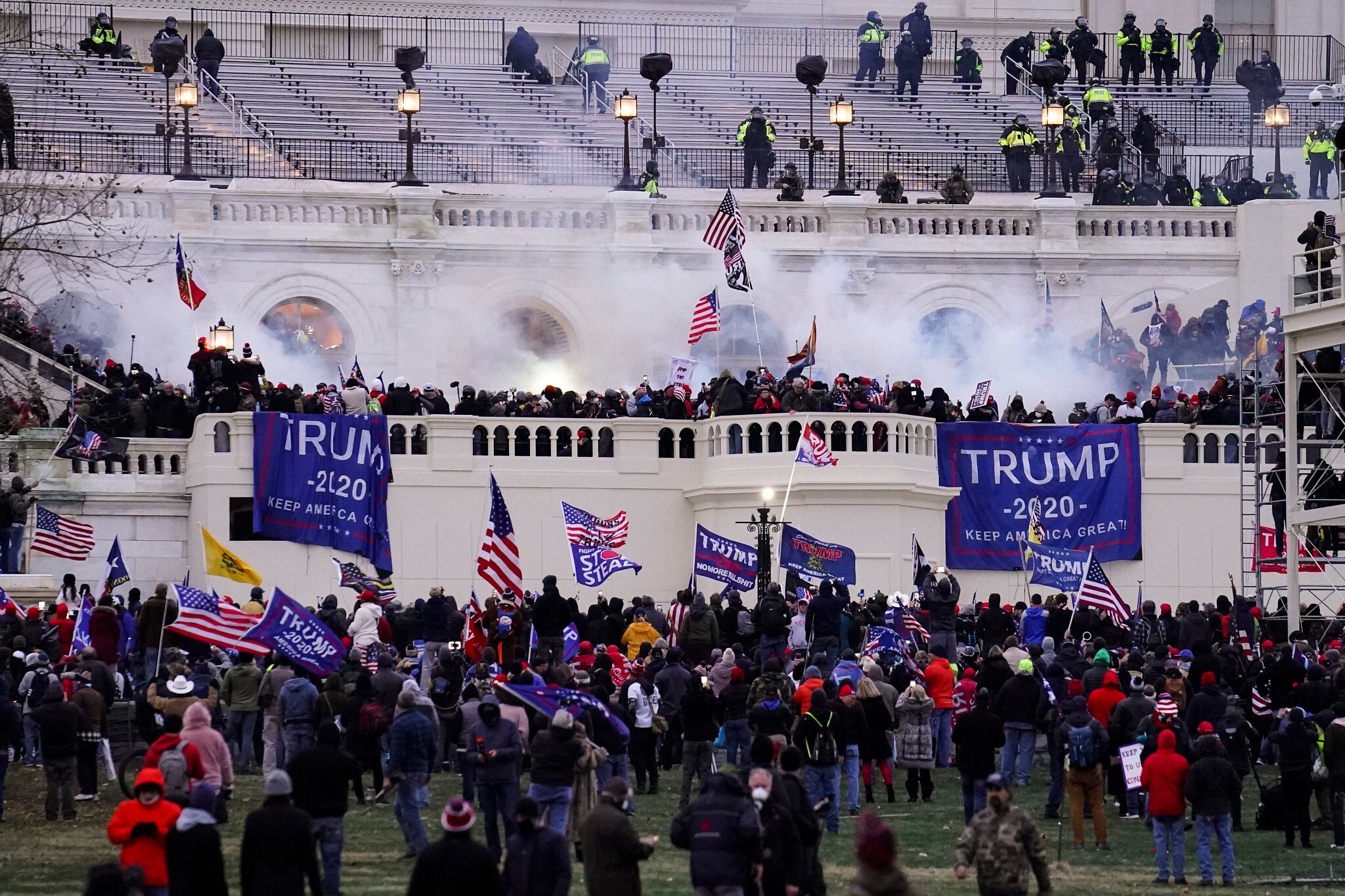
Then came the January 6, 2021, assault on the US Capitol.

Laser saw the insurrection as a wake-up call. In the rioters’ biblical rhetoric and religious rituals, she recognized Christian nationalism as a potent and underappreciated threat. She soon hired Andrew Seidel, a prominent critic of Christian nationalism. On his first day as the new vice president of strategic communications at Americans United, Seidel testified before Congress about the role of Christian nationalism in the Capitol insurrection.

Americans United began using the term regularly, aiming to educate the public while highlighting church-state separation as a critical countermeasure.
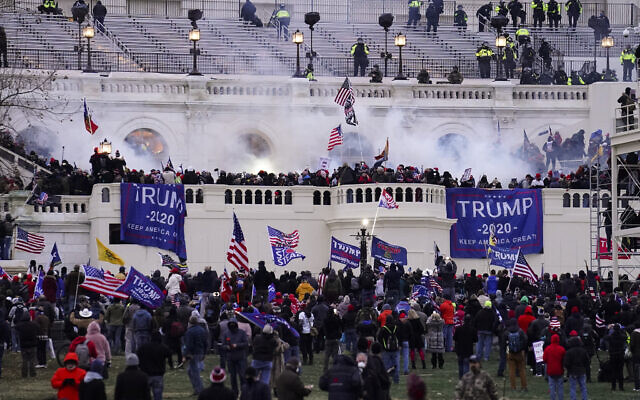
Violent rioters, loyal to President Donald Trump, storm the Capitol in Washington, January 6, 2021.

“The antidote to Christian nationalism is church-state separation,” Laser said in an interview. “It’s the kryptonite that prevents Christian nationalists from codifying their views into our laws.”

Under Laser’s leadership, Americans United has taken high-profile legal actions, such as suing Oklahoma over its proposed religious charter school and representing a Tennessee Jewish couple rejected by an adoption agency due to their faith. The group also helped raise awareness earlier this year about Project 2025, a detailed conservative proposal for Trump’s second term from the Heritage Foundation.

Donors have responded to these efforts. In 2023, the organization reported $17.9 million in revenue — almost triple what it was raising before Laser took over.

But Laser’s tenure hasn’t been without controversy. The organization’s employee union and some former board members have accused her of fostering a toxic work environment and prioritizing publicity over policy and legal work. After commissioning an outside investigation of the organization’s work culture, the board said Laser has its full support.

Laser’s efforts to counter Christian nationalism reflect broader tensions in American society. While religious affiliation is declining, Trump’s political alliance with the Christian right has energized a vocal minority.

“I love you, Christians,” he said on the campaign trail. “In four years, you don’t have to vote again, we’ll have it fixed so good you’re not going to have to vote.” And the vast majority of them did vote for him.

Since the election, Trump has put together for his next administration a slate of deputies that reflects his strong political alliance with the Christian right, from his nominee for White House budget director Russell Vought to his preferred candidate for defense secretary, Pete Hesgeth.

But while giving Republicans a resounding victory, American voters also rejected many of the specific policies promoted by conservative Christians. In seven states, including four won by Trump, voters approved measures to protect abortion rights. All three state proposals to allow public funding to flow to private and religious schools were defeated. Laser calls these outcomes a rejection of Christian nationalism and a continued endorsement of the principle of church-state separation.

In saying that a solid majority of Americans agree with her worldview, Laser relies on surveys like those from the Public Religion Research Institute.

“We find that by a margin of about two to one, most Americans reject Christian nationalism,” said PRRI’s president, Robert Jones.

He said he’s confident in the results because the statements the surveys test against are ”fairly unambiguous.”

“They’re things like, ‘US law should be based on the Bible,’ ‘To be truly American, you must be Christian’ and ‘Christians should take dominion over all areas of American society,’” he said.

As the term “Christian nationalism” has come into play in recent years, Jones’s group has been studying how people respond not only to the underlying attitudes, but also to the term itself.

“We are finding people who qualify as Christian nationalists based on our criteria have a positive view of the term, and people who are rejecting that worldview have a negative view of the term,” Jones said. “So it’s not just a term used by one side to smear the other.”

The phenomena can be seen in the strong sales of a 2022 book called “The Case for Christian Nationalism,” by conservative political theorist Stephen Wolfe, and in prominent politicians, like US Rep. Marjorie Taylor Greene and Sen. Josh Hawley, who have embraced the moniker.

But even as one term has become more common, the question of what language to use is far from settled. Advocates on either side of the debate over the place of religion in public life make various choices for strategic or other reasons.

Sorting through the rhetoric has required substantial attention from Ruth Braunstein, a professor of sociology at the University of Connecticut. That’s because earlier this year, she was awarded a grant from the Henry Luce Foundation to map out the individuals and groups fighting Christian nationalism.

Many of the 100 groups added to the list so far don’t use the term Christian nationalism.

“Some, for example, talk about defending or promoting pluralistic democracy,” Braunstein said. “Others talk about creating a more inclusive vision of American identity.”

A growing bunch, including Americans United, do. And for Braunstein, it was easy to figure out how Laser’s group fit into her project.

“They have a high profile, historical gravitas and respect, and the resources to be able to provide support to other organizations,” she said. “So I think of them as an important node in this broad network.”

A few weeks ago, Laser went on CNN to be briefly interviewed about her opposition to plans in Oklahoma and Texas to bring Christianity into the classroom. She didn’t mention anything about her identity. She simply delivered Americans United talking points: Parents, not politicians, should decide when and if children are exposed to religion; state mandates sully rather than enhance religion; mixing church and state goes against the country’s founding ideals.

But one viewer who contacted CNN to complain about Laser’s statements discovered through Google, or correctly assumed, that Laser is a Jew. He made her identity the center of a lengthy tirade, which he ended with a broad threat.

“When Jews go into the public square to attack Christianity, then we have a problem,” the angry viewer wrote. “Stop abusing the people that treat you kindly because, eventually, the patience will run out.”
Rachel Laser, executive director of Americans United for Separation of Church and State.

Asked if this kind of threat gives her anxiety about the place of Jews in the United States, she said, “Firstly, I’m Jewish. There’s always anxiety. So, fair question.”

But then she went on to emphasize that she’s never felt alone in her activism. She’s always surrounded by Christian allies.

As soon as she took the helm, for example, she set up a faith advisory for Americans United and packed it with pastors (as well as other faith leaders). When her group files lawsuits against policies it opposes, it always includes Christian plaintiffs.

“It’s more important to make it clear that Christians are leaders in this cause,” she said. “In any case, however, I don’t plan to go anywhere. This country has given so much to Jews and I feel gratitude for that. I want to ensure that my kids and my kids’ kids can enjoy and be proud of the same America.”


https://www.timesofisrael.com/meet-the-jewish-woman-leading-the-fight-against-american-christian-nationalism/?