 |
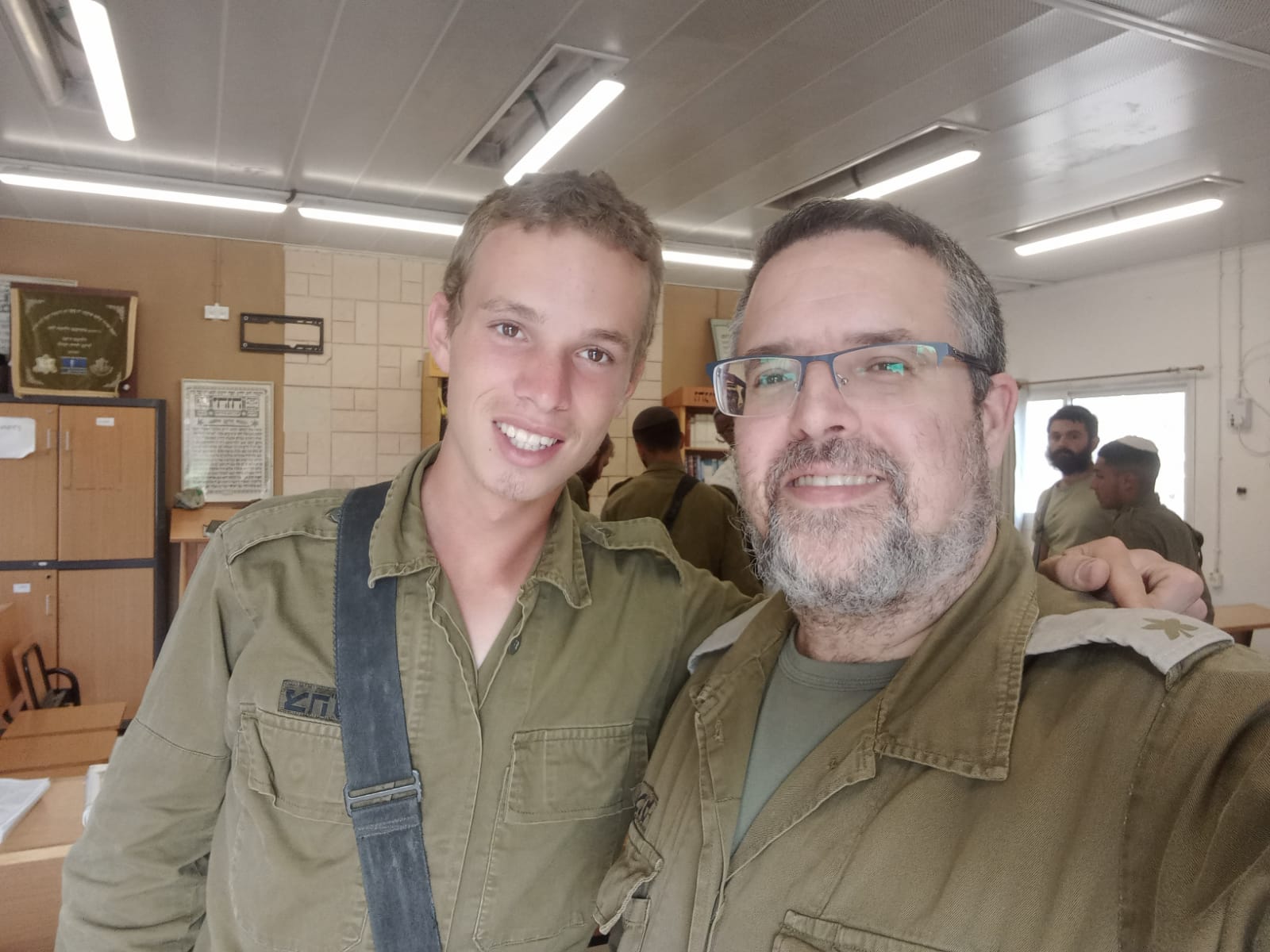
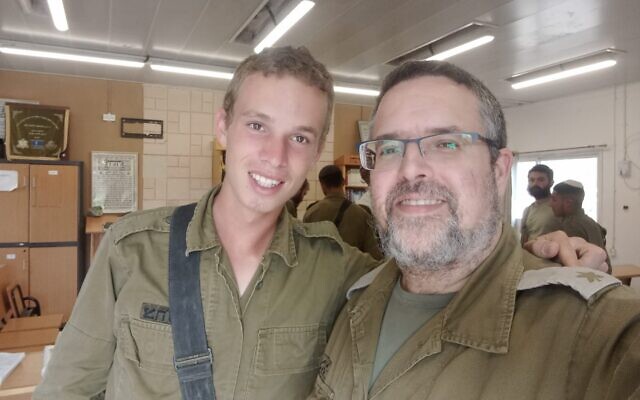
| Staff Sgt. Bezalel Zvi Kovach Z"L, left, with Rabbi Maj. (res) Shimon Hartman |
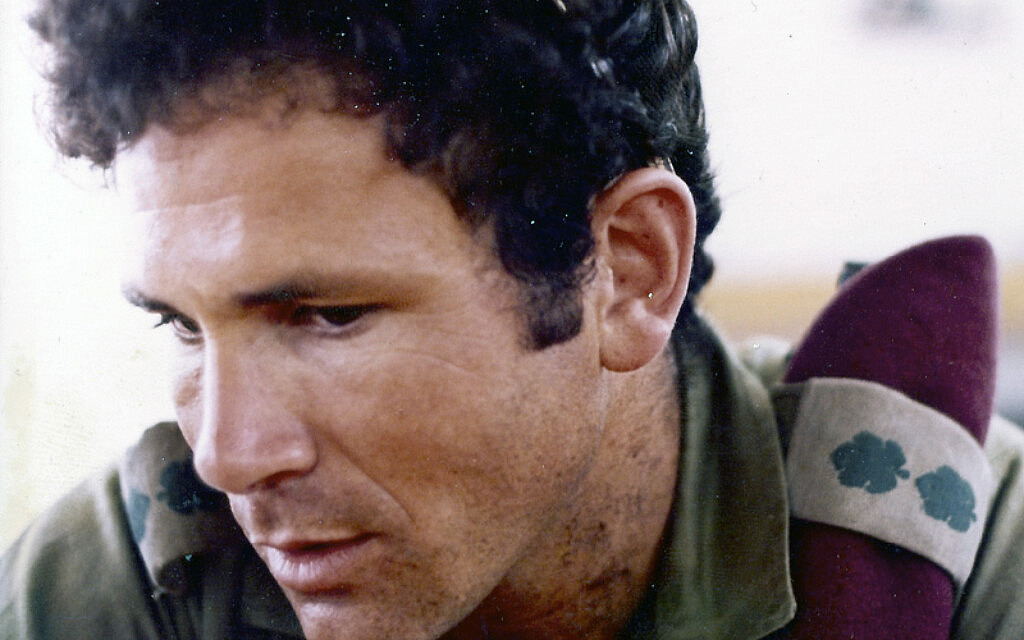
On Wednesday, May 22, Staff Sgt. Bezalel Zvi Kovach, 20, was
critically wounded while fighting in Gaza. Four days later he succumbed
to his wounds at Soroka Medical Center.
Kovach was the first to fall in battle among graduates of Chedvata, a yeshiva that prepares Haredi men for IDF duty.
If fatal casualty rates are an indication which segments of
society are doing their fair share in Israel’s defense, the Kovach
family’s loss is a step toward balancing inequality between
ultra-Orthodox or Haredi and non-Haredi Israelis.
“The soldier Bezalel Kovach fought in Gaza out of a commitment to
being a part of the Israeli story, and he embodies the educational
legacy I want for our students,” said Rabbi Yonatan Reiss, who created
and runs Chedvata.
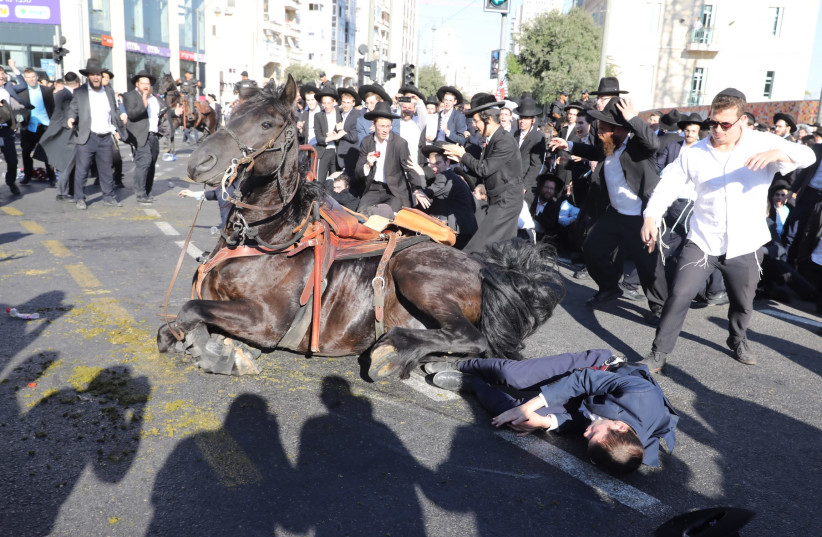
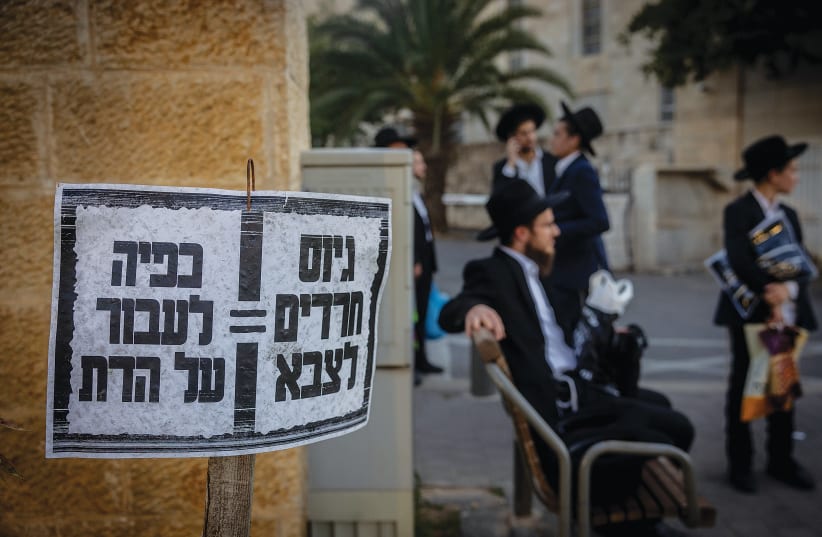
In recent months, as the uncompromising Haredi political leadership’s
opposition to a mandatory military draft threatens to topple Prime
Minister Benjamin Netanyahu’s government, Reiss, a member of the Belz
Hasidic movement, has been making frequent media appearances on Israeli
TV dressed in full Hasidic garb with long sidelocks framing his face.
Lawmakers early Tuesday voted 63-57 to apply “continuity” to a bill
from the previous Knesset dealing with the military service of yeshiva
students, reviving the contentious legislation amid the ongoing war with
Hamas in Gaza.
“As a member of the Haredi community, I can tell you that we excel at
volunteering and that’s really wonderful, but volunteering is not the
same as taking responsibility, with all due respect,” said Reiss.
“The day members of the Haredi community commit, truly commit to
three years of service, to being a part of what’s happening here — as
Bezalel did — the day they start serving their nation… or even commit to
working in a hospital, wherever they feel comfortable, wherever they
feel their Haredi identity is respected, that’s the day you’ll see
Haredim in the labor market, that’s the day Haredim will be fully
integrated and that’s the day they will understand what it means to be
an integral part of the Jewish people,” he said.
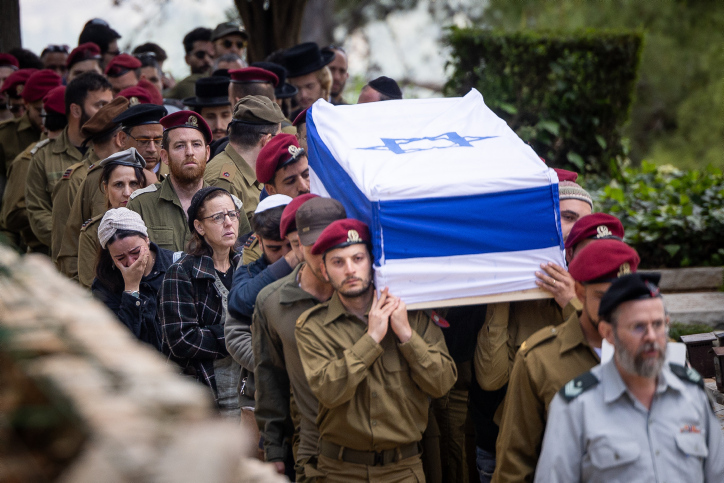
Kovach’s funeral was conducted in strict accordance with the
traditions of Jerusalem’s Perushim (separatists) community, founded by
disciples of the Vilna Gaon, Rabbi Eliyahu ben Shlomo Zalman, who
immigrated to Israel from Lithuania in the 1800s.
The three-volley salute, flower bouquets and other obsequies of IDF
burial protocol were absent. The funeral was conducted at the Givat
Shaul cemetery, not at Mt. Herzl Military Cemetery.
Kovach’s battalion commander, Lt. Gen. Shlomo Shiran, gave a eulogy
before a mostly male crowd, some dressed in black suits and hats, others
in olive green military uniforms.
One of the mourners present at the funeral was Yehuda Segal, a close
friend of Kovach who grew up in the same Haredi neighborhood, learned
with him in the Chedvata Yeshiva and served in the same battalion,
Netzah Yehuda, that was designed to cater to Haredi customs.
Segal said Kovach, a squad commander, was the most selfless person he had ever met.
“He was the type of guy who you could wake up at three in the morning
and he would be there with a cigarette and a can of Coke and encourage
you,” said Segal. “He had this amazing spirit, totally selfless, always
there for others, especially his soldiers. It didn’t matter whether that
person was Jewish or non-Jewish. ‘So what if he is a gentile,’ he would
say when guys pointed this out to him, ‘Hashem [God] created him too.’”
Segal recounted how, while visiting Kovach’s family during the week
of Jewish ritual mourning, he met a young Haredi man who had never heard
of the Netzah Yehuda battalion.
“I told him how we combine commitment to Judaism with army service,
the holy with the profane, contributing to the nation with learning
Torah — that the two don’t contradict each other,” said Segal.
“He looked at me like he couldn’t believe what I was telling him. I
showed him pictures of Bezalel — I guess he thought he would see someone
with dreadlocks and earrings, and suddenly he sees a guy in uniform
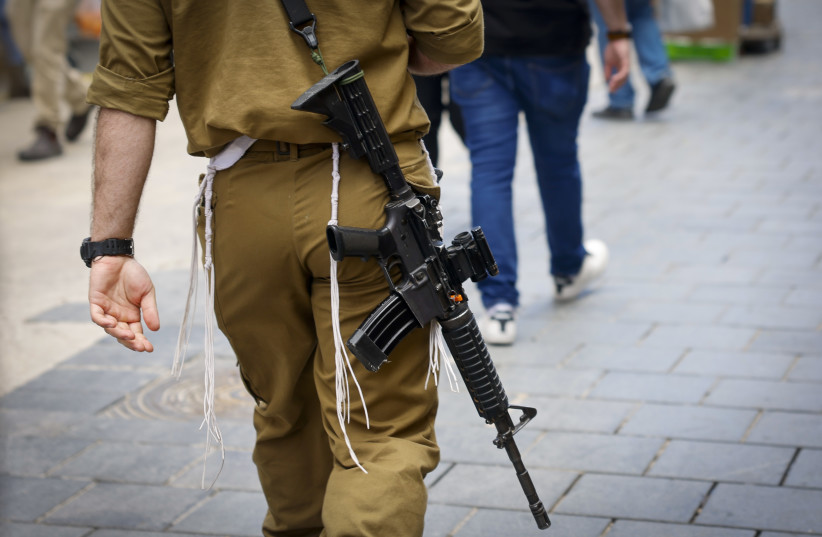
wearing a four-cornered garment with fringes, sitting during guard duty
learning [the teachings of Rabbi Nachman of Breslev],” said Segal. “The
guy said, ‘Wow, I didn’t know that was possible.’”
Segal noted that in the days between Kovach’s injury and his death,
prayer rallies for his recovery were held in Kovach’s strictly Haredi
Ramot Dalet Jerusalem neighborhood.
“It can tell you that there will be guys from the neighborhood, and
not just one or two, who will follow Bezalel’s example and enlist.
Attitudes are changing,” said Segal.
‘Parasites’ who ‘desecrate God’s name’
But if Haredi attitudes toward military service are changing, the pace is glacial.
In all, there are fewer than 300 students enrolled at Chedvata’s
different programs. Another 60 graduates are serving in the IDF.
Based on data provided by the Israel Democracy Institute and
statements made by IDF officials in Knesset meetings, despite annual
population growth of four percent — the fastest of any group in Israel —
Haredi IDF enlistment has remained relatively steady since 2018 at
about 1,200, just 10% of those eligible for service in 2023. And many of
these men come from the fringes of Haredi society — yeshiva dropouts,
children of newcomers to Orthodoxy, boys from modern-minded families
with high school matriculation, new immigrants from non-Haredi
communities.
Despite attempts by the IDF, public figures and social activists —
both Haredi and not — to encourage IDF enlistment, a painful chasm
separates those Israeli families who live in fear of the knock on the
door from an IDF death notification officer and the vast majority of
Haredi families who don’t.
Since the 1950s, a political arrangement anchored in a series of laws
and government decisions has allowed Haredi men to postpone mandatory
military service until they are too old to be drafted. They need to
declare Torah study to be their full-time occupation and commit to
remaining unemployed. The state provides those who study with modest
stipends. Yeshivot are supposed to be audited for attendance. But tens
of thousands of able-bodied men are said to be fictively registered at a
yeshiva in order to receive funds but never set foot inside.
For the embattled Jewish state, this arrangement has become increasingly untenable.
Israel faces myriad military threats: the war in Gaza, escalation on
the Lebanese border, drone and missile attacks by Iran-backed militias
in Yemen and Iraq, the threat of a nuclear-armed Iran, the uptick in
Palestinian terrorism in Judea and Samaria. Overwhelming defense burdens
are being shouldered by those who do serve — along with their spouses,
children and parents, who must cope with the economic, physical and
emotional stress of having a loved-one away from home for prolonged
periods of time exposed to existential dangers.
Since October 7, 299 soldiers and one police officer have been killed
during the ground offensive against Hamas and amid operations along the
Gaza border. A civilian Defense Ministry contractor has also been
killed in the Strip. About the same number of soldier deaths took place
during the October 7 invasion, when thousands of terrorists brutally
murdered 1,200 people in southern Israel, the vast majority of them
civilians, and kidnapped 251 to the Gaza Strip, where roughly 120 — many
of them soldiers — are still being held.

Family and friends of Israeli
soldier Master Sgt. (res) Nahman Natan Hertz, 31, attend his funeral at
the Mount Herzl Military Cemetery in Jerusalem on May 7, 2024. Hertz
was killed in a Hezbollah drone strike on Metula
Meanwhile, over 60,000 Haredi men between the ages of 18 and 26, many
of whom fit for military service, avail themselves of the
Torah-is-my-profession exemption. Not all devote their productive hours
to Torah study.
The discrepancy has led to public outcry.
A video of hundreds of military-age Haredi men sitting in Ramat Gan’s
National Park on the evening of June 1, watching an open-air screening
of the UEFA Champions League final between Real Madrid and Borussia
Dortmund went viral on social media. Comments included, “Parasites,”
“Desecration of God’s name,” “My son is serving and didn’t get
permission to watch the game,” and, “So soccer takes precedence over
studying Torah?”
READ ENTIRE ESSAY: