EVERY SIGNATURE MATTERS - THIS BILL MUST PASS!

EVERY SIGNATURE MATTERS - THIS BILL MUST PASS!
CLICK - GOAL - 100,000 NEW SIGNATURES! 75,000 SIGNATURES HAVE ALREADY BEEN SUBMITTED TO GOVERNOR CUOMO!

EFF Urges Court to Block Dragnet Subpoenas Targeting Online Commenters

EFF Urges Court to Block Dragnet Subpoenas Targeting Online Commenters
CLICK! For the full motion to quash: http://www.eff.org/files/filenode/hersh_v_cohen/UOJ-motiontoquashmemo.pdf

Tuesday, July 16, 2024

Imagine boarding an airplane with an 80-year-old pilot at the helm. Would you feel secure knowing that the pilot, while possibly experienced and knowledgeable, might face age-related challenges such as slower reaction times or health issues that could impair their ability to handle emergencies?


EDITORIAL

Trump and Biden: Too Old to Be President?

The question of age and its impact on the effectiveness of leadership is becoming increasingly pertinent as the United States faces the prospect of having octogenarian leaders. Both Joe Biden and Donald Trump, prominent figures in American politics, are pushing the boundaries of age in the presidential office. This raises concerns about whether they are too old to serve as president. To illustrate, one might ask: Would you feel comfortable boarding an airplane with an 80-year-old pilot? This analogy sheds light on the broader issues of age, cognitive ability, and the demands of high-stakes leadership roles.

Age and Cognitive Decline

Aging is a natural process that often brings about cognitive decline. While not all individuals experience significant cognitive impairment as they age, the risk increases with each passing year. Critical thinking, memory, and decision-making capabilities can be adversely affected. For a role as demanding as the presidency, which requires sharp mental acuity, quick decision-making, and the ability to manage a complex array of domestic and international issues, cognitive decline can be a significant liability.

Joe Biden, born in 1942, and Donald Trump, born in 1946, are both well into their seventies and eighties. As they age, the likelihood of cognitive decline becomes a legitimate concern. The rigors of the presidency—intense schedules, high-stress decision-making, and the need for constant vigilance—are daunting even for younger individuals. The cognitive demands on an 80-year-old president could lead to lapses in judgment or slower responses in critical situations, potentially endangering national security and effective governance.

Physical Health and Endurance

The physical demands of the presidency are also considerable. Presidents are expected to maintain grueling schedules, travel frequently, and endure the stress of constant public scrutiny and decision-making under pressure. Physical stamina and overall health are essential to managing these responsibilities effectively.

At 80, most individuals face inevitable physical challenges, from decreased energy levels to the potential for serious health issues. Both Biden and Trump have had their health scrutinized, with Biden experiencing incidents that raise questions about his physical resilience and Trump facing his own set of health concerns during his presidency. The potential for a sudden health crisis is higher in older individuals, which could lead to instability in leadership.

The Airplane Pilot Analogy

Imagine boarding an airplane with an 80-year-old pilot at the helm. Would you feel secure knowing that the pilot, while possibly experienced and knowledgeable, might face age-related challenges such as slower reaction times or health issues that could impair their ability to handle emergencies? This analogy helps underscore the stakes involved in electing an elderly president. Just as we rely on pilots to ensure our safety, we depend on presidents to navigate the country through turbulent times. The physical and cognitive demands are analogous, and the risks associated with age are similar.

Representation and Generational Change

Another consideration is the need for generational change and representation in leadership. The United States is a diverse nation with a wide range of age groups, each facing unique challenges and perspectives. Younger leaders may be more in tune with the issues and aspirations of the younger population, which is crucial for forward-looking policies and innovation.

The dominance of older politicians can stifle fresh ideas and perpetuate outdated approaches. A younger president might bring new energy, perspectives, and solutions to the table, better reflecting the dynamic and evolving nature of American society. Generational change can invigorate the political landscape and ensure that leadership is responsive to the needs of all citizens, not just those of a particular age group.

While age alone should not disqualify someone from the presidency, the unique challenges and risks associated with elderly leaders cannot be ignored. The cognitive and physical demands of the presidency are immense, and the potential for age-related decline poses a significant concern. The airplane pilot analogy vividly illustrates the risks involved, highlighting the importance of ensuring that leaders are fully capable of meeting the demands of their role.

Moreover, embracing generational change and fostering a diverse leadership that includes younger voices can enrich the political discourse and better address the needs of all Americans. As the nation considers its future leadership, it is essential to weigh the implications of age and prioritize the qualities that will ensure effective, dynamic, and responsive governance.

Joe Biden: The Perils of Policy and Perception

Joe Biden, inaugurated as the 46th president of the United States in January 2021, brought a promise of stability and a return to traditional political norms following the tumultuous Trump administration. However, his presidency is not without significant concerns.

Economic Challenges and Inflation

One of the most pressing issues under Biden's administration has been the surge in inflation. Critics argue that the administration's expansive fiscal policies, including substantial stimulus packages, have contributed to rising prices. The inflationary pressure erodes the purchasing power of American households, disproportionately affecting the middle and lower classes. This economic instability can lead to increased public discontent and erode trust in the government’s ability to manage the economy effectively.

Immigration and Border Control

Biden's more lenient stance on immigration compared to his predecessor has led to a sharp increase in the number of migrants attempting to enter the United States. The situation at the southern border has been described by some as a crisis, with inadequate facilities to accommodate the influx and growing concerns about national security and public health. The administration's handling of this issue has fueled divisive rhetoric and deepened political polarization.

Foreign Policy and Global Perception

Biden's foreign policy decisions, such as the withdrawal from Afghanistan, have also drawn significant criticism. The chaotic and abrupt exit not only left behind a humanitarian crisis but also damaged America's credibility with its allies. Such actions can undermine global trust in American leadership and embolden adversaries, potentially destabilizing international relations.

Donald Trump: The Dangers of Divisiveness and Disinformation

Donald Trump's presidency from 2017 to 2021 was marked by a distinct departure from conventional political norms, characterized by his unorthodox communication style and polarizing policies.

Erosion of Democratic Norms

Trump’s repeated assertions of electoral fraud and his refusal to concede defeat in the 2020 presidential election culminated in the unprecedented storming of the U.S. Capitol on January 6, 2021. This event highlighted the fragility of democratic institutions and the dangers posed by undermining public confidence in the electoral process. Such actions threaten the foundational principles of American democracy and can lead to increased political violence and instability.

Rise of Populism and Extremism

Trump’s rhetoric often resonated with populist and nationalist sentiments, leading to a rise in extremist ideologies and groups. The emboldening of such factions poses a significant threat to social cohesion and can lead to an increase in hate crimes and domestic terrorism. The polarization fostered during his tenure continues to affect American society, making it challenging to achieve consensus on critical issues.

Disinformation and Mistrust

Trump’s frequent dissemination of disinformation, particularly regarding the COVID-19 pandemic and the integrity of the electoral system, has contributed to a widespread mistrust of mainstream media and public institutions. This erosion of trust is detrimental to public health efforts, as seen with vaccine hesitancy, and undermines the collective action needed to address national crises effectively.

Broader Implications for American Democracy

The presidencies of both Biden and Trump highlight a deeper, systemic issue: the growing polarization and fragmentation of American society. This divide is exacerbated by the media landscape, which often amplifies extreme viewpoints and fosters echo chambers. The inability to bridge ideological divides and engage in constructive dialogue threatens the very fabric of American democracy.

Moreover, the international implications of domestic instability cannot be overlooked. The world looks to the United States for leadership, and internal strife weakens its position on the global stage. Adversaries may exploit these vulnerabilities, while allies may question America's reliability.

Conclusion

The dangers posed by both Biden and Trump are reflective of broader challenges facing the United States. While Biden's policies may lead to economic and immigration-related issues, Trump's legacy of divisiveness and disinformation poses a threat to democratic norms and social cohesion. Addressing these dangers requires a concerted effort to bridge political divides, restore trust in public institutions, and reaffirm the core values of American democracy. Only through such efforts can the United States navigate these turbulent times and emerge stronger.

Monday, July 15, 2024

Ultra-Orthodox men of military age have long been able to avoid being conscripted to the IDF by enrolling in yeshivas for Torah study and obtaining repeated one-year service deferrals until they reach the age of military exemption.


Survey finds support for adaptions for military service, though 72% of ultra-Orthodox respondents oppose drafting all Haredim

 
BLACK AND BLACK TOGETHER....


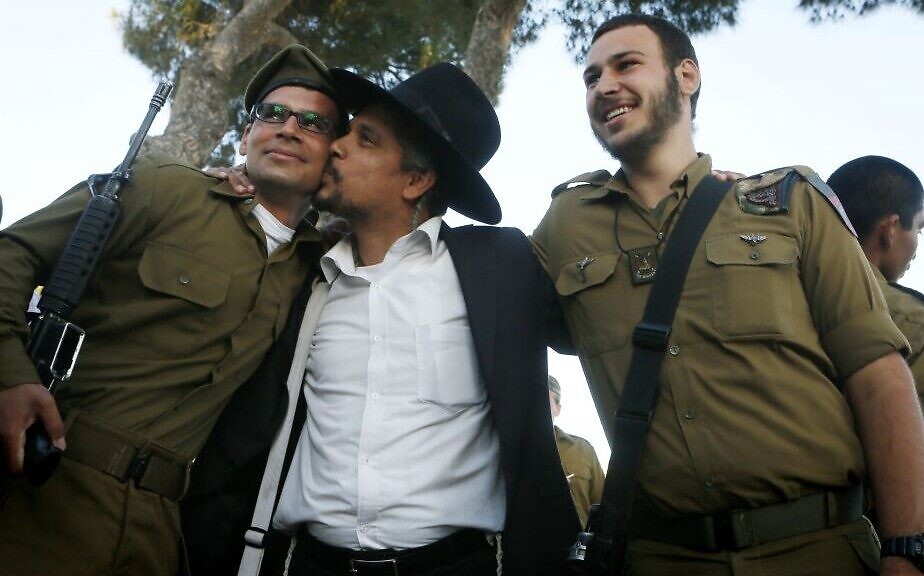
Israeli soldiers from the ultra-Orthodox Netzah Yehuda Battalion attend a swearing-in ceremony at the Western Wall in Jerusalem's Old City, July 10, 2024. (Chaim Goldberg/Flash90)
Israeli soldiers from the ultra-Orthodox Netzah Yehuda Battalion attend a swearing-in ceremony at the Western Wall in Jerusalem's Old City, July 10, 2024.

Despite overwhelmingly opposing drafting previously exempt members of their community, a majority of Israel’s ultra-Orthodox Jews believe that the establishment of additional military units geared toward accommodating their religious sensitivities would increase enlistment.

According to a Smith Consulting poll presented to the Knesset State Control Committee last week, while 72 percent of ultra-Orthodox respondents oppose mobilizing Haredim at age 18 like all other Jewish Israelis, 59% indicated — to one degree or another — that the creation of service tracks allowing them to maintain their lifestyle would have a beneficial effect on overall enlistment numbers.

The survey polled 450 Haredim on July 3-4, providing a snapshot of ultra-Orthodox public opinion in the wake of last month’s High Court of Justice ruling that there is no legal basis for exempting ultra-Orthodox men from the military draft.

The landmark judgment, which overturned decades of draft exemptions for ultra-Orthodox yeshiva students, stated explicitly that the government must “act to enforce the Law for Military Service on yeshiva students,” compelling state agencies to take active steps to draft such men into Israel Defense Forces service.

Following the decision, which was decried as an attack on Torah study by ultra-Orthodox leaders and politicians, Defense Minister Yoav Gallant announced that the military will begin the process of drafting ultra-Orthodox men next month.

According to the Defense Ministry, an “information campaign for the ultra-Orthodox population” will also be launched next month, showing the various “service paths adapted to the ultra-Orthodox in the IDF, per the recommendations of the Shkedi Committee” — which laid out how the country could effectively recruit and integrate members of the ultra-Orthodox community into the IDF.

Illustrative: A religious Jewish soldier is embraced by an ultra-Orthodox Jewish family member after a swearing-in ceremony for the IDF Nahal Haredi unit, at Ammunition Hill in Jerusalem

There are currently an estimated 67,000 Haredi males who are eligible for service, although only a small percentage of them are expected to be called up this year.

Even as the overwhelming majority of those polled stated that they oppose drafting 18-year-old Haredim, 21% said that they were in favor so long as those studying full-time in yeshivas are exempted. Only 1% said that they support enlisting all 18-year-old Haredim.

These findings were significantly different from those of another poll published by the ultra-Orthodox news site Kikar HaShabbat in March, which found that 63% of Haredim believed that those who do not study full-time should enlist in the IDF during wartime.

Ultra-Orthodox men of military age have long been able to avoid being conscripted to the IDF by enrolling in yeshivas for Torah study and obtaining repeated one-year service deferrals until they reach the age of military exemption.

While some ultra-Orthodox politicians have indicated that they could see enlisting members of their community not enrolled in full-time Torah study as an acceptable compromise, senior Haredi rabbis have eschewed any accommodation following the High Court ruling.

Police officers disperse ultra-Orthodox Jews blocking a highway during a protest against army recruitment in Bnei Brak, Israel, Thursday, June 27, 2024

Rabbi Moshe Maya, a senior member of the ultra-Orthodox Shas party’s Council of Torah Sages, declared that it was “forbidden [even] for those who don’t study to go to the army,” while senior rabbis affiliated with the United Torah Judaism party forbade Haredim to obey enlistment orders.

Notwithstanding this opposition, 22% of Haredim said that establishing Haredi units would increase enlistment by a small degree while 27% indicated that they believed it would boost recruitment to “a certain extent but not by much.” A further 10% said it would increase enlistment to “a large extent.”

Speaking with the Times of Israel earlier this year, UTJ lawmaker Moshe Roth argued that despite some Haredim supporting military service in principle, there has been no rise in enlistment because they are scared of becoming secularized.

The army needs to be “more open and flexible” in creating an appropriate environment for them and the expansion of units like the all-male, strictly kosher Nahal Haredi could provide an answer, he said.

However, asked if the ultra-Orthodox parties were pushing for the opening of more Haredi units, Roth replied in the negative, arguing that this is a “secondary issue” that will only be dealt with after exemptions for full-time yeshiva students are enshrined in law.

https://www.timesofisrael.com/majority-of-haredim-say-new-religious-army-units-would-boost-enlistment-poll/?utm_source=The+Daily+Edition&utm_campaign=daily-edition-2024-07-14&utm_medium=email

Sunday, July 14, 2024

The Haredi Soldiers Who Served in Israel’s War of Independence


For seven months, Haredi yeshiva students who served in "Gdud Tuvia" (Tuvia’s Battalion) proved that Torah study and IDF service could go hand in hand. Rare documents describe the profound reflections of those who viewed their military service as a sacred mission.

832 629 Blog

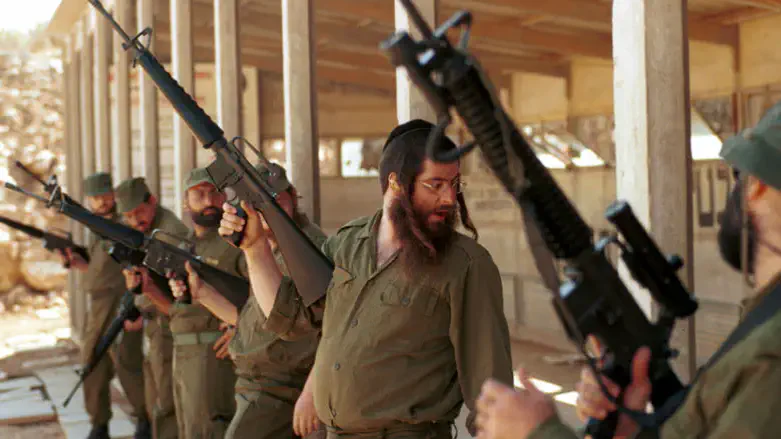
A group of Haredi recruits during training. Photo: Fred Csasznik, IDF and Defense Establishment Archives

370 out of 900 reported for duty.

These were the enlistment numbers for Haredi Yeshiva students shortly after the establishment of the State of Israel. 270 received medical exemptions. 260 received exemptions on spiritual grounds. The rest, under directives given by leading rabbis, enlisted in the struggle to defend the fledgling state in its War of Independence. This enlistment was the result of an agreement between the yeshivas and the IDF enlistment offices: outstanding students would be exempted, and the conditions of enlistment would allow recruits from the yeshivas to continue studying Torah during their military service.

It was Tuvia Bier, a former Haganah member, who gathered the young Haredi recruits and gave them a home – a new battalion for yeshiva students. Bier was so dedicated to these soldiers that the battalion was later named Gdud Tuvia (Tuvia’s Battalion) after him. For seven months, the yeshiva students worked on setting up and strengthening fortifications in bombarded Jerusalem, simply because there was no time to provide proper training in anything else. They weren’t sent to the front lines because they hadn’t learned to operate firearms and also because of concerns that the world of Torah study would be destroyed if they were to perish in battle.

They worked one-to-two days a week on fortifications and spent the rest of their time studying Torah. They did most of their work at night, both for security reasons and to avoid disrupting their study routines at yeshiva.

The battalion was active for seven months before being disbanded. Many praised it, but many others mocked the focus on fortification work, which they perceived as a means to avoid combat service. People commended the Haredi soldiers’ willingness to sacrifice their lives for the defense of their homeland. Still, some wondered whether the work carried out by the battalion truly justified the disruptions in Torah study.

But what was going through the soldiers’ heads? How did they view their service? Did they believe in the righteousness of the path they had taken?

The Fortress

Like many other military units, the soldiers of Gdud Tuvia produced their own magazine. They called it Hamivtzar (“The Fortress”), since fortifications accounted for the majority of their work. In total, they managed to produce two issues, which were each copied and distributed among the battalion’s soldiers, providing them a platform where they could read, study, and even express themselves. The two issues of Hamivtzar are preserved in the IDF and Defense Establishment Archives, and they offer us insight into what the soldiers were thinking and feeling at the time.

Mivzar660
The cover of Issue No. 2 of Hamivtzar (“The Fortress”), 1948. Courtesy of the IDF and Defense Establishment Archives.

The Dilemma

The soldiers from the yeshivas struggled with the question of their enlistment. It is as true today as it was back then. Was it right for them to serve in the army? Is it appropriate for yeshiva students to set aside the study of Torah for the sake of fortifying Jerusalem?

This question was asked in print in Hamivtzar, by a writer who identified himself as “M.S.”:

“Despite all the doubts, despite all the questions burning through every yeshiva student’s mind: Is this even my duty at all? Am I obligated to serve in any role in the war effort beyond my usual role as a yeshiva student, which is no less crucial than any other military role? Moreover, am I allowed to, even momentarily, leave the beit midrash, the spiritual fortress of the Torah of Israel that protects us in every generation?”

One page after this, the answer appears:

“This is the duty of every Jew in general, and our duty as yeshiva students in particular. We are the next link of the golden chain of the Torah of Israel, in action and deed. We are pulling the chariot of the people up a treacherous slope towards the pinnacle of the hoped-for redemption. We are the ones! This is our contemporary duty!”

003
A group of Haredi recruits during training. Photo: IDF and Defense Establishment Archives

How irreconcilable was this tension?

Throughout all the texts in Hamivtzar, the yeshiva students emphasize that despite the mission they have now undertaken, they will never for a moment forget their primary task – to study the Torah. This is reiterated in the editorial section of the first issue ofHamivtzar.

“Our role so far has been fortification works, and indeed it is not an easy task. We require significant activity and heightened dedication, and at times, even significant risk, to fulfill this duty… However, precisely because of the importance and value of this task, we must not forget the essence, that the task imposed upon us should never lead us to neglect our primary role, which is the study and observance of the commandments of the Torah.”

The answer to the dilemma is not definitive. Some of the writers viewed their military service as a mission, even a necessary step in the redemption of Israel. Others were content with doing what needed to be done under the circumstances. Some of them fulfilled their missions mainly because “the rabbis instructed it.”

We’ll conclude this chapter with some moving words written by a certain “Mordechai”, under the title Sh’ma Yisrael [“Hear Ye, O Israel”], who viewed IDF service not only as a temporary necessity but as a true mission.

“Students of Torah, dwellers of the beit midrash, oarsmen in the sea of Talmud, a tribe of priests whose generous spirit led them to take part in our liberation struggle, these are the anointed priests who must bring the word of God into the Israeli military camp. You are soldiers of Hashem, you must raise your voice on high, to restore the pure faith in the Eternal One of Israel who will not disappoint. For your eyes have seen what He has done for us when we stood few against many – many soldiers and many weapons – and we saw His greatness and wonders, it is upon you to illuminate with the light of your Torah the hearts of our soldiers who dedicate their lives for the sanctity of the nation and homeland.”

What Next?

On the surface, the pilot program of Gdud Tuvia seems to have been a failure. Ever since, those opposed to the enlistment of Haredi Jews in the IDF have had the upper hand. Even today, decades later, the debate over the enlistment of yeshiva students remains heated and volatile. Just as it was back then.

But did the project truly fail? To a large extent, the ideas of Gdud Tuvia have served as the foundation for the Hesder Yeshiva-military service programs and IDF units like Netzah Yehuda that are operational today. Perhaps the battalion’s principles can still be implemented in one form or another in future programs as well. “Dad didn’t grasp the enormity of the historical moment in real time; he simply did what he did because he thought it was the right thing to do,” recounts Kobi Bier, son of Tuvia, the commander of the yeshiva student battalion. “I think with a bit of goodwill, we can resolve the intense debate over the enlistment of Haredi Jews by using this model. We can set a certain percentage of outstanding Torah students, grant them exemptions, and we can find suitable solutions for the rest. I understand the concerns, but just as we saw with Gdud Tuvia, solutions can always be found. There’s no need to fear this.”

001
Tuvia Bier, commander of the yeshiva student battalion

Further Reading (Hebrew):

ההסדרניקים של תש”ח by Aharon Kornfeld

https://blog.nli.org.il/en/haredi_soldiers/?_

Friday, July 12, 2024

Rates of leading cancers are projected to rise among the U.S. demographic group known as Generation X—people born between 1965 and 1980


Cancer Gaining on Younger Adults


Rates of leading cancers are projected to rise among the U.S. demographic group known as Generation X—people born between 1965 and 1980, a new study concludes. The startling result is so pronounced that Gen X is expected to have a higher cancer rate than their parents and grandparents, reports Scientific American editor Lauren J. Young. The finding held for numerous cancers, including colon, rectal, thyroid, ovarian, prostate and kidney.

How they did it: Researchers examined data collected between 1992 and 2018 on 3.8 million people in the U.S. with invasive cancer—cancer that has spread beyond its original site. The team was particularly interested in patterns among birth cohorts such as Gen X, Baby Boomers, the Silent Generation and the Greatest Generation. 

What the experts say: “It’s very clear to us that cancer is evolving from a disease which has traditionally been considered a disease of aging to one which affects, really, all age groups,” says gastroenterologist Andrew Chan.
 
 
 MORE:
 

Gen X and Cancer:

 In total, we analyzed 3.8 million cases of incident cancer occurring over 521 million person-years (eTable 2 in Supplement 1). Overall, 51.0% of individuals were male (compared with 49.0% female) and 71.5% were non-Hispanic White (compared with 8.6% Asian or Pacific Islander, 9.5% Hispanic, and 10.4% non-Hispanic Black).
 
MORE:
https://jamanetwork.com/journals/jamanetworkopen/fullarticle/2819747

Wednesday, July 10, 2024

The heroic stories of Talmidei Chachamim (Torah scholars), Ra”mim (Yeshiva gemara teachers) and Dayanim (Religious Court judges) from the Religious Zionist community who went into battle and literally endangered their lives to save the Jewish people, cannot leave hearts unmoved.


"My brothers, do not commit this wrongful act"


All the arguments of the haredi world cannot stand up to the simple fact that Jewish lives are on the line in Israel as never before and the army must increase the number of combat soldiers asap.

Religious Soldiers

Gedalia Zurger (not his real name) is an avrech (married kollel student) in Bnai Brak. Article translated from Makor Rishon by Rochel Sylvetsky.

To arouse someone who has lost consciousness, sometimes the best thing to do is to slap him in the face. The articles published in the Hebrew press recently, especially one by a haredi writer last week titled “The Religious-Zionist Conceptsia” was a slap in the face to our consciousness. And that article was but one of an entire series of articles, statements and comments by talking heads, all coming from the haredi side of the dispute. And that is why I have written this article.

The prevarications were never as clear as they are now. After seventy-five years of hearing the haredi community, to which I have belonged all my life, tell everyone that they are an integral part of the nation, that they see all Jews as brothers, and that in their world view, they are fighting with them shoulder to shoulder, except that they do battle by learning Torah – the sad truth has been revealed. You probably think that the argument centers around “[the Torah] protects and saves” (“magna umatzla”, Tractate Sota 21) and “rabbis do not need protection” (“Rabbanan la tsrichei netiruta,” Tractate Bava Batra)­­ but I have news for you. That was never the real issue.

So, can someone explain to us what the argument is all about? Not really. It seems that every haredi spokesperson can take the argument to any place he wishes.

According to the aforementioned article, the crux of the issue is opposition to the Zionist ethos. Its author writes that Religious Zionism has an ethos, a “conceptsia” in his words, and that in his view, there is an ongoing debate about whose “conceptsia” is the right one.

What really happens is that Religious Zionist rabbis open the Talmud, Maimonides, and other sources to try to understand if the Torah really does “protect and save” without the necessity of enlisting in the army or whether “even a bridegroom must leave his room and a bride her chuppah,” as is the halakha in case of a war to save the Jewish people from those who attempt to destroy them. They write letters and publish learned explanations, quote sources with exacting accuracy – only to discover that the other side is not only bored - but mocking.

The haredi side wants to avoid discussion and never actually intended to debate the issue seriously. More insulting is that those bringing the haredi point of view are in most cases journalists and spokesmen who are total ignoramuses when it comes to Torah. Their only talents lie in the political and verbal realms. The truth is that the real Religious Zionist “conceptsia” is that sector’s sincere desire to have a serious discussion on the matter – while the haredim avoid it like the plague.

Self-deception

Let us analyze the various haredi claims and present a condensed version of the statements that are the most common. It turns out that the haredi rhetoric we have been subject to lately is disingenuous, to say the least.

This is how the arguments unfold: First the haredi speaker proclaims that the Holy Torah guards the Jewish People. (There is no Religious Zionist argument with that.) Sometimes he adds an emotional element: "Do you know how hard it is to learn Torah ten hours a day?" The person who must contend with this argument is usually a non-religious broadcaster with absolutely no Torah background. His intuition tells him that there is something wrong here, but he is incapable of discussing the “protects and saves” Talmudic dictum in any depth.

That forces him to take another tack: “And what about those who aren’t learning?” This is when the deception comes into play. The more experienced politicians – generally from the soft edges of the Shas party – nod their head and agree: “There is no question that those who are not learning must enlist.” The secular broadcaster will repeat this, as will other media. That is, until one of the haredi spiritual leaders says: “G-d forbid, there is no way a haredi young man can enlist in the IDF.” And they did say just that.

The more honest haredi spokespersons go on to the next stage and adopt a cultural approach: “The army is unsuitable for haredim. A haredi young man who enters the army will not leave it a haredi.” Seasoned broadcasters will protest: “but the Army is willing to create separate frameworks to protect them,” to which the spokesmen retort: “If and when that happens, there will be something to discuss.” Someone usually comes and declares that “there is no chance of that happening.” (However, although that was true in the past, the army has just made a detailed haredi-oriented offer – so let us see what happens, R.S.)

Others will venture a different reason – one which once held water: “The army neither wants nor needs the haredim.” They will usually quote some general or former CoS who said this, except that it was before the cataclysmic reality prevailing since October 7th, a time when Ehud Barak’s “small, smart army” concept was still an accepted mantra. It is true that then, most Religious Zionists saw it as a live-and-let-live issue, not necessitating haredi participation in the army.

That, however, is not the case today. So today, others add, in the same vein: “This does need rethinking, but no one imagines that drafting haredim at this point will help the country or affect the burden falling upon the reservists. Even if a wholly haredi combat brigade were to be formed now, we all hope the reservists will be back home by the time it finishes basic training. If the goal is to ease the burden, wouldn’t it be more logical to try to draft all the fighters who have already had training?" (This using the incontrovertible fact that over 10,000 reservists have not been called up for active service and adding the inexcusable fact that there are tens of thousands of non-religious young men who avoid serving in the army).

Of course, this means that for the foreseeable future, the injustice done to the reservists can be allowed to continue, since if the army refrains from drafting thousands of haredim now, in three years’ time the haredim can say the same thing once again. The fact is, that it really won’t help today’s reservists, but training haredim now can certainly save those reservists in another year or two.

Simchat Torah taught us that the concept of a “small, smart army” has gone up in blood and fire, and that IDF needs large numbers of soldiers, in regular service and as reservists. It needs the haredim, the reservists who were not called up and the non-religious who avoided the draft as well. And as the years pass, that need will only increase.

Better to have dropouts than to let the roots rot

The above points are the ones used mostly when being interviewed by secular media personalities, who admit that they are unable to counter them. If a Torah verse is quoted, even one that angers the interviewer, he has no basis for a counter argument and generally gives in, sometimes, most unfortunately, feeling antipathy towards the Torah that is the source of the quote.

However, when the contender is a Religious Zionist, that is a different story. The haredi public finds itself in some confusion when arguing with what it calls “mizrochnikim.” Many in the haredi world realize that the level of Religious Zionist Torah learning is no lower than theirs. Religious Zionist rabbis do not wear long black coats for the most part and do not call themselves “Maran,” but it is enough to listen to one short shiur (Torah lecture) to understand that they can hold their own in Torah and fear of G-d. The heroic stories of Talmidei Chachamim (Torah scholars), Ra”mim (Yeshiva gemara teachers) and Dayanim (Religious Court judges) from the Religious Zionist community who went into battle and literally endangered their lives to save the Jewish people, cannot leave hearts unmoved.

When arguing with “mizrochnikim” the whole format changes. They cannot be quoted partial verses and Talmudic texts taken out of context. They know how to back up their words with our Sages and the Rambam, and with Tanakh verses that most haredi scholars have never studied. They also prove by their very existence, that one can wear an IDF uniform and stay G-d-fearing, that one can learn more than the average yeshiva boy does in the breaks between battles.

At any rate, when facing Religious Zionists, the discussion goes on to another level, as if to admit that talking about “protecting and saving” will not work and that saying that “we are following the instructions of our great rabbis” won’t work either, because they are liable to ask for the reasons justifying those statements. The haredi side then resorts to politics, saying: You want the non-religious to like you, but that does not happen. Look at you, dying like flies and the Chief of Staff and upper IDF echelons are all leftists. The leftist media ignore your sacrifice and even denigrate you.

Religious Zionists who believe in the “conceptsia” that Jews have to sacrifice their lives to protect their brothers because of the mitzva saying “do not stand idly by while your brother’s blood is being shed” have a difficult time dealing with this kind of cynical political outlook.

Some haredim, at this point, criticize the entire Religious Zionist education system. “You hate us,” they claim, and the ignorant among them dare to say that this is an instance of the “unlearned hating Torah scholars” – the scholars being those with black hats, and the unlearned being those well versed in Tanach, Gemara, and clear Jewish hashkafa (Jewish philosophy).

On the contrary, not only do the Religious Zionists not hate the haredi sector, their youth, over the past few decades, look to the haredim for whatever spiritual content they can glean from Hassidism (without being involved in all the intrigues taking place in the various courtyards) and can be found among those sitting on the Hassidic bleachers at events. Religious Zionists quote the great thinkers and scholars of the haredi world without any censorship. In Religious Zionist study halls, you are apt to see students analyzing the points in the book “Vayoel Moshe” by the Satmar Rebbe more than the Satmar Hassidim do. Talk of “hatred” is totally out of place. It does not exist. (There is, however, anger today, especially among parents of religious soldiers, R.S.)

The haredim also use the numbers of Religious Zionists who have stopped keeping the commandments as a weapon: “Perhaps you are right. But look how many dropouts you have.” Without contradicting the inflated percentages heard in these contexts, and without bringing up the growing percentage of haredi dropouts, the Religious Zionists are much more afraid that the entire tree of the state will rot and forget its mission, turning that rot into an ideology.

Extremism and distancing

There is no way to avoid dealing with haredi opposition to the Zionist venture. One can, however, mention how this is being said by a public which has held decision making positions in that Zionist venture for at least forty years, at the same time enjoying generous financial allocations as well as welfare and health benefits that are way above its percentage of the population and its contributions to the economy, while taking part in cabinet meetings that decide on security issues without its children taking part in the war effort.

When the state was founded, the need for yeshiva exemptions was justifiable. Today the haredi sector gets much more than its fair share. The “society of learners” that rose up in the state of Israel has no precedent. It lives and breathes only because of the Zionist venture that it scorns. The very fact that a small cut in allocations causes the haredim to talk about the collapse of the Torah world is the proof.

The haredi sector which saw itself as the “mezuzah of the state” has not been fulfilling that promise for decades. The feelings of shared responsibility and mutual caring have disappeared. Not only is the claim that “we are learning more during this period” not true – there were very few yeshivas that cancelled their vacation “bein hazmanim” or stopped parties during the war – they are not even trying to seem like they are part of the war effort, continuing petty political maneuvers to get jobs and funding, with no evidence of their rising to the great challenges of the hour.

But all the above is part of an old dispute, it belongs to the time preceding October 6th, or if you wish it, to Hoshana Rabba of this year. All the concepts disintegrated on Simchat Torah. The theoretical arguments about Zionism or saying Hallel on Independence Day are irrelevant. We are facing a clear instance of pikuach nefesh, saving lives. At a time that Jewish blood is being spilled like water, no one can stand on the sidelines. Hundreds of soldiers have fallen, thousands of orphans and widows have had their lives changed forever, and they did not do this because of the sanctification of Zionism but mainly in order to protect their brothers in Bnai Brak, Emanuel, Kiryat Sefer and Beitar Ilit as well as the rest of the country.

And don’t try to say that this is a “process” and that everything must be done patiently through talking to one another. We do have the haredi Netsach Yehuda and Nahal Haredi but they are a drop in the bucket. The last seventy-five years have taught us that that the process is one of distancing and more extremism. It is not the courts that severed the connection between the state and the haredim, but the young haredi men blocking roads shouting “we would rather die that be drafted”, or treating soldiers as if they are beneath them and not saying the prayer for their safety on Shabbat.

“Please, my brothers, do not commit this wrongful act,” is a quote from the book of Genesis. Do not be taken in by empty rhetoric. Religious Zionism cares about the Torah world no less than the haredim, they too are willing to pay huge sums to preserve their spiritual level and their children’s education, they too are pained and worried by the religious dropout rate.

But they are also pained and worried about the physical future of all of us and are not willing to allow old arguments to divert attention from reality: “It is a time of trouble for [the people of] Jacob” as the Prophet Jeremiah said, and the Torah in Leviticus 19 commands us: “Do not stand idly by when your neighbor’s blood is being spilled.”

https://www.israelnationalnews.com/news/392689?utm_source=activetrail&utm_medium=email&utm_campaign=nl

Tuesday, July 09, 2024

I looked up at the man sitting opposite me and then quickly down again. It felt wrong. We weren't supposed to look unrelated men in the eye.


Amid abuse by her schoolteacher, Dassi Erlich married a man she'd known for 8 hours.


This is an edited extract from In Bad Faith by Dassi Erlich, with Ellen Whinnett and is out now via Hachette.


I peeked through my eyelashes at the unfamiliar orange beard across the table and dared myself to look up. Eye contact, Mrs Leifer had reminded me on the phone just moments earlier. 'Remember to look up.' I felt my cheeks go red. I was a young woman, dressed in a long-sleeved beige jacket, a blue-and-beige skirt and seventy-denier brown tights, sitting at a round kitchen table, on my first date.

I looked up at the man sitting opposite me and then quickly down again. It felt wrong. We weren't supposed to look unrelated men in the eye.

'My name is Shua Erlich,' he began, and I was grateful it was the man’s job to initiate conversation. I'd tossed and turned all night, worried that my voice would remain constrained by the years of keeping quiet in the presence of a man. At 18 years old, I couldn't remember the last time I'd had a genuine conversation with a male that was not my father. I knew he was 23 years old, 180 centimetres tall, had a childhood interest in cricket, and was currently studying in a yeshivah (men’s religious seminary) abroad.

The matchmaker had informed my parents that his divorced parents were Jewish but not religious, and that Shua had chosen the ultra-Orthodox life as a young teenager. The rabbis he studied under raved about his ability to understand Jewish law in a way that belied his secular upbringing. It was unusual for boys to fly home to pursue a date in February. The yeshivah frowned upon midsemester engagements. I was told that Shua had flown home to meet another girl, and when she had turned him down the matchmaker had called my parents. A trip home midsemester shouldn't go to waste.

I could hear my mother pacing up and down in the adjoining room. She was here to supervise our date and ensure we didn't have any physical contact. She needn't have worried. I wouldn't dream of touching him; I could barely look at him. I spent the hour looking at the laundry door behind him and the swinging pendulum on the clock above his head. Everything I did — the way I held myself, the way I dressed, the way I spoke—was designed to avoid drawing attention to myself. To avoid drawing the attention of the men who were not supposed to see us. Gazing at women was immodest. When a rabbi was invited to address us at school, they sat behind a temporary mechitza — a partition usually made from wood or cloth—to keep them from looking at us. It was a woman's responsibility to ensure the man was not tempted by her to commit an evil sin.

I knew nothing of the sin of sex; we had been taught the sin was in the man noticing us, and being distracted from learning Torah by our femininity.

My parents had spent the last few days with the community matchmaker, finding out everything they deemed important about Shua. I'd been informed of his grades, his parents' wealth and his Torah study. I wasn't asked what was important to me; my input in this process was not required.

It would be my first date. The matchmaker had called with other offers in the last few months, but my parents had turned them down. They were too far away, lived overseas and wouldn't consider a life in Melbourne; the husband was the head of the home, and he would choose where the couple lived.

I'd spent months praying to God that I would meet my husband before I turned 19. The older I got, the more problematic the marriage scene would be for me. We were not related to any revered rabbi and had no status in the community. I could see the black marks growing against my name: my parents hadn't grown up religious, they didn’t come from money, and my mother was a dark-skinned Sephardi. Sephardi Jews, often tracing their roots to the Middle East and Africa, at times encounter racism and discrimination within Melbourne’s predominantly Eastern European Ashkenazi community. Elly, due to her darker coloured skin, had often been taunted at school with the derogatory term 'shvartze' — a Yiddish racial slur for people of colour.

Good grades and youth were on my side, but the older I got, the less often the matchmaker would call. If I turned twenty without any sign of marriage, the community would assume the problem was me. This wasn't just my impression; this knowledge was as intrinsic as the way I breathed. I must get married.

I walked up the garden path with my mother on that February day in 2005 and rang Shua's mother's doorbell, knowing that inside that double-storey house in Caulfield North could be the man I was to spend the rest of my life with.

I met Shua for the first time on a Tuesday afternoon.

We met four more times that week, always in his mother’s kitchen, while my mother supervised our 'dates' from the adjoining living room. After the first date, I mustered the courage to look up at him and quietly answer his questions about the values I envisioned instilling in our future children. The following Saturday night, he proposed, and I said yes. I had spent less than eight hours with this man before making the commitment to spend the rest of my life with him.

I'd been told that Shua would propose that night, and he knew I would say yes. The matchmaker had checked with my parents moments before our meeting. I had been given the weekend to think about this commitment. As soon as Shabbat ended, the phone had rung: the matchmaker wanted a decision.

I could have said no. I could have said no like the girl who saw Shua before I did and turned him down. I was told that I could choose, but really, there was only the illusion of choice. If I said no to Shua, it would only be so long before I sat across the table from some other man, having the same stilted conversation.

I sat across the table from Shua that Saturday night, dressed in my finest, waiting for him to begin the conversation. I looked at him carefully. Was there anything that repulsed me? He began to speak about our shared goals of building a Jewish home in God's ways. I looked harder at his orange beard and brown eyes and wondered if this was a man I could grow to love. I still didn’t understand how babies were born, but I imagined bringing up a family with him. I was filled with anxiety and doubt, but also excitement. For a second, I played out the chaos that would ensue if I reneged on my previous assurance and said no, but I knew this proposal was just a formality; it had already been decided. He finished his speech. 'Will you be my wife?' he asked. 'Yes,' I said quietly without any hesitation.

***

In the week leading up to the wedding, I set up the house with Nicole and Elly’s help, without once contemplating asking my parents if they could find us an alternative place to start our married life. A barrier had developed in my mind, one to separate Mrs Leifer's abuse from the rest of my life. It was similar to the barrier I had created as a young child around my father’s confusing hugs and then again around my mother’s abuse. I didn't consciously build these impenetrable walls; my mind created them to protect me, to allow me to move forward each day despite the trauma I faced.

The therapist I see now calls it dissociation. Back then I didn't know that it was a dissociative barrier that allowed me to climb into the same bed that Mrs Leifer had undressed me on several weeks prior, and undress myself for my new husband. I didn’t think about it at all. I hadn’t realised yet that I would never be abused by Mrs Leifer again. By the time she returned to Melbourne, I would be starting my life in Israel, and my mind would compartmentalise her abuse into a corner, where it would stay for several years.

We made small talk, each of us covering our nerves at the task ahead. He showered quickly first, then it was my turn; the door firmly closed. I put on a long nightgown and went to sit on the edge of one of the twin beds in the room. We both recited the prayer that one must say before sex, which asks God for our children to be conceived through a holy act and not through lust.

 I cried, and he quickly separated himself from me. Now that there was blood and we could no longer be together, I would need to be covered in front of him, just as I would before any other male.

I quickly put on the headscarf that I had made ready and ran out of the room to clean up. Shua changed the sheets and climbed into his bed on the other side of the room.

I crawled into my bed, hiding the pain that was my rite of passage. I felt sure that God would grant me children after the pain I had just endured for His sake.

Shua and I lay and talked until early morning, each of us eager to find out everything about the other. It was the first time we had been allowed to talk unsupervised.

This is an edited extract from In Bad Faith by Dassi Erlich, with Ellen Whinnett and is out now via Hachette.

https://www.mamamia.com.au/dassi-erlich-story/

Sneakers for the Blacks, Bibles for the Xtians, Conventions with lots of Food for the Jews...This Con-Man Got It Covered...His attendance and being honored guest speaker at the Torah Umesorah Convention, solidified his support from the lunatic fringe of the Orthodox Jewish community. How low Does God's Chosen People go?


Trump’s Bibles and Sneakers Campaigns Tell an Old Story About the Role of Race,  Christian Nationalism, and Jewish Conventions With Lots of Food...,Idiots & Suckers For Fake Diplomas...


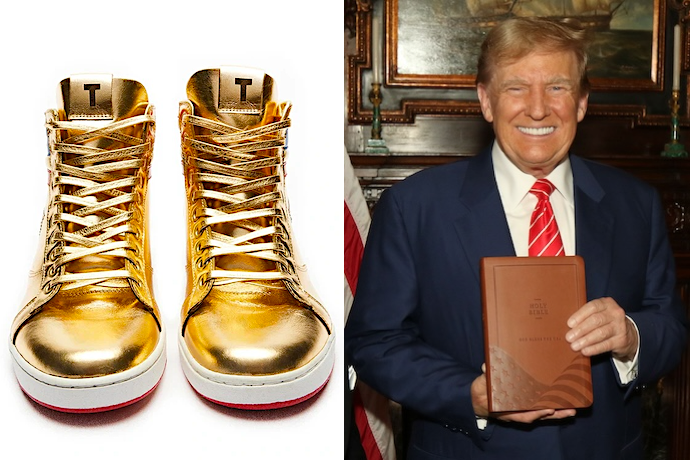
A tale of two 3 campaigns. The image on the left comes from the former president's sneaker site, while the image on the right is featured on the God Bless the USA Bible site. 
 
In late June, national news outlets reported that former President Trump had received the largest donation of the 2024 election. Billionaire Tim Mellon’s $50 million contribution, arriving just a day after the former president’s hush-money trial, in which he was convicted on 34 charges of falsifying business records, effectively closed the gap between the pro-Trump super PAC “MAGA Inc” and the Biden campaign’s war chest. 

Although not the only substantive donation Trump has received as of late, Mellon’s contribution is credited with rescuing the Trump campaign from the financial hole it’s been in for much of the election cycle largely due to dwindling donor support and the exorbitant costs associated with his legal fees. Over the years the Trump campaign has resorted to fundraising tactics that have raised eyebrows, including one they referred to internally as the “money bomb” which, according to the New York Times, “steered supporters into unwitting donations.”

In March of this year, just days before Easter, Donald Trump held a press conference to announce the sale of his new Bible. For $59.99, Americans wishing to join the former president in “Making America Pray Again” could own what he claimed to be his “favorite book.” 

The God Bless the USA Bible (GBUSA), the only edition of the holy writ the former president endorses, includes the King James Version (KJV) of the Bible alongside the Bill of Rights, Declaration of Independence, Pledge of Allegiance, and the US Constitution. Unsurprisingly, Trump hawking the greatest story ever told elicited the expected lambasting social media posts and late-night comedy jokes; what it failed to elicit, however, was any acknowledgment of the role of race in American Christian nationalism.

His attendance and being honored guest speaker at the Torah Umesorah Convention, solidified his support from the lunatic fringe of the Orthodox Jewish community.  How low does God's Chosen People go?

So even as Cavan Concannon observed here on RD that the GBUSA “[ties] the Bible to patriotism and to Trump himself,” and Bradley Onishi noted that “there are folks who are gonna eat this up” (i.e., White evangelicals), I’m not aware of any commentator who read this moment through the lens of anti-Black racism and the history of American Christianity. This is an important distinction from the often ambiguous use of “POC,” which includes Hispanic Americans, Asian Americans, and others. A recent report noted Latino evangelicals’ increasing grassroots efforts to support Trump, explicitly in favor of Christian nationalism, suggesting, as NBC News’s Dasha Burns points out, that the GBUSA might actually be a move in their direction. So if the GBUSA is a nod to Latino evangelicals, how is Trump courting Black voters? 

Despite the fact that Black Americans remain the most religious demographic in the country, this was not the intended audience for Trump’s Bible. Instead, when Trump sought to promote his latest wares, he didn’t approach Black American voters like some “low-rent televangelist,” as he had with the GBUSA, but rather as the neighborhood sneaker vendor.

Unlike the GBUSA website, The Never Surrender High-Top Sneaker site doesn’t make grand claims about patriotism and values. Moreover, there’s no formal advertising campaign, and the site is much less polished. In addition, unlike its counterpart, it lacks photos of families, celebrities, and politicians proudly brandishing the product. “The Never Surrender” sneaker page is busy, tacky, and cluttered with multi-angle images of the gold footwear (which reportedly sold out within hours), low-top options (in “T-Red” and “POTUS White”), a gold Trump superhero charm, and his Victory47 fragrance line. Anyone familiar with the aesthetics of an urban beauty supply store will unquestionably identify deep resonances on the site. 

This raises some questions: Why did the Trump team choose sneakers over Bibles when looking to court Black voters? And why the local beauty supply store and not the storefront church?

In his recent piece outlining the Republican Party’s play on racial distinctions titled “How Trump is Dividing the Minority Voters,” Ronald Brownstein opens with a line from Republican Representative Matt Gaetz: “What I can tell you,” Gaetz said earlier this year, “is for every Karen we lose, there’s a Julio and Jamal ready to sign up for the MAGA movement.” 

Racial coding and gender neutrality be damned! Brownstein rightfully notes that “Jamal,” along with “Julio,” are not only “stereotypical racial shorthand” but also gender-specific placeholders for “ Black and Latino men without a college degree”—namely, those “traditional,” cishetpat individuals who arguably may feel left behind in a so-called progressive, left-leaning, and woke America, but who aren’t entirely aligned with Trump, according to a February 2024 report from PRRI (full disclosure: I’m currently a PRRI Fellow). 

In addition to White evangelicals, the former president needs young, non-White males if he hopes to win the upcoming election. So, it’s unsurprising that when he appeared at Sneaker Con in Philadelphia this past February, although standing before a mixed crowd, including Trump-supporting Cheer Moms, his campaign hoped he would “win over more young and minority voters, particularly young Black men.” 

Or, as Fox News contributor Raymond Arroyo now-famously stated: 

This [sneaker line] is connecting with Black America because they love sneakers. They’re into sneakers…This is a big deal, certainly in the inner city. So when you have Trump roll out his sneaker line, they’re like, ‘Wait a minute; this is cool!’ He’s reaching them on a level that defies and is above politics. The culture always trumps politics, and Trump understands culture like no politician I’ve ever seen.

The assumption that Sneaker Con and not the local church is the best place to capture new Black voters is a notable shift in American politics. But the Trump campaign opting to lure Black voters with gold lamé hightops rather than a Bible should give us pause. Whether it’s a pair of kicks or the KJV, Trump’s campaign strategy operates as a curious contemporary echo of the imperial Christianity and commodification of racial hierarchy that underwrote colonial expansionism and the Transatlantic Slave Trade.

To be clear: this is not an attempt to compare Trump’s campaign strategies to the transatlantic slave trade, but rather to acknowledge that there’s a shared cultural heritage or DNA. Or, as womanist theologian Katie Cannon showed, it is part of a “theologic of racialized normativity,” first implemented by the earliest European colonizer. Within this framework, the earliest European colonizers justified monetizing the spreading of the gospel through the free labor of colonization and slavery. Thinking about Trump’s grifting tactics in this light might help us understand why all of this matters, and should not be taken for granted as politics as usual.  

Could it be that, insidious racial stereotypes aside, the Trump Campaign understands, as Albert Raboteau wrote in 2003, that “For three centuries, white and black Americans have dwelt in the same land. For at least two of those centuries, they have shared the same religion. And yet, during all those years, their national and religious identities have been radically opposed”? 

Consequently, did they opt not to market their Bible to Black Christian America because they honestly know that there’s nothing in a Christian nationalist-laden KJV Bible that will critically, much less sincerely, work to repair the most crippling effects of the Black experience that originated with chattel slavery? If so, at least we can say that, in this respect at least, their honesty is refreshing.

https://religiondispatches.org/trumps-bibles-and-sneakers-campaigns-tell-an-old-story-about-the-role-of-race-in-christian-nationalism/?utm_source=email&utm_campaign=daily

Sunday, July 07, 2024

It might do well to start by drafting an estimated 8,300 current “full-time Torah students” who, according to the Israel Democracy Institute, are nothing of the kind — who, in a despicable scam, are not in fact genuinely studying in the institutions where they are registered and state-subsidized.


Evading national service in the Jewish state is the opposite of authentic Judaism


Belatedly outlawed by the High Court, the norm under which the Haredi community is excluded from its responsibilities is an indefensible aberration and a betrayal of Jewish values


Police disperse ultra-Orthodox Jews blocking a highway during a protest against the military draft, in the central city of Bnei Brak, on June 20, 2024. (Jack Guez/AFP)
Police disperse ultra-Orthodox Jews blocking a highway during a protest against the military draft, in the central city of Bnei Brak, on June 20, 2024.


“There is no power in the world that can cut off the people of Israel from studying the Torah, and anyone who has tried this in the past has failed miserably. No high-handed ruling will abolish the community of scholars in the land of Israel, which is the branch on which we all sit.”

Thus spoke Knesset member Aryeh Deri, chairman of the Sephardi ultra-Orthodox Shas party and veteran former government minister, immediately after nine High Court judges had unanimously ruled on Tuesday that decades of blanket exclusion from military service for tens of thousands of ultra-Orthodox men is Zionistically untenable, unequal, unfair and illegal, and has to end.

For all Deri’s ostensibly righteous — but actually blasphemous — indignation, nobody, but nobody, on the court or anywhere else in the Israeli leadership or public, is seeking to “cut off the people of Israel from studying the Torah” or “abolish the community of scholars in the land of Israel.” (The Shnorrers' Big Ugly Lie)

Indeed, few Israeli Jews doubt the centrality of Judaism to Israel’s very legitimacy: This is the only ancient and modern homeland of the Jewish people, who were sustained in exile for millennia by fealty to their faith, which has itself been maintained and rejuvenated by the constant study and contemporaneous interpretation and reexamination of its guiding texts.

Nobody needs Aryeh Deri, a recidivist criminal who is an insult to the precepts of Judaism, to tell them this.

Shas chair Aryeh Deri, right, and United Torah Judaism chair Yitzchak Goldknopf

What the nine High Court judges, secular and Orthodox alike, were actually seeking to do is to return the esteemed practice of Torah study to its genuine, traditional framework — as a core element, alongside a broad education and honest employment, in a rich and fulfilling life for all Jews who seek to pursue it, helping to guide its scholars in making their productive contributions to a robust and just society.

In contrast to centuries of Orthodox Jewish tradition, and in contrast to the abiding norm in Jewish communities around the world, only in Israel, and only in the past half-century, has full-time Torah study for the young male Haredi masses become the norm — an aberration indulged by secular politicians in exchange for alliances with the leadership of the growing ultra-Orthodox community, and exploited by the likes of Deri and his Ashkenazi counterpart Yitzchak Goldknopf to accrue power and influence, while condemning their constituents to blinkered, narrowly educated and impoverished lives.

That ultra-Orthodox rabbis have partnered their political representatives in this deviation — insisting that their publics must not share in the practical burden of the defense of our homeland, indeed must not perform any form of national service, and must be subsidized in their isolationism by those who do serve and who do pursue gainful employment and who do pay taxes — constitutes a terrible vote of no-confidence in their approach to Judaism:

Is Israel’s energized and diverse society so compelling, and their separationist approach to the faith so fragile, that to permit their constituents to integrate into the military and the workforce — tolerant and welcoming environments, widely respectful of a multitude of different approaches to life — would be so devastating and so destructive as to necessitate hysterical opposition at any and all cost?

Worse still, by insisting that all young ultra-Orthodox men be subsidized by the state to which they feel such ambivalence if not outright derisive hostility, and that all young ultra-Orthodox men be exempted from any kind of national service, they are undermining the other millennia-old Orthodox tradition in which the very best and brightest of scholars are subsidized by the rest of the community, so as to be able to devote all their time and exceptional skills to the advancement of Torah study.

That tradition was respected at the foundation of the modern state by its first prime minister David Ben Gurion, who exempted what he understood to be 400 yeshiva students from military service, conscious of the decimation of the world of Torah study as a consequence of the Holocaust. Twenty years later, there were still only 800 such exemptions. But in 1977, the government of Menachem Begin lifted the restrictions, and today there are some 63,000 eligible ultra-Orthodox men of military age who are not serving.

A man holds a sign reading ‘It would be better for our children to be killed than to become secular’ during a protest by ultra-Orthodox men against IDF conscription, outside the city of Bnei Brak

Never in the modern history of Israel has there been a greater need for all elements of society to pull their weight in the defense of the nation. Israel is fighting wars or bracing for wars on multiple fronts — against Hamas in Gaza, Hezbollah in Lebanon, terrorists in the West Bank, militias in Iraq and Syria, the Houthis… The standing army is at full stretch. Tens of thousands of reservists have been at the front for months — separated from their families, away from their jobs. So acute is the strain that the government is busy legislating to demand still more reserve duty to still later an age.

And yet the ultra-Orthodox leadership maintains its refusal to negotiate an arrangement with the government to ensure that the community plays its role in the practical protection of the Jewish state and maintains the pursuit of Jewish scholarship.

Police disperse ultra-Orthodox Jews blocking a highway during a protest against the military draft, in the central city of Bnei Brak

Such an arrangement would, of course, benefit all parties interested in the well-being of this precious country, most emphatically including the ultra-Orthodox community itself — taking an appreciated, constructive role in the vibrant functioning of this extraordinary, and currently extraordinarily threatened nation.

The army is not capable of tomorrow absorbing the tens of thousands of ultra-Orthodox men who are now, in light of Tuesday’s ruling, required to play their role in the defense of Israel. It might do well to start by drafting an estimated 8,300 current “full-time Torah students” who, according to the Israel Democracy Institute, are nothing of the kind — who, in a despicable scam (Hebrew link), are not in fact genuinely studying in the institutions where they are registered and state-subsidized.

Shaarei Yitzhak yeshiva students on a 2023 skiing trip to Bulgaria

But ultimately all of Haredi society — – 13 percent of the populace and rising fast — and, indeed, all of Israeli society must be obligated to fulfill its responsibilities to the protection of the nation.

After decades of cat-and-mouse games with the politicians, the High Court belatedly on Tuesday took a stand in favor of both authentic Judaism and the survival and flourishing of our imperiled state.

Aryeh Deri and his ilk are not only on the wrong side of Zionist tenability, equality, fairness and legality; they are on the wrong side of authentic Judaism. Of course they are. Because authentic Judaism, as opposed to their self-serving distorted version, stands for precisely such values.

כמה משלמת המדינה כדי שחרדים יישארו בישיבות

https://www.mako.co.il/news-channel12?


https://www.timesofisrael.com/evading-national-service-in-the-jewish-state-is-the-opposite-of-authentic-judaism/?utm_source=Special+Update&utm_campaign=special-update-2024-07-07&utm_medium=email