The
camp had followed some but not all of the CDC mitigation steps against
the spread of the new coronavirus -- but was not enough to keep campers
and staff free of illness.
"Settings,
like multi-day, overnight summer camps, pose a unique challenge when it
comes to preventing the spread of infectious diseases considering the
amount of time campers and staff members spend in close proximity," the
CDC wrote in a statement.
"Correct
and consistent use of cloth masks, rigorous cleaning and sanitizing,
social distancing, and frequent hand washing strategies, which are
recommended in CDC's recently released guidance to reopen America's
schools, are critical to prevent transmission of the virus in settings
involving children and are our greatest tools to prevent COVID-19," the
CDC said.
According
to the study, published Friday in the CDC's Morbidity and Mortality
Weekly Report, the camp adopted most of the components outlined in the
CDC document "Suggestions for Youth and Summer Camps," but it did not
make campers wear cloth face masks -- only the staff.
Nor did the camp open windows and doors for increased ventilation In buildings.\
Additionally, camp attendees engaged in "daily vigorous singing and cheering," which might have contributed to transmission.
The
study breaks down what happened at the camp when it opened its doors in
mid-June to more than 600 campers and more than 120 staffers.
Five
days after the start of orientation and two days after the start of the
camp session, a teenage staff member fell ill and left camp; the next
day that person was confirmed to have Covid-19. Officials began sending
campers home that day and closed the camp three days later.
The
Georgia Department of Health was notified and began its investigation
the day after the first teenage staffer fell ill. All in all, test
results were available for 344 (58%) of the 597 attendees from Georgia;
among these, 260 (76%) were positive. At least 44% -- 260 of 597 -- got
infected, although the researchers say not everyone was tested so the
rate could be even higher. The 27 out-of-state attendees were not
counted in this preliminary analysis.
Asymptomatic
infection was common and may have played a role in the spread, the
study authors said. Among 136 cases with available information on
symptoms, 36 patients -- 26% -- reported no symptoms. Of the 100 who
reported symptoms, those most commonly reported were subjective or
documented fever, headache and sore throat.
Interestingly,
a higher percentage of the youngest children tested positive: 51% among
those age 6-10 years, 44% among those age 11-17 years, and 33% among
those aged 18-21 years tested positive.
"This
investigation adds to the body of evidence demonstrating that children
of all ages are susceptible to SARS-CoV-2 infection and, contrary to
early reports, might play an important role in transmission," the study
authors wrote.
They also found the
attack rate increased with increasing length of time spent at the camp,
with staff members having the highest attack rate at 56%.
"These
findings demonstrate that SARS-CoV-2 spread efficiently in a
youth-centric overnight setting, resulting in high attack rates among
persons in all age groups, despite efforts by camp officials to
implement most recommended strategies to prevent transmission," the
study authors wrote.
The CDC study didn't name the camp.
CNN reported on an overnight camp
with locations in north Georgia that earlier this month closed after
positive Covid-19 tests, and have reached back out to ask if it was the
camp in the study.
Agudath
Israel of California represents the Orthodox Jewish community in the
State, including more than 25 Orthodox Jewish day schools with over 7000
students in an effort to reopen K-12 schools for face to face learning
in the fall. The Orthodox Jewish community fully understands the threat
of the COVID -19 virus in the State of California. We place safety first
in any action we take.
During the first months of the pandemic our community experienced
hospitalizations, the need for long term ventilator care, and even
death. Our community took strong action to follow governmental
guidelines. In May we were able to reopen synagogues adhering to the
state and county protocols. In July, we opened day camps, again
following state and county guidelines. To date, we have had no infection
traceable to our synagogues or day camps. (Flat Out Lie!)
Sadly, we have not been able to reopen our schools. From March until
the end of the academic year, our students, like all students throughout
the State, participated in distance learning only. Each of our schools
invested hundreds of thousands of dollars in a heroic effort to obtain
the necessary technology, set up and train users, and to implement a
robust distance learning program.
Despite these efforts, our educators feel, as do educators throughout
the State, that the distance learning model was not successful. The
thought of limiting instruction to home based computer learning in the
coming academic year is untenable. The model is an academic failure and a
financial impossibility. Many prominent physicians, including
pediatricians, agree that schools can be safely opened for face to face
learning if proper guidelines are followed.
We applaud the Governor’s inclusion of a waiver option in the State
guidelines that would allow an elementary school to petition to reopen.
We strongly contend that the waiver process should be expanded to
secondary grades. There is no conclusive science to make such an
arbitrary distinction. (ANOTHER LIE)
(Older Children Spread the Coronavirus Just as Much as Adults, Large Study Finds:
It should also be possible for a consortium or
group of schools to batch their applications and submit them together.
Agudath Israel of California wants all Californians to stay safe and
healthy. Part and parcel of that is to enable our children to learn. It
is imperative to allow those willing to take the necessary steps to
ensure a safe learning environment, the ability to reopen schools for
the coming academic year, for face to face instruction.
How a Public Health Campaign in the Warsaw Ghetto Stemmed the Spread of Typhus (No Agudah "Torah Protects" intervention in Warsaw or anywhere in Europe)
A new study shows how life-saving efforts by Jewish doctors helped curb an epidemic during World War II
Jewish doctors give medical examinations in the Warsaw Ghetto
The Warsaw Ghetto was a horrific part of the Nazi Germany campaign
to exterminate the Jewish population of Europe. As millions were killed
by the SS in death camps like Auschwitz, the Jews in Poland’s capital
city were held captive by the German army and subjected to starvation,
forced labor and disease.
To combat the spread of illness, a new study suggests, Jews within
the Ghetto may have had success in using community containment efforts
not unlike the social distancing efforts recommended today in the
struggle against COVID-19. The historical record shows that an epidemic
of typhus, a deadly but preventable bacterial disease, ravaged the
imprisoned population, but then, somehow, cases dropped dramatically.
While historians have long understood this to be the case, a new mathematical modeling study, published last week in Science Advances,
brings together information from across a spectrum of sources including
daily journals, government rationing records, reported case numbers and
biostatics, and posits that a vibrant public health campaign was at the
root of the efforts to curb the spread.
In the fall of 1940, the occupying Germany army blockaded the
Polish city of Warsaw, sealing the city’s more than 400,000 Jews into a
1.3 square mile area. (For comparison, the population density of New York City
is about 27,000 people per square mile.) The Germans excused and
codified the containment under the guise of isolating disease-carrying
individuals; Polish Jews were depicted in Nazi propaganda posters as lice, or typhus vectors.
“It's eye-opening to realize how the question of epidemics informed
various decisions, including the German decision to create ghettos, and
paved the way to genocide,” says Holocaust historian Tomasz Frydel, who was not involved with the study.
German officials knew enough about the spread of typhus to know
that by overcrowding, starving and depriving the Jewish residents of
basic necessities, the ghetto
would become a breeding ground for infection. Additional food supplies
were blocked until May 1941, at which point rations provided by
authorities amounted to no more than 200 calories per day, per person.
The starvation made fighting any disease that did emerge near
impossible, and louse vectors spread easily due to a lack of adequate
sanitation and an abundance of hosts.
More than 100,000 Jews were infected by typhus and at least 25,000
died directly from it. But, just before the winter of 1941, as an
epidemic in the ghetto was breaking out, something remarkable happened:
cases dropped exponentially when they should have continued to rise.
“My greatest surprise was realizing that the typhus epidemic died
out at the very beginning of winter just when I would have expected it
to accelerate,” says study author Lewi Stone, a mathematician and
disease modeler with RMIT in Australia and Tel Aviv University in
Israel. “For a year I thought this was likely just a corrupted dataset.
But then I checked with the diary of [famed ghetto historian Emanuel]
Ringelblum, who documented daily events in the ghetto, and he himself
corroborated what I had seen.”
Ringelblum wrote in his diary that cases fell by 40 percent. Stone
and his team set off to quantify what happened between the time the
ghetto was sealed off in November 1940, until July 1942, when it was
liquidated and more than 250,000 remaining Jews were sent to the
Treblinka death camp.
New disease model shows predicted cases (black line) matching actual
typhus cases (red line) on the left, and predicted cases if there were
no intervention (right)
The researchers used a disease model where the estimated population
of ghetto residents was divided into classes representing different
individuals’ disease states: susceptible, exposed, infected or
recovered. They then added a disease vector factor representing lice to
the equation, using a rate of spread that would emulate any sort of
external factor taking hold, like preventative public health measures.
The model’s total median number of simulated reported and unreported
cases over the period of September 1940 to July 1942 was approximately
72,000, with a possible maximum of 113,000 cases.
When the researchers
compared their run to the actual data available from a variety of
reports and medical and historical accounts from the ghetto’s records,
the numbers matched. Having shown the model was reliable, they next used
it to predict the trajectory of the typhus spread with a constant rate
of infection, which they would expect when no preventive measures are
put in place. The run showed that cases would have exceeded 190,000, an
outbreak two to three times higher than what occurred.
Since the number of susceptible Jews remained relatively high
during the test run period, the authors said the epidemic was unlikely
to have dropped for a lack of hosts. They concluded there must be other
factors at play. “And so, we hypothesized that the epidemic crashed
actually due to the community's efforts, which were substantial in the
end to try to bring that epidemic down,” says Stone.
Among the Jewish public health officials working within the ghetto was epidemiologist Ludwik Hirszfeld,
who co-discovered the inheritance of blood types. Hirszfeld had helped
establish the National Institute of Hygiene in the Polish state that
existed between the world wars and played a major role in establishing
public health initiatives within the ghetto. In his memoir,
Hirszfeld wrote, “typhus is the inseparable companion of war and
famine… This disease destroys more people than ‘the most brilliant’
commander. It often decides the outcome of wars.”
To combat the deadly disease, even with scant resources, Hirszfeld
and other Jewish doctors sponsored hundreds of public lectures, offered
sanitary and hygiene courses, and set up an underground medical
university to train young medical students on the co-occurring effects
of starvation and epidemics. Because no antibiotic was available for
typhus at the time, the best treatments included de-lousing and staying
clean. Stone says doctors and public health workers encouraged people to
monitor for lice, change and iron clothes and wash as much as possible.
While those efforts extended throughout the ghetto, volunteer agencies
took advantage of a meager influx of food that came after May 1941 and
set up a feeding program that helped to moderately quell some of the
starvation.
Polish Jews awaiting their turn in the ghetto soup kitchen;
starvation and disease went hand-in-hand in the Warsaw Ghetto
Not everyone is convinced community health efforts fully explain the drop in disease. Samuel Kassow, historian and author of Who Will Write Our History? Rediscovering a Hidden Archive From the Warsaw Ghetto,
says the current study is provocative, but that tactics encouraged by
Jewish public health workers would have been challenging to enact. Due
to the lack of coal as a fuel source, buildings had no heat and pipes
froze, which made washing and staying clean very difficult. “How can you
have ‘social distancing’ for example, when the Germans configured the
ghetto in such a way that to get from A to B to C there were narrow
‘choke points’ where masses of people had to crowd against each other,”
he says. “Imagine the staircases at Grand Central at 5 p.m. if all the
escalators failed at once.”
While typhus had devastating effects in the ghetto, Frydel notes
ways that righteous gentiles used public health information about typhus
outside of the ghetto as a means to help save Jews in hiding. “We find moving stories of rescuers using typhus to scare off the German police,” he says.
Rescuers could keep authorities at bay by telling the Gestapo that
typhus-infected individuals were inside. Some Polish doctors figured out
how to forge positive tests to save lives.
When workers with fake typhus-positive tests showed up to a factory or
forced work site, Germans sent them home to quarantine, where they had a
chance to escape being worked to exhaustion.
The case of the Warsaw ghetto is not the first or only example of
the interplay between politics and disease, but the study does provide
illuminating evidence in favor of the efficacy of public health
campaigns and the need for novel ways to assess disease risk factors,
especially in light of the ongoing coronavirus pandemic.
Lynn Goldman,
the dean of George Washington University’s Milken Institute of Public
Health, says the study’s combination of history, medicine, epidemiology
and first-hand accounts is rare and the methodology could be hugely
important to containing coronavirus and other diseases, especially in
high-risk, low resource populations.
“Around the world, some refugee camps are as bad or worse, in terms
of public health, and the ability to get in there and assess what's
really going on and then to control pandemics is very difficult,”
Goldman says. “This kind of paper, we could use it to teach humanitarian
assistance, disaster response. But also, it could be used to teach
history, to teach political science.”
"About 65 percent
of public school teachers in the U.S. belong to unions, and despite the
myriad challenges of teaching and learning remotely, it’s possible for
them to do their jobs online."
The Growing Fight Against the School Death Trap
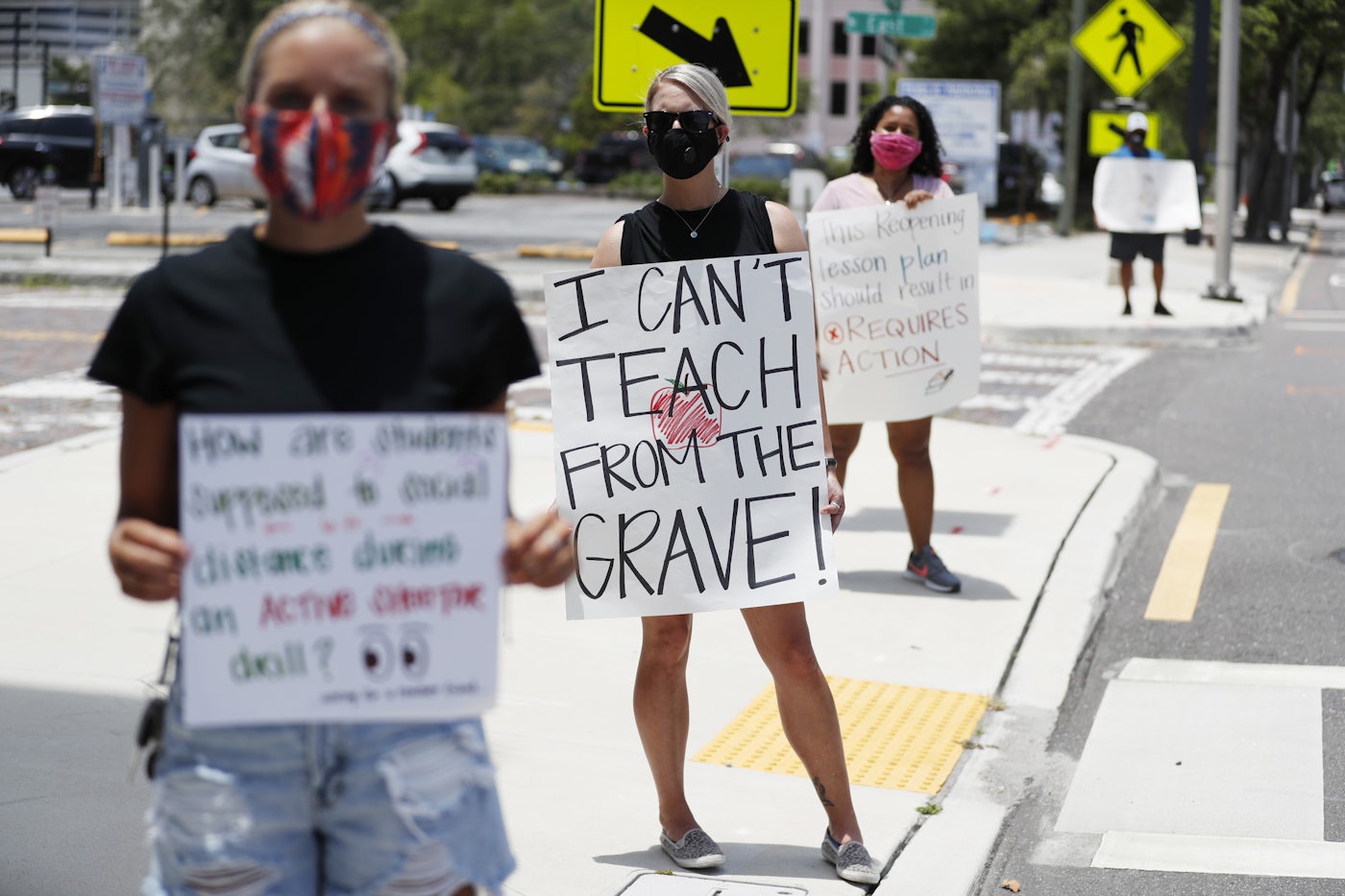
Teachers,
bus drivers, health aides, and other school workers are organizing
against a culture that is trying to feed them into the jaws of the
pandemic.
A
special education teacher at a public high school in Queens remembers a
week in April when, almost every day, she learned another student at
her school had lost a parent or grandparent to Covid-19. Now she fears
reopening this fall—even with a hybrid learning model like the one proposed in New York—will trigger another wave of grief.
“I
feel like they’re sending me back to orphan my kids,” she told me,
asking to remain anonymous because she fears professional repercussions
for speaking out. She misses seeing her students in person, but all the
talk around opening in a masked, socially distanced, constantly
sanitized environment reminds her of “The Emperor’s New Clothes.” None
of the plans she’s seen seem realistic for her overcrowded school, and
she’s worried teachers will spread the virus to students and their
families, many of whom live in multigenerational households. She lost a
parent in high school and is horrified by the prospect of more kids
going through the same—and feeling complicit as “a vector of death.”
With more than 144,734 Americans lost to Covid-19, teachers and school staff around the country share her worries. A recent study
from South Korea found that young children can infect others, and kids
over 10 can spread the virus as effectively as adults. Of course,
schools cannot open without the workers who keep our education system
running—teachers, bus drivers, custodians, food service personnel,
paraprofessionals, school nurses, and others. Many fear that going back
will put them, their families, their students, and their communities at
risk. According to an Ipsos poll
conducted in May, nearly one in five teachers would quit if they had to
return to school this fall, and around half have considered leaving
their jobs. Some are writing their wills.
A
growing number of education workers are asking their school and union
leaders and elected officials to postpone reopening until the virus is
under control. A national movement, Refuse to Return,
calls for staff and students not to come back in person “until our
counties report no new cases of Covid-19 for at least 14 consecutive
days,” the outer window
in which experts say 99 percent of symptomatic people will develop
signs of infection. Since Harley Litzelman, a high school history
teacher and union organizer in Oakland, California, launched the campaign in late June, affiliated Facebook groups have formed in 26 states and the District of Columbia, and more than 80,000 people have signed the Refuse to Return petition. On July 27, local organizers are planning a Day of Action Against Pandemic Inaction, with car caravans, remote protests, and phone and email drives targeting their school superintendents and local and state officials.
Much of the discussion
around reopening has worked backward from the premise that schools must
provide in-person learning in some capacity. Litzelman wants to flip
that logic. For him, it’s not just about refusing to put himself, his
students, and his fiancée, who has asthma, at risk: It’s a rejection of
the idea that Americans must “normalize the constant death of our
neighbors” to keep the economy running as the pandemic rages on. While
an initial call to action directly addressed teachers, Refuse to Return
aims to engage nonteaching staff, parents, students, and “even people
unrelated to education, because ultimately this campaign is about
preventing greater community transmission everywhere.”
“It
is our responsibility to exercise our power as workers to force our
leaders to do what they have refused: end this pandemic,” Refuse to
Return’s sample resolution
reads. “Our demands are intrinsically tied to the movements for racial
justice, as Black and Brown communities have disproportionately borne
the brunt of this pandemic and will continue to do so if elected
officials force students and staff to return to campus before it is
safe.” According to CDC data,
Black and Latinx people in the United States are three times as likely
to contract Covid-19 as white Americans and almost twice as likely to
die from it. Litzelman sees connections between the pandemic, school shootings, and the water crisis in Flint, Michigan—all
lethal failures of a capitalist system in which leaders “acclimate
Americans to the idea that this is just something that we deal with.”
Litzelman
points out teachers have more leverage to stay home than many American
workers, including other school employees. About 65 percent
of public school teachers in the U.S. belong to unions, and despite the
myriad challenges of teaching and learning remotely, it’s possible for
them to do their jobs online.
In contrast, Sequoia, a
nonunion health tech who works alongside the school nurse at an
elementary school in Aurora, Colorado, is “between a rock and a hard
place” this fall. If a student or staff member becomes infected, “I will
be coming in direct contact with them when they come to the clinic, and
I will be around them for an extended amount of time,” she said. But if
her school doesn’t open for in-person learning, she doesn’t get paid.
Sequoia’s
paychecks continued after the school shut down this spring, since her
position was already budgeted, but her district, like many around the
country, is now facing a deficit.
Some of the ideas floated to reduce costs include “charging children to
use the school bus, upping athletic fees, getting rid of nurses and
replacing them with my position, which I think is completely crazy,
especially during a pandemic.”
She
and the school nurse share a small clinic and will have to borrow an
isolation room from another department. If they have more than two
people at the school showing symptoms, Sequoia doesn’t know what they’re
going to do. But at the same time, she can’t imagine not coming back to
her students if the campus opens. “It would be like abandoning the Titanic as it goes down. I’m like, that’s my ship, I’m going to go down with it,” she said.
Sequoia
joined a Facebook group affiliated with Refuse to Return and has
emailed Governor Jared Polis, asking him to make a decision about
reopening because she feels Colorado’s school districts are dragging
their feet. When the school year starts on August 17, she’d ideally like
to begin remotely, despite the fact that her son, who has autism and is
nonverbal, has struggled with online learning. “It is easier to bring a
child back up to their level than it is to bury a child,” she said. “So
if it means keeping the kids safe and they’re behind a little bit, then
so be it.”
Covid-19 is already killing school workers, even
before the doors open for fall. In Arizona, three teachers shared a
classroom to give virtual summer school lessons. Despite wearing masks,
sanitizing, and maintaining distance, all of them tested positive for the virus, and one, Kimberley Chavez Lopez Byrd, died in June. In Florida, Jordan Byrd
(no relation), a 19-year-old college student who worked as a school
custodian, recently died after contracting the virus. The school’s
principal and his wife, who is the principal of another school in the
area, both tested positive and experienced “relatively mild” cases.
“Our school family is devastated,” a teacher at Jordan Byrd’s school wrote on Facebook, according to a report in the Tallahassee Democrat,
“and this occurred with no teachers, paraprofessionals [or] students on
campus. If this disease spread in the school where masks were required,
social distancing, and other safety measures were in place, imagine
what it will look like when kids are arriving on buses, sitting in
classrooms, walking the crowded halls, and eating lunch with no masks.”
The Florida Education Association, which represents around 150,000
educators, including public school teachers and staff, is suing the state, arguing that returning to school before the virus is under control violates the state’s constitution.
Chuck
Paquette, a veteran school bus driver near Syracuse, New York, who’s
been in public school transportation for over 30 years, knows three
drivers who’ve decided to retire early rather than chance their health
going back to work. He says he’s no alarmist but is taking the risk
seriously: Though he recovered from Covid at home in March, he deals
with lingering effects and understands there’s a risk he could become
infected again. Even with a mild case, “I’ve never been that kind of
sick in my life.”
Paquette wonders about the logistics of
going back: What happens when a kid on his bus tests positive? If he has
to quarantine, will he be forced to use his sick days? Will he be given
masks to hand out when students inevitably arrive at the bus stop
without one? “What do I do when I’m driving down the road and Johnny
says, ‘Susie took off her mask?’” he said.
In Detroit, protesters blocked school buses from transporting students to summer school, which was offered in person on a voluntary basis. Two students were confirmed positive for the virus after an activist group, By Any Means Necessary, sued, and a judge ordered
the Detroit Public Schools Community District to test those attending
face-to-face classes. “There should have been a foot put down,
children’s lives in danger,” Todd Weems, a bus driver who quit, told Detroit TV station WXYZ.
Refuse to Return’s messaging doesn’t call for an actual strike—which is illegal for public school teachers in many states, though that didn’t stop a wave of walkouts in 2018—but Litzelman wanted the name to convey “a commitment to militant action.” While some unions, including United Teachers Los Angeles and the Chicago Teachers Union,
have called for a fully remote reopening and are advocating for broader
social justice policies, many “have not wanted to take as aggressive a
position as the one we have.”
However, he’s seeing the campaign language
get picked up around the country, and groups including Louisiana’s Jefferson Federation of Teachers and the Santa Rosa Teachers Association in California have adopted the central demand of “14 days, no new cases” before resuming instruction in person.
Around the country, educators are drawing on their collective power. In March, the threat of sick-outs
from rank-and-file teachers union members helped push New York City’s
schools to shut down as the virus spread. “When I look through the
literally thousands of posts in all of the different groups, we see
stakeholders and school staff of all varieties,” Litzelman said. “If we
all refuse to return, we will all protect one another.”
Rabbi Shachter says that they view the virus as a Safeik Sakana, a
potential danger and therefore during the present period they would be
allowed to wash and use alcohol gel, whereas those who are not so
stringent would be forbidden to use disinfectant or wash since during
the year they rely on “Hashem preserves the simplehearted” (Tehillim
116:6). In other words one who is flippant and is careless about the
other rules cannot say that he needs to wash his hands as protection
against the virus. If someone is disregarding the other rules of the
CDC, he cannot insist on this one, and washing would remain prohibited.
Camp Bnos Closing Early Due to Two Confirmed COVID-19 Cases
NEW YORK -
Camp Bnos announced that due to two confirmed cases of coronavirus,
they are ending the first session of the summer two days early.
In a letter to parents, the administration informed the parents of
their campers that due to the infections that were detected, the camp
will close early, and that all who have been exposed to the infected
parties have been notified and should quarantine for 14 days.
The campus, located in Ferndale, New York, has not yet determined if they will operate for the second session of the summer.
What Scientists Know About How Children Spread COVID-19
As communities struggle with the decision over whether to open up schools, the research so far offers unsatisfying answers
A boy has his temperature checked as he receives a COVID-19 test
Every year, children are a major driver of transmission for the
viruses that cause the flu and the common cold. So this March, when the
COVID-19 pandemic hit the United States, Tina Hartert of the Vanderbilt
School of Medicine expected the same to be true for the novel
coronavirus, SARS-CoV-2. But months later, Hartert and other respiratory
disease experts are still trying to pin down the elusive virus, which
has surrendered only hints about its effects on children and their
ability to spread the infection.
What has become clear is that children, especially younger
children, do not get nearly as ill as adults, especially older people,
and rarely die from COVID-19. For example, a meta-analysis of existing studies in Pediatric Pulmonology looked
at 550 cases among children under 18 in China, Italy, and Spain; it
found only nine children had a severe or critical case of COVID and only
one, who had underlying conditions, died.
Still, the question of how likely kids are to be vessels ferrying
the infection to others remains a looming concern as school districts
and states across the U.S. consider whether and how to reopen for the
fall. “It's obviously one of the critical questions that we have to
answer,” Hartert says. “We still don't have a lot of data.”
Hartert
now leads a six-month study funded by the National Institutes for
Health that looks to answer that question, among others. Called the
Human Epidemiology and Response to SARS study (HEROS),
it will sample 1,951 families every two weeks starting July 1. The
families live mostly in urban areas like Chicago, New York and Denver,
but the study also includes some from rural Wisconsin. The goal is to
capture infections as they occur and track the transmissions patterns.
“One of the problems with a lot of the studies that have been done is
you really don't know who's infected and then who transmitted it to
whom,” she says.
The first samples are being analyzed
now. How informative the data set becomes depends on the
subjects—whether it includes clusters of families who are infected and
shows how the virus spreads. “It's a difficult thing to predict,” she
says.
Elsewhere, researchers have teased out evolving and sometimes
contrary answers to basic questions about COVID and kids, with only
enough pieces fitting together to suggest the outlines of an image.
For one study,
published in May, researchers analyzed reports from more than 600
people from two cities in China: Wuhan, the epicenter of the outbreak,
and Shanghai. In this relatively small sample size, they found children
were a little more than a third as likely to be infected as adults. But
children had roughly three times as many chances to become infected when
schools were open, effectively canceling the difference.
Another recent study
by the London School of Hygiene & Tropical Medicine, which used
data from China, Italy, Japan, Singapore, Canada and South Korea, found
that people under 20 were about half as likely as adults
to be infected. But the researchers qualified their findings, noting
that there were variations among countries and age groups. Recent data in England,
they noted, found little difference in infection rates among children
and adults. Nicholas G. Davies, an epidemiologist and modeler who led
the study, said what happens with kids and COVID remained a mystery.
The fact that children are less likely to exhibit symptoms while
infected makes the problem of determining how well they spread the
coronavirus even trickier to figure out. But emerging studies and the
history of the common coronaviruses being transmitted by children makes
for a compelling case they can spread the COVID-19 virus.
A recent study
from South Korea of 5,706 infected people and their 59,073 contacts
found children under 10 transmitted less often to adults while those
between the ages of 10 and 19 spread the virus as well as adults do.
Households with the older children had the highest rate of spread to
other members—18.6 percent— of any age group while households with
younger children had the least spread, just 5.3 percent. The overall
average was 11.8 percent.
There’s evidence as well that children, including those without symptoms, are as likely to be infectious. Researchers in Berlin tested
more than 3,700 COVID-19 patients, including 127 individuals under 20
years old. The study found that compared to adults, kids carried the
same viral load, a signal of infectiousness.
Some reports place children at the center of spreader events. In Israel, the number of new cases has risen from fewer than 50 per day two months ago, before schools reopened, to more than 1,500
per day now. (Today it reached 2000) PM Those numbers followed school outbreaks that infected at
least 1,335 students and 691 staff. An overnight camp for
13-to-18-year-olds in Missouri closed after 82 children and staff became infected.
Yang Yang, a biostatistician
at the University of Florida’s College of Public Health, is completing a
study based on nearly 20,000 households. He says his preliminary
results reveal that children do infect adults, especially in the same
households. “Our analysis is that children are a little bit more
infectious than adults with in-house transmission,” he says, but that
may just be because they are tended to by parents or grandparents in
homes.
A teacher in a pre-school class practicing coronavirus precautionsJeffrey Shaman,
an infectious disease expert at Columbia University's Mailman School of
Public Health who has been a leading COVID-19 researcher, says it’s
impossible to get a clear picture of the effects of COVID on kids right
now. Shaman and his team spent two years running the Virome of
Manhattan, a surveillance project similar to HEROS, which tracked
infections and transmission of flu, cold viruses and the coronaviruses
that cause the common cold.
They found viruses moving from schools and
daycare facilities, from children to parents, something any parent who
sends their children to daycare or pre-kindergarten for the first time
recognizes. However, the studies to date about COVID-19 and children
have been too small or too compromised by factors such as school
closings, lack of testing or much smaller community caseloads than the
United States.
“The question is, what happens when the children get it? Are they
effectively dead ends?” he says. “Or are they capable of communicating
the virus and spreading it to other people? And I think the evidence is
not conclusive. We don't know enough to know that children to some
degree are less capable of transmitting this virus.”
Derek Cummings,
an emerging pathogens expert at the University of Florida, says he’s
not convinced by the evidence that children are less likely to transmit
the disease. His work with the endemic coronaviruses, relatives of
SARS-CoV-2, shows that children are infected with their first
coronavirus by three and get all four of the common coronaviruses by 20. “Every other coronavirus infects kids and transmits among kids,” he adds, “so why would we assume this one doesn't?”
Hartert says that the research indicating children may not as often
transmit the virus would, once again, make SARS-CoV-2 an outlier. She
noted that studies show children are shedding a similar amount of
COVID-19 virus as adults, which would suggest they were equally capable
of transmittal. “So there are a lot of things that would make it
surprising if we find out that children are less likely to transmit the
virus,” she adds.
Back to school
Shaman says he understands the need to get children back to school,
but it's hard to gauge the risk given the current state of knowledge
and information slanted by governments looking to reopen schools. “We
don't have a policy model and an experience model that allows us to
understand what will be appropriate,” he adds. “We're dealing with a
novel coronavirus. We don't fully understand how children are involved
in the transmission cycle.”
Hartert, a former high school teacher, said that schools need to
reopen for a number of reasons, including mitigating the inequities of
staying at home for low-income students who need support for things like
meals and after-school care. But in her opinion, reopening should only
happen in states and communities where the virus is under control. (Other countries have reopened their schools, but only after the virus had been subdued and often with limited class sizes.)
“There aren't many other countries that have opened schools while
rates of the virus are increasing exponentially,” she says. “If you live
in a region where there's more spread of the virus, it's a lot more
likely that you have an outbreak from a teacher, parent, or child who
brings the virus to school.”
Mitigation strategies like masks, social distancing and ventilation
need to be in place as well. “We're going to have to weigh the risks
and benefits with the amount of data that we have at the point which we
have to make decisions about opening schools,” she says. “We've got to
get our kids back to school and we've got to open daycares for essential
workers. I think everyone wants to do that. But it's not as easy as
just mandating that it happen.
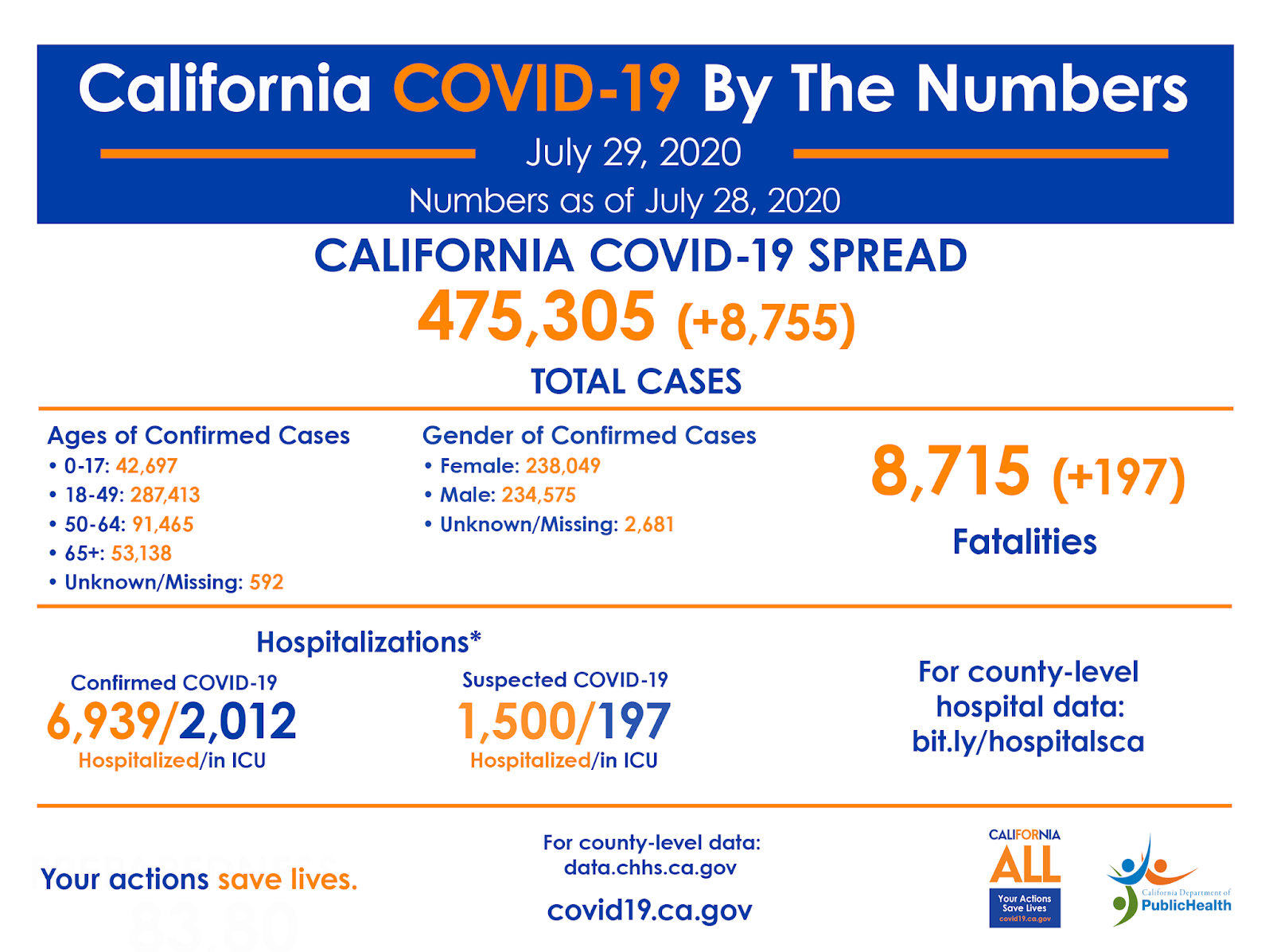
The
second wave has completely devastated Israel and the government’s
handling of the situation has been a subject of criticism. The state's
contact tracing system is failing, their economic stimulus plan is inadequate, their healthcare system is overwhelmed, their food distribution efforts are insufficient, and the economy is in ruins after a long lockdown with another one around the corner. As a result, the number of Israelis facing economic hardship and can't provide food for their families is growing, rapidly.
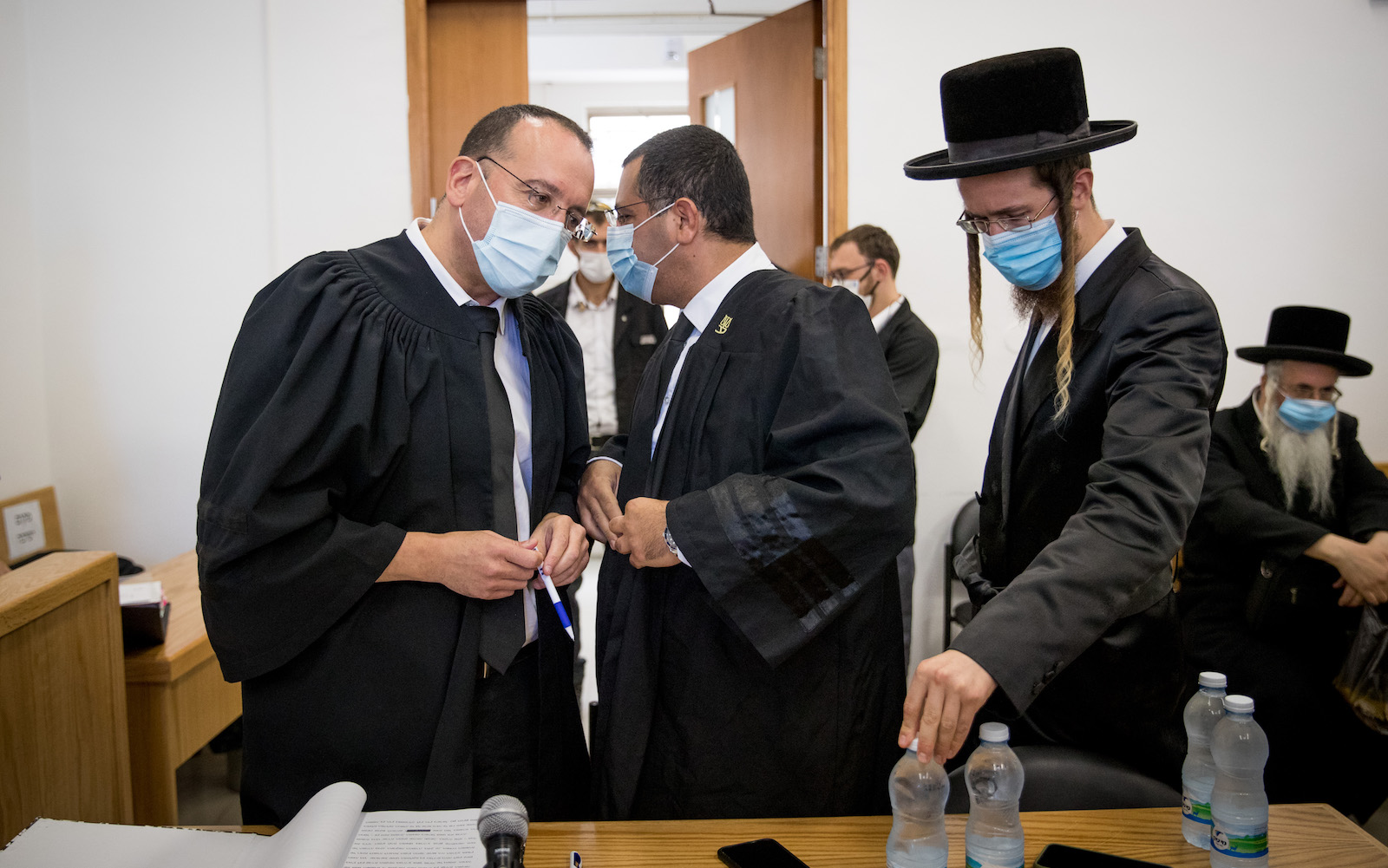
The case of accused child sex offender Malka Leifer has tarnished the image of Torah and the image of Israel in the world
Family
members of Malka Leifer, an Ultra orthodox teacher wanted in Australia
for child sex abuse, arrive for a court hearing at the District Court in
Jerusalem on July 20, 2020.
But yesterday I was hoping that a certain volume of Talmud would
burst into flame. It was in a Jerusalem courtroom, on the table of the
defense counsel for Malka Leifer, captured by my friend Ittay Flescher
for Plus61J Media, which covers the Jewish world for an Australian
audience. Leifer is facing 74 counts of child abuse from her time as an
ultra-Orthodox girls’ school principal in Melbourne, and this was her
69th hearing since three sisters came forward a decade ago to tell their
harrowing story of victimization at her hands.
So whose Talmud was it? Her longtime lawyer Yehuda Fried
brought the gigantic ArtScroll edition (Pesachim, Volume I, it appears)
to peruse while her new counsel Nick Kaufman (famous for fighting
extradition for Serbian genocidists and Muammar Gaddafi’s kids)
used the opportunity to blame the victims. Yes, they were minors, but
they almost weren’t. Who’s to say these 16- and 17-year-old students weren’t really the ones at fault?
To extradite Leifer for a trial that will determine her guilt or
innocence, the Israeli courts must first find her guilty! And she’s such
a pious woman, how could she maintain her religious standards in an
Australian prison?
These arguments are patently ludicrous, and hopefully Judge Chana
Miriam Lomp will reject them. But they do so sound awful… Talmudic. The
Talmud is often criticized for sophistry, for picayune dissection of
impossible abstractions. However, some of the wildest theoretical
discussions in the Talmud have turned out to be essential over the
millennia. A flying tower crossing over a graveyard, a flying camel
ferrying witnesses from one far-flung location to another, a cow giving
birth to a donkey, a woman getting pregnant from a bath – these all
seemed ridiculous until we developed analogous technology.
But that is the difference between a beit midrash and a beit mishpat, a study hall and the halls of justice. In a courtroom, we are dealing with real people, not teasing out theoreticals.
Am I arguing that Malka Leifer does not deserve a fair trial with a
vigorous defense? Not at all; that is what awaits her in Australia. In
Israel, it has all been about fraud and denying justice by delaying
justice. This 69th hearing was the first extradition hearing, as the previous 68 were about feigning various forms of illness, mental and otherwise,
aided and abetted by too many in the ultra-Orthodox community, up to
and including our (recently former) Minister of Health Yaakov Litzman, whom the police have recommended indicting for his part in the affair. This case has tarnished the image of Torah and the image of Israel in the world. A hillul ha-Shem, desecration of God’s name, in every sense of the term.
And let’s not forget what the Talmud symbolizes for Orthodox Jewish
women, which include not only the accused and the victims, but the
presiding judge as well. Until recently,
the Talmud was a symbol of patriarchy, a part of Jewish tradition
controlling nearly every aspect of the lives of Jewish women but which
they were forbidden to open. Only in the mid-20th century did this begin
to change, and in many parts of the Orthodox community, especially the
ultra-Orthodox sects, it hasn’t really changed at all. So when Fried
peruses his Gemara while Kaufman proffers klutz kashyas that even Hillel
the Great wouldn’t have entertained, this sends a message of
intimidation, telling women that they will never be equal. Or even
heard.
As our Sages might have said: Better that the words of Talmud be burnt than that they be used to oppress and to victimize.
Workers at Jewish Day Camp in Serious Condition After Drug Intake
Kiamesha - Three workers at a Jewish day camp are in serious
condition after they overdosed on drugs while the children were away
from the grounds.
The non-Jewish men were employed at a Jewish
camps that was forced to operate as a day camp because of Covid rules in
New York. They took advantage of the children leaving on a trip and
overdosed on the illegal substances.
Volunteers from the Catskills
Hatzolah and other emergency first responders treated the three workers
on scene and then transported them to a regional hospital.
The Pandemic Could Get Much, Much Worse. We Must Act Now.
A comprehensive shutdown may be required in much of the country.
When
you mix science and politics, you get politics. With the coronavirus,
the United States has proved politics hasn’t worked. If we are to fully
reopen both the economy and schools safely — which can be done —we have
to return to science.
To understand
just how bad things are in the United States and, more important, what
can be done about it requires comparison. At this writing, Italy,
once the poster child of coronavirus devastation and with a population
twice that of Texas, has recently averaged about 200 new cases a day
when Texas
has had over 9,000. Germany, with a population four times that of
Florida, has had fewer than 400 new cases a day. On Sunday, Florida reported over 15,300, the highest single-day total of any state.
The
White House says the country has to learn to live with the virus.
That’s one thing if new cases occurred at the rates in Italy or Germany,
not to mention South Korea or Australia or Vietnam (which so far has
zero deaths). It’s another thing when the United States has the highest growth rate of new cases in the world, ahead even of Brazil.
Italy,
Germany and dozens of other countries have reopened almost entirely,
and they had every reason to do so. They all took the virus seriously
and acted decisively, and they continue to: Australia just issued fines
totaling $18,000 because too many people attended a birthday party in
someone’s home.
In
the United States, public health experts were virtually unanimous that
replicating European success required, first, maintaining the shutdown
until we achieved a steep downward slope in cases; second, getting
widespread compliance with public health advice; and third, creating a
work force of at least 100,000 — some experts felt 300,000 were needed —
to test, trace and isolate cases. Nationally we came nowhere near any
of those goals, although some states did and are now reopening carefully
and safely. Other states fell far short but reopened anyway. We now see
the results.
While New York City just recorded its first day in months without a Covid-19 death, the pandemic is growing
across 39 states. In Miami-Dade County in Florida, six hospitals have
reached capacity. In Houston, where one of the country’s worst outbreaks
rages, officials have called on the governor to issue a stay-at-home
order.
As if explosive growth in too
many states isn’t bad enough, we are also suffering the same shortages
that haunted hospitals in March and April. In New Orleans, testing
supplies are so limited that one site started testing at 8 a.m. but had
only enough to handle the people lined up by 7:33 a.m.
And
testing by itself does little without an infrastructure to not only
trace and contact potentially infected people but also manage and
support those who test positive and are isolated along with those urged
to quarantine. Too often this has not been done; in Miami, only 17 percent
of those testing positive for the coronavirus had completed
questionnaires to help with contact tracing, critical to slowing spread.
Many states now have so many cases that contact tracing has become
impossible anyway.
What’s the answer?
Social
distancing, masks, hand washing and self-quarantine remain crucial. Too
little emphasis has been placed on ventilation, which also matters.
Ultraviolet lights can be installed in public areas. These things will
reduce spread, and President Trump finally wore a mask publicly, which
may somewhat depoliticize the issue. But at this point all these things
together, even with widespread compliance, can only blunt dangerous
trends where they are occurring. The virus is already too widely
disseminated for these actions to quickly bend the curve downward.
To
reopen schools in the safest way, which may be impossible in some
instances, and to get the economy fully back on track, we must get the
case counts down to manageable levels — down to the levels of European
countries. The Trump administration’s threat to withhold federal funds
from schools that don’t reopen won’t accomplish that goal.
To do that,
only decisive action will work in places experiencing explosive growth —
at the very least, limits even on private gatherings and selective
shutdowns that must include not just such obvious places asbars butchurches, also a well-documented source of large-scale spread.
Depending
on local circumstances, that may prove insufficient; a comprehensive
April-like shutdown may be required. This could be on a county-by-county
basis, but half-measures will do little more than prevent hospitals
from being overrun. Half-measures will leave transmission at a level
vastly exceeding those of the many countries that have contained the
virus. Half-measures will leave too many Americans not living with the
virus but dying from it.
During the
1918 influenza pandemic, almost every city closed down much of its
activity. Fear and caring for sick family members did the rest;
absenteeism even in war industries exceeded 50 percent and eviscerated
the economy. Many cities reopened too soon and had to close a second
time — sometimes a third time — and faced intense resistance. But lives
were saved.
Had we done it right the
first time, we’d be operating at near 100 percent now, schools would be
preparing for a nearly normal school year, football teams would be
preparing to practice — and tens of thousands of Americans would not
have died.
This is our second chance.
We won’t get a third. If we don’t get the growth of this pandemic under
control now, in a few months, when the weather turns cold and forces
people to spend more time indoors, we could face a disaster that dwarfs
the situation today.
John M. Barry
is a professor at the Tulane University School of Public Health and
Tropical Medicine and the author of “The Great Influenza: The Story of
the Deadliest Pandemic in History.”



:focal(748x360:749x361)/https://public-media.si-cdn.com/filer/9e/1e/9e1e54d3-b9c7-4738-aff1-0a1e02d818e7/gettyimages-56462756_forweb.jpg)

/https://public-media.si-cdn.com/filer/48/96/48961a8d-4306-464c-9229-8e05ca54242f/jews_in_warsaw_ghetto_soup_kitchen.jpg)



:focal(937x508:938x509)/https://public-media.si-cdn.com/filer/10/5a/105a636f-0de5-4d8a-ba65-5caee25114c8/gettyimages-1256366561_online.jpg)
/https://public-media.si-cdn.com/filer/ba/92/ba92ec37-03df-46bf-ab95-b157c1b41a2e/gettyimages-1226007156_online.jpg)