EVERY SIGNATURE MATTERS - THIS BILL MUST PASS!

EVERY SIGNATURE MATTERS - THIS BILL MUST PASS!
CLICK - GOAL - 100,000 NEW SIGNATURES! 75,000 SIGNATURES HAVE ALREADY BEEN SUBMITTED TO GOVERNOR CUOMO!

EFF Urges Court to Block Dragnet Subpoenas Targeting Online Commenters

EFF Urges Court to Block Dragnet Subpoenas Targeting Online Commenters
CLICK! For the full motion to quash: http://www.eff.org/files/filenode/hersh_v_cohen/UOJ-motiontoquashmemo.pdf

Friday, February 18, 2022

Ignoring Chaim Walder’s alleged victims, Chief Rabbi David Lau visited the haredi (ultra-Orthodox) author’s home on Tuesday night ....

Chief Rabbi Lau visits shiva of alleged rapist Chaim Walder -  Haim Walder was a suspected  child rapist and serial sex offender who killed himself to avoid investigation and trial. 

Rabbi Lau should be fired today from his government job which is financed by taxpayers. This is just the latest example of the moral bankruptcy of the chief rabbinate.


Lau was photographed in a tent that was set up outside the Walder home for the shiva. 

Ignoring Chaim Walder’s alleged victims, Chief Rabbi David Lau visited the haredi (ultra-Orthodox) author’s home on Tuesday night to comfort his family, who are sitting shiva.


Walder was found dead in a cemetery on Monday in what is suspected to have been a suicide. He was facing multiple allegations of rape and sexual assault of minors since a Haaretz expose last month.
Walder was a well-known author of children’s and young adults’ books in the haredi world. His series Kids Speak (in Hebrew, Yeladim Mesaprim al Atzmam) has sold more than two million copies in communities across Israel and the Diaspora. 
 
 
WALDER RECEIVED A HERO'S FUNERAL BY THE HAREDI COMMUNITY


He was accused of raping minors and young adults, all of whom he met in his line of work as a therapist and children’s author. 
 
Lau was photographed in a tent that was set up outside the Walder home for the shiva. 
 
Lau’s visit to the shiva drew condemnations across social media particularly due to his silence on the Walder affair and not saying anything about the author’s alleged victims. So far, more than 20 testimonies have been brought to the rabbinical court in Safed that had convened to hear the accusations. 
Haim Walder was a suspected rapist and serial sex offender who killed himself to avoid investigation and trial. Rabbi Lau should be fired today from his government job which is financed by taxpayers. This is just the latest example of the moral bankruptcy of the chief rabbinate.


The haredi media also ignored the victims and reported on the death of “Rabbi Haim Walder” without mentioning the severe allegations that were brought against him.  
 

The pandemic’s greatest source of danger has transformed from a pathogen into a behavior. Choosing not to get vaccinated against COVID is, right now, a modifiable health risk on par with smoking, which kills more than 400,000 people each year in the United States.


COVID Won’t End Up Like the Flu. It Will Be Like Smoking.


Hundreds of thousands of deaths, from either tobacco or the pandemic, could be prevented with a single behavioral change.

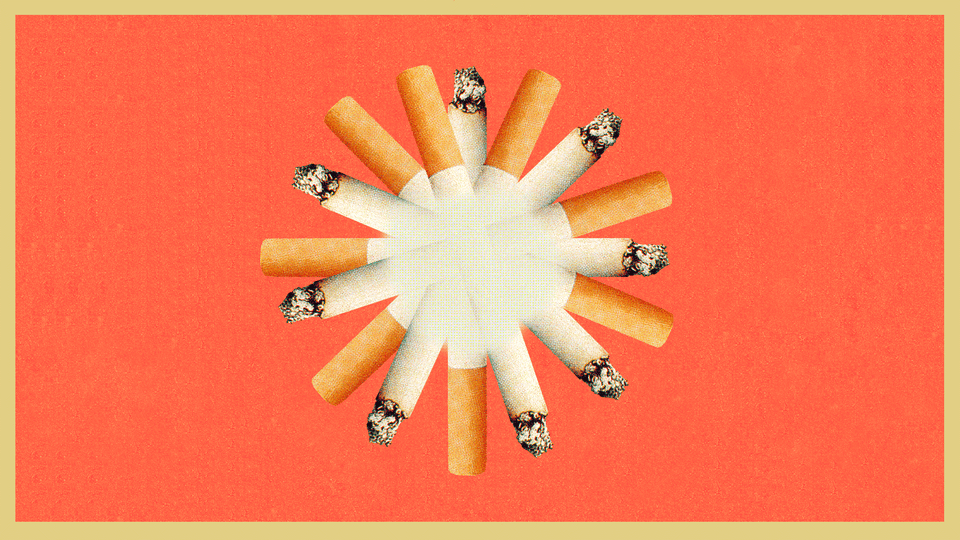
Eight cigarettes arranged in the shape of a coronavirus

It’s suddenly become acceptable to say that COVID is—or will soon be—like the flu. Such analogies have long been the preserve of pandemic minimizers, but lately they’ve been creeping into more enlightened circles. 

Last month the dean of a medical school wrote an open letter to his students suggesting that for a vaccinated person, the risk of death from COVID-19 is “in the same realm, or even lower, as the average American’s risk from flu.” A few days later, David Leonhardt said as much to his millions of readers in the The New York Times’ morning newsletter. And three prominent public-health experts have called for the government to recognize a “new normal” in which the SARS-CoV-2 coronavirus “is but one of several circulating respiratory viruses that include influenza, respiratory syncytial virus (RSV), and more.”

The end state of this pandemic may indeed be one where COVID comes to look something like the flu. Both diseases, after all, are caused by a dangerous respiratory virus that ebbs and flows in seasonal cycles. But I’d propose a different metaphor to help us think about our tenuous moment: The “new normal” will arrive when we acknowledge that COVID’s risks have become more in line with those of smoking cigarettes—and that many COVID deaths, like many smoking-related deaths, could be prevented with a single intervention.

The pandemic’s greatest source of danger has transformed from a pathogen into a behavior. Choosing not to get vaccinated against COVID is, right now, a modifiable health risk on par with smoking, which kills more than 400,000 people each year in the United States. Andrew Noymer, a public-health professor at UC Irvine, told me that if COVID continues to account for a few hundred thousand American deaths every year—“a realistic worst-case scenario,” he calls it—that would wipe out all of the life-expectancy gains we’ve accrued from the past two decades’ worth of smoking-prevention efforts.

The COVID vaccines are, without exaggeration, among the safest and most effective therapies in all of modern medicine. An unvaccinated adult is an astonishing 68 times more likely to die from COVID than a boosted one. Yet widespread vaccine hesitancy in the United States has caused more than 163,000 preventable deaths and counting. Because too few people are vaccinated, COVID surges still overwhelm hospitals—interfering with routine medical services and leading to thousands of lives lost from other conditions. If everyone who is eligible were triply vaccinated, our health-care system would be functioning normally again. (We do have other methods of protection—antiviral pills and monoclonal antibodies—but these remain in short supply and often fail to make their way to the highest-risk patients.) Countries such as Denmark and Sweden have already declared themselves broken up with COVID. They are confidently doing so not because the virus is no longer circulating or because they’ve achieved mythical herd immunity from natural infection; they’ve simply inoculated enough people.

President Joe Biden said in January that “this continues to be a pandemic of the unvaccinated,” and vaccine holdouts are indeed prolonging our crisis. The data suggest that most of the unvaccinated hold that status voluntarily at this point. Last month, only 1 percent of adults told the Kaiser Family Foundation that they wanted to get vaccinated soon, and just 4 percent suggested that they were taking a “wait-and-see” approach. Seventeen percent of respondents, however, said they definitely don’t want to get vaccinated or would do so only if required (and 41 percent of vaccinated adults say the same thing about boosters). Among the vaccine-hesitant, a mere 2 percent say it would be hard for them to access the shots if they wanted them. We can acknowledge that some people have faced structural barriers to getting immunized while also listening to the many others who have simply told us how they feel, sometimes from the very beginning.

The same arguments apply to tobacco: Smokers are 15 to 30 times more likely to develop lung cancer. Quitting the habit is akin to receiving a staggeringly powerful medicine, one that wipes out most of this excess risk. Yet smokers, like those who now refuse vaccines, often continue their dangerous lifestyle in the face of aggressive attempts to persuade them otherwise. Even in absolute numbers, America’s unvaccinated and current-smoker populations seem to match up rather well: Right now, the CDC pegs them at 13 percent and 14 percent of all U.S. adults, respectively, and both groups are likely to be poorer and less educated.

In either context, public-health campaigns must reckon with the very difficult task of changing people’s behavior. Anti-smoking efforts, for example, have tried to incentivize good health choices and disincentivize bad ones, whether through cash payments to people who quit, gruesome visual warnings on cigarette packs, taxes, smoke-free zones, or employer smoking bans. Over the past 50 years, this crusade has very slowly but consistently driven change: Nearly half of Americans used to smoke; now only about one in seven does. Hundreds of thousands of lung-cancer deaths have been averted in the process.

With COVID, too, we’ve haphazardly pursued behavioral nudges to turn the hesitant into the inoculated. Governments and businesses have given lotteries and free beers a chance. Some corporations, universities, health-care systems, and local jurisdictions implemented mandates. But many good ideas have turned out to be of little benefit: A randomized trial in nursing homes published in January, for example, found that an intensive information-and-persuasion campaign from community leaders had failed to budge vaccination rates among the predominantly disadvantaged and low-income staff. Despite the altruistic efforts of public-health professionals and physicians, it’s becoming harder by the day to reach immunological holdouts. Booster uptake is also lagging far behind.

This is where the “new normal” of COVID might come to resemble our decades-long battle with tobacco. We should neither expect that every stubbornly unvaccinated person will get jabbed before next winter nor despair that none of them will ever change their mind. Let’s accept instead that we may make headway slowly, and with considerable effort. This plausible outcome has important, if uncomfortable, policy implications. With a vaccination timeline that stretches over years, our patience for restrictions, especially on the already vaccinated, will be very limited. But there is middle ground. We haven’t banned tobacco outright—in fact, most states protect smokers from job discrimination—but we have embarked on a permanent, society-wide campaign of disincentivizing its use. Long-term actions for COVID might include charging the unvaccinated a premium on their health insurance, just as we do for smokers, or distributing frightening health warnings about the perils of remaining uninoculated. And once the political furor dies down, COVID shots will probably be added to the lists of required vaccinations for many more schools and workplaces.

To compare vaccine resistance and smoking seems to overlook an obvious and important difference: COVID is an infectious disease and tobacco use isn’t. (Tobacco is also addictive in a physiological sense, while vaccine resistance isn’t.) Many pandemic restrictions are based on the idea that any individual’s behavior may pose a direct health risk to everyone else. People who get vaccinated don’t just protect themselves from COVID; they reduce their risk of passing on the disease to those around them, at least for some limited period of time. Even during the Omicron wave, that protective effect has appeared significant: A person who has received a booster is 67 percent less likely to test positive for the virus than an unvaccinated person.

But the harms of tobacco can also be passed along from smokers to their peers. Secondhand-smoke inhalation causes more than 41,000 deaths annually in the U.S. (a higher mortality rate than some flu seasons’). Yet despite smoking’s well-known risks, many states don’t completely ban the practice in public venues; secondhand-smoke exposure in private homes and cars—affecting 25 percent of U.S. middle- and high-school children—remains largely unregulated. The general acceptance of these bleak outcomes, for smokers and nonsmokers alike, may hint at another aspect of where we’re headed with COVID. Tobacco is lethal enough that we are willing to restrict smokers’ personal freedoms—but only to a degree. As deadly as COVID is, some people won’t get vaccinated, no matter what, and both the vaccinated and unvaccinated will spread disease to others. A large number of excess deaths could end up being tolerated or even explicitly permitted. Noel Brewer, a public-health professor at the University of North Carolina, told me that anti-COVID actions, much like anti-smoking policies, will be limited not by their effectiveness but by the degree to which they are politically palatable.

Without greater vaccination, living with COVID could mean enduring a yearly death toll that is an order of magnitude higher than the one from flu. And yet this, too, might come to feel like its own sort of ending. Endemic tobacco use causes hundreds of thousands of casualties, year after year after year, while fierce public-health efforts to reduce its toll continue in the background. Yet tobacco doesn’t really feel like a catastrophe for the average person. Noymer, of UC Irvine, said that the effects of endemic COVID, even in the context of persistent gaps in vaccination, would hardly be noticeable. Losing a year or two from average life expectancy only bumps us back to where we were in … 2000.

Chronic problems eventually yield to acclimation, rendering them relatively imperceptible. We still care for smokers when they get sick, of course, and we reduce harm whenever possible. The health-care system makes $225 billion every year for doing so—paid out of all of our tax dollars and insurance premiums. I have no doubt that the system will adapt in this way, too, if the coronavirus continues to devastate the unvaccinated. Hospitals have a well-honed talent for transforming any terrible situation into a marketable “center of excellence.”

COVID is likely to remain a leading killer for a while, and some academics have suggested that pandemics end only when the public stops caring. But we shouldn’t forget the most important reason that the coronavirus isn’t like the flu: We’ve never had vaccines this effective in the midst of prior influenza outbreaks, which means we didn’t have a simple, clear approach to saving quite so many lives. Compassionate conversations, community outreach, insurance surcharges, even mandates—I’ll take them all. Now is not the time to quit.

Benjamin Mazer is a physician specializing in laboratory medicine.

https://www.theatlantic.com/health/archive/2022/02/covid-anti-vaccine-smoking/622819/

Thursday, February 17, 2022

Cases Are Dropping Globally, but Omicron Subvariant Is Spreading, W.H.O. Says --- Nu --- So WHO's on First!?


The Omicron surge seems to be slowing in much of the world, but a subvariant that scientists believe is even more contagious is on the rise, and a decline in testing has muddled the global picture, the World Health Organization said.

New cases worldwide dropped 19 percent from Feb. 7 to Feb. 13, compared with the week before, according to the agency.

The W.H.O. also said that the subvariant of Omicron, BA.2 appeared to be “steadily increasing” in prevalence and that BA.2 had now become dominant in several Asian countries, including China, India, Pakistan, Bangladesh and the Philippines. Denmark was the first nation to report that BA.2 had overtaken BA.1, the version of Omicron that first swept through the world.

Scientists have said there is no evidence that BA.2 is more lethal than BA.1, though BA.2 could slow Omicron’s decline. Vaccines appear to be just as effective against BA.2 as they are against other forms of Omicron.

The Omicron wave has yet to crest in what the agency calls the Western Pacific region, which includes Oceania, the Pacific islands and East Asian countries like China and South Korea that recently celebrated the Lunar New Year, a holiday period that typically involves large family gatherings. Cases in the region rose 19 percent last week, the W.H.O. reported.

In the Pacific, two island nations that had no confirmed cases until recently are now grappling with the arrival of the virus. In Tonga, an outbreak began after ships brought aid to help the country recover from a volcanic eruption and tsunami in January. And the Cook Islands reported its first case last week.

The W.H.O. said caseloads were falling in the other regions. But cases are still rising in parts of Europe, including in Slovakia, Latvia and Belarus. And in Russia, new cases have increased by 79 percent over the past two weeks, according to the Center for Systems Science and Engineering at Johns Hopkins University.

On Wednesday, Maria Van Kerkhove, the W.H.O.’s Covid-19 technical lead, cautioned that a drop in testing rates around the world has meant the reported global case numbers might not reflect the true spread of the virus.

“We need to be careful about interpreting too much this downward trend,” she said. She said the bigger concern was the increase in reported deaths from Covid-19 for the sixth week in a row.

The W.H.O’s Eastern Mediterranean region, which includes the Middle East, reported the most fatalities, and the Western Pacific region reported the second-most, according to the W.H.O.

In the Americas, many countries did not move fast enough to slow the transmission of BA.1, W.H.O. officials said on Wednesday, and they must be better prepared for whatever version of the coronavirus comes next.

“This will not be the last variant, and the future of the pandemic is still extremely uncertain,” said Dr. Carissa F. Etienne, the director of the W.H.O.’s Pan American Health Organization, adding that “a new variant could emerge at any time.”


https://www.nytimes.com/live/2022/02/17/world/covid-19-tests-cases-vaccine
at the subvariant of OmicronThe Omicron surge seems to be slowing in much of the world, but a subvariant that scientists believe is even more contagious is on the rise, and a decline in testing has muddled the global picture, the World Health Organization said.New cases worldwide dropped 19 percent from Feb. 7 to Feb. 13, compared with the week before, according to the agency.The W.H.O. also said that the subvariant of Omicron, BA.2 appeared to be “steadily increasing” in prevalence and that BA.2 had now become dominant in several Asian countries, including China, India, Pakistan, Bangladesh and the Philippines. Denmark was the first nation to report that BA.2 had overtaken BA.1, the version of Omicron that first swept through the woScientists have said there is no evidence that BA.2 is more lethal than BA.1, though BA.2 could slow Omicron’s decline. Vaccines appear to be just as effective against BA.2 as they are against other forms of Omicrohttps://www.nytimes.com/live/2022/02/17/world/covid-19-tests-cases-vaccine


Wednesday, February 16, 2022

Although The Present Tensions Are Much Larger & More Complex Than Ukraine Itself - The Ukranians Were Complicit In The Murder of 1.5 Million Jews! Not Much Sympathy From This Jew!

 Ukraine’s part in the Holocaust


In this July 16, 2007, photograph, French priest Patrick Desbois, front, and members of his team walk to what used to be a well where many Jews were thrown dead or still alive, in Bogdanivka, Ukraine, during World War II.   

Carl Gershman’s May 28 op-ed, “Ukraine must confront its Holocaust history,” drew attention to the fact that, of 6 million Jews killed in the Holocaust, 1.5 million were murdered on Ukrainian soil.

It was not only the involvement of large numbers of Ukrainian nationals in the Einsatzgruppen mobile killing squads that was responsible for this result but also the official comprehensive involvement of the Ukrainian Police in assisting the Nazis’ roundup of Jews for the more mechanized efficient killing fields of Auschwitz, Treblinka and Belzec.

Mr. Gershman referenced the Ukrainian town of Rava-Ruska as an example of what happened. But it would be useful to note what a U.S. federal court found in 1981 in the case of U.S. v. Osidach, in which it upheld the Justice Department’s stripping of the defendant’s U.S. citizenship. He had been charged with having served as police chief in Rava-Ruska, where he was responsible for rounding up the town’s 18,000 Jews.

The court had concluded that a careful review of the record shows “that what occurred in that town was not an isolated instance of conduct but totally consistent with the general pattern of persecutorial conduct by the Ukrainian police throughout the Galacia region.”

During the Germans' census of December 1941, local officials in Kharkiv played a crucial role in identifying Jews, evicting them from their apartments, and forcing them into a temporary ghetto in the barracks of the Kharkiv Machine-Tool Factory and the Kharkiv Tractor Factory. The tenth district council was particularly closely involved in ghettoization, and formed a security team to help German soldiers prevent escapes. Employees of that council, along with former ghetto guards, looted the possessions of the Jews after the Germans and, with other indigenous accomplices, helped murder them and dispose of the bodies. The behavior of these local actors sheds new light on the “Ordinary Men” debate.


https://www.washingtonpost.com/opinions/ukraines-part-in-the-holocaust/2019/05/31/9922ad8e-8259-11e9-b585-e36b16a531aa_story.html

Tuesday, February 15, 2022

Queer V. Queer


Court Bars Mother from Exposing "Child to an Activity That Violates" "Child's Orthodox Jewish Chasidic Faith";


N.Y. appellate court reverses the order.


|

From Weichman v. Weichman, decided in November by the N.Y. Appellate Division (in an opinion by Judges Mark C. Dillon, Sylvia O. Hinds–Radix, Linda Christopher, and Joseph A. Zayas):

The parties were married in 2005. There is one child of the marriage, born in 2006. The child was raised in accordance with the parties' Orthodox Jewish Chasidic faith and attended an Orthodox Chasidic yeshiva from the age of two. In March 2015, the plaintiff commenced this action for a divorce ….

The plaintiff identifies as a member of the LGBTQ community, and considers herself an Orthodox Jew. Following a trial on the issues of custody and parental access, the Supreme Court issued a decision awarding the defendant sole custody of the child, with the plaintiff to have specified periods of parental access. The court imposed certain restrictions on the plaintiff's periods of parental access, including a requirement that: "The [plaintiff] shall not take the child to a place or expose the child to an activity that violates rules, practices, traditions and culture of the child's Orthodox Jewish Chasidic Faith. Thus, the [plaintiff] shall ensure that the child is able to abide by the laws and rules of the Shabbat, Jewish Holidays, Kosher Chasidic and Glatt Kosher food requirement, and the rules of the Mosdos Chasidic Square." …

Ordinarily, absent an agreement, the custodial parent has the right to make educational decisions for a child. Nevertheless, "it may be appropriate, depending upon the particular circumstances of the case, to award some custodial decision-making authority to the noncustodial parent." Here, there was a sound and substantial basis for the Supreme Court's determination to award the defendant decision-making authority on the issue of the child's education. The child had been enrolled in the same yeshiva since he was two years old, where he was doing well socially and academically, and the plaintiff failed to establish that her desired plan of enrolling the child in a different type of yeshiva or a public school would be in the child's best.

However, we agree with the plaintiff that the Supreme Court's direction that, during her periods of parental access, she "shall not take the child to a place or expose the child to an activity that violates rules, practices, traditions and culture of the child's Orthodox Jewish Chasidic Faith" must be vacated.

In the absence of a written agreement, the custodial parent may determine the religious training of a child. Consistent with the children's best interests, courts may properly direct noncustodial parents, during periods of parental access, to respect the children's religious beliefs and practices and make reasonable efforts to ensure the children's compliance with their religious requirements. However, … a court oversteps constitutional limitations when it purports to compel a parent to adopt a particular religious lifestyle.

"To the contrary, '[i]t is beyond dispute that, at a minimum, the Constitution guarantees that government may not coerce anyone to support or participate in religion or its exercise.'" A religious upbringing provision "should not, and cannot, be enforced to the extent that it violates a parent's legitimate due process right to express oneself and live freely." Thus, where the effect of a religious upbringing provision is to compel a parent to himself or herself practice a religion, rather than merely directing the parent to provide the child with a religious upbringing, the provision must be stricken.

Here, the challenged restriction does not expressly require the plaintiff to herself comply with the rules of the child's Orthodox Jewish Chasidic faith during periods of parental access. Nonetheless, we agree with the plaintiff that the breadth of the provision in forbidding her to "expose" the child to any activities which violate the child's Orthodox Jewish Chasidic faith has the same effect as the provisions this Court struck down in [two prior cases]. The only way for the plaintiff to ensure her compliance with the restriction is for her to comply with all religious requirements of the child's faith during her periods of parental access, lest she "expose" the child to activities not in keeping with those religious requirements.

The defendant's testimony at the trial supports this conclusion and demonstrates that he expected the plaintiff to "conduct herself in [the child's] presence according to the rules" of the child's faith. The defendant was especially concerned that the child would be exposed to people involved in a "gay lifestyle" and testified that, if the plaintiff became involved in a relationship with or married a woman, he would request that the partner not be present during periods of parental access because same-sex relationships are inconsistent with Chasidic religious principles. Such restrictions on a parent's ability to "express oneself and live freely" go beyond requiring a noncustodial parent to support and enable the child's religious practices, and impermissibly infringe on the noncustodial parent's rights.

The plaintiff does not challenge the Supreme Court's direction that, during periods of parental access, she "shall ensure that the child is able to abide by the laws and rules of the Shabbat, Jewish Holidays, Kosher Chasidic and Glatt Kosher food requirement, and the rules of the Mosdos Chasidic Square." That provision effectively addresses the plaintiff's obligation to ensure the child's compliance with his religious requirements during her periods of parental access….

For much more on this, see Parent-Child Speech and Child Custody Speech Restrictions.


https://reason.com/volokh/2022/02/14/court-bars-mother-from-exposing-child-to-an-activity-that-violates-childs-orthodox-jewish-chasidic-faith/?post_type=volokh-post&utm_medium=email

Monday, February 14, 2022

The Rebbe & The 12 Year Old!


Malka Leifer’s father-in-law, a Jerusalem rabbi, suspected of child sex assault


Baruch Leifer, a senior rabbi in the Khust Hasidic dynasty

Baruch Leifer, 70, was arrested last month but his name barred from publication; suspected of molesting a family member when she was 12; more accusations said too old to prosecute

Baruch Leifer was named Monday as the Jerusalem rabbi who was arrested last month on suspicion of molesting children several years ago.

A gag order barring publication of Leifer’s name was lifted Monday at the request of the Kan public broadcaster.

Leifer’s daughter-in-law Malka Leifer is currently awaiting trial in Australia on suspicion of dozens of incidents of molesting students when she was a school principal in Melbourne.

Baruch Leifer, a senior rabbi in the Khust Hasidic dynasty, is suspected of multiple indecent acts against a family member when she was 12 years old, according to Kan.

Additional complaints have been lodged against him, but in those, the alleged acts occurred too long ago to be prosecuted, the report said.

An investigation began following recent complaints received at the Beit Shemesh police station.

Police said last month — without naming Leifer — that the suspect committed indecent acts against minors in separate cases several years ago.

In September, a Melbourne court ruled that Malka Leifer must stand trial on 70 charges of child sex abuse at a Jewish ultra-Orthodox school where she worked.

Malka Leifer, a dual Israeli-Australian citizen who was extradited to Australia in January 2021, denies dozens of charges, including rape, indecent assault and child sexual abuse. The crimes allegedly took place between 2004 and 2008.

Leifer, 55, had fled Australia for Israel after the allegations against her surfaced in 2008, moving with her family to the Emmanuel settlement in the West Bank. Australian authorities pressed charges in 2012 and requested her extradition two years later.

Israel’s ultra-Orthodox community has been shaken by sexual abuse allegations against several leading figures.

In December last year, prominent children’s author and rabbi Chaim Walder died by suicide after the Haaretz newspaper published a story accusing him of sexually assaulting nearly two dozen people, including children — allegations he had denied.

The Walder story has been hailed as a potential turning point in the approach to sexual abuse cases within the very insular community.

Then in January, news broke that Dudi Shwamenfeld, a popular Haredi radio host, was accused by multiple women of sexual abuse, including one who said she was 16 when the abuse began.

https://www.timesofisrael.com/malka-leifers-father-in-law-named-as-rabbi-suspected-of-child-sex-assault/?utm_source=The+Daily+Edition&utm_campaign=daily-edition-2022-02-14&utm_medium=email

Friday, February 11, 2022

Is it rational to ignore the high communal viral load in American society and to not do more to lower it so that fewer people are exposed, become sick, transmit onwards and possibly die?


There Is Nothing Normal about One Million People Dead from COVID


Mass media and policy makers are pushing for a return to pre‐COVID times while trying to normalize a staggering death toll


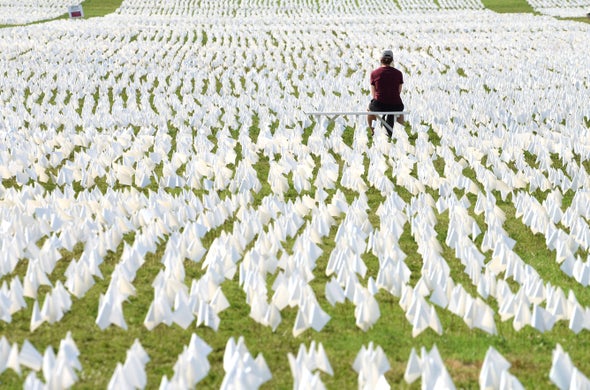
A woman watches white flags on the National Mall in September 2021 in Washington, D.C. Over 660,000 white flags were installed here to honor Americans who have lost their lives to COVID-19 epidemic.

Sometime in the next few weeks, the official death toll for the two-year COVID pandemic in the U.S. will reach one million. Despite being the wealthiest nation on the planet, the U.S. has continued to have the most COVID infections and deaths per country, by far, and it has the highest per capita death rate of any wealthy nation.

This is an unfathomable number of people dead, yet, mass media are downplaying it. This is despite an empathetic New York Times headline in May 2020 of “U.S. Deaths Near 100,000, an Incalculable Loss,” and using its entire front page to print names of some of the deceased. As Luppe B. Luppen noted on Twitter, the newspaper’s more recent headline was the cruel and callous “900,000 Dead, but Many Americans Move On.”

The Times is not alone; several large mainstream publications, in complicity with politicians of both major political parties, have been beating a death knell of a drum for getting “back to normal” for months. The effect is the manufactured consent to normalize mass death and suffering—to subtly suggest to Americans that they want to move on.

News media are helping to shape public opinion in order for business to return to the very circumstances that have created this ongoing crisis. A return to normal will allow profits to be reaped by people working relatively safely from their homes (the target audience of many news organizations’ advertisers) at the expense of people working or studying in person who are more vulnerable.

A few weeks ago, David Leonhardt, the writer of the Times’ newsletter “The Morning,” asked Michael Barbaro, the host of the company’s podcast “The Daily”: “If [COVID] is starting to look like a regular respiratory virus, is it rational [emphasis by the Times] to treat it like something completely different— to disrupt all our lives in all these big and consequential ways[?]”

I was dismayed. That rhetorical move is a familiar one to me: Two white men frame what they think is rational, deeming any questioning of their stand as irrational.

Meanwhile, some 140,000 children in the U.S. have lost a caregiver—about one in every 500 children. That is a big and consequential loss, and those children are probably not among the many who are ready to “move on” (another nearly one million Americans can’t move on because they’re already dead). During this pandemic, Black people have been disproportionately killed by this virus. About 50,000 people have died each month of COVID, meaning several Black children are being orphaned by SARS-CoV-2 this month, as you read this.

So is it rational? To be calling for the end of life-saving mitigation efforts and saying they harm children when so many have been orphaned here and worldwide?

Is it rational for Democrats, Republicans and much of the news media to press on towards what writer Tom Scocca calls a policy of “unlimited” COVID? The Democratically controlled state governments of California, New Jersey, New York and Connecticut all moved to drop indoor mask mandates just days after a near-record 3,958 people died of COVID on a single day, February 4. Even the White House reportedly has “begun hinting at an impending ‘new normal,’ in a conscious messaging shift meant to get people comfortable with a scenario where the virus remains widespread yet at more manageable levels.”

Is it rational, when as many people who died of AIDS in its worst year (near 50,000 in 1995) are dying every month of COVID, to think of the novel coronavirus as a “regular respiratory virus”—and to think that the big and consequential disruptions to worry about are mask wearing and ventilation, and not death and debilitation?

Is it rational to ignore the high communal viral load in American society and to not do more to lower it so that fewer people are exposed, become sick, transmit onwards and possibly die?

Is it rational for the Times to be advertising an event happening in March hosted by Leonhardt called “The New Normal, a Virtual Event on Life and Love After Omicron,” which might just coincide with the timing of the millionth American officially dying of COVID?

Well, it depends on what it is you are trying to rationalize.

If you’re trying to get people to accept that what the nation is doing right now is okay, and 50,000 deaths per month should be normalized, then it’s rational.

If you don’t want people to wonder why in just two years, the U.S. death toll for COVID is about 130 percent the size of the death toll of four decades of HIV—while global COVID deaths are less than 20 percent of the world’s AIDS deaths—then it’s rational.

If you want to manufacture consent for looser pandemic measures in the U.S. rather than more comprehensive ones as the communal viral rate demands, then making these claims is rational.

But it’s not ethical to manufacture what I call a viral underclass, and it’s incorrect to pretend as though the news media have no role in creating it nor in persuading the public that so many deaths are inevitable.

It’s a shame that major news outlets are talking more about moving on and returning to normal, and not running more pieces calling for an increase in government-funded mitigation efforts (more free high-quality masks and tests, upgraded ventilation in worksites and schools) to stem the tide of death. 

American norms (rampant incarceration, eviction, homelessness, lack of health care, poor ventilation and economic inequality) are fairly deadly as is.

Rushing for the “urgency of normal” is “wishful thinking,” epidemiologist Gregg Gonsalves wrote in the Nation. Intentionally or unintentionally, “the urgency of normal”—a phrase cropping up a lot lately.

“We are now faced with the fact that tomorrow is today. We are confronted with the fierce urgency of now. In this unfolding conundrum of life and history there is such a thing as being too late. 

Procrastination is still the thief of time.”

https://www.scientificamerican.com/article/there-is-nothing-normal-about-one-million-people-dead-from-covid1/?utm_source=newsletter&utm_medium=email&utm_campaign=today-in-science&utm_content=link&utm_term=2022-02-10_featured-this-week&spMailingID=71228507&spUserID=NTQwMDkwNTkwNDU4S0&spJobID=2233374821&spReportId=MjIzMzM3NDgyMQS2

Thursday, February 10, 2022

Five Orthodox Jews join petition, claiming the city’s COVID-19 vaccine requirement for indoor spaces is a ‘form of slavery’ - that “violates numerous commandments in the Torah that require one to remember and internalize the great Exodus from slavery in ancient Egypt.”


‘Torah violation’: Citing religious beliefs, lawsuit challenges NYC vaccine mandate


Five Orthodox Jews join petition, claiming the city’s COVID-19 vaccine requirement for indoor spaces is a ‘form of slavery’


Ultra-Orthodox Jews in Brooklyn, New York City, September 14, 2021. (Luke Tress/Flash90)
Ultra-Orthodox Jews in Brooklyn, New York City
 

New York Jewish Week via JTA – Five Orthodox Jewish New Yorkers have joined a suit challenging the city’s vaccine requirements for indoor spaces.

Two of the plaintiffs are rabbis at yeshivas. The suit, filed Feb. 7 in New York, challenges the “Key to NYC” program and a recent COVID vaccination mandate for religious and private school employees. The mandate was opposed by many haredi Orthodox yeshivas and groups representing them, including Agudath Israel of America.

Three of the Jewish plaintiffs are parents suing on behalf of a total of 12 of their children, all minors, whose COVID vaccination they oppose on what they claim are religious grounds.

The unnamed plaintiffs allege an “unprecedented abuse of power” in regard to COVID vaccine requirements for indoor spaces in the city. The plaintiffs, who also include a Catholic resident of New York, object to the vaccine on religious and constitutional grounds.

The Catholic and Orthodox Jewish plaintiffs say the vaccines are derived from research into fetal cell lines from abortions in the 1970s and ’80s, a technology they oppose on religious grounds. Another religious ground cited by the Orthodox Jewish plaintiffs is that “[s]ubmitting to a government dictate that conditions freedom on vaccination is a form of slavery and subjugation” that “violates numerous commandments in the Torah that require one to remember and internalize the great Exodus from slavery in ancient Egypt.”

Groups representing the major Jewish denominations, including the Orthodox Union and the Rabbinical Council of America, have all released statements endorsing vaccines, and many rabbis in the haredi Orthodox community have participated in campaigns to increase vaccination rates in their communities. Still, Orthodox health professionals and communal leaders note that a vocal minority of their community won’t heed their guidance.


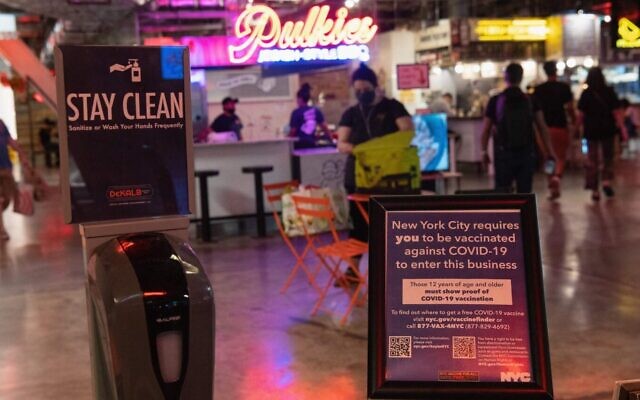
The ‘Key to NYC’ program introduced by former mayor Bill De Blasio requires proof of vaccination for a variety of indoor activities including dining, gyms and entertainment
 

The suit was filed by the Thomas More Society, a conservative Catholic nonprofit that earlier in the pandemic represented Orthodox Jews in New York in a lawsuit opposing caps on the number of attendees able to attend houses of worship. In that case, a judge blocked the state from imposing stricter rules on houses of worship than on other businesses.

In November 2020, in a case brought by Agudath Israel, the Supreme Court ruled that occupancy restrictions and mandates unfairly discriminated against religious institutions.

The Thomas More Society has filed a number of lawsuits across the country opposing vaccine requirements, including representing health care workers in New York State who have been denied an exemption from the vaccine on religious grounds.

If successful, the suit would allow yeshiva employees to remain or return to work without a vaccine, as well as gather indoors and gain access to the same spaces as vaccinated New Yorkers without discrimination.

Named in the suit are New York City Mayor Eric Adams and Dr. Dave Choski, the commissioner of the city’s Department of Health and Mental Hygiene.

The suit asserts that the Key to NYC program is creating a two-tiered society within the city, where unvaccinated residents are unable to participate in daily life or institutions, and that the program violates rights to due process, equal protection, privacy, freedom of assembly and free exercise of religion.

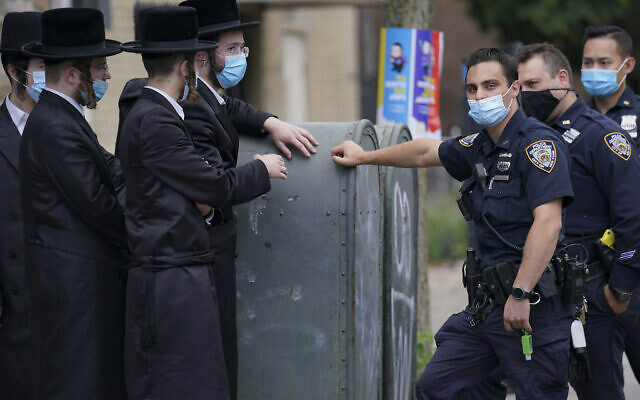
Members of the Orthodox community speak with NYPD officers in the Borough Park neighborhood of the Brooklyn borough of New York

“Never in the history of this country, nor in the history of pandemics generally, has any government declared an entire class of citizens personae non gratae based on refusal to be vaccinated,” wrote Thomas More Society Special Counsel Christopher Ferrara in a press release. “What we see here is the sad corruption of public health policy by power politics.”

The complaint also alleges that Key to NYC offers exemptions to secular activities and discriminates against religious activities, and discriminates against those who hold that COVID-19 vaccinations violate their religion.

Marc Stern, the chief legal officer for the American Jewish Committee, does not see sufficient evidence for the religious freedom claim, and said several of the lawsuit’s other claims, including that the Key to NYC program infringes on a person’s right to privacy, are baseless.

“I can’t say the suit is completely frivolous, and there are certainly disturbing aspects to the accommodation guidelines, where some of the lines aren’t neat and clean,” Stern said. However, “the court has ruled many times that in cases of an epidemic, the government has great latitude for what they can do to balance public health guidelines with what will benefit the economy. I’m reasonably certain this case will not see a sympathetic response, and those lines will prevail.”


Wednesday, February 09, 2022

A paper being touted as the "Johns Hopkins study" that suggested lockdowns didn't reduce COVID deaths has serious flaws and is being misinterpreted, experts said.


What You Need to Know About That 'Johns Hopkins' Lockdown Study


— "All of this adds up to a very weird review paper"


A woman reads The Sunday Times newspaper in her home, the back page reads: CORONAVIRUS STAY HOME SAVE LIVES

A paper being touted as the "Johns Hopkins study" that suggested lockdowns didn't reduce COVID deaths has serious flaws and is being misinterpreted, experts said.

Fox News has charged that there's been a "full-on media blackout" of the paper, but science and medical experts argue the real reason for not covering the paper is because of its limitations.

First, the paper is a "working paper" that hasn't been peer-reviewed. Also, it was published on the website of the Institute for Applied Economics, Global Health, and the Study of Business Enterprise at the Johns Hopkins Krieger School of Arts and Sciences in Baltimore.

Study author Steve Hanke, PhD, is the founder of the institute. He is an applied economist, not an epidemiologist, public health expert, or medical doctor. Hanke is also a senior fellow at the Cato Institute, a libertarian think tank.

Hanke's co-authors are Jonas Herby, MS, a "specialist consultant" at the Center for Political Studies in Copenhagen, and Lars Jonung, PhD, professor emeritus of economics at Lund University in Sweden -- a country that famously opted out of lockdowns and only recommended masks in public. Again, neither of Herby nor Jonung are medical or public health experts.

The trio are "highly regarded economists who have also been extremely anti-lockdown since March 2020," tweeted Gideon Meyerowitz-Katz, PhD, an epidemiologist at the University of Wollongong in Australia, who posted a thorough critique of the paper.

Its key conclusion was that lockdowns only reduced COVID mortality by 0.2% on average, but several researchers said that number is unreliable.

For starters, experts commenting for the U.K. Science Media Centre warned about the paper's questionable definition of "lockdown." Samir Bhatt, DPhil, a professor of statistics and public health at Imperial College London, said in that statement that the study's "most inconsistent aspect is the reinterpreting of what a lockdown is."

"The authors define lockdown as 'the imposition of at least one compulsory, non-pharmaceutical intervention [NPI].' This would make a mask-wearing policy a lockdown," Bhatt stated.

Neil Ferguson, PhD, also of Imperial College London, said in the same statement that by that definition, "the U.K. has been in permanent lockdown since 16th of March 2021, and remains in lockdown -- given it remain compulsory for people with diagnosed COVID-19 to self-isolate for at least 5 days." Ferguson is the director of the MRC Centre for Global Infectious Disease Analysis and the Jameel Institute at the college.

Questions also have been raised about the quality of the included studies. Of the 34 papers ultimately selected, 12 were "working papers" rather than peer-reviewed science. And 14 studies were conducted by economists rather than public health or medical experts, according to Forbes.

Meyerowitz-Katz highlighted his concerns with the paper's inclusion criteria, as it doesn't include "modelled counterfactuals...the most common method used in infectious disease assessments" which excludes "most epidemiological research from the review," he tweeted.

He added that the "included studies certainly aren't representative of research as a whole on lockdowns -- not even close. Many of the most robust papers on the impact of lockdowns are, by definition, excluded."

"All of this adds up to a very weird review paper," he tweeted. "The authors exclude many of the most rigorous studies, including those that are the entire basis for their meta-analysis in the first place. ... They then take a number of papers, most of which found that restrictive NPIs had a benefit on mortality, and derive some mathematical estimate from the regression coefficients indicating less benefit than the papers suggest."

"All of this together means that the actual numbers produced in the review are largely uninterpretable," he tweeted.


https://www.medpagetoday.com/special-reports/exclusives/97056?xid=nl_mpt_investigative2022-02-09&eun=g2011045d0r&utm_source=Sailthru&utm_medium=email&utm_campaign=InvestigativeMD_020922&utm_term=NL_Gen_Int_InvestigateMD_Active