Before genetic screening was available, 40 to 50 babies with Tay
Sachs were born in the United States every year. Most of them were born
to Ashkenazi Jewish families, because about 1 in 30 Ashkenazi Jews are
carriers of the Tay Sachs disease variant — that is about 10 times the
rate found in the general population. A baby born with Tay Sachs appears
healthy at birth, then begins a rapid decline, losing critical
functions in the first few years and typically dying by the age of 4 or
5.
In a 2013 paper published in Human Genetics, geneticists Harry
Ostrer and Karl Skorecki reported that more recently, due to the
availability of genetic testing, approximately four to five cases of Tay
Sachs disease occur in the United States annually. That’s a 10-fold
decline.
This decline was a major victory, a testament to the success of
genetic screening for that specific disease. The significant decline in
Tay Sachs cases is due to awareness, education, and screening of Jewish
singles and couples to identify carriers — people who have a single copy
of the Tay Sachs gene. When two such carriers conceive a child, there
is a 25% chance that their child will inherit two copies of the disease
gene and suffer from that fatal neurological disorder. Screening and
identification of carriers empowers couples, helping them avoid the
heartbreak of losing a child, and giving them the opportunity to have
healthy children.
Although the number of Tay Sachs babies born today is small, we might
ask why Tay Sachs babies still are being born at all. That is because
screening for a recessive gene, such as the Tay Sachs variant, does not
eliminate it from the population. Recessive genes still are passed from
generation to generation, and carriers abound. Anyone who is a carrier
can pass the silent recessive gene to an unsuspecting descendant, with
potential to be expressed in the future.
Tay Sachs is just one of dozens of known genetic diseases that occur
in higher incidence in the Jewish community. It is estimated that one in
three Jews carries a recessive gene for some genetic disease. For
genetic screening to work, it must be done universally, in every
generation, now and for the foreseeable future.
JScreen is an organization that addresses the need for testing; it
offers a screening program that is comprehensive, affordable, and
available throughout the United States. Its program fills a void – a
need for reliable and accessible genetic screening throughout the
country. JScreen sends out kits for collecting saliva; recipients mail
them back. It also offers genetic counseling services that are available
remotely, using such services as Telehealth.
JScreen’s executive director, Karen Grinzaid, has been a genetic
counselor for more than 30 years. She said that the department of human
genetics at Emory University’s medical school launched the JScreen
program in 2013.
“There are two genetic testing panels, one for reproductive purposes,
which tests for Tay Sachs, cystic fibrosis and other disease genes, and
a separate panel of cancer susceptibility genes,” she said. The
ReproGEN panel tests for more than 200 genes and the cancer panel now
tests for 63 different genes, including those that show a hereditary
risk for breast, ovarian, pancreatic, colon, skin and urinary tract
cancers. Young people typically choose the reproductive panel, but some
who are at higher risk for cancer also will screen with the cancer
panel.
While genetic screening can flag genes of concern, the process is not
perfect. Some cases of Tay Sachs disease have occurred because of human
error, the result of mistakes in choosing tests and interpreting the
results. JScreen’s testing program includes the services of a genetic
counselor, whose assistance can reduce the incidence of errors. That is a
critical component of a successful program since genetic counselors are
experts who review, explain, and advise participants every step of the
way. Genetic counseling helps to ensure that the correct tests are used,
the reports and interpretations are accurate, and that options and
choices are explained to the patients. The JScreen testing program also
continues to update the repertoire of tests, staying current as new
screenings become available.
Here are three stories about the experiences of families with Tay Sachs. Two are tragic, and one has a happy ending.
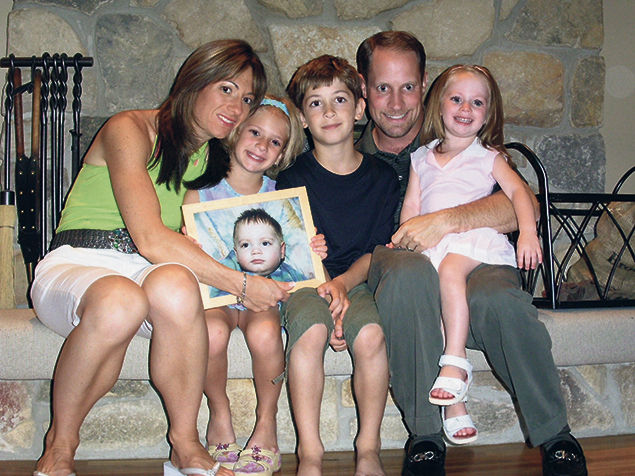
Shari and Jeffrey Ungerleider and their younger children hold a picture of Evan, who died of Tay Sachs.
Shari and Jeffrey Ungerleider
Shari and Jeffrey Ungerleider of Wayne had a child who was born with
Tay Sachs disease 28 years ago. As a result of that experience, Ms.
Ungerleider is a strong advocate for JScreen.
“Evan was born August ‘94,” she said. “We thought he was born healthy
and normal. I was tested for Tay Sachs and the doctor said, ‘You are
not a carrier.’”
But “at 6 months old we noticed he wasn’t progressing,” she
continued. “At 10 months the pediatrician recommended we see a pediatric
neurologist.”
The doctors they consulted continued to test young Evan, trying to determine why he continued to regress.
“All the doctors we saw asked if we were tested for Tay Sachs, and
when I said that I was, it was ruled out. At 13 months old, the
pediatric ophthalmologist noticed the cherry red spot on the retina. ‘I
know what that means. It means Tay Sachs,’ the neurologist said.
“This was the missing link to the puzzle,” Ms. Ungerleider said. The
ob/gyn who initially tested the Ungerleiders looked at the records again
and told them, “I misread your test. You are, in fact, a carrier of Tay
Sachs.”
The saga of Evan’s short life included severe difficulties eating and
swallowing; he needed a feeding tube. “He had seizures, bad respiratory
problems, needed suction machines, physical therapy, respiratory
therapy,” Ms. Ungerleider said. “He became blind and deaf, and he had to
have full-time nursing care. He lived to almost 4 1/2 years old.”
The Ungerleiders have three other healthy children, who are now 25,
22, and 19 years old. “We chose to get pregnant naturally and get CVS
testing,” Ms. Ungerleider said. CVS, or chorionic villus screening, is
used to test the fetus for specific genetic sequences early in the
pregnancy. One of Ms. Ungerleider’s pregnancies tested positive for Tay
Sachs, and the couple chose to terminate it.
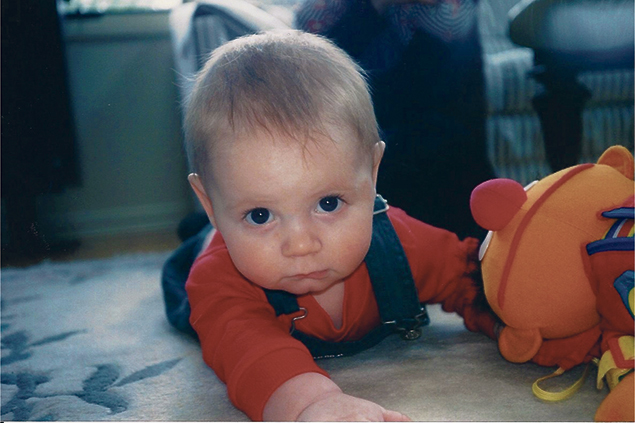
Evan, at 10 months.
“Evan’s short life impacted all of us,” she said. “We had two goals:
We made a lifetime of memories [of Evan] in a few short years, and we
wanted to educate people on the importance that genetic testing of
couples be done with genetic counseling.
“For the last 25 years I’ve been trying to educate people to get
tested before they get pregnant. But mistakes still can be made. It
still happens.”
Ms. Ungerleider was frustrated that although she spread the word
about the need for screening, at the time “we did not have the
appropriate resources. JScreen has been the best thing that could have
happened in carrier screening. Now anyone can access it, and it’s so
much more accessible and affordable.”
She recalled that they did screening in person, and as more genes
were added to the panel, the costs became prohibitive. In the JScreen
program the reproductive panel costs $149, and the cancer panel costs
$199. “They’re a nonprofit,” she said. “They won’t let anyone walk away
if they can’t afford it.”
Current recommendations are that everyone should have carrier
screening. “Because carriers are healthy individuals, you don’t know [if
you are a carrier] until you are tested or someone with the disease is
born into the family,” Ms. Ungerleider said. “It’s important to have an
organization like JScreen that can reach everyone in this country so
they can be screened and educated. The counselors can also emphasize the
importance of sharing [results] with other family members.”
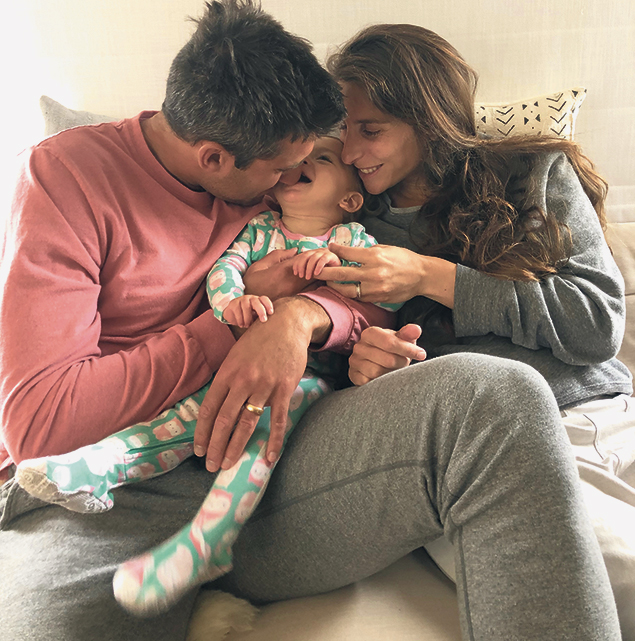
Matthew Goldstein and Myra Sack hold their daughter Havi.
Myra Sack and Matthew Goldstein
Myra Sack and Matthew Goldstein of Boston more recently suffered the
loss of their child as the result of an error in genetic testing.
Mistakes can happen in genetic screening, even to a couple with
scientific and medical acumen. Dr. Goldman is an MD/Ph.D. who works at a
biotechnology company; even his scientific expertise couldn’t protect
him and his wife from a tragic human error.
“Before we got pregnant with Havi, we underwent preconception genetic
screening,” Ms. Sack said. “I learned I was a carrier for Tay Sachs.
Matt, my husband, was tested immediately. He had an enzyme test that
came back positive, which indicated that he was likely a carrier.” Their
genetic counselor recommended that Matt have full gene sequencing,
which would search for every variant of the gene that could cause Tay
Sachs disease. However, Ms. Sack reported, “The ordering physician
ordered the wrong test, a test that only looked at five to seven common
mutations. That came back negative, and we were told we were in the
clear. We got pregnant a few months later with Havi.”

Havi was diagnosed with Tay Sachs.
Havi was born seemingly healthy. “We only learned that an erroneous
test was ordered when we saw developmental delays at around a year,” Ms.
Sack said. “When the pediatrician noticed a startle reflex, one of the
hallmark symptoms of Tay Sachs, he asked if we were tested, then advised
retesting to confirm. Havi was born on September 4, 2018, our second
anniversary.” Their baby girl, Havi, was diagnosed with Tay Sachs in
December 2019 and died in January 2021.
By the time Havi was diagnosed, Ms. Sack was pregnant with her second
child, Kaia. She was able to do a CVS genetic test and learned, to
their relief, that Kaia was not affected. Myra Sack and Matthew
Goldstein had their third child, Ezra, in August 2022.
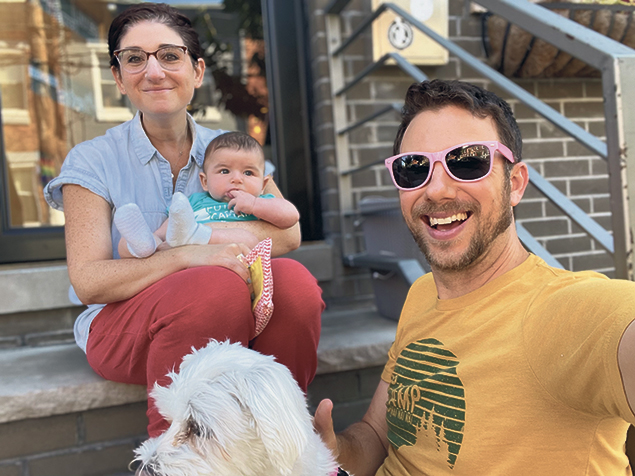
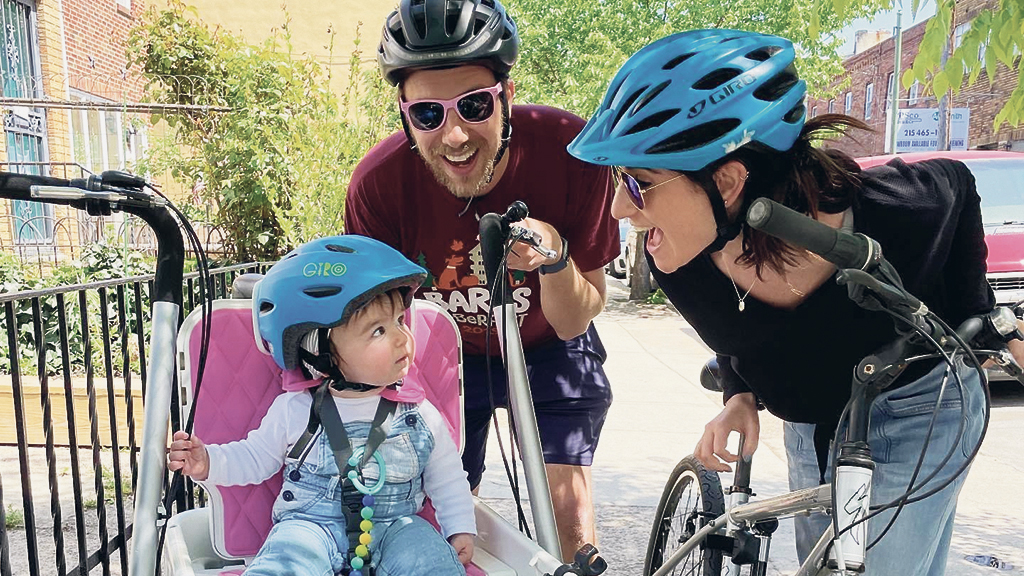
Molly Wernick, Andrew Davies, and the
couple’s young son, Miller. Ms. Wernick and Mr. Davies used medical
science to ensure that their child would not have Tay Sachs.
Andrew Davies and Molly Wernick
When Andrew Davies and Molly Wernick of Philadelphia learned they
both were carriers of Tay Sachs disease, they were well equipped to deal
with the challenge. “She found out a long time ago, and I found out
about eight years ago, when I met a JScreen person and felt I should get
tested,” Mr. Davies said. “The first step all couples should take is
getting screened with JScreen. That information gives you risks and
options.
“We decided to do IVF” — that’s in vitro fertilization — “and test
the embryos,” he continued. “We went through the IVF process in 2019 and
got several embryos that were Tay Sachs negative and several that were
carriers but did not have Tay Sachs.”
In the IVF procedure, eggs and sperm from a couple are mixed in a
petri dish in a clinical lab. The fertilized eggs are sustained in the
lab, and develop into early embryos, which can be tested individually
for many types of genetic defects by PGD — preimplantation genetic
diagnosis. Tay Sachs-positive embryos, which have two copies of the Tay
Sachs gene, are not used to establish a pregnancy. Embryos that have no
Tay Sachs genes are used preferentially. Embryos with one copy of the
Tay Sachs gene, which will produce children who are carriers but will
not have the disease, can be considered for use.
“It took three times to work,” Mr. Davies said; referring to the
transfer of three of their precious embryos into Ms. Wernick’s uterus.
When their son Miller was born, “we called him ‘‘the charm,’ as in third
time’s the charm.’
“We got about ten embryos,” Mr. Davies continued. “We used three that
were negative for Tay Sachs. Three more that are still left are
carriers. They are still frozen.
“It’s very expensive, about $30,000. We got help from our family and a
small grant from a Jewish organization,” Mr. Davies said; most health
insurance plans do not cover the costs of IVF, he added.
The couple is very involved in the prochoice movement. “All families
should have the options that we do,” Mr. Davies said. “We’re afraid that
procedures like IVF won’t be available for all. It’s a political and
judicial decision, but really affects so many people’s personal lives.”
He said that the Supreme Court’s decision in Dobbs, repealing Roe v.
Wade, will interfere with many families’ access to the choices they
might need. There are many cases where women’s lives are at stake, he
said. “My sister-in-law had an ectopic pregnancy,” If left untreated,
the ectopic pregnancy “would kill my family member.”
“Andrew and I are Jewish professionals dedicated to spreading the
message of importance about genetic testing,” Ms. Wernick said. She
works for Repair the World, a national Jewish nonprofit service-learning
organization.
Ms. Wernick talked about the urgency of a woman’s right to choose.
“It’s wild to think that we would be forced to choose between
terminating a pregnancy at four months, and having a Tay Sachs baby and
watching that infant child die,” she said. “That we would be denied that
choice and be forced to do the latter is deeply disturbing.”
She said that her husband, whose unusual professional title is Chief
Improvising Officer of the Bible Players, a Jewish comedy team in
Philadelphia and New York City, and is a member of CharacTours, an
Interactive theatrical acting group, has made videos to promote
JScreen’s services. The amusing scripts encourage young people to keep
genetic testing in mind as a priority. One such video is a parody of
“The Bachelor,” called “The Beshert.” Instead of getting the rose at the
end of the night, the man’s mother asks the girl if she would get
JScreened.
Molly Wernick and Andrew Davies revel in their happy ending, a
healthy baby boy. “IVF is quite a ride,” Ms. Wernick said. “Every early
morning and progesterone shot was worth the joy we get from Miller every
day. He’s just overwhelmingly joyous, and brings us an incredible
amount of light.”
However, she emphasized, it is important to consider that these
technologies are expensive, and they are not available to everyone. “We
sit in a position of immense privilege for being able to afford in
vitro,” she said. “For all the work JScreen does, it leads to the need
for IVF. IVF is not covered by most insurance. It’s not available to
those who don’t have the same economic access. And it’s not something
that is accessible to all the people who need it.”
Molly Wernick’s message to the Jewish community is to focus on
generating financial resources to support reproductive healthcare. “Why
is there such an emphasis on screening in the Jewish community, but so
much less support for actually addressing reproductive healthcare we
need?” she asked. Many couples who discover that they are carriers for
serious genetic diseases need IVF to have healthy children. “This is
also true for same sex couples, and for people who need surrogates,” she
said. “Fertility is wildly under-supported, and it is needed for
helping Jewish continuity.
“In Israel there is infinitely better access to universal healthcare
and reproductive healthcare,” she continued. “It’s up to us Jewish
professionals to put it on the radar.”
In 2008 the United States Senate voted to designate September as
National Tay-Sachs Awareness month, raising awareness of the disease,
and recommendations for testing.
There is information on JScreen programs and services at www.jscreen.org.
https://jewishstandard.timesofisrael.com/science-brings-hope/?utm_source=Jewish+Standard+Daily&utm_campaign=837c10d47a-EMAIL_CAMPAIGN_2018_07_26_08_03_COPY_01&utm_medium=email&utm_term=0_1d7094cc43-837c10d47a-407694561
Dr. Miryam Z. Wahrman of Teaneck, professor of biology at William
Paterson University, is the author of “The Hand Book: Surviving in a
Germ-Filled World,” and “Brave New Judaism: When Science and Scripture
Collide.” She was part of the Mount Sinai Medical School team that set
up the first IVF program and produced the first test tube baby in New
York State.