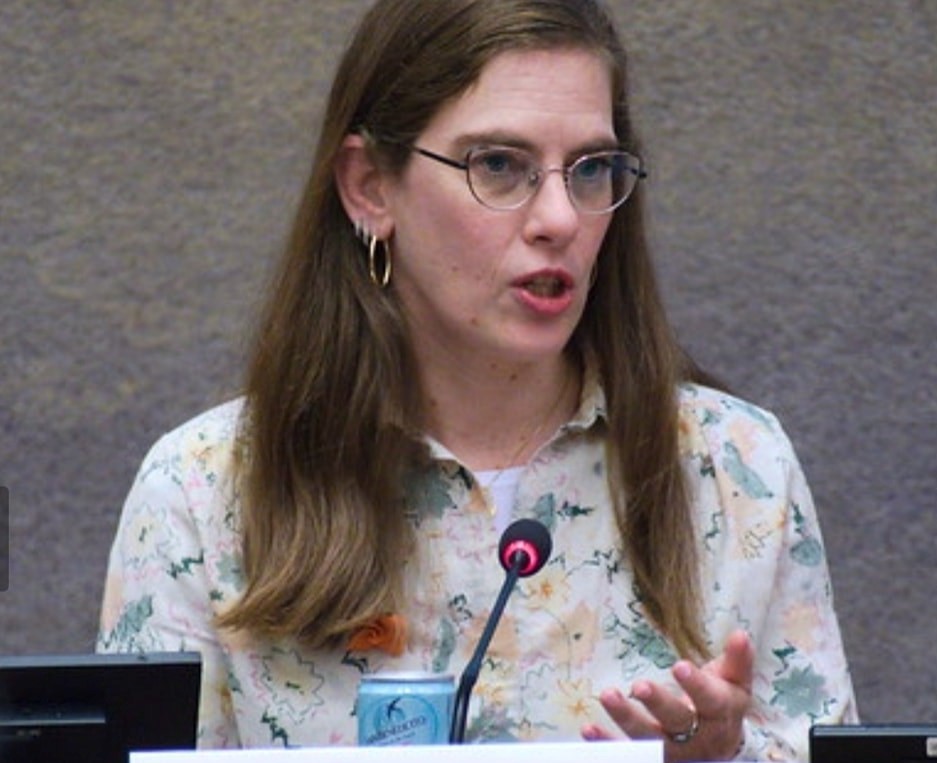
Yael Sherer turned being a victim of sexual abuse at the hands of her
father into a lifelong battle to change the law in Israel to help fight
sexual abuse.
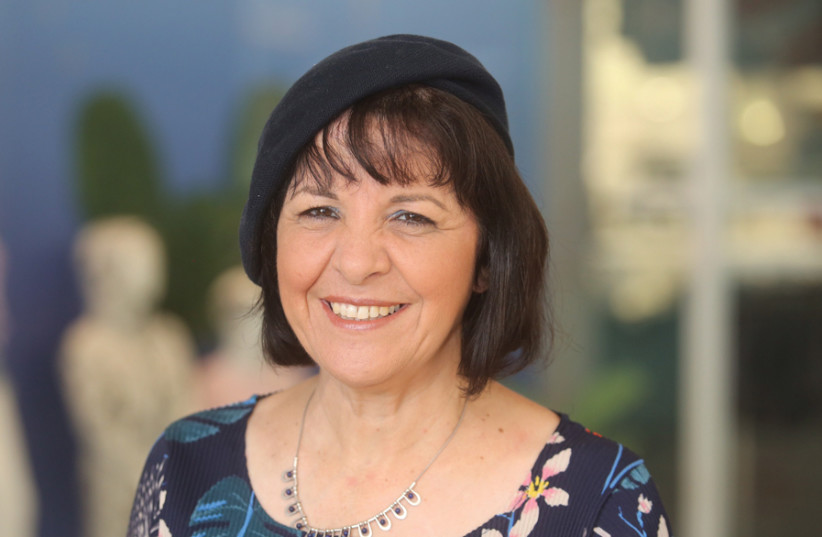
Sherer, whose mother is South African, was in South Africa this week
to speak at Limmud and to connect with many South African
non-governmental organisations.
Sherer, 40, not only ensured that her father, who had been
well-respected in Israeli society, was sentenced for sexual abuse, but
she became the first person in Israel to sue her own father for damages
and win.
She then went on to fight for the legal right to be named in a documentary she had made about this battle, and won that too.
This Israeli social activist and documentary director then tapped into her winning streak and inherent chutzpah to fight for the rights of other women and survivors of sexual abuse in Israel, which is what she does today.
She launched the Lobby for the Fight Against Sexual Violence in
Israel, and over the past 11 years, has changed much legislation to help
sexual abuse survivors.
As a child, though, she knew nothing of this scourge. In fact, until
she was 13, this child of a nursery school teacher and a father who had a
PhD in industrial law and chemistry, assumed all children had a
childhood like hers.
That is, until her South African grandmother died and her mother went
to help her own father deal with the loss and Sherer stumbled onto a
booklet that revealed the reality and illegality of sexual violence and
abuse. It dawned on her that she had been a victim at the hands of her
father.
At the time, she naively hoped that he was unaware that there was
something wrong or illegal about what he was doing. “After what I read, I
thought I might also go to jail because of what my dad and I had done,”
she said during her talk at Limmud in Johannesburg.
But her father was aware of what he was doing, and told her, “In my
house, I’m the law and I’m going to do whatever I want.” When she
challenged him about it, he beat her. “I had never been hit before, and
this was very aggressive. He punched me in the face, and when I fell
down, my father kicked me.”
Her life changed forever that day.
At school, the transformation from a seeming happy girl to a
belligerent and difficult teen was noticed, but put down to being “a
teenager”.
Life at home became unbearable, and desperate for help, she
eventually reached out to a teacher, who reported it to the social
worker, who told Sherer’s mother.
“My mom was shocked and horrified, and demanded a divorce,” said
Sherer. “My father didn’t want to leave the giant house in Kokhav Ya’ir,
and wanted my mom to pay him.”
She ultimately got her divorce, and Sherer was taken far away from
her father. However, he refused to pay maintenance for Sherer and her
two brothers, so her mother had to work three jobs.
The school social worker, however, never reported the abuse to the
police, buying into Sherer’s dad’s prominence and respectability rather
than trusting Sherer’s story.
At high school in a new town, Sherer’s life didn’t improve. “I don’t
get along with anyone. I yell. I get into fights. I beat other students.
I’m very aggressive. I curse. I misbehave. I go out at night and start
drinking at a very young age. I’m not a healthy or nice girl,” she
recalls.
Her mother, not being able to manage all three children, went to the
municipality for help. It called for the family file from Kochav Yair,
discovering the information about Sherer’s abuse, and reporting her
father to the police.
“My brothers find out about the abuse and they are horrified. They
don’t want it to come out. They think it’s embarrassing and taboo. You
don’t speak of such things, and perhaps I am lying.”
Devastated, Sherer tried to take her life and landed up spending time in a psychiatric ward at the age of 16.
While there, she was notified that she was exempt from the Israeli
army, and was furious because she really wanted to go. “I start to
demand that they take me,” she says.
Eventually, around the time that the state prosecuted her father for
abuse, the Israel Defense Forces (IDF) relented and took her in.
“My father was sentenced to three years in prison and got out after
two for good behaviour, at the same time as I was released from the
IDF,” she recalls.
“Everybody thought my future was to be a drug addict or an alcoholic
or that I would die of anorexia. They had given up on me. I don’t sleep,
I don’t eat, I yell, I have many outbursts, and I’m not a productive
member of society.”
While working at a bookstore, Sherer was run over by a van and had to
sue the insurance company to be paid out. It was then that she met a
“tough but brilliant” lawyer who managed to get her payout.
She asked her lawyer whether she could also sue her father for
damages. “She told me that nobody had ever done that, but that was good
news because it meant that no other lawyer knew more about it than she
did. So she took my dad on.”
Sherer then began studying film and decided, against her dismissive
lecturers’ judgement, that she was going to create a documentary about
the law suit. She managed to find a producer to fund it, and went ahead.
Sherer won her case, but discovered that in Israel, it was against the
law to identify a victim of sexual abuse. “So, I can’t say my name, and I
can’t tell people who my father is because he’s related to me and he’s
the person who hurt me,” she said.
So, once again, at the age of 29, she went to court over the right to
identify herself, and won. “It cost me a lot of money to say, ‘Hello,
my name is Yael Sherer, and my father abused me’,” she said.
She was one of two sexual abuse survivors – the other being the first
person to challenge this law – who could be named publicly. So the
media sought her out. “People wanted to hear what I had to say, even in
the Knesset. I realised I wasn’t what politicians expected. They
expected more of a victim. Every decision they made in this area was
made with an imaginary person in mind. Now I shook their hands and they
had someone to work with.”
This was an “aha” moment for Sherer, who discovered her calling in working to change the law.
She set up her organisation and for the past 11 years, she has made
huge inroads for abuse and rape survivors. This includes enacting
legislation to prevent convicted abusers from changing their names after
serving time, and securing a budget for the creation of additional care
centres in Israel, taking them from five in the country to 11 in three
years.
She legislated for rape kits not to be thrown out so that the
survivor could lay charges long after their attacks. She also made it
mandatory for those using the kits to be a medical professional with
special training.
When Sherer started in 2013, she was working on her own. Now she has five paid staff and between 80 and 90 volunteers in Israel.
In South Africa, she met many organisations, including Koleinu SA,
the Teddy Bear Clinic, Tears Foundation, Mosaic, and numerous others
that help people who have been sexually abused. She even met local
government representatives to discuss how to improve help for survivors.
“I am so excited to have met all these people in South Africa and am
committed to working with them to help them, and for them to help us. We
will work together to help rape and sexual abuse survivors and try and
reduce this crisis in both countries.”
https://www.sajr.co.za/womans-fight-against-father-turns-tide-on-sexual-abuse/