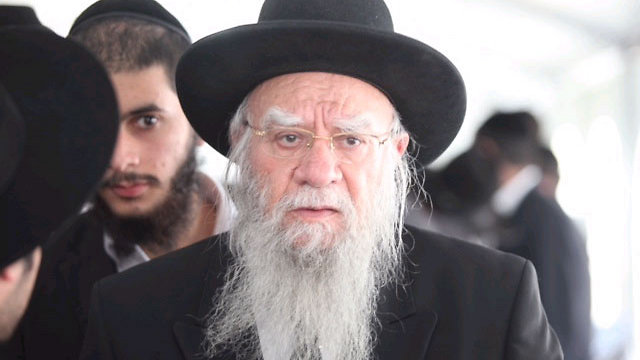
Hartford —
A federal jury Thursday ordered prominent Rabbi Daniel Greer and his
Elm Street yeshiva to pay a former student $15 million in compensatory
damages because the rabbi raped and repeatedly abused him 15 years ago.
The jury awarded an additional $5 million in punitive damages, to pay the lawyers.
In
adjudicating a civil lawsuit brought by Eliyahu Mirlis, a former high
school student at the Yeshiva of New Haven, the jury deliberated in U.S.
District Court here for 12 hours over two days before coming to its
unanimous decision.
The eight jurors slapped Greer with the
eight-figure bill for the emotional suffering he caused Mirlis by
assaulting and battering the boy over a three-year period, from his
sophomore to senior years at the high school. The panel calculated the
total after also concluding that Greer and the yeshiva had shown
recklessness and intentional infliction of emotional distress and the
school separately had displayed negligence and negligent infliction of
emotional distress.
That sum was less than half of the $38 million that the plaintiff’s attorney, Antonio Ponvert III, had requested.
Jurors
also requested that the court nail Greer with extra punitive charges to
pay Mirlis’s lawyers. That added another $5 million to the bill.
“This
completely justified all my faith in the justice system. Even an
incredibly difficult case can be resolved fairly on the facts,” Ponvert
said. “What the plaintiff suffered and what has been suffered by
children for generations need to stop, period. Child abuse, in all
forms, is a plague that we all need to work together to stop.”
When asked why he believed his side prevailed, Ponvert responded, “The truth.”
Greer’s defense said the rabbi plans to appeal the verdict.
“We
are extremely disappointed by the jury’s verdict, and intend to pursue
all potential options to set it aside, including an appeal,” defense
attorney David Grudberg wrote in an email.
The verdict followed a
suspenseful four-day trial here at U.S. District Court, with a
cliff-hanger ending about whether the yeshiva was also liable.
Two
victims — Mirlis and the yeshiva’s assistant dean, Aviad Hack — both
described their underaged sexual encounters with Greer in graphic
detail. Shira Mirlis, the victim’s wife, said the abuse had hardened her
partner, preventing him being vulnerable. An expert in childhood sexual
abuse and a University of Connecticut professor, Julian Ford, explained
to jurors that the inability to trust was an normal response to
“betrayal trauma,” as he diagnosed Mirlis with post-traumatic stress
disorder.
From Greer’s side, the jurors didn’t hear much of a
denial. The rabbi repeatedly invoked his Fifth Amendment rights against
self-incrimination. (He denied only one accusation: That he’d had sex
with Mirlis on a forested parcel of land in Hamden.) The defense’s other
witnesses presented only mitigating evidence: Neither the rabbi’s wife,
Sarah Greer, nor his secretary, Jean Leadbury, had noticed anything
unusual, they testified. The team’s defense instead, relied heavily on a
set of cheery wedding photos showing Mirlis continued to maintain a
relationship with his abuser, honoring the rabbi at life milestones.
Final Stabs At Character Assassination
Antonio Ponvert and his paralegal, Julie Vassar, outside court.
The final day in federal court Wednesday wrapped up with attorneys
presenting 40-minute closing arguments from a podium arms-length from
the jury box. The lawyers’ summations of the case volleyed from
high-minded (with references to the Founding Fathers) to ad hominem
(with accusations of deception and cheating).
Ponvert, Mirlis’s
counsel, said the two victims’ testimony and an expert’s diagnosis
proved the accusations against Greer were more likely than not true —
meeting the lower standard, a preponderance of the evidence, used in
civil suits as opposed to in criminal trials.
Ponvert, from the
firm Koskoff Koskoff & Bieder, argued that the yeshiva also deserved
blame. Hack, effectively the school’s manager, had suspected the rabbi
was abusing Mirlis, once even trying to beat down a locked door where
Greer was having sex with the boy inside. He failed to report his
suspicions to child welfare and law enforcement authorities as required
by law.
The defense, Ponvert added, still hadn’t fleshed out its
counter-arguments: why Greer couldn’t deny the accusations, why Mirlis
would want to attack someone he revered, why Hack admitted to only one
sexual encounter as a student if he truly wanted to bring down the
rabbi, and why the University of Connecticut pyschiatry professor might
have been so “duped” by his client.
In closing, Ponvert asked for
$38 million in damages to repay Mirlis for his stolen childhood and his
pain since. He argued that Mirlis’s first experience with intimacy
should have been dating a girl he loved. “Not a forced kiss, not
fellatio, not anal sex. Not with a man and not with a rabbi. Not
pseudo-romantic nights in motels with alcohol and hot tubs. Not coerced
intimacy but real intimacy,” Ponvert said. “What this man did to Eli
Mirlis has affected him in such a way that he cannot have a trusting
relationship. And at the end of our lives, ladies and gentlemen, what do
we all have but relationships with people that love us and the people
we love, the moments we share with them and the experiences that bond
us? Eli doesn’t have that.”
When defense attorney William Ward
stood up, he first thanked the jury for being in attendance — “more
than I can say for the plaintiff,” the lawyer added, pointing out that
Mirlis had been largely absent throughout the trial aside from a few
hours on the stand Monday afternoon. He then argued there was no hard
evidence of abuse in the exhibits. He called Mirlis a “liar” and a
“cheat.”
“That’s not even an inference; it’s an admission,” Ward said. Mirlis “told you some other lies, big or small.”
The
defense attorney made one last attempt to explain why Greer hadn’t
denied the accusations. Because Mirlis had spoken with police a year
ago, keeping silent on “anything that tends to incriminate you” by
pleading the Fifth would be “wise,” Ward explained. “That could mean
anything that puts Mr. Mirlis or Mr. Greer alone in the same room during
four years in high school, anything.” He added that Ponvert had fired
“loaded questions” throughout the trial, cornering Greer into remaining
silent. (Local police decided not to pursue a criminal investigation of
Greer, concluding that the statute of limitations had expired, according
to law-enforcement officials familiar with the matter.)
Ward
repeatedly sought to impeach Mirlis’s credibility. Mirlis, for example,
testified that his grades suffered when he rebuffed Greer’s entreaties,
but Ward pointed out that his report card didn’t reflect this, with five
As and two B-pluses in classes Greer supposedly taught.
Several
times, though, Ward himself twisted Mirlis’s testimony to make it sound
deceptive. In one misrepresentation, Ward claimed Mirlis had lied about
when he first informed his wife about Greer’s abuse. Ford, the UConn
psychiatrist whom Ward described as a “hired gun,” said Mirlis kept the
molestation secret during couples counseling — a fact that wasn’t
incompatible with Mirlis’s account of first telling his wife when they
were dating. But Ward conflated the two, making it sounds like Mirlis
had misled someone. That’s despite the fact that Mirlis testified, under
oath, that Ford didn’t ask when he first confessed to his wife, so he
didn’t tell the psychiatrist.
In another attempt to portray Mirlis
as dishonest, Ward said Mirlis had lied about having sex with Greer
repeatedly for 26 hours at a hotel in Paoli, Pennsylvania. Ponvert had
indeed tried to portray the stay as an overnight orgy, but Mirlis had
corrected him on the stand. To avoid violating the Sabbath, Mirlis
indicated that they had sex only before Friday’s sundown and after
Saturday’s sundown. By closing statements, Ward had reshaped that
exchange to look dishonest. “It’s not ‘the 26-hour sex-fest’ that he
told you in direct, isn’t it? It’s a lie, it’s a lie,” Ward claimed.
Ponvert
fired back with a seven-minute rebuttal, calling Ward’s speech the
“most bizarre and inaccurate” closing statement he’d heard in his
career. Flustered with anger, he paused once to compose himself.
“I’m
so frustrated I don’t know what to say at this point. Everyone wants
this man out of here!” he exclaimed, his voice rising. “He’s [Greer’s] a
child molester.”
Ponvert ended by saying it had been an honor to
represent Mirlis, as well as a weighty responsibility. “I share that
with you,” he said. “I ask you to accept that burden.”
“Dunkin’ Donuts Please”
Defense attorneys David Grudberg, William Ward and Amanda Nugent.
During the two full days that jurors argued in a locked room, starting
at 11:35 a.m. on Wednesday, the rabbi paced around the courtroom, asking
his lawyers about court procedure, gossiping with his wife about
spectators and making several trips to the bathroom. Sarah Greer
serenely read a book in the stands.
At 3:03 p.m. on Wednesday,
jurors knocked on the door to indicate they had a question. They handed
an unsigned, yellow sheet of paper to the marshal. It read, “If we
finish this evening, will [we] be able to render a decision tonight or
still have to come back tomorrow?” Judge Michael P. Shea sent his deputy
into the room to let them know that if the court accepts their verdict
tonight, they wouldn’t have to return.
At 3:19, they sent out another note. “We could use fresh coffee and donuts. Dunkin’ Donuts, please.”
The
jurors sent out a note at 4:35 p.m. asking to replay Hack’s deposition.
At 5:01 p.m., a second note said they’d finish deliberations on
Thursday.
Back in the courtroom at 9:10 a.m. on Thursday, jurors
examined the last 20 minutes of Hack’s deposition. Under pressure by
Ward to name exact dates when Greer had sex with him as a student, Hack
said he could not remember a single instance, aside from the first
fondling. In the same clip, Hack said he knew about mandatory reporter
laws, “certainly by 2007” — two years after Mirlis graduated.
For
nearly four hours, the jury discussed whether the yeshiva had been
negligent. After lunch, they wrote in a note that they couldn’t reach a
unanimous verdict on that specific charge.
At 12:51 p.m., Judge
Shea asked them to shrug off any fixed conclusions and reassess the
evidence. “This is an important case for all parties. Therefore it’s
important for you to reach a verdict without anyone surrendering a
conscientiously held view,” Shea said. “There does not appear to be a
reason why this case could be tried better or more exhaustively on
either side, nor that any other men or women will be more intelligent,
more impartially chosen or more competent to decide the case than you.”
He added that jurors in the minority, in particular, should reexamine
why more of their colleagues had tipped to the other side. “Take as much
time as you need to discuss things; there is no rush.”
At 3:39
p.m., the jury handed back their ruling. After reading through verdict
form, count by count, each juror stood individually to affirm agreement
with the decision.
The defense team left silently, hurrying
outside into oncoming traffic. Red-faced, Greer hugged Ward in the
parking lot behind the courthouse, then slid into his minivan.
Beginning
in the 1980s, Rabbi Greer oversaw the revival of the neighborhood
around his yeshiva at the corner of Norton and Elm streets, renovating
neglected historic homes.
Over the years, Greer has also crusaded
against gay rights in Connecticut, at times played an active role in
politics and government, and advocated for keeping nuisance businesses
out of the Whalley Avenue commercial corridor. He and his family earned
national attention for exposing johns who patronized street prostitutes
in the neighborhood, for filing suit against Yale University over a
requirement that students live in coed dorms, and then in 2007 for
launching an armed neighborhood “defense” patrol and then calling in the Guardian Angels for assistance to combat crime. In the 1970s, Greer also led a successful campaign to force the United States to pressure the Soviet Union into allowing Jewish “refuseniks” to emigrate here and start new, freer lives.
New Haven Rabbi Daniel Greer found liable for $20 million in civil trial alleging he sexually abused a student
Former chief rabbi of Israel convicted of corruption
Rabbi
Eliyahu Bakshi-Doron found guilty of knowingly providing false
education documentation to members of the security forces, thus making
them eligible for extra pay; crimes occurred during Bakshi-Doron's
tenure as chief rabbi.
Former
Chief Rabbi of Israel Eliyahu Bakshi-Doron was convicted Monday of
fraudulently obtaining benefits, attempting to fraudulently obtain
benefits, providing false identification and breach of trust.
Bakshi-Doron was indicted in 2012 along with several other Chief
Rabbinate officials for issuing 1,500 false Torah education certificates
to members of the security forces, making them eligible for pay raises.
Bakshi-Doron's trial lasted for more than four years and the offenses
attributed to him were committed more than 15 years ago, during his
tenure as Chief Rabbi of Israel.
Former Chief Rabbi of Israel, Eliyahu Bakshi-Doron
In Court On Monday
Throughout the trial, Bakshi-Doron and his defense have maintained
his innocence and have been trying to have the charges against him
dropped for a variety of reasons, including the rabbi's medical
condition.
The indictment alleges that from 1999-2003, Rabbi Yitzhak Ohana,
Director of the Rabbinical Examinations and Accreditation Department,
was asked either directly or through intermediaries to issue
certificates to members of the security forces who studied at various
colleges.
The fraudulent documents contained false information regarding the
true scope of the supposed studies, including credits, hours studied,
and past and future academic activities.
According to the indictment, Rabbi Ohana eventually approached Rabbi
Bakshi-Doron and requested assistance in dealing with the issuing of the
fake certificates. Bakshi-Doron instructed Ohana to issue members of
the security forces certificates for higher-level religious education
and "turn a blind eye" to the criteria in order to "close the matter."
Initially, the State Attorney's Office cleared Bakshi-Doron of the
suspicions against him and informed him that the case had been closed.
However, five years later, following trials of additional suspects
and new information related to Bakshi-Doron, the State Attorney's Office
reopened the case against him, leading to Monday's conviction.
He is the second former chief rabbi to be
convicted of fraud this year after former Ashkenazi chief rabbi Yona
Metzger pleaded guilty to fraud, theft, conspiracy, breach of trust,
money laundering, tax offenses and accepting bribes involving some NIS
10 million ($2.6 million) under a plea bargain. Metzger is currently serving a 3.5-year prison sentence at Ma’asiyahu Prison in the central Israeli town of Ramle.
Former Israel chief rabbi Yona Metzger at the Jerusalem District Court
Second victim alleges sexual assault by local rabbi
Youth leader charged with abusing boys between 2010-2012
Rabbi Menachem Chinn was arrested on April 20th for allegedly
sexually assaulting a 12-year-old boy in 2012. A second boy came forward
13 days later, alleging that he was similarly assaulted by Chinn in
2010 and 2011. Photo courtesy Mercer County Prosecutor’s Office
Less than two weeks after an East Windsor rabbi and youth educator
in Marlboro was charged with sexually assaulting a 12-year-old boy in
2012, a second alleged victim came forward and accused the rabbi of
similar charges regarding incidents that occurred between 2010 and 2011.
Rabbi Menachem Chinn, 36, a teacher at Shalom Torah Academy in
Morganville and director of the Twin Rivers chapter of the National
Council of Synagogue Youth (NCSY), has been held in the Mercer County
Correctional Center since April 20 when he was arrested in his home and
charged with one count of endangering the welfare of a child and one
count of sexual assault.
The victim alleges that Chinn touched him inappropriately on one
occasion in 2012 at the rabbi’s residence, according to a press release
issued by the Office of the Mercer County Prosecutor, which conducted a
joint investigation between its special victims unit and the East
Windsor police. No reason was given for why the boy was at Chinn’s home
that evening, and NJ1015.com reported that it was unclear if the boy was
a student at Shalom Torah. A detention hearing was held April 26 in
Mercer County Superior Court where a judge ordered that Chinn remain in
prison.
New charges against Chinn — an additional count of endangering the
welfare of a child and another of sexual assault — were filed May 2
after the second victim, now an adult, told authorities Chinn had
inappropriate sexual contact with him at Chinn’s home numerous times
between July 2010 and May 2011, according to a press release from Mercer
County Prosecutor Angelo J. Onofri and East Windsor Police Chief James
A. Geary. Chinn was the victim’s teacher and the youth had also been a
member of Chinn’s NCSY chapter.
NJJN left multiple voicemail messages at the Chinn’s home, but the calls were not returned as of press time.
NCSY, the youth movement affiliated with the Orthodox Union, placed
Chinn on leave immediately after he was arrested, pending the results of
the investigation. An NCSY New Jersey website that had listed him as
“Twin Rivers Director” was taken down some days later. In a statement
released shortly thereafter, NCSY wrote that it was “shocked” to learn
of his arrest.
“The safety and well-being of NCSY participants is the organization’s
utmost priority at all times,” according to the statement. “NCSY has
zero tolerance whatsoever for improper or illegal behavior. Toward that
end, NCSY maintains robust policies and procedures for its entire staff,
including appropriate behavioral standards, criminal background checks,
and an ombudsmen hotline that is checked multiple times daily, and
extensive staff training. Any and all complaints are thoroughly
investigated by seasoned professionals, who at all times are prepared to
refer matters to the criminal justice system.”
Chinn had been affiliated with NCSY for 15 years, during which time
the organization said it had not been made aware of any complaints about
his conduct.
Avital Chizhik, director of media strategy for the OU, said the
“first priority was to send a letter out to parents.” She said an
interim advisor will be appointed in Chinn’s place and NCSY will
cooperate with the investigation.
Chizhik and NCSY New Jersey regional director Rabbi Ethan Katz held
an event in East Windsor on May 4 to discuss the situation with parents
and youth in the community, and to respond to any questions or concerns
they might have. A few days after the meeting, Chizhik released the
following statement: “Last week’s event was a regularly scheduled
evening learning program, with a professional social worker present.
Concerns were expressed and discussed, but no further complaints were
received.”
Katz said he will be in contact with local religious and lay leaders and will be prepared to discuss future programming.
NCSY adopted strict standards of conduct in the wake of a scandal
involving Rabbi Baruch Lanner, the former NJ regional NCSY director and
principal at Hillel Yeshiva High School in Deal. In 2000, Lanner
resigned from the OU following a New York Jewish Week report documenting
his long history of emotional and sexual abuse of young people of both
genders. In an earlier version of this story, NJJN reported that Lanner
was convicted of sexually abusing two teenage girls at the Deal school
2002, however an appellate court ruled in 2005 that he should only have
been convicted of abusing one of the girls. The other abuse conviction
was upheld and Lanner served three years of a seven-year sentence
beginning in 2005 before he was released on parole in 2008.
A subsequent investigation by the OU found the abuse had gone on for
decades and had been covered up by religious authorities.
The
organization now has an extensive manual of conduct, standards, and
behavior, last updated in September, which includes detailed
descriptions of inappropriate actions that constitute sexual harassment
or abuse. According to the statement, it’s commitment to the “physical,
psychological, and emotional well-being of all NCSY professionals,
volunteers, and NCSYers is non-negotiable.”
“In both word and deed, all persons involved with NCSY are expected
to comport themselves according to halakhic [Jewish law] standards
regarding modesty and matters of a personal or sexual nature. Moreover,
involvement with NCSY demands a commitment to refrain from any action or
word that is injurious or demeaning toward a person of the same or
opposite gender.”
The school’s website had listed him as a youth advisor and instructor
for sixth- and seventh-grade boys. The entire staff listing has since
been taken down and the school failed to return repeated calls for
comment.
Anyone with information on the Chinn case should contact Mercer
County Prosecutor’s Detective Alicia Bergondo at 609 989-6568 or East
Windsor Detective Thomas Meyer at 609 448-5678.
Hartford —
Speaking publicly for the first time about sexual abuse allegations
that have ripped apart the Orthodox Jewish community he built in New
Haven, Rabbi Daniel Greer denied under oath ever having counseled a
teenaged yeshiva student named Eliyahu Mirlis about spiritual matters.
Then,
under further questioning, Greer refused to say whether he took Mirlis
to motels overnight, showed him porn, plied him with alcohol, molested
him in the bedroom where he sleeps with his wife and fondled him at
several other rental properties he controls throughout the Edgewood
neighborhood.
“Did you force Eli Mirlis to have sex with you when
he was a child?” Antonio Ponvert, Mirlis’s attorney, questioned after
Greer took the stand here Thursday in a civil lawsuit here in U.S.
District Court.
“I advise Mr. Greer to invoke his privilege” —
the Fifth Amendment right against self-incrimination — David Grudberg,
one of the rabbi’s three defense attorneys, interrupted.
“I invoke the right to privilege,” Greer said. Ponvert moved on to the next allegation.
That
back-and-forth — an accusation of sexual assault and silence from the
alleged perpetrator — characterized a significant portion of the
Thursday testimony in Mirlis’s civil suit. (Greer explicitly denied only
one allegation: having sex with Mirlis on a parcel of land in Hamden.)
The federal suit seeks damages from Greer, who revived a struggling
portion of the Edgewood neighborhood and is known statewide and
nationally for advocacy on social issues; Yeshiva of New Haven and
several Greer-controlled housing not-for-profits for allegedly allowing
Mirlis to endure sexual abuse for three years as a boarding student.
In
a packed, five-hour day, jurors heard from three witnesses. Greer drew
the contours of his relationship with Mirlis — that is, when he chose
to answer. Jurors watched the deposition of Aviad Hack, the yeshiva’s
assistant dean who claimed Greer also sexually abused him. (The
Independent wrote about the deposition at length in this story;
jurors watched a video of that depisition, because Hack dodged a
process server on four occasions across two states.) And finally, the
plaintiff’s wife, Shira Mirlis, recounted how the couple fought over why
Greer continued to be involved in Mirlis’s adult life, despite alleged
childhood abuse.
Adverse Inferences
Christopher Peak Photo
Antonio Ponvert outside court.
Absent a confession, Greer’s pleading the Fifth was almost exactly what
Ponvert, of the firm Koskoff Koskoff & Bieder, expected to hear. In
his opening statement, the lawyer readied the jury for Greer’s
non-answers.
“He will take the Fifth Amendment about every
substantive question. He will not deny anything, but he will not answer
either. He will not deny that he abused Eli. He will not deny that he
brought him to hotels and his bedroom, that he fondled him and raped
him,” Ponvert said, speaking so faintly it was difficult to hear at
times from behind the bar. “On the one hand, you’ll hear direct
testimony from Eli and Aviad Hack about what this man did to them. On
the other side, you will hear silence, evasion and a refusal to
testify.”
Minutes into the cross-examination, that’s exactly what
happened. Ponvert explicitly asked Greer if he had assaulted Mirlis, and
he invoked his right to not answer.
Judge Micheal P. Shea halted
the proceedings to clarify what had happened. Each time the Fifth
Amendment shielded Greer from answering, he explained, jurors “may, but
are not required to, infer from such a refusal that the answers would
have been adverse to the witness’s interests and any party’s interests.”
Ponvert appeared unprepared for just how often Greer chose to keep mum.
Ponvert: “Did you teach them religious and secular studies?” Greer: “I invoke my privilege.” Ponvert: “You’re really saying you take the Fifth when saying whether you taught religious or secular studies?” Greer: “Yes.”
Ponvert
produced a copy of Mirlis’s report cards from his four years at the
yeshiva and handed them to the witness. Peering through his glasses,
Greer flipped through each page, hitting the microphone with the papers. Ponvert: “It’s true, is it not, rabbi, that you taught ethics and theology?” Greer: “I invoke my privilege.”
Throughout
his hours on the stand, Greer attempted to minimize his role in the
yeshiva he created. He claimed his title of dean was really just an
honorific, that the school was actually run by his assistant Hack.
Without
resorting to the Fifth Amendment, Greer did deny speaking to Mirlis
about faith or his family. The rabbi said the only conversations he had
with the teenage student were to encourage him to improve his grades, to
take the requisite standardized tests and get into a good college.
“Your
statement to the jury is that never on one occasion did you have one
conversation about anything personal to his life, other than his
education?” Ponvert asked.
“Not while he was in school,” Greer answered.
How Bad Can It Be?
Defense attorneys David Grudberg, William Ward and Amanda Nugent.
Given the damaging inferences jurors may draw from Greer’s invocation
of the Fifth Amendment, the defense has already ceded much ground.
That’s
partly because the standards for how jurors will weigh evidence when
testimony concludes next week differ from criminal trials. “Those of you
who have sat on a jury in a criminal case or watched one on television
may have heard of ‘proof beyond a reasonable doubt.’ That does not apply
to a civil case,” Shea instructed jurors. “The burden is different:
It’s called proof by a preponderance of the evidence.” Simply put, are
the allegations more likely to have happened than not?
Picture a
scale, Shea continued. Stack up all the credible, relevant and
supportive evidence for each side. If the scales are equal and it’s
truly unclear who’s right, Greer gets off. But if the scale tips, even
in the slightest, toward proof of sexual abuse, Mirlis has met his
burden.
Without a direct denial from Greer, the defense attorneys
can concede sexual abuse occurred but question whether it was
emotionally distressing enough to be worthy of damages.
Grudberg
hinted at this strategy in his opening statements, pointing out that
Mirlis had brought legal action nearly 15 years after the abuse first
occurred. He questioned whether Mirlis was suffering, painting him as
well-adjusted with a “very active, thriving career” as a nursing home
administrator.
“I think the statement I heard in the opening was
that Mr. Mirlis continued for a number of years before the full impact
became known to known to him,” Grudberg said. “You will learn that
[Mirlis] did not seek any treatment of any kind for his claimed abuse
until after he had retained counsel and entered as a plaintiff. Except
marriage counseling, the only treatment he ever got was after a lawyer
got involved.”
Throughout the day, the defense team repeatedly
called attention to the fact that Mirlis invited Greer to play a key
role at several milestones in his adult life: delivering an elegy at his
father’s memorial service, acting as a witness to the signing of a
marriage contract and holding his firstborn son during a circumcision
ceremony.
Grudberg added that any psychological issues Mirlis
displayed could be attributed to a difficult upbringing, long before
being dropped off at the yeshiva, that included frequent interaction
with New Jersey’s child welfare department.
“You will have to
consider all of that in deciding what — if something did happen here, if
you get to the point where something did happen — what has been the
impact on his life?” Grudberg closed.
The strategy’s outcome will likely depend on how jurors perceive Mirlis’s behavior when he takes the stand on Monday afternoon.
Greer’s
lawyers previously stated in a motion that the rabbi planned to invoke
his Fifth Amendment right to avoid self-incrimination, in part because
he has “discussed his allegations with the police authorities” and
therefore “may be the subject of an ongoing police investigation.”
However, law-enforcement officials familiar with those discussions told
the Independent that those discussions took place last year and New
Haven police decided not to pursue an investigation.
Beginning in
the 1980s, Rabbi Greer oversaw the revival of the neighborhood around
his yeshiva at the corner of Norton and Elm streets, renovating
neglected historic homes.
Over the years, Greer has also crusaded
against gay rights in Connecticut, at times played an active role in
politics and government, and advocated for keeping nuisance businesses
out of the Whalley Avenue commercial corridor. He and his family earned
national attention for exposing johns who patronized street prostitutes
in the neighborhood, for filing suit against Yale University over a
requirement that students live in coed dorms, and then in 2007 for
launching an armed neighborhood “defense” patrol and then calling in the Guardian Angels for assistance to combat crime. In the 1970s, Greer also led a successful campaign to force the United States to pressure the Soviet Union into allowing Jewish “refuseniks” to emigrate here and start new, freer lives.
The founders of 'Lo Tishtok': Tzviki Fleishman, Avigail Karlinsky and Racheli Roshgold
The Crusaders Fighting Sex Abuse in the Underbelly of Israel's ultra-Orthodox Community. The practice was simple: If you don't speak about sexual violence, it doesn't exist. Then these three started a Haredi awareness revolution
Jerusalem in late 2015 was a place marked by fear. It was mainly fear of lone wolf terrorists with knives, but Avigail Karlinsky thought it time to explain something to men: Maybe they weren’t used to constantly being alert, warily looking left and right for attackers, but women were. “I hereby tell you that a woman walking in the street alone at night walks just like that,” the 28-year-old Karlinsky, who is ultra-Orthodox, wrote on Facebook. “Every woman knows what I’m talking about. There isn’t a single one who doesn’t.”
Publishing a post like that in October 2015 was highly unusual in the Haredi community. Sexual violence isn’t a topic for conversation, certainly not something to be spoken about out loud. It turned out she had touched a very sore nerve.
“I wasn’t prepared for what happened after I posted that,” says Karlinsky, who belongs to the non-Hasidic (Lithuanian) ultra-Orthodox community. “I had entered a vacuum so immense in the Haredi community that everybody who had anything to say about sexual harassment, a personal story or somebody near them – everybody came to me. Dreadful stories started to pour in. I was inundated. It affected me physically. For two weeks I was just sick. I couldn’t stand on my feet.”
After recovering, she asked some people for help to set up the Facebook page “Lo Tishtok” – “Thou Shalt Not Be Silent.” The page marks a revolution in the ultra-Orthodox world. The magnitude of the drama set off by Karlinsky, with two partners, Tzviki Fleishman and Racheli Roshgold, who are also Haredi, is hard to comprehend.
It took them time to understand it, but there is an ultra-Orthodox underbelly, the three say.
Until Lo Tishtok, the practice in the Haredi world was simple: If you don’t speak about it, it doesn’t exist. As a topic, sexual predators was not talked about. Even serious cases were concealed, handled and resolved within the community. The established media of the ultra-Orthodox world does not discuss it and neither do the schools, at least until recently.
But the internet is the ultimate force. For the first time in ultra-Orthodox history, those behind Lo Tishtok could conduct a dialogue directly with people in their community, beyond the watchful eye of the establishment.
Karlinsky, Fleishman and Roshgold spend hours each day running their Facebook page. Sometimes people send their hair-raising stories to their personal inboxes, and they post them online for others to read. Sometimes they meet with the victims and sometimes try to persuade them to file a complaint with the police. They also publish pictures and video clips, including difficult-to-watch ones of ultra-Orthodox men sexually abusing teenage girls or children. The purpose is for the community to identify the men and give their details to the police.
If Lo Tishtok has an overarching purpose, it is to increase awareness among Haredim. There are community organizations and rabbis whose job is to help people with problems, but Lo Tishtok is sick of sexual assaults being handled silently, behind closed doors. For instance, some incidents culminate in supervision for the attacker, or exile from the community.
“We want to give the victims back their pride,” says Karlinsky. “We are increasing awareness of sexual assaults and giving the victims the feeling that they have nothing to be ashamed about.”
Lo Tishtok became involved in the case of a 14-year old boy who had been attacked by the head of his yeshiva.
“There were rabbis who stopped us from handling complaints,” the student wrote in rhyme (in Hebrew) on the Facebook page. “An innocent boy around 14 years of age… the sound of study rises and penetrates the room / I am in my bed, my limbs are paralyzed / while the hands of the representative of God violate my body / his cold hands take my hands and put them in his trousers / my wounded soul wants to shriek / my blood boils on the floor… here is the fire and the wood, and I am the sacrificial lamb / where are you, Lord, as my soul and body rise.”
The yeshiva, in the ultra-Orthodox West Bank settlement of Modi’in Ilit, had an excellent reputation, but underneath its leader’s elegant suit lurked a pedophile. He would summon boys to his chamber, strip them and molest them. Some people in the city who knew; a number even confronted him, but the abuse continued.
When a 14-year-old who had suffered greatly at the hands of the rabbi decided to speak up, the head of the yeshiva used every manipulation in the book to control him, even taking the boy to a psychiatrist to have him declared mentally unfit. The boy felt confused and bereft, until coming across Lo Tishtok – whose organizers took him to the police. Then the extent of the rabbi’s misdeed with other children came to light. The head of the yeshiva fled abroad, but then returned. The chief rabbi of the city realized that it was necessary to act decisively and involve the police. The rabbi is now facing serious charges.
The lack of awareness creates perfect conditions for criminal activity to flourish, says Roshgold: Sexual predators in an ultra-Orthodox city simply aren’t under threat. She points out that there are Haredi pedophiles who, when caught abroad, simply move to Israel, knowing they’ll be safe from prosecution. “There is no awareness of what is prohibited and what is permissible,” she says. “We have to start an awareness revolution.”
A Jerusalem woman who had been raped for years by her brother-in-law didn’t go to the police for fear of hurting the family. Lo Tishtok consulted with a rabbi on whether to go to the police, and his answer was that the man has atoned, so there is no need.
But the silence goes farther. “We had a case of mothers who met every day in a public park, who told us about a man hurting the children there. They all knew each other but never talked about it among themselves,” says Roshgold. The group intervened to connect the mothers over their complaints, which were about the same man.
Their shared goal is so important that the people behind Lo Tishtok, men and women, cooperate despite coming from all over the ultra-Orthodox political spectrum – no trivial thing. Karlinsky is a married student with two children. Fleishman, 27, is affiliated with the Hasidic Chabad movement and is studying for an M.A. in psychology. For him, this is a mission comparable to Chabad’s practice of providing Jews around the world with kosher food. Thirty-year-old Roshgold, a nurse at a center for sexual assault victims, comes from the rigid Gur Hasidic sect and is also studying for a master’s degree.
Ultra-Orthodox rabbis claim that simply talking about sexual assault increases harassment because it gives people ideas. (IDIOTS)
Karlinsky: “Studies from around the world show that there are more sexual attacks in closed hierarchical communities… modest women don’t get raped less. That claim is factually untrue.”
Roshgold: “Many rabbis understand the gravity of the problem, some also talk with us and encourage our activity.”
Karlinsky: “There were grave cases where the rabbis blocked us from acting. In one case a woman lodged a complaint and the rabbis said we were committing the sin of humiliating another person for our own gain… in another case, by the time the rabbi permitted filing a complaint, the pedophile had fled the country.”
Roshgold: “Others don’t ask the rabbi whether a child with a cut should be taken to the doctor, and in cases of sexual injury, the rabbis shouldn’t be the first point of call. This is about saving lives.”
There is an opposite argument, that since the religious community has no outlet for release, there are more sex crimes.
Fleishman: “Sexual urges and sexual violence aren’t even on the same scale. They are not connected. Sexual violence is on the scale of a disease, hurting the other, criminal activity.”
Letter from a daughter to her father, from the Lo Tishtok Facebook page: ”You are so weak and despicable / You have compassion, but only for yourself / For only didn’t you manage to protect the girl you brought into this world / You hurt her yourself! In the worst way possible / There are no words to describe your cruelty, wrapped in compassion / You are the scum of the human race / I have mercy and compassion. Even towards you! How absurd.”
Not all secular rape victims go to the police, but they at least know it’s an option. Ultra-Orthodox victims may not know that, Karlinsky says. Lo Tishtok can introduce them to the possibility but the police officers and Haredim don’t speak the same language. The police has been trying to recruit Haredi investigators, but difficulties remain. An ultra-Orthodox boy who tried to file a complaint completely shut down when the female detective insisted on full details of the assault and said the word “penis,” Roshgold relates. “You have to know how to talk with Haredim,” she says.
Lo Tishtok intends to train people to help members of the ultra-Orthodox community handle the interaction with the secular authorities, and ultimately, adds Fleishman, to establish a crisis center, with outreach to the Haredi community at large.
While recommending police involvement, the group respects the victims’ right to settle the cases in a different way. For instance, one woman agreed to accept financial compensation from a public figure who abused her.
That enables him to go on hurting others.
Roshgold: “When a victim arrives, the paramount thing is their well-being… if a victim gets money, who am I to tell her what to do? Sometimes they only come 25 years after the event and all they want to do is share it.”
Fleishman: “That’s part of the strategy. To return control to the victim. Nobody tells them what to do. The whole experience of rape is a loss of control, so we don’t force them to file a complaint.”
All three work as volunteers for the time being, devoting about three hours a day to Lo Tishtok’s operations. But they also spring into action when needed, for instance if a person calls in crisis at three in the morning. “By seven he may have changed his mind, so you have to work at odd hours,” says Roshgold. They are planning a fundraising drive to expand activity. “We are just three,” says Karlinsky. “We need social workers on salary and people who can do things that for now we’re somehow managing to handle.”
They know they’ll pay a price for their activity. Fleishman says he knows his son won’t be accepted to a heder (a religious elementary school). Roshgold had been attacked as a child by a family friend.
Her mother rebuked her for publicizing it in an interview on Army Radio. She told her mother that she has nothing to be ashamed of; if anything the man who hurt her should be ashamed. She says she isn’t afraid and is ready to pay any price. “If they spray-paint the walls of my home, I’ll kiss the vandalized walls. Even if they kill me, I want it written on my gravestone what price I paid for doing this.”
He Shows He Is Unfit. Yet He's Still the President.
"Living proof of evolution. A hump short of a camel. Mentally qualified for handicapped parking. So dumb, blondes tell jokes about him. So stupid, mind readers charge him half price. A "crackpot" without the cholent" Takes him 1.5 hours to watch "60 Minutes".
The system can deal with a crooked president. But not a crazy one.
by Francis Wilkinson
Not reassuring.
President Donald Trump is not always crazy like a fox.
And that -- more than obstruction of justice, or any potential
criminality related to Russia -- is the greatest threat facing the U.S.
It's also a threat that U.S. institutions are failing to acknowledge,
let alone confront.
Trump is unlikely to succeed at completely
derailing the FBI investigation into his campaign's ties to Russia. But
he might undermine it enough to avoid any serious consequences. Even
without his subterfuge, the investigation could prove inconclusive.
But
at least there is an investigation into Russia, in addition to
congressional inquiries, news reporting, and a general mobilization of
expert opinion and institutions. The investigations are vital. Unless
they are, ultimately, beside the point.
For two days early this week, Trump's staff went to great lengths
to establish a plausible claim that Trump did not instigate the firing
of FBI director James Comey. Instead, White House aides and Vice
President Mike Pence insisted that Trump was responding to concerns
raised in a memo by Deputy Attorney General Rod Rosenstein.
This White House has not assembled a highly competent or ethical
team. So the explanations were pretty dodgy. But they nonetheless
represented a coordinated effort to define Trump's actions and confine
the political damage from firing Comey.
Then on Thursday Trump told
NBC News anchor Lester Holt that Rosenstein's memo wasn't even
significant. "I -- I was going to fire Comey," Trump said. Holt
immediately questioned him on the issue, all but encouraging Trump to
get his story aligned with the previous White House talking points.
Trump wasn't having it.
"Oh, I was gonna fire regardless of recommendation," Trump said.
There
is good reason for journalists and others to ask whether Trump's
statements to Holt constitute something close to an admission that he
fired Comey to impede the Russia investigation. (Trump said he was eager
for the investigation to end.) There is good reason to use this
interview as evidence that Trump's White House staff is often no more
truthful than Trump himself.
But the issue of the motives and means of the Trump White
House is small compared with the enduring madness of the man himself.
Trump's admission to Holt was not an effort to distract from a bunch of
bad news stories. Does Trump use such tactics? Frequently. And from this
comes the notion that Trump is "crazy like a fox."
But the Holt
interview wasn't evidence of being crazy like a fox. This was not a
devious move.
Trump can be cunning. But he also flails wildly, harming
others often and himself occasionally. His recent interviews with the
Economist and Time were bizarre and frequently incoherent.
As my colleague Jon Bernstein wrote:
Trump
can't be bothered to even master his own talking points, even in
something which could put his entire presidency at risk. Or perhaps he's
intellectually incapable of doing so.
Trump is
almost supernatural in his multivariate unfitness, combining combustible
levels of ignorance, amorality, venality and mental imbalance in a way
not seen even when Richard Nixon drank alone.
The Russia
investigation serves as an outlet for collective anxiety about Trump's
unfitness, just as the prospect of indictments offers a potential deus
ex machina to resolve the dangers inherent in Trump's administration.
But what if they resolve nothing? Or take too long doing so?
It's
easy to miss the dense and haunted forest of Trump for all the trees.
Speaking to National Public Radio, Republican Senator Ben Sasse, who has
kept a safe distance from Trump, spoke of his concerns and lamented the
state of American political conflict.
We have a
crisis of public trust in this country that is much deeper than just the
last four months or the last 18 months. We have an erosion of a shared
narrative about what America is about. And we have the huge unpopularity
of almost all of our governing institutions. That should trouble
everybody.
Yes, indeed. That's all true. Meanwhile,
however, we have a slightly more pressing problem. The president of the
United States is mentally and morally unfit with a nuclear arsenal at
his fingertips. And no one in Washington knows what to do about it.
This column does not necessarily reflect the opinion of the editorial board or Bloomberg LP and its owners, but does reflect the opinion of this Blogger!
He told the Economist he invented the use of "priming the pump"
with regard to the economy. It's probably most associated with Franklin
Roosevelt, and even if Trump meant "came upon it" rather than "came up
with it" it's remarkable for anyone in his position to be that ignorant
of normal economics usage. Then again, he's never shown that he knows
anything about economics.
He spoke gibberish about aircraft carriers to Time magazine: "I
said what system are you going to be–'Sir, we’re staying with digital.'
I said no you’re not. You going to goddamned steam, the digital costs
hundreds of millions of dollars more money and it’s no good."I know very little about aircraft carriers, but the people who do know this stuff confirm that he doesn't know what he's talking about. Not that he's wrong, mind you; he isn't coherent enough to be wrong.
Then he completely contradicted his own explanation on James Comey's firingto NBC News.
The old story that Trump was reacting to a recommendation from the
Department of Justice; the new story is that he was always going to fire
Comey.
Why does that fit in with the other two quotes?
Because it demonstrates that Trump can't be bothered to even master his
own talking points, even in something which could put his entire
presidency at risk. Or perhaps he's intellectually incapable of doing
so. Either way, the president talks and talks without showing any mastery -- any understanding -- of anything.
The U.S. kosher market
has become an unheralded boom for food manufacturers. Today, consumers
are concerned about more than just the kosher status of their food. Over
12 million American consumers choose Kosher food products for reasons
related to health, food safety, taste, vegetarianism, lactose
intolerance, and other dietary restrictions. Generating over $12 billion
in annual sales, the kosher food industry has become big business.
Certifying over 800,000 products produced in more than 8,500 plants
located in 100 countries around the world, OU Kosher is the clear leader
in the kosher food industry. As the world’s largest, most respected
kosher certification agency, the OU certifies close to 70% of the kosher
food sold worldwide. Increased industrialization of food production has
boosted demand for kosher certification.
Foods are increasingly produced
using complex processing techniques and multiple additives, all of which
require kosher certification services. The OU is at the forefront of
this worldwide industrialization with Rabbis who have specialized
expertise in all areas of food production.
Of well over 200,000 packaged food products on U.S. supermarket
shelves, the OU kosher symbol is found on close to 70% of all products
combined. OU certified companies know that having the OU symbol on their
products immediately and universally enhances their marketability.
That’s why they choose the OU.
Rabba Sara Hurwitz: “Glad to know that the OU is finally meeting a few of [Yeshivat Maharat’s] graduates.” Yeshivat Maharat
Less than three months after the
Orthodox Union issued a halachic prohibition against women serving in
clerical roles, three leaders of the influential national body have
begun meeting with the rabbis of the four OU-member synagogues in the
U.S. that employ women clergy, The Jewish Week has learned.
Some
believe the visits may be a first step toward punitive measures, and
possible expulsion, for congregations that do not conform with the OU’s
decision.
“It’s a threat, no question,” said Rabbi
Shmuel Herzfeld of Ohev Sholom, also known as The National Synagogue, in
Washington, D.C., which employs Maharat Ruth Friedman. (Maharat is a
Hebrew acronym that translates as female leader of Jewish law,
spirituality and Torah.)
But according to OU sources, the goal of the
visits of OU’s executive vice president, Allen Fagin, its president,
Mark Bane, and past president Martin Nachimson, is to look into the
policies and practices related to women of the four congregations in
question, and to report back to the OU board.
The OU, which serves some several
hundred Modern Orthodox congregations around the country, hopes to find a
path to ensure that the congregations remain member synagogues without
violating its prohibition.
Yeshivat
Maharat’s 2014 graduation. The four women serving in clerical roles
around the country,
who are now being scrutinized by the OU, were
ordained at the Riverdale seminary.
The four congregations — the Hebrew Institute
of Riverdale, Beth Sholom in Potomac, Md., Bnai David-Judea in Los
Angeles and Ohev Sholom in Washington, D.C. — have women with various
titles to indicate they serve rabbinic functions.
In February, the OU released a 17-page report
by a nine-rabbi panel that praised advanced Torah study and teaching for
women but stated that women cannot have the title of rabbi or the
status of a clergy member.
The rabbinic statement, endorsed in an
accompanying OU report, said that women in the clergy was contrary to
the “halachic ethos,” and not in keeping with traditional Jewish gender
roles.
Those close to the discussions, which are
private and at an early stage, say some OU leaders want to “nip the
problem in the bud” by removing the four synagogues from membership now
rather than waiting until there are more congregations employing women
in clerical positions. The belief is that a decisive action will
dissuade other congregations from contemplating such a move.
Others within the OU camp believe its leaders
hope compromises can be reached — such as changing the titles, roles or
practices of the women clergy — that would allow the synagogues to
retain their OU status. While the primary role of the women in question
is Torah education and pastoral counseling, which is not only
permissible but exemplary according to the OU report, the chief sticking
point appears to be the women’s titles.
Any designation suggesting a rabbinic role,
such as maharat, rabba (or assistant rabba) or rabbanit, is problematic,
according to the OU, not so much for the title itself but for the
context of how it is publicized and what it connotes in terms of duties
and responsibilities. The real problem for the OU is if a woman is seen
to be on a rabbinic track rather than an educational or pastoral role
model.
The formation of the rabbinic panel, which was
charged with determining whether it is acceptable under halacha (Jewish
law) to “employ a woman in a rabbinic function,” was prompted by what
the OU’s Fagin described to The Jewish Week in February as “an
acceleration of shuls that hired or contemplated hiring female clergy in
the last several years.”
Rabbi Herzfeld noted that in a survey taken by
his D.C. synagogue among its membership of 400 families, 82 percent
agreed that female spiritual leadership enhances members’ spiritual
connection with Judaism; less than 4 percent disagreed.
Further, 90 percent felt the Orthodox community should have female spiritual leadership, and less than 2 percent disagreed.
Perhaps most significant, more than 68 percent
of the respondents — about 37 percent of the membership — said that
“the OU statement about female clergy makes me less likely to affiliate
with Orthodox groups in other contexts.” Sixteen percent disagreed with
that statement. And almost three-quarters of the members polled said the
OU statement about female clergy “diminished” their view of Orthodox
Judaism.
“That’s what makes me most sad,” said Rabbi
Herzfeld, who is scheduled to meet, along with Maharat Friedman, with
the three OU leaders later this month. “The survey demonstrates that
this very aggressive position of the OU is causing people to be less
likely to affiliate Orthodox.
“Many of our congregants,” he said, “and
especially the younger ones, may conclude: ‘If this is Orthodoxy, I
don’t want any part of it.’”
Traditionalists might well counter that if a synagogue permits women clergy, it’s not really Orthodoxy.
Jonathan Sarna, professor of American Jewish
history at Brandeis University, put the issue in historical context,
noting that “women’s issues have become defining ones for a Jewish
religious movement. This has a long history — first, Orthodox debated
the size and placement of the mechitza, then the question of mixed
seating itself became a hotly debated issue, and now women clergy.”
The problem with making women clergy the
dividing line between Orthodoxy and the other denominations, according
to Sarna (whose daughter, Leah, is a student at Yeshivat Maharat), is
three-fold: Orthodoxy has trained a significant number of well-educated
women, some of whom are less willing to automatically accept
interpretations of male rabbinic leaders on a given issue; the Orthodox
movement has “greatly benefited from being inclusive” so that “some in
the OU understand they are playing with fire when they start talking
about expelling congregations over this issue”; and “women Orthodox
clergy are becoming more and more prevalent in Israel,” where “the title
of choice” has become rabbanit.
Sarna observed that as women clergy become
increasingly accepted in Israel, “one suspects that the opposition in
America will decline. But in the short term, some at the OU believe they
can still stamp out the trend toward women clergy.”
It’s not hard to imagine a divide within
Modern Orthodoxy on the issue of women’s ritual roles, but as Sarna
points out: “The question that Orthodox leaders have to ask themselves
is whether such a division would ultimately strengthen Orthodoxy in
America or weaken it.”
For now, the OU leaders are set to hold
meetings in the next week with the rabbinic team at Hebrew Institute of
Riverdale, which is led by Rabbi Steven Exler and includes three women
(full disclosure: I am a member there), and with Rabbi Nissan Antine of
Beth Sholom in Potomac, Md., where Maharat Hadas Fruchter is assistant
spiritual leader.
Rabba Sara Hurwitz, dean of Yeshivat Maharat,
where each of the women at the four congregations received ordination,
said she was pleased to learn the OU is “finally meeting a few of our
graduates,” and noted that five more women will be ordained there next
month. Ariel Groveman Weiner, chair of the board of the women’s yeshiva,
said she was certain the OU leaders will hear “what Yeshivat Maharat
knows to be true — that Orthodox female clergy are deeply embedded and
respected, and have raised the level of Jewish commitment, engagement
and connection in the communities they serve.”
The OU leaders met in Los Angeles in recent
days with Rabbi Yosef Kanefsky of Bnai David-Judea, where Rabbanit
Alissa Thomas-Newborn serves.
The rabbis in question appear to want to
remain within the OU, among whose many programs include the National
Conference of Synagogue Youth (NCSY), popular with teens, and Yachad,
which offers a range of inclusion activities for children and adults
with disabilities.
But the rabbis also believe that having women clergy enhances Orthodox Jewish life.
In an Opinion piece in The Jewish Week in
February, in response to the OU rabbinic statement, Rabbi Kanefsky
described it as “a leadership error of historic proportions.” He wrote:
“I do not know what action the OU will take against us. But I do know
that we will be strong, and that we will be resolute, because that’s
what you do when you are right … [and] your driving value is the service
of God and of the Jewish people.”
In an article published in The Forward on May 2nd,
Barbara Finkelstein painted a very optimistic picture of the shifting
landscape in the Charedi world concerning child sexual abuse policies.
In that article, she claimed that “Virtually no mainstream religious
Jewish organization or sect publicly insists anymore that victims speak
to their rabbi before going to the police.” As proof she cited the
grassroots efforts of rabbis from Chabad, Yeshiva Chovevei Torah,
Yeshiva University, and the Rabbinical Council of America.
While it is true that progress has been made over the past 5 years in
regards to sexual abuse awareness and prevention, this doesn’t tell the
whole story. Of course, Finklestein might argue that it depends on how
you define ‘mainstream religious Jewish organizations.
Arguably, Agudath Israel of America is a mainstream religious Jewish
organization. It’s constituent organizations and demographic include
large swaths of the Charedi, Litvish, and Yeshivish populations in North
America. The official policy of Agudah, as of writing this, is still
that a rabbi must be consulted before any abuse allegation can be
brought to the authorities.
Presumably, the hundreds of different sects of Chassidim living in
New York qualify as mainstream Jewish organizations, and yet there has
been no public change in policy from any of them toward advocating
reporting abuse directly to the authorities.
While it is admirable that some Charedi sects, particularly those
under Agudah’s umbrella are pouring resources into prevention and
training, the fact remains that they do not advocate going immediately
to the authorities in cases of sexual abuse. In fact, it could be argued
that their overemphasis on prevention, while certainly beneficial, is
designed to shield them from public scrutiny and criticism, especially
since a majority of their preventative curricula and protocols are
focused on preventing abuse in institutions, while a majority of abuse
happens outside of institutions, and is perpetrated, in a majority of
cases, by someone the victim knows.
While Agudah’s preventative measures may reduce, and hopefully
eliminate abuse in institutions, their policies still do nothing to
prevent abuse by family members, family acquaintances, tutors, or other
people known to the victim outside of institutional settings, and, in
fact, enable these other forms of abuse, because while the preventative
curricula do, in fact, cover potential intrafamilial abuse, the
psychological dynamics inherent in intrafamilial abuse are such that
even the most well educated child is susceptible.
Home settings cannot be controlled the same way institutional
settings are. You can’t have cameras in every room. You can’t have glass
in every door. You can’t always have a buddy system. You certainly
can’t implement policies which mandate that a student and teacher are
never alone and unobservable. Abuse will happen in the home, and other
non-institutional settings. Siblings will abuse their siblings. Parents
will abuse their children. Trusted family acquaintances will abuse
children they know.
Rabbinical authorities will abuse the children of
adults who trust them. Abuse happens everywhere, and the only tool we
have to fight it, other than preventative education, is the ability to
report it once it happens.
By implying that the problem is next to solved, Finklestein does a
dangerous disservice to victims by providing a shield behind which
institutions can hide when faced with claims of apathy and obstruction
concerning child sexual abuse. If there’s one way to ensure that the
fantasy espoused in her article never comes true, it is by issuing
unearned participation trophies to organizations that hide behind the
illusion of change to perpetuate harmful policies.
Interview: I Expect Trump to Be Mildly Hostile to Israel
by Daniel Pipes
Question:
President Trump's very first stop abroad - before Israel and the
Vatican – will be in Saudi Arabia. What do you make of this surprising
decision?
Answer:
Everything about Donald Trump surprises, from the day he announced for
the presidency two years ago until now, so this trip fits into part of a
much larger pattern. It's unprecedented
for a president not to visit first a Central American, North American,
or Western European country. Why does Trump bestow this honor on Saudi
Arabia? I suppose he wants both to redeem his anti-Muslim reputation and
galvanize governments against Tehran.
Round
One of Trump's diplomacy with the Saudi monarchy began on Mar. 14 in
Washington with Deputy Crown Prince Mohammad bin Salman.
Q:
Why do Americans see Riyadh as less dangerous than Tehran, given that
the Saudi government has invested enormous funds to spread its Wahhabi
version of Islam, thereby increasing Islamism and jihadism?
A:
Easy: Tehran is simply antagonistic whereas Riyadh plays a complex game
of cooperating with Washington on the political-military level while
portraying Christian and Jews as the enemy on the educational-religious
level.
Q: Since 1979, the Islamic Republic of Iran has
exported extremism and terrorism targeting in particular Americans and
Jews. It is currently fighting in Lebanon, Syria, Iraq, and Yemen. Do
you see Iran's power continuing to grow?
A:
I do not. Iran benefits right now from almost two decades of stable
leadership, the JCPOA, and unrest in the Arabic-speaking countries. But
all this could soon change, leaving the Islamic Republic of Iran much
weakened.
Q: The Syrian crisis gave the Russians a chance to
return to the Middle East, yet President Trump has stated that Vladimir
Putin is a potential partner. Do you agree?
A:
I do not. Putin's main foreign policy goal is to gain power and
prestige at the expense of the United States, so he cannot be a partner.
It's all smiles when Russia's President Putin (R) meets Iran's President Rouhani.
Q: Reactionary and would-be totalitarian forces,
such as the governments of China, Russia, Iran, Turkey, and Venezuela,
seem to be gaining at the expense of the liberal democratic order. Do
you agree?
A:
Yes, the liberal democratic order reached its high-water mark with the
Soviet collapse in 1991 and has been in decline ever since. Poor Western
leadership partially accounts for this, as does the perennial allure of
bad political choices outside the West.
Q: During his campaign, Donald Trump called for
"America First," a seeming Jacksonian pull back from the troubles of the
world. As president, however, he has abandoned many of those positions.
Will the U.S. government continue with its traditional post-1945
positions?
A;
Trump has reversed himself on innumerable campaign pledges. This is
easily explained, for he had only simplistic opinions before becoming
president, after which he has been learning about the complexities and
realities of the world. Fortunately, he has not insisted on sticking
with his earlier ignorance but has been willing to absorb new materials.
So, yes, I think he will stick with something along the standard
post-1945 policies.
Q: You wrote in January, in "A New Strategy for Israeli Victory,"
that "When enough Palestinians abandon the dream of eliminating Israel,
they will make the concessions needed to end the conflict. To end the
conflict, Israel must convince 50 percent and more of the Palestinians
that they have lost." But Daniel Polisar of Jerusalem's Shalem College
found, in a recent examination of hundreds of Palestinian surveys, that the majority of Palestinians reject an Israel alongside Palestine by as much as 3 to 1. How do you respond to this data?
A:
Polisar finds variously that 25, 30, and 32 percent of Palestinians are
willing to live alongside a Jewish state; these numbers slightly exceed
my estimate of 20 percent
of Palestinians accepting Israel's existence. So, (1) his estimate is
more optimistic than my own and (2) there's a lot of work ahead to turn
these low proportions into a majority.
Q: Most observers see Trump as far more favorable to Israel than Obama. Do you agree?
A:
Trump is learning on the job and we have no idea where his education
will take him. One can envisage scenarios from his being very friendly
to very hostile toward Israel, and everything in between. If I must
predict, I expect mild hostility – because egomaniacs tend to be more
gratified visiting Riyadh and Dubai than Jerusalem and Tel Aviv.
Dubai, a real estate developer's dream.
Q: The amended Hamas charter states that all of Palestine belongs to the Muslim umma,
reminding us of the Islamist refusal to Israel and the longstanding
Arab and Islamic rejectionism of the Jewish state. If the Israeli-Arab
conflict was from its inception a religious war, this makes it
particularly difficult to resolve. Do you agree?
A:
I do. Although mostly hidden, the religious basis of the Arab-Israeli
conflict has always been key. The fact that Jews historically lacked
power makes the creation of Israel the more bitter and unpalatable. That
Zionists purchased Israel rather than stole Palestine makes matters even more humiliating.
Q: Islam is at its core both a theological and
political system. How can we reasonably expect such a system to
accommodate Western values without destroying its intrinsic logic? In
other words, isn't jihadism inevitable?
A:
No, it's not. All religions – indeed, all human creations – change over
time. Christianity and Judaism a few centuries ago differed profoundly
from their current manifestations. Islam has changed in many ways over
the past half-century. This being the case, there is every reason to
think that Islam will continue to change; let's hope it modernizes and
jihadism disappears.