EVERY SIGNATURE MATTERS - THIS BILL MUST PASS!

EVERY SIGNATURE MATTERS - THIS BILL MUST PASS!
CLICK - GOAL - 100,000 NEW SIGNATURES! 75,000 SIGNATURES HAVE ALREADY BEEN SUBMITTED TO GOVERNOR CUOMO!

EFF Urges Court to Block Dragnet Subpoenas Targeting Online Commenters

EFF Urges Court to Block Dragnet Subpoenas Targeting Online Commenters
CLICK! For the full motion to quash: http://www.eff.org/files/filenode/hersh_v_cohen/UOJ-motiontoquashmemo.pdf

Wednesday, September 12, 2018

Daas Torah - Catholic Version! This Could Have Been Written by Avi Shafran for the Agudath Israel & Sold to the Pope......Not One Word About the THOUSANDS of Child Victims by the Filthy Hands of PERVERT CLERGY!


 Satan is attacking bishops; they must fight with prayer, pope says 

By Carol Glatz Catholic News Service
 
9.11.2018 9:29 AM ET
 
VATICAN CITY (CNS) -- Bishops must remember, particularly when under attack, that their role is to pray, be humble in knowing God chose them and remain close to the people, Pope Francis said in his morning homily.

In fact, a bishop "does not seek refuge from the powerful, the elite, no. It will be the elite who criticize the bishop," while the people show love toward their bishop and confirm him in his vocation, the pope said Sept. 11.

In these times, Pope Francis said, it seems like the devil, "the great accuser, has been let loose and he's got it in for the bishops. True, there are, we are all sinners, we bishops."

The great accuser "seeks to reveal sins, which people can see, in order to scandalize the people" of God, he said in his homily during morning Mass at Domus Sanctae Marthae.

The pope reflected on the day's Gospel reading according to St. Luke (6:12-19), which recounts how Jesus went to the mountain to pray before choosing his 12 apostles -- the church's first bishops. But the homily also recognized that bishops named over the past year were in Rome for a series of courses on their ministry.

It was a good moment, he said, to reflect on what Jesus did in that Gospel account -- pray, elect others and minister to the multitude -- and what it teaches today's bishops.

Jesus' praying for his apostles means Jesus is always praying for his bishops, which is a "great consolation for a bishop during terrible moments," he said.

Bishops are also to be men of prayer -- praying for themselves and the people of God, he added.
Since the apostles were chosen by Jesus -- not the disciples themselves -- "the faithful bishop knows that he did not choose," the pope said. "The bishop who loves Jesus is not a climber who moves up with his vocation as if it were a job."

Instead, a bishop opens a humble dialogue with the Lord saying, "You chose me, and I am not much, I am a sinner." Knowing that God did the choosing and watches over his elect, gives a person strength, he said.

And finally, he said, the fact that Jesus goes down from the mountain to teach and heal the people shows that a bishop is "a man who is not afraid to come down to level ground and be close to the people."

The great accuser, the pope said, "roams the world seeking how to blame. The strength of the bishop against the great accuser is prayer -- his own and Jesus', the humility to feel chosen and staying close to the people of God without heading toward an aristocratic life."


http://www.catholicnews.com/services/englishnews/2018/satan-is-attacking-bishops-they-must-fight-with-prayer-pope-says.cfm


Wednesday, August 15, 2018

I Will Resume Writing after Rosh Hashanah...Wishing All People of Good Will...Shana Tova u'Metuka.....

Writer's block


Writer's block is a condition, primarily associated with writing, in which an author loses the ability to produce new work, or experiences a creative slowdown. The condition ranges in difficulty from coming up with original ideas to being unable to produce a work for years. Throughout history, writer's block has been a documented problem.[1]
 
Typewriter Adler No. 7 (5).jpg

Professionals who have struggled with the affliction include authors such as F. Scott Fitzgerald[2] and Joseph Mitchell,[3] comic strip cartoonist Charles M. Schulz,[4] composer Sergei Rachmaninoff,[5] and songwriter Adele.[6] Research concerning this topic was done in the late 1970s and 1980s. During this time, researchers were influenced by the Process and Post-Process movements, and therefore focused specifically on the writer's processes. The condition was first described in 1947 by psychoanalyst Edmund Bergler.[7] However, some great writers may have already suffered from writer’s block years before Bergler described it, such as Herman Melville, who quit writing novels a few years after writing Moby-Dick.[8]


https://en.wikipedia.org/wiki/Writer%27s_block


Monday, August 13, 2018

Achas Shoalti - One Request....


Music Written By Paul (Feivel) Mendlowitz

Sunday, August 12, 2018

"Now more than ever, how desperately we crave Reb Shraga Feivel’s purity, righteousness, and encouragement, to lift the stone that covers our hearts, weighing us down and blocking out the light."

In Love with Everything Holy --- In meeting Reb Shraga Feivel, a stone had been lifted


by Rabbi Judah Mischel


Maybe it was ordained On High that I should have to take a circuitous route to meet my rebbi — that I should first be required to survey the vast landscape of Yiddishkeit.

I grew up on Grove Street in old Monsey, our family the only Modern Orthodox baalei teshuvah — perennial outsiders in a predominantly yeshivish neighborhood. We were raised to be open, accepting, and respectful of all. My parents chose their Jewish destiny; we were always made very aware of our responsibility to think for ourselves and “do our own thing” in avodas Hashem. Our background allowed us the opportunity to explore the Torah’s many different pathways.

After a year in Eretz Yisrael, when I was trying to learn Torah seriously for the first time as a student at Yeshiva University, the challenge of “finding my place” in avodas Hashem was real. I was drawn to chassidus, engaged intellectually with Modern Orthodoxy, enamored of “the yeshivah world,” and ideologically at home in religious Zionism. There was so much beauty and opportunity in the diversity of Jewish communities. Yet so much seemed scripted, and the search for self, more like deciding which box to fit into, which set of cultural norms to adapt. As aspiring bnei Torah, did we really have to choose one way to the exclusion of all others?

While perusing old copies of the Jewish Observer between classes on the fifth floor of the YU library, I got my answer. I finally met the tzaddik who would become a formative influence and inspirational force in my life: Reb Shraga Feivel Mendlowitz ztz”l. A tribute marking Reb Shraga Feivel’s 35th yahrtzeit penned by Rav Yitzchak Chinn, a close talmid, took my breath away.

The piece described an episode that took place in 1943, just a couple of blocks from where I’d eventually grow up in Monsey. Reb Shraga Feivel was sitting outdoors with a group of yungeleit, and asked one to turn over a large stone embedded in the ground. As he did, swarms of insects scurried about in every direction.

Said Reb Shraga Feivel: “Do you see those creatures? For their entire existence under that rock, they believed the world to be a dark, dreary place. By overturning that stone, you have revealed a whole new world, filled with light and beauty. In exposing them to the sun and sky, you’ve introduced a new dimension of reality into their lives.

“That is our mission in this world — to roll the heavy stones off souls and reveal the Yiddishe neshamah, to allow the ohr haShechinah to shine. When we have moved the boulders, we can lift our eyes to the Heavens, behold our Creator, and know our Yiddishkeit.”

In meeting Reb Shraga Feivel, I felt as though a stone had been lifted — and a new ray of light was shining in.

Reb Shraga Feivel defied definition and categorization; not tethered to any specific one of the shivim panim laTorah, he embodied the infinite expansiveness of Yiddishkeit. Reb Shraga Feivel’s way of learning Torah revealed its awesome unity: plumbing the commentary of Rav Shimshon Raphael Hirsch to explain challenging passages in Tanya — and vice versa. Chassidus, mussar, nigleh and nistar — for Reb Shraga Feivel, it was all One.

Even while quoting freely from the writings of Rav Avraham Yitzchak HaKohein Kook, Rav Shraga Feivel maintained a close friendship with and deepest respect for Reb Yoelish, the Satmar Rebbe. At Torah Vodaath and Beis Medrash Elyon, classic yeshivah learning was complemented with shiurim on Tanach and tefillah, the teachings of Reb Tzaddok HaKohein of Lublin with insights on the intricacies of biblical grammar. Rambam’s Shemonah Perakim and Rebbe Nachman’s Sippurei Maasios, Chovos Halevavos, Ramchal and the Tzemach Tzedek.

Fusion implies bringing together of separate, individual parts to form a complete whole. Reb Shraga Feivel didn’t “fuse” discrete parts; he was drawing from a higher source.

“The Tree of Life was in the center of the Garden” (Bereishis 2:9). Reb Shraga Feivel taught: No matter how disparate the various ideas and approaches in Torah that we learn may seem to be, they are all different approaches to the Eitz Chayim. As long as the Tree of Life is “b’soch haGan” — and Torah is at the center — it can be approached from all directions.

Reb Shraga Feivel carried the dialectic within himself: charisma and humility, passionate activism and hisbonenus, intellect and emotion. A gadol who saw himself as a regular person, “Mr. Mendlowitz” shunned all honorifics and trappings of kavod. A public figure, constantly surrounded by talmidim, who relished privacy and quiet. An idealist with two feet firmly on the ground, Reb Shraga Feivel upheld unwavering fidelity to his Hungarian upbringing, while attuning his incredible sensitivity to the needs and realities of the postwar American Jewish community.

Uncompromising in his dedication to truth — at a time when ideology mattered — Reb Shraga Feivel was unabashed in voicing staunch opposition to innovations he felt threatened tradition, but still managed to maintain respectful working relationships with those he vehemently disagreed with.

“Hashem sefasai tiftach” — in asking the Ribbono shel Olam to open our mouths and sing His praise, we aim to emulate His infinite nature, to be big, expand our boundaries, open our borders. As Reb Shraga Feivel would say: “Der seichel iz elastish” — the mind is elastic. If we are intellectually honest, it can be stretched from one extreme to another. Hotziah mimasger nafshi.

Reb Shraga Feivel’s natural expansiveness validated drawing from approaches in Yiddishkeit that seemed to conflict: “Some souls drink from Tanya. Others from the Ramchal. Still others from Rav Hirsch. I drink from all of them, though at any given time, I might drink from one in particular.”

From Reb Shraga Feivel came “insider” confirmation that the search for truth and the fulfillment of ratzon Hashem is more about “a Torah perspective,” as opposed to “the Torah perspective.” “Taamu u’reu ki tov Hashem,” for a searching Jew, Reb Shraga Feivel catered a fresh, bountiful, and spiritually healthy smorgasbord of theological opportunity.

Reb Shraga Feivel’s open heart felt the joys and pain of Klal Yisrael, burned for Torah, and was deeply connected to Eretz Yisrael — in love with everything holy. Sensing the Divine vitality that pulsates through all of creation, he was a baal avodah who heard all of nature singing Hashem’s praise. Reb Shraga Feivel enjoyed spending time in nature, and often looked toward the sky, davening from what he called “the siddur of David Hamelech.” When a talmid inquired of his rebbi’s preference of davening next to a window: “He thinks I’m looking out, but actually, I’m looking in.”

Reb Shraga Feivel’s singular focus on “looking in” — on living a life of penimiyus, nurturing the inner worlds of others, and encouraging in-depth limud HaTorah — inoculated against superficiality.

Every Jew can be an “insider.” With Torah at the center, we are all equally close.

Reb Shraga Feivel suffered a heart attack when he heard that the Old City had fallen into Jordanian hands during Israel’s War for Independence. Doctors warned him against learning Baal Shem Tov al HaTorah — Reb Shraga Feivel’s excitement when learning the heiliger Baal Shem made his sensitive Jewish heart race dangerously.

“V’hasirosi lev ha’even v’nasati lachem lev basar.” In the end of days the Navi Yechezkel promises that Hashem will remove our hearts of stone and restore our natural hearts of flesh — a fleishige heart that senses that every moment in this world is revelation of Hashgachah pratis and an opportunity to draw close to Hashem. Or as Reb Shraga Feivel would say, “Der grester glick fun leben iz leben alein — the greatest fortune in life is life itself.”

Again and again I have returned to Yonoson Rosenblum’s masterful biography of Reb Shraga Feivel; it is a book that changes my life at each new stage I reread it, each time feeling a deeper yearning for Reb Shraga Feivel’s guidance, his expansive heart filled with ahavas Hashem and ahavas Yisrael, nuance and complexity.

Working in the Jewish community, I am privileged to see the absolute best of Klal Yisrael. But even when everyone has only the best of intentions, things can often get personal, and worthy mosdos of different stripes step on each other’s toes. Dedicated professionals and volunteers, even rebbeim and menahalim, passionate for their specific cause, can get territorial over donors, programs — even social services. It’s hard not to get caught up in all of it. Business is business, people are people.

Asking myself, “What would Reb Shraga Feivel do?” invariably leads to clarity and magnanimity, ayin tovah and expansiveness. Reb Shraga Feivel was never confined or defined by where he worked — even by the yeshivos he founded, nurtured, and led. When the fledgling Yeshivas Rabbeinu Chaim Berlin was struggling with recruitment, Reb Shraga Feivel transferred some of his most prized talmidim there, sending his best guys to join “the competition.”

It wasn’t that Reb Shraga Feivel was so confident in his yeshivah that he was unafraid of competition; he simply saw that in the world of truth and penimiyus, there is no competition. Ovdei Hashem are all working for the same Boss, at different points in the Garden, facing the same Center.

Reb Shraga Feivel would remind his talmidim — in and out of yeshivah — that regardless of our professional identity, we are all “sheluchei d’Rachmana,” messengers on a mission from G-d.

As Reb Shraga Feivel’s 70th yahrtzeit approaches on Gimmel Elul, I am thinking about the tzaddikim hatehorim described by Rav Kook — the purely righteous who do not complain about darkness, but instead increase light. Now more than ever, how desperately we crave Reb Shraga Feivel’s purity, righteousness, and encouragement, to lift the stone that covers our hearts, weighing us down and blocking out the light.

I’d grown up literally around the corner from that tree under which Reb Shraga Feivel sat with his talmidim decades earlier, feeling like a perennial outsider. Maybe my not being born to a particular derech with set minhagim and clear mesorah was Hashem’s way of setting the stage for the unlikely kesher I feel with Reb Shraga Feivel. If in our search for meaning we are motivated l’Sheim Shamayim, then we are all insiders.

When we aspire to live each moment with penimiyus, we will find our place in the Torah world, cleaving to the Eitz Hachayim, the Tree of Life at the center of our lives.

Enough complaining about our generation and all that is lacking! “L’oro neilech” — the time for us has come in our search for dveikus to do the heavy lifting, for the ohr haShechinah, for Soul-Glow.

Tzaddikim b’mitasam nikra’im chayim — Reb Shraga Feivel zy”a, chai v’kayam!

Originally featured in Mishpacha, Issue 722. Rabbi Judah Mischel, executive director of Camp HASC and former rebbi at Yeshivas Reishis, is a popular teacher of chassidus and founder of Tzama Nafshi, an organization dedicated to fostering Jewish education and inspiration. He lives with his family in Ramat Beit Shemesh, where he is a talmid muvhak of mashpia Rav Avraham Tzvi Kluger and translator of his works.

http://www.mishpacha.com/Browse/Article/10876/In-Love-with-Everything-Holy


Friday, August 10, 2018

"Only a few months earlier, Reb Shraga Feivel, the great architect of Torah education in America, had placed a full-page ad in the Morgen Journal, the most widely read Yiddish newspaper of its day. The anonymous ad excoriated American Jews for their inaction during the Holocaust and called upon them to rebuild the Torah institutions and the vibrant Torah world that had been lost."

Rabbi Binyomin (Bernard) Goldenberg

In the Land of No, He Said YES

Several years ago, Rabbi Binyomin (Bernard) Goldenberg passed away in Yerushalayim, having lived the last three decades of his life in Eretz Yisrael. But over his long career with Torah Umesorah, he played a vital role in radically reshaping the spiritual landscape of Judaism in America. In an exclusive interview with Mishpacha only months before his passing, Rabbi Goldenberg shared some of his recollections, opening a rare window into the history of American Jewry in the early twentieth century.

 Sitting down with Mishpacha to reminisce, Rabbi Goldenberg began with a dramatic episode that was a pivotal moment in his life.

The year was 1946. While Europe’s rich world of yeshivos, with its centuries-long legacy of limud haTorah, lay in ruins, America’s yeshivah system was in its infancy. From a spiritual standpoint, North America was a parched wasteland. Only a relative handful of American boys were studying in the few yeshivos that existed; the rest were attending public schools. New York boasted a total of 7,000 students learning in twenty-seven yeshivos, and only three Jewish schools existed outside of New York — in Baltimore, Chicago, and Jersey City.

While Jews lived in many cities and towns across the United States, the level of Torah observance and knowledge was abysmally low. Many Jews had come to view the Torah and its precepts as antiquated and irrelevant, an obstacle to their pursuit of the security and prosperity that America had to offer.

This was the gloomy backdrop for a momentous encounter between the young Binyomin (Bernard) Goldenberg, then a student in Torah Vodaath, and his mentor, the legendary Reb Shraga Feivel Mendlowitz, one wintry afternoon in 1946. It is likely that Binyomin had no idea of the fateful nature of the conversation that was about to take place, of the startling new direction his life was about to take, and of the impact it would have on the entire future of American chinuch.

Only a few months earlier, Reb Shraga Feivel, the great architect of Torah education in America, had placed a full-page ad in the Morgen Journal, the most widely read Yiddish newspaper of its day. The anonymous ad excoriated American Jews for their inaction during the Holocaust and called upon them to rebuild the Torah institutions and the vibrant Torah world that had been lost. The ad was Reb Shraga Feivel’s plea to the slumbering Jewish public, his effort to awaken them to the aching need for a revival of Torah study and observance. He signed the advertisement, “Speaking to you is a Jew whose heart is pained by the destruction of our people, and who hopes that Torah in America will yet be rebuilt in the spirit of Torah and mesorah.” That last phrase was an allusion to Torah Umesorah (the National Society for Hebrew Day Schools), which Reb Shraga Feivel had founded in 1944.

Reb Shraga Feivel’s advertisement had elicited at least one response. A Mr. Leventhal, who lived in St. Paul, Minnesota, had written to the newspaper seeking to contact the anonymous advertiser, and the newspaper had forwarded his letter to Reb Shraga Feivel. Leventhal was a junk peddler who spent every Sunday collecting money in order to pay a melamed to teach the community’s children, and he was most interested in founding a school where the children could receive a formal Jewish education.

On that windswept Brooklyn street, as he headed toward the bus that would take him home to Williamsburg, Reb Shraga Feivel withdrew Leventhal’s letter from his pocket and handed it to Binyomin Goldenberg. Along with the letter, Reb Shraga Feivel handed the young man a directive he would never forget: “Binyomin, you must pack your bags and go to St. Paul, Minnesota. You must help this man build a day school there.”

Binyomin was stunned. A flurry of objections arose from his confused thoughts. “But it’s cold in Minnesota! And I don’t know how to get there!”

“You’ll find out,” was Reb Shraga Feivel’s even response.

“And I don’t know what to do when I get there!” Goldenberg continued to object. “How do I open a day school? At least give me the phone number of someone I can talk to, someone who can explain how to do this. Besides,” he added, “you just gave me a different job here. How can I leave that position?” Only two months earlier, Reb Shraga Feivel had informed Binyomin, in a similarly unceremonious fashion, that he was to be the founding editor of Olomeinu, a magazine in the spirit of the Torah for young Jewish readers.

Reb Shraga Feivel was unmoved by Binyomin’s protests. To his mind, someone else could take over the helm of Olomeinu. He had already selected Binyomin Goldenberg as the emissary of Torah Vodaath to plant the seeds for an oasis of Torah in the spiritual desert of Minnesota.

Mentor and student continued their intense exchange as one bus after another pulled into the bus stop and left without Reb Shraga Feivel. Finally, when the seventh bus arrived, Reb Shraga Feivel decided to board.

I’m not going!” Binyomin told him emphatically.

“There will yet come a day,” Reb Shraga Feivel called out to him through the bus’s still-open doors, “when they will invoke the words of Yirmiyahu HaNavi about you.”

Binyomin stared. “What words?”

“Don’t you know what he says?” the gadol replied. “Yirmiyahu says: Zacharti lach chesed ne’urayich, ahavas kelulosayich, lechtaich acharai ba’midbar, b’eretz lo zeruah. We read the words b’eretz lo zeruah as ‘a land that has not been sown’ — but that phrase can also be taken to mean a land that has been sown with lo, with ‘no,’ a land where negativity is embedded everywhere.

Minnesota is such a land, a place of negativity, where no one believes that a Jewish day school can thrive and that Jewish children can learn Torah and remain faithful to it. You will go to that land, and you will overcome the lo that is sown in every corner of it!”

http://www.mishpacha.com/browse/article/853/in-the-land-of-no-he-said-yes


Tuesday, August 07, 2018

In our sample of 372 Jewish adult men and women from the United States and Canada, we found a three-fold incidence of rape (involuntary penetration) among individuals who were raised Orthodox but no longer affiliate as such....

Sexual abuse and religion: A call for compassion 


A recent scientific study that I authored suggests that aside from sexual abuse being a horrific crime that can have disastrous psychological consequences, it may also thwart religious development.


My patient – a 17-year old female from a local religious community – was crying profusely. “My teacher was aghast when I asked a religious question in class, and everyone was whispering about me the rest of the day. I just don’t fit in.” She was right to be distraught. Aside from feeling ostracized and ashamed, she felt bitterly and utterly alone since no one around her understood that her spiritual questioning stemmed from an incident of sexual abuse that had occurred many years earlier.

A recent scientific study that I authored suggests that aside from sexual abuse being a horrific crime that can have disastrous psychological consequences, it may also thwart religious development.

In our sample of 372 Jewish adult men and women from the United States and Canada, we found a three-fold incidence of rape (involuntary penetration) among individuals who were raised Orthodox but no longer affiliate as such. We also found that across our entire sample, a history of childhood sexual abuse was correlated with less belief in God, lower religious observance, and diminished religious identity.

These findings are consistent with countless anecdotal accounts of individuals leaving religious communities in the wake of abuse. Such a phenomenon makes intuitive sense: Suffering abuse at the hands of ostensibly religious individuals can engender sentiments of disillusionment, betrayal, and mistrust in religion. More broadly, abuse can raise profound spiritual questions (e.g., why would a good God let bad things happen?) and spawn anxious or even avoidant attachment to God. When these changes are not handled delicately with compassion, validation, and an eye towards inclusion, victims feel socially marginalized and are likely to leave the fold.

To make matters worse, psychological science has found religious beliefs and practices to be of help to many people in healing from abuse. A substantial body of literature suggests that spirituality can provide solace, calm and hope, and that using spirituality to cope with adverse life events is associated with better outcomes. Indeed, in my study, stronger religious identity and greater adherence to religious life were associated with lower levels of mental distress and even decreased odds of having a psychiatric diagnosis. This suggests that sexual abuse victims who remain engaged in spirituality fare better than those who do not. As such, religious decline in the context of abuse is particularly tragic, since victims become distanced from the very resource that can help them move towards recovery.

The vast majority of writing on sexual abuse and religion has called upon religious communities to publicly condemn the immorality of abuse and mandate reporting of perpetrators to child welfare agencies. This backlash against the prevailing norm of cover-ups, nepotism, and scandals has created significant legal pressure on religious communities to take matters of abuse seriously. As a result, in my clinical experience, it is now fairly common for religious schools to conduct wrap-around inquiries and take measures to protect students when allegations are raised, and file reports when evidence of abuse is apparent.

It goes without saying that all cases of child sexual abuse and even suspected abuse should be reported to local authorities. This is not only a legal requirement for teachers, rabbis and other community leaders, but a moral one in order to physically protect children.

However, legal intervention is insufficient to help child abuse victims heal. For that to happen, religious communities must recognize that the consequences of abuse are not only psychological or social in nature. My research suggests that spiritual struggles and religious decline may be natural processes for some victims of abuse. These are not an intentional affront to religion, rather they are a normative psychological process that must be expected. Shunning and socially isolating individuals who present with religious questions only engenders greater disconnection, and in the case of abuse victims this can leave them bereft of the interpersonal and spiritual resources needed to heal. For all of these reasons, I call upon religious communities to respond to religious questioning and decline – irrespective of its origins – with validation and compassion.

The author is an assistant professor in the Department of Psychiatry at Harvard Medical School, and director of the McLean Hospital Spirituality and Mental Health Program.


https://www.jpost.com/Opinion/Sexual-abuse-and-religion-A-call-for-compassion-564064


Monday, August 06, 2018

Rabbi Moshe Felg/Peleg is a respected personality in the Haredi street in Jerusalem. He’s the head of “Shirat Yerushalayim”, a Midrasha for Baalot Teshuva; many of his shiurim are available on YouTube, and the Midrasha’s website says he founds and runs projects around the country and the world: workshops, study days and seminars for strengthening Jewish identity for youths. He also runs non-profits like the “Roots centre” in Jerusalem...


Moshe Felg/Peleg


Natanel (not his real name), 24, from Jerusalem, decided one day that he wouldn’t put up with it anymore. In one impulsive moment, he picked up the telephone and confronted his greatest fear – the Rabbi who he claims sexually assaulted him in his youth. “My dear, you essentially touched me, it all started from you, my dear, not me” claimed Rabbi Felg, in the first sentence of the charged conversation between them. He went on to apologize and even offered Netanel financial compensation to pay for psychological counselling.

Rabbi Moshe Felg is a respected personality in the Haredi street in Jerusalem. He’s the head of “Shirat Yerushalayim”, a Midrasha for Baalot Teshuva; many of his shiurim are available on YouTube, and the Midrasha’s website says he founds and runs projects around the country and the world: workshops, study days and seminars for strengthening Jewish identity for youths. He also runs non-profits like the “Roots centre” in Jerusalem.

Netanel was 13 years old when he started to immerse in a mikveh before shabbat, as is common in the Haredi community. This is Netanel’s story as he told Yediot Aharonot.

“I always went to my local mikveh before shabbat, and Rabbi Moshe Felg who lived near my parents would sit in the warm water,” he explained. “At first he’d stretch out his feet and stroke my legs with them. That happened a lot. Once we were alone, he put his feet on me and I froze. When another bather came in, Felg left and told me to follow him. I followed him without knowing where we were going. He took me into the bathroom of a local synagogue and sexually abused me. I remember at least three times in the bathroom. I would follow him without understanding. He’d smile and wink at me, and I felt like he cared about me and that he chose me when he could have chosen any other kid. On the other hand, I felt paralyzed.”

“Every time he took me to the bathroom I told myself I wouldn’t go in, but I still went in, and after it happened I felt broken. I wasn’t in control, it was a mess in my head. Felg would ask me to touch him, convince me that I’d enjoy it, but I felt frozen. One time it happened he suggested using shampoo, because ‘it will help’. He would rub our parts together and I’d stare into a corner of the bathroom, frozen. I don’t know how long it lasted. As a child, I blamed only myself for what happened, and for ‘failing’ the Rabbi”

Netanel, a good boy with strong grades, left the Yeshiva to hang out on the streets.

“I just got up and left”, he says. “Nobody managed to help me. They didn’t know what was happening and I was so caught up in guilt, especially because he was a neighbour I saw all the time. It affected me for all of my adolescence. I remember when I received my IDF beret I felt like such a man. I came home proud of myself for what I achieved, but then he passed me and waved hello, and I was paralyzed again… only after I got married did I understand that a child couldn’t consent, and that I wasn’t guilty.”

Netanel decided to call Rabbi Felg after reading an article about a pedophile. The whole conversation was recorded in which Rabbi Felg seems to accept Netanel’s story and apologizes to him, while also insisting that he thought he was older than 13.

Rabbi Felg/Peleg denies the story and attempted to get a court order banning its publication. 

Netanel was forced to appear in court, and the Jerusalem court accepted that his story should be heard.

http://www.jewishcommunitywatch.org/i-was-thirteen-you-used-me-i-have-to-live-with-it-every-day/


Friday, August 03, 2018

Rabbi Aryeh Cohen faces two felony counts of engaging in electronic communication relating to or describing conduct with a child, the Pioneer Press reported.


 Aryeh Cohen, 44, of St. Louis Park, was among those arrested along with several others in the undercover operation, which was carried out in the lead-up to the Super Bowl at various locations around the metro, including North St. Paul, criminal charges say.


He was charged in Ramsey County District Court Tuesday with one count of soliciting a child or someone believed to be a child through electronic communication to engage in sexual conduct, as well as an additional count of engaging in electronic communication relating or describing sexual conduct with a child.

A spokeswoman for the Minneapolis Community Kollel, where Cohen served as a rabbi and director of youth outreach, said the community just learned of the “disturbing” allegations facing Cohen Tuesday and was stunned.

“We have never received a complaint about Rabbi Cohen from anybody on any thing, and so the Kollel is shocked,” Amy Rotenberg said.

 READ MORE: https://www.twincities.com/2018/08/02/minneapolis-rabbi-aryeh-cohen-among-those-charged-in-twin-cities-underage-sex-stings/

Minnesota rabbi charged in child sex sting operation


Aryeh Cohen, who worked in student outreach, allegedly communicated with federal agent posing as 15-year-old boy

 A Minnesota rabbi who works in student outreach was charged in a child sex sting conducted earlier this year.

Rabbi Aryeh Cohen faces two felony counts of engaging in electronic communication relating to or describing conduct with a child, the Pioneer Press reported

Some 17 people have been charged in recent days in the undercover operation.

In most of the cases, the men responded to ads posted on Craigslist by undercover agents posing as young women or men seeking a hook-up.

Cohen, 44, who has no prior record, was arrested in February outside an apartment in North St. Paul, where the federal agent posing as a 15-year-old boy suggested they meet after a week of communicating through a hook-up site, the Forward reported.

Cohen was the director of outreach for the Minneapolis Community Kollel, an Orthodox community center that offers seminars and classes on Jewish texts and religious life. He ran the Kollel’s JWAY program for college students and recent graduates. He and his wife, Adina, also led private text studies with male and female students at the Hillel on the University of Minnesota campus, according to the Forward, though he was not employed by Hillel.

Cohen’s name was removed from the Kollel’s website.

The rabbi will appear in court in September. If convicted, he faces up to six years in prison.

https://www.timesofisrael.com/minnesota-rabbi-charged-in-child-sex-sting-operation/?utm_source=The+Times+of+Israel+Daily+Edition&utm_campaign=984e4c4be5-EMAIL_CAMPAIGN_2018_08_03_11_53&utm_medium=email&utm_term=0_adb46cec92-984e4c4be5-55186525


“Ten percent were criminals!” McHugh said. “Imagine if 10 percent of the graduates of Yale, Harvard, and Princeton at a given point were criminals!”


In 2003, an American Catholic prelate shared his diagnosis of the roots of the Church’s abuse crisis with a group of lay experts. The problem, he said, traced back to the “psychological immaturity” of many young seminarians, which meant that they couldn’t cope with the rigors of priestly life and acted out sexually as a result. The solution, per this powerful churchman, was to institute better “psychological testing” to sift the wheat from the chaff among would-be priests.

The expert group was known as the National Review Board, established by the U.S. bishops conference in 2002 when the crisis first came to light to the dismay of American Catholics. Its members included then-Oklahoma Governor Frank Keating, media executive William Burleigh, New Mexico Supreme Court Justice Petra Maes, California congressman (and future CIA director) Leon Panetta, and the Johns Hopkins psychiatrist Paul McHugh, among others.

The prelate in question—the one who blamed the mental immaturity of seminarians—was Washington Archbishop Theodore McCarrick aka “Uncle Ted,” the frocked predator who last week resigned from the College of Cardinals as the abuse accusations against him multiplied. Now, in the wake of McCarrick debacle, at least one charter member of the National Review Board is furious with what he sees as the Church’s failure to come clean in the last decade.

“Why didn’t they tell us—trusted laity asked to lend our expertise—why didn’t they tell us about the supervisory nature of the abuse and especially the McCarrick situation?” McHugh, often described as the preeminent psychiatrist of his generation, told me in an interview on Monday. “It’s got to be more than McCarrick” who is held accountable but “all of them, since it’s been revealed that all was not revealed.” He added: “We, the charter members, were kept in the dark.”

The bishops tasked the National Review Board to uncover, first, the scope of the abuse problem and, second, its causes and context. At the time, McHugh felt that the board did a fine job with uncovering the scope of predatory behavior in the Church.

The findings were not pretty. “There were many priests involved and many children impacted,” he recalled, “and this was mainly homosexual abuse of boys and young men.” As many as 10 percent of seminarians in the first half of the 1970s may have been implicated, according to one influential study.

“Ten percent were criminals!” McHugh said. “Imagine if 10 percent of the graduates of Yale, Harvard, and Princeton at a given point were criminals!”

As alarming as the statistics were, there was a silver lining. It was clear to McHugh that “children hadn’t been abused forever,” across 2,000 years of Church history. Rather, Catholics were dealing with a specific “epidemiological surge” that had risen in the 1960s, crested in the ‘70s, and receded by 1980. That meant that it was possible to root out the scourge and protect future generations of children and young people, provided the Church understood its real origins.

Enter McCarrick and his “psychological immaturity” diagnosis. Set aside the eye-watering hypocrisy of a serial abuser besmirching the character of thousands of priests and seminarians, even as he himself wounded their souls and bodies. The bigger issue, to McHugh’s mind, is that such psychologizing conveniently obscures the responsibility of prelates who rose through the ranks in those years and helped create the culture of abuse, either directly (by fondling the faithful and younger priests) or indirectly (by averting their gazes and keeping mum).

Abusers can sexualize the culture and physical space of an institution, McHugh explained. “So to have a cardinal or bishop [with such proclivities] running the seminaries, no wonder we’re seeing this! And this is not just one we’re talking about [McCarrick]. This is something that was systematic.” When the board finished its work, there were those who warned McHugh that he and his colleagues hadn’t gone far enough. Today he thinks that the pessimists were right.

Even now, the veteran psychiatrist warns, there is a risk that the Church will lose sight of the moral dimension by viewing the crisis through a primarily medical or legal or financial lens. “The Catholic Church in relation to this problem, whatever the causes, was not dealing with this in a Catholic way.” The Church, in other words, has lost sight of sin and how to expiate it. Priests who sit in the confessional know the process: admission of fault, an earnest commitment not to fall again, then penance.

“They haven’t done enough penance—moral penance,” McHugh said. “We should have a day a year when everyone from the Pope down shows penance for this. If we have a yearly march for pro-life and whatnot, we also have to have a day of ‘God have mercy’” over the abuse crisis. And the Church, which knows something about sin and its expiation, must remain vigilant. If it happened at one point, and there was insufficient disclosure and penance, the abuse might return.

For McHugh, a devout Catholic, all this is deeply personal. “This is the Church that nourished me as a child and guided me as an adult,” he said, which means it “pains me” to chastise its leaders. “But I am not so religiously orthodox as to not be offended when I’m misled.”

https://www.commentarymagazine.com/culture-civilization/religion/how-catholic-church-hoodwinked-its-anti-abuse-experts/


Thursday, August 02, 2018

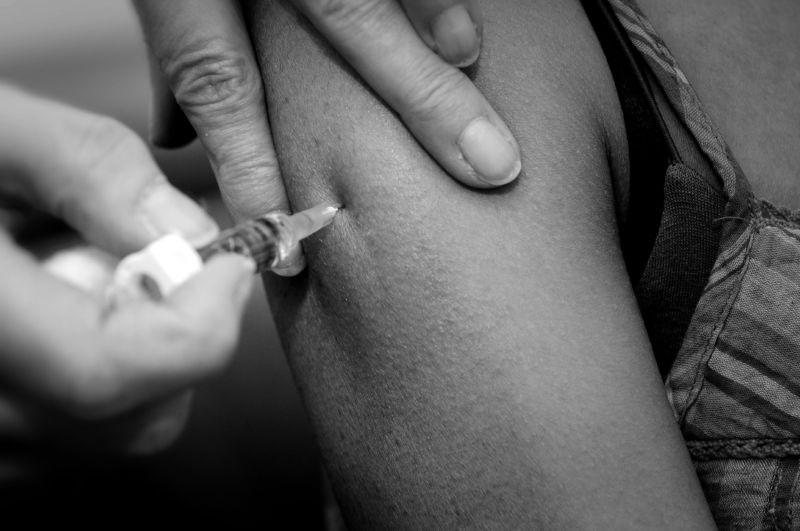
All the children who were exposed to the measles received a vaccine and none of them currently have the disease, Levy said, because there is a vaccine that works over 99% of the time. “We call on all children to get vaccinated,” he said.

80 child cancer patients exposed to measles at Petah Tikva hospital 


Tel Hashomer Infectious Diseases Prevention Unit immunology researcher Aylana Reiss-Mandel said that it is precisely because of vaccines’ success that some people don’t recognize their importance.


1 minute read.
A medical worker holds vials containing the flu vaccine in Tel Aviv.


A three-year-old boy with measles exposed an estimated 80 children from all over Israel to the disease at Schneider Children’s Medical Center in Petah Tikva.

Infectious Diseases Unit director Yitzhak Levy said they ask parents if their children had received regular vaccines and the father of this child had said that he did.

“You have to ask his dad, I don’t know why [he didn’t get vaccinated] but the fact is, he didn’t,” Levy said. “Dad says it’s for technical reasons – ask him.”

Had the hospital staff known the child had not been vaccinated, they would have quarantined him and not have let him walk around, he said.

The child was treated in the hemato-oncology ward, due to a blood disease, where cancer patients – whose immune systems are already compromised – are also treated.

“He got the regular treatment, and went through various stations in the hospital,” the hospital’s assistant to the spokesperson Linor Nevo-Albo said. “Some days afterward, we got a report that the same child was indeed sick with measles, and therefore we checked all the children who were perhaps with him, in the same environment.”

All the children who were exposed to the measles received a vaccine and none of them currently have the disease, Levy said, because there is a vaccine that works over 99% of the time.

“We call on all children to get vaccinated,” he said.


Tel Hashomer Infectious Diseases Prevention Unit immunology researcher Aylana Reiss-Mandel said that it is precisely because of vaccines’ success that some people don’t recognize their importance.

“Today we really don’t see the diseases that we’re talking about vaccinating, and thank God that we don’t, so it’s hard to understand the importance and how far we’ve come because of vaccines,” she said.

“Even with herd immunity, there’s always a very, very small risk of contracting something... with somebody who hasn’t been immunized.”


https://www.jpost.com/HEALTH-SCIENCE/80-child-cancer-patients-exposed-to-measles-at-Petah-Tikva-hospital-563803?utm_source=newsletter&utm_campaign=1-8-2018&utm_content=80-child-cancer-patients-exposed-to-measles-at-petah-tikva-hospital-563803


Wednesday, August 01, 2018

The outbreak mostly affected young children; the median age of the people affected was three. All of the cases were Orthodox Jewish persons in the neighborhoods of Williamsburg and Borough Park..Send the bill to the rabbis and toss them in jail!

Vaccine-refusing community drove outbreak that cost $395K, sickened babies


Curbing an outbreak is expensive. Should vaccine refusers help foot the bill? 


A 2013 measles outbreak rooted in a vaccine-refusing community in Brooklyn, New York cost the city’s health department an estimated $394,448, requiring 87 employees to collectively spend more than 10,000 hours on outbreak response and control, according to an analysis published Monday in JAMA Pediatrics.

During the outbreak, which spanned March through July, health workers quickly mobilized to track down more than 3,300 people exposed to the highly contagious, potentially life-threatening virus. Workers then determined the vaccination status of those exposed and doled out prophylactic treatments or vaccines to those who would take them. To get the word out about the health threat, workers contacted local doctors’ offices, schools, and daycares. They also placed announcements in local newspapers, set up a telephone hotline, and held community briefings on the situation. 

Almost a third of the employees involved in the response were working outside of their job descriptions, diverting resources from other critical public health activities. The cost estimate combined a conservative assessment of employee compensation ($332,000) and supply costs, such as lab testing and advertising ($62,000).

The authors of the analysis, led by Jennifer Rosen of New York City Department of Health and Mental Hygiene, summed up the situation succinctly: “The response and containment of measles outbreaks are resource intensive.”

That preventable burden on the health department’s operations and budget is in addition to the disease’s toll on public health. Healthcare workers confirmed 58 cases of measles in the outbreak, which was kicked off when a teenager in the community brought back a case of measles after a visit to London. The outbreak mostly affected young children; the median age of the people affected was three. All of the cases were Orthodox Jewish persons in the neighborhoods of Williamsburg and Borough Park.

Forty-five of the cases (78 percent) were in patients older than one who were unvaccinated due to vaccine refusal. Twelve cases (21 percent) were in infants aged less than one who were too young to vaccinate. And the remaining case was in an adult who had an ambiguous vaccination history.

Serious complications in the outbreak included one person developing pneumonia and a pregnant woman suffering a miscarriage. Health workers also found that a newborn had been exposed to the virus in utero and had detectable measles virus in their urine and respiratory tract directly after birth. The baby’s parents declined treatment with a prophylactic immunoglobulin.

In an accompanying editorial, Jason Schwartz of Yale’s department of health policy and management notes that such insular communities of vaccine refusers can hide in nationwide statistics showing otherwise strong vaccination coverage—and most of the time they reap the benefits of “herd immunity” or community-scale immunity due to sufficient rates of vaccination.


“Those who voluntarily choose to forego vaccination are thus free-riders, benefiting from this public good without contributing to it,” Schwartz concludes. One possible solution, he writes: vaccination refusal fees that would go to cover outbreak response costs, among other vaccination-related expenses.
 
 “Such a fee would reflect the shared benefits among a community that result from a well-functioning vaccination system and the corresponding shared responsibility for contributing to and sustaining those benefits,” he writes.

Of course, such a fee would likely be highly controversial and researchers are still trying to work out if other strategies, such as stricter exemption rules and better doctor-patient communication, that could cut down on vaccine refusal without fees. In the meantime, Schwartz notes, the new analysis provides “additional evidence that decisions to delay or decline vaccination result in potentially serious health risks to those individuals and their communities as well as significant burdens and costs to health departments and the health care system.”

JAMA PEdiatrics, 2018. DOI: 10.1001/jamapediatrics.2018.1024  (About DOIs).

https://arstechnica.com/science/2018/07/vaccine-refusing-community-drove-outbreak-that-cost-395k-sickened-babies/

When Was The Last Time Rabbi Shmuel Kaminetzky Got Something Right?

“What about the people who clean and sweep in the school?” argued Kamenetzky. “They are mostly Mexican and are unvaccinated. If there was a problem, the children would already have gotten sick.” “I see vaccinations as the problem. It’s a hoax. Even the Salk vaccine [against polio] is a hoax. It is just big business.”


 READ MORE: https://theunorthodoxjew.blogspot.com/2015/05/when-was-last-time-rabbi-shmuel.html

Tuesday, July 31, 2018

Cohen – dressed as the even more fearless Morad – showed off some top-notch Israeli technology: a tunnel detection wand that has been repurposed to sniff out pedophiles...Next Stop Brooklyn, New York...

Sacha Baron Cohen's 'Erran Morad' continues to shock- No shortage of Idiots on the Planet!


Character sings 'Yerushalayim Shel Zahav' on screen and humiliates senate candidate Roy Moore with pedophile-catching Israeli technology.


Sacha Baron Cohen’s ‘Erran Morad’ continues to shock and humiliates senate candidate Roy Moore
Sacha Baron Cohen’s ‘Erran Morad’ continues to shock and humiliates senate candidate Roy Moore. 


Is there anything Col. Erran Morad can’t do?

Considering he’s a fictional IDF officer – or a Mossad agent, depending on his mood – Morad can get away with saying and doing just about anything.

In fact, the ending credits of each episode of Sacha Baron Cohen’s new Showtime series Who is America? include the disclaimer “nothing in this series should be considered factual.”

But on the third episode of the show, which aired on Sunday evening, Morad continued to say and do outrageous things, while the men around him don’t seem to bat an eyelash.

And as buzz around the show climbs, more people around the globe are tuning in to watch Cohen’s ludicrous Mossad character dupe public and private figures. Though just 327,000 people watched the premiere on Showtime two weeks ago, the online figures tell a different story. As of Monday, a clip of Morad convincing congressmen to endorse arming toddlers has been viewed 14 million times. The segments featuring Morad – a cocky, macho and ridiculous stereotype of an Israeli terrorism expert – have proved the show’s most successful.

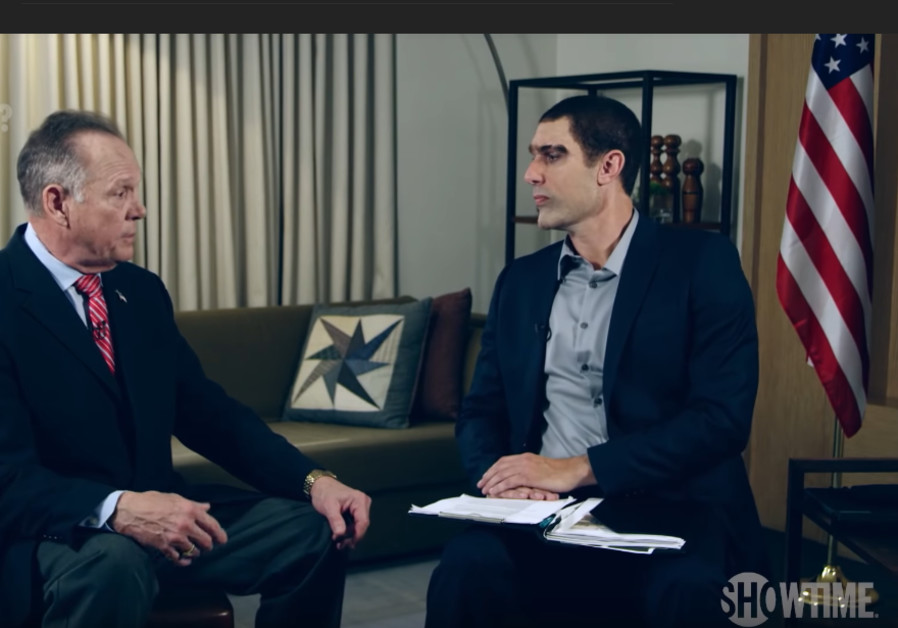
On the third episode of the show, Morad met up with Roy Moore, the disgraced GOP Senate candidate who just barely lost his race last year after nine women accused him of sexual misconduct – several while they were minors.

Cohen reportedly lured Moore to the meeting with the promise of honoring him for his dedication to the State of Israel. In a statement earlier this month after learning he had been duped, Moore said he did not know he was taking part in something “planned to embarrass, humiliate, and mock not only Israel, but also religious conservatives.”

And when they sat down, the fearless Cohen – dressed as the even more fearless Morad – showed off some top-notch Israeli technology: a tunnel detection wand that has been repurposed to sniff out pedophiles.

Not surprisingly, the segment ends with Moore storming off set away from the beeping wand, after stating: “I support Israel, I don’t support this kind of stuff.”

But that wasn’t it for Morad’s presence in this episode; he returned in a truly cringe-inducing clip (that is, if you weren’t already cringing) that involved training three anti-immigration Trump supporters how to lure and trap Mexicans.

It was here that Morad dropped any pretense of logic or sense, since there seemed to be nothing he could do that would tip the men off – or deter them from their plot to deport immigrants.

That included having one of them dress up as a 15-year-old Mexican girl celebrating her Quinceañera, complete with underwear sporting a fake vagina “based on Gal Gadot.” None of the men seemed to blink an eye when Morad – dressed as a mariachi performer – began singing “Yerushalayim Shel Zahav.” The truth may have only begin to dawn on them when actual police officers showed up to the scene of their trap.

With four episodes remaining in the first season, there’s no doubt viewers will be seeing more of “Erran Morad.” And more targets will be ignorant enough to find his tough-guy Israeli act entirely believable.

https://www.jpost.com/Israel-News/Culture/Sacha-Baron-Cohens-Erran-Morad-continues-to-shock-563776?utm_source=newsletter&utm_campaign=30-7-2018&utm_content=sacha-baron-cohens-erran-morad-continues-to-shock-563776

Monday, July 30, 2018

Serious observers should know that it’s pointless for mortals to ponder whether their Creator moves around rocks, even the sacred ones of the Kotel, to send them messages...

When a rock falls in a plaza . . .


The Kotel rock was a case of a stone meeting gravity. But it was also used as an excuse for Jewish score-settling while allowing the Palestinians to explain again why peace is not in sight.


 For all those that attended a Haredi yeshiva and read YWN, MATZAV, and VIN, are man worshipers, and are fans of Avi Shafran:

( Gravity, or gravitation, is a natural phenomenon by which all things with mass or energy—including planets, stars, galaxies, and even light[1]—are brought toward (or gravitate toward) one another. On Earth, gravity gives weight to physical objects, and the Moon's gravity causes the ocean tides. The gravitational attraction of the original gaseous matter present in the Universe caused it to begin coalescing, forming stars – and for the stars to group together into galaxies – so gravity is responsible for many of the large scale structures in the Universe. Gravity has an infinite range, although its effects become increasingly weaker on farther objects.)


Look for the (Triple K) KKK hashgacha on every authentic UOJ psak. Accept no substitutes! KOSHER - from corruption. KOSHER - from bribes. KOSHER from mattress gelt.

Rely only on the KKK. Our yarmulkes are black!


 In ancient times, people looked to portents involving the heavens and earthbound events in order to try to understand the baffling world in which we live, as well as to discern the will of their Creator. In the 21st century—armed with science, sophisticated technology and mass communicationwe’re much smarter than that. Instead of pondering the stars, we now expect the fall of a loose rock in an old stone wall to explain it all. 

When a boulder that was part of the ancient Western Wall fell this past week, it was just a matter of gravity, the loosening most likely caused by vegetation that grows in the ancient structure, the debris that birds place into crevasses or an accumulation of moisture. But the crash of a 220-pound piece of rock was enough to set off a storm of commentary—some of it serious and some delivered with tongue firmly planted in cheek. All of it was designed to score points in the wars Jews fight among themselves, in addition to the one Palestinians still wage against Israel’s existence.


A large chunk of stone dislodged from the Western Wall in Jerusalem’s Old City at the mixed-gender prayer section on July 25, 2018.

The rock fell into the area separated from the main Kotel plaza and in which a relatively small area has been set aside for egalitarian prayer. A plan to expand access to the area has been blocked by those who are offended by non-Orthodox prayer services. The ensuing controversy has angered many Jews in the Diaspora.

So it wasn’t surprising that some people claimed that the rock falling was a sign of heavenly favor or disfavor, made more profound since had it fallen a day earlier on Tisha B’Av—when the area was packed with thousands of worshippers—some people almost certainly would have been badly injured or even killed. Jerusalem Deputy Mayor Dov Kalmanovich of the right-wing Jewish Home Party said the non-Orthodox might be the reason for the incident, and that these “quarrelmongers examine themselves, not the Wall.”

In response, a U.S. Reform rabbi wondered, in what was clearly intended as sarcasm, whether instead the all had “spit out a stone” in protest against the passage of the Jewish nation-state law days earlier. More thoughtfully, Alden Solovy, a Reform teacher and blogger, invoked traditional teachings about Tisha B’Av by warning that perhaps the sinat chinam—or “senseless hatred” that helped destroy Jerusalem 2,000 years ago—is now undermining the stability of the Kotel.

But as is often the case, these Jewish internecine battles can obscure the war their enemies still wage against them. While the Orthodox and the non-Orthodox bicker about who can pray at the wall and where, the Palestinians are still denying that the site has anything to do with the Jews.

As Khaled Abu Toameh reported in The Jerusalem Post, Omar Kiswani, director of the Al-Aqsa mosque on the Temple Mount, claimed that the loose rock was the result of Israeli archeological excavations aimed at toppling the entire plateau and destroying Muslim holy places. Yusef Natsheh, director of Islamic Archeology and Tourism on the Mount, chimed in by saying that the slab falling was clearly a “pre-planned test” carried out by the Jews in order to test the strength the walls of the mosques before destroying them.

The spokesperson for the Fatah Party that runs the Palestinian Authority also said that the rock’s fall was proof that Israel was trying to destroy the mosque. Not confining himself to conspiracy theories, Fatah’s Osama Qawasmeh, who works for P.A. leader Mahmoud Abbas, made it clear that the Kotel prayer areas were the property of Muslims, not the Jews arguing about them.

“We affirm that al-Aqsa Mosque and its surroundings, including what is beneath it, are purely Islamic,” Qawasmeh said. “The Jews have no right to it.”

He also called the visits to the Temple Mount by Israelis a “crime,” even though Jewish tourists are forbidden to pray at the sacred site in a futile effort to mollify the Palestinians.

If all this sounds familiar, it should. Palestinian leaders have been spewing such falsehoods, which amount to a blood libel against Jews, for a century in order to stir up hate. The recent “stabbing intifada” was set off in no small measure by Abbas’s claims that “stinking Jewish feet” were profaning Jerusalem’s holy sites. A stabbing murder of a Jew this week may well have been directly inspired by the latest P.A. lies about the Temple Mount.

So while Jews fight each other over prayer at the Kotel, Palestinians continue to seek to deny all of them the right to be there. Even the supposed moderates of Fatah seem to want not just a Jew-free West Bank, but also a Jerusalem where Jews have no rights—whether they are Orthodox or non-Orthodox.

Serious observers should know that it’s pointless for mortals to ponder whether their Creator moves around rocks, even the sacred ones of the Kotel, to send them messages. 

 Rather, they should remember that it’s that the contemporary wars of the Jews against each other—like the battles that took place inside Jerusalem while the Romans besieged the city—that undermine the unity needed to defend the Jewish people against those who would harm them and deny them their ancient home.

Instead of using the rock as a weapon in a domestic squabble, this would be an apt moment for all Jews to stop trying to insult each other. And if it’s the only way for the message to get through, let’s say that God moved that stone in order to send them a reminder to behave themselves and understand that their enemies make no such distinctions when seeking to spill their blood.

Jonathan S. Tobin is editor in chief of JNS — Jewish News Syndicate. Follow him on Twitter at: @jonathans_tobin.

Republish this article in your newspaper o

https://www.jns.org/opinion/when-a-rock-falls-in-a-plaza/


Thursday, July 26, 2018

Yisroel Belsky Had To Die Before The OU Could Stop This Incredibly Cruel Act of Avoidable tsa’ar ba’alei chayim... Belsky Was an Advocate of ‘Shackle and Hoist’ --- “Shackle and hoist” slaughter is almost twice as fast as other, less agonizing methods and allows slaughterhouses to kill more than 90 cows per hour. This is the hidden cost of cheap kosher meat—and it’s the cows who are paying the price.

Orthodox Union to stop certifying kosher beef slaughtered using controversial method


 Judaism has a long, proud tradition of compassion for animals, known as the principle of tsa’ar ba’alei chayim. The kosher meat industry violated the trust of Jewish consumers by abusing cows to produce cheap meat.


Rabbi Avi Shafran, director of public affairs for Agudath Israel of America, the umbrella organization of Charedi Jews in America, wrote that “kosher has nothing to do with health or ‘ethics.’ There are Jewish ethical laws and Jewish ritual laws. Kashrut is entirely in the latter category. And it is simply not Orthodox to contend otherwise.” June 2014


(JTA) — The Orthodox Union has told its approved beef purveyors in South America to stop using a controversial slaughter method.

The O.U., which is the largest kosher certifying agency in the United States, sent a letter to its meat purveyors in June notifying them that it would no longer accept meat slaughtered using the “shackle and hoist” method, said Rabbi Menachem Genack, CEO of the organization’s kosher division.

The letter came after Israel decided to ban the import of any meat slaughtered using the method, in which the animal is pulled into the air by its legs and then flipped onto the ground before being slaughtered. Critics of the method, which is commonly used in South America but not permitted in Israel, say it puts unnecessary stress on the animal and is inhumane.

Israel’s agriculture department banned the method for imported meat last year and gave slaughterhouses, many of which also produce kosher meat sold to the U.S., until June 1, 2018, to comply. The Israeli policy said that slaughterhouses had to install rotating pens to turn the animal upside down, which is seen as more humane than using shackle and hoist.

On Monday, Genack told JTA that he expects that all slaughterhouses certified by the O.U. will stop the practice by the end of September. He estimated that about a third of the beef certified by the O.U. for sale in the United States comes from South America, with the rest being slaughtered in the U.S. and Canada, where the shackle and hoist method is not used.

“The O.U. for a very long time has been focused on this, trying to promote slaughter in the pen of beef, so we’re happy that Israel took that step,” Genack said.

The Israeli ban came after an undercover investigation and campaign to end the practice by animal rights groups, including the U.S. group People for the Ethical Treatment of Animals and Israeli groups Anonymous for Animal Rights and Let the Animals Live.

PETA praised the O.U. decision in a statement to JTA.

“Stopping the import of ‘shackle and hoist’ beef to the U.S. is a historic step forward, and will help eliminate some of the worst abuses surrounding kosher slaughter,” said Hannah Schein, director of research and logistics for the organization’s cruelty investigations department.

Schein added that PETA “encourages kosher consumers who want to make the kindest choice” to consume meat substitutes instead of meat.

https://www.jta.org/2018/07/24/top-headlines/orthodox-union-stop-certifying-kosher-beef-slaughtered-using-controversial-method?utm_source=JTA%20Maropost&utm_campaign=JTA&utm_medium=email&mpweb=1161-5339-21723