EVERY SIGNATURE MATTERS - THIS BILL MUST PASS!

EVERY SIGNATURE MATTERS - THIS BILL MUST PASS!
CLICK - GOAL - 100,000 NEW SIGNATURES! 75,000 SIGNATURES HAVE ALREADY BEEN SUBMITTED TO GOVERNOR CUOMO!

EFF Urges Court to Block Dragnet Subpoenas Targeting Online Commenters

EFF Urges Court to Block Dragnet Subpoenas Targeting Online Commenters
CLICK! For the full motion to quash: http://www.eff.org/files/filenode/hersh_v_cohen/UOJ-motiontoquashmemo.pdf

Monday, December 14, 2020

R' Shmuel Kamenetzky - "All Vaccines Are A Hoax Even The Polio Vaccine" - Will Take The Vaccine, But You'll Never Know!


Everything We Know So Far About The COVID-19 Vaccine Rollout In NY & NJ

Boxes containing the Pfizer-BioNTech COVID-19 vaccine are prepared to be shipped at the Pfizer Global Supply Kalamazoo manufacturing plant in Portage, Michigan.

For months now, New York and New Jersey have been held hostage by the coronavirus, subject to tighter or looser restrictions based on the infection rate, but never fully free of its grip. During that time, many have held out hope for the one thing that could potentially break the cycle: a vaccine.

Now, finally, it’s here. The U.S. Food and Drug Administration approved emergency use of the first coronavirus vaccine to make it to the finish line Friday evening after an expert advisory panel voted in favor of the move Thursday. The federal government’s Operation Warp Speed is now coordinating the shipment of an initial batch of 2.9 million doses of the vaccine, developed by Pfizer and BioNTech, across the country. The vaccine has been authorized for people age 16 and older.

A second vaccine, developed by Moderna, will be up for review by the FDA advisory panel this coming Thursday, December 17th, and the first doses will likely be distributed shortly after that, should its emergency use be granted.

But even with New York’s and New Jersey’s vaccination effort on track to get underway this month, it’s still too soon to rip off your mask and breathe a sigh of relief. Only high priority populations will be vaccinated to start, and some are still skeptical about getting vaccinated at all. A recent Siena College poll found that about two-thirds of New Yorkers are currently willing to get vaccinated, while a Rutgers-Eagleton poll found 60% of New Jersey residents welcomed a vaccine; nationally only about half of Americans are on board, according to a recent poll from The Associated Press-NORC Center for Public Affairs Research.

Around 75% of the population would need to get vaccinated in order to achieve herd immunity. If that’s accomplished by summer 2021, it’s possible that by the end of next year, “we can approach very much some degree of normality that is close to where we were before,” Dr. Anthony Fauci, director of the National Institute of Allergy and Infectious Diseases, said this week.

For now, though, the imminent arrival of a coronavirus vaccine in New York raises a lot of basic questions about efficacy, safety and logistics.

Here’s What We Know So Far

How will the vaccines be administered?

Both the Pfizer-BioNTech vaccine and the Moderna vaccine require two doses per person. Pfizer-BioNTech is recommending its doses be spaced 21 days apart, while Moderna is recommending 28 days.

How effective are the vaccines?

Pfizer and BioNTech say after the second dose, their vaccine proved 95% effective in preventing recipients from contracting COVID-19 in clinical trials. Moderna said its vaccine is nearly 95% effective. More research will be required to determine how long immunity provided by the vaccines lasts and whether recipients will at some point need a booster.

Can people who have been vaccinated still spread the virus?

It’s still unclear. Clinical trials for the Moderna and Pfizer-BioNTech vaccines studied whether participants were protected against contracting the virus themselves but not whether they passed it on to others. For now, the CDC recommends that people who get vaccinated continue to wear a mask.

One immunologist, Deepta Bhattacharya from the University of Arizona, told the NY Times: “Preventing severe disease is easiest, preventing mild disease is harder, and preventing all infections is the hardest.”

How do the vaccines work?

Both the Pfizer-BioNTech and Moderna vaccines use genetic material known as messenger RNA to instruct the body’s cells to produce a special protein that is unique to the coronavirus. After the proteins are created, the genetic material from the vaccine is destroyed. Recognizing the proteins shouldn’t be there, the body then produces white blood cells that remember how to fight the virus should it come back in the future.

Other vaccines in development may work differently, but none of them require injecting people with the live virus.

Do the vaccines have any negative side effects?

Some people experience initial side effects, which is common with vaccines, but that doesn’t mean they’re unsafe.

In Phase 1 trials of the Moderna vaccine, more than half of those who received it reported side effects such as fatigue, chills, headache, muscle pain, or soreness at the injection site. During Phase 3 trials of the Pfizer-BioNTech vaccine, about 3.8% of participants experienced fatigue and 2% experienced headaches.

“Just because you’re sore doesn’t mean that [the vaccine] didn’t work or wasn’t effective,” Dr. Melanie Swift, an occupational medicine physician helping to lead COVID-19 vaccination at the Mayo Clinic, told USA Today. “It just means that your body responded the way it’s supposed to.”

What about the people who had allergic reactions to the vaccine in the U.K.?

Two health care providers who received the Pfizer-BioNTech vaccine in the U.K. this week experienced anaphylactoid reactions (both carried EpiPens and recovered after using epinephrine). The U.K.’s National Health Service is now recommending that people with a history of severe allergic reactions avoid the Pfizer-BioNTech vaccine.

In the U.S., the FDA has guided healthcare providers to not administer the Pfizer vaccine at all to those with a history of severe allergic reaction to components that are in the Pfizer vaccine. This differs from a CDC official's presentation to the immunization practices panel suggesting providers should not vaccinate anyone with a history of severe allergic reactions to any vaccines. But the CDC's final guidance is expected Sunday, according to STATNews.

Infectious disease experts say it’s important to find out more about the effects of the vaccine, rather than ruling out its use for the millions of people who have allergies.

Fauci said this week that the reactions are most likely rare, but if they’re prevalent among a certain subset of the population, those at risk may be able to opt for one of the other vaccines in development.

How many doses will New York and New Jersey get?

Between the Pfizer-BioNTech and Moderna vaccines, New York City expects to receive more than 450,000 doses by the end of December. The number of doses shipped to each state will be based on its adult population, according to federal officials. Overall, the federal government has so far ordered 100 million doses of the vaccine from Pfizer-BioNTech, 200 million from Moderna and hundreds of millions more doses from companies that are still in the process of testing their vaccines.

New Jersey Governor Phil Murphy says there may be 460,000 doses by mid-January. The initial batch from Pfizer is 76,000 doses, and the first vaccines will be administered at University Hospital in Newark on Tuesday.

Who will get vaccinated first?

In New York state, the first cohort to get vaccinated will include nursing home residents, nursing home staff and health care workers in high-risk settings, Governor Andrew Cuomo said this week.

New York State’s plan indicates other essential workers—first responders, grocery store workers, transit employees—as well as those at a high-risk of severe disease from coronavirus due to other health conditions could be prioritized next. Nursing home patients and staff will be vaccinated under the CDC’s vaccination program with CVS and Walgreens.

The city Health Department says it will determine the next phases of priority groups once the CDC’s immunization practices committee decides what to recommend, but a timeline for later priority groups depends on vaccine supplies.

Like New York, New Jersey is vaccinating health care workers and long term care patients and staff first.

When will the vaccine become available to the general public?

Widespread vaccine distribution is expected by spring 2021, according to Fauci and U.S. Department of Health and Human Services Secretary Alex Azar.

How will vaccines be distributed once they arrive? ?

The Pfizer-BioNTech vaccine must be stored at ultra-cold temperatures—negative 70 degrees Celsius—that not all facilities can accommodate.

New York has identified 90 regional distribution centers to receive the vaccines. In New York City, more than 50 hospitals have freezers that can store the vaccine and the Health Department can store hundreds of thousands of doses as well, for a total citywide capacity of 2 million doses.

Forty hospitals in New Jersey have ultra-cold storage.

Hospitals, as well as shipping companies like FedEx, are also placing large orders for dry ice in order to ensure the vaccine’s successful transport.

Where will people get vaccinated?

When the vaccine is rolled out more broadly, it will likely be available in all the places that typically offer vaccinations. Doctors’ offices, pharmacies, and other health care providers are now able to enroll in the NYC COVID-19 Vaccination Program, according to a memo sent out by the NYC Health Department this week. Only select entities, such as hospitals, nursing homes, and home health agencies, will be able to get the vaccine in the first phase of distribution, however.

The city is prepared to set up emergency vaccination sites at locations besides vaccination programs at hospitals or nursing homes. During the H1N1 crisis, the health department set up "points of dispensing" sites—PODS—to vaccinate New Yorkers, which is expected during the coronavirus vaccination effort.

How much will the vaccine cost?

The vaccine is supposed to be free for everyone, regardless of what kind of insurance they have or if they are uninsured.

The federal Centers for Medicare and Medicaid Services has laid out a plan to make sure this happens, including a program that will reimburse health care providers for administering the vaccine to people who are uninsured. The CMS also aims to create special billing codes for the vaccine that will be easily recognized by insurers. Still, health care billing is an imprecise science, so it will be important for vaccine recipients to keep an eye out for any unanticipated charges.

https://gothamist.com/news/everything-we-know-so-far-about-coronavirus-vaccine-rollout-ny-nj?mc_cid=6f88f6d0dd&mc_eid=a160981f2b


Anti-Vaccine Rabbi Sits on Prominent Ultra-Orthodox Panel as Measles Spread


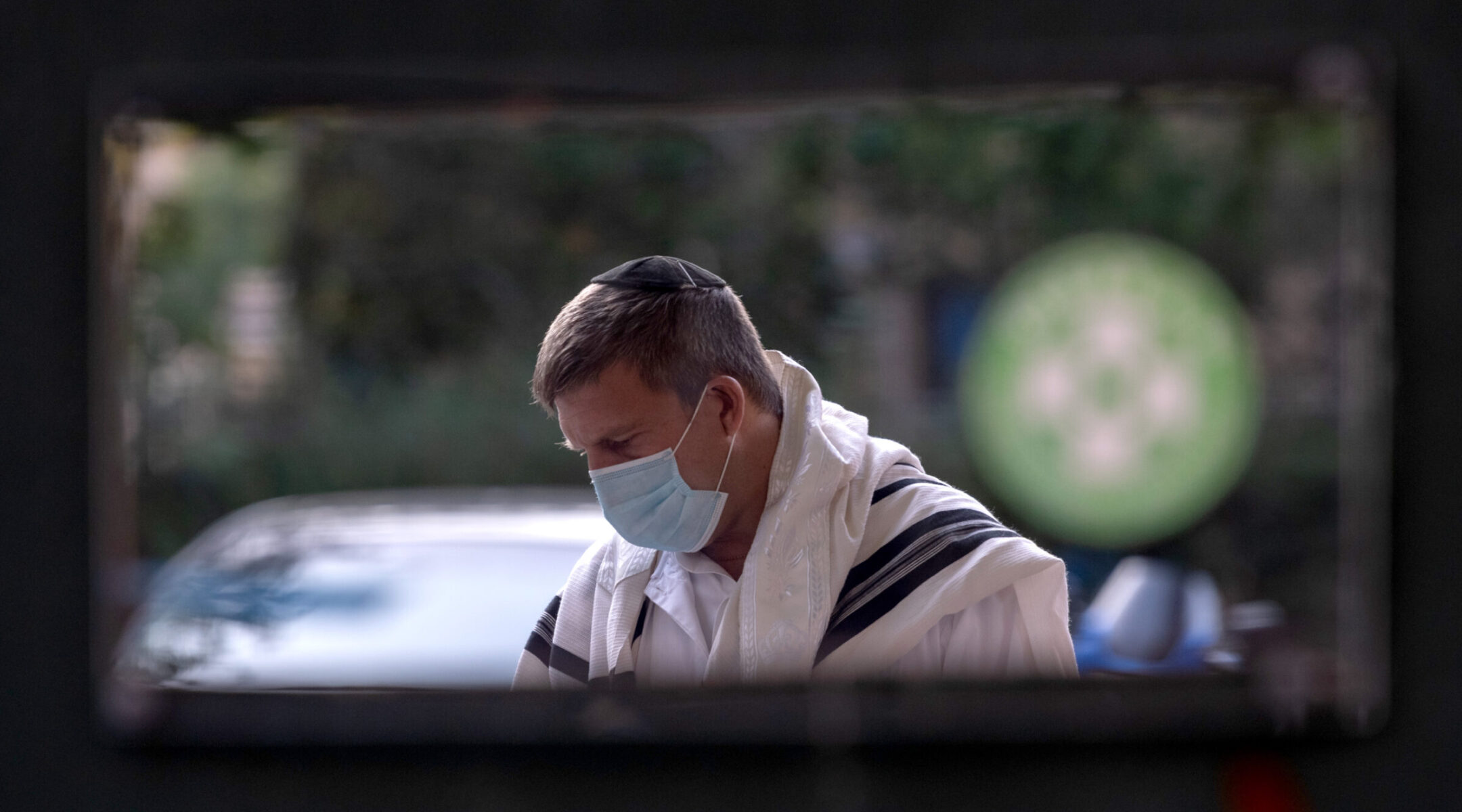
Rabbi Shmuel Kamenetsky
Rabbi Shmuel Kamenetsky.
 

At the height of a measles outbreak in Brooklyn and around the country, a major ultra-Orthodox Jewish umbrella group headquartered in New York issued a statement urging parents to vaccinate their children.

The Agudath Israel of America, “in the strongest possible terms,” encouraged parents on April 10 to get their children inoculated against the viral disease. But the influential organization has a rabbi, Shmuel Kamenetsky, on its supreme rabbinical policy-making council who has called vaccines a “hoax.”

Kamenetsky, the founder and head of a prestigious yeshiva in Philadelphia, is a member of the Moetzes of Agudath Israel. Rabbis on the esteemed Moetzes, or council, set all kinds of policies for the organization, its members and hundreds of affiliated synagogues. The ten council members are typically appointed for life.

On April 9, Mayor Bill de Blasio issued a public health emergency in four zip codes in Brooklyn where many ultra-Orthodox Jews reside. Every adult and child who lives or works in those areas must be vaccinated, according to an order from the city’s health commissioner.

There were 523 reported cases of measles as of Monday, according to the city Health Department. Nine private Jewish schools were closed for failing to follow regulations but all have since been reopened.

A spokesperson for the Agudath — which receives city and state funds for a myriad of social service programs — defended Kamenetsky.

“Rabbinic authorities are entitled to their social issue opinions no less than anyone,” said Agudath’s Avi Shafran. “The issue of admitting unvaccinated children to schools when there are no immunocompromised students in them is one that has two eminently arguable sides.”

Some are frustrated by that divided stance.

“The problem here is the baseline assumption that there are two sides to this long settled medical issue, or that this is a matter of debatable social policy. It is not,” said Menashe Shapiro, a political consultant with strong ties to the Jewish community.

“The obligation to safeguard the health and well-being of children and to protect oneself is basic and sacrosanct — and you don’t need a separate directive from any council of sages to know that,” the Upper West Side resident added.

Claims of a ‘Hoax’

In a 2014 interview with the Baltimore Jewish Times, Kamenetsky called vaccines a “hoax” and his wife, Temi, has been a figure on the anti-vax circuit, according to reports. A year later, the rabbi signed a letter authorizing a major yeshiva in Lakewood, N.J. to admit unvaccinated children.

“What about the people who clean and sweep in the school?” he told the Baltimore Jewish Times. “They are mostly Mexican and are unvaccinated. If there was a problem, the children would already have gotten sick.”

There is no validity to allegations that South and Central American immigrants are vaccinated at a lower rate than the rest of the U.S. population.

Some Hasidic anti-vaxxers have cited Kamenetsky’s comments highlighted in an online pamphlet circulating in the community. They point out he’s a member of the esteemed Moetzes and considered one of the leading rabbis of this generation. 

Meanwhile, a Change.org petition last year noted Kamenetzky’s role on the Moetzes and urged the Agudath Israel to “take a clear stand on this issue.” The petition, which had 354 digital signatures as of mid May, was first reported by The Forward.

Agudath Israel advocates for services for private schools and helps defend religious rights. It also operates job training centers and lobbies against physician-assisted suicide.

In 2014, de Blasio spoke at Agudath Israel’s 92nd annual dinner, praising the organization and its social service operations. All told, the organization has received about $8 million in city funds to distribute for social service programs since then.

Kamenetsky declined to comment. Agudath Israel officials, meanwhile, say they are leading the way to combat the measles outbreak.

A Push for Vaccinations

Last week, the group, in conjunction with other organizations, led a “vaccination drive” where more than 200 people were inoculated. The Agudath Israel also issued a statement slamming an anti-vaxxer gathering in Monsey, Rockland County.

“Countless rabbinical figures and leaders, including leading rabbis in the Agudath Israel movement and doctors serving these communities, have repeatedly encouraged vaccination in the strongest possible terms,” the statement said.

Alexander Rapaport, who operates kosher soup kitchens in Brooklyn, encourages community members to get vaccinated, and even narrated a film with that message for the mayor’s office.

“We should tolerate that some people in very influential positions have minority opinions,” he said. “I’m pro vaccines but I can tolerate a smart person who comes down otherwise. The beauty of freedom of speech is it comes with a cost.”

Rapaport argued that Kamenetsky has zero influence over Hasidim living in Williamsburg, Brooklyn, or in other parts of the city.

Ultra-orthodox Jews in Williamsburg are largely members of the Satmar Hasidic sect and follow that group’s leader, he added.

Anti-vaxxers have been denounced by many community leaders and medical professionals. Citing years of research, they argue that Kamenetsky and others spread misinformation that endangers children.

“The anti-vaccination message is dangerous and the science is clear: Vaccines save lives,” said mayoral spokesperson Marcy Miranda. “When someone chooses not to get a vaccine, not only do they endanger themselves, but they unfairly endanger those that cannot get vaccinated for medical reasons. We should listen to medical professionals urging everyone to get vaccinated.”


https://www.thecity.nyc/health/2019/5/23/21211066/anti-vaccine-rabbi-sits-on-prominent-ultra-orthodox-panel-as-measles-spread

Sunday, December 13, 2020

All things are mortal but the Jews; all other forces pass, but he remains. …


Hanukkah: A ‘Stiff Necked’ People — the Fight for Sovereignty and Against Assimilation


Hanukkah is not just about gifts, latkes, jelly-filled donuts (sufganyot), and dreidels — though they are certainly nice (and fun).

At its core, Hanukkah is the story of a battle for the heart and soul of a conquered and colonized people — of the clash between the dominant Greek/Hellenist culture of the time on the one hand, and the culture and essential identity of the Jewish people on the other.

More than 2,200 years ago, the differences between these two cultures and value systems were quite stark. The Greek/Hellenist culture worshiped physical beauty. They placed a principle value on the here and now — on personal gratification. Jewish values were the opposite. For the Jewish people, the spiritual, not the physical, was first and foremost.

After Judea fell to Hellenist colonialism, as often occurs within societies and peoples conquered by large expanding empires, there was an internal struggle in Judea between traditional Jews and those who did not entirely dissent from the Hellenists’ prohibitions on Jewish worship and culture, and in fact wished to succumb to Hellenism. Many Jews back then became, in effect, self-hating Jews, and wished to adopt Hellenism entirely.

Hanukkah, therefore, is as much a celebration of the Jewish people’s success in ridding Judea of the colonialists — who sought, like many colonialists that followed in their footsteps (be they Roman, Arab, Crusader, etc.), to impose their culture and/or faith on the people of Judea — as it is a celebration of the incredible perseverance of the Jewish people.

As Mark Twain noted in his short essay Concerning the Jews:

All things are mortal but the Jews; all other forces pass, but he remains. … The Egyptians, the Babylonians and the Persians rose, filled the planet with sound and splendor, then faded to dream-stuff and passed away; the Greeks and Romans followed and made a vast noise, and they were gone; other people have sprung up and held their torch high for a time but it burned out, and they sit in twilight now, and have vanished. The Jew saw them all, survived them all, and is now what he always was, exhibiting no decadence, no infirmities of age, no weakening of his parts, no slowing of his energies, no dulling of his alert but aggressive mind. … If the statistics are right, the Jews constitute but one quarter of one percent of the human race. It suggests a nebulous puff of star dust lost in the blaze of the Milky Way. Properly, the Jew ought hardly to be heard of, but he is heard of, has always been heard of. He is as prominent on the planet as any other people, and his importance is extravagantly out of proportion to the smallness of his bulk.

These words ring even truer today — 73 years after the Holocaust and 70 years after the Jewish people regained their sovereignty in their indigenous, historical, and religious homeland — than they did when Mark Twain wrote them in 1898 from Vienna.

The Jewish people’s long-standing resistance to both colonialism and assimilation, and the miracle that is the survival of the Jewish people for thousands of years, arguably started with Hanukkah.

The Hanukkah miracle itself, the one day’s worth of oil that instead lasted eight days, tells a story of survival against all odds, which like the Jewish people’s 3,300-year-old and (B”H) counting story of survival, is miraculous. Many nations, tribes, and people have come and gone since the Jewish people first introduced ethical monotheism to the world. Unlike the Moabites, Phoenicians, Philistines, Amorites, etc., the Jewish people remain.

Hanukkah, and the miracle of the oil — as exemplified by the Hanukkah lights — should serve as a bright, shiny reminder of the Jewish people’s mission, of our resilience, and why we, as Mark Twain noted, continue to survive and contribute to the world in ways far exceeding our number, after all civilizations and cultures that were conquered by the Babylonians, the Greeks, and the Romans have long since vanished from the world.

Because such a large part of the Hanukkah story is our resistance to not only tyranny, but also to the temptation of Hellenism and assimilation, the mitzvah of celebrating Hanukkah not only requires us to celebrate the holiday, but to publicize our celebration. This is the reason that whenever possible Jews are to light the menorah outdoors, and when lighting the candles indoors, we are supposed to put the menorah by a window facing the street, so that all those who walk by will know there are Jews celebrating Hanukkah in that home.

At a time when antisemitic attacks are on the rise in both the US and Europe, and Jews throughout Europe have attested to feeling like they have to hide their identity, the need to publicly and proudly celebrate being Jewish and Jewish sovereignty and self-determination could not be greater.

When Judea was occupied by the Hellenists there were quite a few Jews who were ready to abandon our tribal faith because the Seleucid Greeks had made them ashamed of their identity. These Jews had internalized the hatred the Hellenists had for their indigenous faith and culture. They had a colonized mentality, and as a result were embarrassed and/or afraid to be openly Jewish.

But the Maccabees, just like the Haganah and the IDF did over 2,000 years later (and sometimes arguably just as miraculously), taught the entire Jewish world the importance of Jewish pride — the importance of being a “stiff necked Jew,” a Jew who refuses to bow down to tyrants and despots, including those who on the eve of Hanukkah this year passed more “flat earth” resolutions at the UN General Assembly dishonestly denying the Jewish people’s historic connection to the land of the Maccabees.

That is the lesson of Hanukkah: To proudly defy those who want the Jewish people to disappear into the dustbin of history.

Happy Hanukkah!

https://www.algemeiner.com/2018/12/04/hanukkah-a-stiff-necked-people-the-fight-for-sovereignty-and-against-assimilation/?fbclid=IwAR1YI8yj-BTGYcALfLDReU6JjrlZ294lUKcS5tZFP_M2wS4zMab4IL7yoc4

Friday, December 11, 2020

Governor Cuomo Gonna Keep The Agudath Israel and Avi (bull) Shick Busy!


New York State Assembly Introduces Bill Mandating COVID-19 Vaccine


New Yorkers will no longer get to decide if they will receive a COVID-19 vaccine if a bill calling for a mandatory vaccine gets approved.

New York State Assemblywoman Linda Rosenthal, a Democrat who represents New York’s 67th Assembly District, quietly introduced a bill on Dec. 4 that would require “COVID-19 vaccine to be administered in accordance with the department of health’s COVID-19 vaccination administration program and mandates vaccination in certain situations.”

Every New Yorker, except those medically exempt, are required to receive the vaccine if the state’s vaccination efforts do not achieve “sufficient immunity from COVID-19.”

Rosenthal told WGRZ-TV the bill was “a protective health measure” that would “ensure that our residents are safe and protected against further spread.”

But in an event where not enough people get vaccinated to reach herd immunity, “the department of health of the state can then say that we need people to get the vaccination.” Rosenthal explained that an estimated 75 percent to 80 percent of the population would need to be vaccinated in order to achieve herd immunity.

Barbara Loe Fisher, cofounder and president of the National Vaccine Information Center, described the legislation as inappropriate.

“It is inappropriate for public health officials and state legislators to be introducing legislation that mandates use of an experimental vaccine being considered for release under an Emergency Use Authorization (EUA),” Fisher told The Epoch Times in an email.

“Until a COVID-19 vaccine is formally licensed by the FDA and recommended for use by certain populations by the CDC, it remains an experimental vaccine,” she said. “This kind of bill sends the wrong message to the public.”

The National Vaccine Information Center is a nonprofit organization that publishes “information on diseases and vaccine science, policy, law and the ethical principle of informed consent.”

Epoch Times Photo
Food and Drug Administration (FDA)

The Food and Drug Administration (FDA) will meet with a panel of independent medical advisers that will discuss whether scientific evidence supports the view that Pfizer’s vaccine, called BNT162b2, is effective in preventing COVID-19 in people aged 16 and older, and if the known benefits outweigh potential risks. COVID-19 is the disease the CCP (Chinese Communist Party) virus causes.

The FDA released an analysis (pdf) of Pfizer’s COVID-19 vaccine prior to its Dec. 10 meeting, along with Pfizer’s own analysis (pdf) of the vaccine’s effectiveness and safety, and says it will issue an emergency use authorization if the advisory panel gives the vaccine a positive recommendation.

In the UK, the government has already begun vaccinating its citizens. The country became the first to approve Pfizer’s COVID-19 vaccine, grant it an emergency approval, and give it immunity from civil lawsuits, under Regulation 345 of the Human Medicines Regulations (pdf) of 2012.

According to a press release from the UK government, individuals experiencing severe adverse reactions that cause them to be “severely disabled as a result of taking a COVID-19 vaccine” are able to “access financial assistance through the Vaccine Damage Payments Scheme (VDPS).”

Vaccine-injured claimants are entitled to a one-time payment of 120,000 pounds ($161,676) under the scheme if they are able to prove they were injured as a result of being vaccinated.

In the United States, vaccines granted emergency authorization are also not liable for the harm they may cause. The Public Readiness and Emergency Preparedness (PREP) Act (pdf) allows the Secretary of the Department of Health and Human Services to issue a PREP Act declaration giving liability immunity to “entities and individuals involved in the development, manufacturing, testing, distribution, administration, and use of such countermeasures.”

People injured by vaccines that have been granted emergency authorization have one year after receiving a vaccine to file a claim and prove their injury under the Countermeasures Injury Compensation Program, a federal government program established as a result of the PREP Act. Certain survivors of people who died from those vaccines also qualify.

The PREP Act declaration for COVID-19 (pdf) went into effect on Feb. 4.

If the New York mandatory COVID-19 vaccine bill is approved, the bill will take effect immediately.

“Informed consent to medical risk-taking is a human right. Legislators should not forget that when proposing bills that use coercion and apply sanctions to force citizens to use vaccines without their voluntary consent,” Fisher said.

https://www.theepochtimes.com/mkt_app/new-york-state-assembly-introduces-bill-mandating-covid-19-vaccine_3610392.html

Wednesday, December 09, 2020

The Absolute Dumbest Hasidic Rebbe Alive Today --- Aron Teitelbaum From Satmar Comes in a Close Second! They Would Rather Their Pathetic Followers Take Welfare From Their Respective Governments!

Vizhnitzer Rebbe condemns advanced academic studies "Their underlying purpose is to implant ideas of heresy into our minds."

At a recent meeting of the Organization of Principals of Haredi Seminaries, the Vizhnitzer Rebbe expressed his strong opposition to haredi girls learning in university, likening advanced academic studies to the “Greek wisdom” that Torah sages have been traditionally opposed to throughout Jewish history, and asserting that the underlying purpose of introducing haredim to advanced university studies is to “implant ideas of heresy” into their minds.

 “We are now approaching the festival of Hanukkah, and as is known, one explanation for the Torah verse describing how the ‘earth was empty and formless and darkness was upon the face of the deep’ is that it refers to the rule of the Greek Empire, and the attempts of the Greeks to cloud the vision of the Jewish People via their decrees,” the Rebbe said. “Their sole desire was to teach the Jewish People their Greek wisdom and to separate them, G-d forbid, from the Torah of G-d. 

Therefore, we use a specific term that hints at this ‘darkness’ when we refer to their attempts to make us forget our connection to Torah, because being connected to G-d and His Torah comes from a place of light, whereas the opposite comes from darkness.” The Rebbe then linked his words to the current trend of university learning, saying, “I came here in order to arouse the listeners to the urgency of this matter of advanced academic studies which are forbidden, and indeed it should be obvious that such studies are in opposition to the wisdom of the holy Torah which enlightens mankind – they achieve the opposite effect and bring about only darkness.

 “Such is the situation today as well,” the Rebbe continued, “in their attempts to convince us with nice-sounding phrases and persuade us that this will enable us to earn a respectable income, and from there things just deteriorate.” Referring to the commonly made claim that having a degree enables a person to earn a higher income, the Rebbe said that given that this is accompanied by a decline in a person’s spiritual level, it should not be a matter for serious consideration, as “no G-d-fearing person wants his spiritual state to decline, regardless of possible material gains. “To our great distress,” he continued, “this is what we are seeing happen today, and I speak from personal experience from the many stories I have been told of the devastation wrought by advanced academic studies. A haredi Jew must know that he should not allow himself to be blinded by all these suggestions and vain promises whose underlying intent is to destroy him, G-d forbid.”

 The Rebbe furthermore stated that his opinion is that advanced academic studies are tangentially linked to the sin of idol worship, “because at first, they promise that the studies will be gender-segregated, but after completing a course, they suggest that in order to obtain a degree and advance still further, one must study in a mixed course, and from there things get worse and worse…” 

https://www.israelnationalnews.com/News/News.aspx/292789

Tuesday, December 08, 2020

Grand Rabbi Zalman Leib Teitelbaum told his followers, “We are not Americans.”


WATCH VIDEO:

https://nypost.com/2020/12/07/nyc-synagogue-stopped-from-hosting-wedding-hosts-funeral/?utm_source=url_sitebuttons&utm_medium=site%20buttons&utm_campaign=site%20buttons

A Brooklyn synagogue that was stopped by the state before it could host a massive wedding in October finally succeeded on Monday in pulling off another potential super-spreader event — a jam-packed funeral.

The Congregation Yetev Lev D’Satmar went coronavirus rogue for the funeral of 94-year-old former chief Satmar judge Rabbi Yisroel Chaim Menashe Friedman — with up to an estimated 5,000 people cramming the house of worship at 152 Rodney St. in Williamsburg.

Bodies were pressed in on all sides and spilled out onto the sidewalk as just a fraction of the Hasidic crowd was seen wearing masks.

Five NYPD officers were seen standing nearby outside the house of worship — where a crowd of men and boys failed to socially distance, many also maskless or with their masks down around their necks.

“Normally, we would avoid having such a crowd unless it was for something very, very important. This was one of those times,’’ said an attendee whose first name is Lipa.

“This man was a giant,’’ he said of Friedman. “He was there from the beginning, when the community was rebuilding after the war. A very, very holy man. For someone like him, you couldn’t keep people from coming even if you wanted to.”

Another man at the service claimed that the community is immune to COVID-19 at this point — because virtually all of its members have already contracted it.

“Ask anybody here if they had COVID. They’ll say yes — and they won’t be lying,’’ the man said. “People from the outside, they don’t understand that. We’ve all had it.”

According to the CDC, even if a person has been infected and recovers from the virus, he or she may still be in danger of getting it again.

An organizer did announce in Yiddish just before the service that there were face masks available at the door, but hardly anyone donned masks inside.

Meanwhile, hours before the 12:30 p.m. funeral began, the synagogue held an event Sunday night — where maskless men packed around a dais as  --- Grand Rabbi Zalman Leib Teitelbaum told them, “We are not Americans.”

The rabbi  was commemorating the annual anniversary of legendary Satmar leader Rabbi Joel Teitelbaum’s escape from the Nazis on Dec. 7, 1944, during the Holocaust.

“We need to understand that we are in exile. We live here, but we are not Americans,” the younger Teitelbaum said, according to the Jerusalem Post.

Teitelbaum also oversaw the funeral for Friedman.

The synagogue is the same place where Teitelbaum’s grandchild was set to be wed in a ceremony with 10,000 attendees in October — before Gov. Andrew Cuomo’s office caught wind of the gathering and slapped a state order barring it from occurring.

New York currently allows “no more than 33% of the maximum occupancy for a particular area for [religious] services occurring indoors,’’ according to the state’s Web site. People who are not members of the same household must remain 6 feet apart.

A certificate of occupancy for the synagogue from the city Department of Buildings says it can hold 1,600 people max. 

In November, Teitelbaum’s rabbi brother, Aaron, pulled off a secret wedding with thousands of attendees a few blocks from his sibling’s temple in Williamsburg.

At the time, Mayor Bill de Blasio called the event “amazingly irresponsible’’ and levied $15,000 in fines against the synagogue.


Monday, December 07, 2020

"Tell Me Why You Cry and Why You Lie to Me....."


 Part of the retort of Agudath Israel lying without shame to the the Supreme Court:

 ......that the spread was “because of their religious practices.” App’x 310, 386.4And he emphasized that “[t]he micro-cluster we’re focusing on is the ultra-Orthodox communities” and that it is necessary to impose stringent restrictions on “these ultra-Orthodox communities, who are also very politically powerful.”5In his Opposition, the Governor has no serious defense for his repeated discriminatory statements, which show beyond dispute that he targeted the Orthodox Jewish community. The Governor simply ignores many discriminatory statements for which he has no possible answer. He does not even attempt to provide a neutral basis for his October 14 identification of Orthodox Jewish religious practices for targeting, stating “[w]ere now having issues in the Orthodox Jewish community in New York, where because of their religious practices, etc., we’re seeing a spread.” App’x 310, 386 (emphasis added). He likewise has no response for his October 9 comments when asked whether he planned to impose a “targeted fix” or “a more broader lockdown,” to which he responded unequivocally that “we have a couple of unique clusters, frankly, which are more religious organizations, and that’s what we’re targeting” and identified “the cluster [as] a predominately ultra-orthodox cluster.” October 9 Interview (emphasis added). The Governor’s statements that he believes the “religious practices” of “the Orthodox Jewish community” cause COVID-19 spread

 4See also https://www.nationalreview.com/news/cuomo-says-religious-practices-of-orthodox-jews-causing-virus-to-spread-in-new-york-city/. 5NY Gov. Andrew Cuomo Conference Call Transcript October 14, rev.com (Oct. 14, 2020), https://www.rev.com/blog/transcripts/ny-gov-andrew-cuomo-conference-call-transcript-october-14/.

- 6 - and that he is “targeting” the “ultra-orthodox cluster” and “religious organizations” for restrictions thus stand unrebutted.

 READ THE LITANY OF LIES AND ASSURANCES TO THE SUPREME COURT:

https://www.supremecourt.gov/DocketPDF/20/20A90/161477/20201122083829884_Reply%20Brief%20iso%20Emergency%20Application%20for%20Writ%20of%20Injunction-FINAL.pdf


 MORE: https://boropark24.com/news/pidyon-haben-for-great-grandson-of-gaved-karlesburg

Friday, December 04, 2020

HALAKHIC ATTITUDES TOWARD IMMUNIZATION


 Before we specifically address the case, our discussion will touch on a number of issues:

 1. May one expose himself to the dangers of inoculation? 

2. Does the state have authority to immunize the populace? 

3. Is the physician or health authority obligated to warn the populace of the possible dangers of vaccination? 

4. If a direct cause-effect relationship between the injection and the disease has been statistically established, can the physician be held negligent for administering the first injection?

DOUBLE-EDGED SWORD 

The halakhic principle forbidding one to place himself in danger is a double-edged sword; it obligates one to actively guard his health, yet at the same time limits the use of dangerous medications, medical experimentation, and unsubstantiated medical practices. The law determines that one may place himself in danger to avoid a greater one, only if the efficacy of the dangerous treatment has been adequately proven.

Rabbi Moshe Feinstein ruled that a dangerous medical practice is permissible only "when the doctors ascertain that at least half of the patients with this disease were cured by this remedy.

 In certain instances one may endanger or even forfeit his life. For example, Rabbi Unterman noted that while no explicit permission is found in the Mishneh Torah or Shulhan Arukh for one to voluntarily give his life to save the community, nonetheless, he concluded that such action is permissible. Many have discussed this issue in context of war and concluded that wartime dangers are unlike other dangers; halakhah rules that endangering oneself to fight for Israel is not only permissible, but is a great mitzvah and privilege. The question facing us is: Does the duty to avoid danger obligate administering vaccines that will definitely harm a given percent of the population in order to save the majority from disease; or does this duty forbid use of these vaccines due to the inevitable damage caused to the few?


A VERY IMPORTANT READ FOR OUR CHALLENGING TIMES:

https://static1.squarespace.com/static/54694fa6e4b0eaec4530f99d/t/5cacfc68c830256c3b25acb0/1554840682154/HALAKHIC+ATTITUDES+TOWARD+IMMUNIZATION.pdf

Thursday, December 03, 2020

Religion’s role is to remind us of that fact, imploring us to accept willingly and gratefully the public health advice of experts — even if it means our staying away from the pews for a while. The Supreme Court should do nothing to detract from that essential objective.


God prefers parishioners who aren’t dead


The most essential service we clergy can provide is to help people survive until next Shabbat -- or to whenever the vaccine brings immunity. Nothing else matters
Thousands attend the wedding of the grandson of Satmar Rabbi Aaron Teitelbaum in Brooklyn on November 8, 2020. (Screencapture/YouTubue)
Thousands attend the wedding of the grandson of Satmar Rabbi Aaron Teitelbaum in Brooklyn on November 8, 2020.

In a surprising and reckless move, last week, the US Supreme Court sided with conservative religious groups in scrapping New York State’s Covid attendance limitations. As a religious leader, I strongly oppose that decision.

For those of us who work in religious institutions, there is no question that we deliver essential services, but my synagogue does not need to be physically open for that to be the case. 

Congregations with integrity have understood that our most essential purpose is in saving and enhancing lives. We were alerted to some of the dangers unique to our ilk early on in the crisis, when a church choir rehearsal in Skagit County, WA led to the infection of 53 members.

There was something about a lot of people praying together that was getting them sick.

But despite this, there are some clergy who have led their congregations astray and into the pit of disease and death, by flouting protocols and reopening prematurely, sometimes even breaking the law, and encouraging their congregants to shun masks and spacing when it is common knowledge that crowded church services can be super-spreading events.

Like that Tampa, Florida pastor who was arrested in April for defying the authorities by holding services for hundreds of parishioners. Or the pastor in San Antonio, who later apologized for encouraging hugging at his church, resulting in at least 50 cases of the coronavirus. Or the Louisiana pastor who was arrested for defying stay-at-home orders after holding live services for hundreds of people. Or the church in Seoul, South Korea, that flouted regulations and was later found to be linked to more than 5,200 cases.

It’s a Jewish problem too. Like that super-spreader Hasidic funeral in Brooklyn that drew 2,500 people. And then there was Rabbi Chaim Kanievsky in Israel, who said that yeshiva students should stop being screened because “it could lead to a mass loss of Torah study.” Then he went on to contract the virus (and recover).

Or the pastor in Maine who, after officiating at a superspreader wedding, knowingly spread it to his congregation, defiantly mocking state and CDC guidelines, stating that God wants him to expose his people to disease. He said, “I want the people of God to enjoy liberty.”

Give me liberty, or give me breath!

Well, the God I pray to prefers parishioners who are not dead.

Or the thousands who attended a California megachurch, the Grace Community Church. Pastor John MacArthur defied a state order and 6,000 – 7,000 people showed up.

“We don’t orchestrate this, MacArthur said. “This is a church. We don’t ask people to make a reservation to come to church,” he said.

Well, maybe they should. Many do.

“We opened the doors,” he added, “because that’s what we are, we’re a church, and we’re going to trust those people to make adult decisions about the reality of their physical and spiritual health and how that balance works for each one of them,” he said. “Nobody’s forcing anything, they’re here because they want to be here.”

They apparently believe that God wants them to be sneezing all over each other.

They clearly did not read this passage from the Talmud, and perhaps the Supreme Court needs to read it too:

If there is plague in the city, gather your feet, i.e., limit the time you spend out of the house, as it is stated in the verse: “And none of you shall go out of the opening of his house until the morning.” (Bava Kamma 60b)

The Supreme Court is encouraging misguided clergy to do precisely the opposite, and to lead their trusting congregants off a cliff.

Leviticus 18 teaches:

 וּשְׁמַרְתֶּם אֶת-חֻקֹּתַי וְאֶת-מִשְׁפָּטַי, אֲשֶׁר יַעֲשֶׂה אֹתָם הָאָדָם וָחַי בָּהֶם: אֲנִי, יְהוָה

Ye shall therefore keep My statutes, and My ordinances, which if a person do, they shall live by them: I am the LORD

We are told, regarding the mitzvot of the Torah, “V’chai bahem,” Life takes precedence over just about everything else in Jewish law, including Shabbat observance.

The Talmud teaches that Shabbat is holy only because we are alive to observe it. It isn’t holy in a vacuum. If a Shabbat falls in a forest and no one is there to observe it, it is irrelevant. If the coronavirus kills all of us, when Friday evening arrives, there will be no Shabbat. We “make Shabbos.” If we don’t make it, it doesn’t get made.

So preserving life takes precedence even over Shabbat observance. You are required to profane one Shabbat if that will enable you to live for many Shabbats to come.

The most essential service we can provide is to help people survive until next Shabbat — or to next March, or to whenever the vaccine brings immunity. Nothing else matters. All the rest is commentary.

With vaccines so close at hand, encouraging unnecessary risk by populating our places of worship prematurely is the equivalent of asking congregants to be like those thousands of unlucky soldiers who died on Armistice Day, when all seemed so serene on the Western Front.

We are all responsible to keep one another alive. Religion’s role is to remind us of that fact, imploring us to accept willingly and gratefully the public health advice of experts — even if it means our staying away from the pews for a while.  The Supreme Court should do nothing to detract from that essential objective.

The God I pray to wants us to stay inside, while the pandemic rages on.

https://blogs.timesofisrael.com/god-prefers-parishioners-who-arent-dead/?utm_source=The+Blogs+Weekly+Highlights&utm_campaign=blogs-weekly-highlights-2020-12-03&utm_medium=email

Rabbi Moshe Feinstein On Suing Governments....


Midrash – Questioning Esau’s Intentions

The Tannaitic midrash halakha work from around the 3rd century, Sifrei Bemidbar, provides explanations for the ten passages in the Torah where dots appear above letters, including our example, which Rashi quotes in his commentary to this verse:

וישקהו – נקוד עליו, ויש חולקין בדבר הזה בברייתא דספרי, יש שדרשו נקודה זו לומר שלא נשקו בכל לבו. אמר ר’ שמעון בן יוחאי הלכה היא בידוע שעשו שונא ליעקב, אלא שנכמרו רחמיו באותה שעה ונשקו בכל לבו:
וישקהו has dots above it. In the Sifrei we find a dispute about how to interpret [these dots]. Some say that the dots mean that he did not kiss him wholeheartedly. [However] Rabbi Shimon bar Yohai says, “It is a well-known halakha that Esau hates Jacob. Nevertheless, at that moment he became merciful and he kissed him wholeheartedly.”

The phrase הלכה בידוע (it is a well-known halakha) is unusual. It appears nowhere else in classical rabbinic literature and it is unclear what is “halakhic” about it.

The Inevitability of Antisemitism: R. Moshe Feinstein

Whatever Rashi or the Sifrei meant by the phrase, in modern times, people cite it as proof of the inevitability and universality of antisemitism. Consider how the prominent American halakhic authority, Rabbi Moshe Feinstein (1895-1986) interpreted the phrase in the early 1970s, when he answered a halakhic question that he had received from England.

Jews in England claimed that the government was discriminating against Jewish private schools and underfunding them, compared to government funding for other private schools. The British Jewish community considered suing the British government at the European Court for Human Rights. One rabbi in England turned to Rabbi Feinstein for his opinion about launching such a suit.

Rabbi Feinstein wrote that, in general, he supported initiatives that could lead to more government support for Jewish education:

ודאי פשוט וברור שיש להשתדל אצל הממשלה שיתמכו בבתי ספר שהיהודים יסדו לעצמן.
Certainly it is obvious that one should lobby the government to support schools established by Jews for themselves.

But his attitude to suing the British government in a European court was different:

לתבוע למשפט אשר נמצא במדינה אחרת שגם ענגלאנד שייך להם ולבוא בקובלנא לפני השופטים על השרים של ענגלאנד אשר עושים עוולה נגד היהודים ודאי יש לחוש להטלת איבה מהממשלה להיהודים שזה אפשר שחס ושלום יביא לתוצאות לא טובות בהרבה … כי צריך לידע שהשנאה לישראל מכל האומות היא גדולה גם ממלכיות שנוהגין בטובה, וכבר אמרתי על הלשון שהביא רש”י בפירוש החומש… על קרא דוישקהו אמר רשב”י הלכה היא בידוע שעשו שונא ליעקב
But we must worry that suing the government at a court in another country with which England is associated, and complaining to the judges there that the ministers in England are harming the Jews is likely to cause hatred toward Jews on the part of the government.
The result could be far worse than the original problem… For we have to realize that hatred of the Jews by all nations is actually great, even in the nations that behave well [toward Jews]. 
I have already explained concerning Rashi’s language in his Torah commentary… on the word וישקהו: Rabbi Shimon bar Yohai says: “It is a well-known halakha that Esau hates Jacob.”
דמה שייך זה להלכה, דהוא כמו שהלכה לא משתנית כך שנאת עשו ליעקב לא משתנית דאף אלו שנוהגות באופן טוב שנאתן גדולה בעצם
And why is the word halakha relevant here? It is because just as halakha never changes, so also Esau’s hatred of Jacob never changes. Even in those [nations] that behave well [toward Jews], their hatred [of Jews] is actually strong. [8]

https://www.thetorah.com/article/esau-hates-jacob-but-is-antisemitism-a-halakha


Wednesday, December 02, 2020

But in the context of a raging pandemic, we are not animated by a desire to search for allowances or dispensations. We are not interested in how many people we can legally cram into a given space. Our goal is not simply to satisfy the requirements of the state so that we can check a box. Our goal is to protect the health and well-being of every person who passes through our doors and, in turn, the health and well-being of every member of our broader community.


The Supreme Court’s repeal of synagogue restrictions won’t change anything for Orthodox congregations like mine

(JTA) — As the rabbi of a synagogue on the Upper West Side of Manhattan, I have been keeping a close eye on pronouncements by the governor about the ever-changing New York state guidelines governing houses of worship. Since reopening in the summer, we have taken note of how quickly synagogues have had to adapt when they found themselves subject to occupancy limits of 10 or 25 people. When the U.S. Supreme Court rendered a decision about the legality of these state-imposed restrictions, we followed it with great interest. 

In last week’s split decision, the court set aside the attendance limits that Governor Cuomo had imposed on houses of worship in red and orange zones. The decision does not immunize synagogues, mosques or churches against government restrictions. It simply insists that those restrictions must not be more severe than those placed on comparable secular gatherings.

Champions of religious freedom cheered. In their view, the court had beaten back an overreaching state. But for a synagogue community like ours, the decision is largely academic. 

From the outset of this pandemic, it has been our position that while adherence to the dictates of the government is required by halakha, or Jewish law, those dictates represent a floor rather than a ceiling. In the halakhic calculus, few issues are treated more conservatively than those pertaining to public safety. That a given activity may be legal does not necessarily mean it is advisable or even permitted. Our synagogue closed before being mandated to by the government. We waited to reopen until well after the state proclaimed reopening permissible. And while the government’s occupancy limits would have allowed us to seat 100 or more people in our sanctuary, our internal guidelines restricted capacity to a fraction of that number.   

We can all agree on the need to protect the free exercise of religion guaranteed by the First Amendment.

 But in the context of a raging pandemic, we are not animated by a desire to search for allowances or dispensations. We are not interested in how many people we can legally cram into a given space. Our goal is not simply to satisfy the requirements of the state so that we can check a box. Our goal is to protect the health and well-being of every person who passes through our doors and, in turn, the health and well-being of every member of our broader community. If that requires the expenditure of more time or more funds on our part, so be it. 

As Americans, we are conditioned to think about rights. As Jews, we are also meant to think about responsibilities. Mitzvot are not good deeds; they are obligations dutifully performed by those who aspire to better the world by making it more sacred or more godly.  

 Rather than pursuing concessions from the state, we ought to be pursuing opportunities to contribute to it. For Jews, the best way to celebrate the triumph of religious freedom is to treat that freedom responsibly.

Justice Neil Gorsuch filed a separate opinion in this case in which he wrote that “[e]ven if the Constitution has taken a holiday during this pandemic, it cannot become a sabbatical.” 

 By the same token, those of us operating houses of worship cannot afford to rest for even a moment. By insisting on protocols that meet and exceed the expectations of public health officials, we can model responsible civic conduct. Maintaining these high standards represents an ongoing challenge, but we are obliged to do nothing less. 

As citizens of the United States, each of us is called upon to abide by the laws of the nation. What kind of citizen a person will be remains a question of personal preference. But in the Jewish conception, the Talmud tells us that we are charged with an affirmative requirement to be “good neighbors.” When the need arises, each of us has to make a concession for the benefit of a greater good. It’s not about how many people in our community we can fit into a service. It’s about how our people can fit service to the community into their lives. 


https://www.jta.org/2020/11/30/opinion/the-supreme-courts-repeal-of-synagogue-restrictions-wont-change-anything-for-orthodox-congregations-like-mine?utm_source=JTA_Maropost&utm_campaign=JTA_DB&utm_medium=email&mpweb=1161-25239-462090

Monday, November 30, 2020

"Yet some groups protested, refusing to keep their distance, marching against travel restrictions — as if measures that governments must impose for the good of their people constitute some kind of political assault on autonomy or personal freedom! Looking to the common good is much more than the sum of what is good for individuals. It means having a regard for all citizens and seeking to respond effectively to the needs of the least fortunate."


https://youtu.be/wIJ163IOlfY


In this past year of change, my mind and heart have overflowed with people. People I think of and pray for, and sometimes cry with, people with names and faces, people who died without saying goodbye to those they loved, families in difficulty, even going hungry, because there’s no work.

Sometimes, when you think globally, you can be paralyzed: There are so many places of apparently ceaseless conflict; there’s so much suffering and need. I find it helps to focus on concrete situations: You see faces looking for life and love in the reality of each person, of each people. You see hope written in the story of every nation, glorious because it’s a story of daily struggle, of lives broken in self-sacrifice. So rather than overwhelm you, it invites you to ponder and to respond with hope.

These are moments in life that can be ripe for change and conversion. Each of us has had our own “stoppage,” or if we haven’t yet, we will someday: illness, the failure of a marriage or a business, some great disappointment or betrayal. As in the Covid-19 lockdown, those moments generate a tension, a crisis that reveals what is in our hearts.

In every personal “Covid,” so to speak, in every “stoppage,” what is revealed is what needs to change: our lack of internal freedom, the idols we have been serving, the ideologies we have tried to live by, the relationships we have neglected.

When I got really sick at the age of 21, I had my first experience of limit, of pain and loneliness. It changed the way I saw life. For months, I didn’t know who I was or whether I would live or die. The doctors had no idea whether I’d make it either. I remember hugging my mother and saying, “Just tell me if I’m going to die. I got taken to a hospital by a prefect who realized mine was not the kind of flu you treat with aspirin. Straightaway they took a liter and a half of water out of my lungs, and I remained there fighting for my life. The following November they operated to take out the upper right lobe of one of the lungs. I have some sense of how people with Covid-19 feel as they struggle to breathe on a ventilator.

I remember especially two nurses from this time. I learned later that following the first examination by the doctor, after he left she told the nurses to double the dose of medication he had prescribed — basically penicillin and streptomycin — because she knew from experience I was dying. Because of her regular contact with sick people, she understood better than the doctor what they needed, and she had the courage to act on her knowledge.

They taught me what it is to use science but also to know when to go beyond it to meet particular needs. And the serious illness I lived through taught me to depend on the goodness and wisdom of others.

This theme of helping others has stayed with me these past months. In lockdown I’ve often gone in prayer to those who sought all means to save the lives of others. So many of the nurses, doctors and caregivers paid that price of love, together with  religious and ordinary people whose vocations were service. We return their love by grieving for them and honoring them.

Whether or not they were conscious of it, their choice testified to a belief: that it is better to live a shorter life serving others than a longer one resisting that call. That’s why, in many countries, people stood at their windows or on their doorsteps to applaud them in gratitude and awe. They are the saints next door, who have awakened something important in our hearts, making credible once more what we desire to instill by our preaching.

They are the antibodies to the virus of indifference. They remind us that our lives are a gift and we grow by giving of ourselves, not preserving ourselves but losing ourselves in service.

With few exceptions, governments have made great efforts to put the well-being of their people first, acting decisively to protect health and to save lives. The exceptions have been some governments that shrugged off the painful evidence of mounting deaths, with inevitable, grievous consequences. But most governments acted responsibly, imposing strict measures to contain the outbreak.

Yet some groups protested, refusing to keep their distance, marching against travel restrictions — as if measures that governments must impose for the good of their people constitute some kind of political assault on autonomy or personal freedom! Looking to the common good is much more than the sum of what is good for individuals. It means having a regard for all citizens and seeking to respond effectively to the needs of the least fortunate.

It is all too easy for some to take an idea — in this case, for example, personal freedom — and turn it into an ideology, creating a prism through which they judge everything.

The coronavirus crisis may seem special because it affects most of humankind. But it is special only in how visible it is. There are a thousand other crises that are just as dire, but are just far enough from some of us that we can act as if they don’t exist. Think, for example, of the wars scattered across different parts of the world; of the production and trade in weapons; of the hundreds of thousands of refugees fleeing poverty, hunger and lack of opportunity; of climate change. These tragedies may seem distant from us, as part of the daily news that, sadly, fails to move us to change our agendas and priorities. But like the Covid-19 crisis, they affect the whole of humanity.

Look at us now: We put on face masks to protect ourselves and others from a virus we can’t see. But what about all those other unseen viruses we need to protect ourselves from? How will we deal with the hidden pandemics of this world, the pandemics of hunger and violence and climate change?

If we are to come out of this crisis less selfish than when we went in, we have to let ourselves be touched by others’ pain. There’s a line in Friedrich Hölderlin’s “Hyperion” that speaks to me, about how the danger that threatens in a crisis is never total; there’s always a way out: “Where the danger is, also grows the saving power.” That’s the genius in the human story: There’s always a way to escape destruction. Where humankind has to act is precisely there, in the threat itself; that’s where the door opens.

This is a moment to dream big, to rethink our priorities — what we value, what we want, what we seek — and to commit to act in our daily life on what we have dreamed of.

God asks us to dare to create something new. We cannot return to the false securities of the political and economic systems we had before the crisis. We need economies that give to all access to the fruits of creation, to the basic needs of life: to land, lodging and labor. We need a politics that can integrate and dialogue with the poor, the excluded and the vulnerable, that gives people a say in the decisions that affect their lives. We need to slow down, take stock and design better ways of living together on this earth.

The pandemic has exposed the paradox that while we are more connected, we are also more divided. Feverish consumerism breaks the bonds of belonging. It causes us to focus on our self-preservation and makes us anxious. Our fears are exacerbated and exploited by a certain kind of populist politics that seeks power over society. It is hard to build a culture of encounter, in which we meet as people with a shared dignity, within a throwaway culture that regards the well-being of the elderly, the unemployed, the disabled and the unborn as peripheral to our own well-being.

To come out of this crisis better, we have to recover the knowledge that as a people we have a shared destination. The pandemic has reminded us that no one is saved alone. What ties us to one another is what we commonly call solidarity. Solidarity is more than acts of generosity, important as they are; it is the call to embrace the reality that we are bound by bonds of reciprocity. On this solid foundation we can build a better, different, human future.


 SEE WHO PENNED THIS OP-ED: HINT - NOT A RABBI!

https://www.nytimes.com/2020/11/26/opinion/pope-francis-covid.html?action=click&module=Opinion&pgtype=Homepage

Thursday, November 26, 2020

"Temporary" Permission For Religious People To Kill Thy Neighbor, Thy Family, & Thyself!


"The application for injunctive relief presented to Justice Breyer and by him referred to the Court is granted in part. Respondent is enjoined from enforcing Executive Order 202.68’s 10- and 25-person occupancy limits on applicants, including Agudath Israel of America’s current New York-based affiliates, pending disposition of the appeal in the United States Court of Appeals for the Second Circuit and disposition of the petition for a writ of certiorari, if such writ is timely sought. Should the petition for a writ of certiorari be denied, this order shall terminate automatically. In the event the petition for a writ of certiorari is granted, the order shall terminate upon the sending down of the judgment of this Court. Chief Justice Roberts, dissenting: I dissent for the reasons set out in Roman Catholic Diocese of Brooklyn v. Cuomo, 592 U. S. ___ (2020) (Roberts, C. J., dissenting). Justice Breyer, with whom Justice Sotomayor and Justice Kagan join, dissenting: I dissent for the reasons set out in Roman Catholic Diocese of Brooklyn v. Cuomo, 592 U. S. ___ (2020) (Breyer, J., dissenting). Justice Sotomayor, with whom Justice Kagan joins, dissenting: I dissent for the reasons set out in Roman Catholic Diocese of Brooklyn v. Cuomo, 592 U. S. ___ (2020) (Sotomayor, J., dissenting)."

https://www.supremecourt.gov/search.aspx?filename=/docket/docketfiles/html/public/20a90.html

https://www.supremecourt.gov/opinions/20pdf/20a87_4g15.pdf