EVERY SIGNATURE MATTERS - THIS BILL MUST PASS!

EVERY SIGNATURE MATTERS - THIS BILL MUST PASS!
CLICK - GOAL - 100,000 NEW SIGNATURES! 75,000 SIGNATURES HAVE ALREADY BEEN SUBMITTED TO GOVERNOR CUOMO!

EFF Urges Court to Block Dragnet Subpoenas Targeting Online Commenters

EFF Urges Court to Block Dragnet Subpoenas Targeting Online Commenters
CLICK! For the full motion to quash: http://www.eff.org/files/filenode/hersh_v_cohen/UOJ-motiontoquashmemo.pdf

Thursday, January 06, 2022

When your support system falls, you ask: What am I still doing here? But why do I have to leave? I love and believe in God. It's religion that's a problem


Crisis of faith and post-traumatic growth


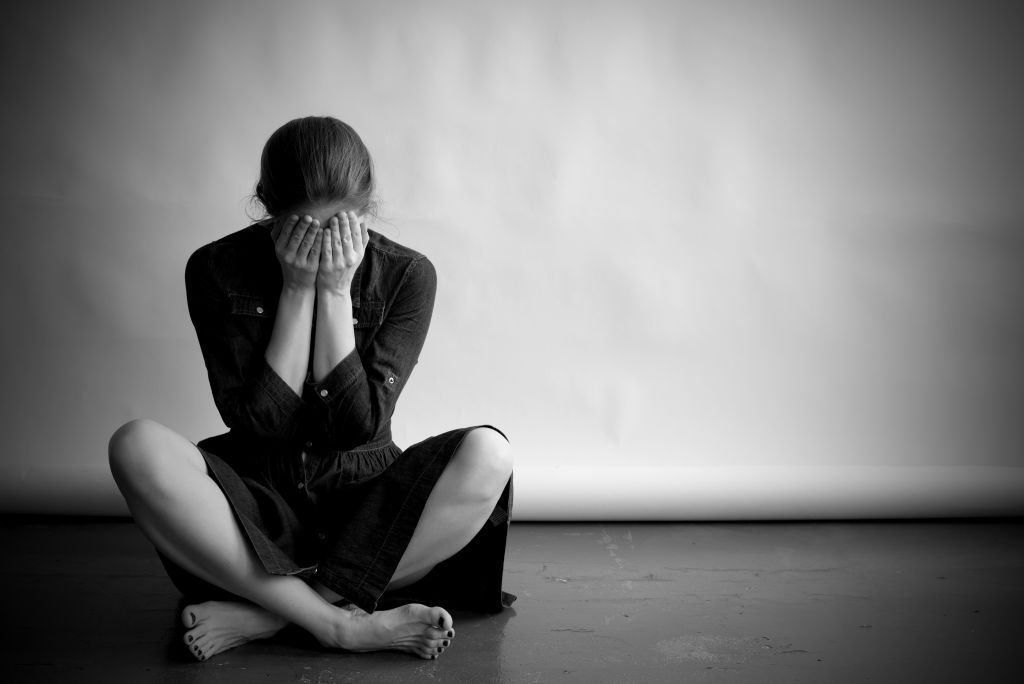
Illustrative: A young woman sits, face in her hands. (iStock)

The recent suicide of Chaim Walder has created an enormous ripple effect in the Jewish community worldwide. Within seconds of the announcement of his death, social media exploded with emotional reactivity and commentary. Few have remained unaffected.

Walder’s victims (one died by suicide shortly after his funeral) are suffering repeated re-traumatization by the tributes that were paid to Walder after his death, and the rabbinic warnings against slander and shaming. Victims of sexual abuse from other perpetrators have been triggered as well. In insular Haredi communities, there is little support for victims who want to report their abuse and they are often deterred by warnings of negative repercussions. They are often told that they will be seen as damaged or used goods and wont be able to get married. Or, that something bad will happen to someone else. Walder’s suicide confirmed for many victims that ‘something terrible indeed will happen’ if they report, further denying victims their opportunity to seek justice.

Children who loved his books and their parents, are experiencing confusion, shock, disbelief, and horror. There are, bless them, the angry activists with their immediate initiatives and then there are mental health professionals, like me, trying to reflect and make sense of this and hold space for our patients and ourselves.

This is both a personal tragedy and a societal one, which has underscored failures.  There are failures to protect children, failures in the legal system, the educational system, and the mental health system.  While failures exist in all societies, what I am witnessing currently in the religious communities is a profound failure of spiritual leadership. And what I am seeing clinically amongst my patients, as well as among some colleagues, is a crisis of faith.

In 2007, my colleagues and I published a paper titled “History of Past Sexual Abuse in Married Observant Jewish Women”  in which we reported a higher proportion of sexual abuse in ultra-Orthodox women than in the modern Orthodox women in our sample. Abuse happens in all societies, but the expected benefit of insular societies is that they are meant to be protective.

Therein lies the crisis of faith. Many sexually abused members of very insular societies bear the risk of losing their social status, identity and family and community support by reporting abuse. They often must choose between emotional health and religious identity, and are thrust into a secular culture which they are unprepared to navigate.

Recent events have unfortunately driven this message home. A patient with a history of sex abuse was triggered by recent events although her abuser was not Walder. She reported to me that in her Haredi neighborhood, discussing the Walder incident has been deemed “lashon hara” (slander). Teachers and school administrators are not discussing the subject with their students. 

 Wanting to protect her own daughter in a way that she had not been protected, my patient explained to her daughter why she was getting rid of Walder’s books. But she also had to swear her to secrecy so that she would not be ostracized by her classmates. Her own friends, who know the history of her abuse, have told her that they are not allowed, by rabbinic decree, to discuss the Walder incident with her, preventing them from being available to her for comfort or empathy. 

“What am I still doing here? she questions sadly. “But why should I have to leave? I love and believe in God, though I am losing my faith in religion.”

Her micro crisis of faith likely reflects a macro one. Save for less than a handful of rabbis, the response of religious leaders has been disappointing at best, painful and triggering at worst. The ideal response of clergy leadership would have been to unequivocally support victims of sexual abuse and state in no uncertain terms that non-consensual sex and sexual abuse of minors is against the Torah, against civil law, is immoral, unethical and must not be tolerated. They would have decried the shaming of victims, the viewing them as “used goods” and placed the shame where it belongs, on the abusers.

Instead, some well-respected rabbis made public statements such as “one who commits adultery still has a place in the world to come, but one who publicly shames another, does not have a place in the world to come.”  One rabbinic statement decried the sin of “niyuf”(consensual adultery) without differentiation of this act from child sex abuse. Rabbis have spoken about how perpetrators should “do teshuva” (repent) as if abusing a child could be compared to missing prayers or other transgressions against God, that do not consider lives that were destroyed.

I also listened to several rabbinic addresses to mental health professionals on the subject. I had hoped to hear about the need to support and empower victims, the need to promote health sexual education that addresses bodily autonomy and consent. But the rabbis I happened to listen to focused on greater adherence to yichud laws (laws dealing with seclusion of men and women) the banning of opposite gender therapy, and how to protect children by not speaking of these terrible things to them. These words did not resonate with me and left me uninspired. These responses miss the mark and fall short of the need for a great deal of soul-searching that is required around issues of sexual abuse in our communities.

Yet, with trauma, there is post-traumatic growth. This crisis of faith may lead to change. In fact, there are reports in the Hebrew press of “revolution” that describe the grass root efforts of Haredi influencers to support abuse victims.  The mental health community as well has been active in efforts to support survivors. These efforts include a zoom meeting for sexual abuse survivor parents,  a tent set up with volunteer professionals to support abuse victims, and a Facebook group, set up by Magen for Jewish Communities, a non-profit organization in Israel dedicated to creating safer communities, to offer support to Walder’s victims. It is my sincere hope that these efforts will transform this crisis of faith, repair the damaged parts of our society, and create a safer reality.


https://blogs.timesofisrael.com/crisis-of-faith-and-post-traumatic-growth/?utm_source=The+Daily+Edition&utm_campaign=daily-edition-2022-01-05&utm_medium=email

Wednesday, January 05, 2022

“We just can’t wait for more people to kill themselves to know that this is a massive crisis.”


Frustrated by haredi leaders, Orthodox activists push for stronger response to sexual abuse

(JTA) — On Friday morning, most of the people bustling through Beit Shemesh, a town in central Israel with a large haredi Orthodox population, were getting ready for Shabbat. Shoshanna Keats-Jaskoll had a different mission.

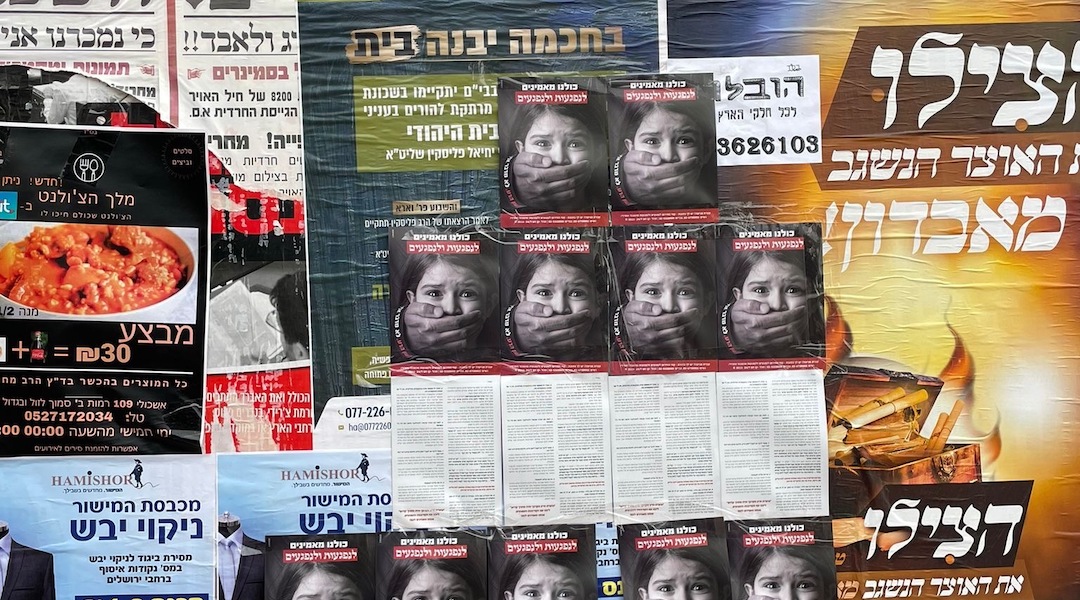
Keats-Jaskoll was handing out flyers with messages of support for victims of sexual abuse, in a public display of solidarity at the end of a wrenching week in many Orthodox communities.

At the beginning of the week, Chaim Walder, a celebrated haredi Orthodox children’s book author in Israel, died by suicide after being accused by numerous children and young women of sexual abuse. The Ashkenazi chief rabbi of Israel visited Walder’s family. Then, on Thursday, one of Walder’s alleged victims, Shifra Horovitz, also died by suicide, her friends saying she had been distraught by the response to his death.

For Keats-Jaskoll, a cofounder of the Israeli advocacy organization Chochmat Nashim, which fights extremism and sexism in the Orthodox community, and for many other Orthodox women, the litany called for a coordinated, public response. So she, who is Orthodox but not haredi, and a network of haredi activists and volunteers printed 350,000 flyers and passed them out in haredi areas before Shabbat.

Most of the reactions she got were from mothers thanking her for sharing her message, she told the Jewish Telegraphic Agency. But one man told her he didn’t know anyone who had been hurt and questioned why she was giving out the flyers — keeping up the conversation for far longer than she expected.

“I think this is really hard for haredim, when you’re told to trust leadership and there’s a real cognitive dissonance: something is wrong, the leadership should be saying something, if they’re not saying something maybe it’s not true, but if it’s not true what does that mean?” Keats-Jaskoll said. “So I think they’re going through a real crisis of faith in a lot of places.”

The flyers that Keats-Jaskoll and others handed out spoke directly to that crisis of faith, and to the religious values of those whose confidence in their leaders might be teetering. They offered information about the rabbinic court that heard testimony against Walder, quoted rabbinic sources about the seriousness of sexual abuse and answered questions about why allegations first reported in secular media should be trusted in religious communities.

Since the allegations against Walder first appeared in November, the case has taken an unusual trajectory in the Orthodox world. After Eichler’s, a Jewish bookstore in Brooklyn, announced that it would stop selling Walder’s books in response to the Haaretz investigation, many other repudiations of Walder followed, in a flood that advocates for survivors of sexual abuse said seemed to represent a watershed moment for the community.

But after Walder’s suicide, it became immediately clear that any shift extended only so far. In a number of haredi schools, teachers reportedly spoke to students about Walder’s suicide as an example of the dangerous effects of “lashon hara,” or speaking negatively about another person, and parents were counseled not to discuss the issue in detail with their children.

At Walder’s funeral, Dov Weinroth, a lawyer and friend of Walder, called out the journalists at Haaretz who first published the allegations against Walder as “murderers.” And in the days after Walder’s death, multiple haredi Orthodox publications published obituaries of Walder that ended with the phrase “may his memory be a blessing” while failing to mention the allegations agains him.

Yet social media has given rise to a different kind of reaction: photos of Walder’s books in the trash and poignant accounts of difficult conversations between parents and children about abuse and what constitutes inappropriate touching. A social media campaign Monday generated a flood of complaints to haredi magazines about their coverage. And the crowdfunding campaign to print a second run of flyers has raised nearly $70,000 in just a few days.

“There’s a dissonance between how people are responding in their homes and the way the institutions are responding,” Keats-Jaskoll said.

There are signs that the dissonance is having an effect on traditional institutions. After being criticized for visiting Walder’s family, Ashkenazi Chief Rabbi David Lau called for victims of sexual abuse to come forward. Weinroth, too, made an about-face, apologizing for criticizing the reporters who broke the story in a Facebook post Thursday that urged readers to “believe the complainants.”

“I picked up the phone and called Aaron Rabinowitz,” Weinroth wrote, referring to one of the Haaretz reporters who broke the story about Walder. “Truthfully this was the first time, and for a simple reason: to apologize. At the end of the day, I had never spoken with him but I got up at the funeral and demeaned him.”

Rabbi Natan Slifkin, author and director of the Biblical Museum of Natural History in Beit Shemesh who writes the blog Rationalist Judaism, compared the reaction to the Walder story to the haredi community’s reaction to the stampede at Mount Meron in April last year where 45 men were killed during an annual religious gathering.

“The fact that Walder, clearly emerging as a horrific predator, was glorified after his death by important charedi rabbis and politicians and newspapers, while those who attempted to scream about the dangers are being branded as evil gossipers who drove him to his death, is just too much for many people in the charedi community,” Slifkin wrote.

While calling out those who blamed the victims for Walder’s death and those who encouraged silence rather than shaming abusers, Slifkin noted the signs of change, including an editorial in Mishpacha magazine’s Hebrew edition, which, in an unusual move, spoke directly about the topic of sexual abuse.

“They [the victims] are not the guilty ones. They are not the abusers,” the magazine write. “To them we say in the name of the entire haredi community: our hearts are with you. We support you and we believe you, unconditionally. And we will do everything in our power as a community to build a safer and purer world for you.”

For Keats-Jaskoll and other activists in the haredi Orthodox community, the fallout from the Walder case is indeed a watershed moment — and one that has to do with a broader phenomenon of people taking matters into their own hands after questioning their religious leaders.

“I see more more and more and more people come to that realization of we have to do this, we can’t wait around,” Keats-Jaskoll said.

“I think COVID helped with that, I think seeing what happened with COVID with leadership denying what was happening with COVID and watching people get sick and die, it kind of took a lot of people and shook them up and say maybe our leadership doesn’t know everything,” she said.

She’s doing everything she can to help activists within haredi communities speed the change — while fearing that it won’t come fast enough for victims of sexual abuse.

We just can’t wait for the next suicide,” Keats-Jaskoll said. “We just can’t wait for more people to kill themselves to know that this is a massive crisis.”

https://www.jta.org/2022/01/04/israel/frustrated-by-haredi-leaders-orthodox-activists-push-for-stronger-response-to-sexual-abuse?utm_source=JTA_Maropost&utm_campaign=JTA_DB&utm_medium=email&mpweb=1161-38711-462090

Thankfully, we have an enormous advantage over 1918 that offers hope. Whereas efforts to develop a flu vaccine a century ago failed, the coronavirus vaccines developed in 2020 largely prevent severe illness or death from omicron, and the companies and researchers that produced them expect a booster shot tailored to omicron sometime in the winter or spring.

"Kamenetzky argued that schools should not exclude unvaccinated students, as they currently do under public health laws. He also claimed that school janitors would be spreading disease if vaccines worked. “They are mostly Mexican and are unvaccinated,” the rabbi said. “If there was a problem, the children would already have gotten sick.”

Kamenetzky is dean of the Talmudical Yeshiva of Philadelphia and a member of the rabbinical board that guides Agudath Israel of America, the leading ultra-Orthodox umbrella organization. He spoke at the umbrella group’s annual gala in May. His wife, Temi Kamenetzky, gives lectures opposing vaccines.

Other prominent opponents of childhood vaccinations include former Playboy Playmate and talk show host Jenny McCarthy and Alicia Silvertsone, star of the 1995 film “Clueless.” The Centers for Disease Control says there is no link between vaccines and the development of autism, one common fear. 

 A 2013 measles outbreak that sickened dozens in ultra-Orthodox Jewish communities in Boro Park and Williamsburg was caused, in part, by ultra-Orthodox parents who had refused to vaccinate their children, according to an alert issued by the New York City Department of Health and Mental Hygiene."


“I see vaccinations as the problem,” Rabbi Shmuel Kamenetzky told the Baltimore Jewish Times in a story published in late August. “It’s a hoax. Even the Salk [polio] vaccine is a hoax. It’s just big business.”

The 1918 flu is even more relevant in 2022 thanks to Omicron


Over the past two years, historians and analysts have compared the coronavirus to the 1918 flu pandemic. Many of the mitigation practices used to combat the spread of the coronavirus, especially before the development of the vaccines, have been the same as those used in 1918 and 1919 - masks and hygiene, social distancing, ventilation, limits on gatherings (particularly indoors), quarantines, mandates, closure policies and more.

Yet, it may be that only now, in the winter of 2022, when Americans are exhausted with these mitigation methods, that a comparison to the 1918 pandemic is most apt.

The highly contagious omicron variant has rendered vaccines much less effective at preventing infections, thus producing skyrocketing caseloads. And that creates a direct parallel with the fall of 1918, which provides lessons for making January as painless as possible.

In February and March 1918, an infectious flu emerged. It spread from Kansas, through World War I troop and material transports, filling military post hospitals and traveling across the Atlantic and around the world within six months. Cramped quarters and wartime transport and industry generated optimal conditions for the flu to spread, and so, too, did the worldwide nature of commerce and connection. But there was a silver lining: Mortality rates were very low.

In part because of press censorship of anything that might undermine the war effort, many dismissed the flu as a "three-day fever," perhaps merely a heavy cold, or simply another case of the grippe (an old-fashioned word for the flu).

Downplaying the flu led to high infection rates, which increased the odds of mutations. And in the summer of 1918, a more infectious variant emerged. In August and September, U.S. and British intelligence officers observed outbreaks in Switzerland and northern Europe, writing home with warnings that went largely unheeded.

Unsurprisingly then, this seemingly more infectious, much more deadly variant of H1N1 traveled west across the Atlantic, producing the worst period of the pandemic in October 1918. Nearly 200,000 Americans died that month. After a superspreading Liberty Loan parade at the end of September, Philadelphia became an epicenter of the outbreak. At its peak, nearly 700 Philadelphians died per day.

Once spread had begun, mitigation methods such as closures, distancing, mask-wearing and isolating those infected couldn't stop it, but they did save many lives and limited suffering by slowing infections and spread. The places that fared best implemented proactive restrictions early; they kept them in place until infections and hospitalizations were way down, then opened up gradually, with preparations to reimpose measures if spread returned or rates elevated, often ignoring the pleas of special interests lobbying hard for a complete reopening.

In places in the United States where officials gave in to public fatigue and lobbying to remove mitigation methods, winter surges struck. Although down from October's highs, these surges were still usually far worse than those in the cities and regions that held steady.

In Denver, in late November 1918, an "amusement" lobby - businesses and leaders invested in keeping theaters, movie houses, pool halls and other public venues open - successfully pressured the mayor and public health officials to rescind and then revise a closure order. This, in turn, generated what the Rocky Mountain News called "almost indescribable confusion," followed by widespread public defiance of mask and other public health prescriptions.

In San Francisco, where resistance was generally less successful than in Denver, there was significant buy-in for a second round of masking and public health mandates in early 1919 during a new surge. But opposition created an issue. An Anti-Mask League formed, and public defiance became more pronounced. Eventually anti-maskers and an improving epidemic situation combined to end the "masked" city's second round of mask and public health mandates.

The takeaway: Fatigue and removing mitigation methods made things worse. Public officials needed to safeguard the public good, even if that meant unpopular moves.

The flu burned through vulnerable populations, but by late winter and early spring 1919, deaths and infections dropped rapidly, shifting toward an endemic moment - the flu would remain present, but less deadly and dangerous.

Overall, nearly 675,000 Americans died during the 1918-19 flu pandemic, the majority during the second wave in the autumn of 1918. That was 1 in roughly 152 Americans (with a case fatality rate of about 2.5%). Worldwide estimates differ, but on the order of 50 million probably died in the flu pandemic.

In 2022, we have far greater biomedical and technological capacity enabling us to sequence mutations, understand the physics of aerosolization and develop vaccines at a rapid pace. We also have a far greater public health infrastructure than existed in 1918 and 1919. Even so, it remains incredibly hard to stop infectious diseases, particularly those transmitted by air. This is complicated further because many of those infected with the coronavirus are asymptomatic. And our world is even more interconnected than in 1918.

That is why, given the contagiousness of omicron, the lessons of the past are even more important today than they were a year ago. The new surge threatens to overwhelm our public health infrastructure, which is struggling after almost two years of fighting the pandemic. Hospitals are experiencing staff shortages (like in fall 1918). Testing remains problematic.

And ominously, as in the fall of 1918, Americans fatigued by restrictions and a seemingly endless pandemic are increasingly balking at following the guidance of public health professionals or questioning why their edicts have changed from earlier in the pandemic. They are taking actions that, at the very least, put more vulnerable people and the system as a whole at risk - often egged on by politicians and media figures downplaying the severity of the moment.

Public health officials also may be repeating the mistakes of the past. Conjuring echoes of Denver in late 1918, under pressure to prioritize keeping society open rather than focusing on limiting spread, the Centers for Disease Control and Prevention changed its isolation recommendations in late December. The new guidelines halved isolation time and do not require a negative test to reenter work or social gatherings.

Thankfully, we have an enormous advantage over 1918 that offers hope. Whereas efforts to develop a flu vaccine a century ago failed, the coronavirus vaccines developed in 2020 largely prevent severe illness or death from omicron, and the companies and researchers that produced them expect a booster shot tailored to omicron sometime in the winter or spring. So, too, we have antivirals and new treatments that are just becoming available, though in insufficient quantities for now.

Those lifesaving advantages, however, can only help as much as Americans embrace them. Only by getting vaccinated, including with booster shots, can Americans prevent the health-care system from being overwhelmed. But the vaccination rate in the country remains a relatively paltry 62%, and only a scant 1 in 5 have received a booster shot. And as in 1918, some of the choice rests with public officials. Though restrictions may not be popular, officials can reimpose them - offering public support where necessary to those for whom compliance would create hardship - and incentivize and mandate vaccines, taking advantage of our greater medical technology.

As the flu waned in 1919, one Portland, Oregon, health official reflected that "the biggest thing we have had to fight in the influenza epidemic has been apathy, or perhaps the careless selfishness of the public."

The same remains true today.

Vaccines, new treatments and century-old mitigation strategies such as masks, distancing and limits on gatherings give us a pathway to prevent the first six weeks of 2022 from being like the fall of 1918. 

And encouraging news about the severity of omicron provides real optimism that an endemic future - in which the coronavirus remains but poses far less of a threat - is near. The question is whether we get there with a maximum of pain or a minimum. The choice is ours.

https://www.chron.com/opinion/article/The-1918-flu-is-even-more-relevant-in-2022-thanks-16746114.php

Sunday, January 02, 2022

The Rabbis Are Trying to Rehabilitate Chaim Walder. Here's Why They Will Fail!


Walder was accused of sexual assault, but upon his death he was upgraded by some Charedi leaders to the status of a martyr. The attempt to rehabilitate him will be another self-inflicted blow to the rabbis’ authority!
 
by Anshel Pfeffer
 
There’s a long list of issues that the ultra-Orthodox media is forbidden to report on. At the top of the list is anything to do with sex. For example, when U.S. President Bill Clinton faced impeachment in the Monica Lewinsky affair, Yated Ne’eman, the daily newspaper of the Haredi “Lithuanian” stream, reported that Clinton was in danger of losing his job for lying.
 
Consensual or coerced, sex is a completely taboo subject. Cases of rape will never be reported. At most, in very rare cases, there will be an oblique reference to “immoral behavior.”
 
Another subject on the list of unmentionable topics is suicide 
 
The allegations of sexual assault against the renowned Haredi author and educator Chaim Walder, which were first reported seven weeks ago in Haaretz, created a unique dilemma for Yated Ne’eman. Among his many titles, Walder was also a veteran columnist for the paper.
 
A columnist at Yated Ne’eman is not just a mere pundit. The paper was founded in 1985 by the senior Lithuanian rabbis because the other main Haredi daily, Ha’modia, wasn’t ideologically pure enough – it covered the activities of the Chabad Hassidic sect, which some of the Lithuanians regarded as tainted messianic heresy. Yated writers are first and foremost mouthpieces of hashkafa – literally, the perspective, the ultra-Orthodox view of the world. Every word the paper publishes is vetted and often censored by the “spiritual committee,” a group of rabbis appointed by more senior rabbis who have a veto power over the editors.
 
When Ha’aretz’s investigation on Walder appeared the rabbis were divided between those who insisted they ignore the allegations printed in a secular newspaper against their favored son. Other rabbis who had been contacted by Walder’s victims pressed for his immediate dismissal. The latter group won that week, and Walder was forced to announce he was taking a leave of absence.
 
In the paper that had been his professional home for over two decades, though, there was no announcement. His regular column simply didn’t appear that Friday. Just as in George Orwell’s "1984," Walder, the man whose writing had been endorsed by the most senior rabbis, had become an “unperson" overnight.
 
And then six weeks later, as more and more victims had come forward, Walder suddenly become a person once again. On Monday morning, he shot himself in Segula Cemetery, next to the grave of his son who had died from cancer in 2019 at the age of 28. This was no longer an event that could be hidden from Yated’s readers, but neither could it be reported straightforwardly.

From Yated’s pure pages the previous month was back on them on Tuesday morning, with a sanitized version of his life story spread over two columns. Suddenly the disappeared man was “the righteous departed of blessed memory… a man of education and good deeds.” The absence of his column on previous Fridays was now explained as “recently he requested to temporarily stop writing.” His suicide was described as being “suddenly taken away at his prime.”
 
In most cemeteries run by the ultra-Orthodox Hevra Kadisha (burial society), suicides are usually buried in obscure corners “beyond the fence,” but Walder’s body was buried inside. In death, he had been readmitted as an honorable member of the community.
 
Thousands attended his nighttime funeral, and some of the most prominent residents of Bnei Brak eulogized at the graveside, including Mayor Abraham Rubinstein and Rabbi Natan Zuchovsky, chairman of Yated’s spiritual committee.
 
Rabbi Gershon Edelstein, who along with Rabbi Chaim Kanievsky is regarded the most senior of the Lithuanian stream's leaders, signed off on Walder’s rehabilitation. He also issued guidance for the teachers in ultra-Orthodox schools to speak with their young students the next morning about Walder’s death, stressing the prohibition of Halbanat Panim – public shaming.
 
Walder may have been accused of dozens of cases of sexual assault, but upon his death he was upgraded to the status of a martyr – the only victim in his case. There was no other way to shape the narrative, since sexual assault is not a matter than can be talked about in Haredi schools and therefore doesn’t exist on the ultra-Orthodox ethical spectrum. On the other hand, the Talmudic injunction that “It is preferable for an individual to throw himself into a burning furnace rather than publicly mortify his companion” is widely taught, and that was to be the prism through which Walder’s life, and now death, was to be taught.
 
The criminals are now the Ha’aretz journalists who reported on Walder’s deeds, and the few rabbis and Haredi activists who were willing to listen to his victims. Those victims, vulnerable women and children, are now the unpersons who must disappear.
 
Rabbi Yehoshua Eichenstein, a Yeshiva dean in Bnei Brak, wrote in the guidance to Haredi teachers that “those who libeled [Walder] and published the libels everywhere, until he was ashamed to show his face outside, made him sick to his soul so much that he killed himself. Explain to the children in a clear way that this is called murder.”
 
Rabbi Edelstein wrote that “The message is clear. Those who published are murderers.” At the funeral, Haredi lawyer Dubi Weinroth accused Ha’aretz journalist Aaron Rabinowitz (without mentioning his name) of being “a little vicious reporter. You sucked his blood. You murdered him as far as I’m concerned. You and your group.”
 
Not all the Haredi media has been on Walder’s side this week. A handful of independent ultra-Orthodox websites, mainly English-language ones based in the United States (Walder’s children books were translated into English, and he was a household name in the American Haredi community as well) stood up for his victims. And then of course there’s social media, where many young Haredi men and women have been openly discussing the case – and ignoring the rabbinical constraints – since the revelations first appeared in Ha’aretz.
 
This is one of the most striking features of the Walder case which will have far-reaching implications for the future of ultra-Orthodox society. An entire generation of young Haredi men and women are online, despite their rabbis’ injunctions against using the internet or owning smartphones. The guidance of what can and cannot be said may be enforceable when it comes to the pages of Yated Ne’eman, but only nonagenarians like Edelstein can still delude themselves that they can control the flow of information within their community.
 
The concept of infallible da’at Torah, the Rabbis’ knowledge of Torah, which has been central to the insularity and cohesiveness of Haredi ideology that evolved in the past two centuries, has already dramatically eroded in the digital age. The attempt to posthumously rehabilitate Walder and ignore his victims is already failing, and will almost certainly be yet another self-inflicted blow to the rabbis’ authority.
 

https://www.haaretz.com/israel-news/.premium.HIGHLIGHT-the-rabbis-will-try-to-rehabilitate-chaim-walder-here-s-why-they-will-fail-1.10501796


Friday, December 31, 2021

Giving a hero's sendoff to a figure widely believed to have committed offenses sends the message that rape and sexual harassment can and will be ignored !!!


In praising Haim Walder, Haredi media told his victims they don’t matter 


Haim Walder’s death, revealed on Monday, was front-page news in many outlets that chronicle the Jewish world (The Times of Israel included). And of course, his death was reported in newspapers of the Haredi world, the world from which Walder hailed. Accounts appeared in the Haredi publications Kikar HaShabbat and Behadrei Haredim – and both were disgraceful.

Walder was one of the most powerful and trusted voices in the ultra-Orthodox world, largely because of his wildly popular “Kids Speak” series, which purportedly told the real stories and discussed the inner emotional lives of Orthodox children. He also ran the Center for Child and Family in Bnei Brak, had a weekly column in Yated Neeman, and hosted a radio talk show. The Israel National Council for the Child recognized his good work in 2003 by giving him its Magen HaYeled award.

The feel-good facade fell apart last month when Haaretz printed a well-sourced expose claiming Walder was, in fact, a serial sexual abuser. Once the article was published, the floodgates opened and more damning information came to light. Rabbi Shmuel Eliyahu, the chief rabbi of Safed, son of Israel’s former chief rabbi and a well-regarded scholar in his own right, revealed that he had heard testimony unrelated to the Haaretz article that attested to Walder’s guilt and that his actions had literally broken up families. Most recently, on December 26, Rabbi Eliyahu’s rabbinical court in Safed heard from 22 people who testified that Walder had committed sexual assault and sexual harassment against girls, boys and women.

When Walder was found dead in Petah Tikva, having died by suicide in a local cemetery, Kikar HaShabbat and Behadrei Haredim, the latter of which calls itself the largest ultra-Orthodox website in the world could have reported his death and described his fall from grace. But they didn’t. Or, they could have reported his death and said nothing further. But they didn’t. Or, they could have ignored the news altogether. They didn’t.


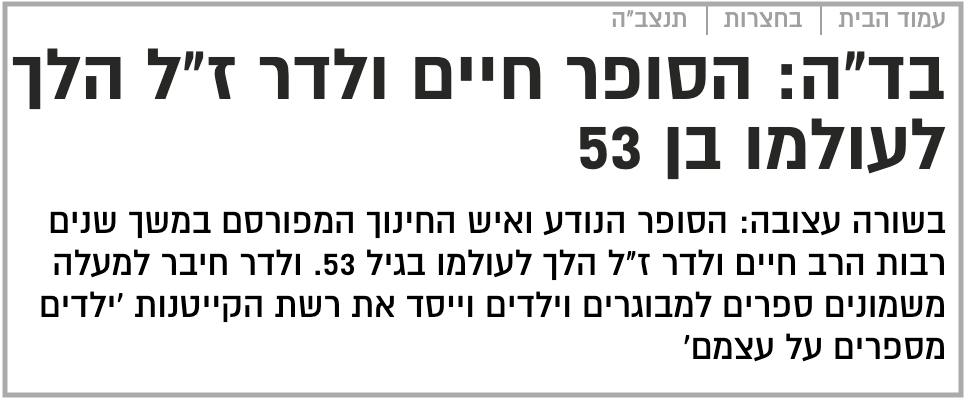
Screengrab from the Haredi ‘B’Hadrei Haredim’ site: The headline reads: ‘BD”E (Blessed is the Judge): Author Haim Walder, z”l (of blessed memory) passed away, age 54’.
 

Instead, both sites reported the death of the Haim Walder we thought we knew in October: the upstanding defender of children, the winner of the Magen HaYeled prize, the author who sold untold thousands of books. They both repeatedly added z”l after his name, meaning “of blessed memory.” Kikar HaShabbat concluded its article with the phrase, “May his soul be bound in the bond of life,” while Behadrei Haredim concluded with “May his memory be a blessing.”

To be sure, Kikar HaShabbat mentioned — in paragraph nine out of 11 — that his radio show was suspended several weeks ago because of serious evidence that he behaved “inappropriately.” But even more space in that same paragraph is dedicated to saying that he “emphatically” denied the allegations, and quoting his statement saying he would spend the upcoming months in the struggle to defend his name. This meager allusion to the massive scandal that enveloped Walder was still far more than Behadrei Haredim wrote about it; the self-professed largest site in the Haredi world made no mention of the scandal at all.

Why does this matter?

It matters because Haim Walder’s many victims came largely from the Haredi world, and may well be among the readers of these two sites. What has it been like for someone sexually abused by Haim Walder to see him praised year after year? And worse: what is it like for someone sexually abused by Haim Walder to see him praised even after his predatory nature was revealed to the world? What message are these news outlets giving victims about who matters more? They choose to pour gasoline on a combustible wound that is already in flames.

It matters because everyone needs to acknowledge the criminal nature of sexual abuse, and to inform the public that sexual crimes will not be tolerated. Treating Haim Walder as a departed hero sends the explicit message that rape and sexual harassment can and will be ignored. Make no mistake: many of the readers of these sites know exactly who Haim Walder was. Kikar HaShabbat and Behadrei Haredim are telling them that his crimes are not, in fact, part of his legacy. When all is said and done, rape, sexual abuse, and sexual harassment are not particularly important.

It matters because we need to be able to speak frankly and openly and with appropriate language about sexual abuse. When the terms “sex” and “sexual abuse” are taboo, victims lack the vocabulary to describe what abusers have done to them. And when the topic of sexual abuse is at best couched in terms like “inappropriate behavior,” victims lack permission to discuss their experience at all.

It matters because honesty matters. It matters because journalism matters. It matters because a healthy society must allow the light of truth to shine upon it, revealing its flaws as well as its strengths. A community that refuses to acknowledge its own imperfection is edging toward implosion and collapse.

The offensive and unworthy reporting in Kikar HaShabbat and Behadrei Haredim is further evidence that the ultra-Orthodox world — and perhaps the Orthodox world in general — needs journalism that does more than reinforce the community’s existing view of itself as a wholly righteous society. 

Regarding truth, self-criticism, and care for victims, Haredi sites and publications often fail miserably. They — and we — must do better.

***********
On the advice of the great men of Israel, 
the wording of the tombstone sent by the family:
 
בעצת גדולי ישראל נוסח המצבה ששלחו המשפחה:

פ"נ 

נפש נקי וצדיק 

איש ירא אלוקים 

הרב חיים אליעזר ולדר זצ"ל

בן הרב שלמה שיבדלחט"א 

נלב"ע בדמי ימיו כ"ד טבת תשפ"ב 

רבים השיב מעוון , חינך בדרך המסורה מפי מרנן ורבנן גדולי האומה 

עסק וביצר חומות ההשקפה החינוך הטהור והדת 

חסדיו וצדקותיו לנצח עומדים 

ת.נ.צ.ב.ה 

ע"פ צוואתו : 

לשון הרע לא מדבר אלי

הוזמן היום אצל וייס מצבות ושיש

On the advice of the great men of Israel, 
the wording of the tombstone sent by the family:

Here Rests:

A clean and righteous mind
A God-fearing man

Rabbi Chaim Eliezer Velder ztl

Son of Rabbi Shlomo Shivdalahta

Nalba in the days of his life 24 Tevet 5722

Many answered iniquity, 
educated in the dedicated way from the mouths of the nation's great rabbis 

Dealt with and fortified the walls of view pure education and religion

His grace and righteousness stand forever

ת.נ.צ.ב.ה

According to his will:

Defamation does not speak to me
 Ordered today at Weiss Tombstones and Marble
Community Verified icon

https://blogs.timesofisrael.com/in-praising-haim-walder-haredi-media-told-his-victims-they-dont-matter/?utm_source=The+Blogs+Weekly+Highlights&utm_campaign=blogs-weekly-highlights-2021-12-30&utm_medium=email


Wednesday, December 29, 2021

Dr. Salk & Dr Sabin - 2 Jews Who Would Not Give Up Or Give In - Polio Was Eradicated!


The Press Made the Polio Vaccine Trials Into a Public Spectacle

As a medical breakthrough unfolded in the early 1950s, newspapers filled pages with debates over vaccine science and anecdotes about kids receiving shots

Nurse giving children polio shots in front of collage of headlines about the vaccine
The stories of children who participated in polio vaccine tests became a constant in media coverage, appearing alongside warnings and debates. Illustration by Meilan Solly / Photos via Getty Images and Newspapers.com


The initial announcement came over the radio one Thursday in March: at last, scientists had developed a vaccine. For decades, communities around the United States had been struck by recurring waves of infectious, debilitating and sometimes deadly virus. The previous year had been a particularly bad one; epidemic. Almost 60,000 new cases and more than 3,000 fatalities had been reported, the vast majority of them in young children.

But the campaign for a cure was finally beginning to produce promising developments. And in 1953, the physician Jonas Salk told a national radio audience for the first time that a vaccine had proved successful in preliminary tests. "These studies provide justification for optimism, and it does appear that the approach in these investigations may lead to the desired objective,” Salk said. “But this has not yet been accomplished.”.

Maybe, he explained, after more extensive trials, it would effectively inoculate young people against the threat of polio.

Maybe.

From the beginning, Salk, a medical researcher based in PIttsburgh, worried about expectations. The New York Times later reported that he hadn’t wanted to make the radio announcement at all. “If Dr. Salk had his way,” the article reflected, “no word of discovery would have been published until the vaccine had been tested thoroughly.” But the news of a vaccine had already gradually begun seeping out from the National Foundation for Infantile Paralysis events where Salk had spoken earlier in the year about his initial successes. “When the news came out in the spring of 1953,” the Times article explained, “he rushed to New York to see that the press did not overstate the matter.”

The morning papers reflected Salk’s caution. In reporting carried around the country, Associated Press journalists pronounced the vaccine safe and promising, but emphasized that questions remained unanswered. Many papers led with the revelation that shots wouldn’t be available by the summer, when polio always wreaked the most havoc. In many others, the announcement didn’t even make the front page; in Wilmington, Delaware’s News Journal, it was relegated to page 40, behind pieces on the state’s annual Mother of the Year award and subway fare hikes in New York City.

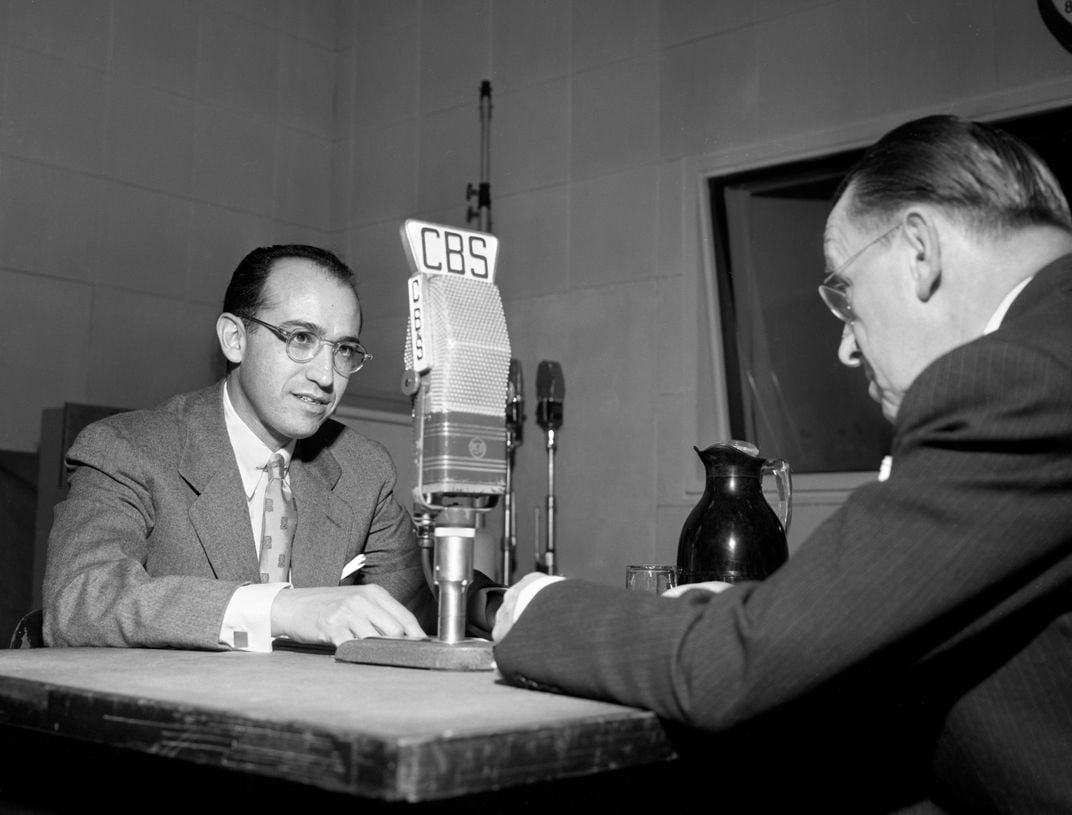
Jonas Salk doing radio interview
Jonas Salk, medical researcher and developer of the polio vaccine, talks with CBS Radio in 1954. CBS Photo Archive / Getty Images

Salk had succeeded in controlling the media narrative about his findings—at least for a day. But in doing so he had also thrust himself and his vaccine into the bright light of national scrutiny, and there would be no going back. To the long-suffering public, he became a specific receptacle for hope. To the scientific community, already widely doubtful of his chosen method for preparing his vaccine, he became a target for criticism and rivalry, even as he also garnered support. And to the press, he became the main character in the story of the search for a cure.

In the months following his announcement, that publicity mainly served to stoke anticipation and turn Salk into a minor celebrity. The real spectacle began a year later, when Salk’s vaccine moved out of his Pittsburgh laboratory and into the more extensive testing he had mentioned—a series of trials that would become the most significant public health experiment in the history of the United States. Over the course of less than 12 months, 1.8 million children in 44 states—and in Canada and Finland—would step up to participate in the vaccine trials. It was an unprecedented scale, never matched in the country before or since. By comparison, Pfizer and BioNTech’s COVID-19 vaccine trials ended ten months after the vaccine was first developed and involved roughly 43,500 test subjects; Moderna’s, completed in the same time period, included just over 28,200.

Also unprecedented was the methodology for many of the trials: They were the first to employ the double-blind method, in which children were randomly assigned to receive either placebos or a series of three real shots, so that the effects of the vaccine could be observed in comparison with a control.

It was, in sum, a massive, complicated, historic effort to advance medical science. And all of it—the trials themselves, as well as the doubts, debates, and hopes bound up in them—unfolded in public, with the scrutiny of the scientific community, the press, and the American people on full display.

The main tenor of the trial coverage was one of uncertainty. The papers pondered many of the same questions that have become familiar in the current vaccine rollout: When would shots be available? What kind of vaccine, Salk’s or competing models that took a different approach, would be more effective? What could all of it mean for the future of the disease, and the communities it had haunted for so long? But the open-ended nature of the public trials raised even more fundamental questions. Chief among them: Would the vaccine really work at all?

Child receiving polio vaccine while watching broadcast of Jonas Salk administering shot
This photo was taken on April 12, 1955—the day of an official announcement deeming the vaccine safe and effective. Getty Images

Through the lens of hindsight, the coverage during that time period was, if anything, understated. Alongside accurate information, the uncertainty opened up space for fears that proved unwarranted and estimates that ultimately fell far short of the truth. Newspapers correctly reported that the vaccine wouldn’t be available to the public for one to three years after Salk’s announcement. But they also warned that the vaccine, as earlier attempts at inoculation had decades earlier, might cause inflammation of the brain or otherwise afflict recipients with polio symptoms (it didn’t).

A major source of concern in the coverage was Salk’s decision to use inactivated polio in his vaccines, rather than live, but weakened, strains of the virus. Medical orthodoxy, informed by the success of the smallpox vaccine, held that a killed-virus vaccine like Salk’s wouldn’t effectively protect recipients against infection. This debate had simmered behind closed doors in the scientific community before Salk’s announcement, but as the vaccine trials unfolded it broke out into the open and generated waves of headlines—even though the concerns had little to no real substantiation. Dr. Alfred Sabin, who was in the process of developing his own vaccine using live virus strains, argued that Salk’s could potentially cause more cases of polio than it would prevent, and that all manufacture and testing should be stopped (Salk’s methodology actually has proven less likely to infect patients with polio than Sabin’s, if also slightly less effective in boosting community immunity).

In August 1953 another doctor expressed fear that Salk’s vaccine would “protect children for a few years and then ... leave them in great danger of getting a severe type of polio” (no such crisis manifested and, by all accounts, the vaccine grants long-lasting immunity). And a year later, a radio broadcaster warned his audience in that the vaccine “may be a killer” because, he said, public health services had found that in 70 percent of the batches they tested the virus hadn’t been inactivated at all (officials and Salk himself quickly stepped up to counter that report).

More than any of those doubts or warnings, though, the press was full of reminders that the trials weren’t over yet, that the future was unknown, that more work was to be done. “Until these obstacles are overcome,” a New York Times reporter summarized three days after Salk had made his initial announcement, “it cannot be reported that a surefire vaccine against polio has been developed. But we are on the way.”

Some of the strongest champions of Salk’s vaccine continued to push for that measured outlook up until the very end of the trials. Less than two weeks before their conclusion, a group of institutional backers—comprising The National Foundation for Infantile Paralysis and six pharmaceutical manufacturers—publicly classified their support as a “calculated risk.” “We have not had either official or unofficial assurances that the vaccine is successful,” one pharmaceutical executive stressed.

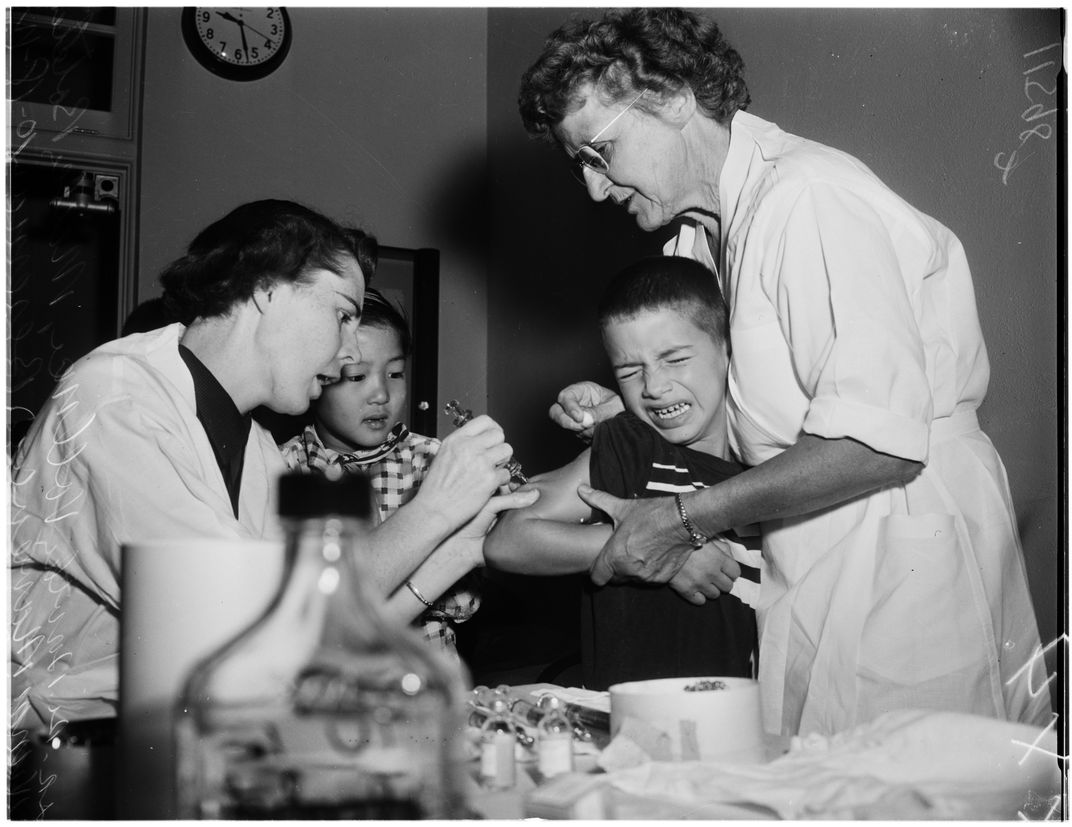
Kid receiving polio vaccine
In the 1950s, the media didn't hesitate to play up the drama of kids getting their vaccine shots USC Libraries / Getty Images

Even under the weight of all those unknowns, however, hundreds of thousands of children—and their parents—continued to participate in the vaccine testing. Their stories became a constant in the coverage alongside all the warnings, the debates, the reports of other children who had already taken part later contracting polio. Newspapers regularly reported on new masses of volunteers and filled columns with quotes and anecdotes from elementary school students who had overcome their own personal fears of the needle, often encouraged by the promise of candy.

Randy Kerr, a 6-year-old from Virginia who received the inaugural shot in the national trials, earned particular celebrity among this group. Papers all around America carried his photo and reported that he’d been concerned his poison ivy would prevent him from participating after “begging all week to be the first,” as his teacher recalled.

“It didn’t hurt,” Randy told reporters. “I could hardly feel it. It doesn’t hurt as much as a penicillin shot.”

Parents, who signed volunteer waivers for their children and helped organize trials and fund-raising campaigns, were cast in a more muted role in the press. But when featured, they were more articulate about the significance of the trials and often offered up quiet hope amid the doubt. “As parents we are grateful to hear that this vaccine is to be tested,” one Utah PTA president summarized to reporters, “because, if successful, it might well mean that the day is nearing when our children really can be protected.”

Article after article also cited experts who insisted that the vaccine was “safe,” “perfectly safe,” safe “beyond all doubt.” These served as a counterbalance to every fear-sparking claim; an underlying reassurance that the testing could keep moving forward, and that there could be a happy resolution at the end of it all.

Then, in April 1955, that happy resolution arrived.Headlines broke through months of practiced restraint to proclaim researchers’ final report findings without caveat: “Polio Vaccine Both Safe, Effective”; “Salk Vaccine Can Conquer Polio;” “End of Polio In Sight.”

The logistics of administering millions upon millions of vaccines still had to be worked out. In the meantime, more children would be afflicted with polio, with more instances of infantile paralysis, more deaths. Forty thousand of those infections would be brought on—infamously—by a manufacturing error in the vaccine itself, an event which spurred another period of doubt and reassurance in the press.It would be 24 years before polio was eradicated in the United States, with Sabin’s easier-to-administer oral vaccine taking the starring role for most of that time.

But after years of very public uncertainty, the press and the public had a clear answer and a clear endpoint: Polio could be eliminated. Church bells rang out around the country. Hope, at last unrestrained by not yets, lit the flame for a massive, vaccination effort like nothing the country had ever seen. And in the end, the celebratory headlines of April 1955 weren’t an overstatement at all.

https://www.smithsonianmag.com/history/press-made-polio-vaccine-trials-public-spectacle-180977304/?utm_source=smithsoniandaily&utm_medium=email&utm_campaign=20211228-daily-responsive&spMailingID=46171517&spUserID=MTAwOTA4NTE0MjE5MQS2&spJobID=2143220288&spReportId=MjE0MzIyMDI4OAS2

Tuesday, December 28, 2021

In Saudi Arabia, a rabbi angles to lead a Jewish community that doesn’t exist.....


meshuggener

noun
me·​shug·​gen·​er | \ mə-ˈshu̇-gə-nər
\

Definition of meshuggener

: a foolish or crazy person

Meshuggener Has Yiddish Roots

From bagel and chutzpah to shtick and yenta, Yiddish has given English many a colorful term over the years. Meshuggener is another example of what happens when English interprets that rich Jewish language. Meshuggener comes from the Yiddish meshugener, which in turn derives from meshuge, an adjective that is synonymous with crazy or foolish. English speakers have used the adjective form, meshuga or meshugge, to mean "foolish" since the late 1800s; we've dubbed foolish folk meshuggeners since at least 1900.


In Saudi Arabia, a rabbi angles to lead a Jewish community that doesn’t exist


Jacob Herzog is loudly trying to build Jewish life in a country where non-Islamic displays are forbidden, raising concerns among local Jews who prefer to stay under the radar


In late November, on the third night of the Jewish festival of Hanukkah, an ultra-Orthodox Jew from Israel lit candles in his Riyadh hotel room.

Displaying the holiday candles publicly, as Orthodox Jews traditionally do, could have landed the man in a heap of trouble. Even today, despite Saudi Arabia opening up significantly to the West, there is no open practice of Judaism in the country and proselytization of any religion but Islam is illegal and can carry harsh penalties.

So instead of displaying the candles for all to see, Jacob Yisrael Herzog drew the curtains in front of his window.

Then he posted a video of himself lighting the candles on Twitter.

For Herzog, the public-private act was just the latest move in a self-propelled campaign to become the chief rabbi of Saudi Arabia, a country that officially has no Jewish community.

Since the summer, Herzog has made five trips to Saudi Arabia in an attempt to establish a recognized Jewish presence in the kingdom. While the tangible impact of his efforts has seemingly been limited thus far, he is not shy about sharing his ambitious goals for the future, which run the gamut from drawing attention to kosher food in supermarkets via Instagram to opening Jewish community centers and a religious day school.

Herzog’s effort to make Jewish practice more accessible and carve out a space for communal Jewish life in one of the world’s most infamous bastions of religious persecution have won him plaudits from some and more than a dollop of positive media coverage, such as a Forward article that credited him with “bringing Judaism to Saudi Arabia.”

But to the small number of Jews who live in or frequently visit the deeply conservative petrostate, accustomed to flying under the radar and keeping their religious affiliation from becoming an affront to their hosts, his bombastic approach has sparked deep misgivings.

“This is not how things are done here,” four Jews who live in the Gulf and make frequent trips to Saudi Arabia said, using the same phrase almost verbatim. “He’s acting like a bull in a china shop.”
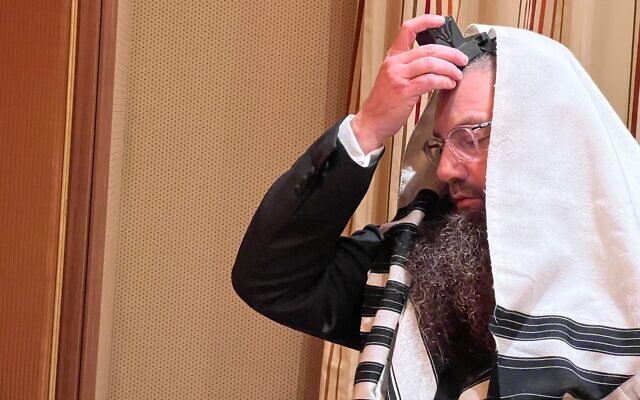
 

Rabbi Jacob Yisrael Herzog praying in his Riyadh hotel room, November 29, 2021. (Courtesy)
 

Herzog claims to be unbothered by critics who say his approach is unorthodox. Rather, he is focused on “getting stuff done.”

Fear has held other people back, and you don’t want to be held back by fear

“Fear has held other people back, and you don’t want to be held back by fear,” Herzog told The Times of Israel. “I’m not held back by fear… I’m not afraid.”

Planting the seeds

Herzog, 45, is an unlikely champion for a campaign requiring major religious policy reform in an ultra-sensitive setting. Born in the United States, he currently lives in Israel. His dual nationality allows him to visit Saudi Arabia despite Israel having no formal diplomatic ties with the kingdom. He is trained as a rabbi and ministered formally to Israeli soldiers, some of whom, he said, “still call me for advice.” But he has little Jewish communal experience beyond briefly serving as a chairman of a Chabad-Lubavitch synagogue in Jerusalem.

He has spent much more time in the business world, including stints in car tire recycling and agribusiness. Currently, Herzog owns ShneorSeed, which sells tomato and pepper seeds “to over 17 countries,” he said. And he hopes to add Saudi Arabia to that list.

“I’m very open about it. I have to make a living,” Herzog said.
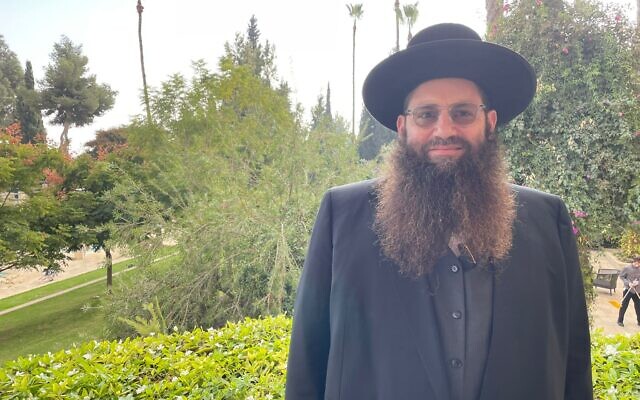
 

Rabbi Jacob Yisrael Herzog in Jerusalem, November 22, 2021. (Carrie Keller-Lynn/Times of Israel)
 

He describes himself on LinkedIn as “Rabbi and Business Entrepreneur in The Kingdom of Saudi Arabia,” specializing in “Deals and Transactions,” as well as “ritual circumcisions and interfaith dialogue.”

“There’s always things going on,” Herzog said of both his religious and business pursuits, “so I’m moving in both directions, parallel.”

Until recently, Herzog openly used his aspirational title of “Chief Rabbi of Saudi Arabia” on both LinkedIn and the website he opened for his rabbinic pursuits.

Herzog’s plan for the future, he makes clear, is for nothing less than building the country’s first modern, public Jewish community.

“The vision is [that Saudi Arabia] should have a few full communal services, everything from [Jewish] day school [and] Jewish high schools [to] synagogues, mikvaot [ritual baths] for both men and women, all the holiday services, communal holiday meals,” he said.

In addition to “offering the full range of Jewish services and a rabbi,” Herzog would like to establish Jewish community centers in the kingdom’s major expat cities.

He said his work thus far is self-funded, though he asks for donations via his website. Among other things, he is seeking money to build seven ritual baths in Saudi Arabia, each at over $1 million.

Although he and his family are part of the Chabad community, Herzog is clear that his efforts in Saudi Arabia are not linked to the organized Chabad movement. A Chabad spokesperson confirmed that the movement had not sent a representative to Saudi Arabia.

“Chabad-Lubavitch does not currently have an emissary to Saudi Arabia. The needs of Jews in Saudi Arabia are largely being met by Chabad in the UAE — from where kosher food and other needs are provided for,” said Rabbi Motti Seligson, a spokesman for the Chabad-Lubavitch movement.

Underground and out of trouble

The size of Saudi Arabia’s Jewish population is not formally known, but estimates range from the hundreds to low thousands of Jews living in the kingdom, all of whom are expatriates. There are few accounts of an indigenous community there following the advent of Islam in 632 CE, and what few Jews there were in the country fled to Israel along with Yemen’s Jews in 1949-1950.

Why draw fire? The regime won’t allow it

Today the kingdom legally forbids practicing a religion other than Islam, and there are no official synagogues or churches in the country.

“You won’t find a Jewish community here,” said Yoel Guzansky, a senior Gulf expert at the Institute for National Security Studies in Tel Aviv. “If it exists, it’s underground. Why draw fire? The regime won’t allow it.”

Similarly, an Israeli Foreign Ministry spokesman said his office had no comment on Herzog’s activities, noting that “there’s no Jewish community [in Saudi Arabia].”

Residents in the region describe a situation reminiscent of old “don’t ask, don’t tell” policies, where Jews living and working extensively in Saudi Arabia keep their religious affiliations to themselves.

Greg, a longtime Jewish resident of the Gulf who makes monthly business trips to Saudi and has Saudi-based Jewish friends, noted that Jews in Saudi Arabia are circumspect and cautious about their faith, and almost as a rule don’t advertise it. There’s no known organized community and Jews have no real way of finding each other.

Like other Gulf-based Jews quoted in this story, he requested a pseudonym for safety reasons.

“It would be very difficult to find people [who are Jewish],” Greg said. “It’s basically just word of mouth… You walk into a gym and you meet a guy called David and go, ‘hey, David, are you Jewish?’ And that’s sort of how it gets started.”

Sam, another longtime regional resident who does not live in Saudi Arabia but is involved in Gulf Jewish life, said that Jews in the kingdom aren’t looking to ruffle their hosts’ feathers.

“The Jews who live there are all there for business reasons. And they work for mainly international companies. They have to be kind of under the radar, or they at least feel they have to be,” she said.

“They’re real visitors. It’s like they’re really visitors in somebody else’s house,” she added, echoing a sentiment many Saudi-linked Jews expressed.

It is into this atmosphere that Herzog has inserted himself. While his critics are quick to note that he is well-intentioned, they fear that he is pushing the envelope of what the kingdom will tolerate and could end up hurting Jews who are quietly established there.

“I think he needs to understand the market that he’s getting into,” Greg said, comparing him to “an elephant in a china shop.”

“I think in the long term, he’ll be creating more damage to the Jewish community than anything else, because the Saudi public isn’t ready for another religion other than Islam to be publicly practiced,” Greg added.
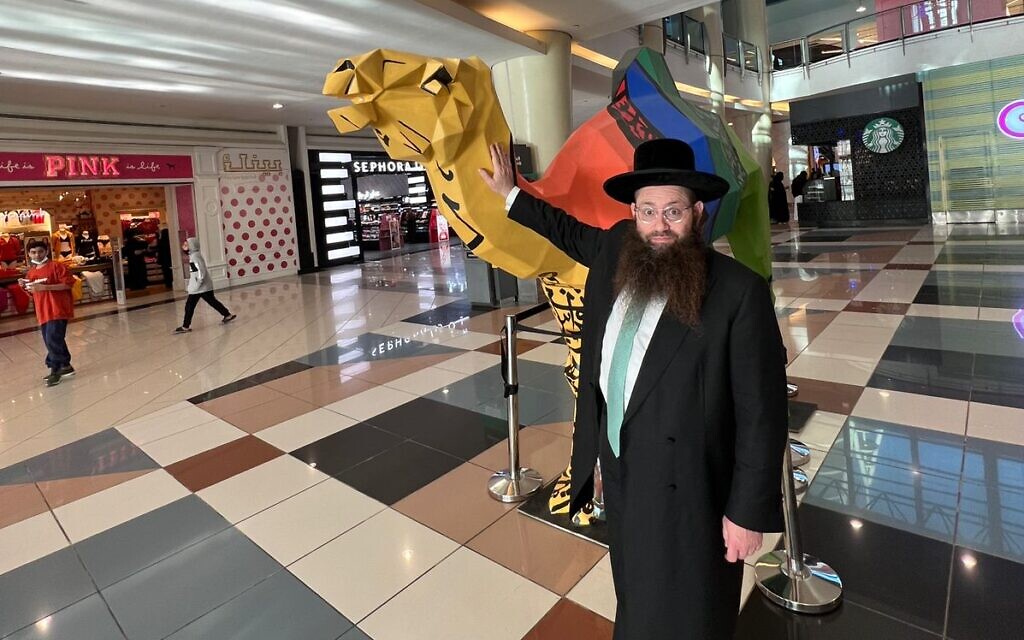
 

Rabbi Jacob Yisrael Herzog in a Riyadh shopping mall, November 2021. (Courtesy)

“I just don’t think the way forward is to be so in everybody’s face, knowing the Gulf people as I do now,” said Jon, a multi-decade Jewish resident of Saudi Arabia who now lives elsewhere in the region.

Sam noted that many were disturbed by a video that Herzog uploaded to social media in October of him dancing in the street with a local Saudi, as well as other posts flaunting his Jewishness.

“It scared the crap out of the Jews who are living there because they’re so under the radar about being Jewish,” she said.

Herzog offered the video as evidence that “they’re happy I’m here.”

While Herzog has had positive experiences with Saudi locals, there is not a uniformly positive attitude toward public expression of Jewishness in the Twittersphere.

Writing in Arabic, one commentator on his post warned Herzog that “someday…the stone and the trees will guide us to you,” an allusion to a Quranic verse that says that rocks and trees will expose Jews so they can be killed. This verse is also part of the Hamas charter.

I found him on Twitter and I just messaged him and he was straight back in contact, quite excited to have someone to help

Some people are excited about Herzog’s efforts, especially among travelers who said his involvement there made them feel more comfortable visiting the country.

“I was kind of Googling to see if I could find anything Jewish at all in Saudi Arabia,” said Noa Levy, 42, a London-based mortgage broker who reached out to Herzog before confirming a personal trip to Saudi Arabia. “I found him on Twitter and I just messaged him and he was straight back in contact, quite excited to have someone to help. I don’t think he has such a big demand there.”

Although they never did meet in person, Herzog helped Levy understand where she could “find kosher food in supermarkets” and he gave her the local Shabbat times.

“I think it’s quite brave,” Levy said of Herzog’s efforts.

M., a Jerusalem-based businesswoman who declined to use her name because Israeli travel to Saudi Arabia is still technically illegal, got help from Herzog on finding kosher food and electric candles she could use for Shabbat.
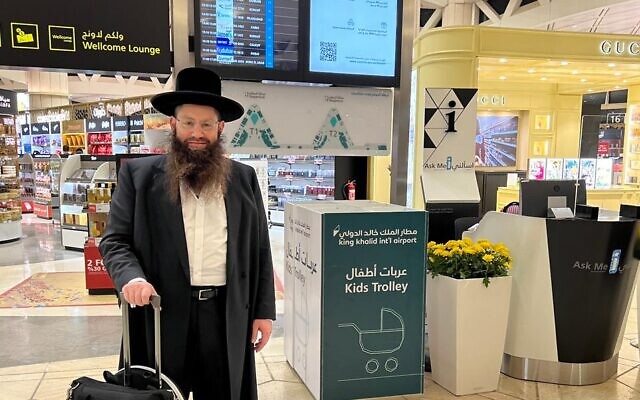
Rabbi Jacob Yisrael Herzog in Riyadh’s King Khalid International Airport, November 2021. (Courtesy)

“He’s been really amazing and really helpful,” she said.

Herzog is unfazed by the criticism from “those people sitting in Dubai and Bahrain,” and argues that staying underground is not helping Jews.

“When you do something time and time and over again and it doesn’t work, then if you keep on doing the same thing, you’re not going to get anywhere,” he said.

Herzog is adamant that he respects and obeys the laws of the kingdom and only operates within the bounds of what is legally permitted. But within those bounds, he’s willing to try new methods.

“There’s no law against walking around like this in Saudi Arabia, right?” Herzog said, referring to his distinct ultra-Orthodox dress.

No tolerance… yet

To Herzog and others, Saudi Arabia may seem ripe for opening up to the Jewish community. Driven by Crown Prince Mohammed Bin Salman, the kingdom has been undergoing a liberalization process in a bid to become a major international business hub, putting on a friendlier face toward Western visitors. The country has also been cooperating secretly with Israel against Iran for years, according to reports, and many saw it next on the normalization list after the United Arab Emirates and Bahrain established ties with Israel.

The UAE has indeed seen a blossoming of public Jewish life since the Abraham Accords, but the community there operated underground for over a decade before being able to step out into the sunlight.

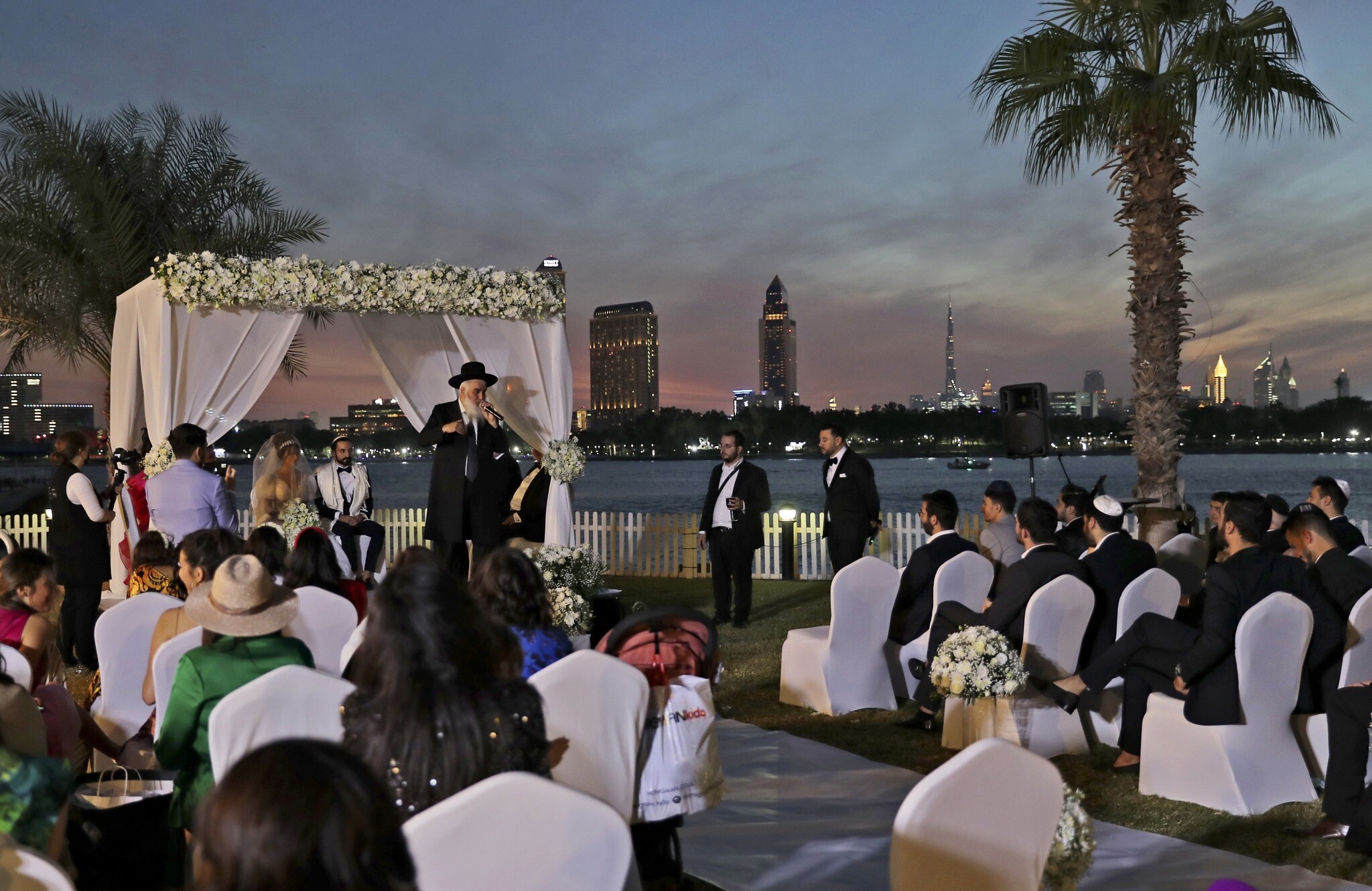
A rabbi officiates under a traditional Jewish wedding canopy during marriage ceremony of the Israeli couple Noemie Azerad, left, seated under the canopy, and Simon David Benhamou, at a hotel in Dubai, United Arab Emirates, December 17, 2020. (Kamran Jebreili/AP)

“You’d arrive in the airport in Dubai with a kippa [religious skullcap] and the Emiratis would ask you to put a baseball cap on,” said Greg, a longtime resident. “It was for your own safety.”

Today the UAE community operates in the open, has multiple communities of worship and is serviced by three publicly prominent rabbis.

You can’t go to Saudi Arabia [a handful of times] and then be like, ‘I’m going to be the head of a religion that isn’t even recognized there’

A Gulf-based source familiar with the situation said Herzog was doing the opposite of what had happened in the UAE.

“You can’t go to Saudi Arabia [a handful of times] and then be like, ‘I’m going to be the head of a religion that isn’t even recognized there,’” the source observed. “Usually the way it works is you first kind of have to do the things below ground, establish relationships with the people who live there, with the government, with the business community. And then you could do it. But he literally just announced himself as a chief rabbi and figured based off of announcing himself, that he’s going to get these people to come out of the woodwork.”

Herzog, by his own admission, has not been in contact with members of the Saudi government, although he claims that “they hear me talking.”

Guzansky noted that the advances by Dubai and Bahrain may make it easier for Riyadh to open up by giving the move “more legitimacy.”

“It’s becoming the new normal,” he said.

But he cautioned that Saudi Arabia was still a long way off from normalizing true multi-faith practice and that any reforms would be incremental at best.

“You have to understand that the religious element is very, very conservative still,” Guzansky said. “Although we see changes, the changes are not toward other religions, yet. They are more internal to Islam, allowing couples to walk hand-in-hand and sit in cinemas.”

Beachgoers play at floating blow-up water park, at Pure Beach in King Abdullah Economic City, Saudi Arabia, on September 17, 2021 (Fayez NURELDINE / AFP)

“There’s no tolerance toward any religion in Saudi Arabia other than Islam, so far. You won’t find a synagogue. They had churches, but they were only inside American bases and they’re not there anymore. You won’t find any synagogue or church of any kind. Nothing, it’s forbidden, there’s no tolerance for that.”

The Saudi Embassy in DC did not respond to a request for comment, but The Times of Israel was able to review Herzog’s paperwork to confirm he has a tourist visa to Saudi Arabia via his American passport under his legal name, Jacob Levkoff Herzog.

A US State Department report on religious freedom states that Saudi Arabia “does not officially permit most non-Muslim clergy to enter the country for the purpose of conducting religious service.”

In a statement, the Association of Gulf Jewish Communities – a new organization representing Jewish communities from the GCC – said that it “recognizes Rabbis that have been appointed and selected to their position by the Jewish community and the governments of those countries.” While Herzog said he has been in touch with the AGJC on religious matters, he does not have a formal relationship with it.

Preparing to relocate

While Herzog has set his sights on serving as Saudi Arabia’s chief rabbi, he said he does not plan on waiting for the official title before moving there with his family full time.

“We can move there in any case,” Herzog said. “It’s more about doing what’s needed, being where people want us.”
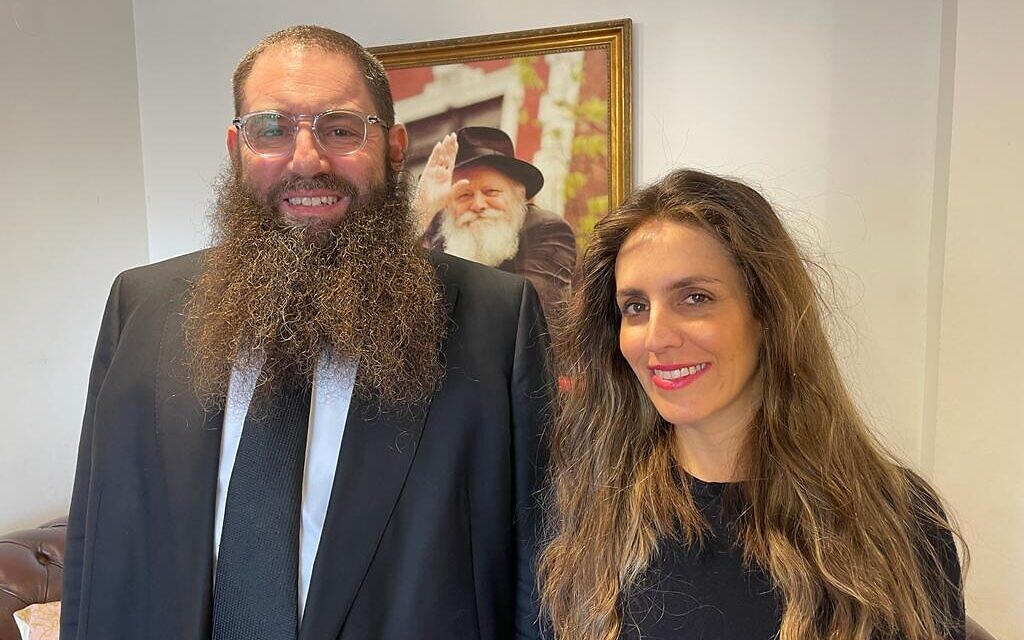
Rabbi Jacob Yisrael Herzog and his wife Devorah Leah pose with a portrait of the Chabad movement’s Lubavitcher Rebbe overlooking in their Ramat Shlomo, Jerusalem home, December 13, 2021 (Carrie Keller-Lynn/Times of Israel)
 

Echoing this, his wife Devorah Leah mentioned their eight children are already preparing for a potential future move.

“When my husband leaves [for a trip], the children say ‘we want to go with you,’” she said. “We are the emissaries of the [Lubavitcher] Rebbe in Saudi Arabia. [Our children] feel that already. They feel part of it.”


https://www.timesofisrael.com/in-saudi-arabia-a-rabbi-angles-to-lead-a-jewish-community-that-doesnt-exist/?utm_source=The+Daily+Edition&utm_campaign=daily-edition-2021-12-27&utm_medium=email