

READ & REREAD:
https://agudah.org/wp-content/uploads/2016/10/JO1981-V15-N03.pdf
On Page 72 - Rav Joseph Ber Soloveitchik Was A Gadol B'Yisroel --- What Happened?


READ & REREAD:
https://agudah.org/wp-content/uploads/2016/10/JO1981-V15-N03.pdf
On Page 72 - Rav Joseph Ber Soloveitchik Was A Gadol B'Yisroel --- What Happened?

Now here is the truly shocking thing: not only, after this damning claim and arrest, was Shepherd able to obtain employment at two other schools –Talmud Torah Yetev Lev in London, and Oholei Yosef Yitzchok Lubavitch in Salford – but he was given favourable references in order to do so.
Despite the panel’s belief that Shepherd’s “actions were deliberate, calculated and sexually motivated”, the headteacher of Talmud Torah Yetev Lev gave him a sparkling reference, saying that he had “‘excelled’ in … planning and preparing lessons and courses for pupils; delivering lessons … assessing the development, progress and attainment… and reporting on progress and attainment of pupils”.

There is a body known as the Teacher Regulation Agency (TRA), which most of us are unlikely to have come across in the general course of events.
I had the misfortune, however, of ploughing through 24 pages of the agency’s most recent panel hearing – and it makes shocking reading, not just because of its content, but of what it does not say.
The TRA panel was called to consider the case of a man called Yankel Shepherd, 57, who has now been banned “indefinitely” from teaching, in a case that went all the way up to the education secretary, Nadhim Zahawi.
Shepherd – who declined to attend the five-day virtual hearing – was accused of serious sexual misbehaviour towards two of his former students in strictly-Orthodox schools in London and Manchester. Two witnesses, known as Child A and Pupil X, gave chilling details of Shepherd’s behaviour to the TRA panel. I freely admit that I thought I had made a mistake when reading the TRA report – because the actions reported by Child A took place as far back as the 1980s.
Child A is now an adult but indeed, Shepherd’s behaviour towards him – consisting of very specific sexual abuse – did take place more than 40 years ago. The actions occurred in a Jewish community centre and a synagogue; but Shepherd was able to get a job in Talmud Torah Chinuch N’Orim school, Salford, in 2009.
Child A made his allegations in November 2009 and Shepherd was duly arrested. But when Child A decided not to proceed with evidence against Shepherd, the police investigation was dropped. The panel report says that “Child A’s … numerous attempts to pursue this matter with the religious authorities had been frustrated”. Colour me astonished.
Now here is the truly shocking thing: not only, after this damning claim and arrest, was Shepherd able to obtain employment at two other schools –Talmud Torah Yetev Lev in London, and Oholei Yosef Yitzchok Lubavitch in Salford – but he was given favourable references in order to do so. Despite the panel’s belief that Shepherd’s “actions were deliberate, calculated and sexually motivated”, the headteacher of Talmud Torah Yetev Lev gave him a sparkling reference, saying that he had “‘excelled’ in … planning and preparing lessons and courses for pupils; delivering lessons … assessing the development, progress and attainment… and reporting on progress and attainment of pupils”.
Serious questions need to be asked of the criminal justice system as to why the allegations against Shepherd were not pursued.
And, reading between the lines, it is clear that his behaviour was known to the strictly-Orthodox communities to which he belonged, not least because the parents of Pupil X, who had special needs, told Shepherd to stop – but he resumed contact three weeks later. Child A, as we have seen, complained that he had been “frustrated” after numerous attempts to raise the issue with religious authorities.
It’s not the first time that such behaviour has been ignored or quashed by strictly-Orthodox communities. The recent case of Chaim Walder, the Charedi children’s author who turned out to be a serial sexual predator, proves that.
We now have Migdal Emunah, an organisation formed specifically to monitor sexual abuse in the Jewish community. It can help victims and advise schools and communal bodies, and provide an informed link to potential prosecuting authorities.
On the eve of UK Sexual Abuse Awareness Week, we don’t need more distressing cases of vulnerable people such as Child A or Pupil X.
https://blogs.timesofisrael.com/why-was-abusive-teacher-allowed-to-keep-his-job/

Examples of Chelm stories are:
“Which is more important, the sun or the moon?” a citizen of Chelm asked the rabbi.
“What a silly question!” snapped the
cleric. “The moon, of course! It shines at night when we really need it.
But who needs the sun to shine when it is already broad daylight?”
The melamed of Chelm was speaking with his wife.
“If I were Rothschild, I’d be richer than he.”
“How can that be?” asked the wife. “You would both have the same amount of money.”
“True,” he agreed, “but I’d do a little teaching on the side.”
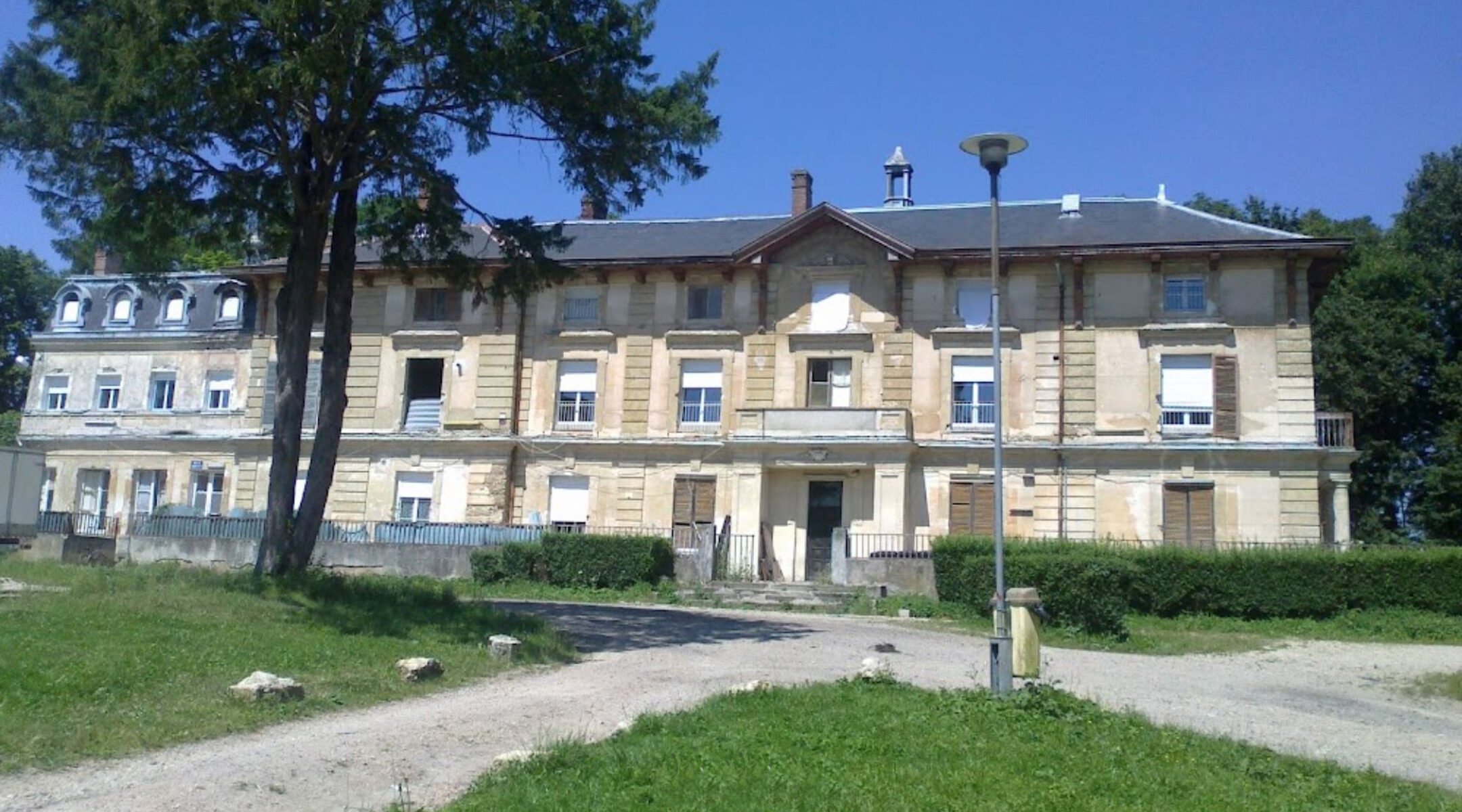

(JTA) — Police in France raided a well-known Orthodox Jewish school, arresting 16 teachers for alleged child abuse and placing dozens of underage students provisionally under the state’s custody.
The raid Monday on Beth Yossef, a prestigious boarding school-style yeshiva near Paris attended by many students from Israel and the United States, was the largest-scale operation in recent history against a Jewish school in France, and the first time that the entire faculty of such an institution was arrested.
At least 42 underage students from the yeshiva in the Paris suburb of Bussières (Seine-et-Marne) were placed at an undisclosed child welfare facility, Le Figaro reported. The state has assumed custody of the children provisionally for five days, during which attempts will be made to reunite them with their families abroad, the report said.
The status of any child whose legal guardian will not be located at the end of those five days will be determined by a family court, the report said.
The Prosecutor’s office of Meaux, a municipality east of Paris, said in a statement that the raid was over “sequestration, confiscation of IDs, unsuitable living conditions, maltreatment, denial of access to education and other services without the possibility of allowing [students] to return to their families.”
Attempts by the Jewish Telegraphic Agency to reach staff of Beth Yossef, which was founded in 1948, were not immediately successful. An accountant working for the institution said he had not been able to contact his employers since the arrest. Reports in the French media about the arrests did not include the reaction of the institution to the allegations.
Meyer Habib, a lawmaker in the French National Assembly and a former vice president of the CRIF umbrella group of French Jewish communities, told JTA that he does not have information about the conditions at Beth Yossef, and can therefore “not assess at this point the merit of the allegations.”
According to Habib, who has been following the affair, “there are all kinds of claims circulating: On the one hand, that things that shouldn’t happen did happen at Beth Yossef. And on the other hand, that this is a case of students settling scores with teachers.”
What is known, he said, “is that the children are well, they are together in one place, they are getting kosher food and their legal guardians are being contacted.” Habib also said that “it is sad that this happened at such a reputable institution.”
The raid at Beth Yossef occurred amid a crackdown against unlicensed schools in France that began in 2020. The move, announced by French President Emmanuel Macron, was widely understood to be aimed at curbing the activities of informal Muslim schools as part of a broader push against radical Islam. Many French Jews have supported the crackdown.
Asked whether the raid at Beth Yossef could be collateral damage in the crackdown on Muslim counterparts amid fears of radicalization, Habib said: “It’s a good question. It’s a question we will be asking in the coming days.”
A task force set up to lead the crackdown on unlicensed schools — the Inter-ministerial Taskforce of Vigilance and Fight against Sectarian Movements — has also flagged the school, the report said.
Among other issues, European officials have objected to the segregation of male and female students and the instruction of the theory of evolution by natural selection in Orthodox schools. The tension has resulted in inspections, loss of public funding and citations for noncompliant and partially-compliant institutions. Arrests, however, have been extremely rare.
https://www.jta.org/2022/02/01/global/french-police-raid-well-known-yeshiva-on-suspicion-of-abuse-of-underage-students?utm_source=JTA_Maropost&utm_campaign=JTA_alert&utm_medium=email&mpweb=1161-39765-462090
 |
The
books of Chaim Walder that used to take pride of place have been binned
by readers and recalled by publishers around the world |
I helped set up Nahamu, a Jewish human rights lobbying group to raise awareness of harms in the charedi community. One of the harms we lobby on is the lack of reporting of abuse, including child sex abuse, to the police. In the aftermath of the Chaim Walder saga, I had hoped that the tide might be turning, and that there would be an awakening that the only way to keep children safe would be to ensure that all incidents are reported (on a timely basis) to the police, with communal support for victims and their families.
I was therefore alarmed to read Eli Spitzer’s blog where he instead advocates a two-prong approach; for schools to teach children about predators, and for abuse to be reported to a Beis Din. (On a similar basis to the Tzefat Beit Din that took testimony from the Walder victims, such that if they find that the abuse happened, they can then warn the community about the predator.)
Considering Eli’s position as a head of a school, I find his stance both dangerous and naïve. Similarly, a recent email circulated by ChinuchUK puts the focus on providing important evidence of good practice (i.e. compliance and how to pass an Ofsted report) rather than on implementing the good practice in lines with government guidance needed to create safer schools.
Dealing with Eli’s second prong first.
The only reason that the Tzefat Beit Din was able to conclude Chaim Walder had been a long-term abuser was because so many victims came forward, reporting a consistent pattern over many years. Furthermore, by that point many victims had already spoken to Ha’aretz, which had published a well-researched expose, without which many victims would not have known to come forward.
A further problem with having a Beis Din investigate abuse includes the fact that the Dayanim simply do not have the skills or knowledge of all the various professionals involved in a criminal proceeding; police, doctors, judge, jury, psychologist, therapist, social workers, ISVAs (Independent Sexual Violence Advisors) and others. Another concern, when (unlike the Chaim Walder incident) the allegation is not in the public domain, is that the Beis Din could have a vested interest, to not believe the victims (often women and children, i.e., not halachic witnesses), thus letting the accused (often an adult man) continue in his current role and molest more children.
Even if the Beis Din concludes that there was abuse, they have no means to punish a perpetrator (unlike a criminal court which can imprison someone who commits a crime). Additionally, their remit to broadcast any abuse they find may not be international, such that the perpetrator could continue in a similar role in a school in an overseas community.
In most cases there aren’t dozens of victims queuing up to report similar offences. With a lone incident the Beis Din are likely to dismiss the case due to lack of evidence. Which brings me to my concern with his second prong, the education of children. The problem (see Migdal Emunah statement on IICSA p56) with a workshop in school telling children that “their private parts are private – say no – tell an adult”, is that the onus of protecting children has been put by the adults onto the children themselves. This might make the adults feel better, but self-protection becomes an additional burden on the children concerned. This is a big problem in a community that does not encourage reporting abuse to the police and has not taken other steps to keep its children safe. With a high likelihood of predators in circulation in the charedi community due lack of police reporting, many charedi children will encounter a predator. This sets the children up to feel an additional layer of shame and victim blaming if they do not manage to say no or tell an adult in time.
Context is everything. Of course, in line with recent government guidance “Keeping children safe in education 2021” parents should be having conversations with their children from early childhood about not keeping secrets, encouraging transparency and around body autonomy.
However, for good reason, it’s no longer best practise for prevention education (known as ‘stranger danger’) to be provided in schools.
Jewish schools must find better ways to keep their pupils safe; and this includes reporting of all incidents to the police. We are awaiting the conclusions of IICSA, and we hope that there will be mandatory police reporting for all teachers in all schools.
https://blogs.timesofisrael.com/keeping-school-children-safe-from-sexual-predators/

 | ||||
| Most histories of the 1918 influenza pandemic that killed at least 50 million people worldwide say it ended in the summer of 1919 when a third wave of the respiratory contagion finally subsided. |
Yet the virus continued to kill. A variant that emerged in 1920 was lethal enough that it should have counted as a fourth wave.
In some cities, among them Detroit, Milwaukee, Minneapolis and Kansas City, Mo., deaths exceeded even those in the second wave, responsible for most of the pandemic’s deaths in the United States. This occurred despite the fact that the U.S. population had plenty of natural immunity from the influenza virus after two years of several waves of infection and after viral lethality in the third wave had already decreased.
Nearly all cities in the United States imposed restrictions during the pandemic’s virulent second wave, which peaked in the fall of 1918. That winter, some cities reimposed controls when a third, though less deadly wave struck. But virtually no city responded in 1920. People were weary of influenza, and so were public officials. Newspapers were filled with frightening news about the virus, but no one cared. People at the time ignored this fourth wave; so did historians. The virus mutated into ordinary seasonal influenza in 1921, but the world had moved on well before.
We should not repeat that mistake.
True, right now we have every reason for optimism. First, Omicron cases are declining in parts of the country. Second, nearly the entire U.S. population will soon have been either infected or vaccinated, strengthening their immune systems against the virus as we know it now. Third, although Omicron is extraordinarily good at infecting the upper respiratory tract, which makes it so transmissible, it seems less able to infect the lungs than earlier variants so it is less virulent. It is entirely possible and perhaps even likely that, spurred by a better immune response, the virus will continue to decrease in lethality; indeed, there is a theory that the 1889-92 influenza pandemic was actually caused by a coronavirus called OC43, which today causes the common cold.
All of which makes overconfidence, indifference or weariness, after two years of battling the virus — and one another — a danger now.
Signs of weariness — or misguided hope — are everywhere. Although more than 70 percent of the adult population is fully vaccinated, progress has stagnated, and as of Jan. 27, only 44 percent had received boosters, which provide vital protection against severe illness. Although most of us, especially parents, want schools to stay open, parents have gotten only about 20 percent of children ages 5 to 11 fully vaccinated. As in 1920, people are tired of taking precautions.
This is ceding control to the virus. The result has been that even though Omicron appears to be less virulent, the seven-day average for daily Covid-19 deaths in the United States has now surpassed the Delta peak in late September.
Worse, the virus may not be finished with us. Although there’s a reasonable likelihood that future variants will be less dangerous, mutations are random. The only thing certain is that future variants, if they are to be successful, will elude immune protection. They could become more dangerous.
That was the case not only in 1920 with the last gasp of the 1918 virus, but also in the 1957, 1968 and 2009 influenza pandemics. In 1960 in the United States, after much of the population had achieved protection from infection and a vaccine, a variant caused peak mortality to exceed the pandemic levels in 1957 and 1958. In the 1968 outbreak, a variant in Europe caused more deaths the second year, even though, once again, a vaccine was available and many people had been infected.
In the 2009 pandemic, variants also emerged that caused breakthrough infections; one study in Britain found “greater burden of severe illness in the year after the pandemic” but “much less public interest in influenza.” Researchers blamed the government’s approach for that. In the first year, the public health response was “highly assertive,” chiefly in providing information; there were no lockdowns. In the second year, they found, “the approach was laissez-faire.” As a result, “a large number of deaths, critical care and hospital admissions occurred, many of these in otherwise healthy people of working age.”
Such precedents should make us wary. Vaccines, the new antiviral drug Paxlovid and others could end the pandemic, once billions of doses become widely available globally and if the virus does not develop resistance. But the end is not going to arrive anytime soon. The immediate future still depends on the virus and how we wield our current arsenal: vaccines, masks, ventilation, the antiviral drug remdesivir and steroids and the one monoclonal treatment that still works against Omicron, social distancing and avoiding crowds. As a society, we have largely abandoned the public health measures on that list. As individuals, we can still act.
https://www.nytimes.com/2022/01/31/opinion/covid-pandemic-end.html


