Dropping to one knee, a tearful Biden moved by Holocaust survivors at Yad Vashem
On first day of Israel visit, US president speaks at length to two women who survived Nazi camps, tells one of them: ‘As my mother would say, God love you, dear’


Rabbis tell Biden it is time to recognize the “land for peace policy” as an exercise in futility and consider a new route
A Palestinian state is a prescription for bloodshed
———————————————————————
Tel Aviv – Towards the arrival of U.S. President Joe Biden in Israel,
the Rabbinical Congress for Peace-Pikuach Nefesh (RCP) has launched a
wide-ranged campaign with full-page ads in major English newspapers in
Israel and worldwide web in which it sends a clear cut message to the
President:
Territorial concessions will not lead to peace but G-d forbid to bloodshed and instability in the region.
The RCP in the name of its 400 members express their deep appreciation
for the President’s efforts to reach a true and viable peace agreement
between Israel and its neighbors and wish him success in this noble
endeavor. At the same time they warn against any Israeli territorial
concessions. “The last 30 years have proven that the “land for peace”
formula is an exercise in futility,” a formula for increased terrorism
and a means of pushing peace further away,” the rabbis warn.
Furthermore, “any negotiations based on Israeli territorial concessions,
especially for the creation of a Palestinian state, will only embolden
our enemies to strike at us with further determination through terror
attacks, boycotts, and international anti-Israel campaigns,” the ad
says.
The rabbis cite the Halachic ruling in the Jewish Code of Law (Orach
Chaim, sec. 329) which is based on the principle of sanctity of life,
namely: Whenever a Jewish city is threatened by foreigners its townsmen
are not only permitted but are obligated to arm themselves, even on the
Sabbath, and prevent them from entering their city.
The rabbis state that it is time for American foreign policy-makers to
abandon the futile “land for peace” formula and consider a new foreign
policy route. The only way the U.S. can serve as an effective mediator
is by declaring outright that there will never be Israeli territorial
concessions nor will a Palestinian state ever be established alongside
Israel, the RCP said.
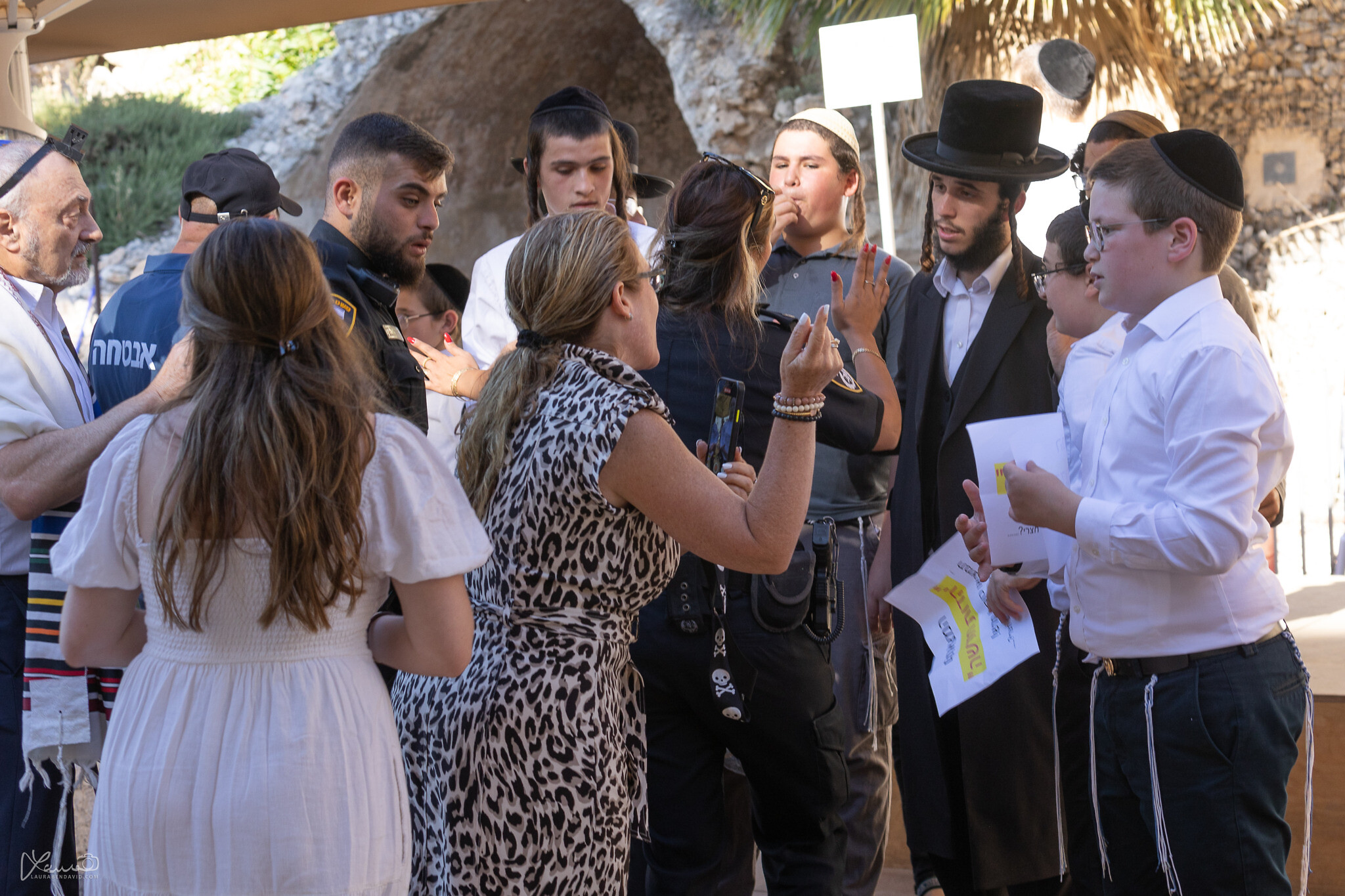 |
| Ultra-Orthodox youths interrupt a bar mitzvah ceremony at the egalitarian section of the Western Wall on June 30, 2022 |
The Times of Israel has covered the Haredi attack on three b’nei mitzvah families celebrating their children’s transition into adulthood as committed Jews (Haredim interrupt Americans’ Western Wall bar, bat mitzvahs, tear up prayer books).
I am one of the grandfathers of one of the b’nei mitzvah celebrants at Robinson’s Arch when these juvenile delinquents attacked.
Seth Mann’s older brother and sister, as well as his two cousins, opted to stay home and become b’nei mitzvah in the USA. Seth liked the idea of becoming a bar mitzvah in Israel at the Kotel, knowing how important Israel was to his family.
At great expense, nearly 50 family members from both sides of Seth’s family packed up and flew from the United States to Israel to celebrate this important milestone of his life. That’s 50 family members who were booking hotel rooms, who were ordering food in restaurants, and who were filling their luggage with souvenirs and Judaica, to take home. This was my fourth trip to Israel and my wife’s sixth. Each trip to Israel before this has always been the trip of a lifetime.
While his family was making arrangements and preparing to travel, Seth spent the past year studying for his big day. He learned the Shacharit service, learned each of the Torah portions he would read, and prepared a speech sharing with his family what this momentous day at the Western Wall meant to him.
Bright and early on Thursday morning, our families arrived at Robinson’s Arch, an egalitarian area off of the Kotel that the Knesset had designated for non-Orthodox families to celebrate events like this in peace.
Our rabbi from Las Vegas, Nevada, Felipe Goodman, his wife Liz, and his daughters Dani and Ari, arrived at Robinson’s Arch ahead of everyone and had set up the pulpit area. Our excitement over witnessing Seth’s bar mitzvah was bubbling over.
The Shacharit service began with Seth chanting the blessings. He was nervous at first, but quickly calmed down and led the service as if he had done it hundreds of times. The calmness and serenity of the morning prayers were interrupted by someone at a different bar mitzvah yelling out. We all looked over, but didn’t understand what the shouting was about, yet.
Not long after the shout, the delinquents attacked us. I understand their shameful rabbis arranged for a bus, dismissed them from class, and instructed them on how to disrupt non-Orthodox services, using whistles and shouting terrible things. The vile demonstrators must have made their complicit rabbis proud.
It didn’t matter to them that dozens of fellow Jews had crossed the Atlantic Ocean and were participating in a morning prayer service, just like they had earlier in the morning. What mattered to them was that these Conservative movement Jews from America had the audacity to pray while standing next to wives and daughters, cousins and friends.
Seth, just like the other b’nei mitzvah praying that morning at Robinson’s Arch, kept his head down and, remembering the discipline he was taught in his studies, continued leading the service.
Unfortunately, his family members and friends weren’t able to do the same. While the police stood by and watched, only getting involved if the delinquents got too close to the families, our family members and friends did the police officers’ jobs by forming a wall between these thugs who had been taught to hate their fellow Jews, and the Shacharit service.
My parents both survived Auschwitz and while they are no longer with us, it was them I was thinking about as I walked to Robinson’s Arch. How proud they would have been to see their great-grandson become a bar mitzvah in Eretz Yisroel.
Instead, I was left embarrassed about what the Orthodox had done to Israel. This great nation of the Jewish people is being held hostage by narrow-minded rabbis, the youth gangs they control, and a government that will stand up to every other nation that threatens her, but cowers at dealing with these homegrown thugs.
As long as Israel does nothing to stop these attacks, the Haredim will feel they have the government’s blessing and the violence will continue. Families will no longer feel safe celebrating and will just stay home.

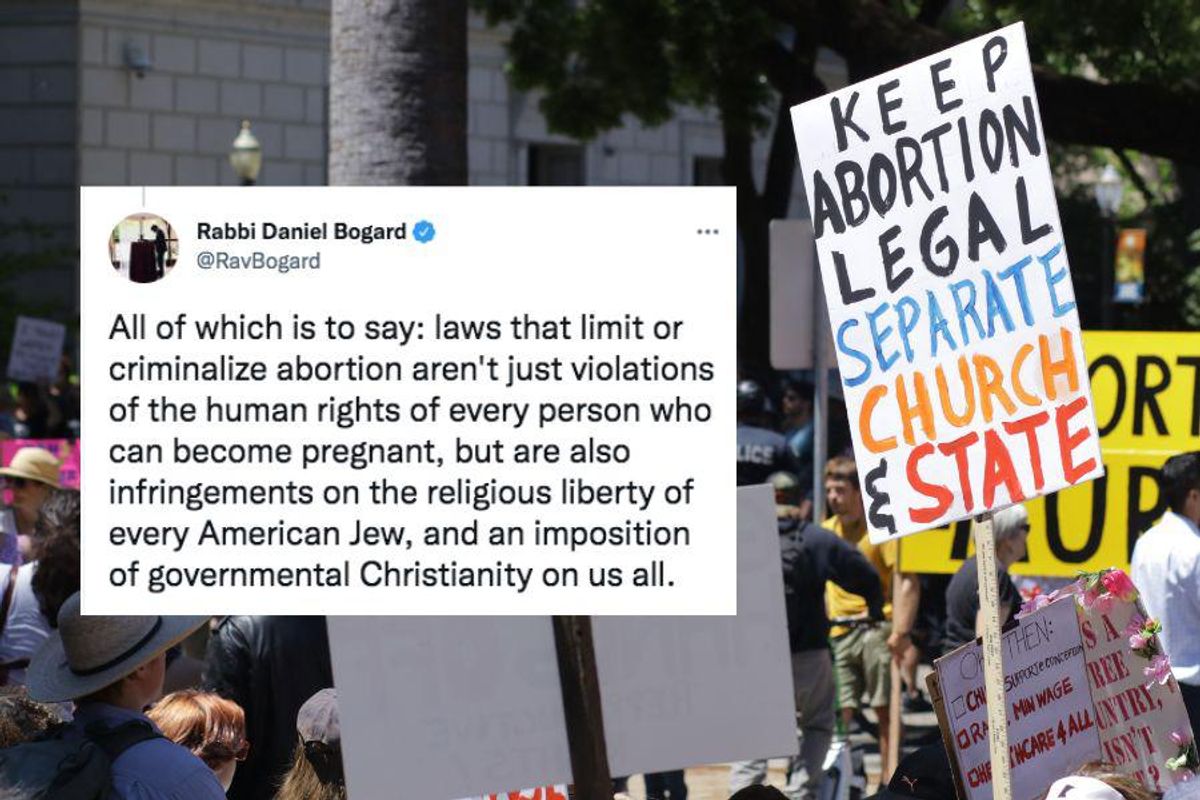
Political candidates on the fringe mix religious fervor with conspiracy theories, even calling for the end of the separation of church and state.
The southern state’s top law enforcement official was not the only Republican to reference God while taking a victory lap. Nor was he alone in rooting for the supreme court to continue a pattern of forcing religion back into the US political system and tearing down the wall that separates church from state.
The court – said to be more pro-religion than at any time since the 1950s – wrapped up one of its most consequential and divisive terms this week. Critics lamented a string of decisions that they say undermine legal traditions that prevent government officials from promoting any particular faith.
In May the conservative majority ruled in favor of a Christian group that wanted to fly a flag emblazoned with a cross at Boston city hall under a programme aimed at promoting diversity and tolerance among the city’s various communities.
Last month they endorsed taxpayer money paying for students to attend religious schools under a Maine tuition assistance programme in rural areas lacking nearby public high schools.
Then they backed an American football coach at a Washington state public high school who was suspended by a local school district for refusing to stop leading Christian prayers with players on the field after games. This ruling cast aside a 1971 precedent, known as the Lemon test, which took into account factors such as whether the challenged government practice has a secular purpose.
In all three cases, the court decided against government officials whose policies and actions were taken to avoid violating the constitution’s first amendment prohibition on government endorsement of religion, known as the “establishment clause”.
In addition, although their decision last week to overturn the 1973 Roe v Wade ruling
that legalized abortion nationwide did not involve the establishment
clause, it was celebrated as a seminal victory by religious
conservatives. Mike Pence, the former vice-president and a born again
Christian, called for a national ban on the procedure.

Three weeks before he won the Republican nomination for Pennsylvania governor, Doug Mastriano stood beside a three-foot-tall painted eagle statue and declared the power of God.
“Any free people in the house here? Did Jesus set you free?” he asked, revving up the dozens before him on a Saturday afternoon at a Gettysburg roadside hotel.
Mr. Mastriano, a state senator, retired Army colonel and prominent figure in former President Donald J. Trump’s futile efforts to overturn the state’s 2020 election results, was addressing a far-right conference that mixed Christian beliefs with conspiracy theories, called Patriots Arise. Instead of focusing on issues like taxes, gas prices or abortion policy, he wove a story about what he saw as the true Christian identity of the nation, and how it was time, together, for Christians to reclaim political power.
The separation of church and state was a “myth,” he said. “In November we are going to take our state back, my God will make it so.”
Mr. Mastriano’s ascension in Pennsylvania is perhaps the most prominent example of right-wing candidates for public office who explicitly aim to promote Christian power in America. The religious right has long supported conservative causes, but this current wave seeks more: a nation that actively prioritizes their particular set of Christian beliefs and far-right views and that more openly embraces Christianity as a bedrock identity.
Many dismiss the historic American principle of the separation of church and state. They say they do not advocate a theocracy, but argue for a foundational role for their faith in government. Their rise coincides with significant backing among like-minded grass-roots supporters, especially as some voters and politicians blend their Christian faith with election fraud conspiracy theories, QAnon ideology, gun rights and lingering anger over Covid-related restrictions.
Their presence reveals a fringe pushing into the mainstream.
“The church is supposed to direct the government, the government is not supposed to direct the church,” Representative Lauren Boebert, a Republican representing the western part of Colorado, said recently at Cornerstone Christian Center, a church near Aspen. “I’m tired of this separation of church and state junk.” Congregants rose to their feet in applause.
A small handful of people who espouse this vision, like Ms. Boebert, have recently come to power with the blend of Christian messaging and conspiracy theories that Mr. Trump elevated. Others, like Mr. Mastriano, are running competitive races, while most have long-shot campaigns and are unlikely to survive primary races.
The fight over Christian power in America has a centuries-long history, dating to the country’s origins, and it is again in sharp relief as the makeup of the nation shifts. For generations, the United States has been made up mostly of Christians, largely white and Protestant. In recent years, Christianity has declined at a rapid pace, as pluralist and secular values have risen.
Since the Jan. 6 attack, which blended extremism and religious fervor, the term “Christian nationalism” is often used broadly to refer to the general mixing of American and white Christian identities. Historically, however, Christian nationalism in America has also encompassed extremist ideologies.
In the 1948 presidential election, for example, a fringe political party called the Christian Nationalist Party nominated Gerald L. K. Smith, a pastor with pro-Nazi sympathies, and adopted an antisemitic, anti-Black platform that called for the deportation of people with whom it disagreed.
Mr. Trump gained power in large part by offering to preserve the influence of white evangelicals and their values just as many feared that the world as they knew it was rapidly disappearing.
The fact that Mr. Trump, whom they saw as their protector, is no longer president intensifies feelings for many conservative Christians that everything is on the line. About 60 percent of white evangelical Protestants believe that the election was stolen from Mr. Trump, according to a Public Religion Research Institute survey conducted late last year. White evangelicals are also the most likely religious group to be believers in QAnon, according to the survey. QAnon refers to a complex conspiracy theory involving a Satan-worshiping, child-sex-trafficking ring, and the F.B.I. has previously warned that some of its adherents could turn violent.
Across the country, candidates have attempted to appeal to voters by championing Christian identity in policymaking.
In Arkansas in May, State Senator Jason Rapert, who founded a group called the National Association of Christian Lawmakers in 2020, lost the Republican primary for lieutenant governor with 15 percent of the vote. The group offers model legislation, like prohibiting abortion after about six weeks of pregnancy and requiring the display of “In God We Trust” at public schools.
In Oklahoma, Jackson Lahmeyer, lead pastor of Sheridan Church, made a long-shot attempt to unseat Senator James Lankford, who has embodied traditional social conservatism. Mr. Lahmeyer lost, but got 26 percent of the vote. “Our Constitution is built upon the Bible,” he said in an interview. He said that he did not advocate a theocracy and that he supported the separation of church and state, which he said “had nothing to do with the church staying out of the affairs of the state.” He also said that “trying to remove Christianity, which this nation was birthed upon,” from public schools had “absolutely” led to the rise in school shootings.
In Wisconsin, State Representative Timothy Ramthun is significantly trailing in a bid for governor that emphasizes his Christian faith and a promise to decertify the 2020 election. He created a 72-page report of what he sees as evidence of election fraud, and called his push to fight it “Let There Be Light” after words attributed to God in the Bible. In an interview, he described his efforts as a Christian act of truth-seeking. “I don’t lie,” he said. “I work for the Lord first and foremost.”
In a livestream on Rumble, a video site popular with the far right, Representative Marjorie Taylor Greene, a Republican from Georgia, urged followers to be proud of “Christian nationalism” as a way to fight “globalists,” the “border crisis” and “lies about gender.” “While the media is going to lie about you and label Christian nationalism, and they are probably going to call it domestic terrorism, I’m going to tell you right now, they are the liars,” she said.
Around the country there are active efforts to leverage the growing religious fervor in the American right into voter turnout. That includes more typical Republican voter outreach efforts, but also new groups mobilized since President Biden took office.
In California, Freedom Revival, which started late last year and has used worship to mobilize evangelicals to see Christian morality as the foundation for governance, targeted conservative Christians with voter guides of its California primary endorsements of “freedom-loving candidates” who stand for “traditional values.” Endorsements included those for Anthony Trimino, a businessman who felt divinely called in church to run for governor to bring “Christian, moral, biblical values to Sacramento,” and who did not qualify for the general election; and Sheriff Chad Bianco of Riverside County, who has previously defended his past membership in the Oath Keepers, an extremist group, and who did win.
“We continue to support law enforcement officials who recognize and behave as a shield of the people against drunken tyrannical rule,” Brittany Mayer, one of Freedom Revival’s founders, said in an email.
A sense of religious grievance is deepening in the ultraconservative wing of the Southern Baptist Convention, the country’s largest Protestant denomination, a contingent that is increasingly allied with right-wing political causes like the extreme push to punish women for abortion. At a conference in Memphis this spring, Rod Martin, one of the founders of the Conservative Baptist Network, described objections to Christian nationalism as simply a plot by Democrats.
“Let’s demonize patriotism by calling it nationalism and associating that with Hitler. Ah, now let’s call it white nationalism,” he told the gathering, imitating how he saw people on the left. “Then we’ll call it Christian nationalist so we’ll make it sound like you are the ayatollah. It is all designed to demonize you.”
Young male pastors, he predicted, would increasingly adopt the Christian nationalist label in defiance: “They are not saying they are theocrats; they are saying they are deplorables.”
In a sign that political operatives see opportunity to capitalize on that feeling of persecution, the next day a second conference was held in the same auditorium with an explicit purpose to mobilize the constituencies these pastors represent.
Chad Connelly urged attendees to scan a QR code on the screen so he could connect their churches to precinct poll-watching efforts, and said his group, Faith Wins, worked with 312 churches in Virginia to register 77,000 new voters ahead of Gov. Glenn Youngkin’s win. Mark Meadows, former chief of staff for Mr. Trump, described the importance of America as a Christian nation in personal terms, with a story of how his 11th great-grandfather escaped religious persecution on the Mayflower. “You may never see the fruit of your labor, but I can tell you this: God will use your obedience to change this great nation,” he said.
Rick Green, who leads a group called the Patriot Academy that runs “biblical citizenship” training programs in hundreds of churches to instill the belief that America was founded on Christian values, told the audience he saw “a window of opportunity right now to convert millions of Americans to the principles of liberty and to biblical values” because of “the chaos and insanity of the last two years.”
In some places there are signs that conspiracy theorists and far-right activists are embracing an explicitly Christian nationalist identity.
Andrew Torba, who founded Gab, a social media platform popular with extremists, and is from Pennsylvania, wrote on the site that he endorsed Mr. Mastriano as part of his own efforts to build “a coalition of Christian nationalists at the local and state levels to help pioneer a grass-roots movement of Christians in PA to help take it back for the glory of God.” Mr. Torba has written about building Gab as “a parallel Christian society on the internet.”
The day after a mass shooting in Buffalo, where a white man was charged with killing 10 Black people after posting a racist screed online, Mr. Torba posted on Gab, “The best way to stop White genocide and White replacement, both of which are demonstrably and undeniably happening, is to get married to a White woman and have a lot of White babies.”
So-called replacement theory is the notion that Western elites want to “replace” and disempower white Americans.
“Jesus Christ is King of Kings and we are going to lawfully, peacefully and democratically take back this country and our culture in his name,” Mr. Torba wrote in an email response to a request for comment. “There is absolutely nothing you or any of the other powers and principalities can do to stop us.”
Events at times use violent rhetoric and imagery.
The Patriots Arise event, where Mr. Mastriano spoke, opened with a video of conspiracy theories related to QAnon that prophesied that “control systems” including “media propaganda, the child trafficking and the slave economy” would “crumble down.” A robotic voice-over forecast a “great awakening,” and an image of a guillotine blade accompanied the promise of “executions, justice, victory.”
When Mr. Mastriano finished, a man in an American flag cowboy hat and shirt presented him with a long sword, inscribed with “For God and country.”
“Because you’ve been cutting a lot of heads off,” explained Francine Fosdick, a social media influencer who organized the event and whose website has promoted a QAnon slogan. “You are fighting for our religious rights in Christ Jesus, and so we wanted to bless you with that sword of David.”
He raised the gold hilt in his right hand. “Where’s Goliath?” he asked.
https://www.nytimes.com/2022/07/08/us/christian-nationalism-politicians.html
| |||||||

The Camp Ramah network of Conservative Jewish summer camps has published a diversity statement notifying parents that their children may be bunking with children of the opposite sex due to gender identity issues.
Camp Ramah, which operates camps in the United States, Canada and Israel, acknowledged that parents might not like the idea a son might have to bunk with a girl who identifies as a boy, and vice versa.
In a statement asserting its “commitment to diversity and inclusion,” (first uploaded in April 2021) the camp wrote under the section entitled Value: Sexual Orientation and Gender Diversity :
“The Ramah community includes campers and staff of all sexual orientations and gender identities. With the recognition that gender identity and sexual orientation are distinct, Ramah seeks to simultaneously create a safe and welcoming environment for LGBTQ+ identified kids, staff, and parents.
a. RAMAH IN ACTION: We achieve this by aiming to avoid heteronormative assumptions in our language and programming, and by educating our staff. In our bunking process, our goal is to support an individual’s wellbeing, which may include bunking campers and staff according to gender identity rather than birth sex. We recognize that this may represent a “learning zone” for some of our families and we are happy to provide additional information and resources.”
The camp added that it “welcomes and reflects families of all constellations which include: single parents, same-sex parents, divorced households, blended families, non-parent guardians, and everything in between.”
 |
| Camp Ramah Diversity Statement. |
Inclusion within reason can be a good thing, particularly for children who might otherwise be punished for their parents’ issues. But what is the message to heterosexual children when they are forced to share their sleeping space, whether they want to or not – – with someone whose biological sex is different from their own? What about the “individual’s wellbeing” for those children, who are the most vulnerable of all at bedtime in a summer camp, far away from home?
A discussion of the mental health implications for the straight kids, who are generally in the majority, would require an entire article on its own. Suffice to say that extreme discomfort and possibly permanent trauma is well within the expectations in such a situation.
As for those whose gender identity differs from their biological sex . . . there’s gonna be a whole bunch of pregnant boys at the end of this summer.

MEDFORD, Mass. — More than 9 in 10 American adults may want to think about skipping the summertime barbecues. A new study finds that less than seven percent of the nation’s adult population have what health experts consider good cardiometabolic health.
Researchers from Tufts University say this measure includes five key components of health: blood pressure, blood sugar, blood cholesterol, adiposity (being either overweight or obese), and the presence or absence of cardiovascular disease.
Using information on roughly 55,000 people over the age of 20, the results show just 6.8 percent of American adults reached optimal levels of health in all five categories in 2018. Moreover, the study found American health has been in steep decline over the last 20 years.
In 1999, one in three adults had healthy levels for adiposity, meaning they had a healthy weight and were not overweight or obese. By 2018, that number fell to just one in four Americans.
At the same time, three in five people were free of diabetes and prediabetes in 1999. By 2018, however, more than six in 10 adults had one of these conditions!
“These numbers are striking. It’s deeply problematic that in the United States, one of the wealthiest nations in the world, fewer than 1 in 15 adults have optimal cardiometabolic health,” says Meghan O’Hearn, a doctoral candidate at the Friedman School of Nutrition Science, in a media release. “We need a complete overhaul of our healthcare system, food system, and built environment, because this is a crisis for everyone, not just one segment of the population.”
Instead of just looking for signs of disease, the team focused their study on the signs of good, moderate, and poor cardiometabolic health.
“Disease is not the only problem,” O’Hearn explains. “We don’t just want to be free of disease. We want to achieve optimal health and well-being.”
Researchers also found large health gaps between U.S. adults of different genders, ages, ethnic backgrounds, and education levels. Specifically, the study found Americans with less education were half as likely to be in peak cardiometabolic health.
While there was a slight increase in the number of non-Hispanic White Americans reaching good cardiometabolic health between 1999 and 2018, study authors say those measures dropped off for Mexican Americans, other Hispanics, non-Hispanic Blacks, and adults of other races.
“This is really problematic. Social determinants of health such as food and nutrition security, social and community context, economic stability, and structural racism put individuals of different education levels, races, and ethnicities at an increased risk of health issues,” says senior author Dariush Mozaffarian, dean of the Friedman School.
It’s important to note that this study used data coming from a period before the coronavirus pandemic — a time where physical activity fell off significantly. Previous studies have shown that sedentary lifestyles during the pandemic have contributed to even further declines in health and fitness since 2020.
Not everyone in the study has passed the point of no return when it comes to their health. Researchers say many fall into the category of “intermediate” levels of health, meaning their cardiometabolic health is not optimal, but not yet poor. These individuals may be dealing with certain conditions including prediabetes, pre-hypertension, or they may be slightly overweight.
“A large portion of the population is at a critical inflection point,” O’Hearn adds. “Identifying these individuals and addressing their health conditions and lifestyle early is critical to reducing growing healthcare burdens and health inequities.”
“Its impacts on national healthcare spending and the financial health of the entire economy are enormous,” O’Hearn concludes. “And these conditions are largely preventable. We have the public health and clinical interventions and policies to be able to address these problems.”
https://www.studyfinds.org/us-adults-cardiometabolic-health/
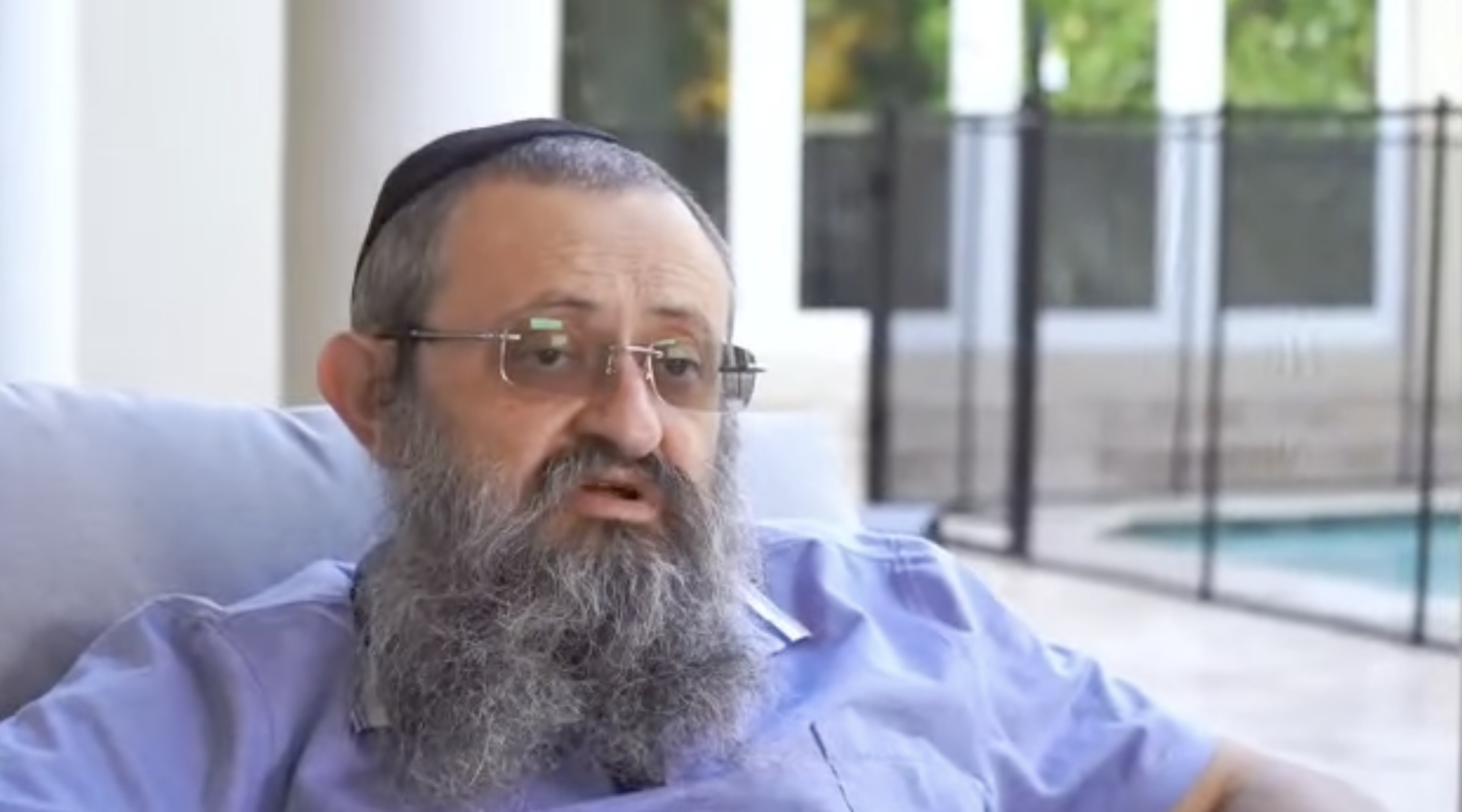 |
| Vladimir Zelenko, seen in a video created by his Z Freedom Foundation, died June 30, 2022, two years after rising to fame for hawking an untested COVID-19 cure. |
(JTA) — Vladimir Zelenko, the doctor from an Orthodox enclave near New York City who rose to fame early in the COVID-19 pandemic for promoting an untested drug cocktail, has died of cancer at 48.
The foundation that Zelenko launched to advance his theories after he left his family medical practice amid controversy in May 2020 announced his death on Thursday, saying that it would accept donations to continue his work, which included opposition to COVID-19 vaccines.
Zelenko, who went by Zev, was born in Kyiv, Ukraine, in 1973 and moved to the United States with his family four years later, according to an obituary released by his medical company. He graduated from Hofstra University and then earned a medical degree at the University at Buffalo before opening a practice in Monroe, New York, home to a large Hasidic community in Kiryas Joel.
Zelenko’s death comes two years after his rapid rise to prominence at the start of the coronavirus pandemic, when his community was hit hard early on and he began promoting a drug cocktail that he said cured the deadly disease.
The cocktail of hydrochloroquine, zinc and azithromycin caught the attention of many who hoped for a speedy resolution to the pandemic, including then-President Donald Trump, who said he would take it. The so-called “Zelenko protocol,” previously used to treat malaria, made Zelenko him famous far beyond his community, despite questions about the drugs’ safety that quickly hardened into concern when studies showed that not only did the cocktail not help COVID patients but may harm them.
Even as Zelenko’s ideas took hold within Orthodox communities, leaders of the Kiryas Joel community spoke out publicly against him, urging locals to follow proven medical advice to stop the spread of the disease. Zelenko also came under scrutiny from federal authorities for claiming that a study of the drugs he promoted had won approval from the Food and Drug Administration.
Zelenko announced in May 2020 that he would be leaving the community where he rose to fame, saying, “Things have happened. I’ve decided that it’s time for me to move on. I’m not sure yet what I’m going to do.”
Zelenko subsequently devoted himself to a company, Zelenko Labs, that sells vitamins and other supplements online and to the Z Freedom Foundation, which he launched to advance criticism of the medical establishment. Zelenko said in a video created by the foundation that his cancer diagnosis, made in 2018, spurred him to act; both entities said they would continue after his death.
 |
| Zelenko left his practice and his community after a federal prosecutor opened an investigation into his medical claims about the treatment. |
Barred intermittently from major social media platforms for promoting misinformation, Zelenko remained an icon for the anti-vaccination movement and many of its supporters on the far-right. He joining some of them in anti-vaxx messaging and self-publishing pseudo-scientific studies claiming that millions of people had died from COVID vaccines. Many of them posted tributes to him as news of his death spread Thursday.
Zelenko also demonstrated support for the president who helped catapult him into the public eye, attending the Trump rally preceding the Jan. 6 Capitol insurrection, according to video taken there.
The Association of American Physicians and Surgeons, a conservative group that promotes medical misinformation, said Zelenko would be remembered as a “hero for all patients and physicians” because of the way he stood up to “authorities who improperly interfered with use of his brilliant treatment protocol.”
Zelenko is survived by a wife and two children, as well as six children from a first marriage and his parents.
https://www.jta.org/2022/07/01/obituaries/vladimir-zelenko-orthodox-doctor-who-promoted-unproven-covid-19-treatment-dies-at-48?utm_source=JTA_Maropost&utm_campaign=JTA_DB&utm_medium=email&mpweb=1161-45668-462090

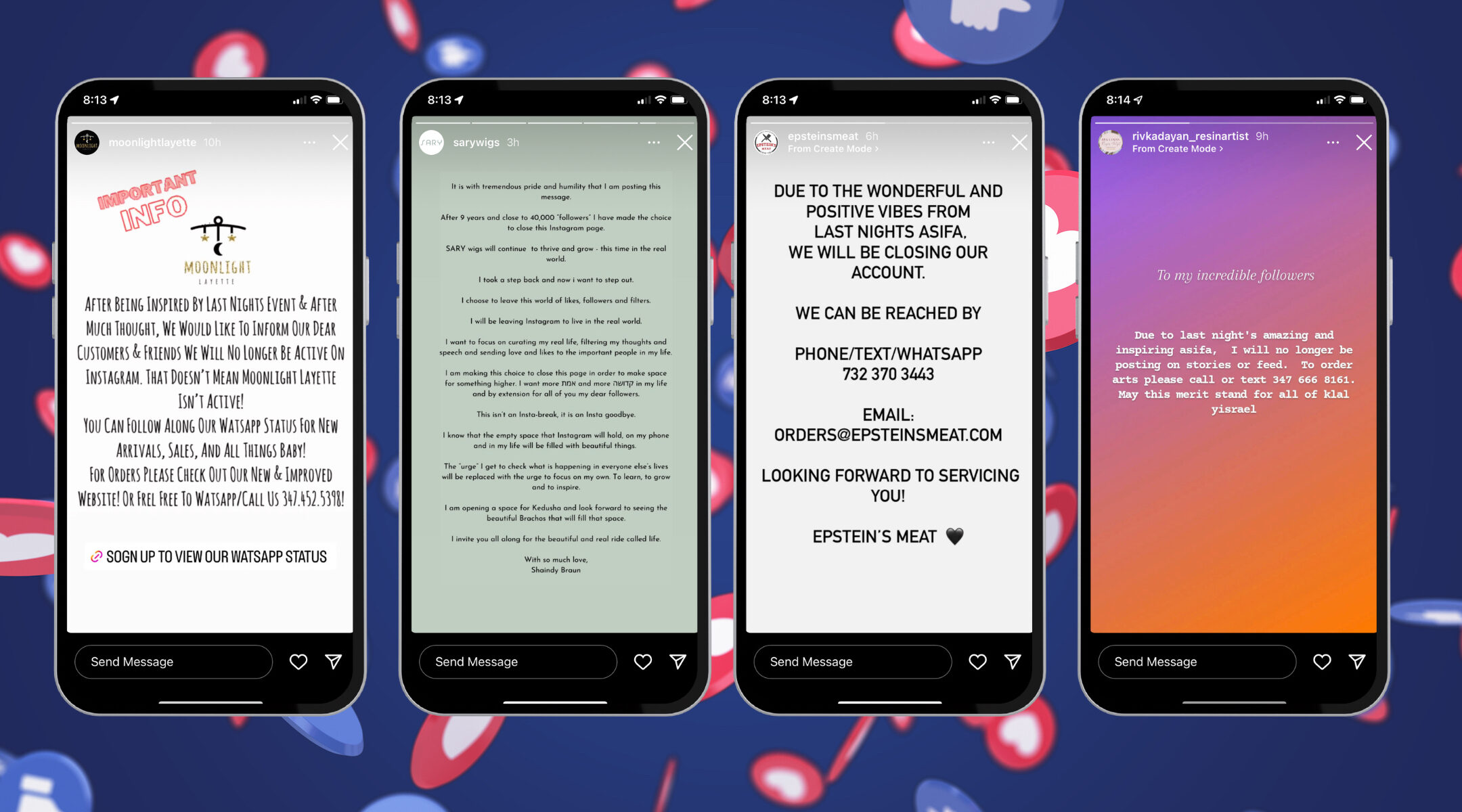
(JTA) — Shaindy Braun and her wig business had nearly 40,000 followers on Instagram, amassed over nine years, when she abruptly announced her departure from the social media platform.
“I choose to leave this world of likes, followers and filters,” Braun wrote last week. “I will be leaving Instagram to live in the real world. I want to focus on curating my real life, filtering my thoughts and speech and sending love and likes to the important people in my life.”
Then she deleted her profile, cutting off a major line of communication to clients — and potential buyers — of Sary Wigs, a Lakewood-based company providing human-hair wigs to Orthodox Jewish women in New Jersey and beyond.
She wasn’t the only one: Moonlight Layette, a baby clothing brand, announced it would stop engaging actively on Instagram, directing customers to a WhatsApp number instead. So did Rivka Dayan, a resin artist who makes Judaica products, and others.
Their decisions might have come as a surprise to the brands’ followers — except that many of them had also tuned into two massive gatherings in Newark last week exhorting Orthodox Jewish women to put away their phones and disconnect from social networks.
Coming a decade after a landmark rally aimed at warning Orthodox men about the dangers of the internet, the rallies were meant to inspire women to spend more time away from their cell phones, according to its organizers. But critics in the Hasidic Orthodox community, including women who attended or listened in via a special phone line for remote participation, said pressure to attend was intense — and that the message was far from uplifting.
“They force themselves to sit through this, being told how evil they are, how decadent they are today with their obsessions with ridiculous things and how spiritually inferior they are,” one Hasidic woman told the Jewish Telegraphic Agency on the condition of anonymity because she still lives in a Hasidic community in Borough Park. “And they sit there and they listen to it and they nod and they accept it all and they internalize it.”
Known as an asifa or kinus (Hebrew words for gathering), the rallies drew tens of thousands of Hasidic Orthodox women to the Prudential Center in Newark last week, many transported on charter buses from Orthodox areas such as Lakewood, New Jersey, and Williamsburg, Brooklyn. Women with children in the Bais Yaakov network of schools received text messages and letters saying that the school rabbis urged them to attend; one mother told JTA that she was told her children would be expelled if she did not attend the rally, where tickets cost $54.
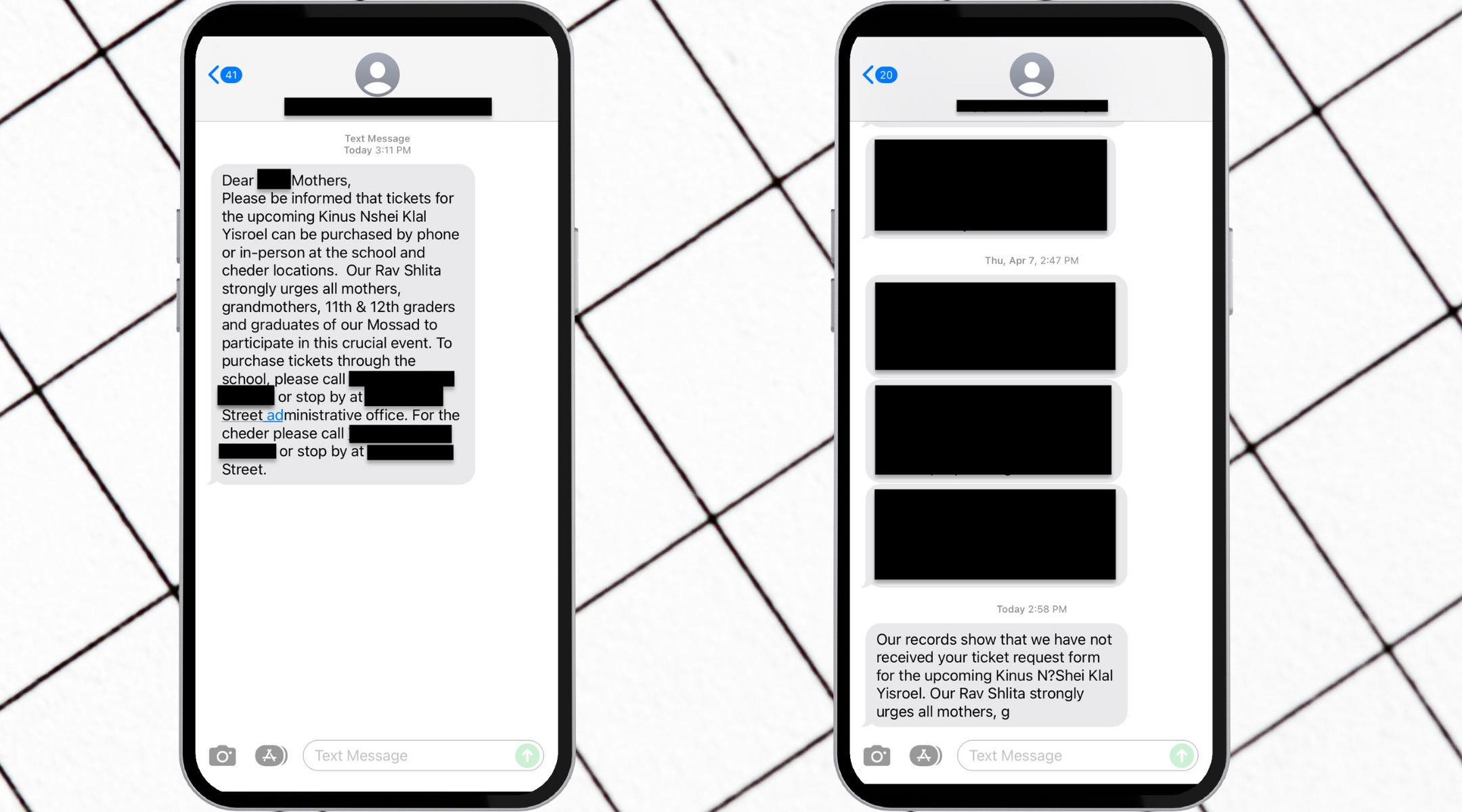
One rally was in English, while the other was in Yiddish, the dominant language spoken in many of New York’s Hasidic communities. The events, widely referred to as “nekadesh rallies” using the Hebrew word meaning “make holy,” appealed to women’s maternal instincts — a winning line in a community where fertility is prized and women typically have many children and are responsible for their education.
“I miss the great times that we used to have before you got the cell phone that your boss gave you,” a young boy said during a speech at the Yiddish rally, according to a recording of the event. “I miss your sweet smile. Do you remember our conversations, when we used to laugh at our own stories, and not because we were listening to silly jokes on the little black box?”
At the English-language rally, half of the speakers were women, and at one point, the male rabbis who spoke left the arena so the women could sing together. The speakers presented the issue of social media as one where Orthodox women can choose more or less pious ways to engage with the internet. Among the speakers was Rina Tarshish, a rebbetzin and the director of a women’s seminary in Israel who is widely respected in the Hasidic world.
The rally was intense at times, with attendees being told at one point that technology is a manifestation of Satan’s efforts to spread rot in the world, according to a Twitter thread by someone who transcribed much of the event. But the Yiddish-language rally was more strident in tone and tackled women’s participation in civic life offline as well, according to people who were present. One rabbi who spoke even instructed women not to speak on the street, except in cases of emergency.
The event came 10 years after 40,000 Orthodox men were similarly exhorted to give up their smartphones at a major anti-internet asifa at Citi Field in New York City. Then, the message was about insulating the community from outside influences.

Some 40,000 Haredi Orthodox men filled Citi Field in New York
Ayala Fader, an anthropology professor at Fordham University who studies Hasidic communities, said what happened next helps explain the latest rallies.
“Men were refusing to give up their smartphones,” she said. “So leadership decided to focus on women and their responsibility for rearing kids and keeping the home and really protecting the next generation.”
Many Orthodox women who have found homes on social media built connections within their own extended communities. Instagram in particular has been both a tool for building businesses in a community where working outside the home can be discouraged and logistically challenging. Orthodox women have also used social media for activism, such as to share experiences with infertility, combat racism and fight antisemitism. Some, seeking to comply with expectations around modesty, have even operated women-only accounts.
Hearing that they should set all of that aside struck some women who were invited to the rally as offensive. Compounding their frustration was the fact that attendees were prohibited from bringing cell phones, taking pictures and sharing the event on social media, and Orthodox media covered the rallies without printing pictures of the women who attended.
“Women finally found an outlet where they can network and it lets you build successful businesses via the internet,” said one Hasidic woman who works in digital marketing and is the sole breadwinner for her family. “And now the men realize, ‘hey, this is terrible! Women having access to other women that are talented, successful, powerful businesswomen. So let’s condense them even more, make them into mere shadows.’”
The rallies were organized by the Technology Awareness Group, or TAG, a nonprofit founded in 2011, shortly before the men’s rally, with a mission of helping Jewish internet users avoid pornography and other harmful influences online. Shmuli Rosenberg, a marketing executive who promoted the event as well as many others targeting Orthodox Jews, said the goal was not to ask women to eschew the Internet or having a public profile.
“It’s far from cutting people off,” he said. “It’s helping people find, in their own life, what will allow them to be more connected to their families and their children and themselves and feel uplifted and elevated and happy.”
Rosenberg said the rallies were limited to women only because the organizers wanted to offer some programming, including women’s singing, that would not be possible under communal norms in a mixed-gender setting.
“This wasn’t specifically targeting women versus men,” he said. “This was targeting everyone. And in our communities, it would be totally unacceptable to say that men can access the internet or information more than women.”
Some women who attended, like Braun, the wigmaker, found the events inspiring.
“I know, it’s kinda contradictory to talk about it here, online,” one woman wrote on the Orthodox women’s forum ImaMother. “But those who were there, in a positive mind, understood that it wasn’t about all or nothing.”
But others said they saw in the events a dangerous tendency in Orthodox communities to set rules far beyond what is required by Jewish law. On their way out of the rallies, women were handed cards that they could give to their taxi drivers and housekeepers to explain why they cannot touch smartphones to type in their address and to ask that smartphones not be used in their homes.
“Dear cleaning lady,” one of the cards read, “In accordance with our religion, most of our community refrains from smartphone usage. I can give you the details in writing. Please keep your smartphone out of sight inside our home.”
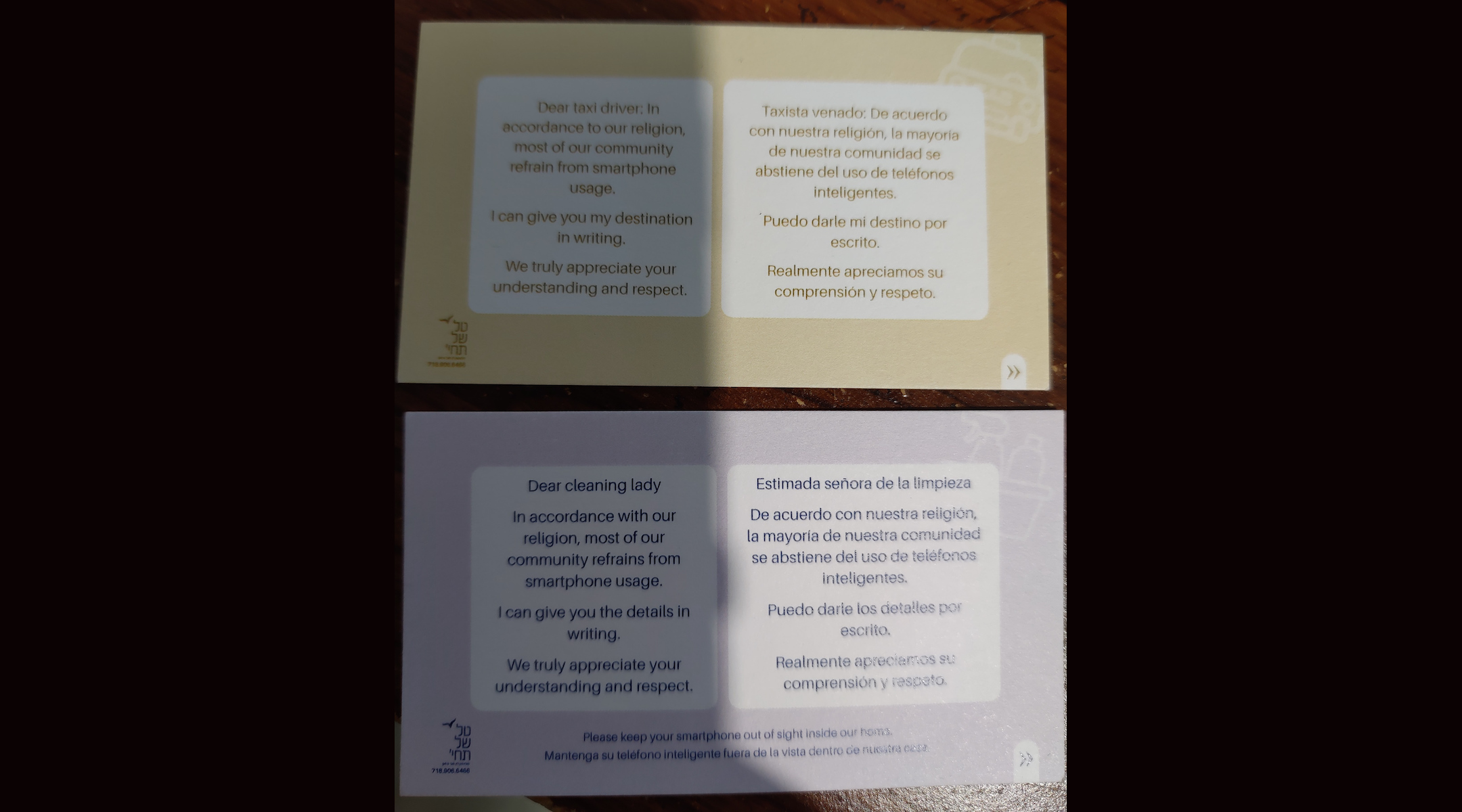
Women were handed cards to be given to their taxi drivers and maids
Nothing in Jewish law, known as halacha, prohibits a woman from typing in her address on a phone or creates any obligation for non-Jews. But Rayne Lunger, a woman who grew up Hasidic and is now active on social media, said she was familiar with the impulse to observe more than the letter of the law.
She likened the call for women not to use smartphones to what has happened with expectations around skirt length. In the past, women were considered modest if their skirts covered their knees, she said, but over time, 4 inches below the knee became the norm, and now women can face criticism if their skirts do not reach at least 6 inches below the knee.
“People want to be good and do the right thing,” Lunger said. “And they’re sometimes building stringencies on top of stringencies on top of stringencies that make no sense because they have no reference point.”
Not all Hasidic Jews are wrestling with the issue of internet use in the same way. The Chabad-Lubavitch Hasidic movement, for example, has embraced new technologies and uses social media in its outreach, and was not involved in any of these events.
But for women who do choose to roll back their internet usage, groups such as TAG stand ready to install “kosher” filters on their phones and computers.
“The ultra-Orthodox mostly think that the medium is fine wherever you use it in the clean way, or kosher way,” said Rivka Neriya-Ben Shahar, a professor at Sapir Academic College in Israel who studies haredi Orthodox approaches to media. “They feel very safe once they can control the content.”
Like parental controls on an iPad or television, kosher filters typically block access to websites or content that is considered inappropriate in the community, such as pornography, gambling sites, or anything related to violence or drugs. They also may block secular content and, separately, can sometimes be glitchy and block content that is not actually out of bounds in the Hasidic world, including health and safety information that women need.
Exactly how many women will install filters, cede their cell phones or cut communications with their customers as a result of the recent gatherings remains to be seen. But what’s clear is that the press to get New York-area Orthodox women to reconsider their internet use continues, even as the latest events themselves fade into the past.
Women are still closing their accounts, according to participants on Orthodox Instagram, and now another event has been scheduled: A replay of the asifa is set for Monday at Tiferes Bais Yaakov School in Lakewood. The school’s website says its ballroom can accommodate 4,600, and tickets are $20.
הפה שהיתר---הפה שאסור- The Gemara in reverse!