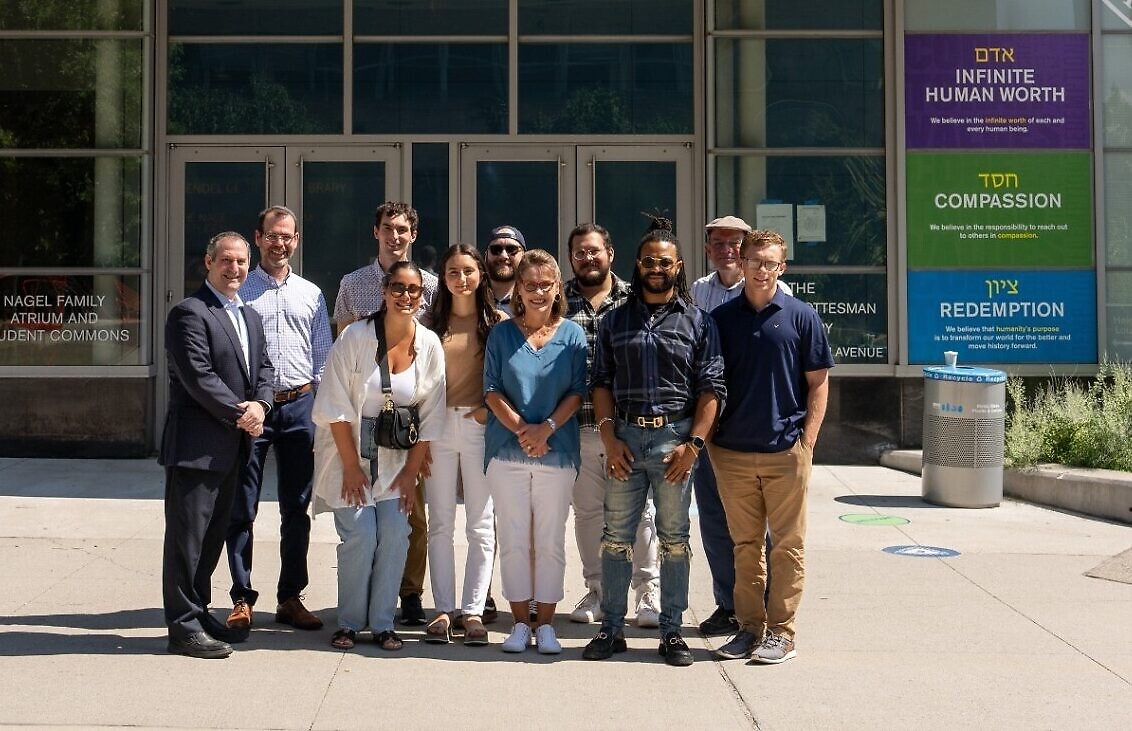
Yeshiva University launches master’s program for Christian students
 |
| Christian students enrolled in the master's program for Jewish studies
at Yeshiva University |
The 2-year track at the Modern Orthodox flagship
is being called an ‘experiment,’ but what’s certain is that it reflects a
growing Evangelical interest in Jewish practices - (and for them to closely mingle with Jews of the opposite sex which will undoubtedly lead to proselytizing, intermarriage or inter-dating at the very least) PM
 |
| HERSHEL SCHACHTER - YU HEAD LACKEY |
|
|
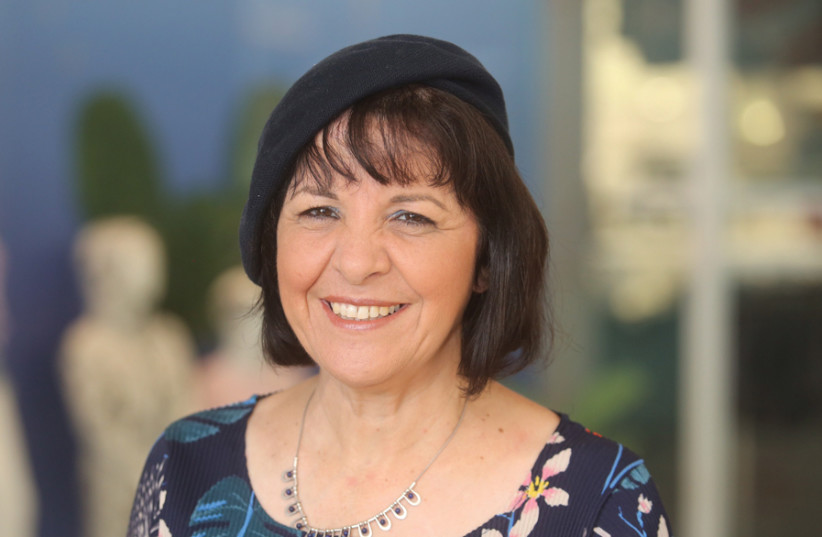
JTA — Emily Talento grew up with Jewish friends and relatives on Long
Island, attending Passover Seders, bar and bat mitzvahs and Shabbat
dinners. When she arrived at Cedarville University, a private Baptist
university in Ohio, she found herself explaining Jewish traditions to
her many classmates who had never met a Jew before.
Now, Talento is continuing her Bible studies at a religious
university. But it’s safe to say that she won’t encounter the same lack
of knowledge about Jews this time. That’s because she’s one of eight
Christian students embarking on a course of study at Yeshiva University
that’s designed just for them.
In the two-year Hebraic Studies Program for Christian Students at the
Modern Orthodox flagship, Talento and her cohort will take courses on
Jewish history, biblical Hebrew, post-biblical literature and more.
“I’m excited that everything is coming from the Jewish perspective,” Talento said.
The new program is a joint initiative of YU and the Philos Project,
an organization that says it “seeks to promote positive Christian
engagement in the Near East.” Philos is a partner of Passages — a
Birthright-style program that brings young Christians on group tours of
Israel — and it also organizes Christians to demonstrate against
antisemitism.
The launch of the Christian students’ program is a sign of a growing
bond between Orthodox Jews and religious Christians, who have
increasingly found common cause on everything from conservative domestic
politics to support for Israel. It is also an experiment in whether a
school founded more than a century ago to accommodate the observances
and sensibilities of Orthodox students in a majority-Christian country
can now create an intentional space for Christians to study Judaism as
well.
“Within the broader Protestant world, but particularly evangelicals,
there’s been, I’d say in the last 50 years, just a really intense
interest in the Jewish context of the New Testament, in particular
Second Temple Judaism,” said Daniel Hummel, a historian of American
religion and the author of “Covenant Brothers: Evangelicals, Jews, and
U.S.-Israeli Relations.” (Philos, while founded by an evangelical
Christian, identifies itself as ecumenical.)
That interest, Hummel said, has required encounters with Jews.
“That’s sort of been the pattern,” he said. “You learn from Jews about
their beliefs, and then you sort of take that thinking back to the New
Testament texts, which then reshape how you read those texts.”
The program is part of an existing master’s degree program at YU’s
Bernard Revel Graduate School of Jewish Studies. YU’s undergraduate
programs are separated by gender, are explicitly geared toward Orthodox
Jews and combine traditional Jewish text study with a secular college
education. But the university’s graduate programs, including Revel, are
open to non-Jews, and Revel describes itself as a “genuinely
non-denominational school.”
This year’s “pilot class” of eight Christian graduate students, who
come from a mix of evangelical, Pentecostal and Baptist
backgrounds, began with Hebrew Bible courses this summer. The students
hail from California, Texas, Nebraska, Virginia and Mozambique. Five
students are studying remotely, and three plan to be on campus in New
York beginning in the fall semester.
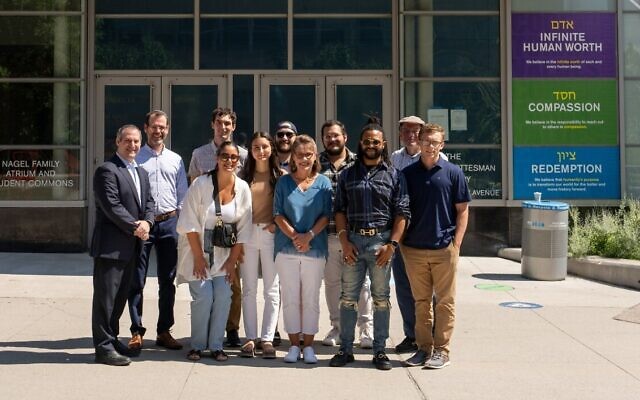
Christian students enrolled in the master’s
program for Jewish studies at the Bernard Revel Graduate School of
Jewish Studies at Yeshiva University
“Our real goal is for the Christian students to gain a deeper
understanding of the Jewish roots of Christianity,” said Jonathan
Dauber, Revel’s director of external programming and YU’s head of the
Philos partnership. “It’s also a program that’s meant to foster dialogue
and understanding between Jews and Christians because the Jewish
students and Christian students are together.”
What sets the new program apart from the rest of the Jewish studies
school is that it is a “curated pathway” for Christian students, Dauber
said — though aside from the biblical Hebrew classes, the students will
take the majority of their courses with other Revel students. YU also
hopes to create space outside of the formal classroom where students can
interact, such as on a museum visit or via other cultural activities.
Some Christian groups and individuals have appropriated various Jewish rituals for Christian purposes, hosting “Christian Seders,” blowing a shofar, or ram’s horn, at prayer or marketing Christian takes on the mezuzah.
Those practices have also sparked backlash from both Jewish and
Christian clergy. But Hummel felt that the Christian students in the YU
program would be unlikely to take on Jewish rituals or seek to
missionize to their classmates.
“It’s Yeshiva that’s hosting it, and so the power dynamics are a bit
different than if it was Christian space,” Hummel said. “It would be a
real uphill battle for a Christian to go into Yeshiva University and
expect some type of big success with conversion.”(HOW DO YOU SPELL PUTZ? PM)
Institutionally, Yeshiva University is not expecting proselytizing to
be an issue either. Ahead of the program’s launch, the university’s
rabbinic leadership even issued a ruling that the program was
permissible according to Jewish law.
“The Philos students also understand that themselves, that their
purpose is to study and to learn about Judaism, that it’s not to try to
convince or persuade,” Dauber said. “So that’s really not something that
we’re worried about.”
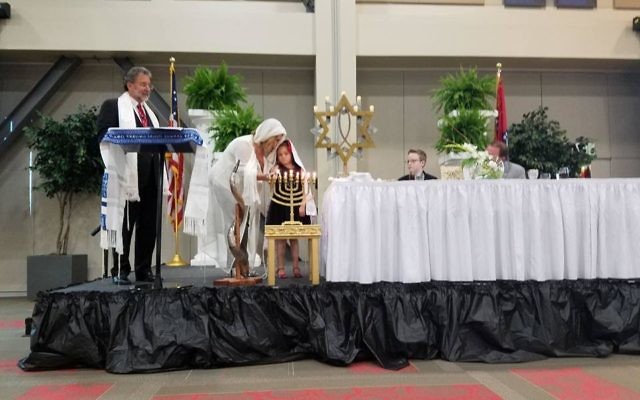
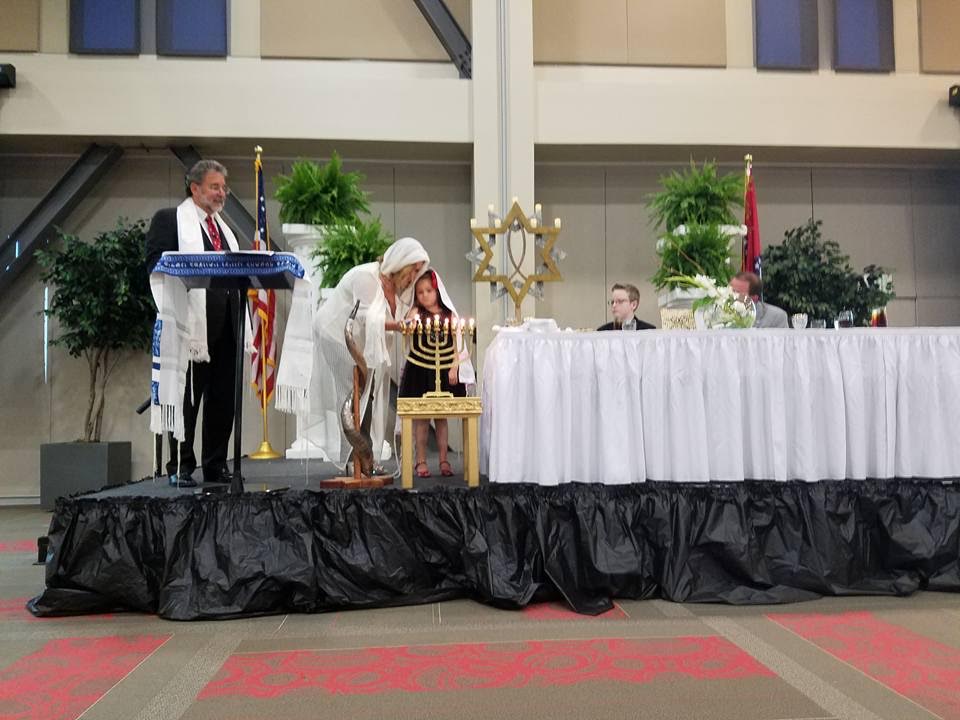
Lighting candles at the Cross Life Church in Alvarado, Arkansas.
Jews and Christians have studied together in religiously affiliated
academic settings in the past. In 2018, Philos ran a leadership program
for its Black members at the Reform movement’s Hebrew Union College,
where they met with rabbis and African-American pastors to discuss Black
and Jewish relations. That same year, David Nekrutman became the first Orthodox Jew to graduate from Oral Roberts University, an evangelical private university, with a masters degree in Christian studies.
The YU program is different because students will undertake sustained enrollment at an Orthodox school.
“This is, in a lot of ways, an experiment,” said Robert Nicholson,
president and founder of the Philos Project. “Can Christians and
Orthodox Jews study together? Does it even work?”
He added, “Just the mere fact of forging a partnership with an
Orthodox institution, to me, is a way of moving the ball down the field
in Jewish-Christian relations.”
Hummel said that the partnership “isn’t just out of nowhere.” Modern
Orthodox Jews and evangelical Christians also share what Hummel referred
to as a “theological framework” around Zionism, which is understood as
“a real covenant between God and the Jewish people that entails Jews
being able to control their homeland.”
Talento, who came in not knowing the Hebrew alphabet, has enjoyed her
classes so far. Learning to read biblical Hebrew is “something I
couldn’t even imagine being able to do,” Talento said. Knowing Hebrew,
she says, lets her “get more into the mindset of the author than you
could reading a translated, English-language” text.
Later, she’ll be taking a class on the history of Judaism from the
fall of the Second Temple through the Holocaust, and a class on Paul the
Apostle, titled “Paul: Profile of a First-Century Jew.” It will be
offered in the fall over Zoom and is open to any master’s degree
student.
Talento, who has gone on a Passages trip to Israel, is not sure what
she will do when she graduates from the program. She has worked for
Passages in the past and has attended pro-Israel conferences held by
advocacy organizations such as StandWithUs and the American Israel
Public Affairs Committee, or AIPAC. She is considering pursuing a career
in the nonprofit world, working for Philos, or elsewhere in Israel
advocacy.
“God only gives me the next step,” she said. “If you would have told
me I was doing this a year ago, I would have said, ‘This is so cool —
but I don’t even know how I was going to get there.’”
https://www.timesofisrael.com/yeshiva-university-launches-masters-program-for-christian-students/?utm_campaign=daily-edition-2023-08-17&utm_medium=email&utm_source=The+Daily+Edition
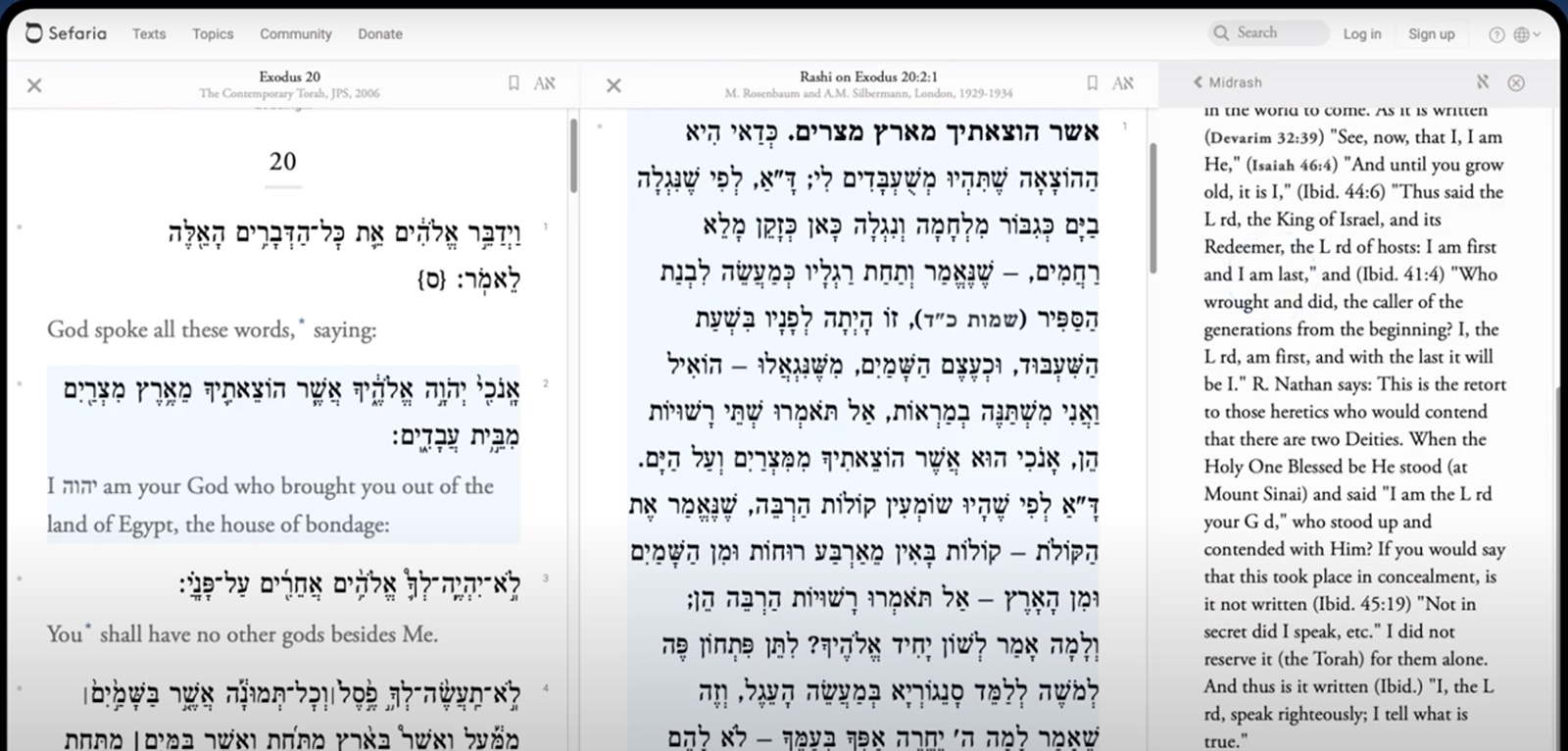
והא דינין קום עשה הוא וקא חשיב קום
עשה ושב אל תעשה נינהו ואמר ר' יוחנן
עובד כוכבים שעוסק בתורה חייב מיתה
שנאמר תורה צוה לנו משה מורשה לנו
מורשה ולא להם וליחשבה גבי שבע מצות
מ"ד מורשה מיגזל קא גזיל לה מאן דאמר
מאורסה דינו כנערה המאורסה דבסקילה
מיתיבי היה ר"מ אומר מניין שאפילו עובד
כוכבים ועוסק בתורה שהוא ככהן גדול
שנאמר אשר יעשה אותם האדם וחי בהם
כהנים לוים וישראלים לא נאמר אלא האדם
הא למדת שאפילו עובד כוכבים ועוסק
בתורה הרי הוא ככהן גדול התם בשבע
מצות דידהו: ר' חנינא בן גמליאל אומר אף
הדם מן החי: ת"ר אך בשר בנפשו דמו
לא תאכלו זה אבר מן החי רבי חנינא
בן גמליאל אומר אף הדם מן החי מ"ט דרבי
חנינא בן גמליאל קרי ביה בשר בנפשו לא
תאכל דמו בנפשו לא תאכל ורבנן ההוא
למישרי שרצים הוא דאתא כיוצא בדבר
אתה אומר רק חזק לבלתי אכל הדם כי
הדם הוא הנפש וגו' (רק חזק לבלתי אכל
הדם זה אבר מן החי כי הדם הוא הנפש
זה דם מן החי) ורבנן ההוא לדם הקזה
שהנשמה יוצאה בו הוא דאתא למה לי
למיכתב לבני נח ולמה לי למשני בסיני
כדר' יוסי בר' חנינא דא"ר יוסי בר' חנינא
כל מצוה שנאמרה לבני נח ונשנית בסיני
לזה ולזה נאמרה לבני נח ולא נשנית בסיני
לישראל נאמרה ולא לבני נח ואנו אין לנו
אלא גיד הנשה ואליבא דר' יהודה אמר מר
כל מצוה שנאמרה לבני נח ונשנית בסיני
לזה ולזה נאמרה אדרבה מדנשנית בסיני
לישראל נאמרה ולא לבני נח מדאיתני
עבודת כוכבים בסיני ואשכחן דענש עובדי
כוכבים עילווה ש"מ לזה ולזה נאמרה: לבני
נח ולא נשנית בסיני לישראל נאמרה ולא
לבני נח: אדרבה מדלא נישנית בסיני לבני
נח נאמרה ולא לישראל ליכא מידעם
דלישראל שרי ולעובד כוכבים אסור ולא
והרי יפת תואר התם משום דלאו בני כיבוש
נינהו והרי פחות משוה פרוטה התם משום
דלאו בני מחילה נינהו: כל מצוה
TALMUD SANHEDRIN:
https://hebrewbooks.org/shas.aspx?mesechta=24&daf=59&format=pdf