EVERY SIGNATURE MATTERS - THIS BILL MUST PASS!

EVERY SIGNATURE MATTERS - THIS BILL MUST PASS!
CLICK - GOAL - 100,000 NEW SIGNATURES! 75,000 SIGNATURES HAVE ALREADY BEEN SUBMITTED TO GOVERNOR CUOMO!

EFF Urges Court to Block Dragnet Subpoenas Targeting Online Commenters

EFF Urges Court to Block Dragnet Subpoenas Targeting Online Commenters
CLICK! For the full motion to quash: http://www.eff.org/files/filenode/hersh_v_cohen/UOJ-motiontoquashmemo.pdf

Sunday, April 12, 2015

Thursday, April 09, 2015

Six years of endless attempts to undermine Israel’s diplomatic position and the last few months of bitter, personal and even vulgar criticism of Israeli Prime Minister Netanyahu culminating in threats to leave it isolated at the United Nations made his protestations absurd if not completely disingenuous...


Why Is Obama’s Stance on Israel Questioned by So Many?


In an interview with the New York Times Thomas Friedman, President Obama purported to be aggrieved that anyone would question his support for Israel or his respect for concerns about its security. Not satisfied with merely asserting his devotion to the Jewish state, he said it was “personally difficult” to hear such criticism and that he would consider his presidency “a failure” if anything he did weakened it.

Six years of endless attempts to undermine Israel’s diplomatic position and the last few months of bitter, personal and even vulgar criticism of Israeli Prime Minister Netanyahu culminating in threats to leave it isolated at the United Nations made his protestations absurd if not completely disingenuous. But Israelis could at least console themselves that in the course of trying to sell his appeasement of Iran to Congress, he was trying to downplay the crisis in the alliance that he had created. But it only took 24 hours for Obama to answer his own question about why so many Americans and Israelis question his attitude about Israel.

 In another interview, this time with another friendly questioner from the reliably liberal NPR, Obama was dismissed the suggestion that Iran be asked to recognize Israel as part of the nuclear deal he is promoting. His reason: doing so would mean asking Iran to change the nature of its regime. To which critics must respond that this is exactly why it can’t be trusted with a nuclear infrastructure.

Obama said the following to NPR’s Steve Inskeep:
The notion that we would condition Iran not getting nuclear weapons in a verifiable deal on Iran recognizing Israel is really akin to saying that we won’t sign a deal unless the nature of the Iranian regime completely transforms. And that is, I think, a fundamental misjudgment.
Obama went on to say that he believed the reason why the deal couldn’t be struck in that matter was because his goal was to prevent Iran from getting nuclear weapons and that he couldn’t count on it changing.

That makes a sort of superficial sense. And if the as yet unwritten deal actually ensured that Iran could never get a nuclear weapon, he might have a strong case for ignoring the nature of the Iranian government. But despite his ardent salesmanship, he can’t honestly claim that it does.


Obama has made an endless string of concessions that have allowed to keep its nuclear infrastructure, included its fortified bunker at Fordow, not forced it to export its stockpile of nuclear fuel, reveal the extent of its nuclear research and put an expiration date on the restrictions on its program. All this means that Iran can, if it is patient, build up its nuclear capabilities and then have a bomb in short order at the end of the agreement. Or, if it is not that patient, it can easily cheat its way to a weapon due to the weakness of the deal and the lack of a truly strict inspections regime or the ability of the West to quickly reimpose sanctions.

At best, all Obama has accomplished is to delay an Iranian bomb. At worst, he has allowed it to get close to one with Western permission and after having made it impossible to reassemble the international coalition that might have brought Iran to its knees had it been led by an American president with the guts to stick to a tough line rather than one that folded at every opportunity. The reason for this was that Obama’s goal throughout this process was détente with an aggressive, anti-Semitic and tyrannical regime rather than an effort to keep his 2012 campaign promise to eliminate its nuclear program.

Thus, the question about forcing it to recognize Israel is actually an apt one. Having empowered Iran at a time when its quest for regional hegemony via actions in Yemen, Iraq, Syria and now Gaza are scaring Israelis as well as moderate Arabs, it is fair to ask why the deal ignored Tehran’s support for terrorism and its frequent threats to obliterate Israel.

The president is right that to ask Iran to give up its rhetoric about Israel, let alone its policies aimed at bringing its dream of its elimination about, is to seek to change the nature of its theocratic government. But that is exactly why any deal that leaves people who have such goals in possession of thousands of nuclear centrifuges and a stockpile of nuclear fuel and a free pass to build a bomb in 15 years is tantamount to saying you don’t give a damn about Israel’s legitimate worries about Iran.

It was beneath the dignity of the presidency for Obama to feign hurt feelings about criticism for his efforts to undermine the U.S.-Israel alliance. Had he not spent most of his presidency (with the exception of the one year grace period of a Jewish charm offensive that accompanied his re-election campaign) sniping at Netanyahu, tilting the diplomatic playing field in the direction of the Palestinians and ignoring the latter’s consistent rejection of peace, there would be no justifications for questioning his bona fides as a friend of Israel.

But when he treats the vile threats against Israel as an insignificant detail about his prized negotiating partner, he betrays his own mindset that sees the Jewish state’s existential worries as a tiresome drag on his diplomatic ambitions. The president would probably prefer that the Iranians pipe down about their desire to destroy Israel but he doesn’t feel strongly enough about it to let it derail his grand design for a rapprochement with Tehran.

The president can complain about his hurt feelings as much as he wants though to do so strains even the credulity of his most fawning interviewers. But by agreeing to a deal that makes Iran a threshold nuclear power without insisting on it dropping its ideology of hate, the president has answered questions about his negative attitude toward Israel by confirming the worst fears of his critics.

https://www.commentarymagazine.com/2015/04/06/obama-answers-his-own-question-about-antagonism-toward-israel-iran-nuclear-deal/  


Wednesday, April 08, 2015

Our position was summed up in the slogan “the only thing worse than bombing Iran is letting Iran get the bomb.” And to those like President Obama who charged us with warmongering, our response was that the choice was not between a negotiated settlement and war. It was between a conventional war now and a nuclear war later.


Whenever Barack Obama says, as he often does, that another war in the Middle East is the only alternative to the deal he is making with Iran, his critics immediately accuse him of setting up a straw man, which indeed he also often does. Even Israeli Prime Minister Benjamin Netanyahu, the sternest and most effective critic of Obama’s deal, declares that the true alternative to it is not war but “a better deal.” So, too, leading domestic opponents like Senators Lindsay Graham and Tom Cotton.

Now I consider the agreement Obama has negotiated a dishonorable and dangerous product of appeasement, and so it pains me to side with him against political figures I admire and generally support. Nevertheless, I have to confess that I think he is right in arguing that the only alternative to a deal is war.

By this I do not mean that war is the only alternative to Obama’s deal alone. What I mean is that war is the only alternative to any deal the Iranians would be willing to sign–if, that is, the purpose is really to prevent them from getting the bomb. Obama keeps insisting that this is what his deal will accomplish. But it seems increasingly clear that he no longer thinks, if he ever did, that an Iran armed with nuclear weapons would be so dangerous that it must be prevented at all costs from getting them.

Up until a few years ago, there was hardly any dissent from this conviction. Yet while just about every political leader and pundit throughout the West agreed that the threat of military force had to be “kept on the table” in order for peaceful means to succeed, most of them were confident that a judicious combination of carrots and sticks would do the trick and that military force would never need to be taken off the table and actually used.

There was, however, a small minority–myself included–who contended that the Iranians were so determined to build a nuclear arsenal that nothing, not sanctions and not the chance (in Barack Obama’s words) to “get right with the world,” could ever induce them to give up their pursuit of it. And since we were convinced that negotiations could accomplish nothing but buy the Iranians more time to forge ahead, we also thought that the sooner we bombed their nuclear facilities the better.

We were fully aware that such a course was very risky. It would almost certainly trigger Iranian retaliation against our troops in the region and against Israel, and it might well lead to the dire economic consequences that Iran could let loose by blocking the flow of oil. Yet in our view all this was as nothing compared with the nuclear arms race that an Iranian bomb would set off throughout the Middle East.

Even worse, there was also the high probability that Iran–once possessed of the means to make good on their openly and repeatedly stated dream of “wiping Israel off the map”–would either provoke the Israelis into a preemptive nuclear strike or try to beat them to the punch with a preemptive nuclear strike of its own. Either way, the casualties and the destruction would reach unimaginable heights.

Our position was summed up in the slogan “the only thing worse than bombing Iran is letting Iran get the bomb.” And to those like President Obama who charged us with warmongering, our response was that the choice was not between a negotiated settlement and war. It was between a conventional war now and a nuclear war later.

As for the Obama deal, if its purpose were really to prevent the Iranians from getting the bomb, it would be a total failure, if only because it leaves their nuclear infrastructure intact and gives them plenty of room to cheat. But judging by deeds rather than words, it is reasonable to conclude that what Obama is trying to do is not to keep Iran from getting the bomb but to further his quest for a detente, or even a de facto alliance, with Iran. Already we see the foreshadowing of such an alliance in his willingness to cooperate with the Iranians in the fight against ISIS in Iraq and his reluctance to take any steps in the Middle East (against their ally Syria, for example) that might displease them.

At this point, the slogan that best applies comes from Winston Churchill’s devastating comment on Neville Chamberlain’s pact with Hitler at Munich in 1938: “You were given a choice between dishonor and war. You have chosen dishonor and now you will get war”–and this time a nuclear war at that. Unless, that is, the Israelis were to choose conventional war now over nuclear war later. My guess is that they will, but it is just as likely that Obama, despite his repeated assurances that he “has Israel’s back,” will stop them by threatening to withhold the diplomatic support and the resupply of lost weaponry they would need. In that case God help us all.

https://www.commentarymagazine.com/2015/04/07/obamas-right/

Tuesday, April 07, 2015

Israeli Document Asks 10 Questions About ‘Irresponsible, Dangerous’ Iran Deal

On April 6, Israel posed questions to the US-led negotiations with Iran that it said underlined “the extent of the irresponsible concessions given to Iran” in the framework agreement reached on April 2, and made clear “how dangerous the framework is for Israel, the region, and the world.”

The questions were listed in a document distributed by Israel’s Strategic Affairs Minister Yuval Steinitz, a Likud party member and confidant of Prime Minister Benjamin Netanyahu.

The document reiterated Netanyahu’s assertion that “a better deal” can and must be reached. The document protested that the framework agreement reached in Lausanne, Switzerland, and hailed by President Barack Obama as “historic,” “ignores the threat posed by Iran’s nuclear program to Israel.”

However, it charged that “great consideration” was given to Iran, “an enemy of the United States, whose regime, even during the negotiations, continued to conduct aggression in the region and to call for the destruction of Israel.”

The document charged that “the framework deal does not block Iran’s path to the bomb. By removing the sanctions and by lifting the main restrictions on Iran’s nuclear program in about a decade, this framework paves Iran’s path to a bomb.”

Echoing criticisms made by Netanyahu since the deal was reached, the document further protested that “not a single nuclear facility will be shut down. Iran will be permitted to continue its advanced centrifuge R&D and [the issue of] its intercontinental ballistic missile program remains unaddressed.”

Apart from what it called “the significant differences in the parties interpretations of the framework—reflected in the conflicting statements and ‘fact sheet’ they issued”—the Israeli document posed the following 10 questions:


1. Why are sanctions that took years to put in place being removed immediately (as the Iranians claim)? This would take away the international community’s primary leverage at the outset of the agreement and make Iranian compliance less likely.

2. Given Iran’s track record of concealing illicit nuclear activities, why does the framework not explicitly require Iran to accept inspections of all installations where suspected nuclear weapons development has been conducted? Why can’t inspectors conduct inspections anywhere, anytime?

3. Will Iran ever be forced to come clean about its past nuclear weaponization activity?

4. What will be the fate of Iran’s stockpile of enriched uranium?

5. Why will Iran be allowed to continue R&D on centrifuges far more advanced than those currently in its possession?

6. Why does the framework not address Iran’s intercontinental ballistic missile program, whose sole purpose is to carry nuclear payloads?

7. Following Iranian violations of the framework, how effective will the mechanism to reinstitute sanctions be?

8. What message does the framework send to states in the region and around the world when it gives such far-reaching concessions to a regime that for years has defied UNSC resolutions? Why would this not encourage nuclear proliferation?

9. The framework agreement appears to have much in common with the nuclear agreement reached with North Korea. How will this deal differ from the North Korean case?

10. Why is the lifting of restrictions on Iran’s nuclear program in about a decade not linked to a change in Iran’s behavior? According to the framework, Iran could remain the world’s foremost sponsor of terror and still have all the restrictions removed. Instead, the removal of those restrictions should be linked to a cessation of Iran’s aggression in the Middle East, its terrorism around the world and its threats to annihilate Israel.”

The document ended with the claim that“the alternative to this framework is a better deal, one that will significantly dismantle Iran’s nuclear infrastructure, bring about a cessation of its aggression in the region and terrorist activities around the world, as well as end its efforts to destroy Israel. The framework deal does not block Iran’s path to the bomb. By removing the sanctions and lifting the main restrictions on Iran’s nuclear program in about a decade, this framework paves Iran’s path to a bomb. The result will be a dramatic increase in the risks of nuclear proliferation and an increase in the chances of a terrible war.”

http://www.jspacenews.com/israeli-document-asks-10-questions-irresponsible-dangerous-iran-deal/

Monday, April 06, 2015

Family court gives pro-vaccination father decisionmaking authority over children’s medical care...


April 6 at 4:21 PM
 
The case is a Connecticut trial court case, Archer v. Cassel (2015 WL 1500447), decided March 10; the court views the mother’s refusal to vaccinate as a strike against her, though it also seems to view it as part of broader evidence that the mother would use any tool to spite the father:
[T]he court does not question [Mother]‘s religion, moral convictions or the sincerity of her [anti-vaccination religious] beliefs. The court is focused instead on the best interest of the children and which parent is best suited to make health decisions for them. There is no need for the court to assert its authority when a parent can act in the best interests of their children….
[The court then applied the “best interests” criteria set forth in Connecticut General Statutes Section 46b–56(c), and reasoned, in relevant part: -EV] …
The court believes [Father]‘s testimony that he did not know [Mother]‘s religious views on vaccination until after their first pregnancy. The vaccination issue that is now so important to [Mother] did not prevent her from having a second child with [Father]. The court concludes that both parents adequately understand the children’s needs, but [Mother] is willing to use them and the events of their lives to controvert and thwart their father. This may meet her needs, but not those of the children….
The court found portions of [Mother]‘s testimony confusing at best. As the case progressed, however, she re-stated and conformed her assertions to fit case law she thought supported her aims. Such “fluidity” is notable. [Mother] threatened the father of her other children with legal action if he cooperated with the [lawyer appointed to represent the children] in this case. The current dispute may well be the product of her hatred of the [Father]. The court finds that [Mother] will not hesitate to involve the children in her ongoing conflict with their father….
The U.S. Supreme Court stated that “parents may be free to become martyrs themselves. But it does not follow they are free, in identical circumstances, to make martyrs of their children.” The Court also stated that the “right to practice religion freely does not include liberty to expose the community or the child to communicable disease or the latter to ill health or death.” …
This court’s decision is grounded in its view of the judgment each parent would apply to the events of their daughters’ lives. When [Mother]‘s beliefs conflict with those of her co-equal guardian [Father], … [the] advice of the children’s doctors[,] and [the] recommendation of the [lawyer appointed to represent the children], the court must question whether she has completely thought through the developmental needs of her children as they relate to their adjustments at school and the community or if this is yet another issue on which to controvert and thwart [Father].
The court concludes on the basis of 46b–56 and its guiding criteria that [Father]‘s judgment in health-related decisions is in the best interests of his daughters….
The court grants [Father]‘s Motion for Order … to the extent that if a non-emergency question or choice arises about either child’s health and after a good-faith discussion of the options between the parties, the parents cannot agree, … [Father] shall have and exercise final decision-making authority in matters of his daughters’ health.
Note that Connecticut law provides for a religious exemption from vaccination requirements, stating, “Each local or regional school board of education … shall require each child to be protected by adequate immunization against [diseases] … before being permitted to enroll in any program operated by a public or non-public school under its jurisdiction … Any such child who … presents a statement from the parents or guardian of such child that such immunization would be contrary to the religious beliefs of such child … shall be exempt from the appropriate provisions of this section.” As the court points out, it’s hard to know what the “religious beliefs of [a four-year-old] child” might be, but even if one assumes that they follow the parents’ religious beliefs, “Connecticut law is silent when the parents disagree.”
For other cases on the subject, see here and here.

 http://www.washingtonpost.com/news/volokh-conspiracy/wp/2015/04/06/family-court-gives-pro-vaccination-father-decisionmaking-authority-over-childrens-medical-care/

Eugene Volokh teaches free speech law, religious freedom law, church-state relations law, a First Amendment Amicus Brief Clinic, and tort law, at UCLA School of Law, where he has also often taught copyright law, criminal law, and a seminar on firearms regulation policy.

Wednesday, April 01, 2015

Life Lessons from the German Air Disaster


It is far easier for an individual to do great evil than to do great good.

That the world isn't fair is known to every human being who thinks. It may be our first insight into life. What child who ever complained, "That's not fair," wasn't told by some adult, "Life isn't fair"?

One sad example of how unfair life is concerns how much harder it is to do massive good than massive evil. One psychopath, in one hour, killed 149 innocent people aboard a Germanwings airliner. How many people will ever be able to do nearly as much good for 149 people in a lifetime?

With very few exceptions, good can only be achieved one by one by one. That's why, if you want your name remembered by many people, you have a far better chance of accomplishing it by doing evil than by doing good. And that's why most great evils are done by movements that want to change the world. If you really want to change the world for the better, work on making better people, not a better world.

Depression and lack of conscience aren't the same.
We've heard repeatedly that Germanwings co-pilot Andreas Lubitz was being treated for depression -- as if that largely explains why he did what he did.

Yet, every one of us knows one or two depressed individuals, and it is inconceivable that they would commit mass murder. As a number of Lincoln biographers have noted, most recently Richard Brookhiser, the great president was probably depressed all his life. And he was a moral giant.

Lubitz murdered 149 people because he was a narcissistic individual who lacked a properly functioning conscience. The number of people walking around in the world with a broken moral compass is quite large. Not all of them are depressed. And I am not only referring to violent Islamists. The U.N. just voted to condemn one country in the world for mistreatment of women: Israel.

 Are all those U.N. ambassadors depressed?

The 149 were ultimately killed by the 9/11 terrorists.
The pilot of the Germanwings plane could not get back into the cockpit because after 9/11, cockpit doors were made impregnable. That is how it should be. If anyone could get into a locked cockpit, terrorists would also be able to do so. For that reason, it can be said that the 149 passengers and crew were additional victims of 9/11.

The West takes truth seriously.
We take it for granted that Germanwings, the German government and the German people will fully acknowledge any findings, no matter how damning of one its pilots.We shouldn't. Acknowledging painful truths is not a universal value.

  To this day, neither the Egyptian national airline, nor the Egyptian government, nor the Egyptian people acknowledge that it was the Egyptian first officer, Gameel Al-Batouti, who deliberately sent EgyptAir flight 990 into the ocean south of Massachusetts en route to Cairo on Oct. 31, 1999.

In many societies, the Arab world most particularly, saving face matters far more than truth. And where that is the case, social and moral progress is impossible.

It would be a sign of major progress in Egyptian life if, watching the German airline and German society acknowledge that a German deliberately crashed his plane into the Alps, Egyptians rethought their position on Al-Batouti and EgyptAir 990.

The damage Lubitz did is incalculable. 
This one man murdered 149 people. An ancient Hebrew saying is worth repeating here: He who destroys one life is considered to have destroyed the whole world. This is not mere hyperbole. Every one of us is an entire world. Read the stories of those on board Germanwings flight 9525, and this insight becomes all too clear.

But the damage is much more than that.

Lubitz not only killed all of these people. He thrust them into a state of terror the likes of which few humans ever experience. People with terminal illnesses know that they will soon die. But they have time to prepare for it. And, over that time, and given the illness, they eventually expect to die. There is, of course, great sadness, but there is no terror — certainly none in any way comparable to the terror on board the Germanwings flight. For at least five minutes, these people knew they were about to die. Out of nowhere. They had just boarded an airplane — one of modern society’s most routine and safest activities. And suddenly they were about to die. Add to that the terrified screaming of everyone else, and you realize what an almost unique hell these people — many traveling with a child or a spouse — went through.

Then there are the people who were not on this flight who loved the people who were. These people — parents, grandparents, siblings, children and, never forget, friends — will suffer this loss in varying degrees until they die.

And then there are the pilots of the world. I flew the day after the crash. Though I fly, on average, every week, on that day, I looked at the pilots at the airport a bit differently. It was not an intellectual reaction. But I have no doubt just about every passenger did the same.

Finally, there are Lubitz’s parents — arguably the most harmed people of all. Losing a child is the ultimate parental nightmare. But there is something much worse: when your child is a murderer. And even worse than that: a mass murderer.

As a parent, I can only imagine the pain of parents who lose a child. But nowhere in my imagination is there a place for a child who is a mass murderer.

This column was originally posted on TownHall.com

Tuesday, March 31, 2015

"My Commander-In-Chief has locked himself in the cockpit"

rabbiaz@aol.com

Monday, March 30, 2015

In reality, the most productive way to seek to resolve the Middle East is to take as the starting point the list of what is ruled out, what must never be. No "solution" to the Middle East conflict is possible if it involves creation of an Arab "Palestinian" state, and none is possible if it involves "Palestinians" being granted Israeli citizenship. Both of these nonstarters must be ruled out absolutely. Once that is understood, any proposal based upon those two nevers can be taken into consideration. The immediate implication is that Israel must remain in the West Bank, and the "Palestinian" population there will be granted neither Israeli citizenship nor national sovereignty.

Middle East Non-Solutions

"As President Barack Obama carries on a campaign against Israel, and pressures her to surrender the eternal Jewish lands of Jerusalem, Judea and Samaria, the words of Prime Minister Menachem Begin, to President Jimmy Carter, according to Ambassador Yehuda Avner, are apt:
"Mr. President, I wish to tell you something personal - not about me, but about my generation. What you have just heard about the Jewish people's inherent rights to the Land of Israel may seem academic to you, theoretical, even moot. But not to my generation. To my generation of Jews these eternal bonds are indisputable and incontrovertible truths, as old as recorded time. They touch upon the very core of our national being. Ours is an almost biblical generation of suffering and courage. Ours is the generation of Destruction and Redemption. Ours is the generation that rose up from the bottomless pit of Hell. We were a helpless people, Mr. President. We were bled white, not once, not twice, but century after century, over and over again. We lost a third of our people in one generation - mine. One-and-a-half million of them were children - ours. No one came to our rescue. We were tertiated, Mr. President. ... Tertiated, not decimated. The origin of the word 'decimation' is one in 10. When a Roman legion was found guilty of insubordination one in 10 was put to the sword. In our case it was one in three - tertiated! ... Sir, I take an oath before you in the name of the Jewish people - this will never ever happen again."


Am Yisrael chai.

 Israelis have two simple choices," it goes.  "You can either annex all of the 'occupied territories' and grant equal Israeli citizenship to all of the Palestinians there, in which case Israel will no longer be a Jewish state.  Or you can agree to a two-state solution, in which Israel continues to exist alongside a Palestinian Arab state.  Simple.  Make your choice!"  The posing of these two "choices" for Israel is part of the campaign to convince Israelis that there is no alternative to the "Two-State Solution."


The first "alternative" is often dubbed these days the "One-State Solution" by its anti-Israel advocates.  Israel and its Jewish population would be enfolded within a larger Arab-dominated Islamic state.  A better term for this is the "Rwanda Solution."  It is little more than a recipe for a second Holocaust of Jews, a Nazi-style final solution, in which the Middle East conflict would end because the Jewish population of the Middle East would be exterminated.  

But the "Two State Solution" is little better.  The creation of a "Palestinian" state "alongside Israel" would not solve anything and would not end the conflict.  To the contrary, it would be the opening round for a major escalation in the conflict and the launching of an all-out war by "Palestine" against the rump Jewish state -- a war in which "Palestine" would be joined and backed by the entire Arab world and much of the non-Arab Muslim world.  Like rump Czechoslovakia after Munich, the remaining Jewish mini-state would be the target for aggression and irredentist belligerence, manifested in rocket and missile attacks.  The thousands of rockets that were fired at Sderot and the Negev after the unilateral Israeli withdrawal from Gaza will appear as a child's game by comparison.

Let us note that neither the "One State " nor the "Two State" is a viable solution to the Middle East conflict.

 Neither would resolve anything.

There is no two-state solution -- only a two-state "solution."  There is also no such thing as a "One-State Solution," at least if one means by that the granting of Israeli citizenship to all those claiming to be "Palestinians."  So how must Israelis respond to the diktat that they choose either the one or the other?  

 They must answer neither.

Israelis cannot formulate and propose "solutions" to the Middle East conflict for the exact same reason why the Western allies could not have proposed or formulated any "solution" to the ambitions of Germany in the late 1930s.  No solution would have satisfied those ambitions, and none could have appeased Hitler.  The quest in the 1930s for "solutions" resulted in years of delay, during which Germany re-armed and support for Hitler within Germany solidified.  Similarly, no "solution" could have prevented the assaults against Pearl Harbor, Malaya, and the Philippines by Imperial Japan.  The only solution to those conflicts was Western victory. 

In short, "solutions" are magical panaceas sought by lazy, shallow, and impatient minds.

The entire Oslo "peace process" initiated by Yitzhak Rabin and Shimon Peres was based upon the belief that peace can be achieved by pretending that war does not exist.  Never mind what the Arabs are saying.

The Middle East conflict also has nothing to do with territory.  The Arab countries already control territory nearly twice that of the United States (including Alaska), while Israel is smaller than New Jersey.  The architects of the "peace process" argued that possession of territory twice the size of the U.S. without the Everglades-sized West Bank is a recipe for endless war, but if Israel just turns that Everglades-sized zone over to the "Palestinians," all will be peaceful.  Twenty-two sovereign Arab states have produced war and barbarism, but creating a 23rd Arab state as a "Two State Solution" will produce peace. 

Now, if Israelis refuse to embrace the above two pseudo-solutions, insists the left, then Israel will end up an "apartheid regime" -- one in which "Palestinian Arabs" live under endless Israeli "occupation" and control, but without Israeli citizenship, without the right to vote.  It is always amusing to hear whining about the absence of the Palestinian right to vote in Israeli elections, especially when it comes from the very same people who do not care that Arabs have no free elections anywhere else in the Middle East.  And never mind that Israel is the only country in the Middle East that is not an apartheid regime.  Essentially, the insistence that Israel must choose one of the two pseudo-solutions or else it will morph into an "apartheid regime" amounts to the belief that Israelis are better off allowing their country to be annihilated rather than risk becoming the target of name-calling.

So if West Bank "Palestinians" will be granted neither Israeli citizenship nor national sovereignty, what can they be offered?  The original "peace proposals" offered by Israel in the 1970s and 1980s spoke about limited local autonomy.  Had the Palestinians played their cards right, they could have enjoyed as much freedom and prosperity under local autonomy as do Puerto Rica, Guam, and American Samoa.  But the Israeli Labor Party lost patience with the idea after a few years and decided to frog-leap to a "Two State Solution."  It imported Yasser Arafat's storm troopers into the suburbs of Tel Aviv and Jerusalem and proclaimed its "recognition" of the "Palestinian people."

There is indeed another "solution" for West Bank "Palestinians" unhappy with the two nevers defining conflict resolution.  They can leave.  There are those 22 sunny Arab states, plus lots of other Muslim states, whither any unhappy West Bank "Palestinian" can move and live amongst his kin.  After all, Jews unhappy with life in Argentina, France, or Hungary demand not the annihilation of those countries, but merely the right to move to Israel.  The fact that the "Palestinians" prefer Israeli "occupation" over blissful residence in these alternative countries speaks volumes about just how badly treated the "poor suffering Palestinians" really are.

The "Palestinians" find these constraints on their options distasteful?   Too bad!  Part of adulthood means coming to terms with the fact that, as in Mick Jagger's words, "[y]ou can't always get what you want."  What the "Palestinians" and their apologists want is the annihilation of Israel and a second Holocaust of Jews.

And they are not going to get what they want.

Friday, March 27, 2015

If you want to know why Tehran has been so successful in stalling against Obama and SecState John Kerry, look no further than right here. They — and the rest of the world — were given, courtesy of the Obama administration and free of charge, some of Israel’s most vital national security secrets.

 Our peevish, petulant, and impetuous president has struck again.

In a development that has largely been missed by mainstream media, the Pentagon early last month quietly declassified a Department of Defense top-secret document detailing Israel’s nuclear program, a highly covert topic that Israel has never formally announced to avoid a regional nuclear arms race, and which the US until now has respected by remaining silent .But by publishing the declassified document from 1987, the US reportedly breached the silent agreement to keep quiet on Israel’s nuclear powers for the first time ever, detailing the nuclear program in great depth.


The timing of the revelation is highly suspect,
given that it came as tensions spiraled out of control between Prime Minister Binyamin Netanyahu and US President Barack Obama ahead of Netanyahu’s March 3 address in Congress.The timing of the disclosure puts to rest any notion that President Obama acted out of spite for Bibi Netanyahu’s election win last week — but this is still a sellout of Israel, and the reason for it is plain.
Bad as that is, it gets worse.

If you want to know why Tehran has been so successful in stalling against Obama and SecState John Kerry, look no further than right here. They — and the rest of the world — were given, courtesy of the Obama administration and free of charge, some of Israel’s most vital national security secrets.

And that was when there was still six weeks of negotiation time left to go. The mullahs must be drooling at the prospect of what Obama/Kerry might let them have going into the final hours. The March 31 deadline is just days away, and Obama and Kerry are more desperate than ever for a deal, any deal, no matter the cost to Israel’s security.

Never have such two sold out so many for so little.

What must our other allies — I’m assuming for the sake of argument we still have some left — be thinking? “Obama revealed nuclear secrets over a speech?” This is not the action of a reliable ally, or even of a grownup. The man-child behind the Resolute desk is like Anthony Fremont in the classic Twilight Zone episode, “It’s a Good Life.” (2.5 minute capsule version above.) Like little Anthony, Obama has near-omnipotent powers at his disposal, but little use for them other than his own ego gratification, and for meting out harsh punishments to any who dare challenge his narrow worldview. Only instead of holding hostage a small town in Ohio, Obama plays his deadly games across a global stage.

The IMDB plot synopsis of “It’s a Good Life” concludes with the question, “Is there anything more dangerous… than a spoiled, selfish, stuck-up little brat who always gets his way?”

No, there isn’t.

Thursday, March 26, 2015

"Elements of American Jewry have fallen captive to what can only be described as Tikkun Olam Paganism."


Op-Ed: The Rise Of Tikkun Olam Paganism

I have long had a pet peeve about the vulgar misuse and distortion of the Jewish concept of Tikkun Olam (repair of the world) by assimilationist Jewish liberals in the United States and elsewhere. 


I have long had a pet peeve about the vulgar misuse and distortion of the Jewish concept of Tikkun Olam (repair of the world) by assimilationist Jewish liberals in the United States and elsewhere.

Elements of American Jewry have fallen captive to what can only be described as Tikkun Olam Paganism. Tikkun Olam Pagans are people who misrepresent Judaism as nothing more and nothing less than the pursuit of the liberal social action political agenda, all in the name of a suitably misrepresented Tikkun Olam. It is the banner waved by the countless "social action" committees at synagogues across America and in other liberal Jewish circles in support of liberal-leftist causes, including some that are harmful to Jews and some that are just plain wacky.

The Tikkun Olam Pagans` pseudo-religion consists of the following reductionist "theological" foundations:

1. Judaism in its entirety is essentially the advocacy and promotion of social justice.

2. Tikkun Olam means pursuit of peace, environmentalism and economic equality.

3. Justice, peace and equality are synonymous with this week`s PC liberal-leftist political fads.

Ipso facto, all of Judaism is reduced to the pursuit of being a nice liberal. Now, as it turns out, each one of the propositions listed above is totally false.

This Judaism-as-Liberalism form of reductionism is extremely common in the Reform synagogue (especially its misnamed Religious Action Center) and is universal in the Reconstructionist movement. It is popular among many Conservative Jews and even has its Orthodox advocates. A search for the term Tikkun Olam on the Internet will show you how near-universal is the equating of this concept with liberal "social activism." Even the far-left anti-Israel magazine Tikkun, published by "Rabbi" Michael Lerner, has misnamed itself after the concept. Indeed Tikkun magazine has even advocated the use of illegal psychedelic drugs by Jews and demanded that Jews understand Osama bin Laden`s "pain, " all in the name of Tikkun Olam.

The equation of Tikkun Olam with liberal political activism is so commonplace that it is recited as an ethical basis by many of the same liberal "social activists" who cannot recite the Shema prayer correctly, who practice no Jewish ritual, and have no idea of what any other concepts are in Judaism. For a nice laugh, ask some of these people to explain even one basic Jewish concept other than Tikkun Olam.

But a clarification is in order. Tikkun Olam does indeed play an important role in Jewish theology and ethics, but its meaning is nothing like that understood by the Tikkun Olam Pagans. Tikkun Olam, the "correcting" of the universe, has little if anything to do with things like social inequality, environmental cleanliness, and distribution of wealth and jobs. Rather, it refers to the Messianic era, when G-d`s laws will replace human laws, when G-d himself will be the acknowledged ruler, when all forms of idolatry will cease and all will turn their hearts to the One G-d. In other words, Tikkun Olam is a theological notion and not a trendy socioeconomic or political one.

 Tikkun Olam is mentioned in a major place in the Aleinu prayer that closes all prayer sessions, but again it is in conjunction with the wish to see idolatry and paganism erased from the earth. There is no mention of "social justice" or environmentalist issues, no gun control proposals and no AIDS marches. This will no doubt come as a rude surprise to Jewish assimilationist liberals. It is all the more ironic that Tikkun Olam is dredged up as underpinning for some forms of "activism" that are themselves little more than idolatry, such as the worshiping of trees, whales and nature in the name of "Eco-Judaism" by some radical Jewish environmentalists.

Even if one believed a certain amount of "social justice" could be squeezed under the Tikkun Olam theological umbrella, this would hardly justify the hijacking of the concept as artillery support for the liberal-leftist political agenda. At most, Tikkun Olam can only be conscripted as support for liberal social activism if one believes that this activism really promotes social justice. If it does promote social justice, then the incantations regarding Tikkun Olam are superfluous -- the "causes" are justified on their own merits. But does anyone today seriously believe that liberals and leftists only promote causes that are "socially just" and moral? Suppressing school choice and supporting Palestinian terrorism, affirmative action apartheid, and many other liberal causes promotes injustice and immoral outcomes.

The real issue is whether or not liberal political fads promote justice and peace and morality. And the only way to settle that question is to debate these "causes" analytically and on their own merits: Tikkun Olam has nothing to do with it. Analytic debate, of course, would require some training and study of social science, policy analysis, cost-benefits accounting, and history, and liberal poseurs are far too lazy for all that, preferring effortless ethical posturing and recreational compassion. They are much too busy patting themselves on their ethical backs.

To emphasize these points, let us state what is not covered under the heading of Tikkun Olam:

1. There is nothing in the Torah concept of Tikkun Olam that can justify government programs that take people`s private wealth and property away from them to help the poor. There is, of course, a Jewish religious precept requiring charity for the poor -- at least 10% of one`s income in two years out of seven -- but never to exceed 20% of one`s wealth, even if one is feeling ultra-compassionate. This charity, however, is privatized welfare and generosity, never state-run confiscation of property in the name of doing good. There seems to be rabbinic disagreement over whether government taxes that take away more than 10% of one`s income, especially to finance the welfare state, exempt one even from this 10% tithe. The only other biblically-mandated income redistribution involves supporting the Levites.

2. There is nothing in Tikkun Olam that can be considered to be a judgment holding that income and wealth disparities are evil in and of themselves. Wealthy people are expected to give charity to help the poor; the poor are expected to give charity to the poorer. No one is expected to give charity to those too lazy to work or who are poor because they are drunks or addicts.

3. There is nothing in Tikkun Olam that can be regarded as a condemnation of materialist desires and pursuits. Quite to the contrary, Judaism is not embarrassed at all about asking G-d to make us rich, such as in the Havdala prayers, where we ask for lots of silver.

4. There is nothing in Tikkun Olam that could be remotely regarded as justifying affirmative action programs that discriminate against Jews. There is nothing that can justify pursuing ethnic "equality" through quotas, through lowered standards and preferences, and certainly not through programs that give other ethnic groups preferences ahead of Jews.

5. There is nothing in Tikkun Olam that can be regarded as sanctioning (illicit) relations. Indeed, the Torah makes these a capital offense.

6. There is nothing in Tikkun Olam that can be regarded as supporting the public school monopoly or single-payer health care system. People who want such things should have the intellectual honesty to come out and debate these on their own merits (if they have any), not by hijacking the concept of Tikkun Olam.

7. There is not even the tiniest inkling of a rationalization in Tikkun Olam for granting Palestinians or anyone else territorial rights within the Land of Israel.

8. There is no basis in Tikkun Olam for refraining from retaliating militarily against those who attack Jews.

9. There is no basis in Tikkun Olam for claiming that  all ("non-human") species have "rights." (Must be kind to all species)

10. There is no basis in Tikkun Olam for refusing to acknowledge that human environmental goals must be traded off against other social and private goals.

11. There is no basis in Tikkun Olam for abortion on demand.

12. There is no basis in Tikkun Olam for opposing capital punishment for convicted murderers. To the contrary, the Torah explicitly endorses capital punishment for murderers.

A first giant step toward real Tikkun Olam would be the renunciation and discrediting of Tikkun Olam Paganism.
-------------------------------------------------------------------
Steven Plaut teaches at the University of Haifa and is author of The Scout (available from Gefen Publishing House: http://161.58.167.199/shop/indi_scout.htm).

http://www.israelnationalnews.com/Articles/Article.aspx/1760#.VRIGXCxAvzL

Wednesday, March 25, 2015

How To Measure The Troubles Of Childhood

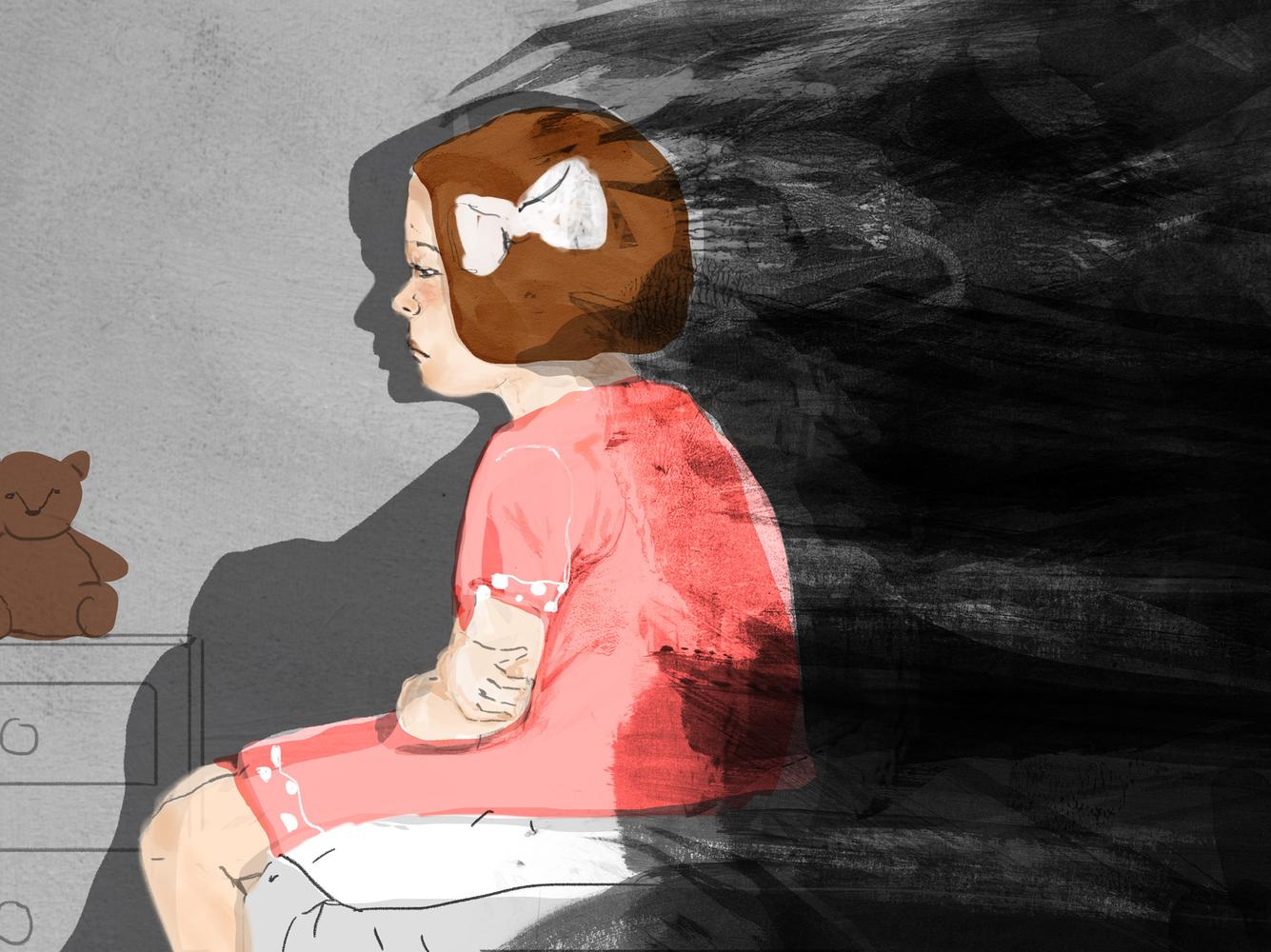
Can Family Secrets Make You Sick?

In the 1980s, Dr. Vincent Felitti, now director of the California Institute of Preventive Medicine in San Diego, discovered something potentially revolutionary about the ripple effects of child sexual abuse. He discovered it while trying to solve a very different health problem: helping severely obese people lose weight.

Felitti, a specialist in preventive medicine, was trying out a new liquid diet treatment among patients at a Kaiser Permanente clinic. And it worked really well. The severely obese patients who stuck to it lost as much as 300 pounds in a year.

"Oh yeah, this was really quite extraordinary," recalls Felitti.

But then, some of the patients who'd lost the most weight quit the treatment and gained back all the weight — faster than they'd lost it. Felitti couldn't figure out why. So he started asking questions.

First, one person told him she'd been sexually abused as a kid. Then another.

"You know, I remember thinking, 'Well, my God, this is the second incest case I've seen in [then] 23 years of practice,' " Felitti says. "And so I started routinely inquiring about childhood sexual abuse, and I was really floored."

More than half of the 300 or so patients said yes, they too had been abused.

Felitti wondered if he'd discovered one of the keys to some cases of obesity and all the health problems that go along with it.

That possibility made him very curious: What if having a bad childhood could affect health in other ways?

The idea that childhood abuse and neglect could affect adult health was a revelation to Felitti. But a poll released Monday (from NPR, the Robert Wood Johnson Foundation and the Harvard T.H. Chan School of Public Health) finds that the public widely believes this to be the case today.

How To Measure The Troubles Of Childhood
As he continued to explore the idea in the 1990s, Felitti got together with an epidemiologist named Dr. Rob Anda, who at the time was on staff at the Centers for Disease Control and Prevention. They came up with a set of questions to trace, in a larger group, how tough childhood experiences might affect adult health.

They called their work the study of Adverse Childhood Experiences, or ACE.

The 17,000 or so patients in this study were mostly middle-aged white people, upper- and middle-class, from San Diego. Felitti and Anda asked them to think back to their childhoods and list how many of 10 different types of adverse childhood experiences they'd had, including sexual, physical or emotional abuse; neglect; loss of a parent due to death, divorce or incarceration; mental illness in a parent; and drug or alcohol abuse by a parent.

The researchers wanted to get a sense of how being exposed to these different categories of adverse experience early in life might affect long-term health. So, on Felitti and Anda's score sheet, having undergone any one of those different categories of trauma or neglect before age 18 would add one point to a person's ACE score. Whether someone had been sexually abused one time, or dozens of times, the experience would count as one point in their study. Being habitually abused, and losing a parent to death, would add up to an ACE score of 2.

Even though Felitti and Anda were just getting a rough measure of the severity of the patients' experiences, when Anda's team at the CDC crunched the numbers, he was shocked.

One in 10 of the patients surveyed had grown up with domestic violence. Two in 10 had been sexually abused. Three in 10 had been physically abused.

"Just the sheer scale of the suffering — it was really disturbing to me," Anda remembers. "I actually ... I remember being in my study and I wept."

And then came the part where he found out what happened to all those people when they grew up: "very dramatic increases in pretty much every one of the major public health problems that we'd included in the study," he says.

Cancer, addiction, diabetes and stroke (just to name a few) occurred more often among people with high ACE scores.

Now, not everyone who'd had a rough childhood developed a serious illness, of course.

But, according to the findings, adults who had four or more "yeses" to the ACE questions were, in general, twice as likely to have heart disease, compared to people whose ACE score was zero. Women with five or more "yeses" were at least four times as likely to have depression as those with no ACE points.

When ACEs Are Very High
Carol Redding, one of Felitti's patients, answered yes to every single ACE question, and she ended up with an ACE score of 10. Ten out of 10.

Today Redding lives in a tidy, peaceful house outside San Diego. The walls of her home office are lined with degrees and certificates — at age 58, she's working on a Ph.D. From the outside, she's a success.

But inside — in her body as well as her mind, Redding says — she has been battling all her life.

She was diagnosed with post-traumatic stress disorder, as a result of those childhood experiences. "I had the flashbacks," she says, "the depression, the anxiety — Oh, my lord! Anxiety, like ... if it were a tangible thing living in the house with me, I'd need another room just to house that."

In childhood, she was diagnosed with high blood pressure. In adulthood, she had a thyroid condition and has survived three different types of cancer: leukemia, breast cancer and lymphoma.

Learning about the ACE study and her own results made Redding wonder if all of that — maybe even the cancer — might be partly connected to her troubled childhood. After so many years, all of a sudden, "all those very confused, very scattered puzzle pieces of my life just locked together in one big, amazingly clear picture," she says.

This revelation meant so much to Redding that she started a newsletter about the ACE study and later worked for the CDC, publicizing the study's results.

And she did all that because one big question kept nagging at her: Why didn't more people know about this research?

Medical Community Initially Skeptical
Anda says that when he and Felitti first published their results in the late 1990s, the response from the medical community was frustrating.

"I thought that people would flock to this information," Anda says, "and be knocking on our doors, saying, 'Tell us more. We want to use it.' And the initial reaction was really — silence."

In fact, it took a long time to even get the study published. A number of top medical journals rejected the article, Anda says, "because there was intense skepticism."

Sarah Floud, an epidemiologist at Oxford University in England, says she understands that skepticism and thinks it may still be warranted.

"An association doesn't necessarily mean that one thing causes the other thing," says Floud. She thinks doctors and patients should take care not to overinterpret an ACE score — it's not a crystal ball that predicts health or illness.

Rather, Floud says, this rough indicator of a difficult childhood is just one risk factor in the mix with lots of others, such as your genes, your diet, whether you drink heavily or smoke, for example — factors known to be strongly related to some illnesses, like heart disease, diabetes and cancer.

So if you're otherwise healthy, not a smoker or a drinker, and not obese, can childhood trauma alone increase the likelihood of diseases like cancer and heart disease?

"I don't think there's quite so much evidence for that," Floud says. "But that's not to say that it might not be true. It's just that ... that seems to be harder to prove."

Now, 15 years after the ACE study came out, some scientists are trying to connect the dots — to get a clearer picture of what exactly adverse childhood experiences do to the body and why the study results came out the way they did.

"Well, you've reshaped the biology of the child," says Megan Gunnar, a developmental psychologist at the University of Minnesota who, for more than 30 years, has been studying the ways children respond to stressful experiences. "This is how nature protects us," Gunnar adds. We all become adapted to living in "the kinds of environments we're born into."

And if you have scary, traumatic experiences when you're small, Gunnar says, your stress response system may, in some cases, be programmed to overreact, influencing the way your mind and body work together. Research in animals and people suggests that the part of the mind that scientists call "executive function" — thought, judgment, self-control — seems to be most affected, she says.

"Over time, especially when you're young, experiences of neglect and abuse and stress impair those circuits," Gunnar says. "You're less able to tell yourself not to eat the ice cream, or smoke the cigarette, or have that additional drink. You're less capable of regulating your own behavior. And that seems to be terribly important for linking early experiences with later health outcomes."

This growing body of research indicates that, right now, the health of millions of children is being shaped by abuse and neglect. As they grow up, these children will be more likely than other children to use behaviors like smoking, drinking and overeating to cope with stress.

Preventing childhood trauma in the first place, Felitti, Anda and their proponents now believe, is one of the biggest opportunities to prevent disease — and save billions in health care costs. It's an opportunity, they say, that American medicine and the health care industry still seem to be missing.

This story is part of the NPR series, What Shapes Health? The series explores social and environmental factors that affect health throughout life. It is inspired, in part, by findings in a poll released Monday by NPR, the Robert Wood Johnson Foundation and the Harvard T.H. Chan School of Public Health.

http://www.wnyc.org/story/can-family-secrets-make-you-sick/