EVERY SIGNATURE MATTERS - THIS BILL MUST PASS!

EVERY SIGNATURE MATTERS - THIS BILL MUST PASS!
CLICK - GOAL - 100,000 NEW SIGNATURES! 75,000 SIGNATURES HAVE ALREADY BEEN SUBMITTED TO GOVERNOR CUOMO!

EFF Urges Court to Block Dragnet Subpoenas Targeting Online Commenters

EFF Urges Court to Block Dragnet Subpoenas Targeting Online Commenters
CLICK! For the full motion to quash: http://www.eff.org/files/filenode/hersh_v_cohen/UOJ-motiontoquashmemo.pdf

Friday, October 14, 2016

"Thus in the haredi communities where the demand for gedolim is high, the threshold for making a gadol is comparatively low...."


 "Thus in the haredi communities where the demand for gedolim is high, the threshold for making a gadol is comparatively low. Soon after the passing of a reigning gadol, the best available talent is promoted to gadolhood. A gadol passes, and the next one is crowned; Kaddish is invariably followed by the exuberant singing of “Yamim al yemei melekh tosif” (Tehillim 61:7)—which is “Jewish” for “the king is dead; long live the king.”A gadol is not a naturally occurring resource found amidst the shtenders of a yeshiva. Rather a gadol is a social phenomenon characteristic of a community whose members are willing to talk, act, speak, and conceive of themselves as being led by a rabbi who is not merely smart and competent on a human scale, but who, on some level, has divine imprimatur if not direct divine inspiration."


The Market for Gedolim: A Tale of Supply and Demand

Sooner or later, almost every conversation about contemporary Orthodox Judaism veers into a discussion over the “gedolim.” Gedolim is the term used to describe leading sages who command reverence and allegiance of large segments of Orthodoxy, and whose ideological and halakhic pronouncements exert considerable influence over their communities. Moreover, within Orthodox discourse, invoking the gedolim serves as a powerful rhetorical tool. A viewpoint approved by a recognized gadol is automatically deemed in the bounds of acceptability, even if a majority find it wrong, novel, or idiosyncratic. By contrast, positions that fail to garner support of gedolim live under a perpetual cloud of suspicion, no matter how widespread amongst the laity.

On the whole, rabbis classified as “gedolim” are far more supportive of haredi viewpoints than of those associated with modern Orthodoxy. This  situation begets the question “why there are so few modern Orthodox gedolim?”In my experience, this conversation quickly turn to a question of supply. That is, who is that elusive Rabbi/Dr. who has the entire Talmud, halakhic codes and commentaries at his fingertips, who has mastered the literature of Jewish thought and philosophy, and who is also fully conversant in cognate fields such as the humanities, law, and social sciences? Centrist Orthodoxy seeks a gadol who understands the social and intellectual currents of the time, yet exudes authenticity as he articulates our timeless tradition in a timely manner.
These discussions typically have a strong “if only” quality to them. If only, someone would meet these lofty qualifications, centrist Orthodoxy would have its next gadol. If only there was a centrist Orthodox gadol, he would validate the approach, carry centrist Orthodoxy’s banner, articulate its halakhic and theological viewpoint, demonstrate how it is part of time-honored tradition, and defend its practices and ideology from inevitable attacks. If only there was a gadol, he would invigorate and re-energize centrist Orthodoxy with new religious inspiration and direction. 

Centrist Orthodoxy’s ongoing failure to find its share of gedolim, however, leads the community both to question whether it is even capable of producing gedolim, and alternatively, whether it should continue to feel inferior to communities that routinely produce them. Inevitably, the conversation shifts to critiquing the modern Orthodox educational system for failing to supply the needed quantity of gedolim.

The problem with the structure of this conversation is that it focuses almost exclusively on the supply side of the gadol market, while wholly neglecting the question of demand. A gadol is not a naturally occurring resource found amidst the shtenders of a yeshiva. Rather a gadol is a social phenomenon characteristic of a community whose members are willing to talk, act, speak, and conceive of themselves as being led by a rabbi who is not merely smart and competent on a human scale, but who, on some level, has divine imprimatur if not direct divine inspiration.

To be sure, on the supply side, anyone worthy of the title gadol must have certain baseline qualifications. But equally important, is that for someone to become a gadol—or, to borrow R. Nathan Kamenetsky’s felicitous term, for a gadol to be made—he must exist within a community searching for a gadol. There must be demand for a gadol, because a gadol is made at the point where the supply and demand curves meet.

Thus in the haredi communities where the demand for gedolim is high, the threshold for making a gadol is comparatively low. Soon after the passing of a reigning gadol, the best available talent is promoted to gadolhood. A gadol passes, and the next one is crowned; Kaddish is invariably followed by the exuberant singing of “Yamim al yemei melekh tosif” (Tehillim 61:7)—which is “Jewish” for “the king is dead; long live the king.”

In sports terminology, a haredi gadol is like a third baseman. Ideally, the position is manned by an all-star, or better yet, a Hall-of-Famer. But if none are available, then a solid regular will have to do. And while no team wants to field a replacement-level player, lacking better alternatives, that is what the team will do. Likewise, a gadol will be crowned because the position needs to be filled, or as the Sages put it: “Jephthah in his generation is as Samuel in his generation.

For this reason, it is not necessary for every hasidic rebbe to be Hall-of-Fame or even of all-star caliber. Rather, the rebbe has a role to play and he plays it. The salient point, however, is that the role is created by communal demand and is filled with (hopefully) the best available talent the community can produce.

To let this sink in, note just how important the communal response and expectations are to the making of the gadol. Upon being crowned, the gadol is addressed in the third person, and stories attesting to his greatness circulate in the subculture. Everyone stands to attention when he walks into a room, and he takes on a distinctive style of dress. These critical components of the making of a gadol have little to do with a gadol’s erudition or qualifications, but speak volumes about the communities’ demands and expectations of what a gadol is.

Each of these stage management techniques reflects the community’s desire to view itself as being led by someone who is different and apart. A gadol is someone whose intellect, piety, pedigree, or some combination thereof (this is where differences between various haredi subgroups become relevant), is keyed into the divine will at a qualitatively different level than other pious and learned members of the community. This qualitative difference is construed as authority, which generates the obligation to follow the gadol’s vision. In broad terms, this describes the state of affairs in the haredi community.

Turning to centrist Orthodoxy, the threshold for gadolhood is considerably higher. This community is both willing to hold out longer without a gadol and maintain higher standards for crowning one. To return to the sports metaphor, centrist Orthodoxy will only fill the position with a Hall-of-Famer. If there is a gadol worthy of the title, he will be treated as such, but, as many sports teams have learned, nothing assures Hall-of-Fame talent can be drafted. In these situations, several trends are likely to emerge. First, the shadow of previous gedolim is cast longer, which is why one can still find arguments about what the Rav (Rabbi Joseph B. Soloveitchik, 1903-1993), or, more recently, Rav Aharon Lichtenstein (1933-2015) would have said about subject X,Y, or Z. Likewise, the role of authorized interpreters of these prior gedolim becomes more important—here, too, we see the proliferation of different “versions” of the Rav that flowered amongst his students in the wake of his death. Finally, the community is likely to “borrow” Haredi gedolim who share certain sensibilities with the centrist community. R. Asher Weiss’s status in decidedly centrist Orthodox communities illustrates this phenomenon.

Despite their differences, the centrist and haredi communities use a fundamentally similar model of gadol-leadership. To be sure, R. Lichtenstein and the Rav stretched the mold of who a gadol could be, what a gadol might say, and what he might look like. But given how they spoke and conducted themselves, the portraits that R. Lichtenstein painted of his own rebbeim—Rav Yitzhak Hutner, Rav Ahron Soloveichik, and the Rav—and, more importantly, how disciples of the Rav and Rav Lichtenstein speak of their rebbeim, makes it clear that we are dealing with variations on how gedolim are processed in the haredi world. Put differently, the stories that alumni of Yeshivat Har Etzion (“the Gush”) tell about R. Lichtenstein are far more similar to the stories that Beth Medrash Govoha (“Lakewood”) alumni tell about R. Aharon Kotler than to stories that Harvard alumni tell about their favorite deans and professors. So while haredi and centrist Orthodoxy conceive of different species of gadol, they belong to the same genus. Each community understands gedolim and their authority to define halakha and its practice in substantially similar ways.

What then of the liberal Orthodox community? Does it have a similar idea of rabbinic leadership embodied by a gadol? Perhaps we can reframe this broader question in more concrete terms: Is Rabbi Prof. Daniel Sperber a liberal Orthodox gadol?

Examined from the supply side, there is a strong case in favor of R. Sperber’s gadolhood. Over his long career, he has demonstrated vast knowledge of the rabbinic and halakhic corpus, and in some areas is unsurpassed by anyone alive today. His books and articles display a mastery and virtuosity that rivals and often exceeds that of many rabbis the haredi community regards as gedolim.

And yet, to ask the question is almost to answer it. In my view, he is not processed as a gadol—not because of any lack in his Torah knowledge, but because he does not live or operate within a community that seeks a gadol or that thinks it needs one. His formal job title is university professor—a respected position for sure, but not one that inspires large numbers of people to seek and follow his advice on central matters of religious life. Nor is there a community that constructs its religious identity based on the values that R. Sperber exhibits and espouses. As far as I can tell, R. Sperber is viewed as a sage advisor, a scholar of the halakhic tradition, and in some cases even as a posek, but there is no community that stakes its halakhic identity on R. Sperber’s authenticity.

Occasionally one hears this impression expressed—incorrectly, in my view—as if people only ask R. Sperber questions when they are looking for a permissive ruling, but are not interested in hearing his more stringent interpretations. This may be true in a narrow sense, but misses a key structural point. The central issue is that there is no coherent community that sees itself as being fundamentally bound to how R. Sperber views the halakhic world or that sees his authority as something beyond that of a learned scholar. Thus, while people may ask for his ruling on a contested subject, this is because the practice at issue is sufficiently at odds with existing practice that the approval of someone with suitably broad shoulders—a gadol—is required. The reason that this move rarely convinces those invested in the culture of gadolhood, however, is that a gadol cannot be created ex nihilo for a limited and specified purpose. Gadolhood is less about the individual erudition of a given rabbi and more about a social fact, reflecting the experience of a community bound by a concrete conception of Torah, halakha, and rabbinic authority. This sense of authority cannot be manufactured by simply turning to a rabbi to ask a few questions here and there, no matter how great the rabbi or how significant the individual question. Thus, even should the market supply many potential gedolim, a community will not find a gadol unless it truly demands one.

Allow me to offer another example. When viewed from the supply side, there is a good argument to be made that my close friend, R. Ethan Tucker, head of Mechon Hadar, is qualified to be a halakhic decisor and, in time, perhaps a gadol of the community he is building. On occasion, Ethan and I have discussed how his views on a given halakha, or on Halakha as a whole, might penetrate the Orthodox discourse. My own view is that the Orthodox community will be forced to take him seriously when there are identifiable communities committed to living their Jewish lives in accord with his halakhic worldview. However, as long as the halakhic vision of Mechon Hadar remains a niche project, limited to those in the yeshiva’s direct orbit, the broader rabbinic world will feel little need to take it into account. As the Sages put it, “ein melekh belo am.” There is no king without a people.

The different attitudes towards gedolim are indicative of what is emerging as the deepest fault line within the Orthodox community. As noted, for all the differences between the centrist and haredi communities, they share similar concepts of gadolhood and the role of a gadol within the community. Less clear, however, is whether liberal Orthodox communities share in this concept or are looking for the same thing. After all, central to the idea of a gadol is submission to someone who stands apart from the community and whose authority is qualitatively different from the other forms of authority experienced in modern life. This norm of submission, however, runs deeply counter to the democratic social ethos of the American educated class, and in particular, the socially mobile, elite college-educated slice of American life that typifies liberal Orthodoxy.

Therefore, it is not surprising that the fault line between liberal Orthodoxy and other segments of the community runs just to the left of Yeshivat Har Etzion. Though liberal by yeshiva standards, the Gush has been able to produce and sustain a culture of rabbinic authority and gadolhood that is structurally similar to what exists in the haredi world. True, it is a less authoritarian model which respects the intellectual autonomy of its constituents far more than in haredi circles. Moreover, there is no doubt the success of the Gush model is due mainly to R. Lichtenstein’s once-in-a-generation intellectual mastery of the rabbinic corpus and his unsurpassed personal integrity, rather than the reverence of his pedigree, charisma, or fuzzier notions of a spiritual aura that often accompany haredi gedolim. What made him a centrist Orthodox —as opposed to haredi—gadol is that he was perceived as authoritative rather than authoritarian.

And yet, when R. Lichtenstein reached a decision or articulated a position, the entire social, moral, and intellectual force of the Gush, along with its subsidiary communities, and the secondary and tertiary elites, opinion makers, and influencers who function as part of its social sphere coalesced around the ruling and treated it as binding—even when individuals disagreed or wished things were otherwise. This impression, the sense of living under an authority, both pre-existed and outlasted any specific issue, and applied whether R. Lichtenstein staked out a position perceived to be on the left or on the right of the Orthodox consensus. R. Lichtenstein’s authority is a social fact that pervades the fabric of the community and in many ways, is what constitutes the Gush, together with its students and satellites as a community. Moreover, the binding nature of R. Lichtenstein’s views is tied to the fact that his mastery and understanding of halakha transcended that of even his most learned disciples. At some point, this quantitative superiority transformed into a view amongst his students that R. Lichtenstein attained a qualitatively different role within the halakhic tradition than of ordinary rabbis or scholars.

The question is whether the liberal Orthodox community can function under this model. My sense is that the answer is no. But whereas in the past communities may have answered no as a concession to the laxity of the laity, the emergence of open Orthodoxy as a movement suggests that this default “no” may be morphing into something of a prouder and ideologically driven “NO!” The rift between centrist and open Orthodoxy, is thus not only about who is a gadol in the narrow sense, but about the nature of gadolhood and the structure of rabbinic authority more broadly. This can be seen both from the fact that many lay led partnership minyanim reject the idea of having a rabbi as a matter of principle, and even from the founding statement of the International Rabbinic Fellowship, which states:

The alternative and preferred model of rabbinic authority is one in which that authority is not consolidated into the hands of a few, but proliferated into as wide a circle of responsible rabbis as possible. In this model, the role of the rosh yeshiva is not to control his students, but to empower them to think for themselves, to assume responsibility, and to act on their own.

The IRF’s vision of “horizontal” rabbinic authority stresses the primacy of local, close-to-the-people authority chosen by the congregation at the expense of the naturally arising hierarchies of rabbinic authority that exist in haredi and centrist Orthodoxy. Moreover, at least in this statement, there is no sense that the degree of halakhic authority required modulates in response to the complexity or stakes of the question at hand, the reputation or authority of the individual decisor, or the degree to which the ruling runs counter to longstanding practices. Instead, “the local rabbi is encouraged to have the autonomy to think for himself and to take direct responsibility for his congregation and community,” because only he “can fully appreciate the nuances of a situation as it arises.”

This line of thought contrast significantly with assumptions of the rabbinate of  centrist Orthodox. Though centrist Orthodoxy likewise stresses the unique role that a rabbi can play in the lives of his constituents, in the case of centrist Orthodoxy (and even more so in haredi Orthodoxy), the rabbi also functions as the local extension of a hierarchical network of rabbinic governance where the gedolim sit at the top From the communal perspective, choosing a rabbi is not only about who will deliver the sermon each Shabbat morning, but is a choice of the rabbi’s “upstream” rabbinic network and the understanding that the local rabbi may become the vehicle who presses the authority of the recognized gadol on the lay community.

The liberal Orthodox critique of the centrist model is that in an era of mass education and radically democratic and non-hierarchical attitudes, rabbinic authority must be founded on well-defined, rational qualities, rather than the metaphysical and oracular qualities typical of the gadol discourse or what some call gadolatry. The argument is that essential to the modern condition is understanding that it is childish to think someone who wears a funny hat, dresses in clothes ill-suited to the local climate, and is addressed through awkward sentence structure is more elevated or connected to authentic divine truths than those who we engage forthrightly and travel among us.

I admit to having deep sympathies for this view, but I also place the burden on liberal Orthodoxy not only to supply an alternative theoretical model to the paradigm of gadolhood, but to demonstrate that its vision is attainable within the current social reality. There is little doubt that among a self-selecting group of highly educated and engaged members, it is possible to create a sense of commitment to halakha without recourse to gadolhood. Indeed, as I explore in my forthcoming book, Halakhah: The Rabbinic Idea of Law (forthcoming, Princeton University Press), one of the most sublime experiences known to those who frequent the beit midrash is how direct encounter with the texts and ideas of the Talmudic corpus creates a compelling mixture of submission to the authority of halakha which emerges from intellectual exploration and significant autonomy. Here, there is little need for the input of gedolim or any other rabbinic hierarchy or establishment. But as one moves to broader populations, and to communities who are less engaged and Jewishly educated, the model becomes harder to sustain. In a radically autonomous culture, it is very difficult to promote voluntary obedience to a demanding system of law whose norms are out of sync with contemporary mores. Particularly in (post) modernity, the sense of commitment to and commandedness by halakha must emerge from somewhere. And if I am correct in sensing that the liberal Orthodox demand curve for gedolim is almost non-existent, then no matter how long we wait, nor how erudite the rabbi, a liberal Orthodox gadol is extremely unlikely to emerge.

This, to my mind, is the critical question in the ongoing Orthodoxy wars. To the extent that liberal Orthodoxy has moved away from the gadol-based paradigm, its critics are right to ask: how will it generate a sense of halakhic authority?

If liberal Orthodox communities can create a structure of commandedness that feels consonant, even if not identical, with classical forms, then eventually other Orthodox subgroups will come to recognize it—much as centrist Orthodoxy eventually gained the begrudging acknowledgment of haredim. But if it fails to do so, then claims that liberal Orthodoxy is engaged in a qualitatively different project than Orthodoxy will ring true, and comparisons to the trajectory of Conservative and Reform Judaism may yet prove accurate. So while I am rooting for liberal Orthodoxy’s success, it bears the burden of proving its vitality. From where I sit, the jury is still out.
***
An earlier version of this article was delivered at the “Orthodoxy, Halakhah, and Boundary Anxiety” conference hosted by the Shalom Hartman Institute of North America in March of 2016.

Thursday, October 13, 2016

Do you really think you will always be safe in America? There has been an increase in anti-Jewish incidents in America, a 50% rise in violent antisemitic attacks in America and antisemitic incidents at colleges and universities nearly doubled last year.

For the SIN of American JEWS SILENCE AND INDIFFERENCE


There are about six million Jews in America.  Almost the same number who were murdered by the Nazis with the collusion (ignorantia affectata) of Christian Europe and America – a country that was not terribly open to Jews at that time.

There are six million of you in a country of 350 million.  In a world of seven billion souls.

Do you really think you will always be safe in America? 
 
Really?

There has been an increase in anti-Jewish incidents in America, a 50% rise in violent antisemitic attacks  in America and antisemitic incidents at colleges and universities nearly doubled last year.

Are you paying attention to the Jews in Europe? 

Europe, where a mere 70 years ago Jews were murdered for being Jews, Jews are now fleeing.  Jewish immigration to Israel from Western Europe reached an all-time high in 2015.
The European Jewish Congress has publicized a shocking poll:

“A third of the European Jews think of emigrating”. 
 
That is 700,000 people. The European Jews are paying attention to Jew hatred.

 
Too many of my Jewish brothers and sisters in America remind me of the Enlightened German Jews in the 1920’s and 1930’s;  so assimilated in German culture  that when the drums of war began to make their way across the civilized world these assimilated German Jews, German before Jew – never thought the Nazis would go after them.  They told their friends they were being caught up in fear.  After all, they were German, living in such a cultured, enlightened country.

By the time they realized the error of their thinking it was too late.  The enlightened, civilized, assimilated German Jews disappeared in a puff of smoke with all their brethren.

American Jews, what makes you think you are so safe?

You have accepted-nay-embraced an anti-Jewish, antisemitic government for almost eight years.  The sound of the drums has been echoing through the land, yet you refuse to hear it.  It is in the universities and all over social media where Jew hatred is accepted;  normalized.

 Kobane. credit: BBC.
You have empowered a President, leading a government who turned away from Syria burning, who knelt before the Iranians, abandoned his own people in Libya, while spending his most precious time attacking Israel.  The east coast of America may have been under water, but nothing was going to get in the way of President Obama’s tongue lashing Israel for the audacity of building homes on her land.

He has spent eight years trying to undermine the only democracy in the Middle East all the while making “decisions” that have set the Middle East and North Africa on fire.  Your President is promoting Hillary, corrupt by any standard, to protect his legacy which includes the dismantling of Israel-the only safe place for Jews.  And it is dismantle.  If he had his way Israel’s borders would be indefensible and the Jews living in Judaea/Samaria would be ethnically cleansed.

And, yes, Mr. President-removing 400,000 Jews from a state to make it Jew-free is the classic definition of ethnic cleansing.

Dear Jews of America if there had been an Israel in 1940, six million of your brothers and sisters and their myriad descendants would be here today.

You will vote for her because you are just “too good” for Trump.  Yet he has no history of Jew hatred or anti-Israel rhetoric or actions.  He’s just not polished enough for you.  No “deplorable”are you.

He’s no Hillary.  Well Jews of America, thank God for that.  And if you cared about the past and if you want to be safe in the future in a strong America that welcomes you, then wake up from that Tikkun Olam your reform Rabbis have been feeding you and look around.


“Death To America” credit: Cambrian Dissenters
The Democratic Party wants to bring in hundreds of thousands of people who hate Jews.  Trump does not.  The Democratic Party supports organizations like ‘Black Like Me’  that has delivered its manifest and it is manifestly antisemitic.

During Yom Kippur you were reminded that we are but a remnant of what was and what could have been if not for the systemic hate for the Jewish people, the messengers of an ethic of compassion.

What have you done to protect our people and the Jewish homeland? 

What have you done to teach your children about our inheritance and the need to protect our people and the Jewish homeland? 

Are you even acquainted with our history, our contributions to humanity, that we the Jewish people gave the ethic to the world that underpins democracy?

The Genocide of 15+ Million Germans by the Jews - Jew World Order | Jew World Order.
The Genocide of 15+ Million Germans by the Jews – Jew World Order | Jew World Order.
Your children are depending on you. Don’t let them down. Don’t be like those enlightened, assimilated German Jews who refused to believe what was said and done; until it was too late.

http://jewsdownunder.com/2016/10/13/for-the-sin-of-american-jews-silence-and-indifference/

Monday, October 10, 2016

Rabbi Avraham Yitzchak HaCohen Kook, the first Ashkenazi chief rabbi of what became Israel, who once wrote that just as there is a confession for the bad, there should be a confession for the good.

This Yom Kippur, try confessing the good things you’ve done


(JTA)

Yom Kippur is a time for confession, as Jews flock to synagogues to recite their sins in a lengthy litany known as the “Viduy.” Striking their hearts, the congregation chants: “we have trespassed, we have dealt treacherously, we have robbed, we have spoken slander….”

The goal of the ritual is to inspire the confessor to do better in the year to come. But what if the opposite is true? What if,  all that confessing leads “to despair, to loss of confidence, even to loss of belief in one’s capacity to do good”?

 Rabbi Avraham Yitzchak HaCohen Kook, the first Ashkenazi chief rabbi of what became Israel, who once wrote that just as there is a confession for the bad, there should be a confession for the good.

“A person should also be joyous concerning the good he or she has done. It follows that just as there is a great benefit to self-improvement through confessing one’s sins, so is there great benefit to confessing one’s good deeds,”

Below is the “opposite” confessional:

אָהַבְנוּ, בֵּרַכְנוּ, גָּדַלְנוּ, דִִִּבַּרְנוּ יֹפִי
We have loved, we have blessed, we have grown, we have spoken positively.

הֶעֱלִינוּ, וְחַסְנוּ, זֵרַזְנוּ
We have raised up, we have shown compassion, we have acted enthusiastically,

חָמַלְנוּ, טִפַּחְנוּ אֱמֶת
We have been empathetic, we have cultivated truth,

יָעַצְנוּ טוֹב, כִּבַּדְנוּ, לָמַדְנוּ, מָחַלְנוּ
We have given good advice, we have respected, we have learned, we have forgiven,

נִחַמְנוּ, סָלַלְנוּ, עוֹרַרְנוּ
We have comforted, we have been creative, we have stirred,

פָּעַלְנוּ, צָדַקְנוּ, קִוִּינוּ לָאָרֶץ
We have been spiritual activists, we have been just, we have longed for Israel,

רִחַמְנוּ, שָקַדְנוּ
We have been merciful, we have given full effort,

תָּמַכְנוּ, תָּרַמְנוּ, תִּקַּנּוּ
We have supported, we have contributed, we have repaired.


http://www.jta.org/2016/10/05/news-opinion/the-telegraph/this-yom-kippur-try-confessing-the-good-things-youve-done

Sunday, October 09, 2016

End This Barbaric Ritual!

A Raw Deal for Chickens, as Jews "Atone for Sins"


PLEASE WATCH THE VIDEO BELOW FROM THIS YEAR'S PAGAN RITUAL DONE BY JEWS: For those of you who still cling on to the belief that this Pagan ritual we adopted from our European Neighbours during the Middle Ages is ok, then take a look at the outcome of this barbaric Act. This was taken by the wife of a friend of mine who rightfully thought that it should get as many views as possible.

https://www.facebook.com/tedmomax/videos/vb.1448396179/10211027482110166/?type=2&theater


A Hasidic Jewish woman performed a penitential ritual, meant to transfer a person’s sins to a chicken, by holding the bird over her head on Thursday

A hen squirmed in Joel Lubin’s hands, but he held on and raised it over the head of his wife at noon on Thursday, as they stood on a sidewalk in the Williamsburg section of Brooklyn.

As Mr. Lubin turned the bird in three small circles over her head, his wife read from a laminated card.

 In front of her was a double-wide stroller with two children on board. Behind a barricade a few feet away were about 100 plastic crates full of live chickens. It may never be a good week to be a chicken — that is a deep, deep question, beyond the remit of this column — but let us say that the first days after the Jewish New Year are a particularly bad time to be one in parts of Brooklyn.

Between Oct. 4, the end of the Rosh Hashana observance of the new year, and Yom Kippur, the day of atonement starting the night of Oct. 11, an estimated 50,000 chickens will be sacrificed in Brooklyn as part of a penitential ritual performed by some Hasidic Jews.

The practice, called kaporos or kapparot, is meant to transfer a person’s sins to the chicken. “If you’re going to die during the year, maybe the chicken will die instead,” Mr. Lubin said. The chicken he rotated over his wife’s head was brought into the Cohn Live Poultry shop on Flushing Avenue, where it was slaughtered, made kosher and packed on foam butcher trays. “It goes to the poor,” Mr. Lubin said of the chicken.

Mrs. Lubin, who declined to provide her given name, had enlisted her husband to handle the bird. “I really don’t like touching animals,” she said. “You can have someone else do it, but you say the prayer.”

To meet the demands of penitents in Brooklyn, slaughter operations are set up every year in parking lots and other open spaces, often run by congregations and other organizations to raise funds.

Last year, animal rights activists sued New York City, arguing that it was not enforcing health, sanitation and other regulations around the practice. A judge ruled that there was no clear evidence of a public nuisance. A congregation in a Detroit suburb won a case last year that allowed it to proceed with kaporos. Two similar suits are pending in Southern California.

 Critics also say that the chicken ritual is tradition, not holy law, and kaporos can be carried out satisfactorily by donating money.


Some kaporos practitioners swing the birds overhead, gripping the wings or legs, but the people outside the Cohn store on Thursday kept a firm handle around the midsection.

Because Cohn sells live poultry year round, the business carries out the slaughter and butchering with a minimum of gore.

At a booth set up in the street, people pay $17 for a ticket marked “male” or “female” and then pick up their bird in a canopied area. Women are issued hens, and men get roosters, explained Rifki D., who did not want to give her last name.

“If you’re pregnant, you take an extra one,” she said. “For yourself you take a girl chicken, then you take a boy chicken in case that’s what you’re having.”

The chicken becomes not only a surrogate for life and death, but for less mortal matters. “There are some who might give it a light kick,” Rifki D. said. “The thinking is, if I’m going to be kicked during the year, let it be the chicken.”

Included in the lawsuit filed last year were pictures of chicken carcasses that had been disposed of in the regular city garbage, but it seems that birds typically are used for food. “We are all here for a purpose, and the chicken is here for a purpose,” said Yossi Cohn, 32, grandson of the founders of the poultry store. “We eat them.”

The early days of kaporos are dominated by women, Mr. Cohn said. The men want to wait until the last moments before Yom Kippur to carry out the ritual, hoping to clean up as many sins as possible before atonement. The store will remain open all night on Monday to accommodate those coming in the final hours. “The men have more sins,” Mr. Cohn said.

Many people purposely leave their chickens with the store, knowing that they will be given to people in need or to organizations that could use them.

So maybe not a good week to be a chicken, getting stuck with human failings. But not so bad for hungry people without money in their pockets. Just inside the door to the store, a shopping cart was filled to the brim with plastic-wrapped chicken parts. The stickers listed the price: Free.


http://www.nytimes.com/2016/10/07/nyregion/a-raw-deal-for-chickens-as-jews-atone-for-sins.html?emc=edit_tnt_20161006&nlid=32999454&tntemail0=y

Friday, October 07, 2016

You can spit on the White House carpets and steal every secret we have. You can bomb our cities and hack our databases. You can blow up anything you like and threaten anyone you will, but you had better not lift a drill near Gilgal, where Joshua and a few million escaped Hebrew slaves pitched their camp.


  The problem is an old one. Pharaoh struggled with it. So did Hitler. And so does Hamas. What do you do when there are too many Jews living. The answer is usually obvious.


The Deadly Israeli House


There are few weapons as deadly as the Israeli house. When its bricks and mortar are combined together, the house, whether it is one of those modest one story hilltop affairs or a five floor apartment building complete with hot and cold running water, becomes far more dangerous than anything green and glowing that comes out of the Iranian centrifuges.

Forget the cluster bomb and the mine, the poison gas shell and even tailored viruses. Iran can keep its nuclear bombs. They don't impress anyone in Europe or in Washington D.C. Who can even think about genocide in Africa in the presence of the fearsome weapon of terror that is an Israeli family of four moving into a new apartment.

Sudan may have built a small mountain of African corpses, but it can't expect to command the full and undivided attention of the world until it does something truly outrageous like building a house and filling it with Jews. Since the Sudanese Jews are as gone as the Jews of Egypt, Iraq, Syria and good old Afghanistan, the chances of Bashir the Butcher pulling off that trick are rather slim.

Due to the Muslim world's shortsightedness in driving out its Jews from Cairo, Aleppo and Baghdad  to Jerusalem, the ultimate weapon in international affairs is entirely controlled by the Jewish State. The Jewish State's stockpile of Jews should worry the international community far more than its hypothetical stockpiles of nuclear weapons. No one besides Israel, and possibly Saudi Arabia, cares much about the Iranian bomb. But when Israel builds a house, then the international community tears its clothes, wails, threatens to recall its ambassadors and boycott Israeli peaches.

You can spit on the White House carpets and steal every secret we have. You can bomb our cities and hack our databases. You can blow up anything you like and threaten anyone you will, but you had better not lift a drill near Gilgal, where Joshua and a few million escaped Hebrew slaves pitched their camp.

Some may think that genocide or nuclear weapons are the ultimate weapons, but as we see, time and time again, the ultimate weapon is a hammer and a fistful of nails in a Jewish hand.

Everyone has their standards. Even the international community. There are things that we all cannot abide. And the one thing that everyone will stand up against or sit down in opposition to is the Israeli house.

White House officials are insisting once again that Netanyahu insulted Obama by authorizing the building of 98 housing units. This is the worst Israeli crime since that time when the city of Jerusalem passed some houses through one stage of a multi-stage approval process while Biden was visiting.

Hillary called it an insult and spent two hours yelling at Netanyahu over the phone. Axelrod declared it an affront. Biden was so furious that he refused to come down for dinner until an hour later. For weeks the media howled that Netanyahu had humiliated Obama through the dastardly act of allowing one of the country's mayors to approve housing while the sacred presence of Joseph Robinette Biden Jr was intersecting with Israeli airspace.

While China may threaten war against the United States and North Korea may test its nukes, but only Israel has managed to achieve official recognition for "insulting" Obama, without even trying, proving once again that the Jewish race is so talented that it often achieves things that other people may only dream of, without even realizing that they are doing it.

Now that Netanyahu has gone to the mattresses, literally, by authorizing new housing, the media has begun braying that Israel has insulted Obama all over again. They say that every time a bell rings, an angel gets his wings. But every time an Israeli jackhammer roars, Obama stands, like that famous trash-mourning fake Indian, off Highway 1 between Jerusalem and Tel Aviv, with a tear slowly making its way down one glistening cheek at the sight of another insulting Israeli house.

According to the New York Times, which is never wrong, building more houses makes peace impossible. Peace, which is not in any way obstructed by rockets, suicide bombers, unilateral statehood bids and declarations of war, comes up against only one obstacle. The stout unyielding wall of the Israeli house.

You can shell Israeli houses, bomb them and break inside to massacre the people living inside, but then after all that, Israel goes and builds more of those damn things.

Hamas shoots thousands of rockets and Israel builds thousands of houses. But Israeli houses generally stay where they're built, while Hamas rockets are as likely to kill Gazans as they are to put holes in the roofs of those dastardly houses. And in the arms race between houses and rockets, the Israelis appear to be winning. And that's not good for peace. If Israelis get the dangerous idea that they can just keep building houses and outlast all the talented rocketeers who spend their time with the Koran in front of one eye and the Anarchist's Cookbook in front of the other, then what hope is there for peace?

That is why no one cares much about Hamas rockets, which only kill Israelis, who most reasonable people in London, Paris and Brussels think have it coming anyway, but get into a foaming lather about an Israeli house. Killing Israelis has never been any obstacle to peace. Twenty years of killing Israelis has not dissuaded a single Israeli government from sitting down at the table to dicker with the terrorists. But an Israeli family living in a house is holding down territory that it will be harder to then cede to terrorists when the angels have blown their horns, the seas have all gone dry and peace is carried in on a golden platter by 72 virgins accompanied by their flying suicide bomber mates.

The problem is an old one. Pharaoh struggled with it. So did Hitler. And so does Hamas. What do you do when there are too many Jews living. The answer is usually obvious.

Israel's peace partners tried to go back to the time-honored Egyptian tradition of throwing all the Jews into the sea. But despite an entire officer corps temporarily "on leave" from the armed forces of the United Kingdom, they only got as far as half of Jerusalem, where they blew up every synagogue, and took the West Bank of Israel, or as the non-indigenous Zionist invaders with no roots in the region call it, Judea and Samaria.

Nineteen years later, Israel's Peace Partners had traded in their British officer corps for a Soviet officer corps, and lost Jerusalem, the West Bank and Gaza, proving that when it came to killing Jews, the Communists were better at it when the Jews weren't shooting back. Ever since then the world, or those portions of it populated entirely by diplomats and the better class of journalists, has been urging Israel to give back the land to an imaginary country to be populated entirely by terrorists.

This peace plan, which has worked as well as fighting fire with gasoline, has not in any way been endangered by two decades of terror, but trembles down to its toes every time an Israeli hammer falls on an Israeli nail in the vicinity of Jerusalem. Because that land must go back so that rockets can be shot from it into Israel, so that Israel can invade it and reclaim it, and then sit down for another peace process to return the land from which the rockets will be fired, which will be invaded, which will be given back... for peace.

And Israeli houses endanger this cycle of peace and violence. They endanger it by creating "facts on the ground", a piquant phrase that only seems to apply to houses with Jews. Muslim houses in no way create facts on the ground, even though they are built out of the same material and filled with people. Or perhaps they create the good kind of facts on the ground. The kind of preemption of negotiations that the professional peacemakers approve of.

But it's hard to know what exactly the peacemakers approve of, because their arguments and their definitions keep changing all the time. All that we know is that they disapprove of Israeli houses.

The United States repeatedly assured Israel that Jerusalem would in no way be endangered by the peace process. No less a personality than Joseph Robinette Biden Jr. co-sponsored three Senate resolutions urging that Jerusalem should remain Israel's undivided capital. Then like all good politicians, he was horribly offended when the Israelis actually took him at his word.

Obama gave an election speech four years ago where he declared that Jerusalem should be undivided. A day later he explained that he meant "undivided" in some spiritual sense that did not preclude it from actually being physically divided.

UN Chief Ban Ki-moon has declared Israeli houses to be an "almost fatal blow" to the peace process. It is, of course, only an "almost fatal blow"  because the peace process, like Dracula, cannot be killed. Israeli houses, fearsome as they may be with their balconies and poor heating in winter, are never quite enough to kill it.

Like the monster of a horror movie, the peace process always comes back and no matter how many blows the Israeli house delivers to it, a year later there's a sequel where the Israeli house is being stalked by the peace process monster all over again.

The army of lethal Israeli houses, which may not be built for another five years, if ever, seem formidable in the black newsprint of the New York Times, in the fulminations of Guardian columnists and the shrill talkingpointation of CNN talking heads, but its actual potency is limited to housing Jewish families and infuriating international diplomats and their media coathangers.

Europe is furious, Obama is seething, the UN is energized, and somewhere in Tehran, the Supreme Leader of Iran wipes the grease out of his beard and wonders what he could do to get this much attention. He briefly scribbles down some thoughts on a napkin but then dismisses it as being too implausible. As much as it might get the world's attention, there is just no way Iran can put up apartment buildings in Israel. 

http://sultanknish.blogspot.co.il/2016/10/the-deadly-israeli-house.html

Thursday, October 06, 2016

Former Prime Minister Yizhak Rabin called Peres unscrupulous and untrustworthy, offering that he could not believe a word spoken by him.


Beyond the accolades: A sobering retrospection of Shimon Peres


Shimon Peres, with his fondness for a universalism – an offshoot of his socialist, and later global, inclinations – that was the hallmark of the Left, offered us a New Middle East where both sides were wrong. Murderer and victim alike.

Quoted in The Jerusalem Report in May 1997, Shimon Peres quipped, “In Argentina, the home of the tango, you know that in order to dance, well, you have to close your eyes and let the romance begin.…Peace is a romantic process.” Perhaps, but it takes two to tango, and when he passed away as the 93 year-old venerable statesman who held virtually every important political post in Israel’s history, his dance card was still empty.

“For me, dreaming is simply being pragmatic.” Words which captured the essence of Shimon Pere’s approach to bringing peace to the Middle East, and ones that might more suitably belong on a poster found on the walls of a college dorm. But not in the real Middle East, where they have little political currency.  Shimon Peres died as he lived. Dreaming. And tragically, clinging to a misbegotten notion of an elusive peace that was victim to an ongoing Arab war against a Jewish people.  

Driven by a philosophical outlook that fashioned his politics, Peres believed that democracy, coupled with science-and technology-based economies, would by nature produce peace. His dream was as naïve as it was ambitious.  He was forever proud of his place with the Socialist International, an organization that was befittingly referred to by the Americans for a Safe Israel as one “of little influence and less morality.”

Often rejecting the very element that drove other Jewish leaders in a post-Holocaust world, he once confessed that, “It is a great mistake to learn from history. There is nothing to learn from history.”

He doubled-down: “Israeli children should be taught to look to the future, not live in the past. I would rather teach them to imagine than to remember.” No, the words were not those of John Lennon, but the utopian utterance of Shimon Peres who envisioned a “New Middle East.” It was a dream not shared by the other side, an enemy that was actually comfortable falsifying history simply to have it fit their own narrative.

But history has taught us that dreams can usher in illusions, and illusions can readily turn to delusions. Or worse – self-delusions. Described once as a “purveyor of delusions to a people desperately grasping for hope,” Shimon Peres, with his fondness for a universalism – an offshoot of his socialist, and later global, inclinations – that was the hallmark of the Left, offered us a New Middle East where both sides were wrong. Murderer and victim alike.

As the last of the generation of Israel’s founders, he entered politics in 1959 and subsequently served as prime minister, twice; as well as minister of defense, foreign affairs, and finance, and finally, unable to vacate the stage, in the ceremonial post as its president. He needed the spotlight as much as he craved an audience and an interview.

Although he never served in the IDF – something that he was often criticized for by the average man in the streets – his political opponents remembered well the roles that the much younger Peres played with Israel’s military industry. There were many. Most notable, he skillfully befriended the French, and played a pivotal part in establishing Israel’s nuclear installation in Dimona, a cornerstone of Israel’s deterrent capability.

His political perspective shifted over the years. From hawk to dove. And then, to a dove among doves, with a political viewpoint more befitting one of the smaller, often fringe, leftist camps that was always unapologetically critical of its own country. And as he journeyed left, his international standing seemed to grow. It was understandable in a post-1967 world that was quick to eschew its feelings of guilt about Jewish suffering. As Peres aged, he often seemed to be Israel’s favorite political personality, everywhere but in Israel.

As Peres aged, he often seemed to be Israel’s favorite political personality, everywhere but in Israel.
Former Prime Minister Yizhak Rabin called Peres unscrupulous and untrustworthy, offering that he could not believe a word spoken by him.

Shimon Peres tried in vain to subvert Israel’s bombing of the Iraqi nuclear installation in Osirak in 1981, and continued to criticize it even years after its success. In kind, it was reported just recently that he took credit for having been the stick in the spokes aborting Israel’s efforts in taken similar preventive measures to cripple the installations in Iran as well.

Applauded by the European political elite that he respected more than he did his own nation’s counterparts, Peres was more concerned in the accolades of the former than the objections and criticisms of the latter.
His frequent pursuit of utopian visions led to a number of distinguished awards in Europe and the United States, but was met with derision by the people of Israel where he was never popular. Not surprisingly, he was more the darling of the leftist J-Street in Washington than he was his own political party in Israel. He sought those who would appreciate his statesmanship, however failed his endeavors.

Largely unpopular among the Israeli populace, at the head of his Labor Party he led it to electoral defeat on five occasions. When he ran and lost against Menachem Begin in 1977 and again in 1981, it was often said that ‘half the nation loved Begin and the other half hated him; but everyone hated Peres.’ Later in his political career, when he was spurned for a leadership role by some of his own, he opted to join other parties in order to keep himself relevant, while never truly finding an alternative political home.

He kept dreaming. The thing that characterized Shimon Peres was not the arrogant elitism that he wore quite proudly – it was the politics – the zeitgeist – as it shaped his immutable New Middle East mindset. His proudest accomplishment was the 1993 Oslo Agreement that brought together Israel and the Palestinian Arabs. The spurious peace that emerged brought the Nobel Peace prize to Peres, Rabin and Yasir Arafat a year later. It did not bring peace.

Shimon Peres viewed Israel’s implacable enemy, the PLO – which was formed in 1964, three and a half years before Israel “occupied” the territories it wished to liberate – as a legitimate partner for peace, notwithstanding the Palestinian Arab’s constant reminders that they were not.

Peres called the Oslo Accords a moral imperative, a “sense of national mission and historic conscience” – while his peace partners were launching a proliferation of terror attacks that murdered over one thousand of his countrymen.

He remained undeterred.

A champion of the creation of a Palestinian state as part of the two-state solution that was envisioned at Oslo, he failed to understand that the Palestinians refused to accept one of those two states. So much so, that when asked if he questioned Arafat’s desire for peace following the PA’s frequent praise of suicide bombings in Israel, Peres stated that “what counts is not the intentions of the Palestinians; yes, I do believe it is irrelevant.” Not to the Palestinians, it was not.

Three years later, in 1996, determined to deliver the elusive peace, Peres boasted: “By the year 2000, we will overcome Hamas, Islamic Jihad and terrorism. By then we will bring a comprehensive peace to the Middle East.” The promise and the prediction were not to be.

The Arab Spring that he had hoped would spread did not. But Islam has. Violent and unapologetic. And beyond his New Middle East. The poorly disguised Trojan horse began to find a home throughout Europe. A befuddled Mr. Peres seemed confused. Even his favorite, France, tasted the terror that Peres thought could be dreamt away.

A darling of a world that sought to always find fault with Israel, Peres often incredulously served as an apologist for those who scolded or lectured the Jews. He once opined that while the Israelis were willing to petition for peace, the Jews, less so. The distinction was classic Peres-speak. Not exactly a populist, Peres futilely tried to channel David Ben Gurion when he remarked, “I may not know what the people want; I know what is good for the people.”

Following several series of murderous terror attacks against Israelis, Peres tried to assuage an angry Israeli citizenry by urging that it not make too large a matter of it. He callously called those Jews who were murdered in one particularly heinous attack as “sacrifices for peace.”

He callously called those Jews who were murdered in one particularly heinous attack as “sacrifices for peace.” No, a grieving mother corrected him sternly, they were victims of peace.
No, a grieving mother corrected him sternly, they were victims of peace. In Israel, that obscene comment by Peres was never fully forgotten. Nor forgiven.

Willfully blinding himself to an enemy whose raison d’etat was the denial and destruction of the Jewish State, Peres relished that he continued to be viewed everywhere but in Israel as the nation’s most admired politician. The very impressive guest list of VIP’s at his state funeral – foreign political dignitaries and those of pop culture – was proof. As were the very thin lines of Israelis that dotted the streets to pay homage for his procession, unlike the hundreds of thousands who appeared to memorialize Begin and Rabin.

For him, the “other side” was not the Arab camp that never recognized Israel’s right to exist – de jure. It was the other side of the political divide in his own country, of whom he often spoke with a scorn reserved for them alone.

He even dared to suggest that the attacks on the United States on 9/11 were caused by the failure to solve the Arab-Israeli conflict, a propaganda canard that echoed the narrative of its perpetrators.

Shimon Peres wanted so much to leave his mark as peacemaker that he routinely ignored the fact that Israel’s designated “peace partner” – the Palestinian Authority – routinely named city squares, soccer stadiums, and streets after some of the most notorious murderers. That could not be dreamt away. It was something that the civilized statesman was unable to grasp about the uncivilized.

The accolades and the eulogies are now yesterday’s news. And the war against the Jews is as real today as it was when Shimon Peres was still a young man, when he first started dreaming.

Shimon Peres lived a long life. By most measures, it was certainly a life rich in accomplishments. And yet, his dreams were unfulfilled. On the day he was buried the official Fatah newspapers featured a cartoon of Mr. Peres finding his place in Hell. After seventy years of political activism, even the venerable statesman could not find a willing dance partner. 

Meir Jolovitz is a past national executive director of the Zionist Organization of America, and formerly associated with the Institute for Advanced Strategic and Political Studies.

http://www.israelnationalnews.com/Articles/Article.aspx/19572

Wednesday, October 05, 2016

The Obama administration ignited a firestorm over the weekend when it stripped the city of Jerusalem as being located in Israel in an official communication sent following a memorial service for recently deceased former Israeli President Shimon Peres.


Ten Places the Obama Administration Says Are Not In Israel

"Most ‘pro-Israel’ administration ever"


This image made from video shows U.S. President Barack Obama speaking during the funeral of former Israeli president Shimon Peres at Mount Herzl cemetery in Jerusalem
This image made from video shows U.S. President Barack Obama speaking during the funeral of former Israeli President Shimon Peres at Mount Herzl cemetery in Jerusalem / AP
The Obama administration ignited a firestorm over the weekend when it stripped the city of Jerusalem as being located in Israel in an official communication sent following a memorial service for recently deceased former Israeli President Shimon Peres.

The White House originally sent out a press release attributing Obama’s remarks at the memorial service as taking place in “Jerusalem, Israel.” However, shortly after that statement was sent, the White House reissued the statement with “Israel” crossed out as the location.

The White House’s move prompted criticism in Israel and throughout the pro-Israel community, including on Capitol Hill.

The Washington Free Beacon has assembled a list of ten other places that the White House does not believe are located in the state of Israel.

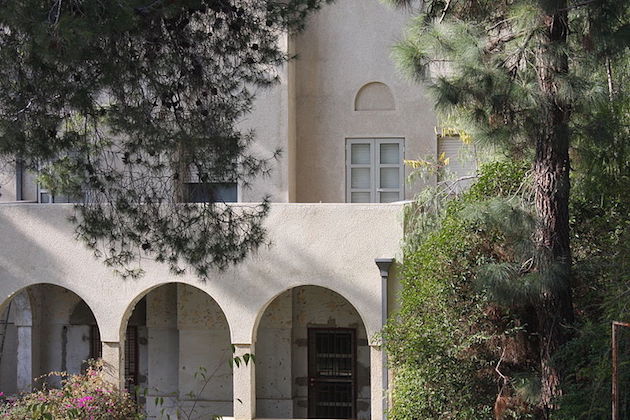
1. The Prime Minister of Israel’s Residence


Beit Aghion
Beit Aghion / Wikimedia Commons

Known as Beit Aghion in Hebrew, the prime minister’s official residence is located in the heart of Jerusalem and has served as the living space for senior Israeli officials since 1952, 14 years after construction was completed. Beit Aghion became the prime minister’s official residence in 1974.

2. The Prime Minister of Israel’s Office

Also located in central Jerusalem, the prime minister’s office coordinates a large number of governmental affairs and works to implement laws passed by the country’s parliament.

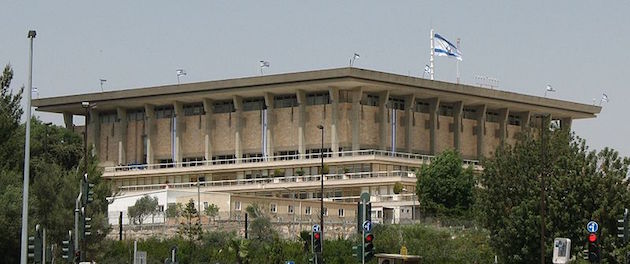
3. Israel’s Parliament, The Knesset


Knesset
Knesset / Wikimedia Commons

Hebrew for “the gathering,” the Knesset is home to Israel’s 120-member legislature. It is located in the Givat Ram neighborhood in Central Jerusalem, which plays home to many of Israel’s key government bodies.

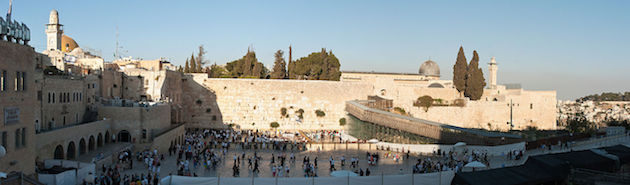
4. Judaism’s Holiest Sites, the Western Wall and the Temple Mount

The Western Wall
The Western Wall / Wikimedia Commons

The Western Wall, or Kotel in Hebrew, is considered Judaism’s holiest site. Located behind the walls of Jerusalem’s ancient Old City, the Obama administration has long refused to acknowledge this location as Israel’s property.

5. Israel’s Holocaust Memorial Museum, Yad Vashem

Israel’s Holocaust memorial museum, located in the heart of Jerusalem, is widely viewed as one of the city’s most important modern sites. After completing the museum’s central exhibits, visitors are treated to sprawling views of Jerusalem, a reminder of how far the Jewish people have come since the Holocaust.

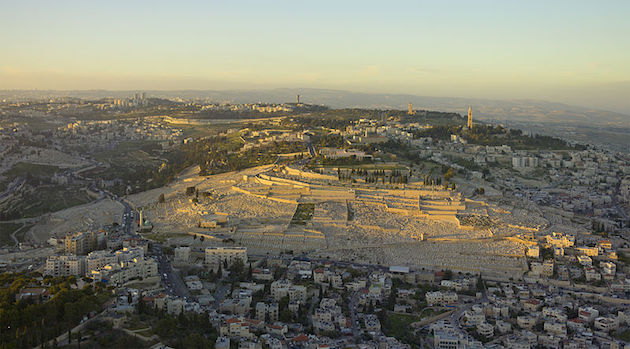
6. Judaism’s Ancient Cemetery, The Mount of Olives

Aerial view of the Mount of Olives
Aerial view of the Mount of Olives / Wikimedia Commons

A 3,000-year-old Jewish burial site, the Mount of Olives is located nearby Jerusalem’s Old City. Many of Judaism’s central figures are noted in the Bible as having ascended the mountain. In modern days, the cemetery has been a victim of vandalism by Arabs, and stands as another key site the Obama administration views as not part of Israel.

7. The Israel Museum

Due to its location in central Jerusalem, the Israel Museum—the country’s national museum—is not recognized as part of Israel by the Obama administration. The museum is home to some of Israel’s most important cultural artifacts.

8. Israel’s Supreme Court

Also located in the central Jerusalem neighborhood of Givat Ram, Israel’s supreme court has played a central role in Israeli democracy and the promotion of human rights in the Jewish state, but is not viewed as part of Israeli territory by the Obama administration.

9. Israel’s National Cemetery, Mount Herzl

Mount Herzl
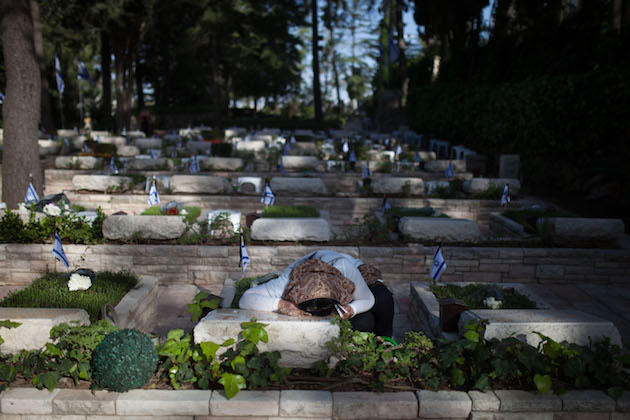
Mount Herzl military cemetery / AP

The site of Israel’s national cemetery, Mount Herzl is the final resting place of Israel’s founding fathers and national leaders, including former President Shimon Peres. The site is named after Theodor Herzl, the founder of Zionism. The Obama administration made clear last week that it does not view the cemetery as part of Israel.


10. Israel’s Capital City

Jerusalem
Jerusalem / AP

Since the days of the bible, Jerusalem has served as the central home of the Jewish people. Since the state of Israel was reestablished in 1948, it has served as the cultural and political center of the Jewish people. The Obama administration has been adamant since the start of its term in 2008 that it does not believe the city belongs to the Jewish state.

http://freebeacon.com/national-security/ten-places-obama-administration-says-not-israel/