When Debbie Gross heard last year that wildly popular Haredi
author Chaim Walder had been publicly accused of sexually abusing
multiple women and young girls, she was not remotely surprised.
Gross, the founder and executive director of the Tahel Crisis
Center for Religious Women and Children, had been hearing from victims
of the therapist and public figure for more than two decades.
“We got calls concerning Chaim Walder already 25 years ago,” Gross
told The Times of Israel in a recent phone interview. “But they were
anonymous. So there was nothing we could do with them. I can’t go to the
police when I don’t have victims willing to come forward.”
In November, a shocking exposé in the Haaretz daily alleged that
Walder – a renowned and trusted figure in the ultra-Orthodox world – had sexually abused
and raped multiple women, including several while they were minors and
many who had come to him for therapeutic care. After the article was
published, more than a dozen further victims came forward to detail
their own stories of abuse at his hands spanning decades.
In an interview on Channel 13 news that aired in March, Romi Schwartz
spoke publicly for the first time about the assault and rape she
suffered at the hands of Walder, a distant relative, from the time she
was 17. In 2008, she went to the police to complain, but the case was
closed a year later. Walder’s family later convinced her to sign a
nondisclosure agreement, and paid her NIS 500,000 in hush money.
Walder denied all of the allegations throughout, despite a conviction
in late December from a Safed rabbinical court headed by the city’s
Chief Rabbi Shmuel Eliyahu following testimony from 22 victims and the
presentation of other evidence. On December 27, six weeks after the
article was published — and a day after Eliyahu publicized his findings —
Walder took his own life at the gravesite of his son at the age of 53.
The shocking revelations and his subsequent death served as a
bombshell that rocked the Haredi world, as people struggled to absorb
the downfall of one of the most well-known and respected writers and
advocates in the community.
Walder was known widely as an activist for child safety and an author
whose most popular series, “Kids Speak,” was dedicated to listening to
and understanding children and their needs. His dozens of books, which
he began publishing in the early 90s, were translated into many
languages, including English, and became bestsellers in ultra-Orthodox
Jewish communities around the world.
His success propelled him to a regular newspaper column and a radio
show as he continued to be seen as a vocal advocate for combating child
sex abuse, and he served as a key figure in the Bnei Brak Center for the
Child and Family. In 2004, he received the “Child Defender” prize from
then-prime minister Ariel Sharon for his work.
The shocking news that such a man was found guilty of abusing women
and children dealt a blow to the Haredi world, prompting what some have
called an unprecedented reckoning over how the community deals with such
cases.
But close to six months after the story burst into the open, the
question remains: Has anything truly changed? Are Haredi victims of rape
and sexual assault more likely to come forward? And is the community
more likely to believe them?
“I don’t agree in the idea, the concept of watershed moments with
child sexual abuse in the Orthodox community,” said Shana Aaronson,
executive director of the Israel-based Magen for Jewish Communities, a
nonprofit that combats sexual abuse. “I think the watershed process here
is really a series of moments.”
Over the years, she said, progress has been made “where victims share
their stories publicly, where people choose to do the right thing and
believe the victims, remove perpetrators from positions where they have
access to children, all those things,” she said. “I think what happened
with Walder is reflective of so many of those moments that we’ve seen
over the last 10 years that led up to this.”
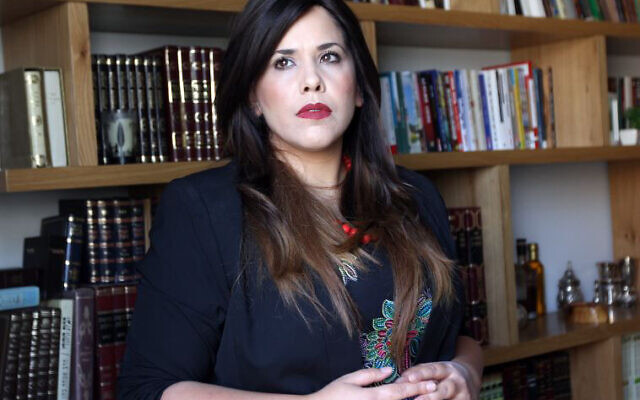
Esty Shushan
Shift in public perception
Esty Shushan, a Haredi activist and the founder and CEO of Nivcharot,
an organization promoting ultra-Orthodox women’s activism, said that in
the immediate aftermath of Walder’s death, many in the community
refused to believe the allegations – and blamed the victims for his
suicide.
“At first, when the allegations were publicized, the public reaction
was an almost wholesale denial… people didn’t want to believe that this
is what had happened,” said Shushan.
There were some in the community, she said, “that [told the victims]:
‘you murdered somebody.’ And the the peak of this was his funeral in
Bnei Brak… where all sorts of important rabbis eulogized him as if
nothing had happened.”
One of the turning points in public perception, Shushan suggested, was the suicide days after his death of one of Walder’s alleged victims.
“I think that suddenly caused people to think that perhaps, after
all, there is some truth” to the allegations, said Shushan. “And I think
it’s very sad that somebody had to die to garner that reaction.”
As the weeks passed following the explosive allegations and Walder’s
decision to end his life, public perception appeared to shift somewhat.
“Mishpacha,” an influential and widely read Haredi weekly in Hebrew and
English, ran an unprecedented editorial on November 25 in its Hebrew
version titled “No Time to Whisper.”
The editorial called on parents to be vigilant in protecting their
children, and issued a call to “stand by the victims, to provide them
all assistance and the opportunity to diminish their pain.” It also
proclaimed, however, that “the public domain is not the place to conduct
a discourse of things that are better off concealed.”
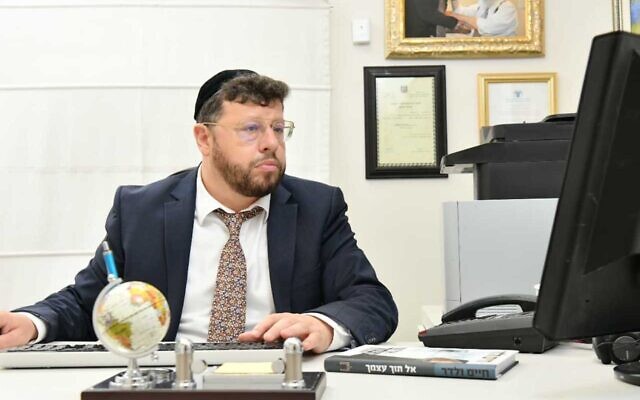
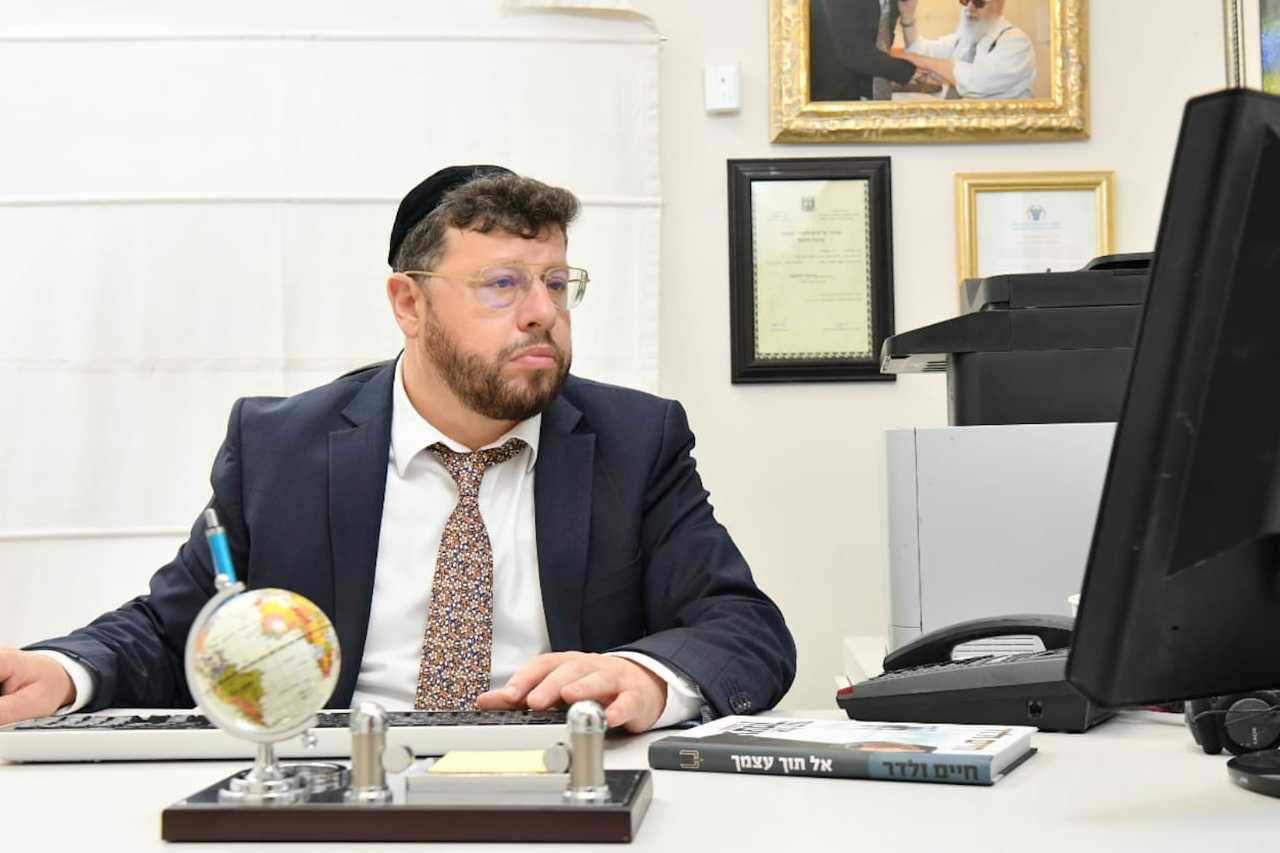
Chaim Walder works in his office in Bnei Brak
A second editorial, published on December 30 following Walder’s
suicide, was titled “We Cannot Ignore.” In it, the magazine noted that
while instinct may urge many to remain silent, “silence is an escape.”
“If there are times where it is forbidden to turn the page and move
on with daily life – it is exactly these moments,” the editorial read.
“Yes: These are things that have never been aired in the Haredi public
nor in a Haredi newspaper. On the other hand, the Haredi public has
never faced such a complex, difficult, talked about and irrepressible
time.”
The editorial proclaimed that the Haredi public must allow victims
“to realize that they can and should share their painful story, and that
God forbid we as a society do not blame the victims… our hearts are
with you. We support you and believe in you unconditionally. And we will
do everything as a community to build a more protected and purer world
for you.”
In English, the magazine did not address the issue until after
Walder’s suicide. Then it published an op-ed in early January written by
Rabbi Aaron Lopiansky titled “For This We Weep,” calling for standing by victims of abuse and working toward systemic change in how such instances are handled.
Eli Paley, the owner and publisher of Mishpacha, also serves as the
founder and chairman of the Haredi Institute for Public Affairs. And he
wore both hats, he said, in deciding how to respond to the eye-opening
revelations about Walder.
“We decided that even if our original policy was that, as a
publication, this is not something that we’re sharing with the readers…
once it became a public discussion, we have to claim our point of view.
Because it’s already a conversation,” Paley told The Times of Israel in a
conversation in his Jerusalem office in March.
That decision, Paley said, “was a very courageous position, because
at that stage, the norm in the Haredi society was” to remain quiet.
Nevertheless, he said, he began intensive discussions with leading
rabbinic and legal figures and other activists to carve out the best
approach. “Everybody we spoke to felt that we have to take a role and to
be very, very active. And this is where Mishpacha really took a stand.”
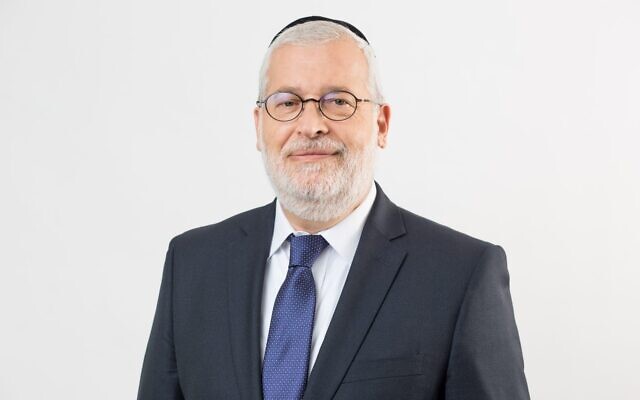
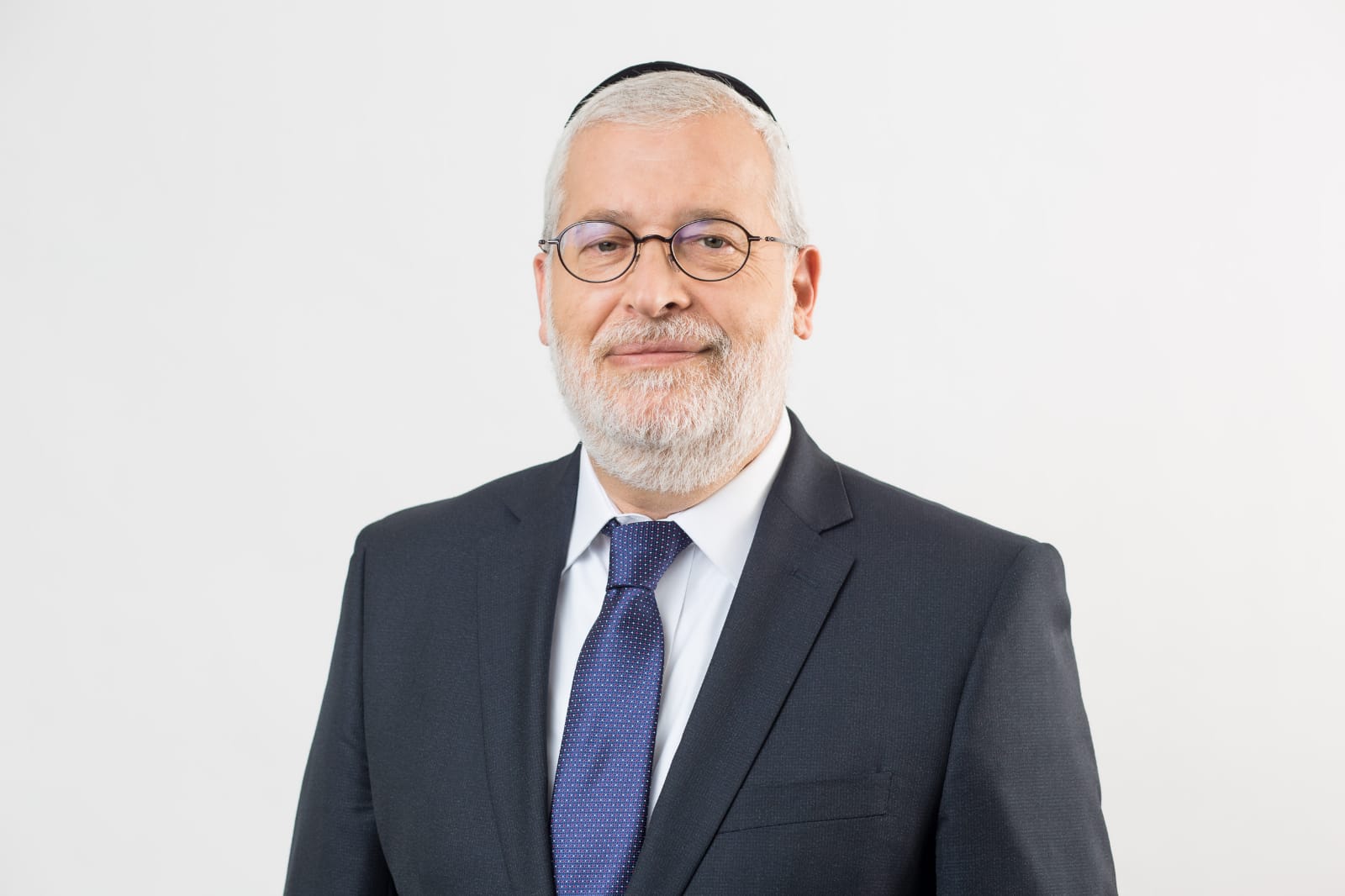
Eli Paley, publisher of ‘Mishpacha’ and chairman of the Haredi Institute for Public Affairs
Parallel worlds
Few other ultra-Orthodox publications came close to even that fairly muted response. Multiple such outlets
ran obituaries following Walder’s death that did not mention any of the
allegations, while others buried any accusations and praised the author
for his contributions to society. The Yated Ne’eman newspaper – where
Walder had written a regular column – published a glowing eulogy, and
the head of its rabbinic board spoke at Walder’s funeral.
Paley said that he had once considered Walder a friend, and
contemplated attending his funeral to comfort his family members. “I was
happy in the end that I didn’t go because I heard it was such a big
ceremony.”
Months later, Paley said of Haredi media outlets: “I’m not sure that
they learned their lesson, even though they understand that they lost a
lot of credibility, and that many of the readers were very upset with
them and they looked silly to the public.”
Shushan, meanwhile, suggested that “the Haredi media has become
irrelevant on this topic.” Even if such newspapers choose to ignore or
cover up certain issues, “there is a parallel world in which they have
no control,” she said, pointing to conversations that take place in
WhatsApp groups and on social media.
She noted that even Mishpacha did not name Walder in anything it published about the allegations.
“It took them a long time to react,” she said, alleging that the
magazine waited in order to gauge public opinion before taking any
stance. “It took [the editors] time to understand what the public
believed.”

Haredi magazines and newspapers for sale in Jerusalem
Paley said the magazine did not believe that naming Walder in its
editorials was necessary. “We didn’t feel that it was needed,” he said.
“If you can get your message [across] without going to the extreme and
humiliating his family – whoever knows, knows who you are referring to.”
The publisher suggested that there was “a very, very fine line
between creating awareness and leading your community to the next stage
of responsibility, and losing them.” When it comes to such delicate
topics, “you have to do it in a very balanced and sensitive way. Not
just because you’re afraid to lose customers – because you’re afraid to
lose your influence.”
Bookshelf backlash
In the immediate aftermath of the Walder scandal, the well-known Eichler’s bookstore in Brooklyn announced that it was removing his books
from its shelves, and the Israeli Haredi supermarket chain Osher Ad
followed suit. But in early March, it was easy to find Walder’s books in
stores in ultra-Orthodox neighborhoods across Jerusalem.
At a branch in Givat Shaul of Yefe Nof Feldheim – Walder’s publisher –
his books were on display, but not prominently. At the nearby Dani
Books, a full shelf of Walder’s books exists, tucked away in the back.
In Mea She’arim, practically every bookstore still stocks his offerings,
including the famed Manny’s – a frequent target of extremist vandals
unhappy with the shop’s wide selection – which boasts a full bookcase of
his works. On the website of Steimatzky, the largest bookstore chain in
Israel, most of Walder’s titles are still available for purchase,
though its biggest competitor, Tzomet Sefarim, appears to have wiped the
books from its online catalogue.
Paley said that following Mishpacha’s decision to address the Walder
scandal, Yefe Nof Feldheim — once a major advertiser in the publication —
cut ties. “But we said we’re ready to pay the price. We’re not here to
do business.” (The US-based Feldheim Publishers, however, which
published his works in English, announced several days after the news broke that it was halting sales.)
He noted that following Mishpacha’s editorials on the topic, the
magazine received an influx of letters for and against the decision to
address the issue.
“I’m very proud that we got tons of letters from readers, all kinds
of letters,” he said. “Some criticized us, saying ‘why do my kids need
to read this?’… And the answer to that is because we want you to protect
your kids.”
Other letters, he said, denounced the magazine “for buying the narrative of the secular media.”
Ultimately, he said, “we felt that we have a responsibility to create
a discussion and to structure the discussion… We had to be clear, and
super clear, that we are here, first, to stand for the victims. We’re
here to make sure that our kids and our families and our society will be
safe.”

Books by Chaim Walder for sale at Manny’s bookshop in Jerusalem in March 2022
Evading justice
Walder’s decision to take his own life was a very painful one for
many of his victims and other survivors of sexual assault, said
activists.
“It makes it very hard for the victims,” said Gross of Tahel. “Many
of the victims felt horrible because it made them wonder if then they’re
guilty of murder if they go to the police. Many people felt
manipulated. It just made the whole thing so much more complicated for
the community.”
Gross said her hotline tells people who call in with such concerns
that “the only one who was responsible for his actions is him. He was
responsible for the abuse, and he was responsible for ending his life.
And only he was responsible.”
Aaronson said news of Walder’s suicide was “devastating” for victims.
“It was devastating for so many different survivors, for all
survivors, I would say,” said Aaronson. “There’s the feeling [that] he
took away the opportunity, again, of victims who wanted to have that
chance to confront him.”
In addition, she said, abuse victims asked “how he could do that, and
how the police could let that happen, why didn’t anyone take away his
gun? All those kinds of questions and feelings.”
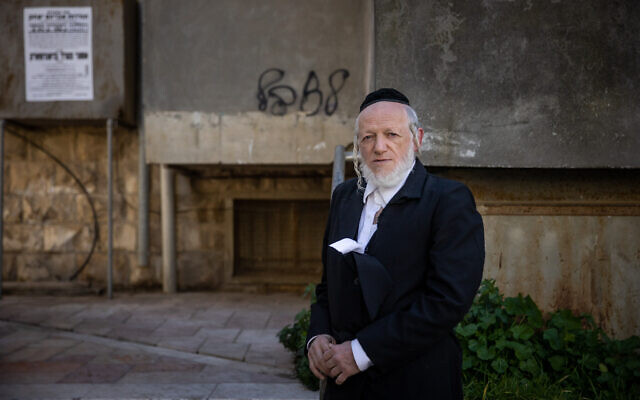
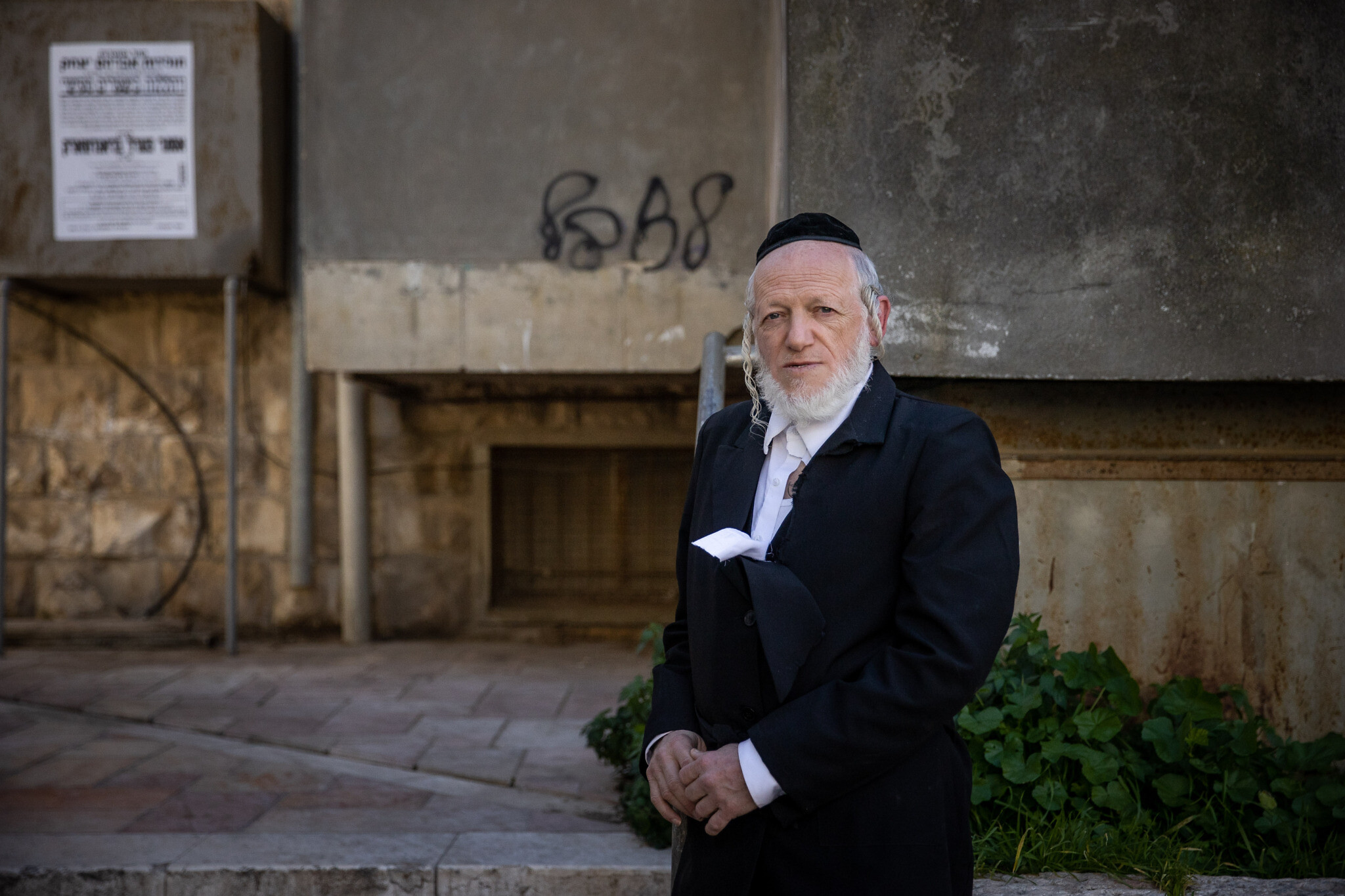
Yehuda Meshi-Zahav, former chairman of
Israel’s ZAKA rescue unit, in the ultra-Orthodox neighborhood of Mea
Shearim, Jerusalem
More than six months before the Walder expose, Haaretz also published a shocking series of sexual abuse allegations
against Yehuda Meshi-Zahav, the ultra-Orthodox founder of the ZAKA
emergency response and rescue organization. Meshi-Zahav, too, attempted to end his own life, and is currently comatose.
But activists and observers said that case could not be compared to
the impact that news of Walder had within the Haredi community.
“[Meshi-Zahav] was not the same [way] accepted in the community,”
said Gross. “He was more honored in the secular community, less so in
his own community… he got so many prizes in the secular world.”
Paley agreed that Meshi-Zahav was not revered within the ultra-Orthodox world.
“Nobody really saw him as someone who represents the Haredi society,”
said Paley. “He became a hero because the seculars like very much
someone that came from the Haredi community, from the extreme” so he
became a symbol of inter-communal relations. Within the ultra-Orthodox
world, he added, Meshi-Zahav was seen as an outlier who sent his
children to serve in the army, unlike most ultra-Orthodox, and embraced
the world at large.
By contrast, Paley said, “Walder was totally the opposite” in being celebrated and enamored within Haredi society.
“It was like an earthquake. Kids grew up on these books; he is the
one who brought [up] the conversation about kids’ safety,” said Paley.
“So that was really shocking. And it is shocking.”
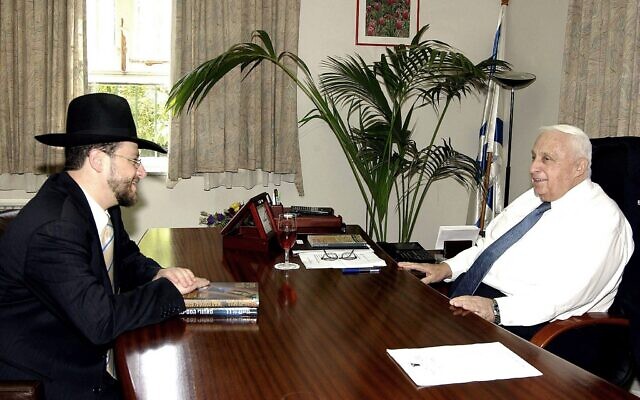
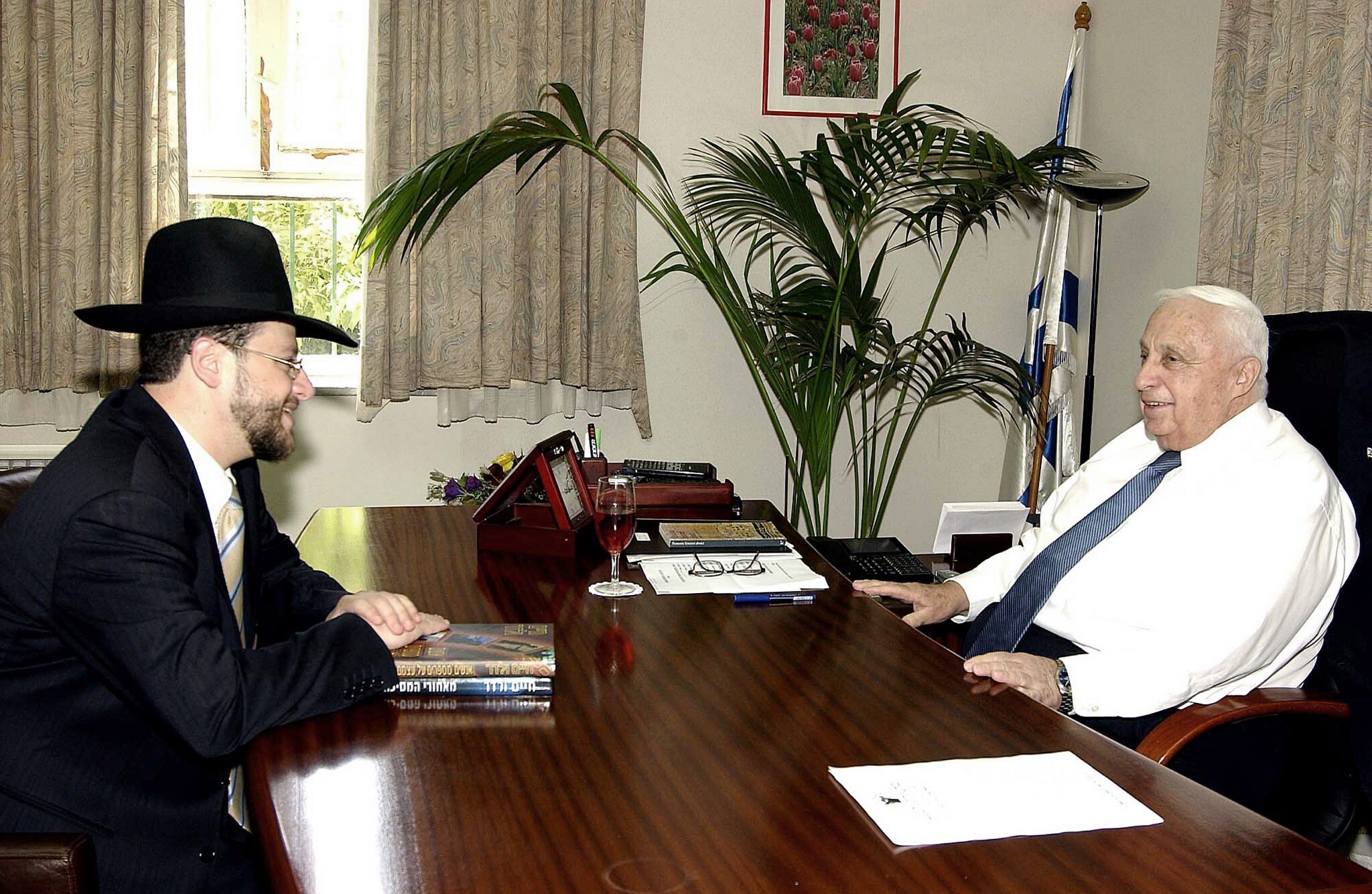
Prime Minister Ariel Sharon (right)
awards Haredi children’s author Chaim Walder with the “Child Defender”
award at his Knesset office in Jerusalem
Moving forward
Following the Walder bombshell, Gross and Aaronson said their
hotlines were flooded with a fresh wave of calls from sexual abuse
victims.
“Within the first few days, our call load tripled,” said Aaronson.
And two months after his suicide, she said “it is still significantly
higher than it was before.”
In late February, Gross said “we are still getting tons of calls
concerning him,” including from his victims and others who “are coming
forward with their abuse stories as a result of the story.”
In the immediate aftermath of the Walder story, she noted, the
hotline was spammed by “yeshiva boys” who would “call us every 30
seconds and hang up, or say disgusting things because they saw us as a
threat.”
“They were calling to harass the line so victims couldn’t get through, I think.”
Since the Walder story broke, similar complaints against a series of
ultra-Orthodox figures have been filed, but none have garnered the same
reaction – nor been against someone of his prominence.
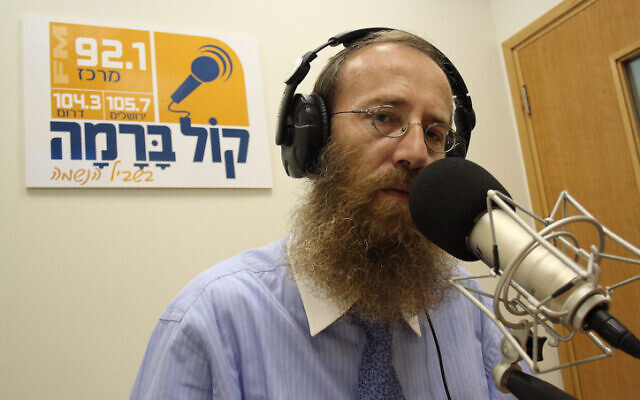
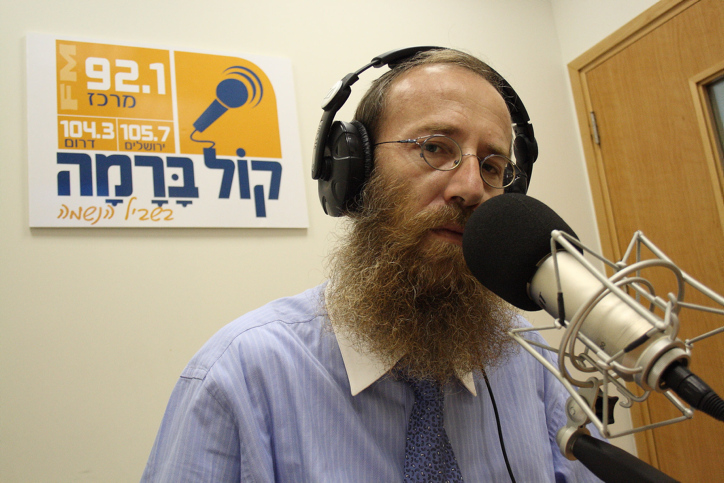
Haredi radio host Dudi Shwamenfeld recording at the Kol Berama radio station
Haredi radio host Dudi Shwamenfeld was accused of
multiple instances of sexual assault in January, including against a
minor. Shwamenfeld denied the accusations, but he was removed from
hosting his radio show on the Haredi Kol Barama station and has not
returned.
In February, a series of students accused longtime Jerusalem teacher
Tzvia Rotenberg of a pattern of sexual abuse against them when they were
minors. Rotenberg denied all the accusations and remained in place as
principal of the Maalot girls school in the Ramot neighborhood until she
resigned about six weeks later. Her resignation reportedly came on the
day she was summoned to appear before a rabbinic court on the
allegations.
A group of young Haredi women held a protest outside the school in
early March, expressing anger at the institution for continuing to
employ her. The protest was organized in part by Sara Horowitz, a former
student of Rotenberg who helped convince her classmates to come forward
in the article first published in Israel Hayom.
“After the Chaim Walder story, there was a feeling in the community
that now things will be different,” Horowitz told Ynet. “We expected
inclusion, understanding and compassion for the victims, and a demand to
deal with and condemn the abuser – but it didn’t happen. That caused
great pain.”
Turning point
Still, observers and activists remain cautiously hopeful that Haredi
society is moving in the right direction when it comes to tackling
sexual abuse within the community.
“Definitely from my experience, it’s a turning point,” said Paley. “I think the dust hasn’t settled yet.”
At the end of the day, he said, he believes that there is currently
“an awareness, so the reaction will be more strong” to future cases. In
addition, he said, the news served as a catalyst for renewed discussions
of safety nets and structures to protect those at risk, “and I believe
we’ll see the results in the near future.”
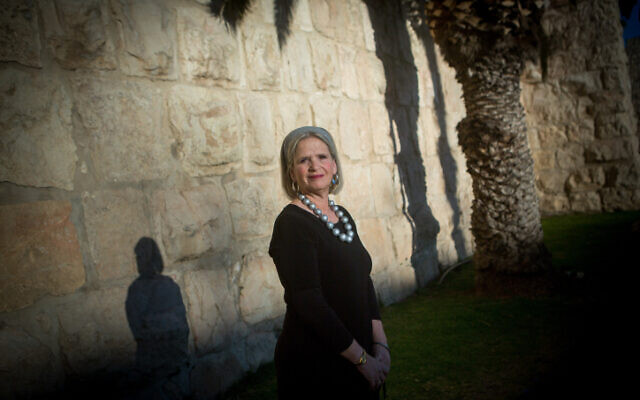
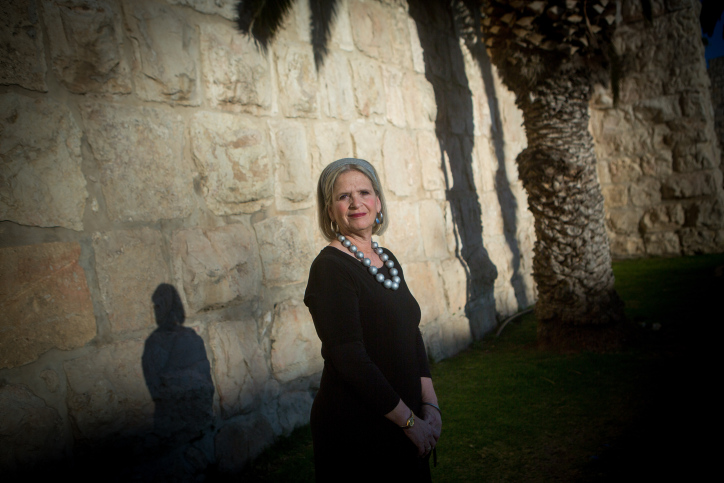
Debbie Gross, founder of the Tahel Crisis
Center for Religious Women
Gross suggested that there is a very slow but steady change occurring both publicly and privately.
“The community is taking steps forward and there is more awareness,”
she said, noting that her organization has seen an increase in requests
for sexual abuse awareness training from communal bodies and schools.
“So there is change going on within the community.”
And Shushan said she is cautiously optimistic about the path forward for countering sexual abuse in the Haredi world.
“I think today there is more legitimacy and less denial of victims,”
she said. She nevertheless lamented the failures of police and the legal
system to bring abusers to justice – across all elements of Israeli
society.
“Still, there is certainly hope,” she added.
“I think it was a dramatic event, whose effects go far beyond the
story of sexual abuse,” said Shushan. “But how it will have an effect
and where things will go – I don’t know.”