EVERY SIGNATURE MATTERS - THIS BILL MUST PASS!

EVERY SIGNATURE MATTERS - THIS BILL MUST PASS!
CLICK - GOAL - 100,000 NEW SIGNATURES! 75,000 SIGNATURES HAVE ALREADY BEEN SUBMITTED TO GOVERNOR CUOMO!

EFF Urges Court to Block Dragnet Subpoenas Targeting Online Commenters

EFF Urges Court to Block Dragnet Subpoenas Targeting Online Commenters
CLICK! For the full motion to quash: http://www.eff.org/files/filenode/hersh_v_cohen/UOJ-motiontoquashmemo.pdf

Monday, November 07, 2022

"In the research, I found that it's very vast, and I won't quote numbers because the numbers are relatively hypothetical, but it's in the millions of kids that are being sexually abused. So we found out that 70% plus of the transactions for this material were happening online. So taking the same tactics that companies take to identify spam and malware and remove it to identifying and removing any child sexual abuse material from the internet..."


Kutcher grew up as a Roman Catholic. As an adult, he practices Kabbalah, and has visited Israel and studied the Torah; his wife Mila Kunis stated that he "taught [me] everything I never knew" about her religion, Judaism, though as of 2018, he has not converted.[75][76][77] On trips to Israel, Kutcher visited Kabbalah centers in Tel Aviv and in Tsfat.[76] In 2013, Kutcher remarked, "Israel is near and dear to my heart ... coming to Israel is sort of coming back to the source of creation – trying to get closer to that. And as a creative person, going to the source of creation is really inspiring. And this place has been really inspiring for me – not only on a spiritual level, but also on an artistic and creative level."[78]


Welcome Paul,

Thank you for joining our community.

We're especially honored and happy you're here. Together, we have a lot of work to be done.  We appreciate your work and expertise in this area. 

Your readers can expect updates on the issue, milestones in Thorn's mission, insights into what we and our partners are doing to end the sexual exploitation of children online, and how your readers can support it all.

We encourage your readers to watch the videos on our site featuring key moments in our history. 

Talk soon,

 Ashton

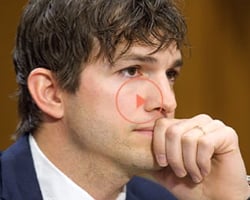
Co-founder Ashton Kutcher

shares his experiences with the United States Senate.

CEO Julie Cordua

explains our mission to eliminate CSAM.

We are building the tools to end online child sexual abuse. With your support, we can defend every child.

 Ashton Kutcher: It's not like anything I've done before in my own life. And really just kind of just a test of my own mettle to ensure that I sort of regain my own personal physical dominance. My non-profit Thorn reached out and said that they had 100 passes for the marathon to raise awareness. We build software to fight against the sexual exploitation of children, so we help companies and law enforcement identify kids that are being sexually abused online—today we've identified 25,000 kids that are being abused. And we keep going and we keep building more new software because the landscape online keeps changing.

So about 15 years ago, I saw this Dateline special about these kids that were like five, six, seven years old in Cambodia, that grown-ass men were flying to Cambodia to assault these kids and somebody was profiting off of it. And I thought this was crazy. I can't believe this exists in the world. I started looking around, trying to find what the organizations were that were proactively going after that issue, and there were some small organizations that were doing some stuff but nothing at any kind of scale. I just started to approach it the same way I look at startups, because at the time I was investing in a lot of startups. I thought the first thing I need to do is figure out what the total addressable market is here, how big is this problem? And I spent about five years researching the problem to try to size it, and at one point somebody said to me, this isn't a problem just for Cambodia—this is a problem here [in the United States]. This is happening here.

In the research, I found that it's very vast, and I won't quote numbers because the numbers are relatively hypothetical, but it's in the millions of kids that are being sexually abused. So we found out that 70% plus of the transactions for this material were happening online. I thought If we can build companies that are good businesses online, maybe we can make [sexual explotation] a bad business by identifying this content. So taking the same tactics that companies take to identify spam and malware and remove it to identifying and removing a child sexual abuse material from the internet.

So right now we have three core pieces of software that are all identifying children that are being sexually abused. There are two products that we have for law enforcement to help them prioritize their caseload and find these kids and collaborate on cases, and that's been used around the world by law enforcement and in all 50 states. And then we have a new product that we just finished building a couple of years ago, that's being used by enterprise companies like any company that has an upload button on their site where you can upload a photo, an image, or a video.

We can help them identify the content and report it and take it down. Today we've identified 25,000 kids, and every year that number gets greater. We've got a real problem on our hands and we now, thanks to the work of the folks at Thorn we've got some real solutions, and it's just about getting folks to implement those solutions and then staying one step ahead so a lot of the people that are consuming and publishing this content are really technologically sophisticated, so staying one step ahead of them and finding these kids is. That's what we do.

https://www.thorn.org/child-sexual-exploitation-and-technology/\


 TED TALK:

https://www.thorn.org/blog/two-years-after-ted-we-stand-at-a-critical-moment-in-the-fight-to-eliminate-csam/?utm_campaign=welcome%20email&utm_medium=email&_hsmi=215258442&_hsenc=p2ANqtz-95k4nyv8Eo7viij1txawrsG-ZZfDHM2zKXbySSrPMKyvtwKSPaEF4LdPUV98xhuAw85O31HlPCPpy1Gyu1XP5dMHX4OA&utm_source=Thorn%20email%20subscriber

Friday, November 04, 2022

“The best protection I can provide to my child is to daven [pray] appropriately … and perhaps most importantly, ensuring that my relationships with my fellow are based on compassion, sensitivity and love.”


Parents told the best protection is prayer after school child-sex abuse claims 

 
$50 For First Class With Mashka

THE REBBE PAYS - MEMBERS OF ALL FAITHS & GENDERS ARE WELCOME TO COME AND MINGLE!

(And the Rebbe, in person, will be throwing a pizza party at 226-20 Francis Lewis Blvd, Queens, NY 11411 on Thanksgiving day at noon!)


The principal of a small faith-based school in south-east Melbourne has responded to concerns over a string of alleged child sexual abuse incidents involving students by telling families that the best protection for their children is to pray and perform religious rituals.

The parents’ concerns relate to the potential imminent return to Cheder Levi Yitzchok, a non-government school in St Kilda, of a student involved in an investigation by Victoria Police’s sexual offences and child abuse unit last year.

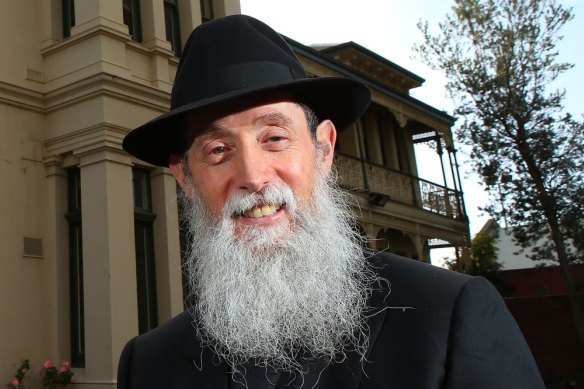
Cheder Levi Yitzchok president and principal Eliezer Kornhauser.


Three separate Victorian government agencies – the Department of Families, Fairness and Housing, the Commission for Children and Young People, and the Victorian Registration and Qualifications Authority – are investigating aspects of the case, including the school’s approach to safeguarding students in its care.

Tensions were heightened last week when the school’s president and principal, property scion Eliezer Kornhauser, told parents via email that “the situation for the school and parents is anything but perfect” and that some were engaging in “unproductive and occasionally hysterical conjecture”.

Kornhauser told parents they should put the ultimate trust of their children’s safety in their faith, not in secular society or laws.

“Our best protection lies in our faithful adherence to what G-D [God] wants from each and every one of us, as clarified and amplified by the Rebbe [the founder of the Chabad movement],” he said.

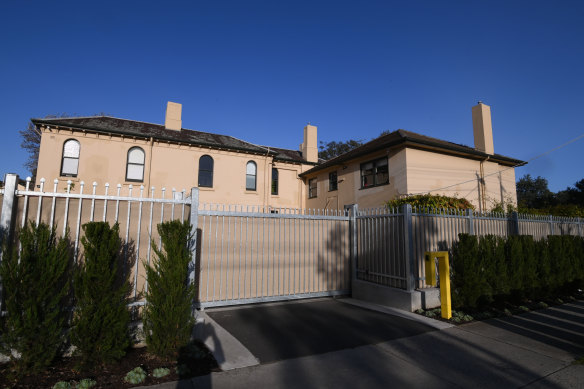
Families of students at Cheder Levi Yitzchok school in St Kilda have been counselled over a string of alleged sexual abuse incidents.
Families of students at Cheder Levi Yitzchok school in St Kilda have been counselled over a string of alleged sexual abuse incidents


“The best protection I can provide to my child is to daven [pray] appropriately … and perhaps most importantly, ensuring that my relationships with my fellow are based on compassion, sensitivity and love.”

Police initially investigated five reports of “sexualised behaviour” among students at Cheder Levi Yitzchok between May and October last year. The school has about 100 students – from the ultra-Orthodox Chabad-Lubavitch movement – from prep to year 8.

Three of the alleged incidents occurred at the Yeshivah Centre, a Jewish religious centre linked with the school on Hotham Street in St Kilda East.

Following investigations, students were given “education and guidance”, the police said.

The Age understands a student was referred to the South Eastern Centre Against Sexual Assault, a specialist centre that provides assessment and intervention for children with harmful sexual behaviours.

In the past week, Cheder Levi Yitzchok has received multiple complaints from parents concerned that the student is due to return and fearful about whether the school is doing enough to protect their children from harm.

The school has told parents that it had taken direction from South Eastern Centre Against Sexual Assault “in relation to the reintegration of any student who may have been absented from school in relation to allegations”.

The complaints and the school’s response to parents have prompted the education regulator to investigate.

“The VRQA is liaising with [Commission for Children and Young People] to find out further information on this matter and will take appropriate action in relation to the school’s compliance with the minimum standards,” a spokesperson for the regulator said.

Kornhauser emailed families last week regarding their “desire for reassurance about the safety of children attending the school” and counselled them that their ultimate trust should be placed in their faith.

“We may imagine that the secular world has the answers, but in my view, this is a terrible mistake,” Kornhauser said in the email.

“... [T]he secular solution – education about child safety, protocols and procedures, visibility and vigilance (all of which are followed and applied within the school) – while vital, are not the ultimate answer,” he said.

Kornhauser also warned families against “exposure to secular media” including newspapers, arguing it “leads to fear and hysteria which is then directly or perhaps inadvertently passed on to children”.

VoiCSA, a Jewish community advocacy organisation founded by a child sexual abuse survivor said it had been providing support to a significant number of children who attended the school.

“That has included arranging counselling and legal advice, assistance with reporting to police and liaising with government authorities,” a spokesperson said.

“What the parents all have in common is concern that their children not experience additional trauma from having to face their alleged abuser again at school and a desire to ensure the safety of other children.”

Kornhauser told The Age that Cheder Levi Yitzchok had updated its child safety and wellbeing policy in light of recent legislative changes in Victoria and that the new policy would be presented for ratification by the school board next week.

He said the school was subject to the same child-safety standards as all schools.

“Our school has been established at the behest of parents who wish to send their children to a faith-based school where they are taught the precepts of Judaism, including ultimate trust in and reliance on G-d [God],” he said.

“The school is required to, and indeed does, conform to all secular laws. Families who send their children to the school are aware of this.”

The Department of Families, Fairness and Housing declined to comment.

https://www.theage.com.au/national/victoria/parents-told-the-best-protection-is-prayer-after-school-child-sex-abuse-claims-20221101-p5bujd.html

Thursday, November 03, 2022

The Union for Reform Judaism in February 2022 released an investigative report chronicling sexual misconduct in the movement’s 14 U.S. youth camps and other youth programs over the past 50 years. Where are the Orthodox? Partying at Conventions!


What Is a Child Worth?


וואס וועט זיין מיט די קינדער


Temple Israel and Jewish Family Service present program on sexual abuse with gymnast who was a victim of Larry Nassar.


Rachael Denhollander, the first woman to publicly accuse former USA Gymnastics’ team doctor Larry Nassar of sexual abuse in 2016, which eventually led to his 2018 conviction to serve life in prison, will be speaking at a free event 7-9 p.m. Wednesday, Nov. 9, at Temple Israel in West Bloomfield. Titled “What is a Child Worth?”, the program is in partnership with Jewish Family Service of Metro Detroit.


This event, for teens and up, is intended to bring attention to abuse in the general community. It will examine the link between abuse and mental health challenges and encourage people to seek help and support, if needed.

Echoing the same messages found in her 2019 autobiography, What is a Girl Worth? Denhollander, the child gymnast turned attorney and advocate for survivors of child sexual abuse, will begin the evening suggesting the teens and adults in the audience to consider two key questions:

• How do we understand our own value and the value of others?

• What can motivate us to choose a harder right path, such as coming forward and speaking out against abuse, rather than an easier wrong path, such as keeping silent and allowing a culture of abuse to persist in athletic, academic or even religious institutions?

“All of us are faced with making even small decisions in such situations,” said Denhollander, 37, whose courage to speak out about the abuse she endured by Nassar encouraged more than 300 current and former gymnasts — some Olympic medalists — to do the same, resulting in his life sentence in a Michigan prison.

“Most of the time these decisions can feel like small ones, but they put us on a trajectory of who we will become. When it comes to big decisions, like standing up to an abuser or a corrupt institution where abuse is taking place, this will prove to be the biggest test of how proactive we can be to protect our community.”

Denhollander, now a mother of four and a practicing attorney in Kentucky, explained that sexual and child abuse crosses every social, economic and geographic demographic. But in high-stakes environments such as competitive sports, the situation can become more precarious.

“There are some consistent dynamics going on in high-performance environments such as gymnastics and the performing arts,” Denhollander said. “(Parents) entrust their children to mentors who say they will take their career to high places. And, in gymnastics, it is a high-touch environment where coaches are spotting you and touching you to correct your positioning, which can create a breeding ground to desensitize children to certain touches. The important lesson to teach children is the difference between acceptable and unacceptable forms of touch.”

Denhollander’s Story

A latecomer to gymnastics, Denhollander began her training at age 11 in a Kalamazoo gym. From the beginning, her parents asserted to her and her sister, who was a competitive synchronized ice skater, that no program, no matter how prestigious, was worth their health or safety. She said they only selected programs held in facilities where parents could fully observe what was going on at practices and turned down any programs where parents were discouraged from watching practice or traveling with their athlete children during competition meets.

“I came from a very healthy attitude toward sports and athletics, and my parents established with me all the necessary safeguards and open communication,” Denhollander said. “My encounters with Nassar (to treat back pain in 2000 when I was 15), were separate from my gym environment.

“There was nothing that I or my parents could have done differently from being abused by Nassar. However, it was because I had that foundation of open communication with my parents that I knew they would believe me, that was the huge redemptive part of my story. I think I am in the place where I am now because of that foundation.”

Julia Cohen, JFS teen mental health coordinator, said she first learned of Denhollander’s advocacy and educational work through a Netflix documentary Athlete A, which highlighted Denhollander and other athletes instrumental in bringing Nassar to justice.

Around the same time, the Union for Reform Judaism in February 2022 released an investigative report chronicling sexual misconduct in the movement’s 14 U.S. youth camps and other youth programs over the past 50 years.

“I couldn’t help but notice the similarities between these stories, both highlighting the grave consequences of not responding appropriately to reports of sexual abuse,” Cohen said. “It felt important and timely to bring Rachael to speak with our community. It is important as a community that we listen to and believe survivors and respond appropriately. “

Temple Israel’s Rabbi Jennifer Lader said that Jewish institutions, fully committed to the emotional and physical health, safety and security of children, are in a unique position to fight against complicity when it comes to abuse.

“Rachael Denhollander has truly changed the world,” Lader said. “Inviting her to speak here will give children and their parents the knowledge and information to not only protect themselves and others but will also help them reach their full emotional and spiritual potential. As Jewish educators and clergy, our goal is to serve as active allies, shining light in dark places in order to best serve our families and make our community a safer place.”


https://thejewishnews.com/2022/10/31/what-is-a-child-worth/


Wednesday, November 02, 2022

Modern liberalism’s advancement of efficiency and corporate interests, under the intellectual guise of human flourishing, have contributed to this problem. Replacing God, community and family with individualism has left people looking within themselves to find meaning that is not there.


וואס וועט זיין מיט די קינדער?


Why Are Our Attention Spans Shortening?


Students discuss the reasons people are so easily distracted.


Editor’s note: In this Future View, students discuss decreasing attention spans. Next week we’ll ask, “Some colleges use race as a factor when admitting applicants. Should colleges be able to continue to admit students based on race? Or should we be opposing affirmative action on college campuses? 

Students should click here to submit opinions of fewer than 250 words before Nov. 8. The best responses will be published that night. Click here to submit a video to our Future View Snapchat show.

New World Chains

We live in a civilization attached to instant pleasure. Anyone who has used TikTok knows this. Everything in our world, from a rise in sedentary jobs to videogames, sexual promiscuity, pornography and nonstop music, feeds on an appetite for instant pleasure and low attention spans.

Modern liberalism’s advancement of efficiency and corporate interests, under the intellectual guise of human flourishing, have contributed to this problem. Replacing God, community and family with individualism has left people looking within themselves to find meaning that is not there.

How will we pursue what is honorable, chivalrous and beautiful if we cannot maintain an attention span longer than eight seconds? Romantic virtues aside, millennials and Gen Z are experiencing astronomical levels of anxiety and depression. Could a lack of self-agency and control contribute to these heightened feelings of anxiety and vanity? An inability to put aside pleasure is apparent in our declining marriage rate: If individuals struggle to devote seconds of attention to a task, how will they devote the rest of their lives to a partner?

We are responsible for addressing this attention span crisis, lest the corporations drugging our society continue confining us to Brave New World-style slavery.

—Chanidu Gamage, The University of British Columbia, political science

We Don’t Have Low Standards

When I turn on the TV, I am shocked by the bland content. Aside from live sports and news, networks seem to air a rotating cycle of NCIS, Judge Judy and Wheel of Fortune spinoffs—with Medicare Advantage plans hawked during breaks. These are the vestiges of an era during which three major networks competed to be as appealing as possible to the broadest swath of the population.

But with the rise of new forms of media, it has become important to create specialized content for different subsets of its consumers. Viewers have options now, and they exercise them in a competitive environment that constantly forces content creators to innovate and create unique products for their customers.

The human attention span has decreased because we now have more and better choices for entertainment, so we are less willing to spend time consuming a poor product. When headlines claim that humans now have a shorter attention span than a goldfish, consider if that’s really a bad thing. A goldfish sits in a glass bowl, doing nothing until it dies. It will have lower standards for what can keep its attention.

—Lucas Martin, Harvard University, applied mathematics

Spare the Kids

Long attention spans are essential for children. Before their first day of school, children with access to YouTube and other forms of social media have had their brains rewired. Math, science and composition will always be less interesting than online content specifically tailored to these children’s preferences. Social media keeps tweens and teens from experiencing the world in a more meaningful way, and it exposes them to shallow connections in an age with increasing anxiety and depression. Long attention spans brought humanity the work of Einstein and Newton; let’s stop allowing technology to change us and embrace deep thinking.

—Patrick Barry, Georgia Institute of Technology, aerospace engineering

The Intellectual Advantage

We are blissfully unaware of how blessed we are to have the most expansive variety of resources in the history of humankind constantly at our fingertips. Living in the Information Age, we must conform to the reality that enterprising minds prioritize access to high-quality information and, with lower attention spans, can digest this information at increasingly rapid rates. Being able to understand complex ideas in spite of reduced attention spans is producing people with efficient models of comprehension and a skill set built for impromptu problem solving. Ultimately, it is up to individuals whether they want to strengthen this instant information-processing muscle or whether they want to devalue this intellectual advantage for the sake of short-term gratification via the consumption of trendy but pointless content.

—Rayn Khan, University of Minnesota, marketing

Read a Book

TikTok is the most detrimental thing to happen to our attention spans. It’s an endless cycle of bright colors and catchy sounds meant to be consumed faster than our brains can process the content. Why are we always on our phones? Because tech moguls and social-media developers designed a piece of technology so addicting and damaging that we can’t handle concentrating on real life.

We shouldn’t be too hard on ourselves for being easily distracted; developers created this technology to be addictive. But we can resist by making real efforts to slow down our consumption. Reading a book is an easy and simple solution because it forces us to concentrate on the words on the page. There’s nowhere to scroll.

—Maddie Heinz, Macalester College, English and political science

Click here to submit a response to next week’s Future View. 

https://www.wsj.com/articles/attention-spans-shortening-tiktok-social-media-gen-z-millenials-reading-education-focus-11667336185

Tuesday, November 01, 2022

The study of science becomes incumbent upon all Jews who want to fulfill even the first commandment of the Torah.


Faith, Science, and Orthodoxy


How can an Orthodox Jew in today's world maintain faith in Torah in the face of the apparent challenges of natural science to that faith? I will here examine Maimonides' approach to the issue and then propose my own approach, one which relies upon reverting to what I understand as classic Jewish definitions of faith.


Before beginning I should like to note that I think that my task is relatively simple. Real challenges to Orthodoxy today do not come from the natural sciences but from literary criticism and history, which cast doubt upon the textual integrity of the Written Torah and upon Orthodox understandings of the nature of the Oral Torah;[2] from ethics, which challenges traditional Jewish understandings of the relationship of the sexes and of Jews and non-Jews, among other problems;[3] and from Enlightenment thought generally, which emphasizes the value of autonomy over faithful submission to God.[4]


How did Maimonides approach the reconciliation of Torah and science? He starts off by taking the text of the Torah as literally true in every case: "I believe every possible happening that is supported by a prophetic statement and do not strip it of its plain meaning."[5] But, there is an exception to this general rule: "I fall back on interpreting a statement [allegorically] only when its plain meaning is impossible, like the corporeality of God; the possible however remains as stated." What makes prophetic references to God as corporeal impossible to accept? Maimonides tells us in the Guide of the Perplexed (II.25, p. 328): "That the deity is not a body has been demonstrated; from this it follows necessarily that everything that in its plain meaning disagrees with this demonstration must be interpreted figuratively, for it is known that such texts are of necessity fit for figurative interpretation."


Maimonides' point is relatively straightforward: the Torah must be accepted as literally true in every case where its teachings do not contradict that which has been demonstrated to be true. By demonstration, Maimonides means "a syllogism both of whose premises are apodictic."[6]


Maimonides' position clearly makes demonstrated truth to be the criterion we use for determining which passages in the Torah we read literally, and which passages we read allegorically. If a scientific claim is demonstrably true, and the plain sense of Scripture contradicts it, we may not ignore or reinterpret the scientific claim; we must, rather, reinterpret Scripture. To all intents and purposes, science becomes our measure for understanding the Torah.[7]


Maimonides could be confident that this approach would cause him no problems since, at their deepest levels, Torah and science taught the same thing. Maimonides clearly states that ma'aseh bereshit is the rabbinic name for that area of study called by the philosophers, “physics,” and ma'aseh merkavah is the rabbinic name for that area of study called by the philosophers, “metaphysics”.


Maimonides had further reason for calm: the sciences he was concerned with, physics and metaphysics, proved that which he wanted them to prove, that God exists, is one, and is incorporeal. It is acceptance of these three beliefs, as taught by science, that Maimonides construes as the first commandment, “the great principle upon which all depends” ("Laws of the Foundations of the Torah," I.6), the “foundation of all foundations and pillar of the sciences” ( I.1). Monotheism is the central axis around which the entire Torah revolves, denial of which is tantamount to denial of the Torah in its entirety.


In short, as long as science does not refute the existence, unity, and incorporeality of God –and it appears that there is no way it could – progress in the sciences in no way threatens acceptance of the Torah and obedience to the commandments.


Maimonides opened his magisterial law code, Mishneh Torah with the following statement (here translated loosely):


The most important principle of all the principles of the Torah, and the fundamental axiom of all the sciences is the same, to wit, to know that there exists a First Existent, that It gives existence to all that exists, and that all existent beings, from the heaven to the earth and what is between them, exist only due to the truth of Its existence.


Knowing this, Maimonides goes on to say, is a positive commandment – indeed the first positive commandment in his Book of Commandments, not to mention the first of the 'Thirteen Principles'.


In making these claims Maimonides imports science (in the guise of ma'aseh bereshit, Greek physics, and ma'aseh merkavah, Greek metaphysics) into the very heart of Torah. Indeed the Twentieth Century's leading Maimonidean, Rabbi Josef Kafih, went so far as to deny the possibility of secular studies (limmudei hol) for Maimonides: if a discipline yields truth, it is not secular.


Moreover, to know something, for Maimonides (following Aristotle), is to know it through or with its causes. The first commandment of the Torah is to know that God exists; and, as Maimonides makes clear in the Introduction to the Guide of the Perplexed, the only way to fulfill that commandment is through the study of physics and metaphysics.


The implications of this are vast:


  • The study of science becomes incumbent upon all Jews who want to fulfill even the first commandment of the Torah.
  • Psychoanalysis may be a Jewish science, as its opponents claimed, and Lysenko's biology was certainly socialist 'science', but surely no reader of this book would claim that there can be a Jewish physics or Jewish metaphysics. Thus, the science which Jews are commanded to study is precisely that science which is taught (for Maimonides) by uncircumcised Greeks and oppressive Muslims.
  • One who has mastered what Maimonides calls (in the Introduction to the Guide of the Perplexed) the legal science of the Torah (i.e., the Talmudist) is thus inferior to one who has mastered the secrets of the Torah, i.e., the person who understands physics and metaphysics. (It is no wonder that many who read Maimonides expostulate: "This is Greek to me!" and that medieval rabbis wanted to burn or at least excise the 51st chapter of the third part of the Guide.)


Truth is absolute and objective; there can thus be no such things as intellectual (or spiritual) authority per se. Statements are true irrespective of the standing of the person making them. Maimonides could thus have no patience for the sorts of claims to rabbinic authority which underlie the contemporary doctrine of da'at Torah (charismatic rabbinic authority) in its various permutations.[8]


Thus far Maimonides, for whom natural science meant physics, who operated in a theistic universe, and for whom the greatest question posed by science was whether or not the world was created. What of contemporary thinkers, whose natural universe gets along quite well, thank you, without a final cause, confronted by the claims of geology, paleontology, and evolution, all of which demand far greater liberties with the "plain meaning" of Scripture than did Maimonides' naturalistic explanation of various miracles (but no greater liberty, I should note, than that demanded by his radically non-anthropomorphic reading of verses attributing corporeality to God)?[9]


Maimonides' position, challenging as it is to many contemporary conceptions of Orthodoxy, relies for its cogency upon conceptions of demonstrative truth foreign to the present-day scientific enterprise. Since little that science teaches today is demonstrably true in Maimonides' sense, his position offers us no guidance on how to relate Torah and science in the contemporary world.


Much of contemporary Orthodoxy has, it appears, backed itself into something of a corner with respect to the question of science and Torah. It has rather unreflectively adopted a kind of quasi-Maimonideanism according to which Judaism teaches truth in much the same way that science teaches truth. What brings Orthodoxy to adopt this stance? It makes two crucial assumptions, or, I should say, accepts two Maimonidean teachings which lock it into this position. The first concerns the "centrality of faith-commitments in Judaism" and the second the idea that Judaism recognizes a category of "commandments addressed to the intellect."[10]


Much of Orthodoxy today holds, in the words of Rabbi J. David Bleich, that "basic philosophical beliefs are not simply matters of intellectual curiosity but constitute a branch of Halakhah" and that matters of dogma are decided like other areas of halakhah. Bleich has recently reiterated the same position: "matters of belief," he maintains, "are inherently matters of halakha. It is not at all surprising that disagreements exist with regard to substantive matters of belief, just as is the case with regard to other areas of Jewish law. Such matters are subject to the canons of halakhic decision-making no less than other questions of Jewish law."[11] This position invites conflicts between science and Torah since matters of belief include issues under the purview of the sciences. That is what Maimonides did; but how many of today's Orthodox Jews who agree with this position today would be willing to follow Maimonides in making "demonstration" (i.e., science) the arbiter of what the Torah means?[12]


There are a number of things which have to be said in response to this sort of position. First, I think that it misrepresents Maimonides: basic philosophical beliefs are neither simply matters of intellectual curiosity nor a branch of halakhah. They are attempts to understand the true nature of the universe to the greatest extent possible. Ma'aseh bereshit is the rabbinic term for what the Greeks called physics; ma'aseh merkavah is the rabbinic expression for what the Greeks called metaphysics – and these two are called the "roots" of the specific halakhot (gufei Torah). Considering that these roots are either true or false absolutely, it is literally inconceivable that Maimonides could have held that their truth status depends upon rabbinic psak (decision), as would be the case were they matters of halakhah. This leads to my second point: can we seriously credit the idea that Maimonides would have held that before he "paskened" (decided halakhically) that Moses was superior to all the other prophets before and after him, for example, that the question was undecided in Judaism? Similarly, of course, with respect to the other twelve of the Thirteen Principles. Of course not. Third, even were this understanding of Maimonides correct, the latter's position is quite clearly an innovation in Judaism and it is simply incorrect to read it back into rabbinic texts.[13]


None of this is meant to minimize the contribution of Maimonides to Judaism. Maimonides' position that truth is objective and must be accepted whatever its source[14] and his willingness to understand the Torah such that it cannot conflict with the teachings of reason are two aspects of his thought that make it possible for many people today to remain faithful to Torah and Judaism without feeling that they must turn off their brains. These teachings concerning Judaism only make sense if we insist that the Torah addresses the intellect and not just the limbs.[15]


But if the Torah contains the truth, why not command its acceptance, or at the very least, teach it in a very clear and unambiguous fashion? The reason is that for Bible and Talmud the translation of ultimate truth into clearly defined and manageable statements was less a pressing need than it was for Maimonides. Let me put this as follows: Maimonides and the Talmud agree that God's truth is embodied in the Torah. The Talmud finds pressing the need to determine the practical, this-worldly consequences of that truth, while Maimonides, in addition, finds its necessary to determine the specific, cognitive content of that truth. On one level, Maimonides is clearly right: Judaism does teach truth; but, on the other hand, his insistence on expressing that truth in specific teachings is an innovation in Judaism.


The point I am trying to make here comes out in the well-known talmudic story concerning the oven of Akhnai (Bava Mezia 59b). The Sages debated whether a particular kind of oven could become ritually impure. The text says:


On that day R. Eliezer brought all the answers in the world [to support his position] but they were not accepted. He said to them: "If the halakhah accords with my opinion, let this carob tree prove it!" The carob tree uprooted itself and moved 100 amot [c. 50 yards] – some say, it was 400 amot. The [other] rabbis said to him: "One does not bring a proof from a carob tree." He continued, saying "If the halakhah accords with my opinion, let this pool of water prove it!" The water thereupon flowed backwards. They said to him: "One does not bring a proof from a pool of water." He continued, saying "If the halakhah accords with my opinion, let the walls of this house of study prove it!" The walls of the house of study thereupon began to fall inward. Rabbi Joshua reproved them [the walls]: "By what right do you interfere when Sages battle each other over halakhah?" The walls did not fall [all the way] out of respect for R. Joshua and did not stand upright [again] out of respect for R. Eliezer. To this day, they stand at an angle. He then said to them, "If the halakhah accords with my opinion, let it be proved by Heaven!" A voice from Heaven [immediately] spoke forth: "How do you disagree with R. Eliezer, when the halakhah accords with his opinion in every place?"[16] R. Joshua then stood upon his legs and said, It is not in Heaven! [Deut 30: 12]. [The Talmud then asks,] "What is the significance of It is not in Heaven?" R. Jeremiah said, "Since the Torah was given at Mt. Sinai we pay no attention to voices from Heaven [in determining halakhah] since You [i.e., God, the source of heavenly voices] have already written in the Torah at Mt. Sinai, turn aside after a multitude [Exodus 23:2]. R. Nathan met Elijah and said to him, "What did the Holy One, blessed be He, do when this happened?" Elijah replied: "He smiled and said, 'My children have defeated me! My children have defeated me!'."


Much can be (and has been!) said about this fascinating passage. Here it will suffice to quote an insightful comment of David Kraemer's: "Of course, we must assume that if the heavenly voice supported R. Eliezer's view, his view must have been closer to the 'truth.' Nevertheless, his truth is rejected, and the view of the sages, though objectively in error, is affirmed."[17] Judaism teaches truth, and that fact must never be forgotten. But the ultimate truth taught by the Torah need not necessarily be understood in its detailed specificity for us to live in the world in a decent fashion; while there is one objective "truth," the Talmud is interested in arriving at a halakhic determination, rather than at a determinate understanding of the final truth. We can safely put off determining the exact truth until the earth be full of the knowledge of the Lord, as the waters cover the sea (Isaiah 11:9);[18] but in the meantime we must know how to live.[19]


This talmudic position, I think, makes it possible for Jews to reach ever-greater understandings of the truth taught by the Torah and allows them to express that truth in language appropriate to each age. Had Judaism adopted a Maimonidean, as opposed to talmudic, understanding of the nature of our relation to the truth taught by the Torah, we would be forced to express our vision of the Universe in terms of the Neoplatonized Aristotelianism adopted by Maimonides. Our situation would be similar to that of Habad hasidim, who feel constrained to accept Maimonides' Ptolemaic description of the physical universe as "Torah from heaven," or to that of those Catholics who accept Thomism as normative and authoritative. But "the Torah is not in heaven" – it must be lived in this world, while the absolute truth which it embodies remains "from heaven," a constant challenge to our understanding, a constant critique of our tendency to intellectual complacency. The talmudic position, as hinted at in the story of the oven of Akhnai, allows Judaism to live and breathe in today's world as much as in yesterday's.


Maimonides, I have argued in a number of places, understood religious faith primarily in terms of propositions affirmed or denied. Bible and Talmud understood religious faith primarily in terms of trust and loyalty. This being so, "orthodoxy" is actually a misnomer, since Judaism, before Maimonides, knew no doctrines (=doxos) concerning which one absolutely had to be clearly and self-consciously "straight" (=ortho).


It is further important to realize that even though classical Judaism does not understand the nature of emunah as Maimonides does, and therefore places little value and emphasis on precise theological formulations, there are limits to what one can affirm or deny and still remain within the Jewish community. Note my terminology here: there are limits to what one can affirm or deny and still remain with the Jewish community. Denying the unity of God, for example, or that the Torah is of divine origin in some significant sense, or affirming that the Messiah has already come, are claims which place one outside of the historical community of Israel.


Returning to the issue of "faith, science, and Orthodoxy," I am here proposing that we understand Jewish faith in terms of loyalty to God, Torah, and Israel, loyalty which finds expression in the fulfillment of the commandments and less as "commandments addressed to the intellect." It follows from this that the criterion for what we now call "Orthodoxy" should be construed less in terms of adherence to specific dogmas and more in terms of behavior which evinces trust in God. I further propose that we follow Maimonides in taking demonstrated truth to be the arbiter of how we understand Torah. But since we are not yet in the age of the Messiah, and the knowledge of the Lord does not yet cover the earth as the waters cover the sea, that means that we understand neither science nor Torah fully. One does not have to be a fan of Star Trek to know that we live in age in which we expect our scientific paradigms to change. One can be a fully "Orthodox" Jew and maintain that, yes, the Torah teaches truth, but that we do not yet really understand that truth.


In concrete terms, I am calling for modesty, both as scientists and as believers. Modesty yes, a total suspension of belief/disbelief, no. To reject the claim that the earth is vastly old, for example, is not only to reject the science of geology, but the entire edifice of contemporary physics and chemistry. The cosmos simply cannot be 5769 years old. This, of course, is only a problem for the most stubborn of Biblical literalists. But how about Noah's flood? There is no geological or archeological evidence that the entire earth was once covered by water; nor is it possible for humanity, in its rich diversity, to have developed and spread over the globe in the roughly four and one half millennia which have passed since the time of Noah. In these and other matters, the Written Torah cannot be taken literally without rejecting the crushingly overwhelming weight of scientific evidence.


But in many other, and more important areas, we may not fully understand the Torah, but science has not yet had its last word either: on God's existence, the creation of the cosmos, Sinaitic revelation, providence, prophecy, miracles, efficacy of prayer, the special relationship of God to the Jewish people, divine retribution, etc., science seems to have little definite to say to us, and it appears to me, is not likely to have much to say in the foreseeable future.


In the final analysis, if we are really to use the eyes God gave us,[20] we can do no other but revert to a qualified Maimonideanism: the Torah cannot contradict that which has been proven scientifically but science often proves less than what some scientists think they have proven. We must live in a world of fewer absolutes than many thinkers (rabbis and scientists alike) would like: the Torah cannot teach what science rejects as false, but the evidence of science is not yet fully in, so we do not yet know what the Torah really teaches.[21]


https://www.jewishideas.org/article/faith-science-and-orthodoxy


Monday, October 31, 2022

GRAND RABBI OR GRAND LARCENY? THE CLAIRVOYANT HASIDIC REBBE OF THE BRONX

 On January 4th 1959, a 50-car procession made its way from the Bronx to midtown Manhattan, for a wedding of Hasidic royalty at the Waldorf Astoria hotel. Over 2,000 guests sat down for the first-ever glatt kosher wedding dinner at the iconic New York City hotel. The father of the bride, Rabbi Shlomo Friedlander, the "Lisker Rebbe", originated in Hungary, and had been renowned for some years as the "miracle rabbi of the Bronx". And yet, today he is all but forgotten, barely recalled even in the hasidic community that so celebrates miracle rabbis. Using a kaleidoscope of sources and illustrations, Rabbi Dunner charts the tragic trajectory of Rabbi Friedlander and his family, revealing a story so bizarre that it is truly stranger than fiction.


Sunday, October 30, 2022

The Slippery Slope That The Orthodox Should Be Concerned with - Not Educated Kids - "the latest data point finding modern support for Christian nationalist sentiment that could threaten Jewish life in a pluralistic nation."

"One in six Jewish respondents supported the idea of the United States being a “Christian nation.”


(JTA) – Forty-five percent of American adults believe the United States should be a “Christian nation,” according to the results of a new survey published Thursday by the Pew Research Center — the latest data point finding modern support for Christian nationalist sentiment that could threaten Jewish life in a pluralistic nation.

But Pew respondents had varying opinions on what exactly the term “Christian nation” means. 

Those who supported the idea “see a Christian nation as one where people are more broadly guided by Christian values or a belief in God, even if its laws are not explicitly Christian and its leaders can have a variety of faiths or no faith at all,” Pew researchers Gregory Smith, Michael Rotolo and Patricia Tevington wrote in a summary of their findings.

Pew found that most people who support the idea of a “Christian nation” also reject specific ideas behind Christian nationalism, such as that of the federal government declaring Christianity the country’s official religion or advocating Christian religious values. A majority of all respondents also wanted to keep churches out of politics and believed Supreme Court Justices should not allow their religious beliefs to influence their decision-making. 

A Pew spokesperson told the Jewish Telegraphic Agency that the survey didn’t include any questions about Jews and therefore couldn’t offer insight into what its implications toward Jews would be. Pew crafted the survey in an effort to understand the recent growth of Christian nationalist sentiments among some politicians and members of the public.

Still, the concept of a “Christian nation” is a dangerous one for Jews. Christian nationalism, which holds that the United States should base its laws and identity around Christianity and discourage or reject other religious beliefs outright, has a strong historic overlap with antisemitism, and its most vocal modern-day adherents also spout antisemitic beliefs. 

One of the 20th century’s strongest American proponents of Christian nationalism, minister Gerald L.K. Smith, was a virulent antisemite and Nazi sympathizer who partnered with Father Charles Coughlin, distributed antisemitic literature nationwide and supported the deportation of all “Zionists”; his final act was to build a massive statue of Jesus Christ in Eureka Springs, Arkansas.

In recent years, right-wing politicians like Rep. Marjorie Taylor Greene and former White House national security advisor Michael Flynn have openly embraced Christian nationalism alongside antisemitic beliefs, while even some U.S. civil servants have been outed as promoting antisemitic Christian nationalist views. Christian nationalists remain some of former President Donald Trump’s fiercest supporters.

The country’s most prominent antisemites and white supremacists are also Christian nationalists. Nick Fuentes, the founder of a white nationalist political group who has connections to Greene and fellow Republican Rep. Paul Gosar, has declared that “we need a government of Christians” and said “Jewish people can be here, but they can’t make laws.” Andrew Torba, the openly antisemitic founder of the social network Gab who has ties to current Pennsylvania GOP gubernatorial nominee Doug Mastriano, has said he pushes Jews to “repent and accept Jesus Christ as your lord and savior.”

A number of mass shooters in recent years, including the perpetrators of the 2018 Tree of Life synagogue shooting in Pittsburgh and the Buffalo supermarket shooting earlier this year, also authored manifestos voicing support for the so-called “replacement theory,” which has its roots in Christian nationalism and holds that Jews and other minority groups are plotting to overthrow America’s white Christian majority. Fox News host Tucker Carlson has also endorsed the theory on his show.

Meanwhile, the label “Judeo-Christian,” commonly employed by Republicans to describe the idea of Jewish and Christian unity over general Christian principles, has been embraced by right-wing Jewish politicians in recent years.

Most respondents who supported the idea of the United States being a “Christian nation” themselves identified as Christian and Republican, according to Pew. One in six Jewish respondents supported the idea of the United States being a “Christian nation.”

https://www.jta.org/2022/10/27/united-states/nearly-half-of-us-adults-believe-america-should-be-a-christian-nation?utm_source=JTA_Maropost&utm_campaign=JTA_DB&utm_medium=email&mpweb=1161-50002-25499