(RNS)
— In June, it will be 30 years since the death of Menachem Mendel
Schneerson, the leader of the Chabad-Lubavich Hasidic movement, known
among his followers simply as “the rebbe” — or “the rabbi.”
But just who the rebbe was, and what his legacy means, is a live
issue within the Chabad-Lubavich Hasidic movement, which since his death
has been operating in a power vacuum.
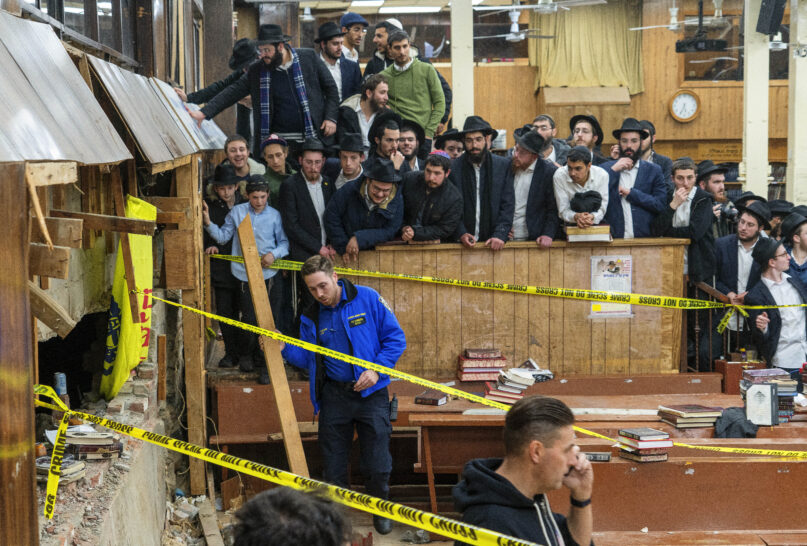
Last week, that vacuum opened wide when a brawl broke out between
rabbinical students and the New York City police after a secret tunnel
was discovered underneath the global headquarters of the
Chabad-Lubavitch movement in the Crown Heights neighborhood of Brooklyn,
New York.
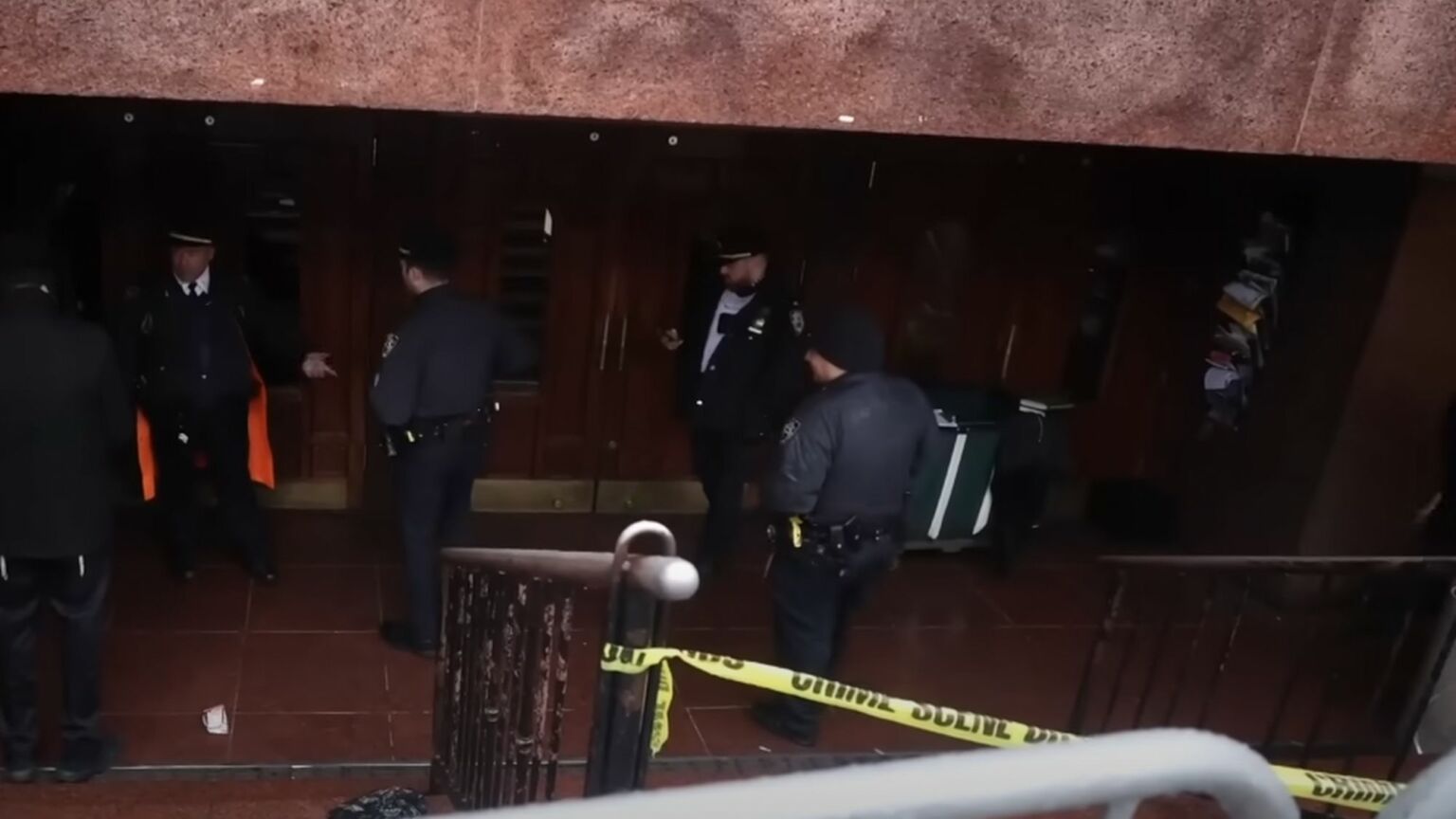
Police arrested nine men between the ages of 19 and 22 who tried to
block a cement truck that had been sent to fill the tunnel. Charges
included criminal mischief, reckless endangerment and obstructing
governmental administration.
RELATED: Nine arrests at Chabad synagogue after students thwart filling of secret tunnel
But while it shocked Crown Heights’ Hasidic community, the tumult was
just the latest in a three-decade-old clash among factions of the
Chabad-Lubavitch movement, a subset of Orthodox Judaism known for its
mystical devotion and strict adherence to Jewish law. Since Schneerson’s
death, his disciples have divided into two main groups, and perhaps
smaller subgroups.
The two groups operate separately, with their own synagogues and
schools. But for three decades they have been locked in a legal dispute
over the ownership of the headquarters buildings, including the iconic
770 Eastern Parkway and the adjacent 784-788, which they share, while
praying separately — one group in the basement synagogue and the other
upstairs in a smaller space.
“In effect, it’s chaos — every group for itself,” said Samuel
Heilman, a retired sociologist at Queens College, the co-author, with
Menachem Friedman, of the 2010 volume, “The Rebbe: The Life and Afterlife of Menachem Mendel Schneerson.”
Both groups share a fervent belief advanced by the rebbe that their
mission is to prepare the ground for the coming of the Messiah. But
while both groups believe Schneerson himself was the Messiah, they
differ about whether he ever even really died.
The tunnel battle represents the latest front in that larger dispute.
The larger group, representing mainstream Chabad globally, owns the
headquarters complex and oversees most of the estimated 5,000 emissaries
who have established Chabad houses across the world.
This group believes the rebbe, who died in 1994, is buried in
Montefiore Cemetery in Queens. It has built a synagogue and visitor
center next to the rebbe’s grave, where they worship and visit
frequently.
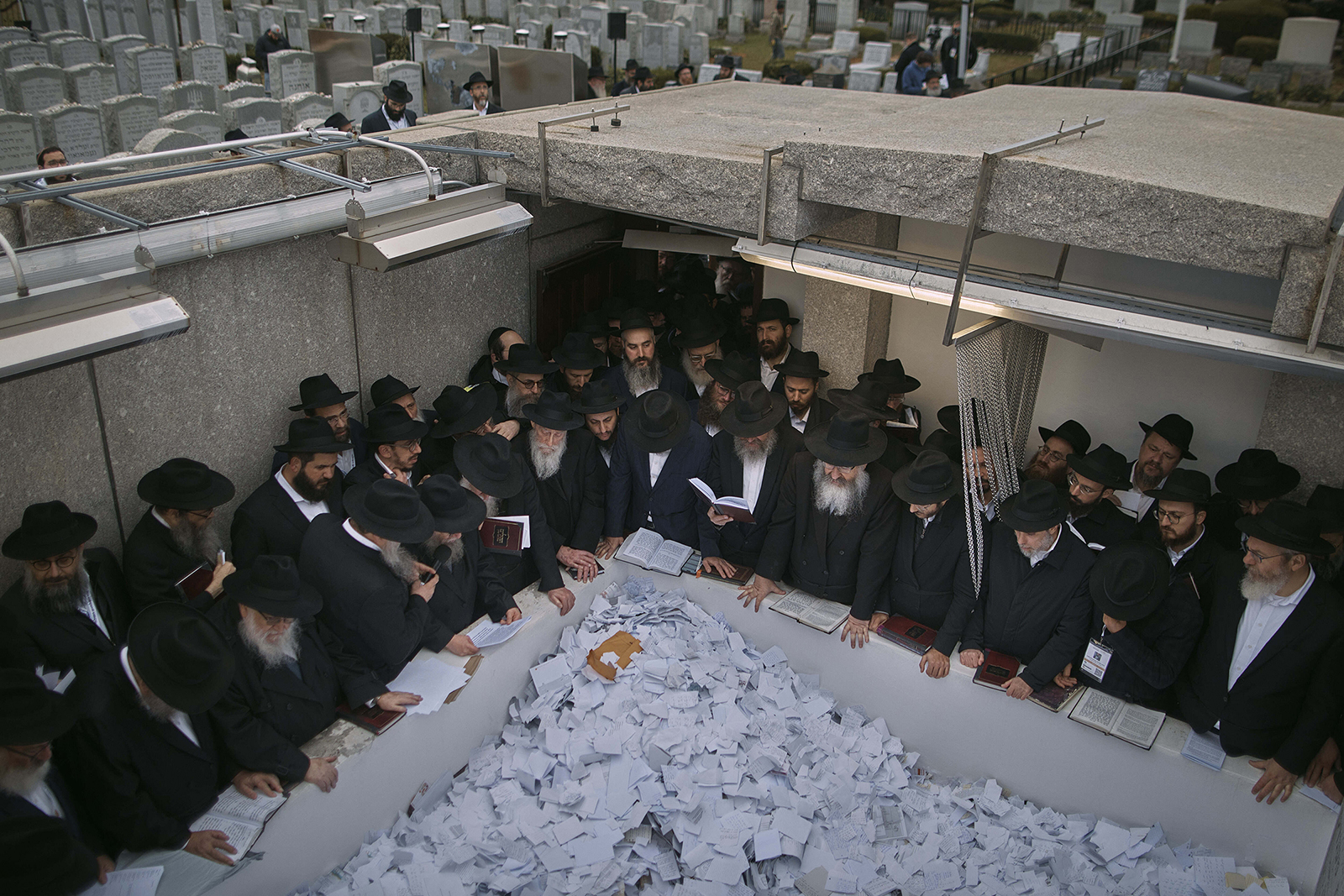
Chabad-Lubavitch
rabbis at the resting/hiding place of the rebbe
This mainstream group also suspects Schneerson will eventually rise
up and reveal himself as the Messiah, but they don’t publicly discuss
it, believing it might detract from their mission to fulfill the Jewish
commandments and bring Jews closer to God so as to hasten the Messiah’s
arrival.
The other group, which includes most of Crown Heights’ estimated
15,000 Chabad adherents plus others, especially in Israel. This group
worships in the basement synagogue and is sometimes called Congregation
Lubavitch. Members of the congregation believe Schneerson never died. He
is in hiding, possibly in the building, and could re-emerge at any
moment.
“They believe if they could expand the synagogue, it would sort of
help usher in the reappearance of the rebbe, the Messianic Age, the end
of times,” said Rabbi Yossi Newfield, a former Chabad member and a scholar whose family members still live in the community.
This group, which is often called “meshichist,” from the word
“messianist,” refuses to visit Schneerson’s grave or refer to him in the
past tense. They are known for chanting, in part or in whole, “long
live our master, our teacher and our rebbe, king Messiah forever and
ever.” They plaster billboards, lamp posts, mailboxes, crossing signs
and cars with posters featuring a photo of the late rebbe with the word
“Moshiach” or “Messiah” in big, bold letters in Hebrew or English.
Inside the synagogue, they’ll behave as though they are in the rebbe’s presence.
“They’ll (act as if) the rebbe is there,” said Joshua Shanes,
professor of Jewish studies at the College of Charleston, who left the
movement. “And they’ll sort of look into empty space as if the rebbe’s
there and nod their heads as if the rebbe said something to them and
then move on to the next person. You can go online and see videos of
this.”
Many of the tunnel diggers, who Chabad media outlets are calling the “Tzfatim,”
from the northern Israeli city of Tzefat or Safed, came to the U.S. for
a year of study at Chabad headquarters. They are aligned with the
meshichists, who, besides their ardent belief in the rebbe, are known
for their exuberant worship and their willingness to scream, shout and,
if necessary, resort to fistfights.
“When you are Messianic-inclined, you don’t worry about limits, you
don’t worry about what seems like the rules,” Shanes said. “If the
Messiah is basically already here, how much more so are you gonna be
encouraged to behave that way?”
It’s not the first time meshichists have engaged in violence. In
2004, they defaced and later destroyed a plaque that the more mainstream
group had affixed to the cornerstone of one of its buildings, causing
the authorities to issue a temporary restraining order. The plaque
referred to the rebbe in Hebrew as “of blessed memory,” which to the
messianists was tantamount to blasphemy, court records show.
The construction of an underground tunnel, some former Chabad
adherents believe, may have been part of an effort to revive a planned
expansion of the building the rebbe himself pushed for. The construction
was slated to begin in 1992, two years before his death, but was never
undertaken.
In an essay explaining
the need for the expansion, Schneerson wrote that the synagogues and
study halls can be thought of as incarnations of the Jerusalem temple in
exile — places where God resided. Referring to 770 Eastern Parkway, he
wrote, “it is the place where the Third Temple will first be revealed.”
(The first and second Jerusalem temples were destroyed, the first by the
Babylonian empire, the second by the Romans.)
“This should be a wake up call to those that are in charge of 770 to
force them to get together and finally create the vehicle to expand
770,” said Rabbi Yosef Carlebach, the executive director of the Chabad
House at Rutgers University.
Carlebach believes the underground dig was misguided and wrong and
many of his fellow meshichists who pray at the downstairs synagogue,
have distanced themselves from the rowdy students and placed the blame
for the brawl on the Israeli students and the seminary that sent them.
Still, he was critical at the complex’s owners for holding up the
rebbe’s vision for expansion.
To him, the rebbe was Messiah, and the work that remains is to bring him back.
That makes it difficult for Chabad to appoint a new leader. If
Schneerson was the Messiah, no possible successor can ever be named to
lead Chabad, because appointing a new leader would be admitting that the
rebbe was not the Messiah.
“Within Chabad, they became stuck on the rebbe’s messiahship,” said
Newfield. “And even his death has not really changed that. They’re
stuck.”
https://religionnews.com/2024/01/18/how-a-battle-over-a-legacy-of-chabads-late-rebbe-led-to-a-brawl-over-an-underground-tunnel/