EVERY SIGNATURE MATTERS - THIS BILL MUST PASS!

EVERY SIGNATURE MATTERS - THIS BILL MUST PASS!
CLICK - GOAL - 100,000 NEW SIGNATURES! 75,000 SIGNATURES HAVE ALREADY BEEN SUBMITTED TO GOVERNOR CUOMO!

EFF Urges Court to Block Dragnet Subpoenas Targeting Online Commenters

EFF Urges Court to Block Dragnet Subpoenas Targeting Online Commenters
CLICK! For the full motion to quash: http://www.eff.org/files/filenode/hersh_v_cohen/UOJ-motiontoquashmemo.pdf

Monday, July 27, 2020

Hands On Hershel Schachter Seems to Be Busy With Life Threatening Issues (Who can wash their hands?) --- Why Not Go Bold, Like... Certainly Anyone in Poor Health Over A Certain Age Should Not Fast Beyond Chatzos? In This Covid-19 Era, It is a Vadei Sakana For The Sick and Elderly...


Rabbi Shachter says that they view the virus as a Safeik Sakana, a potential danger and therefore during the present period they would be allowed to wash and use alcohol gel, whereas those who are not so stringent would be forbidden to use disinfectant or wash since during the year they rely on “Hashem preserves the simplehearted” (Tehillim 116:6). In other words one who is flippant and is careless about the other rules cannot say that he needs to wash his hands as protection against the virus. If someone is disregarding the other rules of the CDC, he cannot insist on this one, and washing would remain prohibited.

Sunday, July 26, 2020

Anybody See Chaim Dovid Zweibel?


NEW YORK - Camp Bnos announced that due to two confirmed cases of coronavirus, they are ending the first session of the summer two days early.

In a letter to parents, the administration informed the parents of their campers that due to the infections that were detected, the camp will close early, and that all who have been exposed to the infected parties have been notified and should quarantine for 14 days.

The campus, located in Ferndale, New York, has not yet determined if they will operate for the second session of the summer.

https://hamodia.com/2020/07/26/camp-bnos-closing-early-due-two-confirmed-covid-19-cases/

Friday, July 24, 2020

Some reports place children at the center of spreader events. In Israel, the number of new cases has risen from fewer than 50 per day two months ago, before schools reopened, to more than 1,500 per day now. Those numbers followed school outbreaks that infected at least 1,335 students and 691 staff. An overnight camp for 13-to-18-year-olds in Missouri closed after 82 children and staff became infected.


What Scientists Know About How Children Spread COVID-19

As communities struggle with the decision over whether to open up schools, the research so far offers unsatisfying answers

Boy gets his temperature checked
A boy has his temperature checked as he receives a COVID-19 test

Every year, children are a major driver of transmission for the viruses that cause the flu and the common cold. So this March, when the COVID-19 pandemic hit the United States, Tina Hartert of the Vanderbilt School of Medicine expected the same to be true for the novel coronavirus, SARS-CoV-2. But months later, Hartert and other respiratory disease experts are still trying to pin down the elusive virus, which has surrendered only hints about its effects on children and their ability to spread the infection.

What has become clear is that children, especially younger children, do not get nearly as ill as adults, especially older people, and rarely die from COVID-19. For example, a meta-analysis of existing studies in Pediatric Pulmonology looked at 550 cases among children under 18 in China, Italy, and Spain; it found only nine children had a severe or critical case of COVID and only one, who had underlying conditions, died.

Still, the question of how likely kids are to be vessels ferrying the infection to others remains a looming concern as school districts and states across the U.S. consider whether and how to reopen for the fall. “It's obviously one of the critical questions that we have to answer,” Hartert says. “We still don't have a lot of data.”

Hartert now leads a six-month study funded by the National Institutes for Health that looks to answer that question, among others. Called the Human Epidemiology and Response to SARS study (HEROS), it will sample 1,951 families every two weeks starting July 1. The families live mostly in urban areas like Chicago, New York and Denver, but the study also includes some from rural Wisconsin. The goal is to capture infections as they occur and track the transmissions patterns. “One of the problems with a lot of the studies that have been done is you really don't know who's infected and then who transmitted it to whom,” she says.

The first samples are being analyzed now. How informative the data set becomes depends on the subjects—whether it includes clusters of families who are infected and shows how the virus spreads. “It's a difficult thing to predict,” she says.

Elsewhere, researchers have teased out evolving and sometimes contrary answers to basic questions about COVID and kids, with only enough pieces fitting together to suggest the outlines of an image.
For one study, published in May, researchers analyzed reports from more than 600 people from two cities in China: Wuhan, the epicenter of the outbreak, and Shanghai. In this relatively small sample size, they found children were a little more than a third as likely to be infected as adults. But children had roughly three times as many chances to become infected when schools were open, effectively canceling the difference.

Another recent study by the London School of Hygiene & Tropical Medicine, which used data from China, Italy, Japan, Singapore, Canada and South Korea, found that people under 20 were about half as likely as adults to be infected. But the researchers qualified their findings, noting that there were variations among countries and age groups. Recent data in England, they noted, found little difference in infection rates among children and adults. Nicholas G. Davies, an epidemiologist and modeler who led the study, said what happens with kids and COVID remained a mystery.

The fact that children are less likely to exhibit symptoms while infected makes the problem of determining how well they spread the coronavirus even trickier to figure out. But emerging studies and the history of the common coronaviruses being transmitted by children makes for a compelling case they can spread the COVID-19 virus.

A recent study from South Korea of 5,706 infected people and their 59,073 contacts found children under 10 transmitted less often to adults while those between the ages of 10 and 19 spread the virus as well as adults do. Households with the older children had the highest rate of spread to other members—18.6 percent— of any age group while households with younger children had the least spread, just 5.3 percent. The overall average was 11.8 percent.

There’s evidence as well that children, including those without symptoms, are as likely to be infectious. Researchers in Berlin tested more than 3,700 COVID-19 patients, including 127 individuals under 20 years old. The study found that compared to adults, kids carried the same viral load, a signal of infectiousness.

Some reports place children at the center of spreader events. In Israel, the number of new cases has risen from fewer than 50 per day two months ago, before schools reopened, to more than 1,500 per day now. (Today it reached 2000) PM 

Those numbers followed school outbreaks that infected at least 1,335 students and 691 staff. An overnight camp for 13-to-18-year-olds in Missouri closed after 82 children and staff became infected. 

Yang Yang, a biostatistician at the University of Florida’s College of Public Health, is completing a study based on nearly 20,000 households. He says his preliminary results reveal that children do infect adults, especially in the same households. “Our analysis is that children are a little bit more infectious than adults with in-house transmission,” he says, but that may just be because they are tended to by parents or grandparents in homes.

A teacher reads to children in a pre-school class practicing coronavirus precautions
A teacher in a pre-school class practicing coronavirus precautions
Jeffrey Shaman, an infectious disease expert at Columbia University's Mailman School of Public Health who has been a leading COVID-19 researcher, says it’s impossible to get a clear picture of the effects of COVID on kids right now. Shaman and his team spent two years running the Virome of Manhattan, a surveillance project similar to HEROS, which tracked infections and transmission of flu, cold viruses and the coronaviruses that cause the common cold.

They found viruses moving from schools and daycare facilities, from children to parents, something any parent who sends their children to daycare or pre-kindergarten for the first time recognizes. However, the studies to date about COVID-19 and children have been too small or too compromised by factors such as school closings, lack of testing or much smaller community caseloads than the United States. 

“The question is, what happens when the children get it? Are they effectively dead ends?” he says. “Or are they capable of communicating the virus and spreading it to other people? And I think the evidence is not conclusive. We don't know enough to know that children to some degree are less capable of transmitting this virus.”

Derek Cummings, an emerging pathogens expert at the University of Florida, says he’s not convinced by the evidence that children are less likely to transmit the disease. His work with the endemic coronaviruses, relatives of SARS-CoV-2, shows that children are infected with their first coronavirus by three and get all four of the common coronaviruses by 20. “Every other coronavirus infects kids and transmits among kids,” he adds, “so why would we assume this one doesn't?”

Hartert says that the research indicating children may not as often transmit the virus would, once again, make SARS-CoV-2 an outlier. She noted that studies show children are shedding a similar amount of COVID-19 virus as adults, which would suggest they were equally capable of transmittal. “So there are a lot of things that would make it surprising if we find out that children are less likely to transmit the virus,” she adds.

Back to school
Shaman says he understands the need to get children back to school, but it's hard to gauge the risk given the current state of knowledge and information slanted by governments looking to reopen schools. “We don't have a policy model and an experience model that allows us to understand what will be appropriate,” he adds. “We're dealing with a novel coronavirus. We don't fully understand how children are involved in the transmission cycle.”

Hartert, a former high school teacher, said that schools need to reopen for a number of reasons, including mitigating the inequities of staying at home for low-income students who need support for things like meals and after-school care. But in her opinion, reopening should only happen in states and communities where the virus is under control. (Other countries have reopened their schools, but only after the virus had been subdued and often with limited class sizes.)

“There aren't many other countries that have opened schools while rates of the virus are increasing exponentially,” she says. “If you live in a region where there's more spread of the virus, it's a lot more likely that you have an outbreak from a teacher, parent, or child who brings the virus to school.”

Mitigation strategies like masks, social distancing and ventilation need to be in place as well. “We're going to have to weigh the risks and benefits with the amount of data that we have at the point which we have to make decisions about opening schools,” she says. “We've got to get our kids back to school and we've got to open daycares for essential workers. I think everyone wants to do that. But it's not as easy as just mandating that it happen.

https://www.smithsonianmag.com/science-nature/what-scientists-know-about-how-children-spread-covid-19-180975396/?utm_source=&utm_medium=&utm_campaign=&spMailingID=43028347&spUserID=MTAwOTA4NTE0MjE5MQS2&spJobID=1801840301&spReportId=MTgwMTg0MDMwMQS2

Thursday, July 23, 2020

As Israel Struggles Desperately, Aryeh Deri Opens Up Israel's Borders To Foreign Students Come September. Follow The Money!

Israel Isn't Prepared
for the Second Wave
Alternate text
The second wave has completely devastated Israel and the government’s handling of the situation has been a subject of criticism. The state's contact tracing system is failing, their economic stimulus plan is inadequate, their healthcare system is overwhelmed, their food distribution efforts are insufficient, and the economy is in ruins after a long lockdown with another one around the corner. As a result, the number of Israelis facing economic hardship and can't provide food for their families is growing, rapidly.
Active Cases in Israel
Alternate text

Tuesday, July 21, 2020

The case of accused child sex offender Malka Leifer has tarnished the image of Torah and the image of Israel in the world


The Burning Talmud 

The case of accused child sex offender Malka Leifer has tarnished the image of Torah and the image of Israel in the world
Family members of Malka Leifer, an Ultra orthodox teacher wanted in Australia for child sex abuse, arrive for a court hearing at the District Court in Jerusalem on July 20, 2020. Photo by Yonatan Sindel/Flash90
Family members of Malka Leifer, an Ultra orthodox teacher wanted in Australia for child sex abuse, arrive for a court hearing at the District Court in Jerusalem on July 20, 2020.

 
The burning of the Talmud is a powerful image. Next week, as many Jews fast on Tisha be-Av, we will read a dirge composed to commemorate the destruction of as many as ten thousand Talmudic manuscripts in Paris in 1242.

But yesterday I was hoping that a certain volume of Talmud would burst into flame. It was in a Jerusalem courtroom, on the table of the defense counsel for Malka Leifer, captured by my friend Ittay Flescher for Plus61J Media, which covers the Jewish world for an Australian audience. Leifer is facing 74 counts of child abuse from her time as an ultra-Orthodox girls’ school principal in Melbourne, and this was her 69th hearing since three sisters came forward a decade ago to tell their harrowing story of victimization at her hands. 

So whose Talmud was it? Her longtime lawyer Yehuda Fried brought the gigantic ArtScroll edition (Pesachim, Volume I, it appears) to peruse while her new counsel Nick Kaufman (famous for fighting extradition for Serbian genocidists and Muammar Gaddafi’s kids) used the opportunity to blame the victims. Yes, they were minors, but they almost weren’t. Who’s to say these 16- and 17-year-old students weren’t really the ones at fault? To extradite Leifer for a trial that will determine her guilt or innocence, the Israeli courts must first find her guilty! And she’s such a pious woman, how could she maintain her religious standards in an Australian prison?

These arguments are patently ludicrous, and hopefully Judge Chana Miriam Lomp will reject them. But they do so sound awful… Talmudic. The Talmud is often criticized for sophistry, for picayune dissection of impossible abstractions. However, some of the wildest theoretical discussions in the Talmud have turned out to be essential over the millennia. A flying tower crossing over a graveyard, a flying camel ferrying witnesses from one far-flung location to another, a cow giving birth to a donkey, a woman getting pregnant from a bath – these all seemed ridiculous until we developed analogous technology.

But that is the difference between a beit midrash and a beit mishpat, a study hall and the halls of justice. In a courtroom, we are dealing with real people, not teasing out theoreticals.

Am I arguing that Malka Leifer does not deserve a fair trial with a vigorous defense? Not at all; that is what awaits her in Australia. In Israel, it has all been about fraud and denying justice by delaying justice. This 69th hearing was the first extradition hearing, as the previous 68 were about feigning various forms of illness, mental and otherwise, aided and abetted by too many in the ultra-Orthodox community, up to and including our (recently former) Minister of Health Yaakov Litzman, whom the police have recommended indicting for his part in the affair. This case has tarnished the image of Torah and the image of Israel in the world. A hillul ha-Shem, desecration of God’s name, in every sense of the term.

And let’s not forget what the Talmud symbolizes for Orthodox Jewish women, which include not only the accused and the victims, but the presiding judge as well. Until recently, the Talmud was a symbol of patriarchy, a part of Jewish tradition controlling nearly every aspect of the lives of Jewish women but which they were forbidden to open. Only in the mid-20th century did this begin to change, and in many parts of the Orthodox community, especially the ultra-Orthodox sects, it hasn’t really changed at all. So when Fried peruses his Gemara while Kaufman proffers klutz kashyas that even Hillel the Great wouldn’t have entertained, this sends a message of intimidation, telling women that they will never be equal. Or even heard.

As our Sages might have said: Better that the words of Talmud be burnt than that they be used to oppress and to victimize.

https://blogs.timesofisrael.com/the-burning-talmud/?utm_source=The+Daily+Edition&utm_campaign=daily-edition-2020-07-21&utm_medium=email

Monday, July 20, 2020

Perfect For The 3 Weeks - No Worries it's Not Music!


Bobov-45 Rebbe Composes Niggun in Honor of Previous Rebbe’s Yahrtzeit

Bobov-45 Rebbe Composes Niggun in Honor of Previous Rebbe’s Yahrtzeit
Boro Park - The Bobov-45 rebbe has composed a new niggun in honor of the 20th yahrtzeit of his sainted zeide, Rav Shlomo Halberstam of Bobov zt”l.

The niggun, on the words of Menucha Vsimcha was taught to the chassidim on Shabbos, which marked the Shabbos before the rebbe’s yahrtzeit.


Friday, July 17, 2020

This Is The Reason Boro Park 24 Gives For The Drug Overdose: "The non-Jewish men were employed at a Jewish camps that was forced to operate as a day camp because of Covid rules in New York. They took advantage of the children leaving on a trip and overdosed on the illegal substances. In Other Words, If This Was An Overnight Camp, These Guys Would Never Have Overdosed :-)


Workers at Jewish Day Camp in Serious Condition After Drug Intake


Kiamesha - Three workers at a Jewish day camp are in serious condition after they overdosed on drugs while the children were away from the grounds.

The non-Jewish men were employed at a Jewish camps that was forced to operate as a day camp because of Covid rules in New York. They took advantage of the children leaving on a trip and overdosed on the illegal substances.

Volunteers from the Catskills Hatzolah and other emergency first responders treated the three workers on scene and then transported them to a regional hospital.

Thursday, July 16, 2020

This is our second chance. We won’t get a third. If we don’t get the growth of this pandemic under control now, in a few months, when the weather turns cold and forces people to spend more time indoors, we could face a disaster that dwarfs the situation today.

The Pandemic Could Get Much, Much Worse. We Must Act Now.

A comprehensive shutdown may be required in much of the country.
 

When you mix science and politics, you get politics. With the coronavirus, the United States has proved politics hasn’t worked. If we are to fully reopen both the economy and schools safely — which can be done — we have to return to science.

To understand just how bad things are in the United States and, more important, what can be done about it requires comparison. At this writing, Italy, once the poster child of coronavirus devastation and with a population twice that of Texas, has recently averaged about 200 new cases a day when Texas has had over 9,000. Germany, with a population four times that of Florida, has had fewer than 400 new cases a day. On Sunday, Florida reported over 15,300, the highest single-day total of any state.

The White House says the country has to learn to live with the virus. That’s one thing if new cases occurred at the rates in Italy or Germany, not to mention South Korea or Australia or Vietnam (which so far has zero deaths). It’s another thing when the United States has the highest growth rate of new cases in the world, ahead even of Brazil.

Italy, Germany and dozens of other countries have reopened almost entirely, and they had every reason to do so. They all took the virus seriously and acted decisively, and they continue to: Australia just issued fines totaling $18,000 because too many people attended a birthday party in someone’s home.

In the United States, public health experts were virtually unanimous that replicating European success required, first, maintaining the shutdown until we achieved a steep downward slope in cases; second, getting widespread compliance with public health advice; and third, creating a work force of at least 100,000 — some experts felt 300,000 were needed — to test, trace and isolate cases. Nationally we came nowhere near any of those goals, although some states did and are now reopening carefully and safely. Other states fell far short but reopened anyway. We now see the results.

While New York City just recorded its first day in months without a Covid-19 death, the pandemic is growing across 39 states. In Miami-Dade County in Florida, six hospitals have reached capacity. In Houston, where one of the country’s worst outbreaks rages, officials have called on the governor to issue a stay-at-home order.

As if explosive growth in too many states isn’t bad enough, we are also suffering the same shortages that haunted hospitals in March and April. In New Orleans, testing supplies are so limited that one site started testing at 8 a.m. but had only enough to handle the people lined up by 7:33 a.m.

And testing by itself does little without an infrastructure to not only trace and contact potentially infected people but also manage and support those who test positive and are isolated along with those urged to quarantine. Too often this has not been done; in Miami, only 17 percent of those testing positive for the coronavirus had completed questionnaires to help with contact tracing, critical to slowing spread. Many states now have so many cases that contact tracing has become impossible anyway.

What’s the answer?

Social distancing, masks, hand washing and self-quarantine remain crucial. Too little emphasis has been placed on ventilation, which also matters. Ultraviolet lights can be installed in public areas. These things will reduce spread, and President Trump finally wore a mask publicly, which may somewhat depoliticize the issue. But at this point all these things together, even with widespread compliance, can only blunt dangerous trends where they are occurring. The virus is already too widely disseminated for these actions to quickly bend the curve downward.
To reopen schools in the safest way, which may be impossible in some instances, and to get the economy fully back on track, we must get the case counts down to manageable levels — down to the levels of European countries. The Trump administration’s threat to withhold federal funds from schools that don’t reopen won’t accomplish that goal.

 To do that, only decisive action will work in places experiencing explosive growth — at the very least, limits even on private gatherings and selective shutdowns that must include not just such obvious places as bars but churches, also a well-documented source of large-scale spread.

Depending on local circumstances, that may prove insufficient; a comprehensive April-like shutdown may be required. This could be on a county-by-county basis, but half-measures will do little more than prevent hospitals from being overrun. Half-measures will leave transmission at a level vastly exceeding those of the many countries that have contained the virus. Half-measures will leave too many Americans not living with the virus but dying from it.

During the 1918 influenza pandemic, almost every city closed down much of its activity. Fear and caring for sick family members did the rest; absenteeism even in war industries exceeded 50 percent and eviscerated the economy. Many cities reopened too soon and had to close a second time — sometimes a third time — and faced intense resistance. But lives were saved.

Had we done it right the first time, we’d be operating at near 100 percent now, schools would be preparing for a nearly normal school year, football teams would be preparing to practice — and tens of thousands of Americans would not have died.

This is our second chance. We won’t get a third. If we don’t get the growth of this pandemic under control now, in a few months, when the weather turns cold and forces people to spend more time indoors, we could face a disaster that dwarfs the situation today.

John M. Barry is a professor at the Tulane University School of Public Health and Tropical Medicine and the author of “The Great Influenza: The Story of the Deadliest Pandemic in History.”

Wednesday, July 15, 2020

In the Name of Religious Freedom....Just ask the Agudah & the Jewish Camp Owner$!


Holy Fight Ministries Loses Cockfighting Religious Freedom Lawsuit

|The Volokh Conspiracy |


From Judge Brian A. Jackson's opinion yesterday in Plumbar v. Perrilloux (M.D. La.):
[T]he Louisiana Criminal Code … makes it unlawful for any person to … "organize or conduct any commercial or private cockfight wherein there is a display of combat or fighting among one or more domestic or feral chickens and in which it is intended or reasonably foreseeable that the chickens would be injured, maimed, mutilated, or killed."
Plaintiffs … argue that the burden imposed on their religious practice of cockfighting is at odds with the Louisiana Preservation of Religious Freedom Act ("LPRFA"). They adequately summarize the core of their argument in the following syllogism: "[i]f the use of peyote, a Schedule I drugs [sic], is permitted…then it stands to reason that an exception should be carved out…for the Plaintiffs and their congregation [to engage in cockfighting] to practice their faith." …

Several photographs taken during a police raid were offered by [the government]. The photos depicted a cockfighting arena littered with discarded food and alcohol containers; a handwritten betting ledger; "cockhouse" fees and membership rules; rooster corpses; and other indicators of a commercial cockfighting operation. Signs were discovered in the area, including one reading "Milk Dairy Game Club House Rules," and another smaller sign reading "Holy Fight Ministries"—apparently the only indicator of any religious object in the facility. At oral argument, Plaintiffs argued that while they lease the premises from the Game Club, they are not a commercial operation and were not present the night of the raid when the incriminating evidence was seized….

[Plaintiffs] are unlikely to succeed on the merits of their claims [1] because Defendants have provided satisfactory evidence to show that the state has a compelling interest in enacting a law banning cockfighting and [2] because the evidence casts doubt upon the type of institution operated by Plaintiffs. In other words, the evidence suggests that the cockfighting activities were more commercial in nature than a bona fide religious ritual….
Read the Comments: My Favorite so far: 

It is not the job of the courts to question one’s religious beliefs. This is a disgusting attack on freedom of religion.


https://reason.com/2020/07/14/holy-fight-ministries-loses-cockfighting-religious-freedom-lawsuit/#comments

Tuesday, July 14, 2020

The Virus is Not Democrat or Republican, Christian or Jew, I fear New York Will Suffer The Same Fate By The Time The Summer Is Over - Keep An Eye On The Catskills Crowd Coming Back To The City!


California rolls back reopening plans as new outbreaks force major reversal

The hardest hit counties of California will see the toughest constraints, Newsom said.
OAKLAND — Gov. Gavin Newsom shut down indoor activities across California on Monday in the starkest sign yet that the nation’s most populous state is scrambling to prevent months of progress against the coronavirus from evaporating.

Newsom ordered houses of worship, gyms and barbershops to close across dozens of counties that collectively contain the vast majority of California’s population and most of its urban centers. Statewide, bars will need to again shutter and restaurants must halt indoor dining.

The sweeping order punctuated California’s rapidly deteriorating situation. In March, Newsom was the first governor in the nation to fully shut down his state, elevating California into a poster child for aggressive efforts to limit the pandemic’s spread. Public health officials credited the effort with staving off a surge that might have crippled the state’s health care system.

"We were able to suppress the spread of this virus, we were able to knock down the growth of this in the beginning," Newsom said Monday as he issued new restrictions. "We're going to do that again, there's no doubt in my mind."

Caseloads and hospitalization numbers have risen sharply in recent weeks as California authorized counties to restart various sectors of the economy. Hospitals in some parts of the state are staring down the prospect of running out of beds as the state's seven-day average of new infections is approaches 9,000 daily, while its positive test rate has climbed above 7 percent after hovering near 4 percent during the initial reopening process.

The Democratic governor previously ordered especially stricken counties to bar indoor commerce like inside dining and museums, but his Monday order expanded that mandate to cover all 58 counties in California — a clear acknowledgment that the state must do more to control the rapid spread of the disease.

"This virus is not going away any time soon," Newsom said.

Newsom made a point Monday of delineating between indoor and outdoor activities, and his policies seem focused on preventing people from engaging in social activity indoors.

While Newsom drew some praise for restoring safeguards, California’s fluctuating restrictions have spurred anger and frustration among businesses and residents forced to navigate an ever-changing landscape. Republicans assailed his order Monday, with California Republican Party Chair Jessica Millan Patterson charging Newsom had “failed Californians” by closing businesses and issuing confusing guidance to schools.

“His failure to accept responsibility and provide the direction to help our state navigate this crisis shows how he clearly is not the leader California needs,” Patterson said in a statement. “He has shown his true colors — and he's simply not up to the task.”

The governor has said from the start that he retains the authority to tighten restrictions if numbers trend in the wrong direction, and he has clamped down in recent weeks. Monday’s order followed Newsom’s earlier directives mandating mask use statewide and forcing bars to close in several counties.

The hardest hit counties of California will see the toughest constraints, Newsom said. Dozens of counties that have landed on the state’s monitoring list — including nearly all of Southern California, plus most of the Central Valley and San Francisco Bay Area — will have to shutter places of worship, fitness centers, barbershops and shopping malls.

In another sign of California’s precarious status, the state’s two largest school districts — those serving San Diego and Los Angeles — announced on Monday that students would not return to campus in the fall, a decision that affects more than 700,000 students.

https://www.politico.com/states/california/story/2020/07/13/newsom-orders-statewide-shutdown-of-california-indoor-businesses-1300309

Monday, July 13, 2020

What The H... Is Wrong With Jewish Parents?

“When you have a facility that can host 600 people,” he said, “50% is 300, and that’s still a lot of people, during a pandemic, to come into a small community and stay for a long period of time coming from other places in the country, including some of the hardest-hit places, like New York City, and the surrounding communities in New Jersey and elsewhere.”

Campers unload from charter buses at Rutland’s Holiday Inn Sunday evening. Courtesy of John Faigant, Rutland Town Health Officer

A summer camp at the Holiday Inn in Rutland Town is over the capacity permitted under Vermont’s Covid-19 restrictions, according to the state.

Town offices in both Rutland and Bennington have been inundated with complaints about the camp, BRC Teens, which is currently hosting two groups of around 350 out-of-state campers — one at the Holiday Inn in Rutland, and another at the former campus of Southern Vermont College.

The camp’s Bennington branch appears to be complying with Gov. Phil Scott’s executive order, which caps summer camp occupancy at 75%. But the Rutland camp has exceeded the 50% capacity limit the state has in place for lodging establishments.

The Holiday Inn’s full capacity is 600, according to Michael Schirling, commissioner of the Department of Public Safety. With an estimated 350 to 400 campers at the hotel, BRC Teens, is over the limit. 

Vermont’s Division of Fire Safety visited the hotel Wednesday morning and issued a warning; they are expected to return Friday for another inspection, Schirling said.

Rabbi Moshe Perlstein
Rabbi Moshe Perlstein, who runs both camps, has until then to decide how to relocate 50 to 100 of the Rutland campers, and Schirling is now working with the camp director to figure out where to send them. 

Schirling said the Holiday Inn, not the camp, is responsible for coming into compliance.

The Holiday Inn declined to comment, and instead referred VTDigger to Perlstein, who did not immediately answer a request for an interview.

Schirling said the camp director is cooperating fully with the state. Perlstein also attended a Rutland Town Selectboard meeting on Tuesday night where he listened as John Faignant, the town’s health officer, listed concerns about the camp.

Faignant, who is also a selectman and constable in Rutland Town, was troubled by what he saw at the hotel when he visited Sunday evening.

The first town official to learn about Rutland’s branch of the camp, Faignant responded to a complaint on Sunday evening from a resident who told him that busloads of people were arriving at the Holiday Inn. 

Faignant interviewed one of the bus drivers, who told the health inspector that the bus had carried 50 children, and that at least five more buses were on the way. Most campers are from New York and New Jersey.

Perlstein told VTDigger on Tuesday that buses to the camp in Bennington included space for campers to socially distance from each other. He hoped to quell residents’ concerns about the approximately 15 buses that arrived on the Southern Vermont College campus over the weekend by stating that the buses were not full. 

Faignant doubts the validity of that statement based on the buses that arrived in Rutland. “That’s what the driver told me, that each bus was carrying 50 campers,” he said. “And there’s no way you could socially distance 50 campers on a bus.”

Most coach buses made by Prevost, the company that produces the buses shown in photos taken by Faignant, hold fewer than 60 passengers.

Faignant watched and took photos on Sunday as campers, some of whom were not wearing masks, unloaded from the bus to exchange hugs and close-up greetings.

“I observed staff not wearing masks, and when they learned who I was, they put masks on,” Faignant said.

Perlstein has said each camper was required to take a Covid-19 test days before traveling to Vermont. Campers’ results were negative, and those who had positive results were not allowed to come, he said. Faignant questioned whether all the tests were recent enough, and planned to meet with the camp director Thursday evening to review records of the tests.

Both the health officer and Joshua Terenzini, president of the Rutland Town Selectboard, are concerned about the potential for Covid-19 to spread from such a large gathering into the surrounding community.

He’s also concerned that splitting campers into two groups and transporting them elsewhere in town to reduce occupancy at the hotel, per the Department of Public Safety’s request, would be “counterproductive,” as it could endanger additional members of the community.
Terenzini has been fielding calls and messages from concerned citizens around Rutland County this week.

“My phone, my Facebook, Town Hall’s phone, our other board members, City Hall in Rutland City, Mayor Dave Allaire,” he said, “we have all been inundated with comments and concerns and questions and frustrations and fears, which I think are pretty realistic.”

Terenzini is concerned for the hotel staff, which he says has been reduced, who will engage with other community members.

“We’re very concerned for them,” he said. “We’re concerned for the loved ones they go home to, we’re concerned for the grocery store workers they come in contact with. We’re concerned for the community, that this could be the way it’s transmitted out of the facility.”

Terenzini said the town wishes Scott would reconsider the 50% occupancy requirement for hotels, and instead base the occupancy cap on the size of the institution. While he thinks the rule, as it stands, makes sense for small bed-and-breakfast-style inns, he feels large hotels should be more restricted.

“When you have a facility that can host 600 people,” he said, “50% is 300, and that’s still a lot of people, during a pandemic, to come into a small community and stay for a long period of time coming from other places in the country, including some of the hardest-hit places, like New York City, and the surrounding communities in New Jersey and elsewhere.”

Bennington town officials released a statement yesterday detailing actions the town has taken to ensure compliance with Scott’s executive order, including a cap on 75% occupancy at summer camps.

Given the camp’s reported number of 350 campers, the camp is well within occupancy of Southern Vermont College’s campus, which has an occupancy of around 1,000 people, Schirling said.

Some Bennington residents are frustrated that state officials have relied on the camp director’s word, and have not attempted to otherwise verify the number of campers, their negative Covid-19 tests, or whether campers and staff members are socially distancing and wearing masks.

“If there are reasonable grounds to believe someone’s in violation of an executive order, then we send a variety of different entities depending on the circumstances to check in on that,” Schirling said. “There’s been no information coming out of Bennington to indicate that they are not in compliance with the health and safety guidance.”

The town’s statement, written by Bennington Selectboard Chair Don Campbell and Stuart Hurd, town manager, also mentioned a blog post — titled “Jackson NJ Lawbreaker Sets Up Sketchy Summer Camp in Vermont?”— by an organization called Rise Up Ocean County that circulated recently. The group has been under scrutiny by New Jersey officials and anti-hate watchdog groups for anti-Semitic and racist comments that appeared on its Facebook page.

“Earlier this year, the governor of New Jersey identified Rise Up Ocean County as an anti-Semitic group and their Facebook page was taken down due to their hateful messages about the Jewish community,” the statement reads. “The town of Bennington does not condone any hateful rhetoric and strives to create a welcoming and safe environment for all.”

Terenzini said his reluctance about Perlstein and the camp is centered on health concerns and its alignment in timing with Covid-19.

“In normal times, without a pandemic, we would roll out the red carpet for him and his youth,” he said. “We would celebrate with him and we would welcome him to Rutland Town. But this has everything to do with the health and safety of our community. We want them here during normal circumstances, but this is a pandemic!

https://vtdigger.org/2020/07/09/camp-at-rutland-hotel-exceeds-covid-19-capacity-limits-state-says/

Friday, July 10, 2020

Rabbi Agudah Zwiebel:" We Faithfully Tried to Fight for Summer Camps. What made the court’s ruling especially painful to Agudath Israel was the fact that, at the urging of our rabbinic leadership and other prominent menahalim and mechanchim, we had placed special emphasis in our advocacy efforts on getting the camps up and running."

Coronavirus sweeps summer camp, infects 82 campers, counselors and staff in Missouri


Summer camp, a rite of passage for 26 million youths each year, hangs in the balance.

Corona clapped back.

Missouri leaders thought they had their coronavirus transmission under control, with solid plans to keep everyone socially distanced enough to be safe.

But at least 82 campers, counselors and staff were infected at Kanakuk Kamp near Branson, Mo., and the teens had to be sent home, the Associated Press reported. That was the confirmed amount as of Monday, up from 42 the previous Friday, AP said.

Kanakuk Kamps is a network of Christian sports camps in Missouri, according to People.
State public health experts told them of the risks but had expressed confidence in the measures the camps planned to take to keep the infection from spreading.

Several states are reporting outbreaks of coronavirus at summer camps, AP said.

“Stone County Health Department (SCHD) continues to further investigate the Covid-19 cases at Kanakuk K-2 camp in Lampe (Stone County),” health department officials said in a statement Monday. “At the time of this release 82 campers, counselors and staff have tested positive for Covid-19. All 82 positive cases were from the Kanakuk K-2 camp in Lampe. Many of these cases returned to their place of residence and then tested positive.”

Thirty-one people were tested at the camp, health officials said, adding that they are monitoring those cases and their close contacts. Kanakuk is working with county health officials, the statement said.
“The decision to close has resulted in all campers, counselors and staff to return to their homes,” the camp said. “SCHD will be working closely with Kanakuk Kamps to identify exposed individuals and quarantine those individuals, as necessary.”

While states including Oregon, New York, New Jersey and Connecticut have opted not to open their summer camps due to just such a risk, others have attempted to forge ahead, AP said.

Kanakuk had all the best intentions for its 20,000 total campers across the state.

“We are focused on taking all reasonable measures to prevent the spread of COVID-19 in our Kamps,” camp officials told parents, according to NBC News.

That was around May 30, opening day. By Friday the infection count was initially 41 campers, counselors and staff members testing positive, from 10 states and multiple Missouri counties, NBC News said. That quickly rose to 49, and then again to 76 on Monday morning. By Monday afternoon it had risen to 82.

Outbreaks has also been reported at camps in Texas, Georgia, North Carolina and Tennessee, AP said.

Thursday, July 09, 2020

Agudath Israel....Ready--- Set----Go! Send In The Clowns...


July 8, 2020


Dear Paul,


I understand many people are anxiously awaiting a decision on school reopening. New York has 700 school districts statewide that range from rural to urban to suburban districts and we have been spending the past weeks and months in discussion with all stakeholders on what September looks like.

 As in every other decision on reopening, our first responsibility is health and safety. All schools are required to submit a reopening plan by the end of July.


We all want schools to open, but we must ensure that it is safe. I wouldn't ask anyone to put their child in a situation that I would not put my child in. Like every decision we make, we will decide based on data and facts. A plan will be announced in the first week of August. 


Ever Upward,
Governor Andrew M. Cuomo

Wednesday, July 08, 2020

The Department of Health told camp operators in a recent letter that many of them had gotten permits to open as "temporary residences," and warned them about the mandates they would have to follow, including a requirement that parents stay overnight with their children. The department didn't respond to questions from the Times Herald-Record about how many camps got those permits. In a statement to the Record last week, officials said the prohibition on overnight camps was based on science and meant to protect children, and vowed to stop any attempts to get around the ban.


Judge denies request to allow opening of Orthodox sleepaway camps in Catskills

Chris McKenna
Times Herald-Record

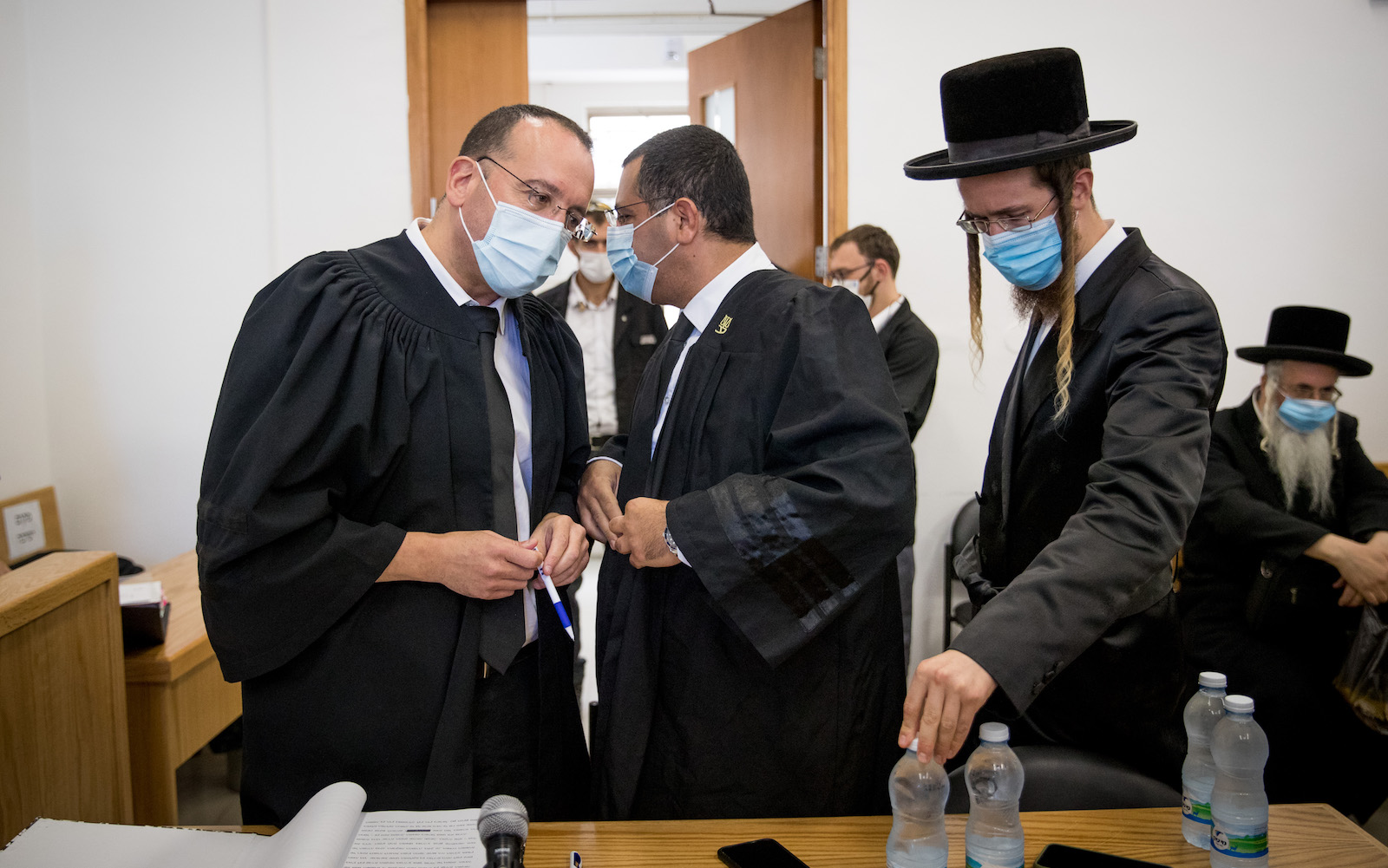
A federal judge on Monday refused to grant a temporary order allowing Orthodox Jewish sleepaway camps in the Catskills to open in spite of a state ban on overnight children's camps this summer because of coronavirus concerns.

In a 43-page ruling, Chief Judge Glenn Suddaby of the Northern District of New York expressed sympathy for the religious beliefs of the affected families, but said he also "must acknowledge the extenuating circumstances of the COVID-19 virus and its impact throughout the world." 


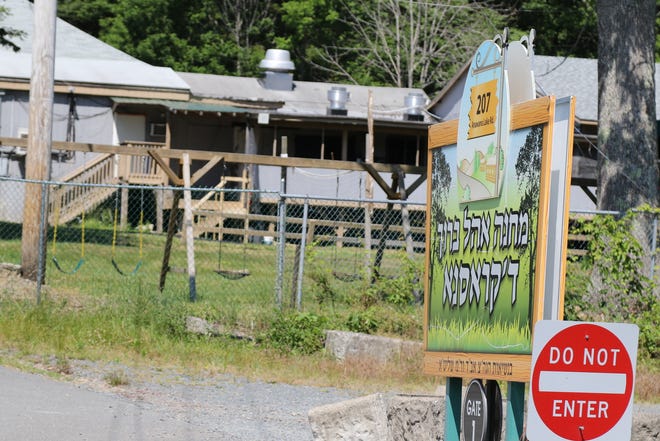
Camp Redad at 207 Anawana Lake Road on Friday, June 26, 2020.

"Although the State of New York has made progress in limiting the transmission of the virus in recent weeks, the recent resurgence of positive COVID-19 cases in several states raises concerns and is a painful reminder that the fight is far from over," Suddaby wrote.

He also concluded that allowing overnight camps to open would bring children from more densely populated areas and other states to rural areas with low COVID-19 levels and limited hospital beds to handle any surge in virus cases.

The underlying lawsuit challenging the state order is still pending, although it may soon be moot. 

Some overnight camps already have begun operating as day camps? - which were allowed to open in New York last week - by busing campers back and forth each day, apparently from as far away as Brooklyn.

Sullivan County has 169 active children's camps of all types, and Ulster County has 74, according to the state Department of Health. As of last Monday, 37 Sullivan day camps had started up and five more were about to do so. Ulster had four open day camps and was expected to have another two by this week.

The lawsuit against Gov. Andrew Cuomo was brought by the Association of Jewish Camp Operators, which represents 75 Orthodox camps attended by more than 40,000 children each summer, according to the court papers. The plaintiffs argued that the decision announced on June 12 to prohibit overnight camps would block an essential part of the religious upbringing of Orthodox children and violated religious rights. (Hard to believe these guys are not working for the NYC Sanitation dept.) pm

They also cast the state as hypocritical for allowing other activities with equal or worse exposure risks, emphasizing the many street protests that followed the killing of George Floyd by Minneapolis police in late May. (Redefining Shysters Down) pm

In past summers, more than 200,000 kids in all attended roughly 550 overnight camps in New York. The state's.attorneys argued in court papers last week that the prohibition applied to all of those camps, regardless of any religious affiliation, and that the plaintiffs were seeking an exemption from a decision that had sound health reasons.

"That determination was rationally made on the basis that overnight camps involve children and adults sleeping and eating in close proximity in an enclosed space for an extended period of time, greatly increasing the risk of spread of the virus," wrote Chris Liberati-Conant, an assistant attorney general.

He pointed out that during a flu outbreak in 2009, 1,600 campers or staff members in New York are known to have caught the illness, almost all of them at overnight camps.

Attorneys for the camp operators responded that the closure was indeed discriminatory because "only Jewish overnight camps were attempting to operate this summer by the time of Defendant’s announcement." They also accused the state of not respecting the significance of religion-infused camping. (These morons didn't realize even the YMCA Christians thought they are nuts) pm

"Defendant gives no weight whatsoever to this critical religious activity," the attorneys wrote. "Defendant does not value it, and therefore sees no reason to accommodate it."(shame on these idiots) pm

The association had sent Cuomo a letter on May 10 imploring him to allow overnight camps to open and outlining the health precautions it had developed with doctors to avoid coronavirus infections. They argued that overnight camps were "the safest place for campers" and staff because they could be locked down and no one came and went. (The lies keep rolling out of their mouths unashamed like Trump on a good day!) pm

The Department of Health told camp operators in a recent letter that many of them had gotten permits to open as "temporary residences," and warned them about the mandates they would have to follow, including a requirement that parents stay overnight with their children. (Better follow the rules or else!) pm

The department didn't respond to questions from the Times Herald-Record about how many camps got those permits. In a statement to the Record last week, officials said the prohibition on overnight camps was based on science and meant to protect children, and vowed to stop any attempts to get around the ban.  (Science? what's that) pm

"While we understand the disappointment of families and camp operators alike, the Department intends to investigate any attempts to circumvent this directive and will also ensure that camps with valid permits for day camp operations are in compliance with all pandemic guidelines," the statement read.

The Monticello District Office oversees the Environmental Health programs in Sullivan County.  Please feel free to contact the Monticello District Office at (845) 794-2045.  
https://sullivanny.us/contact

https://www.recordonline.com/story/news/local/2020/07/06/federal-judge-refused-temporary-order-let-sleepaway-camps-open/3277488001/


Tuesday, July 07, 2020

The Judge...."Plaintiffs (with all due respect) confuse Defendant's public comments seemingly showing support for the rights implicated by the mass protests over the death of George Floyd with Defendant's alleged disregard for religion in failing to grant a similar exemption to Jewish overnight camps."


Federal Court Rejects Jewish Overnight Children's Camps Challenge to Closure Orders


The state of New York, the court concludes, hasn't impermissibly discriminated against such camps.


Today's decision by Chief Judge Glenn T. Suddaby in Ass'n of Jewish Camp Operators v. Cuomo rejects religious freedom and parental rights challenges to Gov. Cuomo's continuing order closing overnight children's camps. The court concludes that the government is entitled to a great deal of latitude in deciding on such public health measures; and while discriminatory targeting of religious practices might violate the Free Exercise Clause if comparable nonreligious behavior isn't forbidden, this isn't so here:
Although the Court agrees that not taking enforcement measures against various
protestors (including those seeking refuge in enclosed theater and museum lobbies for indeterminate periods of time) arguably indicates that Defendant created a de facto exemption to the executive orders, the existence of an exemption is not by itself determinative, as discussed above: the individualized exemptions must also be properly comparable to the challenged action, suggesting discrimination. See Soos, 2020 WL 3488742 (comparing outdoor graduations with outdoor church services when determining whether allowance of such graduations while prohibiting such church services made the executive orders not generally applicable).

In this case, Defendant's executive orders bar all overnight camps from opening during the summer of 2020. Instead of explaining why Jewish overnight camps are being treated differently than are secular overnight camps, Plaintiffs (with all due respect) confuse Defendant's public comments seemingly showing support for the rights implicated by the mass protests over the death of George Floyd with Defendant's alleged disregard for religion in failing to grant a similar exemption to Jewish overnight camps.

Simply stated, the Court finds that permitting children to sleep in groups in enclosed spaces for eight hours per day in overnight camps is not sufficiently comparable to permitting conscious adults to shelter for shorter periods of time inside theater and museum lobbies during mass protests. For example, at the time of this writing, although many mass protestors appear to have been violating social distancing protocols by engaging in various outdoor protests, no evidence has emerged that protestors have been so often assembling in such close proximity in enclosed spaces for such a long period of time that reasonably compares to the way children typically sleep in cabins at overnight camp….

[O]vernight camps, unlike day camps or childcare facilities "are a difficult setting to manage social distancing and face covering and infection control practices." Although mass protests may provide somewhat similar difficulties to manage social distancing and infection control practices, overnight camps "have congregate settings and sleeping arrangements in close quarters that present too many risks," which causes those camps to be potentially more dangerous for the transmission of the COVID-19 virus, as compared to the mass protests. Finally, Plaintiffs have provided no factual allegations or evidence to support their argument that businesses and non-profit organizations (such as theaters or museums) that temporarily open their lobbies (and their bathroom facilities) for public use generate the same or greater risk of transmission of the COVID-19 virus than overnight camps generate.

https://reason.com/2020/07/06/federal-court-rejects-jewish-overnight-childrens-camps-challenge-to-closure-orders/