On Tuesday, October 26, the Solomon Schechter Day School of
Bergen County in New Milford will host a webinar for its parent
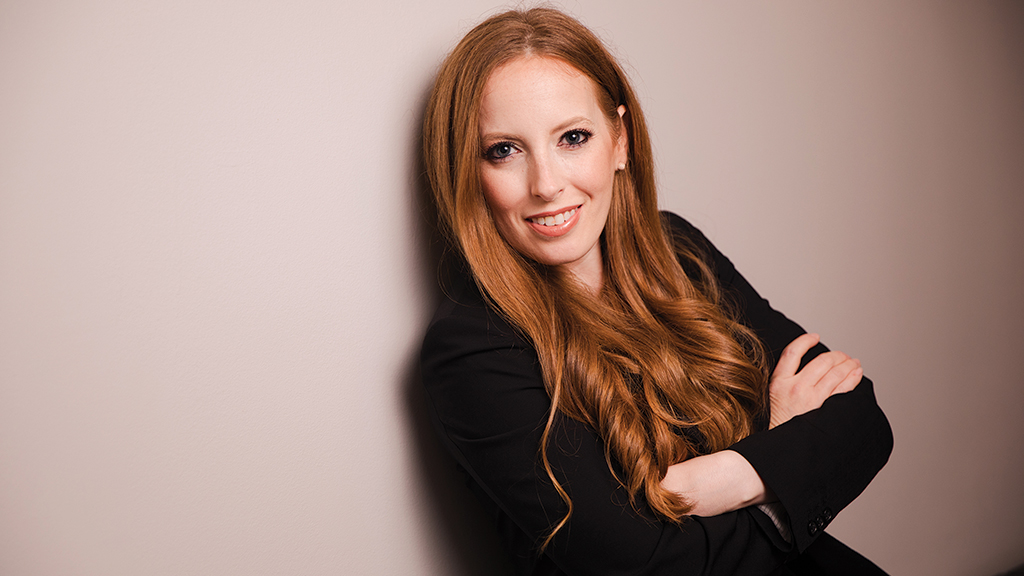
volunteers with Rahel Bayar, a former sex crimes prosecutor who grew up
in Milburn. She’s a lawyer who now offers training to schools, camps,
and other institutions on how to prevent and respond to abuse and
misconduct.
The Zoom session will teach about boundaries and abuse.
The workshop for parents follows one that Ms. Bayar ran for SSDS
faculty in August about boundaries and how abusers pursue their victims,
and another, last week, teaching faculty members about sexual
harassment.
“Anyone interfacing with any of our students should have these
workshops about our healthy boundaries,” Dr. Ilana Kustanowitz, SSDS’s
psychologist, said.
On Wednesday, October 27, Ms. Bayar also is scheduled to run
workshops with SSDS middle school students on cyberbullying, internet
safety, and sexting. In the spring, she is scheduled to return to talk
with lower school students on safe and unsafe touching.
“Parents have asked for us to have these sorts of lessons for these
kids,” Dr. Kustanowitz said. “She’s an incredible presenter.”
Ms. Bayar earned a law degree at Seton Hall University after studying
at Rutgers as an undergraduate. In 2009 she started working in the
Bronx D.A.’s office, prosecuting sex crimes. After almost seven years
there, she went to work for an investigative firm, T&M Protection
Resources, in Manhattan; she was in the division that investigated
sexual misconduct allegations, both current and historical.
“All of us in that division were former sex crime prosecutors, so we
knew what it means to conduct those investigations from a
trauma-informed lens,” she said. “There were a lot of investigations
where there was a current allegation of something that couldn’t be
handled by law enforcement because there was no allegation of a crime,
but it was concerning in a school setting. A school would bring us in to
conduct an investigation.”
She opened her own practice, the Bayar Group, last November, to share
her expertise in preventing abuse. Ms. Bayar said that her work is
split between Jewish and non-Jewish institutions; among the other local
Jewish schools that she has worked with are the Moriah School in
Englewood, Yeshiva Ben Porat Yosef and the Frisch School in Paramus, and
Ma’ayanot Yeshiva High School for Girls in Teaneck.
“It’s wonderful to see so many schools taking a proactive approach” to preventing abuse, she said.
Questions of child abuse have come to the fore in the Jewish
community in recent years, with high-profile journalistic exposes of
abuse within Jewish schools and Jewish organizations helping to lead to
laws in New York and New Jersey that temporarily extended the statute of
limitation for lawsuits alleging childhood sexual abuse.
Ms. Bayar said that parents concerned about their children’s safety —
and which parent isn’t? — should be looking at what their school’s
policies are. But first, “even before you’re asking a school about their
policies, you want to feel comfortable asking a school whether they
have policies,” she said. “Make sure the response isn’t defensive or
negative. Transparency is important.”
So what are the best practice child safety policies?
To start with, Ms. Bayar said, there should be a mandated reporting
policy that spells out what faculty and staff are supposed to do. It has
to reflect state law. It has to spell out the different types of
possible abuse: physical abuse, sexual abuse, and neglect or
maltreatment. It has to clearly state the requirement to report to the
appropriate state or local authority, and to “make it very clear that
there is a requirement to report externally.
“The second piece you want to look at are what we call boundary
guidelines,” she said. “Boundary guidelines are about protecting
students, as well as creating a dividing line” between behaviors that
are totally acceptable in the school community and those “that one would
consider grooming behaviors and are really red flag behaviors with
students.”
Grooming, Ms. Bayar said, is “a slow and steady seduction of a child
that involves a breaking down of boundaries between that adult and that
child, so that that child learns to trust that adult. It looks like an
adult identifying a vulnerability in that kid. So that when that adult
does something bad, touches the child or has the child touch them, or
exposes them to something sexual,” the child most likely will not
disclose the abuse.
“When you set the red line, it protects everybody. It protects
faculty and staff from creating an appearance of impropriety. It
protects students from someone who may be interested in grooming them.
“There are a lot of different types of boundaries. You have your
physical boundaries, you have your emotional boundaries, you have your
behavior boundaries, you have the boundaries on one-on-one interactions
with students, both in person and in Zoom. You have social media and
electronic communication boundaries.”
These boundaries involve questions of “navigating conversations with
students and not talking about personal information,” as well as “issues
of bathrooms and overnight trips and athletics and coaching and your
home and students’ homes, especially in a community where you may live
in the same community and share Shabbat meals,” she said.
The third piece is a sexual harassment policy detailing how staff should interact with each other.
Along with these policies, “you need to ensure the school is actually
training effectively in the policies,” Ms. Bayar said. “That does not
mean a video or a check-the-box approach or someone reading down a list
of all the things you can’t do. The training has to be able to bring the
faculty and staff into the why behind the guidelines, the why behind
the mandated reporting, the why when it comes to all the different child
safety practices.”
And then there are the policies that apply to the students.
“You want to make very clear what behavior is acceptable or not,” Ms.
Bayar said. “Are there effective anti-harassment, anti-bullying, and
anti-hazing policies? If a student sends an inappropriate picture to
another student, or sexually assaults them, what is the policy of the
school?
“Every state is different in terms of what their expectations are,
and every insurance company is different in terms of their expectations.
But we shouldn’t be doing this just based on the standard expectation.
We should be rising above that and saying how we should create a safe
community.
“As a parent, I would want to know if there is an allegation made
about boundary crossing behavior, or an allegation made about a form of
abuse that doesn’t fall under mandated reporting, that it’s still going
to be reported and there’s also transparency,” she continued.
When you think about people who might sexually abuse kids, “a lot of
times you think about the scary, creepy person you see on ‘Law and Order
SVU,’” she said. But — surprise! — television does not accurately
reflect reality.
“Ninety-one percent of kids who are abused are abused by someone they
or their family knows,” Ms. Bayar said. “In order to sexually abuse a
child, you can’t be a creepy, scary person, because no one would leave
you alone with their kids. It means to sexually abuse a child, you have
to be good with kids. It means a predator has to fly under the radar and
connect with a child in a way that doesn’t seem to be creepy or scary
to anyone else.
“A lot of people who abuse kids find themselves in child-facing
organizations, in schools and in camps, because that’s where inhibitions
are down and people have more access to kids,” she said.
“Effective training requires an understanding of how grooming works,
why it is effective, and how to counteract it. That’s part of what
training in a school needs. You don’t want to have people in your
community ignoring red flags.
“That’s why every school should have boundaries guidelines. How
should we interact to help a vulnerable kid, and what’s not appropriate?
What is grooming and what is allowed?” she said.
For example: “Best practice is a teacher should not drive a student
alone in a car. The truth is no teacher should be driving students,
period. Now, let’s say a teacher decides, ‘I’m fine, I’m not a danger so
it’s fine for me to drive kids.’ Parents see that and perceive that
either a teacher is doing something nice or this is something that’s
allowed.
“In a school that says this is allowed, a predator sees he can use
his car as a way to groom a child. No one will think twice about it
because teachers A, B, and C drive kids alone in a car. It lets a
predator see that this school is not a tough target.
“If you have guidelines and draw the line that no one gets to drive a
kid to school alone, it means that when you have a predator in the mix,
they realize this school is a tough target and that this may not be the
best place for them to have access to kids. That’s the importance of
rules and guidelines. It sets a tone.”
What are Ms. Bayar’s recommendations for a school dealing with a case
of a very old allegation surfacing under the Child Victims Act?
“One of the most important things is transparency with the school community,” she said.
“When you’re talking a Child Victim Act case, you’re talking about
something that will be in litigation for a period of time. You’re also
talking about an alleged victim who has been willing to go on record
identifying horribly detailed invasive pieces of things that happened to
them. It’s important to recognize that kids do not disclose right away.
Things come out decades later.
“There shouldn’t be anybody opining on the validity of the
allegations in terms of it not having happened. If you are in a
situation where you decide to conduct an investigation of a fact-finding
nature, there should be no determination made without people who are
specially trained and trauma-informed. Who they are should be public.
There should be an opportunity for parents and students — the community —
to bring forward to outside investigators any information that is
concerning. The investigators should be speaking to the person who made
the allegations. It all should be transparent. And the goal always needs
to be protecting the kids.”
Ms. Bayar doesn’t think it is appropriate to keep someone on a school’s staff in the wake of such allegations.
“If you have an allegation that someone molested a child, it doesn’t
matter where or when, would you bring that person into your home to hang
out with your kid one on one?
“If you have someone who is under investigation for fraud and
embezzlement, and you are an accounting firm, would you keep them
working with clients, or say, for the time being, you need to step out:
You have been accused of embezzling funds and our clients need to be
protected. You’re not going to say, we’re still going to have you work
with our clients but we’ll make sure you’re not the only one who has the
passwords. You would wait to see what actually happens in that suit,
and how it comes out in the end. Why don’t we apply that same standard
to our kids?”
Can an investigation come back and say that the alleged molester is in fact kosher?
“How can an internal investigation do that if there is a pending
lawsuit?” Ms. Bayar said. “There’s going to be a discovery stage. There
will potentially be depositions. You would have to spend time
interviewing the victim, vetting their discovery and information. You
can’t opine on something being ‘kosher’ without speaking to the victim.
“More than that: We know that when it comes to sexual abuse, delayed
disclosures means there will be pieces people may not remember, and
information that might seem relevant or not. Wait to see what actually
happens in that lawsuit, and how it comes out in the end.”
https://jewishstandard.timesofisrael.com/keeping-kids-safe/