EVERY SIGNATURE MATTERS - THIS BILL MUST PASS!

EVERY SIGNATURE MATTERS - THIS BILL MUST PASS!
CLICK - GOAL - 100,000 NEW SIGNATURES! 75,000 SIGNATURES HAVE ALREADY BEEN SUBMITTED TO GOVERNOR CUOMO!

EFF Urges Court to Block Dragnet Subpoenas Targeting Online Commenters

EFF Urges Court to Block Dragnet Subpoenas Targeting Online Commenters
CLICK! For the full motion to quash: http://www.eff.org/files/filenode/hersh_v_cohen/UOJ-motiontoquashmemo.pdf

Wednesday, June 17, 2015

It’s also hard to imagine what kind of person(s) would be so in thrall to power that they’d cover up child abuse....


Perhaps the world's conspiracy theorists have been right all along... (On some of the issues)


  We used to laugh at conspiracy theorists, but from Fifa to banking scandals and the Iraq War, it seems they might have been on to something after all, says Alex Proud.... 


  Paedophiles

This one seems like a particularly dark and grisly thriller. At first it was just a few rubbish light entertainers. Then it was a lot more entertainers. Then we had people muttering about the political establishment – and others counter-muttering don’t be ridiculous, that’s a conspiracy theory. But it wasn’t. Now, it’s a slow-motion train crash and an endless series of glacial government inquiries. The conspiracy theorists point out that a lot of real stuff only seems to come out after the alleged perpetrators are dead or so senile it no longer matters. It’s hard to disagree with them. It’s also hard to imagine what kind of person would be so in thrall to power that they’d cover up child abuse.

Tuesday, June 16, 2015

"The law recognizes that an adult spending time naked with children is a form of grooming --- Intentions matter. There are times to give the benefit of the doubt, but when it comes to manipulation of innocent children, we must keep our eyes wide open."


Jonathan Rosenblatt - "Regular" Pervert or Very Ill Psychopath Pervert?

The Rosenblatt case: Mentorship or abuse?

 Just like Barry Freundel, Jonathan Rosenblatt used his rabbinic role to get his congregants and disciples unclothed.

 When the news came out that Washington rabbi Barry Freundel filmed women that he had encouraged to immerse in his private mikveh, the entire community was shocked. Yet when allegations emerged about the rabbi of the Riverdale Jewish Center, Jonathan Rosenblatt, inviting boys as young as 12, college students, and rabbinic interns to sit naked with him in the hot bath and sauna, the reactions were inconsistent. 


"But Rosenblatt himself, "Internet Idiot" argues, had a “blind spot.” He suggests that if the allegations had been publicized sooner, the rabbi and the congregation could have come to a “happy and healthy compromise,” with the rabbi avoiding censure and retaining his job. Relatively speaking, this is a “mild” case of abuse. We don’t know of any sexual touching. And there is no proof about his intentions being nefarious."

This means little, though, as only in rare cases do we have videotape. But two elements of this case make it clear that Rosenblatt’s case stepped over the line from bad judgment to malicious intent. 

The presence of both allows us to distinguish between appropriate mentorship and abuse.

The first involves the sexually charged nature of the encounters, as described in the New York Times article: “. . . the rabbi openly gawked at a naked 12-year-old. He invited a 15-year-old over for intimate nighttime conversations, during which he frequently put his hand on the boy’s leg. He invited himself into a 17-year-old’s living room and tried repeatedly to persuade him to change into a bathrobe.” The descriptions of the encounters show the discomfort felt by these children.

The second element is the abuse of authority. The rabbi used his position as rabbi in order to arrange the sexually charged meetings.

Both elements are required to make the case against Rosenblatt, or any other perpetrator. You can have naked men (or women) sitting around together in a neutral situation, like the mikveh (Jewish ritual bath) or sauna. That in itself doesn’t make it sexual. There is a religious or practical reason for being there. The men come on their own initiative, and can leave when they like.

 But when you have an authority figure inviting younger boys and men to sit naked with him for long periods, you have malfeasance.

The Bronx District Attorney’s office agrees, asking others to come forward. Former sex crimes prosecutor Linda Fairstein told the New York Times that “similar conduct could be construed as endangering the welfare of a minor, a misdemeanor that includes knowingly acting ‘in a manner likely to be injurious to the physical, mental or moral welfare of a child less than 17 years old.'”

The law recognizes that an adult spending time naked with children is a form of grooming. This erasure of boundaries desensitizes them to the inappropriateness of the situation, and makes children vulnerable to more harmful forms of sex abuse—whether by that adult or someone else.

Either Rosenblatt’s actions, as he himself claims, were unusual but innocent—or the actions were innately loaded with sexual messaging and significance, thus sexually inappropriate. In the latter case, the sauna invitations were not merely a matter of bad manners or judgment. If that were the case, he would have stopped when this was pointed out to him by his congregation. 

He didn’t.

If there was no sexual intent, it makes sense for the synagogue to have kept a popular and learned rabbi on its payroll. Yet look at how the Rabbinical Council of America recently expelled Rabbi Marc Schneier for committing adultery. The rabbinical board determined that extramarital sexual relations are not becoming for a rabbi, at least once the fact was revealed in court after the breakup of his fourth marriage. But Rosenblatt’s continued sexually charged behavior with teens, and later young adults including rabbinic interns, remained an open secret for many years with no official action taken.

The ones harmed saw their complaints ignored and the perpetrator remain in his position. Meanwhile, the damaging behavior continued. Unfortunately, similar scenarios takes place not only in all branches of Judaism, but in every type of secular and religious institutions. The modus operandi is generally the same: Protect, defend, and excuse the leaders; silence the critics; ignore the victims; and put future children at risk.

Just like Barry Freundel, Jonathan Rosenblatt used his rabbinic role to get his congregants and disciples unclothed.

 Can we really imagine a scenario in which Rosenblatt thought the only way to get through to his young charges was by sitting next to them with no clothes on? That makes as much sense as saying that Barry Freundel’s “practice dunks” in the mikveh were a necessary preparation for conversion, and not a pretext for videos to be viewed on a home computer.

Perhaps one reason so many are willing to find Rosenblatt innocent of abuse has to do with the Orthodox community’s taboo against homosexuality. Although progress has been made in the Jewish community toward accepting homosexual tendencies, we may not be quite ready to recognize them in rabbinic leaders such as Rosenblatt or convicted offender Moti Elon. 

 It’s easier for 'Internet Idiot' to talk about a “blind spot.” 

We must not look for compromise when the welfare of children are at stake, nor can we risk a “healthy and happy” relationship with a community leader who has used his position to see naked boys and be seen by them. Make no mistake. This isn’t an issue of informal mentoring gone wrong.

Intentions matter. There are times to give the benefit of the doubt, but when it comes to manipulation of innocent children, we must keep our eyes wide open. A community that truly cared about its members would see Rosenblatt’s abuse of power for what it is.

http://blogs.timesofisrael.com/the-rosenblatt-case-mentorship-or-abuse/

Monday, June 15, 2015

Trailer: ‘An Open Secret’ -A look at the lives of children who were exploited and assaulted by some of Hollywood's most powerful players.


Review: ‘An Open Secret’ Spotlights Child Sexual Abuse in Hollywood


You may miss a few moments of “An Open Secret,” either while looking away during its unsettling stories or closing your eyes in frustration. This potent documentary elicits those kinds of reactions.

Directed by Amy Berg (“Deliver Us From Evil”), the film centers on a handful of young men who say that as child actors they were sexually assaulted by older men in the entertainment industry. Manipulations, cover-ups and exploitations are recounted, and in several cases accountability was weak; some of the culprits, we’re told, still work in Hollywood.

The victims and their parents defy the stereotype of hard-driving dream-seekers. They come across as merely trusting, which led them to rely on those who promised successful careers. Such faith was exploited by men who later turned out to be predators.


“He just told me it’s normal, like, this goes on all the time, this is what you have to do,” one young man says he was told after being molested by his manager. “Everybody does this.” Shame and fear of reprisals initially led him to stay silent, and may be keeping more victims from speaking out.

Ms. Berg connects that manager, Martin Weiss, who pleaded no contest to two counts of child molestation in 2012, to a string of other men in Hollywood who have also been accused or convicted of similar crimes. Except for a secretly taped conversation and some menacing music, she resists the urge to sensationalize. Such composure is admirable, but further aggressive reporting is needed. This topic deserves a tenacious call for answers.

Still, “An Open Secret” is affecting, particularly when the victims recount their experiences in voices that crack with emotion or pause with pain. Even if you do look away, hearing them speak is enough.

“An Open Secret” is rated R (Under 17 requires accompanying parent or adult guardian). Explicit stories of sexual abuse.


 AN OPEN SECRET

Friday, June 12, 2015

....And this "Anonymous" Rabbi Chooses Option B...Is There an Honest & Ethical Rabbi in the Bunch?

You, Not Rabbis, Have The Power To Stop Rabbinic Abuse 

 by"Rabbi Yochanan Batzek" (No-Batzem-No-Sechel )


I want to share a secret about American Orthodox rabbis: We have no power. We serve at the pleasure of lay leaders who sign our paychecks. We often live in homes we do not own. With relatively few exceptions, we are employed under contracts that must be renewed every few years. If we make a few false moves or anger the wrong laypeople, our contracts can be bought out or it can otherwise be made clear that we are no longer wanted, that our time here is up.

In our line of work, there are often only a handful of jobs in each city. We have all gone through the process of finding a new job, a new community, and new schools for the kids. Telling the kids that they will be leaving their good friends is always difficult. Like in the story of the biblical Isaac, dad hears God calling, but the child is the sacrifice. Every rabbi has at some point wished that someone else had been called.

It is therefore difficult to express how infuriating it is when every instance of a rabbi behaving badly is framed as a question of power imbalances and authority structures in which the old boys protect their own, victims be damned. The RCA is a grossly underfunded, chronically dysfunctional, and entirely impotent organization. Yet it is deemed to have swept all sorts of unsavory things under the rug in order to maintain and bolster its phantom power. How else can we explain why Rabbi Jonathan Rosenblatt is still on the job, almost three decades after the first incidents, and after a New York Times exposé? And given this protectionism, can we not understand why victims are unwilling to risk speaking out under their own names?

And so every member of the RCA is guilty by association, and the Internet has declared open season on Orthodox rabbis. We are all deemed culpable for bolstering a “system” or “power structure” or “hierarchy” or whatnot that hordes power and victimizes with impunity. Our attempts to offer commentary that does not fuel the outrage machine are met with a flood of responses in ALL CAPS. All discussion is cut off before it starts because it’s just so OBVIOUS what the moral stance is here. If you try to present an alternative “narrative” you are “blaming the victim.”

In truth, I am torn about the case of Rabbi Rosenblatt, but not because it falls in a moral grey zone. I am torn because it is a Rashomon-style conundrum, with two distinct but totally incompatible stories, which both begin with the one group: the past and present board members of the Riverdale Jewish Center.

This group knew more than anyone else about complaints and allegations concerning Rabbi Rosenblatt — certainly more than anyone who read an article or two and know someone, or know someone who knows someone, who claims to be a victim. This group not only declined to fire Rabbi Rosenblatt, it has even renewed his contract several times over the decades, despite vocal opposition from wealthy and powerful community members who went so far as to offer to buy out the rabbi’s contract. Over the past three decades, this board has included some of Modern Orthodoxy’s best and most well respected lay leaders. It is absurd to think that this group was somehow cowed by their rabbi or the “establishment” or that they were so irresponsible for so long.

That leaves us with two options (neither of which supports the wave of vitriol against Orthodox rabbis in general):

Option A:

 Rabbi Rosenblatt has done a masterful job of masking his exhibitionism or a similar sexual disorder by expressing it only in contexts where male nudity is acceptable and where he could claim to be acting in a pastoral or relationship-building role.

Option B:

 Rabbi Rosenblatt really believes that the locker room is an excellent venue for male bonding and that nudity, where acceptable, can break down barriers and help build relationships. He was not trying to exploit a power imbalance to get naked with students and mentees — he was trying to establish a relationship of equals, a naked relationship, free of pretense or airs. It is true that some were creeped out by the sauna scene — it can be pretty creepy — but there is no denying that the culture exists. The shower rooms in question have no curtains between showerheads; male public nudity is the norm. The board understood this and worked with him to avoid situations that would seem especially creepy, but in the main it tolerated his benign eccentricities.

Which is it?

At the moment I am inclined toward Option B for one main reason:

 With the exception of Dr. Yehuda Kurtzer, nobody has gone on record, though it is claimed that several people outed themselves on the Wexner Fellows distribution list. Contrast this with last year’s sordid Freundel case, in which a number of courageous women stepped forward immediately, before the jury of public opinion reached a verdict. They spoke out even though they are converts and risked having their very Jewishness called into question, and even though the community is sadly often dismissive of converts.

Wexner Fellows are not quite so vulnerable. If a handful of Wexner Fellows would describe openly, as Kurtzer has, how they are victims of Rabbi Rosenblatt’s predations, it would dispel all doubt about this case. Others will surely join the chorus.

But if they don’t, then eventually the outrage will die down or find a new target, and the slow process of reclaiming one man’s unfairly tarnished reputation will begin.

“Rabbi Batzek” is an American Orthodox rabbi. His name has been changed to protect him from the current consequences of expressing unpopular opinions".

http://www.thejewishweek.com/editorial-opinion/opinion/you-not-rabbis-have-power-stop-rabbinic-abuse 

BY POPULAR REQUEST FOR A COMMENTS SECTION - YOU MAY "FRIEND" ME ON FACEBOOK AND COMMENT THERE: https://www.facebook.com/unorthodox.jew

Thursday, June 11, 2015

Make no mistake about it: Despite all the vetting and background checks, creeps will attain leadership roles and use their power for their own ends. We need processes to examine rumors with speed, transparency and neutrality. We need guidelines that will reduce the risk of sexual harassment, abuse and assault by staff, lay leadership and volunteers, and we need a process for redress....

Op-Ed: Synagogues with predatory rabbis must protect their members, not their reputations

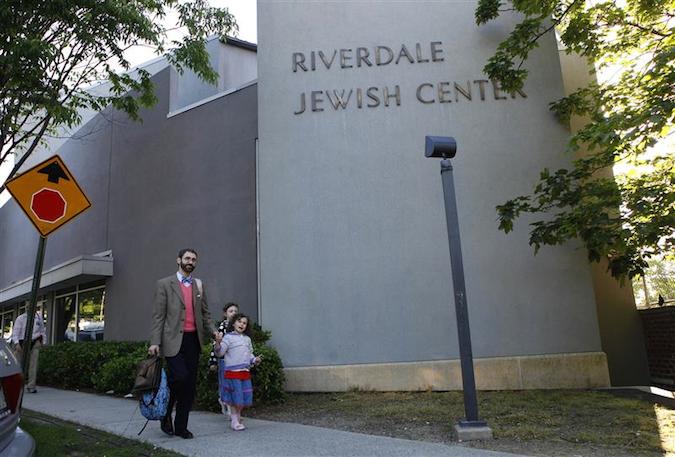
The Riverdale Jewish Center has been engulfed in controversy since the New York Times published an article about its rabbi, Jonathan Rosenblatt.


WASHINGTON (JTA) — When I read the recent article in The New York Times
detailing the accusations against Rabbi Jonathan Rosenblatt
of the Riverdale Jewish Center, I was deeply saddened.

This is the synagogue and community where I grew up. My parents moved to Riverdale in the 1950s and are among the RJC’s founding members. Rosenblatt — like the synagogue’s four rabbis before him — played an important part in the life of my family. However, my focus is not the RJC or any one rabbi.

My concerns are with the institutions in which we place our trust — institutions that seem to ignore the simple fact that rabbis and teachers are human and subject to temptations and personal demons. We hold our leaders in high esteem, but our institutions fail to monitor them to ensure that their power is not being abused and that the esteem is merited.

Whispers, like those in Riverdale, have been present in dark corners of many communities over the years. Those whispers have been hushed by men and women who choose to protect the institution to the detriment of those it’s supposed to serve. This is what happened at Penn State, which ignored or mishandled numerous episodes over the years in which football coach Jerry Sandusky sexually abused children. Our leaders often demonstrate poor judgment, pretending that if they ignore the underlying problem or handle it quietly among themselves the behavior will stop and the problems disappear.

But today social media amplifies whispers. Victims hear the whispers of other victims, awareness grows, and what happens behind closed doors is exposed and headlined. I have seen this in my work at Jewish Women International — on college campuses, on football fields, even in the military. Victims are speaking out.

Our synagogues and rabbinical institutions need to wake up. Responding in secret or in an ad hoc manner — being reactive — does not work. This modus operandi inhibits response, discussion and community resolution. Secret “solutions” end up being neither secret nor solutions.

Instead, we repeatedly see the accused relying on his or her relationships with powerful supporters, and together they spread the fear of public revelation of scandal. Time and again, the message to the victims and communities is that only with silence can the institution be protected. That is another way of saying that those who are victimized are less important than the institution itself.

This past Shabbat I was at the RJC, down the street from where I grew up, visiting my parents, who still consider the RJC home. We went to shul there, we went to school there, we served on committees and boards, shared countless meals, danced and wept together. We felt safe at the RJC.

What a delusion. The very organizations — synagogues, community centers, schools — that should be protecting and nurturing constituents instead seek to protect reputations. But reputations worth protecting are not made by marginalizing victims.

The back-room, hush-hush solution is inappropriate, dangerous and unsustainable. We need policies and protocols for organizational responses to these situations.

Make no mistake about it: Despite all the vetting and background checks, creeps will attain leadership roles and use their power for their own ends. We need processes to examine rumors with speed, transparency and neutrality. We need guidelines that will reduce the risk of sexual harassment, abuse and assault by staff, lay leadership and volunteers, and we need a process for redress. This approach enables a neutral response free from the influence of wealthy donors, powerful members, colleagues or former interns.

Policies should reflect the character of the organization, but certainly some standard provisions should be included:
  1. Anyone who feels victimized or is aware of any misdeeds must be able to speak with someone who has no personal stake in the institution — for example, a social worker, therapist, lawyer or all of the above — on retainer to the institution.
  2. Any investigation must be done by a third party, not someone from within the institution.
  3. Rules for communication and confidentiality must be established and followed.
  4. All lay and professional leadership must be trained in the laws of mandated reporting.
  5. Educational and prevention programs should be made available to members.
  6. Relationships should be established and maintained with a local sexual-assault response agency and local law enforcement.
Institutions responsible for protecting and nurturing our communities must focus on protecting those who are in their charge rather than protecting those who are in charge.

(Deborah Rosenbloom is the vice president of programs & new initiatives at Jewish Women International.)

http://www.jta.org/2015/06/09/news-opinion/opinion/op-ed-synagogues-with-predatory-rabbis-must-protect-their-members-not-their-reputations

Wednesday, June 10, 2015

"My name is …….. …… and I am the victim of sexual abuse."...


 The man who abused me is named Mendel. I met him when he was my dorm counselor at a boy’s yeshiva. He took advantage of the position of authority he had over me and used it to physically and sexually abuse me. I went through horrific ordeals at his hands that has left me scarred until this day.

One way in which I’ve coped with the abuse was to drink alcohol. Some even mistook me for an alcoholic when in fact drinking was just a way I drowned out the pain of my experiences. Over the last few years, I’ve met many people who were also sexually abused and victimized at the hands of someone else. It happens way more than many of us would like to believe. I’ve also found out that the challenges I’ve dealt with are very typical of victims of sexual abuse.

For example, I often have flashbacks, sleepless nights or nightmares. At times, and this is very personal but I feel like I must say it, it is difficult for me to be intimate with my wife. It can trigger a flashback I am absolutely powerless to stop. This greatly effects our marriage but I am lucky to have a strong and supportive wife who has stood lovingly by my side throughout this ordeal.

On numerous occasions, she has had to wake up to me having a full blown panic attack in my sleep. I know these are common symptoms for victims of abuse but that does not make it any easier to deal with.

Sometimes, when leaving my home, I am fearful that I may bump into my abuser, Mendel, while walking. After all, we grew up on the same street and his family live nearby to my own.

I wish I could tell you that my friends and community members have been supportive of me during this process but unfortunately, I am sad to report, that it is usually the opposite. Many have chosen to defend my abuser and attack me instead. I have been called a ‘liar’ or have been told that I am an alcoholic set on ruining an innocent person’s life. Others have accused me of doing this in the hopes of making a buck.

When I first attempted to go forward, I was shamed into silence. Some who I told either ignored me or ridiculed me. Fortunately, some friends, family members and JCW supported me and gave me the courage to do the right thing and break my silence.

It has not been an easy process at all. 2 years ago, when I started this process, I had very mixed feelings. On the one hand, I came forward to defend and protect innocent children and to get closure for myself. On the other hand, I understood this process would tear apart my own family and the family of my abuser.

I did not realize how bad it would be.

I’ve been cheered for by many and harassed by many. It seems everyone I met, had their 2 cents to add. Some felt I was doing the right thing and was a hero and others felt that if the defendant went to jail, he would surely be killed and that would be on my conscience. Some even went as far as to call me and my family ‘murderers’.

During the last few months leading up this day, some have tried to threaten or bribe me to drop the charges. I was offered $200,000 to sign documents stating that I consented to and requested the sexual activity and therefore it was not abuse. Others have tried the other approach, threatening me that they have 4 girls willing to testify that I raped them and they will come forward after the sentencing.

 I have been threatened to have my name smeared publicly in our community to the point that my wife and I would “literally” be unable to walk the streets. Some have gone as far as to approach my wife and attempt to convince her to leave me.

Even close friends have turned their back on me for doing what they believe is the ‘wrong thing’. This has been the most painful thing to experience. To watch friends turn on me like this hasn’t been painful enough.

In all, this case has taken a tremendous toll on my family, my wife and my marriage but I know in my heart that my actions will lead to the world being a safer place for children.

As I conclude this letter, I would like to thank my wife, my family, my friends who have stood by me, the JCW and the DA’s office for all their support. In closing, I would like to say that as I leave this room today “I am not longer a victim, but a survivor”.

My name is …….. …… and I am the victim of sexual abuse. The man who abused me is named...

Tuesday, June 09, 2015

In the wake of this scandal, I hope we can remind ourselves not to blame the victims. Several spoke out in this case and were not heard or taken seriously. This “funny” practice of Rabbi Rosenblatt’s was not funny. It should have been stopped years ago, but the power dynamics involved made that impossible. May we as a society learn to listen better to the voices of those who are powerless, and truly hear what they are telling us...


Understanding Power


Another rabbinic scandal has come to light. Last week The New York Times published an article about Rabbi Jonathan Rosenblatt and his practice over many decades of taking young boys and men to play racquetball and then have long talks with them while often naked in the shower or sauna. In talking about the scandal, many people have said, “How could this have gone on for so long?” “Why didn’t people speak up?” “Why wasn’t the rabbi fired?”

Well, in this case it sounds like many people voiced concerns and complaints over the years. Gary Rosenblatt (no relation) editor in chief of the New York Jewish Week called the rabbi’s actions “an open secret.” Rabbi Rosenblatt had been asked not to participate in this behavior by his own board who tried to buy him out of his contact a few years ago, by the Rabbinical Council of America, and by Yeshiva University, which stopped sending him interns. In this case, many people did indeed speak up, yet apparently, the rabbi did not change his practice.

It was not until another prominent Jewish professional Dr. Yehuda Kurtzer, the president of the Shalom Hartman Institute of North America, went on the record, by name, to a reporter of the Times that this story broke widely. Dr. Kurtzer’s bravery is underlined by the fact that he is the only one who experienced a “sauna talk” with Rabbi Rosenblatt to have his name published in the article.

The way this scandal has unfolded unearths the reasons why it is so hard for people to publicly call out an abuse of power – it is all about power. Rabbi Rosenbalatt has power. He has/had great respect in his community. He comes from a long line of powerful rabbis. He leads a close-knit community whose members must have felt tremendous pressure not to topple their own leader. To speak out against the rabbi’s abuse of power and inappropriate actions would have significant consequences for those who would do so. They would lose friends, family, their community, and their own reputations.
The power dynamics in any abusive situation cannot be overstated. I entered rabbinical school an empowered, enlightened, well-educated feminist who though I would and could speak out against abuses of power in any situation. Yet within a few months, I found myself to be the victim of sexual harassment. It started so slowly that I did not even recognize what was going on at first. Then, when I was finally able to name it, I felt paralyzed. All of my internal self-confidence was gone. How could I take on a powerful figure in my school? To take him on would surely have meant having to leave school and rethink my entire life. I would never get to be a rabbi. My name and his would always be linked. I did not want any of these outcomes. I felt truly powerless. There was no good outcome no matter what I did.

In the end, I transferred schools, and I told another person in authority about my experience so that he could look out for other women who might be victimized. Did I do enough to protect others? No. At that point in time, I needed most to protect myself. I understand why it took so many years for Rabbi Rosenblatt’s grossly inappropriate actions to come under full public scrutiny. There is a tremendous amount to be lost when you speak out. I hold Yehuda Kurtzer and other whistleblowers in high esteem.

The politics of power is deeply complicated. As a society, I don’t think we truly understand the dynamics involved and how hurt and shamed people can be. It does not surprise me in any way that Dr. Kurtzer did not speak out until his own reputation was well established.

In the wake of this scandal, I hope we can remind ourselves not to blame the victims. Several spoke out in this case and were not heard or taken seriously. This “funny” practice of Rabbi Rosenblatt’s was not funny. It should have been stopped years ago, but the power dynamics involved made that impossible. May we as a society learn to listen better to the voices of those who are powerless, and truly hear what they are telling us.

Monday, June 08, 2015

Again, it’s clear that the Orthodox rabbinic leadership knew all about Rosenblatt’s tendencies, begged him to stop, tried to limit his contact with boys and young men, but never publicly rebuked him for public, repeated transgressions of Halacha that were highly damaging to his victims....


The rabbi in the bath house is unsuited by definition

Why is it that when a rabbi or religious leader in our community is caught red-handed in a series of despicable acts, our community attempts to lower its cone of silence and leaves the matter to civil authorities? Sometimes those authorities investigate, convict, and incarcerate. Sometimes they determine that no civil law has been broken, despite the odiousness of the behavior.

While we, as a people who live in many lands and under many codes of law, are commanded to give deference to the civil law in nearly all matters, we are also commanded to live as a “mamlechet kohanim and goy kadosh,” a kingdom of priests and a holy nation.

This week we are again witnessing communal ostrich-like behavior and deference to the DA in the context of a rabbi with a 30 year track record of odious and unhalachic behavior towards defenseless boys and young men. Jonathan Rosenblatt will certainly sit on the bimah of his synagogue this Shabbat.

 He may even be called to the Torah in “solidarity.” Where is the rabbinic and halachic outrage? If this rabbi brought shrimp to Kiddush (or maybe just a bottle of non-mevushal wine), he would immediately become the target of nationwide rabbinic opprobrium. Yet, if Rosenblatt committed criminal acts, if he follows his colleague from Washington, DC to prison (a perfect study partner), he will likely do so with title “Rabbi” still resting on his shoulders.

 The Yeshiva that ordained him would never think of publicly rebuking him and revoking his ordination. The boards of rabbis who have venerated him will never consider publicly rebuking him and banishing him. His community will almost certainly not put him in cherem (publicly shun him). Rather, the ball will be passed to the district attorney, while all of those who should be upholding the standards of the community will cloak themselves in the excuse that they cannot comment while the criminal justice system is conducting its process.

At the back end of the system, whether it leads to incarceration or acquittal, those same community leaders will insist on welcoming the return of the now-reformed offender on the grounds that he will have “paid his debt.”

Why do I care?

 What is my standing to comment on other people’s problems? Because I distinctly remember a conversation at age 12 when Stanley Rosenfeld, my Jewish Day School principal (now a convicted sex offender in Rhode Island) tried to convince my parents to allow me to join a canoe trip where we would first paddle and then “rent a motel room so that we could shower before returning home.”


 I felt deprived of the adventure and was far too young to understand that it was the showering that concerned my parents more than the canoeing. I only began to realize that my parents were protecting me rather than depriving me when I went to his house on a Shabbat afternoon for a “torah lesson” and he answered the door in his underwear. Rosenfeld was quietly passed from the Westchester Day School, to Ramaz, to SAR, before Jewish day schools finally let one another know not to hire him, but never publicly outed him.

 Many pedophiles and sex offenders have followed his path.


 The most distinguished modern Orthodox rabbis of our generation knew of Rosenfeld’s behavior in explicit detail, paid for counseling of and settlements to some of his victims, and warned one another, but not the community.

I care because Barry Freundel, now convicted and awaiting incarceration in Washington, DC defiled the home in Jerusalem I lent him for Torah study with some of his unhalachic acts and then had the chutzpa to publicly pronounce the Orthodox shul where I daven to be “treif” because it was not under the hashgacha of his vaad. Again, it’s clear that the rabbinic leadership knew a great deal about Freundel’s transgressions long before the DA was brought in.

 I care because rabbi Rosenblatt has worn his holiness on his sleeve for a decade while doing everything in his power to block the careers of those associated with Yeshivat Chovevei Torah or anyone else who might bring a fresh wind to the Jewish world.

 Again, it’s clear that the Orthodox rabbinic leadership knew all about Rosenblatt’s tendencies, begged him to stop, tried to limit his contact with boys and young men, but never publicly rebuked him for public, repeated transgressions of Halacha that were highly damaging to his victims.

Whether or not Rosenblatt violated the laws of New York State with his gawking, he has most certainly violated Halacha deliberately, repeatedly, and unrepentantly, for more than 30 years.


 From an halachic perspective, we don’t need to ask whether Rosenblatt’s naked bath house sessions with boys, young men, and rabbinic interns were sex offenses in a civil or criminal context. There’s no need to examine motivation or discuss whether the touching involved was sexual or innocent. The Torah makes it clear that we are forbidden to uncover the nakedness of our parents. Rabbinic law makes it equally clear that this prohibition is extended to rabbis and teachers. The Halacha is absolutely clear and stated succinctly by Rabbi Shmuel Herzfeld in his public comment on the matter:

Pesachim 51a: “ A student may not enter into a bathhouse with his teacher. If the teacher needs assistance then it is permitted.” This law is codified in Rambam, Talmud Torah 5:6.

Shulchan Aruch 242:16 writes: “A student should not enter into a bathhouse with his teacher unless the teacher needs assistance.” Rema adds: “If the student was in the bathhouse before the teacher and then the teacher enters, then the student does not need to leave. And all this only applies in a case where the practice is to walk naked in the bathhouse. But in a place where the practice is to walk around in pants in the bathhouse then it is permitted. “

As to the notion that the bathhouse is somehow a place for a teacher and student to banter about important life issues, according to the Talmud, this is clearly inappropriate behavior. Avodah Zarah 3:4 says: [“Proklos, son of Plosphos asked Rabban Gamliel a question in Akko, where he was washing in Aphrodite’s bathhouse. He said to [Rabban Gamliel], “Isn’t it written in your Torah (Deut. 13:18), ‘do not allow any banned items [from idol worshippers] to stick to your hand’? How then do you bathe in Aphrodite’s bathhouse?” He replied, “One does not respond [to religious questions] in the bathhouse.”].

I’m no tzaddik. Nobody could accuse me of rigorously keeping all the laws of Shabbat. I violate a significant number of the 613 mitzvot on a regular basis. However, I carefully limit my acts of transgression to those which affect me alone. It’s those acts of halachic transgression that harm others – in this case scar them for life — that our community must rebuke publicly. When such acts are committed by leaders who draw their authority from the community, especially after those leaders have been afforded multiple chances to cease and desist, the community must either remove those leaders or lose its legitimacy and risk losing the respect of a generation of Jews.

There’s an old joke about the small town rabbi who runs afoul of his board and loses his contract. As he is packing up, the local minister drops by to commiserate and asks, “Rabbi, what happened? Were you defrocked?” The rabbi answers, “No, I vas just unsuited.” Rabbis Rosenblatt, Freundel, and a host of others “in the bath house,” were clearly unsuited, both physically and spiritually. It’s high time for the community to rise up and defrock them as well.


Jonathan Javitt The author is a physician, policy expert, and thought leader in healthcare transformation and digital health.
http://blogs.timesofisrael.com/the-rabbi-in-the-bath-house-is-unsuited-by-definition/

Friday, June 05, 2015

Today in Jewish History

Sivan 18

In 1944, Jewish day schools in America got a major boost when Rabbi Shraga Feivel Mendlowitz founded Torah Umesorah, the National Society for Hebrew Day Schools. Though Jewish day schools existed at the time (the first full-time day schools were Etz Chaim, founded in 1888, and Rabbi Jacob Joseph School in 1900), the idea was generally rejected by American Jews who saw it as 'parochial' and a step back to the European shtetl.

 Rabbi Mendlowitz, however, felt that "afternoon Hebrew schools" were failing to transmit Judaism in a compelling manner to students who arrived tired in the afternoons, and who were subjected to assimilationist influences in American culture.

 He set out to create schools that emphasized Jewish studies, without compromising its secular studies program. In recent decades, enrollment in Jewish day schools has thrived: Of the estimated 850,000 Jewish school-age children in America, about 200,000 are presently enrolled in some 900 Jewish day schools -- more than triple since the 1960s. Many recent studies have shown that giving a child a Jewish day school education is the single greatest hedge against assimilation.

Yehi zichro baruch

“Sexual Issues for Jewish Clergy"

Sex, saunas, and rabbis: Where are the boundaries? 


The cases of Rabbi Barry Freundel and Jonathan Rosenblatt highlight where our community is lagging behind.


Rabbi Jonathan Rosenblatt and Rabbi Barry Freundel

Recent scandals involving rabbis who violated clergy-congregant boundaries are making it difficult for good, honest leaders to counsel the people we serve. Between Barry Freundel, who clearly broke the law when he spied on naked women in the mikveh, and Jonathan Rosenblatt, whose custom of mentoring young men whilst naked in the sauna lies somewhere in the legal gray area, one thing is clear: these rabbis' errors in judgment have eroded the public's trust in religious leaders as sources of safe, spiritual guidance.
 
Since graduating from seminary five years ago, I, myself, have felt ill-equipped, at times, to handle pastoral care issues related to sexuality when working with congregants confronted by infidelity, marital problems and divorce. None of the popular rabbinic “handbooks” on the subject made any mention of how to handle these issues as they relate to sex, and none of my classes at the seminary ever talked about how to deal with them. So I decided to sign up for an online course called “Sexual Issues for Jewish Clergy."
 
During this program, I discovered that rabbis often struggle with the same kind of challenges concerning sexuality and boundaries that their congregants face. Actions that for me seemed common sense and worth undertaking for my own protection – like giving counsel with my door open, and almost never agreeing to meet a person without someone else being present in the building – were far from established common practice. But what may be common sense for some rabbis is not for others. The New York Times article about Rosenblatt is a stark reminder of this fact.
 
There is also the issue of protecting both rabbis and congregants. A 2008 Baylor University study presented the testimonies of 47 people who described their personal experiences with clergy misconduct. As I watched the videos, I was struck by how often the victims' communities discouraged them from speaking out. Even when the victims were repeatedly violated, the congregation or their movement's umbrella organization ultimately sided and protected the violating rabbi.
 
This leads me to believe that a set of standards for rabbinic counseling needs to be established. While written standards may not eradicate misconduct, they can certainly provide guidance to protect both rabbis and their congregants.
 
Or, to take it one step further, rabbinical councils could require their leaders undertake harassment training – just like those corporate offices that require this of their employees.
 
I will never forget a visit I paid to a non-Jewish patient when I was a hospital chaplain many years ago. She had been reluctant to talk religion with me, but always enjoyed my company. After several months, she acknowledged that part of the reason for her initial discomfort around clergy was that she was physically abused by her pastor as a child. I was shocked by her disclosure. She then turned to me and said, "I never knew it would be a Jewish rabbi who would get me to find my faith again.”
 
Rabbis, among other members of the cloth, are imperfect. Given that, in our line of work, we are sometimes the first point of contact for desperate people seeking free counseling, it is proper that we be given the benefit of the doubt. Yet, rabbis cannot forget that our counseling has the power to both guide people to faith and destroy it. The high-profile nature of the Freundel and Rosenblatt cases should serve as a catalyst for change in the way we regulate our conduct. If our denominations take this opportunity to – together or separately – create firm counseling codes of conduct, they could prevent breaches of clergy-congregant boundaries from reaching this magnitude again.
 
http://www.haaretz.com/jewish-world/rabbis-round-table/.premium-1.659473

Thursday, June 04, 2015

Something rotten in the rabbinate?


Why more reports of rabbinic sex abuse are a good thing 

As the Bronx District Attorney opens an investigation into Rabbi Jonathan Rosenblatt, experts say lifting the shroud of silence is key to raising awareness and eliminating the problem of clergy misdeeds


Senior Rabbi of Rivardale Jewish Center Jonathan Rosenblatt speaks at a solidarity interfaith gathering attended by clergy, politicians, community leaders and activists at the Riverdale Jewish Center in Bronx, NY, Friday, May 22, 2009. (AP Photo/David Karp)
Rabbi Jonathan Rosenblatt.


THE TENDLER CURSE!

( MUST READ)  http://theunorthodoxjew.blogspot.com/2008/06/tendler-phenomena.html 

ARON TENDLER

Sholom Tendler
Mordecai Tendler

DOVID WEINBERGER


On Friday, Rosenblatt, for over 30 years the rabbi of the Riverdale Jewish Center Synagogue, was the topic of a lengthy New York Times article portraying his decades-long allegedly inappropriate behavior with young unclothed males. The article described how Rosenblatt would invite boys as young as 12 to play squash, followed by bathing and a sauna. 

Some of those involved, now men, claimed the rabbi gawked at their nakedness; others weren’t bothered at all. But what is clear from the NY Times article and follow-up media pieces is that Rosenblatt’s questionable behavior over the past three decades was an open secret that left many boys and young men uncomfortable.
Now, the Bronx District Attorney is calling upon these men to describe their experiences — even anonymously — and aid in charting the rabbi’s behavior patterns.

This simple step — the on-record recounting of an uncomfortable encounter — is a key step to ending abuse, say activists. The more light is shed on irregular or abusive experiences, the greater is the deterrent for perpetrators.

There is evidence of the beginnings of change, say experts, as social media and online survivor communities provide anonymous or nonthreatening platforms for survivors to testify. And, they predict numbers of incidents in the clergy will wane as rabbinical seminaries take increased screening precautions and institute mental health formation as part of the student rabbis’ training.

There is hope that as victims are empowered to stand up and be counted, bad apples will be weeded out early — and those very human rabbis who do find themselves inclined to engage in suspect behavior will increasingly have places to turn to for help.

Something rotten in the rabbinate?


With increasing regularity, decades-old cases involving suspected clergy abuse are surfacing in the media because, according to abuse activists, it can take survivors that long to be able to recount suspicious or abusive episodes. Sometimes it involves overcoming shame, in other cases the rabbi is enshrined on such a high pedestal by the congregation that the victim fears he won’t be believed.

Rabbi Jonathan Rosenblatt speaking at the Riverdale Jewish Center in New York on February 26, 2014. (Screen grab: YouTube)
Rabbi Jonathan Rosenblatt

It was only recently that the Rosenblatt case began to be discussed somewhat openly, in an alumni message board for a Jewish foundation. However, reports from disturbed congregants and students had come before the Modern Orthodox Riverdale Jewish Center Synagogue‘s leadership as early as the 1980s, according to the NY Times article. By the 2000s, Rosenblatt’s alma mater Yeshiva University, which deploys student interns, and the Rabbinical Council of America, his umbrella organization, had asked Rosenblatt to desist.

Additionally, in an editorial Tuesday called “Riverdale’s ‘Open Secret’ Goes Public,” The Jewish Week’s Gary Rosenblatt wrote that three years ago several prominent synagogue members offered to buy out Rosenblatt’s contract to preempt a press scandal. The rabbi declined, but did agree to leave for a sabbatical at Harvard.

No unusual activity was reported by Jewish leadership to authorities outside the Jewish community. (An email to Rabbi Mark Dratch, executive vice president of the Rabbinical Council of America and the founder of JSafe, an organization that fights domestic violence and child abuse in the Jewish community, was not answered.)

The Rosenblatt case is just one in a rash of long-term suspected clergy abuse cases recently capturing international headlines. Others include February’s graphic testimony of child sex abuse in Chabad schools during Australia’s Royal Commission into Institutional Responses to Child Sexual Abuse, and the May conviction of Rabbi Barry Freundel, sentenced to 6.5 years for 52 counts of misdemeanor voyeurism in Washington, DC.

With a shroud of shame over victims, and a history of institutionalized communal cover-ups, there are no reliable statistics that portray how prevalent abuse is in Jewish communities. Some experts estimate that it is in line with statistics in the general population, in which 1 in 4 women and 1 in 6 men are abused by age 18.

BEN HIRSCH
Jewish abuse activist Ben Hirsch, director of the Brooklyn-based Orthodox sex abuse organization Survivors for Justice, said in a 2013 Vice report exploring clergy abuse that by his estimates 50% of the ultra-Orthodox community has experienced such abuse.

Melbourne-based members of the Groner family apologize for their father, former senior rabbi and director of the Yeshivah Centre, Rabbi Dovid Groner’s part in the cover-up of sexual abuse.

Seeking power, to corrupt 

 
Dr. Michael J. Salamon
Dr. Michael J. Salamon is a New York psychologist affiliated with several Jewish survivor organizations, including the controversial Jewish Community Watch, which displays a Wall of Shame of alleged perpetrators. He works with victims of abuse from all faiths, and said there is no clinical evidence that there are more abuse cases in Orthodoxy. He said, however, there are fewer cases reported from insular communities than the general population.
‘People who have the propensity to abuse seek positions of power’
Additionally, abusers are not statistically more likely to appear in the rabbinate than any other profession, Salamon said. However, “people who have the propensity to abuse seek positions of power,” including the clergy, education, and medicine. Some 80% of abusers were abused themselves.

In Salamon’s 2011 book, “Abuse in the Jewish Community: Religious and Communal Factors that Undermine the Apprehension of Offenders and the Treatment of Victims,” he writes there are four basic types of abuse: verbal, emotional, physical and sexual, or a combination. All involve psychological manipulation. “In order to be an abuser, regardless of the type of abuse that you employ, you have to create a willing victim.”

“Those with certain personality types have this need to victimize,” said Salamon in a phone conversation from his New York clinic. The perpetrator will put himself in a position where he feels in control of others and their emotions and “somehow have them feel like they were dependent upon him.”

While the details in the Rosenblatt case are still murky — most of the alleged recent activity took place with males over age 18 and there was little or no touching involved — like the Freundel case, most of the suspicions surrounding Rosenblatt allege voyeuristic behavior.

Rabbi Barry Freundel exiting the courthouse after entering his guilty plea, Feb. 19, 2015. (Photo credit: JTA/Dmitriy Shapiro)
Rabbi Barry Freundel

According to Salamon, “voyeuristic abuse is a form of psychopathology” that is acknowledged as a disorder by mental health experts and can cause the same psychological effects as physical abuse.

Author Elana Sztokman, the former head of the Jewish Orthodox Feminist Alliance, published op-eds railing against widespread belittling of Freundel’s abuse as “just voyeurism” during his sentencing.
‘The rabbi is saying, “I own you, I am consuming you with my eyes”‘

“When we think about clergy acting out sexual abuse, we’re looking at a pattern of men… who need to assert their power over others, be more powerful, use their subjects, our kids, as objects in their sort of need to assert power,” she said in a conversation from her Israel home this week.

“Voyeurism is a huge emotional violation, but sometimes we don’t have the language to talk about it. There is no violence, no touch, but really the essence of sexual abuse is the ultimate manipulation of power and control. The rabbi is saying, ‘I own you, I am consuming you with my eyes,'” said Sztokman.

Efforts toward prevention


Yeshivot and rabbinical schools try to weed out this personality, said abuse activist Salamon, but there are no good screening tools yet. He added that many yeshivot do a search through a private investigator firm to determine whether the individual has any questionable history of abuse.
“Some do, more need to,” qualified Salamon.
‘The Jewish community has no single hierarchy or unifying infrastructure that enables it to set standards for training or to hold professionals responsible in these areas’
As written on RCA head Rabbi Dratch’s JSafe website, “The problems of domestic violence and child abuse in the Jewish community are difficult to address for many reasons, foremost among them are the absence of standards and organization… The problem is systemic. The Jewish community has no single hierarchy or unifying infrastructure that enables it to set standards for training or to hold professionals responsible in these areas.”

One rabbinical school that has already created an institutionalized approach toward prevention, however, is New York’s Riverdale-based Modern Orthodox Yeshivat Chovevei Torah (YCT) in its pastoral counseling and mental health program, directed by psychiatrist Dr. Michelle Friedman with the assistance of Miriam Schacter, a licensed clinical social worker.

Rabbi Asher Lopatin, head of New York's liberal Orthodox rabbinical school Yeshivat Chovevei Torah, in Jerusalem's King David Hotel, February 24, 2015. (Amanda Borschel-Dan/The Times of Israel)
Rabbi Asher Lopatin

According to YCT president Rabbi Asher Lopatin, “Sexual abuse is discussed in terms of the students’ current environment and also when they go into their professional fields.” In the pastoral counseling program, students are taught through role playing “to be aware of boundary violations and misuse of power.”

“Judaism long ago recognized the importance of modesty, valuing the human dignity of each person. Rabbis must be at the forefront of understanding and advocating for people never to be put in situations where they feel there is sexual discomfort or abuse of power,” said Lopatin.

In an early morning phone conversation from Italy, pastoral counseling chair Friedman explained in layman’s terms that “it’s pretty hard to screen out malignant sociopathy… people who have a deviance conceal it very well.” But she emphasized the school has set in place a system of gates, including group interviews for character, not academic prowess, that always include at least one woman.

Additionally, as part of the rabbinical students’ professional formation, YCT has a required weekly small group meeting with mental health professionals over the course of the four-year program.
If the goal of a program is to mold pulpit rabbis to lead Jewish congregations, “there has to be a real commitment to character clarity,” said Friedman on behalf of the institutions.

Psychiatrist Dr. Michelle Friedman, Yeshivat Chovevei Torah pastoral counseling department chair (courtesy)
Psychiatrist Dr. Michelle Friedman

“We can only, and any institution can only, set up an atmosphere of trust and confidentiality. The goal of the process groups is for people to take it forward and trust in their band of brothers so that when they come into a dark place of their own they don’t keep it a secret and keep this nasty worm in their soul,” she said.

 Many rabbis, put on a pedestal by their congregations, lose sight of what it is to be human, and being human means imperfection.

At YCT, the goal is for the rabbinic student to understand he can “still be a good rabbi and a flawed person… [to instill] some sense of trust that when you have a dark time it’s not the end of the world, and you don’t let it rot,” said Friedman.

Psychologist Salamon echoes Friedman’s statements. “I want to emphasize — as much as we respect our spiritual leaders, it is important to remember they are human beings. They don’t get a pass because they’re nice people,” said Salamon, who said he has received death threats for reporting abuse to secular authorities.

A cross-denominational epidemic


Sue Cox was raised to revere priests, and, good Catholic girl that she was, she did. She was brought up to believe that, in touching the communion bread, priests even had “sacred hands.”

But then the local parish priest began touching her with his “blessed hands” and she was repeatedly abused and raped from age 10 to 13. To get away from home and a mother who couldn’t support her, Cox married by 17 and was divorced with six children by 32.

Sue Cox, founder of Survivors Voice Europe. (courtesy)
Sue Cox, founder of Survivors Voice Europe

 It took Cox 50 years to overcome her guilt and shame to speak about her childhood abuse at the hands of the parish priest. Today, the British healthcare worker and addictions counselor is the founder of Survivors Voice Europe, an international organization that supports survivors of clergy sexual abuse. 

She says she kept silent because she thought she was the only one to suffer such unspeakable acts. But today she know that speaking out is the only way to raise societal awareness over the issue and prevent more attacks. Now the award-winning activist educates at every opportunity.

“It’s not a nice thing to be well-known as somebody who has been raped by a fat smelly clergy member,” 

Cox frankly told The Times of Israel in a phone call from England this week. But she sees herself as a champion for those who have not yet been able to find their voices.
‘With the world getting smaller through technology, people are more willing to stand up and be counted’
Through Survivors Voice Europe Cox has heard stories from all over the globe of abuse at the hands of priests, ministers and rabbis. The survivors — not victims — find a community within the organization, and peace of mind in knowing they are not alone.

“It largely doesn’t matter what flavor of cleric they are — rabbi, priest or Anglican vicar — the issue is all about power abuse,” she said.

But Cox is amazingly optimistic for an abuse activist. For a millennium, she said, religious hierarchy has allowed clerics who feel themselves above the law get away with these crimes. Now, however, through the amplification of social media to expose potentially abusive behaviors in real time, this is getting harder to do.
“With the world getting smaller through technology, people are more willing to stand up and be counted,” she said. “Young people are more aware of risks and “less easily duped.”

“The world is getting better. It’s a horrible thing to realize that it’s been like this forever, but the only way to change it is to shine a spotlight on these dark corners of hierarchies that have been getting away with it for years,” said Cox.

http://www.timesofisrael.com/why-more-reports-of-rabbinic-sex-abuse-are-a-good-thing/