



This was no ordinary election. By now, you know that. But I mean it in a slightly different way. Not just that Trump’s still trying to steal it, and the GOP’s in cahoots. No, I mean that this election was something like a census of American Idiots.
If you’ve been keeping up with the news, you’ve been hearing stories like this. A nurse talks, bewildered, desperate, about people in the Covid ICU. Who are gasping for breath. Plenty of whom go on to die. And as they’re oxygenated and ventilated and intubated, in rage, in fury, they lash out…going right on…denying Covid exists.
What the? How do…deny the existence of Covid…while you’re on your possible deathbed…in the Covid ICU?
And yet you know and I know. This is, unfortunately, tragically, grimly, the phenomenon that I call the American Idiot. The entire world knows by now. Sane Americans shake their heads at such people. But the rest of the world is genuinely staggered, jaw-dropped, banging their heads against the table. How do people even end up like this? So amazingly, well, idiotic? Why does America seem to breed this special kind of person, the American Idiot?
I don’t mean idiot in the way of an insult, by the way. To the Greeks, “idiot” was the ultimate term of scorn. Idiots were the most contemptible people in classical society. Why? The term really means, in the classical context, “people who are consumed only with self-interest.” And to the Greeks, the progenitors of democracy, nobody — nobody was more dangerous than an idiot.
Their reasoning went like this. Should enough of a society be consumed solely with self-interest, a society would soon enough cease to be a democracy. People only concerned with themselves can’t look out for any kind of common wealth or shared interest. They can’t exercise any of the following virtues: courage, compassion, truth, beauty, grace, generosity, kindness, humility, all of which are allocentric, meaning “other-focused,” not egocentric.
So what will happen to such a society? They reasoned that when a society hit a threshold of idiots, it would soon enough lapse into poverty, and then into tyranny. Idiots can’t build a society with any kind of public goods — for the Greeks, that meant things like trust and self-governance. Today it means all those plus healthcare and retirement. Because people wouldn’t be able to provide those things for themselves, as a society, they’d soon enough try to exploit each for them. Society would degenerate into a kind of snake eating its own tail — each person trying to exploit the next. Such a society would lapse into cruelty, hostility, anger, stupidity, ignorance, and folly — barbarism.
And soon enough, a demagogue would come along, who would prey on all those fears — conjuring up imaginary enemies, twisting rage into hatred — and democracy would flash out of existence.
It’s a good theory, when you think about it. What’s remarkable about it is how much more sophisticated and nuanced and intelligent it still is, all these thousands of years later, than what passes for modern economics and political science, which is all too often superficial nonsense. But does the theory hold up?
You only have to look at America, the Land of the Idiots. This election does something remarkable — it gives us a comically exact headcount of American Idiots. There are 73 million of them. That’s how many people voted for Trump.
Am I saying Trump voters are idiots? Of course I am, duh. Again, not as an insult, but as an observation. In the classical sense: people consumed with the narrowest definition of self-interest possible.
Think about the Covidiots for a moment. There they are, in the ICU, gasping for breath…raging at a poor nurse…screaming at her that Covid doesn’t exist. That’s an idiot. It’s someone whose self-interest is so extreme they can’t even admit the possibility that a lethal pandemic exists, because the whole world centres around them.
There are so, so many kinds of American Idiots. The ones who proudly carry guns to…Starbucks…and make their kids do “active shooter drills,” which, for the rest of the world, means that masked armed men burst into schools, pretend to shoot kids and teachers, and they have to pretend to die. The ones who voted against healthcare…again…in the middle of a literal pandemic. The working class heroes who’ve denied themselves retirement for fifty years now…while Wall St laughs. There are the ones who try to pray the gay away and think women should be relegated to child-rearing and domestic chores.
There are so, so many kinds of American Idiots that I’ve barely scratched the surface yet. The truth is that the above kind are the relatively benign ones. Then there are the Proud Boys, literal white supremacists…whom the President put on “stand by.” All those “militia-men,” meaning pudgy dudes with guns playing Rambo. You might think all that’s just a joke, but it’s not — this group is something very much like America’s ISIS. It recently planned to kidnap politicians and assassinate them on live television. They’re domestic terrorists, every bit as extreme as militant Islamic fundamentalists.
What’s remarkable about Trumpism is that it’s the Death Star of the American Idiots. Trumpism unites all the various kinds of American Idiots. In a kind of epic, colossal suicide pact.
What are the American Idiots really fighting for — whether they’re religious fanatics, Covidiots, gun nuts, or bigots? Free-dumb. In the rest of the rich world, freedom now has a modern meaning — it means something like “the set of rights that enable one to enjoy a decent life, from healthcare to retirement to income to childcare to dignity.” But in America, freedom means something so different it’s diametrically opposed: the right to do whatever you damn well please, no matter how harmful it is to anyone else, yourself, your city, town, country, or your loved ones.
Free-dumb is individualism gone thermonuclear, taken to its most absurd outer limits. It means that your right to carry a gun to Walmart is more important than kids getting educations. That you can teach your kids whatever kind of nonsense you want, instead of educating them to be proper members of a civilized society. It means that Justice Amy Coney Barrett can belong to a religious cult with no separation between private and public life — and that’s perfectly OK, nobody should question it. That you can go on “believing” Covid doesn’t exist, while you’re dying of it.
Free-dumb, this fanatical ideology of toxic individualism, is what unites the American Idiots. They’re all pursuing some flavour of it. And what Trump did was give all the various kinds of American Idiots the license to be as extreme in their pursuit of free-dumb as they ever wanted, and then some. Don’t want to wear a mask? Great! That’s your choice. Don’t want to believe in science? No problemo! Don’t think minorities are human beings? Excellent! Are women just there to bleach their hair and serve men? Well done!
Trump, being the ultimate American Idiot, gave every lesser kind of American Idiot a licence to light little fires of idiocy across the land. And now they’re burning out of control. America can’t get a grip on Covid, because the Covidiots keep right on spreading it…since they don’t believe it exists in the first place. Politics is burning down, since the vast majority of Republicans apparently believe the election was rigged. Society can’t make any progress, because the idiots block even the smallest iota of it, crying like big slobbering babies that their free-dumb is under attack. The smallest kind of cultural progress — gay rights, womens’ rights — are at constant risk of reversal, because the idiots can’t abide anyone else being a true equal, since the world has to spin around them, and their ignorance, stupidity, rage, and superstition.
How did all this come to be? Trump printed a licence for every American Idiot to go out and set fire to their own neighborhoods, sure — but why did they think that was a good thing to do? Because America’s a country so backwards it’s hard to explain just how the American Idiot ends up thinking the bizarre things they do. Certainly, the internet reinforces it. Visit an American bookshop, and most of the best-sellers are fanatical right-wing screeds. And American education is something you can opt out of.
So American idiocy is a kind of complex cultural problem right about now. The American Idiot is, we know, three things. One, less educated, as in, often, not very educated. Two, white. And three, downwardly mobile. Those give us standard explanations — the downwardly mobile lash out at even more powerless groups in society, in resentment and rage at their fall. That explains Trumpism’s virulent hate and bigotry.
But what explain Covid patients…on their deathbeds…denying Covid exists?
I think that in the end, all this goes right back to slavery. It set up a kind of Nietzschean-Darwinist dichotomy, which America has never overcome. The strong survive, and the weak perish — deservedly so. Either you’re strong or you’re weak. The weak are subhuman — they deserve their exploitation, abuse, and suffering, because they are liabilities and burdens the rest of us must carry.
If you believe that moral logic — even if you don’t really know you believe it, if it’s something you’ve just imbibed from your parents and elders and towns and cities, like breathing in the air — where do you end up? You end up with five super, super toxic qualities. One, you’re toxically indifferent: you’re unable to care about anyone else very much, because for you, suffering is a form of weakness. Two, you’re toxically fatalistic: you believe everyone deserves what they get. Three, you’re toxically individualistic: you believe that nobody deserves anyone else’s support. Four, you’re toxically reductive: you believe life is black and white. And five, you’re nihilistic: you believe that nobody has any intrinsic worth or value, not even yourself.
You become a kind of twisted, absurd moral caricature, in other words. You think kindness is denying people healthcare — because it teaches them a lesson. You think compassion is making kids pay lunch debt — because it teaches them “fiscal responsibility” (and no, that’s not even what fiscal means.) You think that to show caring, concern, empathy, thoughtfulness or curiosity is weakness. And you think, as you get a lethal disease, and you gasp for breath, that this can’t be happening to you, that it doesn’t exist, because you’re not one of the weak, the hated subhumans — that’s what being intelligent is.
This is the kind of person the world laughs at. Not in glee, even, anymore — but in horror. The world laughs because to most of the rest of it, people so twisted are genuinely almost impossible to believe in. Such people don’t seem to exist — at least in large social blocs — anywhere else in the world.
I’m not kidding. In Pakistan, for example, I can literally buy machine guns or even grenade launchers at the market. But nobody’s shooting up schools and carrying them to Starbucks. Nobody’s suggesting that they’re more important than education, healthcare, or jobs — no, not even the conservatives.
The only real analogue the world has to the American Idiot, really, is movements like the Taliban, or ISIS. Movements who are so fanatical that they develop what Americans call “alternate belief systems.” They believe 72 virgins await them in heaven. The American Idiot believes Covid doesn’t exist, and they can’t get it. That a gun, not healthcare, will protect them from frailty. What’s the difference, really? Not a whole lot. Both of these social groups have developed something like mass, collective delusions, which they cling to inextricably, which nobody can prise away from them, superstitions they believe have the power to save them, which just means make them supreme. It always comes back to supremacy, this problem of human stupidity.
So were the Greeks right? Take a hard look at America, the Land of the Idiots. This election was a census of them, which gave us a precise headcount. America has 73 million American Idiots. What do you about that many idiots? People who vote, ardently, cheer on, applaud, crave, their own self-destruction? Because — just as for ISIS or the Taliban — it’s the one thing that proves their own supremacy, the ultimate test of strength and manhood and all the rest of it? What do you about people so foolish they don’t “believe” in the virus that’s putting them in the ICU?
I have some good news, and I have some bad news. The bad news is that nobody knows. Extremists and fanatics like this destroyed the Islamic world in record time — no, it wasn’t always the backwards place it is now. The good news is they tend to self-destruct. Idiots are martyrs. ISIS and the Taliban are happy blowing themselves up. American idiots are happy denying themselves healthcare and retirement and getting Covid. But also spreading it. The question is, then, how many of us go down with the idiots, as they self-destruct?
The Greeks were right. There is no greater curse for a society than a surplus of idiots, and no greater danger to it than it crossing a threshold of enough idiots. They do lead a nation to ruin, by way of indifference, fatalism, nihilism, selfishness, stupidity, brutality, and violence. They are unable to exercise the basic virtues of goodness, truth, compassion, wisdom, kindness, and concern. This most ancient of political theories — how strange that it’s turned out to be the most accurate one of all. After all, you only have to take a look at America to see it, laughing and shaking its head, down the millennia.
https://eand.co/how-many-american-idiots-are-there-73-million-bded995868cf
New York tells justices not to intervene in conflict over attendance limits at worship services
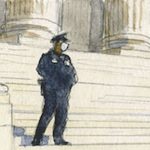
New York Gov. Andrew Cuomo urged the Supreme Court on Friday to stay out of the state’s battle with two Orthodox Jewish synagogues in New York City over an executive order that limits attendance at houses of worship as part of an effort to combat the coronavirus. Cuomo told the justices that because of “continued progress in containing COVID-19 spread,” the restrictions that the synagogues asked the court to block no longer apply to them.
Cuomo, a Democrat, issued the order at the heart of the dispute in October. The purpose of the order and the initiative that the order implemented, Cuomo explained in Friday’s filing, is to identify clusters of COVID-19 cases, to take “short-term aggressive measures” in and around the areas where those clusters are located to prevent the virus from spreading, and then to monitor the cases to determine how to proceed from there. When a cluster is identified, the area immediately around the cluster is known as a “red” zone; the area around the red zone is known as an “orange” zone, and the area around the orange zone is known as a “yellow” zone. Attendance at worship services is limited to 10 people at religious institutions in the red zone and 25 people in the orange zone. Attendance in the yellow zone is limited to 50% of the building’s maximum occupancy.
The synagogues challenged the 10- and 25-person restrictions in federal court in New York, arguing that the restrictions make it impossible for them to hold services for all of their congregants. The district court denied a request to block the enforcement of the order, and the U.S. Court of Appeals for the 2nd Circuit declined to step in while the synagogues appealed. The synagogues then came to the Supreme Court on Tuesday, asking the justices to put the restrictions on hold or, in the alternative, grant review without waiting for the 2nd Circuit to rule on their appeal.
In a filing by New York Solicitor General Barbara Underwood, the state emphasized that its efforts to control the disease are working. As a result, the state explained, the synagogues (and the rest of New York City) are now in yellow zones, where houses of worship are restricted to 50% of maximum occupancy – a limit that the synagogues are not challenging.
But in any event, the state continued, both the district court and the 2nd Circuit rejected the synagogues’ assertion that the executive order was motivated by hostility toward the Orthodox Jewish community. The different zones, the state noted, affect various businesses and religious institutions. Some zones do not contain any Orthodox Jewish communities, while some Orthodox Jewish communities are “left untouched.”
Although Cuomo, in an October press conference, acknowledged the prospect that his order could affect worship services, the state added, he “made clear that the order did not target any gatherings because of their religious nature.” Instead, the state explained, the order was focused on “mass gatherings” – such as at houses of worship – because of their “super-spreader potential.”
Cuomo did not, the state stressed, blame the spread of COVID-19 on the ultra-Orthodox Jewish community. And if anything, the state observed, the executive order treats religious gatherings more favorably than secular activities that involve comparable risks – such as plays, concerts, spectator sports and movies – by allowing them to remain open, with limits on attendance.
The state also pushed back against the synagogues’ suggestion that blocking enforcement of the restrictions would bring the state “into line with the approaches of other States.” “The approaches of other states,” New York told the justices bluntly, “are not working,” as current COVID statistics reflect. Even if “public officials in other states may deem certain measures sufficient to protect their own citizens,” New York concluded, that “does not prevent New York State from pursuing a different public health strategy.”
Finally, the state rejected the synagogues’ suggestion that the court should take up their appeal before the 2nd Circuit can decide it. Because the 10- and 25-person limits do not apply to the synagogues now, the state noted, there is no urgency to their request; moreover, the 2nd Circuit has agreed to fast-track their appeal, with oral argument scheduled for Dec. 18.
The state made similar arguments on Wednesday in opposing a request by the Roman Catholic Diocese of Brooklyn to lift the attendance limits. In its filing in that case, the state praised the steps that churches have voluntarily taken to try to reduce the risk of COVID-19 transmission. But those measures, the state argued, should not provide an exemption from the attendance limits: Among other things, those protocols have not yet been independently tested in COVID hotspots. And the state is not required, it continued, to “negotiate COVID-19 restrictions for each and every house of worship on a building-by-building basis.”
Shortly after filing its opposition on Wednesday, the state sent a letter to the court to inform the justices of the changes to the classification of the areas where the diocese’s churches are located. As of Nov. 20, the letter explained, “none of the Diocese’s churches will be affected by the gathering-size limits it seeks to enjoin.”
This post was originally published at Howe on the Court.
The post New York tells justices not to intervene in conflict over attendance limits at worship services appeared first on SCOTUSblog.
No. 20A90
Supreme Court of the United States
AGUDATH ISRAEL OF AMERICA,et al., Applicants, V. ANDREW M.CUOMO,
Governor of New York, Respondent. OPPOSITION TO APPLICATION FOR WRIT OF INJUNCTION OR, IN THE ALTERNATIVE, CERTIORARI BEFORE JUDGMENT
https://www.supremecourt.gov/DocketPDF/20/20A90/161415/20201120135238857_20A90%20Respondent%20NY%20Br%20in%20Opposition.pdf


A couple weeks back, Forward.com posted an op-ed by an Orthodox Jewish father explaining why he is risking a fine by hosting a yeshiva in his basement. The article can be found here: https://forward.com/scribe/457121/why-im-risking-a-15-000-fine-by-hosting-a-yeshiva-in-our-basement/. Comments responding to his post were, to put it mildly, negative and accusatory. I would like to suggest that we read his account a little more carefully and empathetically. It provides insight into the pressures and dynamics of the current circumstance in which so many parents find themselves. It is a very sad article, yet it is good to have it out in the open. I encourage you to read his article before you read my response.
* * *
It is extremely difficult to raise children, especially during hard times. The author (“Anonymous”) describes experiencing a significant parenting challenge. His response is to accept the offer of a workaround that frees him from having to confront this challenge and that absolves him from the parental responsibility to work at solving it. Unfortunately, that workaround is both illegal and dangerous. The school should never have offered him this option.
Rather than judge Anonymous and condemn him as a public health menace, it would be more constructive to analyze the situation that led to his dilemma and to unpack it, with empathy, since he certainly represents thousands of other parents experiencing a similar parenting challenge. His experience reveals some of the gaps and failures in our communal and educational systems – specifically in supporting and educating parents – that require attention and ought to be addressed.
School-Parent Expectations and Support
Anonymous is not the first person to discover that it is hard to motivate children to daven[1]. Parents and educators struggle with this challenge. It is the subject of countless parenting seminars, educator conferences, research articles in Jewish education journals, even doctoral dissertations.
In our Orthodox communities, parents are able to mostly offload this responsibility onto schools and camps. Some of these institutions are more successful than others at tefila[2] education. Parents are generally not confronted with our struggles with tefila education. But once schools closed for the pandemic, many parents like Anonymous had a rude awakening.
Anonymous tells us that during the months school was closed, his children “had nothing to drive them to get up” on time. His son “had been neglecting his prayers.” That is to say, Anonymous expected his 11-year-old son to be motivated and disciplined enough to perform the sort of davening at home – on time – that he was able to do (or that Anonymous imagined he was able to do) at yeshiva. When his child failed to meet these unrealistic expectations, Anonymous and his wife felt helpless and inadequate. He contrasts this with the “enormous sense of pride and accomplishment” he had felt back when his son was small and the expectation was “simply repeating a single sentence that he had heard every day since he was born.”
Where did Anonymous acquire these expectations? How much did the school educate the parents about home davening expectations for one’s children in general? Is it fair to ask teachers to provide realistic guidance and expectations to parents when they, themselves, elicit davening behavior through methods unavailable at home?
This father focused his article on his son, and on davening[3]; but parents have been struggling with various behavioral expectations, both religious and non-religious. What sort of support did schools provide parents during the months school was closed? Merely sending home star charts with lists of daily tasks for tracking children’s successes and failures, compliance and non-compliance, is not only woefully insufficient; in many families during the recent shut-downs, it became a source of stress and feelings of inadequacy, a brightly colored rebuke hanging on the refrigerator.
In what ways could the school – and other communal institutions – have tried to help Anonymous to feel proud and accomplished as a parent by providing the requisite skills and guidance? Is the yeshiva inadvertently conveying the message that a full and healthy Judaism isn’t possible for children if they are at home with their parents and not in school?
I ask these rhetorical questions not to criticize but to encourage schools to think about their chinuch[4] partnership with parents in a new way. But it is not only on schools. Our communities should be able provide the sort of parenting support and training that goes beyond hiring a speaker to give a 7-part lecture series. The experience of parents like Anonymous exposes one of the gaps in our communal support[5] for families, upon whom there are so many stresses, even without the extra stress imposed by Covid19.
“This seven-month layoff has been more than trying for my children,” Anonymous writes. Based on his article, it has certainly been at least as trying for him and his wife. Is it possible that the school in the basement exists for their benefit at least as much as for the benefit of their children?
Remote Learning: Schools and Parents Balancing Risks
Davening was not the only concern Anonymous expressed when contemplating another extended school closing. Anonymous is not the only parent in New York concerned that his children are falling behind educationally due to school closing or reliance on distance learning during this pandemic. I assure Anonymous that his children are not the only ones who experienced a pandemic-setback in mood, social skills, and self-regulation as well. These are indeed serious concerns.
I am not sure what effort his children’s school was making to address these concerns, however, because Anonymous declares that the school rabbis and principals “understand that remote-learning does not work.” As an educator, I find that statement very troubling, and not least because I have recently heard it elsewhere, bandied about as an axiom. Remote learning is not ideal as an all-day, long term approach. Most of us are not that great at it yet. But there are competent and creative ways to provide effective remote learning, and it is the responsibility of schools to find out about them and prepare themselves to deploy them should it be necessary. There are technologies that can be used without exposing children to the internet.
Besides, the choice isn’t either 100% remote learning done poorly or stuffing a teacher and 27 kids (above age 10 especially) into an enclosed basement without social distancing or souped-up ventilation. Masks are good, for sure; but even surgical masks are inadequate protection[6] for this set-up 6.5 hours a day at a time of community spread. Why did they not at least hold these classes in the back yard, which would reduce risk significantly and be legal, for as long as weather permitted? There are great personal microphones for teachers, usable with masks. Why no dividing kids into smaller “pods” to minimize risk?
Let us continue to read carefully, because Anonymous does not seem to have come up with this outrageous plan by himself. He is thankful to the school for “decid[ing] to set up classrooms in people’s homes,” and for refusing to accept the “edict” of the duly elected governor.
The school has given Anonymous more than a solution to his parenting challenges; they have also provided him a familiar Jewish narrative in which to embed and thus justify his action. We are resisting the evil edict of a Jew-hating tyrant in order to save our children and our religion! It is easy to slip this on and feel as virtuous as a Maccabi, especially if one is risking substantial financial loss. This school has unethically placed a michshol[7] before struggling, stressed-out parents. Will the Board of Directors cover the fine if it is levied? Insurance, legal fees? Can they absolve him and his wife of guilt feelings if ch”v someone sickens or worse as a result of this stunt? Are they even paying to clean Anonymous’ basement floor? Anonymous doesn’t say; but he is grateful to the school for putting him and his wife in this position.
Meanwhile, the school as an organization has seemingly been too inflexible to rise to the challenge or to productively adapt to changing circumstances. Why bother to train teachers in new instructional strategies that would make them successful in a situation that school districts across the country are also confronting? Why bother to work with communal organizations to provide parents with tools and support that would free them of some of their dependency and make them better partners in the chinuch of their children? Why bother with these when one can simply flout the law (turning otherwise law-abiding parents into calculating, garbage-shlepping scofflaws) and get away with doing exactly what one has always done?
I believe Anonymous truly has been convinced that he is doing what is best for his children’s “spiritual, mental, and physical health.” No longer is he helpless; now he is “moser nefesh[8]” for his children and his faith. He is proving to all that, in his words, “our teachings mean more to us than money.”
This mesiras nefesh, however, does not strengthen his family or make them more skillful parents. It does not push his kehillah[9] to do a better job of stopping the virus’ spread so that schools can open and stay open. It does not push them to address the stresses of today’s Orthodox families. It is an escape to a pretend world in which we can imagine ourselves heroic martyrs battling an old, familiar enemy. It is an indulgence in the fantasy that financial martyrdom is the sufficient and laudable response to whatever problems we face.
As a mechaneches[10] I feel obligated to remind us that there is actually a very real world with very real dangers and challenges, and the Torah places upon us the very real responsibility to face them without flinching and to identify new solutions in accordance with Torah values. The Neviim[11] were actually very explicit that merely sacrificing huge quantities of expensive property at the Bais Hamikdosh[12] is the easy way out; changing our ways, as individuals and as communities, is the hard work that the Creator values. To paraphrase them, we ought to be prioritizing the needs of the most vulnerable; conducting ourselves with utmost integrity; valuing justice over power; and having the courage to face adversity without turning to the nevi’ei sheker[13] telling us what we wish to hear. To save lives rather than to risk them. To take responsibility rather than to shift blame. To honor our elders rather than put them in danger. To conduct ourselves honorably rather than draw the ire of public officials upon ourselves. These are standards to which we should hold ourselves and one another.
Anonymous, by the way, is not the first father to commit an illegal and highly irresponsible action when an opportunity arises to do what he perceives to be in the best interest of his children. The school unethically used its perceived moral authority to convince him to ignore his conscience. His choice can be understood, but not justified, and certainly not emulated. This is all very, very not okay.
—
[1] Pray (Yiddish)
[2] Prayer
[3] This focus is itself worth exploring.
[4] Education
[5] Imagine if the model of chosson or kallah classes were adapted as parent classes for couples blessed with their first child. What an additional blessing if it became the norm for first time parents to learn from a non-judgmental teacher about basic principles like a child’s need for attachment, love, security, and structure, especially if that person were available over the years to coach and support them.
[6] Plexiglass does not replace social distancing and is ineffective against aerosolized droplets.
[7] Stumbling block
[8] Self-sacrifice
[9] Community
[10] Jewish educator
[11] Prophets
[12] Temple
[13] False prophets
 |
| Rabbi Yosef Blau |
As my wife and I sat down for Shabbat lunch, we heard the sounds of a celebration. We sensed that the networks had announced that Biden had won. After Shabbat ended, we learned that similar spontaneous celebrations had taken place around the country.
For millions of people, a dark cloud had been lifted. A majority of American voters had rejected a cynical manipulation that sowed division and fear.
* * *
After the election, we do well to consider why a choice was made, as the process itself can have ongoing implications.
President Donald Trump is a polarizing figure. The Jewish voters split their votes as a result of wildly differing attitudes toward his candidacy. In Israel, polls showed overwhelming support, reflecting the feeling that he was a consistent proponent of the policies of the Israeli government. Many Orthodox Jews in America agreed with this evaluation. Some Orthodox Jews supported Trump because of his approach to religion and state and his appointment of conservative judges. They considered these valid reasons to vote for him.
But many Jewish voters were disturbed by his personality. Trump openly defied accepted norms of behavior. He was crude and rude, disparaging those who opposed him and using name-calling instead of arguments. Cynically assuming that all are corrupt, he had no compunction about using his position for personal gain. Trump has been accused of serious sexual misbehavior, as well as financial illegalities.
Politics, for Trump, is a form of war where winning is all that matters. He sees life in transactional terms. He will support the policies desired by religious denominations, while not conducting himself in accord with their expectations of upright behavior. Trump prides himself as a businessman who beat the system. He went bankrupt many times, yet never personally paid the price.
Many of his Jewish supporters acknowledge these character faults, but argue that the policy gains outweigh them. Yet it is embarrassing to justify supporting a candidate because one benefits from his positions on issues that are particularly important to the voter, while knowing that the candidate’s flaws hurt others. Rather than appear uncaring, one easily resorts to explaining that these perceived flaws are not really as serious as they seem, and are even virtues when viewed from a different perspective. In Israel, no one wants to be a freier, which is loosely defined as a sucker, incapable of playing the system, who instead abides by the system’s rules. Someone who has successfully avoided paying taxes, has refrained from paying bills, and emerges stronger from falling business is seen as a winner.
A significant Haredi rabbi explained Trump’s crudity as normal for the rich. Perhaps an alternate rationale for excusing Trump’s behavior is that a non-Jew can do what he wishes, and not worry about criticism. Moreover, if dishonesty is a given, being open about dividing the world between supporters and enemies — who don’t deserve proper treatment — is an expression of authenticity. Since the other politicians are equally corrupt, Trump gets credit for not being a hypocrite.
In broader circles, knowing that Trump is vengeful, his followers have learned to accept his reality. We are witnessing, post-election, Trump essentially refusing to accept defeat. He asserts fraud without providing proof because it is inconceivable that the majority of voters chose his opponent, whom he had derided, and not him.
Pragmatic political alliances should not replace moral and ethical standards. When a religious community becomes committed to a problematic personality for practical gains, it risks losing its fundamental character. Mentalities develop over time and can become entrenched. Yet a single event will not by itself lead to national change. It may be an inflection point. Religious leaders may begin to reconsider a transactional relationship with government and show concern for decency and ethical and moral standards. In Israel, there may be a realization that the anti-freier doesn’t always win.
We hope that this support of Trump has been a unique situation and the religious leadership will communicate that it is limited; otherwise the future damage will outweigh the benefits.

20-3572-CV IN THE UNITED STATES COURT OF APPEALS FOR THE SECOND CIRCUIT AGUDATH ISRAEL OF AMERICA, AGUDATH ISRAEL OF KEW GARDEN HILLS, AGUDATH ISRAEL OF MADISON, RABBI YISROEL REISMAN
file:///C:/Users/Owner/AppData/Local/Temp/appeal.pdf


Body Count: U.S. Defense Secretary Robert McNamara briefing the press on Vietnam at the Pentagon in 1965.
Big data is poised to transform society, from how we diagnose illness to how we educate children, even making it possible for a car to drive itself. Information is emerging as a new economic input, a vital resource. Companies, governments, and even individuals will be measuring and optimizing everything possible.
But there is a dark side. Big data erodes privacy. And when it is used to make predictions about what we are likely to do but haven’t yet done, it threatens freedom as well. Yet big data also exacerbates a very old problem: relying on the numbers when they are far more fallible than we think. Nothing underscores the consequences of data analysis gone awry more than the story of Robert McNamara.
McNamara was a numbers guy. Appointed the U.S. secretary of defense when tensions in Vietnam rose in the early 1960s, he insisted on getting data on everything he could. Only by applying statistical rigor, he believed, could decision makers understand a complex situation and make the right choices. The world in his view was a mass of unruly information that—if delineated, denoted, demarcated, and quantified—could be tamed by human hand and fall under human will. McNamara sought Truth, and that Truth could be found in data. Among the numbers that came back to him was the “body count.”
McNamara developed his love of numbers as a student at Harvard Business School and then as its youngest assistant professor at age 24. He applied this rigor during the Second World War as part of an elite Pentagon team called Statistical Control, which brought data-driven decision making to one of the world’s largest bureaucracies. Before this, the military was blind. It didn’t know, for instance, the type, quantity, or location of spare airplane parts. Data came to the rescue. Just making armament procurement more efficient saved $3.6 billion in 1943. Modern war demanded the efficient allocation of resources; the team’s work was a stunning success.
At war’s end, the members of this group offered their skills to corporate America. The Ford Motor Company was floundering, and a desperate Henry Ford II handed them the reins. Just as they knew nothing about the military when they helped win the war, so too were they clueless about making cars. Still, the so-called “Whiz Kids” turned the company around.
McNamara rose swiftly up the ranks, trotting out a data point for every situation. Harried factory managers produced the figures he demanded—whether they were correct or not. When an edict came down that all inventory from one car model must be used before a new model could begin production, exasperated line managers simply dumped excess parts into a nearby river. The joke at the factory was that a fellow could walk on water—atop rusted pieces of 1950 and 1951 cars.
McNamara epitomized the hyper-rational executive who relied on numbers rather than sentiments, and who could apply his quantitative skills to any industry he turned them to. In 1960 he was named president of Ford, a position he held for only a few weeks before being tapped to join President Kennedy’s cabinet as secretary of defense.
As the Vietnam conflict escalated and the United States sent more troops, it became clear that this was a war of wills, not of territory. America’s strategy was to pound the Viet Cong to the negotiation table. The way to measure progress, therefore, was by the number of enemy killed. The body count was published daily in the newspapers. To the war’s supporters it was proof of progress; to critics, evidence of its immorality. The body count was the data point that defined an era.
McNamara relied on the figures, fetishized them. With his perfectly combed-back hair and his flawlessly knotted tie, McNamara felt he could comprehend what was happening on the ground only by staring at a spreadsheet—at all those orderly rows and columns, calculations and charts, whose mastery seemed to bring him one standard deviation closer to God.
In 1977, two years after the last helicopter lifted off the rooftop of the U.S. embassy in Saigon, a retired Army general, Douglas Kinnard, published a landmark survey called The War Managers that revealed the quagmire of quantification. A mere 2 percent of America’s generals considered the body count a valid way to measure progress. “A fake—totally worthless,” wrote one general in his comments. “Often blatant lies,” wrote another. “They were grossly exaggerated by many units primarily because of the incredible interest shown by people like McNamara,” said a third.
The use, abuse, and misuse of data by the U.S. military during the Vietnam War is a troubling lesson about the limitations of information as the world hurls toward the big-data era. The underlying data can be of poor quality. It can be biased. It can be misanalyzed or used misleadingly. And even more damning, data can fail to capture what it purports to quantify.
We are more susceptible than we may think to the “dictatorship of data”—that is, to letting the data govern us in ways that may do as much harm as good. The threat is that we will let ourselves be mindlessly bound by the output of our analyses even when we have reasonable grounds for suspecting that something is amiss. Education seems on the skids? Push standardized tests to measure performance and penalize teachers or schools. Want to prevent terrorism? Create layers of watch lists and no-fly lists in order to police the skies. Want to lose weight? Buy an app to count every calorie but eschew actual exercise.
The dictatorship of data ensnares even the best of them. Google runs everything according to data. That strategy has led to much of its success. But it also trips up the company from time to time. Its cofounders, Larry Page and Sergey Brin, long insisted on knowing all job candidates’ SAT scores and their grade point averages when they graduated from college. In their thinking, the first number measured potential and the second measured achievement. Accomplished managers in their 40s were hounded for the scores, to their outright bafflement. The company even continued to demand the numbers long after its internal studies showed no correlation between the scores and job performance.
Google ought to know better, to resist being seduced by data’s false charms. The measure leaves little room for change in a person’s life. It counts book smarts at the expense of knowledge. And it may not reflect the qualifications of people from the humanities, where know-how may be less quantifiable than in science and engineering. Google’s obsession with such data for HR purposes is especially queer considering that the company’s founders are products of Montessori schools, which emphasize learning, not grades. By Google’s standards, neither Bill Gates nor Mark Zuckerberg nor Steve Jobs would have been hired, since they lack college degrees.
Google’s deference to data has been taken to extremes. To determine the best color of a toolbar on the website, Marissa Mayer, when she was one of Google’s top executives before going to Yahoo, once ordered staff to test 41 gradations of blue to see which ones people used more. In 2009, Google’s top designer, Douglas Bowman, quit in a huff because he couldn’t stand the constant quantification of everything. “I had a recent debate over whether a border should be 3, 4 or 5 pixels wide, and was asked to prove my case. I can’t operate in an environment like that,” he wrote on a blog announcing his resignation. “When a company is filled with engineers, it turns to engineering to solve problems. Reduce each decision to a simple logic problem. That data eventually becomes a crutch for every decision, paralyzing the company.”
This is the dictatorship of data. And it recalls the thinking that led the United States to escalate the Vietnam War partly on the basis of body counts, rather than basing decisions on more meaningful metrics. “It is true enough that not every conceivable complex human situation can be fully reduced to the lines on a graph, or to percentage points on a chart, or to figures on a balance sheet,” said McNamara in a speech in 1967, as domestic protests were growing. “But all reality can be reasoned about. And not to quantify what can be quantified is only to be content with something less than the full range of reason.” If only the right data were used in the right way, not respected for data’s sake.
Robert Strange McNamara went on to run the World Bank throughout the 1970s, then painted himself as a dove in the 1980s. He became an outspoken critic of nuclear weapons and a proponent of environmental protection. Later in life he produced a memoir, In Retrospect, that criticized the thinking behind the war and his own decisions as secretary of defense. “We were wrong, terribly wrong,” he famously wrote. But McNamara, who died in 2009 at age 93, was referring to the war’s broad strategy. On the question of data, and of body counts in particular, he remained unrepentant. He admitted that many of the statistics were “misleading or erroneous.” “But things you can count, you ought to count. Loss of life is one.”
Big data will be a foundation for improving the drugs we take, the way we learn, and the actions of individuals. However, the risk is that its extraordinary powers may lure us to commit the sin of McNamara: to become so fixated on the data, and so obsessed with the power and promise it offers, that we fail to appreciate its inherent ability to mislead.
Kenneth Cukier is the data editor of The Economist. Viktor Mayer-Schönberger is a professor of Internet governance and regulation at the Oxford Internet Institute in the U.K. They are the authors of Big Data: A Revolution That Will Transform How We Live, Work, and Think (Houghton Mifflin Harcourt, 2013), from which this article was adapted.


