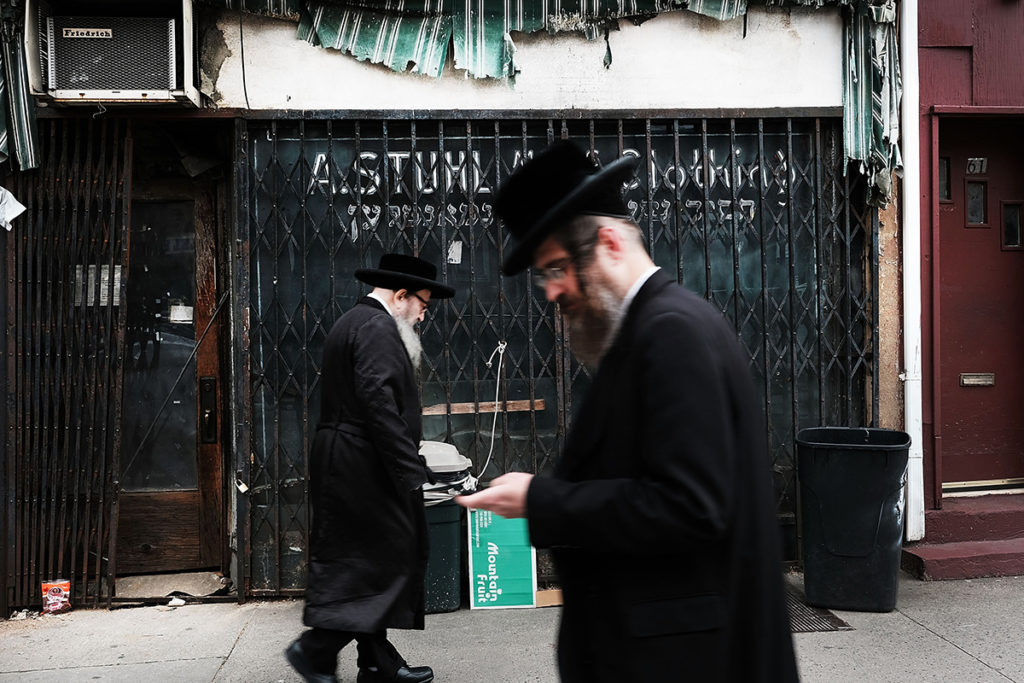
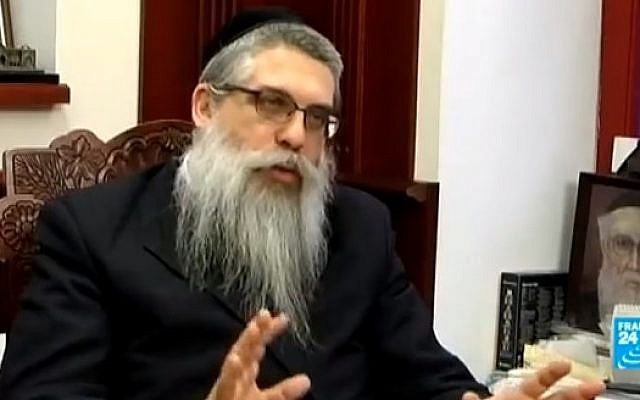
Rabbi Yisrael Hager, leader of Vizhnitz hasidic group, orders educational institutions to reopen, defying coronavirus lockdown.
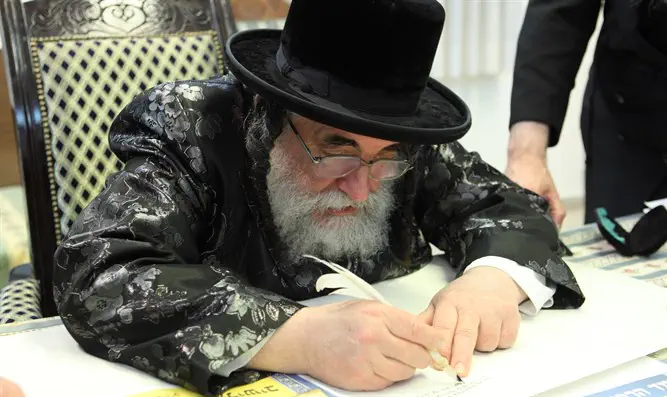
Yisrael Hager, the Vizhnitz Rebbe
The Vizhnitz Rebbe, Rabbi Yisrael Hager, on Saturday evening
ordered that all of the Vizhnitz educational institutions be reopened.
Rabbi Hager, a senior member of Agudat Yisrael, gave the order during
the third afternoon meal on Shabbat (the Jewish Sabbath) in his Bnei
Brak synagogue.
MK Avigdor Liberman, chairman of the Yisrael Beytenu party,
tweeted, "Bibi's landlord has gone crazy, and we're all paying the high
price."
Meanwhile, earlier this month, Lithuanian-haredi leader Rabbi Chaim Kanievsky ordered schools to close due to the spread of coronavirus among the haredi community.
The haredi community is made up of several sectors, including both
the Lithuanian-haredi community and several hasidic groups, one of which
is Vizhnitz.
Blood on rabbis’ hands, Haredi emergency chief says after mom’s COVID death
Yehuda Meshi-Zahav pleaded with his family not
to hold a party, but with Haredi leaders not taking the virus
seriously, the ZAKA rescue group leader says he didn’t stand a chance
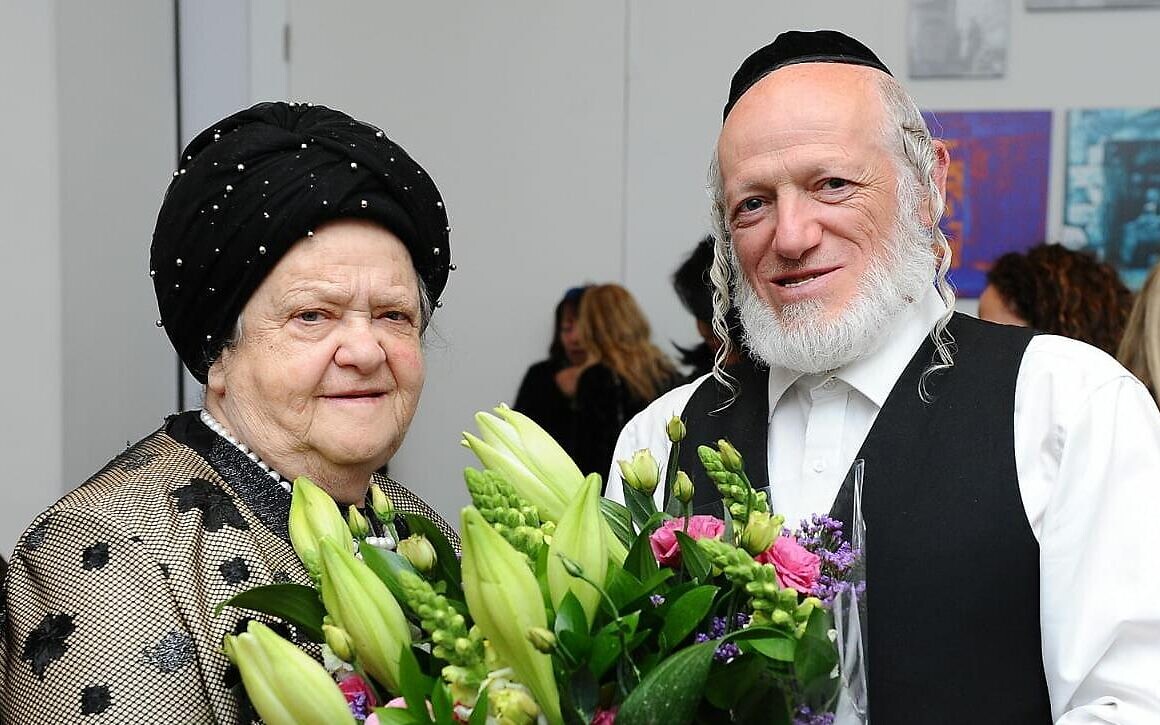
Yehuda Meshi-Zahav with his mother Sarah in an undated picture
Yehuda Meshi-Zahav waged an uphill battle for virus vigilance in
the ultra-Orthodox community. But even his mother didn’t listen — and
held a party that led to her infection and death.
Meshi-Zahav says that rabbis have “blood on their hands” for the
death of his mother, Sarah, on Monday. Because of their disdain for
COVID-19 rules, his cautious voice didn’t stand a chance when she
decided to hold a family Hanukkah party.
“She was a healthy 80-year-old, with no medical history, and the
virus took her. In the morning, I said Shema with her, and later in the
day, she died,” he told The Times of Israel this week.
In October, Meshi-Zahav, the head of the ZAKA emergency response organization, rang alarm bells about Haredi conduct in an impassioned Times of Israel interview.
He said then that the authority structure within the community meant
any warnings or portrayal of the seriousness of the disease would fall
on deaf ears so long as top rabbis stayed silent.
Now, it’s personal.
“I work with death every day,” said Meshi-Zahav, whose volunteer
organization works to remove the bodies of COVID-19 victims and others
to be prepared for burial. “But nothing prepares you for the sense of
loss when it’s your own family.”
Yehuda Meshi-Zahav (center) at the
funeral of his mother Sarah, in Jerusalem on January 18, 2021. (courtesy
of Yehuda Meshi-Zahav)
Haredi communities have suffered disproportionately from the
coronavirus, with infection rates in many ultra-Orthodox areas several
times that of non-Haredi areas.
As of Tuesday, some 22.1 percent of daily tests from Haredi areas
were coming back positive, compared to 9.2% in the general population,
according to Roni Numa, head of the ultra-Orthodox desk at Israel’s
coronavirus taskforce.
High infection rates among Haredim are partly due to large family
size and environmental factors, but experts also blame rule-breaking in
large pockets of the community, often supported by rabbis and other
community leaders.
Numa told Hebrew-language media that even in the current
lockdown, some 15% of Haredi educational institutions were operating,
and said that some 12,000 ultra-Orthodox students had contracted the
coronavirus in the last month.
“There are leaders of the community who have blood on their
hands, and it’s the blood of my mother and of many others,” Meshi-Zahav
said.
Yehuda Meshi-Zahav at the grave of his mother Sarah, after the funeral on January 18. 2021 (courtesy of Yehuda Meshi-Zahav)
Meshi-Zahav said that ahead of the party, in mid-December, he
frantically tried to convince his large family to cancel the plans, but
to no avail.
“I called everyone asking them to stop the party. I called my mother
and asked her not to do it and spoke to other family members,” he said.
“I said it’s dangerous, don’t do it. But they live in a place where the atmosphere was different than in other places.”
“There was an atmosphere that we’ve reached the end of coronavirus — this was the feeling at Hanukkah,” he said.
Adherence to the rules often varies from community to community and
sect to sect. Many Haredi rabbis and political leaders have shut
schools, called for health guidelines to be kept and tried to encourage
vaccination.
But in the Jerusalem neighborhood of Mea Shearim, where Meshi-Zahav’s
parents lived, as well as many other areas, the tone is set by rabbis
who take a different stance, he said.
The head rabbi of the ultra-Orthodox
Toldos Aharon sect leaving a crowded synagogue in Safed, on January 7,
2020. David Cohen/Flash90)
Some give approval to rule-breaking and downplay the virus threat, he
lamented. “People just aren’t absorbing the seriousness of the
situation and the leaders are living on a different planet.”
Enforcement in many ultra-Orthodox areas has been lax, according to
reports which found low numbers of fines given out for health violations
in Haredi cities compared to other parts of the country. Some have
blamed the upcoming elections and Prime Minister Benjamin Netanyahu’s
desire to maintain his alliance with Haredi political parties.
When police do go into Haredi neighborhoods, violence often ensues,
with hard-liners rioting against enforcement measures. On Tuesday,
clashes were reported in Bnei Brak, Jerusalem and Beit Shemesh.
Police officers clash with ultra-Orthodox
men during enforcement of coronavirus emergency regulations, in the
neighborhood of Mea Shearim, Jerusalem, January 14, 2021 (Yonatan
Sindel/Flash90)
Some have noted the seeming cognitive dissonance of religious leaders
who demand vigilance on religious matters but not health matters. A
recent comment that went viral following a video of a large, crowded
Haredi wedding noted that Orthodox tradition bans weddings during a
month-long period following Passover in memory of a pandemic that
occurred some 2,000 years ago, but rabbis won’t ban a wedding during a
pandemic raging now.
It’s a sentiment Meshi-Zahav is familiar with. Rabbis, he said, could use their pulpits to save lives, but are not.
“The job of community leaders isn’t just to state positions on Jewish
law,” he said, “but to show people how to live and to safeguard the
health of the community.”
The government convened Tuesday afternoon to vote on extending the
current lockdown beyond Friday in light of the rising number of
coronavirus patients diagnosed in Israel.
Prime Minister Binyamin Netanyahu said in his opening remarks at the
start of the meeting: "We must decide immediately on extending the
lockdown. Many European countries are extending their lockdowns until
March, even until April. If we open up now, it will cost us human
lives."
Netanyahu condemned the large wedding
which took place in Bnei Brak yesterday and said: "The wedding that
took place yesterday is true bloodshed. The instructions must be
obeyed."
Defense
Minister Benny Gantz said at the Cabinet meeting that "entry and exit
from the country should be restricted immediately."
Earlier, the Blue and White party agreed to back a seven-to-ten day
extension of the tightened lockdown, on condition that the government
also vote to approve a number of policy changes demanded by the party.
The demands include vaccinations for high school students, mandatory
coronavirus checks for everyone arriving in Israel, and expanded
lockdown enforcement in areas with high infection rates.
According to Ganz, "Subject to all of these, and in accordance with
the recommendations of the professionals, Blue and White will support
the extension of the lockdown for a week to ten days."
The head of the National Security Council, Meir Ben-Shabbat, said at
the Cabinet meeting that "the morbidity is high and widespread, mainly
because of the mutations. The extent of the disease challenges the
hospitals and we still do not see the effect of the restrictions on the
disease."
Coronavirus Czar Prof. Nachman Ash said in closed discussions ahead
of the Cabinet meeting: "We will not insist on two more weeks, this week
plus a weekend is also acceptable." Regarding the vaccines, Ash said:
"The effectiveness of the first dose is lower than we thought and what
Pfizer presented."
A total of 10,021 new cases of the coronavirus were diagnosed across
Israel Monday, according to data released by the Health Ministry Tuesday
morning.
There are now 81,059 active cases of the virus identified in Israel,
with 77,524 being treated at home, 1,588 being treated at coronavirus
hotels, and 1,947 hospitalized patients.
Of those hospitalized patients, 1,114 are in serious or critical condition, with 277 on assisted breathing.
He Shows He Is Unfit. Yet He's Still the President.
*"Living proof of
evolution. A hump short of a camel. Mentally qualified for handicapped
parking. So dumb, blondes tell jokes about him. So stupid, mind readers
charge him half price. A "crackpot" without the cholent" Takes him 1.5 hours to watch "60 Minutes".*
The system can deal with a crooked president. But not a crazy one.
Not reassuring.
President Donald Trump is not always crazy like a fox.
And that -- more than obstruction of justice, or any potential
criminality related to Russia -- is the greatest threat facing the U.S.
It's also a threat that U.S. institutions are failing to acknowledge,
let alone confront.
Trump is unlikely to succeed at completely
derailing the FBI investigation into his campaign's ties to Russia. But
he might undermine it enough to avoid any serious consequences. Even
without his subterfuge, the investigation could prove inconclusive.
But
at least there is an investigation into Russia, in addition to
congressional inquiries, news reporting, and a general mobilization of
expert opinion and institutions. The investigations are vital. Unless
they are, ultimately, beside the point.
For two days early this week, Trump's staff went to great lengths
to establish a plausible claim that Trump did not instigate the firing
of FBI director James Comey. Instead, White House aides and Vice
President Mike Pence insisted that Trump was responding to concerns
raised in a memo by Deputy Attorney General Rod Rosenstein.
This White House has not assembled a highly competent or ethical
team. So the explanations were pretty dodgy. But they nonetheless
represented a coordinated effort to define Trump's actions and confine
the political damage from firing Comey.
Then on Thursday Trump told
NBC News anchor Lester Holt that Rosenstein's memo wasn't even
significant. "I -- I was going to fire Comey," Trump said. Holt
immediately questioned him on the issue, all but encouraging Trump to
get his story aligned with the previous White House talking points.
Trump wasn't having it.
"Oh, I was gonna fire regardless of recommendation," Trump said.
There
is good reason for journalists and others to ask whether Trump's
statements to Holt constitute something close to an admission that he
fired Comey to impede the Russia investigation. (Trump said he was eager
for the investigation to end.) There is good reason to use this
interview as evidence that Trump's White House staff is often no more
truthful than Trump himself.
But the issue of the motives and means of the Trump White
House is small compared with the enduring madness of the man himself.
Trump's admission to Holt was not an effort to distract from a bunch of
bad news stories. Does Trump use such tactics? Frequently. And from this
comes the notion that Trump is "crazy like a fox."
But the Holt
interview wasn't evidence of being crazy like a fox. This was not a
devious move.
Trump can be cunning. But he also flails wildly, harming
others often and himself occasionally. His recent interviews with the
Economist and Time were bizarre and frequently incoherent.
As my colleague Jon Bernstein wrote:
Trump
can't be bothered to even master his own talking points, even in
something which could put his entire presidency at risk. Or perhaps he's
intellectually incapable of doing so.
Trump is
almost supernatural in his multivariate unfitness, combining combustible
levels of ignorance, amorality, venality and mental imbalance in a way
not seen even when Richard Nixon drank alone.
The Russia
investigation serves as an outlet for collective anxiety about Trump's
unfitness, just as the prospect of indictments offers a potential deus
ex machina to resolve the dangers inherent in Trump's administration.
But what if they resolve nothing? Or take too long doing so?
It's
easy to miss the dense and haunted forest of Trump for all the trees.
Speaking to National Public Radio, Republican Senator Ben Sasse, who has
kept a safe distance from Trump, spoke of his concerns and lamented the
state of American political conflict.
We have a
crisis of public trust in this country that is much deeper than just the
last four months or the last 18 months. We have an erosion of a shared
narrative about what America is about. And we have the huge unpopularity
of almost all of our governing institutions. That should trouble
everybody.
Yes, indeed. That's all true. Meanwhile,
however, we have a slightly more pressing problem. The president of the
United States is mentally and morally unfit with a nuclear arsenal at
his fingertips. And no one in Washington knows what to do about it.
This column does not necessarily reflect the opinion of the editorial
board or Bloomberg LP and its owners, but does reflect the opinion of
this Blogger!
He told the Economist he invented the use of "priming the pump"
with regard to the economy. It's probably most associated with Franklin
Roosevelt, and even if Trump meant "came upon it" rather than "came up
with it" it's remarkable for anyone in his position to be that ignorant
of normal economics usage. Then again, he's never shown that he knows
anything about economics.
He spoke gibberish about aircraft carriers to Time magazine: "I
said what system are you going to be–'Sir, we’re staying with digital.'
I said no you’re not. You going to goddamned steam, the digital costs
hundreds of millions of dollars more money and it’s no good."I know very little about aircraft carriers, but the people who do know this stuff confirm that he doesn't know what he's talking about. Not that he's wrong, mind you; he isn't coherent enough to be wrong.
Then he completely contradicted his own explanation on James Comey's firingto NBC News.
The old story that Trump was reacting to a recommendation from the
Department of Justice; the new story is that he was always going to fire
Comey.
Why does that fit in with the other two quotes?
Because it demonstrates that Trump can't be bothered to even master his
own talking points, even in something which could put his entire
presidency at risk. Or perhaps he's intellectually incapable of doing
so. Either way, the president talks and talks without showing any mastery -- any understanding -- of anything.
Franklin Graham Compares 10 Republicans Who Voted to Impeach Trump to Betrayal of Christ
Evangelist Franklin Graham compared 10 members of the GOP toJudas Iscariot on Thursday after they voted to approve President Donald Trump's second impeachment.
Graham,
the head of the non-profit organization Samaritan's Purse, has been a
longtime supporter of Trump's presidency. Rifts between the evangelical
community and Trump have developed after recent events, including a
January riot at the U.S. Capitol. Trump's impeachment in the aftermath
of the riot at the U.S. Capitol did not change Graham's support of the
president, leading Graham to draw parallels between Trump's impeachment
and the betrayal of Jesus Christ as described in the Bible.
"Shame, shame on the ten Republicans who joined with @SpeakerPelosi & the House Democrats
in impeaching President Trump yesterday," Graham tweeted. "After all
that he has done for our country, you would turn your back & betray
him so quickly? What was done yesterday only further divides our
nation."
Graham elaborated on his opinion in a Thursday Facebook post, detailing why he believed Trump was actually impeached.
"But
the House Democrats impeached him because they hate him and want to do
as much damage as they can," Graham wrote. "And these ten, from
[Trump's] own party, joined in the feeding frenzy. It makes you wonder
what the thirty pieces of silver were that [Democratic House] Speaker
[Nancy] Pelosi promised for this betrayal."
In the Bible, Judas
Iscariot was paid 30 pieces of silver by the Pharisees to betray Jesus,
who was tried and punished before being crucified by the Romans.
Evangelist Franklin Graham compared the second
impeachment of President Donald Trump to the betrayal of Jesus Christ in
a pair of social media posts.
Members of the House voted 232-197 to impeach
Trump on the grounds of "inciting violence against the Government of the
United States" after thousands of his supporters marched on the Capitol
building following a speech given by Trump at a Stop the Steal rally.
Five individuals died as a result of riot-related violence.
In
her Tuesday statement announcing her decision to break party lines and
vote in favor of Trump's impeachment, Wyoming Republican Liz Cheney
cited Trump's actions connected to the Capitol riot.
"There has
never been a greater betrayal by a President of the United States of his
office and his oath to the Constitution," Cheney wrote.
Some
evangelicals held fast to their support of Trump after the riots. Texas
Baptist pastor Robert Jeffress tweeted that even after the riot, he did
not regret supporting Trump throughout his presidency.
"Great
talks today with President @realDonaldTrump and @VP @Mike_Pence,"
Jeffress tweeted on Tuesday. "When reporter asked if I regretted my
support I said "Absolutely not! Most pro-life and religious liberty
President and VP in history!"
Trump's repeated claims that widespread election fraud turned off some evangelicals including televangelist Pat Robertson, who said that Trump was laboring under a delusion by alleging that he had actually won the election.
"With
all his talent, and the ability to raise money and draw large crowds,
the President still lives in an alternate reality," Robertson said on a
December 2020 episode of his syndicated program The 700 Club.
Robertson added that Trump would be best served by conceding the election to President-elect Joe Biden.
"He's
fired people, he's fought people and he's insulted people, and he keeps
going down the line, so it's a mixed bag," Robertson said. "And I think
it would be well to say, 'You've had your day and it's time to move
on.'"
Trump made strong inroads into the conservative Christian
community. In January 2020, he launched a coalition called Evangelicals
for Trump. A number of evangelical leaders announced their support for
Trump, with Graham saying in December 2020 that Trump would "go down in
history as one of the great presidents of our nation."
After Trump
was widely found to complicit in inciting the Capitol riot, the
National Association of Evangelicals (NAE) decried Trump. "The mob at
the Capitol was provoked by leaders, including President Trump, who have
employed lies and conspiracy theories for political gain," the January
statement read. "Evangelicals are people who are committed to truth and
should reject untruths."
Newsweek reached out to the NAE for further comment.
Trump refuses to pay Giuliani for failed attempt to overturn election
In addition to blocking the payments owed to Giuliani, White House aides were also ordered not to field calls from him.
US President Donald Trump
is reportedly refusing to pay his personal lawyer Rudy Giuliani for his
work, which included an unsuccessful attempt to overturn the elections
results amid unfounded allegations, according to the Washington Post.The
newspaper report states that Trump directed his White House aides to
hold on to legal fees owed to Giuliani after a tiff materialized between
the two - a report then confirmed by The New York Times.
"The president is pretty wound up," a senior administration official told the Post. The Times
stated that in addition to blocking the payments owed to Giuliani,
White House aides were also ordered not to field calls from the former
New York mayor. The Times,
citing two unnamed White House officials, reported that the quarrel
began with Giuliani's appeal to be paid $20,000 a day for his
unsuccessful attempt to overturn election results in key states.Trump
is reportedly also upset with his son-in-law Jared Kushner, Vice
President Mike Pence and White House press secretary Kayleigh McEnany,
in addition to a few other White House senior staff members, for unnamed
reasons.
Trump's decision to
call for calm and his promise for a peaceful transition, in a video
last Thursday, came at the urging of senior aides, some arguing that he
could face removal from office or legal liability over his supporters'
storming of the US Capitol, two sources familiar with the matter said on
Friday.The House of Representatives on Wednesday made Trump the first US president to be impeached twice,
charging him with inciting an insurrection as lawmakers sought to
certify President-elect Joe Biden's victory in the November 3 election.Giuliani,
who told the crowd they should engage in "trial by combat," may lead
the impeachment defense, Reuters reported on Sunday, citing a source. He
has not responded to requests for comment.One
of the sources, an outside adviser to the White House, said Giuliani
was expected to play a lead role in any impeachment effort.
The other
source familiar with the situation said that Giuliani, a personal
attorney of the president, would likely provide the kind of
representation Trump wants.Giuliani
led the legal team that tried unsuccessfully to overturn Trump's
election defeat. It failed to produce any evidence of significant fraud
and lost dozens of court cases in key battleground states and at the
Supreme Court before Biden's victory was confirmed.Giuliani's
own reputation was battered during the often chaotic legal campaign. In
one news conference, brown dye dripped down his face as he laid out
false claims of election fraud, and he was ridiculed for another event
held in the parking lot of a Pennsylvania landscaping company next to a
sex shop.
The former mayor of
New York City did not respond to requests for comment on his role in a
possible impeachment trial, and the White House also declined to
comment.Democratic members
of the House of Representatives introduce an article of impeachment this
week, accusing Trump of inciting a mob of his supporters to storm the
US Capitol last Wednesday.The
House voted to impeach Trump, with several Republican representatives
voting in favor of the move, and he now faces a trial in the Senate.
Majority Leader Mitch McConnell has suggested that there would be no
Senate trial until after Trump leaves office.House
Majority Whip James Clyburn also said on CNN that lawmakers might wait
to send the impeachment article to the US Senate for a trial to give
Congress time to approve Biden’s Cabinet nominees and other agenda
items.Trump's choice of lawyers to defend him may be limited.
My Former Hasidic Community Still Supports Trump. I’m Not Surprised.
While Trump’s cult of personality appeals to many in the community, it is not the entire story.
On January 6, 2021, Orthodox Jewish Trump supporters headed to the U.S. Capitol to join throngs of Proud Boys and QAnon conspiracy theorists to protest, and ultimately try to derail, President-elect Joe Biden’s legitimate presidential victory. As JTAreports,
some Orthodox Trump supporters, including provocative leader Heshy
Tischler, attempted to join the storming of the Capitol, but could not
get in. JTA says that Tischler has since denounced the violence, but does not denounce the crusade behind it. Others, like Aaron Mostofsky, son of an Orthodox judge in Brooklyn, did get in, entering the Capitol building in riot gear, for which he has since been arrested.
Watching this all unfold, I was overwhelmed by fear as religious Jews attacked the Capitol alongside neo-Nazis.
I felt my country dying by the hands of bigoted insurrectionists. I
felt my religion and culture disintegrating in the hands of President
Donald Trump. My fear was most palpable when a photograph of a bearded
man in a “Camp Auschwitz” sweatshirt popped up on my Facebook feed. The front of his sweatshirt said, “Work brings freedom,” — a rough translation of “Arbeit Macht Frei,”
the German phrase that famously appears at the entrance to Auschwitz —
and the back said, “Staff.” It is seemingly unfathomable that many of
the Orthodox and ultra-Orthodox people I was raised alongside support
the same cause he supports. My grandmother, whose family was gassed and
cremated in the Auschwitz-Birkenau compound, would be ashamed if she
were alive to see that her brethren march alongside neo-Nazis.
I feel this shame deeply myself. I am ashamed that members of the
Orthodox communities — communities that brought me into the world — have
linked arms with those who would love for nothing more than to
annihilate our people. I am ashamed that members of my Hasidic family
would choose loyalty for Trump over religious and moral righteousness. I
am ashamed, but I am not surprised.
My entire family is Hasidic. My parents, four siblings, 14 nieces and
nephews, 20 uncles and aunts, and nearly 100 first cousins abide by
Hasidic law. I am the black sheep — the one who left the Hasidic faith
when I was 17 years old. However, while I am no longer Hasidic, I have a stake in the Hasidic community. My family is there to stay, and so I care about what transpires on the streets of Hasidic Brooklyn.
I also feel somewhat responsible for how they act. I feel somewhat
responsible for every racist, sexist, and irrationally devoted pro-Trump
comment that members of the community espouse. I know that in some
ways, it is unreasonable to hold myself accountable for the actions of
people I cannot control. But on the other hand, those who live as proud
Hasids and those like me who have left the Hasidic community know that
these people are our people.
Because they are my people, I cared when hundreds of Hasidic people,
including members of my family, gathered on Brooklyn streets to burn masks in October 2020. I cared when far-right demagogue Tischler led these mass-mask burnings while proudly donning Trump insignia on his shirt. I cared when Tischler incited
Hasidic people to attack journalist Jacob Kornbluh for doing his job
and for promoting public health measures. I cared when 80% of New York Assembly District 48, the district that includes Borough Park and is overwhelmingly Hasidic, voted for Trump in the 2020 election.
And I definitely cared when these activities led to some Hasidic
support for the January 6 Capitol insurrection. This support can be seen
in photographs and videos of Hasidic community members from Dr. Hannah Lebovitz’s Twitter account. One video includes a Hasid arguing in Yiddish that anyone not planning to attend the Capitol riot is a kofer (heretic). The same man was seen at the Capitol on January 6. Support for the rioting can also be found in screenshots from Orthodox WhatsApp groups organizing trips to the Capitol.
People ask me why I care about the actions of those I left behind,
and why the fundamentalism I am no longer subjected to still gnaws at
me. They ask me why I feel a deep sense of shame each time the New York Times writes about Borough Park, Tischler, and the Trump cult of personality that has overwhelmed Hasidic life.
I care because with each burned mask and MAGA hat, the Hasidic
community replaces the positive memories from my youth with fire and
animosity. Since I have left the Bobov sect, I have held onto the warm
Shabbat dinners, the communal support, and the intense spirituality of
routine traditions. I have fused my love for Yiddish, my heimish
personality, my strong connections with my family, and my passion for
heartfelt holiday celebrations with my non-Hasidic life. But still,
shame eats away at my appreciation for Hasidic tradition. I am ashamed
that many Hasidic people have devolved into racist fearmongers who
proudly hang Trump flags across my hometown that I have walked past
while visiting my family in Brooklyn.
The thing is, contemporary Hasidic sects are designed for
authoritarian control. Each Hasidic sect, from Bobov to Viznitz to
Satmar to Skver, are run by what is called a “grand rabbi.” These rabbis
are demanding patriarchs. They expect women to wear particular shades
of stockings, men to dress identically, congregants to receive their
blessings before making any personal life decisions, and they believe in
a world where Hasids are the only Jews worth mentioning. Most
importantly, Hasidic grand rabbis center their congregants’ worlds
around themselves. They are populist leaders of miniature nations.
Congregants have paintings and photographs of grand rabbis around their
homes, sacrifice family time for tisches (Friday night gatherings) with their leaders, and would do anything to protect the power of their particular grand rabbi.
Hasidic society was not always this way. Power struggles did not
always regulate everyday Hasidic life. Authoritarianism was not always
the dominating factor of these communities. But along with fears of
assimilation came rabbinical dominance and populist rhetoric. Since
contemporary Hasidic society is built on this hierarchical system,
Hasidic congregants are particularly susceptible to Trump’s populist
rhetoric. In some ways, Trump has become the ultimate grand rabbi,
telling people what to think, how to act, and who to hate. Many Hasidic
people are raised to conform. Individualism is antithetical to the
insularity required by much of present-day Hasidic life. Many Hasidic
sects demand a fear of the outside — a fear of anything and anyone that
can disrupt the Hasidic equilibrium. Therefore, many Hasids are inclined
to be swept away by the conformist, seemingly traditional, and
authoritarian demands of a demagogue like Donald Trump.
According to Dr. Hannah Lebovitz and Beth Pikowski,
Trump “made it comfortable and convenient for our predominantly white
(Orthodox Jewish and evangelical Christian) communities to believe the
real threat came from outside, either from the left—imagined as a vague
group of lawless and godless people—or from those elsewhere who
practiced a different religion.” Trump speaks to the darker features of
Hasidic culture, especially some Hasidic people’s desires to highlight blood lineage
and deny women’s rights, and proper education for
Hasidic children, leading good Hasidic people down a treacherous
fascistic path.
While Trump’s cult of personality appeals to many Hasidic people’s
nurtured need for authority, it is not the entire story. Another reason
why so many Hasidic people remain loyal to Trump’s messaging, even after
the January 6 insurrection, is because of the inferior education
standards in the Hasidic community. Hasidic schools are purposefully
negligent when providing secular education to its children. Young Hasidic boys receive only 90 minutes of secular studies a day.
When the boys are teenagers, most receive no secular education at all.
I can corroborate this from the secular education my own family
receives. Most of the male teenagers in my family cannot write an essay. They see most non-white and
non-Jewish people as the enemy. Their views on equality are formed by a
Yehuda HaLevi framework,
a structure that establishes Jews as superior to all other people. When
Hasidic children are taught that they are superior in this way, they
will likely become adults with far-right political tendencies. They will
consider others beneath them. They will join political movements that
thrive off racism and sexism.
We cannot expect Hasidic children to grow up with rational and
individualistic thoughts on politics and socio-cultural issues if their
educations deny them these thoughts. We cannot expect them to consider
equal rights worth fighting for. With their inferior educations, they
are perfect fodder for Trump’s cult-like authoritarian movement.
I want to be clear that not all Hasidic people have jumped on the
Trump bandwagon. Not all of them have been blinded by promises of
authoritarian insularity. There are members of the community, like my
father, who are disgusted by the insurrection. They are disgusted by
what Trump has done to our country. My father, a rational and moral man,
loves Hasidism. In Hasidism, he sees the upside of loyalty and the
kindheartedness of community. His heart breaks at what Trump has done to
people’s integrity, and he is not alone.
Those of us inside and outside the Hasidic community need to band
together. We need to dispel the Trump disease infecting our families and
congregations. But more than that, we need to dismiss the authoritarian
and patriarchal structures that made Trump’s popularity possible. We
need to untangle the web of control that grand rabbis hold. Hasidic
people need favorable education standards, the possibility of
individuality, and the freedom to choose. Without these, the community
will continue falling for the Trumps of the world. They will continue
choosing vehemence over love, foolishness over rationality.
Jerry Nadler brought Zabar’s bag with ‘a babka and the constitution’ to the impeachment hearing
Jerry Nadler speaks to the media in New York, Sept. 7, 2020.
(JTA) — As chair of the House
Judiciary Committee, Rep. Jerry Nadler has been busy this week creating
impeachment history. But he he hasn’t gone hungry, apparently.
C-SPAN caught Nadler carrying a bag from Zabar’s, the famed New York
grocery and appetizing store located in his Upper West Side
congressional district, as he took his seat on Wednesday. The bold
orange logo would be unmistakeable to anyone familiar with the store.
Multiple news organizations — including New York Magazine and West Side Rag, a hyperlocal blog — reached out to Nadler’s office to find out what was inside the bag.
The response, from Nadler’s deputy press secretary Julian Gerson: “A babka and the constitution, what else?”
Nadler is one of House Speaker Nancy Pelosi’s nine chosen managers for the impeachment process, along with fellow Jewish Reps. David Cicilline, Jamie Raskin and Adam Schiff.
Here's how the community sabotaged its own political interests and
reached a point when mask-burning and death-threats were somehow
acceptable.
The great writer Aaron Sorkin wrote: “decisions are made by those
who show up.” Sadly, if there’s anything the American Orthodox community
has done over this past year, it has been to show up in all the wrong
places. The terrifying scenes of bonafide Nazis, KKK members, and
anarchists running over Capitol Hill, staging an insurgency against the
United States of America, and the assault on the heart of America, have
terrified Americans and people all around the globe.
The scenes of
Orthodox Jews among those thugs is the logical conclusion of what has
happened in our community over the past four years. If this does not
bother you on a moral level, let it be clear: American Orthodoxy has now
successfully and deservingly earned itself political irrelevance. This
irrelevance was hard-earned and will leave its impact for years to come.
On January 20th President-Elect Joe Biden will be sworn into
office with a majority Democratic Congress and Senate. New York State
Assembly is now held by a supermajority of Democrats, predominantly
progressive, and, yes, the vast majority of Orthodox Jews live in blue
states. The hard work of so many individuals and organizations have
earned us the right to perhaps beg for their mercy if we need something,
not much more. Destroying years’ worth of political capital and
inflicting great damage on American support for the Jewish community and
for Israel, individuals and organizations will have a lot of time to
think about this demolition.
While it is hard to know where to begin with this political autopsy, I will attempt to do so here:
City and state level. More than 1.1 million Jews
live in New York City alone. Many more live in New York State. The
decision of so many Orthodox Jews and organizations to confront the
governor, the mayor, public health officials, and the NYPD yielded
little fruit and huge damage. With more than 100,000 Jewish yeshiva
students in NYC alone and a governor who allocated more funding for
Jewish institutions than any governor before him, one would think that
the bull in the china shop would be slightly less aggressive. The
Agudath Israel of America decided to sue the Governor, something I
cannot imagine he appreciated.
Then came the infamous mask burnings in Boro Park, the beating and lynching of those who dissented, the Trump flags, and the exotic appearance of
the Heschy Tishlers of the world with their color and gravitas, using
graphic profanities against the mayor’s wife. Not only did these images
deal a devastating blow to the standing of Jews in New York City and
State; they were also projected around the world. TV stations from
France, Russia, and many other countries gave prime time coverage to the
mask burning, vulgarity slinging individuals in Boro Park, with
unlikely feelings of sympathy for the damage it would inflict on the
image of Jews around the world. Tweets of sympathy from recognized
figures like Mark Levine, Rush Limbaugh, or Ted Cruz can feel great to a
small community; they won’t fund our day schools, synagogue security,
or help us solve the myriad issues that need to be solved locally.
In Congress- Let us start with the simple fact that
80% of congressional seats are decided during the primaries and that
most Orthodox Jews live in heavily Democratic areas. Jews often have a
huge opportunity to make their vote count in who the candidate is, while
their vote in the actual outcome of the race has far fewer
implications. Overall, Orthodox Jews who have historically registered as
Democrats have a strong voice in primaries. This year, Jews in many
blue areas opted out of the Democratic Party, disempowering themselves
and making their votes significantly less effective.
This was most evident in Riverdale, where longtime congressman Elliot
Engel, a Democrat who was also chairman of the House Foreign Affairs
Committee and a true friend of Israel, lost his primary 55% to 40% to
progressive Jamaal Bowman. This surprised many, especially as thousands
of Orthodox Jews live in the area and should have been able to come
through and vote for Engel. When Engel lost, I asked a friend who lives
in the district if he voted, and he said no. He had registered as a
Republican. His vote in the Republican primary in his area is as
effective as his vote for the Narnia presidency, and the lack of his
vote has dealt a huge blow to Israel.
Then came the Federal level. Whether you support it
or not, the religious fervor for former president Trump in the Orthodox
community is unprecedented and unparalleled. Never in the history of
Orthodox Jews in the United States has the community bet all of its
chips and shown all of its support in such a one-sided way. Gone was the
traditional wisdom and recognition that in elections, there are winners
and losers or the notion that putting all eggs in one basket might not
be smart.
Much has been said about the unprecedented religious fervor for
candidate Trump. All I can add to that in retrospect is that we now know
it was a losing bet. From the dozens of Brooklyn lay leaders who chose
to pay $12,000 a plate to have dinner with someone who would be out of
office in less than a year, to the leading rabbis’ “unprecedented”
letter of support”—it was all a losing bet. Mazal tov.
Next time the Agudath Israel of America wants to meet with members of
government claiming they are a non-partisan religious group, they may
have to explain why they chose to write a letter to Mitch McConnell
supporting the nomination of Amy Coney Barret to the Supreme Court. It
is unlikely that Mitch McConnel ever saw the letter they sent. More
likely is that other city and state officials whose help our community
really needs did see it. This was yet another example of us better our
political fortunes for no apparent gain.
The destruction of our ability to respond to anti-Semitism-
While the rabbis and Jews in every generation understood that the way
we behave as a community can have an impact on the way we are treated
and thus made leniencies in halacha with the logic of mipnei darkei shalom or mishum eivah (for
the ways of peace or for the concern of being targeted), anti-lockdown
Brooklyn was going to have none of it. They wanted full equality. They
wanted to be able to burn masks in the streets, sue Governor Cuomo,
violate city and health regulations, and to be treated with all
fairness. “Why can they loot and riot and we can’t do this?!”,
came the question our parents and grandparents would never dream of
asking. Previous generations all knew if you are Jewish, you must behave
with extra courtesy wherever we are. Here we had a generation of young
Jews who sought the ideal equilibrium between how to maximize bad
behavior while expecting zero negative impact on our community. For the
most part, they did this with little protest from rabbis and community
leaders. This was the tone that dominated Orthodox publications and
public figures.
This approach was all the more curious considering that less than a
year prior when at the Agudah Convention, leading Agudah rabbis were
asked about the rise in anti-Semitism; they knew exactly who the
culprits for anti-Semitism in America were: Jerry Nadler, Adam Schiff,
and Chuck Schumer of course. The good rabbi went on to point out these
were all Jewish politicians who had the Chutzpah to engage in the
impeachment of the President of the United States. Do they not know we
are in Golus?!
This did not seem to explain why a week later, a member of the Black
Hebrews Church went into a synagogue in Monsey and stabbed Hassidic
Jews; they knew liberal Jews brought it on ourselves. A few months later
this sense of personal responsibility seemed to have disappeared. This
anecdote highlights how deeply partisanship blindness has seeped into
our community, destroying our ability to see Antisemitism for what it is
and spelling disaster for our ability to confront it.
Then came the medical community—a physician in the
field of critical care lamented to me not long ago: “how can people who
ask me to do a surgery on their 90-year-old, braindead relative with
stage three cancer not be willing to wear a mask to save lives?” I do
not have an answer for him. The voice of religion is one that is often
invoked in the field of medicine, and rightfully so. Religion sanctifies
life, which is why it has such a respected voice in the field of
medical ethics, beginning, and end of life, and other related matters.
The conduct of the Orthodox community during this pandemic, including
its role and championing of SCOTUS decision, is likely to make its voice
far less respected in the medical community. As of now, more than 3,500
people are dying from COVID every day.
To be the culprits in tying the
hands of public health officials during this time and then advocate
against the medical community’s standards of end-of-life care evokes a
mixture of irony and tears. If we end up finding out our community
members are dying at equal rates to those who go to hair salons at least
we will know we earned that equality ourselves.
Turning on one another. With all of its
imperfections, the most beautiful thing about the American Jewish
community has been our ability to stand together and support one
another. All that changed in the past year. Suddenly political
affiliations superseded our longstanding bond with each other. We saw on
the streets of Boro Park those who dissented get beaten and receive
death threats. The minority of the Orthodox community that did not share
the political views of the vast majority found themselves on the outs
in the best case or actively being threatened in other cases.
My friend Rabbi Barry Kornblau, a longstanding member and leader in
the Rabbinical Council of America and rabbi in Queens, wrote an opinion
piece arguing in favor of candidate Joe Biden. The response he got?
Death threats, denigration, and violent rhetoric. My dear friend Jake
Adler, a yeshiva graduate who worked for years successfully advocating
for millions of dollars for Jewish day schools got a job as Governor
Cuomo’s liaison to the Orthodox community. His reward? Relentless
attacks on social media, and Orthodox Jews trying to hurt him
professionally. This vile behavior is unprecedented in the history of
American Jewry. My friend Rabbi Ben Kelsen, a black-hatted Orthodox
rabbi in Teaneck, has worked on former President Obama’s team and now on
president Biden’s team and lives in Teaneck Bergenfield. His reward for
trying to advocate for the community? Being called a Kapo when leaving
the house with his kids. While these examples are individual, they are
not the only ones.
Should there be another rise in anti-Semitism on the streets of
Orthodox neighborhoods as we saw a year ago and the Orthodox community
would like to build a broad coalition against it, other Jews might want
to know why the Orthodox community was largely absent from the No Hate,
No Fear solidarity march on the Brooklyn bridge. This rally was
organized largely to support the Orthodox community, which was facing
daily violent attacks, yet most of those same Jews ignored this rally.
At this rally I met Jews from Ohio and Florida who came in to support
their Orthodox brethren, yet those could not make the ten-minute car
ride to the rally.
Progressive Jews may also wonder why it is that when 400 (mostly
non-Orthodox) rabbis signed a letter expressing grave concern for
matters of life and death during the pandemic of a generation,
supporting public health officials, they were attacked in response.
Agudah spokesperson Avi Shafran thought that pointing out his righteous
abstinence from using Zoom on Shabbat as addressing the broader
community’s concern for matters of life and death. Perhaps he thought it
was amusing; others saw it as a mockery of concern for life and death
and an inability for shared dialogue on existential issues.
Members of the Orthodox community who didn’t align their belief with
the Trump trend were made to feel again and again that they do not
belong. A community that prided itself so much on its faith now placed
another precondition for joining: political alliance to now-former
president Trump. This kind of blind loyalty to political idols over
human decency and in violation to Jews’ historic commitment to one
another is a low American Jewry has never seen. The community has now
succumbed to the ultimate destroyer of Jewish communities throughout
history: it became deeply fractured from within. The consequences of a
divided community are both moral and pragmatic. Fractured communities
are less capable of thriving, growing, and representing themselves to
the outside world.
Courts– while there is no question that religious
communities are likely to gain more sympathy in the now conservative
SCOTUS and other courts, that sympathy did not have to come at the cost
of our voice in the political system and elsewhere. Furthermore, the
Supreme Court does not pass budgets, build communities, and support day
schools. Sure, the courts do have great powers, but judging by the
number of Orthodox Jews moving to Kentucky, Alabama, and Mississippi,
our communities depend on more than just a vacuum and neutral space for
religion. The Agudah may see their future spent in the court halls and
offices of big law firms, something which may surely yield some results,
but it will not relocate where most Orthodox Jews live.
Finally, I do not believe it is over – or close to over – for a proud and impactful Orthodox community. However, in order to move forward from its current state, all Orthodox Jews need to think hard about the following questions:
Is there room for those with different political opinions in our
community? When we engage in Kiruv and outreach, will we be telling
people that not only do they need to keep Shabbat and Kosher but that
they also need to be Republicans? What kind of space will there be in
our communities for those who openly express different political
options?
Rabbis, leaders, and laypeople will need to ask themselves what they
are doing to make sure their communities are synagogues and yeshivas and
not just a Jewish version of Liberty University. Communities will need
to think really hard if they are driving away those with different
politics and if that exclusion is forgivable from a religious
perspective.
Those who purport to vote Republican because it is the “pro-Israel”
party will need to ask: is this support because of Israel or is it
similar to the fact that in Hassidic New Square, 2,973 people cast their
votes for Trump and 6 to Biden or that in Satmar’s Kiryas Joel 6,159
voted from Trump and just 72 voted Biden. I do not judge anyone for
voting one way or the other, but when you say you are the “pro-Israel
voter,” or when you shame those who vote for pro-Israel candidates in
the Democratic Party when in fact, they are the ones working hard to
assure support for Israel, that is an entirely different issue.
Just a year ago, Yisroel Besser wrote very wisely in Mishpacha
Magazine an article about hosting non-Orthodox college students for a
Shabbos meal and how they were turned off when they realized what his
political positions are. He went on to advocate for a more politic-free
Orthodoxy:
“These students searching for truth heard only about Trump. They
missed the power of Kiddush, missed noticing the way a frum couple
speaks to each other, didn’t perceive the unique dynamic of children who
sit around a table and connect as a family, week after week.
I had blown it by bringing Trump to the Shabbos table.
I feel like many of us have fallen into the same Trump trap as
the rest of America, forced to take one side or another. But we’re not
politicians, so why go there at all? We all believe the same things,
more or less. We all believe HaKadosh Baruch Hu put the man in power. So
why shrink ourselves and all we have into the same little world where
we check off boxes — are we Fox people or CNN people?
We’re neither.”
While the message seems to have eluded its author, the publication,
and its audience in the months to come, it remains true. An Orthodoxy
that is toxically political is likely to turn off many – inside and
outside its ranks. The beauty of Judaism, our ability to communicate it
to others, and our ability to represent ourselves to the outside world
as standing for a higher value, will be severely damaged if we continue
down this path.
That does not mean we should not be politically active. It does not
mean it should be impossible for the vast majority of us to vote one way
or the other. It does mean that our public sphere needs to be what it
used to be – a Mikdash Me’at, conducted with wisdom and
prudence even during challenging times. The work towards this goal needs
to come from each and every one of us, from rabanim, leaders of
organizations, and publishers of frum weeklies who have taken an
increasingly political role steering a community towards consequences
editors and writers may not have to bear, but others will. Let us begin
the process of healing our community.
I would say it’s surreal, but 2020 gave a new definition to surreal. We’re still in the middle of a pandemic which has us mainly locked in our homes.
It’s more exhausting than anything else at this point, to be honest.
It’s another moment that feels like we’re living in some shitty B-movie,
not living life.
Yet this latest insanity also isn’t all that surprising if you’ve been paying attention. I’d say “I hate to say I told you so” but I don’t hate saying it, I just hate that you didn’t listen. I used to write down my thoughts about Donald Trump
more often, but it got too depressing because it was clear the path we
were going down. Which is: the path of learning the hard way.
The only thing I got wrong was not recognizing that “the hard way”
would be established and redefined a half dozen times in one term. And I
want to say that today is the cherry on top — but we still have 13 days
to go.
To
call Donald Trump a con artist is an insult to artists. He’s a con man,
who has spent his entire life conning many men and women into believing
he’s a winner when he’s the ultimate loser.
He’s a hyena preying on the weak and downtrodden while others in
stronger positions think they’re preying on him, but the joke is on
them. Because who wants to eat a hyena?
He’s the ultimate narcissist with absolutely no shame, no taste, and no tact. And today ensures that he will go down
as the worst President in American history. And that several people who
aligned with him for political reasons will go down in flames, in the
long run.
At
the same time, he’s really just a personification of a problem. The
problem is less about Trump, who is but one man, but rather the 70+ million people who voted for him. I spoke of a lesson we were going to have to learn. We had four years to learn it, and did not — in fact, many learned the opposite
lesson. And while I want to believe that today will be different, the
reality is that it will also likely push the two sides farther apart.
We
have a lot of Republicans in positions of power finally saying the
right things about Trump tonight, but that doesn’t really matter. They
were all the camp that was attempting to use him for their means, from
Mitch McConnell on down. And now that McConnell got what he wanted —
three Supreme Court justices (!), not to mention countless other judges
and appointments — he’s happy to break back to reality, of course. As
are most others who tried to get something from Trump and either did or
got played by the con man. They all sold their souls. History will
collect the debt, but they’ll all be dead when it does.
And
again, they don’t even really matter. It’s those 70+ million people who
are not in on the con. They’ll say they are because they think they are, but they’re not. And the sad — honestly sad
— thing is that they won’t realize the reality until it’s far too late.
Until their lives never improve. As they’re lying on their deathbeds
wondering why things never got better.
This
is harsh. But it is reality. Reality is harsh. And the other reality is
that I’m not sure how much Trump, the person, matters to many of these
people. Again, he’s the personification of something. A symbol at best.
An excuse at worst. Lonely? Sick? Tired? Bored? Join the movement.
And
some of them will think, “yeah, but it’s not like it would have gotten
better with the other guys” and they won’t be wrong. But society as a
whole would have been better without Trump. Fewer people would have died
in our pandemic with actual leadership. Etc. Etc. Etc. But that is a
very hard argument to make, I recognize. It’s a plea for the greater
good when the burden of failure in our era is on an individual level.
And
so those of us in a relative position of luxury learn the hard lessons
from Trump. While others learn the wrong lessons. The lesson that
nothing is true if you just refuse to acknowledge it. That lies are true
if repeated enough. That you too can con your way to the top. But you
can’t. And that’s a good thing. Because it means you’re not as immoral
and narcissistic as Donald Trump. The ultimate con man. Who became
President.
A President who incited insurrection today. Who should be
thrown out of the White House. But won’t be because it’s far easier to
run out the clock. Yet another insanely dangerous precedent set in a
Presidency of dangerous precedents. And because everyone must quote Abraham Lincoln:
“I
am a firm believer in the people. If given the truth, they can be
depended upon to meet any national crisis. The great point is to bring
them the real facts.”
One of Ukraine’s chief rabbis endorses siege of US Capitol by Trump supporters
Moshe Azman — whose claim to title of head
rabbi is disputed — compares violent run on heart of US democracy to
recent ‘Maidan’ uprising against pro-Russia government in Ukraine
"Hello, I'm Mister Ed" A horse is a horse of course of course And no one can talk to a horse of course. That is of course unless the horse Is the famous Mister Ed!
Go right to the source and ask the horse. He'll give you the answer that you'll endorse He's always on a steady course. Talk to Mister Ed!
People yakkity-yak a streak And waste your time of day, but Mister Ed will never speak Unless he has something to say!
A horse is a horse of course of course And this one'll talk 'til his voice is hoarse. You've never heard of a talking horse? Well, listen to this...
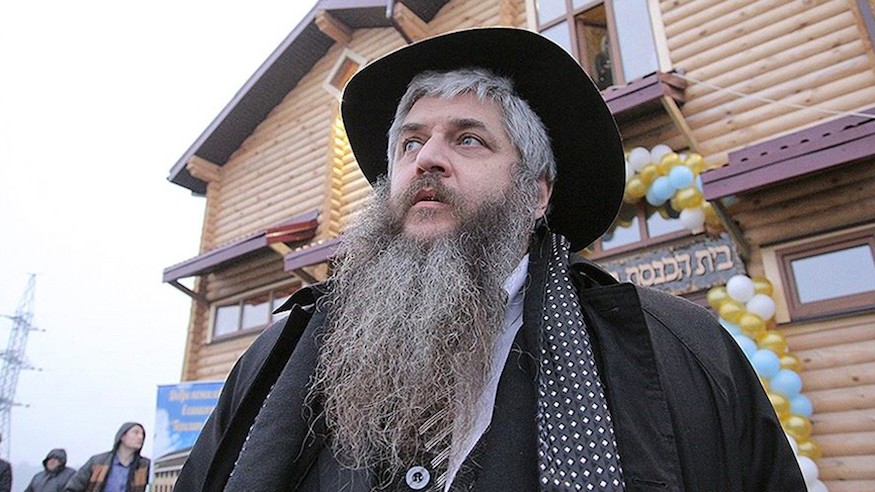
Rabbi
Moshe Azman, founder of the Anatevka community
JTA — Rabbi Moshe Azman, a prominent Ukrainian cleric with ties
to several of US President Donald Trump’s associates at the heart of
last year’s Ukrainegate scandal, endorsed Wednesday’s violent attempt to
prevent the certification of President-elect Joe Biden’s election win,
comparing the clashes to his own country’s recent pro-democracy
revolution.
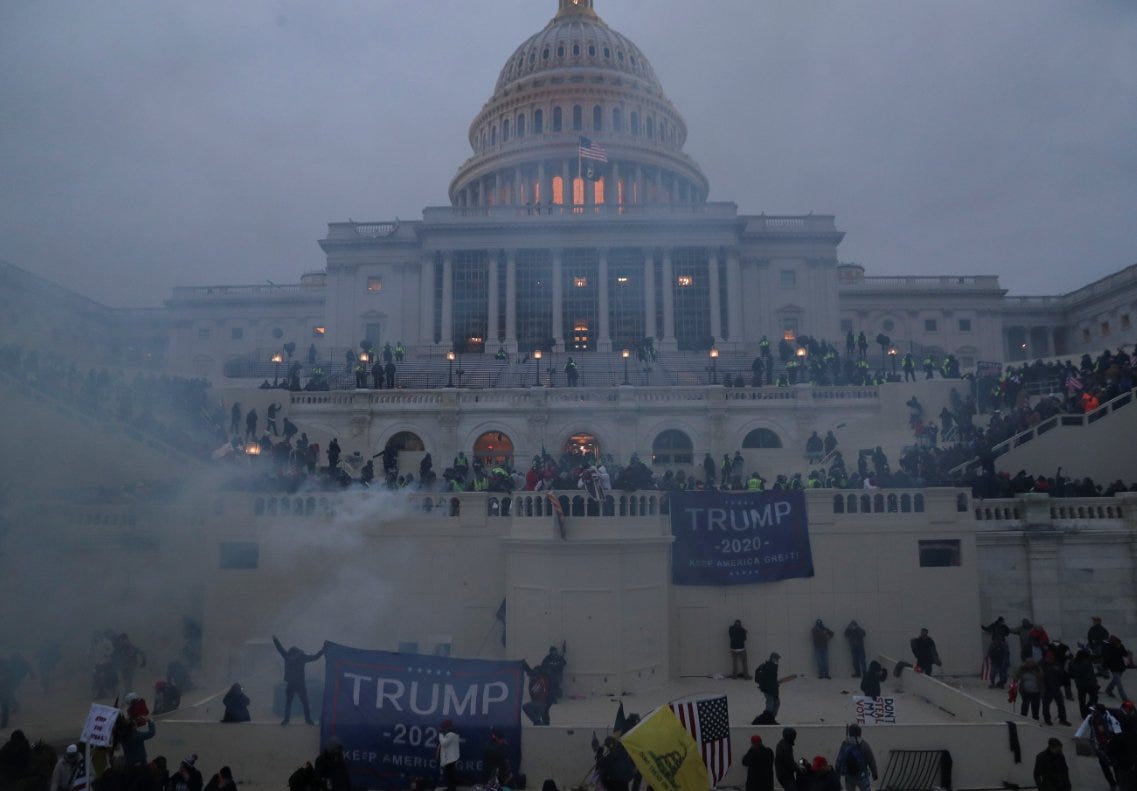
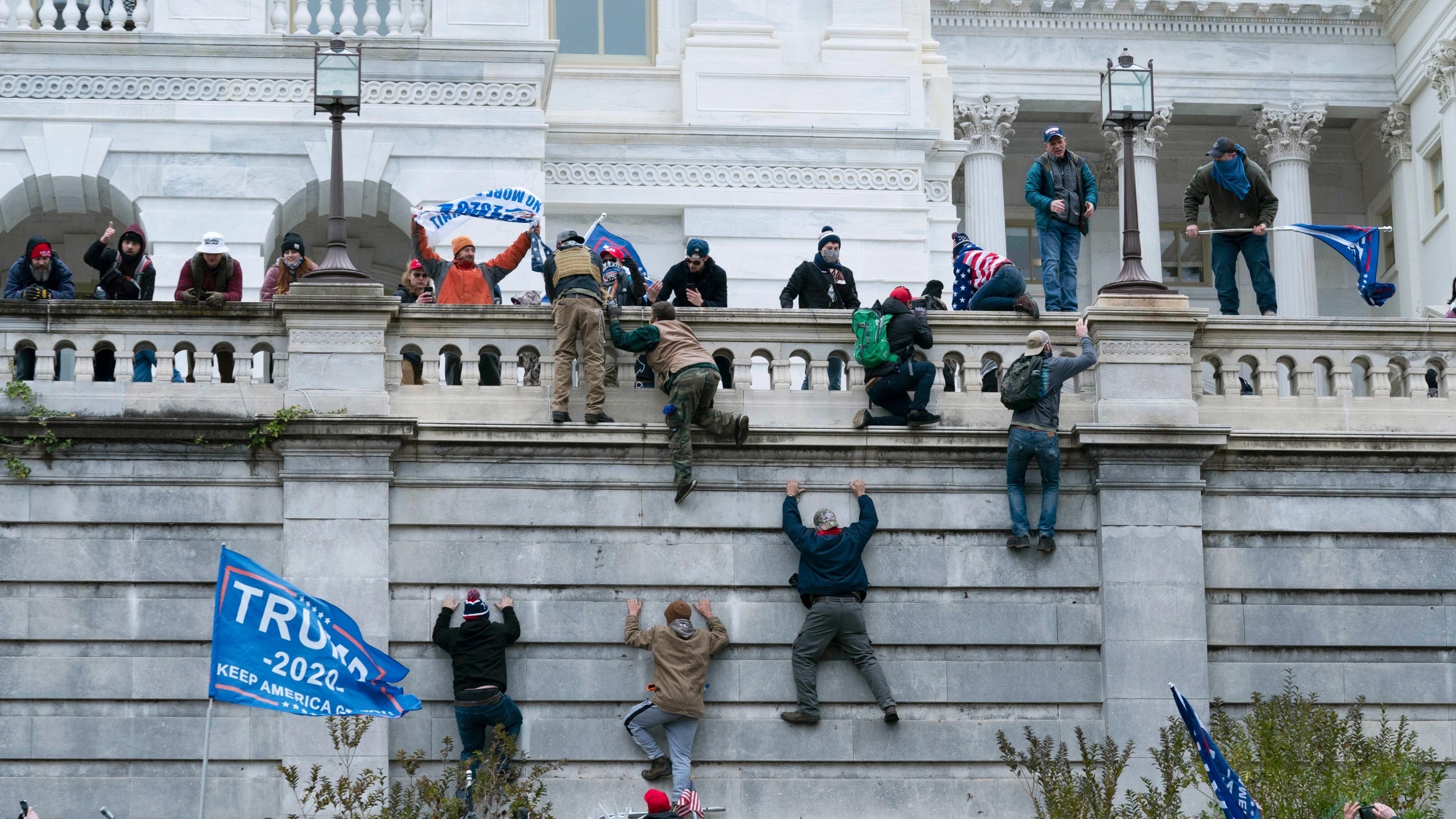
Following the storming of the US Capitol by Trump supporters,
Azman, a Hasidic rabbi who is one of several figures claiming to be the
chief rabbi of Ukraine, posted
on Facebook that the “Maidan has begun in the USA,” referring to the
widespread protests that led to the ouster of pro-Russia President
Viktor Yanukovych in 2014. “The people protesting against mass election
fraud broke into the capital. God bless America.”
Yaakov Dov Bleich, who also is a chief rabbi of Ukraine and the only
one recognized as such by the World Jewish Congress and the European
Jewish Congress, distanced himself from Azman’s words.
“Rabbi Azman is voicing his own opinion,” Bleich said. “I don’t think
Ukrainian Jewry has or should have a stand on US politics.”
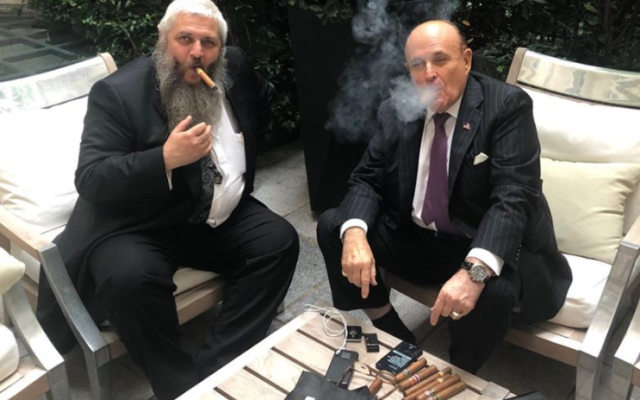
In May 2019, Azman was photographed in Paris smoking cigars with
Trump’s personal attorney Rudy Giuliani, fueling speculation among some
in Kyiv that the president’s representative and his colleagues were
using the rabbi to provide cover for illicit Ukrainian lobbying
activities.
Kiev Chabad rabbi Moshe Azman with Trump attorney Rudy Giuliani in Paris on May 21, 2019.
The Giuliani-Azman meeting seemed to have been arranged by Lev Parnas
and Igor Fruman, two Jewish Giuliani associates who have been linked to
those lobbying efforts.
Trump was impeached in December 2019 after it emerged that he had
pressed his Ukrainian counterpart, President Volodymyr Zelensky, to
investigate Biden and his son Hunter during a phone call five months
earlier between the two leaders. During the call, Trump asked Zelensky,
who is Jewish, to look into allegations that Hunter Biden had engaged in
illegal behavior while serving on the board of a Ukrainian firm that
was being probed for corruption. The Senate acquitted Trump in February.
According to the Organized Crime and Corruption Reporting
Project, an international journalism network that tries to uncover
political corruption, Giuliani was slated to deliver a paid speech at a fundraiser for Azman’s Anatevka project
in May 2019. Anatevka — named for the shtetl in “Fiddler on the Roof”—
is a gated compound outside of Kyiv housing Jews who were displaced by
the war in eastern Ukraine.
Parnas and Fruman, who sit on the board of the American Friends
of Anatevka, would have met with Zelensky “on the sidelines” of the
Anatevka Project event, the report said. But Giuliani canceled his trip
due to intense public scrutiny and the meeting never happened.
Instead he flew to Paris, where he attended a number of meetings —
brokered by Parnas and Fruman — with senior Ukrainian figures. He also
sat with Azman for two hours.
Illustrative: Jewish refugees at Anatevka
celebrate the opening of the community’s new synagogue, February 29,
2016. (Courtesy of the Office of Rabbi Moshe Azman)
Azman, a staunch Trump supporter, presented Giuliani with a giant
novelty key declaring him “honorary mayor of Anatevka.” Azman had
previously told the Ukrainian news outlet Hromadske that he prays for
Trump “every Saturday” because of the president’s support for Israel.
Four people died, one of whom was shot, during Wednesday’s violence,
which saw lawmakers evacuated from the Capitol building. Several people
have been reported hospitalized, including at least one member of law
enforcement. Dozens of lawmakers, from the House and Senate, were
contesting the results of November’s election that Trump has
fraudulently claimed was stolen on behalf of Biden.
Bleich rejected any comparisons between what happened in Ukraine in 2013-14 and Wednesday’s events.
Rabbi Yaakov Dov Bleich, a chief rabbi of Ukraine.
“The United States of America is a strong democracy with many checks
and balances, there is no basis for comparing it to Maidan,” Bleich
said. “Many people are upset about the elections, including myself,” he
added, saying that in his view “it looks like Trump won the elections
and the Democrats stole it.”
This opinion is “causing frustration and is making a lot of people,
including Rabbi Azman, emotional, but there is no place for violence,”
Bleich said.
Azman’s claim to the title of chief rabbi is disputed,
including by the World Jewish Congress, which in 2005 said in a
statement that Azman’s title was not endorsed “by any rabbinical
authorities.”