EVERY SIGNATURE MATTERS - THIS BILL MUST PASS!

EVERY SIGNATURE MATTERS - THIS BILL MUST PASS!
CLICK - GOAL - 100,000 NEW SIGNATURES! 75,000 SIGNATURES HAVE ALREADY BEEN SUBMITTED TO GOVERNOR CUOMO!

EFF Urges Court to Block Dragnet Subpoenas Targeting Online Commenters

EFF Urges Court to Block Dragnet Subpoenas Targeting Online Commenters
CLICK! For the full motion to quash: http://www.eff.org/files/filenode/hersh_v_cohen/UOJ-motiontoquashmemo.pdf

Thursday, August 28, 2025

Reb Shraga Feivel carried the dialectic within himself: charisma and humility, passionate activism and hisbonenus, intellect and emotion. A gadol who saw himself as a regular person, “Mr. Mendlowitz” shunned all honorifics and trappings of kavod.


In Love with Everything Holy


 Rabbi Judah Mischel, executive director of Camp HASC

Maybe it was ordained On High that I should have to take a circuitous route to meet my rebbi — that I should first be required to survey the vast landscape of Yiddishkeit.

I grew up on Grove Street in old Monsey, our family the only Modern Orthodox baalei teshuvah — perennial outsiders in a predominantly yeshivish neighborhood. We were raised to be open, accepting, and respectful of all. My parents chose their Jewish destiny; we were always made very aware of our responsibility to think for ourselves and “do our own thing” in avodas Hashem. Our background allowed us the opportunity to explore the Torah’s many different pathways.

After a year in Eretz Yisrael, when I was trying to learn Torah seriously for the first time as a student at Yeshiva University, the challenge of “finding my place” in avodas Hashem was real. I was drawn to chassidus, engaged intellectually with Modern Orthodoxy, enamored of “the yeshivah world,” and ideologically at home in religious Zionism. There was so much beauty and opportunity in the diversity of Jewish communities. Yet so much seemed scripted, and the search for self, more like deciding which box to fit into, which set of cultural norms to adapt. As aspiring bnei Torah, did we really have to choose one way to the exclusion of all others?

While perusing old copies of the Jewish Observer between classes on the fifth floor of the YU library, I got my answer. I finally met the tzaddik who would become a formative influence and inspirational force in my life: Reb Shraga Feivel Mendlowitz ztz”l. A tribute marking Reb Shraga Feivel’s 35th yahrtzeit penned by Rav Yitzchak Chinn, a close talmid, took my breath away.

The piece described an episode that took place in 1943, just a couple of blocks from where I’d eventually grow up in Monsey. Reb Shraga Feivel was sitting outdoors with a group of yungeleit, and asked one to turn over a large stone embedded in the ground. As he did, swarms of insects scurried about in every direction.

Said Reb Shraga Feivel: “Do you see those creatures? For their entire existence under that rock, they believed the world to be a dark, dreary place. By overturning that stone, you have revealed a whole new world, filled with light and beauty. In exposing them to the sun and sky, you’ve introduced a new dimension of reality into their lives.

“That is our mission in this world — to roll the heavy stones off souls and reveal the Yiddishe neshamah, to allow the ohr haShechinah to shine. When we have moved the boulders, we can lift our eyes to the Heavens, behold our Creator, and know our Yiddishkeit.”

In meeting Reb Shraga Feivel, I felt as though a stone had been lifted — and a new ray of light was shining in.

Reb Shraga Feivel defied definition and categorization; not tethered to any specific one of the shivim panim laTorah, he embodied the infinite expansiveness of Yiddishkeit. Reb Shraga Feivel’s way of learning Torah revealed its awesome unity: plumbing the commentary of Rav Shimshon Raphael Hirsch to explain challenging passages in Tanya — and vice versa. Chassidus, mussar, nigleh and nistar — for Reb Shraga Feivel, it was all One.

Even while quoting freely from the writings of Rav Avraham Yitzchak HaKohein Kook, Rav Shraga Feivel maintained a close friendship with and deepest respect for Reb Yoelish, the Satmar Rebbe. At Torah Vodaath and Beis Medrash Elyon, classic yeshivah learning was complemented with shiurim on Tanach and tefillah, the teachings of Reb Tzaddok HaKohein of Lublin with insights on the intricacies of biblical grammar. Rambam’s Shemonah Perakim and Rebbe Nachman’s Sippurei Maasios, Chovos Halevavos, Ramchal and the Tzemach Tzedek.

Fusion implies bringing together of separate, individual parts to form a complete whole. Reb Shraga Feivel didn’t “fuse” discrete parts; he was drawing from a higher source.

“The Tree of Life was in the center of the Garden” (Bereishis 2:9). Reb Shraga Feivel taught: No matter how disparate the various ideas and approaches in Torah that we learn may seem to be, they are all different approaches to the Eitz Chayim. As long as the Tree of Life is “b’soch haGan” — and Torah is at the center — it can be approached from all directions.

Reb Shraga Feivel carried the dialectic within himself: charisma and humility, passionate activism and hisbonenus, intellect and emotion. A gadol who saw himself as a regular person, “Mr. Mendlowitz” shunned all honorifics and trappings of kavod. A public figure, constantly surrounded by talmidim, who relished privacy and quiet. An idealist with two feet firmly on the ground, Reb Shraga Feivel upheld unwavering fidelity to his Hungarian upbringing, while attuning his incredible sensitivity to the needs and realities of the postwar American Jewish community.

Uncompromising in his dedication to truth — at a time when ideology mattered — Reb Shraga Feivel was unabashed in voicing staunch opposition to innovations he felt threatened tradition, but still managed to maintain respectful working relationships with those he vehemently disagreed with.

“Hashem sefasai tiftach” — in asking the Ribbono shel Olam to open our mouths and sing His praise, we aim to emulate His infinite nature, to be big, expand our boundaries, open our borders. As Reb Shraga Feivel would say: “Der seichel iz elastish” — the mind is elastic. If we are intellectually honest, it can be stretched from one extreme to another. Hotziah mimasger nafshi.

Reb Shraga Feivel’s natural expansiveness validated drawing from approaches in Yiddishkeit that seemed to conflict: “Some souls drink from Tanya. Others from the Ramchal. Still others from Rav Hirsch. I drink from all of them, though at any given time, I might drink from one in particular.” From Reb Shraga Feivel came “insider” confirmation that the search for truth and the fulfillment of ratzon Hashem is more about a Torah perspective,” as opposed to “the Torah perspective.” “Taamu u’reu ki tov Hashem,” for a searching Jew, Reb Shraga Feivel catered a fresh, bountiful, and spiritually healthy smorgasbord of theological opportunity.

Reb Shraga Feivel’s open heart felt the joys and pain of Klal Yisrael, burned for Torah, and was deeply connected to Eretz Yisrael — in love with everything holy. Sensing the Divine vitality that pulsates through all of creation, he was a baal avodah who heard all of nature singing Hashem’s praise. Reb Shraga Feivel enjoyed spending time in nature, and often looked toward the sky, davening from what he called “the siddur of David Hamelech.” When a talmid inquired of his rebbi’s preference of davening next to a window: “He thinks I’m looking out, but actually, I’m looking in.”

Reb Shraga Feivel’s singular focus on “looking in” — on living a life of penimiyus, nurturing the inner worlds of others, and encouraging in-depth limud HaTorah — inoculated against superficiality. Every Jew can be an “insider.” With Torah at the center, we are all equally close.

Reb Shraga Feivel suffered a heart attack when he heard that the Old City had fallen into Jordanian hands during Israel’s War for Independence. Doctors warned him against learning Baal Shem Tov al HaTorah — Reb Shraga Feivel’s excitement when learning the heiliger Baal Shem made his sensitive Jewish heart race dangerously.

“V’hasirosi lev ha’even v’nasati lachem lev basar.” In the end of days the Navi Yechezkel promises that Hashem will remove our hearts of stone and restore our natural hearts of flesh — a fleishige heart that senses that every moment in this world is revelation of Hashgachah pratis and an opportunity to draw close to Hashem. Or as Reb Shraga Feivel would say, “Der grester glick fun leben iz leben alein — the greatest fortune in life is life itself.”

Again and again I have returned to Yonoson Rosenblum’s masterful biography of Reb Shraga Feivel; it is a book that changes my life at each new stage I reread it, each time feeling a deeper yearning for Reb Shraga Feivel’s guidance, his expansive heart filled with ahavas Hashem and ahavas Yisrael, nuance and complexity.

Working in the Jewish community, I am privileged to see the absolute best of Klal Yisrael. But even when everyone has only the best of intentions, things can often get personal, and worthy mosdos of different stripes step on each other’s toes. Dedicated professionals and volunteers, even rebbeim and menahalim, passionate for their specific cause, can get territorial over donors, programs — even social services. It’s hard not to get caught up in all of it. Business is business, people are people.

Asking myself, “What would Reb Shraga Feivel do?” invariably leads to clarity and magnanimity, ayin tovah and expansiveness. Reb Shraga Feivel was never confined or defined by where he worked — even by the yeshivos he founded, nurtured, and led. When the fledgling Yeshivas Rabbeinu Chaim Berlin was struggling with recruitment, Reb Shraga Feivel transferred some of his most prized talmidim there, sending his best guys to join “the competition.”

It wasn’t that Reb Shraga Feivel was so confident in his yeshivah that he was unafraid of competition; he simply saw that in the world of truth and penimiyus, there is no competition. Ovdei Hashem are all working for the same Boss, at different points in the Garden, facing the same Center. Reb Shraga Feivel would remind his talmidim — in and out of yeshivah — that regardless of our professional identity, we are all “sheluchei d’Rachmana,” messengers on a mission from G-d.

As Reb Shraga Feivel’s 70th yahrtzeit approaches on Gimmel Elul, I am thinking about the tzaddikim hatehorim described by Rav Kook — the purely righteous who do not complain about darkness, but instead increase light. Now more than ever, how desperately we crave Reb Shraga Feivel’s purity, righteousness, and encouragement, to lift the stone that covers our hearts, weighing us down and blocking out the light.

I’d grown up literally around the corner from that tree under which Reb Shraga Feivel sat with his talmidim decades earlier, feeling like a perennial outsider. Maybe my not being born to a particular derech with set minhagim and clear mesorah was Hashem’s way of setting the stage for the unlikely kesher I feel with Reb Shraga Feivel. If in our search for meaning we are motivated l’Sheim Shamayim, then we are all insiders.

When we aspire to live each moment with penimiyus, we will find our place in the Torah world, cleaving to the Eitz Hachayim, the Tree of Life at the center of our lives.

Enough complaining about our generation and all that is lacking! “L’oro neilech” — the time for us has come in our search for dveikus to do the heavy lifting, for the ohr haShechinah, for Soul-Glow.

Tzaddikim b’mitasam nikra’im chayim — Reb Shraga Feivel zy”a, chai v’kayam! —

https://mishpacha.com/in-love-with-everything-holy/

Originally featured in Mishpacha, Issue 722. Rabbi Judah Mischel, executive director of Camp HASC and former rebbi at Yeshivas Reishis, is a popular teacher of chassidus and founder of Tzama Nafshi, an organization dedicated to fostering Jewish education and inspiration. He lives with his family in Ramat Beit Shemesh, where he is a talmid muvhak of mashpia Rav Avraham Tzvi Kluger and translator of his works.
Tuesday, August 26, 2025

The July 27 hearing included testimony from alleged victims, now adults, regarding abuse they had experienced as children, primarily in the ultra-Orthodox and national-religious communities in Jerusalem, Bnei Brak, Haifa, Safed and elsewhere. Several women alleged that religious and community leaders had participated in the abuse..


Horrifying testimonies seek to lift shroud of silence around ritual sex abuse claims


Survivors tell Knesset lawmakers of organized assaults on children by those claiming mantle of religion, alleging longstanding phenomenon made worse by official indifference


Illustrative image. (Bonciutoma/Istock by Getty Images)

Police have opened an investigation into multiple allegations of organized ritual sexual abuse after accusers relayed harrowing testimony of torture, rape and other horrors to lawmakers late last month.

The July 27 hearing included testimony from alleged victims, now adults, regarding abuse they had experienced as children, primarily in the ultra-Orthodox and national-religious communities in Jerusalem, Bnei Brak, Haifa, Safed and elsewhere.

Accusers recounted tales of gruesome sexual abuse they experienced as children, usually by groups of people, involving ritualistic, religious rhetoric and iconography. The abuse took place in schools, synagogues, private homes, warehouses, cemeteries and forests, they alleged.

Police have opened an investigation into multiple allegations of organized ritual sexual abuse after accusers relayed harrowing testimony of torture, rape and other horrors to lawmakers late last month.

The July 27 hearing included testimony from alleged victims, now adults, regarding abuse they had experienced as children, primarily in the ultra-Orthodox and national-religious communities in Jerusalem, Bnei Brak, Haifa, Safed and elsewhere.

Accusers recounted tales of gruesome sexual abuse they experienced as children, usually by groups of people, involving ritualistic, religious rhetoric and iconography. The abuse took place in schools, synagogues, private homes, warehouses, cemeteries and forests, they alleged.

Several women alleged that religious and community leaders had participated in the abuse. One woman named Yael Ariel testified that she had heard accounts from several women alleging that “doctors, educators, police officers, and both former and current Knesset members” took part.....


READ THE HORROR: 

 https://www.timesofisrael.com/horrifying-testimonies-seek-to-lift-shroud-of-silence-around-ritual-sex-abuse-claims/?

Sunday, August 24, 2025

Poisonous Kool-Aid --- he alleged that the Israeli government seeks to abolish Torah study for yeshiva students. (avoid cholent on weekdays Posek)

Leading  Kool-Aid rabbi: 'We are suffering great troubles'


Ahead of Elul term and following recent arrests, Rabbi Yitzhak Zilberstein calls on haredi yeshiva students to learn Torah constantly, avoid cholent on weekdays, and avoid idle talk.


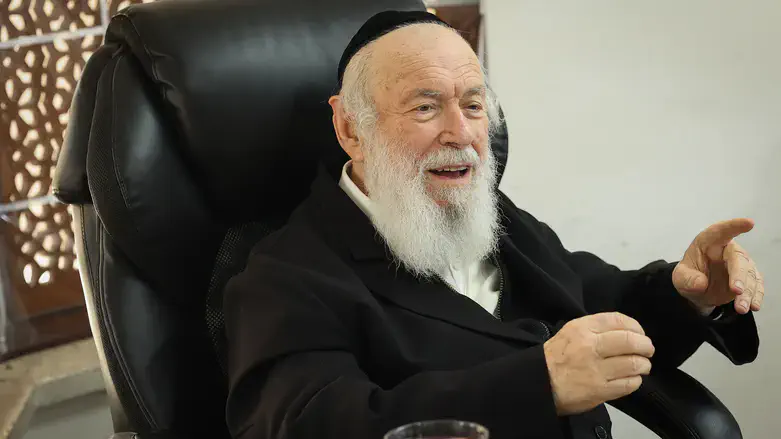
Rabbi Yitzhak Zilberstein
Yitzhak Zilberstein

Rabbi Yitzhak Zilberstein, a member of the Degel Hatorah party's Council of Torah Sages, published a letter of support to yeshiva students ahead of the month of Elul, sharply criticizing the current draft policy.

In the letter, he alleged that the Israeli government seeks to abolish Torah study for yeshiva students.

"We are currently in great distress, as they want to remove the yeshiva students from their Torah study, and even take some of the yeshiva students to imprisonment."

Quoting Rabbi Dov Lando, a leading Lithuanian-haredi rabbi, he added, "The Exile is increasing its burden on us, and it is a great trouble that Jews are persecuting Jews because of Torah study."

Rabbi Zilberstein called on the yeshiva students to strengthen themselves during this time, urging: "Be strong and courageous, do not let your hearts soften, and begin this term with all your strength and desire. Engage in Torah at all times and hours, without idle talk, and through this, you will merit to be the true protectors of the entire Jewish nation."

He ended his words with a blessing: "And may we soon merit to be saved with eternal salvation, and may all the evil decrees be nullified for all of Israel."

https://www.israelnationalnews.com/news/413698


A cholent crisis? Rabbi’s ruling against Shabbat stew on Thursday nights briefly roils Israel

The rabbi ruled that weekday consumption should be avoided “so that one can delight in it on Shabbat as is proper.”

https://www.jta.org/2025/07/11/food/cholent-crisis-a-rabbis-ruling-against-shabbat-stew-on-thursday-nights-briefly-roils-israel

Friday, August 22, 2025

Rabbi Yaakov Kamenetsky, the sage of American Jewish life in the past generation, told me that it is wrong to impose an elitist education on the masses. But that is exactly what we are doing.Generally, in our current religious society, legends, fantasies and inaccurate nostalgia are taught as facts....

Who’s Afraid of Change? Rethinking the Yeshivah Curriculum


We are all aware that the basic Jewish curriculum has been set for us by tradition and appears in Avot. Mikra (which includes Chumash, Nach, Hebrew language and linguistic skills), Mishnah, Talmud, and works of halachah are the basic components of the Judaic studies curriculum in our day schools and yeshivot. However, for various reasons the implementation of this basic and vitally necessary curriculum has had varying results.

It is no secret that many of our day school and yeshivah graduates are not very literate in Hebrew language, know little Nach, are unexcited by the study of Mishnah and Talmud and are therefore in jeopardy of becoming children at risk. Though the problem is widespread and well known to all in the educational field and certainly to the parents of these children, it is not widely discussed in terms of curriculum emphasis and adaptation. I am not an iconoclast nor am I here to criticize certain educational practices in the Jewish religious society. But there are significant points and issues that are worthy of consideration and serious thought that I feel should be brought to public attention. I have been troubled by these issues for decades, and I feel that somehow these problems are intensifying as time passes.

Part of the difficulty in Jewish education today is that formal schooling practices are rarely inspirational. There is always a tug of war in a classroom as to whether the transmission of knowledge–facts, pages covered, subjects and units covered, et cetera–takes precedence over inspirational lessons and the building up of the identity and self-worth of the student. Schools by nature tear down self-confidence in students. Tests and grades are competitive by definition–there can only be one valedictorian, and even the best students experience disappointment due to the very nature of the system.

Under the current classroom difficulties– overcrowding, minimal physical facilities, very demanding parents, an outside culture that is deeply inimical to traditional Jewish values–the classroom teacher is faced with a herculean task of imparting knowledge and somehow inspiring the student to appreciate that knowledge and to desire more of the same.

A student who has never studied Sefer Yechezkel, Sefer Iyov or Tehilim is unprepared for the omnipresent problems of Jewish national, or of his own personal, life.

I recently read a Hebrew book of memoirs of leading Leftist and secular Jews of the nineteenth and twentieth centuries, all of whom were raised in religious homes and attended religious schools. Without exception, they all attributed their disenchantment with and departure from traditional Judaism to painful educational and personal experiences that they suffered in those schools. They rejected God and Torah not out of philosophical contemplation but rather because of sadistic teachers, curriculums taught by rote and the overemphasis on imparting Torah knowledge and not Torah values, history and perspectives.

Teaching mikra properly is the foundation of Jewish education. The rabbis taught us that ein mikra yotzei midei peshuto–the simple, literal meaning of the words is the ultimate truth of what the verse teaches us. Even after exploring remez, derash and sod–the other levels of understanding the verse–peshat, the simple meaning of the verse, still remains valid. The tendency today is not to teach Torah in this fashion. Midrash is taught literally and oftentimes is substituted completely for the peshat of the verse. There are places in the Torah where the derash is the peshat, but that certainly is not a general rule, and Torah should not be taught–especially to young children–in that fashion.

Generally, in our current religious society, legends, fantasies and inaccurate nostalgia are taught as facts. Fanciful stories that appear in current Orthodox newspapers and periodicals are believed as being factually true by children who are completely unaware of the simple meaning of the verses of the Torah that they have allegedly covered in school. To say that this may create a distorted view of Torah and Judaism is an understatement.

The study of Tanach is almost an oxymoron statement regarding our schools. During my years as the head of a high school yeshivah and beit midrash program, I discovered that most students who graduated from excellent elementary and high schools could not even name the twenty-four holy books of the Jewish canon. Students revealed amazing ignorance about the Hebrew language and all of the grammar/dikduk statements of Rashi and the other Biblical commentators were never covered in the classroom. There was no love or feeling for the beauty and nuance of the Holy Tongue, and thus there was little appreciation in the study of Talmud of the methodology used by Chazal to derive the Oral Law from the written word.

A student who has never studied Sefer Yechezkel, Sefer Iyov or Tehillim is unprepared for the omnipresent problems of Jewish national– or of his own personal–life. He is also cheated out of the beauty of the poetry and the sublime values that lie in the weekly haftarot and will therefore often find that portion of the Shabbat services irrelevant to his life. Many times, the so-called People of the Book have little or no idea what book they are talking about. I attended a yeshivah where my rebbe taught us Tanach every day with the same fervor and detail that he exhibited in teaching Talmud. We covered all of Neviim Acharonim and the Five Megillot in our high school years. In my beit midrash years we covered Iyov, Mishlei, Tehilim and Ezra and Daniel. My grandchildren may feel themselves to be greater Talmudic scholars than I am; nevertheless, they have never received such an education.

Mishnah is certainly the forerunner to proper study of Talmud. Plunging into the sea of the Talmud without learning to first swim properly in the pool of the Mishnah is oftentimes selfdefeating. It is interesting to note that the rabbis cited in Avot were of the opinion that five years’ worth of Mishnah study should precede the study of Talmud. Someone who is truly competent in Mishnah will almost invariably do well in the study of Talmud as well. A child or adult who knows Mishnah well is already a scholar in Jewish terms. It can also be inspirational to the student, even though the subject matter at first glance appears dry and pedantic.

I met a woman thirty years ago in Israel who recited to me from memory a mishnah in Bava Kama that she learned in afternoon Hebrew school in the early 1940s (my father-in-law, newly arrived from Europe and not yet established in a proper rabbinic position, was her teacher). She said that this mishnah somehow inspired her to have a Jewish home and eventually move to Israel where all of her descendants are observant Jews. When I related this story to my father-in-law, who was then the head of the Orthodox rabbinate in Detroit and no longer teaching in afternoon Hebrew schools, he told me: “I put as much effort and prayer into teaching those children a mishnah as I do now in attempting to resolve a difficult halachic or communal issue.” Again, education is imparting knowledge but it is also, as importantly, the transmission of tradition, values and Jewish inspiration.

The Judaic studies program in our boys’ schools is very heavily Talmud oriented from fifth and sixth grade onwards. The Talmud is a difficult subject to study. The differing fonts on the page, the complicated logic, the back and forth discussions, the questions and answers, the Aramaic language which has to be mastered, the correct use of Rashi’s commentary, the difficulty of the dialectical reasoning of Tosafot, and the lack of true punctuation of the text all combine to make this subject a great challenge for the average ten- or eleven-year-old boy.

In previous generations in Europe and the early years in America, the study of Talmud was reserved for superior students and certainly not for the masses. All of this has changed in our current generation. The study of Talmud is widespread among adults and mandatory for our boys and, in some circles, even for our girls. There are currently many educational aids to the study of Talmud that did not exist in previous generations, though not all schools are willing to avail themselves of those aids for various ideological reasons.

Rabbi Yaakov Kamenetsky, the sage of American Jewish life in the past generation, told me that it is wrong to impose an elitist education on the masses. But that is exactly what we are doing. The danger that all of us are aware of–it is the unspoken elephant in the room–is that a child who dislikes the study of Talmud at the age of ten is more than likely to dislike it even more at seventeen, and this leads often to tragic results, both personally and religiously. There are many causes for the current curriculum situation–the destruction of the Jewish infrastructure of Europe in the last century, the terribly hostile general environment to Jewish values and behavior in today’s hedonistic and liberal society, the affluence of Jews and the attendant erosion of spirituality that this has entailed and a teaching staff whose expertise lies in Talmud over all else. Nevertheless, the realities of today’s curriculum in Jewish schools should not be ignored. We should not be afraid of reform, change and practical improvements. We can prevent many cases of children at risk before they become children at risk.

A further element concerning curriculum in Jewish schools should be an accurate and inspirational presentation of Jewish history. A generation that has little knowledge of our past is always blindsided by current events. A student of Jewish history, even a cursory one, will realize that the problems that we face today are not new ones. The names, countries, issues and details that surround these problems certainly change from generation to generation, but the root problems–anti-Semitism, divisions and violence within Jewish society, a broad spectrum of religious observances, the survival and maintenance of individual and national identity as a small minority, acculturalization and assimilation, political and ideological infighting, types of formal education, competing societal value systems, et cetera–remain the same. Knowing this is in itself a comforting thought. It is what King Solomon taught us: there really is nothing new under the sun.

Jewish history is a sourcebook for faith and hope, for inspiration and tenacity. But Jewish history that is fanciful and false–stories that have no factual basis, inaccurate and hagiographic biographies, the portrayal of the past in the light of current political correctness– is a false and ultimately uninspiring and self-defeating educational venture. I think that false history, a form of poisonous insidious propaganda, is perhaps worse in the long run than no history at all. The history of our people was transmitted in the past by means of the family and the society. Today it is through books and lectures, media and computers. Schools can integrate history into all of the subjects in their curriculums. But we should remember that truth is not only stranger than fiction, it is more healing and inspirational as well.

Finally, and perhaps most importantly, education comes down to personnel. Teachers in Jewish schools are underpaid and harassed by parents, administrators and educational and financial boards. Wall Street, even in its present woes, is still more attractive to the best and the brightest in the Orthodox Jewish world than teaching is. The exploitation of young Jewish women just returning from seminary to teach at coolie wages is a scandal. The lack of stability and tenure in the Jewish teaching profession translates itself into educational problems for the young in our classrooms.

Instead of dissipating our energies and funds on all sorts of marginal projects in the Jewish world, holy and charitable as they may appear to be, we should concentrate our efforts on better schools, stronger teachers, improved curriculums and a return to the basics of balanced and value-laden Torah education. Jewish children should know Hebrew well before indulging in Arabic, and understand Maimonides before concentrating on Milton. Jewish education knows of no free lunch or time-saving shortcuts. For Jewish education is the source of life for us and the length of our days.

 https://jewishaction.com/religion/education/

Thursday, August 21, 2025

Our president doesn’t understand that when Putin says to Ukraine, in effect “Marry me or I’ll kill you” - that Zelensky needs more than just an American marriage counselor


Ukraine Diplomacy Reveals How Un-American Trump Is


Listen to this article · 8:41 min Learn more

I am really trying to be fair in analyzing the Trump-Putin-Zelensky-Europe drama that has been playing out the past few weeks. I am trying to balance President Trump’s commendable desire to end the murderous war in Ukraine with the utterly personalized, seat-of-the-pants, often farcical way he is going about it — including the energy that everyone involved has to expend feeding his ego and avoiding his wrath, before they even get to the hellish compromises needed to make peace.

For now, the whole thing leaves me deeply uncomfortable.

I have covered a lot of diplomatic negotiations since becoming a journalist in 1978, but I have never seen one when where one of the leaders — in this case Ukraine’s president, Volodymyr Zelensky — felt the need to thank our president about 15 times in the roughly four and a half minutes he addressed him with the press in the room. Not to mention the flattery that our other European allies felt they needed to heap on him as well.

When our allies have to devote this much energy just to keep the peace with our president, before they even begin to figure out how to make peace with Vladimir Putin; when they have to constantly look over their shoulder to make sure that Trump is not shooting them in the back with a social media post, before Putin shoots them in the front with a missile; and when our president doesn’t understand that when Putin says to Ukraine, in effect “Marry me or I’ll kill you,” that Zelensky needs more than just an American marriage counselor, it all leads me to ask: How is this ever going to work?

Especially when every bone in my body tells me that Trump does not get what this Ukraine war is truly about. Trump is unlike any American president in the past 80 years. He feels no gut solidarity with the trans-Atlantic alliance and its shared commitment to democracy, free markets, human rights and the rule of law — an alliance that has produced the greatest period of prosperity and stability for the most people in the history of the world.

I am convinced that Trump looks at NATO as if it’s a U.S.-owned shopping center whose tenants are never paying enough rent. And he looks at the European Union as a shopping center competing with the United States that he’d like to shut down by hammering it with tariffs.

The notion that NATO is the spear that protects Western values and that the European Union is possibly the West’s best modern political creation — a vast center of free people and free markets, stabilizing a continent that was known for tribal and religious wars for millenniums — is alien to Trump.

Indeed, I agree with Bill Blain, a British-based bond trader and economic analyst, who wrote on Monday: “However much European leaders pile on their flattery of Trump, it’s clear the fundamental bond of trust that underlay the 80-year success of the trans-Atlantic economy, that served the U.S. so favorably for decades, is now ruptured. The end of the trans-Atlantic economy will change the global economy utterly — favoring Asia and new trade relationships.”

So, it is also no wonder to me that Trump doesn’t feel any gut need to bring Ukraine into the West or understand that Putin’s invasion was just his latest march to break up the West as revenge for its breaking up the Soviet Union.

How do I know that Trump is deaf to all that? Just listen to the interview that his special envoy to Putin, Steve Witkoff, gave to Tucker Carlson in March, after Witkoff’s second meeting with Putin in the Kremlin. Here is just an excerpt:

Carlson: “What did you think of him?”

Witkoff: “I liked him. I thought he was straight up with me …. By the way, how would we settle a conflict with someone who is the head of a major nuclear power unless we establish trust and good feelings with one another?

“In the second visit that I had, it got personal. President Putin had commissioned a beautiful portrait of President Trump from the leading Russian artist and actually gave it to me and asked me to take it home to President Trump, which I brought home and delivered to him. It’s been reported in the paper, but it was such a gracious moment. And [Putin] told me a story, Tucker, about how when the president was shot, he went to his local church and met with his priest and prayed for the president, not because he was the president of the United States or could become the president of the United States, but because he had a friendship with him and he was praying for his friend. I mean, can you imagine sitting there and listening to these kinds of conversations?

“And I came home and delivered that message to our president and delivered the painting, and he was clearly touched by it. So this is the kind of connection that we’ve been able to re-establish through, by the way, a simple word called communication, which many people would say, you know, I shouldn’t have had, because Putin is a bad guy. I don’t regard Putin as a bad guy. That is a complicated situation, that war and all the ingredients that led up to it. You know, it’s never just one person, right?”

It gets worse. Trump is so deluded as to Putin’s nature that during his summit with European leaders on Monday he was overheard on an open microphone telling President Emmanuel Macron of France about Putin: “I think he wants to make a deal for me. Do you understand that? As crazy as it sounds.”

Can anyone identify a single U.S. diplomat in Moscow or C.I.A. analyst who is advising Witkoff and Trump today? My bet is there are none, because no serious analyst or expert on Russia would tell them: “We have concluded that you are right and all of us have been wrong: Putin is not a bad guy, he just wants a just peace with Ukraine — and when he tells you he went to church and prayed for President Trump, you should believe him.”

Sorry, if Putin really prayed for Trump’s life, it is because he knows that no other American president could possibly be manipulated as easily as Trump has been. Putin is not and never has been looking for “peace” with Ukraine. He is, as I have written before, looking for a piece of Ukraine — in fact the whole piece if he can get it.

That is both the “root cause” of the war in Ukraine, to borrow one of Putin’s favorite phrases, and the “root cause of Trump’s meandering and floundering efforts to arrange peace in Ukraine — his inability to understand that Putin wants not peace but victory,” Leon Aron, a Russia scholar and the author of “Riding the Tiger: Vladimir Putin’s Russia and the Uses of War,” said to me. “Putin must have Ukraine for all sorts of ideological and domestic political reasons. And he will not stop seeking it and sacrificing for it — unless the West makes the cost of the war prohibitive, militarily and economically.”

So, I end where I began: Trump and Witkoff are not wrong to want to stop the war and all the killing. And it is not wrong to be in regular communication with Putin to do that. I am all for both. But to stop this war in a sustainable way, you have to understand who Putin is and what he is up to. Putin is a bad guy, a coldblooded murderer. He is not the friend of the president. That is a fantasy that Trump chooses to believe is real.

Once you understand those things, they lead you to only one conclusion: The only sustainable way to stop this war and prevent it from coming back is a massive, consistent, Western commitment to give Ukraine the military resources that will persuade Putin that his army will be chewed apart. The United States also must provide the security guarantees that would deter Russia from ever trying this again and encourage our European allies to promise that Ukraine will one day be in the E.U. — forever anchored in the West.

Putin’s punishment for this war should be that he and his people have to forever look to the West and see a Ukraine, even if it is a smaller Ukraine, that is a thriving Slavic, free-market democracy, compared with Putin’s declining Slavic, authoritarian kleptocracy.

But how will Trump ever learn that truth when he basically gutted the National Security Council staff and shrank and neutered the State Department, when he fired the head of the National Security Agency and his deputy on the advice of a conspiracy buffoon, Laura Loomer, and when he appointed a Putin fan girl, Tulsi Gabbard, to be his director of national intelligence?

Who will tell him the truth? No one.

No one but the wild earth of Ukraine. In the trenches in the Donbas, there is truth. In the 20,000 Ukrainian children that Kyiv says Putin has abducted, there is truth. In the roughly 1.4 million Russian and Ukrainian soldiers killed and wounded as a result of Putin’s fevered dreams of restoring Ukraine to Mother Russia, there is truth. In the Ukrainian civilians killed by Russian drones at the same time that Trump was laying out the red carpet for Putin in Alaska, there is truth.

And the longer Trump ignores those truths, the more he builds his peace strategy — not on expertise but on his hugely inflated self-regard and his un-American anti-Westernism — the more this will become his war. And if Putin wins it and Ukraine loses it, Trump and his reputation will suffer irreparable damage — now and forever.

Wednesday, August 20, 2025

If the Haredi leadership possessed even a sliver of Jewish morality, they would cry out, not because of the arrest of deserters, but because of the degeneration and destitution visible throughout Haredi cities and neighborhoods.

 "Moreover, to preserve their power, they may actually prefer to keep their followers destitute and uneducated"


The ultra-Orthodox are firing blanks in their war on the draft 


Haredi threats over draft evasion expose a sector that contributes little to Israel’s economy, security, or core institutions
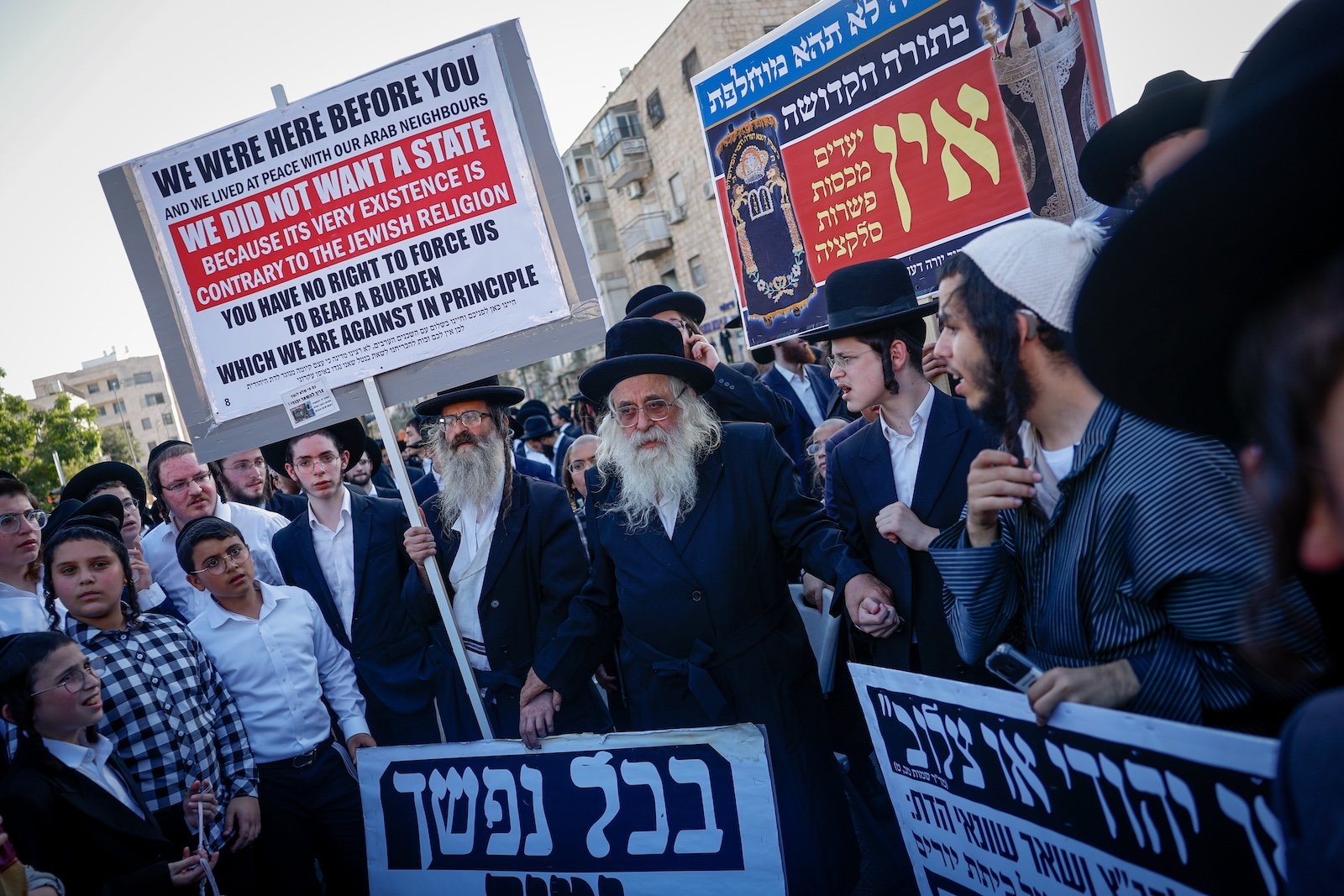
Ultra-Orthodox men block a road during a protest against the jailing of yeshivah students who failed to comply with an army recruitment order in Jerusalem on August 07, 2025. (Yonatan Sindel/Flash90)
Ultra-Orthodox men block a road during a protest against the jailing of yeshivah students who failed to comply with an army recruitment order in Jerusalem on August 07, 2025

In the absence of a law exempting the ultra-Orthodox (Haredim) from military service, tens of thousands have received draft orders. A few evaders caught by police have been arrested. This has led to a “declaration of war” by the Haredi community. Haredi politicians have competed with each other in issuing threats about the bitter fate that would befall Israeli society if the “war on the Torah world continues.” But they soon discovered that they were scaring no one. Simply put, the Haredi contribution to the State of Israel its economy and core institutions is so meager that even if they went on strike tomorrow morning, it wouldn’t significantly disrupt life in Israel. Hopefully, the image reflected back at them from this mirror will inspire some moral self-examination.

Even after nearly three years of a right-wing-Haredi government, a new conscription law is nowhere in sight. Given the ongoing war, the unending burden of reserve duty borne by many Israelis, with so many wounded or dead, even Netanyahu’s government cannot manage to pass yet another draft-evasion law for its allies who categorically refuse to share the heavy security burden. 

And so, the Haredim now find themselves in the worst position they’ve been in since first receiving sweeping draft exemptions and state-funded support for their way of life, even for draft dodgers. Consequently, as mandated by law, the IDF issued draft notices to tens of thousands of Haredim who, unsurprisingly, did not report for duty. As a result, they are barred from leaving the country and subject to arrest warrants. This is the reason for the recent detention of some Haredi men.

Alongside these measures, the High Court of Justice ruled last year that in the absence of a conscription/exemption law, service-eligible Haredim would not be entitled to a series of budget allocations, benefits, and discounts that have long been granted to them at the taxpayer’s expense. All of this has placed the Haredim in a double bind: growing financial hardship and fear of arrest due to their criminal status.

The recent arrests have marked a new low for Haredi politicians and leaders. In their eyes, it poses an unprecedented threat to the core of their political and religious power, “the Torah world.” Hence, they’ve gone to war. We are witnessing verbal assaults on anyone they view as “fighting the Torah world,” attacks that are unprecedented even by Haredi standards. 

The Lithuanian daily Yated Neeman declared a “war,” and addressed the arrested deserters with a headline featuring the biblical lament: “Zion, will you not ask after the welfare of your captives?” as though the detainees had been seized by the Cossacks. Knesset member Meir Porush of United Torah Judaism threatened a “terrifying struggle.” At a gathering of rabbis hosted by Lithuanian leader Rabbi Landau, it was declared that “World Haredi Jewry will embark on a struggle like no other.” Some threatened to “shut down the country,” and so on.

But the Haredim are threatening Israeli society with an unloaded pistol. Compared to other sectors that contribute significantly to the state and share in its economic and security burdens, the Haredim receive far more from the state than most Israelis and contribute almost nothing in return. What will the Haredim do? Stop paying taxes? Their contribution to the tax burden is so negligible that it wouldn’t matter. Refuse to volunteer for the army? The number of Haredim who serve is minuscule. Launch a general strike? Many Haredim those who work at all are employed within their own community and institutions and would harm themselves more than anyone else.

True, the Haredim are very active in welfare and charitable services, and their Torah study does have Jewish and symbolic value for a Jewish state. But ultimately, the only tool left for them to disturb the rest of Israeli society is violence and civil disobedience and they do occasionally employ it by blocking major roads. Yet even this tactic is likely to backfire catastrophically. No Israeli driver stuck in a massive traffic jam on their way home from work or reserve duty will sympathize with deserters blocking their path.

This situation should confront the Haredim with a harsh mirror. What stares back is an unflattering image of a community whose share of the Israeli population is growing, yet whose contribution remains marginal. If the Haredi leadership possessed even a sliver of Jewish morality, they would cry out, not because of the arrest of deserters, but because of the degeneration and destitution visible throughout Haredi cities and neighborhoods. Idleness, abject poverty, thousands of young people dropping out of various frameworks and ending up on the street – a community in crisis and disarray.

Sadly, the Haredi leadership is incapable of such reflection. Moreover, to preserve their power, they may actually prefer to keep their followers destitute and uneducated. Therefore, it is the duty of Israeli society to integrate the Haredim – while preserving their identity – into the army, the economy, the education system, and state institutions. This would be a lifeline not just for the Haredim, but also for Israeli society.


https://blogs.timesofisrael.com/the-ultra-orthodox-an-empty-gun/

Tuesday, August 19, 2025

Why Israel Must Force a Complete Surrender of Hamas – The Jewish View of Victory

The modern State of Israel has been forced into many wars of survival. Each time, Jews have been pressed to ask: what does victory mean? Is it merely surviving? Is it holding the line? Or does Judaism demand more—a crushing, unambiguous defeat of evil so that it can never rise again?

The Torah does not shy away from the concept of milchemet mitzvah—an obligatory war. Rambam (Hilchot Melachim 5:1) defines such a war as the battle to save Israel from those who rise against her. In such cases, compromise is not an option, because the very existence of the Jewish people is at stake. The verse in Devarim (20:1) commands: “When you go out to battle against your enemies, and you see horses and chariots, a people more numerous than you, you shall not be afraid of them—for Hashem your God is with you.”

This is not about land swaps, ceasefires, or temporary truces. The Torah view is clear: evil that rises to annihilate Israel must be confronted until it is broken. Amalek is the paradigm—“Timcheh et zecher Amalek” (Devarim 25:19)—obliterate the very memory of those who seek Jewish destruction.

For decades, Israel’s wars have often ended in half-measures. 1948 ended with armistice lines but not peace. 1967 with victory but no finality. 1973 with survival at great cost. Even in Gaza 2009, 2012, 2014—the pattern repeats: the IDF strikes, Hamas licks its wounds, and the cycle begins anew. But Jewish law and history teach us that survival alone is not victory.

Victory means that the enemy raises a white flag. It means that Hamas is stripped not only of weapons, but of the will and ability to rule Gaza and to threaten Israel ever again. Anything less is not peace—it is merely an intermission.

There are those who argue that crushing Hamas completely will be seen as harsh in the eyes of the world. But the Torah’s moral compass points elsewhere. “He who is merciful to the cruel will in the end be cruel to the merciful” (Kohelet Rabbah 7:16). Allowing Hamas to survive is not compassion—it is cruelty to Israeli civilians who must live under rocket fire, to the hostages still in captivity, and to the next generation of Jewish children who will be forced into bomb shelters.

When the Torah speaks of victory, it speaks of shalom—true peace. Ramban explains that peace is the natural outcome when enemies know that they cannot rise again. That is why Yehoshua’s conquest of the land was decisive. The nations were subdued, not appeased. Only then could Israel build a life of Torah within its borders.

Israel today faces the same imperative. Hamas must be brought to complete surrender—not weakened, not temporarily deterred, but dismantled. That is the Jewish view of victory. Only then can peace come to Israel and even, ultimately, to her neighbors.

Victory is not a ceasefire. Victory is not restraint. The Jewish view of victory is the unambiguous defeat of those who rise to destroy us. As long as Hamas remains standing, the war remains unfinished. The survival of Israel demands more. The Torah demands more. Victory means Hamas raises its hands in surrender, its tunnels destroyed, its rule ended. Then—and only then—can Israel truly fulfill the verse: “And I will give peace in the land, and you shall lie down with none to make you afraid” (Vayikra 26:6).


REPUBLISHED

https://blogs.timesofisrael.com/why-israel-must-force-a-complete-surrender-of-hamas-the-jewish-view-of-victory/ 

Monday, August 18, 2025

Rabbi Berel Wein zt"l : The Rabbi Who Gave the Jewish People Their Story


Rabbi Berel Wein, who passed away in Jerusalem at the age of ninety-one, was more than a rabbi, more than a historian, and more than a storyteller. He was a bridge across generations, a man who made the sweep of Jewish history not only accessible but alive, pulsing with relevance for every Jew who heard his voice or read his words.

Born in Chicago in 1934, Rabbi Wein inherited both a deep rabbinic lineage and an appreciation for the modern world. Trained as a lawyer at DePaul University before entering the rabbinate, he carried into his later work a clarity of thought, precision, and ability to present ideas with logic and elegance. In Miami Beach, as a congregational rabbi, he proved that he could inspire hearts as well as minds. At the Orthodox Union, he transformed the kosher supervision system into one of the most respected institutions in Jewish life, bringing order, professionalism, and transparency where once there had been confusion.

Yet organizational leadership was only a chapter in his journey. In Monsey, New York, he built Congregation Bais Torah and later Yeshiva Shaarei Torah, molding a generation of students. But it was in his devotion to Jewish history that Rabbi Wein found his life’s great calling. With warmth, wit, and wisdom, he wove the vast and sometimes overwhelming saga of Jewish survival into a narrative that ordinary Jews could cherish. Through thousands of recorded lectures, dozens of books, and eventually the Destiny Foundation’s films and projects, he became known as “the voice of Jewish history.” For countless Jews who had never before encountered their past with such immediacy, he gave the gift of memory.

His books, from Echoes of Glory to Triumph of Survival, did not merely recount battles, leaders, and dates. They gave readers the sense that Jewish history is their story, a living inheritance that obligates as much as it inspires. His humor, self-deprecating and gentle, carried lessons more lasting than stern rebuke. His popular essays, later collected in volumes such as Vintage Wein, conveyed a world of wisdom in anecdotes and reflections.

Rabbi Wein’s passing leaves a void in the Jewish world. He was that rare teacher who could speak to the scholar and the layperson alike, who could remind Orthodox Jews of the grandeur of their tradition while opening the door for less observant Jews to find their place in the saga. His message was always one of continuity: that the Jewish people, scarred yet unbroken, are bound together by their history and faith.

As the Orthodox Union wrote in tribute, Rabbi Wein’s “work, perspective, and voice profoundly influenced generations.” His funeral in Jerusalem, and his burial on the Mount of Olives, sealed his life’s trajectory: from American rabbinic leader to Israeli teacher, from local pulpit to global voice.

Rabbi Wein once said, “History is our rearview mirror. Pull out without looking and you’re blindsided.” He devoted his life to polishing that mirror so the Jewish people could drive forward into the future with clarity, courage, and faith. His memory will endure not only in his writings and recordings but in every Jew who now sees themselves as part of a story thousands of years in the making.

Yehi zichro baruch — May the memory of Rabbi Berel Wein continue to inspire, illuminate, and bless the Jewish people for generations to come.


REPUBLISHED

https://blogs.timesofisrael.com/rabbi-berel-wein-ztl-the-rabbi-who-gave-the-jewish-people-their-story/ 

LEVAYA: 

https://youtu.be/CI_kMDvlb_Y?si=TYZ-__CnvJDS7l5N

Sunday, August 17, 2025

A Bitter "Matzav" - This Is The Haredi "Gadol Hador"?


Home News Breaking News “The Knitted Yarmulkas Are Persecuting Us”: Transcription Reveals Comments from Meeting of...

“The Knitted Yarmulkas Are Persecuting Us”: Transcription Reveals Comments from Meeting of Rav Landau and Rav Shternbuch


A meeting took place last week between Rav Dov Landau, rosh yeshiva of Slabodka, and Rav Moshe Shternbuch at Rav Shternbuch’s home in Har Nof, Yerushalayim. The discussion focused on the intensifying draft crisis and the wave of arrests of yeshiva students, with both gedolim delivering sharp criticism of political leaders in the Religious Zionist camp whom they accused of collaborating with secular parties against the Torah world.

As the visit began, Rav Shternbuch turned to Rav Landau and remarked, “The responsibility for this matter now falls upon you.”

Rav Landau responded: “This is the responsibility of all of Klal Yisroel. With this decree of the draft, we do whatever we can to ensure that bnei hayeshivos do not go to the army, that no one goes to the army. We do what we can through human efforts, in many different ways, and also through tefillah in Shomayim.”

Later in the meeting, Rav Landau voiced concern over Religious Zionist leaders, saying, “Today we have great enemies and persecutors, and there is also another type of persecutor, those who wear knitted yarmulkes — it is frightening.”

Rav Shternbuch cautioned against giving weight to these figures: “The less we speak with them, the healthier it is for us. When they see that they make no impression on us whatsoever, and that we remain strong, then it will not harm us.”

Rav Landau added: “The resha’im do whatever they want — resha’im who know nothing of Yiddishkeit and do not want to know. They give everything to the Arabs, but to bnei Torah they give nothing.”

Rav Shternbuch reinforced the point: “Indeed, our enemies want us to feel persecuted by them. But we must show them that they do not interest us at all, and we will continue on the path of Torah without paying them any attention.”

Addressing his colleague, Rav Shternbuch said: “Do what you can. We must do whatever is in our hands, and the success depends on Hakadosh Boruch Hu.” He then added, “In truth, the very act of doing what is required — that itself is already success.”

The two rabbonim also reminisced about their shared years of learning in Yeshivas Chevron nearly eight decades ago.

20 Years later - August 15, 2005 – The Anniversary of Ariel Sharon’s Grave Sin


On August 15, 2005, the State of Israel committed a wound upon itself — a wound whose scars have deepened into an open, festering sore. This was the day the “Disengagement” began: Ariel Sharon’s unilateral withdrawal from the Gaza Strip and the forced expulsion of nearly 9,000 Jews from their homes in Gush Katif and northern Samaria.

Sharon, the once “bulldozer” of Israel’s security establishment, justified the move with promises of “security, peace, and international legitimacy.” But the reality 20 years later is a bitter indictment of those illusions. Gaza, once a fertile belt of Jewish agriculture, is now an Iranian proxy base armed to the teeth, raining rockets on Israel’s south, building attack tunnels, and waging constant war. The idea that abandoning land without a peace treaty would “reduce friction” proved not just naïve but strategically suicidal.

The moral sin was not merely in the faulty strategy — it was in the method. Israel’s government turned its army against its own citizens, evicting families, bulldozing synagogues, exhuming graves, and erasing entire communities. Jewish soldiers wept as they carried out orders against Jews, a rupture in the moral fiber of the state that has yet to fully heal.

The political sin was in unilateralism itself — giving without receiving, retreating without terms, and rewarding terror without extracting commitments. Hamas took the retreat as a victory, proof that armed struggle works. The rockets that fell on Ashkelon and Sderot were born in that moment of perceived weakness. The massacre of October 7, 2023, has its ideological roots in August 2005.

And the theological sin? To relinquish part of the Land of Israel — without compulsion, without battle, without treaty — was to deny our own eternal claim, entrusted by the G-d of Israel to His people. No coalition agreement, no pressure from Washington, no clever spin can erase the fact that the Land is not ours to give away.

Today, on this anniversary, we remember not merely a policy failure, but a national act of self-betrayal. The images of Gush Katif’s orange-roofed homes being emptied remain a warning: surrender does not bring peace, only the enemy’s advance. And yet, there is also a counterpoint to despair — the resilience of those expelled. Many rebuilt their lives in new communities, their faith unshaken, their devotion to the Land unbroken.

Sharon’s sin will remain etched in history, but so will the lesson: A Jewish state cannot survive by abandoning Jewish land to those sworn to its destruction. To withdraw without victory is to invite war. To evict Jews from their homes is to erode the soul of the nation. August 15 must be remembered — not as a day of “disengagement,” but as a day of disengaging from reality.


REPUBLISHED
 

https://blogs.timesofisrael.com/20-years-later-august-15-2005-the-anniversary-of-ariel-sharons-grave-sin/


Friday, August 15, 2025

The Indefensible View: Claiming the Right to Live in Israel Without Defending It - Rabbi Hirsch From Slabodka Yeshiva - "Even Those Who Do Not Learn Are Forbidden to Enlist in the Army”


In the history of nations, sovereignty is never free. It is purchased and maintained at the cost of sacrifice, often of blood. For Jews, the modern State of Israel is not just a political convenience—it is the first return to Jewish self-rule in two thousand years. And yet, there are those who claim the full right to live here, enjoy the freedoms and protections the state provides, and still refuse to serve in its defense. At a time of existential threat, this position is not merely controversial. It is morally indefensible.
 
The argument is simple: if you claim the benefits of a community—its safety, infrastructure, freedoms—you are bound by justice to share in the burdens of maintaining it. This is as true for a neighborhood watch as it is for a sovereign state. When rockets fall, borders are breached, and enemies openly declare their intention to wipe us out, choosing to live here without helping to defend the land is choosing to let someone else risk his life for yours.
 
To live in a state where Jewish soldiers guard your home, patrol your streets, and stand ready to die in your place, yet insist that you bear no part in their burden, is to live at the expense of others’ courage. The Torah command “Do not stand idly by the blood of your neighbor” (Leviticus 19:16) is not fulfilled by watching from the sidelines.
 
Jewish history is filled with moments when disunity and the refusal to share in defense led to catastrophe. The Talmud’s account of the destruction of the Second Temple (Gittin 55b–56a) is a grim reminder of what happens when a nation fractures internally while enemies surround it. The lesson is clear: if sovereignty is to endure, all who enjoy it must protect it.
 
In times of peace, a debate about the exact nature of one’s obligations to the state can be an academic exercise. In times of existential danger, such debates are stripped of their abstraction. If we will not defend our right to live here with our bodies as well as our hearts, we forfeit the moral claim to live here at all. Sovereignty without shared sacrifice is a hollow shell. And a hollow shell, in the harsh winds of history, does not last long.
 
 Rabbi Hirsch - Love it, fight for the one and only Jewish state, or leave it!


REPUBLISHED


Thursday, August 14, 2025

Don't Trade Me - Israel's Impossible Dilemma


US-Israeli Sagui Dekel-Chen and Russian-Israeli Sasha (Alexander) Troufanov, hostages held in Gaza since the deadly Oct. 7, 2023, attack, are escorted by Palestinian Hamas terrorists and Islamic Jihad terrorists as part of a ceasefire and a hostages-prisoners swap deal between Hamas and Israel in Khan Younis, in the southern Gaza Strip


A quiet yet chilling practice has emerged among some Israeli soldiers serving in the Gaza war: They are writing to their families, asking not to be exchanged for prisoners if captured by terrorists. These handwritten letters and private conversations are tragic markers of sacrifice — symbols not only of individual courage but also of a country reckoning with one of the most wrenching moral dilemmas in its history. As Israel weighs its next steps in its ongoing war against Hamas, the debate over its hostages may reveal more about its soul than its strategy.

At the heart of this dilemma is the hostage-prisoner exchange. Since the war’s onset, 140 Israeli hostages — men, women, and children, soldiers and peace activists — have been released by Hamas, in addition to eight others have been rescued by the Israel Defense Forces (IDF) and the bodies of 57 who were recovered after dying in captivity or during rescue attempts. In return for the 140 released hostages, Israel has freed over 2,000 Palestinian prisoners, among them convicted terrorists, murderers, and suspected extremists. The trade-offs are stark and unsettling.

The releases have, on one hand, lifted national morale and reminded Israelis that their government will go to extraordinary lengths to protect its own after the terrible failures on Oct. 7, 2023. Hostage deals have reunited families and given hope to a grieving nation. On the other hand, the exchanges have raised fears that Israel is incentivizing hostage-taking and reintroducing hardened, often more radicalized terrorists back into an already volatile region. Critics of the deals worry that every released terrorist is a future bomb.

Avishai, an Israeli-American reservist in the IDF’s Shiryon (Tank) Brigade, knows these tensions intimately. On his third deployment since the Hamas invasion of Oct. 7, Avishai suffered a life-altering injury when a tank missile malfunctioned, sending shrapnel into his eye. Despite qualifying for medical leave, he chose to redeploy.

“I would switch places with any of the hostages right now. I am willing to die for them,” Avishai said. “But I don’t think the war should ever have become just about the hostages.”

Toppling Hamas, Avishai believes, should take precedence.

“I buried friends who died fighting on Oct. 7,” Avishai shared. “Where is their say in all of this?”

Avishai is not alone in this view. While polling suggests about 70 percent of Israelis support hostage releases at any cost, a sizable minority has expressed reservations.

The current war has seen exchanges carried out in tightly choreographed, haunting sequences — Israeli hostages walked by masked gunmen, some barefoot and gaunt, others silent and stunned. Some were children, others old men; some, heartbreakingly, were dead. This past month Hamas released a propaganda video of an emaciated Israeli hostage, Evyatar David, staring into a camera lens, crying uncontrollably, while being forced to dig his own grave. The intentional, theatrical psychological cruelty involved in these exchanges has only compounded the national trauma and with it the impossibility of straightforward calculation.

Only Power Frees

The Tikvah Forum — an advocacy group founded by parents, siblings, and friends of Israelis abducted on Oct. 7 — believes total victory over Hamas is the only way to ensure a return of the remaining hostages. “As long as Hamas believes it can survive in Gaza, they will never release all the hostages,” said Zvika Mor, co-founder of the Tikvah Forum and father of Eitan, who was captured during the Oct. 7 attack while working security at the Nova music festival. Eitan is believed to be one of the remaining living hostages in Gaza. “The endless negotiations give Hamas the illusion of legitimacy,” Zvika added in an interview with Israeli media, “and prolong the suffering of our families.”

“I want a deal where Hamas says, ‘OK, take all the hostages because we are defeated,'” said another Tikvah Forum member, Riki Baruch, whose brother-in-law, Uriel, was killed in Hamas captivity.

In January, Israeli Minister of National Security Itamar Ben Gvir threatened to leave the coalition government if a deal to release Palestinian prisoners was struck, calling on Israel’s Finance Minister, Bezalel Smotrich, to join him. “I am preventing such a disastrous deal to ensure the deaths of hundreds of soldiers were not in vain,” Ben Gvir declared. “Maximum military pressure on Hamas is how we release every hostage and ensure Israel’s long-term security.”

Released hostage Or Levy, Sheba Medical Center in Ramat Gan


No One Left Behind

Supporters of the swaps, however, argue that Israel’s most powerful message is its humanity and its dedication to maintaining a social contract written in blood. In a region defined by brutality, they say, that is its greatest strength. “A deal is completely unfair,” said Estrella Vicuna, a Colombian immigrant to Israel whose friend lost her daughter, Ivonne, and Ivonne’s husband, at the Nova festival. “Politically, the deal is terrible. But we have no choice. We need those people here to close the circle and grieve.”

The hostage dilemma sits at the intersection of the strategic and the sacred. It has fractured dinner tables and unified street protests. Some, like journalist Amir Tibon, argue that refusing to swap prisoners could unravel Israeli democracy from within — that internal division, not external threats, is the greater danger.

“Divisions within Israel are seen by our enemies as opportunities,” Tibon said in an interview with podcaster Dan Senor, referencing the political temperature within Israel in the previous year that led up to Oct. 7. “There is not going to be an issue that divides Israeli society more now than if the hostages all come back in caskets, or not at all. That is my biggest nightmare. It will tear apart our society.”

According to national polling surveys, the share of Israelis who favor bringing home the hostages as the most important goal has risen steadily over the last 22 months, while the share who prioritize dismantling Hamas has fallen. The data reveals that among those who consider toppling Hamas to be the most important goal, a large majority (74 percent) think that both goals can be achieved simultaneously; while among those who rank bringing home the hostages as the most important goal, a majority (59 percent ) think that the two goals cannot be achieved together. Whether the different Israeli goals of this war are helplessly intertwined, distinctive, or somewhere in between remains uncertain.

Memory as Compass — or Caution

Past swaps only deepen the complexity. Many, like Avishai, remember Israel’s 2011 prisoner exchange with Hamas in which over 1,000 prisoners — including Yahya Sinwar, the mastermind behind the Oct. 7 massacre — were released in return for IDF soldier Gilad Shalit. Israeli analyst Dan Schueftan famously called the deal “the greatest significant victory for terrorism that Israel has made possible since its establishment.” In addition to Shalit, Israel has exchanged live prisoners for corpses, as with Ehud Goldwasser and Eldad Regev in 2008. Each time, a tortured debate took place in Israeli society.

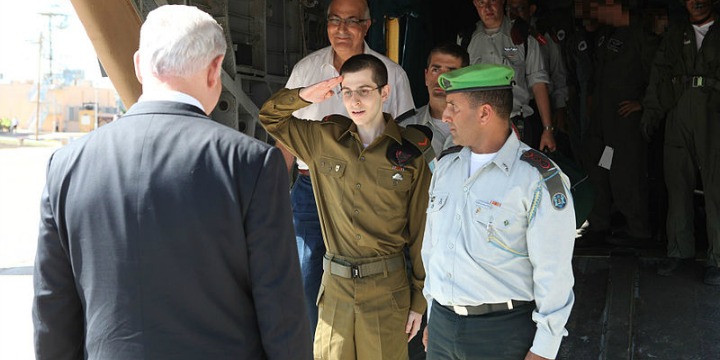
Gilad Shalit salutes Israeli Prime Minister Benjamin Netanyahu after prisoner exchange deal   

“I told my parents I wouldn’t want to be exchanged if I were taken,” Avishai said. “I told them that back in 2012, after Shalit came home, and I believe it even more now.” IDF protocol, grim as it is, Avishai explained, often calls for striking the site of a hostage-taking attempt to prevent capture. “If God forbid that were to happen to me,” he added, “I’d want them to do exactly that.”

It’s not bravado, he said. It’s a calculation — one that Avishai’s father, Joseph, struggles with every day. Joseph, who has five sons in combat units, sees his family woven deeply into the fabric of Israel’s fight for survival.

“As a father, I’m proud that my son would make such a request of me,” he said. “But I don’t know what I would do if it actually came to be. The war is going on too long. And it’s not just the soldiers suffering. The families are too. We need to end the war now by defeating Hamas. So that what happened on Oct. 7 never happens again.”

A Debate That Cannot Be Settled — Only Endured

Around the world, governments have traded spies, soldiers, and civilians in exchange deals, with varying degrees of transparency. The US — a country of over 350 million people — exchanged WNBA star Brittney Griner for Russian arms dealer Viktor Bout. Germany and other European nations have quietly participated in exchanges involving ISIS. Some hostages are journalists or aid workers; others are pawns of war. The moral math rarely adds up cleanly.

What makes Israel’s situation unique is scale, history, and the emotional centrality of the hostage issue to its national identity. Israel is not just a country; it is a nation — a nation of people forged through collective perseverance. These hostages, being traded, treated as points of leverage and weakness, in a way almost commodified, are not strangers or distant, abstract members of a society; they are the life force and engine that enable the nation’s existence.

This is a country born out of impossible choices, where every conflict feels existential, and every decision echoes in the memories of Holocaust survivors and immigrants who rebuilt their lives from rubble. In this regard, the principle of never leaving a soldier behind is not just a military doctrine — it is part of the social contract.

The people of Israel debate, march, fight, and mourn. At hostage rallies in Tel Aviv and Jerusalem, parents clutch posters and demand their loved ones back. At military funerals, flags are draped over fresh earth. At home, families like Joseph’s wonder who might be next to go, or not come home. There is fatigue, anguish, and doubt.

The mission, as David Ben-Gurion declared in 1948, was to establish a Jewish state. But the project of sustaining one — ethically, strategically, and together — is perhaps the harder task.

“There are no easy answers,” Avishai said. “But we have to be brave enough to ask the questions. Even the ones that hurt.”

https://www.algemeiner.com/2025/08/13/dont-trade-me-a-soldiers-plea/