


Rebbetzin’s abuse experience shapes her drive to protect children
Kol Nidre is busy at South Caulfield Hebrew Congregation, as it is at any synagogue. While the adults are engaged in the service, children move through the shule, in and out of side rooms and around the grounds.
“Who’s focusing on the kids? I am,” says Rebbetzin Lifshy Ajzenszmidt.
There is a personal driver that prompts her to make sure children are never wholly unsupervised, she told The Jewish Independent.
Ajzenszmidt was sexually abused by a relative when she was 10, in her family home in New York. It was the night before his wedding. He touched her sexually and asked how it felt and which part she liked best. Afterwards, she remembers pretending to be asleep until he sent her back to her bedroom. The next day, she went to his wedding.
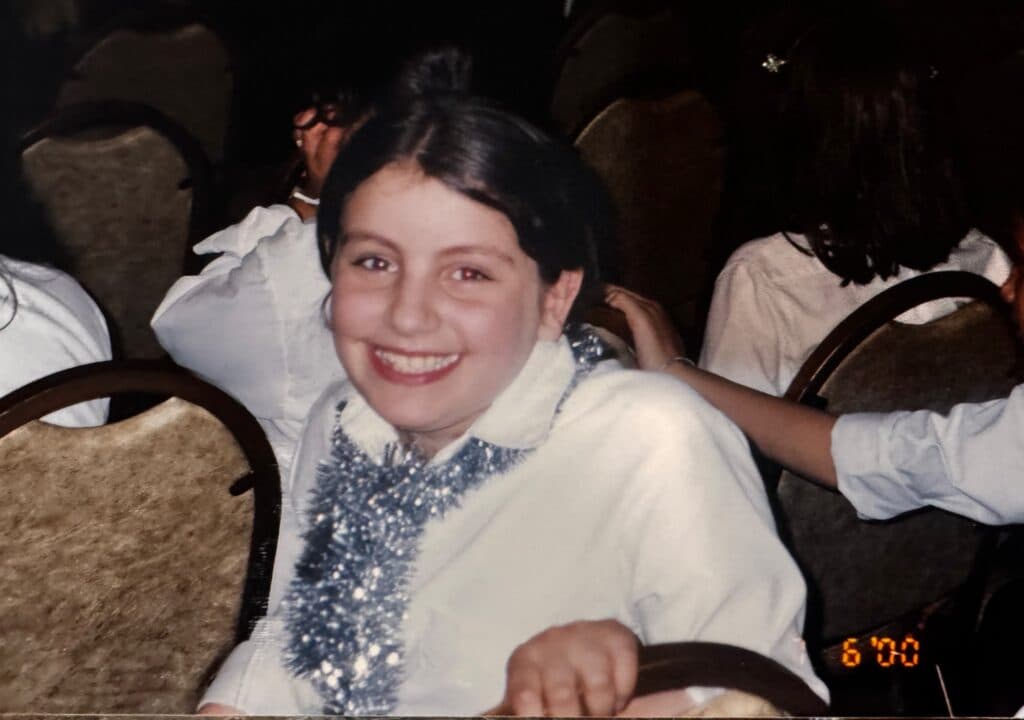
She did not consciously remember what had happened for years, but when she was 16, away at school and talking with friends, the memory returned.
“I think I was molested,” she remembers saying.
She called her relative and recounted the experience. He said he did not remember doing it, apologised if he had done it, then asked her not to tell anyone.
Initially she agreed to the pressure to keep quiet, but months later, she told her mother. She was met with anger and disbelief, followed by excuses and pressure to move on. Her mother later told her it had happened only once and that she should get over it.
However, Ajzenszmidt could not stop thinking about whether another child might be harmed. For years, she says, she asked adults in her family to do something, but no one would. Family members pressured her not to disclose, warning that the revelation could break up the family or harm elderly relatives with the shock.
“I felt like if I said something, and there would be issues in the family, it would be my fault,” she said.
Ajzenszmidt was pressured to continue speaking with her relative and being with him at family gatherings.
When she was 20, she moved away from her New York family, travelling with her husband Rabbi Mendy Ajzenszmidt, to Hong Kong, where she helped lead a Chabad community on Lantau Island. They later worked at Chabad Campus in Melbourne before moving to South Caulfield Hebrew Congregation.
Her childhood experience continued to haunt her. She has been in therapy since she was 17 and still has nightmares.
The family resemblance can be a reminder too. “Sometimes I look at myself, and I see him.”
Ajzenszmidt says the experience has affected her self-image and self-care. Being heavier sometimes made her feel safer, less likely to attract unwanted attention and harder to physically overpower.
“My fat feels like a protective layer for me,” she said. “It feels safe.”
She has tried to protect others from her relative, contacting Jewish Community Watch and trying to establish where he lives, so people around him could be warned. Recently, she found out and reported her experience to police in the state where he lives.
This year she finally went public, posting about the abuse on Instagram and naming the man she accuses.
“PLEASE SHARE, SCREENSHOT, DO WHATEVER YOU NEED TO KEEP CHILDREN SAFE,” she wrote.
Her disclosure gained significant public attention. One post attracted more than 44,000 likes, while an April follow-up was shared more than 4,000 times.
But there were also harsh responses. Relatives accused her of lying, said she was embarrassing the family, or accepted the disclosure but called to say she should forgive the abuser.
Online, strangers demanded more detail before deciding whether to believe her. Some openly called her account false.
For the first two weeks after posting, she deleted Instagram from her phone. The nightmares returned.
Then other survivors began contacting her. Women and men, some in their 70s and 80s, told her about abuse they had never spoken about before. Three women told her privately that they were abused by the same man.
Disclosing has released something in her. “It’s not my secret anymore,” she said
 |
| Lifshy Ajzenszmidt and husband Rabbi Mendy Ajzenszmidt |
As a mother and rebbetzin, she now does what she can to prevent another child from being abused. She believes communities can reduce the likelihood of abuse when children are taught about bodies, boundaries and consent, and when adults are open to disclosures.
Ajzenszmidt received virtually no sex education as a child and did not properly understand her own anatomy when she first got her period.
Looking back, one small moment from her teens still stands out. At about 15, she was sitting in her bedroom while people moved through the house. Her door was open. A friend of her brother noticed and quietly closed it. It was her first understanding of respecting privacy.
Her own children are taught differently. They learn the proper names for body parts and talk openly about consent and physical boundaries.
At South Caulfield, she says there is not only a formal child protection policy but a culture of protection. She says children should know they are entitled to boundaries, and adults should notice when something feels wrong.
And, while her husband runs the synagogue, Ajzenszmidt watches where the children are, who is around them and whether they seem comfortable. If it prevents her from attending the service, she thinks it is a small price to pay.
“Make yourself uncomfortable to keep your children safe. Their safety comes before your comfort.”