EVERY SIGNATURE MATTERS - THIS BILL MUST PASS!

EVERY SIGNATURE MATTERS - THIS BILL MUST PASS!
CLICK - GOAL - 100,000 NEW SIGNATURES! 75,000 SIGNATURES HAVE ALREADY BEEN SUBMITTED TO GOVERNOR CUOMO!

EFF Urges Court to Block Dragnet Subpoenas Targeting Online Commenters

EFF Urges Court to Block Dragnet Subpoenas Targeting Online Commenters
CLICK! For the full motion to quash: http://www.eff.org/files/filenode/hersh_v_cohen/UOJ-motiontoquashmemo.pdf

Sunday, February 07, 2021

The Homeless And The Hasid(im)...Walked Into A Courtroom....


Superior Court agrees in part with Hasidic group's request on synagogue capacity & agrees entirely with the homeless to go to those shuls...


Last week, the same judge ruled that the Quebec government's curfew was unfair to the homeless.


A Quebec Superior Court judge has agreed in part with the Hasidic Jewish Council of Quebec’s request to allow more than 10 people inside a synagogue to take part in communal prayer.

In a decision delivered on Friday, Justice Chantal Masse decided the provincial government’s order that a maximum of 10 people be allowed inside a place of worship applies “to each room in a building that has independent access to the street without sharing a common space with the other rooms.”

“If the court has one message to deliver to the (council) and to the entire Hasidic Jewish community it represents,  as well as all the faithful who benefit from this decision, it would be to rigorously respect the rules of law that are sanitary measures, as constraining as they are, as they should be presumed to be valid,” the judge wrote in her 53-page decision.

Earlier this week, the council asked the court to rule on the matter because of the confusion generated two weekends ago when the Montreal police broke up several gatherings at synagogues that it believed contravened the government’s social distancing measures.

Lawyers representing the council argued communal prayer is important in the Hasidic Jewish faith and that many synagogues have large rooms that allow a group of 10 to pray together indoors while respecting social distance guidelines and wearing masks.

In a statement released after the decision was made public, the council wrote: “We are obviously very, very relieved by this judgment.” It added that the ruling will allow them to pray “in acceptable conditions.”

“Our belief in God has implications in our civil life. Authorities have the obligation to consider this when they put in place such constraining measures that prevent us, practically, from exercising our worship.”

Three Montreal congregations — Sheves Achim, Amour pour Israel and Reshith Chochma — joined the council in the request.

Lawyers for the government argued the stricter rules announced last month are intended to reduce the number of social gatherings.

Last week, the same judge ruled that the CAQ government’s curfew, intended to reduce the spread of COVID-19, was unfair to the homeless and cannot apply to them.

https://montrealgazette.com/news/local-news/superior-court-agrees-in-part-with-hasidic-groups-request-on-synagogue-capacity

Thursday, February 04, 2021

I Do Not Subscribe To This Jewish Rag - Someone Sent Me This Online Clip - The True Story Will Be Added By Me In RED Ink. Yeshiva University was removed entirely from R' Yitzchok's amazing life story!


The Crown Has Fallen // Rav Yitzchok Scheiner, zt”l

By Rabbi Eliezer Brand (AKA BAGHDAD BOB of BROOKLYN)

https://youtu.be/iF_D9ILqmQo

https://youtu.be/-Ung95ORVUY


Rav Yitzchok Scheiner, the longtime rosh yeshivah of Kamenitz in Yerushalayim, was born in Pittsburgh to Polish-born refugees who came to America when they realized there was no future for Jews in Europe. Rav Yitzchok would often tell his talmidim about his personal journey, and how his father had to find a new job every week because he refused to work on Shabbos. 

 Although his father was not a learned man, the family’s commitment to halachah never wavered and they remained frum.


In the late 1930s, Rav Avraham Bender visited Pittsburgh to raise funds for the yeshiva, and his usual hosts weren’t in town. After doing some research, he heard that the Scheiners adhered to the strictest standards of kashrus and asked if he could stay with them. The rosh yeshivah was 16 years old and had already graduated from a public high school. Rav Bender convinced Rav Yitzchok’s parents to send him to yeshiva in New York.(He ultimately came to YESHIVA UNIVERSITY, and for the summer, Rabbi Bender convinced him to go to Camp Mesivta (Yeshiva Torah Vodaath's Summer Camp) Before that could happen, however, He attended Camp Mesivta for the summer, where he met Rabbi Yitzchok Karp (son in-law of Rav Shraga Feivel Mendlowitz ZTL) and Rabbi Moshe Yechezkel Samuels, who would repeat Rav Shlomo Heiman’s shiurim. 

 After the summer, they persuaded him to attend Yeshiva Torah Vodaath for a Shabbos, when YU gave him an off-Shabbos. After spending Shabbos at the home of Rav Shraga Feivel ZTL where he was mesermized by the Torah Vodaath experience and the surreal Shalosh Seudas, he packed up his belongings at YU, and returned to Torah Vodaath as a student. After one year at Torah Vodaath, he excelled in his studies so very much, RSFM sent him (among others) to Telz Yeshiva in Cleveland to help the struggling yeshiva) He grew close to Rav Shraga Feivel Mendlowitz and became one of Rav Shlomo Heiman’s prized talmidim. He learned b’chavrusa with Rav Reuvein Grozovsky, who was meshadech him with his niece, the daughter of Rav Moshe Bernstein, a son-in-law of Rav Boruch Ber Leibowitz.

Rabbi Chaim Zev Edelman is the menahel of Cheder Toras Zev in Lakewood. He went to Yeshivat Kamenitz in Yerushalayim at the age of 16.

“I learned in his house every night for two years. The reason we learned there was that after his father passed away he insisted that his mother move in with him, and he was extremely devoted to her. His kibbud eim was unbelievable. Even though he was already over 70 at the time, he insisted on taking care of her personally.


“The rosh yeshivah often reminisced about his time in Torah Vodaath. After he became the chavrusa of Rav Reuvein Grozovsky, I heard from others that Rav Reuven would never say shiur before discussing the inyan with Rav Yitzchok. Rav Yitzchok had never learned Gemara until he was 16 years old, but it took only a short while for him to rise to the top. I attribute this to his legendary hasmadah and intellect. It is also said that Rav Shraga Feivel would consult with him on many chinuch questions, including the great value of a secular education for yeshiva students.

He was always learning, talking and thinking in learning. Whenever I walked into his apartment, he was engrossed in Gemara, Rishonim and Acharonim. He had a small study. Every inch of wall space was lined with shelves laden with sefarim—and the rosh yeshivah knew the exact location of every sefer. He’d say, ‘Please pass me the fourth sefer on the third shelf in the sefarim shrank next to the window.’.......

 There's more, I guess you need to subscribe to Pravda Ami for that.....


Wednesday, February 03, 2021

Thousands of mourners flooded the streets of the capitol, brazenly flouting all health regulations. It sent a clear message: “We have no interest in your laws or your health. We are over the coronavirus. It is your problem alone.”


Israel Must Stop Riding The Haredi Tiger on Covid & Harboring Haredi Child Rapists!


  The ultra-Orthodox community, which flooded the streets of Jerusalem twice on Sunday, is telling that they have no interest in-laws or coronavirus regulations. 
 
Funeral for a rabbi in Jerusalem
 

Avrohom Mondrowitz near his home in the Nachlaot neighborhood of Jerusalem - The bin-Laden of  Haredi Child Rapists


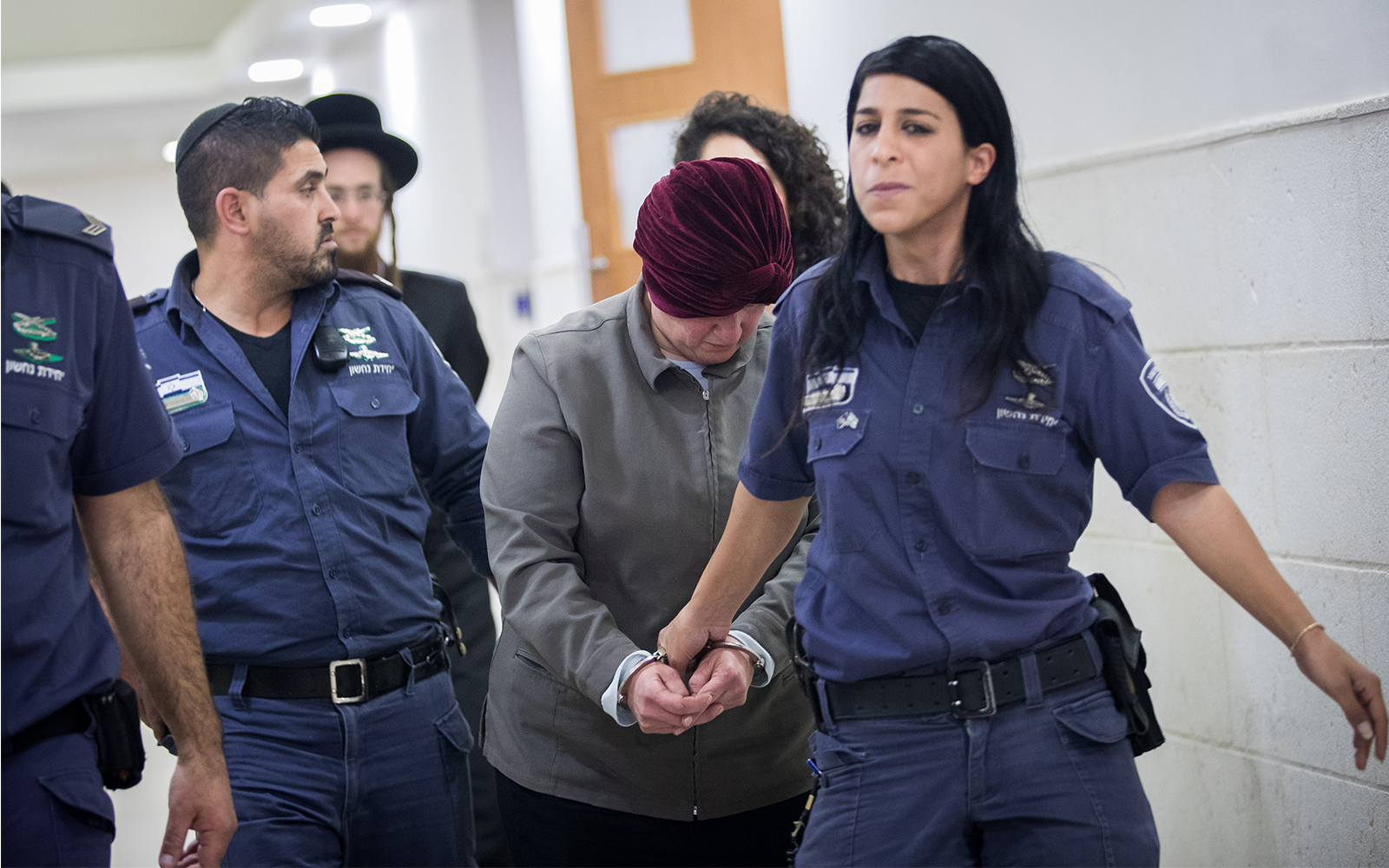
Malka Leifer, an Israeli former principal at a Jewish ultra-Orthodox school in Melbourne, returned to Australia from Israel under extradition Wednesday  --- to face dozens of child sexual assault charges, more than 12 years after she fled the country. Leifer, 54, is accused of 74 counts of sexually assaulting children while working as a religious studies teacher and principal at the Adass Israel School in Melbourne.


The illicit opening of Haredi schools while the rest of the country’s children are stuck at home was excused as the unique needs of a unique community.

Burning a public bus in Bnei Brak during last week’s riots and putting the lives of police officers and others at risk was blamed on a fringe minority.

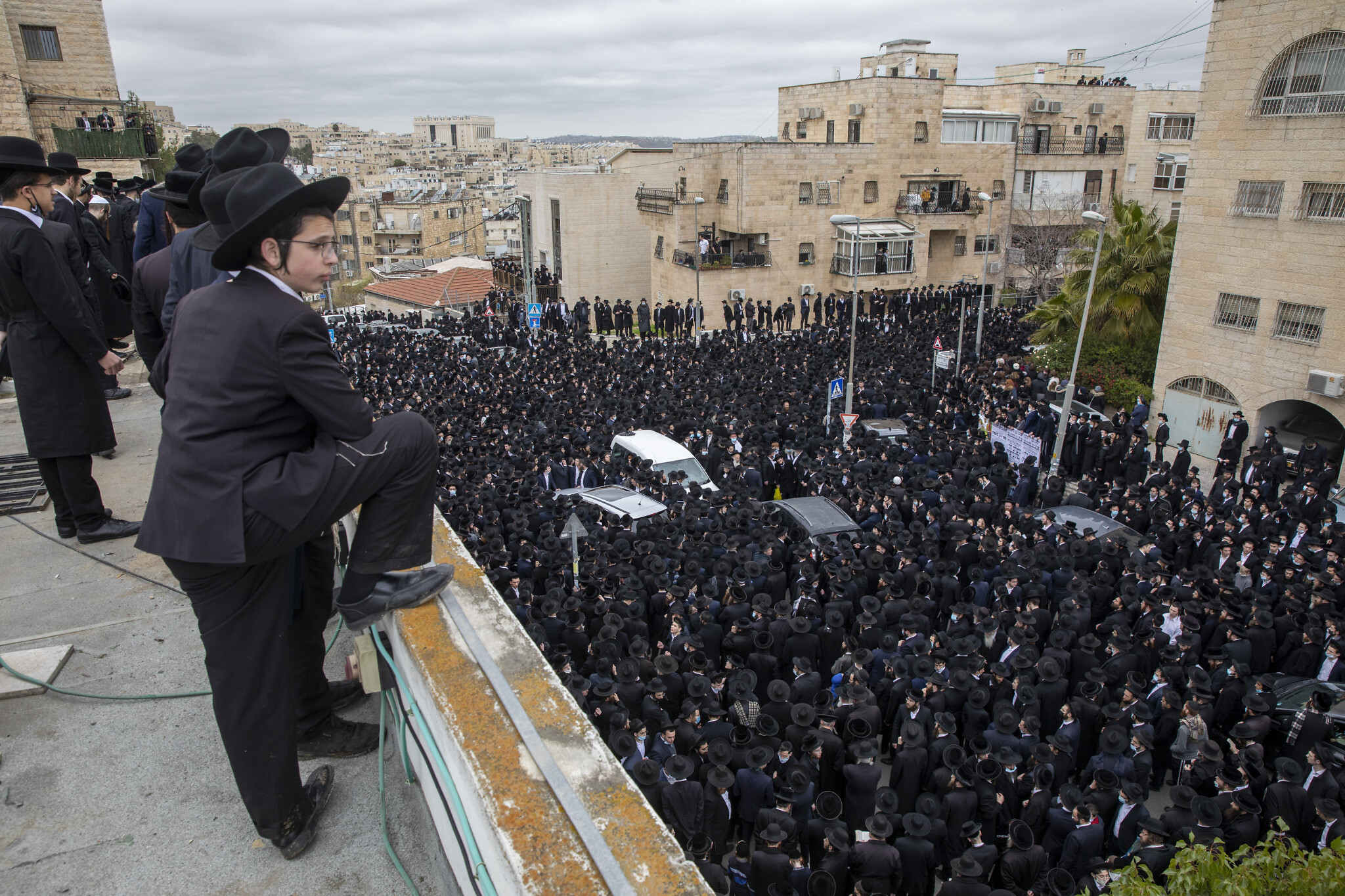
Thousands of Haredi men attend the Jerusalem funeral for a rabbi in Sunday, in violation of lockdown restrictions.

But what occurred on Sunday, with two consecutive funerals for two prominent rabbis in Jerusalem is impossible to wave away.

Thousands of mourners flooded the streets of the capitol, brazenly flouting all health regulations. It sent a clear message: “We have no interest in your laws or your health. We are over the coronavirus. It is your problem alone.”


While the economy is staggering and hospital emergency rooms cannot keep up as ambulances deliver more and more COVID-19 patients, the ultra-Orthodox community insists on dragging us all further into the abyss.

The coalition government – including its Haredi members – has said that the laws of the land apply to all Israeli citizens. So the throngs that packed the streets of Jerusalem effectively declared a mutiny, citing their own rigid principles and ideology.

The country’s leaders have over the years refused to create an acceptable social pact with the Haredi population.

Political coalition considerations always came first, at the cost of a long-term contract of coexistence and mutual respect, with acceptable behavior being displayed by both the ultra-Orthodox and secular communities.


And because the interests of the Haredi population remained different to the rest of the country, the community became increasingly isolated – a preferred strategy that negates the need to consider of other population groups and their needs.

It is not just Prime Minister Benjamin Netanyahu who has kowtowed to their demands. For decades leaders on the right and the left have been willing to pay off the ultra-Orthodox parties in hard currency.

But yielding to their every demand has caused untold harm to the country and its society – and the Haredi communities themselves, as many among the ultra-Orthodox would attest.

The coronavirus pandemic has shed a harsh light on the price we are paying for this dysfunctional relationship and it will not be easily ignored.


Israel has been riding the back of the Haredi tiger for far too long. Many have tried to tame it with sane, moderate policies such as bespoke military service for Haredi men, gender separation in universities and workplaces and more.


No one intends to interfere with the ultra-Orthodox way of life, just open the door for those who do want to join the productive workforce to improve their lot and to offer some assimilation into Israeli society.

Yet the ineptitude of the current government in the face of Haredi behavior teaches us a dangerous lesson. Without intervention, ultra-Orthodox power knows no bounds – irreparably damaging the rule of law, causing hundreds unnecessary deaths from COVID-19 and fostering a growing hatred between swathes of Israeli society.

Ironically, the Haredi politicians and their communities may bring about Netanyahu’s political demise in the March 23 elections.

The anarchy seen in Bnei Brak and Jerusalem might spread to other parts of the country, reversing all efforts to curb the spread of coronavirus.

And if such behavior continues, the elections might be taking place amid surging contagion rates that highlight the government’s failure to handle the pandemic.

The advantages Netanyahu gained by securing enough vaccines for the entire population will be lost if he keeps capitulating to Haredi demands, making him the target of public outrage, costing him votes from within his own camp and winning support for left-wing populist candidates.

The government has to do its job. The ministers who have been calling for more authority over state institutions in order to enact their policies must now act responsibly and translate their words into deeds.

https://jewishbusinessnews.com/2021/02/02/israel-must-stop-riding-the-haredi-tiger/?utm_source=feedburner&utm_medium=email&utm_campaign=Feed%3A+JewishBusinessNews+%28Jewish+Business+News%29

Tuesday, February 02, 2021

The Health Ministry’s data, based on averages of new cases over the last week, showed that 23 percent of new cases were from people who come from areas that are predominantly Haredi, even though just 12% of Israelis belong to the ultra-Orthodox community.


Nearly 1-in-4 new virus patients is Haredi, data shows, amid ire over crowds - (The Sechel of BLM & KKK Protesters)


On a positive note, ultra-Orthodox vaccination rates catching up with general population, but remain low in some virus hotspots, according to Health Ministry stats


Thousands of ultra-Orthodox Jews participate in funeral for prominent rabbi Meshulam Soloveitchik, in Jerusalem, January 31, 2021. (AP/Ariel Schalit)
 

Almost a quarter of all new Israeli coronavirus patients are from the ultra-Orthodox community, Health Ministry figures released Monday showed, highlighting the disastrous spread of COVID-19 through Haredi cities and neighborhoods.

The news comes amid rising public anger over violations of virus rules in parts of the Haredi community, and as the British variant of the virus, which spreads especially fast in high-density environments, runs amok.

The Health Ministry’s data, based on averages of new cases over the last week, showed that 23 percent of new cases were from people who come from areas that are predominantly Haredi, even though just 12% of Israelis belong to the ultra-Orthodox community.

Data also showed that some 20% of coronavirus tests conducted among people from Haredi areas have returned positive over the past week, while the national average is 9.8%.

All eight locales with the highest per capita COVID-19 diagnoses are predominantly Haredi or have sizeable ultra-Orthodox populations. 

“We are very worried,” Tehila Kalagy, a Haredi Ben Gurion University academic, who studies health policy in her community, told The Times of Israel.

Doctors are warning that while morbidity among middle-aged Haredim has been low until now, the sheer numbers of infections, heightened by the British variant, means this could quickly change.

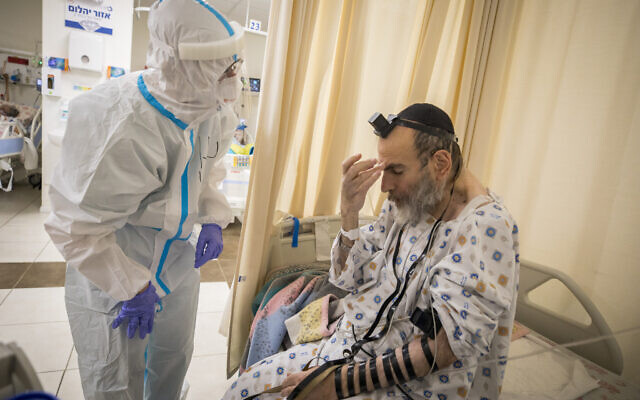
A volunteer team members wearing safety gear help a COVID-19 patient lay his tefillin and pray in the coronavirus ward of Shaare Zedek hospital in Jerusalem on January 27, 2021, (Olivier Fitoussi/Flash90)

“Now it’s for real,” said Dr. Ian Miskin, who heads coronavirus response for the Clalit healthcare provider in the Jerusalem area. “Until the penny drops, showing people that they need to keep the regulations and go for vaccination, people will be dying.”

The statistics come amid anger over disregard shown in parts of the Haredi community towards coronavirus restrictions. This reached new highs on Sunday, when authorities failed to stop two large Haredi funerals from taking place, with tens of thousands of people brazenly breaking lockdown regulations and utterly failing to observe any social distancing, creating major health hazards.

Israel is more than four weeks into a nationwide lockdown, and despite a world-leading vaccination drive, infection numbers have remained stubbornly high. Israel is recording over 6,500 new cases daily, according to the Health Ministry’s moving 7-day average.

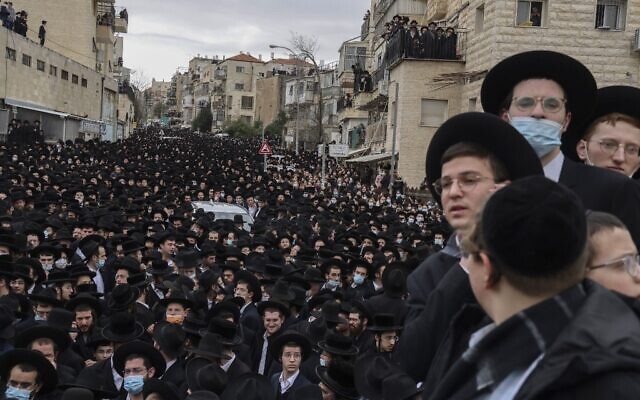
Thousands of ultra-Orthodox men attend the funeral of Rabbi Meshulam Dovid Soloveitchik in Jerusalem, January 31, 2021. (Yonatan Sindel/Flash90)
 

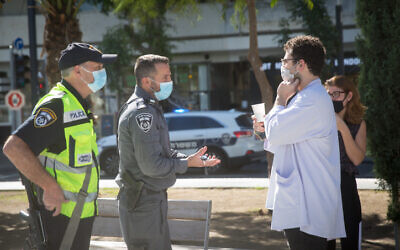
Many Israelis have complained about uneven police enforcement of lockdown regulations, with people sitting alone in parks in Tel Aviv being fined, while large Haredi gatherings continue to take place and are largely ignored by authorities.

Police patrol Tel Aviv on February 1, 2021. (Miriam Alster/FLASH90)
 

On Sunday, Defense Minister Benny Gantz lambasted the government’s “fake lockdown” and “unequal enforcement.”

Some inside the community have also spoken out about the lack of leadership on the issue from rabbis and political figures.

Zaka emergency service head Yehuda Meshi-Zahav, who lost both parents and a brother to COVID in recent weeks, told The Times of Israel that rabbis who approve rule-breaking have “blood on their hands.”

Officials and experts stress that while they are worried about rule-breaking, environmental factors also play a large part in the high Haredi virus rates, which have only been compounded by the British variant’s fast-spread.

Thousands of ultra-Orthodox Jews attend a funeral procession for the head of the Brisk Yeshiva, Rabbi Meshulam Dovid Soloveitchik in Jerusalem on January 31, 2021, following his passing, at the age of 99, due to months-long illness compounded by the coronavirus. 

“It must be remembered that many people live in cramped conditions, close to one another,” said Kalagy.

Mini Hadad, a member of the Health Ministry team that prepared the figures, noted, “The catchier British variant is disproportionately spreading among Haredim, who live in large families and often in high-density housing.”

Immune response

Haredim are flocking to vaccination centers in larger numbers than expected, though in some virus hotspots, traffic is slow. “Haredim are more reticent about getting vaccinated than others, while actually, given their higher infection rates, we really need them to have higher vaccination rates,” said Miskin.

The locale currently topping the table for new diagnoses has rock-bottom vaccination rates — half the national average for the elderly: just 41% of residents aged 60-plus in Tifrah, a Haredi moshav, are classed as immunized or with developing immunity after initial vaccination, compared to a national average of 81%.

An empty vaccination center in Jerusalem on January 31, 2021
 

Only 65% of Beitar Illit residents over the age of 60 are at least partially immunized, and in Emmanuel, only 44% are. Bnei Brak, one of the most notorious hotspots of the pandemic — currently 13th in the new infections table — stands at 63%.

That said, overall, 72% of people aged 60 and up from Haredi areas have been immunized, only 8% behind the national average for that age group.

Officials define immunization, in these statistics, as people who are either at least two weeks after their first injection, or those who have recovered from coronavirus, and are therefore thought to have immunity, and ineligible for a vaccination under current guidelines. They stress that this is a statistical tool, and actual immunity only takes hold a week after the second vaccine dose.

The stats point to high regional variations, seemingly suggesting that local culture, including whether rabbis encourage vaccination or not, plays a large role. In the Haredi settlement of Modiin Illit, some 96% of the 60-plus age group is immunized and in Kiryat Yearim, where the municipality has urged virus vigilance, the figure is 84%.

Hadad said that rabbis are increasingly coming on board to promote vaccination, and surmised that low vaccination rates in some areas may also be due to people who had the virus and recovered — and are therefore ineligible for the vaccine — but were never registered in official stats because they took private tests.

“We thought it would be much, much harder to promote vaccines [to Haredim] and the rates would be much much lower,” said Hadad. “We are very happy. We see it as a very big success. The gap is not big, and it will close.”

https://www.timesofisrael.com/nearly-1-in-4-new-virus-patients-is-haredi-data-shows-amid-ire-over-crowds/?utm_source=The+Daily+Edition&utm_campaign=daily-edition-2021-02-02&utm_medium=email


Two-thirds of London's ultra-Orthodox Jewish community had Covid last year - nine times the national average, study shows

  • The community's rate of past infection was at 64%, compared to 7% across UK
  • Crowded housing and deprivation highlighted as possible causes for the rate
  • Communal gatherings have been described as 'entire basis' of ultra-Orthodoxy

 READ MORE:

https://www.dailymail.co.uk/news/article-9213727/Two-thirds-Londons-ultra-Orthodox-Jewish-community-Covid-year.html

Monday, February 01, 2021

Ultra-Orthodox --- Ultra-Defiant --- A disproportionate number of Israel’s coronavirus cases are within the country’s ultra-Orthodox minority. The strictly religious community, which makes up around 11% of Israel’s 9.2 million people, has been accounting for about 40% of the new cases.


Thousands join in Jerusalem funerals, flout pandemic rules


1 of 15
Thousands of ultra-Orthodox Jews participate in the funeral for prominent rabbi Meshulam Soloveitchik, in Jerusalem, Sunday, Jan. 31, 2021. The mass ceremony took place despite the country's health regulations banning large public gatherings, during a nationwide lockdown to curb the spread of the coronavirus. (AP Photo/Ariel Schalit)

JERUSALEM (AP) — Thousands of ultra-Orthodox Israelis thronged a pair of funerals for two prominent rabbis in Jerusalem on Sunday, flouting the country’s ban on large public gatherings during the pandemic.

The initial funeral procession, for Rabbi Meshulam Dovid Soloveitchik, who died at age 99, wended its way through the streets of Jerusalem in the latest display of ultra-Orthodox Israelis’ refusal to honor coronavirus restrictions.

The phenomenon has undermined the country’s aggressive vaccination campaign to bring a raging outbreak under control and threatened to hurt Prime Minister Benjamin Netanyahu in March elections. Two challengers accused Netanyahu of failing to enforce the law due to political pressure from his ultra-Orthodox political allies.

Densely packed throngs of people gathered outside the rabbi’s home, ignoring restrictions on outdoor gatherings of more than 10 people. Many did not wear masks. Thousands of black-garbed ultra-Orthodox funeral-goers coursed past the city’s main entrance toward the cemetery where Soloveitchik was to be buried. A handful of police officers blocked intersections to traffic to allow participants to pass, but appeared to take no action to prevent the illegal assembly.

Israeli media said Soloveitchik, a leading religious scholar who headed a number of well-known seminaries, had recently suffered from COVID-19.

Later Sunday, thousands of ultra-Orthodox mourners attended the funeral of another respected rabbi, Yitzhok Scheiner, once again flouting the lockdown rules. Scheiner, 98, also died from COVID-19, reports said.

Alon Halfon, a Jerusalem police official, told Channel 13 TV that police had little choice but to allow the massive procession for Soloveitchik to proceed. He said police action had helped reduce the crowd size and that some 100 tickets were issued for health violations. But in such a densely packed environment, with children among the crowd, attempting to disperse the crowd would have been “unwise and dangerous.”

Israel’s Health Ministry has recorded over 640,000 confirmed cases of the coronavirus and at least 4,745 deaths since the start of the pandemic.

Israel has recently been averaging over 6,000 confirmed cases of the coronavirus each day, one of the highest infection rates in the developing world. At the same time, Israel has vaccinated over 3 million of its citizens, also one of the highest rates per capita in the world.

Health experts say it could take several weeks for the vaccination campaign to have an effect on infection and hospitalization rates. The Israeli Cabinet voted late Sunday to extend a nationwide lockdown until at least Friday, and possibly longer. The government imposed the movement restrictions and closure of schools and non-essential businesses last month in an effort to clamp down on Israel’s runaway pandemic.

The Cabinet also said a ban on virtually all incoming and outgoing air traffic would remain in effect another week.

A disproportionate number of Israel’s coronavirus cases are within the country’s ultra-Orthodox minority. The strictly religious community, which makes up around 11% of Israel’s 9.2 million people, has been accounting for about 40% of the new cases.

Many ultra-Orthodox sects have kept schools, seminaries and synagogues open, and held mass weddings and funerals in violation of lockdown restrictions that have closed schools and many businesses in other parts of the country. Recent weeks have seen violent clashes between members of the ultra-Orthodox community flouting the rules and police officers trying to enforce them.

Ultra-Orthodox leaders say they have been unfairly singled out and argue the country’s secular public does not understand the importance of public prayers and religious studies in their community. They claim the scofflaws are a small part of their diverse community, and blame crowded living conditions for the outbreak.

Netanyahu has long relied on ultra-Orthodox parties for support, and critics say he has refused to antagonize his allies ahead of critical elections. Without ultra-Orthodox support, it will be extremely difficult for Netanyahu to cobble together a governing coalition — especially as he seeks immunity from an ongoing corruption trial.

But there are signs that this alliance could become a liability due to widespread public anger over ultra-Orthodox behavior during the pandemic. A poll last week indicated that over 60% of Israelis do not want ultra-Orthodox parties to serve in the next coalition.

Sunday’s funerals came a day after police used a water cannon to disperse anti-Netanyahu protesters near the prime minister’s residence. And Israeli media showed police aggressively handing out fines to people violating the lockdown in Tel Aviv, drawing accusations that police were following double standards.

Gideon Saar, a right-wing Israeli politician challenging Netanyahu in the elections, criticized the prime minister on Twitter, saying “the pictures from Jerusalem prove that Netanyahu has given up on enforcing the law for political reasons. This won’t happen in a government headed by me. There will be one law for all and it will be enforced.”

Another challenger, Yair Lapid, leader of a centrist party appealing to middle class secular voters, said in a speech in parliament that he had nothing against the ultra-Orthodox or their parties.

“I have a big problem with someone who thinks the law doesn’t apply to him,” he said. “The law is for everyone.”


https://apnews.com/article/pandemics-israel-coronavirus-pandemic-benjamin-netanyahu-jerusalem-ed5afe4c752ed813017da93ee0b2a183

Sunday, January 31, 2021

I Personally Grieve The Passing Of Rav Yitzchok Scheiner zt"l --- A Beloved Student Of Yeshiva Torah Vodaath And A Dear Family Friend


 Yitzchok Scheiner Top Row Center (No Hat) - Avrohom Mordechai Mendlowitz Top Row Left - Telz Yeshiva Cleveland 1941

תורה תורה חגרי שק • עולם התורה באבל • נפלה עטרת ראשינו


Rabbi Yitzchok Scheiner zt"l would not have been pleased with the crowds which thronged to his funeral. Just a few weeks before he had written that “on each of us the obligation is incumbent to do Hashem’s will at this time and to fulfill whatever is needed to take care according to the views of the experts not to be harmed and not to cause harm to others G-d forbid. We need to be careful not to participate in crowded gatherings like weddings etc. since through them it is possible to be harmed and to cause harm G-d forbid……”


Friday, January 29, 2021

Major Covid-19 breakout of huge Bobov wedding last week and Hebrew media with recording from Bobov warning their masses about it – לאחר חתונה המונית: עשרות נדבקו בקורונה – כיכר השבת


Remember the GIANT Bobov Wedding in Borough Park? Police Claimed it was Legal…. Dozens are Getting Sick – Covid

Major Covid-19 breakout of huge Bobov wedding last week and Hebrew media with recording from Bobov warning their masses about it – לאחר חתונה המונית: עשרות נדבקו בקורונה – כיכר השבת


The following is in Hebrew. Loosely it is a warning that those in attendance at the wedding last week in Borough Park should be aware that dozens are getting sick from Covid-19.

We wonder when Governor Cuomo is going to view these events as acts of  insanity and not religious celebrations of marriages, Bar/Bat-Mitzvot, somber funerals. We wonder when the Supreme Court is going to view the reality of these events – that they are dangerous for those in attendance and those they come into contact with.

לאחר חתונה המונית: עשרות נדבקו בקורונה

שבוע לאחר השמחה הגדולה בחצר חסידות באבוב בארצות הברית – בהשתתפות המונים, החלה התפרצות קורונה בקרב עשרות חסידים • הודעה דחופה נשלחה לכלל החסידים (חרדי)

דאגה גדולה בחצר חסידות באבוב, לאחר שבימים האחרונים, החלה התפרצות מחודשת של נגיף הקורונה בקרב החסידים בבורו פארק, כשבוע לאחר שמחת החתונה ההמונית שהתקיימה לבן הזקונים של הרבי.

בהודעה דחופה ששוגרה לכלל החסידים נאמר כי לרגל המצב, כל מי מי שחש תסמינים, אפילו הקלים ביותר שלא יסתובב בין אנשים וכמובן שלא יגיע לבית המדרש, אפילו אחד שפיתח נוגדנים בגופו.

בנוסף נאמר בהודעה כי כל מי שעבר את גיל 60, ואין לו נוגדנים, או שנמצא בקבוצות סיכון, שיישאר בבית, ולא יסתובב בין אנשים.

יצוין, כי לשמחה הגדולה הגיעו חסידי באבוב רבים שמתגוררים בישראל, וכי מרביתם הספיקו כבר לחזור ארצה – טרם סגירת https://lostmessiahdotcom.wordpress.com/2021/01/28/remember-the-giant-bobov-wedding-in-borough-park-police-claimed-it-was-legal-dozens-are-getting-sick-covid/----שדות התעופה

Thursday, January 28, 2021

The Haredi community, long accustomed to the leadership of rabbis believed to be divinely inspired, suddenly finds itself rudderless in the throes of its most desperate crisis in generations. Indeed, more and more Haredim are beginning to wonder if the rabbis aren’t part of the problem. As one Haredi media personality put it bitterly on Twitter, after calling for “freezing budgets for institutions” that break the rules, “nothing will change as long as respect for the rabbis and the Hasidic masters remains intact.”


Enfeebled and enraged, Haredi society feels forsaken on all sides


The focus of growing anger, and increasingly frustrated in turn at the government’s lax enforcement of virus rules, the ultra-Orthodox are now a political time bomb


Police clash with Haredi men as they enforce coronavirus restrictions, in Jerusalem, January 26, 2021. (Yonatan Sindel/Flash90)

Monday afternoon in the Knesset. MK Moshe Gafni of United Torah Judaism heads to the dais to speak about a bill advancing through parliament that will allow police to slap steep fines on schools that violate virus restrictions and even to close them by force.

He’s visibly angry; his comments are short and to the point.

“You’re only bringing this bill to vilify the Haredi public!” he declares.

Then he adds, in comments that would later go viral on Israeli social media, “It’s not our fault! You, who sent us to live in such crowded conditions, it’s your fault!”
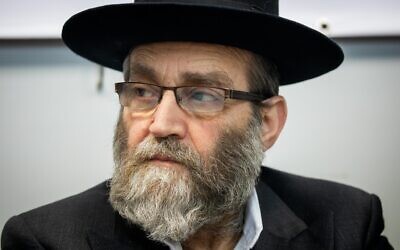
Chairman of the Degel haTorah party Moshe Gafni, at the opening event of their election campaign, ahead of the Israeli elections, in Jerusalem, on February 12, 2020. (Yonatan Sindel/Flash90)

It was an astonishing display that encapsulated the confused, anxious Haredi non-response to the crisis of rule-breaking that’s setting parts of the community aflame, and the frantic search for someone to blame.

Ultra-Orthodox violations of the virus restrictions aren’t new. The problem has simmered for months, occasionally waning as contagion rates and corresponding restrictions recede, then exploding again onto the public agenda when the pandemic returns with a fury.

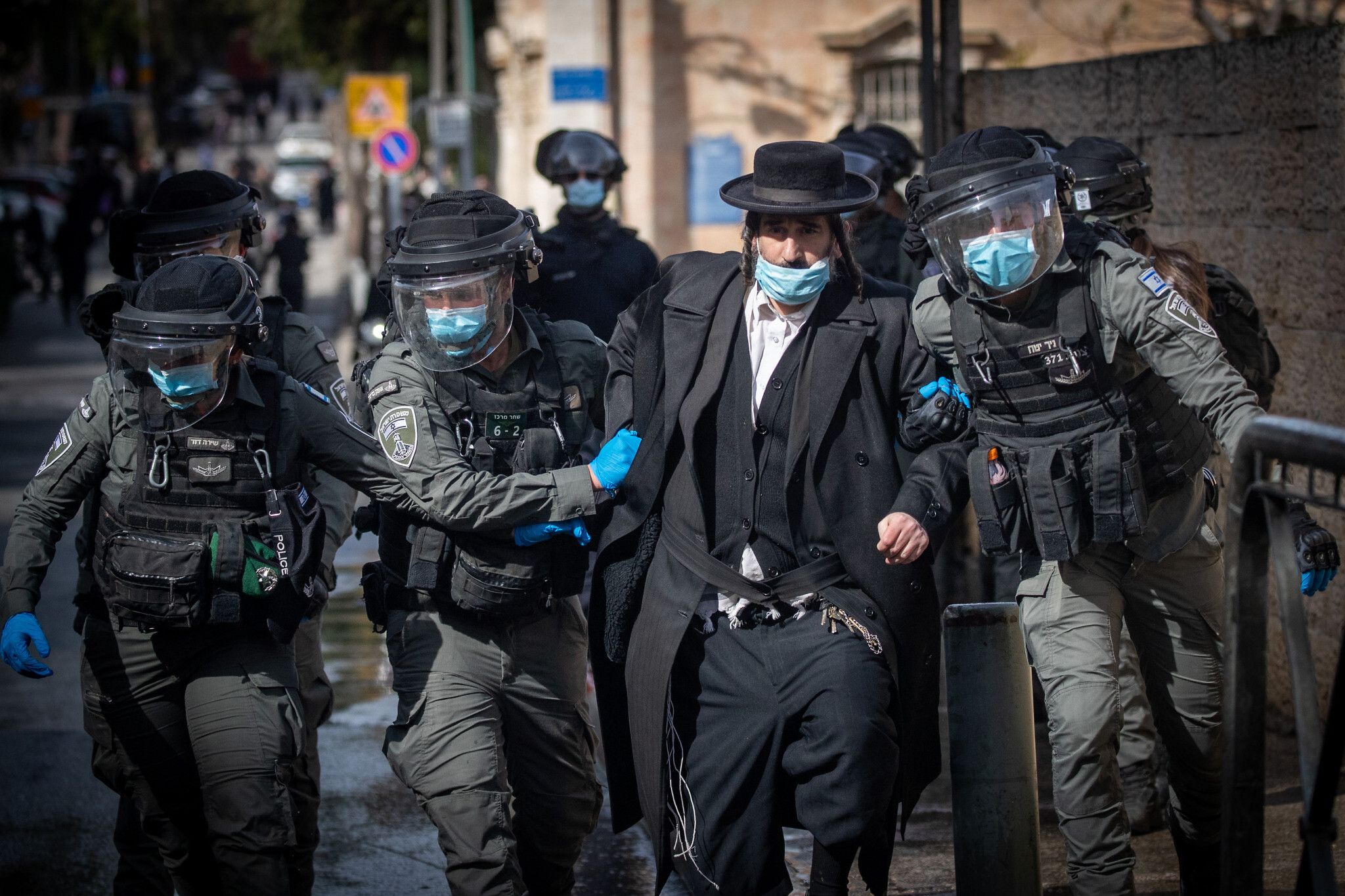
But the latest round of anger and anxiety surrounding Haredi struggles with the virus has quickly reached a fever pitch. Recent days have seen violent riots in Haredi population centers as police moved in to enforce long-ignored health closures.

In the usually placid city of Bnei Brak, a municipal bus was torched to its metal skeleton after young Haredi men dragged the driver from the vehicle. Camera crews, including a Fox News team, were either attacked or had their vehicles vandalized in Haredi areas. Israeli news broadcasts have carried photogenic vignettes of such violence for days.
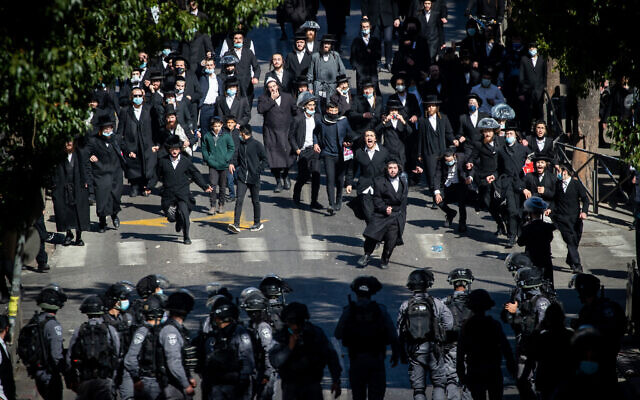
Police clash with Haredi men as they enforce coronavirus restrictions in the Haredi neighborhood of Mea She’arim in Jerusalem, January 24, 2021. (Yonatan Sindel/Flash90)

And throughout the rising violence, Haredi rabbinic and political leadership were nowhere to be found.

Voter fury

The anger and frustration have now engulfed the debate. Channel 12, sensing the public mood, decided to ask in a poll released Tuesday whether Israelis wanted Haredi political parties to be part of the next governing coalition.

Among the self-identified center-left, 78 percent prefer the next government not include the Haredi parties; just 5% want them included. That’s an extraordinary gap, but not really unexpected. The center-left is largely drawn from Israel’s secular bastions, the large cities, kibbutzim, and the like.

The surprising figure came from the other side, from the self-identified right. A majority, 52%, said they, too, didn’t want the Haredi parties in the next government. Just a third, 33%, said they wanted them.

A bus set alight by a mob in the city of Bnei Brak, January 24, 2021. (Israel Police)

As Channel 12 explained, that’s “an extraordinary shift,” underlining the current of anger at the ultra-Orthodox for refusing to adhere to virus restrictions and the latest iteration of longstanding bitterness toward a society and a leadership that is seen by many Israelis as having carved out an autonomous existence separate from the broader Israeli society.

Anyone following the social media responses to Gafni’s comments, which ranged from sarcastic to vicious, saw that animus borne out.

“Sure, of course. I sent the Haredim to live in crowded apartments. Not their birthrate,” one commenter sneered, earning hundreds of likes.

“Really sorry. Sorry we went to school, served in the army, worked, paid taxes, and never understood that leeches like you…” – there’s no need to translate the entire comment. The gist is clear. The sentiment was commonplace on Hebrew-language social media in the wake of the speech.
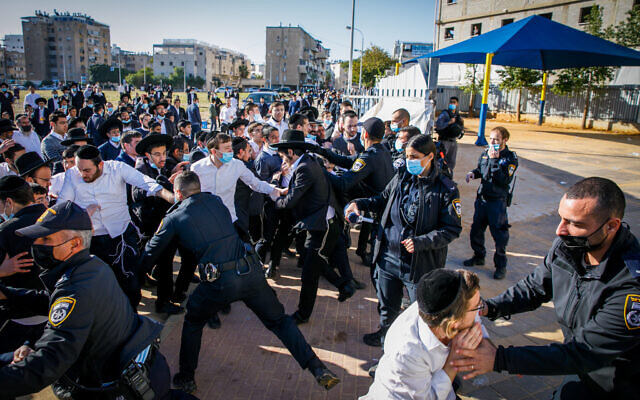
Haredi men clash with police to protest the closure of a yeshiva that was operating in violation of lockdown rules, in the southern Israeli city of Ashdod, January 24, 2021. (Flash90)

Teeming and desperate

Gafni’s Knesset speech came during a debate on a bill that sought to double fines for schools that defy lockdown closures. The refusal to shutter their schools has been viewed as an expression of the foundational role Jewish education has in Haredi life, so why mention crowding?

No one “sent” the Haredim to live where they do, as Gafni claimed. No law requires that double-digit percentages of Haredi men refuse to join the workforce and commit themselves instead to full-time religious study. No one demands that Haredi couples have 12 children, even as they plan to have only one parent working.

But Gafni’s concern about crowded conditions is nonetheless a real and all-pervasive Haredi experience. Haredim have among the highest birthrates in Israel. In some Haredi towns, families with 10 or 12 children are the norm. Apartments, however, are no bigger than in other towns and cities.

Those crowded conditions are central enough to Haredi life that they shape the most basic social institutions of many ultra-Orthodox.
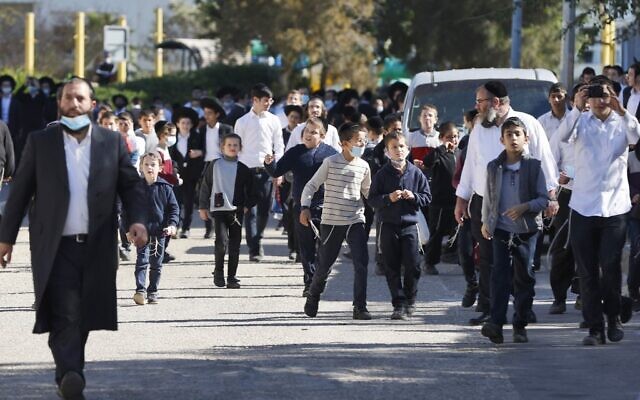
Haredi schoolchildren outside a school that opened in violation of COVID-19 lockdown rules following its closure by security forces, in the city of Ashdod on January 22, 2021. (Jack Guez/AFP)

Haredi society is in an important sense built on the principle that a great deal of childcare is outsourced to the community. Nowhere, or at least nowhere in Israel, is the old adage that it takes a village to raise a child more true than in the Haredi community. Children spend most of their waking hours in communal and educational frameworks outside the home, many of them only returning home at 6 p.m. or even later.

A Haredi news site reported in frustration that the bus set alight by rioters burned for an hour, melting the window shades of a nearby apartment building, while no cop or firefighter bothered to show up

A 12-child family sees its small 75-square-meter (807-square-foot) apartment not as a living space meant to be used during the day, but as little more than a glorified bedroom for people who must spend their waking hours somewhere else.

Lockdowns thus affect Haredim more powerfully. It’s hard to compare the struggles of the average five-person secular family through the crisis with those of a 12-person family, especially one that also shuns smartphones, television and the internet. Home isolation under such conditions is well-nigh unbearable. The repeated lockdowns, and especially the school closures, have hit Haredi society especially hard.

In many places, parents and school officials conspire to open their schools, furtively and with the full knowledge of the dangers involved, out of simple, raw desperation.

It is in such places that news film crews have taken footage of elementary schools where students were told to rush out the back gate if police arrive.
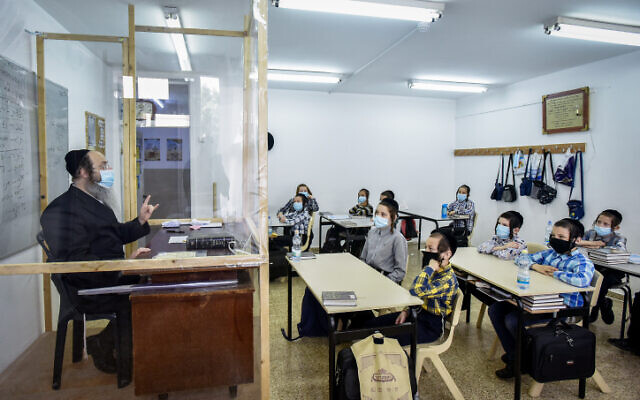
Ultra-Orthodox Jewish kids from the Kretchnif Hasidic dynasty wearing face masks as they listen to their teacher at a school in the city of Rehovot, on September 10, 2020. (Yossi Zeliger/Flash90)

It is that rule-breaking that drove lawmakers to consider the bill that so angered Gafni, which would increase fines to as much as NIS 10,000 ($3,000) for an institution that defies the lockdown, and would grant police the power to close the institution by force.

And it was in the middle of a debate on that bill that Gafni went before the cameras and shouted at non-Haredi Israel that it was their fault – “you who sent us to live in such crowded conditions” – that Haredim struggle to obey the virus rules.

A community forsaken

The ultra-Orthodox know they are suffering from the virus far more than non-Haredi Israelis. Their elderly are dying at three times the rate of secular Israelis. 

  Prominent Haredi journalists and public figures have railed against the rule-breaking among many in their community.

In one video spread far and wide on Haredi social media, eventually making its way to the mainstream nightly news broadcasts, a Haredi man is heard attempting to report a school that had opened in violation of the lockdown rules, but is told by police that enforcement in Haredi areas is subject to “political” limitations.
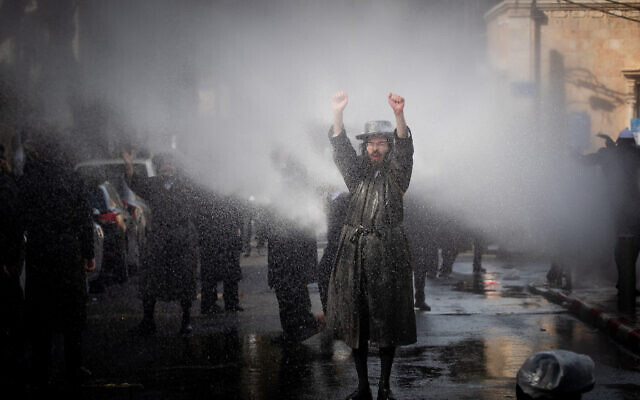
Police clash with Haredi Jewish men as they enforce coronavirus restrictions, in Jerusalem, January 26, 2021. (Yonatan Sindel/Flash90)

A Haredi news site reported in frustration that the bus set alight by rioters on Monday burned for an hour, melting the window shades of a nearby apartment building, while no cop or firefighter bothered to show up. Such incidents, and countless others like it, served to underline the frustrations of those who feel authorities have unfairly consigned the community to its fate.

They have contributed, too, to the feeling among many Haredim that their community has been turned into a convenient scapegoat for the broader society’s frustrations with the pandemic, even as it was abandoned by the state and by authorities who refuse to take their needs into account.

The anger at the Haredim is real and growing. The anger felt by the Haredim at the government and their own political leaders is just as real, and growing just as quickly.

In a January 6 interview with Israel Radio, Deputy Transportation Minister Uri Maklev, a lawmaker from Gafni’s UTJ party, warned of “bitterness toward Netanyahu” among his voters — and toward him and his fellow Haredi lawmakers.

Deputy Transportation Minister Uri Maklev holds a face mask during a press conference at the Transportation Ministry in Jerusalem on July 8, 2020. (Olivier Fitoussi/ Flash90)

“There wasn’t consideration given to the needs of the Haredi public” – forcing large families to isolate in small apartments, for example – “and there’s a sense of detachment from the Haredi public’s demands,” he accused.

Haredim “were humiliated and vilified, and the voter is saying [to us], ‘You should have stood up for us a lot more powerfully.’ I’m not blameless here, I think it’s important to take the criticism,” Maklev said.

That criticism isn’t hard to find. Polls over the past month have shown a slow but steady decline in support for the Haredi parties, Shas and UTJ, among Haredi voters, which drew a consistent 16 seats between them a month ago but are more likely to get 12 and 13 over the past week.

Haredi anger has grown potent enough to threaten the Haredi alliance with Likud.

On Monday, as the Likud-backed law fining rule-breaking schools advanced, UTJ’s Gafni was overheard in the Knesset telling one Netanyahu adviser, “What are we, your slaves? We’re having serious second thoughts about this partnership” — the one between the Haredi parties and Netanyahu.

United Torah Judaism lawmakers, including MK Moshe Gafni, second left, visit Safed Mayor Shuki Ohana for an election campaign event of the Degel Hatorah faction, in the northern Israeli city of Safed, February 26, 2020. (David Cohen/Flash90)

Even the Haredi world’s rabbis haven’t emerged untarnished from the past 10 months.

The Vizhnitzer Rebbe, Rabbi Israel Hager, one of the most influential Hasidic leaders in the country, is prominent enough and his Hasidic sect large enough to have a reserved slot on the United Torah Judaism party’s Knesset slate. Since 2019, that slot has been filled by Hager’s appointee MK Yaakov Tesler.

Last week, to the astonishment of the country, Hager issued an order to his Vizhnitz movement’s schools to reopen their gates despite the government-ordered lockdown.

 Yisroel Hager (aka the chazer of Bnei Brak) of the Vizhnitz Hasidic dynasty at Mount Meron in northern Israel

It took scarcely a day for the rabbi’s advisers to issue a “clarification” explaining that the rabbi did not actually mean schools should open, but was merely expressing the pain he felt over the cessation of learning.

It was a strange episode. The news reports of Hager’s order angered countless Israelis. The clarification didn’t seem to explain the explicit instructions of the original order.

Hager isn’t alone. A similar episode several months ago saw Rabbi Chaim Kanievsky, widely acknowledged as the preeminent living Ashkenazi Haredi sage, issue similar instructions against shuttering learning institutions despite the lockdown in force at the time — only to have the purported orders reversed by his advisers after a public outcry.
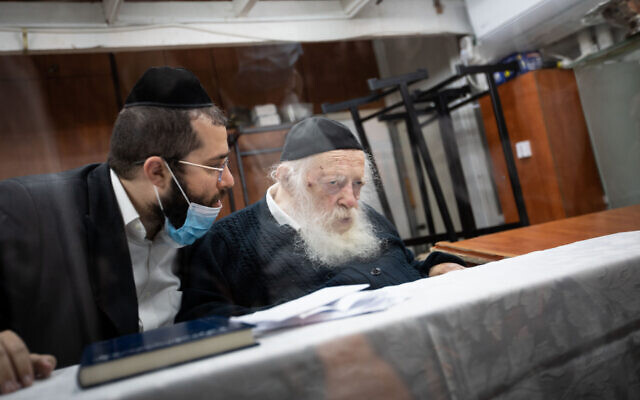
Rabbi Chaim Kanievsky and his grandson at Yaakov Kanievsky (L) at the former’s home in the ultra-Orthodox city of Bnei Brak on September 22, 2020

The Haredi community, long accustomed to the leadership of rabbis believed to be divinely inspired, suddenly finds itself rudderless in the throes of its most desperate crisis in generations.

Indeed, more and more Haredim are beginning to wonder if the rabbis aren’t part of the problem. As one Haredi media personality put it bitterly on Twitter, after calling for “freezing budgets for institutions” that break the rules, “nothing will change as long as respect for the rabbis and the Hasidic masters remains intact.”

The street will not forget

The Haredi parties have been key anchors of Prime Minister Benjamin Netanyahu’s coalitions since 2015. It’s no longer clear that many of Netanyahu’s non-Haredi supporters want that to remain the case. It’s no longer even clear that many traditionally pro-Netanyahu Haredi voters want that to remain the case.

Likud doesn’t want to increase police enforcement in the Haredi community now, 55 days out from an election in which Netanyahu has no hope of retaining power without the full-throated support of the Haredi public.

Yet the bill to increase fines against violators, set to advance in a Wednesday plenum vote, isn’t being pushed by the secularists or the left, but by Likud. Netanyahu has caught wind of the public mood. He can’t afford to lose voters angry at his lax enforcement of Haredi rule-breaking either.
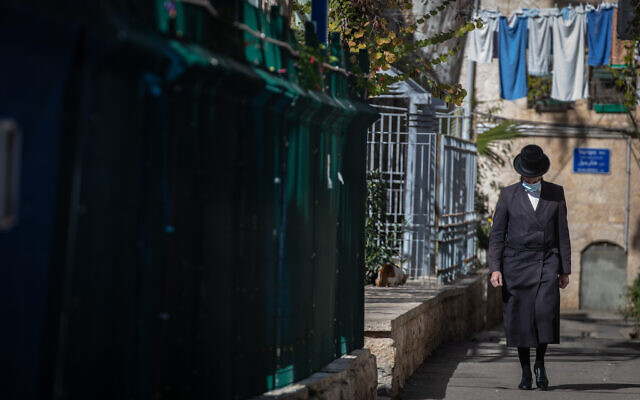
A Haredi man in Jerusalem wears a face mask as he walks in the city center on January 26, 2020, as Israel enters a third lockdown due to the COVID-19 pandemic. (Olivier Fitoussi/Flash90)

The recent violations, the violence in the streets, the sense that Haredi communities are betraying the basic solidarity expected of them by the rest of Israeli society – all these images and emotions have crystallized into widespread anti-Haredi anger, an anger Netanyahu must now grapple with as it seeps deep into the political right.

The pandemic may soon come to an end as the vaccination drive catches up to the contagion. But the social crisis the pandemic has sparked among the Haredim, the discovery that neither their religious leadership nor their political parties really know how to lead them through a crisis, that neither the Israel Police nor the government they have backed time and again is willing to battle their anarchic segments and bring order to their streets — that painful realization will remain long after the virus fades away.

https://www.timesofisrael.com/enfeebled-and-enraged-haredi-society-feels-forsaken-on-all-sides/?utm_source=The+Daily+Edition&utm_campaign=daily-edition-2021-01-27&utm_medium=email
Wednesday, January 27, 2021

“I cannot understand the disregard for human life,” he went on. “It’s enough to pass through ultra-Orthodox neighborhoods and see the death notices going up, one after the other,” to grasp the gravity of the situation.


Yehuda Meshi Zahav, chairman of Israel's ZAKA rescue unit outside sitting shivah for his mother in the ultra-Orthodox neighborhood of Mea Shearim in Jerusalem, Jan. 19, 2021

Yehuda Meshi Zahav’s crucial COVID message to fellow haredim


In the throes of profound personal loss, the founder of ZAKA is horrified by “the disregard for human life” among many members of the ultra-Orthodox community.

The triple tragedy that struck the family of one of Israel’s most righteous Jews in the course of a single month is garnering nationwide attention and sympathy. That COVID-19 caused the deaths of Yehuda Meshi Zahav’s brother, mother and father made the blow particularly relevant to the general public.

But it is Meshi Zahav’s response to his personal loss—and accompanying appeal to those members of the country’s haredi communities who are engaged in a battle against the state over its coronavirus regulations—that is most noteworthy. 

So distraught is he about both that he gave an interview to Channel 12 on Sunday evening, a day after his father passed away, in the midst of his sitting shiva for his mother, mere weeks after his younger brother’s funeral.

Meshi Zahav is the founder and head of the volunteer rescue and recovery organization ZAKA (the Hebrew acronym for Disaster Victim Identification). Established in 1995, ZAKA became famous in Israel for its painstaking gathering of human remains, tissue and blood from scenes of terrorist attacks to enable the identification and proper, dignified burial of dead bodies in accordance with Jewish law. ZAKA also collects the remains of non-Jews, including suicide bombers, for return to their families.

It’s the kind of gruesome work that few people are cut out for, but all consider an awe-inspiring, if not a holy, endeavor. What makes it even more extraordinary is the fact that Meshi Zahav not only hails from the extremist Eda Haredit sect in Jerusalem’s Mea Shearim neighborhood, but until the late 1980s, was a rabid anti-Zionist activist protesting against the secular state’s every policy and pursuit, including archaeological excavations.

Indeed, it wasn’t until 1989, at the age of 30, that he gradually underwent a shift in perception. The turning point—and event that would eventually lead to the creation of ZAKA—was the Palestinian Islamic Jihad attack on an inter-city Tel Aviv-Jerusalem bus. Sixteen people were killed, including two Canadians and one American, and 27 others were wounded when a terrorist grabbed the steering wheel from the driver, forcing the vehicle over a steep embankment into a ravine, where it caught on fire.

At the time, Meshi Zahav was studying at the nearby Telz-Stone yeshivah. Hearing the screams of the victims (some of whom ended up being burned alive), he and a number of his fellow students rushed to the scene to help. This experience, as well as subsequent suicide bombings and other types of Palestinian attacks on Israelis, sparked a change in his thinking about Jewish unity and pluralism within Israeli society.

His shift was so great that today the 61-year-old openly calls for haredim to serve in the Israel Defense Forces; in fact, two of his sons are combat soldiers. This runs counter to the behavior and attitude of many haredi sects, whose members believe that Torah study protects the Jews—in and out of Israel—just as much, if not more, than paratroopers and commandos.

Perhaps an even greater societal divide was revealed when the coronavirus pandemic erupted. As I wrote in June, the minute that Israelis started getting infected with and dying from the virus, the haredim became the target of derision for spreading the disease.

Rather than examining and trying to empathize with the key reasons for the high rate of infection among the ultra-Orthodox—such as the large size of nuclear families living in cramped quarters, and a lack of access to news via TV and the Internet—the public turned on them as the perfect scapegoat for its frustration and health anxiety.

Even when the massive education campaign in haredi-majority areas proved successful—with the added benefit of bringing IDF troops and black hats together in a touching show of mutual kindness—the media played up every violation displayed by the disobedient minority.

Nor was this enmity restricted to secular Israelis. The national-religious community has been equally angry at the haredim for flouting the rules. Ironically, secular Israelis rarely can distinguish between one group of “ultra-Orthodox” and another, treating them as a homogenous bunch, which they are not.

As a result, this week’s shameful riots in Bnei Brak and elsewhere—during which haredim objecting to the state’s attempt to enforce the closure of Talmud Torah schools during the country’s current COVID-19 lockdown clashed violently with police—are being attributed to the entire ultra-Orthodox population. One reason for this is the lack of a clear, uniform voice from haredi leaders about the dangers of the virus and the importance of adhering to rules aimed at saving lives. It’s the highest Jewish tenet, after all.

This is precisely the message that Meshi Zahav has been conveying.

“I feel like I’m in a horror movie,” he told Channel 12, saying that words can’t express the torture of losing three loved ones to the virus, practically all at once.

He went on to criticize members of his community for wasting their time complaining about being discriminated against and pointing fingers at demonstrators outside the Prime Minister’s Residence in Jerusalem and beachgoers in Tel Aviv.

“People are dropping like flies [in the haredi community], and this is what they’re harping on?” he bemoaned.

“I cannot understand the disregard for human life,” he went on. “It’s enough to pass through ultra-Orthodox neighborhoods and see the death notices going up, one after the other,” to grasp the gravity of the situation.

“In some respects, it reminds me of the Titanic,” he said, “with people getting killed [below deck], while someone on the upper deck is arguing over which waltz to play.”

Meshi Zahav’s real punch, however, came in the form of a lesson in Judaism for those of his fellow haredim who appear to be militantly ignoring the big picture.

“Every year during the counting of the Omer, we mourn the 24,000 thousand disciples of Rabbi Akiva, who died of the plague 2,000 years ago,” he said. “But we don’t need a 2,000-year-old custom to see what’s going on right now, with practically no household being spared death” from the current plague.

As a haredi Jew himself who has devoted his career to rescuing people at home and abroad, while honoring the remains of those who don’t survive, he deserves to be heeded. And as a man suffering a profound personal loss from a virus that doesn’t distinguish between those who pore over the Talmud and others who cram for math tests, he must be taken as seriously as any rabbi.

Ruthie Blum is an Israel-based journalist and author of “To Hell in a Handbasket: Carter, Obama, and the ‘Arab Spring.’ ”

 
https://www.jns.org/opinion/yehuda-meshi-zahavs-crucial-covid-message-to-fellow-haredim/?ct=t%28Daily+Syndicate+1-24-21+%28new%29_COPY_01%29
JNS

Tuesday, January 26, 2021

"The Pedophile of Edgewood."


Greer’s Supreme Court Petition Denied

by Larry Noodles

The United States Supreme Court declined to hear "Rabbi" Daniel Greer's appeal of the $21 million civil verdict entered against him almost three years ago in Federal Court. Greer filed a petition for certification before the Supreme Court after he had lost on appeal at the Second Circuit Court of Appeals. Greer's attorneys argued on appeal that the verdict was "excessive" and "shocking" and should either be completely set aside or reduced. The Second Circuit held the following: "The amount of compensatory damages is undoubtedly high, but we are not persuaded that a new trial or remittitur (reduction) is warranted under Connecticut law. The award here is not excessive when compared to the awards in the cases cited above. Here, the record indicates that EM suffered repeated abuse for approximately three years, from the time he was fourteen until he was seventeen years old. At certain points, EM was abused for hours at a time, on a weekly basis. The first time Greer abused EM, he plied EM with alcohol, pretended to care about EM and his family, acknowledged EM's parents' financial struggles, and then kissed him. Eventually the abuse included oral sex, anal sex, mutual masturbation, and watching pornography together — while EM was a sophomore, junior, and senior in high school and Greer was a 60-something year old man."

The New Haven Police arrested Greer a few months after the civil verdict of $20 million entered in the child rape case. If Greer had won the civil case I don't believe that the State's Attorneys Office would have filed the criminal case. If Greer had offered the victim a settlement, long before the civil case was filed, a civil case would have never been filed.

Greer's attorneys also argued on appeal that the trial judge's jury instructions pertaining to Greer's refusal to answer questions based on his right against self incrimination was improper. The trial judge instructed the jury that they could make negative inferences against Greer due to his failure to answer difficult questions on cross examination. The Second Circuit listed the questions Greer refused to answer: Greer refused to answer whether he "sexually abused and assaulted other minors including Avi Hack" whether he "taught religious and secular studies, communal service, ethics, theology and Jewish history," whether he "forced EM to have sex with him when he was a child at various locations in New Haven apartments he owned," whether "he had molested EM in Greer's bedroom" whether he "had sex with EM at a motel in Branford" whether he "forced EM to have sex with him at a motel in Paoli" whether he forced EM to have sex with him when EM was a child at a hotel in Philadelphia," whether he "had sex with EM when he was a child at land in Hamden..."

Greer was sentenced to 20 years of incarceration suspended after 12 after he was convicted of child molestation. Greer is currently on home confinement, after he was recently released due to COVID19 in the prisons. Greer's case will be reviewed again on February 1, by Judge Alander. Greer may or may not go back to jail. Eventually Greer will have to go to jail and spend 12 years in the custody of the Department of Corrections. Greer has already registered as a sex offender. Greer is allowed to leave his abode in order to go to doctor appointments and appointments with his attorney. A local recently told me that she saw Greer driving around in his minivan in his Edgewood neighborhood. Greer used to be known as the "Mayor of Edgewood." Greer is now known as "The Pedophile of Edgewood."

Greer was tried and incarcerated just before the pandemic. Greer has been in and out of prison ever since, due to issues in the prison related to the pandemic, and Greer's age. Greer is 80 years old. At one point Greer's son Ezi Greer drove his father to the Superior Court to turn him in to the Marshal. I was there and took pictures. I was shocked that Ezi drove his father to the prison. During the civil trial an expert testified that he had evidence that Ezi was molested by his father. Ezi Greer was active in politics in New Haven for many years, along with his brother Rabbi Dov Greer. Dov, Ezi and Avi Hack also helped run Greer's yeshiva, where EM was enrolled. Avi Hack was also molested by Greer. Avi, Dov and Ezi protected Daniel Greer for years while Greer attracted minors to his yeshiva for the purposes of rape and abuse. After "Rabbi" Greer was sued Dov moved to Long Island, Ezi moved to Waterbury, and Avi moved to Providence RI. Avi's father Harold Hack, who also protected Greer for year, also moved to Waterbury. Greer got Harold a job at the City of New Haven. Harold's daughter is married to Ezi Greer.

Ezi, Avi, Dov and Harold refused to testify against Greer at Greer's civil and criminal trials. I contacted numerous potential witnesses to testify against Greer in the criminal trial. A few showed up and testified against Greer. One testified that he was a classmate of EM at the high school and that he suspected that EM was being molested by Greer at the time he was in school. Another testified that Greer tried to molest him. A few others wanted to testify but found it too emotionally painful to show up in court and testify. I was surprised that EM had the strength to testify at the civil trial and the criminal trial. Greer's lawyer William Ward mercilessly attacked EM at the civil trial, yelling at him calling him a "LIAR" and a "THIEF." Greer's lawyer Willie the Dow at the criminal trial was more respectful and didn't yell and scream at the victim. The Dow probably learned from Ward's mistake, attacking the victim, victim blaming, did not work out very well for Ward.


Monday, January 25, 2021

Israeli authorities extradited alleged sex abuser Malka Leifer to Australia early Monday morning, nearly 13 years after she fled Melbourne as allegations against her were coming to light and after a six-year legal process during which a court determined that she had feigned mental illness in order to avoid facing justice.


13 years after bolting, 6 since arrest, Malka Leifer extradited to Australia


Former Haredi school principal on her way back to Melbourne, where she faces 74 charges of child sex abuse


Former principal Malka Leifer, wanted in Australia for child sex abuse crimes, seen at the Jerusalem District Court, February 14, 2018. (Yonatan Sindel/ Flash90)
Former principal Malka Leifer, wanted in Australia for child sex abuse crimes, seen at the Jerusalem District Court
 

Israeli authorities extradited alleged sex abuser Malka Leifer to Australia early Monday morning, nearly 13 years after she fled Melbourne as allegations against her were coming to light and after a six-year legal process during which a court determined that she had feigned mental illness in order to avoid facing justice.

Not unlike the manner in which the former school principal was ushered out of Melbourne by board members of the Adass Israel Haredi girls’ school in 2008, the Israel Prisons Service operation that transferred her from Neve Tirza women’s prison to Ben Gurion Airport took place in the middle of the night.

Leifer was photographed climbing up a metal staircase onto a plane that will take her to Australia via Frankfurt, Germany.

The extradition was confirmed to The Times of Israel by Leifer’s lawyer Nick Kaufman, as well as by Israeli and Australian officials.

Kaufman lamented the fact that “photographs of [Leifer] being led in handcuffs and legcuffs were leaked to the press,” saying Israeli authorities had been “expected to ensure the secrecy of the date of transfer and to ensure maximum respect for Ms. Leifer’s dignity until she left Israeli jurisdiction.”

Israeli authorities went through with the extradition even as the government was moving forward with plans to close Ben Gurion Airport almost completely, amid fears over fast-spreading coronavirus variants entering the country. A decision was made to extradite Leifer nonetheless, with Jerusalem evidently recognizing how serious the issue was to Canberra. Senior government officials and prominent Jewish groups there have sharply criticized the drawn-out nature of the proceedings against Leifer, straining the Jewish state’s relations with the country.

Dassi Erlich, who along with her two sisters Nicole Meyer and Elly Sapper has accused Leifer of sexually abusing them when they were students at Adass, tweeted that the alleged pedophile was on her way back to Australia.

The Magen advocacy group for child abuse victims released a statement expressing relief that the Israeli chapter in the Leifer case had come to a close after over 70 court dates.

“As a community, we must continue to take a stand and fight for victims of sexual abuse, that the State of Israel not be used as a safe haven for sex offenders, and that this gross manipulation of the justice system may never happen again,” the organization said.

Magen, previously known as Jewish Community Watch, aided the case against Leifer by hiring private investigators to disprove her claims of mental unfitness. They filmed Leifer roaming through her home town of Emmanuel in the West Bank with no apparent difficulty in 2018, after a court had accepted her legal team’s defense that she was mentally incapacitated and unable to be extradited. The findings led to the Interpol operation in which she was rearrested.

VoiCSA, an Israel-based organization combating child sexual abuse in the global Jewish community, said it was “an incredible day for justice.”

Israel had 60 days to place Leifer on a plane. Then-justice minister Avi Nissenkorn signed the extradition order against her 40 days ago, a day after the Supreme Court rejected the defense’s appeal against the Jerusalem District Court’s decision in favor of extradition.

“All who seek to evade justice shall know that they will not find a place of refuge in Israel,” justices Anat Baron, Isaac Amit, and Ofer Grosskopf wrote in a unanimous decision.

Justice Minister Avi Nissenkorn, at the Knesset

Frustration in Australia over the saga peaked last year when allegations came to light that Israel’s then-deputy health minister, Yaakov Litzman, was pressuring state psychiatrists to diagnose Leifer as mentally unfit to face justice. The accusations came after the physician assigned to the case changed his assessment three times regarding Leifer’s mental state. Police have recommended that Litzman be indicted for his alleged interference in the case.

Leifer left Israel to take a job at Adass Israel in Melbourne in 2000. When allegations of sexual abuse against her began to surface eight years later, members of the school board purchased the mother of eight a plane ticket back to Israel, allowing her to escape before charges were filed.

It took until 2014 for her to be arrested as part of an Interpol operation, but hearings were postponed due to claims by Leifer’s defense team of sudden bouts of a debilitating condition. A Jerusalem court suspended proceedings in 2016, deeming her mentally unfit to stand trial. She was rearrested in 2018 after being filmed appearing to lead a fully functional life.

After over a year’s worth of additional hearings, Jerusalem District Court judge Judge Chana Lomp concluded that the evidence regarding Leifer’s health was still inconclusive and ordered a board of psychiatric experts to determine whether the former principal had been faking mental incompetence.

Last February, the panel filed its conclusion that Leifer had been faking, leading Lomp to make the same determination last May. That ruling was followed by the judge’s September decision to green-light the extradition sought by Australia.

Kaufman, the defense attorney, told the Times of Israel last month that he would seek to have Leifer serve any prison service in Israel if she is to be convicted in Australia, citing concerns that the 54-year-old would be unable to observe her religious lifestyle there.

https://www.timesofisrael.com/12-years-after-bolting-6-since-arrest-malka-leifer-extradited-to-australia/?utm_source=The+Daily+Edition&utm_campaign=daily-edition-2021-01-25&utm_medium=email
Sunday, January 24, 2021

The Face Of A Vile Jewish Mass Murderer!


Vizhnitz rebbe: Open all the schools


Rabbi Yisrael Hager, leader of Vizhnitz hasidic group, orders educational institutions to reopen, defying coronavirus lockdown.


Rabbi Yisrael Hager, the Vizhnitz Rebbe
 Yisrael Hager, the Vizhnitz Rebbe

The Vizhnitz Rebbe, Rabbi Yisrael Hager, on Saturday evening ordered that all of the Vizhnitz educational institutions be reopened.

Rabbi Hager, a senior member of Agudat Yisrael, gave the order during the third afternoon meal on Shabbat (the Jewish Sabbath) in his Bnei Brak synagogue.

MK Avigdor Liberman, chairman of the Yisrael Beytenu party, tweeted, "Bibi's landlord has gone crazy, and we're all paying the high price."

Meanwhile, earlier this month, Lithuanian-haredi leader Rabbi Chaim Kanievsky ordered schools to close due to the spread of coronavirus among the haredi community.

The haredi community is made up of several sectors, including both the Lithuanian-haredi community and several hasidic groups, one of which is Vizhnitz.

https://www.israelnationalnews.com/News/News.aspx/295439