In this day and age it is nearly impossible to stay 100% healthy and
fit. Between long hours sitting in an office chair, balancing a family,
and accomplishing everything else on your to-do list, it's no wonder
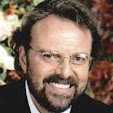
that health has become a relative term. To combat this, Michael Kaufman
shows you how to extend your life by living healthy and fit. Am I My Body's Keeper contains no magic life-extending elixir, nor a secret map to help you discover the fountain of youth. Am I My Body's Keeper provides
a simple guide to changing your lifestyle, from the sedentary one
characterizing most of society to an active one emphasizing physical
activity and healthy eating. The simple lifestyle changes advocated by
this book will give you vim and vigor, health and fitness during those
additional years of life you will be gaining. Based upon the timeless
teachings of the Jewish sages as well as scientific research, Am I My Body's Keeper
is a guide for good, healthy living. It is for young and old, men and
women—for everyone who wishes to be healthy and fit and to live a long
life.
Healthy in Body and Spirit
Michael Kaufman's potentially lifesaving new work
In the gym that I frequent too infrequently, there hangs a New
Yorker–style cartoon depicting a doctor speaking to an overweight,
middle-aged man sitting on the examination table. The caption reads:
"What fits your busy schedule better — exercising one hour a day, or
being dead 24 hours a day?"
Michael Kaufman makes a similar point at the outset of his potentially lifesaving new work,
Am I My Body's Keeper? Torah, Science, Diet and Fitness — for Life.
"Since a prerequisite for living a Torah life is obviously 'living,'
the Jew must be keenly aware of the very first duty to be healthy, for
otherwise no mitzvos can be observed and no Torah learned."
In his
haskamah to Kaufman's work, Rabbi Yosef Fleischman,
rosh kollel of one of the largest Choshen Mishpat kollels in the world,
notes a striking paradox. No religion puts such an emphasis on the
sanctity of life and the preciousness of every moment as Judaism. "One
would think therefore that religious Jews would live a life-promoting
lifestyle. However, many religious Jews engage in practices that are
harmful to their health. It would seem that... many are sadly unaware of
the facts, and they are paying for their ignorance."
Anyone who has ever stood in the checkout line on an
Erev Shabbos
in a religious neighborhood can readily confirm Rabbi Fleischman's
observation. Entire shopping carts are filled with the most caloric,
least nutritious nosh and sugary soft drinks. And we will not even
discuss the preservative-laden cold cuts that are staples at so many
Shabbos tables and kiddushim.
Judy Siegel-Itzkovich, the
Jerusalem Post's excellent health columnist, writes in a review of
Am I My Body's Keeper
that "chareidi Jews and to a lesser extent modern Orthodox are at
higher risk of heart attacks, stroke, cancer, diabetes, and other
chronic maladies than the secular population." (Happily, that does not
mean we live less long. Chareidim in Israel live, on average, three
years longer. Other factors such as social networks, a sense of meaning
in our lives, and a large familial support system compensate for the
dietary deficits.)
Kaufman is hardly the first Jew to advocate strongly for a healthy
lifestyle. The Rambam was the great champion of preventive medicine. "A
physician's ability to prevent illness is greater proof of his skill
than his ability to cure a sick person," he writes. The Rambam had few
of the modern physician's diagnostic or curative tools at his disposal.
But the basics of preventive medicine have remained largely unchanged: a
healthy diet and regular vigorous exercise remain the keys.
If one follows his rules of diet, exercise and sufficient sleep, the
Rambam assures us, we will enjoy good health and freedom from disease
until we become old and die. And he warns those who learn diligently the
entire day that they too must not neglect the necessity of physical
exercise involving the entire body and all the limbs.
In our times, the Chofetz Chaim was careful to prevent bochurim in
Radin from overexertion in learning. "The entire Torah," he writes, "is
dependent upon the mitzvah of taking care of your body."
HISTORICALLY, Jewish and Christian attitudes to the necessity of
preserving the health of the body differed radically, as Kaufman details
in one of the book's most fascinating chapters. Torah places a high
value on personal hygiene, as well as on the cleanliness of the
surrounding environment. Bathhouses were central public facilities in
every Jewish community. The stench of garbage or human refuse
constituted halachic bars to davening.
Paul, the organizational founder of the Church, ridiculed Jews for
their punctilious concern with personal cleanliness. "The Pharisees and
all the Jews do not eat unless they wash their hands properly... and
when they come from the marketplace, they do not eat unless they wash.
And there are many other traditions [of cleanliness] that they observe,
such as the washing of cups and pots and copper vessels and dining
couches."
Meanwhile medieval European cities were running cesspools of garbage
and refuse, human and animal, everywhere. Moreover, a disdain for the
body was taken as a sign of saintliness. Kaufman writes of many
Christian "saints" whose saintliness consisted primarily in never
bathing and giving off a stench so vile that no one could approach them.
During the Spanish Inquisition one of the signs used to ferret out
insincere converts to Christianity was their continued affinity for
personal hygiene.
Jews remained far less susceptible to the recurrent plagues that
affected the medieval Christian world because of their efforts to keep
their surroundings clean and the frequent washing of their hands. That
Jewish communities were relatively less hard-hit by the bubonic plague
was one of the key pieces of evidence cited by Christians that Jews were
poisoning the wells.
BESIDES THE FASCINATING halachic and historical material he brings,
Kaufman does a superb job of summarizing the current state of scientific
evidence concerning diet and exercise in a concise and compelling
fashion. (He avoids taking sides where the evidence is conflicting, such
as the ongoing debate over the pros and cons of coffee.)
Some of his information will be familiar to those who attempt to keep
abreast of the relevant literature, such as his list of the ten
healthiest foods: apples, almonds, broccoli, blueberries, oily fish
(salmon, sardines), leafy green vegetables, sweet potatoes, wheat germ,
avocadoes and oatmeal. Even that list, however, may be news to many
readers.
But
Am I My Body's Keeper is laced with many genuine
surprises. An entire chapter is devoted to the dangers of a sedentary
lifestyle. As the current saying goes, "Sitting is the new smoking." And
most of us spend many hours of our day sitting, whether it is learning
in kollel or in front of a computer screen.
Some of the first hints of the dangers of lack of regular movement
came from NASA studies of the first astronauts. NASA scientists found
that just three orbits around the earth at zero gravity left John Glenn
considerably aged. Even regular exercise is not sufficient to overcome
the effects of too much sitting, as proved by the study of astronauts,
who were in superb physical condition.
Let me just give some hint as to how compelling the chapter on
sedentary lifestyles is. When I first read the chapter in the manuscript
over two years ago, I immediately undertook to follow Kaufman's example
of standing for all of davening, except where there is a strong
halachic preference for sitting. And when I reread the published book, I
did so standing up the entire time. Now, all I have left to do is
create the same shtender/work desk, at which Kaufman stands and does all
his learning and writing.
(Incidentally, Am I My Body's Keeper is Kaufman's ninth book, including a seminal work on Feminism and Judaism, and his memoir In One Era and Out the Other which discusses the American Jewish community and the yeshivah world in the immediate postwar period.)
Ultimately,
Am I My Body's Keeper is an extremely optimistic
book. True, none of us gets to pick our genes. But twin studies show
that lifestyle choices can be far more powerful than genetics in
determining both the length and the quality of our lives. There is now
evidence, for instance, that not only can exercise delay various aging
processes, but that it can even reverse them. In 2007, a team at
Columbia University observed something long thought impossible: The
creation of new brain cells in an already mature brain among those who
exercised regularly. And this process was taking place in the prefrontal
cortex and temporal cortex, parts of the brain connected to thinking
and memory, and which are particularly vulnerable to aging. And we are
not talking about Olympic athletes.
Researchers found that healthy but
sedentary adults in their sixties who started walking 40 minutes three
times a week experienced a two percent annual growth in the hippocampus,
which controls memory.
There is nothing, according to Kaufman's studies, that is not
improved by exercise and a proper diet — health, mobility, cognition,
and mood. With respect to the latter, exercise has been shown to be as
effective as the leading medications for conditions related to
depression.
But in addition to all the good things mentioned above, it must be
noted that discipline is required to follow Kaufman's dietary and
exercise prescriptions. And that discipline, in turn, has implications
in all aspects of our lives, including our
avodas Hashem.
Those working with struggling teenagers have long known that the gym
is one of the best places to start. There teens learn discipline and
gain self-esteem. Every time one lifts a weight one more time, despite
the yetzer's call to stop, or surpasses a previous personal milestone,
one experiences the feeling of having overcome oneself, which is at the
root of self-esteem.
When Jordan Peterson, who went on to become a Harvard professor and
today one of the most influential public intellectuals in the world,
speaks about turning his life around at 25, he always refers to steps
right out of
Am I My Body's Keeper: He stopped smoking two packs a
day, gave up his heavy drinking, and started lifting weights, more than
doubling the amount that he could bench press in a short period of
time.
Certainly, Kaufman is his own best advertisement for his advice. Now
in his 86th year, though he has finally given up running, he still
stands ramrod straight. He rises at 5 a.m. each morning for the haneitz minyan at the nearby Ger beis medrash. A vigorous cardio workout on the elliptical machine is followed by learning an amud yomi,
and then on to the gym to workout with weights. A brisk walk comes
next, and three times a week swimming laps. Only then is he ready for
breakfast, and the ten-hour workday at his shtenders/desk. On Shabbos he
walks from the end of Geula to the haneitz minyan at the Kosel.
For having taken it upon himself to show us all the way to a longer, healthier, and more fulfilling life, I wish Kaufman, "
l'chayim."
http://www.jewishmediaresources.com/1931/healthy-in-body-and-spirit
More on Dr. Michael Kaufman:
https://www.myjewishlearning.com/author/dr-michael-kaufman/