EVERY SIGNATURE MATTERS - THIS BILL MUST PASS!

EVERY SIGNATURE MATTERS - THIS BILL MUST PASS!
CLICK - GOAL - 100,000 NEW SIGNATURES! 75,000 SIGNATURES HAVE ALREADY BEEN SUBMITTED TO GOVERNOR CUOMO!

EFF Urges Court to Block Dragnet Subpoenas Targeting Online Commenters

EFF Urges Court to Block Dragnet Subpoenas Targeting Online Commenters
CLICK! For the full motion to quash: http://www.eff.org/files/filenode/hersh_v_cohen/UOJ-motiontoquashmemo.pdf

Monday, May 18, 2015

One recent study found that nationally, teenage boys who were sexually assaulted were about 10 times more likely to attempt suicide, girls more than three times more likely...


PINE RIDGE, S.D. — OUTSIDE the Oglala Lakota tribe’s child protection service office, staff members updated a police officer on the latest emergency: An 11-year old girl had texted her cousin that she wanted to kill herself and then had gone missing.

A damp breeze swirled smoke from the caseworkers’ cigarettes, and the sun flitted between mottled clouds, the advance guard of an approaching spring blizzard. The officer jotted down some specifics on the girl and the remote area where she was last seen, then pulled away from the curb. They didn’t want to lose another child.

Since December, nine people between the ages of 12 and 24 have committed suicide on the Pine Ridge Indian Reservation — home to Crazy Horse’s Oglala band of the Lakota — in southwestern South Dakota.

They come to Pine Ridge every few years, these suicide epidemics, with varying degrees of national media attention and local soul-searching. What the news media often misses though, and what tribal members understand but rarely discuss above a whisper, is that youth suicides here are inextricably linked to a multigenerational scourge of sexual abuse, with investigations into possible abuse now open in at least two of the nine recent suicides.

I’m a wasicu (Lakota for “white person”) from Massachusetts, but I’ve spent about half of the past decade living on the rez, working mostly as a teacher and archery coach. Within two weeks of starting my first job teaching high school English here, a veteran teacher told me something he thought was critical to understanding life on Pine Ridge: By the time they reach high school, most of the girls (and many boys, too) have been molested or raped.

His anecdotal observation seems to track with the available statistics. According to the United States Department of Justice, Native Americans are 2.5 times more likely to be sexually assaulted than other Americans, and the numbers on Pine Ridge, one of the largest, poorest reservations in the country, appear to be even greater. “We started two clinics for reproductive health in the largest high schools on the reservation,” said Terry Friend, a midwife who works at the year-and-a-half-old Four Directions Clinic, which specializes in sexual assault and domestic abuse. “When I take a sexual history of a patient, I ask, ‘Have you had sex against your will?’ At the high schools, girls answered yes more than no.”

Numbers are harder to come by for boys, but local medical professionals estimate that they are also high, and that such rates of abuse can translate to high rates of suicide. One recent study found that nationally, teenage boys who were sexually assaulted were about 10 times more likely to attempt suicide, girls more than three times more likely.

At some point, most local child sexual assault cases cross the tribal prosecutor’s desk. “Unfortunately, many of those same kids have suicidal ideations and attempts,” said the tribe’s attorney general, Tatewin Means. “I definitely think there’s a strong connection between sexual assault and suicide here on the reservation.”
THE BOY LOVED the sweat lodge. He was a troubled student but took solace in the traditional Lakota form of prayer, with steam hissing off big glowing rocks in the center of a small lodge made of bent saplings and canvas tarps. School and tribal officials said the boy showed up to school one day last spring when he was supposed to be on suspension, climbed a pine tree in the schoolyard and hanged himself from a thick branch. Teachers and students saw him, and he was quickly cut down. Struggling to breathe, he sprinted for the school’s sweat lodge, where he took refuge until the police and a relative calmed him down.

It wasn’t the first time he had attempted suicide in or around school grounds, administrators said. He’d been depressed, and behaving erratically, with signs that he was using drugs and “huffing” gasoline. There had also been signs of sexual abuse, involving not only him but also a younger brother and male cousins he lived with. Every time one of the boys showed new signs of abuse or talked about suicide, school officials said, they called the tribe’s child protection unit, and every time they were told the same thing: “It’s still under investigation.”

The child was not removed from the home. Then in December, two weeks after his 14th birthday, the boy hanged himself at home and became the first in the recent string of nine suicides.

His case was lost, it seems, in the web of tribal bureaucracies and federal oversight bodies that are long on backlogged cases and short on funding. The tribal child protection unit, for instance, currently has two investigators for the entire reservation, which the federal census puts at more than 18,000 total residents (though tribal officials say is closer to 40,000). The two investigators are responsible for handling upward of 40 new cases a month, and hundreds more in the long-term case management system.

About a month after the boy died, a 14-year old cheerleader killed herself. Soon after, rumors of an all-too-familiar detail started to spread: Before her death, the girl told friends that her stepfather, a longtime teacher and coach at her school, was sexually abusing her. What followed broke the usual mold, though: Her friends came forward to tell school officials. Charles Roessel, a member of the Navajo Nation and director of the federal Bureau of Indian Education, which oversees the school, said administrators acted quickly to suspend the accused teacher and refer the case to federal investigators. No charges have been brought.

Shortly after his suspension from the federal school, the cheerleader’s stepfather was brought on, according to school officials, as an unpaid intern by the reservation’s Shannon County school system, which is overseen by the state. His job was to shadow one of the system’s principals so that he could learn to be a school administrator. The stepfather did not respond to requests for comment.

TRIBAL LEADERS and experts are struggling to understand the recent suicide epidemic (specifics on many of the cases aren’t widely known), but there’s general agreement on one underlying cause: the legacy of federally funded boarding schools that forcibly removed generations of Native American children from their homes. Former students and scholars of the institutions say that the isolation and lack of oversight at the mostly church-run schools allowed physical and sexual abuse to run rampant.

“My grandmother used to tell me that she didn’t think she was pretty,” said an E.M.T. friend of mine who responds to a suicide attempt every week or so, “because when the priests used to sneak into her dorm and take a little girl for the night, they never picked her.”

Left untreated, such sexual abuse can lead to elevated rates of drug and alcohol abuse and suicide, said Dr. Steven Berkowitz, director of a center on youth trauma at the University of Pennsylvania.

One sad irony of the recent suicides is that they come in the middle of new initiatives to address sexual assault. The Four Directions Clinic is treating young abuse victims who were previously sent to distant hospitals off the reservation. Tribal and federal law enforcement officials now confer regularly to better coordinate investigations. High school students recently petitioned the Pine Ridge school board to create health classes for vulnerable middle school students, and the board unanimously voted to find necessary funding.

Still, the challenges are enormous. Six days after the 11-year-old girl went missing, protection services still hadn’t located her, though a caseworker says the hope is that the girl and her mother have gone to a domestic violence shelter somewhere — the reservation doesn’t have its own.

Shortly before the 14-year-old boy committed suicide, a school administrator tried to counsel him. Lakota tradition, she told him, teaches that a spirit set free by suicide is doomed to wander the earth in lonely darkness. “You don’t want that, do you?” she asked. He looked her in the eye, a minor taboo for Lakota children to do with their elders, and said, “Anything’s better than here.”

http://www.nytimes.com/2015/05/17/opinion/sunday/whats-lurking-behind-the-suicides.html?emc=edit_tnt_20150516&nlid=32999454&tntemail0=y

Friday, May 15, 2015

After Being Asked Not To Come To The Agudath Israel 93rd Dinner - Yisroel Belsky Shows Up - They Stick Him In The Cheap Seats!

BUT HE SHOULD HAVE BEEN DRAGGED OFF TO JAIL!


NO MONEY IN THIS!
Anyone Here Willing To Pay For A Good Beating?...A Hazmana?
Belsky Put Out of Sight In The Second Row On Your Left - Seat 8 - Next To The Shlemiels!


Thursday, May 14, 2015

When Did This Evil Human Garbage Find Time To Eat?

New details show mikvah-peeping rabbi had extramarital sexual encounters

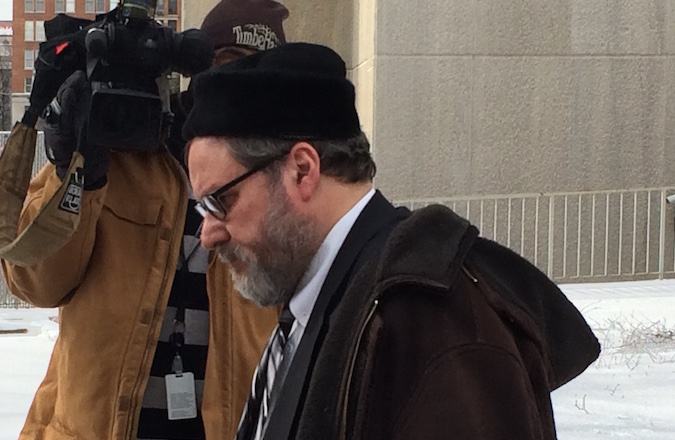
Rabbi Barry Freundel exiting the courthouse after entering his guilty plea, Feb. 19, 2015.
Rabbi Barry Freundel exiting the courthouse

(JTA) — In addition to secretly recording women undressing for the mikvah ritual bath, Rabbi Barry Freundel engaged in sexual encounters with several women, according to prosecutors.

That’s one of several new details about the mikvah-peeping rabbi to emerge from two documents filed in D.C. Superior Court on May 8 — one each by the prosecution and defense — ahead of Freundel’s sentencing on Friday. The documents, which attempt to sway the judge’s sentencing, shed new light on Freundel’s behavior and offer some particulars about the rabbi’s life since his arrest on October 14, 2014 — including that he has resumed some rabbinic teaching.

Freundel pleaded guilty in February to 52 counts of misdemeanor voyeurism for installing secret cameras in the shower room of the mikvah adjacent to Kesher Israel, the prominent Washington Orthodox synagogue he led for some 25 years.

He used one to three cameras, hiding the devices in a digital clock radio, a tissue box holder and a small tabletop fan, and aiming them at the toilet and shower in the mikvah dressing room, according to the prosecution’s memo. In addition to the 52 women he filmed while they were completely naked between March 4, 2012 and Sept. 19, 2014, Freundel recorded an additional 100 women since April 2009 who were not part of the criminal complaint due to the statute of limitations.

In addition to his crimes, Freundel videotaped himself engaged in “sexual situations” with “several women” who were not his wife, according to the memo. Many of the women may not have consented to being taped or were not aware that they were being recorded. A spokesman for the court contacted by JTA declined to elaborate on what the “sexual situations” constituted.

In its memo, the defense argues that Freundel’s public humiliation has been punishment enough for a first-time nonviolent offender.

The prosecution memo notes that in addition to the hidden cameras at the mikvah, Freundel surreptitiously videotaped a domestic violence abuse victim in the bathroom and bedroom of a safe house that he had established for her so she could escape her husband’s violence.

“I thought I saw a holy man of God, a man whom I could trust to protect me from outside evils, but I have come to see the blackness which hid beneath the garments,” the victim said in a court document. “The dreadful symptoms I once banished have returned. I cry when I am awake, and I scream out against the darkness in the nightmares of my sleep. I have constant flashbacks of the worst times of my life, as I am forced to repeatedly relive the horrors I once knew. I dare not look at myself unclothed in a mirror, for it is a glaring reminder of what was taken and stolen.”

Freundel edited the videos to delete footage when the woman was not in the room, and meticulously labeled and stored each video segment. It is believed that he removed the recording devices from the mikvah dressing room at the end of each day he used them, the prosecutor’s memo said.

When Freundel was arrested, investigators seized materials from his home including five desktop computers, seven laptops, six external hard drives, 20 memory cards, 11 flash drives, and an instruction manual for a recording device disguised as a fan. Additional equipment was seized from Freundel’s office at Towson University in Maryland, where he taught ethics and religion.

Each count of voyeurism carries a potential penalty of one year in prison and a fine of $1,000 to $2,500, or both. In their memo, prosecutors argue for a 17-year prison sentence for Freundel,  noting the harm he caused his victims and the destructive consequences to their faith in rabbinic leadership, the importance of mikvah and religious observance.

In addition to occupying a prominent pulpit at a synagogue frequented by such figures as former U.S. Sen. Joseph Lieberman, and writer and cultural critic Leon Wieseltier, Freundel had been a prolific author and scholar of Jewish law and led Washington’s Orthodox conversion court. As a conversion supervisor and mentor, Freundel instructed many women to engage in “practice dunks” at the mikvah – an unheard-of practice in Orthodox Judaism but one that provided him with ample opportunities to record them undressing.

“As many victims note, it was difficult if not impossible to say no to the rabbi in charge of their conversions,” the prosecution’s memo says. “Many of the victims now feel isolated from their faith entirely, including other religious leaders, as a result of the defendants’ actions.”

In arguing for a more lenient sentence, the defense memo points out that six of Freundel’s victims have written unsolicited letters of support, and that Freundel has resumed some rabbinic teaching – leading classes by phone on Sundays and Tuesdays, and convening a small Torah study group on Shabbat.

Freundel also has sought medical counseling to ensure that he never again engages in such conduct, according to the memo.

The defense notes that Freundel never disseminated or sought to distribute the videos, and that women were not filmed immersing in the mikvah itself.

Its memo also devotes considerable attention to Freundel’s accomplishments as a scholar, including a citation of a positive review by author Herman Wouk of one of Freundel’s books on Jewish prayer.

“There is no need for the Court to incarcerate Rabbi Freundel in order to punish him,” the defense memo says. “He has been publicly humiliated, forced to leave his office as a rabbi, and is now a convicted man.”

http://www.jta.org/2015/05/12/news-opinion/united-states/new-details-show-mikvah-peeping-rabbi-had-extramarital-sexual-encounters#.VVK1NKrIozA.facebook

Wednesday, May 13, 2015

A 30-year-old man was indicted on charges of extorting hundreds of thousands of dollars from a prominent Boston-area rabbi who was having an affair with a male teenager....

UPDATED - RABBI NOW INDICTED: SEE BELOW!

Man charged in extorting Boston-area rabbi having affair with teen

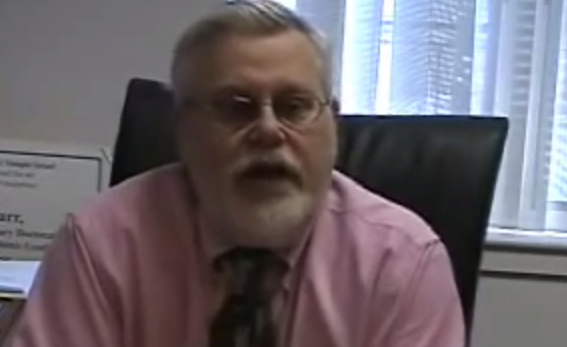
Rabbi Barry Starr (YouTube)
Rabbi Barry Starr allegedly paid nearly half a million dollars to hide his two-year affair with a 16-year-old. (YouTube)

(JTA) — A 30-year-old man was indicted on charges of extorting hundreds of thousands of dollars from a prominent Boston-area rabbi who was having an affair with a male teenager.

Nicholas Zemeitus, of suburban Boston, was arrested and charged on Monday, the Boston Globe reported. He had threatened to expose the affair unless he was paid by Rabbi Barry Starr,who resigned a year ago from Temple Israel, a Conservative synagogue in Sharon, Massachusetts.

Starr allegedly paid nearly half a million dollars — taken from synagogue funds and borrowed from his congregants — to hide his two-year affair with the 16-year-old. Much of the money came from the rabbi’s discretionary fund, including checks altered by the rabbi. Starr also borrowed thousands of dollars from an elderly congregant, a Holocaust survivor.

Zemeitus claimed to be the older brother of the teen, who was 18 when the affair ended.

He was charged with eight counts of larceny, two counts of receiving stolen property and one count of extortion.

Zemeitus said he met the rabbi on Craigslist, according to the Globe, citing court documents. He met Starr at his home after an exchange of emails.

It is still unclear if Zemeitus is related to the teen, though he claimed to have copies of emails exchanged between the rabbi and the teen, as well as photographs of them together. The affair started three years ago and ended about a year ago.

Starr, a married father of two, is credited with expanding the congregation he served for 28 years to over 600 families. He has served on the Rabbinic Cabinet of the Jewish Theological Seminary and as president of the Massachusetts Board of Rabbis, as well as the region’s Rabbinical Assembly.

Boston rabbi indicted for embezzling funds to pay blackmailer

(JTA) — A prominent Boston rabbi was indicted for embezzlement and larceny for stealing money from his temple to pay off a man who was blackmailing him for his affair with a teenage male.

The indictment of Rabbi Barry Starr, who resigned a year ago from Temple Israel, a Conservative synagogue in Sharon, Massachusetts, was unsealed on Tuesday in Norfolk Superior Court, the Boston Globe reported.
Starr was not in the courtroom to hear the indictment and reportedly no longer lives in the Boston area. He will be summoned to the court for an arraignment, according to the newspaper.

Also on Tuesday in the same court, Nicholas Zemeitus, 30, pleaded not guilty to seven counts of larceny over $250, two counts of receiving stolen property over $250, one count of larceny under $250, and one count of extortion, the Boston Globe reported, citing the office of Norfolk District Attorney Michael W. Morrissey.

Zemeitus, of suburban Boston, was arrested and charged on Monday, the Boston Globe reported. He had threatened to expose the affair between Starr and the teen unless he was paid by Starr.

Starr, 65, allegedly paid nearly half a million dollars — taken from synagogue funds and borrowed from his congregants — to hide his two-year affair with the 16-year-old. Much of the money came from the rabbi’s discretionary fund, including checks altered by the rabbi. Starr also borrowed thousands of dollars from an elderly congregant, a Holocaust survivor.

Zemeitus claimed to be the older brother of the teen, who was 18 when the affair ended.

No evidence has been presented that Starr had a relationship with a teenage boy, the Globe reported, citing court documents made available Tuesday.

Zemeitus said he met the rabbi on Craigslist, according to the Globe, citing court documents. He met Starr at his home after an exchange of emails.

It is still unclear if Zemeitus is related to the teen, though he claimed to have copies of emails exchanged between the rabbi and the teen, as well as photographs of them together. The affair started three years ago and ended about a year ago.

Starr, a married father of two, is credited with expanding the congregation he served for 28 years to over 600 families. He has served on the Rabbinic Cabinet of the Jewish Theological Seminary and as president of the Massachusetts Board of Rabbis, as well as the region’s Rabbinical Assembly.

http://www.jta.org/2015/05/12/news-opinion/united-states/boston-area-man-indicted-for-extorting-from-rabbi-having-affair-with-teen?utm_source=Newsletter+subscribers&utm_campaign=54707b85f4-Daily_Briefing_5_12_2015&utm_medium=email&utm_term=0_2dce5bc6f8-54707b85f4-27072289

Tuesday, May 12, 2015

Can You Choose Only One?


 ‘They seem to have lost any touch with the reality of the world and how their actions are perceived, or they don’t care. That is troubling to me, because it’s indicative of a mindset that is dangerous. Who knows where that leads?’

CHECK IT OUT:
 http://news.nationalpost.com/arts/movies/scientology
 

Sunday, May 10, 2015

Friday, May 08, 2015

Think BIG!

Ultra-Orthodox Jewish men.
 It is time to start thinking big about Judaism. Great opportunities are awaiting us and too much is at stake to let them pass by. For too long, Judaism has been jailed in compartmentalized and awkward boxes. It is time to liberate it.

Most religious Jews are not aware that Judaism has nearly become passé. They believe it is thriving. After all, we have more learning, more Jewish schools, yeshivot, women’s seminaries and outreach programs, and more books on this subject than ever before.

Despite this, Judaism suffers from a serious malady. In truth, it is not only Judaism that suffers from this disease, but the whole world. We lack bold ideas. We have fallen in love with – and become overwhelmed by – an endless supply of all-encompassing but passive information, which does not get processed but only recycled.

We can access trillions and trillions of sound bites, which expose us to every kind of information, providing us with all the knowledge we could ever dream of. The problem is that this easily accessible information has replaced creative thinking. It has expelled the possibility for big ideas; we have grown scared of them.

We only tolerate and admire bold ideas when they provide us with profitmaking inventions – when we feel our empty pockets – but not when they dare challenge our hollow souls. We do not discuss big ideas because they are too abstract and ethereal.

Novelty is always seen as a threat.

It carries with it a sense of violation; a kind of sacrilege. It asks us to think, to stretch our brains. This requires too much of an effort and doesn’t suit our most important concern: the need for instant satisfaction.

We love the commonplace instead of the visionary and therefore do not produce people who have the capacity to deliver true innovation.

It is only among some very small, secular elite groups that we see staggering ideas emerging (Hawking and black holes, Aumann and game theory). In the department of Judaism, we rarely find anyone who even comes close to suggesting something new.

This is all the more true within Orthodox Judaism.

 While in ages past, discussions within our faith could ignite fires of debate, incite revolutions and fundamentally change our views about Judaism and the world – as when the Ba’al Shem Tov founded hassidism – we are now confronted with an increasingly post-idea Judaism.

Provoking ideas that would boggle our minds are no longer “in.” If anything, they are condemned as heresy. 

Since they cannot easily be absorbed into our self-made religious boxes, and they don’t bring us the complacency we long for, we stick to the mainstream where we can dream our mediocre dreams and leave things as they are.

MOST OF our yeshivot have retreated from creative thinking. We encourage the narrowest specialization rather than push for daring ideas. We are producing a generation that believes its task is to tend potted plants rather than plant forests.

We offer our young people prepared experiences in which we tell them what to think instead of teaching them how to think. We rob them of the capacity to learn what thinking is really all about. The plethora of halachic works, which educate them in the minutiae of the most intricate parts of Jewish law, hardly generate the inspiration of new ideas about these laws.

In fact, they stand in the way. There is no time for anyone to process all the information even if they want to. But instead of seeing this as a problem, they and their teachers have turned it into a virtue.

And that is exactly the point. We are faced with two extremes: either our youth walk out on Judaism or maintain a lukewarm relationship with Jewish observance; or, they become so obsessed by its finest points that they are incapable of seeing the forest for the trees and they consequently turn into rigid religious extremists.

What we fail to realize is that this is the result of our own educational system. In both cases, young people have fallen victim to the disease of information for the sake of information.

Information is not simply to have. It is there to be converted into something much larger than itself; it is there to produce ideas that make sense of all the information gathered in order to move it forward to higher latitudes.

Information is not there to be possessed but to be comprehended.

Jewish education today is, for the most part, producing a generation of religious Jews who know more and more about Jewish observance but think less and less about what it means. This is even truer of their teachers. Many of them are great talmudic scholars, but these very scholars don’t realize that they have drowned in their vast knowledge. The more they know, the less they understand.

Just as a young child may think it is an act of kindness to lift a fish out of an aquarium and “save” it, so these rabbis may be choking their students while thinking they are providing them with spiritual oxygen. Doing so, they rewrite Judaism in ways that are totally foreign to the very ideas that it truly stands for.

They are embalming Judaism while claiming it is alive because it continues to maintain its external shape.

FEWER AND fewer young religious people have proper knowledge of the great Jewish thinkers of the past and present. And even when they do, the ideas of these great thinkers are presented to them as information instead of as challenges to their own thinking, or as prompts to the development of their own creativity.

This is a tragedy. Our current spiritual and intellectual challenges cannot be answered by simply looking backwards and giving answers that once worked but are now outdated.

Instead of new theories, hypotheses and great ideas, we get instant answers to questions of the utmost importance, offered via a wide variety of self-help books, the authors of which seem to claim that their philosophical information came directly from Sinai.

Trivial, simplistic and often incorrect information replaces significant ideas.

The information is merely twittered – thus too brief and unsupported by proper arguments – yet still presented as “the answer.”

By delivering “perfect” answers, which fit nicely into the often underdeveloped philosophies of their authors, everything is done to crush questioning.

The quest for certainty paralyzes the search for meaning. It is uncertainty that is the very stimulus impelling man to unfold his intellectual capacity.

Every idea within Judaism is multifaceted – filled with contradictions, opposing opinions, and unsolvable paradoxes. The greatness of the talmudic sages was that they shared with their students their own struggles and doubts and their attempts at solving them, as when Beit Hillel and Beit Shammai debated the essential, existential question of whether man should have been created at all (Eruvin 13b).

Students were made privy to their teachers’ inner lives, and that made their discussions exciting. The teachers created tension in their classes, waged war with their own ideas and asked their students to fight them with knives between their teeth.

They were not interested in teaching their students dogmas, but instead asked them to take them apart, to deconstruct them so as to rediscover the questions.

These teachers realized that not all paradoxes can be solved, because life itself is full of paradoxes. They also realized that an answer is always a form of death, but a question opens the mind and inspires the heart.

It is true that this approach is not without risk, but there is no authentic life choice that is risk free.

Nothing is worse than giving in to the indolence and callousness that stifles inquiry and leaves one drifting with the current. Such an approach shrinks Judaism’s universe to a self-centered and self-satisfying ideological ghetto, robbing it of its most essential component: the constant debate about the religious meaning of life and how to live in God’s presence and move to higher levels.

Outreach programs, although well intended, have become institutions that, like factories, focus on mass production and believe that the more people they can draw into Jewish observance, the more successful they are.

That their methods crush the minds of many newcomers who might have made a major contribution to a new and vigorous Judaism is of no importance to them. The goal is to fit them into the existing system.

That their outdated theories make other independent minds abhor Judaism is a thought they do not seem to even entertain. To them, only numbers count. How many people did we make observant? Millions of dollars are spent to create more and more of the same type of religious Jew. Like the generation of the Tower of Babel, in which the whole world was “of one language and of one speech,” we are producing a religious Jewish community of artificial conformism in which independent thought and difference of opinion is not only condemned, but its absence is considered to be the ultimate ideal.

We have created a generation of yes-men. We desperately need to heed what Kierkegaard said about Christianity in M.M. Thulstrup’s “Kierkegaard’s Dialectic of Imitation”: “The greatest proof of Christianity’s decay is the prodigiously large number of [like-minded] Christians.”

Insight has been replaced with clichés, flexibility with obstinacy, and spontaneity with habit. What was once one of the great pillars of Judaism – the esteemed value of spiritual, intellectual and moral dissent – has become anathema. Instead of teaching the art of audacity, we are now educating a generation of kowtowers.

There is social ostracism of any kind of healthy rebellion against the conventional. Eliezer Berkovits was ignored when he argued that Halacha had become defensive; the master thinker Abraham Joshua Heschel is completely disregarded by Orthodoxy; haredi yeshivot pay no attention to Rav Kook.

Above all, we see dishonest attempts to portray fundamentalism as a genuinely open-minded intellectual position while in truth it is nothing of the sort. Great visions of the past are misused and abused.

Today we are seeing many people taught that they must imitate so as to belong to the religious camp. Spiritual plagiarism has been adopted as the appropriate way of religious life and thought.

IT IS true that there are still dissidents in Judaism today – and they are growing in number. There are even some yeshivot and institutions that dissent, but the great tragedy is that these places speak in a small voice, which the religious establishment is unable to hear.

Instead, the establishment puts its weight behind the insipid and the trivial, and has fallen in love with the uncompromised flatness of mainstream institutions, which yield large numbers and offer instant answers to people who find themselves in religious crisis.

Original Jewish thinkers today fall victim to the glut of conformists. While these thinkers challenge conventional views, they remain unsupported and live lonely lives because our culture writes them off. Rather than saying yes to new religious ideas, which we are in desperate need of, the conformists pander to the idol worship of intellectual and spiritual submission.

In fairness, it is not much different in the non- Jewish world. Were Socrates, Plato, Kant or Spinoza alive today, they would barely be mentioned in the media other than in some specialized philosophical journals that nobody reads.

What our generation does not understand is that without these giants of the past we would still be living in a primitive world without science’s contribution of all the knowledge and luxuries that we enjoy today.

Whether we agree or disagree with them, it was these thinkers who produced the great ideas that laid the foundations for much of what we have harvested through the centuries.

Today they would be crowded out by massive quantities of trite sound bites that lead only to selfsatisfaction.

And so it is with Judaism. Most talmudic scholars don’t realize that the authors whose ideas they teach would turn in their graves if they knew their opinions were being taught as dogmas that cannot be challenged. They wanted their ideas tested, discussed, thought through, reformulated and even rejected, with the understanding that no final conclusions have ever been reached, could be reached or even should be reached.

They realized that matters of faith should remain fluid, not static. Halacha is the practical upshot of living by unfinalized beliefs while remaining in theological suspense. Only in this way can Judaism avoid becoming paralyzed by its awe of a rigid tradition or, conversely, evaporate into a utopian reverie.

Parents today who are worried by their children’s lack of enthusiasm for Judaism do not realize that they themselves support a system that systematically makes such passion impossible.

What today’s Judaism desperately needs is verbal critics who could spread and energize its great message.

It needs spiritual Einsteins, Freuds and Pasteurs who can demonstrate its untapped possibilities and undeveloped grandeur. Judaism should be challenged by new Spinozas and Nietzsches; by remorseless atheists who would scare the hell out of our rabbis, who would in turn be forced into thinking bold ideas.

THE TIME has come to deal with the real issues and not hide behind excuses that ultimately will turn Judaism into a sham. Our thinking is behind the times, and that is something we can no longer afford. Judaism is about bold ideas. Its goal is not to find the truth, but to inspire us to honestly search for it. Torah study is not only the greatest undertaking there is, but also the most dangerous, since it can so easily lead to selfsatisfaction and spiritual conceit. The leashing of our souls is easier than the building of our spirit.

What we need to do is search for Judaism as it was in its embryonic form, before it was solidified into the Halacha as we know it today. We must return to its great ideas with its many opinions, and develop them in ways that can answer the varied spiritual needs of modern man and inspire his soul.

We need to emulate Rembrandt, the great Dutch painter who, unlike all other painters of his generation, used the raw material of Holland’s landscape to perceive hidden connections – linking his preternatural sensibility to a reality that he was able to transform, with great passion, into a new creation.

He found himself in a state of permanent antagonism from his society, and yet he spoke to his generation and continues to speak to us because he elevated himself to the point where he could see the full dimensions that art could address, which nobody else had discovered.

Just like art, one cannot inherit faith and one cannot receive the Jewish tradition. One must fight for it and earn it. To be religious is to live in a state of warfare.

The purpose of art is to disturb; not to produce finished works but to stop in the middle, from exhaustion, leaving it for others to continue. So it is with Judaism.

It still has scaffolding, which I believe should remain while the building continues.

I am not advocating revisionist, Reform-like positions, often presented just for the sake of being novel. History has shown that such approaches do not work and often lack the genuine religious experience.

We should not be overanxious to encourage innovation in cases of doubtful improvement.

But the time has come to rethink Jewish education as it is being taught in many traditional places. We are in need of a radically different kind of yeshiva: one in which students are challenged about their beliefs; where they are confronted with Jewish and non-Jewish thinkers’ critiques on Judaism and learn how to respond; where they become aware that it is not certainty, but doubt, that gets you an education; where it is not rabbinic authority that reigns supreme, but religious authenticity.

A yeshiva where the teachers have the courage to share their doubts with their students and show them that Judaism teaches us how to live with uncertainty, and through that uncertainty to be deeply religious people.

Students need to learn that Judaism, like life, is the art of drawing sufficient conclusions from insufficient premises. A reasonable probability is the only certainty we can have.

There is an urgent need to set up “Tents of Avraham” throughout the Land of Israel, where religious and non-religious Jews can study, discuss and argue the great faith positions of earlier and later generations, where they can engage in the wonder of Judaism, study its struggles, its worries, and its constant search for new understandings of itself, where there can be honest discussion, even if it leads to considering the replacement of some components that are now seen as fundamental to Judaism. The need to break idols and slaughter sacred cows is itself a Jewish task, which none other than Abraham initiated. No doubt there will be fierce arguments, but we should never forget that great controversies are also great emancipators.

Broad change is not just window dressing, and it can be painful. It is liberating and refreshing but comes with a price. Without it, though, not only is there no future for Judaism; there is also no purpose.

We are in desperate need of bold ideas that will place the Torah in the center of our lives and make us receptive to God’s presence through a daring new encounter with Him.

Let it be heroic. Not staid and comfortable, but painful and hard-won; a deep breath in the midst of the ongoing conflict ever-present in the heart of humankind.

The writer, who is an author and international lecturer, is dean of the David Cardozo Academy in Jerusalem.


http://www.jpost.com/Opinion/Op-Ed-Contributors/Judaism-Thinking-big-319511

Thursday, May 07, 2015

It is understood Ms Leifer could face dozens of charges of indecent assault and rape.

Former Adass Israel School principal sexually abused girls, court hears

Malka Leifer was headmistress of Adass Israel School between 2002 and 2008.
 
GIRLS from an ultra orthodox Jewish school were routinely sexually abused by their headmistress who told them she was preparing them for marriage, a court has heard. 

Explosive allegations against former Adass Israel School principal Malka Leifer were aired publicly for the first time today in a lawsuit brought against her and the school by a former student.

The student alleges she and two of her sisters were abused by Mrs Leifer who “ruled the school with an iron rod” while she was principal between 2002 and 2008.

She told the Supreme Court today she was too fearful to complain about the abuse because of the power the former principal wielded in the ultra-orthodox community.

“She was seen as the head of the school and the whole community looked up to her and basically idolised her,” she said.

“She was seen as someone who was holier than holy,” she said.

The plaintiff, now 27, said she had complete trust in Ms Leifer and had felt “special” after the principal took a liking to her and offered to give her private tuition.

She said she was told not to disclose the tuition to other students and said Mrs Leifer would take her out of class to abuse her at her home.

“I remember her being very scared her husband would come home and find us there. I remember her locking the doors.

“She I remember wondering if she realised what she was doing.

“She would tell me that she loved me and that she really cared for me.

“She would tell me it was her way of telling me she loved me.”

The Supreme Court heard that in line with strict orthodox beliefs the girl had never watched TV, listened to the radio, used the internet or read a newspaper.

She was segregated from males outside of her immediate family and had no sex education.

The girl said she was abused in Mrs Leifer’s office, her home and on school camps.

She said she believed other teachers knew about the abuse.

“She liked to hug me like a baby, and rock me,” she said.

“She said I should consider her like a mother who loved me, and that I was special.”

It is also alleged school officials failed to report allegations of abuse to police but instead allowed Ms Leifer to flee to Israel with her family just days after allegations were levelled at her in 2008.

She is currently under house arrest in Israel where extradition proceedings at the request of Victoria Police have started in an attempt to have her returned to Melbourne to face criminal charges.

It is understood Ms Leifer could face dozens of charges of indecent assault and rape.

The trial continues.

http://www.heraldsun.com.au/news/law-order/former-adass-israel-school-principal-sexually-abused-girls-court-hears/story-fni0fee2-1227338893235 

MALKA LEIFER

  A school principal used a student's abusive home life as a way to groom and then sexually abuse her over several years, a court has heard.

http://www.theage.com.au/victoria/adass-israel-school-principal-used-students-home-life-to-groom-abuse-20150506-ggvq8g.html

Wednesday, May 06, 2015

Rather than protesting or denying the allegations, it is claimed Mr Grynhaus said: “What would you like me to do about it?”

Todros Grynhaus

Todros Grynhaus

Teacher 'annoyed at being caught' when sex abuse allegations made, court hears


A leading rabbi has told a court that a Jewish teacher was “annoyed at being caught” when confronted with allegations of serious sexual abuse in front of his wife as part of a secret meeting.

Rabbi Shraga Feivel Zimmerman was giving evidence on Tuesday in the trial of 50-year-old Todros Grynhaus, a prominent member of the Charedi community in Salford.

Father-of-ten Mr Grynhaus is charged with five counts of indecent assault and two counts of sexual assault against two girls committed when they were aged around 14 and 15.

Rabbi Zimmerman – the Gateshead Rav – and one of the most significant figures in Gateshead’s strictly Orthodox community, was notified of the allegations by Mr Grynhaus’s cousin, Rabbi Gershon Miller, also of Gateshead, in 2010, and it was decided a meeting should be arranged.

Rabbi Miller, Rabbi Zimmerman and psychologist Dr Michael Schauder opted to tell Mr Grynhaus to visit them in Gateshead with his wife without telling him the precise reason.

Once at the classroom location, he was confronted with the sexual abuse allegations said to have been committed against one girl some years earlier.

Rather than protesting or denying the allegations, it is claimed Mr Grynhaus said: “What would you like me to do about it?”

With Mr Grynhaus’s wife Leah beside him looking “speechless and stunned”, Dr Schauder suggested he attend therapy sessions, to which Mr Grynhaus agreed, Manchester Crown Court heard.

Giving evidence, Rabbi Zimmerman said: “Up until a certain point I thought it was insignificant. Up until the point the charge of sexual abuse was made then I realised it was far more serious. I wanted to see what Todros Grynhaus would say about this.

“If he had denied it or expressed some remorse I would have tried to push further to restore peace, but since he didn’t, I realised it was beyond competence and let Dr Schauder handle it.

“I believe Rabbi Miller met them [Mr Grynhaus and Leah] outside and brought them to the classroom where Dr Schauder and me were. Dr Schauder took the lead. He had a prepared speech where he said a woman had made accusations of serious sexual abuse over many years.

“His reaction was unemotional. ‘What would you like me to do about it?’ There was not any attempt to deny it. No individual who didn’t seriously sexually abuse someone when confronted with that allegation in front of his wife doesn’t deny it.

“He admitted it without accepting responsibility. The impression we had was he was only interested in negotiating his way out of the situation. It was the annoyance to him that he had been caught. He wasn’t sorry about the welfare of the woman, he wasn’t concerned with anything other than ‘how do I get myself out of it?’”

Mr Grynhaus, the son of influential London Rabbi Dayan Dovid Grynhaus, has taught in Jewish schools both in the UK and abroad.

Once matters were brought to the attention of police in November 2012, Mr Grynhaus appeared in court and was granted bail.

But he soon fled the country to Israel using a false passport. He was later detained before being sent back to the UK to face trial.

American Rabbi Zimmerman, who formerly served as rabbi to a community in Monsey, New York, added: “Anyone who is accused of even a minor crime, certainly something as heinous as this, if they didn’t do it they would vehemently deny it. No one would agree to go to therapy. His wife was speechless. She was stunned.”

The jury have previously been told that the strictly Orthodox Charedi community often shuns the outside world and children are not allowed access to television, radio and the internet.

It has also been said there is a reluctance to report unlawful matters to the police, with Charedim instead preferring to settle matters ‘within the community’.

In cross-examination, Jonathan Goldberg QC commented on a “Jimmy Savile effect”, which has prompted more people to come forward and support complaints of sexual abuse – even in Orthodox communities.

“Jimmy Savile, just as he has had an effect on the general non-Jewish community, he has had an effect on your community,” he said. “People have moved with the times, including your community. You, as an American, had no difficulty in saying people could go to the police. You mention Rabbi David Cohen in America and he said go to the police.

“I suppose it wouldn’t be hard to find rabbis of the old generation who would say ‘deal with it in-house’”.
Rabbi Zimmerman said: “At that point nobody wanted to report it. Everybody wanted him to seek therapy and to heal himself and not be a danger to the general public. Part of any therapy is admission and taking responsibility for what you did.”

Todros Grynhaus denies all of the allegations. The trial continues.
http://www.thejc.com/news/uk-news/135775/teacher-annoyed-being-caught-when-sex-abuse-allegations-made-court-hears

Tuesday, May 05, 2015

Rabbi Involved in 'Cult' Case in Jerusalem Seminary Arrested

Rabbi Involved in 'Cult' Case in Jerusalem Seminary Arrested

Seminary in Sanhedria raided and Rabbi Aharon Ramati arrested amid media storm; since 2014, parents have said he is running a 'cult.'


Be'er Miriam, Sanhedria

The director of a Sephardic haredi girls' seminary in Jerusalem has been arrested on Sunday, following a string of accusations from concerned parents that he was running a "cult" and using mind control techniques to exert his influence over the girls' private decisions.

Earlier Sunday, the Israel Police raided the Be'er Miriam seminary in Sanhedria following a media storm over the allegations. The raid is being conducted as part of criminal investigation into its director, Rabbi Aharon Ramati, a social worker involved in the case said.

The raid team included investigators from the Jerusalem District Police's fraud unit, its leader, Superintendent Isaac Simon, as well as a team of social workers.

The team was accompanied by representatives of all the emergency agencies including the Fire Department, the Gas Authority, representatives of the Jerusalem income tax depot, the Social Security, the Ministry of Health, the Ministry of Social Affairs, the collection enforcement authority at the Justice Ministry, and municipal officials. Each of the representatives conducted their own investigation of the premises during the raid.

The Gas Authority has determined that the seminary's gas connection is pirated; gas has been shut off for the building and for several nearby buildings for security reasons as the investigation continues.

Fraud investigators seized evidence upon entering the premises and have questioned six of the women involved so far, they said.

In May 2014, Ramati was asked to leave Jerusalem within 30 days after the allegations first surfaced. Ramati never left, however, and there has been little police involvement in the case until now.

Tensions have mounted over the intervening months - so much so that concerned parents staged a protest in April.


Girls involved with the seminary, including one escapee, spoke to Channel 10 earlier this year and revealed that Ramati had allegedly an iron grip on his students, specifically who they married - and even details of their married lives. Parents stated that they had been banned from their daughters' weddings after questioning the rabbi's authority.

The seminary has no connection to the similarly-named Ba'er Miriam Seminary in Har Nof, which is a one-year program for English-speaking students.

http://www.israelnationalnews.com/News/News.aspx/194901#.VUZOyfBinzL

Monday, May 04, 2015

Children are sexually abused everywhere — and to assume that within the G-d fearing Jewish community, the risk is lower is not only naive, it’s extremely dangerous....


Why Jewish child molesters are your problem


When I’m scrolling through my Facebook newsfeed, nothing sickens me, or catches my eye more than a new sex abuse scandal in the Jewish world. There’s something so invasive, so humiliating, and so abhorrent about a religious Jew committing such a heinous crime. I feel a certain embarrassment reading the details, “Oh no! Not that community! My friend from camp lives there!” I skim through the article with a dread that at any moment I might see a name of someone that I know. The truth is, when it’s Jews, especially religious Jews involved, it’s personal. It’s mishpacha. And here’s the bottom line — there is something very sick happening in our mishpacha, and only we can change it from within.

Children are sexually abused everywhere — and to assume that within the G-d fearing Jewish community, the risk is lower is not only naive, it’s extremely dangerous. The days of teaching children about “stranger danger” are over. We now know that 90% of childhood sexual abuse is committed by someone who the child knows, and not a stranger, which is more uncomfortable to believe. It’s worse to think that someone we trust, someone in our religious circle is capable of violating and damaging a child. 

But it’s the truth.

When we see how horrifically these cases have been dealt with – that victims were pressured to stay quiet, or that abusers were circulated throughout different communities instead of being reported to the police, many of us will proclaim “Those terrible leaders!” And yes, they are terrible. Anyone who protects a child-abuser over a victim is terrible.

 But it is the cultural discomfort with the subject that fuels this evil fire. Our leaders represent us, and it’s up to us to make our children the priority. At the expense of an abuser’s anonymity, at the expense of a Yeshiva’s reputation, and most importantly, at the expense of our illusion that sex abuse doesn’t happen in the religious community.

Last week I had the privilege to attend a Jewish Community Watch event about childhood sexual abuse, brought to Israel by Magen. In the past I had avoided these types of events. It’s uncomfortable, it’s unpleasant, and it’s downright depressing. But you know what? I left the event, and instead of feeling down, I felt invigorated. I felt angry and passionate and excited. I realized that we are on the verge of a huge break-through in Jewish history. The incredible people behind organizations like JCW and Magen are leading a revolution. Why are we complicating something so simple? Why are we protecting the guilty, and shaming the innocent? Why are we, the light unto the nations, allowing child molesters to live their dirty secret lives amongst our own vulnerable brothers and sisters, while our abused are left to live their lives in self-hatred, feeling abandoned by their own people?

JCW is pushing back. With the Wall of Shame, in which unrepented child-molesters are featured, JCW is sending out a very clear and very simple message: If you molest a child, you get no protection from us. In Israel we call it protexia – “knowing the right people” – well from now on, the child has full protexia. Their message is a beacon of hope for the hundreds and hundreds of Jewish abuse victims who have lost faith in both our community and G-d.

So why go to these events? Why not just get the “relevant” information online so that you can make sure your own kids are educated? Why sit through such an “uncomfortable” two hours when “it’s not your problem?” Because, as uncomfortable as it might be for you to endure accounts of sex abuse, imagine how the survivors feel, facing an audience of a hundred strangers, sharing their darkest and most private part of themselves. They are putting their pain, their shame, their fear on public display. Why? Because they believe that they can make a difference. That they can save someone else from suffering the same horror. Don’t we at least owe them two hours of our time to listen? To be moved, and feel their pain, and decide that no more innocent children should have to endure it?

If there is an event coming up near you, I implore you, take the time. Make the trip. Get the babysitter. And start talking about childhood sex abuse. Say it out loud to yourself in the bathroom mirror if you have to. It can’t be a taboo phrase anymore! This is a new era – one of justice in this world, as well as the world to come. It is our children at stake.

URGENT: THE LAST EVENT OF THIS JCW TRIP IN ISRAEL IS TAKING PLACE SUNDAY, MAY 3 IN EFRAT. SEE DETAILS BELOW.
jcw

Sunday, May 03, 2015

Why the Future of (Many) Religions Are Bleak!


Why the Future of Religion Is Bleak


Religious institutions have survived by controlling what their adherents know, argues Tufts Prof. Daniel C. Dennett, but today that is next to impossible


Religion has been waning in influence for several centuries, especially in Europe and North America. There have been a few brief and local revivals, but in recent years the pace of decline has accelerated.

The Resilience of Religion


  Today one of the largest categories of religious affiliation in the world—with more than a billion people—is no religion at all, the “Nones.” One out of six Americans is already a None; by 2050, the figure will be one out of four, according to a new Pew Research Center study. Churches are being closed by the hundreds, deconsecrated and rehabilitated as housing, offices, restaurants and the like, or just abandoned.


If this trend continues, religion largely will evaporate, at least in the West. Pockets of intense religious activity may continue, made up of people who will be more sharply differentiated from most of society in attitudes and customs, a likely source of growing tension and conflict.

Could anything turn this decline around? Yes, unfortunately. A global plague, a world war fought over water or oil, the collapse of the Internet (and thereby almost all electronic communication) or some as-yet unimagined catastrophe could throw the remaining population into misery and fear, the soil in which religion flourishes best.

Behind the decline:
With hardly any significant exceptions, religion recedes whenever human security and well-being rises, a fact that has recently been shown in numerous studies, but was suspected by John Calvin in the 16th century. He noted that the more prosperous and comfortable his Genevans became, the less dependent they were on church. Presumably, those who deplore the decline of religion in the world today would not welcome the sort of devastation and despair that could give religion its second wind.

There is no other plausible scenario that could halt the slide, for a fairly obvious reason: the recent rapid growth of mutual knowledge, thanks to the global spread of electronic and digital communication.

Any institution—just like a person or an organism—depends on a modicum of privacy in which to conduct its business and control its activities without too much interference and too many prying eyes.

Religious institutions, since their founding millennia ago, have managed to keep secrets and to control what their flocks knew about the world, about other religions and about the inner workings of their own religion with relative ease.

Today it is next to impossible.

What is particularly corrosive to religion isn’t just the newly available information that can be unearthed by the curious, but the ambient knowledge that is shared by the general populace.


Funny business

Laughter is particularly subversive. A Mormon watching the episode of “South Park” that lampoons the Church of Jesus Christ of Latter-day Saints doesn’t just see some outsiders poking fun at her religion. She learns that vast numbers of people find her religion comical, preposterous, ludicrous, as confirmed by the writers’ decision to belittle it and the networks’ decision to broadcast it. This may heighten her loyalty, but it also may shake her confidence, and as soon as she even entertains the hypothesis that belief in God might be a life-enhancing illusion, not a rock-solid truth, she is on the slippery slope.

The late computer scientist John McCarthy, a founder of artificial intelligence, once said, “When I see a slippery slope, my instinct is to build a terrace.” That’s what theologians have been doing for hundreds of years, shoring up whatever they think they can salvage from the rain of information eroding their ancient peaks of doctrine. In some denominations the clergy are obliged to swear to uphold the “inerrant truth” of every sentence in the Bible, but this is becoming more of an embarrassment than a shield against doubt.

Hardly anybody today believes in—or would want to believe in—the wrathful, Old Testament Jehovah, for instance.

 A God who commands our love is a nasty piece of work by today’s perspectives, and has been replaced, over the centuries, by ever-less-anthropomorphic (but more “loving,” more “forgiving”) addressees of our prayers. (Isn’t it curious how the obsolete term “God-fearing” is still used in some quarters as a commendation?) God has no ears, but may “listen” to our prayers, and “works in mysterious ways,” which is a face-saving way of acknowledging that He doesn’t answer them at all. Do you remember the impressive and rigorous Benson Study? It was conducted by a Harvard Medical School team that labored for years.

 It was finally published in 2006, and it concluded that intercessionary prayer for the recovery of heart-surgery patients not only didn’t work; in some conditions it showed a small but measurable increase in post-surgical complications.

Media bias

This was dutifully reported by the media, and promptly forgotten by most. But if the study had found any positive result, you can be sure it would have been on the cover of all the news magazines and featured in television specials.

 This pro-religion bias in the media is crumbling, however, and once it dissolves, the exposure of all the antique falsehoods of religious doctrine will oblige the theologians to build yet another terrace, lower down the slope. They are running out of rocks.Religious leaders of all faiths are struggling to find ways of keeping their institutions going, and one of the themes emerging from the surveys they conduct is that creed should be de-emphasized and loyalty and community should be fostered.If we are lucky—if human health and security continue to rise and spread around the globe—churches might evolve into humanist communities and social clubs, dedicated to good works, with distinctive ceremonies and disappearing doctrine, except for a scattering of reclusive sects marked by something like institutional paranoia.If we are unlucky and calamity strikes, our anxiety and misery will provide plenty of fuel for revivals and inventions of religions we have happily learned to live without

.Prof. Dennett is co-director of the Center for Cognitive Studies at Tufts University and co-author, with Linda LaScola, of “Caught in the Pulpit: Leaving Belief Behind.” He can be reached at reports@wsj.com 

 .http://www.wsj.com/articles/why-the-future-of-religion-is-bleak-1430104785?tesla=y
 

Friday, May 01, 2015

How can you even begin to fix something that almost no one wants to talk about honestly?


As remains the case today, blacks in the past were overrepre­sented among those arrested and imprisoned. In urban areas in 1967, blacks were 17 times more likely than whites to be arrested for robbery. In 1980 blacks comprised about one-eighth of the population but were half of all those arrested for murder, rape and robbery, according to FBI data. And they were between one-fourth and one-third of all those arrested for crimes such as burglary, auto theft and aggravated assault.

 ....Today blacks are about 13 percent of the population and continue to be responsible for an inordinate amount of crime. Between 1976 and 2005 blacks com­mitted more than half of all murders in the United States. The black arrest rate for most offenses — including robbery, aggravated assault and property crimes — is still typically two to three times their representation in the population. Blacks as a group are also overrepresented among persons arrested for so-called white-collar crimes such as counterfeiting, fraud and embezzlement. And blaming this decades-long, well-documented trend on racist cops, prosecutors, judges, sentencing guidelines and drug laws doesn’t cut it as a plausible explanation.

“Even allowing for the existence of discrimination in the criminal justice system, the higher rates of crime among black Americans cannot be denied,” wrote James Q. Wilson and Richard Herrnstein in their classic 1985 study, “Crime and Human Nature.” “Every study of crime using official data shows blacks to be overrepresented among persons arrested, convicted, and imprisoned for street crimes.” This was true decades before the authors put it to paper, and it remains the case decades later. 

“The overrepresentation of blacks among arrested persons persists throughout the criminal justice system,” wrote Wilson and Herrnstein. “Though prosecutors and judges may well make discriminatory judgments, such decisions do not account for more than a small fraction of the overrepresentation of blacks in prison.” Yet liberal policy makers and their allies in the press and the academy consistently downplay the empirical data on black crime rates, when they bother to discuss them at all. Stories about the racial makeup of prisons are commonplace; stories about the excessive amount of black criminality are much harder to come by.

“High rates of black violence in the late twentieth century are a matter of historical fact, not bigoted imagination,” wrote Mr. Stuntz. “The trends reached their peak not in the land of Jim Crow but in the more civilized North, and not in the age of segrega­tion but in the decades that saw the rise of civil rights for African Americans — and of African American control of city governments.” 

The left wants to blame these outcomes on racial animus and “the system,” but blacks have long been part of running that system. Black crime and incarceration rates spiked in the 1970s and ’80s in cities such as Baltimore, Cleveland, Detroit, Chicago, Philadelphia, Los Angeles and Washington under black mayors and black police chiefs. Some of the most violent cities in the United States today are run by blacks.

Black people are not shooting each other at these alarming rates in Chicago and other urban areas because of our gun laws or our drug laws or a criminal justice system that has it in for them. The problem is primarily cultural — self-destructive behaviors and attitudes all too common among the black underclass. The problem is black criminal behavior, which is one manifestation of a black pathology that ultimately stems from the breakdown of the black family. Liberals want to talk about what others should do for blacks instead of what blacks should do for themselves. But if we don’t acknowledge the cultural barriers to black progress, how can we address them? How can you even begin to fix something that almost no one wants to talk about honestly?

Jason Riley is a member of the Wall Street Journal Editorial Board.