Tuesday, June 23, 2015
The unchecked growth of Jewish fundamentalism....
EDITED VERSION:
American Jews are actively supporting a demographic trend that threatens the fabric of American Jewish life: the unchecked growth of Jewish fundamentalism.
Call them what you will — ultra-Orthodox Jews, “fervently Orthodox” Jews, Haredim, black hats. They will soon become the majority of affiliated Jews in the metropolitan New York area, and the religious majority in Israel. The results will be catastrophic.
We’ve read stories recently of Haredim in Israel comparing Israeli politicians to Hitler and throwing stones at women praying at the Kotel; of Haredim in New York fighting to restrict the prosecution of sex abuse claims; of Haredim in Germany threatening the fragile truce on circumcision by defending the practice of adult men sucking blood directly from the penises of infants.
And that is just the tip of the fundamentalist iceberg. In recent months, we've seen the coercion and ignorance prevalent in American ultra-Orthodox communities: in exposés of Hasidic money laundering, and longer ago the Agriprocessors meat processing plant.
And of course, “fervently Orthodox” leaders have defended, justified, covered up and explained away sexual predators in a way that would make a Vatican official blush.
What has emerged from all this is a picture of a subculture that looks more like “The Sopranos” than like “Fiddler on the Roof” — a world in which a small elite maintains power at the expense of thousands of serfs.
We’ve learned, for example, that flagship institutions of ultra-Orthodox life are basically on the dole.
Seventy-six percent of students at one of the most prominent yeshivas in the country, in Lakewood, New Jersey, are receiving Pell grants. Indeed, the top three institutional recipients of these grants are ultra-Orthodox yeshivas.
The Chabad-affiliated Michigan Jewish Institute scored $25 million in federal aid meant to go to low-income students, despite an appalling academic record and due largely to chicanery involving an online application mill.
And of course, Haredim in Israel put their American brothers to shame, diverting millions of shekels to schools that don’t provide a basic Western education, rabbinates filled with cronyism and a welfare system that keeps an entire sector of the population dependent on government subsidies.
In other words, the entire edifice of ultra-Orthodox power rests on gaming the system.
Meanwhile, “modesty brigades” and families willing to disown anyone who dares to leave patrol the walls of this contemporary shtetl. Imagine you’re an 18-year-old woman in a Hasidic enclave. You’re married, with two or three kids already, and you’ve been told that “outside” everyone is evil, depraved and miserable. You barely read English. And you know that when your cousin left, she was destitute, disowned and disgraced. There is no one to help you if you leave. You’re on your own. So of course you stay.
We are abandoning thousands of our fellow Jews to this hierarchy of power and abuse. We are doing nothing to help them.
Demographers tell us that 49% of New York’s Jewish children are Haredi (either Hasidic or “yeshivish”).
Especially in light of non-Orthodox disaffiliation, New York Jewry, within a generation, will be fundamentalist, poor, uneducated and reactionary. Non-Orthodox Jews will look like the secular Persians of Iran: once the complacent majority, now a minority oppressed by fundamentalists.
The good news is that since we are propping up this system, we have the power to weaken it.
First, mainstream American Jewish organizations must stop pretending to have common cause with Jewish fundamentalists. Just as mainline Christian denominations recognize Christian fundamentalism to be a threat to their religious values, so the mainstream of Jewish denominations — including Modern Orthodoxy — must recognize that this distortion of Judaism is actively destructive to Judaism itself.
Like Christian fundamentalism, Jewish fundamentalism is extremely new. It arose in response to modernity, and it radically changed Jewish values. Formerly, the Jewish mainstream balanced strictness and leniency: In the battle between the strict Shammai and the lenient Hillel, Hillel always won.
But the Haredi world is a phalanx of Shammais. The strictest is always the best. Moses wore a shtreimel, the fur hat that many married Haredi men wear, at the Red Sea. Scientific knowledge is evil. These are radically new Jewish ideas presented as radically old ones. Those of us who do not share them must recognize them as a threat.
And then we can begin to act. Fortunately, we don’t have to fight coercion with coercion. We don’t have to compel anyone to change his or her religious beliefs. We just have to stop artificially propping up a system that otherwise would not exist.
For example? We can demand an end to all federal and state subsidies to yeshivas that do not prepare students for contemporary economic and civic life. We can oppose all Jewish-fundamentalist efforts to take advantage of government or Jewish communal largesse.
We fail to act because, I think, deep in the hearts of non-Orthodox Jews there lingers the belief that the Haredim are the real Jews, or the safeguards of our future, or perhaps the sweet, cuddly Tevyes of our imagined Yiddish roots.
But they are not.
Of course, there are wonderful Haredi Jews out there.
But the Haredi system threatens the demographic and cultural stability of the Jewish community, both in the United States and in Israel. Jewish fundamentalism is not good for the Jews.
Jay Michaelson is a contributing editor to the Forward.
Monday, June 22, 2015
“Psychopathic refers to someone without a conscience, who exists on a spectrum from your con man (self-involved, uses others for own benefit, not prone to violence) to the serial killer (predatory, gets aroused by hurting people physically causing suffering)”
....AND YES, JEWS SUFFER FROM MENTAL ILLNESS, JUST LOOK AT THE PEOPLE YOU INTERACT WITH ON A DAILY BASIS....
What It Really Means To Be Psychotic: The Difference Between Psychosis And Psychopathy
A psychotic person suffers from a detachment from reality,
though that doesn't mean they're immoral or criminal; psychopaths, on
the other hand, tend to lack empathy and morality, and are more likely
to be a danger to society.
“What a psycho.” This could be referring to your crazy,
deceptive ex-boyfriend (who is in reality a sociopath), the cat lady
next door who does some strange things (who really just has dementia),
or someone who has actually been diagnosed with a form of psychosis.
Many people also use the word to describe a serial killer who has
committed some heinous crime.
Mental illness and personality disorders consist of an array of complex, hard-to-pin-down disorders that are often confused — but avoiding misdiagnosis is crucial in properly treating them. With all the “psycho” in psychosis, psychotic, and psychopathy, it’s often easy to get them all muddled. In reality, psychotic and psychopathic are two separate, distinct disorders — and labeling everyone who falls under these categories as a “psycho” is certainly a faux pas.
The root word, “psych” or “psycho” is actually derived from
the Greek word for mind, soul, spirit, or sense of living, breathing
being. It’s interesting, then, that now among English speakers, the word
“psycho” has such a negative connotation. The Alfred Hitchcock movie, Psycho,
certainly colored the word with the feeling that it implies someone we
should be afraid of — someone who is out of control emotionally or
mentally. Indeed, both psychopaths and psychotic people might pose
danger at times, though at completely different levels.
But here’s the major differentiating point between psychosis and psychopathy: People with psychosis aren’t necessarily crazy or immoral serial killers. Psychotic individuals suffer from serious mental disorders that require proper care and treatment, and anti-psychotic medications as well as cognitive behavioral therapy can help mitigate these effects. Psychosis isn’t someone’s fault, and neither does it mean the person lacks a soul or empathy. Instead, it is a mental illness that shouldn’t be stigmatized, just like any other form of physical or mental illness.
“[T]here are a lot of inaccurate perceptions of psychotic people as immoral people,” Scott Barry Kaufman, scientific director of the Imagination Institute in the Positive Psychology Center at the University of Pennsylvania, writes on Psychology Today. “This is simply not true. While some bad people such as serial killers have psychotic episodes… the vast majority of psychotic individuals are not immoral. In fact, many people who are psychosis-prone contribute positively to society.”
“Psychopathic refers to someone without a conscience, who exists on a spectrum from your con man (self-involved, uses others for own benefit, not prone to violence) to the serial killer (predatory, gets aroused by hurting people physically causing suffering),” Dr. Paul Puri, a psychiatrist and blogger, writes. “Psychopaths are scary because they seemingly have no limits to what they might do, including hurting others, just for their own benefit or enjoyment.”
Psychopaths also are generally considered intelligent, manipulative, and charming — as well as having an inability to learn from mistakes or punishment.
In addition, there seems to be confusion between differentiating psychopathy with sociopathy. There is a difference between the two, however; sociopaths are considered products of their environment or upbringing, while psychopaths are believed to have genetic or biological causes behind their character. Both psychopathy and sociopathy are considered forms of antisocial personality disorder in the DSM-5.
While people with psychosis can generally be treated with proper medication and therapy, it’s difficult to say whether psychopaths can be treated. In fact, most doctors and psychiatrists believe that psychopathy is an untreatable condition, and the only way to stop many such people from harming others is to put them behind bars. But others believe that early intervention is key: When kids begin showing psychopathic signs at a young age, persistent intervention from parents and teachers can hopefully make a difference in the long run.
http://www.medicaldaily.com/what-it-really-means-be-psychotic-difference-between-psychosis-and-psychopathy-338712
Mental illness and personality disorders consist of an array of complex, hard-to-pin-down disorders that are often confused — but avoiding misdiagnosis is crucial in properly treating them. With all the “psycho” in psychosis, psychotic, and psychopathy, it’s often easy to get them all muddled. In reality, psychotic and psychopathic are two separate, distinct disorders — and labeling everyone who falls under these categories as a “psycho” is certainly a faux pas.
Psychosis
Psychosis is a general umbrella term for a wide variety of disorders. Also referred to as psychotic disorders or psychoses, these disorders typically involve losing touch with reality, manifested by delusions and hallucinations. Delusional thinking often occurs in psychotic people; this consists of believing that people are out to harm you or are plotting against you. Hallucinations (which occur in schizophrenia, for example) are also a symptom of some form of psychosis, and they involve hearing or seeing things that aren’t there.
Schizophrenia — along with brief psychotic disorder, delusional disorder, and others — is considered a form of psychotic disorder. People with bipolar disorder, depression, or other mental illnesses can often show psychotic symptoms (in the DSM-5, bipolar disorder is actually listed as a bridge between psychotic disorders and depressive disorders). But as with many mental illnesses, psychosis can often be a fluid category and definition, with aspects of it manifested in people who are psychopathic, sociopathic, bipolar, or depressed.
But here’s the major differentiating point between psychosis and psychopathy: People with psychosis aren’t necessarily crazy or immoral serial killers. Psychotic individuals suffer from serious mental disorders that require proper care and treatment, and anti-psychotic medications as well as cognitive behavioral therapy can help mitigate these effects. Psychosis isn’t someone’s fault, and neither does it mean the person lacks a soul or empathy. Instead, it is a mental illness that shouldn’t be stigmatized, just like any other form of physical or mental illness.
“[T]here are a lot of inaccurate perceptions of psychotic people as immoral people,” Scott Barry Kaufman, scientific director of the Imagination Institute in the Positive Psychology Center at the University of Pennsylvania, writes on Psychology Today. “This is simply not true. While some bad people such as serial killers have psychotic episodes… the vast majority of psychotic individuals are not immoral. In fact, many people who are psychosis-prone contribute positively to society.”
Psychopathy
Psychopathy, meanwhile, is generally the term that encompasses people who commit crimes and have no empathy for other humans or animals. Psychopaths begin exhibiting these qualities at a very young age; they have destructive impulses, such as hurting animals or bullying other kids, and they show no remorse, empathy, or sensitivity.
“Psychopathic refers to someone without a conscience, who exists on a spectrum from your con man (self-involved, uses others for own benefit, not prone to violence) to the serial killer (predatory, gets aroused by hurting people physically causing suffering),” Dr. Paul Puri, a psychiatrist and blogger, writes. “Psychopaths are scary because they seemingly have no limits to what they might do, including hurting others, just for their own benefit or enjoyment.”
Psychopaths also are generally considered intelligent, manipulative, and charming — as well as having an inability to learn from mistakes or punishment.
In addition, there seems to be confusion between differentiating psychopathy with sociopathy. There is a difference between the two, however; sociopaths are considered products of their environment or upbringing, while psychopaths are believed to have genetic or biological causes behind their character. Both psychopathy and sociopathy are considered forms of antisocial personality disorder in the DSM-5.
While people with psychosis can generally be treated with proper medication and therapy, it’s difficult to say whether psychopaths can be treated. In fact, most doctors and psychiatrists believe that psychopathy is an untreatable condition, and the only way to stop many such people from harming others is to put them behind bars. But others believe that early intervention is key: When kids begin showing psychopathic signs at a young age, persistent intervention from parents and teachers can hopefully make a difference in the long run.
http://www.medicaldaily.com/what-it-really-means-be-psychotic-difference-between-psychosis-and-psychopathy-338712
Friday, June 19, 2015
Asking Your Rabbi About Vaccinations Is Deadly To Your Child's Health!
Seventh graders in New York State would be required to be vaccinated for meningitis, a deadly disease spread by saliva droplets, and could be excluded from school if they were not, under a bill passed this week by the State Legislature.
Beginning in September 2016, the bill would require students entering seventh grade to have received the meningitis vaccine,
with a booster shot in the 12th grade. The United States Centers for
Disease Control and Prevention recommends meningitis vaccination around
that time, so many doctors have provided it.
Assemblywoman
Aileen M. Gunther, a Democrat from Sullivan County who was the bill’s
prime sponsor, said it had been passed after testimony from medical
experts and from several people who had lost children to meningitis, or
who had been afflicted with meningitis and suffered amputations as a
result.
“It’s a disaster,” Ms. Gunther said of the disease. “The science tells us that we can do something.”
The bill was opposed by some people who believe that vaccination can cause autism — a belief discredited by scientific studies. But Ms. Gunther, who is a registered nurse,
said that in any case, this particular vaccine would be administered
long after the period when autism typically develops and is diagnosed.
As with other mandated vaccines, parents can apply to their child’s
school for a religious exemption from the requirement.
A spokeswoman for Gov. Andrew M. Cuomo, who can sign the bill into law, said that it was under review.
Among supporters of the bill was Patti Wukovits, whose daughter, Kimberly Coffey,
died of meningitis in 2012 when she was 17, just before she was to go
to her senior prom for East Islip High School on Long Island.
Ms. Wukovits described how easy it was to confuse meningitis with the flu and how quickly the disease progressed. She said her daughter was feeling achy and had a fever
of 101. But overnight, she developed purple spots on one of her ankles,
which then progressed to a rash all over her body. Ms. Wukovits took
her to the emergency room. She died after being in the hospital for nine
days and being declared brain-dead.
“If she had survived, she would have been a quadruple amputee,” Ms. Wukovits said. “She would have had a tough life.”
Ms.
Coffey was buried in her prom dress, and her mother began a foundation,
the Kimberly Coffey Foundation, to spread awareness of the disease.
Meningitis
is an infection of the covering of the brain and the spinal cord, which
can also cause blood infections. It can be spread through kissing, or
drinking from the same cup. It can lead to death within a few hours, is
fatal in one out of 10 cases and leaves one in seven survivors with a
severe disability like amputation, paralysis or seizures.
http://www.nytimes.com/2015/06/19/nyregion/meningitis-vaccine-mandate-for-seventh-graders-in-new-york-passes.html?hpw&rref=health&action=click&pgtype=Homepage&module=well-region®ion=bottom-well&WT.nav=bottom-well&_r=0
Thursday, June 18, 2015
"This pattern suggested that psychopaths were more likely to view the crime as the logical outcome of a plan (something that 'had' to be done to achieve a goal) (like mentoring kids naked)," the authors write....
|
Psychopaths are estimated to make up 1 percent of the
population and up to 25 percent of male offenders in federal
correctional settings. |
The researchers interviewed 52 convicted murderers, 14 of them ranked as psychopaths according to the Psychopathy Checklist-Revised, a 20-item assessment, and asked them to describe their crimes in detail.
Using computer programs to analyze what the men said, the researchers found that those with psychopathic scores showed a lack of emotion, spoke in terms of cause-and-effect when describing their crimes, and focused their attention on basic needs, such as food, drink and money. [10 Contested Death Penalty Cases]
While we all have conscious control over some words we use, particularly nouns and verbs, this is not the case for the majority of the words we use, including little, functional words like "to" and "the" or the tense we use for our verbs, according to Jeffrey Hancock, the lead researcher and an associate professor in communications at Cornell University, who discussed the work on Monday (Oct. 17) in Midtown Manhattan at Cornell's ILR Conference Center.
These unconscious actions can reveal the psychological dynamics in a speaker's mind even though he or she is unaware of it, Hancock said.
What it means to be a psychopath
Psychopaths make up about 1 percent of the general population and as much as 25 percent of male offenders in federal correctional settings, according to the researchers. Psychopaths are typically profoundly selfish and lack emotion. "In lay terms, psychopaths seem to have little or no 'conscience,'" write the researchers in a study published online in the journal Legal and Criminological Psychology.
Psychopaths are also known for being cunning and manipulative, and they make for perilous interview subjects, according to Michael Woodworth, one of the authors and a psychologist who studies psychopathy at the University of British Columbia, who joined the discussion by phone. [Criminal Minds Are Different From Yours]
"It is unbelievable," Woodworth said. "You can spend two or three hours and come out feeling like you are hypnotized."
While there are reasons to suspect that psychopaths' speech patterns might have distinctive characteristics, there has been little study of it, the team writes.
How words give them away
To examine the emotional content of the murderers' speech, Hancock and his colleagues looked at a number of factors, including how frequently they described their crimes using the past tense. The use of the past tense can be an indicator of psychological detachment, and the researchers found that the psychopaths used it more than the present tense when compared with the nonpsychopaths. They also found more dysfluencies — the "uhs" and "ums" that interrupt speech — among psychopaths. Nearly universal in speech, dysfluencies indicate that the speaker needs some time to think about what they are saying.
With regard to psychopaths, "We think the 'uhs' and 'ums' are about putting the mask of sanity on," Hancock told LiveScience.
Psychopaths appear to view the world and others instrumentally, as theirs for the taking, the team, which also included Stephen Porter from the University of British Columbia, wrote.
As they expected, the psychopaths' language contained more words known as subordinating conjunctions. These words, including "because" and "so that," are associated with cause-and-effect statements.
"This pattern suggested that psychopaths were more likely to view the crime as the logical outcome of a plan (something that 'had' to be done to achieve a goal)," the authors write.
And finally, while most of us respond to higher-level needs, such as family, religion or spirituality, and self-esteem, psychopaths remain occupied with those needs associated with a more basic existence.
Their analysis revealed that psychopaths used about twice as many words related to basic physiological needs and self-preservation, including eating, drinking and monetary resources than the nonpsychopaths, they write.
By comparison, the nonpsychopathic murderers talked more about spirituality and religion and family, reflecting what nonpsychopathic people would think about when they just committed a murder, Hancock said.
The researchers are interested in analyzing what people write on Facebook or in other social media, since our unconscious mind also holds sway over what we write. By analyzing stories written by students from Cornell and the University of British Columbia, and looking at how the text people generate using social media relates to scores on the Self-Report Psychopathy scale. Unlike the checklist, which is based on an extensive review of the case file and an interview, the self report is completed by the person in question.
This sort of tool could be very useful for law enforcement investigations, such as in the case of the Long Island serial killer, who is being sought for the murders of at least four prostitutes and possibly others, since this killer used the online classified site Craigslist to contact victims, according to Hancock.
Text analysis software could be used to conduct a "first pass," focusing the work for human investigators, he said. "A lot of time analysts tell you they feel they are drinking from a fire hose."
Knowing a suspect is a psychopath can affect how law enforcement conducts investigations and interrogations, Hancock said.
You can follow LiveScience writer Wynne Parry on Twitter @Wynne_Parry. Follow LiveScience for the latest in science news and discoveries on Twitter @livescience and on Facebook.
http://www.livescience.com/16585-psychopaths-speech-language.html
Psychopaths: how can you spot one?
We think of psychopaths as killers, alien, outside society. But, says the scientist who has spent his life studying them, you could have one for a colleague, a friend – or a spouse (or rabbi)...
The Mask of Sanity: An Attempt to Clarify Some Issues About the So-Called Psychopathic Personality is a book written by American psychiatrist Hervey M. Cleckley, first published in 1941, describing Cleckley's clinical interviews with patients in a locked institution. The text is considered to be a seminal work and the most influential clinical description of psychopathy in the twentieth century. The basic elements of psychopathy outlined by Cleckley are still relevant today.[1] The title refers to the normal "mask" that conceals the mental disorder of the psychopathic person in Cleckley's conceptualization.[2]
Cleckley describes the psychopathic person as outwardly a perfect mimic of a normally functioning person, able to mask or disguise the fundamental lack of internal personality structure, an internal chaos that results in repeatedly purposeful destructive behavior, often more self-destructive than destructive to others. Despite the seemingly sincere, intelligent, even charming external presentation, internally the psychopathic person does not have the ability to experience genuine emotions. Cleckley questions whether this mask of sanity is voluntarily assumed to intentionally hide the lack of internal structure, but concludes it hides a serious, but yet imprecisely unidentified, semantic neuropsychiatric defect.[3] Six editions of the book were produced in total, the final shortly after his death. An expanded fifth edition of the book had been published in 1976 and was re-released by his heirs in 1988 for non-profit educational use.
MUST READ IN ITS ENTIRETY:
http://www.telegraph.co.uk/culture/books/10737827/Psychopaths-how-can-you-spot-one.htmlWednesday, June 17, 2015
It’s also hard to imagine what kind of person(s) would be so in thrall to power that they’d cover up child abuse....
Perhaps the world's conspiracy theorists have been right all along... (On some of the issues)
We used to laugh at conspiracy theorists, but from Fifa to banking scandals and the Iraq War, it seems they might have been on to something after all, says Alex Proud....
Paedophiles
This one seems like a particularly dark and grisly thriller. At first it was just a few rubbish light entertainers. Then it was a lot more entertainers. Then we had people muttering about the political establishment – and others counter-muttering don’t be ridiculous, that’s a conspiracy theory. But it wasn’t. Now, it’s a slow-motion train crash and an endless series of glacial government inquiries. The conspiracy theorists point out that a lot of real stuff only seems to come out after the alleged perpetrators are dead or so senile it no longer matters. It’s hard to disagree with them. It’s also hard to imagine what kind of person would be so in thrall to power that they’d cover up child abuse.Tuesday, June 16, 2015
"The law recognizes that an adult spending time naked with children is a form of grooming --- Intentions matter. There are times to give the benefit of the doubt, but when it comes to manipulation of innocent children, we must keep our eyes wide open."
![]() |
| Jonathan Rosenblatt - "Regular" Pervert or Very Ill Psychopath Pervert? |
The Rosenblatt case: Mentorship or abuse?
Just like Barry Freundel, Jonathan Rosenblatt used his rabbinic role to get his congregants and disciples unclothed.
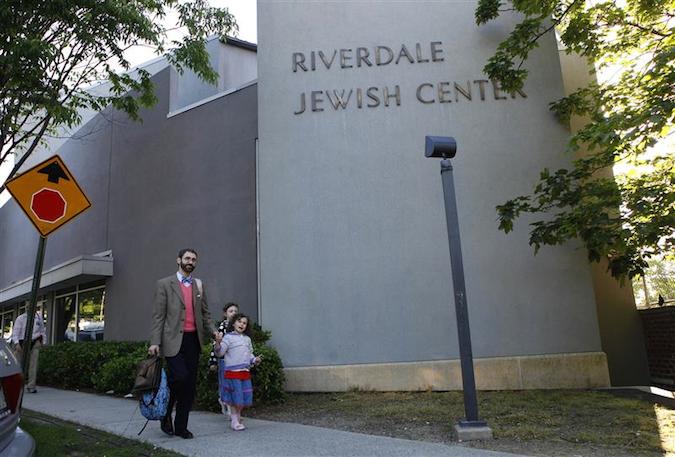
When the news came out that Washington rabbi Barry Freundel filmed women that he had encouraged to immerse in his private mikveh, the entire community was shocked. Yet when allegations emerged about the rabbi of the Riverdale Jewish Center, Jonathan Rosenblatt, inviting boys as young as 12, college students, and rabbinic interns to sit naked with him in the hot bath and sauna, the reactions were inconsistent.
"But
Rosenblatt himself, "Internet Idiot" argues, had a “blind spot.” He suggests that
if the allegations had been publicized sooner, the rabbi and the
congregation could have come to a “happy and healthy compromise,” with
the rabbi avoiding censure and retaining his job. Relatively speaking, this is a “mild” case of
abuse. We don’t know of any sexual touching. And there is no proof about
his intentions being nefarious."
This means little, though, as only in rare cases do we have videotape. But two elements of this case make it clear that Rosenblatt’s case stepped over the line from bad judgment to malicious intent.
The presence of both allows us to distinguish between appropriate mentorship and abuse.
This means little, though, as only in rare cases do we have videotape. But two elements of this case make it clear that Rosenblatt’s case stepped over the line from bad judgment to malicious intent.
The presence of both allows us to distinguish between appropriate mentorship and abuse.
The first involves the sexually charged nature
of the encounters, as described in the New York Times article: “. . .
the rabbi openly gawked at a naked 12-year-old. He invited a 15-year-old
over for intimate nighttime conversations, during which he frequently
put his hand on the boy’s leg. He invited himself into a 17-year-old’s
living room and tried repeatedly to persuade him to change into a
bathrobe.” The descriptions of the encounters show the discomfort felt
by these children.
The second element is the abuse of authority.
The rabbi used his position as rabbi in order to arrange the sexually
charged meetings.
Both elements are required to make the case against Rosenblatt, or any other perpetrator. You can have naked men (or women) sitting around together in a neutral situation, like the mikveh (Jewish ritual bath) or sauna. That in itself doesn’t make it sexual. There is a religious or practical reason for being there. The men come on their own initiative, and can leave when they like.
But when you have an authority figure inviting younger boys and men to sit naked with him for long periods, you have malfeasance.
The Bronx District Attorney’s office agrees, asking others to come forward. Former sex crimes prosecutor Linda Fairstein told the New York Times
that “similar conduct could be construed as endangering the welfare of a
minor, a misdemeanor that includes knowingly acting ‘in a manner likely
to be injurious to the physical, mental or moral welfare of a child
less than 17 years old.'”
The law recognizes that an adult spending time
naked with children is a form of grooming. This erasure of boundaries
desensitizes them to the inappropriateness of the situation, and makes
children vulnerable to more harmful forms of sex abuse—whether by that
adult or someone else.
Either Rosenblatt’s actions, as he himself
claims, were unusual but innocent—or the actions were innately loaded
with sexual messaging and significance, thus sexually inappropriate. In
the latter case, the sauna invitations were not merely a matter of bad
manners or judgment. If that were the case, he would have stopped
when this was pointed out to him by his congregation.
He didn’t.
He didn’t.
If there was no sexual intent, it makes sense
for the synagogue to have kept a popular and learned rabbi on its
payroll. Yet look at how the Rabbinical Council of America recently
expelled Rabbi Marc Schneier for committing adultery. The rabbinical
board determined that extramarital sexual relations are not becoming for
a rabbi, at least once the fact was revealed in court after the breakup
of his fourth marriage. But Rosenblatt’s continued sexually charged
behavior with teens, and later young adults including rabbinic interns,
remained an open secret for many years with no official action taken.
The ones harmed saw their complaints ignored
and the perpetrator remain in his position. Meanwhile, the damaging
behavior continued. Unfortunately, similar scenarios takes place not
only in all branches of Judaism, but in every type of secular and
religious institutions. The modus operandi is generally the same:
Protect, defend, and excuse the leaders; silence the critics; ignore the
victims; and put future children at risk.
Just like Barry Freundel, Jonathan Rosenblatt
used his rabbinic role to get his congregants and disciples unclothed.
Can we really imagine a scenario in which Rosenblatt thought the only way to get through to his young charges was by sitting next to them with no clothes on? That makes as much sense as saying that Barry Freundel’s “practice dunks” in the mikveh were a necessary preparation for conversion, and not a pretext for videos to be viewed on a home computer.
Perhaps one reason so many are willing to find
Rosenblatt innocent of abuse has to do with the Orthodox community’s
taboo against homosexuality. Although progress has been made in the
Jewish community toward accepting homosexual tendencies, we may not be
quite ready to recognize them in rabbinic leaders such as Rosenblatt or convicted offender Moti Elon.
It’s easier for 'Internet Idiot' to talk about a “blind spot.”
We must not look for compromise when the
welfare of children are at stake, nor can we risk a “healthy and happy”
relationship with a community leader who has used his position to see
naked boys and be seen by them. Make no mistake. This isn’t an issue of
informal mentoring gone wrong.
Intentions matter. There are times to give the
benefit of the doubt, but when it comes to manipulation of innocent
children, we must keep our eyes wide open. A community that truly cared
about its members would see Rosenblatt’s abuse of power for what it is.
http://blogs.timesofisrael.com/the-rosenblatt-case-mentorship-or-abuse/
Monday, June 15, 2015
Trailer: ‘An Open Secret’ -A look at the lives of children who were exploited and assaulted by some of Hollywood's most powerful players.
Review: ‘An Open Secret’ Spotlights Child Sexual Abuse in Hollywood
You may miss a few moments of “An Open Secret,”
either while looking away during its unsettling stories or closing your
eyes in frustration. This potent documentary elicits those kinds of
reactions.
Directed by Amy Berg (“Deliver Us From Evil”),
the film centers on a handful of young men who say that as child actors
they were sexually assaulted by older men in the entertainment
industry. Manipulations, cover-ups and exploitations are recounted, and
in several cases accountability was weak; some of the culprits, we’re
told, still work in Hollywood.
The
victims and their parents defy the stereotype of hard-driving
dream-seekers. They come across as merely trusting, which led them to
rely on those who promised successful careers. Such faith was exploited
by men who later turned out to be predators.
“He
just told me it’s normal, like, this goes on all the time, this is what
you have to do,” one young man says he was told after being molested by
his manager. “Everybody does this.” Shame and fear of reprisals
initially led him to stay silent, and may be keeping more victims from
speaking out.
Ms. Berg connects that manager, Martin Weiss,
who pleaded no contest to two counts of child molestation in 2012, to a
string of other men in Hollywood who have also been accused or
convicted of similar crimes. Except for a secretly taped conversation
and some menacing music, she resists the urge to sensationalize. Such
composure is admirable, but further aggressive reporting is needed. This
topic deserves a tenacious call for answers.
Still,
“An Open Secret” is affecting, particularly when the victims recount
their experiences in voices that crack with emotion or pause with pain.
Even if you do look away, hearing them speak is enough.
“An Open Secret” is rated R (Under 17 requires accompanying parent or adult guardian). Explicit stories of sexual abuse.
AN OPEN SECRET
Opens on Friday June 12, 2015
Directed by Amy Berg
1 hour 37 minutes
http://www.nytimes.com/2015/06/12/movies/review-an-open-secret-spotlights-child-sexual-abuse-in-hollywood.html?emc=edit_tnt_20150611&nlid=32999454&tntemail0=y&_r=0
Directed by Amy Berg
1 hour 37 minutes
http://www.nytimes.com/2015/06/12/movies/review-an-open-secret-spotlights-child-sexual-abuse-in-hollywood.html?emc=edit_tnt_20150611&nlid=32999454&tntemail0=y&_r=0
Friday, June 12, 2015
....And this "Anonymous" Rabbi Chooses Option B...Is There an Honest & Ethical Rabbi in the Bunch?
I want to share a secret about American Orthodox rabbis: We have no
power. We serve at the pleasure of lay leaders who sign our paychecks.
We often live in homes we do not own. With relatively few exceptions, we
are employed under contracts that must be renewed every few years. If
we make a few false moves or anger the wrong laypeople, our contracts
can be bought out or it can otherwise be made clear that we are no
longer wanted, that our time here is up.
In our line of work, there are often only a handful of jobs in each city. We have all gone through the process of finding a new job, a new community, and new schools for the kids. Telling the kids that they will be leaving their good friends is always difficult. Like in the story of the biblical Isaac, dad hears God calling, but the child is the sacrifice. Every rabbi has at some point wished that someone else had been called.
It is therefore difficult to express how infuriating it is when every instance of a rabbi behaving badly is framed as a question of power imbalances and authority structures in which the old boys protect their own, victims be damned. The RCA is a grossly underfunded, chronically dysfunctional, and entirely impotent organization. Yet it is deemed to have swept all sorts of unsavory things under the rug in order to maintain and bolster its phantom power. How else can we explain why Rabbi Jonathan Rosenblatt is still on the job, almost three decades after the first incidents, and after a New York Times exposé? And given this protectionism, can we not understand why victims are unwilling to risk speaking out under their own names?
And so every member of the RCA is guilty by association, and the Internet has declared open season on Orthodox rabbis. We are all deemed culpable for bolstering a “system” or “power structure” or “hierarchy” or whatnot that hordes power and victimizes with impunity. Our attempts to offer commentary that does not fuel the outrage machine are met with a flood of responses in ALL CAPS. All discussion is cut off before it starts because it’s just so OBVIOUS what the moral stance is here. If you try to present an alternative “narrative” you are “blaming the victim.”
In truth, I am torn about the case of Rabbi Rosenblatt, but not because it falls in a moral grey zone. I am torn because it is a Rashomon-style conundrum, with two distinct but totally incompatible stories, which both begin with the one group: the past and present board members of the Riverdale Jewish Center.
This group knew more than anyone else about complaints and allegations concerning Rabbi Rosenblatt — certainly more than anyone who read an article or two and know someone, or know someone who knows someone, who claims to be a victim. This group not only declined to fire Rabbi Rosenblatt, it has even renewed his contract several times over the decades, despite vocal opposition from wealthy and powerful community members who went so far as to offer to buy out the rabbi’s contract. Over the past three decades, this board has included some of Modern Orthodoxy’s best and most well respected lay leaders. It is absurd to think that this group was somehow cowed by their rabbi or the “establishment” or that they were so irresponsible for so long.
That leaves us with two options (neither of which supports the wave of vitriol against Orthodox rabbis in general):
Option A:
Rabbi Rosenblatt has done a masterful job of masking his exhibitionism or a similar sexual disorder by expressing it only in contexts where male nudity is acceptable and where he could claim to be acting in a pastoral or relationship-building role.
Option B:
Rabbi Rosenblatt really believes that the locker room is an excellent venue for male bonding and that nudity, where acceptable, can break down barriers and help build relationships. He was not trying to exploit a power imbalance to get naked with students and mentees — he was trying to establish a relationship of equals, a naked relationship, free of pretense or airs. It is true that some were creeped out by the sauna scene — it can be pretty creepy — but there is no denying that the culture exists. The shower rooms in question have no curtains between showerheads; male public nudity is the norm. The board understood this and worked with him to avoid situations that would seem especially creepy, but in the main it tolerated his benign eccentricities.
Which is it?
At the moment I am inclined toward Option B for one main reason:
With the exception of Dr. Yehuda Kurtzer, nobody has gone on record, though it is claimed that several people outed themselves on the Wexner Fellows distribution list. Contrast this with last year’s sordid Freundel case, in which a number of courageous women stepped forward immediately, before the jury of public opinion reached a verdict. They spoke out even though they are converts and risked having their very Jewishness called into question, and even though the community is sadly often dismissive of converts.
Wexner Fellows are not quite so vulnerable. If a handful of Wexner Fellows would describe openly, as Kurtzer has, how they are victims of Rabbi Rosenblatt’s predations, it would dispel all doubt about this case. Others will surely join the chorus.
But if they don’t, then eventually the outrage will die down or find a new target, and the slow process of reclaiming one man’s unfairly tarnished reputation will begin.
“Rabbi Batzek” is an American Orthodox rabbi. His name has been changed to protect him from the current consequences of expressing unpopular opinions".
http://www.thejewishweek.com/editorial-opinion/opinion/you-not-rabbis-have-power-stop-rabbinic-abuse
BY POPULAR REQUEST FOR A COMMENTS SECTION - YOU MAY "FRIEND" ME ON FACEBOOK AND COMMENT THERE: https://www.facebook.com/unorthodox.jew
Thursday, June 11, 2015
Make no mistake about it: Despite all the vetting and background checks, creeps will attain leadership roles and use their power for their own ends. We need processes to examine rumors with speed, transparency and neutrality. We need guidelines that will reduce the risk of sexual harassment, abuse and assault by staff, lay leadership and volunteers, and we need a process for redress....
Op-Ed: Synagogues with predatory rabbis must protect their members, not their reputations
WASHINGTON (JTA) — When I read the recent article in The New York Times
detailing the accusations against Rabbi Jonathan Rosenblatt
of the Riverdale Jewish Center, I was deeply saddened.
This is the synagogue and community where I grew up. My parents moved to Riverdale in the 1950s and are among the RJC’s founding members. Rosenblatt — like the synagogue’s four rabbis before him — played an important part in the life of my family. However, my focus is not the RJC or any one rabbi.
My concerns are with the institutions in which we place our trust — institutions that seem to ignore the simple fact that rabbis and teachers are human and subject to temptations and personal demons. We hold our leaders in high esteem, but our institutions fail to monitor them to ensure that their power is not being abused and that the esteem is merited.
Whispers, like those in Riverdale, have been present in dark corners of many communities over the years. Those whispers have been hushed by men and women who choose to protect the institution to the detriment of those it’s supposed to serve. This is what happened at Penn State, which ignored or mishandled numerous episodes over the years in which football coach Jerry Sandusky sexually abused children. Our leaders often demonstrate poor judgment, pretending that if they ignore the underlying problem or handle it quietly among themselves the behavior will stop and the problems disappear.
But today social media amplifies whispers. Victims hear the whispers of other victims, awareness grows, and what happens behind closed doors is exposed and headlined. I have seen this in my work at Jewish Women International — on college campuses, on football fields, even in the military. Victims are speaking out.
Our synagogues and rabbinical institutions need to wake up. Responding in secret or in an ad hoc manner — being reactive — does not work. This modus operandi inhibits response, discussion and community resolution. Secret “solutions” end up being neither secret nor solutions.
Instead, we repeatedly see the accused relying on his or her relationships with powerful supporters, and together they spread the fear of public revelation of scandal. Time and again, the message to the victims and communities is that only with silence can the institution be protected. That is another way of saying that those who are victimized are less important than the institution itself.
This past Shabbat I was at the RJC, down the street from where I grew up, visiting my parents, who still consider the RJC home. We went to shul there, we went to school there, we served on committees and boards, shared countless meals, danced and wept together. We felt safe at the RJC.
What a delusion. The very organizations — synagogues, community centers, schools — that should be protecting and nurturing constituents instead seek to protect reputations. But reputations worth protecting are not made by marginalizing victims.
The back-room, hush-hush solution is inappropriate, dangerous and unsustainable. We need policies and protocols for organizational responses to these situations.
Make no mistake about it: Despite all the vetting and background checks, creeps will attain leadership roles and use their power for their own ends. We need processes to examine rumors with speed, transparency and neutrality. We need guidelines that will reduce the risk of sexual harassment, abuse and assault by staff, lay leadership and volunteers, and we need a process for redress. This approach enables a neutral response free from the influence of wealthy donors, powerful members, colleagues or former interns.
Policies should reflect the character of the organization, but certainly some standard provisions should be included:
(Deborah Rosenbloom is the vice president of programs & new initiatives at Jewish Women International.)
http://www.jta.org/2015/06/09/news-opinion/opinion/op-ed-synagogues-with-predatory-rabbis-must-protect-their-members-not-their-reputations
WASHINGTON (JTA) — When I read the recent article in The New York Times
detailing the accusations against Rabbi Jonathan Rosenblatt
of the Riverdale Jewish Center, I was deeply saddened.
This is the synagogue and community where I grew up. My parents moved to Riverdale in the 1950s and are among the RJC’s founding members. Rosenblatt — like the synagogue’s four rabbis before him — played an important part in the life of my family. However, my focus is not the RJC or any one rabbi.
My concerns are with the institutions in which we place our trust — institutions that seem to ignore the simple fact that rabbis and teachers are human and subject to temptations and personal demons. We hold our leaders in high esteem, but our institutions fail to monitor them to ensure that their power is not being abused and that the esteem is merited.
Whispers, like those in Riverdale, have been present in dark corners of many communities over the years. Those whispers have been hushed by men and women who choose to protect the institution to the detriment of those it’s supposed to serve. This is what happened at Penn State, which ignored or mishandled numerous episodes over the years in which football coach Jerry Sandusky sexually abused children. Our leaders often demonstrate poor judgment, pretending that if they ignore the underlying problem or handle it quietly among themselves the behavior will stop and the problems disappear.
But today social media amplifies whispers. Victims hear the whispers of other victims, awareness grows, and what happens behind closed doors is exposed and headlined. I have seen this in my work at Jewish Women International — on college campuses, on football fields, even in the military. Victims are speaking out.
Our synagogues and rabbinical institutions need to wake up. Responding in secret or in an ad hoc manner — being reactive — does not work. This modus operandi inhibits response, discussion and community resolution. Secret “solutions” end up being neither secret nor solutions.
Instead, we repeatedly see the accused relying on his or her relationships with powerful supporters, and together they spread the fear of public revelation of scandal. Time and again, the message to the victims and communities is that only with silence can the institution be protected. That is another way of saying that those who are victimized are less important than the institution itself.
This past Shabbat I was at the RJC, down the street from where I grew up, visiting my parents, who still consider the RJC home. We went to shul there, we went to school there, we served on committees and boards, shared countless meals, danced and wept together. We felt safe at the RJC.
What a delusion. The very organizations — synagogues, community centers, schools — that should be protecting and nurturing constituents instead seek to protect reputations. But reputations worth protecting are not made by marginalizing victims.
The back-room, hush-hush solution is inappropriate, dangerous and unsustainable. We need policies and protocols for organizational responses to these situations.
Make no mistake about it: Despite all the vetting and background checks, creeps will attain leadership roles and use their power for their own ends. We need processes to examine rumors with speed, transparency and neutrality. We need guidelines that will reduce the risk of sexual harassment, abuse and assault by staff, lay leadership and volunteers, and we need a process for redress. This approach enables a neutral response free from the influence of wealthy donors, powerful members, colleagues or former interns.
Policies should reflect the character of the organization, but certainly some standard provisions should be included:
- Anyone who feels victimized or is aware of any misdeeds must be able to speak with someone who has no personal stake in the institution — for example, a social worker, therapist, lawyer or all of the above — on retainer to the institution.
- Any investigation must be done by a third party, not someone from within the institution.
- Rules for communication and confidentiality must be established and followed.
- All lay and professional leadership must be trained in the laws of mandated reporting.
- Educational and prevention programs should be made available to members.
- Relationships should be established and maintained with a local sexual-assault response agency and local law enforcement.
(Deborah Rosenbloom is the vice president of programs & new initiatives at Jewish Women International.)
http://www.jta.org/2015/06/09/news-opinion/opinion/op-ed-synagogues-with-predatory-rabbis-must-protect-their-members-not-their-reputations
Wednesday, June 10, 2015
"My name is …….. …… and I am the victim of sexual abuse."...
The man who abused me is named Mendel. I met him when he was my dorm counselor at a boy’s yeshiva. He took advantage of the position of authority he had over me and used it to physically and sexually abuse me. I went through horrific ordeals at his hands that has left me scarred until this day.
One way in which I’ve coped with the abuse was to drink alcohol. Some even mistook me for an alcoholic when in fact drinking was just a way I drowned out the pain of my experiences. Over the last few years, I’ve met many people who were also sexually abused and victimized at the hands of someone else. It happens way more than many of us would like to believe. I’ve also found out that the challenges I’ve dealt with are very typical of victims of sexual abuse.
For example, I often have flashbacks, sleepless nights or nightmares. At times, and this is very personal but I feel like I must say it, it is difficult for me to be intimate with my wife. It can trigger a flashback I am absolutely powerless to stop. This greatly effects our marriage but I am lucky to have a strong and supportive wife who has stood lovingly by my side throughout this ordeal.
On numerous occasions, she has had to wake up to me having a full blown panic attack in my sleep. I know these are common symptoms for victims of abuse but that does not make it any easier to deal with.
Sometimes, when leaving my home, I am fearful that I may bump into my abuser, Mendel, while walking. After all, we grew up on the same street and his family live nearby to my own.
I wish I could tell you that my friends and community members have been supportive of me during this process but unfortunately, I am sad to report, that it is usually the opposite. Many have chosen to defend my abuser and attack me instead. I have been called a ‘liar’ or have been told that I am an alcoholic set on ruining an innocent person’s life. Others have accused me of doing this in the hopes of making a buck.
When I first attempted to go forward, I was shamed into silence. Some who I told either ignored me or ridiculed me. Fortunately, some friends, family members and JCW supported me and gave me the courage to do the right thing and break my silence.
It has not been an easy process at all. 2 years ago, when I started this process, I had very mixed feelings. On the one hand, I came forward to defend and protect innocent children and to get closure for myself. On the other hand, I understood this process would tear apart my own family and the family of my abuser.
I did not realize how bad it would be.
I’ve been cheered for by many and harassed by many. It seems everyone I met, had their 2 cents to add. Some felt I was doing the right thing and was a hero and others felt that if the defendant went to jail, he would surely be killed and that would be on my conscience. Some even went as far as to call me and my family ‘murderers’.
During the last few months leading up this day, some have tried to threaten or bribe me to drop the charges. I was offered $200,000 to sign documents stating that I consented to and requested the sexual activity and therefore it was not abuse. Others have tried the other approach, threatening me that they have 4 girls willing to testify that I raped them and they will come forward after the sentencing.
I have been threatened to have my name smeared publicly in our community to the point that my wife and I would “literally” be unable to walk the streets. Some have gone as far as to approach my wife and attempt to convince her to leave me.
Even close friends have turned their back on me for doing what they believe is the ‘wrong thing’. This has been the most painful thing to experience. To watch friends turn on me like this hasn’t been painful enough.
In all, this case has taken a tremendous toll on my family, my wife and my marriage but I know in my heart that my actions will lead to the world being a safer place for children.
As I conclude this letter, I would like to thank my wife, my family, my friends who have stood by me, the JCW and the DA’s office for all their support. In closing, I would like to say that as I leave this room today “I am not longer a victim, but a survivor”.
My name is …….. …… and I am the victim of sexual abuse. The man who abused me is named...
Tuesday, June 09, 2015
In the wake of this scandal, I hope we can remind ourselves not to blame the victims. Several spoke out in this case and were not heard or taken seriously. This “funny” practice of Rabbi Rosenblatt’s was not funny. It should have been stopped years ago, but the power dynamics involved made that impossible. May we as a society learn to listen better to the voices of those who are powerless, and truly hear what they are telling us...
Understanding Power
Another rabbinic scandal has come to light. Last week The New York Times published an article about Rabbi Jonathan Rosenblatt and his practice over many decades of taking young boys and men to play racquetball and then have long talks with them while often naked in the shower or sauna. In talking about the scandal, many people have said, “How could this have gone on for so long?” “Why didn’t people speak up?” “Why wasn’t the rabbi fired?”
Well, in this case it sounds like many people voiced concerns and complaints over the years. Gary Rosenblatt (no relation) editor in chief of the New York Jewish Week called the rabbi’s actions “an open secret.” Rabbi Rosenblatt had been asked not to participate in this behavior by his own board who tried to buy him out of his contact a few years ago, by the Rabbinical Council of America, and by Yeshiva University, which stopped sending him interns. In this case, many people did indeed speak up, yet apparently, the rabbi did not change his practice.
It was not until another prominent Jewish professional Dr. Yehuda Kurtzer, the president of the Shalom Hartman Institute of North America, went on the record, by name, to a reporter of the Times that this story broke widely. Dr. Kurtzer’s bravery is underlined by the fact that he is the only one who experienced a “sauna talk” with Rabbi Rosenblatt to have his name published in the article.
The way this scandal has unfolded unearths the reasons why it is so hard for people to publicly call out an abuse of power – it is all about power. Rabbi Rosenbalatt has power. He has/had great respect in his community. He comes from a long line of powerful rabbis. He leads a close-knit community whose members must have felt tremendous pressure not to topple their own leader. To speak out against the rabbi’s abuse of power and inappropriate actions would have significant consequences for those who would do so. They would lose friends, family, their community, and their own reputations.
The
power dynamics in any abusive situation cannot be overstated. I entered
rabbinical school an empowered, enlightened, well-educated feminist who
though I would and could speak out against abuses of power in any
situation. Yet within a few months, I found myself to be the victim of
sexual harassment. It started so slowly that I did not even recognize
what was going on at first. Then, when I was finally able to name it, I
felt paralyzed. All of my internal self-confidence was gone. How could I
take on a powerful figure in my school? To take him on would surely
have meant having to leave school and rethink my entire life. I would
never get to be a rabbi. My name and his would always be linked. I did
not want any of these outcomes. I felt truly powerless. There was no
good outcome no matter what I did.
In the end, I transferred schools, and I told another person in authority about my experience so that he could look out for other women who might be victimized. Did I do enough to protect others? No. At that point in time, I needed most to protect myself. I understand why it took so many years for Rabbi Rosenblatt’s grossly inappropriate actions to come under full public scrutiny. There is a tremendous amount to be lost when you speak out. I hold Yehuda Kurtzer and other whistleblowers in high esteem.
The politics of power is deeply complicated. As a society, I don’t think we truly understand the dynamics involved and how hurt and shamed people can be. It does not surprise me in any way that Dr. Kurtzer did not speak out until his own reputation was well established.
In the wake of this scandal, I hope we can remind ourselves not to blame the victims. Several spoke out in this case and were not heard or taken seriously. This “funny” practice of Rabbi Rosenblatt’s was not funny. It should have been stopped years ago, but the power dynamics involved made that impossible. May we as a society learn to listen better to the voices of those who are powerless, and truly hear what they are telling us.
In the end, I transferred schools, and I told another person in authority about my experience so that he could look out for other women who might be victimized. Did I do enough to protect others? No. At that point in time, I needed most to protect myself. I understand why it took so many years for Rabbi Rosenblatt’s grossly inappropriate actions to come under full public scrutiny. There is a tremendous amount to be lost when you speak out. I hold Yehuda Kurtzer and other whistleblowers in high esteem.
The politics of power is deeply complicated. As a society, I don’t think we truly understand the dynamics involved and how hurt and shamed people can be. It does not surprise me in any way that Dr. Kurtzer did not speak out until his own reputation was well established.
In the wake of this scandal, I hope we can remind ourselves not to blame the victims. Several spoke out in this case and were not heard or taken seriously. This “funny” practice of Rabbi Rosenblatt’s was not funny. It should have been stopped years ago, but the power dynamics involved made that impossible. May we as a society learn to listen better to the voices of those who are powerless, and truly hear what they are telling us.
http://www.myjewishlearning.com/rabbis-without-borders/understanding-power/2/
Monday, June 08, 2015
Again, it’s clear that the Orthodox rabbinic leadership knew all about Rosenblatt’s tendencies, begged him to stop, tried to limit his contact with boys and young men, but never publicly rebuked him for public, repeated transgressions of Halacha that were highly damaging to his victims....
The rabbi in the bath house is unsuited by definition
Why is it that when a rabbi or
religious leader in our community is caught red-handed in a series of
despicable acts, our community attempts to lower its cone of silence and
leaves the matter to civil authorities? Sometimes those authorities
investigate, convict, and incarcerate. Sometimes they determine that no
civil law has been broken, despite the odiousness of the behavior.
While we, as a people who live in many lands and under many codes of law, are commanded to give deference to the civil law in nearly all matters, we are also commanded to live as a “mamlechet kohanim and goy kadosh,” a kingdom of priests and a holy nation.
This
week we are again witnessing communal ostrich-like behavior and
deference to the DA in the context of a rabbi with a 30 year track
record of odious and unhalachic behavior towards defenseless boys and
young men. Jonathan Rosenblatt will certainly sit on the bimah of his
synagogue this Shabbat.
He may even be called to the Torah in “solidarity.” Where is the rabbinic and halachic outrage? If this rabbi brought shrimp to Kiddush (or maybe just a bottle of non-mevushal wine), he would immediately become the target of nationwide rabbinic opprobrium. Yet, if Rosenblatt committed criminal acts, if he follows his colleague from Washington, DC to prison (a perfect study partner), he will likely do so with title “Rabbi” still resting on his shoulders.
The Yeshiva that ordained him would never think of publicly rebuking him and revoking his ordination. The boards of rabbis who have venerated him will never consider publicly rebuking him and banishing him. His community will almost certainly not put him in cherem (publicly shun him). Rather, the ball will be passed to the district attorney, while all of those who should be upholding the standards of the community will cloak themselves in the excuse that they cannot comment while the criminal justice system is conducting its process.
At the back end of the system, whether it leads to incarceration or acquittal, those same community leaders will insist on welcoming the return of the now-reformed offender on the grounds that he will have “paid his debt.”
Why do I care?
What is my standing to comment on other people’s problems? Because I distinctly remember a conversation at age 12 when Stanley Rosenfeld, my Jewish Day School principal (now a convicted sex offender in Rhode Island) tried to convince my parents to allow me to join a canoe trip where we would first paddle and then “rent a motel room so that we could shower before returning home.”
I felt deprived of the adventure and was far too young to understand that it was the showering that concerned my parents more than the canoeing. I only began to realize that my parents were protecting me rather than depriving me when I went to his house on a Shabbat afternoon for a “torah lesson” and he answered the door in his underwear. Rosenfeld was quietly passed from the Westchester Day School, to Ramaz, to SAR, before Jewish day schools finally let one another know not to hire him, but never publicly outed him.
Many pedophiles and sex offenders have followed his path.
The most distinguished modern Orthodox rabbis of our generation knew of Rosenfeld’s behavior in explicit detail, paid for counseling of and settlements to some of his victims, and warned one another, but not the community.
What is my standing to comment on other people’s problems? Because I distinctly remember a conversation at age 12 when Stanley Rosenfeld, my Jewish Day School principal (now a convicted sex offender in Rhode Island) tried to convince my parents to allow me to join a canoe trip where we would first paddle and then “rent a motel room so that we could shower before returning home.”
I felt deprived of the adventure and was far too young to understand that it was the showering that concerned my parents more than the canoeing. I only began to realize that my parents were protecting me rather than depriving me when I went to his house on a Shabbat afternoon for a “torah lesson” and he answered the door in his underwear. Rosenfeld was quietly passed from the Westchester Day School, to Ramaz, to SAR, before Jewish day schools finally let one another know not to hire him, but never publicly outed him.
Many pedophiles and sex offenders have followed his path.
The most distinguished modern Orthodox rabbis of our generation knew of Rosenfeld’s behavior in explicit detail, paid for counseling of and settlements to some of his victims, and warned one another, but not the community.
I care because Barry Freundel, now convicted
and awaiting incarceration in Washington, DC defiled the home in
Jerusalem I lent him for Torah study with some of his unhalachic acts
and then had the chutzpa to publicly pronounce the Orthodox shul where I
daven to be “treif” because it was not under the hashgacha of his vaad.
Again, it’s clear that the rabbinic leadership knew a great deal about
Freundel’s transgressions long before the DA was brought in.
I care because rabbi Rosenblatt has worn his holiness on his sleeve for a decade while doing everything in his power to block the careers of those associated with Yeshivat Chovevei Torah or anyone else who might bring a fresh wind to the Jewish world.
Again, it’s clear that the Orthodox rabbinic leadership knew all about Rosenblatt’s tendencies, begged him to stop, tried to limit his contact with boys and young men, but never publicly rebuked him for public, repeated transgressions of Halacha that were highly damaging to his victims.
I care because rabbi Rosenblatt has worn his holiness on his sleeve for a decade while doing everything in his power to block the careers of those associated with Yeshivat Chovevei Torah or anyone else who might bring a fresh wind to the Jewish world.
Again, it’s clear that the Orthodox rabbinic leadership knew all about Rosenblatt’s tendencies, begged him to stop, tried to limit his contact with boys and young men, but never publicly rebuked him for public, repeated transgressions of Halacha that were highly damaging to his victims.
Whether or not Rosenblatt violated the laws of
New York State with his gawking, he has most certainly violated Halacha
deliberately, repeatedly, and unrepentantly, for more than 30 years.
From an halachic perspective, we don’t need to ask whether Rosenblatt’s naked bath house sessions with boys, young men, and rabbinic interns were sex offenses in a civil or criminal context. There’s no need to examine motivation or discuss whether the touching involved was sexual or innocent. The Torah makes it clear that we are forbidden to uncover the nakedness of our parents. Rabbinic law makes it equally clear that this prohibition is extended to rabbis and teachers. The Halacha is absolutely clear and stated succinctly by Rabbi Shmuel Herzfeld in his public comment on the matter:
Pesachim 51a: “ A student may not enter into a
bathhouse with his teacher. If the teacher needs assistance then it is
permitted.” This law is codified in Rambam, Talmud Torah 5:6.
Shulchan Aruch 242:16 writes: “A student
should not enter into a bathhouse with his teacher unless the teacher
needs assistance.” Rema adds: “If the student was in the bathhouse
before the teacher and then the teacher enters, then the student does
not need to leave. And all this only applies in a case where the
practice is to walk naked in the bathhouse. But in a place where the
practice is to walk around in pants in the bathhouse then it is
permitted. “
As to the notion that the bathhouse is somehow
a place for a teacher and student to banter about important life
issues, according to the Talmud, this is clearly inappropriate behavior.
Avodah Zarah 3:4 says: [“Proklos, son of Plosphos asked Rabban Gamliel a
question in Akko, where he was washing in Aphrodite’s bathhouse. He
said to [Rabban Gamliel], “Isn’t it written in your Torah (Deut. 13:18),
‘do not allow any banned items [from idol worshippers] to stick to your
hand’? How then do you bathe in Aphrodite’s bathhouse?” He replied,
“One does not respond [to religious questions] in the bathhouse.”].
I’m no tzaddik. Nobody could accuse me of
rigorously keeping all the laws of Shabbat. I violate a significant
number of the 613 mitzvot on a regular basis. However, I carefully limit
my acts of transgression to those which affect me alone. It’s those
acts of halachic transgression that harm others – in this case scar them
for life — that our community must rebuke publicly. When such acts are
committed by leaders who draw their authority from the community,
especially after those leaders have been afforded multiple chances to
cease and desist, the community must either remove those leaders or lose
its legitimacy and risk losing the respect of a generation of Jews.
There’s an old joke about the small town rabbi
who runs afoul of his board and loses his contract. As he is packing
up, the local minister drops by to commiserate and asks, “Rabbi, what
happened? Were you defrocked?” The rabbi answers, “No, I vas just
unsuited.” Rabbis Rosenblatt, Freundel, and a host of others “in the
bath house,” were clearly unsuited, both physically and spiritually.
It’s high time for the community to rise up and defrock them as well.
Jonathan Javitt
The author is a physician, policy expert, and thought leader in healthcare transformation and digital health.
http://blogs.timesofisrael.com/the-rabbi-in-the-bath-house-is-unsuited-by-definition/
Friday, June 05, 2015
Today in Jewish History
Sivan 18
In 1944, Jewish day schools in America got a major boost when Rabbi Shraga Feivel Mendlowitz founded Torah Umesorah, the National Society for Hebrew Day Schools. Though Jewish day schools existed at the time (the first full-time day schools were Etz Chaim, founded in 1888, and Rabbi Jacob Joseph School in 1900), the idea was generally rejected by American Jews who saw it as 'parochial' and a step back to the European shtetl.
Rabbi Mendlowitz, however, felt that "afternoon Hebrew schools" were failing to transmit Judaism in a compelling manner to students who arrived tired in the afternoons, and who were subjected to assimilationist influences in American culture.
He set out to create schools that emphasized Jewish studies, without compromising its secular studies program. In recent decades, enrollment in Jewish day schools has thrived: Of the estimated 850,000 Jewish school-age children in America, about 200,000 are presently enrolled in some 900 Jewish day schools -- more than triple since the 1960s. Many recent studies have shown that giving a child a Jewish day school education is the single greatest hedge against assimilation.
Yehi zichro baruch
In 1944, Jewish day schools in America got a major boost when Rabbi Shraga Feivel Mendlowitz founded Torah Umesorah, the National Society for Hebrew Day Schools. Though Jewish day schools existed at the time (the first full-time day schools were Etz Chaim, founded in 1888, and Rabbi Jacob Joseph School in 1900), the idea was generally rejected by American Jews who saw it as 'parochial' and a step back to the European shtetl.
Rabbi Mendlowitz, however, felt that "afternoon Hebrew schools" were failing to transmit Judaism in a compelling manner to students who arrived tired in the afternoons, and who were subjected to assimilationist influences in American culture.
He set out to create schools that emphasized Jewish studies, without compromising its secular studies program. In recent decades, enrollment in Jewish day schools has thrived: Of the estimated 850,000 Jewish school-age children in America, about 200,000 are presently enrolled in some 900 Jewish day schools -- more than triple since the 1960s. Many recent studies have shown that giving a child a Jewish day school education is the single greatest hedge against assimilation.
Yehi zichro baruch
Subscribe to:
Posts (Atom)