EVERY SIGNATURE MATTERS - THIS BILL MUST PASS!

EVERY SIGNATURE MATTERS - THIS BILL MUST PASS!
CLICK - GOAL - 100,000 NEW SIGNATURES! 75,000 SIGNATURES HAVE ALREADY BEEN SUBMITTED TO GOVERNOR CUOMO!

EFF Urges Court to Block Dragnet Subpoenas Targeting Online Commenters

EFF Urges Court to Block Dragnet Subpoenas Targeting Online Commenters
CLICK! For the full motion to quash: http://www.eff.org/files/filenode/hersh_v_cohen/UOJ-motiontoquashmemo.pdf

Thursday, February 15, 2018

Know the rules. But more importantly, know when to break them....To do that, however, you have to think for yourself. You need the courage to walk away from the majority, and you need the audacity to follow through...

Why Only Rebels Find Real Fulfillment


“Here’s to the crazy ones. The misfits. The rebels. The troublemakers. The round pegs in the square holes. The ones who see things differently. They’re not fond of rules. And they have no respect for the status quo. You can quote them, disagree with them, glorify or vilify them. About the only thing you can’t do is ignore them. Because they change things. They push the human race forward. And while some may see them as the crazy ones, we see genius. Because the people who are crazy enough to think they can change the world, are the ones who do.”

This is taken from a famous Apple ad. It helped put the company back on track after Steve Jobs returned to revive them from near-bankruptcy in 1997.

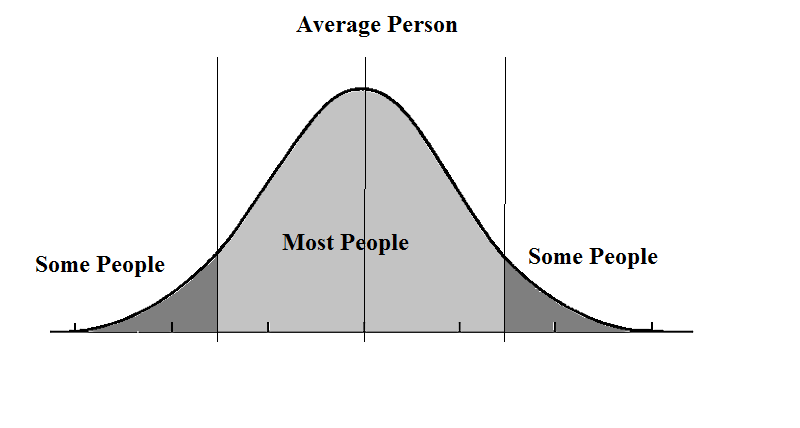
It’s touching, inspiring, and empowering. It’s how marketing should be done. But why is it relevant to the rest of us? Not all of us can, will, or want to change the world. There’s an easy answer. Because you’re not always at the center of a bell-curve, and that’s who the status quo caters to. You live a unique life, and it demands a unique outlook.


A Few Things the Status Quo Says..

  • Don’t be an artist because you will never make a living
  • Don’t be an entrepreneur because you’ll probably fail
  • Don’t quit your job to travel because it’s shortsighted
  • Don’t take the road less traveled because it’s risky
Is it good advice? For some people, yes. But there is also more to the story.

Let’s Talk About the Other Side


“Success is achieved by people who deeply understand reality and know how to use it to get what they want.” — Ray Dalio
The status quo is unapologetically biased towards average in EVERY situation. Sometimes, in certain instances, sure, you’ll fall close to the middle of the bell-curve, and that’s fine. But much of the time, you’ll be navigating the corners, and that’s when you’ll be punished. Societial rules don’t cater there. We live in a complex world, and we have complex lives based on a personal combination of memories and emotions. They don’t fit a predefined mold. It’s critical to understand the existing conventions, structures, and systems. They provide a reference point, and more often than not, they are useful. But it’s far more critical to know that they also aren’t set in stone.

 Outside of the law and the boundaries of modern science, much of reality is flexible. Almost everything around us that we presume to be fixed and static was produced and labeled by other people. There is no law in the universe that invents ideas and implements them. Powerful brains, like yours, do that.
The world — if understood well — can be reshaped with the right tools.

What Are These Tools?


“You’ve got to have [mental] models in your head… and the models have to come from multiple disciplines because all the wisdom of the world is not to be found in one little academic department.” — Charlie Munger
You need to understand the world from as many diverse angles as you can.

Mental models are a way to do that. They provide a fundamental framework for deciphering complexity so that you can optimize your decision-making.

A common example is Pareto’s Principle (80/20 Rule), which tells us that in any domain about 80 percent of results come from 20 percent of the causes.

In businesses, about 80 percent of sales come from 20 percent of customers. In software, 20 percent of the code accounts for about 80 percent of errors.

Another is Cost-benefit Analysis. It’s a systematic approach to evaluating the different avenues ahead and weighting their positives and their negatives.

Each of them, in their own way, help us make sense of the noise around us.

They either explain a generally observed trend, or they give us a method for breaking down and ordering information in a way that’s a little more useful.

A Few Models I Find Valuable


  • Socratic Method — Discourse to stimulate critical thinking and eliminate weak hypothesis with meaningful questions and constructive arguments.
  • Combinatory Play — Einstein’s method of creativity where imagination is used to combine existing parts of reality to produce something new.
  • Bayes’ Theorem — Using probabilistic thinking to estimate the likelihood of future events based on a rational evaluation of prior conditions.
  • Design Thinking — An approach to solving problems by understanding the needs of a person before working backwards to craft a solution.
  • First Principles — Breaking things down to their fundamental truth and reasoning upwards from there to bypass any potential inefficiencies.
The world is messy. It can’t be viewed through a single lens. It needs to be simplified and approached from a multi-dimensional viewpoint, and a well-diversified collection of mental models are the best way to do that.

They allow room for flexible evaluation, and they accurately assess how reality interacts with the different components of your own personal life.

A good combination of mental models are a far better tool to make life decisions than blindly accepting the status quo because you’re supposed to.

Explore different disciplines and create your own personal toolkit of models.

A Better Approach to Life


“Everything around you that you call life was made up by people that were no smarter than you. And you can change it, you can influence it. Once you learn that, you’ll never be the same again.” — Steve Jobs
If you ask good questions, strive to always learn, and develop a strong mental framework for evaluating the divergence between where you are and where you want to be, you’ll be able to navigate the world far more successfully.

To do that, however, you have to think for yourself. You need the courage to walk away from the majority, and you need the audacity to follow through.

You’re not just a passenger hoping to observe reality but leave it untouched. You’re a participant, and your job is to challenge it and carve your own way.

Know the rules. But more importantly, know when to break them.

https://medium.com/personal-growth/why-only-rebels-find-real-fulfillment-8d8ae3b44c8


Wednesday, February 14, 2018

Where did this strange dude come from? איפה מנהיגי הדור שלנו?

Monday, January 14, 2008 - THE UOJ VAULT


Once Upon A Time There Was A Rabbi......

People thought him strange!

He had these weird ideas...like every Jewish child must be granted a Jewish education...free if necessary. Every major city in the world, starting with the United States...should have a Hebrew school staffed with educated, qualified, religious, career teachers.

Every Jewish child should be educated according to his/her abilities; set up separate parallel classes for the brightest...and classes for the beautiful children that did not necessarily like learning, that would rather play ball. He actually understood that. He forced his best students out of the bais medrash during the lunch hour and on to the playground. Exercise was important for everyone.

Children that came from "modern" homes were not permitted to change their dress - to "hasidic" garb. Tzizis...were to be neatly kept in their pants pockets, and peyos were to be combed around the ear - if you came to the yeshiva with them -- if not -- you needed to keep and respect the dress code of your parents. You had to be immaculate in your appearance.

This was some strange guy!

Girls had to be formally educated - both in limudei kodesh - Hebrew studies - and secular studies. He fought tooth and nail against the fanatics that wanted to keep girls at home - learning to cook and clean and some home-study. (Urged them to learn that from their mothers' - at their leisure.)

He despised religious fanatics!

Boys had to excel - according to their abilities - both in their Hebrew and secular studies. If you failed in mathematics, history or English - you risked being penalized. (knass - or money sanctions...or even expulsion)

Where did this strange dude come from?

He was brought to tears, everyday, at least three times...at v'Yerushalayim ircha b'rachamim tashuv...v'sihkon b'socha k'asher dibarta....He cried real tears when his students were in pain, emotional or otherwise. It affected his ulcers drastically when people suffered; all Jewish pain was personal. He understood pain - if any one ever did. He understood "responsibility." He understood dedication to the klal...and every living, breathing moment was on fire...with that commitment.

He never had a personal savings bank account...it was a failure in bitachon. Hashem provides, and will always.... if you do your part - with serious hishtadlut ! When Mr. Irving Bunim put down the down payment ($5G) for his house in Monsey - New York, this rabbi made certain it was in the name of the yeshiva (against the express wishes of the benefactor), and that fair market value rent - was deducted from his meager paycheck.

He borrowed money for students that he felt needed to leave the yeshiva...and helped them to start businesses with personal loans. He encouraged others to get jobs. He encouraged many to go to college - in to the professions - and only the few totally dedicated boys were to stay in learning - full time - for more than a very brief period of time. This was a man who understood the stark realities of life...and what it meant not to make a living; and the broad - forever - wide-reaching ramifications on the entire family's well-being if there was no food in the ice-box.

This was a wild & crazzzzy guy!

Where are those rabbis? What happened to us? How did we drift so far apart from Torah values - that we don't know right from wrong, legal from illegal, sane from insanity, truth from blatant falsehoods, real from unreal, rational from irrational, and seemingly profane from seriously profane?............

We sold away our traditions for money, kavod, power, a few minutes in the spotlight; and whored ourselves for every single secular - anti-Torah value that we once died for!


READ ORIGINAL POST AND COMMENTS:
http://theunorthodoxjew.blogspot.com/2008/01/once-upon-time-there-was-rabbi.html


So what gives? What happened to this generation of leaders? ...When they’re not busy clapping each other on the back steering us dead-on into the Icebergs/Goldbergs...

The End of Leadership


Or, Why We Don’t Have Leaders Today — We Have Demagogues


Here’s a tiny question.

What happened to this generation of leaders?

Climate change, financial crisis, inequality, debt, stagnation, robo-dystopia…a nearly endless, panic-attack inducing list of Really Major Global Issues Threatening the Ongoing Survival and Prosperity of Humankind…and they mostly seem to be slumped over snoring at the wheel…when they’re not busy clapping each other on the back steering us dead-on into the icebergs. (Goldbergs)

In this little essay, I want to advance a small thesis. Many of today’s leaders aren’t worthy of the word. Because they are not leaders at all. So what are they? Let me explain, with a simple example.

There is no good reason for American leaders, left and right, to have inflicted decades of austerity on a society in which incomes have been stagnant and living standards have fallen,inequality has spiralled, and the average person’s future is ever more uncertain. No good reason at all. Even the IMF has both renounced austerity and agreed that advanced economies can not just sustain, but probably need, a deficit to operate at optimal levels of productivity.

I could repeat these stories with reference to politicians around the globe. In Canada, Australia, Japan, China, Russia, Britain— where a generation of politicians proclaims they “do not believe in” a European Union whose living standards are vastly higher than theirs. Here is the issue: there is simply no support — whether economic, ethical, or moral; whether scientific, rational, or humanistic — for most of their policies, stances, perspectives.

So what gives? What happened to this generation of leaders?

There is something very different about many of today’s so-called leaders. It is that they are demagogues. Let’s review what “demagogue” actually means. Here’s a decent definition:
“a person, especially an orator or political leader, who gains power and popularity by arousing the emotions, passions, and prejudices of the people.”

Let me explain why that’s important, using the example of the 80s. A generation of conservative politicians then — Thatcher, Reagan, and so on — and the like — ripped up and rewrote social contracts wholesale.

So what is the difference between them — and the demagogues of today? A very great one indeed. There was intellectual and perhaps moral support for the decisions the leaders of yesterday took.


Here’s a simple example. We may disagree now over trickle-down economics, since prosperity hasn’t trickled down. But at the time there was at least a reasoned position in support of it, built on a consensus amongst thinkers. You may think of the Laffer Curve as a simple illustration: it may have been proven largely wrong now, but at least there was an effort to produce a reason to slash public services then. (The Laffer Curve still proves correct today)

The neo-demagogues of meta-modernity are very different. There is no serious intellectual, moral, or ethical support for their decisions at all. Demaogues are irrational, insensible, not beyond reason — but scurrying in the abyss deep below it. They are simply, as the definition simply says, “arousing the passions and prejudices of people”. Let’s take immigration as a simple example. Decades of logic — not to mention evidence — confirm that (legal) immigration only benefits advanced economies.

Demagogues do not act rationally or sensibly, reasonably or sanely — whether in terms of economics, morality, politics, or anything else that might justifiably be called a system of thought. Why not? They prey on our emotions; they exploit our biases and prejudices; like magicians, they devour our fears and dangle before us our wishes. They are sorcerers of our animal beings. Pumping the bellows of unreason, they stoke the dark fires that burn deep in the human soul.

It’s true: empiricism alone can never guide us in the human world — but still, we must struggle not merely to be prisoners of our biases and prejudices. And that is precisely what demagogues reduce us to. Unthinking servants of our own worst selves. The selves that, instead of thinking, dreaming, wondering, rebelling, defying, creating, loving — are filled with spite, greed, jealousy, fear, and, at last, hate, of the self and the other, of god and man, of life and death alike.

There are many ways in which the institutions of modernity are decaying, sputtering out, breaking down. But one of the most significant, insidious, and damaging is that they no longer seem to reliably produce leaders — but demagogues. And, in turn, demagogues are, of course, historical bellwethers of decline, stagnation, disintegration.

True leaders lead people to an impossible destination. It does not exist in the world. It exists in being. They lead us towards to our better selves. Those seared, impossibly, defiantly, courageously, with happiness, purpose, meaning. Lives which may swim in the mighty river of grace, and, because they give thanks for the boundless privilege of life, bestow the gift of mercy and love upon each and every fellow traveller they meet. That is the defining characteristic of every leader that history remembers. 

Demagogues do not lead us to our better selves. They lead us to the very opposite: our worse selves. They condemn people to become nothing more than twisted, stunted caricatures of who they were meant to be. And by doing so, they diminish what is truly most valuable in the world: human potential.

For the tragedy of the demagogue is this: the demagogue is an anti-leader. He is not merely the absence of leadership. But the opposite. He is not just the drought. He is the locust and the flood. His followers aren’t merely left no better off — but also no worse off. Life’s most valuable creation is what is truly wasted by demagogues. The one thing we may each call our own. Ourselves.

Demagogues reduce us to being empty, twisted, broken husks of the people we should have been. People who, in the act of wasting their days on spite, greed, envy, and anger, fail to develop, grow, become themselves — and do great and mighty, noble and soaring things. That is why history condemns not just demagogues. But also the people who eagerly follow them. For they are prisoners. But they are also jailers. Each of whom holds the key to the cell next door.

I don’t think this is the end of leadership — forever. But I do think that leadership is in deep, serious, and historic trouble today. As both art and science, practice and pursuit, creation and gift. In all these ways, I think that leadership demands abiding, radical reinvention — and further, that reimagining it is going to require coming squarely to terms with the failures and shortcomings that have produced a hollow generation of demagogues with scarcely a single true leader amongst them. And so it is up to each and every one of us who wishes to be a leader to understand precisely why. For we can no longer conveniently leave the necessary, worthy, difficult work of leadership at the doorstep of the boardrooms and backrooms (and Agudah conventions).

Let us remember where leaders truly lead each and every life that walks with them. To lives brimming with purpose, riven with grace, seared with love, overflowing with meaning. That is the truest miracle of all. That, from mere things scurrying and clawing at one another in the glittering darkness, we may follow one another to the pure light of our higher selves.


https://eand.co/the-end-of-leadership-f0cfd160dfd6


Tuesday, February 13, 2018

That means that in every classroom, team and congregation it is likely that there are children who have been or are being victimized....

 
Larry Nassar stands as he is sentenced by Judge Janice Cunningham

The costs of surviving childhood sexual abuse


The impact of child sex abuse is not just emotional for victims, but financial as well


It is difficult not to be stunned into silence by the testimony of 156 female gymnasts against serial pedophile Dr. Larry Nassar. His “practice” was a factory assembly line of abuse — one girl after the other, day after day. He was prolific but not a rarity: child sex abuse in the United States is a mass epidemic that saturates our culture and even impacts the economy. And as the national #MeToo movement has shown, the time is now, to say, “enough is enough.”

Ignorance, discomfort and a legal system geared toward adults rather than children have kept these stories from the public. The numbers are staggering: research by the Centers for Disease Control estimates that 1 in 4 girls and 1 in 6 boys will be sexually abused before their 18th birthday. That means that in every classroom, team and congregation it is likely that there are children who have been or are being victimized.

Victims often do not disclose their abuse until they are in their 40s, according to the University of Georgia School of Law's Child Endangerment and Sexual Exploitation Clinic. While 38 states have eliminated the criminal statute of limitations (SOL) for at least some child sex crimes, most have not done so for all of them, leaving large loopholes that protect many perpetrators whose “lesser” abuse can still yield enormous harm. Many more states have not yet eliminated the civil SOL, which means institutions and their insurers have not been adequately incentivized to change their practices to deter child sex abuse effectively. 


Indeed, the worst states, like New York, Alabama and Michigan, permit institutions and predators to revel in SOLs that cut off claims once the victim reaches their early 20s.
For the victim, the impact of child sex abuse is not just emotional but financial as well. Up to 50 percent of child sex abuse victims develop post-traumatic stress disorder. Teens who were victims of child physical or sexual abuse are three times more likely to develop substance abuse problems. On average, violent trauma in childhood costs the victim $210,000 over their lifetime — that’s $13.5 trillion over a generation in the United States alone.

The public also pays. The states with short SOLs force not just victims and their families, but even taxpayers, to foot the cost. Our tax-dollar funded prisons are filled with victims of abuse: over 80 percent of female inmates and nearly 60 percent of male inmates were physically or sexually victimized as children. Many victims go on to file for disability and also receive Medicaid and other state and federal support, while the person responsible for the harm pays nothing. For example, in New York, taxpayers underwrite the costs that should be paid by the institutions hiding predators. A change in law would save taxpayers no less than $250 million a year by reviving expired and extending civil SOLs to hold abusers accountable.

And of course, this abuse is also expensive for the institutions that enable and protect predators, which is why groups like the Catholic Church and the Boy Scouts have spent millions lobbying to kill reform that would hold them accountable. There is the cost to reputation and careers: look at the fallout in USA Gymnastics and Michigan State University after it was discovered there was direct knowledge of Nassar’s abuse for years. The sitting presidents of Penn State and Michigan State lost their jobs over Jerry Sandusky and Nassar, respectively. There is also the cost of the lawsuits: jury verdicts in child sex abuse cases have registered all the way up to $100 million.


 Because of the potential for these sky-high verdicts, institutions typically aim for mass settlements: the Catholic Church cases have yielded average settlements of $100,000-500,000 per victim, with combined payments at this point well over $4 billion. Every university, religious organization, sports organization and institution needs to realize these numbers could be their future and must act now to institute best child protection practices. This includes reporting allegations of abuse to the authorities, providing internal whistleblower protections and restricting adults from being alone with children. They must cycle the poison out of the system or compound the impact.


These numbers are real, and what they should tell lawmakers, business leaders and their number-crunchers, is that child sex abuse prevention is not only the morally right path, but also the only one they can reasonably afford.


Marci Hamilton is the CEO and Academic Director of CHILD USA, and co-founder of New Yorkers Against Hidden Predators. She is the author of "Justice Denied: What America Must Do to Protect Its Children."

Monday, February 12, 2018

Uncle Howard Nevison was a well-known member of the largest Jewish synagogue in America and his congregation so believed in his innocence they raised enough money to buy him four defense attorneys who tried to discredit Neulinger and succeeded in dragging the trial on for years....


When Sasha Joseph Neulinger was raped by two of his uncles and his cousin as a child, he didn’t have a Child Advocacy Center to turn to.

Neulinger told his story as supporters of the Onslow County Child Advocacy Center (CAC) ate lunch and listened with rapt attention, watching home movies of Neulinger as a child from a video he put together.

When he was facing the toughest time of his life, Neulinger said he had no CAC to back him up, and he praised the work the Onslow County CAC is doing.

An abused child

Neulinger felt he couldn’t tell anyone what was going on. One uncle promised death if he breathed a word about the abuse, and the then-4-year-old little boy felt alienated.

Years passed, and the abuse continued. Neulinger said he thought the abuse was his fault.
“A part of me was starting to believe I deserved the pain,” Neulinger said.

But that was before, at the age of 7, he found his 4-year-old little sister walking out of his cousin’s room sobbing, tears streaking down her blotchy red face.

As he told the gathered Child Advocacy Center supporters his story Friday afternoon, they gasped at the realization of just how far the abuse went – and indeed it went even further still with one of Neulinger’s uncles sodomizing several people within his family, he said.

“I couldn’t understand how or why anyone could hurt her,” Neulinger said of his little sister. “I knew she didn’t deserve to be hurt.”

Seeing his sister facing the same fate he was, Neulinger said he found courage through his love for her, and he realized how wrong the abuse was. His sister drew photos when words wouldn’t come, and he found the voice to tell his story.

Becoming vocal

As a child Neulinger was an insomniac and so suicidal that he thought jumping from a moving car was preferable to the death his rapist promised waited for him if he spoke – so he jumped.

He then went to therapy and started with drawings, then used his words to explain his traumatic experiences and he told his story over and over and over again.

Neulinger spent the next nine years of his life in and out of courtrooms testifying against his abusers and spoke about the incredible support system he had behind him, including his parents, his sister, and the law enforcement officer on his case.

While one uncle and his cousin were convicted, Uncle Howard Nevison was a well-known member of the largest Jewish synagogue in America and his congregation so believed in his innocence they raised enough money to buy him four defense attorneys who tried to discredit Neulinger and succeeded in dragging the trial on for years.

Eventually, at the age of 17, Neulinger agreed for his uncle to plead guilty to misdemeanors, taking all of the felony charges off the table in order for him to finally be able to move on.

Getting help

Neulinger said he was emotionally exhausted from reliving his abuse through every retelling. He spoke of visiting law enforcement and the prosecutor to talk about one incident or another and how the defense used that to their advantage in court, catching a slip as little as Neulinger mixing up the color of his abuser’s shirt on a specific occasion.

That trauma has been erased for children in Onslow County thanks to the CAC.

Neulinger pulled up photos of a waiting room with a tree painted in the wall’s corner and notes from other children left behind to make newcomers feel safe. Some of them were left at the tables for those at the luncheon to read, including one from a 13-year-old girl who wrote, “Don’t be scared!

Everybody is nice. These people help you get through tough times!”

Kids leave the CAC with a stuffed animal and handmade quilt, a reminder that they are safe and loved, and Neulinger explained that in Onslow County, a child tells their story once, to one person.
“It only takes that one person,” said Dawn Rochelle, the executive director of the Onslow County Partnership for Children.

The child is taken into a room for the interview where they’re videoed, and down the hall the prosecutor and others watch it live and give directions to the interviewer if necessary.

That video can then be used in the courtroom, said Assistant District Attorney Kaelyn Avery, who added that it was her “great honor and privilege” to prosecute sexual abuse cases.

Child sexual abuse should be a topic that’s brought up more often due to how much it occurs, Avery said.

We all pay when we don’t get things right with children, Rochelle said.

“Child abuse is 100 percent preventable,” Rochelle said. “That’s our call to action.”

Reporter Amanda Thames can be reached at 910-219-8467 or Amanda.Thames@JDNews.com

http://www.jdnews.com/news/20180209/one-mans-child-abuse-exemplifies-need-for-onslows-cac

Friday, February 09, 2018

Gershon Biegeleisen, 28, of Lakewood, was arrested Thursday at his home on charges of second-degree distribution of child pornography and third-degree possession of child pornography, Ocean County Prosecutor Joseph D. Coronato and Lakewood Police Chief Gregory Meyer announced....

Lakewood Man Charged With Distributing Child Porn: Prosecutor 


Breaking: Gershon Biegeleisen was identified after the National Center for Missing and Exploited Children alerted authorities to downloads.

By Karen Wall, Patch Staff |


Lakewood Man Charged With Distributing Child Porn: Prosecutor

LAKEWOOD, NJ — A Lakewood man has been charged with distributing child pornography after authorities traced the activity to his home, authorities said Thursday.

Gershon Biegeleisen, 28, of Lakewood, was arrested Thursday at his home on charges of second-degree distribution of child pornography and third-degree possession of child pornography, Ocean County Prosecutor Joseph D. Coronato and Lakewood Police Chief Gregory Meyer announced.

The arrest is the result of a referral from the National Center for Missing and Exploited Children through the Internet Crimes Against Children Task Force indicating someone within Ocean County had downloaded and was sharing images of prepubescent children engaged in sexual acts, said Al Della Fave, spokesman for the Ocean County Prosecutor's Office.

The prosecutor's office's High Tech Crimes Unit detectives investigated and that led to a search warrant being executed at a home on Columbus Avenue in Lakewood, Della Fave said. Evidence collected at the scene led to Assistant Prosecutor Kristin Pressman approving the charges, he said.

The Ocean County Prosecutor's High Tech Crime Unit, U.S. Immigration and Customs Enforcement's Homeland Security Investigations (HSI) and the Lakewood Police Department teamed up in the case, Della Fave said.

Biegeleisen is being held at the Ocean County Jail pending a first appearance hearing, he said.

Gershon Biegeleisen photo provided by the Ocean County Prosecutor's Office

https://patch.com/new-jersey/lakewood-nj/lakewood-man-charged-distributing-child-porn-prosecutor


Let Us Welcome The Newest Honorary Member of the Moetzes Agudath Israel ---- Hart insisted that sexual abuse was “a spiritual encounter with God through the priest” and was “of a higher order” than criminal law.


Catholic Archbishop: ‘I’d Rather Go to Prison Than Report Child Abuse to Police’


One of the highest-ranking officials in the Catholic Church has stated that he would “rather go to prison” than report pedophilia to police.

Australia’s most powerful clergy, Archbishop of Melbourne Denis Hart, says he’s prepared to be jailed for failing to report child sex abuse by pedophile priests.

He made the shocking statement in response to the Australian Royal Commission into Institutional Responses to Child Sexual Abuse saying there should be “no excuse, protection nor privilege” for clergy who failed to alert police of abuse.

Hart insisted that sexual abuse was “a spiritual encounter with God through the priest” and was “of a higher order” than criminal law.

A new report by the commission proposed 85 sweeping changes to the criminal justice system and recommended that priests face criminal charges for failing to report serious crimes such as sexual abuse to the police.

As the law currently stands, clergy are not legally obliged to report crimes to the police and disciplinary proceedings for criminal activity by members of the Catholic Church are handled internally by Canon law, which operates independently of the regular legal procedure.

Following an investigation by the commission, officials believe that the Catholic Church is using “confessional confidentiality” as a cover for not reporting child sex abuse to the authorities.

“We understand the significance of religious confession – in particular, the inviolability of the confessional seal to people of some faiths, particularly the Catholic faith”, said the report. “However, we heard evidence of a number of instances where disclosures of child sexual abuse were made in religious confession, by both victims and perpetrators.”

We are satisfied that confession is a forum where Catholic children have disclosed their sexual abuse and where clergy have disclosed their abusive behavior in order to deal with their own guilt.”

Independent reports: Asked on Tuesday if he would rather go to prison than breach the seal of confession, he told ABC Radio Melbourne:

“I’ve said that I would.”I believe that this is an absolutely sacrosanct communication of a higher order.”

http://nativescomunity.info/2018/01/31/catholic-archbishop-id-rather-go-to-prison-than-report-child-abuse-to-police/


Thursday, February 08, 2018

Rabbi Ezra Sheinberg, 49, was convicted last July in Nazareth District Court as part of a plea deal over a series of crimes committed against women who came to him for advice and counseling --- Sheinberg’s wife told Eliyahu that she knew her husband had sex with the women, but that the sex was part of their therapy....

Beyond evil - with the full knowledge of his wife ---- How low does it get?


Safed rabbi sentenced to 7.5 years in jail for sexual assault


Ezra Sheinberg, ex-yeshiva head, confessed to using his position as spiritual leader to take advantage of 8 women


Rabbi Ezra Sheinberg is brought for a court hearing at the Kiryat Shmona Magistrates Court on July 2, 2015. (Basel Awidat/Flash90)
Rabbi Ezra Sheinberg is brought for a court hearing at the Kiryat Shmona Magistrates Court 

A well-known rabbi and yeshiva head from the northern city of Safed was sentenced Tuesday to seven and a half years in prison for committing a slew of sexual crimes against eight women, including multiple counts of sexual assault. 

Rabbi Ezra Sheinberg, 49, was convicted last July in Nazareth District Court as part of a plea deal over a series of crimes committed against women who came to him for advice and counseling.
The specific charges were not publicized by the court. The criminal proceedings were under a gag order preventing publication of any details of the incidents due to the “egregious nature” of the crimes and to protect the privacy of the victims.

The prosecution had initially demanded that the former head of the Orot HaAri yeshiva receive a minimum of nine years in jail sentence after his conviction. But the defense provided “significant proofs which helped discredit some of the accusations,” according to a Tuesday Justice Ministry statement, prompting both sides to accept the plea bargain after several charges of rape were dropped.
Responding to the sentencing, Sara Markovich, who represented three of the victims, said they were “satisfied” with the ruling, despite having sought harsher punishment.

“Overall we are satisfied that this criminal who calls himself a rabbi is not immune from punishment under the law and is going to sit for many years in prison,” Markovich said. “This man abused the trust of these women in the most discraceful way possible and deeply damaged them, some of them members of his own community.”

A total of 14 women made allegations against Sheinberg to a special investigation team and police suspect that many other victims were afraid to come forward. The victims were all religious women who had come to the rabbi for advice or help on various issues including health.


Rabbi Ezra Sheinberg, suspected of sexual abuse against several women, is seen at the courtroom of the Kiryat Shmona Magistrates


Sheinberg had been a popular Kabbalist and respected figure in Israel’s national-religious community and author of several books of Torah ideas.

He was arrested on July 1, 2015, as he attempted to flee the country as allegations against him emerged. He has been in prison since that time.

According to prosecutors at the time, Sheinberg used his position of prominence and reputation as a powerful mystic to lure in and take advantage of women who came to him for religious counsel and blessings for fertility when they struggled to conceive.

They alleged that the victims shared a number of characteristics: they were young religious women whose husbands, in most cases, were Sheinberg’s students at the seminary.

Part of his modus operandi involved convincing the victims that only he could provide a solution to their problems, through a treatment he dubbed “relaxation.”

During those sessions, Sheinberg fraudulently obtained his victims’ consent to commit sexual acts, prosecutors said, adding that the defendant used innocent young women who trusted him as a tool to satisfy his sexual desires.

Some of the women had originally approached a rabbinic council with the allegations. A team of local rabbis, led by Safed Chief Rabbi Shmuel Eliyahu, began investigating the accusations in mid-June 2015, and later reported them to the police.

Sheinberg’s wife told Eliyahu that she knew her husband had sex with the women, but that the sex was part of their therapy.

Sheinberg has eight children and several grandchildren.

https://www.timesofisrael.com/safed-rabbi-sentenced-to-7-5-years-in-jail-for-sexual-assault/?utm_source=The+Times+of+Israel+Daily+Edition&utm_campaign=b9f46f5b28-EMAIL_CAMPAIGN_2018_02_05&utm_medium=email&utm_term=0_adb46cec92-b9f46f5b28-55186525


Wednesday, February 07, 2018

If all women are required to cover their hair and bodies with maximal modesty, some women in Hasidic neighborhoods of Jerusalem now wear a burka-like veil over their clothes, in imitation of Islamist female garb....


 ....In recent times, in some of the most populous centers of Hasidism, notably the domain of the Satmar Hasidic community in Brooklyn and elsewhere, the more sinister cultish side of Hasidism has been on prominent display. With their notorious history of closing ranks around male community members guilty of sexual abuse, domestic violence, and various types of financial criminality, the Satmars have, in effect, revised the Besht’s cardinal insight that everything can become a route to God to something more like, “Everything outside our community is irrelevant, exploitable, or a path to mortal sin.” It’s a dramatic retreat from the Besht’s world-embracing, profoundly joyous vision of Judaism. But as Hasidism reveals, some of the dangerous, structural tensions in the Hasidic project were there from the start....

The tsaddikim “served as intercessors,” write the authors, “providing the channels through which their followers could commune with the divine.” Indeed, the Besht himself supposedly remarked of the Maggid: “He doesn’t just know the Torah, he is the Torah.” It’s hardly surprising that the veneration such a stature inspired could veer close to idolatrous reverence. Some of the Hasidic tsaddikim were altruistic, theologically dynamic community advocates; others were crooks, charlatans, and vainglorious petty despots. The institution of the tsaddik was only as benign as the character of its individual representatives.....

In time, most Hasidic leaders came to identify all forms of innovation with corruption. As Rabbi Simcha Yisakhar Halberstam remarked at the start of the 20th century,

experience has taught us much, that all those who sought to innovate and to eliminate any item from the ancient practice have brought upon us an erosion and destruction of the fundamentals of the faith, and consequently we must not shift even in the slightest and only conduct ourselves as our ancestors have.

It no longer mattered that the ideal behavior of the ancestors was itself quasi-mythical, or that the movement defending this ancient, imaginary essence of the religion was itself a product of modernity.

The end result was chillingly intolerant.

Much of Hasidism’s rich variegation was lost in the aggressive campaign to reach a state of total fundamentalism. As the movement became increasingly aligned with Ultraorthodoxy, which shared its cultural antipathies, if not always its approach to prayer or study, Hasidism grew more homogenous still. The tremendous losses suffered by the Hasidic community in the Holocaust reinforced the movement’s most reactionary tendencies.

Hadisim’s radical conservatism plays out on the family front in dictatorial control of sexuality and a rigid gender segregation that usually relegates women to the role of childbearing facilitators for the temple-and-study centered lives of the men. When Hasidic women leave home to work for money, as is increasingly necessary in this poverty-stricken community, it’s so that Hasidic men can perform the real work of service to God. Beyond the longstanding social constraints, Hasidism also describes a “one-upmanship” that’s taken hold in some quarters whereby community members flaunt their respective fundamentalist credentials. If all Hasidic men wear side-locks, some today grow their side-locks longer and longer. If all women are required to cover their hair and bodies with maximal modesty, some women in Hasidic neighborhoods of Jerusalem now wear a burka-like veil over their clothes, in imitation of Islamist female garb.

 It’s difficult to believe that the lure of the outside world has not grown in tandem with the increasingly punitive approach to piety and life as such. Yet, with its high fertility rate, the Hasidic population continues to grow at a rate well above average. And leaving the folds of the community has proven to be a challenge few people can successfully accomplish.....


 READ IT ALL & WEEP!
https://lareviewofbooks.org/article/the-hasidic-question/#!

Tuesday, February 06, 2018

Rabbi In White... ----- It's Black & White - They All Lie!

HOW DO YOU SAY COVERUP IN HEBREW?

Letter Suggests Pope Knew About Abuse Complaints, Despite Denials


Pope Francis in St. Peter’s Basilica at the Vatican last week. Credit Vincenzo Pinto/Agence France-Presse — Getty Images

Things keep getting worse for Pope Francis.

Late last month, the pope reiterated his defense of a Chilean bishop, contending that he had never received any complaints that the prelate knew of abuse by the country’s most notorious pedophile priest.

But on Monday, The Associated Press reported that the pope personally received an eight-page letter in 2015 from one of the victims. The letter explicitly detailed abuses the victim said were witnessed by other clerics, including Juan Barros Madrid, who was appointed bishop of Osorno, Chile, that year.

The report that one of the pope’s top advisers had personally handed him the letter has revived accusations by advocates for abuse victims that the 81-year-old pontiff cannot, or will not, understand an issue that has long roiled the Roman Catholic Church.

“There is what you might call a willful blindness,” said Peter Saunders, a former member of the pope’s Commission for the Protection of Minors, whose mandate expired in December. “It’s almost angry unwillingness to accept what in front of him, because to acknowledge it is to acknowledge that the church still has to clean up its act. He’s been behaving like a spouse who is told that their spouse is abusing their kids, and can’t believe it.”

A copy of the letter was provided to The New York Times by its author, Juan Carlos Cruz, who has accused the Rev. Fernando Karadima, once one of Chile’s most prominent Catholic priests, of abuse. The church has found Father Karadima guilty of abusing minors from 1980 to 1995 and penalized him in 2011.

In the letter, Mr. Cruz wrote that Bishop Barros, who was a priest at the time, witnessed the abuse.
Pope Francis has repeatedly discounted the accusations against Bishop Barros as slander, and his defense of him cast a shadow over a trip he made to Chile in January. Last week, facing mounting criticism for siding with clergy members over victims, the pope sent the Vatican’s top sex crimes investigator to Chile to hear their accusations.

The disclosure of the letter has raised difficult questions for the pope.

Did he read the letter and decide not to tell reporters about it? Did he choose to believe Bishop Barros over Mr. Cruz? Or did he never read the letter, or perhaps read it but forget about it.


The bishop of Osorno, Chile, Juan Barros Madrid, center, has been accused of helping to cover up the sexual abuse of minors by a priest. Credit Esteban Garay/European Pressphoto Agency

For Mr. Cruz, the pope has become “just like the others.”

“He covers up and doesn’t listen to the victims,” he said.

Some veteran Vatican analysts said that perhaps the pope had information not available to other people.

Marco Politi, a Vatican expert and the author of the book “Pope Francis Among the Wolves,” said the pope’s continued belief in the innocence of Bishop Barros must have been based on an internal investigation. If the pope erred, Mr. Politi said, “it was that he did not send Bishop Charles Scicluna earlier.” Bishop Scicluna is the investigator the pope sent to Chile.

The case against Bishop Barros erupted in 2015 when the pope named him, a former chaplain in the Chilean armed forces, to lead the Osorno diocese amid widespread protest. Bishop Barros has denied knowing about the abuse until 2010, when accounts emerged in the news media.

Concerned by the accusations against the Chilean bishop, members of the Commission for the Protection of Minors traveled to Rome so that they could deliver Mr. Cruz’s letter to the pope.
“We all felt that the Barros appointment had been a mistake, and when Juan Carlos told me he had been trying to be heard, we thought that this was an opportunity to get the details directly to the pope,” said Marie Collins, a survivor of abuse who resigned from the commission last year in frustration over its inaction. “If Barros hadn’t recognized abuse when it had happened under his eyes, it was difficult to see how those in his diocese would be properly protected,” she said.

In April 2015, four members of the commission met with Cardinal Sean O’Malley, who led the commission, in the Casa Santa Marta, where the pope lives. Ms. Collins asked him to personally deliver the letter to Francis.

They commemorated the moment when they delivered Mr. Cruz’s letter with a photograph. “We thought it would be nice for the survivors of abuse to know that we were doing the best that we could do for them,” Ms. Collins said.


The Rev. Fernando Karadima has been accused of sexually abusing children in Chile from 1980 to 1995. Credit Luis Hidalgo/Associated Press

The working group issued a statement at the time saying that it was essential for a bishop to enact effective policies and monitor compliance, “in the light that sexual abuse is so common,” but did not mention Mr. Cruz’s letter.

At the commission’s next meeting several weeks later, Cardinal O’Malley confirmed that he had delivered the letter to the pope, Ms. Collins said. Mr. Cruz said Cardinal O’Malley had told him that he delivered the letter himself.

Last month, after the pope’s remarks dismissing allegations against Bishop Barros as “slander,” Cardinal O’Malley issued a remarkable defense of the victims.

Delivering the letter was the only time, as far as Ms. Collins knows, that members of the commission tried to speak to the pope about a specific case, she said. But she also said that while she is convinced that the letter was given to the pope, she cannot be sure if he read it.

“I have no idea because he has continued to support Barros over three years, and never met with the survivors,” she said. “I can’t judge. The pope is a good man. I have no idea why he wouldn’t have considered the concerns of the members of his commission.”

The new commission for the protection of minors — whose members have not been announced — is expected to hold its first plenary session in April.

Mr. Saunders, who was dismissed from the commission in 2016 for being too outspoken, was also present at the April 2015 meeting. The commission members had hoped to speak directly with the pope, but instead met with Cardinal O’Malley, he recalled.

“O’Malley said the letter would be handed to Francis, who I think was literally in the next room,” he said.

https://www.nytimes.com/2018/02/05/world/europe/pope-sex-abuse-barros-karadima.html?emc=edit_tnt_20180205&nlid=32999454&tntemail0=y


Monday, February 05, 2018

“The level of suicide and physical and emotional damage among the victims of violence is unbearable. They, unlike those who hurt them, have no power or standing. They are the ones who are taken advantage of and always brought down. They cry in the dark, alone, out of sight. The victims die in secret. They have no name or face or identity,”


Exposé leads to suicide, but media won’t play blame game


Pundits have a lot to say about Boaz Arad's death in the wake of a report detailing his sexual misconduct, and it's almost all in defense of the real victims and the fourth estate


An activist holds a #MeToo sign during a news conference on a Title IX lawsuit outside the Department of Education January 25, 2018 in Washington, DC (Alex Wong/Getty Images/AFP)

Days after artist, teacher and accused sex offender Boaz Arad ended his life following a news report about his alleged misdeeds, there is the appearance of hand-wringing in the press, though it all leads to the same conclusion: The journalists who outed him did nothing wrong.

The Arad suicide makes the front page of all three major dailies Sunday morning, and is accompanied by a goodly amount of commentary over the “hard questions” that followed, in Israel Hayom’s language.

Yedioth Ahronoth leads off with the story, which takes up almost the whole front page and the next three pages of the tabloid. One might think that the prominence the paper gives to what amounts to a very personal and domestic story is indicative of it seeing a larger scandal within, but the paper makes clear it has no truck with sympathy for the devil.

“Crime and punishment,” reads the headline of the paper’s main news story, which is accompanied by self-portraits from Arad of him shooting himself. The story notes that he was the third teacher in the Telma Yellin school in Givatayim to be accused in just two weeks, but mostly focuses on Arad and how the story on him led to his death. (Two complementary stories from the paper delve into the allegations of a wider harassment culture at the art school.)

As for the supposed hard questions, two of the papers’ commentators come to the same conclusion: He’s not a victim and the journalists were doing their job.


Artist Boaz Arad 

“The media did its job and uncovered. Arad was the one who was quick to pass judgment, to convict and sentence himself to death,” Ra’anan Shaked writes.

At the same time, the paper’s Hen Arzi-Srour links the death to the #MeToo movement.

“The level of suicide and physical and emotional damage among the victims of violence is unbearable. They, unlike those who hurt them, have no power or standing. They are the ones who are taken advantage of and always brought down. They cry in the dark, alone, out of sight. The victims die in secret. They have no name or face or identity,” she writes. “This isn’t shaming here since the article was well-founded, truthful and to the point: a man who admitted to his deeds. The time has come to say that in the age of #MeToo, the rules have changed. The victim has a voice, and the voice will no longer be quiet.”

Haaretz relegates most of its coverage of the suicide to its arts section, but the same general gist as in Yedioth comes through, including columnist Roni Bar calling the death a tragedy, but one that should not be on the head of Mako, the website that published the allegations.

“Mako journalists did their jobs and gave a voice to victims of sexual misconduct. From reading the investigation and without knowing what went on behind the scenes, it seems they worked carefully, in a well-founded and professional way. Once they became worried over Arad’s mental state they even sent a police car to his house. It’s easy to judge off the cuff, but they could not have known he would actually follow through with his threats,” Bar writes.

But in the same paper, Doron Koren writes that the journalists were out of line and too zealous in trying to join the #MeToo crowd, listing as their sins the fact that the sexual misdeeds were 25 years old and involved a consensual relationship, in his telling.

“The media is still not built to differentiate the severity of different sexual misdeeds,” he writes. “So maybe they will be more careful next time.”


https://www.timesofisrael.com/expose-leads-to-suicide-but-media-wont-play-blame-game/?utm_source=The+Times+of+Israel+Daily+Edition&utm_campaign=049f02dd32-EMAIL_CAMPAIGN_2018_02_04&utm_medium=email&utm_term=0_adb46cec92-049f02dd32-55186525