

CLICK TO SEE WHEN ULTRA-ORTHODOX WAS NORMAL:
IMAGINE: AN AMERICAN AND ISRAELI FLAG FLYING TOGETHER PROMINENTLY AT THE ENTRANCE OF CAMP MESIFTA TORAH VODAATH IN 1948!

CLICK: https://youtu.be/QqJP8i1IC7A
MORE OF NORMAL:


CLICK TO SEE WHEN ULTRA-ORTHODOX WAS NORMAL:
IMAGINE: AN AMERICAN AND ISRAELI FLAG FLYING TOGETHER PROMINENTLY AT THE ENTRANCE OF CAMP MESIFTA TORAH VODAATH IN 1948!
CLICK: https://youtu.be/QqJP8i1IC7A
MORE OF NORMAL:


The most concentrated legal treatment of war is found in Deuteronomy 20:1–21:14.[1] These laws prescribe what to do with the people against whom Israel wages war: Canaanites living in the land must be annihilated, while people living outside the land may surrender and become subjects; otherwise, if they fight and are defeated, the males are killed and the women and children are taken as booty (20:10–18).
These laws also determine which soldiers should be exempt from entering battle (20:1–9), prohibit destroying fruit-bearing trees around a besieged city (20:19–20), and deal with a situation in which an Israelite solider is sexually attracted to a foreign captive (21:10–14).
Some of these laws—those dealing with the fate of enemy populations, and the female captive having to marry her captor against her will—are horrific from a modern moral standpoint. But I would like to draw attention to another matter, namely, the limited scope of these laws.
The Torah’s laws on war are not at all comprehensive. This comes as no surprise to readers familiar with the Torah; no area of law in the Torah is treated in a thorough manner.
For this reason, rabbinic law tries to fill in the gaps. But the laws of war are something of an exception in this regard. The most extensive discussion of laws of war in the Talmud is in the eighth chapter of Tractate Sotah, the bulk of which deals with the instructions in Deuteronomy 20 concerning which soldiers are exempt from battle.
Otherwise, issues concerning war are treated tangentially, in relation to other issues. For example, as part of a discussion concerning carrying on Shabbat, the Babylonian Talmud (b. Eruvin 45a) states that if soldiers go out to save Jewish lives on Shabbat, they may return with their weapons in hand, even though this violates the laws of Sabbath limit (techum) and the prohibition of carrying. Medieval and early modern rabbinic literature also treat laws of war in a very cursory fashion.
It is not entirely clear why the rabbis did not have more discussion on the laws of war. It may be that because the rabbis lived at a time when Jews did not have a state or an army, they were not interested in these laws. Yet, there were other areas of Jewish law that were no longer practiced in the rabbinic and medieval times but received a great deal of attention from the rabbis, such as the laws of sacrifices and impurity that were in abeyance since the destruction of the Second Temple. Why were the laws of war different?
It may be that the rabbis never envisioned Jews having to fight wars again once the exile had begun. Jews would certainly have a state in messianic times, but God would pave the way for that era by directly punishing the nations who had oppressed the Jews. That is, God would wage war, not the Jews. Also, according to the biblical text, the messianic period would be one in which peace would reign between the nations, so there would be no need for wars then either.
Thus, the rabbis saw no need to discuss laws of war. Laws of sacrifices and impurity, by contrast, would certainly be relevant in the messianic period, since the Temple would be built again, and the rabbis were thus interested in laws pertaining to these issues. This may explain why we have tractates full of laws about impurity and sacrifices but just a handful of passages dealing with war.
None of this would have mattered much had it not been for the establishment of the State of Israel in 1948. When Israel came into existence, religious Zionists, namely Orthodox Jewish Zionists living in accordance with Jewish law, were faced with an unprecedented challenge. Israel was at war from the moment it was established, and yet Jewish law provided little guidance on war, and practically none on wars of self-defense, the type of war that Israel had to fight in 1948 and would fight many more times thereafter.
Zionist settlers in Palestine, of course, had been attacked by Palestinians for decades prior to 1948; however, religious Zionist rabbis did not seem to consider these attacks to be a war in the formal sense because there was no Jewish state just yet. Therefore, this violence could be regulated by laws regarding violence in non-war situations of which there were plenty in Jewish law. The war of 1948 was an entirely new challenge.
The leading rabbis of the religious Zionist community therefore had to formulate an entire body of law on war,[2] displaying remarkable ingenuity and creativity in stretching the few sources in Jewish law about war as far as they could. They even made use of sources that had nothing to do with war originally. To illustrate the kinds of challenges that the religious Zionist rabbis faced here, and how they solved them, I will offer the single example of how they dealt with the issue of conscription, or the drafting of soldiers.
Conscription is about as basic an issue as there is in laws of war.[3] Yet, the corpus of Jewish law presents a serious obstacle to it. On the one hand, Jewish law certainly permits an individual to kill in self-defense. As we are told in the Gemara (b. Berakhot 62b), הבא להרגך השכם להרגו, “He who comes to slay you, slay him first.”[4] Jewish law also requires a person to kill in defense of another individual who is being pursued by an assailant intent on killing them (ניתן להצילו בנפשו, “he may save him by taking the pursuer’s own life”; b. Sanhedrin 73a). On the other hand, that is only when a person does not have to put their own life in danger, which Jewish law does not require.[5] But if this is the case, Jewish law, in effect, prohibits a Jewish state from drafting soldiers for defensive wars, since these wars will require soldiers to risk their lives to defend their fellow countrymen.
From a modern academic perspective, the problem here seems to be an anachronistic one. In the Bible, an Israelite king was an autocrat who could conscript an army for any war at will. Thus, while technically the Torah never discusses defensive wars, only wars of conquest, surely the biblical authors saw no difference between defensive wars and aggressive wars with respect to conscription. Also, if conscription was allowed in wars of conquest, isn’t it clear that it would be allowed in defensive wars as well? Moreover, according to the Bible, the Israelites fought defensive wars. Was this not proof enough that conscription for such wars was permitted?
While these arguments may be persuasive to critical scholars, the religious Zionist rabbis did not think this way. For these figures, Jewish law is a divine and monolithic entity, functioning in all places and times, and thus, they felt the need to explain the requirement for conscription in defensive wars in light of the explicit law that prohibits forcing individuals to risk their lives to defend others.[6] Given that older sources do not tackle this problem explicitly,[7] these rabbis took the task upon themselves, since, without the conscription of soldiers, Israel could not survive.[8] To do this, they explored a number of possible precedents.
Moses Maimonides’ (1138–1204) treatment of war in the Mishneh Torah provides only one line about defensive war, but it has significance for conscription. According to Maimonides, wars of self-defense fall under the category of “mandatory war” (מלחמת מצוה), one of two major categories of war in rabbinic law, and in wars of this type all Jewish adults are required to fight (Mishneh Torah, Book of Judges, Laws of Kings, 5:1):
אין המלך נלחם תחלה אלא מלחמת מצוה, ואי זו היא מלחמת מצוה זו מלחמת שבעה עממים, ומלחמת עמלק, ועזרת ישראל מיד צר שבא עליהם, ואחר כך נלחם במלחמת הרשות והיא המלחמה שנלחם עם שאר העמים כדי להרחיב גבול ישראל ולהרבות בגדולתו ושמעו.
A king may initially wage only mandatory war. Which [war] is a mandatory war? It is a war against the seven [Canaanite] nations, a war against Amalek, and saving Israel from the clutches of the enemy that has attacked them. Subsequently, the king may wage discretionary war, which is war that he wages with the rest of the nations in order to widen the borders of Israel and to increase his greatness and prestige.
Because Maimonides deemed defensive wars to be mandatory wars, they ostensibly required all Jews to fight, and this requirement clearly overrode any difficultly regarding conscription. All the prominent religious Zionist rabbis made this argument.[9]
Another precedent to justify conscription is in Moses Nahmanides’ (1194–1270) commentary on Maimonides’ Book of the Commandments. He argues that God’s instruction to the Israelites to conquer the land of Israel and settle it is a positive commandment, even though Maimonides does not seem to think so[10] (Omitted Positive Commandments, #4):
מצוה רביעית שנצטוינו לרשת הארץ אשר נתן האל יתברך ויתעלה לאבותינו לאברהם ליצחק וליעקב ולא נעזבה ביד זולתינו מן האומות או לשממה. והוא אמרו להם (במדבר לג:נג) והורשתם את הארץ וישבתם בה כי לכם נתתי את הארץ לרשת אותה והתנחלתם את הארץ.
The fourth commandment [that Maimonides omitted] is that we are commanded to inherit the land that God, may He be blessed and exalted, gave to our forefathers—to Abraham, to Isaac, and to Jacob—and not leave it in the possession of others among the nations, nor [to leave it] desolate. This is [the meaning of] His statement to them, “And you shall take possession of the land and settle in it, for I have assigned the land to you to possess. You shall apportion the land among yourselves” (Num. 33:53)….[11]
ואל תשתבש ותאמר כי המצוה הזאת היא המצוה במלחמת שבע' עממים שנצטוו לאבדם... אין הדבר כן. שאנו נצטוינו להרוג האומות ההם בהלחמם עמנו ואם רצו להשלים נשלים עמהם ונעזבם בתנאים ידועים אבל הארץ לא נניח אותה בידם ולא ביד זולתם מן האומות בדור מן הדורות.
Do not be confused and say that this commandment is the commandment of [waging] war against the seven [Canaanite] nations that we were commanded to annihilate…. That is not the case. For we were commanded to kill those nations when they made war against us, but if they wanted to make peace, we were to make peace with them, and leave them alone, in accordance with explicit stipulations. But the land, we were not to leave in their hands nor [in the hands of] other nations in any generation.
According to Nahmanides, the commandment to conquer the land of Israel and settle it is meant not just as an imperative in the time of Joshua; it is applicable for all time. Thus, fighting in such a war is a positive biblical injunction, and all Jews must fight in it. Prominent rabbis in the religious Zionist community made this argument, including R. Isaac Halevi Herzog (1888–1959) and R. Shaul Yisraeli (1909-1995).[12]
The strategy provided to modern rabbis by Nahmanides is completely different from the one that relies on Maimonides. Israel’s wars need not be purely defensive, since Jews settling and ruling the land fulfills an eternally-binding, biblical commandment, and viewed from this perspective, these wars entail no difficulty with regard to conscription. That problem arises only in purely defensive wars in which Jewish soldiers are being forced to risk their lives for the sole purpose of defending the lives of other Jews.
Several religious Zionist rabbis believed that Israel’s War of Independence in 1948 was so critical for the survival of the Jewish people both physically and spiritually, that all Jews had to fight in this war, even if they did not regard it as a formal war according to Jewish law. For instance, R. Isaac Halevi Herzog (1888–1959), the first Ashkenazi Chief Rabbi of Israel, says as follows:
אפילו אם נדון בזה רק מתוך ההשקפה המצומצמת של הצלת ישראל מבחינת פיקו[ח] נ[פש] דרבים, עדיין יש לדון שעל מצוה כזו של פיקו[ח] נ[פש] של הישוב כולו כופין.
…Even if we judge this [matter of war] only from the narrow viewpoint of rescuing Israel with respect to [the commandment of] saving the lives of many [individuals], the ruling would still be that with regard to this commandment, of saving the lives of the Yishuv (Jews living in Israel), we force [a person to perform the commandment].[13]
To support his view, R. Herzog invokes the opinion of his predecessor, the Chief Ashkenazic Rabbi of Mandatory Palestine, R. Abraham Isaac Kook (1865–1935). In one of his responsa, R. Kook claims that when the survival of the entire Jewish people is at stake, Jews have to risk their lives in order to remedy the situation. This rule, he argues, applies even in non-war situations.
To support this principle, R. Kook refers to the actions of Queen Esther: In order to save the Jewish people from destruction, she was willing to put her life on the line to bring about Haman’s downfall. Any Jew in a similar situation is obligated to do the same.[14]
Why did R. Herzog, among others, insist on justifying conscription even if Israel’s wars were not formally recognized as “halakhic wars” in Jewish law? Was it not enough to simply argue that Israel’s wars were mandatory—whether according to Maimonides, or Nahmanides, or both—and therefore all Jews were required to fight in them?
The answer, I believe, has to do with fundamental divisions between religious Zionists and Charedi (Ultra-Orthodox) Jews regarding the status of the State of Israel. The Charedi community rejected Zionism and the State of Israel, and, as a result, it refused to have its constituents serve in the Israeli Defense Forces. This stance posed a serious challenge to the religious Zionist authorities.
Practically all the major rabbinic authorities in the religious Zionist camp in the early years of the state were connected in some way with the Charedi community. Most of them were brought up in that community and studied in its institutions. Therefore, they had personal as well as practical reasons to come up with a rationale for fighting in the army that would appeal ideologically even to this camp. At the very least, they had to convince themselves that their path was the correct one.
In other words, they had to demonstrate that from the standpoint of Jewish law, Jews were required to fight in Israel’s wars even if the person fighting did not regard these wars as “wars” with legal standing in Jewish law. These rabbis were intent on preempting the Charedi argument that since Israel could not be recognized as a legitimate Jewish state, from the standpoint of Jewish law, its wars were not legitimate either.
The leading rabbinic authorities in the religious Zionist community were in a uniquely complicated position. Like most traditional religious authorities, they believed that their sacred books, the Torah and the Talmud, must be the source for questions of proper behavior. And yet, these sources were written in very different historical circumstances. The Torah’s laws are never systematic, and whereas rabbinic law is much more so, the ancient and medieval rabbis never lived in a country run by Jews and did not try to systematize the laws of war.
Thus, on the eve of Israel’s War of Independence, the religious Zionist rabbis needed to formulate laws from scratch while making sure they were both practical as well as grounded in precedent. In formulating laws of war for the State of Israel, these figures dealt not only with the question of conscription, but also a host of issues such as enemy civilian casualties and the observance of Sabbath law in the course of military service. This discussion about conscription provides an instructive illustration of the determination and ingenuity of religious Zionist rabbis to update Jewish law so that it would be relevant to a modern Jewish state.

Yet the decision will also discredit the court as a steward of whatever is left of American steadiness and sanity, and as a bulwark against our fast-depleting respect for institutions and tradition. The fact that the draft of Justice Alito’s decision was leaked — which Chief Justice Roberts rightly described as an “egregious breach” of trust — is a foretaste of the kind of guerrilla warfare the court should expect going forward. And not just on abortion: A court that betrays the trust of Americans on an issue that affects so many, so personally, will lose their trust on every other issue as well.

Dear Chief Justice Roberts and Justices Barrett, Gorsuch, Kavanaugh and Thomas:
As you’ll no doubt agree, Roe v. Wade was an ill-judged decision when it was handed down on Jan. 22, 1973.
It stood on the legal principle of a right to privacy found, at the time, mainly in the penumbras of the Constitution. It arrogated to the least democratic branch of government the power to settle a question that would have been better decided by Congress or state legislatures. It set off a culture war that polarized the country, radicalized its edges and made compromise more difficult. It helped turn confirmation hearings for the Supreme Court into the unholy death matches they are now. It diminished the standing of the court by turning it into an ever-more political branch of government.
But a half-century is a long time. America is a different place, with most of its population born after Roe was decided. And a decision to overturn Roe — which the court seems poised to do, according to the leak of a draft of a majority opinion from Justice Samuel Alito — would do more to replicate Roe’s damage than to reverse it.
It would be a radical, not conservative, choice.
What is conservative? It is, above all, the conviction that abrupt and profound changes to established laws and common expectations are utterly destructive to respect for the law and the institutions established to uphold it — especially when those changes are instigated from above, with neither democratic consent nor broad consensus.
This is partly a matter of stare decisis, but not just that. As conservatives, you are philosophically bound to give considerable weight to judicial precedents, particularly when they have been ratified and refined — as Roe was by the 1992 Planned Parenthood v. Casey decision — over a long period. The fact that Casey somewhat altered the original scheme of Roe, a point Justice Alito makes much of in his draft opinion, doesn’t change the fact that the court broadly upheld the right to an abortion. “Casey is precedent on precedent,” as Justice Kavanaugh aptly put it in his confirmation hearing.
It’s also a matter of originalism. “To avoid an arbitrary discretion in the courts,” Alexander Hamilton wrote in Federalist No. 78, “it is indispensable that they” — the judges — “should be bound down by strict rules and precedents, which serve to define and point out their duty in every particular case that comes before them.” Hamilton understood then what many of today’s originalists ignore, which is that the core purpose of the courts isn’t to engage in (unavoidably selective) textual exegetics to arrive at preferred conclusions. It’s to avoid an arbitrary discretion — to resist the temptation to seek to reshape the entire moral landscape of a vast society based on the preferences of two or three people at a single moment.
Just what does the court suppose will happen if it votes to overturn Roe? Ending legalized abortions nationwide would not happen, so pro-lifers would have little to cheer in terms of the total number of unterminated pregnancies, which has declined steadily, for a host of reasons, with Roe and Casey still the law of the land.
But the pro-lifers would soon rediscover the meaning of another conservative truism: Beware of unintended consequences. Those include the return of the old, often unsafe, illegal abortion (or abortions in Mexico), the entrenchment of pro-choice majorities in blue states and the likely consolidation of pro-choice majorities in many purple states, driven by voters newly anxious over their reproductive rights. Americans are almost evenly divided on their personal views of abortion, according to years of Gallup polling, but only 19 percent think abortion should be illegal under all circumstances.
It shouldn’t be hard to imagine how Americans will react to the court conspicuously providing aid and comfort to the 19 percent. You may reason, justices, that by joining Justice Alito’s opinion, you will merely be changing the terms on which abortion issues get decided in the United States. In reality, you will be lighting another cultural fire — one that took decades to get under control — in a country already ablaze over racial issues, school curriculums, criminal justice, election laws, sundry conspiracy theories and so on.
And what will the effect be on the court itself? Here, again, you may be tempted to think that overturning Roe is an act of judicial modesty that puts abortion disputes in the hands of legislatures. Maybe — after 30 years of division and mayhem.
Yet the decision will also discredit the court as a steward of whatever is left of American steadiness and sanity, and as a bulwark against our fast-depleting respect for institutions and tradition. The fact that the draft of Justice Alito’s decision was leaked — which Chief Justice Roberts rightly described as an “egregious breach” of trust — is a foretaste of the kind of guerrilla warfare the court should expect going forward. And not just on abortion: A court that betrays the trust of Americans on an issue that affects so many, so personally, will lose their trust on every other issue as well.
The word “conservative” encompasses many ideas and habits, none more important than prudence. Justices: Be prudent.
https://www.nytimes.com/2022/05/03/opinion/abortion-supreme-court-conservative.html


http://theunorthodoxjew.blogspot.com/2022/03/but-tatty-rabbi-shmuel-kamenetsky-said.html
 |
“I see vaccinations as the problem,” Rabbi Shmuel Kamenetzky told the Baltimore Jewish Times in a story published in late August. “It’s a hoax. Even the Salk [polio] vaccine is a hoax. It’s just big business.” |
If you are, or anyone you know is a godol --- please register at https://gedolim.com/


https://www.ted.com/talks/melissa_j_moore_the_breakthrough_science_of_mrna_medicine
In his memoir, “Chosen,” Stephen Mills recalls summers at a Connecticut camp led by a director who abused him while befriending his family.

Chosen: A Memoir of Stolen Boyhood, by Stephen Mills
Four centuries after arriving in America, Jews still worry about their place in this country; they pore over demographic surveys like Talmudic texts, looking for clues on how to forestall intermarriage and apathy. But in recent years, they’ve settled on an unlikely savior: Jewish summer camps. A 2011 study found that attendance at Jewish camps was one of the best predictors of increased engagement and religiosity.
This year that consensus faces serious threat. One volley came this winter when the governing body of Reform Judaism, the URJ, released a report identifying 72 incidents of sexual misconduct at URJ summer camps going back five decades, including 33 involving minors.
Another arrives this spring with the release of a searing, haunting, urgent cri de coeur from Stephen Mills called “Chosen: A Memoir of Stolen Boyhood.” Mills, the co-author with Roger Fouts of “Next of Kin,” describes in astute, stomach-turning prose how — beginning just weeks after his bar mitzvah in 1968 — he was sexually abused for two years by the director of Camp Ella Fohs, located outside New Milford, Conn. Mills then recounts his decades-long trail of misdemeanors, trauma and wrecked relationships, followed by a dramatic attempt to bring his abuser to justice.
“Chosen” opens with Mills, an only child, sitting on the lap of his father, a World War II veteran and aspiring writer who uses a wheelchair because he has multiple sclerosis. A lonely boy, Mills becomes even lonelier at age 5 when his father dies. Mills’s mother, the dispassionate daughter of a Talmudic scholar, quickly remarries and insists that her son call his stepfather “Dad.” Mills responds in part by sneaking down to the basement, where he turns the dials of his father’s shortwave radio, trying to find his voice.
By junior high school, a girl-besotted Mills is sent to a coed summer camp funded by the UJA-Federation, a Jewish philanthropic organization. The director, Dan Farinella, with his “big shoulders, powerful arms and broad chest,” “a pack of cigarettes rolled up in his left shirtsleeve,” likes to horse around with male campers.
One night, after a sex-ed film, Farinella summons Mills, saying, “Don’t worry, you didn’t do anything. I just like to get to know my campers.” He then proceeds to test and groom Mills, taking him for long walks, quizzing him about masturbation, preying on his isolation. Mills is flattered, as are his parents when Farinella shows up in the off-season, bringing a box of cannoli when he whisks Mills away for a weekend of “projects” at camp.
Once on their beds in the infirmary, Mills says, Farinella tosses him a pornographic magazine, pushes him down on a mattress and fellates him. “I closed my eyes and prayed,” Mills writes. “I’m not here. I’m not here.” When he opens his eyes, “I was floating, looking down at my body, as if it belonged to someone else.”
Anyone who’s listened to accounts of abuse survivors will recognize certain characteristics — the disassociation, the shame, the self-flagellation. But Mills has his father’s instincts as a writer. He fills his story with indelible details — the Brylcreem in his predator’s hair, the cloying compliment Farinella pays Mills’s stepfather when he arrives to invite Mills to the Bahamas for Christmas. And Mills does a nuanced job of capturing his own emotions, how he blames himself for getting aroused, how he delights when Farinella gives him a Led Zeppelin album, how he imagines the glowing letter of recommendation his abuser will write to colleges.
That commitment to honesty continues in the book’s second section, “Flight,” as Mills opens up about his descent into “drugs, petty crimes and paranoia.” He sabotages promising relationships with women, joins a yeshiva in Jerusalem, drops out of grad school, then volunteers at a refugee camp in Thailand, where he becomes ill. When a doctor tells him he’s suffering from post-traumatic stress, Mills returns to New York to seek help.
The book’s final section, “Reckoning,” is in many ways the most riveting — and the most disheartening. Once Mills connects his behavior to his abuse, he craves justice. He painstakingly identifies dozens of other victims of the same man. The F.B.I. of the 1980s, though, refuses to prosecute, and when authorities tip off Farinella’s new employer, the Jewish Community Center in Pittsburgh, those employers “hustle Farinella out the door in the dead of night” while apparently doing nothing to stop future predation. The task falls to Mills to make a confrontation. As he puts it, “Who was left to speak for the children?”
“Chosen” is a timely and important book. It can be difficult to read; I had to finish it during the day to avoid nightmares. But looking away is even worse. The book is a stark reminder that the widespread sexual abuse scandals that began with the Catholic Church are still spreading to other institutions.
Four centuries after Jews arrived in America, they still long for a place where they can feel safe. As Mills’s brave account makes clear, none of us can allow our longing for acceptance to permit us to stifle the cries of those we’re most called on to protect.
 |
| Rabbi Yoel covers his beard with a kerchief during the Holocaust |
Hero or Villain? Or Both?
“The true test of a man’s character is what he does when no one is watching.”
Rabbi Yoel Teitelbaum – the Satmar Rebbe was among the most known rabbinical figures after the Holocaust. He became known for establishing a large and prosperous Hasidic court while at the same time maintaining ultra-conservative, extreme orthodox and anti-Zionist views. His unique theological interpretation of the Holocaust asserted that the severe sins committed by Zionism forced God to punish the People of Israel by the harshest of punishments – the Holocaust. This article will explore the assumption that Rabbi Yoel’s views on that matter were influenced by his own experiences and by his need to explain his acts, or lack of them, before, during and after the Holocaust. The first section will describe the Rabbi’s life and actions during the Holocaust, both at personal and public levels, as reflected in his biographies, the local press, memoirs written by his Hasidim and archival sources. The second section will evaluate Rabbi Yoel’s dubious conduct, both as an individual person and in his capacity as a leaders of a large community. The latter part of this section will reveal how Rabbi Yoel himself, followed by his biographers, attempted to explicate, whitewash and cover up, post factum, decisions he made and actions that he took or avoided.
VIEW PDF - CORRECTED LINK:
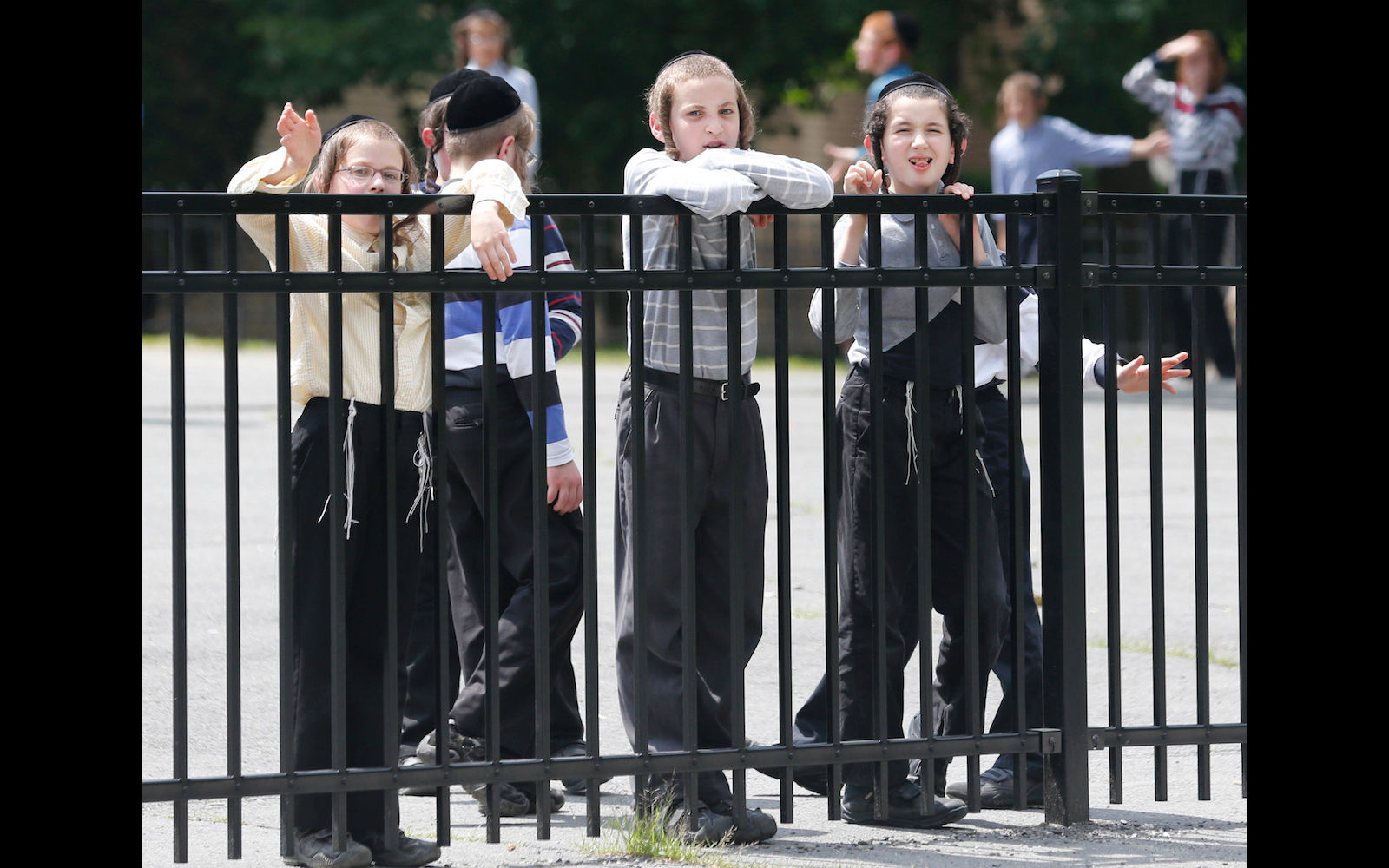
In her latest book Atlas of the Heart, Brene Brown writes about Institutional Betrayal. This describes a situation where a trusted institution causes harm by action or inaction to a vulnerable individual. I can think of no better example of institutional betrayal than the systemic denial of education to nearly 100,000 children attending ultra-Orthodox and Hasidic schools, and the failure of the New York State Education Department to stop it.
Within this culture, the values that are prized in contemporary society – curiosity, the quest for knowledge, intellectual entrepreneurship, engagement with the world at large – are shunned in favor of a narrow, tightly-controlled environment where only religious studies are permitted. And while Judaism has produced a rich history of scholarship and sacred books, a school curriculum that fails to offer English, science, math, social studies, history and the like is failing its students.
I am a product of this broken school system. In order to receive the secular education I craved I had to rebel against my parents, my teachers, my rabbis and my former community. I didn’t feel supported in my arranged marriage and it ended in divorce. I have a strained relationship with my two sons, both of whom have “graduated” from Hasidic high schools without a secular education (despite all my efforts to prevent that). Whatever I have achieved has been through tremendous struggle and at a terrible cost.
As a result, I cannot stand idly by as an entire generation of Jewish schoolchildren are denied the rudiments of education that is guaranteed them by law. I cannot bear to think that even one child might be demonized for dreaming of pursuing higher education, as I did. To channel my angst into activism, in 2017.
Our work has borne some fruit. The New York State Education Department heeded our calls and, in recent weeks, released new regulations for non-public schools. And if enforced properly, it would reduce the likelihood of other children experiencing what I and tens of thousands of children have experienced. It would once and for all spell the end of institutional betrayal.
Unsurprisingly, the institution wants to maintain the status quo at all costs. Agudah, the organization representing these Yeshivas, has launched a campaign against the regulations. Imagine a “religious” organization opposing the teaching of basic literacy skills. The arguments employed by Agudah are dishonest, flimsy and self-serving: “Nowhere in the proposed regulations is there any mention of the need to take into account the educational value of religious studies,” the group wrote in a statement. “By ignoring this essential component of yeshiva education, the proposed new regulations may result in yeshivas having to make major changes to their school day schedules … this is entirely unacceptable.”
This statement is as flawed as it is absurd. It implies that Hasidic schools ought to be exempt from complying with the law of providing minimum educational standards. Oddly, it admits that they currently aren’t meeting the minimum standards, but cannot deal with change because it would require such a major overhaul. According to this logic, there could never be any standards for any industry because the process of improvement or even meeting an acceptable baseline of safety “would require such a major overhaul.”
What is most galling, however, is the false binary that the Agudah and its like-minded entities promote: that by introducing secular learning, Hasidic children will be deprived of the birthright of their Judaic heritage. What utter nonsense.
Throughout history, Jews have prided themselves on their literacy, both religious and secular. It is through the pursuit of knowledge and academic excellence that Jews have risen to the top of every field in a manner that is disproportionate with their minority status in the general population.
The deliberate withholding of the rudiments of secular knowledge to an entire generation of American Jewish schoolchildren is troubling. It hints of fundamentalism, thought control, and authoritarianism.
We know what happens in societies where access to information is severely policed and restricted.
The new NYSED regulations are built on an important foundation. Private schools in NY have long been mandated by state law to provide students with a substantially equivalent education. Students attending these schools trust and depend on these institutions to provide them with a well-rounded education. An education that includes secular studies alongside a religious curricula would give young Yeshiva graduates dignity and enable them to become contributing members of society, able to provide for their families on their own. Currently, without secular education, most young yeshiva graduates end up living in poverty. Unfortunately most depend on government aid programs for survival.
The crippling of human potential is not a Jewish value, indeed, it is antithetical to the Jewish penchant for self-reliance and resourcefulness. Yet Hasidic institutions have been violating their students’ trust for many years by deliberately neglecting their secular education; worse, by demonizing secular knowledge.
My experience is far from unique, there are untold thousands like me. Most are just afraid to speak out. I used to be afraid of that myself. When one is called to tell a terrible truth about one’s community or family it feels like betrayal.
And yet it is the students of these schools who are the victims of a terrible institutional betrayal.
This cannot go on anymore and it is incumbent upon all of us to act. Elected officials and society at large cannot turn a blind eye to the intellectual theft that is taking place. Nor can leaders of important nonprofits in the Jewish community.
This issue belongs to all of us.
 |
| Stephen Weiss Courtesy of Cuyahoga County Prosecutor’s Office |
(Cleveland Jewish News via JTA) – A Cleveland-area rabbi was arrested and suspended from his congregation after allegedly engaging in explicit online conversations and attempting to meet with an undercover investigator posing as a 15-year-old boy.
Rabbi Stephen Weiss, who has served as senior rabbi at B’nai Jeshurun Congregation in Pepper Pike, Ohio, since 2001, was arrested Monday evening by law enforcement officers with the Ohio Internet Crimes Against Children Task Force.
The 60-year-old had traveled to a pre-arranged location to allegedly engage in sexual activity with the purported child, after communicating on a social networking app.
According to the prosecutor’s office, the vehicle he was driving was searched and law enforcement officers found a box of condoms and two bottles of lubricant. Weiss was charged with one count of attempted unlawful sexual conduct with a minor, one count of importuning (soliciting sexual services) and one count of possessing criminal tools, according to the prosecutor’s office.
Court records show Weiss posted a $50,000 bond. According to the court docket, as a condition of his jail release, he is required to wear a GPS standard monitoring device.
The day after Weiss’s arrest, his congregation announced in an email to congregants that it had suspended him from his position and barred him from the premises. B’nai Jeshurun President Rebekah Dorman and Senior Rabbi Hal Rudin-Luria, newly appointed to his position following Weiss’s suspension, also wrote that the synagogue was “unaware of any other alleged criminal incidents involving Rabbi Weiss.”
The synagogue said it would make confidential counseling available to congregants.
“Our synagogue has been strong and vibrant for 156 years and faced many challenges along the way,” Dorman and Rudin-Luria wrote. “We will continue on in that tradition as a synagogue family that supports and cares for each other in challenging times.”
Neither Weiss nor his attorney returned a Cleveland Jewish News request for comment.
The arrest comes amid a spate of recent revelations about misdeeds by rabbis in Ohio. In the Toledo area last month, Rabbi David Kaufman was arrested after being accused of rape; he was fired by his synagogue, which said in a statement that the accusation did not involve a member of the congregation. And in Canton, Rabbi Jon Adland was named in a Reform movement report as having previously been engaged in misconduct involving a 14-year-old girl.
In the latter case, congregants did not learn about the rabbi’s alleged misdeeds while he served them. The community severed ties to Adland after the release of the national report.
This story was originally reported in the Cleveland Jewish News. It is adapted here with permission.
—
The post Cleveland rabbi arrested for soliciting an investigator who posed as an underage boy online appeared first on Jewish Telegraphic Agency.
