EVERY SIGNATURE MATTERS - THIS BILL MUST PASS!

EVERY SIGNATURE MATTERS - THIS BILL MUST PASS!
CLICK - GOAL - 100,000 NEW SIGNATURES! 75,000 SIGNATURES HAVE ALREADY BEEN SUBMITTED TO GOVERNOR CUOMO!

EFF Urges Court to Block Dragnet Subpoenas Targeting Online Commenters

EFF Urges Court to Block Dragnet Subpoenas Targeting Online Commenters
CLICK! For the full motion to quash: http://www.eff.org/files/filenode/hersh_v_cohen/UOJ-motiontoquashmemo.pdf

Thursday, February 16, 2023

Judge denies Washington Hebrew Congregation's discharge request in alleged child abuse case - The "Torah Temima" Precedent


 "Eight families are suing the preschool within the synagogue claiming they ignored warning signs while a teacher sexually abused at least seven children over a two year period, according to the victim's attorney.

The attorney says the teacher, who has not been charged at this time, allegedly sexually abused boys and girls between the ages of two and four.

Here's the unusual part, the civil lawsuit not only names the preschool but also Deborah "DJ" Schneider Jenson, who serves as the school's director of early childhood education."


A judge has denied the Washington Hebrew Congregation's request to be discharged from a case involving claims of creating an environment that put children at risk for abuse.

Superior Court Judge Alfred S. Irving Jr. denied the request on Tuesday. In his brief opinion siding with the parents Irving reasoned, "The Court agrees with Plaintiffs. Interpleader is improper and would indeed be unprecedented given the facts of this case. The balance of the equities does not favor WHC’s requested relief, and the Court will therefore exercise its discretion and deny the motion." 

READ MORE: Families file lawsuit against Washington Hebrew Congregation preschool over alleged child sex abuse

Several families filed the civil lawsuit against the Jewish preschool in Northwest back in 2019 for the alleged repeated sexual abuse of children.

The civil lawsuit not only names the preschool but also Deborah "DJ" Schneider Jenson, who served as the school's director of early childhood education.

The trial is scheduled to begin March 13, 2023.

Read the full decision here & news video:

https://www.fox5dc.com/news/judge-denies-washington-hebrew-congregations-discharge-request-in-alleged-child-abuse-case

Wednesday, February 15, 2023

That’s right: Israel has been enjoying a quiet economic miracle in the past few decades, and no Israeli leader deserves more credit for that than Netanyahu. During his previous 15 years as prime minister, he did a superb job, in my view, helping to transform Israel into the world’s leading start-up nation. He put in place smart economic policies to attract investors. He would go anywhere and talk to anyone to promote the Israeli economy.

"The damage won’t happen overnight, but over time, he concluded: “It will be like termites eating your house. It looks great today, but it will one day suddenly collapse.”


Netanyahu’s Judicial Coup Could Destroy His Start-Up Nation


A group of protesters in Jerusalem with a sign that reads, "Save our start-up nation."

If you want to understand the economic riskiness and moral fraudulence of Prime Minister Benjamin Netanyahu’s headlong rush to ram through a total overhaul of Israel’s judicial system and put it under his thumb while he faces corruption charges, you just need to study two statistics and ask one question.

The two statistics: The Economist ranked Israel as the fourth-best-performing economy in 2022 among O.E.C.D. countries. And in 2020, Israel ranked 19th among the economies in the world, making the top 20 for the first time in its history, based on G.D.P. per capita — ahead of Canada, New Zealand and Britain.

That’s right: Israel has been enjoying a quiet economic miracle in the past few decades, and no Israeli leader deserves more credit for that than Netanyahu. During his previous 15 years as prime minister, he did a superb job, in my view, helping to transform Israel into the world’s leading start-up nation. He put in place smart economic policies to attract investors. He would go anywhere and talk to anyone (except me!) to promote the Israeli economy. And he played a key role in providing government resources so Israel’s high-tech community could forge world-leading positions in cybersecurity technologies, water conservation, solar energy and digital health.

So you cannot be surprised that many global and Israeli investors are looking at Israel today and asking this simple question: If the Israeli legal system that has gradually and collaboratively evolved over the past 75 years was so awful — so in need of emergency radical surgery overnight, without any national debate — how did it help produce and guard the Israeli economic miracle of the past 20 years that Netanyahu always, and justifiably, takes credit for and has made Israel’s middle class amazingly prosperous?

Nothing is more dangerous to Israel’s continued prosperity than Netanyahu’s inability today to give a credible answer to that simple question.

Because in the absence of a credible answer, the only thing one can believe — the only thing foreign investors increasingly believe — is that the whole process is being driven by a small group of far-right authoritarian ideologues, an extremist right-wing think tank inspired by the Federalist Society in America and a prime minister who seems so desperate to escape from his trial on 2020 charges of fraud, bribery and breach of trust that he is ready to change the rules of the entire Israeli Monopoly game to secure his own get-out-of-jail-free card.

Now, that is scary.

Any investor, foreign or domestic, should be worried that Netanyahu is letting the judicial extremists in his cabinet ignite a legal intifada in Israel and a Palestinian intifada in the West Bank — at the same time. And they are doing it in a hyperconnected world where American and European investors now have a strong motivation to carefully guard their E.S.G. ratings, which measure a company’s resilience and exposure to long-term environmental, social and governance risks.

And you want to talk about governance risks? Israel’s own president, Isaac Herzog, is publicly warning that the Netanyahu ruling coalition’s refusal to engage in a calm, patient dialogue with the opposition on the proposed makeover of the Israeli legal system and the independence of Israel’s Supreme Court “is tearing us apart from within, and I’m telling you loud and clear: This powder keg is about to explode. This is an emergency.”

As a general rule, investors don’t like investing in countries roiled with protests and chaos.

And that is why some have started pressing the pause button. Leo Bakman, the president of the Israel Institute for Innovation, a nonprofit organization that serves as an incubator for 2,500 start-ups, gave an interview last weekend with the Haaretz reporter Hilo Glazer and summed up the concerns of the Israeli business community right now.

“Investors are taking a step back and saying: ‘First, decide whether you are a democracy or a dictatorship, and then we’ll talk,’” Bakman said. “Look, I’ve been working with government ministries for years.” He continued, “We have always been apolitical. If I thought this [judicial] ‘reform’ was like shooting oneself in the foot, I would probably think twice about speaking out. But I believe that we are shooting ourselves in the head.”

And that is also why, behind the scenes — behind their don’t-worry-be-happy public bluster — my business contacts tell me that Netanyahu and his strategic adviser Ron Dermer have been calling global corporate leaders, financiers and even economists, like Lawrence Summers, to try to persuade them that the breakneck, radical judicial transformation they are imposing will not unleash so much social and economic instability that their companies should consider freezing new investments or transferring their money back home.

But the more that Netanyahu and Dermer call to tell them not to worry, the more those investors worry that they have something to worry about.

Here’s a report on Sunday from one of Israel’s leading business newspapers, The Calcalist: “An investigation by Calcalist shows that a large number of high-tech companies, whose managers are not at all involved in the protest against the judicial coup, are quietly withdrawing their companies’ cash balances from Israel. An examination of dozens of public high-tech companies, unicorns and start-ups shows that as of last Friday, 37 companies decided to withdraw $780 million from bank accounts in Israel and transfer the money to banks abroad.”

And on Tuesday, The Times of Israel reported that the country’s leading bankers met with Finance Minister Bezalel Smotrich and informed him that they were seeing “early signs” that the planned radical judicial overhaul “will damage the economy and urged the coalition to adopt a compromise plan proposed by President Isaac Herzog.”

According to Israel’s Channel 12, Uri Levin, the C.E.O. of Israel Discount Bank, one of the country’s largest, told the finance minister: “We see a tenfold increase in interest in opening savings accounts in foreign banks. The shekel is growing weaker, Israel’s risk factor is rising, and our stock exchange is doing worse than others around the world. The market is based on trust, and if we don’t stop it now we may find ourselves in a deep crisis.”

This comes after Amir Yaron, the nonpartisan governor of the central bank of Israel, reportedly warned Netanyahu — after talking to business leaders in Davos — that “the ruling coalition’s plans to upend the judiciary could scare away investors and negatively impact the country’s credit rating,” The Times of Israel reported.

Caution: One should have no illusions that somehow the market will save Israel’s democracy for democracy’s sake. The electronic herd of global investors has no soul. It will take money away from Israel or put money into Israel based on one criterion only: the ability to make a profit. Just ask China.

But here is why one of Israel’s most important, veteran high-tech investors, who asked not to be identified for fear of government reprisals, is becoming so worried.

“It is not that you will see a stampede of all the high tech running away,” he told me. “But people are very concerned that the rules of the game are being unilaterally changed. Whether Israel was socialist or capitalist, the government and the business community always sat together and arrived at what was the best for the country. Now these guys are coming in with all kinds of radical unilateral changes. People feel threatened because they don’t know what will be the next suggestion tomorrow.”

Foreign investors, he added, always trusted Israeli courts. If foreign companies had disagreements with the Israeli government over the firing of employees or the land authority over property or the customs authority over imports, they knew that they could go to the courts and get a fair hearing, he said. But if this judicial coup goes through, he said, “and the courts and the government become the same — and then you have a dispute with the government — where will you go to get a fair hearing?”

Also, international and Israeli investors and innovators, he said, need to decide where to register their companies — in America, Europe or Israel — and where to put their profits. If this radical judicial coup goes ahead, he added, you will see more and more companies registering abroad and moving resources abroad. That’s why young Israeli techies, who are being courted by every major tech company in the world, are now wondering if they should stay or go.

Netanyahu thinks he can finesse all of this with investors, he said, adding, “The problem is: Suppose that he’s not right? The risks are enormous.”

The damage won’t happen overnight, but over time, he concluded: “It will be like termites eating your house. It looks great today, but it will one day suddenly collapse.”

https://www.nytimes.com/2023/02/14/opinion/bibi-netanyahu-israel.html

Tuesday, February 14, 2023

In Rabbi Eliyahu’s view, the explanation for the death of many thousands and the egregious suffering of so many more can be attributed to the acts of aggression perpetrated by these peoples towards the Jews.


When a rabbi knows why earthquakes devastated Turkey and Syria 

 
שמואל אליהו הקטן

In hokey theodicy, disasters may vary, but glib explanations remain. For God's sake, we must replace them with empathy - we need to reject a Small World Torah.
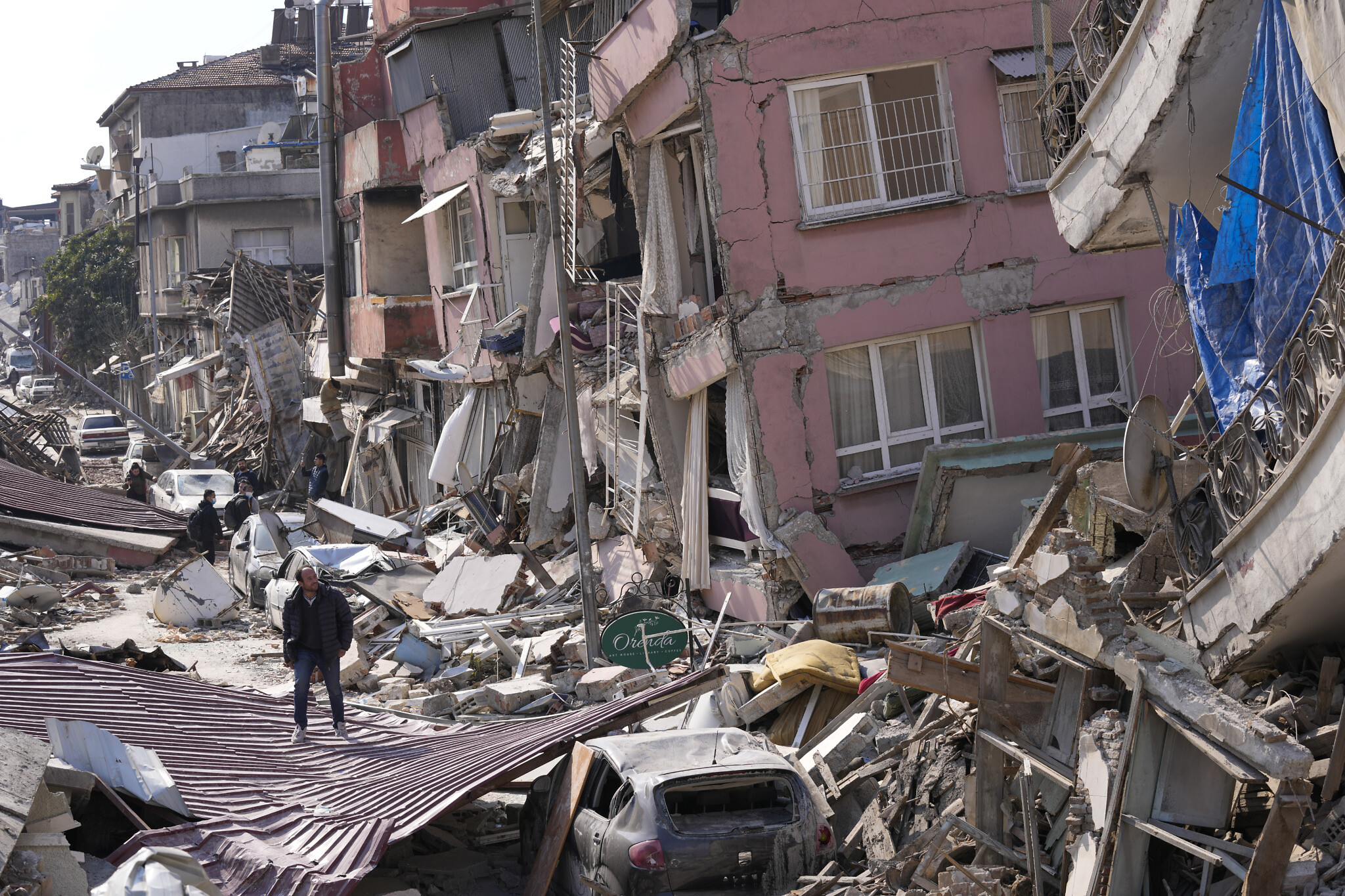
A man walks over debris of collapsed buildings in Hatay, Turkey, February 11, 2023. (Hussein Malla/AP)
A man walks over debris of collapsed buildings in Hatay, Turkey, February 11, 2023
 

The death toll from the earthquakes that have rocked Syria and Turkey is comparable to that of the Lisbon earthquake of 1755. Back then, representatives of organized religion were quick to see the event as a manifestation of divine judgment, while the thought of moderns like Voltaire, Rousseau, Kant, and others was deeply affected by news of the devastation.

Crude religious interpretations of earthquakes are not simply a thing of the past. Rabbi Shmuel Eliyahu, the chief rabbi of Safed in Northern Israel, has often voiced profoundly reprehensible opinions. It now looks as though he is aiming to break his own record, his personal worst. In the most recent edition of Olam Katan, a National Religious publication, the name of which appropriately translates as “small world,” Rabbi Eliyahu has written an opinion piece entitled “How to Relate to the Earthquakes in Turkey and Syria.”

In Rabbi Eliyahu’s view, the explanation for the death of many thousands and the egregious suffering of so many more can be attributed to the acts of aggression perpetrated by these peoples towards the Jews. He does acknowledge that the anguish of our near neighbors is appalling. But, he adds in order to encourage his readers, we should continue to be full-throated in our praise of God Who protects us and metes out judgement upon our enemies.

It is hard to know where to start in responding to this abominable argument. For one thing, it makes his theology a hostage to geology. If (as seems likely sooner or later) an earthquake strikes a little further to the south of the Syrian-African rift, it will be necessary for Rabbi Eliyahu to explain why the actions of Israelis have incurred divine displeasure. My guess is that he may already have prepared a list of self-haters, backstabbers, and heretics to be blamed in such an eventuality. If (perish the thought) an earthquake hits here in Israel, he will wheel out some hokey theodicy designed to preserve his own certainties and condemn the rest of us to punishment for our sins. Disasters may vary, but glib explanations for them stay the same.

This kind of reasoning is offensive, of course, to those caught up in the sheer desperation of this natural disaster. It is also an offence to Judaism itself. It’s not that Rabbi Eliyahu cannot find views across three millennia and more of Jewish expression that support his approach. Small World Thinking can always find some good quotes. But it is worth remembering that, in citing these sources, he has made a choice. If only he would stand up and say: our fellow human beings and close neighbors are in crisis, and we should mobilize to help. I promise he could find some excellent quotes for that position too.

Writing one thousand years ago, Rabbi Bahya ibn Paquda insisted that it is not appropriate to wait for divine instruction in order to know how best to serve God. That is a decision for each one of us to take. In opting to see the victims as pawns in some inscrutable plan, in preferring to hear the dull monotone of self-justification over the plaintiff call of persons in need, Rabbi Eliyahu has made his choice. If his approach goes unchallenged, our Judaism will be too small for the great challenges the world now face.

Rabbi Eliyahu is not alone in responding the widespread loss of innocent life with a mix of smugness, self-obsession and myopia. This earthquake, I would tell Rabbi Eliyahu if I thought he might be able to hear me, is not about us. We are not at the epicenter of this story. We felt the tremors here in Israel, but the question for us and for others around the world is: can we hear a moral imperative addressed to us in the face of so much suffering? Can we set aside our parochial agendas and stand in solidarity with those who lie in ruins?

I heard another rabbi (not one that Eliyahu would grace with that title) address the earthquake this week. Rabbi Janner-Klausner spoke on the BBC, and mentioned the originator of Rabbi Eliyahu’s surname, the biblical Elijah. It was he who spoke of God’s voice to be found not in cyclonic wind, nor in seismic roar, not yet in fire, but in a still small voice.

Ingeniously, she noted that rescuers and disaster-responders need silence so that they can listen out for the still small cries of survivors. Just as their voices may penetrate the silence, so each of us is called to respond in the face of senseless suffering and distress on an epic scale. It is our voice — of response, of solidarity, of concern — that is called for.

That’s what I call an apt Jewish response to unspeakable suffering.

Here in Israel, we are caught up in another kind of earthquake, as the foundations of our democracy and judiciary are under threat of collapse. Here, too, established religion in Israel finds itself too often on the wrong side of the debate, justifying the contemptible and whitewashing the corrupt.

It is time to eschew offensive religious clichés, and to listen out for a stiller, smaller, truer voice. As buildings teeter and institutions are rocked, we need to articulate a Judaism of fundamental human empathy — not for the sake of popularity, nor for the sake of diplomacy. For God’s sake, and for the sake of God’s vulnerable creatures, beyond denominational affiliations and variations in practice and custom, we need to reject a Small World Torah. 


https://blogs.timesofisrael.com/when-a-rabbi-knows-why-earthquakes-devastated-turkey-and-syria/?utm_source=The+Daily+Edition&utm_campaign=daily-edition-2023-02-13&utm_medium=email

Monday, February 13, 2023

The “He Gets Us.” campaign spent a billion dollars to reach the broadest possible swath of Americans. The Greatest Story Ever Told meets The Greatest Ad-Buy Ever Sold. Two "J" Ads will be shown during the Super Bowl, which means that the Good News will officially be in-our-face.


Why the ‘He Gets Us.’ J ads get Jews nervous - Beware of The Israel Loving Evangelicals!


The billion-dollar Super Bowl ad blitz aims to unify all Americans under the banner of the cross – including me 
 
Face it, we’re just not that into him. Deal with it and accept us as we are. We’re fine with being a minority. Our kids are proud of who they are (I hope). We know how to stand up to bullies who want to make us feel that we are strangers in our own land. We can stand up to the powerful and the wealthy. 
 
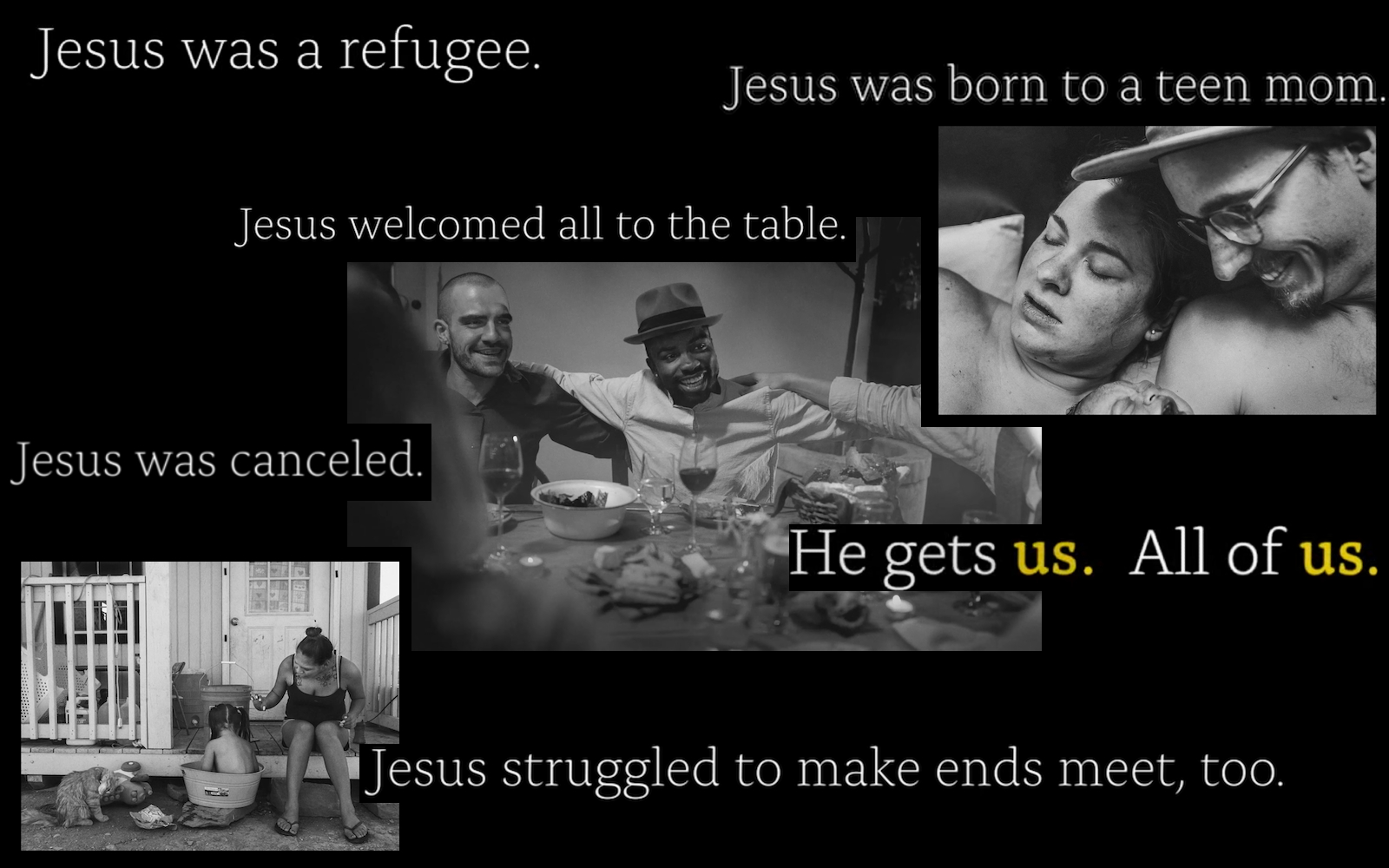
Montage of images and slogans in screenshots from the 'He Gets Us.' ad campaign (The Times of Israel)
Montage of images and slogans in screenshots from the 'He Gets Us.' ad campaign
 

Get ready for a Super Bowl Jesus Blitz that just might put the December Dilemma to shame. The “He Gets Us.” ads have been around for several months now, and on the surface, a little proselytizing is expected and inoffensive. It comes with coexisting with neighbors professing an evangelizing religion. I’ve always felt Judaism can hold its own quite nicely in the marketplace of religious ideas. Christian proselytizing has most often – and most vociferously – been directed toward Jews; this pitch is no exception. As usual, It has been cleverly cloaked in the language of inclusiveness and love.

What’s different this time is the scope.

The “He Gets Us.” campaign looks to spend a billion dollars to reach the broadest possible swath of Americans. The Greatest Story Ever Told meets The Greatest Ad-Buy Ever SoldTwo Jesus ads will be shown during the Super Bowl, which means that the Good News will officially be in-our-face.

Jason Vanderground, a spokesperson for the campaign, stated in an interview on CNN, “We are trying to unify the American people around the confounding love and forgiveness of Jesus.”

Unify?

No offense to Jesus, or to campaign sponsors like the Servant Foundation, but on Super Bowl Sunday, I’d rather be unified under the flings and dashes of Patrick Mahomes and Jalen Hurts. I would think that a truly “confounding love” would include respecting the views of those who choose not to accept your truths. Notice that Vanderground did not say “unify American Christians.” He wants to unify all Americans under the banner of the cross. That includes me.

Unity is admirable and needed. That’s what the Super Bowl, at its best, accomplishes, with a hundred million Americans watching the same thing at the same time. But as a recent Pew survey demonstrates, unity under a Christian banner is a fleeting dream. America’s Christian majority is in steep decline. If the sponsors are looking to recapture lapsed Christians, there are a number of places they can look where Jews may not be as prevalent. But no, if you look at the content of the ads, the prey here is not exclusively lapsed or young Christians, but all progressives, among whom are the approximately three-quarters of America’s Jews who voted on the left and center-left side of the spectrum in 2020. Just look at the ads themselves, and see the hashtagged topics featured on the campaign’s home page:

#Refugee

#Inclusive

#Women

#Relationships

#Judgment

#AboutUs

#Hope

#Justice

#Struggle

#Activist

The hashtags could not be more baldly geared toward piquing the interest of progressives, and in particular, Jews. I half-expected the next hashtags to be #Wokiest, #Vegan-but-can’t-resist-lox-&-a-schmear and #taking-a-knee-during-the-national-anthem. I have no proof that those designing this campaign are specifically targeting Jews, but only recently, Ric Worshill executive director of the Southern Baptist Messianic Fellowship, expressed concern over the rise of antisemitism, and his suggested response was not to support Jews unequivocally, but to love-bomb them with scripture. “There needs to be an urgency in us to share the Gospel with every single person we meet,” he said.

The evidence of historical precedent is overwhelming. Do we need to remind the sponsors about #Crusades, #Inquisition, #Supercessionism (the original “Great Replacement” theory) and #Forced Conversion? Proselytizing is a sensitive topic for us.

So we must understand that those behind this campaign are not looking for a real unity based on tolerance and mutual respect. A “unity” that excludes over a third of the country is not unity. A “unity” that threatens an already jittery minority at a very precarious time is not unity.

It’s more like the old Beatles’ lyric, “Come together, right now…over me.” Yes, we want everyone to join together, but only under our banner, on our terms. Whatever happened to #Pluralism?

Hey, we get it. Jews have also prayed for a come-together-over-me distortion of unity. But that’s the key. We prayed, in the privacy of our own synagogues, that people would ultimately come around to believing in the One God. We don’t buy Super Bowl ads, spending a billion dollars that dredge up old nightmares of Torquemada. Notably, the medieval prayer that promoted this chauvinistic, false “unity,” Alenu, which trumpeted God’s ultimate defeat of those who “bow to vanity and emptiness,” was softened considerably in subsequent versions.

I would perhaps not be as perturbed about the campaign if acts of vandalism hadn’t recently desecrated Jewish-sponsored billboards attempting to spread our message. The goal of that campaign was not to evangelize, but simply to bring people together to combat hate.

What would Jesus say about that, or about the synagogue in New Jersey that was firebombed last week? Maybe his marketers could add the hashtag #endantisemitism-homophobia-and-racism to the home page. I bet Jesus would be okay with that.

Hey, Hobby Lobby co-founder David Green and the rest of the campaign’s big-ticket sponsors. Is your intent truly just to reach out to lapsed Christians from Gen-Z? Or is it to make a religious minority feel like we are being targeted yet again, insidiously love bombing us on the one hand while simultaneously isolating us, evicting us from the tent of “unity?”

Face it, we’re just not that into him. Deal with it and accept us as we are. We’re fine with being a minority. Our kids are proud of who they are (I hope). We know how to stand up to bullies who want to make us feel that we are strangers in our own land. We can stand up to the powerful and the wealthy. 


https://blogs.timesofisrael.com/if-he-gets-us-does-he-get-how-offensive-his-billion-dollar-ad-campaign-is/?utm_source=The+Blogs+Weekly+Highlights&utm_campaign=blogs-weekly-highlights-2023-02-12&utm_medium=email

Sunday, February 12, 2023

Is the modern game of professional football as bad as the gladiators’ contests? No, that would not be a reasonable claim. These men are not actively killing each other. However, the prevalence of brain damage for so many players is deeply troubling. The sad reality is that one of the main reasons people watch the NFL is to see the “big hits.”


American Football: A Case Study in the Limits of Halakhah and the Claim of Ethics


אצטדין – The Gladiator Stadium
The Rabbis in both Talmuds were very unhappy with Jews who attended gladiator[3] fights to the death. The Talmud Yerushalmi (Avodah Zarah 1:7) quotes a Tosefta from Avodah Zarah 2:2 that offers two opinions. The first anonymous Rabbi cited says, “Behold, one who sits in a stadium is considered to have shed blood.” The second position, that of R. Natan, claims that perhaps we ought to permit attendance at gladiator events because you might be able to cheer and scream and thereby save someone’s life or, perhaps, you will be in a position to offer testimony that someone’s husband had died.

R. Natan appears to think that there might be overriding humanitarian benefits that allow one to attend a gladiator contest which would otherwise be totally forbidden. Both the anonymous position and R. Natan assume that there is a serious halakhic problem with simply attending an event where people will be killing each other.

When these two positions appear in the Bavli (Avodah Zarah 18b), the first anonymous voice is printed (in our standard printing) as saying that one may not attend a gladiator contest because it is considered to be a “Moshav Leitzim – a gathering of scoffers.” That position seems very different from that found in the Yerushalmi and the Tosefta. Bach, however, in his glosses on the page, emends the text of the Bavli to align completely with the Yerushalmi and the Tosefta[4]. Dikdukei Soferim (ad loc.)[5] notes that the text appears in the Munich manuscript as “שׁוֹפֵךְ דָּמִים – like you shed blood.” Modern printings of the Talmud consider the emendation compelling enough that they put Moshav Leitzim in parentheses and Shofkhei Damim in brackets. It thus makes sense to conclude that the Bavli also considers attending a gladiator contest akin to shedding blood.

It is important to note that these spectators were not assumed to be participating in the bloodthirsty fights of the gladiators. According to this view, simply watching people engage in the violence of the gladiators made them a kind of accessory to murder.

Is the modern game of professional football as bad as the gladiators’ contests? No, that would not be a reasonable claim. These men are not actively killing each other. However, the prevalence of brain damage for so many players is deeply troubling. The sad reality is that one of the main reasons people watch the NFL is to see the “big hits.” Those moments fill endless highlight reels and get shared in thousands of youtube videos with millions of views.

Steve Almond quotes two of the most popular football personalities: Ray Lewis – arguably amongst the greatest middle linebackers in the history of the NFL, and Michael Strahan who was a dominant defensive end for fifteen years and went on to become a commentator of Fox NFL Sunday, ABC’s Good Morning America and Live! With Kelly and Michael.

Ray Lewis put it like this: ‘The long runs, the touchdowns and all that, that’s the glamor. But the game is about taking a man down, physically and mentally.’ Michael Strahan is even more candid. ‘It’s the most perfect feeling in the world to know you’ve hit a guy just right, that you’ve maximized the physical pain he can feel…You feel the life just go out of him.’ Aggression isn’t just some unfortunate-but-necessary aspect of football. What Strahan is describing is the definition of sadism, the pleasure one takes in harming another.[6]

קנגיון – Hunting
Rabbi Yehezkel Landau (d. 1793, Prague) wrote a fascinating teshuvah in his Noda be-Yehudah[7] where he addressed the question of the permissibility of hunting for sport. There, R. Landau struggles to find a formal prohibition either in the context of tza’ar ba’alei hayyim or bal tashhit but ultimately concludes that Jews should not engage in hunting because it is “akhzariyut[8] – viciousness.”[9]

The Reisha Rav, Rabbi Aharon Levine (d. 1939, Poland, hy”d), in his masterful commentary on the Torah, Ha-Derash Ve-Ha’Iyun on Parashat Toldot (chapter 114, pp. 146-147) quotes another gemara from Avodah Zarah 18b that appears to be an explicit prohibition on hunting. After addressing the problems with gladiators, the gemara says, “Rebbi Shimon ben Pazi darshened…nor stood in the way of sinners (Psalms 1:1) this refers to one who has not stood at bestial contests [bekinigiyyon].” The Reisha Rav does not understand why Noda be-Yehudah does not quote this gemara in his teshuvah as a direct support for the prohibition on hunting.

Rabbi Mordechai Yaffe-Shlesinger in his commentary on the Torah, Bigdei Mordekhai, also in the beginning of Parashat Toldot, quotes the question of the Reisha Rav. However, he offers a different understanding of קִנִגְיוֹן that has implications for the question of watching football. R. Shlesinger, based on Rashi’s comment on the word, explains that קִנִגְיוֹן refers to the way non-Jews used dogs to hunt other smaller animals[10].

R. Yaffe-Shlesinger notes that the prohibition on “קִנִגְיוֹן” is not really referring to the Jew actually hunting with dogs. Rather, it refers to a Jew watching a non-Jew hunt with dogs in the hope that he might witness this grotesque act of dogs capturing an animal.[11] To be very clear, the prohibition is not formally linked to tza’ar ba’alei hayyim; rather, it is about showing up to witness the violence of dogs hunting animals.[12]

A similar idea can be found in the work of R. Tzadok ha-Kohen of Lublin[13]. He wrote, “And the matter of knigin is a military sport of animals.” The key here is that they understand the prohibition as applying to a Jew who simply shows up to witness the violence of animals against other animals.

While it would not be reasonable to make a direct comparison from American football to gladiators, it seems to me that if we are prohibited from watching animal violence, all the more so that we may not watch human violence.

רחמנים בני רחמנים – Values
How should the Modern Orthodox community relate to the popularity of the NFL? There is no explicit line in the Shulhan Arukh that can be marshaled in direct opposition to watching professional football. However, the values that drove the Rabbis of the Talmud are quite clear. Watching people engage in violence that can lead to death makes one an accessory to murder. The Rabbis also understood that watching animal violence for sport was prohibited.

The Jewish People are lovingly referred to as “רחמנים בני רחמנים – merciful the descendants of merciful.”[14] If nothing else, the valorization of the violence of football goes against this most basic aspiration of what it means to be a Jew. It is important to note that there are other sports or behaviors that might fall under this same rubric. One might wonder why to focus particularly on football.

First of all, we must often be reminded not to let the perfect be the enemy of the good. It may, in fact, be the case that we should not watch boxing or hockey, but those sports are not part of my own social milieu. Second, many shuls in the US host Super Bowl parties while very few host parties for the Stanley Cup (with apologies to my Canadian colleagues if this is common place in your communities). Finally, the NFL has been particularly egregious in its attempts to cover up the brain damage that was caused for many years. They also seem unwilling to engage in a serious re-evaluation of what the game might look like in order to protect the players.

To be very clear, the NFL wants us to look at Damar Hamlin’s recent and tragic cardiac arrest because he will, thank God, likely get better. They want to focus our attention on a type of injury that is unusual, shocking, and ultimately allows for a happy ending. The reality is that this focus allows for a kind suppression of our empathy, a turning away from the real issue, which is the long-term brain damage affecting so many of the players. That injury can’t be seen in one play, one game, or even one season.

Chuck Klosterman who, among other things served as the ethicist for the NY Times Sunday magazine wrote, “I realize an argument can be made that eroticized violence is inherent to any collision spectator sport, and that people who love football are tacitly endorsing (and unconsciously embracing) a barbaric activity that damages human bodies for entertainment and money.[15]

Klosterman refers to the New Orleans Saints “bounty controversy” in which, “players and at least one assistant coach maintained a bounty pool of up to $50,000 the last three seasons to reward game-ending injuries inflicted on opposing players, including Brett Favre and Kurt Warner, the NFL said Friday. “Knockouts” were worth $1,500 and “cart-offs” $1,000, with payments doubled or tripled for the playoffs.[16]

He then goes on to say, “Talking intellectually about football now means talking about whether football should even exist; in my lifetime, the game has never been so contentious.” Klosterman is asking the right questions. While this may not be the gladiators, the more you truly understand the violence of the game and the brain damage that is an inevitable result of play at the highest level, the closer it becomes.

I don’t think that our community is in a position to advocate for the end of a multi-billion dollar American industry. The economic reality of the NFL in the United States is such that real change will have to come through the legal system. However, we could start with a more modest set of goals.

First, shuls should no longer host Super Bowl parties. In fact, Super Bowl Sunday is a great day to host a shiur. You can even serve wings and enjoy the time with family and friends. Second, we should discourage people from spending money on tickets. That kind of direct financial support has to be understood as worse than just the eyeballs on the screen for the advertisers.

Third, and this is hard, we all need to take the time to have some serious conversations with our children. There are so many ways to spend time as a family that can be carved out on a weekly basis. Not everyone will be able to sit and learn or attend a shiur as a family, and that is fine. However, you could go for a walk in nature, watch a movie at home with some popcorn, or simply have a family dinner.

There is also a deeper problem of which the Modern Orthodox love of American football seems like a symptom. How do we make sure not to suppress our own ethical intuitions in a sphere that lacks clear halakhic guidelines? It is always hard to find the right balance between contemporary American culture and what Halakhah demands of us. Being committed to living in the world and engaging with the best of modernity does not mean that everything is encouraged or even permitted. We need to remind ourselves that one of the roles of the Jewish people is to be countercultural, to push back against behaviors and values that, even if they don’t explicitly violate a line of the Shulhan Arukh, are not in line with the Torah’s worldview.

A community that cares about religious values, not just halakhah, must continue to work towards creating a discourse of values rooted in Torah sources carrying obligatory or, at least, persuasive force. To avoid doing so is to limit our tradition to purely legalistic concerns, which is a disservice both to the tradition and to the fullness of what a religious life can and should be.

Living, “the fullness of… religious life” lies at the heart of the struggle to navigate the boundaries of modern values and halakhic demands. Not only do we do a disservice to tradition, but we also leave the next generation without a robust framework in which they can make ethical and religious decisions.

I personally find a deep sense of the presence of God in the careful study of the Shulhan Arukh together with its attendant commentaries. Watching the Halakhah unfold from Mishnah to Mishnah Berurah is my spiritual center. For some, this might very well be what they need. However, we are learning that this is simply not enough for many, many serious Jews. People are seeking an Agaddah to support their Halakhah. While one can not point to a text that explicitly prohibits watching the NFL, it is clear to me the weight of rabbinic values leans heavily on withdrawing from this kind of behavior. 


[1] See Steve Almond, Against Football: One Fan’s Reluctant Manifesto (2014), 19

[2] The prevalence of chronic traumatic encephalopathy (CTE) among NFL players is difficult to pinpoint – in large part because the NFL continues to block the placing of sensors inside helmets. While there are concussions protocols in place, many players find ways to work around them and play regardless. The more dangerous reality is that consistent sub-concussive brain injuries lead to CTE. As of March 2014 of the fifty-five former players’ brains that had been studied, fifty-four of them suffered from CTE. When untreated, and often even with treatment, CTE leads to mood disorders, anger, depression, suicidal tendencies, short term memory loss, and dementia.

[3] Two articles that are helpful in understanding the Talmudic and Midrashic approach to gladiators are: 1) Stewart Rubin, “Jewish Opposition to the Ancient Gladiatorial Games,” Hakirah 26 (2019). In this piece Rubin shows the way in which Jewish opposition to gladiators deviated from the general population. He also notes that Josephus in the Antiquities of the Jews, Book 16 Chapter 8 describes Herod’s building of just such a stadium in Jerusalem. 2) Benjamin Williams, “The Parable of the Disappearing Gladiators: Interpreting a Late Antique Cultural Reference in Genesis Rabba’s Exposition of the Cain and Abel Narrative,” Journal for the Study of Judaism 53 (2022). Williams unpacks to what extent Hazal had awareness of gladiatorial games. He also deals with text that says that Reish Lakish was himself a gladiator.

[4] The gemara quotes the Tosefta in order to use the debate between the Tanna Kamma and R. Natan to resolve an apparent contradiction between two other beraitot regarding whether it is permitted to attend the gladiator contests or not. The original position that was stringent used the phrase moshav leitzim and the first verse of the first chapter in Psalms to explain the potential problem with the gladiators. It seems likely thatwhen the gemara then sought to bring the Tosefta, a later copyist shifted the original language of “shedding blood” to match the phrase of the first beraita.

[5] See page 46 note 7, where Rav Rabinovitch also refers to Ein Ya’akov as having the text like this. He also notes that the Munich manuscript has the words דברי רבי, ascribing that position to a different Tanna.

[6] See Steve Almond, Against Football: One Fan’s Reluctant Manifesto (2014), 135.

[7] Mahadura Tinyana Yoreh Deah 10, cited in Pit’hei Teshuvah Yoreh Deah 28:10.

[8] For a fascinating treatment of the destructive nature of akhzariyut, see the following three essays of Rav Shlomo Wolbe. He first wrote about in Ma’amarei Yemei Ha-Ratzon in Elul 5718/Tishrei 5719 (September 1958). He came back to the same idea in a talk that he gave in the secular Kibbutz Hulda in Heshvan 5729 (November 1968) published in Bein Sheshet Le-Asor. R. Wolbe returned to this idea in the 8th volume of the journal Bi-Shevilei Ha-Refuah published Sivan 5742 (May/June 1982). For R. Wolbe, akhzariyut is about creating distance from the self. In order to engage in problematic behavior, we have to be able to ignore our own internal moral compass.

[9] He is also concerned that engaging in this kind of behavior can put the person in a potentially life threatening situation.

[10] This explanation also appears in Or Zarua quoted by Rema (Orah Hayyim 316:2, based on his comment in the Darkei Moshe note 2). See Peri Megadim on Magen Avraham 5 who explains that if this is your job it might be permitted. If, however, it is only for the sake of a pleasure trip (tiyul) then it is certainly prohibited.

[11] Rav Wosner in Shiurei Shevet Ha-Levi 7:155 uses this gemara to basically prohibit television. While I am not prepared to go quite that far, I think that Rav Wosner has picked up on an important ethos of the gemara. Watching violence be portrayed on television in which no one gets injured is vastly different from watching real live violence. In the Teshuvot Mahari Bruna 71 , he was asked if betting on horses falls under this same prohibition. Thank you to my friend and teacher Rabbi Refael Kroizer for pointing me in this direction.

[12] See also the Midrash in Vayikra Rabbah 13:3, quoted by the Darkei Moshe on the Tur Orah Hayim 316:2. In a teshuvah of the Maharam of Rothenberg (Lvov printing #27), he makes a similar connection but thinks that it is about the Jew him or herself using dogs to hunt other animals. The encyclopedic work Tza’ar Ba’alei Hayyim Be-Halakhah U-be’Aggadah by Rabbi Yitzhak Nahman ben Rav Avraham Eshkoli, in the fifth chapter on page 183 to 185, outlines several different approaches to קנגיון and concludes that included in each approach is the prohibition to watch the kind of violence that occurs when animals are used to hunt other animals.

[13] Pri Tzadik, “Shemot Le-Rosh Hodesh Adar.

[14] It appears that this popular phrase has its origin in the Sefer ha-Hinukh; see Parashat Mishpatim Mitzvot 42 and 44, as well as Parashat Shoftim Mitzvah 498. The Rambam has a similar formulation in Hilkhot Issurei Biah 19:17. Both appear to be based on the gemara in Beitzah 32.

[15] Chuck Klosterman, “The Two Lines that Never Cross.” https://grantland.com/features/the-nonexistent-intersection-nfl-popularity-violence/

[16] “NFL: Saints defense had ‘bounty’ fund.” https://www.espn.com/nfl/story/_/id/7638603/new-orleans-saints-defense-had-bounty-program-nfl-says

https://thelehrhaus.com/commentary/american-football-a-case-study-in-the-limits-of-halakhah-and-the-claim-of-ethics/?utm_source=Lehrhaus+Readers&utm_campaign=487862b650-Lehrhaus+Latest+152_COPY_01&utm_medium=email&utm_term=0_5effc5ad09-487862b650-19243567&mc_cid=487862b650&mc_eid=a570c54e7f

Friday, February 10, 2023

On Mental Health & Depression...


 It’s ridiculous that we still know so little about the illness and how to treat it. I find it unfathomable that it’s been well over a century since Sigmund Freud started writing about psychology. We’ve had generations of scholars and scientists working in this field, and yet suicide rates in 2020 were 30 percent higher than they were in 2000 and one in five American adults experiences mental illness each year. We need much more research funding to figure this out.

He seemed, outwardly, like the person in my circle least likely to be afflicted by a devastating depression, with a cheerful disposition, a happy marriage, a rewarding career and two truly wonderful sons, Owen and James. But he was carrying more childhood trauma than I knew, and depression eventually overwhelmed him.

At first, I did not understand the seriousness of the situation. That’s partly temperamental. Some people catastrophize and imagine the worst. I tend to bright-icize and assume that everything will work out. But it’s also partly because I didn’t realize that depression had created another Pete. I had very definite ideas in my head about who Pete was, and depression was not part of how I understood my friend.

Over the next months, severe depression was revealed to me as an unimagined abyss. I learned that those of us lucky enough never to have experienced serious depression cannot understand what it is like just by extrapolating from our own periods of sadness. As the philosophers Cecily Whiteley and Jonathan Birch have written, it is not just sorrow; it is a state of consciousness that distorts perceptions of time, space and self.

The journalist Sally Brampton called depression a landscape that “is cold and black and empty. It is more terrifying and more horrible than anywhere I have ever been, even in my nightmares.”

The novelist William Styron wrote brilliantly about his own depression in “Darkness Visible.” He wrote that “the madness of depression is, generally speaking, the antithesis of violence. It is a storm indeed, but a storm of murk. Soon evident are the slowed-down responses, near paralysis, psychic energy throttled back close to zero.” He continued: “I experienced a curious inner convulsion that I can describe only as despair beyond despair. It came out of the cold night; I did not think such anguish possible.”

I tried to remind Pete of all the wonderful blessings he enjoyed, what psychologists call “positive reframing.” I’ve since read that this might make sufferers feel even worse about themselves for not being able to enjoy all the things that are palpably enjoyable.

I learned, very gradually, that a friend’s job in these circumstances is not to cheer the person up. It’s to acknowledge the reality of the situation; it’s to hear, respect and love the person; it’s to show that you haven’t given up on him or her, that you haven’t walked away.

As Pete spoke of his illness, it sometimes seemed as if there were two of him. There was the one enveloped in pain and the other one who was observing himself and could not understand what was happening. That second self was the Pete I spoke to for those three years. He was analyzing the anguish. He was trying to figure it out. He was going to the best doctors. They were trying one approach after another. The cloud would not lift.

I am told that one of the brutalities of the illness is the impossibility of articulating exactly what the pain consists of. Pete would give me the general truth, “Depression sucks.” But he tried not to burden me with the full horrors of what he was going through. There was a lot he didn’t tell me, at least until the end, or not at all.

 The experts say if you know someone who is depressed, it’s OK to ask explicitly about suicide. The experts emphasize that you’re not going to be putting the thought into the person’s head. Very often it’s already on her or his mind. And if it is, the person should be getting professional help.

READ MORE:

https://www.nytimes.com/2023/02/09/opinion/despair-friendship-suicide.html

Thursday, February 09, 2023

Former ultra-Orthodox Jewish school principal - קראַנק הונט - Malka Leifer allegedly raped a former student and told her it would help her for her wedding night.


The 56-year-old former teacher and mother of eight is standing trial accused of sexually abusing Melbourne sisters Nicole Meyer, Dassi Erlich and Elly Sapper when they were her students, or young teachers, at the city's Adass Israel School between 2003 and 2007.
 
Leifer, who was head of religious studies and later principal, has pleaded not guilty.
 
The charges comprise 10 counts of rape, 10 counts of indecent assault, three counts of sexual penetration of a 16-year-old or 17-year-old child, five counts of an indecent act with a 16-year-old or 17-year-old child and one of rape by compelled sexual penetration.

A sketch of Malka Leifer in court on Wednesday.
The women, who are sisters now in their 30s, were raised in the ultra-Orthodox Hasidic community in which young girls were not taught about sex until after they were engaged to be married, prosecutor Justin Lewis told Leifer's County Court trial on Wednesday.
 
Former Melbourne ultra-Orthodox school principal Malka Leifer exploited the vulnerability of her victims and warned one of them that she would publicize the girl’s problems at home if she disclosed Leifer’s abuse, a prosecutor told an Australian court in his opening statement on Wednesday.

The girls came from a sheltered environment within Melbourne’s Hasidic community. The family did not have a television, newspapers, magazines or access to the internet at home. “It was not acceptable within the community to say anything against a person of high standing in the community, especially as a child,” Lewis said. “As a result of being raised in an ultra-Orthodox community, the three complainants did not have any knowledge or understanding of sex throughout the period of the alleged offending.”

A jury of 15 - comprised of eight men and seven women - has been empanelled for the trial which could run for up to six weeks.
 
According to Erlich, family life was extremely contained to ensure they were not influenced by cultures of the world outside the community, Lewis said in his opening address.
 
They had no newspapers, television, radio or access to the internet at home, and only had books that had been vetted.
 
Erlich had no significant interaction with males outside her family until she was introduced by a matchmaker to her future husband, he said.
 
"They were not taught anything about sex until engaged to be married," Lewis said.
Malka Leifer is a former principal of the Adass Israel School.
Malka Leifer is a former principal of the Adass Israel School
Court documents reveal some of the alleged offending is said to have taken place during June school camps in 2004 and 2006.
 
Lewis told the jury Meyer was sexually abused by Leifer when she was a student and after graduating when she returned as a teacher.
 
On a high school camp, Leifer allegedly raped Meyer and told her "this will help you for your wedding night".
 
On a second occasion, Leifer allegedly fondled Meyer, before stopping and telling her "I'll leave that for your husband".
 
Lewis said Meyer was uncomfortable when touched by Leifer but because of her cultural upbringing didn't know any better.
 
Erlich was also allegedly abused at the same camp when sharing a room with her sister and Leifer.
Lewis said Leifer begun to spend more time with Erlich in the lead-up to the camp, when she was in year 11, and told her she was there for her.
 
Leifer allegedly asked her if she was "an innocent girl or if she'd like to find out things that weren't relevant" to her, Lewis said.
 
On another occasion, while Leifer was putting her baby to sleep, she allegedly kissed Erlich on the lips.
Lewis said Leifer then explained what kissing on the mouth meant because Erlich hadn't heard of it before.
 
The jury heard Leifer had Erlich over to her house for kallah lessons - in which young Jewish women are taught about family, purity and basic details about sex.
 
His opening address to jurors is expected to continue on Wednesday afternoon, before Leifer's barristers Ian Hill KC and Lucinda Thies open their case.
 
Wearing a long black skirt, a black and gold jumper and her hair in a black wrap, Leifer sat in the court holding a small book as Judge Mark Gamble addressed the jurors on Wednesday morning.
 
He told them to put aside any sympathy or prejudice they might feel toward or against any party and determine the case using their intellect, not their hearts.
 
Leifer is facing 29 charges, including 10 of rape, one of rape by compelled sexual penetration, three charges of sexual penetration of a 16 or 17-year-old child, 10 of indecent assault, and five of indecent assault of a 16 or 17-year-old child.
 
"Leifer has pleaded not guilty to each of these charges and so it is for you and you alone to decide whether she is guilty or not guilty of these crimes," Gamble said.