EVERY SIGNATURE MATTERS - THIS BILL MUST PASS!

EVERY SIGNATURE MATTERS - THIS BILL MUST PASS!
CLICK - GOAL - 100,000 NEW SIGNATURES! 75,000 SIGNATURES HAVE ALREADY BEEN SUBMITTED TO GOVERNOR CUOMO!

EFF Urges Court to Block Dragnet Subpoenas Targeting Online Commenters

EFF Urges Court to Block Dragnet Subpoenas Targeting Online Commenters
CLICK! For the full motion to quash: http://www.eff.org/files/filenode/hersh_v_cohen/UOJ-motiontoquashmemo.pdf

Sunday, December 03, 2023

President Harry Truman - "cry-baby scientist." never wanted to see that son of a bitch in this office again". How the A-Bomb Saved the Lives of 32 Million People !


When President Truman met Oppenheimer 

Remembering Oppenheimer's meeting with President Truman: , he pulled his handkerchief from his breast pocket and offered it to Oppenheimer, saying, 'Well, here, would you like to wipe your hands?'”

The meeting between Oppenheimer and Truman did not go well. It was then that Oppenheimer famously told Truman that "I feel I have blood on my hands", which was unacceptable to Truman, who immediately replied that that was no concern of Oppenheimer's, and that if anyone had bloody hands, it was the president. Oppenheimer felt as though the future was in the balance, and that the American government was using/would use the bomb as a political tool against the Soviets.

Truman had very little use for Oppenheimer then--little use for his "hand wringing", for his high moral acceptance of question in the use of the bomb, for his second-guessing the decision. Cold must have descended in the meeting, as Truman later told David Lillenthal of Oppenheimer that he "never wanted to see that son of a bitch in this office again". Truman would retell the story in different ways, but with generally the same result, waxing about how he dismissed the "cry-baby scientist."

Although President Harry Truman, the man who made the final decision to drop the world’s first atomic weapon on Hiroshima, appears for only a few minutes in “Oppenheimer,” his scene is a memorable one. (Minor spoilers ahead, if you want to go into “Oppenheimer” completely blind.)

In it, Cillian Murphy’s J. Robert Oppenheimer meets with Truman in the Oval Office after the bomb is dropped. Truman, played by Gary Oldman, is initially excited to meet the man in charge of the Manhattan Project, but his delight soon turns to anger when a nervous Oppenheimer says he feels he has “blood on my hands.” The meeting ends with Truman coldly offering his handkerchief and calling Oppenheimer a “crybaby” as they part ways.

But is that what actually happened when Oppenheimer met the president?

Remarkably, it really did go that poorly. In the weeks after Hiroshima, the reality of how the world had changed weighed heavily on Oppenheimer. On the recommendation of an acquaintance, Oppenheimer asked for a meeting with Truman. On Oct. 25, 1945, Truman was introduced for the very first time to the man who had headed the Manhattan Project. 

The meeting was convivial at first, but the tone shifted when Truman asked Oppenheimer when he thought the Soviet Union would have its first nuclear weapon. Oppenheimer replied that he didn’t know. “Never!” Truman boisterously responded.

This did not go over well with Oppenheimer, who was sure that scientists in other countries could certainly figure out what the Americans had. (Neither Oppenheimer nor Truman yet knew that spies at Los Alamos had already given the Soviets the critical information they needed for their nuclear weapons program.) Flustered, Oppenheimer then made a mistake.

“Mr. President,” he said, “I feel I have blood on my hands.”

Oppenheimer’s biographers in “American Prometheus” recounted how Truman would later retell the incident: “Over the years, Truman embellished the story. By one account, he replied, 'Never mind, it’ll all come out in the wash.' In yet another version, he pulled his handkerchief from his breast pocket and offered it to Oppenheimer, saying, 'Well, here, would you like to wipe your hands?'”

Ultimately, “American Prometheus” posits the most likely response Truman gave to Oppenheimer was a bit less dramatic. “I told him the blood was on my hands — to let me worry about that,” Truman allegedly said to a colleague. 

However it went down, the exchange destroyed any collegiality the men might have formed. Truman stood up to signal the meeting was over, and Oppie walked out defeated. “Blood on his hands, dammit, he hasn’t half as much blood on his hands as I have,” Truman was overheard saying afterward. “You just don’t go around bellyaching about it.”

“I don’t want to see that son of a bitch in this office ever again,” Truman reportedly told Secretary of State Dean Acheson. In a letter to Acheson the next year, Truman referred to Oppenheimer as a “cry-baby scientist.”

The failure was not just an interpersonal one. Oppenheimer “had the opportunity to impress the one man who possessed the power to help him return the nuclear genie to the bottle,” wrote Oppenheimer’s biographers, “and he had utterly failed."

Instead, Truman and the presidents to come would rely on the advice of Ernest Lawrence and Edward Teller (played by Josh Hartnett and Benny Safdie in “Oppenheimer,” respectively). Unlike Oppenheimer, who came to believe the government should stay out of scientific study, these two Manhattan Project physicists believed in the union of government and nuclear weapons research. In partnership with the Truman administration, Lawrence and Teller continued nuclear weapons development under the oversight of the U.S. government.

While Oppenheimer cautioned against the creation of the H-bomb, Teller went on to become the so-called “father of the hydrogen bomb,” a weapon far more destructive than the ones dropped on Japan. 

Atomic Salvation: How the A-Bomb Saved the Lives of 32 Million People


Atomic Salvation: How the A-Bomb Saved the Lives of 32 Million People by Tom Lewis. Casemate Publishers, 2020, 351pp.

Does the United States deserve to be condemned for the atomic bombing of Japan? In Atomic Salvation, Dr. Tom Lewis—an independent historian, former high school teacher, and Australian intelligence analyst who served in the Middle East—seeks to reexamine the decision, consider the military and operational factors involved, and project how the war might have proceeded if the atomic bomb had not been used.

The question has never been merely of dispassionate academic interest. The common presumption of the efficacy of Hiroshima and Nagasaki was offered as a final proof of how airpower—particularly against mass civilian populations—transformed the nature of war and justified the development of American strategic doctrine and the resources devoted to the construction of the nuclear stockpile and its associated delivery systems.

Of course, immediately after the events, American opinion was almost unanimous that the two atomic attacks, while horrific, were defensible by the millions of American and Japanese lives saved when the shocks of the attacks broke the will of the Japanese to continue and compelled them to surrender. In the years following, a wave of revisionist histories emerged condemning the use of the atomic bombs as illegal and/or unjustifiable. The debate between conventional, revisionist, and post-revisionist historians reflects the politics of the years when they were written as well as the changes in evidence available.

The author does an admirable job of summing up the operational conditions for the Japanese and American militaries until August 1945 and the strength of the resolve of the military and the Japanese people to fight to the bitter end. If the choices were to end the war with atomic weapons or invade the Japanese home islands, it is clear that the invasion would have cost millions of lives on both sides. Even if the Americans had decided to maintain the blockade and continue mass aerial bombardment, there is good reason to believe that an invasion force would eventually have to be launched and that any invasion would have been opposed by the military and civilian populations at enormous cost. In the meantime, a policy of imposed starvation—of food, as well as materiel—would have weakened Japanese capabilities without reducing their resolve.

Lewis estimates that the bombing of Hiroshima and Nagasaki, to the extent that it induced Japanese surrender, saved the lives of roughly 30 million people. His calculations are detailed, and his argument is persuasive. If the atomic bombs were the final straw that pushed the emperor to step out of his traditional role and side with civilians willing to negotiate surrender, then his case is persuasive. But are those the only alternatives? Were there other factors at play?

For example, up until the end there was a hope among the Japanese leadership that, with the Soviet Union playing the role of a neutral intermediary, it would be possible to enter negotiations with the active allies and avoid the “unconditional surrender” required of them by the Potsdam Declaration. In June, a month prior to Potsdam, the Supreme War Council had already decided to pursue a negotiated peace. Despite the extreme objections of the Army, by the second week of July, work had begun to develop the language of a peace proposal.

The bombing of Hiroshima occurred on the morning of Monday, 6 August 1945. News of the destructive force of a single bomb was transmitted to Tokyo that afternoon, but details were uncertain and their implications unclear. On Tuesday, an Army communiqué noted the use of a “new type of bomb.” On Wednesday morning, the Japanese were officially notified that the Soviet Union would enter the war against them the next day. The emperor told the foreign minister that the war should be ended without delay. Yet an emergency meeting of the Supreme War Council was postponed.

The author is certainly right to point out the importance of the military realities as well as the probable casualties to be expected if an American invasion of the Japanese home islands were to have taken place. However, his error lies in assuming that all Americans and all Japanese saw those military realities in the same way and that the political realities were secondary. The decision to end a war, like the decision to enter one, is at its root political. Political realities are perceived very differently by different decision-makers. Obvious questions are left unaddressed by Lewis, largely due to failing to consult Japanese primary documents. Although many were destroyed, some of these documents exist. For example, notes of the emperor’s meetings with his war cabinet before and after Hiroshima are instructive. They are not what one would expect from the conventional narrative. Immediately after Hiroshima, the attack did not warrant mention in the meeting of the Supreme War Council. Its effects were swamped by the much larger destruction already inflicted, and still being inflicted, by the strategic bombing campaign as well as the changing status of the Soviet Union.

The immediate shock effect of the atomic bombing was relatively minor and only appreciated by different actors over time. Most Japanese did not learn much about the bombing until after the war. Those few in the position to influence decisions realized that the strategic bombing of Japanese cities had already reduced them to rubble. Cities of over one million people before the war had already lost two-thirds of their population; cities of over 100,000 had lost nearly 60 percent of their populace. Civilians had already tolerated unspeakable horrors without complaint. As Lewis observes, mass civilian morale remained unaffected. Some civilian officials saw the prospect of continued atomic attack as reason to abandon the war while some Army and Navy representatives denied that anything of significance had occurred. It was not until 10 August, after the decision had been made to surrender, that the attacks were confirmed to be atomic. Even then, some in the Army were convinced that sufficient losses could be inflicted on invaders to compel the Americans to negotiate a settlement. However, the Soviet Union had already demonstrated that it was willing to suffer whatever casualties were necessary to achieve its goals, and the 9 August invasion of Manchuria quickly punctured Japanese lines and pushed deep into the rear.

Timing is everything. It was unprecedented for the emperor to take a role in breaking a deadlock in the Supreme War Council. Even after he did, he faced rebellion among leaders and troops of his own military, including an attempted coup d’état on 14 August. Was it only the atomic bomb that compelled his action?

It is more likely that the use of nuclear weapons was important but not sufficient. The nuclear attack combined with the Soviets opening a new front created the catalytic crisis that compelled the emperor to act. Certainly, games of “what if” are endless. But downplaying the Soviet role, while it may have helped American strategic policy to confirm strategic bombing as the decisive factor in ending the war, is not supported by the evidence. Lewis is correct to note that Soviet forces would have suffered enormous casualties in any operation on the Japanese home islands. He is incorrect to assume that, first, those casualties would be as hard on Stalin as they would have been for Truman and, second, that the Japanese believed the Soviets to be as casualty adverse as they hoped the Americans to be. In particular, the Japanese would already have had a sense of the differences between how the Western Allies and the Soviets treated occupied territories in Germany and Eastern Europe. They may well have concluded that it was better to lose to and suffer occupation by the Americans than to do so to the Soviets. To this day, Japanese territory seized and held by the Soviet Union remains a point of contention with Russia.

It is unfortunate that, despite extensive endnotes, this book has no index. Therefore, the attention given to some of the alternative explanations and evidence must remain subjective. However, some things are clear. First, the author limits himself to English-language sources, the vast majority of which are secondary works. The few primary documents cited, such as the United States Strategic Bombing Survey interrogations of Japanese officials and the postwar occupation reports of General MacArthur, lend little perspective on the process of American decision-making and next to none on the internal debates of Japanese leaders preceding and following the strikes. More useful volumes place the military facts within the political context of the decision of the decision are Ian Toll’s Twilight of the Gods and Marc Gallicchio’s Unconditional: The Japanese Surrender in World War II. In the end, Lewis’s Atomic Salvation is useful but not entirely persuasive.

Dr. Daniel McIntosh
Associate Professor Emeritus
Slippery Rock University of Pennsylvania

https://www.sfgate.com/sf-culture/article/oppenheimer-truman-disastrous-meeting-18230557.php
https://www.airuniversity.af.edu/AUPress/Book-Reviews/Display/Article/2462838/atomic-salvation-how-the-a-bomb-saved-the-lives-of-32-million-people/

Friday, December 01, 2023

In the end, Israel will almost certainly have to decide whether to destroy the terrorists completely or save the remaining hostages – to choose, once again, between our national body and soul.


Israel’s choice: Body or soul 


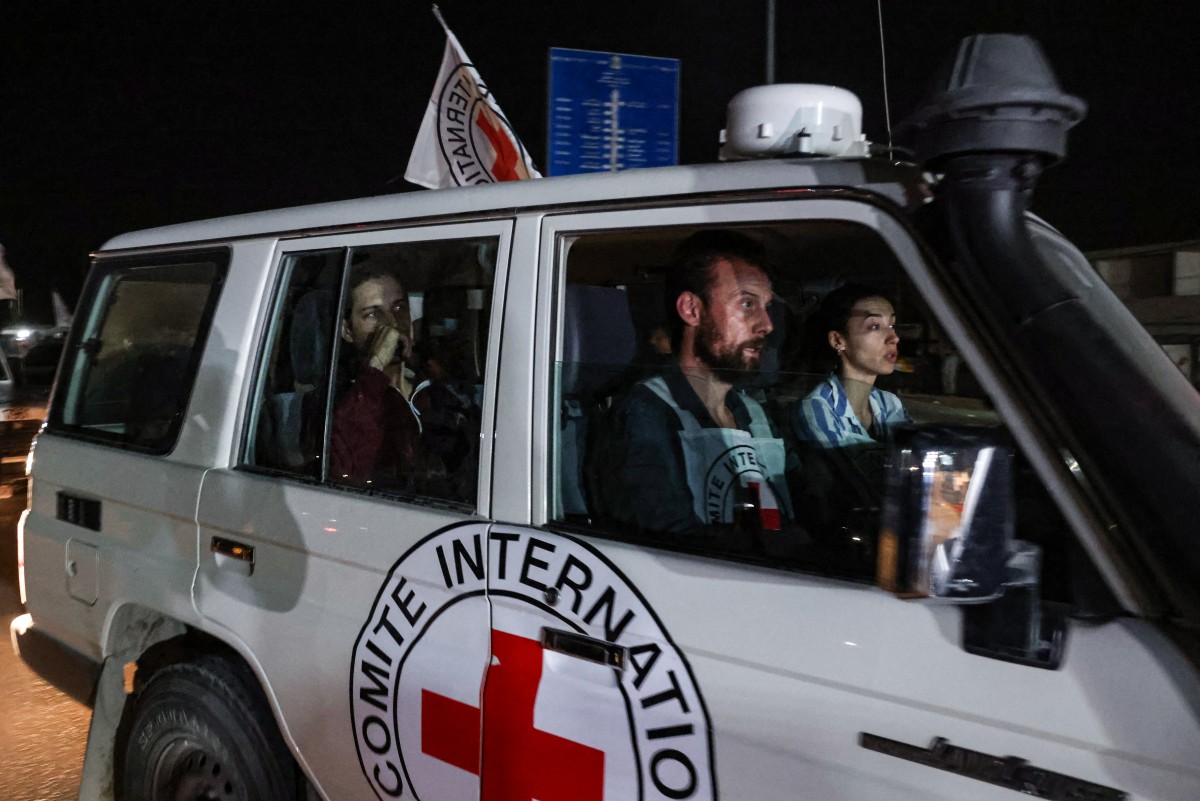
Illustrative: An International Red Cross vehicle carrying Israeli Russian hostage Ron Krivoy released by Hamas drives towards the Rafah border point with Egypt ahead of a transfer to Israel on November 26, 2023. (Mohammed ABED / AFP)
Israel will almost certainly have to decide whether to destroy Hamas completely or save the remaining hostages


Because everything about this war defies reason, it’s lately had me thinking about Sophie’s Choice. Yes, William Styron’s 1979 novel, the National Book Award winner that was later made into a critically acclaimed movie starring Meryl Streep and even an opera. Sophie’s Choice is a Holocaust story written by a non-Jew who was later accused of dejudaizing the Holocaust by focusing on a Polish Catholic survivor of Auschwitz. Yet it was not only Styron’s heroine that some critics found objectionable but also the prurient nature of her choice. Entering the death camp with her son and daughter, Sophie is forced to choose which of them will go to the gas chamber.

Israel, I’ve been thinking, is now confronted with the same choice. Not between our sons and daughters, but between the two halves of our raison d’êtreThe war with Hamas is forcing us to decide between Israel’s body and our nation’s soul.

Israel was created with a double identity, Jewish and democratic. Yet that duality was mirrored by Israel’s twin missions: to guarantee our fundamental security and sanctify our citizens’ lives. The state would defend itself while promising that those who we send off to defend it will never be left behind. Israel pledged to ensure both our physical and moral existence, our body as well as our soul.

The IDF, accordingly, sent commandoes to rescue the hostages at Entebbe in 1976 and, five years later, fighter jets to blow up the Iraqi nuclear reactor. The same Israel that launched a pre-emptive strike against gathering Arab armies in 1967 airlifted Ethiopian Jews in the 1980s and 90s. For 75 years, Israel succeeded in pursuing both of its founding goals: safeguarding the land as well as its people, without contradiction.

Then, just as the state was struggling to reconcile its Jewish and democratic identities, came the onslaught of October 7. Hamas did far more than catch us off-guard. It struck us directly between the state’s two objectives – literally between our I’s.

If Hamas had only butchered, burnt, and raped 1,200 Israelis and not taken any of them hostage, then Israel could have invaded Gaza and crushed the terrorists without hesitation, flooding their tunnels with seawater. Conversely, if Hamas had killed no Israelis but only taken hostages, Israel could have exchanged them for all the terrorists in Israeli jails. But Hamas, savagely, did both, wholesale murder and mass abduction.

“Forget the military victory,” my daughter exclaimed. “Israel’s only goal must be to free the hostages. If the state won’t do everything to rescue my children should they someday fall prisoner, how can I send them to the army?” To which my son replied, “Without an Israel, you won’t have an army to send them to.” Between my daughter’s position and my son’s, which was I to choose?

This is our fundamental, nightmarish, dilemma. Either we give priority to restoring our deterrence power and returning the more than 200,000 displaced Israelis to their homes, or we focus primarily on securing the hostages’ freedom. Either we convince Iran and its proxies never to attack us again and persuade additional Arab countries to make peace with an indomitable Jewish state, or we fulfill Israel’s oath to never abandon our fellow Israelis. Either we accept an Israel that may well be rendered defenseless or an Israel that our citizens may no longer be willing to defend.

Body or soul, we had to decide, and yet Israel refused to choose either. Instead, we declared a twofold target of destroying Hamas and rescuing the hostages, as though they were not mutually exclusive. And yet, by sheer perseverance and the determination of our troops, we succeeded in pursuing both goals simultaneously. Downgraded and surrounded by the IDF, Hamas opted for a deal. In exchange for a 5-day ceasefire, it agreed to free 50 Israeli hostages.

With that agreement now in effect, Israel has offered to extend it. For every ten hostages released, the IDF will hold its fire for one additional day. If accepted, this deal means that Israel will once again give precedence to saving Israelis over saving the state itself. The choice will once again be delayed.

But for how long? 

Ultimately, Hamas will not release all the hostages, knowing full well what the IDF will do to it once the last of them is freed. In the end, Israel will almost certainly have to decide whether to destroy the terrorists completely or save the remaining hostages – to choose, once again, between our national body and soul.

Yet a third option exists. There is still time to reframe the goal of the war from annihilating Hamas to securing Hamas’s unconditional surrender. There is still time to offer Hamas free passage from Gaza – recall the PLO’s evacuation from Beirut in 1982 – in return for ALL the hostages’ release. The terrorists can sail off to Algeria, Libya, or Iran. Our captives will be united with their families.

In the novel, Sophie has to make the most unthinkable of all choices, but Israel can be spared that fate. By maintaining the military pressure on Hamas and keeping the door open to further negotiations, we can defend our state and redeem its defenders. Our dual purpose, our body and soul, can be preserved. 

https://blogs.timesofisrael.com/israels-choice-body-or-soul/

Thursday, November 30, 2023

I hope This Is A Bad Joke~!


Israeli, US officials discussing expelling Hamas terrorists from Gaza - report


The option to expel Hamas terrorists and their families from the Strip aims to make it easier to rebuild Gaza after the war.

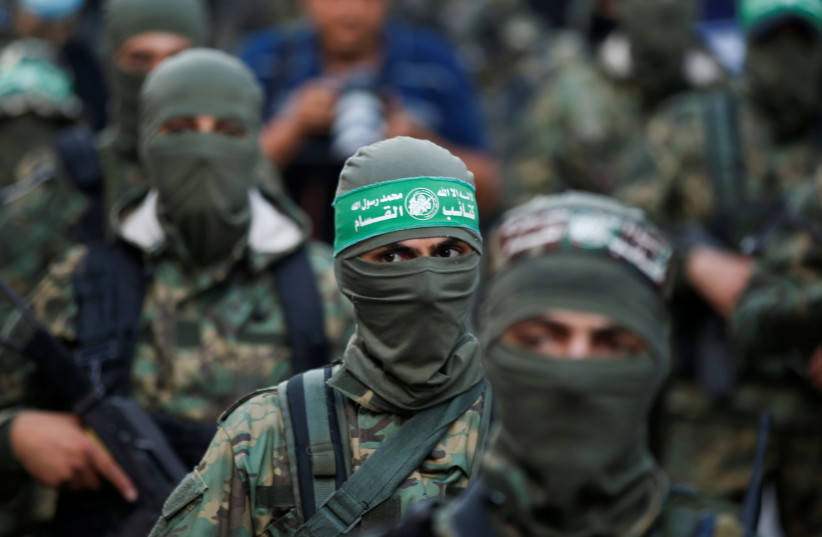
Palestinian Hamas militants take part in an anti-Israel rally in Gaza City May 22, 2021 (photo credit: REUTERS/MOHAMMED SALEM)
Palestinian Hamas militants take part in an anti-Israel rally in Gaza City 
 

Israel and US officials have discussed expelling thousands of lower-level Hamas terrorists from the Gaza Strip as a possible option to shorten the war between Israel and Hamas, The Wall Street Journal reported on Thursday.

The proposal rose as part of discussions concerning how Gaza will be run when the war ends and how to prevent a resurgence of Hamas or similar groups.

One proposal which has been developed by the IDF's think tank which was shown to The Wall Street Journal would involve the creation of "Hamas-free safe zones" that would be ruled by a new Gaza-based authority backed by Saudi Arabia and the United Arab Emirates.

The option to expel Hamas terrorists and their families from the Strip aims to provide the terrorists with an exit strategy and make it easier to rebuild Gaza after the war.

The proposal seemingly would not include higher-up Hamas leaders such as Yahya Sinwar or Mohammed Deif. Israeli officials have said that the two, and other Hamas leaders located both in the Gaza Strip and abroad, are "dead men walking."


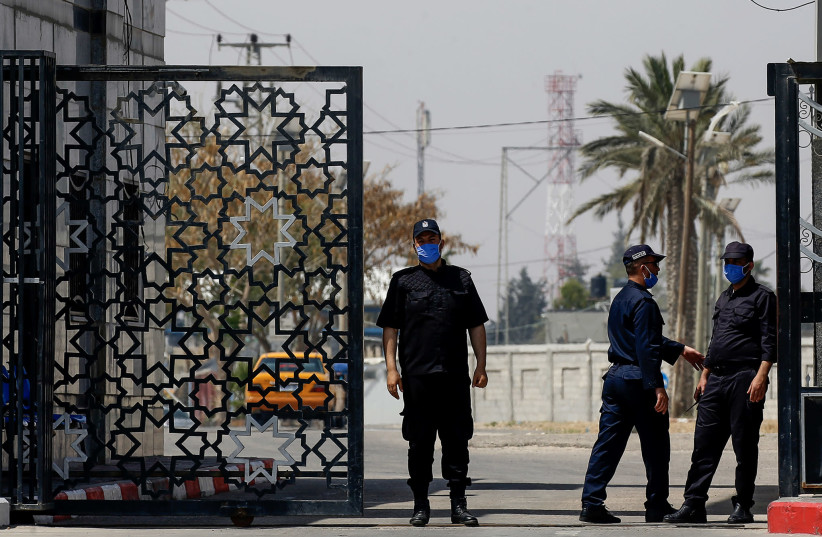
Security forces loyal Hamas stand guard at the Rafah border crossing with Egypt, in the southern Gaza Strip, on May 12, 2020. (credit: ABED RAHIM KHATIB/FLASH90)
Security forces loyal Hamas stand guard at the Rafah border crossing with Egypt
 

The proposal was compared to the 1982 deal which had then Palestinian Liberation Organization head Yasser Arafat and about 11,000 Palestinian terrorists leave Lebanon for Tunisia after a two-month siege of Beirut.

Unclear if Hamas terrorists would accept option to leave Gaza

A senior Israeli official told The Wall Street Journal that it is not clear that Hamas terrorists would accept the option to leave Gaza if it was offered.


“I don’t see them as rational as the PLO was,” said the official. “It’s a more religious, jihadistic organization connected to the ideas of Iran.”

The official added that at the moment there is no "practical discussion" about expelling Hamas terrorists, although that option may become available if there is no other choice.

Another proposal being examined by the IDF is the creation of a "Gaza Restoration Authority" backed by Saudi Arabia and the United Arab Emirates that would be tasked with rebuilding a Hamas-free Gaza.

https://www.jpost.com/arab-israeli-conflict/article-775814?utm_source=ActiveCampaign&utm_medium=email&utm_content=3+murdered+in+Hamas+terror+attack+in+Jerusalem&utm_campaign=November+30%2C+2023


Wednesday, November 29, 2023

Israel’s dependence on U.S. weapons makes it impossible for the Netanyahu government to publicly air the strategic threat the administration’s policies pose to its war effort and its long-term ability to survive in the post-Oct. 7 Middle East


Biden's (handlers) are (presently) the primary obstacle to Israeli victory


Polling shows that the overwhelming majority of Americans support Israel in this war and want it to destroy Hamas; the overwhelming majority of lawmakers from both parties share that view.


Archive photo: President Biden on phone call

(JNS) The time has come to discuss the Biden administration’s relationship with Israel. With each passing day, two things become obvious. First, Israel cannot fight the war without U.S. resupply of the Israel Defense Forces. As a consequence, Israel is beholden to the administration’s directives. And second, if Israel follows the Biden administration’s directives, it will lose the war.

Israel’s dependence on the United States was stated bluntly by retired IDF Maj. General Yitzhak Brick in an interview earlier this week.

“All of our missiles, the ammunition, the precision-guided bombs, all the airplanes and bombs, it’s all from the U.S. The minute they turn off the tap, you can’t keep fighting. You have no capability. … Everyone understands that we can’t fight this war without the United States. Period.”

Brick went on to explain that President Joe Biden’s demand that Israel permit “humanitarian aid” to enter Gaza means that he is demanding that Israel keep Hamas fully supplied with food, water and fuel.

His demand that Israel minimize Palestinian Arab civilian casualties endangers IDF soldiers and renders the expansion of the ground offensive into central and southern Gaza, where the bulk of Hamas’s force is now located, almost impossible to carry out. Brick suggested various forms of long-term tunnel warfare and other suggestions for how the IDF may be able to defeat Hamas over time while operating within the constraints that Biden and his top advisors are dictating.

It is hard to judge whether Brick’s suggestions are workable without access to situational intelligence about conditions on the ground in southern Gaza.

At a minimum, it is clear that Biden’s preference for the lives of civilians in Gaza over the lives of IDF soldiers on the ground ensures that far more soldiers will be killed in the fighting than would otherwise. Three weeks ago, the administration began demanding that Israel limit (or cancel entirely) its pre-ground battle aerial bombings. Consequently, in the week that preceded this week’s “humanitarian pause,” the IDF’s battle losses were overwhelmingly the consequence of sniper fire from Hamas terrorists hiding in buildings that the air force did not destroy before the battles, due to U.S. pressure.

Then there is the issue of the hostages. Israel is duty-bound to the hostages, their families and Israeli society as a whole to rescue them. There are two ways to do this. Israel can bow to Hamas’s demands, as it is presently doing by suspending its offensive, and endangering Israel’s soldiers and civilians by permitting Hamas to rebuild and reorganize its forces, and by releasing terrorists from its prisons and retuning them to Jerusalem and Judea and Samaria. Or it can renew its military operation, locate the hostages and rescue them itself. Clearly, the second option is preferable.

Securing aid from America

Until Monday, it appeared the reason that Israel had accepted the deal it is currently operating under owed to its inability to locate the hostages. The London-based Daily Express reported on Monday that the real reason Israel is not rescuing the hostages—and instead agreed to the current deal with all of its tactical and strategic costs—is related to the Biden administration’s directive not to harm Palestinian civilians.

Based on Israeli sources, the British Daily Express reported that Israel knows where many of the hostages are located. It has opted not to rescue them because Hamas is holding the hostages among civilians. Rescuing them would involve collateral damage to those Palestinians and risk U.S. resupply, which Israel cannot fight without.

Here it is important to note that the number of actual civilians that have died as a result of Israel’s bombings remains unknown. On Oct. 25, Biden acknowledged that the Gaza Health Ministry’s data on civilian casualties lacks credibility in light of the fact that the Health Ministry is simply an organ of Hamas and reports the numbers it is told to report by Hamas’s terror masters. That data counts every dead terrorist as a dead civilian.

Israelis were thrilled with Biden’s statement. But the next day, he apologized for it. According to Fox News, in a meeting with Muslim American leaders on Oct. 26, Biden apologized for telling the truth.

“I’m sorry. I’m disappointed with myself,” he said.

Since Oct. 26, the administration has embraced as fact Hamas’s casualty counts and uses them as the basis for its demand that Israel minimize Palestinian Arab casualties. The administration’s willingness to ignore the fallacies at the heart of those data indicates that its policy is based on something other than concern for Palestinian Arab civilians, and therefore is not a tactical challenge that Israel may be capable of contending with and still win.

To be sure, Biden, Secretary of State Anthony Blinken, National Security Advisor Jake Sullivan and Defense Secretary Lloyd Austin have all expressed their solidarity with Israel, as well as their revulsion at Hamas’s actions and desire to see the genocidal jihadist terror group defeated. And to be sure, Biden has taken steps to resupply Israel—requesting $14.3 billion in military supplies to Israel (although the assistance has yet to be approved by Congress or signed into law by Biden). These positions and at least partial actions lend credence to Brick’s assessment, shared by the IDF and the government, that the challenge the Biden administration’s position on civilian casualties in Gaza is an operational or tactical challenge and not a strategic conundrum.

Dealing with Fatah and the P.A.

But there are additional indications that Biden doesn’t want Israel to win. First, there is the issue of Egypt. Due to the U.S. decision to support Egyptian President Abdel Fattah el-Sisi’s determination to prevent Gazans from fleeing to Egypt or to a third country through Egypt, the million or so Gazans who evacuated the northern end of the Strip during the fighting are now concentrated in the south. Among them are the bulk of Hamas’s forces, which Israel must destroy to win the war.

Facing the U.S.-backed Egyptian refusal to permit these civilians to leave Gaza on the one hand and the U.S. directive to keep civilian casualties close to zero on the other, Israel is facing an impossible operational challenge. Brick may be right that a low-key, slow offensive would be capable of achieving the goal. But he may be wrong. Certainly, a more conventional operation would have a much higher chance of succeeding.

To this must be added the Biden administration’s demands for a post-war settlement. Israel’s goal is not only to defeat Hamas now but to prevent it from rebuilding and to prevent other terror groups from emerging in a post-war Gaza. To this end, at a minimum, Israel will be required to take two actions.

First, it must retain permanent military control over all of Gaza.

Second, Israel must seize a buffer zone several kilometers wide on the Gaza side of the border to protect civilian communities and military bases from a repeat of Oct. 7.

Biden and his advisers oppose both of these goals. Not only do they completely oppose Israeli military control over Gaza and the establishment of buffer zones inside Gaza, they demand that in a post-war settlement, Israel end its maritime blockade of the Gaza coast, and permit everything and anything to enter Gaza from the sea. In other words, the U.S. position is to permit terrorist forces whether they call themselves Hamas or anything else—to rebuild their capabilities unfettered in post-war Gaza.

Even worse, the administration’s position is that Gaza must be ruled by the Fatah-controlled Palestinian Authority after the war has ended, and that Gaza be united with Judea and Samaria in a post-war era, and together receive full sovereignty. In other words, the administration’s war goal is to establish a Fatah-dominated Palestinian state in these areas. On its own, this position is antithetical not only to an Israeli victory in the war. It represents an existential threat to Israel’s continued existence.

Fatah—and the P.A. it runs—is a terrorist organization and regime. The P.A.’s U.S.-armed and funded security forces are Hamas’s junior partners in terror. As Eugene Kontorovich and Itamar Marcus reported in The Wall Street Journal this week, P.A.-controlled Fatah terrorists from Fatah’s Al-Aqsa Martyrs Brigades terror group posted videos of its members in Gaza participating in Hamas’s Oct. 7 slaughter. Fatah terrorists killed, tortured and kidnapped Israelis, and took videos of their actions.

Unlike Gaza, Judea and Samaria are a stone’s throw from all of Israel’s major population centers, and half a million Israelis live in cities and villages throughout Judea and Samaria. Last Friday night, the threat posed by Palestinian terrorist and paramilitary forces in Judea and Samaria to the lives of millions of Israelis came into sharp relief with the public lynching in the city of Tulkarm of two Palestinian Arabs accused of collaborating with Israeli counter-terror operations. To the roars of a crowd of thousands—secured by P.A. security forces—Hamas publicly hanged the two men from an electricity tower. The two men’s bodies showed signs of brutal torture that preceded their execution. Tulkarm is controlled by the P.A. It is located less than a kilometer from the Cross Israel Highway and a few minutes’ drive to Kfar Yona and Netanya.

Israel’s dependence on U.S. weapons makes it impossible for the Netanyahu government to publicly air the strategic threat the administration’s policies pose to its war effort and its long-term ability to survive in the post-Oct. 7 Middle East. Israel cannot risk additional stress to its position vis-à-vis the Biden administration and wants to avoid exposing the rift to its enemies already emboldened from Gaza to Lebanon, Yemen to Iran.

Congressional lawmakers face no such constraints, however. Moreover, they have an interest in exposing the truth and working to compel a change in the administration’s Hamas-enabling policies. Polling data shows that the overwhelming majority of Americans support Israel in this war and want it to destroy Hamas. The overwhelming majority of lawmakers from both parties share their views. To date, the Republican majority in the House has made no effort to exercise oversight over the Biden administration’s policies in relation to Israel’s war with Hamas, largely due to the Israeli government’s unwillingness to air the actual state of relations.

As the humanitarian pause is extended to secure the release of additional hostages and before the Christmas recess, House Republicans and like-minded Democrats should open hearings to compel the administration to explain its policies. Specifically, it should be asked to explain how Israel can defeat Hamas given the constraints the administration is placing on IDF operations.

The administration should also be asked why it supports the P.A., given the P.A.’s involvement, support and defense of Hamas’s invasion of Israel, and the slaughter of its civilians on Oct. 7. Congress should also ensure that the aid package, when passed, contains no conditions on Israel’s use of the weapons it will receive.

Lawmakers must understand the source of the Israeli government’s fulsome praise for Biden. They should then take action to prevent the administration from maintaining its policy of paying lip service to an Israeli victory while preventing Israel from achieving one.


http://www.israelnationalnews.com/news/381051?utm_source=activetrail&utm_medium=email&utm_campaign=nl

Tuesday, November 28, 2023

Finish the job!


While the last group of 11 hostages are returned home the total number of Israeli hostages released over the four days of the ceasefire rises to 51. The question now is what happens next?


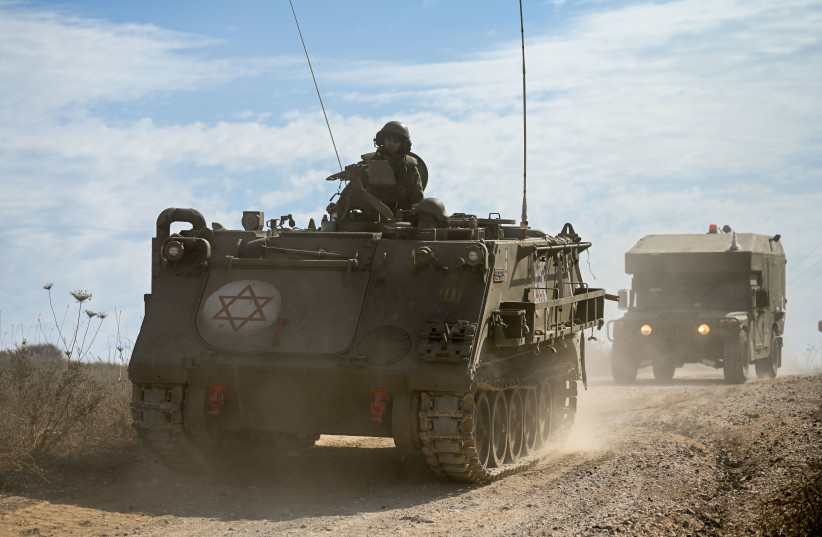
 IDF armored and infantry reserve units in military training in Golan Heights before heading South to the Gaza Strip, northern Golan Heights on October 8, 2023 (photo credit: MICHAEL GILADI/FLASH90)
IDF armored and infantry reserve units in military training in Golan Heights before heading South to the Gaza Strip, northern Golan Heights
 

This editorial is being written on the fourth day of the temporary pause in fighting between Israel and Hamas that is meant to facilitate the release of Israeli hostages being held by the Palestinian terrorist group in Gaza.

Reports throughout the day indicated that Israel had identified “an issue” with the list of women and children Hamas has offered to release Monday evening – potentially, Israeli media reported, a violation of the understanding that children would not be separated from their mothers as part of the process. Qatari and Egyptian mediators worked throughout the day to resolve the issue and prevent a delay in the hostages’ release.


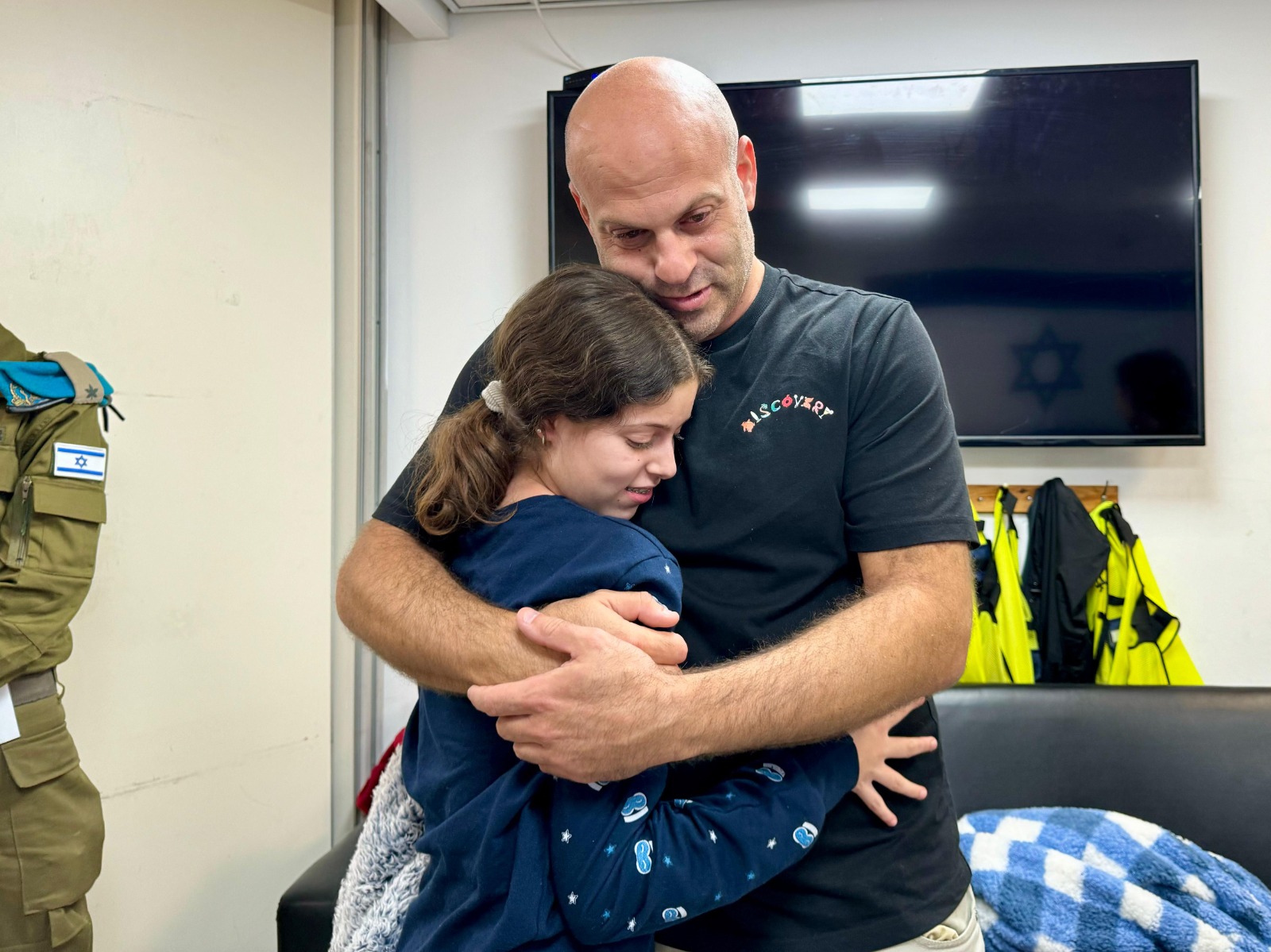
 Thomas Hand embraces his daughter Emily after being reunited. (credit: Maariv Online)
Thomas Hand embraces his daughter Emily after being reunited
 

This last group of 11 brings the total number of Israeli hostages released over the four days of the pause to 51.

Now the question is what happens next.

What happens next?

Hamas announced on Sunday that it would like to extend the pause for additional days. Israel, for its part, would only contemplate such an extension if it received assurances that Hamas will free additional hostages – reportedly ten per day.

In exchange, Israel will presumably release additional Palestinian security prisoners from Israeli jails, by the established ratio of three to one, and will allow additional aid trucks into Gaza. It will also, of course, hold off on its military campaign against Hamas.

Prime Minister Benjamin Netanyahu made his government’s position clear in a call with US President Joe Biden on Sunday.

“We brought back another group of hostages this evening – women and children, and we are moved from the depths of our hearts, the entire nation, when we see this reuniting of families. It simply stirs the soul,” he said in a statement that evening.

“I have just spoken with President Biden with great emotion, also over little Avigail [Idan], of course. What a joy it is to see her with us, But, on the other hand, how sad it is that she is returning to a reality in which she has no parents. She has no parents – but she has an entire nation that embraces her, and we will take care of all her needs,” he said.

“Beyond this, I would like to say that there is also an outline that says that it is possible to release an additional ten [hostages] each day. That would be welcome.”

Late Monday evening, Qatari and US officials announced that the sides had agreed to extend the pause by a further two days. Hamas will now reportedly release another 20 hostages. It has also notably announced its willingness to negotiate the release of abducted Israeli soldiers.

While there are questions about how many hostages Hamas can actually produce – dozens, if not more, are reportedly being held by other terrorist groups and perhaps even private individuals in Gaza – so long as the group is indeed able to hand over hostages, Israel should keep this arrangement going, provided it does not impair the IDF’s ability to continue the military campaign once the pause ends.

Israel launched this campaign with two stated goals: toppling Hamas and bringing the hostages home. Military leaders had been supportive of the initial four-day pause in hostilities, saying that not only would it not undermine the army’s ability to continue its efforts against Hamas – it would actually facilitate them. This appears to hold true for the additional two days, as well.

Israel must finish the job

In Israel’s understanding, its two goals are mutually reinforcing: it is the military campaign against Hamas that applied the pressure necessary to force the group to start freeing the hostages – and it is the release of the hostages and the transfer of humanitarian aid to Gaza in the context of the deal that will enable the campaign against Hamas to continue once the pause concludes.

Our message is simple: Israel should finish the job: Both jobs.

Israel should continue to do whatever is necessary – and within the bounds of what its military leaders determine is bearable – to free the hostages so long as the pause continues, and it should be prepared to immediately relaunch its military effort to eradicate Hamas’s capacity to carry out a massacre like October 7 ever again.

In so doing, Israel’s leaders will fulfill their commitment to the people of the Jewish state and bring this painful episode to its natural conclusion.

https://www.jpost.com/opinion/article-775423?_ga=2.31791038.1212826870.1700815543-1969581575.1579377799&utm_source=ActiveCampaign&utm_medium=email&utm_content=Did+Hamas+hold+Israeli+women+in+cages%3F&utm_campaign=November+28%2C+2023+day


Monday, November 27, 2023

Herein lies the major problem --- “I’ve encouraged the prime minister to focus on trying to reduce the number of casualties while he is attempting to eliminate Hamas, which is a legitimate objective he has,” said President Biden. “ Read --- Put Israeli soldiers at risk by going door to door, rather than bombing targets from the air - PM


 "Hamas is widely expected to seek to string out the current pause in fighting, under a four-day deal for 50 hostages that can be extended an extra day for every 10 more hostages that it releases. The longer the pause, the more complicated for the IDF to resume the ground offensive — especially if Hamas can encourage and force large numbers of northern Gazan evacuees to return to that part of the war zone — and the greater the international pressure for a full ceasefire."


Hamas’s hostage manipulations show how much control it continues to hold over Gaza


The amoral, barbaric terror-government plays cynical games with the families, with Israel, and even forces Biden to get involved. Of course it does. And it must be dismantled


Hila Rotem, 13, is embraced by her uncle as they reunite, in the early hours of November 26, 2023, after she was freed by Hamas. Her mother Raya is still held hostage in Gaza. (Israel Defense Forces)
 

The trouble with trying to do deals with an amoral, savage terrorist regime that has just slaughtered over 1,000 of your people, abducted over 200 to its underground hell, and is trying to destroy your country, is, well, precisely that you are dealing with an amoral, savage terrorist regime that has just slaughtered over 1,000 of your people, abducted over 200 to its underground hell, and is trying to destroy your country.

Israel’s political leaders gradually internalized that doing everything possible to achieve the return of as many of those hostages as possible was the most urgent priority of its fightback against Hamas after October 7. They realized that there could be no victory, no matter how successful the IDF’s assault on Hamas, without the return of all of the hostages or at least without the government being recognized by the people of Israel as having done everything in its power to get all the hostages back. Otherwise, even the demolition of Hamas and the deterring of Israel’s other enemies would not be sufficient to restore public faith in the political and military leadership that so failed them on October 7 by ignoring Hamas’s open preparations for its monstrous assault on our people.

But as expected, Hamas is exploiting Israelis’ love of life to extract every possible advantage from the current four-day lull in the IDF’s war on its Gaza killing machine. The first day’s scheduled release of hostages, on Thursday, didn’t happen at all. Postponed to Friday, it only went ahead amid further delays. Saturday’s phase two was an exercise in orchestrated psychological terror, with Hamas first stating that it had transferred the hostages to the Red Cross, immediately saying it hadn’t, and then issuing spurious accusations against Israel for not supplying as much fuel and humanitarian aid as promised and releasing the wrong Palestinian security prisoners.

Toying not just with Israel, and especially the families of those who had been told to expect their loved ones’ releases, Hamas also made fools of the Qatari and Egyptian interlocutors, and even compelled the leader of the free world to get directly involved, with US President Joe Biden working the phones to get the process back on track. With Israel reportedly threatening to resume the ground offensive if the hostages were not in Israeli hands by midnight, Hamas deigned to go through with Saturday’s phase, while breaching a reported commitment not to release hostage children without their hostage mothers.

Not halfway done

For now, it would seem, seven weeks into the Israeli effort to tear it apart, Hamas seems to be holding together quite effectively. The best estimate is that perhaps 4,000-5,000 of its gunmen are dead; that leaves another 20,000-25,000 who are not.

Israel controls much of northern Gaza, and has destroyed much of Hamas’s infrastructure there, but most of the Hamas tunnel network in the north may well still be intact. According to former generals including Amos Yadlin, Yisrael Ziv and Giora Eiland, the ground operation is certainly not even half-completed, with central and southern Gaza yet to be tackled, notably including Hamas strongholds such as Khan Younis. And the logistics of fighting in southern Gaza, now unprecedentedly populated with its own residents and hundreds of thousands of evacuees from the north, will present immense challenges to the IDF, even as almost all of the international community steps up pressure for a permanent ceasefire.

Yahya Sinwar, the presumed orchestrator of both October 7 and Hamas’s viciously cynical self-preservation tactics since — including the sacrifice of any and all Gazan noncombatants to the cause of his Jew-killing, Israel-destroying, Islamist death cult — would appear to remain in highly effective control of much of the Strip. And if it’s not him, then it’s others in the leadership.

Since the truce went into effect, and as of this writing, it has been near-impeccably maintained — by Hamas and every other terrorist outfit in the Strip — belying widely cited assessments in Israel that Hamas might prove unable to impose the halt in fighting on all the armed Israel-haters in Gaza.

Saturday night’s grim theatrics also suggested a leadership managing events, pushing psychological terror to the limits, and knowing when to climb down.

And the mechanics of the deal itself show tactical and strategic cunning. There is an emphasis on fuel entering the Strip — fuel that Israel knows will be subverted for the Hamas war machine — as part of a wider humanitarian aid influx that the US has been pressuring Israel to allow throughout the war.

Meanwhile, the daily releases of West Bank and East Jerusalem Palestinian security prisoners — albeit not convicted murderers, but many would-be murderers, several of them notorious figures — have seen scenes of celebration that point to rising popularity for Hamas, at the expense of the Palestinian Authority, as the liberator of freedom fighters.

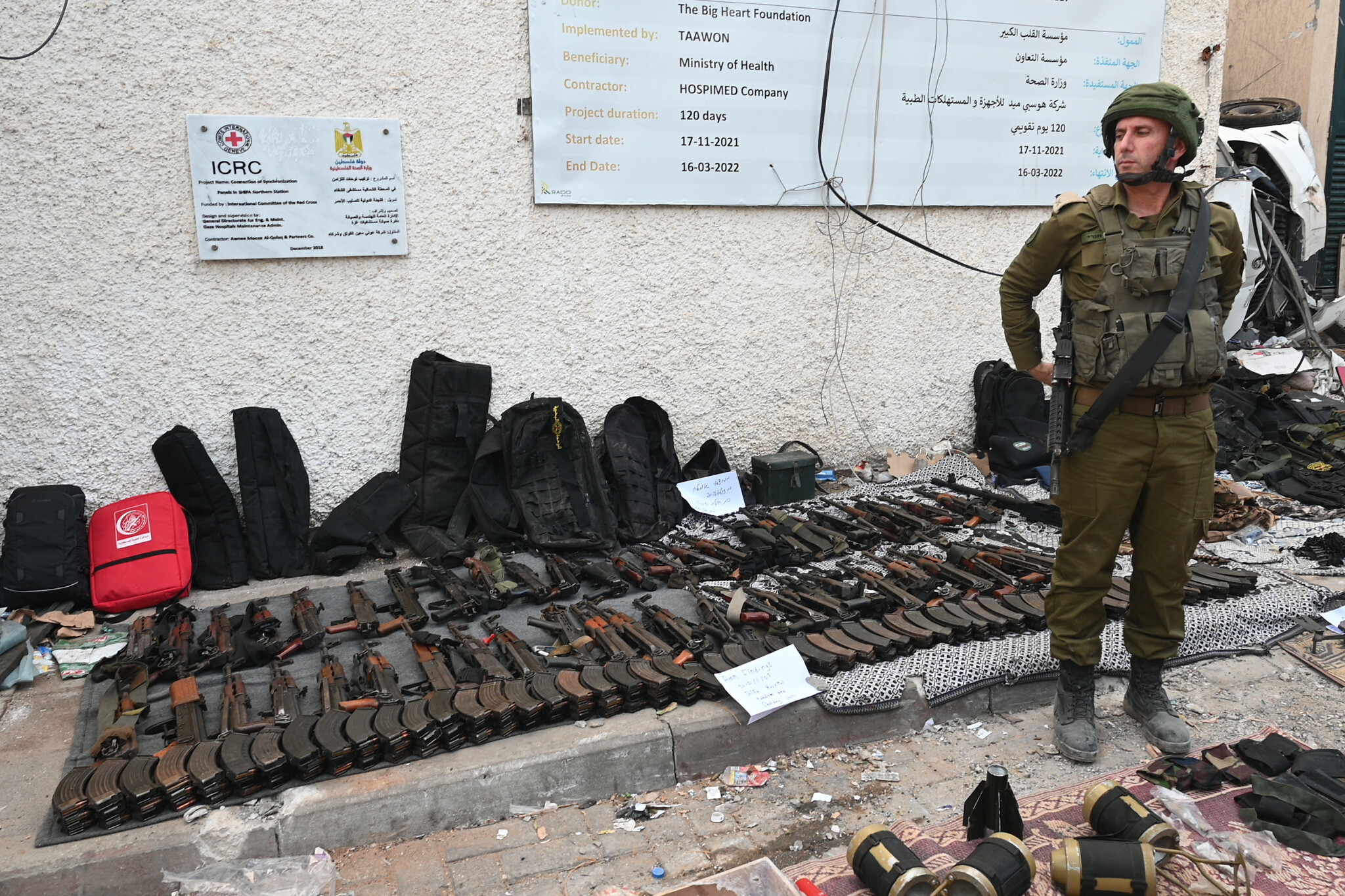
IDF Spokesman Daniel Hagari stands next to what he says are weapons left behind by Hamas inside Al-Shifa hospital complex in Gaza City

Unfathomably, unconscionably and catastrophically surprised by Hamas on October 7, the IDF says it has held the upper hand in every confrontation with the terrorist army since the ground operation began, and appears to have anticipated at least some of Hamas’s planned deadly surprises.

Troops have been astounded by the sheer quantity of deadly weaponry used and prepared for use against them — the endless rows of booby-trapped homes, the huge quantities of anti-tank rockets, the vast tunnel network — but they have tackled it resolutely.

The ruins left behind as they have proceeded through the north of the Strip will take years to rebuild, the IDF acknowledges. Given the high stakes — the imperative to dismantle a terrorist army that fully intends to regroup and massacre Israelis again and again if allowed to — the military is ordering airstrikes in circumstances it would not have done in the past, with consequent noncombatant casualties, while insisting it is acting within the laws of war and the framework of proportionality.

Back to the war

Hamas is widely expected to seek to string out the current pause in fighting, under a four-day deal for 50 hostages that can be extended an extra day for every 10 more hostages that it releases. The longer the pause, the more complicated for the IDF to resume the ground offensive — especially if Hamas can encourage and force large numbers of northern Gazan evacuees to return to that part of the war zone — and the greater the international pressure for a full ceasefire.

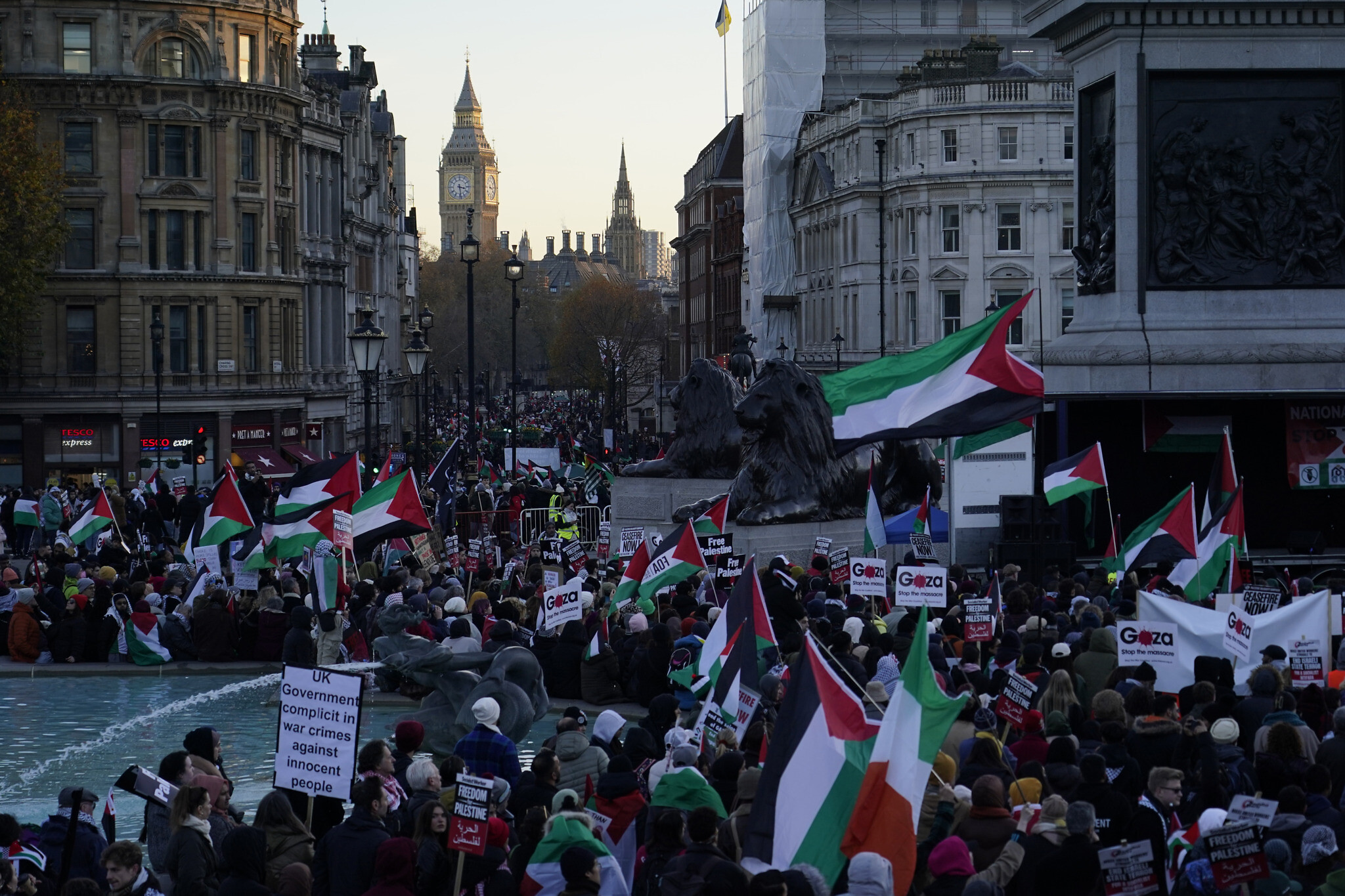
Protesters hold flags and placards as they take part in a pro-Palestinian, anti-Israel demonstration in Trafalgar Square in London, Saturday, Nov. 25, 2023

Israelis are not united behind Prime Minister Benjamin Netanyahu, but they are near universally supportive of the war’s mission to dismantle Hamas and get back the hostages. That certainly remains the plan: As IDF Chief of Staff Herzi Halevi said on Saturday, “We will return immediately, at the end of the ceasefire, to attacking Gaza, to maneuver in Gaza. We will do it to dismantle Hamas and also to create great pressure to return as quickly as possible and as many hostages as possible, down to the last one of them… We have an obligation to fight and also to risk our lives so that [Israeli citizens] can return to live in safety.”

To put it in the starkest terms, Israelis know this country has no future if the fighting ends with Hamas still a threat, Sinwar still standing, Hezbollah laughing from across the northern border with 10 times the military muscle, and Iran arming, training and inspiring its proxies while proceeding toward the bomb.

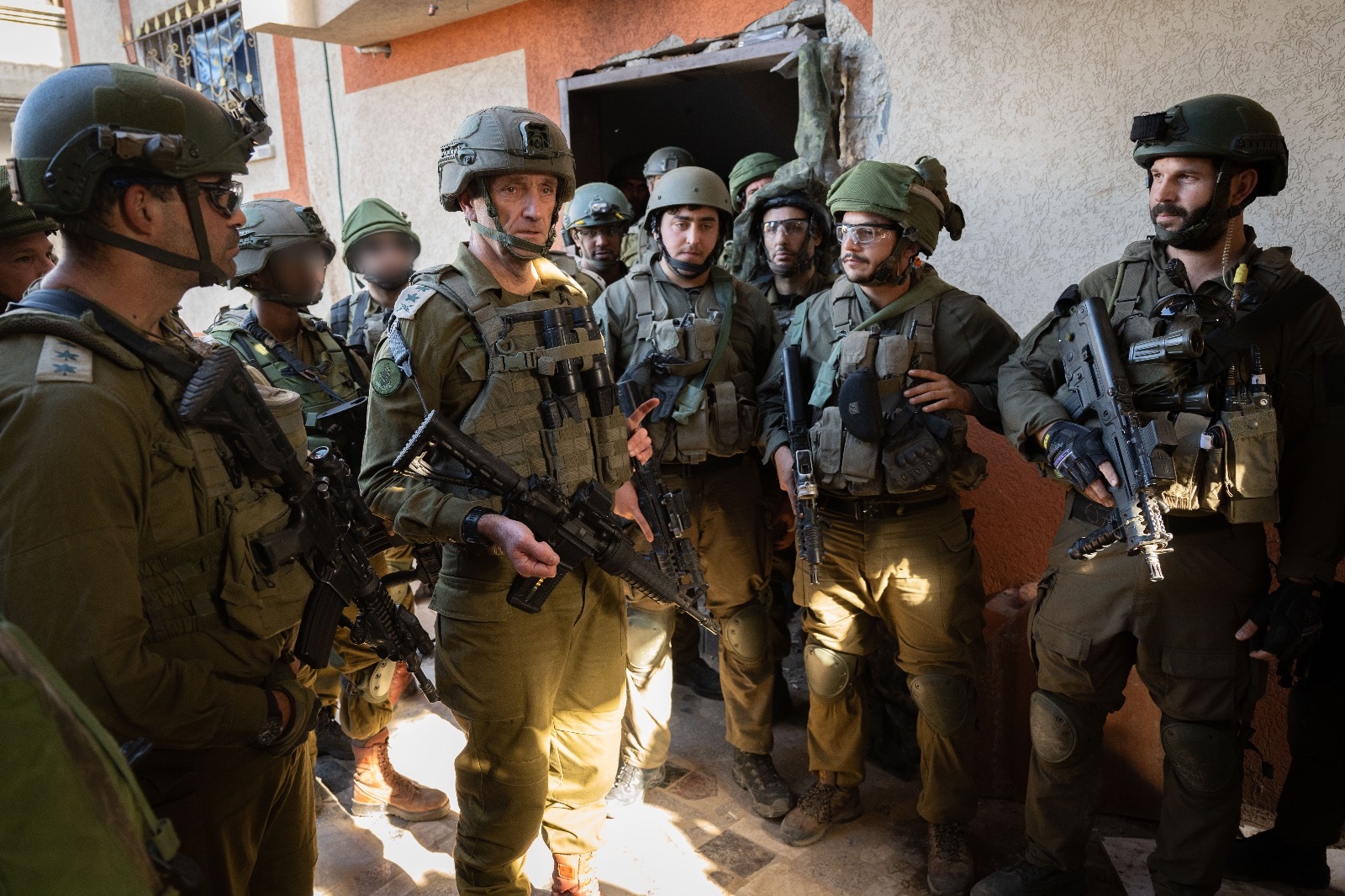
IDF Chief of Staff Lt. Gen. Herzi Halevi speaks with troops in the Gaza Strip, November 21, 2023. (Israel Defense Forces)

“Dismantling” Hamas, to Halevi, is understood to include neutralizing as many of those gunmen as possible, neutralizing Hamas’s commanders, and destroying Hamas’s weaponry, control systems and infrastructure. It is no small task, and even if achieved, is not the end of the challenge.

Support for the antisemitic, anti-infidel ideology predates Israel, and will not be destroyed even if Hamas is defanged as a fighting force. But a post-war Gaza would be one in which terror groups do not rule and cannot rearm — as Hamas was able to do these past years with truckloads of weapons from across the Egyptian border — and in which those many regional players who detest Hamas and fear Iran should be encouraged to play a role.

But that’s getting ahead of ourselves. Right now, there’s a lull in fighting that Hamas is determined to exploit. An Israel yearning for its hostages to be home —  with the families whose loved ones have not been freed, and may not be for a long time, showing astounding nobility and solidarity. International pressure for a permanent ceasefire. A wide, essential determination in Israel to ensure the campaign indeed demolishes Hamas. And a key figure, amid pressures of his own, providing moral clarity and support.

In his remarks on Friday, Biden said he saw a “real chance” that the current pause could be extended — not into a long-term ceasefire but to enable more hostages to be released. He was explicit in supporting Israel’s effort, under Netanyahu, to destroy Hamas: “I’ve encouraged the prime minister to focus on trying to reduce the number of casualties while he is attempting to eliminate Hamas, which is a legitimate objective he has,” said the president. “That’s a difficult task, and I don’t know how long it will take.”


https://www.timesofisrael.com/hamass-hostage-manipulations-show-how-much-control-it-continues-to-hold-over-gaza/?utm_campaign=daily-edition-2023-11-26&utm_medium=email&utm_source=The+Daily+Edition

Friday, November 24, 2023

Every Israeli “hostage deal” makes it worse for the next time. It means more Jews will be slaughtered later in return for fewer hostages now. The price is too high.


Exasperated


I oppose any pause. Hamas will use the pause to resupply tunnels with food, water, and fuel


http://www.israelnationalnews.com/news/380799?utm_source=activetrail&utm_medium=email&utm_campaign=nl


Thursday, November 23, 2023

The other point of view - with much merit, I add hesitantly!


Bibi Capitulates to Organized Pressure on Partial Hostage Release, Hamas Wins


Photo Credit: Noam Revkin Fenton/FLASH90
Israelis watch PM Benjamin Netanyahu on TV
 

At the end of a six-hour debate, PM Benjamin Netanyahu’s government early Wednesday morning approved a deal with Hamas to release at least 50 hostages from captivity in Gaza over four days, during which there will be a lull in the fighting.

According to the approved outline, 30 children, eight mothers, and 12 elderly women will be released. The release of every ten additional hostages would result in an additional day of respite for the Hamas Nazis, who will use it to reorganize, replenish their resources, and resume the fighting better prepared.


The cabinet ministers were told that the first group of hostages would be released on Thursday.

According to a Channel 14 report, to make sure that Hamas does not drag out the deal, the government limited its entire duration to only 10 days, presumably starting Thursday. Assuming that Hamas brings more hostages, it will be rewarded with an additional day of respite for every 10 Israelis it releases, within a ten-day window. At the end of the ten days, the deal is void and a new government decision would be required for a new deal.

This clause convinced the Religious Zionism ministers to change their minds and support the deal. However, the three Otzma Yehudit ministers held on to their original objection to the deal.

According to the same report, Likud Minister Miki Zohar taunted Itamar Ben Gvir, asking: Why did you hold an “in-depth” discussion of your faction before you heard all the details? To which Ben Gvir replied: Because everything we heard here now, we saw before in the media, so it’s very good that we held the meeting. At which point Likud Minister Gila Gamliel preached to Ben Gvir: We need to be united in the decision! 

And Ben Gvir responded: But we are not united. This is a decision that will damage generations. It will hurt us badly.

Yes, it will. Prime Minister Netanyahu, not for the first time, capitulated to public pressure and ordered the interruption of a stellar IDF attack on the Nazi enemy so his enemies on the left would love him. He did it in 2011 when he capitulated before the same crowd and released more than a thousand terrorists with Jewish blood on their hands in exchange for a single IDF corporal named Gilad Shalit. Needless to say, those same murderers revisited the Jewish State on October 7, in an operation that was masterminded by Yahya Sinwar who, you guessed it, was part of that 2011 prisoner exchange.

From this point on, we can count on Bibi to be a crowd-pleaser and not a leader. He does not have that one essential quality of a leader that shone throughout PM David Ben Gurion’s tenure: the ability to give the people not what they wanted but what he believed they needed.

HAMAS WINS

Head of the Political Bureau of Hamas Ismail Haniyeh on a rare visit to the Gaza Strip
 

A rejuvenated Hamas issued a statement after the deal had been approved by Israel, saying: “Following difficult and complicated negotiations which lasted many days, we announce that a humanitarian ceasefire has been reached for four days, through the frantic efforts of Egypt and Qatar.”

According to the Nazi group, the deal includes a ceasefire on both sides, the cessation of all Israeli military operations throughout Gaza including the movement of military vehicles, the entry of hundreds of trucks with humanitarian aid, medical aid, and fuel, the cessation of Israeli aircraft traffic over southern Gaza for four days, the cessation of Israeli aircraft traffic over northern Gaza every day between 10:00 AM and 4:00 PM, and freedom of movement for Gazans from north to south on the Philadelphi route.

Hamas also stated that Israel committed to not inflict harm or detain anyone throughout the entire Gaza Strip during the ceasefire. And they warned: “Our finger will be on the trigger.”

What can Hamas achieve under the Ceasefire?

1. Move the Gaza population back north with no one stopping them.
2. Move around terrorists using ambulances, tunnels, and thinly disguised as civilians
3. Reset the timers on hidden rocket launchers
4. Map the location of all IDF soldiers and units
5. Import more weapons via Rafah smuggling tunnels
6. Move hostages to new locations
7. Transfer “humanitarian aid” and fuel to Hamas units
8. Build up international pressure to keep the ceasefire going.
9. Build up international pressure to force the IDF out of Gaza.
10. Play psychological games with Israel using the hostages.

And a bonus point:

11. Give the Kaplan anarchists additional time to undermine Israeli unity and put more pressure on Bibi to end the war.

RON DERMER’S AUSCHWITZ FIB

Ron Dermer / Ron Dermer’s Facebook page

Now, if you thought Minister Ron Dermer was a thinker, even an intellectual, I must confess that I’ve changed my mind on that one. Minister Dermer told the cabinet ministers: “Even though the deal is difficult, I don’t think any of you cannot go for it.” And then, so help me, he said: “In the Holocaust, Jews wanted to bomb the tracks leading to Auschwitz. The State Department refused and claimed that it was not one of the goals of the war. For us, it is the goal. We have a country, we have the ability, it’s about saving lives. Grab it with both hands, to save many lives.”

Minister of Strategic Affairs Ron Dermer’s official job is to represent the Israeli side to the world media, a job that on occasion requires some fibbing. So, he fibbed on the Auschwitz thing, too.

As the US Department of War kept refusing to bomb the railroad tracks leading to the death camps, even on missions that targeted areas very nearby, by 1944 Jews began to demand the bombing of the Auschwitz-Birkenau complex itself, complete with the thousands of Jewish inmates in it.

The first proposal to bomb Auschwitz was made on May 16, 1944, by Slovak Rabbi Michael Dov Weissmandl, the leader of a Jewish underground. At about the same time, two officials of the Jewish Agency in Palestine made similar suggestions – Yitzhak Gruenbaum to the US Consul-General in Jerusalem Lowell C. Pinkerton, and Moshe Shertok (later Sharet) to George Hall, the British under-secretary of state for foreign affairs.

On June 19, 1944, the Jewish Agency in Jerusalem received the reports summary of the industrial death operations in the Nazi camps, and David Ben-Gurion and the Jewish Agency, immediately upon learning that Auschwitz was indeed a death camp, urged President Franklin Delano Roosevelt to bomb the camp and the train tracks leading to the camp.

Despite the certainty that thousands of Jews may die, these Jewish leaders did not dream of asking the Allied forces to stop the war effort for a single day to negotiate for their release, because you don’t negotiate with Nazis, you kill them, and kill them, until you force them down to their knees.

Israel’s mainstream media ignore a considerable contingency of families of hostages who demand that all the hostages would be set free, or no deal. They argue that no one Jewish soul is more important than another. Moreover, those families argue the national value of eliminating Hamas is higher than the personal value of releasing their loved ones. Also: among the kidnapped soldiers, if they are still alive, there are many wounded whose condition may be worse than that of the children, the mothers, and the elderly slated to go free.

Against their clarity of mind and heart, Netanyahu’s failure as a leader appears even more staggering. To those who still compare him to Ben Gurion, I must paraphrase the 1988 United States vice-presidential Democratic candidate Senator Lloyd Bentsen’s response to Republican candidate Senator Dan Quayle: “I knew Ben Gurion. Bibi, you’re no Ben Gurion.”

https://www.jewishpress.com/news/terrorism-news/bibi-capitulates-to-organized-pressure-on-partial-hostage-release-hamas-wins/2023/11/22/

Wednesday, November 22, 2023

We support the Israeli government in its painful decision, taken with the knowledge that the October 7th massacre was planned and executed by Yahya Sinwar, yemach shemo vezichro, a beast who was freed from an Israeli jail in a previous prisoner swap.

Douglas Murray Is Speaking To All The Bearded Jews With Black Hats Who Somehow Think They Are More Jewish Than Any Other Jew! Listen To His Every Word! And NO --- He Never Learned Daf Yomi! PM


We Support and We Hold Responsible


Today, the Government of Israel made one of the most morally and strategically complex and difficult decisions any group of elected officials can confront, making painful concessions to free hostages from the hands of their evil captors.

We support their decision. This support is consistent with the Orthodox Union’s long-standing policy to support the Israeli government’s positions on national security issues. We recognize and respect that this decision is based upon the primacy that the Government of Israel, the People of Israel, and the Torah of Israel place upon the infinite value of human life, a value that our enemies have not begun to embrace.

But even as we support the decision of the Government of Israel, we and all civilized people must hold responsible the many who made this terribly difficult decision necessary.

We hold responsible the Qataris whose ongoing hosting and support of the Hamas terrorists enabled them to massacre, rape, behead, and kidnap hundreds of innocents. The Qataris are part of the problem and not part of the solution.

We hold responsible the United Nations who have yet to find within themselves to unequivocally condemn the brutal massacre of October 7th, offering instead lame and ignorant presentations of context to excuse the inexcusable. The UN was created to prevent another Holocaust and has chosen instead to be its greatest promoter.

We hold responsible the politicians and NGO’s who choose to focus their concern for humanitarian behavior on the world’s most humane army as it fights a war it did not start and never wanted, instead of shining the spotlight of moral and compassionate scrutiny consistently and completely on the brutal and monstrous murderers and kidnappers of Hamas.

We hold responsible the so-called progressives who will stand up for any victim if he is not a Jew, who will prosecute rapists as long as their victims are not Israelis, who forget the friendship and allyship of the Jewish community that has stood by their side in their every struggle, and who now oppose the Jewish people’s right to defend themselves.

We hold responsible the leadership of universities who have allowed their sacred spaces of learning to become places where Jews live in fear and where there is no room on their walls and bulletin boards to display compassion for the plight of hostages taken and held in unambiguous and undebatable violation of every law of war.

We hold responsible the biased media who fan the flames of hatred and antisemitism by their hopelessly imbalanced reporting, briefly telling the story of the hostages before turning their focus to the tragic plight of a population that – while certainly including thousands of innocents – is dominated by a majority whose values reflect those of Hamas in poll after poll, who elected the terrorist government it deserves, celebrated the massacre of Israelis, seeks one judenrein state from the river to the sea, whose so-called moderate leaders continue to play to slay, and who educate their children that Jews have no place on this earth.

We support the Israeli government in its painful decision, taken with the knowledge that the October 7th massacre was planned and executed by Yahya Sinwar, yemach shemo vezichro, a beast who was freed from an Israeli jail in a previous prisoner swap.

We support the Israeli government and urge them to not let this pause in the fire provide an opportunity for Hamas to reorganize and rearm.

We support the Israeli government in this painful decision, and we hold the world responsible for their complicity in their having to make it. You have failed those men, women and children held captive and you must not allow this travesty to continue. You must not rest until each and every hostage from this conflict and from previous conflicts are returned home. You must support the Israeli army as it finishes the job of completely and totally destroying Hamas and does what is needed to ensure that the next plan for Gaza will not allow that territory to again breed the evil that the withdrawal of 2005 did.

We pray to God with all our heart that each and every one of the hostages return home safely, that they and their families find healing, and that they find their place in a welcoming world that has learned from its terrible mistakes and misjudgments and embraces a genuine love of both truth and peace, where Jews may live without fear.

 https://www.ou.org/we-support-and-we-hold-responsible/?utm_source=SilverpopMailing&utm_medium=email&utm_campaign=Weekly%20Israel%20Week%20of%20November%2021%20copy%20(1)&utm_content=&spMailingID=35231479&spUserID=Mzc0Njg4NTUwNDk0S0&spJobID=2543971845&spReportId=MjU0Mzk3MTg0NQS2

Tuesday, November 21, 2023

The Ranting of an Incoherent Fool~!


FOR ONLY $2500 FOR A STANDARD ROOM YOU CAN HEAR MUCH MORE OF THIS HORRIBLE IDIOCY!