EVERY SIGNATURE MATTERS - THIS BILL MUST PASS!

EVERY SIGNATURE MATTERS - THIS BILL MUST PASS!
CLICK - GOAL - 100,000 NEW SIGNATURES! 75,000 SIGNATURES HAVE ALREADY BEEN SUBMITTED TO GOVERNOR CUOMO!

EFF Urges Court to Block Dragnet Subpoenas Targeting Online Commenters

EFF Urges Court to Block Dragnet Subpoenas Targeting Online Commenters
CLICK! For the full motion to quash: http://www.eff.org/files/filenode/hersh_v_cohen/UOJ-motiontoquashmemo.pdf

Tuesday, December 12, 2023

Da'as Torah May Not Be the Answer: But What is the Question?

 The Totality Of The Abuse of  Power - A Brief History - IGNORANCE! 


On Friday March 13, 2020, as the coronavirus was beginning to ravage Israel’s Haredi community, R. Hayyim Kanievsky, the 92-year old acknowledged leader of the so-called Lithuanian Haredim, issued an open letter “Regarding the concern of transmission of the Corona Virus Pandemic.” “Everyone,” he wrote, “must be mechazek [strengthen themselves] to refrain from Lashon Harah [gossip] and rechilus [slander] as it states in [Talmud] Arachin 15b…They must further strengthen themselves in the midah [attribute] of humility and to be maavir al midosav [let matters pass, that is, not take umbrage] as the pirush  haRosh [commentary of the Rosh] on the side of the page says explicitly in the end of [Talmud]Horios…And the merit of one who strengthens himself in these prescriptions will protect him and his family members so that not one of them will become ill.” [i] He said nothing about social distancing, or any other orders that might have emanated from the medical community.

The following night, Motzei Shabbat March 14, Rav Kanievsky’s grandson asked his grandfather (in Hebrew) whether Cheders (elementary schools) and Yeshivot should remain open. The grandson said that the “Medineh,” that is, the Israeli government, was warning that schools should remain closed until there was a way to deal with what he called the mageifeh   (plague). R. Kanievsky, mumbled something that was not entirely audible. The grandson then said, “so the cheders should remain open?” and R. Kanievsky nodded his assent. The grandson then followed up with “and the yeshivot should remain open too?” Again the Rav agreed. The grandson never mentioned medical advice, and the rabbi never asked.

Despite personal pleas the next day from top police officials, who did refer to medical opinion,  R. Kanievsky, together with R. Gershon Edelstein, the Rosh Yeshiva (Dean) of the famed Ponevezh yeshiva in Bnai Beraq and chairman of Aguda’s Mo’etzses Gedolei Hatorah (Council of Torah Greats) issued an open letter that called for Haredi schools at all levels to remain open though it did acknowledge the need for certain precautions. The letter began with a clarion call that no Haredi was likely to ignore:

“In a time when we are in grave need of great heavenly mercy to maintain the health of our nation, certainly it is proper to strengthen ourselves in the study of Torah, to be careful in committing slander (Lashon HaRah and Rechilus), and to strengthen ourselves in humility and to judge everyone favorably….Our sages have already stated (Yuma 28b), “Since the days of our forefathers, the Yeshivos have never ceased [to be active] from them.  They further stated (Shabbos 119b):  The world only exists on account of the sounds of children in the house of their Rebbe [yeshivos].  They are the greatest insurance possible that the destroyer not enter into the homes of Israel [my emphasis].”

The letter then made some allowances for the reality of the epidemic, calling for schools and yeshivot to split up students; ensure “that there is adequate space between person [social distancing – recommended at 2 meters” and that “classrooms and Batei Midrashim [study halls] be properly ventilated; and to appoint supervisors [Mashgichim] to maintain the proper level of cleanliness as a health necessity.” It also called upon educators to ensure that no one who was meant to be under quarantine, or had a family member under quarantine, was to enter the Beit Midrash.

The two rabbinical leaders then observed that “This is all from the perspective of an understood precondition to the action [of attending school or Yeshiva]. The Roshei Yeshiva [Deans] and the administrators of the Talmud Torahs (and Yeshivos) must be on guard to ensure compliance.” The letter did not specify whether “compliance” meant compliance with health regulations, or compliance with the directive to keep the yeshivot open. The letter then concluded with the admonition that “we must have faith in the Holy One Blessed Be He who watches over all His creations, and no man is stricken by a calamity if it was not decreed from Above.  And may the merit of Torah and all that strengthen us stand for us as protection and salvation.”[ii]

The letter prompted a major outcry over the danger into which the aged rabbi and his Ponevezh colleague had placed youngsters and their families and led to his reversal two weeks later. By then, however, considerable damage may have been done. Though it was unknown, indeed unknowable to what extent his ruling resulted in more coronavirus carriers and more Covid-19 deaths in Bnai Beraq, Jerusalem’s Haredi neighborhoods, and other Haredi enclaves such as Beitar Ilit, there was little doubt that the letter had added to the roster of both carriers and death.

It was also reported that Kupat Ha’ir, a charity based in Bnai Beraq that raises funds by offering to have young Haredi scholars pray at the kotel for all sorts of personal requests made by the donors, was advertising, in R. Kanievsky’s name, that donors who paid the shekel equivalent of $836 would “enjoy immunity from the coronavirus for themselves and their families.”[iii] This appeal for funds simply reinforced the intent of R. Kanievsky’s original edict of 13 March.

On April 20, shortly after the conclusion of Pesach, it was reported that R. Kanievsky had ordered the schools and yeshivot once again to open their doors but that R. Edelstein had put a hold on its publication. The latter denied that was the case, however, and instead, the two rabbis issued a second letter that revealed their impatience, warning that  if there will not be a response [to reopen the Yeshivot] and the foot dragging continues without real progress, the great Torah sages [of Agudah] will consider drastic action.”[iv]

Meanwhile the virus continued to rage in Israel generally, and among the Haredim in particular. Though Haredim accounted for perhaps 12 percent of the Israeli population, it was estimated that they accounted for as much as 50 percent of all hospital beds in the country. No wonder that R. Kanievsky’s edicts in response to the country’s health crisis prompted outrage among Israel’s non-Haredi elements.

At long last, in recognition of the depth of the crisis confronting the Haredi community no less than the entire Israeli population, the two rabbinic leaders, acting with the government’s consent, appointed a special task force consisting of  two younger rabbinic leaders, R. Shraga Shteinman, son of R. Kanievsky’s predecessor as leader of the “Lithuanian” Haredim, R. Aryeh Lev Shteinman (and R. Kanievsky’s son-in-law), and R. Baruch Dov Diskin, scion of another leading Haredi rabbinic family, together with Dr. Meshulam Hirt, “the Gedolim’s physician,” to examine ways to reopen schools in compliance with government directives. The task force issued its initial guidance on May 3, recommending that higher elementary grades and above could reopen under strict conditions mandated by the government. R. Kanievsky endorsed the task force recommendations.

For Haredim, Rav Kanievsky’s views were not merely the opinions of a wise leader. They were Da’as Torah[v] and thus had the imprimatur of the Divine.[vi] At a minimum, it was asserted in some quarters that if the rabbi had erred—and no one would dare say that he had—it was because he was so enmeshed in his studies that he did not fully realize the extent of the threat that the virus posed to Israeli society.

The problem, however, was not with R. Kanievsky’s initial responses. It was with the way the matter had been put to him.

Haredim and “The Medinah”

After 72 years of existence as a state, a consequential portion of the Haredi community has yet to recognize the reality of what they term “the Medinah.” Nothing has changed since 1912, when Yaakov Rosenheim convened the first Agudas Yisrael conference in Kattowitz (Katowice), then part of Germany, in no small part as a reaction to a decision by the Tenth Zionist Congress not to fund religious schools. Rosenheim envisaged Agudah as an umbrella organization for all religious Jews. While he never fully realized his dream, the organization did emerge as a major locus for opposition to Zionism. Not coincidentally, Da’as Torah also became enshrined in the Agudas Yisrael platform. Indeed, Agudah created a Council of Torah Giants (Mo’etses Gedolei HaTorah), whose pronouncements on all matters, whether Halachic or secular, were treated as authoritative and binding upon all religious Jews. And the Council was overwhelmingly anti-Zionist.

During the First World War, when Germany occupied parts of Russian Poland, leading German rabbis, notably Rabbi Dr. Emmanuel Carlebach, coordinated their activities with the Gerer Rebbe, Rabbi Avraham Mordechai Alter, one of the most prominent Hasidic leaders. Like the German rabbis, and indeed, Hasidic admorim (Grand Rabbis) of all stripes, R. Alter was hostile not only to secular Zionism, but also to religious Zionism, which was organized under the umbrella of the Mizrahi movement.

The Agudah leadership allied itself with the representatives of the so-called “Old Yishuv,” the long-standing Haredi community of Palestine, most of whose members resided in the older districts of Jerusalem and Tsefat. These Jews were violently opposed to the influx of Zionist settlers into what after 1918 became a British mandate. Not surprisingly, the Agudah leadership aligned itself with the leaders of the Old Yishuv who in 1937 testified before the British Peel Commission in opposition to the creation of a Jewish State.

Needless to say, Agudah invoked Da’as Torah in its opposition to Zionism and the notion of a Jewish State. In so doing, it was claiming heavenly support for what was essentially a political position. This was  consistent with the view, articulated by R. Yisroel Meir Kagan, best known as  Hofetz Hayyim, and subsequent rabbinic leaders such as  the late Rosh Yeshiva of the Mirer yeshiva, R. Nosson Zvi Finkel that Da’as Torah was as binding with respect to non-Halakhic matters as to Halakhic ones. As R. Finkel put it, “when a great man offers either advice or a ruling, Emunas Hakhamim [belief in the Sages][vii] mandates that one can neither hesitate nor doubt. This is Da’as Torah and this is how it should be.”[viii]

Agudah had no choice but to come to terms with the Jewish state once its leaders declared its independence in 1948. There was a sense among Haredim, as among some secular Jews, however, that the State would not survive more than a decade or at most fifteen years,[ix] but for the moment, Agudah felt it had no choice but to transform itself into an Israeli political party. Nevertheless, in so doing it did not relinquish its refusal to come to terms with the secular state. It refused to join government coalitions, or to allow its representatives to hold ministerial posts, though through a sleight-of-hand ruling, the Council of Torah Greats permitted Agudah’s representatives in the Knesset to serve as Deputy Ministers. These men often acted as de facto ministers, and in some “emergency” cases, held full ministerial portfolios.

Agudah’s participation in Israeli political affairs did not extend to other aspects of Israeli society, however, particularly army service. The Haredi leadership viewed the army’s secular, assimilationist orientation as the leading threat both to its values and to its control of the community. Thanks to an agreement between Agudah’s acknowledged leader, R. Abraham Isaiah Karelitz, popularly known by the title of his works as Hazon Ish, and Prime Minister David Ben Gurion , yeshiva students were exempted from service in the Israeli Defense Forces. The agreement enabled Haredi leaders to maintain at least some semblance of a wall between their adherents and the rest of Israeli society, and to underscore their fundamental and principled opposition to what they termed “the Medinah.” It is in the context of this opposition that R. Kanievsky’s edict must be seen.

The Mantle of Haredi Leadership

Not all Haredim are anti-Zionist. In 1984 the great Sephardi leader R. Ovadia Yosef led his followers out of the main Ashkenazi Haredi political parties, and created the Shas Party with its own Council of Torah Sages (Motetset Hakhmei HaTorah). Shas displayed a more sympathetic attitude toward the state, including having its Knesset members serve as full ministers in the government.

Even among Ashkenazi Haredim, however, there is no common stance vis a vis “the Medineh.”  Although they share a common antipathy to Zionism, Haredi leadership is not vested solely in Agudah’s Council of Torah Greats. In particular, the Eidah Haredis, successors to the Old Yishuv, is far more vociferously, and far too often violently, opposed to the Jewish State. Moreover, whereas the majority of Haredi yeshivot do not hesitate to receive financial support from the State’s coffers, some –such as the Brisker yeshiva, following the leadership of its late dean, R. Yosef Zev Soloveichik—refuse to take any state funds. Nevertheless, whatever their differences, the vast majority of Ashkenazim look to a single leader for guidance, Da’as Torah, on major political and social issues.  Until his passing, Hazon Ish was that leader.

Hazon Ish rose to his position of prominence on the passing in 1940 of his brother-in-law, R. Hayyim Ozer Grodzinski, who had in turn succeeded Hofetz Hayyim as the acknowledged leader of the Lithuanian Haredi world. Familial ties among the Lithuanian Haredi leadership continue to this day: R. Kanievsky was not only a student of the Hazon Ish, but also his nephew.  And, as has been noted, R. Shraga Shteinmann, whom R. Kanievsky appointed to the coronavirus task force, is the latter’s son-in-law.

 At 93, R. Kanievsky represents the tendency of the Lithuanian Haredim to recognize as supreme leaders of the movement nonogenarians or even centenarians. Thus, R. Kanievski’s predecessor, R. Aryeh Yehuda Leib Shteinman was niftar (passed away) in 2017 at the age of 103, while his own predecessor, R. Sholom Yisef Elyashiv died at the age of 102. R. Elyashiv’s predecessor, R. Elazar Menachem Man Shach, likewise was 102 when he was niftar.

Is the problem the answer, the question, or the system?

The Torah teaches that Moses was as much in control of all his faculties on the day he died at the age of 120, as when he was a much younger man. That is not necessarily the case with other older persons, even if they are great scholars. It is arguable that by the time they reach their nineties, even leading Halakhic experts may have lost half a mental step. They might comprehend what is being asked of them, indeed, their replies may reflect their decades of Torah knowledge. Nevertheless, they may not have the mental acuity to probe all facets of whatever issue is brought before them, as they may have been able to do as recently as a decade earlier.

It is well known that Haredi leaders surround themselves—or are surrounded by—men who are collectively known as askanim. In the words of R. David Stav, leader of the moderate Orthodox Tzohar movement, askanim are “a small group of Haredi askanim who, because of their own personal interests, make Judaism and Haredi society hateful to Israelis." [x] R. Dov Lipman, an American-born moderate Haredi who served for a period as a Knesset member, outlined the power of these men:

“The issue of the gedolim Torah greats] is very largely the askanim who surround them…Askanim are the community activists and assistants who normally surround the leading rabbis and act as a buffer between them and the communities they lead. They [Torah greats] are totally controlled by people around them and that’s the biggest problem….[xi]

These askanim clearly take advantage of elderly rabbis, putting questions to them in much the same way as pollsters with a particular political bias will put questions to their respondents. Not surprisingly, manipulative questioners will elicit pronouncements that are in line with what they want to hear. And since those pronouncements have the force of unchallengeable law for the Haredi community, they are in effect empowering their questioners to ride roughshod over that community.

This appears to have been the case when R. Kanievsky’s grandson, with one of the askanim standing over his shoulder, asked his grandfather whether yeshivot and elementary cheders should remain open. He did not explain clearly that not just the “Medineh,” but doctors had argued for such closures. Had he done so, R. Kanievsky would immediately have recognized that the issue was one of pikuach nefesh, saving lives. Without a doubt, had R. Kanievsky been asked whether schools should be closed to save lives, his answer would have been in the affirmative. After all, Halakha is unambiguous with respect to this issue; indeed, Halakha posits that even the remote possibility of life being endangered justifies violating the Torah.[xii] Indeed, once R. Kanievsky fully fathomed the severity of the crisis, he did call upon a trusted doctor, along with respected Haredi rabbis, to devise an approach that satisfied both the requirement to maintain safety and the objective of studying Torah. It was the word “Medineh” that had acted as a red flag to the aged rabbi and prompted his initial response.

The Challenge for the Haredi world

Modern Orthodox Jews do not recognize Da’as Torah outside the bounds of Halakha. They look to specialists, for example in the military or medical realms, for guidance on purely secular issues. They justify their attitude both because rabbinic greats ranging from R. Joseph B. Soloveichik to R. Ovadia  Yosef took this view, and because Da’as Torah has been on the wrong side of Jewish history in multiple occasions, failing the Jewish people at critical times in the recent past. These include opposing immigration to America or Israel when it was still possible before the invasion of Poland; opposition to the creation of the State of Israel; and opposition to public demonstrations to free Soviet Jewry. For the Modern Orthodox, therefore, Haredi rulings concerning responses to the coronavirus epidemic had little impact.

Moreover, not all Haredi leaders are as closed to the outside world, and therefore as vulnerable to askanim. The recently departed Novominsker Rebbe, R.  Yaakov Perlow, who died due to the coronavirus, graduated with honors from Brooklyn College![xiii] A group of Hasidic admorim and rabbonim residing in Boro Park, Brooklyn and led by R. Perlow, issued a proclamation on the eve of Pesach outlining the importance of maintaining government restrictions even at the cost of hallowed Passover traditions.

On the other hand, as noted at the outset of this essay, contrary pronouncements by Haredi rabbinic leaders have had a devastating effect on the community. Indeed, the outsized impact of the coronavirus on the Haredi population has affected all Israelis, since Haredim occupy a disproportionate percentage of hospital beds. The community, whether in Israel, the United States or elsewhere therefore needs to re-evaluate how to structure its leadership. In particular, if it will continue to treat the words of aged leaders as inviolable law it must take steps to rid itself of the scourge of askanim. The lesson of Israel’s hospital bed crisis is that doing so not only will enhance the welfare of Haredim, but will also redound to the benefit of the Jewish community as a whole.


https://www.jewishideas.org/article/daas-torah-may-not-be-answer-what-question

Monday, December 11, 2023

If Any Of Those Brave Agudath Israel "leaders" Children Or Family's Remains Were Tossed In Garbage Bags After Being Mutilated, Burned Alive, Raped, Tortured.. Would They Pontificate From Their Comfortable Offices If You Are Pemitted To Attend A Rally Supporting "Acheinu Kall Bais Yisroel B'Chol Makom V'matzav Ruchni Sheheim"?


Expert in ancient DNA and wildlife forensics helps identify Oct. 7 massacre victims


Hebrew University Prof. Gila Kahila Bar-Gal uses her knowledge of difficult DNA extraction and physical anthropology as she volunteers at Abu Kabir


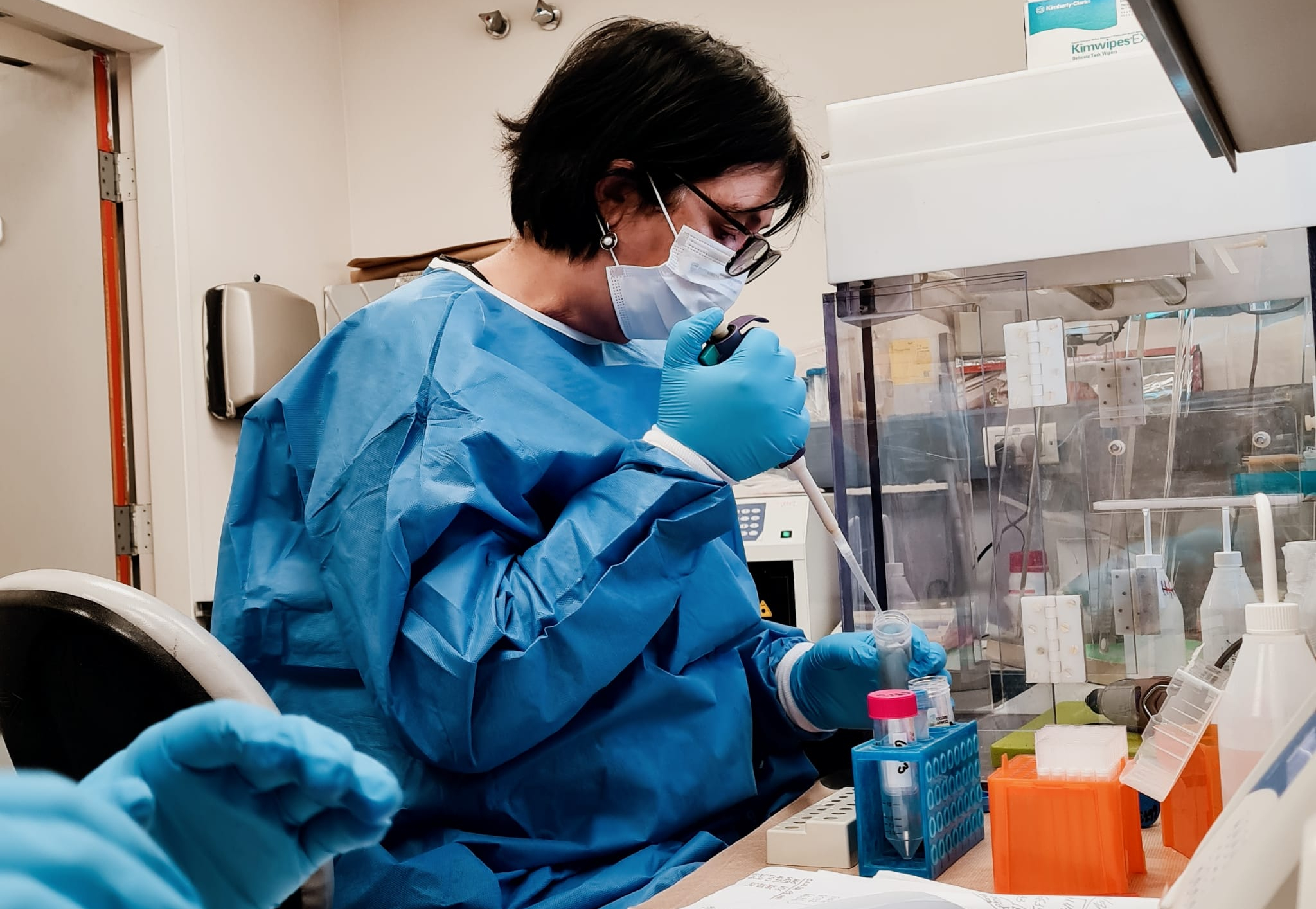
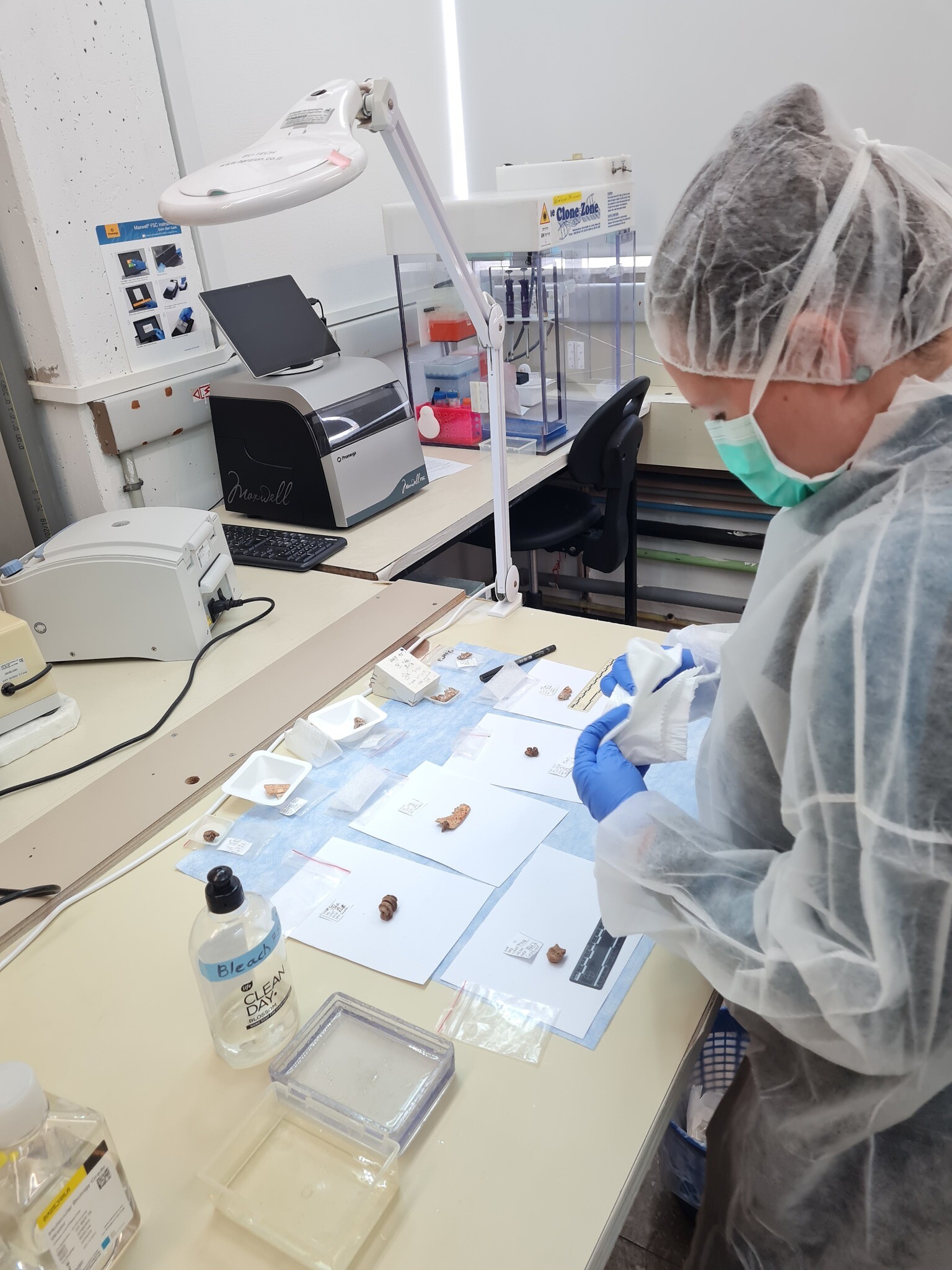
  • Prof. Gila Kahila Bar-Gal assisting with DNA extraction and amplification at the National Center of Forensic Medicine (Abu Kabir), November 2023. (Courtesy)
    Prof. Gila Kahila Bar-Gal assisting with DNA extraction and amplification at the National Center of Forensic Medicine (Abu Kabir), November 2023. (Courtesy)
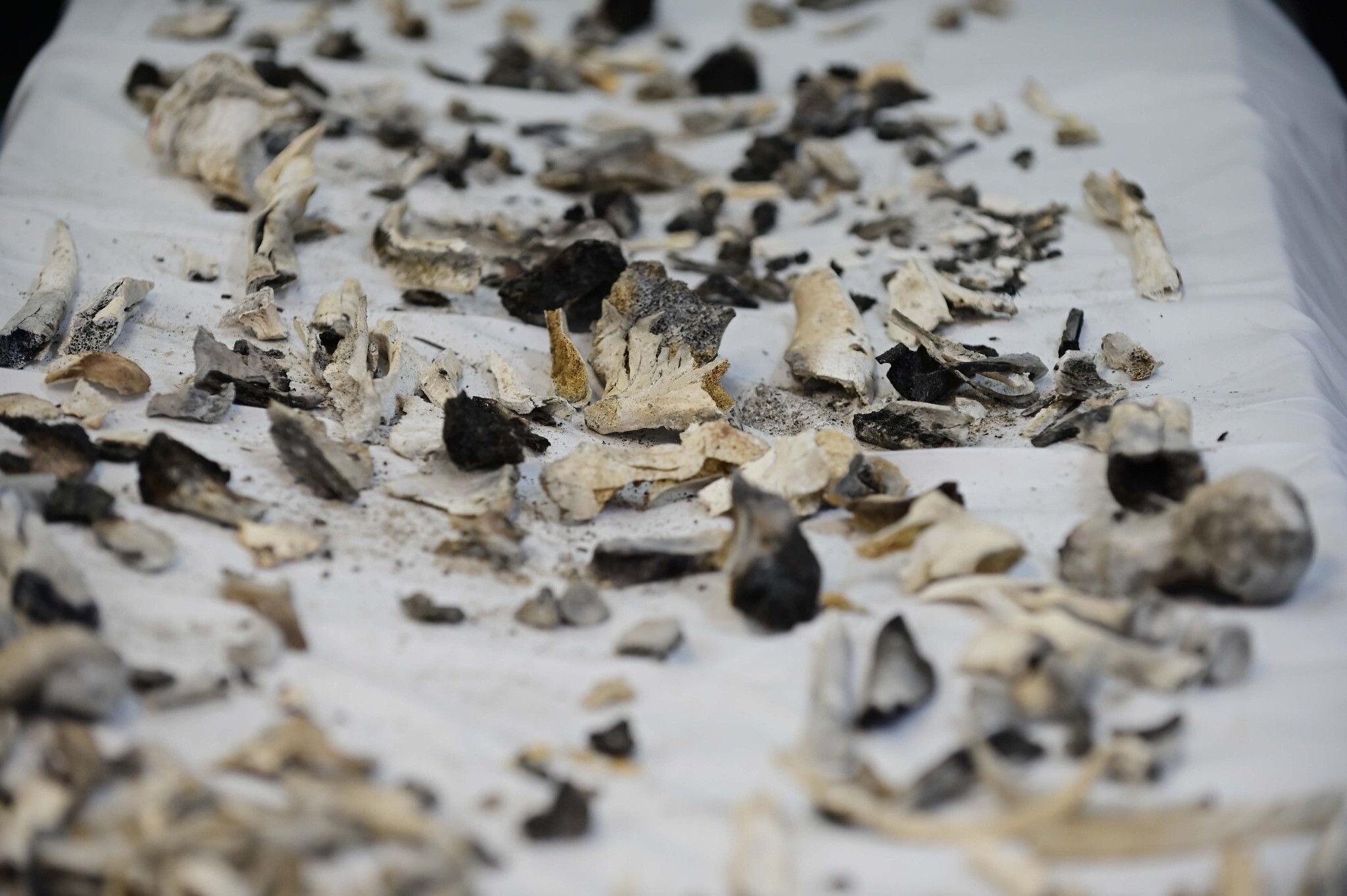
  • Charred bone shards are all that remain of some of the victims of the mass murderous attack by Hamas on southern Israeli communities on October 7, 2023. Scientists and anthropologists examine and try to extract DNA from them for identification purposes at the National Center of Forensic Medicine (Abu Kabir) in Jaffa, October 16, 2023. (Tomer Neuberg/Flash90)
    Charred bone shards are all that remain of some of the victims of the mass murderous attack by Hamas on southern Israeli communities on October 7, 2023. Scientists and anthropologists examine and try to extract DNA from them for identification purposes at the National Center of Forensic Medicine (Abu Kabir) in Jaffa, October 16, 2023. (Tomer Neuberg/Flash90)
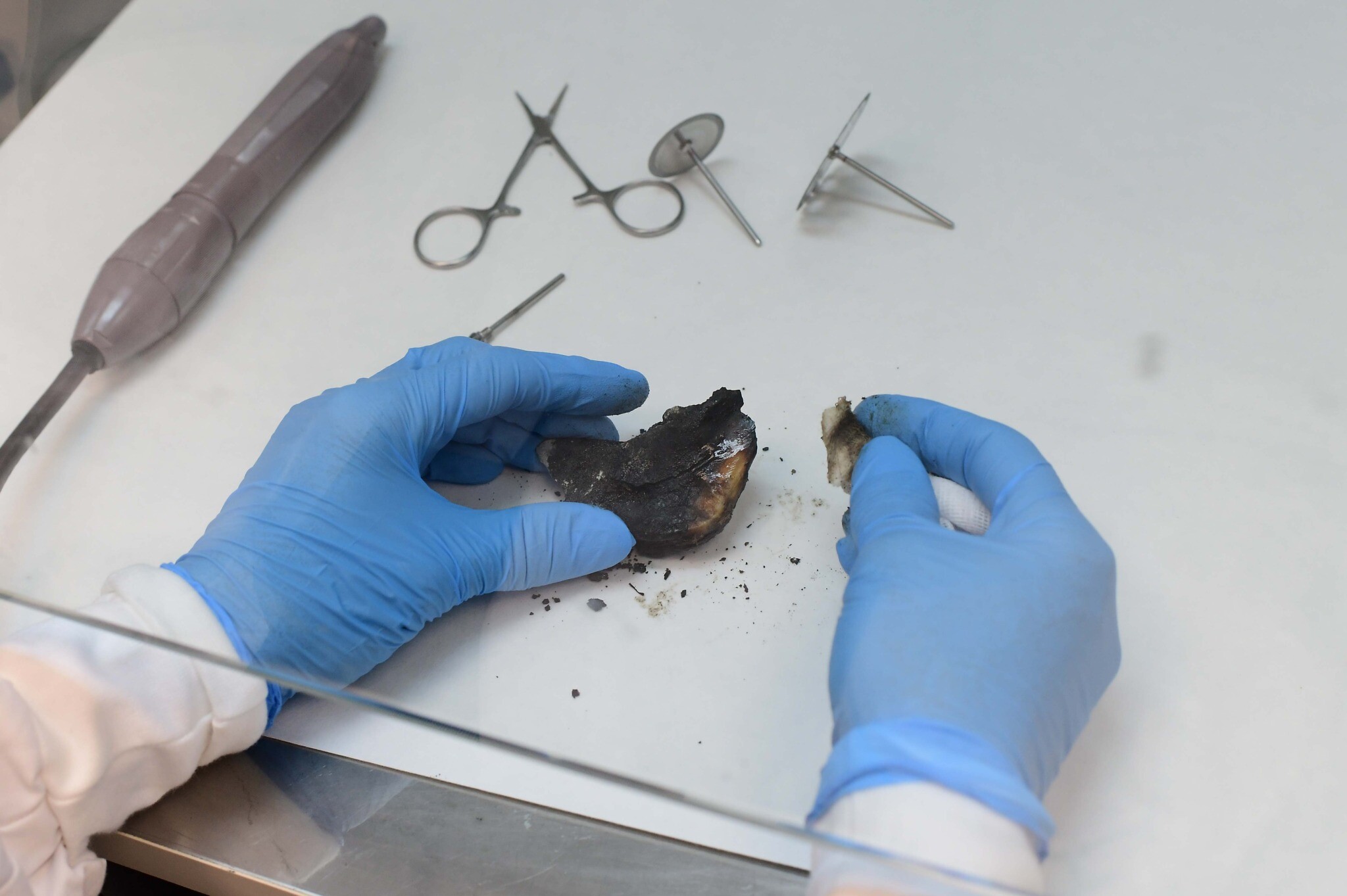
  • A charred bone shard from an unidentified victim of the mass murderous attack by Hamas on southern Israeli communities on October 7, 2023 is examined at the National Center of Forensic Medicine (Abu Kabir) in Jaffa, October 16, 2023. (Tomer Neuberg/Flash90)
    A charred bone shard from an unidentified victim of the mass murderous attack by Hamas on southern Israeli communities on October 7, 2023 is examined at the National Center of Forensic Medicine (Abu Kabir) in Jaffa, October 16, 2023. (Tomer Neuberg/Flash90)
  • Human remains of victims of the mass murderous attack by Hamas on southern Israeli communities on October 7, 2023 await advanced examination at the National Center of Forensic Medicine (Abu Kabir) in Jaffa, October 16, 2023. (Tomer Neuberg/Flash90)
    Human remains of victims of the mass murderous attack by Hamas on southern Israeli communities on October 7, 2023 await advanced examination at the National Center of Forensic Medicine (Abu Kabir) in Jaffa, October 16, 2023. (Tomer Neuberg/Flash90)
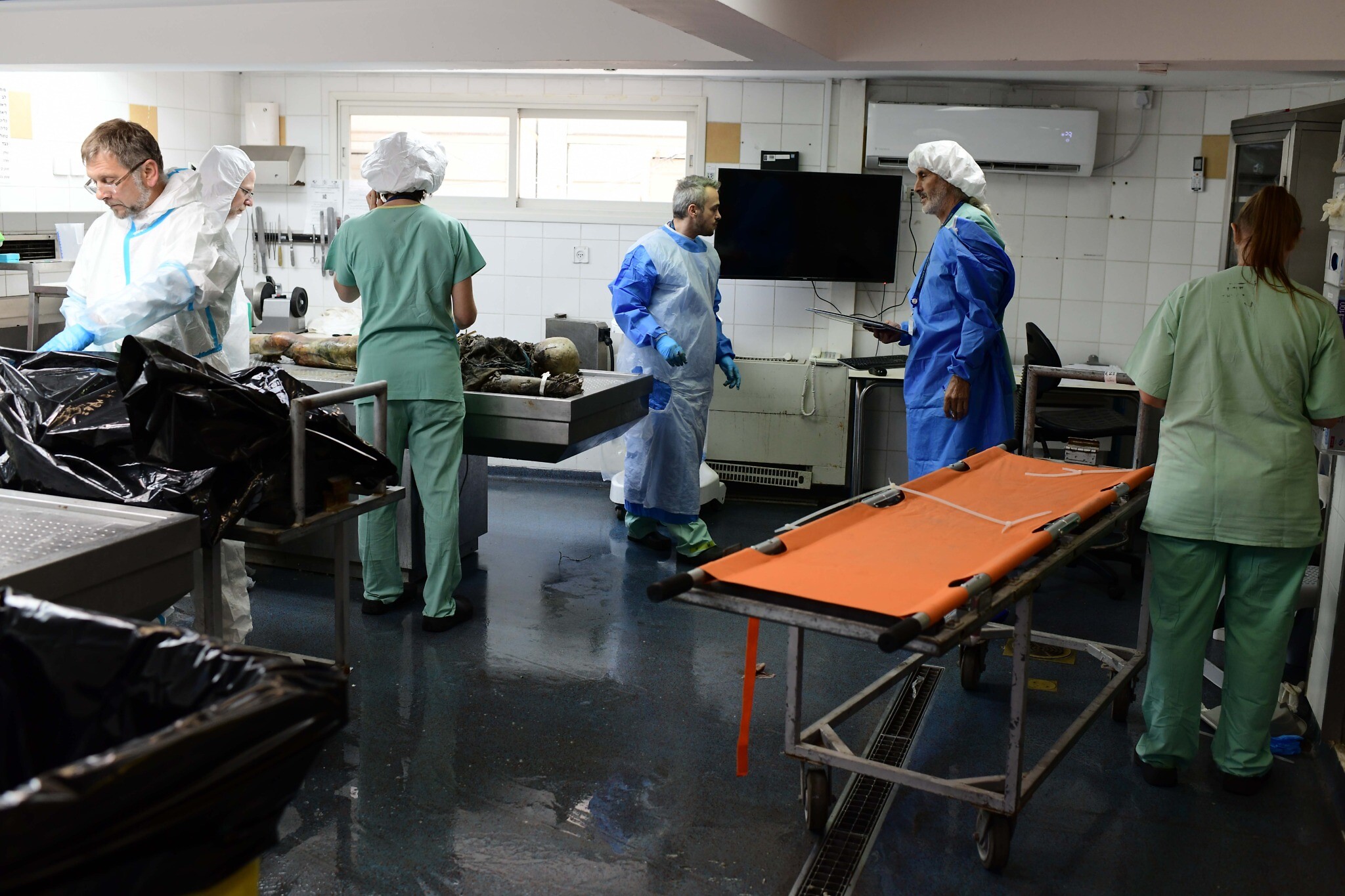
  • Forensic medicine staff examine the unidentified decomposed body of a victim of the mass murderous attack by Hamas on southern Israeli communities on October 7, 2023 at the National Center of Forensic Medicine (Abu Kabir) in Jaffa, October 16, 2023. (Tomer Neuberg/Flash90)
    Forensic medicine staff examine the unidentified decomposed body of a victim of the mass murderous attack by Hamas on southern Israeli communities on October 7, 2023 at the National Center of Forensic Medicine (Abu Kabir) in Jaffa, October 16, 2023. (Tomer Neuberg/Flash90)

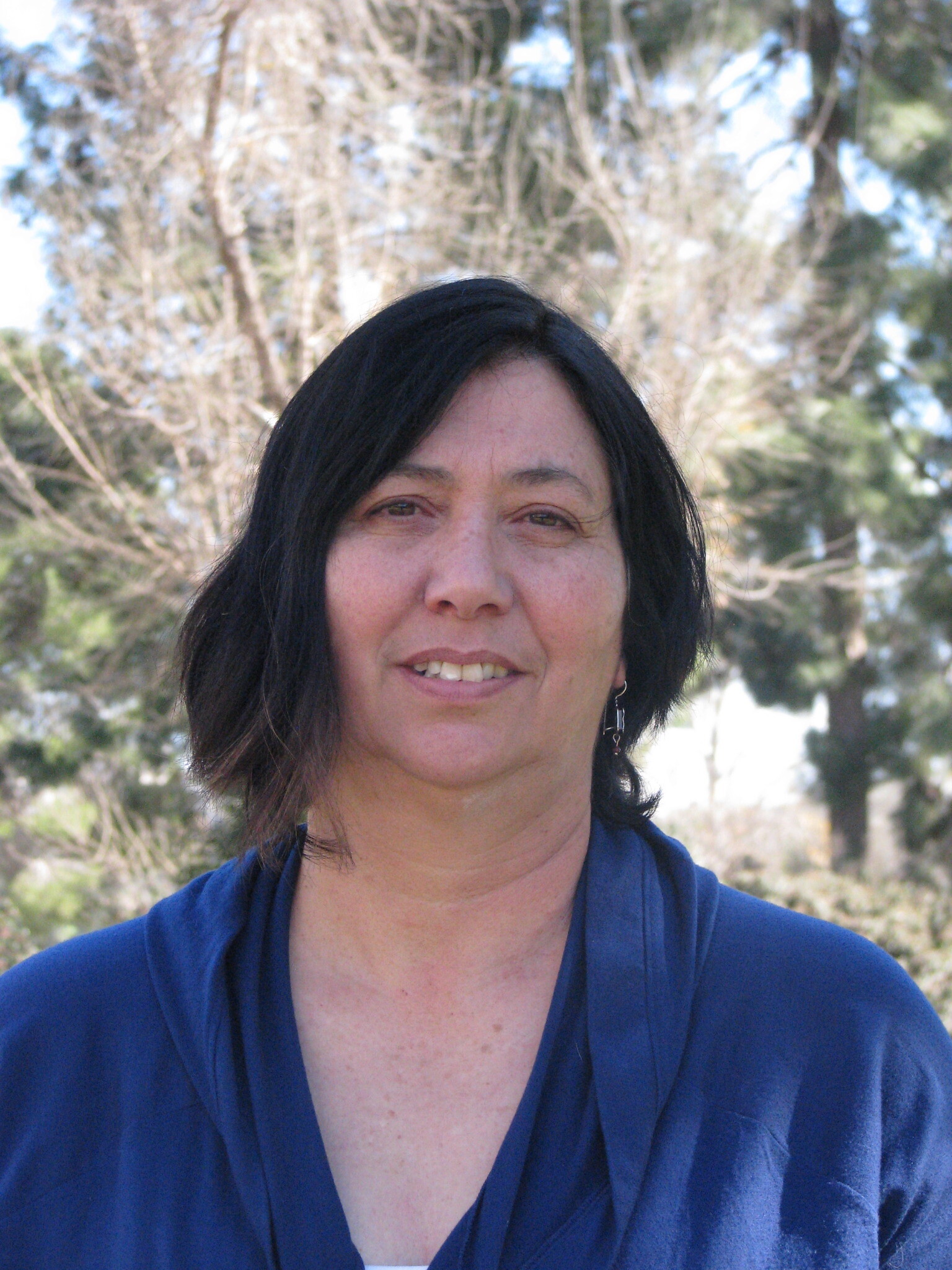
Professor Gila Kahila Bar-Gal hasn’t worked in her lab at the Hebrew University in Jerusalem for nearly two months. Instead, has been volunteering at the National Center of Forensic Medicine (Abu Kabir) on an assignment she never imagined having.

Bar-Gal, whose research focuses on interpreting DNA from archeological samples and on wildlife forensics, has lent her expertise to efforts to arrive at the identification of the overwhelming amount of human remains brought to Abu Kabir since October 7.

That Saturday, Hamas breached the border with Israel and brutally attacked over 20 Israeli communities, murdering more than 1,200 people and taking some 240 Israelis and foreign nationals hostage to Gaza. The devastating attack sparked an ongoing war between Israel and Hamas.

Headed by Dr. Nurit Bublil, Abu Kabir’s lab is responsible for extracting DNA profiles to be used in identifying all the dead from October 7. In many cases, this has been extremely difficult because of the degraded condition of the remains.

Bar-Gal is familiar with DNA that is hard to extract, sequence or genotype. However, she is dealing with different circumstances at Abu Kabir.


“I usually work also with DNA from archeological and museum samples. When you deal with ancient samples, the quality and quantity of DNA in the specimen is very low,” Bar-Gal said.

Prof. Gila Kahila Bar-Gal working in her lab at the Hebrew University

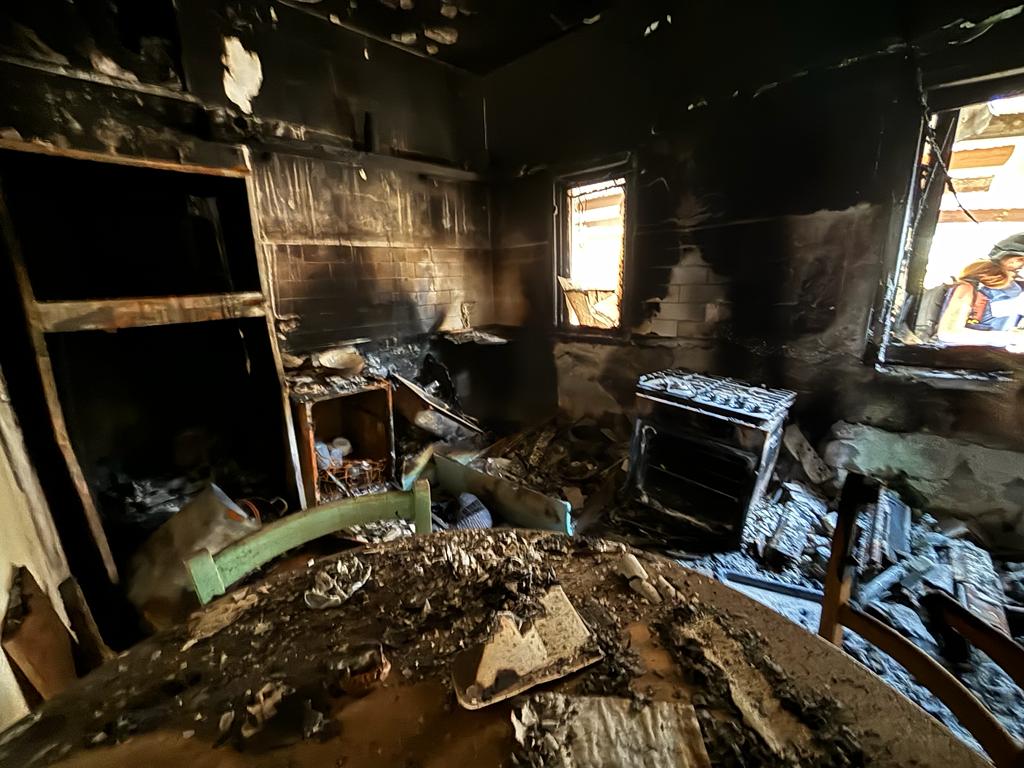
In the case of the October 7 victims, the age of the bones is not the challenge. Rather, it’s the fact that the terrorists set homes and bodies on fire, resulting in burned remains.

“The remains of the victims varied, including burned samples. The problem is the lack of presence of DNA in samples that were exposed to high temperatures like that,” Bar-Gal explained.

Before volunteering at Abu Kabir, Bar-Gal reached out to the Division of Identification and Forensic Science of the Israel Police, and the IDF.

“I called both the police and the IDF the night of October 7. I had collaborated with or done pro bono work for them before and offered to help,” Bar-Gal said.

“They said they didn’t need me at that point, so I thought of Dr. Bublil, whom I had met before, and called her. She told me my assistance would be very welcome,” she said.

Prof. Gila Kahila Bar-Gal of the Hebrew University of Jerusalem.

Bar-Gal’s skill at extracting and amplifying DNA to arrive at a profile for comparison for police and other databases adds value to the efforts at Abu Kabir. Her experience in forensics and preparing evidence for use in court are also critical to arriving at identifications that everyone can rely on as 100 percent accurate.

She also brings to the table her knowledge from her position as director of the National Natural History Collections at Hebrew University, along with her background in physical anthropology and ability to morphologically identify human and non-human bones.

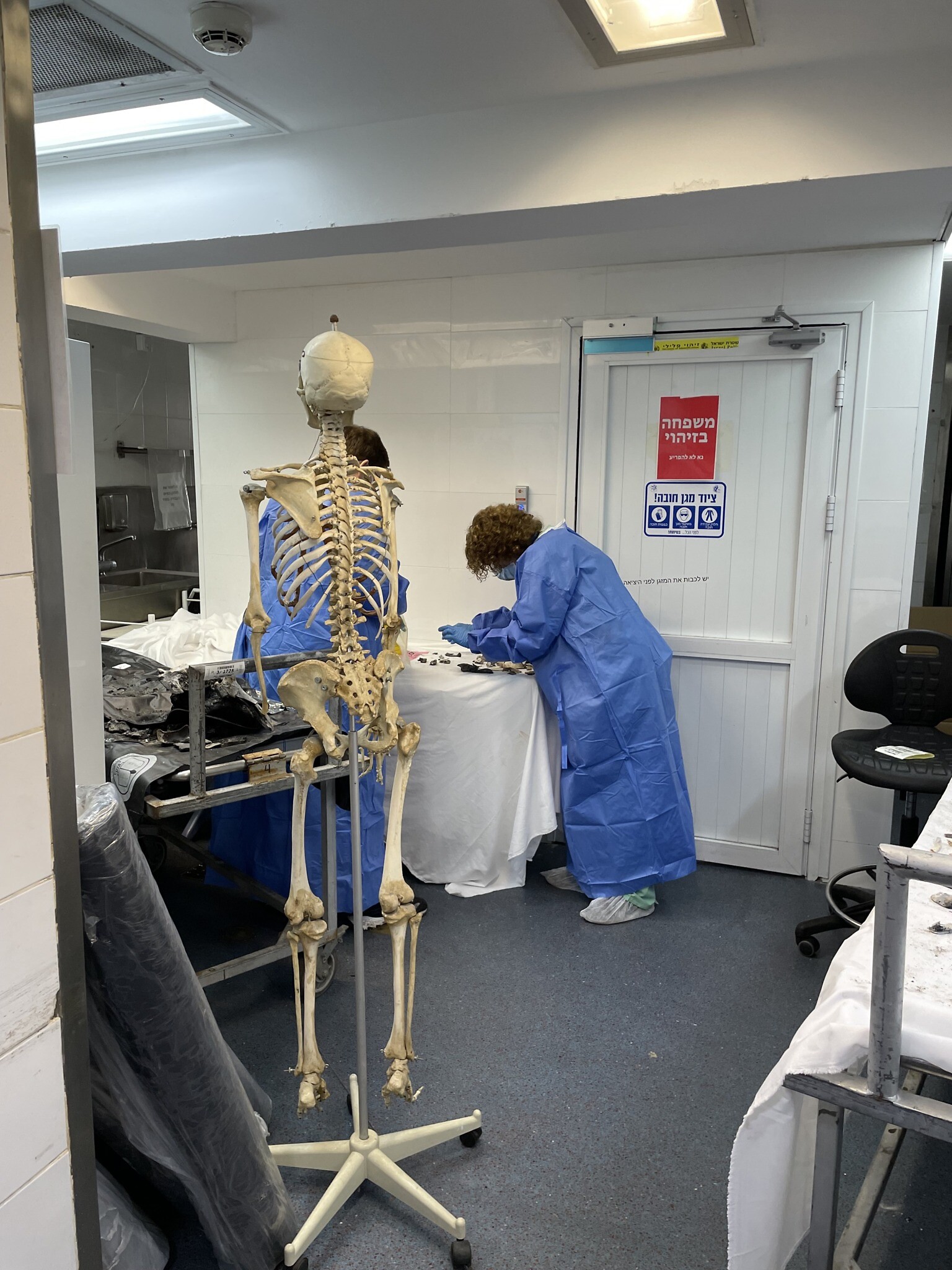
Bar-Gal does most of her work in Abu Kabir’s molecular forensic lab, but it is not unusual for her to be called to the dissection room.

“I consult with the doctors and anthropologists there about which bone — and which part of it — would be best for sampling for DNA analysis,” she said.

Anthropologists at the National Center of Forensic Medicine (Abu Kabir) attempt to put together the bones of unidentified victims of the October 7, 2023 mass murderous Hamas attack on southern Israeli communities. Jaffa, October 16, 2023. (Renee Ghert-Zand/Times of Israel)
 

When bags of bones come in, the physical anthropologists lay the bones and shards out to try to piece together partial or whole skeletons. Bar-Gal sometimes helps them with their work to maximize the chances that DNA is extracted from bones from different individuals.

“The goal is to find the minimum number of individuals from a bag of remains brought in. If you have full bones or the indicative parts of bones, it is somewhat easier. But if you have small pieces of bones, sometimes it’s very difficult,” Bar-Gal said.

Bar-Gal shared that the only way for her to get through this experience at Abu Kabir is to look at the remains only as specimens. To do anything else would make it impossible to do the work. She finds this especially so when dealing with bones that she knows to have belonged to juveniles.

As hard as she tries to maintain an emotional distance, she was once a member of one of the attacked kibbutzim and knows people from others. Her personal background has provided challenging moments.

“The first week I got remains to sample, they were labeled with names and locations. It was very difficult. Since then, I’m only getting bags with numbers, so I don’t know where they are from, which is better,” she said.

The destroyed Calderon family home, Kibbutz Nir Oz, October 30, 2023. 
 

There are still at least 10 missing or unidentified individuals from the October 7 massacre, and families have expressed their anger at the lack of clarity about the fate of their loved ones. In some cases, families were told that their loved ones were held hostage in Gaza, only to learn that they were actually dead following the delayed retrieval of their remains from the field or identification in the lab — or both.

“Families have expressed their impatience since the very beginning, but what they need to understand is that this is not like CSI and other TV series where they work on a sample and get a DNA profile in 45 minutes. It takes much longer,” Bar-Gal said.

“Just the stage of extracting the DNA from the sample takes about 15 to 20 minutes. Then that has to be in some buffers for two days to extract the DNA before amplifying it to reach a profile. The whole process takes a minimum of three to four days,” she said.

The process can be frustrating for the scientists too, as sometimes it proves unsuccessful. Bar-Gal said there were instances where she had to extract samples from the same bone three or four times.

Abu Kabir Institute of Forensic Medicine near Tel Aviv

On some occasions, bones are tested and all turn out to have belonged to the same person despite best efforts by her and the physical anthropologists to prevent this from happening. Families must also face the fact that as time goes on, remains become more degraded and the identification process becomes harder, if not impossible.

“It could be that we will not be able to identify everyone, but we keep trying. We are not giving up on sampling and trying to reach answers,” Bar-Gal said.


https://www.timesofisrael.com/expert-in-ancient-dna-and-wildlife-forensics-helps-identify-oct-7-massacre-victims/?utm_campaign=daily-edition-2023-12-11&utm_medium=email&utm_source=The+Daily+Edition

Sunday, December 10, 2023

The Energizer Idiots Keep Giving & Giving....The Same Group Who Said It Was Forbidden To Go To America And Israel During The Holocaust....But Most Escaped In Middle Of The Night And Left Their Kehillas For Dead...


How the Israel-Hamas war exposed a rift in Haredi Orthodox Judaism


Some Haredi leaders disparaged the DC rally for Israel. The backlash has been fierce


When the question about the rally finally came, Rabbi Ahron Lopiansky chuckled. “I had a hunch that that might come up, for some reason,” he said.

Lopiansky, the head of the Yeshiva of Greater Washington, was seated on a panel this weekend at the annual convention held by Agudath Israel of America, the leading national organization for Haredi Orthodox Jews. 

It’s been nearly three weeks since tens of thousands of American Jews descended upon Washington for the March for Israel, but in parts of the Haredi world, they’re still talking about it — and questioning the instructions given by several Agudath Israel-affiliated rabbinic leaders to skip it.

The rabbis left no room for interpretation — one yeshiva head said that “going to Washington is treif like chazzer,” or nonkosher like pig — and one in particular left it late, announcing the morning of the rally that he was withdrawing his support.

What influence the various statements had on Haredi turnout is unclear. But they rankled many in the Haredi world who saw joining the demonstration as a no-brainer to ensure the safety of fellow Jews — and opposition as a betrayal. An anonymous letter to Agudath Israel leadership, shared on Haredi blogs in the weeks since, called the council out of touch and said it should be overhauled. One prominent Haredi publication described the fallout as a “massive controversy.” 

The idea that some Haredi Jews would reject a rally organized to show support for Israel and to counter rising antisemitism may surprise those unfamiliar with the community, a small but fast-growing sector of American Jewry. The Haredi world’s disregard for Zionism originates in its opposition to the movement’s secular orientation and the belief that Jewish nationhood could only be achieved through the Messiah. But the debate over the rally exposed a split some observers say has widened since Oct. 7, between some Haredi leaders who maintain traditional non-Zionist attitudes and a constituency whose decadeslong pro-Israel shift crystallized following the attack.

Several Haredi Jews who were willing to be interviewed for this story declined to go on the record, citing the sensitivity of the subject in the Orthodox community. But much of the discourse on the topic has been public: in speeches posted online, open letters, on message boards, and in Haredi media.

In one circulating audio recording, an instructor at a Haredi yeshiva in Jerusalem, Rabbi Berel Whitman, attacked opposition to the rally, saying it “is making an enormous portion of the frum world say, ‘Oh my God, if this is what the rabbis say, they’re so out of touch, I want nothing to do with it.’”

The Haredi hangup on secular Zionism

In the 75 years since Israel’s founding — and especially in the 21st century — many Haredi Jews’ stance toward Israel has softened. Sources offered a few reasons for the change, including new strains of Haredi thought, increasing assimilation into modern society, and the connections many have to Israel through family or personal experience. Concern that secular Zionism threatens religious Judaism has also diminished over time as religious Jews have gained a foothold in Israeli society.

“A lot of the fears of the initial Haredi world in the ’40s and ’50s of what the secular state may foreshadow for Orthodox Judaism has not only not played out, it’s just in the opposite reality,” said Rabbi Ron Yitzchok Eisenman, who has led a Haredi synagogue in Passaic, New Jersey, for nearly three decades. “The Israeli government is the largest supporter of Haredi Jewry in the world right now.”

The March for Israel inadvertently tested the limits of that change of heart. Many Haredi Jews understood it as a necessary political action — supporting Biden to ward off momentum toward a demand for cease-fire. But the program did not include any Orthodox rabbis (or any rabbis at all for that matter) among its speakers, and it was overtly Zionist. 

The range of Haredi advisories reflected differing tolerance levels — even within Agudath Israel leadership. A Nov. 13 community notice signed by five of the 13 members of the organization’s rabbinic council, Moetzes Gedolei HaTorah, discouraged going because “the main speakers are a mixture of people whose entire essence is the opposite of Torah and yirah (God-fearingness) and tznius (modesty).” (Dozens spoke or performed at the rally, including politicians, celebrities and the families of hostages held by Hamas.)

But that message did not contain the organization’s imprimatur, and Agudath Israel’s formal statement took a more open stance. It stopped short of encouraging people to attend but said that it was “important, midarchei hashtadlonus [for purposes of influence], that there be a large turnout at this event.” 

Meanwhile, mainstream Orthodox institutions were descending on D.C. en masse. Yeshiva University, which is to the religious left of Haredi orthodoxy, canceled classes for the day. Synagogues and high schools up and down the Eastern Seaboard sent delegations. And some Hasidic bodies, like the Lubavitch-serving Crown Heights Beis Din and the Boro Park Jewish Community Council, threw their support behind the rally.

It was against this current of sentiment that Rabbi Aharon Feldman — the head of Ner Israel Rabbinical College in Baltimore, who had originally backed the rally — withdrew his support after the full program was announced. He eventually provided two reasons for the decision: the program’s inclusion of Christian nationalist Pastor John Hagee, which he called “the first step to interfaith acceptance,” and the rally’s grounding in secular Zionism, which he called “a rejection of the Jewish faith.”

“It supplants God and Torah as the basis of the Jewish people, for which it substitutes a common land and language,” Feldman wrote Nov. 20. “There can be no greater evidence of this than the anthem Hatikvah, which states that the hope of Jews for two millennia has been ‘to be a free nation in our land’ — not a nation of God and Torah. This anthem was scheduled to begin the program.”

But many Haredi Jews made the trip anyway, among them Eisenman, who has three sons who served in the IDF.

The backlash

Frustration with Haredi leadership smoldering in the days after the rally came to a head with the publication of an open letter to Agudath Israel that was spread on WhatsApp and Haredi blogs.

“There is a terrible divide between the ideology of the voice coming out of Agudah and the people who are its loyal adherents,” wrote the the letter’s anonymous author, who claims to be an Agudath Israel constituent, adding, “If you want to continue to be the voice for what is still the mainstream ultra-Orthodox in the country, it is time that real change comes to your institution.”

The anonymous letter had its critics, who said its suggestions to appoint Modern Orthodox and Chabad rabbis to the Moetzes were unreasonable. That an actual Agudath Israel constituent would suggest those additions, they said, was implausible.

But Haredi rabbis in the movement’s rank-and-file echoed its main points. Whitman, the Mir Yeshiva rabbi, said he had been “bombarded day and night” with people upset about the rally communiques. 

He said the Moetzes rabbis’ obsession with the boogeymen of secular Zionism and Christian Zionism were missing the point of the rally — to stave off calls for a cease-fire by demonstrating support for President Biden in as great of numbers as the American Jewish community could summon. Even the Moetzes rabbis agreed the rally was pikuach nefesh, or life-saving, Whitman said, and opposing it in spite of that undermined their authority as religious leaders.

“The frum community doesn’t show up at a rally which is pikuach nefesh to save people murdered by terrorism?” Whitman said. “This is what it expresses: that Haredi society sadly, tragically, always finds a reason to say no.”

A ‘reassessment’

The discontent over the rally in the U.S. matched a shift occurring in Israel, where for the first time in the nation’s history, thousands of Haredi men are enlisting in the IDF.

Experts have said that the enlistment trend is unlikely to last. But Eisenman believed it speaks to a solidifying understanding among Haredi Jews that their stake in the nation can translate into more direct involvement in its welfare.

“The movement is towards — for lack of a better term — a reassessment,” Eisenman said. “A reassessment of the old positions of total isolation and insularity.”

Eisenman wrote a lengthy post about his decision to attend the rally on Matzav, a Haredi blog. He says that he received scores of complimentary emails from Haredi Jews after its publication.

Since Oct. 7, his synagogue, Congregation Ahavas Israel, is one of many that have added “Acheinu,” a Jewish solidarity standard, to the prayer service.

“There’s a vulnerability that galvanized a lot of people,” he said, “to recognize that we’re in this together and ultimately as Israel goes, so probably we all go.”

Lopiansky, the Washington yeshiva rabbi who fielded the question about the rally, had prepared: He pulled from his jacket pocket a piece of paper containing an excerpt from the Talmud. In the passage, a student finds two groups examining the same case reaching opposite conclusions. But there aren’t two Torahs, the Talmud teaches, but one containing the entire spectrum of opinions.

Likewise, he said, Agudath Israel was originally composed of several strains of Orthodox thought: Lithuanian, Hungarian, Polish and German, and they only achieved unification by preserving a decentralized system.

“There’s a mistake as if Agudah, as if Moetzes Gedolei Hatorah, is” always of one mind, Lopiansky said. “There will always be disagreements, but the differences in opinion are legitimate.”


Friday, December 08, 2023

The Arab God Delusion! "How The Islamic Brain Poisons Everything" - Reshuffling Hitch


Palestinian murderers surrendered to the IDF in the Jabaliya area of northern Gaza on December 7, 2023.

PA says it’s working with US on post-war plan for Gaza, hopes to include Hamas


Speaking with Bloomberg, PM Shtayyeh argues Israel can’t eliminate the terror group: ‘Hamas is in Lebanon, Hamas leadership is in Qatar, they are here in the West Bank’


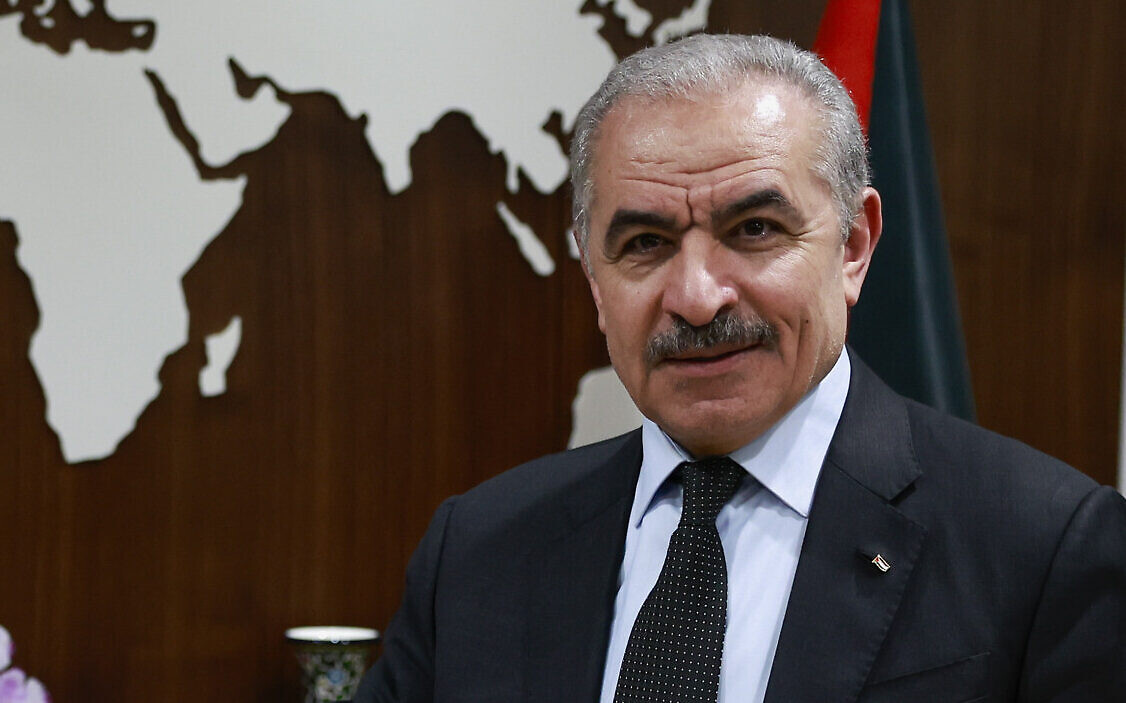
Palestinian Authority Prime Minister Mohammad Shtayyeh in the West Bank city of Ramallah on Saturday, Nov. 11, 2023. (Ammar Awad /Pool Photo via AP)
Palestinian Authority Prime Minister Mohammad Shtayyeh
 

Ramallah is working with US President Joe Biden’s administration on a plan for running the Gaza Strip after the Israel-Hamas war ends, even as the Palestinian Authority’s prime minister expressed hope that Hamas will be a partner in the process, according to a Bloomberg report.

Citing a senior Palestinian official, the news outlet reported that US officials recently met with PA Prime Minister Mohammed Shtayyeh on a plan for post-war Gaza.

“We’re not going to go there on an Israeli military plan,” Shtayyeh told Bloomberg. “Our people are there. We need to put together a mechanism, something we’re working on with the international community.”

Prime Minister Benjamin Netanyahu has on several occasions rebuffed the notion of the PA running Gaza after the war, accusing it of supporting terrorism through education, payment of stipends to terrorists and a failure to condemn Hamas’s October 7 atrocities.

Israel vowed to eliminate the terror group after its grisly attacks on southern Israel on October 7, when 3,000 terrorists burst across the border into Israel from Gaza, killing some 1,200 people and seizing some 240 hostages, mostly civilians.

Shtayyeh argued that Israel cannot eliminate Hamas. “Hamas is not in Gaza only. Hamas is in Lebanon, everybody knows Hamas leadership is in Qatar and they are here in the West Bank,” he told Bloomberg.

“Hamas before October 7 is one thing and after it is another thing,” the PA prime minister further asserted. “If they are ready to come to an agreement and accept the political platform of the PLO, then there will be room for talk. Palestinians should not be divided.”

Shtayyeh refused to condemn the group when asked, saying that the conflict did not start when Hamas attacked. “What Israel is doing in Gaza is an act of revenge,” he said. “This is not going to take them anywhere.”

Responding on Friday afternoon to Shtayyeh’s remarks, Netanyahu tweeted that firstly, “there will not be a Hamas — we will destroy them,” and then that “the fact that this is the suggestion of the Palestinian Authority only strengthens my policy that the PA is not the solution.”

A top adviser to Palestinian Authority President Mahmoud Abbas told The Times of Israel Tuesday that the PA leader has been condemning Hamas in “every call and meeting” with world leaders since the group’s shock attack on Israel, but won’t do so publicly while the war in Gaza is ongoing.


An IDF army tank rolls in a field in southern Israel near the border with the Gaza Strip on December 8, 2023, amid continuing battles between Israel and Hamas. 
 

“If Israel didn’t launch its aggression against Gaza, President Abbas would have publicly condemned Hamas repeatedly, but once the aggression began and has continued, asking him or any Palestinian leader to publicly condemn Hamas is nonsense,” Mahmoud Habbash said. (Pardon My Laugh - PM)

Israel responded to the October 7 assault with a massive bombing campaign throughout the Strip, followed by a ground incursion that began in northern Gaza before slowly expanding to the south. Over 17,000 Palestinians have been killed in the IDF campaign according to the Hamas-run health ministry. The figures cannot be verified, but the total number is largely in line with an assessment by Israel, which said it believes more than 5,000 of those killed are Hamas operatives.

The Biden administration has supported Israel’s goal of eliminating Hamas, but insists that the PA eventually fill the vacuum in order to reunite the West Bank and Gaza under a single political entity and to pave a path toward an eventual two-state solution to the Israel-Palestinian conflict.

The US concedes that the PA — which hasn’t held elections in 17 years and whose popularity continues to plummet amid longstanding allegations of corruption and an ever-expanding Israeli presence in the West Bank — will need to be “rejuvenated” before it can take responsibility for the Gaza Strip.

In line with the Bloomberg report, the Biden administration on Thursday stressed that the Palestinian Authority would have to be “revitalized” after the war in order for it to be capable of returning to govern Gaza.

Asked if this means that Abbas, who is serving the 18th year of a four-year term, would have to step down, US Deputy National Security Adviser Jon Finer told the Aspen Security Forum, “not necessarily.”

“There is no other game in town right now, in terms of an organized, institutionalized Palestinian political entity,” Finer stressed.

Palestinian Authority President Mahmoud Abbas, right, meets with US Secretary of State Antony Blinken at his office in Ramallah, November 30, 2023
 

However, Finer pointed out that Ramallah was “cooperating very closely with the IDF” to maintain security in the West Bank, even though it is extremely unpopular internally.

Israeli troops have arrested over 2,000 wanted Palestinians across the West Bank since October 7, including more than 1,100 affiliated with Hamas. According to the Palestinian Authority health ministry, some 200 West Bank Palestinians have been killed by Israeli forces, and in a few cases settlers.

For his part, Netanyahu all but shut the door to a PA return to Gaza on Wednesday. “Those who educate their children in terrorism, finance terrorism and support the families of terrorists will not be allowed to rule Gaza after Hamas is eliminated,” he tweeted, referring to the PA’s welfare payments, which include stipends to Palestinian terror inmates and their families.

But Finer didn’t appear phased by Netanyahu’s comments.

“I would caution… against taking an initial pronouncement… as the definitive, final statement or else we would not be getting any humanitarian assistance into Gaza, any foreign passport holders out of Gaza or any pauses related to the negotiations of the hostages,” he said of successful US efforts to move the parties from initial rejectionist positions.

Moreover, Finer said he understood Netanyahu’s comments on the PA to mean he opposes the PA returning to Gaza “exactly as currently constituted.” The US opposes this as well, which is why it has called for Ramallah to be “revitalized,” he said.

Still, he insisted that “the PA is going to have to play an important role, not just in the West Bank, but ultimately in Gaza as well.”

https://www.timesofisrael.com/pa-says-its-working-with-us-on-post-war-plan-for-gaza-hopes-to-include-hamas/?utm_campaign=daily-edition-2023-12-08&utm_medium=email&utm_source=The+Daily+Edition


 LISTEN:

What Is "Islamophobia"?

https://www.samharris.org/podcasts/making-sense-episodes/343-what-is-islamophobia?utm_source=braze&utm_campaign=2023_w49_newContent_343

Thursday, December 07, 2023

Dresden Gaza until Hamas releases the hostages and surrenders. Gaza civilians are no more innocent than Germans who elected Hitler.


Why I am not moved emotionally by Gazan deaths

 
Dresden after the bombing
Date13–15 February 1945
Location

Dresden Gaza until Hamas releases the hostages and surrenders. Gaza civilians are no more innocent than Germans who elected Hitler. Opinion.


I get the daily Washington Post. It is important for me to know what the left is saying, too. That way I avoid the echo chamber. In the past, I got the daily New York Times, but I had to stop because I am Jewish. I could not continue supporting anti-Semitism.

The New York Times is anti-Semitic and has been for a century. They buried Jews by burying the Holocaust. They also collaborated in the murder of millions of Ukrainians, as their Pulitzer Prize-winning reporter, Walter Duranty, filed glowing reports from the Soviet Union about Stalin while that butcher was starving millions to death during the Holodomor.

Not only could I go on-and-on about New York Times anti-Semitism, but I actually have done so here and elsewhere. You are welcome to read it.

So I now get the Washington Post. They are pretty-much just as bad. Before the 1,200 Israelis who were slaughtered on October 7 even had all their bodies identified, WaPo had moved from mourning the unsuspecting Jewish dead and turned its focus instead to the “poor innocent dead of Gaza.” And that has been its focus these past six weeks. By contrast, as leftist as Maariv and Yediot are, they do stand for self-preservation. (Haaretz, though, does not even go that far. They are fine with national suicide.) For sanity, I read my favorite Arutz Sheva columnists and Kalman Liebskind in Maariv.

I have not been moved by the headlines about Gazans being killed amid Israel’s attacks on Hamas terrorists and their weapons and tunnels. I don’t care. Although I read WaPo to avoid the echo chamber, I nevertheless now skip the crying, sobbing, weeping articles about the crying, sobbing, weeping Gazan dead. I just don’t read them. I just don’t care. For my two grush (remember agorot?), Israel can Dresden Gaza into rubble until:

(i) Hamas releases the remaining 150+ Jews and non-Jews it kidnaped,

(ii) Hamas unconditionally surrenders to Israel, and

(iii) All remaining Hamas leaders whom Israel has not yet killed submit themselves to a Nuremberg-type War Crimes Trial.

No Hostage release? Then Dresden Gaza.

No unconditional surrender? Then Dresden Gaza.

No submission by Hamas leaders for a War Crimes trial? Then Dresden Gaza

As you may have noticed, I use “Dresden” as a verb. It was good enough for America during World War II. It was good enough for Britain. It works for me. Dresden Gaza.

I know. I know: “But what about the poor innocent people of Gaza? What did they do to deserve this?”

Here’s what they did:

“Palestinians” elected Hamas in 2006 to be their government. Ismail Haniyeh, their leader, became prime minister. “Palestinians” had a free election in 2006. Hamas won. Was the election a legitimate reflection of Arab sentiment among “Palestinians”? A former president of the United States of America, doubling as a Jew hater, went there to observe the election and declared it a legitimate, proper election.

Thank you, Jimmy Carter. We know that your intention in legitimizing the Hamas election was to hurt Israel and Jews by legitimizing the rise of Hamas. But G-d is so good, Mr. President. In His mercy, He has kept you alive just barely long enough to watch your “legitimate” Hamas crushed and destroyed — and so much of Gaza turned to rubble — because you legitimized their election.

So that’s what the civilians of Gaza did in 2006. They elected Hamas. Hamas defeated Fatah, another terror organization, the one that runs the “Palestine Authority” in Judea and Samaria (the so-called “West Bank”), by winning 74 seats to Fatah’s 45. Abu Mazen (known in the West as “Mahmoud Abbas”) heads Fatah. Another terrorist group, the Popular Front for the Liberation of Palestine, came in a distant third. A parliamentary majority required either 67 seats or an armory of bombs, rifles, grenades, bullets, and such. Hamas had more of both.

In Germany, the civilians freely elected Hitler. They knew what he would do because he wrote it in Mein Kampf he would do it, told voters he would do it, and in time he did it. Moreover, they knew what he was doing when he did it, and they said nothing. They were, to use the German (and Yiddish) term, shtum. They allowed Dachau to happen, and Sobibor and Treblinka and Majdanek and Bergen-Belsen and Theresienstadt and, yes, Auschwitz. So, in due measure, those “poor innocent German civilians” got Dresdened.

Good. I hope they lived just long enough to know they had been bombed to death.

And now the time has come for Gaza to be Dresdened. They are lucky. Dresden happened during February 13-15, 1945. Close to 4,000 tons — that is 8 million pounds — of bombs were dropped on them in those three days. Some 25,000 Germans were killed. Much of the city burned down. All in three days. Got a problem with that? Talk to the hand: Hitler was elected March 5, 1933. The people of Dresden enjoyed 12 years’ respite before the Allies Dresdened them. By contrast, Hamas was elected in 2006, and that population got 17 years until their time to be Dresdened. Five extra years to murder Jews.

Was it Obama who told John McCain that “elections have consequences”? At first, the German public did not align with Adolf. In both 1924 and 1928, he got fewer than a million votes. And then his rise began. In 1930 he got 6,409,000. In July 1932 he got 13,745,000. In November 1932 it dropped a bit to 11,737,000. But then he got 17,277,000 in March 1933, enough to form a Nazi-driven coalition.

Dresden them.

And so it has gone for Hamas.

Let us be clear: If the Government of Israel were trying to murder innocent civilians wantonly, just to inflict terror and to horrify them into submission, I would condemn that. No Jew can accept or refrain from criticizing organized institutional efforts to harm civilians wantonly. There has to be a reason, a justification. If Israel were deliberately bombing residential structures just to kill people randomly in their homes and bombing hospitals just to inflict suffering on the ill in the abstract, there might be room for criticism. But that is not Israel nor the Jewish people. We have our ethic, and the Arab Muslims have theirs. We have our religious guidelines and theological authorities, and they have theirs.

Israel will not target innocent civilians knowingly. If they do kill people who should not be killed, it will be by accident.

But, otherwise, Israel in Gaza specifically destroys known military targets: rocket launchers, land mines, IEDs (improvised explosive devices), military drones, RPGs (rocket-propelled grenades) and their launchers, anti-tank missiles, and other military battlefield materiel — and the people storing and launching them. If such terrorists are operating from specific residential buildings — say, running a rocket factory or storing attack drones in an 8th-floor apartment — then Israel may well bomb the entire building. But they won’t bomb the building next door. They attack with whatever precision is humanly possible. And if the day comes that they make a mistake, they will apologize. That is what America does.

By now, we all know that Hamas men and their weapons hide in and behind women, children, residential apartment buildings, hospitals, mosques, schools, and ambulances. When any or all of these are identified positively for their military threat, Israel will destroy them. And if the Israel Defense Forces (IDF) cannot avoid killing civilians alongside, then Dresden entails collateral casualties, and Israel now must Dresden Gaza. Northern Gaza, southern Gaza. Beit Hanoun, Jabaliyah, Deir al-Balah, Khan Younis, Abasan al-Kabera. Dresden one and all until (i) all hostages are freed; (ii) Hamas surrenders; (iii) their remaining leaders submit to War Crimes Trials. Turn them into Bedrock with Fred and Wilma, Barney and Betty, Pebbles and Bam-Bam.

Importantly, Israel has had to fight five previous Gaza wars started by Hamas these past 16 years. Each time, Israel stopped its winning responses, forced by international pressure to cease fire and by a convoluted “Conceptzia” that they could be bought off. Each time, Hamas used the ceasefire to re-arm, build more tunnels, and militarize more of the population. They now have 40,000 terrorists in 300 miles of those 500-800 tunnels. This time, upon having experienced the terror attacks of Shabbat Shmini Atzeret on October 7, Israel has learned the price of stopping halfway through a war. That “Concept” simply left behind the weeds to grow back and fight an even more destructive next war. This time Israel must uproot even the weeds.

When the Washington Post and others present their empathy for the “poor innocent Gaza civilians,” I don’t care. They are poor only because Hamas has used the billions of dollars they have received from Qatar and European — and American — taxpayers to build an underground tunnel system as expansive as the New York City subway system instead of allocating the money to the public by building a beautiful country. Believe it or not, with all that money that has poured in — more than $8 billion — they have not even built a water or electricity infrastructure in their 16 years.

“Humanitarian” nothing. They crossed the border by the hundreds with Hamas fighters to pillage and murder. They spat upon, beat and cursed the hostages. An UNRWA teacher starved a hostage in his home. So did a doctor.

They should get no food, no water, no meds, no fuel. Let them drink and eat their tunnels. That would set that murderous civilian population against their Hamas masters, just as ravenously starving attack dogs will consume their owners if desperately hungry enough. General Ulysses S. Grant was the King of Sieges. He laid siege to Vicksburg, Mississippi and presented it as an Independence Day gift to President Lincoln on July 4, 1863, the same day Gen. Meade partially won Gettysburg. But Meade “mowed the lawn” and allowed Robert E. Lee to escape back south to Virginia with his Confederate army. So Lincoln fired Meade despite his winning at Gettysburg. Lincoln had no patience for generals “mowing the lawn.” He finally selected Grant and, in time, Grant laid siege to Richmond. It is said that the initials in “U.S. Grant” stood for “Unconditional Surrender.”

The Gaza civilians are no more “innocent” than were the Germans who elected Hitler. Perhaps Israel needs a Chief of Staff with the initials K.L.T. — K’ni’ah L’lo T’nai.

So I am not moved emotionally — at all – by the news or sight of Gazans trekking now from north to south Gaza, or from one part of the south to the next where Israel is not presently attacking. They brought this on themselves. They celebrated too many mowings. If a country did this to America, the United States would Dresden them, or we would Hiroshima/Nagasaki them. So let Israel Dresden Gaza. No need to Hiroshima them. The breeze sometimes blows north. Dresden will do.

Adapted by the writer for Arutz Sheva from a version of this article that first appeared here in The American Spectator.

To receive Rav Fischer’s Weekly Extensive Torah Commentaries or to attend any or all of Rav Fischer’s weekly 60-minute live Zoom classes on the Weekly Torah Portion, the Biblical Prophets, the Mishnah, Rambam Mishneh Torah, or Advanced Judaic Texts, send an email to: shulstuff@yioc.org

Rav Fischer’s memorable two televised debates with a national leader of CAIR, the leading anti-Semitic Arab Muslim body in the United States, can be found here and here.

His latest deeply moving series of three informational and inspirational programs on the Hamas Gaza War may be found here, here, and here on YouTube. Because of some sensitive subject matter and viewing content relating to Hamas terror, YouTube is restricting the programs to viewers 18 and up.

Wednesday, December 06, 2023

‘Israeli female soldiers shot in crotch, vagina, breasts on October 7


“It was often impossible for families to be shown faces – and it seems as if mutilation of these women’s faces was an objective in their murders."

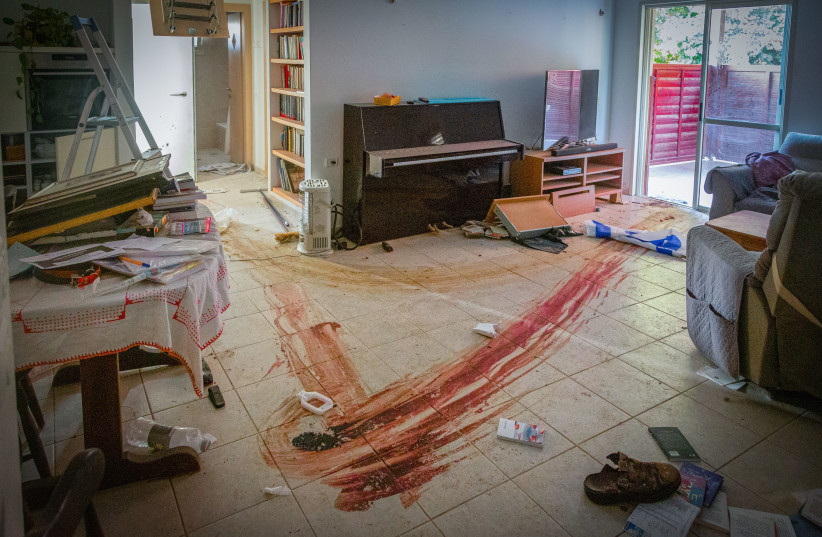
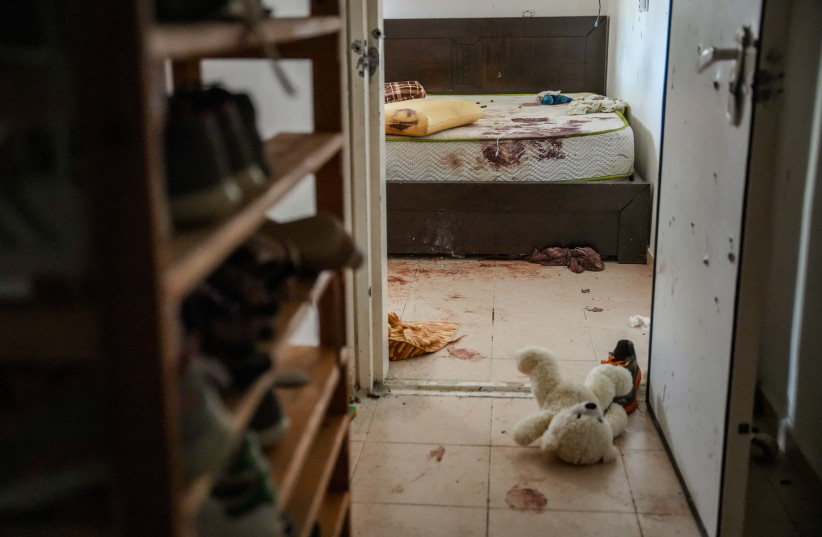
 Blood in houses when Hamas terrorists infiltrated Kibbutz Be'eri, and 30 other nearby communities in Southern Israel on October 7, killing more than 1400 people, and taking more than 200 hostages into Gaza, near the Israeli-Gaza border.  (photo credit: EDI ISRAEL/FLASH90)
Blood in houses when Hamas terrorists infiltrated Kibbutz Be'eri, and 30 other nearby communities in Southern Israel on October 7, killing more than 1400 people, and taking more than 200 hostages into Gaza, near the Israeli-Gaza border.

(Warning: this story describes deeply disturbing events and testimonials in graphic detail.)

Expressions of agony survived their deaths, army reservist Shari Mendes said as she described what experts saw when they identified and prepared for the burial the female bodies of Hamas’s October 7 massacre.

“These women arrived with their eyes opened, their mouths in grimaces, their fists clenched,” said Mendes, whose IDF rabbinical unit worked with the bodies, all of which were brought to the IDF's Shura base.

“The soldiers that we dealt with had expressions of agony on their faces still,” said Mendes. "I remember one young woman whose arm was broken in so many places it was difficult for us to lay her arm in the burial shroud, her leg too. In her case the entire left side of her body was shredded, torn apart, most likely by a grenade."

Gender-based violence

She spoke Monday at a sidebar event at the United Nations in New York organized by Israel’s mission to the world body. “Hear Our Voices: Sexual and Gender-Based Violence in the October 7 Hamas terror attack,” was held to highlight stories of Hamas rapes and gender mutilation during the attack, which have been largely swept under the rug by the international community, including the UN itself.

UN Secretary-General Antonio Guterres and UN Women issued condemnations of such acts only last week.

 The destruction caused by Hamas terrorists in Kibbutz Kissufim on October 7, 2023, near the Israeli-Gaza border, in southern Israel, November 1, 2023.  (credit: ERIK MARMOR/FLASH90)
The destruction caused by Hamas terrorists in Kibbutz Kissufim on October 7, 2023, near the Israeli-Gaza border, in southern Israel, November 1, 2023

At Monday’s event, Mandes said that many of the bodies of young females arrived at Shura “in bloody shredded rags or just in underwear—and their underwear was often very bloody.”

“Our team commander saw several female soldiers who were shot in the crotch—intimate parts/vagina—or shot in the breast. This seemed to be a systematic genital mutilation of a group of victims,” Mendes said.

In a filmed testimonial played at the event, a survivor said she watched a terrorist that morning cut off a woman’s breasts and then play with them—after he had raped her.

“Our unit has seen bodies that were beheaded or had limbs cut off, mutilated," Mendes said. "One young woman came in with no legs: they had been cut off. We saw several severed heads, one with a large kitchen knife still embedded in the neck.”

“Charred remains arrived and had to be identified and prepared for burial. These bodies were burned beyond recognition, often without arms or legs; they did not resemble anything human,” Mendes said.

“Sometimes we sifted through piles of ash that disintegrated as we touched them. These soldiers were burnt alive at very high temperatures.”

Terrible disfiguring 

Among those bodies that were not burned, the heads were often badly disfigured, she described.

“Heads and faces were covered in blood, they were shot in the eyes, face, and skull,” Mendes said.

“It was often impossible for families to be shown faces—and it seems as if mutilation of these women’s faces was an objective in their murders.

For some of them, their "heads were bashed in so badly that their brains were spilling out,” Mendes described.

“Some were shot in the heads so many times at close range that their heads were almost blown off,” she said.

“In some cases, this was done after death, just out of cruelty,” she said, explaining that the absence of blood in the wounds showed that none was left in the body to drain out.

Shura base personnel's grim work

Mendes arrived at Shura on October 8, the day after the Hamas attack in which the terror group killed over 1,200 people including hundreds of soldiers stationed on the southern border.

The scene that greeted her that morning was “unimaginable in scale,” she said.  

“Body bags were piled to the ceiling, lining the corridors in every room. Refrigerator trucks were waiting outside, also full.

“Body bags just kept coming in all shapes and sizes. Many were oozing liquids and the floors were wet. The smell of death was already unbearable. It is impossible to overemphasize the number of bodies we were dealing with; the sense of shock and despair,” she said.

Teams have worked to identify bodies at Shura around the clock since that day, Mendes said.

Hamas “did not show these women any honor in life, but it was important to us and our teams, groups of women, that we show them deep love and gentleness as we prepared them for burial.”

Female IDF teams who prepared the bodies for burial are often the last to see the bodies.

“We held them in our hearts even just for a moment, as if they were our daughters, we really loved them.”

As a child of a Holocaust survivor, Mendes said, “I understand the importance of bearing of witness.. I am here to be the voice of those who cannot testify.”

Sheryl Sandberg: We can all agree—nothing justifies rape

Among those who spoke at the event about the importance of condemning the use of rape as an act of war, were former Facebook chief operations officer Sheryl Sandberg and former US secretary of state Hillary Clinton, with the latter sending a taped message.

Sandberg said that rape was recognized as an act of war only 30 years ago, but not enough has been done. “That is why this moment is so critical. We have come so far in establishing that rape is a crime against humanity and we have come so far in believing survivors of sexual assault in so many situations," she said.

“That is why the silence on these war crimes is dangerous. It threatens to undo decades of progress, to undo an entire movement. The world has to decide who to believe. Do we believe the Hamas spokesperson that rape is forbidden and that therefore it could not have possibly happened on October 7?

“Or do we believe the women whose bodies tell us how they spent the last moments of their lives?”

Sandberg said that victims of those rapes could tell their own story if only they had been allowed to live. In their names, the principle that rape should never be used as an act of war should be recognized.

“This truth must be upheld despite the politics of our time. No matter what marches you are attending, what flag you are flying, what religions you are practicing... there is one thing we can all agree on. There is no circumstance that justifies rape.”

Clinton said that as a global community “we must respond to weaponized sexual violence wherever it happens, with absolute condemnation. There can be no justifications and no excuses. Rape as a weapon of war is a crime against humanity.”

“Organizations, governments and individuals who are committed to a better future for women and girls have a responsibility to condemn all violence against women,” she said.

‘It is outrageous that some who claim to stand for justice are closing their eyes and their hearts to the victims of Hamas.” 


https://www.jpost.com/israel-news/article-776654?utm_source=ActiveCampaign&utm_medium=email&utm_content=Israel-Hamas+war%3A+IDF+penetrates+heart+of+southern+Gaza&utm_campaign=December+5%2C+2023+2

Tuesday, December 05, 2023

How else to explain the mindboggling lack of outrage with beheadings of Israeli infants and gang rapes of Jewish teenage girls?


The folly of ceasefire 


Soon after Israel began its counteroffensive, the United Nations General Assembly adopted a resolution calling for an immediate ceasefire. It declined to make any statement condemning Hamas.


Pro-Palestinian, anti-Israel protesters gather in front of the Colorado Convention Center, the site of the opening plenary of the Jewish National Fund-USA annual conference, Nov. 30, 2023. Photo by Carin M. Smilk.
Pro-Palestinian, anti-Israel protesters gather in front of the Colorado Convention Center, the site of the opening plenary of the Jewish National Fund-USA annual conference, Nov. 30, 2023.


In the clamor for a ceasefire in Gaza, there sure is a lot of ceasing on demand. A multitude of ultimatums, public outcries and violent actions during protests that require arrest.

Nothing is too sacred to disrupt: “Gas the Jews!” abhorrently shouted at the Sydney Opera House; Armistice Day in the United Kingdom overrun with mobs of antisemites parading through Central London; the lighting of the Christmas Tree in Rockefeller Center enflamed by un-peaceful protests reminiscent of the Dark Ages.

This worldwide onslaught, undertaken mostly by Muslims and their “progressive” acolytes (and useful idiots: See Susan Sarandon), carried signs and chanted slogans calling for the end of a variety of Israeli cruelties: “occupation,” “apartheid,” “genocide,” “blockade” and “open air prison.” That’s a lot of ceasing, but it can be distilled to a single objective, what’s truly motivating the protestors: “Cease Jews!”

There is madness and nihilism among us—infecting minds, poisoning hearts, revealing truths. We have given radical Muslims license to forcibly hijack our streets and call for the death of Jews—wherever they may be found. The irony, of course, is that with each of these grotesque hate-fests, Jew haters are making the case for a Jewish homeland, for why the existence of Israel has, aside from the Holocaust, never before been this essential.

Such a marked contrast from the somber assemblies that Jews undertake in support of Israel. No hoarse shouting; no “death” chants and flag burnings. A tale of two communities. Which do you prefer as neighbors and fellow citizens? So stark are the side-by-side comparisons that people choosing the pro-Hamas camp can only mean one thing: antisemitism is alive and well, with practitioners shamelessly availing themselves of this permissive moment of unabashed hatred.

How else to explain the mindboggling lack of outrage with beheadings of Israeli infants and gang rapes of Jewish teenage girls? The victims on Oct. 7 were not enemy combatants. Just like Hamas’s launching of indiscriminate rocket fire at Israel since 2007, Jews need not wear an IDF uniform to be targeted for death. The savagery of Oct. 7, and the refusal of so many to condemn the actions of Hamas, suggests that so long as it is directed against Jews, violence is excusable, crimes are comeuppance, terrorism will go unnamed and Hamas will be treated like heroes.

Soon after Israel began its counteroffensive, the United Nations General Assembly adopted a resolution calling for an immediate ceasefire. It declined to make any statement condemning Hamas.

The U.N. Women’s organization, with its specific mandate to protect women from sexual violence, demanded a ceasefire without mentioning Hamas or including a single word of disgust for the unspeakable violations against Jewish women that took place on Oct. 7. Those words only recently arrived, but tepidly stated and silent about who was to blame. The U.N. General Secretary also was inexcusably late in mentioning that Hamas broke a ceasefire on Oct. 7 by breaking every known rule of armed conflict.

It’s far worse than withholding outrage. There is also an obscene denial of the horrors that took place. Apparently, Israel fabricated the whole thing. The Jewish state staged its own massacre. The home movies taken by Hamas and treated like a Hollywood premier on social media must be fake, too. Gazans are so predisposed to being used as human shields, they actually believe that the rest of the world is as depraved as they are.

People are actually saying such things, and far too many are believing it. We are facing a pernicious strain of antisemitism never before seen. The evidence left behind is not DNA, but AI—a combination of pure ignorance and diseased malice. The alliances Jews once believed they could rely upon have disappeared into the fog of the culture wars. Jewish Lives Don’t Matter and Believe Survivors unless they’re Jews.

This is the reason why the Squad, progressives in Congress, university faculty and their mindless students have been so begrudging and dismissive when it comes to condemning Hamas. For them, this particular breed of terrorists are, in actuality, freedom fighters engaged in acceptable acts of resistance. In their twisted moral logic, the fact that Hamas is a terrorist organization is what makes its trademark Jew-hatred so attractive.

This is why they can’t stoop to reproaching Hamas. In the vocabulary of the West, “terrorism” is a negative. But for Hamas apologists, being called a terrorist is not an insult, but an allure. After all, Hamas achieves what casual, cocktail party antisemitism can never accomplish: a demonstrated capacity to rid themselves of Jews, murdering them—even the infants.

We should tragically presume that those who remain silent must regard Hamas as antisemitic rock stars, deserving not of just deserts, but everlasting praise.

As for the rest of us—Jews and non-Jews alike—surrounded by such anti-American animus and agitprop, we should prepare ourselves to accept that our cherished liberal values are under attack, that civilization itself is in jeopardy. Criminality and mass rioting is being normalized—whether it is smash-and-grab at the Apple Store or the disruption of Macy’s Thanksgiving Day Parade in the Big Apple.

Tolerate moral relativism too long, capitulate to the new order of woke-fueled protocols, and you end up with moral rot, confusion and mediocrity.

You don’t have to look very far. A high school in Queens turned into a lynch mob for a teacher who stood up for Israel. Firebombs were thrown at a Jewish Center in Montreal. As many as 15 synagogues in New York City received bomb threats this past Shabbat.

Much of this was taking place during Israel’s four-day ceasefire. So, is this really about the killing of Palestinian civilians? No protests erupted to denounce the 100,000 civilians killed in Ukraine. Are Palestinian lives more worthy than other civilians?

And where was the worldwide demand to return the Israeli and American hostages? Instead of blaming Israel for defending itself, Bernie Sanders, Barack Obama, Tony Blair and the U.N. secretary general should have traveled to Egypt, and standing at the border with Gaza, demanded through loudspeakers: “Let the Jewish people go!”

Latent antisemitism is a thing of the past. Jew-hatred has returned, openly, and it is raging. After thousands of years, emanating in fits and starts, what is finally long overdue is the ceasing not of fire, but antisemitism.


https://www.jns.org/the-folly-of-ceasefire/