Ultra-Orthodox Jews clash with secular Israeli officials over coronavirus measures
JERUSALEM - Israel's rapidly escalating coronavirus
crisis is aggravating a religious divide in the Jewish state, with
ultra-Orthodox leaders accusing mostly secular health officials of
discrimination and fostering anti-Semitism by focusing on outbreaks in
highly observant communities.
As the government struggles to contain the outbreak,
ultra-Orthodox Jewish rabbis, cabinet ministers and parliament members
have resisted attempts to curtail activities in ultra-Orthodox areas,
including many that have emerged as covid-19 hot spots.
Facing particular ire has been Ronni Gamzu, the
pugnacious former hospital administrator appointed last month as the
government's "corona czar." Gamzu has clashed with religious leaders
over his efforts to impose targeted lockdowns on neighborhoods with high
infection rates, block a yearly pilgrimage to the grave of a revered
Hasidic rabbi in Ukraine and compel virus testing for thousands of
foreign students who have recently arrived to attend religious schools,
or yeshivas.
Gamzu said last week that 80% of the most recent
coronavirus cases occurred in ultra-Orthodox neighborhoods. The
government expects to enact targeted restrictions Monday in 10 hot spot
communities, many of them ultra-Orthodox.
The tensions have riven Israel's coronavirus cabinet, the
government body that sets policy. On Friday, one day after Israel
recorded 3,141 new cases - the largest single day per capita increase in
any country since the pandemic began - cabinet discussions grew heated
over proposed lockdowns during the Jewish holidays of Rosh Hashanah and
Yom Kippur later this month.
"You want a lockdown during the High Holidays because you
don't want people praying," Housing Minister Yaakov Litzman said to
Gamzu, according to Israeli media reports. "We will not let this
happen."
Gamzu says that his recommendations are data-driven, applied equally
to all sectors of Israeli society and designed to prevent the need for
another nationwide lockdown. He has not hesitated to fire back at those
want to avoid restrictions, including some business owners and school
officials whom he has accused of hindering the country's recovery.
"Stop the insanity," he said in an emotional appeal to the public Thursday. "All Israel is at war."
In arguments that echoed those of some church leaders in
the United States, a senior ultra-Orthodox rabbi, Chaim Kanievsky,
accused Gamzu of wanting to keep yeshiva scholars from their religious
studies even as secular Israelis are allowed to go to beaches and
restaurants.
Gamzu, who was appointed by Prime Minister Benjamin
Netanyahu in early August, was overruled during his first week on the
job when he sought to block this year's crop of foreign yeshiva students
from entering the country. But he insisted they be quarantined to start
their stay and then tested and isolated if results are positive.
Several hundred boarding students, many of them teenagers
from the United States, have tested positive in recent weeks, although
most show no symptoms. The northern Israeli town of Karmiel reported
last week that almost half the 400 students at a local yeshiva had
tested positive.
Kanievsky, however, advised schools not to test even in
cases when students showed symptoms because it would disrupt their
studies.
Gamzu's blunt retort - "Rabbi Kanievsky's announcement
endangers the ultra-Orthodox public" - sparked outrage, with one
ultra-Orthodox newspaper calling for Gamzu's resignation over his
"despicable defiance of the Torah's authority."
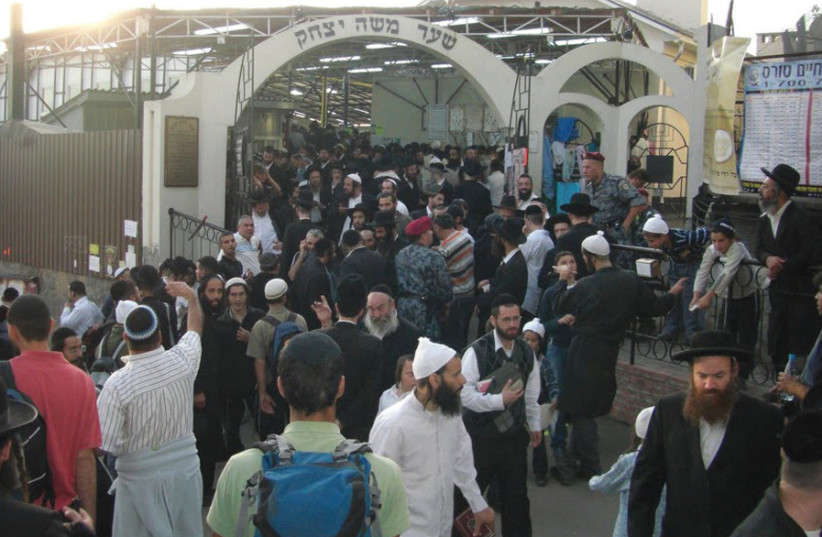
Gamzu faced another backlash when he lobbied Ukrainian
officials to bar ultra-Orthodox Israelis from making their annual Rosh
Hashanah pilgrimage to the Ukrainian town of Uman. The celebrations,
involving crowds of dancing men, had super-spreader potential, he
warned. Officials in the Ukrainian capital, Kyiv, announced the ban this
week, but not before Ukrainian media reported that locals in Uman had
attacked Jewish travelers who had already arrived.
Ultra-Orthodox leaders were furious with Gamzu, and
several Israeli officials accused him of "fueling anti-Semitism" in the
words of parliament member Miki Zohar, from Netanyahu's Likud party.
Gamzu declined to comment for this article.
The arguments between religious and secular camps are not
new. Ultra-Orthodox Jews - or Haredim as they known in Hebrew - live in
insular communities, putting higher priority on their religious
practices than civic obligations. Many, for instance, don't celebrate
Israeli patriotic holidays, and most don't serve in the military, a near
universal requirement for other Jewish Israelis.
Health experts say the ultra-Orthodox are particularly
susceptible to the spread of infection because they typically have large
families, live in crowded neighborhoods and routinely gather in large
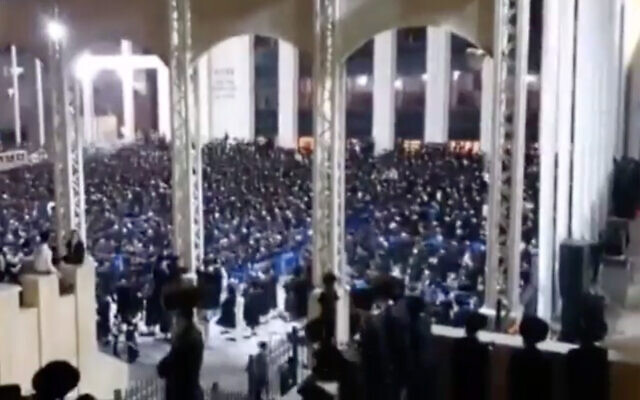
numbers for worship and funerals.
Haredi distrust of the government runs deep, and
initially their rabbis resisted orders that Israelis wear masks and
avoid crowded indoor prayer. Minor clashes broke out when the Israeli
army was deployed in a few high-infection Haredi areas to help enforce
lockdown orders.
But religious leaders began complying after they saw
Covid-19 deaths spiral elsewhere, including Hasidic communities in the
United States.
"They were shocked by the casualties in New York among
their own people and began taking it very seriously," said Tamar El-Or,
an anthropology professor at Hebrew University who has studied Haredi
culture.
Since the epidemic began, confirmed cases have topped
126,000 in a country of nearly 9 million people. About 22%of infections
have been in ultra-Orthodox areas, according to health data, second only
to 28% in Arab towns and neighborhoods. And the latest surge of
infections, which came after Israel loosened its public health
restrictions, has hit the ultra-Orthodox even harder.
But with total deaths remaining relatively low - less
than a thousand - and hospitals so far able to handle the volume of
seriously ill patients, many ultra-Orthodox are insistent that they be
able to continue activities that are important to them.
"There is sickness yes, but it's not like we are piling
up corpses," El-Or said of their attitude. "It's not that they want to
go back to normal. It's about where to draw the lines."
Elimelech Lamdan, an ultra-Orthodox psychotherapist in
the city of Givatayim, said his community is angry over the government
dictates largely because they see Gamzu as a secular Israeli who would
like the religious to disappear.
"In the eyes of many Haredim, these rules are applied
selectively. They are a put-up job," said Lamdan, who noted that he
agreed with some, but not all, of the criticisms leveled against Gamzu.
"Life should be ruled by the Torah and not by the consensus of the
governing body."
https://www.thehour.com/news/article/Ultra-Orthodox-Jews-clash-with-secular-Israeli-15545201.php