EVERY SIGNATURE MATTERS - THIS BILL MUST PASS!

EVERY SIGNATURE MATTERS - THIS BILL MUST PASS!
CLICK - GOAL - 100,000 NEW SIGNATURES! 75,000 SIGNATURES HAVE ALREADY BEEN SUBMITTED TO GOVERNOR CUOMO!

EFF Urges Court to Block Dragnet Subpoenas Targeting Online Commenters

EFF Urges Court to Block Dragnet Subpoenas Targeting Online Commenters
CLICK! For the full motion to quash: http://www.eff.org/files/filenode/hersh_v_cohen/UOJ-motiontoquashmemo.pdf

Monday, May 23, 2022

A Page Right Out Of The Agudath Israel/ Lipa Margulies Playbook! After reading through the report, Brown told The Associated Press that it “fundamentally confirms what clergy sex abuse survivors have been saying for decades.”


Report: Top Southern Baptists stonewalled sex abuse victims


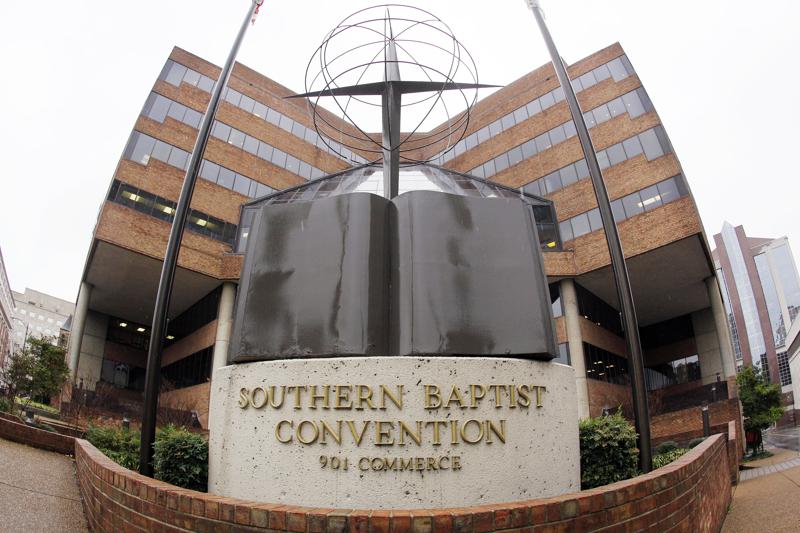
FILE - This Wednesday, Dec. 7, 2011 file photo shows the headquarters of the Southern Baptist Convention in Nashville, Tenn. Leaders of the SBC, America's largest Protestant denomination, stonewalled and denigrated survivors of clergy sex abuse over almost two decades while seeking to protect their own reputations, according to a scathing 288-page investigative report issued Sunday, May 22, 2022. (AP Photo/Mark Humphrey, File)

Leaders of the Southern Baptist Convention, America’s largest Protestant denomination, stonewalled and denigrated survivors of clergy sex abuse over almost two decades while seeking to protect their own reputations, according to a scathing 288-page investigative report issued Sunday.

These survivors, and other concerned Southern Baptists, repeatedly shared allegations with the SBC’s Executive Committee, “only to be met, time and time again, with resistance, stonewalling, and even outright hostility from some within the EC,” said the report.

The seven-month investigation was conducted by Guidepost Solutions, an independent firm contracted by the Executive Committee after delegates to last year’s national meeting pressed for a probe by outsiders.

“Our investigation revealed that, for many years, a few senior EC leaders, along with outside counsel, largely controlled the EC’s response to these reports of abuse ... and were singularly focused on avoiding liability for the SBC,” the report said.

“In service of this goal, survivors and others who reported abuse were ignored, disbelieved, or met with the constant refrain that the SBC could take no action due to its polity regarding church autonomy – even if it meant that convicted molesters continued in ministry with no notice or warning to their current church or congregation,” the report added.

The report asserts that an Executive Committee staffer maintained a list of Baptist ministers accused of abuse, but there is no indication anyone “took any action to ensure that the accused ministers were no longer in positions of power at SBC churches.”

The most recent list includes the names of hundreds of abusers thought to be affiliated at some point with the SBC. Survivors and advocates have long called for a public database of abusers.

SBC President Ed Litton, in a statement Sunday, said he is “grieved to my core” for the victims and thanked God for their work propelling the SBC to this moment. He called on Southern Baptists to lament and prepare to change the denomination’s culture and implement reforms.

“I pray Southern Baptists will begin preparing today to take deliberate action to address these failures and chart a new course when we meet together in Anaheim,” Litton said, referring to the California city that will host the SBC’s national meeting on June 14-15.

Among the report’s key recommendations:

— Form an independent commission and later establish a permanent administrative entity to oversee comprehensive long-term reforms concerning sexual abuse and related misconduct within the SBC.

—Create and maintain an Offender Information System to alert the community to known offenders.

— Provide a comprehensive Resource Toolbox including protocols, training, education, and practical information.

—Restrict the use of nondisclosure agreements and civil settlements which bind survivors to confidentiality in sexual abuse matters, unless requested by the survivor.

The interim leaders of the Executive Committee, Willie McLaurin and Rolland Slade, welcomed the recommendations, and pledged an all-out effort to eliminate sex abuse within the SBC.

“We recognize there are no shortcuts,” they said. “We must all meet this challenge through prudent and prayerful application, and we must do so with Christ-like compassion.”

The Executive Committee is set to hold a special meeting Tuesday to discuss the report.

The sex abuse scandal was thrust into the spotlight in 2019 by a landmark report from the Houston Chronicle and San Antonio Express-News documenting hundreds of cases in Southern Baptist churches, including several in which alleged perpetrators remained in ministry.

Last year, thousands of delegates at the national SBC gathering made clear they did not want the Executive Committee to oversee an investigation of its own actions. Instead they voted overwhelmingly to create the task force charged with overseeing the third-party review. Litton, pastor of Redemption Church in Saraland, Alabama, appointed the panel.

The task force had a week to review the report before it was publicly released. The task force’s recommendations based on Guidepost’s findings will be presented at the SBC’s meeting in Anaheim.

The report offers shocking details on how Johnny Hunt, a Georgia-based pastor and past SBC president, sexually assaulted another pastor’s wife during a beach vacation in 2010. In an interview with investigators, Hunt denied any physical contact with the woman, but did admit he had interactions with her.

On May 13, Hunt, who was the senior vice president of evangelism and leadership at the North American Mission Board, the SBC’s domestic missions agency, resigned from that post, said Kevin Ezell, the organization’s president and CEO. Ezell said, before May 13, he was “not aware of any alleged misconduct” on Hunt’s part.

The report details a meeting Hunt arranged a few days after the alleged assault between the woman, her husband, Hunt and a counseling pastor. Hunt admitted to touching the victim inappropriately, but said “thank God I didn’t consummate the relationship.”

Among those reacting strongly to the Guidepost report was Russell Moore, who formerly headed the SBC’s public policy wing but left the denomination after accusing top Executive Committee leaders of stalling efforts to address the sex abuse crisis.

“Crisis is too small a word. It is an apocalypse,” Moore wrote for Christianity Today after reading the report. ”As dark a view as I had of the SBC Executive Committee, the investigation uncovers a reality far more evil and systemic than I imagined it could be.”

According to the report, Guidepost’s investigators, who spoke with survivors of varying ages including children, said the survivors were equally traumatized by the way in which churches responded to their reports of sexual abuse.

Survivors “spoke of trauma from the initial abuse, but also told us of the debilitating effects that come from the response of the churches and institutions like the SBC that did not believe them, ignored them, mistreated them, and failed to help them,” the report said.

It cited the case of Dave Pittman, who from 2006 to 2011 made phone calls and sent letters and emails to the SBC and Georgia Baptist Convention Board reporting that he had been abused by Frankie Wiley, a youth pastor at Rehoboth Baptist Church when he was 12 to 15 years old.

Pittman and several others have come forward publicly to report that Wiley molested and raped them and Wiley has admitted to abusing “numerous victims” at several Georgia Southern Baptist churches.

According to the report, a Georgia Baptist Convention official told Pittman that the churches were autonomous and there was nothing he could do but pray.

The report also tells the story of Christa Brown, who says she was sexually abused as a teen by the youth and education minister at her SBC church.

When she disclosed the abuse to the music minister after months of abuse, she was told not to talk about it, according to the report, which said her abuser also went on to serve in Southern Baptist churches in multiple states.

Brown, who has been one of the most outspoken survivors, told investigators that during the past 15 years she has received “volumes of hate mail, awful blog comments, and vitriolic phone calls.”

After reading through the report, Brown told The Associated Press that it “fundamentally confirms what Southern Baptist clergy sex abuse survivors have been saying for decades.”

“I view this investigative report as a beginning, not an end. The work will continue,” Brown said. “But no one should ever forget the human cost of what it has taken to even get the SBC to approach this starting line of beginning to deal with clergy sex abuse.”


https://apnews.com/article/baptist-religion-sexual-abuse-by-clergy-southern-convention-bfdbe64389790630488f854c3dae3fd5

Sunday, May 22, 2022

Kedusha/Holiness in Gur - The Jerusalem White Sox Vs. The Ashdod Dirty Sox


Gur Hassidic factions fight for second night in a row, clash with police

 
JERUSALEM WHITE SOX

ASHDOD DIRTY SOX

Fighting between factions of the Gur Hassidic sect have taken place at different cities over the past few nights as tensions rise in the community.

Officers intervene to separate two groups of Gur Hasidim; windows of yeshiva reportedly smashed


Dozens of ultra-Orthodox Jews protest in Jerusalem, May 21, 2022. (Screenshot: Twitter)
Dozens of ultra-Orthodox Jews protest in Jerusalem, May 21, 2022.
 

Clashes broke out on Saturday night between rival factions of the ultra-Orthodox Gur sect in Jerusalem, leading police to intervene and detain at least two people.

The fighting came a day after the factions, which have been at odds for years, scuffled in Jerusalem and the cities of Bnei Brak and Ashdod.

The turmoil began after Gur’s leader, Rabbi Yaakov Aryeh Alter, was heckled by members of the breakaway faction while visiting the grave of his mother-in-law on Thursday, according to the Kan public broadcaster.

In footage from Saturday night’s clashes, a police officer is seen tackling an ultra-Orthodox man from behind, putting him in a chokehold and dragging him from the area. Jerusalem in the past have been accused in the past of using excessive force against ultra-Orthodox protesters.

Other videos showed hundreds of people, including many children, on a city street, moving away from police vehicles.

https://www.timesofisrael.com/police-detain-at-least-2-as-rival-factions-of-hasidic-sect-clash-in-jerusalem/


NOW FOR THE HOLINESS IN GUR: 


https://static1.squarespace.com/static/54694fa6e4b0eaec4530f99d/t/552becece4b05cbf60ea3be9/1428942060277/Kedushah_-_The_Abstinence_of_Married_Men_in_Gur__Slonim_and_Toldos_Ahron-libre.pdf

Friday, May 20, 2022

This Is What Keeps Me Up At Night!


Is Happy the zoo elephant legally a person? A court will decide.

Is an elephant legally a person?

That’s the central question in a case that New York’s highest court considered Wednesday in a dispute over the living quarters of Happy, an Asian elephant at the Bronx Zoo.

The Nonhuman Rights Project, an animal rights organization, argued that Happy is an autonomous and cognitively complex animal entitled to the same right of protection against unlawful imprisonment that people have. The zoo contends that the elephant is well cared-for and that her holding is not illegal.

“What we’re saying is that she has a right to bodily liberty and that that makes her no longer a thing,” Steven Wise, president of the Nonhuman Rights Project, said in an interview. “She’s a person.”

In a hearing, the seven-member New York State Court of Appeals asked attorneys for both parties about the definition of autonomy, how the elephant’s bodily liberty could be achieved and the potential effects of a decision that Happy should be moved.

U.S. history is rife with contentious arguments over who or what constitutes a person, philosophically and under the law. Enslaved people were once counted as three-fifths of a person for determining taxes and congressional seats. Courts have ruled that corporations can be considered persons in some circumstances, such as questions of political speech. The idea that fetuses are persons is central to some antiabortion arguments.

Another point for elephant intelligence: They know when their bodies are in the way

In Happy’s case, her attorneys contend that she is so autonomous and intelligent that she has a right to bodily liberty. She passed a mirror self-recognition test in 2005 — an indication of her self-awareness, her advocates say. Their legal argument focuses on the common-law right of habeas corpus, which is typically used to determine whether a person’s detention is lawful. 

https://www.msn.com/en-us/news/us/is-happy-the-zoo-elephant-legally-a-person-a-court-will-decide/ar-AAXqzEt

Thursday, May 19, 2022

Jewish Lives Matter! European Animal Culture ha promosso l'odio per gli ebrei - Per non dimenticare!


New study sheds light on the phenomenon of female Jewish slavery and uncovers gang rape in Livorno's slave prison


Historian Prof. Tamar Herzig, Vice Dean for Research at Entin Faculty of Humanities, exposed previously unknown evidence of an organized gang rape of a group of enslaved Jewish girls and women from North Africa in the Italian city of Livorno at the beginning of the 17th century. The rape was organized by Dr. Bernardetto Buonromei, a high-ranking state official at Livorno's slave prison, who was also able to silence any complaints and effectively erase the memory of the victims' suffering.

According to the documents studied by Herzig, in the summer of 1610 Buonromei ordered the assignment of a group of enslaved female Jews, newly arrived from North Africa, to the men's quarters in the slave prison, contrary to the customary separation of women and men in different sections. This order resulted in the multiple perpetrator raping of the enslaved Jews by Muslim slaves and Christian forced laborers. One report notes that one of the victims lost her mind, and attempted to throw her young daughters out of the prison's window and commit suicide.

Representatives of Livorno's influential Jewish community sent protests decrying the unprecedented sexual abuse of their enslaved coreligionists to the Tuscan authorities, but all complaints and testimonies were soon silenced with the help of the Grand duke of Tuscany, who backed Dr. Buonromei. The Grand duke accepted the doctor's claims that his actions had been aimed at increasing the Tuscan state's profits from the slave trade, by ensuring the future payment of high ransom fees for enslaved foreign Jews by the local Jewish community in Livorno. Buonromei kept his job as the physician in charge of the slave prison, and when he died a few years later the Grand duke paid for his tombstone at Livorno's main church.

Livorno's Jewish community in the 17th century was one of the wealthiest and most influential Italian Jewish communities, and its relationship with the rulers of the Tuscan state was usually strong. According to the documents that Prof. Herzig uncovered, the affluent and well-connected members of Livorno's Jewish community were nonetheless subject to extortion by like Buonromei. Prof. Herzig found that the rulers of the Grand Duchy of Tuscany employed the gang rape incident as a grand spectacle of violence, using it to exert pressure on the Jewish community so that they would agree to pay exorbitant ransom fees for Jews captured in North Africa and forcefully transported to Livorno.

Buonromei, who had served as Livorno's first Mayor before his appointment at the slave prison, is still honored today as one of the city's founding fathers. A street in Livorno is named after him, and a figure commemorating him is paraded in the annual processions celebrating Livorno's elevation to the status of a city.

Prof. Herzig's study was published in the journal The American Historical Review. Prof. Herzig hopes that exposure of her findings in the Italian media will lead to a change in the commemoration of Dr. Buonromei, a man who made his fortune from the slave trade and was personally responsible for the horrendous abuse of enslaved Jewish women and girls.

Most studies on slavery in seventeenth-century Italy have previously focused mainly on male galley slaves, who supposedly suffered from harsher treatment than enslaved women. Scholarship has also focused on Muslim-Christian rivalry in this period, as the main motivation for the respective groups' engagement in enslaving one another. But so far very little research has addressed the place of Jews as victims of the slave trade in sixteenth and seventeenth-century Italy. Prof. Herzig's study is the first to reveal the attitude of representatives of the Italian regime toward Jewish women from North Africa, captured by Italian forces and brought to Italian ports as slaves—an attitude that significantly impacted the relations between local Jews and Christian in Italian cities at the time.

Prof. Herzig says that "unveiling the female and Jewish aspects of the Italian is very important, because these topics have largely been neglected in historical scholarship on the sixteenth and seventeenth centuries. I hope that by raising awareness about the phenomenon of Jewish women's enslavement, my research will lead to a reconsideration of the current commemoration of slavers such as Bernardetto Buonromei, thereby attaining some historical justice for the victims." 

https://phys.org/news/2022-05-phenomenon-female-jewish-slavery-uncovers.html

Wednesday, May 18, 2022

“I will never forgive those who enabled his abuse, either passively or actively, either with their actions or their silence,” she said. “In May 2015, Todros Grynhaus was convicted of seven offences of serious sexual abuse of two adolescent girls. I was one of them.


Sex abuse survivor ‘won’t forgive’ those who enabled perpetrator as he is released


Yehudis Fletcher, now a campaigner for support for victims, fumes as Parole Board pushes ahead with release of Todros Grynhaus today


Todros Grynhaus
Todros Grynhaus
 

A sexual abuse survivor has expressed her resentment as she revealed the man who repeatedly exploited her when she was a teenager is to be released today, Monday.

An application by Justice Secretary Dominic Raab has been refused after the Parole Board decided to release Todros Grynhaus, sentenced to 13 years in prison in 2015 for abusing her and another teenager.

Yehudis Fletcher, now a campaigner for support for victims, has expressed her frustration and anger at his release.

“I will never forgive those who enabled his abuse, either passively or actively, either with their actions or their silence,” she said.

“This past Wednesday I was informed an application to the Secretary of State for Justice for reconsideration of the parole board’s decision to release Todros Grynhouas had been refused.

“This morning, I have been informed that he will be released from prison today.

“In May 2015, Todros Grynhaus was convicted of seven offences of serious sexual abuse of two adolescent girls. I was one of them.

“I am grateful to my chosen family for their unwavering support.”

She also quotes Psalms 27: “When evil men assail me to devour my flesh, it is they, my foes and my enemies, who stumble and fall.”

Grynhaus, now 57, fled to Israel on a false passport, but was finally brought back to the UK and convicted in 2015 of several counts of serious sexual assault against two girls in Manchester, aged 13 and 15, for whom he was in a position of care. He was jailed for 13 years and two months.

He also had to pay one victim £45,000 and the other £35,000 in compensation as well as prosecution costs of £35,000.

Grynhaus had taught in Jewish schools in Britain and abroad before setting up a successful direct debit management business while filling a role as a respected figure within the Charedi community in Salford.

Sentencing him, Mr Justice Timothy Holroyde said: “This was a refined degree of cruelty on your part. You knew what you were doing and you knew what harm you would cause. You are an utter hypocrite. You professed your religion whilst cynically condemning your victims to suffer and giving false evidence seeking to cast blame on them.

“I have no doubt that you felt able to rely on a prevailing attitude of insularity which you hoped would prevent these allegations from ever coming to the attention of the police. You hoped that, at worse, you might have to pay a form of financial penalty as directed at the Beth Din.

“You believed that the combination of the girls’ sexual ignorance and the attitudes of some within your community would make it even harder for your victims to complain about you, and you came close to getting away with it.

“Even when the allegations were reported to the police, I am afraid the evidence I have heard shows that many in your community were taken in by your lying protestations of innocence. Others will have to examine their own consciences, and should reflect that, but for the courage of your two victims, your serious crimes would have gone unpunished.”

When confronted about the allegations – in front of his wife – by community leaders, he responded by saying “what would you like me to do about it?”.

Grynhaus was referred for therapy and the crimes were not reported to police for another two years. After he was arrested and charged he appeared in court, but was granted bail and fled to Israel on a false passport.

He was held there for attempting to enter the country fraudulently. After 18 months in an Israeli prison he was deported to England and eventually stood trial in January 2015. After a jury failed to reach a verdict, he was convicted at a second trial in May.

Described as “dangerous” and “highly manipulative”, Grynhaus molested the girls when they were between the ages of 13 and 16 between 2002 and 2005.

On more than one occasion, he forced the girls to perform sex acts on him. He also inappropriately touched the girls.

The Parole Board’s decision to release, announced in March, can only be reversed if it is deemed to be “irrational”. Raab had asked for him to be kept in prison as long ago as May 2021.

In its response to Raab’s application, released on May 10, Chitra Karve said: “I do not consider that the decision was irrational and accordingly the application for reconsideration is refused.

“The panel made a thorough assessment of risk, risk factors and protective factors, it took evidence from all witnesses, it carried out a weighing exercise with respect to any matters it disputed with the professional witnesses and investigated the risk management plan.

“I can see from the decision letter that the panel fully documents the assessments provided by all the professional witnesses… the forensic psychologist and the community offender manager.

“These matters are not an exact science and in my view nowhere near the test for irrationality.”

The panel that heard the case on 9 February 2022 consisted of a judge, a psychologist and an independent member. The hearing, held via a video link, was given details of Grynhaus’s offending, reports from psychologists, his prison and community offender managers and his legal representatives. The panel also heard one of the victims read out their Victim Personal Statement.


https://www.jewishnews.co.uk/exclusive-sex-abuse-survivor-wont-forgive-those-who-enabled-perpetrator-as-he-is-released/

Tuesday, May 17, 2022

The Polio Vaccine Was No "Hoax" to Elvis!


NO HOAX 

HOAX
 

How Elvis Got Americans to Accept the Polio Vaccine


Campaigns to change behavior thrive on three factors: social influence, social norms and vivid examples


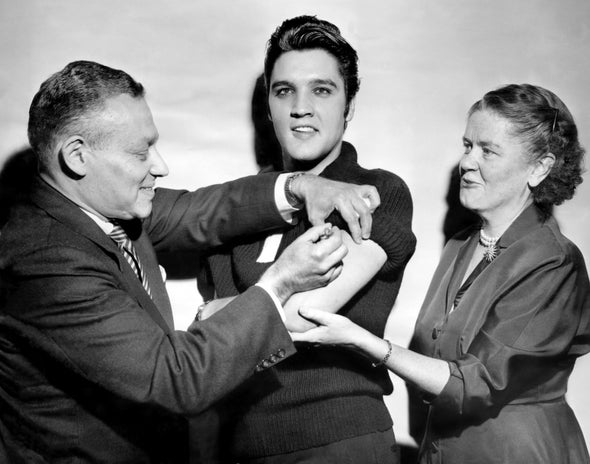
Elvis Presley is vaccinated on The Ed Sullivan Show, 1956.
 

In late 1956, Elvis Presley was on the precipice of global stardom. “Heartbreak Hotel” had reached number one on the charts earlier that year and Love Me Tender, his debut film, would be released in November. In the midst of this trajectory, he was booked as a guest on the most popular TV show at the time, The Ed Sullivan Show. But he wasn’t only there to perform his hits. Before the show started, and in front of the press and Ed Sullivan himself, Presley flashed his swoon-worthy smile, rolled up his sleeves and let a New York state official stick a needle loaded up with the polio vaccine in his arm.

At that point, the polio virus had been ravaging the American landscape for years, and approximately 60,000 children were infected annually. By 1955, hope famously arrived in the form of Jonas Salk’s vaccine. But despite the literally crippling effects of the virus and the promising results of the vaccination, many Americans simply weren’t getting vaccinated. In fact, when Presley appeared on the Sullivan show, immunization levels among American teens were at an abysmal 0.6 percent.

You might think that threats to children’s health and life expectancy would be enough to motivate people to get vaccinated. Yet, convincing people to get a vaccine is a challenging endeavor. Intuitively, it seems like it would be wise to have doctors and other health officials communicate the need to receive the vaccine. Or, failing that, we might just need to give people more information about the effectiveness of the vaccine itself.

Clearly though, those aren’t winning strategies today, and they weren’t back in 1956. What did prove successful was Elvis getting the vaccine in front of millions. In fact, after he publicly did so, vaccination rates among American youth skyrocketed to 80 percent after just six months. Why might this be the case, and are there lessons that can be applied to the rollout of the COVID-19 vaccine?

Elvis’s public act contained three crucial ingredients inherent to many of the most effective behavioral change campaigns: social influence, social norms and vivid examples. 

We look to those around us to guide our own behavior, but we especially look to others who are in well-respected positions. For example, when researchers equipped a few dozen well-connected high school students with the tools to combat bullying, conflict rates decreased by about 30 percent, which was significantly more than other schools that did not participate in such training. Just like popular high school kids today, Elvis held a huge amount of sway over teenagers in the 1950s, which no doubt contributed to the success of his demonstration.

Beyond social influence, we are affected by social norms, or perceptions of what other people do and what other people think we should do. For instance, when hotel guests learned about energy conservation norms—specifically, what percentage of previous guests had recycled towels—their own energy conservation greatly increased. Witnessing Elvis get the polio vaccine may have similarly indicated a clear social norm: that getting vaccinated was an expected and approved behavior for teenagers nationally.

Finally, vivid events that focus on a single individual can profoundly affect awareness and behavior. Reports of thousands of deaths from the Syrian refugee crisis did not grip hearts and minds like the story of a single boy who drowned and washed up on the beach. And, after Kylie Minogue was diagnosed with breast cancer, there was a 101 percent increase in mammogram appointments for women 40–69 years old who had not previously been screened. Watching Elvis get vaccinated was far more powerful than any statistic, because it too was personal, emotional and vivid.

The COVID-19 vaccine will only live up to its promise if enough people actually end up getting vaccinated. The good news is that more than 60 percent of Americans are currently in support of taking the vaccine. With the arrival of new variants COVID-19, however, some public health officials maintain that upwards of 90 percent of the country will need to get vaccinated to create herd immunity. If only Elvis were still alive to harness social influence, social norms and vivid examples.

But even if he was, would he have made a difference? The reality is that in 2020, stardom and influence aren’t nearly as concentrated as they were when the King of Rock n’ Roll reigned supreme more than 60 years ago. Rather, there are now hundreds, if not thousands, of relevant “Elvises,” from nanoinfluencers with a small number of dedicated fans to the Kim Kardashians, Chrissy Teigens, Drakes and yes, Donald Trumps of the world, each of whom has tens of millions of followers.

The fact that Presidents Clinton, Bush and Obama have all agreed to publicly receive the vaccine, and that others like Vice President-elect Harris and Vice President Pence already have, is a great start. But while their actions may be vivid and set strong social norms, will they ultimately influence enough of the population? The Elvis demonstration was so effective because he was admired by the hardest-to-reach population (teenagers). But to the extent that many aspects of COVID-19 have been publicized, the key to influencing mass-level behavior may not lie in one single display. In order to truly move the needle (pun intended), it may be most effective to have a host of unlikely bedfellows—from Alexandria Ocasio-Cortez to Ivanka Trump to Tucker Carlson—publicly receive the vaccine. Ideally, they’d even do it at the same time, together.


https://www.scientificamerican.com/article/how-elvis-got-americans-to-accept-the-polio-vaccine/


Monday, May 16, 2022

“I think what happened with Walder is reflective of so many of those moments that we’ve seen over the last 10 years that led up to this.”


6 months after the Walder abuse scandal broke, has the Haredi world seen change?


Activists and observers say much work remains to counter sex abuse and the culture of silence in the ultra-Orthodox community and its media: ‘I think the dust hasn’t settled yet’


When Debbie Gross heard last year that wildly popular Haredi author Chaim Walder had been publicly accused of sexually abusing multiple women and young girls, she was not remotely surprised.

Gross, the founder and executive director of the Tahel Crisis Center for Religious Women and Children, had been hearing from victims of the therapist and public figure for more than two decades.

“We got calls concerning Chaim Walder already 25 years ago,” Gross told The Times of Israel in a recent phone interview. “But they were anonymous. So there was nothing we could do with them. I can’t go to the police when I don’t have victims willing to come forward.”

In November, a shocking exposé in the Haaretz daily alleged that Walder – a renowned and trusted figure in the ultra-Orthodox world – had sexually abused and raped multiple women, including several while they were minors and many who had come to him for therapeutic care. After the article was published, more than a dozen further victims came forward to detail their own stories of abuse at his hands spanning decades.

In an interview on Channel 13 news that aired in March, Romi Schwartz spoke publicly for the first time about the assault and rape she suffered at the hands of Walder, a distant relative, from the time she was 17. In 2008, she went to the police to complain, but the case was closed a year later. Walder’s family later convinced her to sign a nondisclosure agreement, and paid her NIS 500,000 in hush money.

Walder denied all of the allegations throughout, despite a conviction in late December from a Safed rabbinical court headed by the city’s Chief Rabbi Shmuel Eliyahu following testimony from 22 victims and the presentation of other evidence. On December 27, six weeks after the article was published — and a day after Eliyahu publicized his findings — Walder took his own life at the gravesite of his son at the age of 53.

The shocking revelations and his subsequent death served as a bombshell that rocked the Haredi world, as people struggled to absorb the downfall of one of the most well-known and respected writers and advocates in the community.

Walder was known widely as an activist for child safety and an author whose most popular series, “Kids Speak,” was dedicated to listening to and understanding children and their needs. His dozens of books, which he began publishing in the early 90s, were translated into many languages, including English, and became bestsellers in ultra-Orthodox Jewish communities around the world.

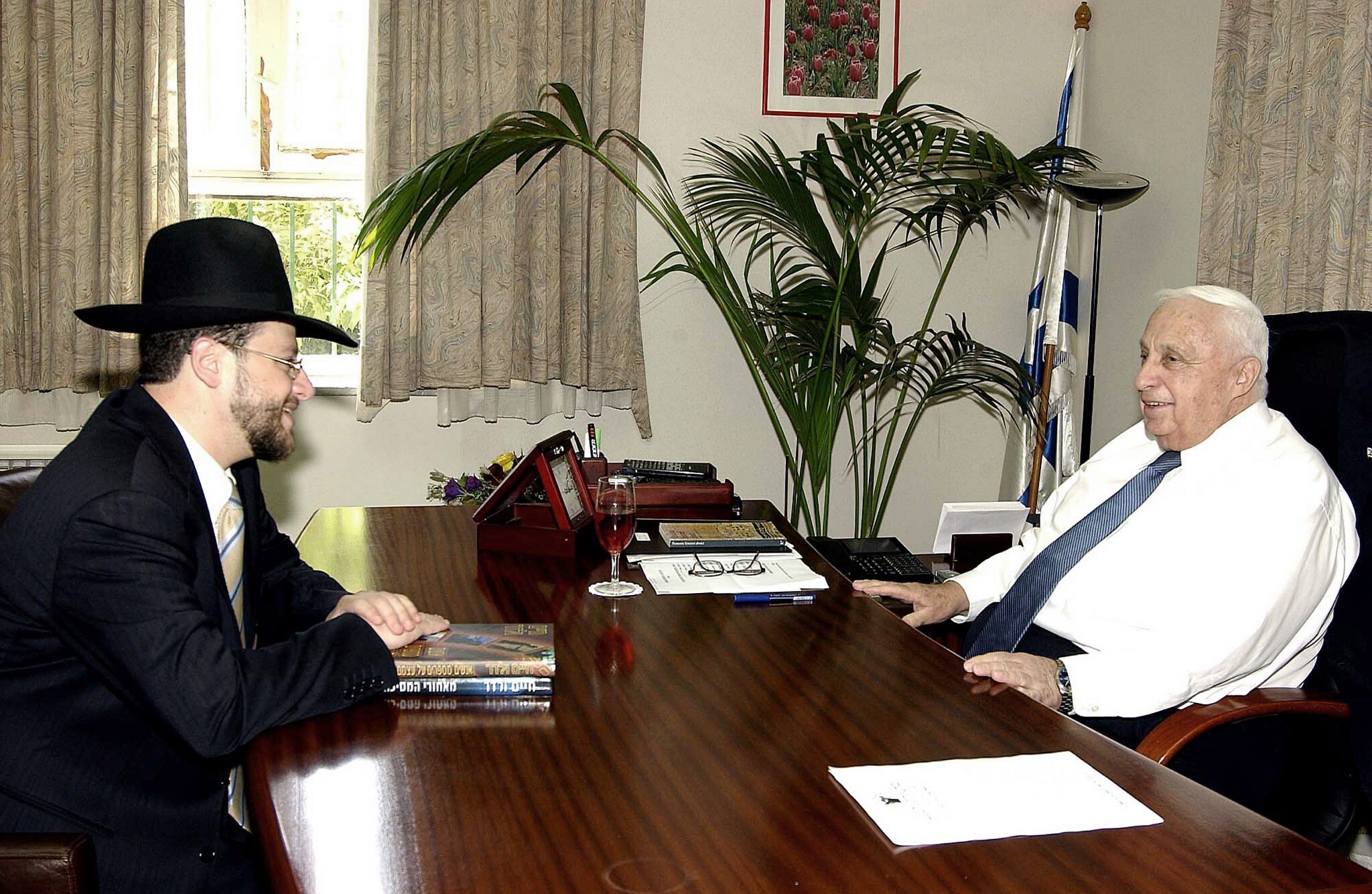
His success propelled him to a regular newspaper column and a radio show as he continued to be seen as a vocal advocate for combating child sex abuse, and he served as a key figure in the Bnei Brak Center for the Child and Family. In 2004, he received the “Child Defender” prize from then-prime minister Ariel Sharon for his work.

The shocking news that such a man was found guilty of abusing women and children dealt a blow to the Haredi world, prompting what some have called an unprecedented reckoning over how the community deals with such cases.

But close to six months after the story burst into the open, the question remains: Has anything truly changed? Are Haredi victims of rape and sexual assault more likely to come forward? And is the community more likely to believe them?

“I don’t agree in the idea, the concept of watershed moments with child sexual abuse in the Orthodox community,” said Shana Aaronson, executive director of the Israel-based Magen for Jewish Communities, a nonprofit that combats sexual abuse. “I think the watershed process here is really a series of moments.”

Over the years, she said, progress has been made “where victims share their stories publicly, where people choose to do the right thing and believe the victims, remove perpetrators from positions where they have access to children, all those things,” she said. “I think what happened with Walder is reflective of so many of those moments that we’ve seen over the last 10 years that led up to this.”


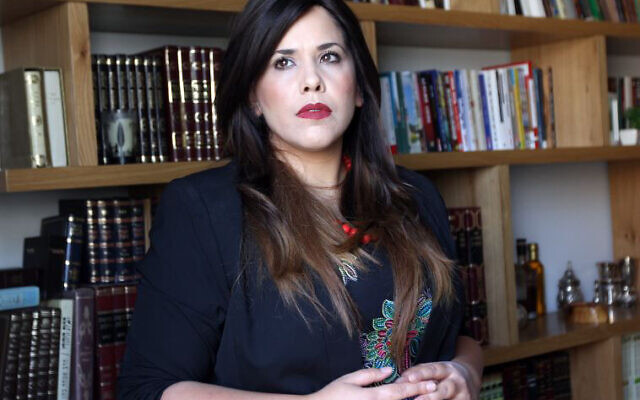
Esty Shushan 
 

Shift in public perception

Esty Shushan, a Haredi activist and the founder and CEO of Nivcharot, an organization promoting ultra-Orthodox women’s activism, said that in the immediate aftermath of Walder’s death, many in the community refused to believe the allegations – and blamed the victims for his suicide.

“At first, when the allegations were publicized, the public reaction was an almost wholesale denial… people didn’t want to believe that this is what had happened,” said Shushan.

There were some in the community, she said, “that [told the victims]: ‘you murdered somebody.’ And the the peak of this was his funeral in Bnei Brak… where all sorts of important rabbis eulogized him as if nothing had happened.”

One of the turning points in public perception, Shushan suggested, was the suicide days after his death of one of Walder’s alleged victims.

“I think that suddenly caused people to think that perhaps, after all, there is some truth” to the allegations, said Shushan. “And I think it’s very sad that somebody had to die to garner that reaction.”

As the weeks passed following the explosive allegations and Walder’s decision to end his life, public perception appeared to shift somewhat. “Mishpacha,” an influential and widely read Haredi weekly in Hebrew and English, ran an unprecedented editorial on November 25 in its Hebrew version titled “No Time to Whisper.”

The editorial called on parents to be vigilant in protecting their children, and issued a call to “stand by the victims, to provide them all assistance and the opportunity to diminish their pain.” It also proclaimed, however, that “the public domain is not the place to conduct a discourse of things that are better off concealed.”
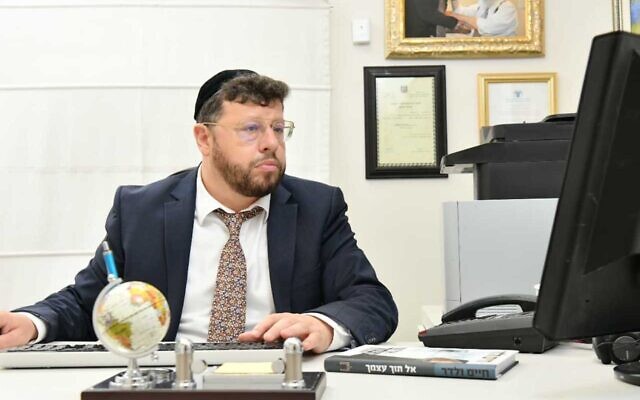
Chaim Walder works in his office in Bnei Brak 


A second editorial, published on December 30 following Walder’s suicide, was titled “We Cannot Ignore.” In it, the magazine noted that while instinct may urge many to remain silent, “silence is an escape.”

“If there are times where it is forbidden to turn the page and move on with daily life – it is exactly these moments,” the editorial read. “Yes: These are things that have never been aired in the Haredi public nor in a Haredi newspaper. On the other hand, the Haredi public has never faced such a complex, difficult, talked about and irrepressible time.”

The editorial proclaimed that the Haredi public must allow victims “to realize that they can and should share their painful story, and that God forbid we as a society do not blame the victims… our hearts are with you. We support you and believe in you unconditionally. And we will do everything as a community to build a more protected and purer world for you.”

In English, the magazine did not address the issue until after Walder’s suicide. Then it published an op-ed in early January written by Rabbi Aaron Lopiansky titled “For This We Weep,” calling for standing by victims of abuse and working toward systemic change in how such instances are handled.

Eli Paley, the owner and publisher of Mishpacha, also serves as the founder and chairman of the Haredi Institute for Public Affairs. And he wore both hats, he said, in deciding how to respond to the eye-opening revelations about Walder.

“We decided that even if our original policy was that, as a publication, this is not something that we’re sharing with the readers… once it became a public discussion, we have to claim our point of view. Because it’s already a conversation,” Paley told The Times of Israel in a conversation in his Jerusalem office in March.

That decision, Paley said, “was a very courageous position, because at that stage, the norm in the Haredi society was” to remain quiet.

Nevertheless, he said, he began intensive discussions with leading rabbinic and legal figures and other activists to carve out the best approach. “Everybody we spoke to felt that we have to take a role and to be very, very active. And this is where Mishpacha really took a stand.”
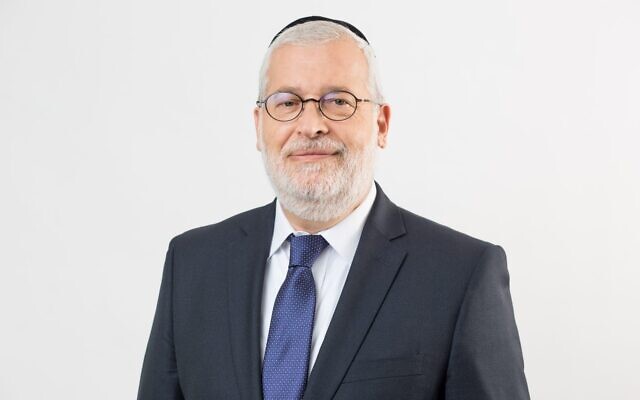
Eli Paley, publisher of ‘Mishpacha’ and chairman of the Haredi Institute for Public Affairs
 

Parallel worlds

Few other ultra-Orthodox publications came close to even that fairly muted response. Multiple such outlets ran obituaries following Walder’s death that did not mention any of the allegations, while others buried any accusations and praised the author for his contributions to society. The Yated Ne’eman newspaper – where Walder had written a regular column – published a glowing eulogy, and the head of its rabbinic board spoke at Walder’s funeral.

Paley said that he had once considered Walder a friend, and contemplated attending his funeral to comfort his family members. “I was happy in the end that I didn’t go because I heard it was such a big ceremony.”

Months later, Paley said of Haredi media outlets: “I’m not sure that they learned their lesson, even though they understand that they lost a lot of credibility, and that many of the readers were very upset with them and they looked silly to the public.”

Shushan, meanwhile, suggested that “the Haredi media has become irrelevant on this topic.” Even if such newspapers choose to ignore or cover up certain issues, “there is a parallel world in which they have no control,” she said, pointing to conversations that take place in WhatsApp groups and on social media.

She noted that even Mishpacha did not name Walder in anything it published about the allegations.

“It took them a long time to react,” she said, alleging that the magazine waited in order to gauge public opinion before taking any stance. “It took [the editors] time to understand what the public believed.”

 

Haredi magazines and newspapers for sale in Jerusalem
 

Paley said the magazine did not believe that naming Walder in its editorials was necessary. “We didn’t feel that it was needed,” he said. “If you can get your message [across] without going to the extreme and humiliating his family – whoever knows, knows who you are referring to.”

The publisher suggested that there was “a very, very fine line between creating awareness and leading your community to the next stage of responsibility, and losing them.” When it comes to such delicate topics, “you have to do it in a very balanced and sensitive way. Not just because you’re afraid to lose customers – because you’re afraid to lose your influence.”


Bookshelf backlash

In the immediate aftermath of the Walder scandal, the well-known Eichler’s bookstore in Brooklyn announced that it was removing his books from its shelves, and the Israeli Haredi supermarket chain Osher Ad followed suit. But in early March, it was easy to find Walder’s books in stores in ultra-Orthodox neighborhoods across Jerusalem.

At a branch in Givat Shaul of Yefe Nof Feldheim – Walder’s publisher – his books were on display, but not prominently. At the nearby Dani Books, a full shelf of Walder’s books exists, tucked away in the back. In Mea She’arim, practically every bookstore still stocks his offerings, including the famed Manny’s – a frequent target of extremist vandals unhappy with the shop’s wide selection – which boasts a full bookcase of his works. On the website of Steimatzky, the largest bookstore chain in Israel, most of Walder’s titles are still available for purchase, though its biggest competitor, Tzomet Sefarim, appears to have wiped the books from its online catalogue.

Paley said that following Mishpacha’s decision to address the Walder scandal, Yefe Nof Feldheim — once a major advertiser in the publication — cut ties. “But we said we’re ready to pay the price. We’re not here to do business.” (The US-based Feldheim Publishers, however, which published his works in English, announced several days after the news broke that it was halting sales.)

He noted that following Mishpacha’s editorials on the topic, the magazine received an influx of letters for and against the decision to address the issue.

“I’m very proud that we got tons of letters from readers, all kinds of letters,” he said. “Some criticized us, saying ‘why do my kids need to read this?’… And the answer to that is because we want you to protect your kids.”

Other letters, he said, denounced the magazine “for buying the narrative of the secular media.”

Ultimately, he said, “we felt that we have a responsibility to create a discussion and to structure the discussion… We had to be clear, and super clear, that we are here, first, to stand for the victims. We’re here to make sure that our kids and our families and our society will be safe.”

 

Books by Chaim Walder for sale at Manny’s bookshop in Jerusalem in March 2022


Evading justice

Walder’s decision to take his own life was a very painful one for many of his victims and other survivors of sexual assault, said activists.

“It makes it very hard for the victims,” said Gross of Tahel. “Many of the victims felt horrible because it made them wonder if then they’re guilty of murder if they go to the police. Many people felt manipulated. It just made the whole thing so much more complicated for the community.”

Gross said her hotline tells people who call in with such concerns that “the only one who was responsible for his actions is him. He was responsible for the abuse, and he was responsible for ending his life. And only he was responsible.”

Aaronson said news of Walder’s suicide was “devastating” for victims.

“It was devastating for so many different survivors, for all survivors, I would say,” said Aaronson. “There’s the feeling [that] he took away the opportunity, again, of victims who wanted to have that chance to confront him.”

In addition, she said, abuse victims asked “how he could do that, and how the police could let that happen, why didn’t anyone take away his gun? All those kinds of questions and feelings.”
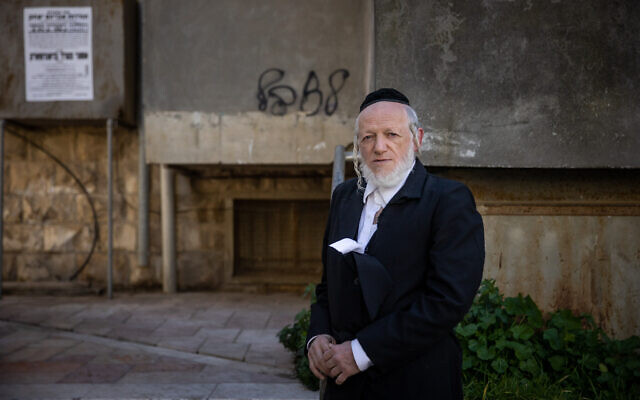
Yehuda Meshi-Zahav, former chairman of Israel’s ZAKA rescue unit, in the ultra-Orthodox neighborhood of Mea Shearim, Jerusalem


More than six months before the Walder expose, Haaretz also published a shocking series of sexual abuse allegations against Yehuda Meshi-Zahav, the ultra-Orthodox founder of the ZAKA emergency response and rescue organization. Meshi-Zahav, too, attempted to end his own life, and is currently comatose.

But activists and observers said that case could not be compared to the impact that news of Walder had within the Haredi community.

“[Meshi-Zahav] was not the same [way] accepted in the community,” said Gross. “He was more honored in the secular community, less so in his own community… he got so many prizes in the secular world.”

Paley agreed that Meshi-Zahav was not revered within the ultra-Orthodox world.

“Nobody really saw him as someone who represents the Haredi society,” said Paley. “He became a hero because the seculars like very much someone that came from the Haredi community, from the extreme” so he became a symbol of inter-communal relations. Within the ultra-Orthodox world, he added, Meshi-Zahav was seen as an outlier who sent his children to serve in the army, unlike most ultra-Orthodox, and embraced the world at large.

By contrast, Paley said, “Walder was totally the opposite” in being celebrated and enamored within Haredi society.

“It was like an earthquake. Kids grew up on these books; he is the one who brought [up] the conversation about kids’ safety,” said Paley. “So that was really shocking. And it is shocking.”

 

Prime Minister Ariel Sharon (right) awards Haredi children’s author Chaim Walder with the “Child Defender” award at his Knesset office in Jerusalem
 

Moving forward

Following the Walder bombshell, Gross and Aaronson said their hotlines were flooded with a fresh wave of calls from sexual abuse victims.

“Within the first few days, our call load tripled,” said Aaronson. And two months after his suicide, she said “it is still significantly higher than it was before.”

In late February, Gross said “we are still getting tons of calls concerning him,” including from his victims and others who “are coming forward with their abuse stories as a result of the story.”

In the immediate aftermath of the Walder story, she noted, the hotline was spammed by “yeshiva boys” who would “call us every 30 seconds and hang up, or say disgusting things because they saw us as a threat.”

“They were calling to harass the line so victims couldn’t get through, I think.”

Since the Walder story broke, similar complaints against a series of ultra-Orthodox figures have been filed, but none have garnered the same reaction – nor been against someone of his prominence.
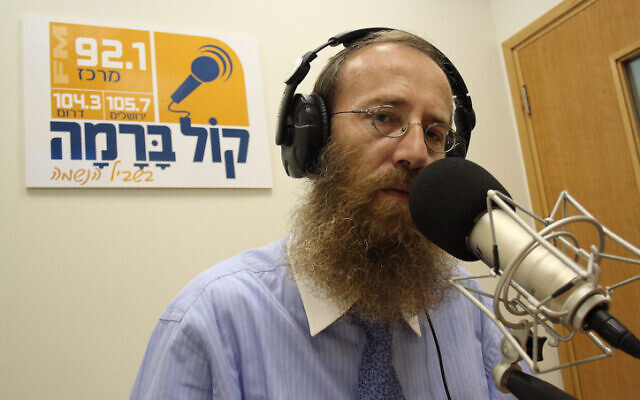
 

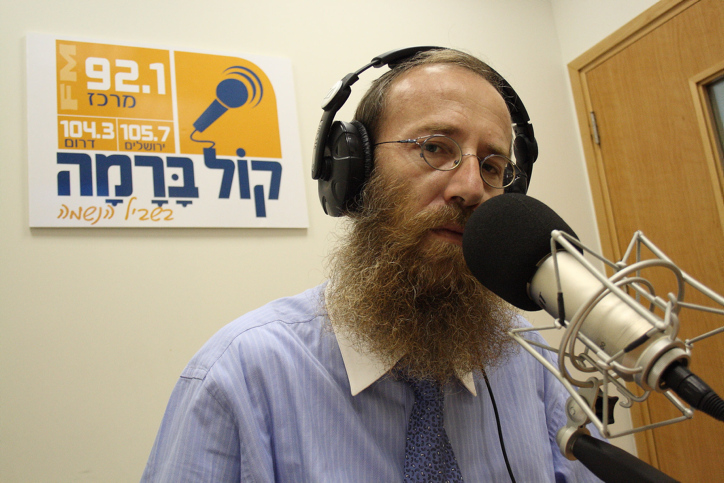
Haredi radio host Dudi Shwamenfeld recording at the Kol Berama radio station


Haredi radio host Dudi Shwamenfeld was accused of multiple instances of sexual assault in January, including against a minor. Shwamenfeld denied the accusations, but he was removed from hosting his radio show on the Haredi Kol Barama station and has not returned.

In February, a series of students accused longtime Jerusalem teacher Tzvia Rotenberg of a pattern of sexual abuse against them when they were minors. Rotenberg denied all the accusations and remained in place as principal of the Maalot girls school in the Ramot neighborhood until she resigned about six weeks later. Her resignation reportedly came on the day she was summoned to appear before a rabbinic court on the allegations.

A group of young Haredi women held a protest outside the school in early March, expressing anger at the institution for continuing to employ her. The protest was organized in part by Sara Horowitz, a former student of Rotenberg who helped convince her classmates to come forward in the article first published in Israel Hayom.

“After the Chaim Walder story, there was a feeling in the community that now things will be different,” Horowitz told Ynet. “We expected inclusion, understanding and compassion for the victims, and a demand to deal with and condemn the abuser – but it didn’t happen. That caused great pain.”


Turning point

Still, observers and activists remain cautiously hopeful that Haredi society is moving in the right direction when it comes to tackling sexual abuse within the community.

“Definitely from my experience, it’s a turning point,” said Paley. “I think the dust hasn’t settled yet.”

At the end of the day, he said, he believes that there is currently “an awareness, so the reaction will be more strong” to future cases. In addition, he said, the news served as a catalyst for renewed discussions of safety nets and structures to protect those at risk, “and I believe we’ll see the results in the near future.”
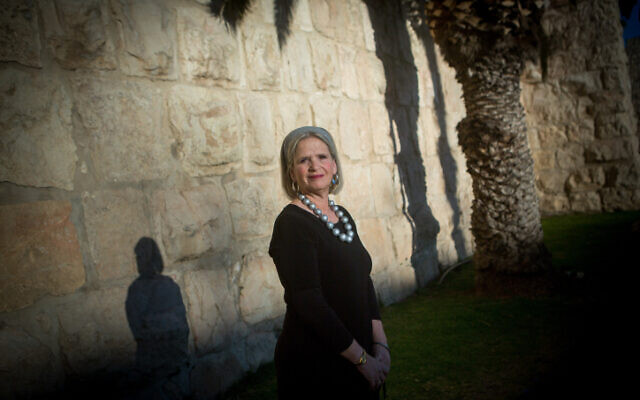
Debbie Gross, founder of the Tahel Crisis Center for Religious Women
 

Gross suggested that there is a very slow but steady change occurring both publicly and privately.

“The community is taking steps forward and there is more awareness,” she said, noting that her organization has seen an increase in requests for sexual abuse awareness training from communal bodies and schools. “So there is change going on within the community.”

And Shushan said she is cautiously optimistic about the path forward for countering sexual abuse in the Haredi world.

“I think today there is more legitimacy and less denial of victims,” she said. She nevertheless lamented the failures of police and the legal system to bring abusers to justice – across all elements of Israeli society.

“Still, there is certainly hope,” she added.

“I think it was a dramatic event, whose effects go far beyond the story of sexual abuse,” said Shushan. “But how it will have an effect and where things will go – I don’t know.”

https://www.timesofisrael.com/6-months-after-the-walder-abuse-scandal-broke-has-the-haredi-world-seen-change/

Friday, May 13, 2022

The plethora of sexual misconduct and grooming allegations which came to light in 2021 against a former senior teacher at MSMC were deeply shocking and disturbing. It should have been a watershed moment for our community. Why does it feel like things are back to “normal”? Why does it feel like this devastating experience has not informed our communities’ understanding of child sexual abuse (CSA)?


A letter to my Jewish community


'Justice must not remain elusive for the aggrieved because the perpetrator is a member of a community you feel attached to.'

Illustrative photo (Rodnae Productions/Pexels)

To my Jewish community,

I have grown up in a community that provided me with all the tools to question my existence and to pursue a life of meaning. A community that reveres rigorous inquiry and rationality, discouraging of an unquestioning and submissive existence.

Truly, I attribute my intellect and my love for learning to my education at Mount Scopus Memorial College (MSMC) and more generally the Jewish- based values I hold dear. But whilst the community has taught me lessons – deep thinking and bold action – I have felt let down by members and leaders who have persistently failed to live by those values when it matters most.

The plethora of sexual misconduct and grooming allegations which came to light in 2021 against a former senior teacher at MSMC were deeply shocking and disturbing. It should have been a watershed moment for our community. Why does it feel like things are back to “normal”? Why does it feel like this devastating experience has not informed our communities’ understanding of child sexual abuse (CSA)?

Where was the discussion in Jewish media outlets? Where was the transparency from community leaders? I fear that the lack of discourse was because our community did not want to confront reality. Rather, the community’s response illustrated how individuals distance themselves from CSA disclosures when they occur close to home.

The recent allegations against an 88-year-old former staff member at Caulfield Hebrew Congregation (CHC), while of a different nature to MSMC, remind us that CSA issues are far from solved in our community. Indeed, the Royal Commission into Australian Jewish institutions that were involved in repeated instances of CSA certainly led to groundbreaking changes within the Jewish community. But nearly seven years later, CSA in our community is pervasive. We are so quick to criticise the Ultra-Orthodox community for the way they have previously responded to CSA that we have become incapable of recognising it in our own backyard. Indeed, when the MSMC and CHC allegations surfaced, members who were loud in their condemnation of CSA at Yeshivah disappeared into thin air, nowhere to be seen. CSA must be recognised no matter where it occurs. 

Why does CSA only concern my Jewish community when it happens in Orthodox/Ultra- Orthodox settings? Where are the people critically condemning such gross misconduct wherever it happens, completely and with no qualifications?

I can understand that many may struggle reconciling their personal relationships and the tight-knit nature of our community with such allegations. But personal feelings ought not trump the absolute denunciation of gross misconduct and breach of children’s rights. We must stop protecting predators by invoking values of loyalty at the expense of vulnerable and victimised young people. It seems that basic human rights are not really an indisputable standard in our community. The community’s response to the allegations felt like a deliberate choice to choose a “side” over a principle.

What questions were raised for you after reading about what had occurred at MSMC, published in The Age and Sydney Morning Herald, December 31, 2021? Did you just accept the article as it was, like reading the football scores after a match? Perhaps you thought that what you read sounded terrible but that it was fixed with the solutions outlined in the article. Maybe you contemplated that you are missing many pieces of information? Nevertheless, I was disappointed by the reluctance of individuals to rigorously inquire into what had just unfolded. It felt like no one was grappling with the key questions: Which other staff noticed that the school environment was not conducive to child safety? What culture normalised such behaviour that it went unchecked? The reluctance by individuals to question has left me feeling ostracised and I cannot help but think that members of this community do not really care.

When you have the skills and resources to subject events to critical analysis, you are morally responsible and accountable for the blinkers you choose to wear. We must not fool ourselves. What I fear is that my community has failed to recognise what happened at MSMC and CHC was part of a broader pattern. A pattern whereby male predators go unchecked for years, enabled by poor child safety policy enforcement, by unquestioning and ill-educated staff and where victims are not empowered or encouraged to disclose abuse. The damaging outcome is that silence can be a form of survival for many victims who have not come forward. It is little wonder why victims wait decades to come forward, or I am sure for many, decide to not report their abuse at all.

Indeed, the fact that this behaviour happens in our community does not mean that it should not be labelled for what it is. Justice must not remain elusive for the aggrieved because the perpetrator is a member of a community you feel attached to.

Gabriella Katz is an arts/law student at Monash University, a former Mount Scopus school captain and a former Hineni madricha.

https://www.australianjewishnews.com/a-letter-to-my-jewish-community/

Thursday, May 12, 2022

"It is indefensible and cruel that a self-styled Torah institution failed to keep vulnerable young women safe from a monster like Mr. Weberman


Brooklyn DA Asked Clemency For Notorious Child Molester In Cuomo's Last Days


Nechemia Weberman - Pride of Satmar
 

Without a commutation, Weberman, who is 64 and has only served nine years so far, will likely die in prison, Gonzalez said.

Eric Gonzalez - Bleeding Heart


On Andrew Cuomo's last day in office as governor, he got a request from Brooklyn's top prosecutor: Take mercy on a prominent counselor in the Hasidic Jewish community who was originally sentenced to 103 years in prison for repeatedly abusing an adolescent girl.

Nechemya Weberman's term should be commuted and he should be given an "opportunity to be released from prison after an amount of time that is commensurate with the goals of protecting society and extending a measure of justice to those who were victimized by him," Brooklyn District Attorney Eric Gonzalez wrote to Cuomo on Aug. 23, 2021.

Without a commutation, Weberman, who is 64 and has only served nine years so far, will likely die in prison, Gonzalez said in the letter obtained by THE CITY.

Cuomo — who granted clemency to 10 incarcerated people in his final two weeks — never responded to the Weberman request.

Gonzalez has a record of seeking leniency even for multiple people convicted of murder and in 2019 announced he would not oppose most parole applications.

He submitted the letter on behalf of Weberman after Cuomo "sought our position on clemency requests under consideration," according to Brooklyn DA spokesperson Helen Thomas, who said the then-governor's request was made via a phone call.

But advocates for sexual assault victims contend the Weberman letter has nothing to do with criminal justice reform. Weberman has always been supported by many members of the Satmar Hasidic community — a large and influential voting bloc.

During his trial in 2012, members of the Satmar community held a rally urging former Brooklyn District Attorney Charles Hynes to drop the case.

A Disturbing Case

The Weberman plea appears to be the only time Gonzalez has ever gone to bat for someone convicted of a sex crime, suggest documents from his office made public upon request.

All told, he has submitted nine letters since 2019 seeking mercy, with most involving people convicted of murder who'd served at least a decade behind bars.

The Weberman case came at a time when Hynes was sharply criticized for going soft on alleged offenders from orthodox Jewish communities for fear of losing votes from those loyal supporters.

Hynes, who passed away in January 2019, vehemently denied politics played a role in whom he chose to prosecute.

Weberman was the first high-profile child sex-abuse prosecution he brought against a member of the Satmar Hasidic community. The case was closely watched and garnered headlines for days.

The victim had been sent to Weberman for counseling — despite his lack of a professional license — and testified how she was repeatedly sexually assaulted between 2007 and 2010. The first attack happened when she was 12 years old, she told the jury, which convicted him of 59 counts of sexual abuse.

She said she was forced to perform oral sex and reenact scenes from pornographic movies with the married Weberman.

"It takes years and years to heal," she said in court before his sentencing in 2013. "In some ways, it's much worse than murder. The abused experience the past over and over again."

She faced immense pressure from members of the Satmar community to withdraw her complaint, according to family members and advocates involved in the case. People threatened to yank ads from her father's phone directory and to stop eating at her boyfriend's pizzeria, according to reports at the time. The boyfriend, who later married the victim, also said he was offered $500,000 to convince her to recant.

In February 2013, state prison officials cut Weberman's sentence in half, citing state penal law that requires a maximum of 50 years for the type of felonies he was convicted.

State judges are allowed to go over that maximum to make a point or to reduce a possible cut in time by the appellate court on appeal.

In his letter to Cuomo, Gonzalez argued that reduction didn't go far enough.

"This Office believes that the original sentence was excessive, disproportionate and inconsistent with the sentences of similarly situated defendants in cases similar

to this one," the district attorney wrote.

Weberman, who currently isn't eligible for release until he turns 97, will likely never have a "chance to prove he has changed and is deserving a second chance," the letter added.

Gonzalez also argued the lengthy sentence "might deter other victims from coming forward and witnesses from participating in a process that could result in such an excessively harsh outcome."

Still Fighting

Some rabbis have instructed members of the orthodox Jewish community to bring allegations of sexual abuse directly to them before going the police or other official investigators.

Advocates note that rabbis typically have no training in how to handle or probe abuse cases and that circumventing the secular courts protects molesters and puts the community at risk.

The Weberman victim also has a pending civil lawsuit against the former counselor and her Satmar school, the United Talmudic Academy.

She claims educators there forwarded her to Weberman after she got in trouble for failing to meet modesty standards like wearing thick stockings.

In legal filings, the school, and Weberman, have maintained that they did nothing wrong and have tried to get the suit tossed.

That case has been slowly snaking its way through the court system since 2014. A possible trial is scheduled for October.

Weberman initially invoked his Fifth Amendment right against self incrimination and refused to answer any questions during his deposition, according to Evan Torgan, the lawyer representing the victim in her civil suit.

"We had to go back to court to compel him," Torgan added.

"It is indefensible and cruel that a self-styled Torah institution not only failed to keep vulnerable young women safe from a monster like Mr. Weberman, but now at long last still use any means whatsoever to keep them from being made whole, even if only financially," said Shulim Leifer, Hasidic social justice activist. 

https://patch.com/new-york/new-york-city/brooklyn-da-asked-clemency-notorious-child-molester-cuomos-last-days


Wednesday, May 11, 2022

Death by Choice! 1 million deaths. Did you ever think we’d get here? I call it anti-science aggression, to convince millions of Americans not to take a Covid vaccine. And at least 200,000 Americans between May 1 and the end of 2021 died needlessly from Covid because of it.


Signage is posted at a Curative Covid-19 test facility at the Larkspur Ferry terminal in Larkspur, Calif.


IT WASN’T BY ACCIDENT’ The U.S. will soon pass a once-unfathomable milestone: 1 million Americans dead from Covid. This staggering figure also comes as the White House warns 100 million Americans could be infected this fall.

The whopping numbers have done little to encourage preparation for the next wave. The path for Covid funding remains murky, as President Joe Biden told lawmakers to pass Ukraine aid separately, and Democrats try to make deals across the aisle to salvage the stalled pandemic package. Without the money, Americans might find it difficult to track down virus essentials like vaccines, tests and treatments as the U.S. faces its next surge.

To talk through this moment, Nightly checked in with Peter Hotez , dean of the National School of Tropical Medicine at the Baylor College of Medicine, who is battling a case of Covid himself, to discuss how we got here, what it means and where the pandemic goes next. This conversation has been edited.

1 million deaths. Did you ever think we’d get here? 

For me, the big reckoning was the fact that we’ve not really come to a real national dialogue about what happened after May 1, 2021. That was the day the White House announced that there are so many Covid vaccines that any American who wants to get vaccinated can get vaccinated. Yet we lost another 200,000-300,000 Americans after that date. Those who were defiant to vaccines were overwhelmingly in red states, and the redder the county as measured by Trump voters in the 2020 election, the higher the vaccine refusal and the greater the loss of life.

It wasn’t by accident. It was a deliberate effort by members of the House Freedom Caucus, in the House, some U.S. senators, amplified nightly on Fox News.

I don’t even call it misinformation or disinformation anymore. I call it anti-science aggression, to convince millions of Americans not to take a Covid vaccine. And at least 200,000 Americans between May 1 and the end of 2021 died needlessly from Covid because of it. And everyone’s afraid to talk about it because it’s very unpleasant to have to point out that these deaths occurred along such a strict partisan divide. Even the White House won’t talk about it in that way.

So, with an exhausted public, how would you re-engage Americans at this point? Is it by having these “unpleasant” conversations? 

You can understand the first wave of deaths in New York in the spring of 2020. You can even start to understand the second wave of deaths in the summer of 2020, in Texas, in the southern U.S. when we’re just trying to understand it. But then as you move forward, you have to start to come to terms with the fact that a majority of the deaths were probably preventable. And certainly just about all of the deaths after May 1 were preventable. And I think that needs to be front and center. That these are not accidental deaths. The people who lost their lives and died after May 1 were themselves victims of anti-science aggression. If you look at the big-picture threats to the U.S. that we spend billions of dollars every year to combat, like global terrorism, nuclear proliferation, or cyberattacks. Anti-science aggression kills more Americans than all those things combined by far. And yet we don’t recognize it as such. That’s critically important to point that out.

Alongside Americans being “done” with the pandemic, there’s also the concern about Covid funding running out if Congress doesn’t act. How important is this money in your view? 

We have to recognize that the mRNA boosters are not holding up as well as we’d like. We’re going to have to probably go — unless we come up with a better technology, which I think we should, but that’s a different matter — we’re gonna need to ask the American people to get boosted yet again. And we’re gonna have to provide those vaccines.

And we’re going to need an ongoing amount of Paxlovid, for instance. I mean, why am I talking to you right now? I’m talking to you right now because I’m the beneficiary of Paxlovid, which I’m on right now, and I’m the beneficiary of having my second booster. And even though it’s not ideal to ask Americans to continue to boost, it’s still going to be essential.

The White House is warning we could see 100 million infections this fall. How do you see this fall and winter unfolding? 

I know that’s what the White House is doing, but I don’t quite understand the logic of jumping to fall and winter. We still have two big peaks that are hitting us before fall and winter. We have this current BA.2.12.1, which is now about to become the dominant variant. It’s so transmissible, all you need to do is give a dirty look to that subvariant and you become infected. It’s up there with measles. So that’s issue No. 1. And issue No. 2 is we’ve had a terrible wave of Covid-19 both for the last two summers in Texas in the southern United States. I’m expecting that again. Even before the fall, we’re going to have another wave over the summer from variant TBD, to be determined.