Israeli baby requires complex surgery after circumcision gone wrong
The baby required long and complex
surgery performed by three surgeons to treat the circumcision damage,
but it is unclear if it was successful.
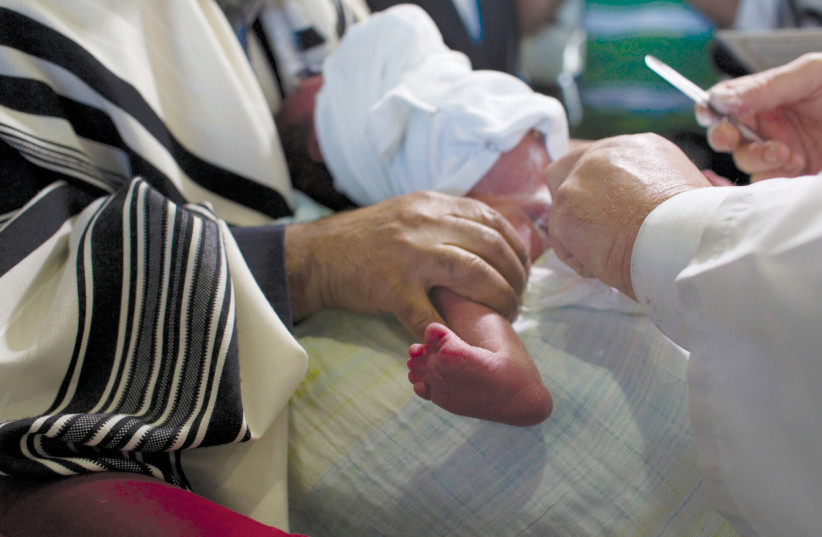
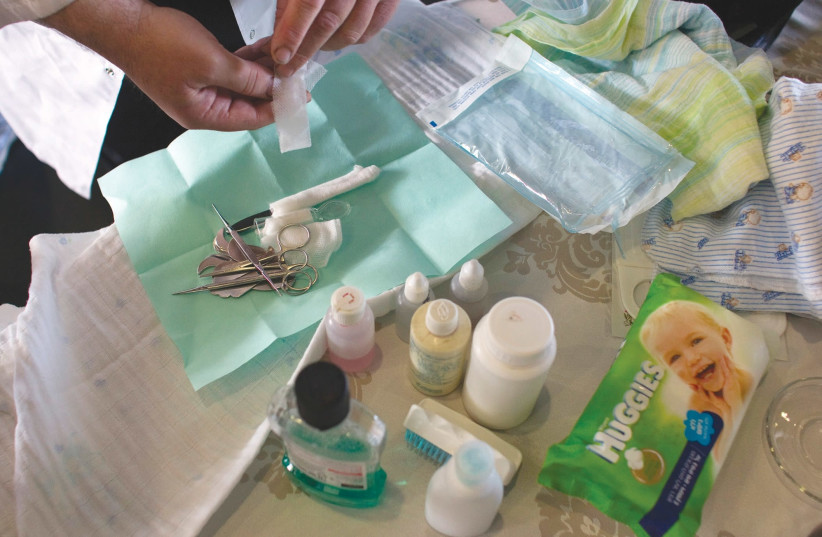
A ‘MOHEL’ holds a scalpel as he performs a circumcision
A baby was rushed to the hospital in northern Israel on Monday after
his circumcision went wrong, with his genitals being almost completely
amputated during a brit mila - a Jewish ritual circumcision, Israeli
media reported. The mohel was late found to be uncertified and did not
undergo required training.
The treatment required three surgeons to perform a long and incredibly complicated operation.
According to Dr. Akram Asadi, he had never seen such a severe injury due to circumcision in his 20 years as a surgeon.
"We
don't know exactly how it happened, but the baby is suffering from an
almost complete amputation of his genitals. This is a shocking case and
the injury is very serious."
Dr. Akam Asadi, Rambam Health Care Campus
"We
don't know exactly how it happened, but the baby is suffering from an
almost complete amputation of his genitals," Asadi told N12. "This is a
shocking case and the injury is very serious."
Despite this, the injury wasn't life-threatening and the baby is in stable condition.
This has long been a traditional practice that differentiated Jews from other peoples throughout history.
According
to Ynet, the mohel in this case was uncertified, and is being
investigated by a Chief Rabbinate and Health Ministry inter-office
committee, which is responsible for supervising and certifying mohels.
Israeli
media reported that the baby's family knew this mohel, who also
circumcised their eldest son. But these accidents can still occur,
especially if the mohel wasn't well-trained.
"Circumcision
is a surgical operation that requires skill and training," Asadi told
N12. "Unfortunately, we come across cases where it is clear that there
was negligence in the mohel's training. Anyone who performs circumcision
must undergo full training and fully understand anatomy."
The committee reminded parents to only use certified mohels for circumcisions.
New York Jewish school secretly kept on staffer who ‘resigned’ over abuse scandal
Schechter principal, deputy directed creation
of a corporation to keep paying student life director Mike Hirsch, who
had also been written up for inappropriately touching students
The Schechter School of Long Island's building in Williston Park, New York
A Jewish day school in New York secretly continued to employ a
staff member whose resignation it had previously announced in the
fallout of a child sex abuse scandal that rocked the community a year
ago.
The secret employment of the Schechter School of Long Island’s
director of student life Mike Hirsch was orchestrated by SSLI’s head of
school Scott Sokol and associate head of school Ofra Hiltzik, one
current and two former employees of the school confirmed to The Times of
Israel.
The board of trustees at SSLI — which serves roughly 250 students
between kindergarten and 12th grade and is part of the Conservative
movement’s Schechter Day School Network — was made aware of Sokol and
Hiltzik’s actions earlier this summer but has allowed both of them to
remain in their positions, the three staffers said last month.
The revelation regarding the secret employment of Hirsch shows the
extraordinary lengths to which SSLI’s senior leadership was willing to
go in order to protect the problematic employee.
Hirsch allegedly failed to report repeated allegations of abuse made
against a senior USY staffer that took place more than 15 years ago when
Hirsch was a counselor for the Conservative denomination’s United
Synagogue Youth (USY) movement.
Furthermore, Hirsch has himself been written up in his SSLI personnel
file for inappropriate touching and behavior with male students.
Suspension, ‘resignation,’ employment
Hirsch, 43, was employed at both SSLI and USY when The Times of Israel published an exposé in August 2021
about decades-long abuse in the latter institution. A former USY member
said he confided in Hirsch that another senior staff member in his
mid-30s had masturbated in front of him in the bathroom and urged him to
join when he was 15 years old. The former USY member said Hirsch urged
him to continue relaying incidents of sexual misconduct by the senior
staffer, which the teenager did, but that Hirsch never reported these
incidents to his employers.
After The Times of Israel’s exposé was published, Hirsch was immediately suspended from both workplaces for allegedly not reporting the sexual abuse accusations.
A spokesperson for USY said Hirsch’s employment was terminated in
December 2021 and that he had been barred from participating in any
events of the youth movement, where he had most recently served as
engagement associate. The Times of Israel spoke with two sources
familiar with the matter who confirmed this to be the case.
SSLI, whose students returned to classes on Tuesday for the new school year, handled Hirsch’s case very differently.
Last October, SSLI head Sokol sent out an email to parents informing
them that Hirsch had decided to resign from his position at the school,
without elaborating on the reasons. He and Hiltzik then called in the
school’s business staff and informed them that Hirsch would actually
continue working but only during evenings and weekends when most people
would not be in the building, two former staff members said. While
several individuals in the room voiced their objection, the more senior
Sokol and Hiltzik responded that the matter wasn’t up for debate.
Paychecks obtained by The Times of Israel showed that SSLI continued
to pay Hirsch until the end of 2021, at which point a new corporate
entity titled Hebrew Learning Services Inc was registered and replaced
Hirsch’s name on paychecks. The address listed for Hebrew Learning
Services is the same as Hirsch’s private residence and the salary
remained roughly the same in 2021 and 2022.
Hirsch maintained administrative access to the school’s online portal
and was tasked with sending out notices about births, weddings and
deaths. He also handled the issuing of security ID cards to get into the
building, the three staffers said, adding that Hirsch worked at a desk
right next to Hiltzik’s and Sokol’s.
On several occasions, Hirsch was spotted by parents who approached
Sokol or Hiltzik, asking what he was doing there. They were assured that
Hirsch was just stopping by and that he was not still employed by the
school, the former staff members said.
Alumni threaten legal action
The payments to Hirsch continued until July 2022, the three current
and former staffers told The Times of Israel, at which point, a group of
recent alumni sent an anonymous letter to select administrators,
teachers, parents and donors describing and protesting the ongoing,
secret employment of Hirsch.
The writers, who identified themselves only as “former USY youth
members and victims,” demanded that Sokol resign within two weeks,
threatening to go public with their allegations and evidence in addition
to pursuing legal action against the school. As of this writing, they
have yet to act on their ultimatum.
The board of trustees conducted an investigation into the allegations
against Sokol and Hiltzik and received testimony from at least one
employee who confirmed that Hirsch’s continued employment was Sokol and
Hiltzik’s idea, the current and former staffers said. The head of school
and his deputy both denied the allegations that they conspired to keep
Hirsch on staff and have been allowed to remain in their posts.
Asked why Sokol and Hiltzik went to such lengths to help Hirsch, the
former employees who spoke with The Times of Israel said Hiltzik had
long treated Hirsch “like a son” while Sokol and Hirsch had been friends
for decades, even before they began working together at SSLI.
Schechter School of Long Island’s head of
school Scott Sokol speaks to prospective students on November 18, 2018.
(Screen capture/YouTube)
These relationships helped Hirsch keep his SSLI job even though he
was written up on at least three occasions for inappropriate touching
and behavior with male students over the past several years, according
to two former employees who reviewed his personnel file. One of the
incidents took place in the student lounge, which Hirsch was tasked with
running until his suspension.
Speaking on condition of anonymity, one former USY member with direct
knowledge of the matter said Hirsch had acted sexually inappropriately
with underage boys when he was a USY staffer.
“Bottom line is that Sokol and Hiltzik knew [about] Mike… and kept
him working in the school for over a year, putting hundreds of kids in
potential danger,” said one former SSLI employee.
The Times of Israel reached out to Sokol last month seeking his
response to the allegations in the anonymous letter. Two days later, a
lawyer from the Ruskin Moscou Faltischek law firm representing the
school replied, “Mr. Hirsch is no longer in the employ of the school. We
do not respond publicly to anonymous complaints.”
Later that day, Sokol emailed staff members “remind[ing them] that
under no circumstances should anyone be giving any type of statements to
members of the press regarding school or staffing situations.” Two
sources said that individual employees had their jobs threatened if they
made contact with the media.
‘Ongoing’ investigation
The Times of Israel reached out again last week to Sokol, Hiltzik and
SSLI board chairman Jeffrey Shlefstein, presenting additional evidence
of Hirsch’s continued employment and offering another opportunity to
comment prior to publication of this article.
Shlefstein responded, “The allegations you refer to are not new to
us. We took them seriously when they came to our attention, and they
were investigated at our request by outside counsel before your inquiry
was undertaken. That inquiry is ongoing and, as a result, our ability to
comment is limited.
“Please know that following an investigation by outside counsel, Mr.
Hirsch was suspended and he ultimately resigned,” Shlefstein said,
seemingly denying the allegation that Hirsch continued working at SSLI
after the October 2021 resignation announced by Sokol.
However, the school continued to send paychecks written out to Hirsch
— and obtained by The Times of Israel — for two months after the
resignation announcement. They included reimbursements for equipment and
office supplies that Hirsch had purchased.
Asked to clarify the apparent discrepancy between Shlefstein’s
characterization of the outside counsel’s investigation as “ongoing” and
his subsequent explanation that the school suspended Hirsch “following”
the investigation, an attorney for the SSLI board declined to do so.
“Payments at issue for Hirsch were made through an entity he formed
with the assistance of our former CFO and remain a concern,”
Shlefstein’s statement continued, apparently confirming the creation of
“Hebrew Learning Services Inc” in order to continue paying Hirsch while
placing the blame on former SSLI CFO David Ostrove, who was indicted in July for allegedly embezzling school funds.
However, paychecks obtained by The Times of Israel showed that
payments to Hebrew Learning Services Inc continued for months after
Ostrove was suspended in April and no longer had access to the school’s
computer systems. The former SSLI CFO declined a request to comment.
“Our board is working with outside counsel and their auditors in
reviewing all aspects in this matter,” Shlefstein said. “Our inquiries —
both our own and those conducted for the board by various outside
counsel — coupled with the action taken against Mr. Hirsch and others
are emblematic of our longstanding commitment to provide a safe
environment for our students, faculty and staff.”
Hirsch’s attorney Bruce Barket called the “baseless” allegations
against his client “false and slanderous” in his response to The Times
of Israel’s request for comment.
“We will have no further comment until after we read the article and
then our response will be in court, not in your publication,” he added.
"The
Jewish question persists wherever Jews live in appreciable numbers.
Wherever it does not exist, it is brought in together with Jewish
immigrants. We are naturally drawn into those places where we are not
persecuted, and our appearance there gives rise to persecution. This is
the case, and will inevitably be so, everywhere, even in highly
civilised countries—see, for instance, France—so long as the Jewish
question is not solved on the political level."[34]
The book concludes:
Therefore I
believe that a wondrous generation of Jews will spring into existence.
The Maccabeans will rise again. Let me repeat once more my opening
words: The Jews who wish for a State will have it. We shall live at last
as free men on our own soil, and die peacefully in our own homes. The
world will be freed by our liberty, enriched by our wealth, magnified by
our greatness. And whatever we attempt there to accomplish for our own
welfare, will react powerfully and beneficially for the good of
humanity.[35]
The enigma of Theodor Herzl
The Zionist founder’s photographs may tell us more about him than any of his writings or accomplishments.
The ceremonies marking the 125th anniversary of the First Zionist
Congress have recently concluded in Basel, Switzerland, and thus it
seems an appropriate moment to contemplate the legacy of the organizer
of that Congress: The founder of political Zionism, Theodor Herzl, who
said, “At Basel, I founded the Jewish state.” It took some time, and he
was not there to see it, but he was right.
Herzl was, without question, the most important Zionist leader who
ever lived. But he is also the most inscrutable. He was an effective and
inspirational leader, but also an impenetrable enigma, possessed of
mercurial and mysterious moods and given to flights of fancy that
baffled and frustrated many of those closest to him.
This enigmatic nature was epitomized by his greatest accomplishment,
which was a very simple one: He, and in some ways he alone, refused to
look away.
When Herzl encountered the rise of modern anti-Semitism,
rearing up out of an ostensibly liberal and enlightened world, he did
not do what almost everyone else did, which was to pretend it wasn’t
happening. He refused to lie to himself. He understood its terrible
implications for the Jewish people and decided that he would resist it.
Like all great men, Herzl was wrong about many things, but in that
moment, he was right when almost everyone else was wrong. And this was
the essential thing. It was the only thing, in fact, that really
mattered.
But does this bring us any closer to the real Herzl? Does it tell us who this strange and remarkable man really was?
The truth is that it does not. It
does not explain how or why he was able to face what everyone else
refused to face. How he had his great insight, and was willing to suffer
opprobrium and ridicule for it. Why he gave himself over to a cause
that almost everyone else at the time considered foolhardy and even
insane.
In some ways, we will never penetrate this enigma. But if we want to
understand the man himself, I believe we can come closest to it,
ironically, not through his writings or his activism, but through his
photographs.
I do not mean only the famous photograph of him on the balcony of his
Basel hotel, leaning upon the railing, his hands clasped, staring off
into the distance across the Rhine, like a man in another place,
possessed by what may be waiting on the opposite bank, the other side. I
mean all of his photographs, because he appears largely the same in all
of them, and one does sense that—every single time—something like the
essence of the man has been captured.
I will tell you what I see in those photographs. I see, first and
foremost, his eyes. They are quite strikingly large, and always open
wide with a stare that seems to pierce and unnerve the viewer. One can
only imagine the extraordinary effect they must have had on those who
fell under his uncanny gaze. There is no doubt as to the origin of his
charisma.
But those eyes are also obscure and distant, giving above all a sense
of rumination, of a relentless mind working slowly but steadily through
other and abstract worlds. This, along with his enormous beard, gives
him, despite his secularism, a distinctly rabbinical cast.
תמונתו האחרונה
I also see a man of considerable melancholy, who is not only lost in
thought but also looking back through time into what he called his
people’s “struggles and sufferings.” They are sad eyes because they are
the eyes of a man who wishes, above all, to be free—free of history,
free of suffering, free of the depredations of an unjust world.
Yet they are not despairing eyes. In all of his photographs,
especially the one on the Basel balcony, Herzl appears resolute. He has
the countenance of a man who believes with perfect faith that he has a
destiny, though he doubts whether he will have the fortitude, skill and
length of days to fulfill it—as he both did and did not. He looks like a
man who knows that he will probably die young with his dreams
unfulfilled (as he did) but is nonetheless determined to do what he can,
and leave it to younger and healthier men to complete the task. He
appears to know, as the sage put it, that it is not for him to finish
the work, but nor is he free to desist from it.
It may be that this conviction came from the fact that while Herzl
wished to be free from many things, he did not wish to be free of his
people. In all his photographs, there is a distinct, trunk-like quality
to Herzl’s physicality. He has the look of a great tree firmly planted
in the ground. And that ground may have been the stark reality, which he
did not, in the end, despise or neglect, that he was a Jew—and a
different kind of Jew. He was no wanderer. The land beneath his feet was
solid. Yet it was also, at that moment, incorporeal. So, he was
determined to give it flesh and sinew, to struggle to bring it back to
life like Ezekiel’s dry bones in the desert.
And that is what I see above all: a man of the struggle. A man who is
contending mightily with an evil world. A man who knew that he would
lose that struggle, but others after him might win it, and thus he was
not free to desist from it. And if those staring eyes seek to tell us
anything, it is that we, too, are not free to desist from it. For this,
and this alone, the Jewish people owe him everything.
Outraged, Pleading, Defiant New York Yeshivas Brace for Vote on Education Regulations
NEW YORK — Yeshivas statewide are bracing for a
Board of Regents vote on regulations that would for the first time allow
the government to approve or reject private schools’ secular-studies
curriculum.
The Board of Regents meeting scheduled for mid-September would be the
first time such regulations have been subject to a vote, during a
seven-year state battle over what secular education a child deserves.
The battle has pitted those who allege some yeshivas offer a poor
secular education that inadequately prepares students for life and
livelihood, against those who say the totality of a yeshiva education is
actually superior to that offered in public schools and that yeshiva
graduates live more productive lives than public-school graduates.
“This is no trivial matter: when government dictates to us what and
how we must teach our children in our yeshivas, it attacks our most
fundamental freedom,” says Rabbi Chaim Dovid Zwiebel, executive vice
president of Agudath Israel of America. “If the Board of Regents votes
to authorize such an attack, we dare not — we will not — stand idly by.”
Rabbi Zwiebel, who is also on the executive board of the pro-yeshiva
organization PEARLS (Parents for Education and Religious Liberty in
Schools) was one of several community leaders who spoke with Hamodiathis week in advance of the impending vote, likely to be held at the September 12-13 Regents meeting.
“We beg government to take a step back and change course,” says Rabbi
Moshe Dovid Niederman, president of the United Jewish Organizations of
Williamsburg and an executive board member of PEARLS. “Government should
accommodate, not obstruct, the quality education that we provide our
children.”
For more than a century, state law has required that private schools
provide an education “substantially equivalent” to that offered in
public schools — but the law never delineated how “substantial
equivalency” is determined.
In 2015, some former New York City yeshiva students who have left the
Orthodox community began alleging that they had received an inferior
secular education, and the State Education Department (SED) has since
been deliberating over specific regulations to certify substantial
equivalency. But yeshivas, Catholic and other private schools have
opposed what they deem an infringement on religious liberties and
parental rights.
The new rules being voted on in September were released in March of this year,
and were the third attempt by the state during the past four years to
pass regulations on private schools’ secular studies curricula.
The first iteration of proposed regulations, released in late 2018,
mandated specific courses of study and the minimum number of hours to be
dedicated to each subject. Private schools would have been placed under
the purview of the local school authority (LSA) — the schools
chancellor in New York City and local school boards elsewhere — which
would have to assess each school for substantial equivalency.
Those proposed regulations were struck down by a judge on procedural
grounds in April 2019, then released again under proper procedures in
July 2019. But during the subsequent 60-day public-comment period, about
140,000 comments were submitted to SED, nearly all from yeshiva parents
and graduates opposing the rules. SED then withdrew the proposed
regulations and conducted meetings with stakeholders before releasing
the new proposed regulations in March.
Under these latest proposed regulations, private schools may avoid
the LSA review if they have a Regents program. If a yeshiva’s high
school offers Regents exams, the entire school, including its elementary
grades, is deemed substantially equivalent. But a school that is
elementary-only (as are many yeshivas outside Brooklyn) wouldn’t have
this option.
Another option for a yeshiva to avoid LSA review is receiving
accreditation by a government-approved accrediting body. Currently,
there are virtually no accrediting agencies that have dealt with the
yeshiva community. So if the regulations pass, yeshiva groups will
likely renew efforts to establish accrediting agencies dedicated to
serving their community.
A school that has no Regents program and doesn’t receive
accreditation will be subject to the LSA review — which must be
conducted no later than the end of the 2024-2025 school year, and every
seven years thereafter.
The regulations don’t give hard criteria for how a school passes an
LSA review, but mentions factors that “must be considered,”
including: whether English is the language of instruction; students who
have limited English proficiency are provided with instructional
programs enabling them to make progress toward English lproficiency; the
math, science, English language arts and social studies curriculum is
substantially equivalent to that offered in public schools; there are
courses similar to that provided in public schools in subjects including
patriotism and citizenship, the U.S. and New York constitutions, state
history and civics, physical education, driving safety, fire drills and
fire and arson prevention, injury prevention, life safety education, CPR
and defibrillator use, and abuse of alcohol, drugs and tobacco.
It is unclear whether a school must provide courses in each of these subjects, or can omit or substitute several.
After the LSA determines that a school is substantially
equivalent, “persons considering themselves aggrieved” by this
determination — even if they are not school students or parent s— may
file an appeal to the education commissioner, and the school would have
to be re-examined.
Children attending a school deemed non-substantially-equivalent would be considered truant, and the parent may be jailed.
Yeshiva advocates consider these 2022 proposed regulations somewhat less intrusive than the 2018-2019 iterations, but object strongly nonetheless.
Those advocates argue that government oversight of private-school
curricula violates religious and parental rights and improperly focuses
on inputs rather than outputs, and that outcomes among yeshiva graduates
compare favorably with those of public schools’.
“The notion that our precious yeshivas are not providing an education that is substantially equivalent to the public schools — the public schools —
would be comical if it wouldn’t be so harmful,” says Rabbi Zwiebel.
“Even viewed from a secular perspective, the yeshivas’ dual education
program of both religious studies and secular studies is a rigorous
academic program that develops true educational skills which far surpass
those offered in public schools.
“The purpose of education ought to be developing a student’s ability
to use his mind, which is the ultimate guarantor of a positive
educational outcome. It’s precisely for this reason that graduates of
our yeshivas have achieved such tremendous success in all walks of
life.”
While yeshiva groups universally oppose the new regulations, their
objections have differed. Groups representing most yeshivas, like
Agudath Israel, UJO and PEARLS, have taken a pragmatic approach of
discussing and negotiating with education officials over proposed
regulations, some form of which may be inevitable. A substantial
minority, however, led by the Satmar community of the Rebbe Harav Aaron
Teitelbaum, have opposed the notion of LSA oversight whatsoever.
During a public-comment period in April and May, about 300,000
comments were submitted, once again nearly all opposing the regulations.
The comments were collected by groups like Agudah, Satmar, PEARLS,
Torah Umesorah and Chabad, and written by yeshiva parents, students,
teachers, alumni and administrators. A number of letters were submitted
by professionals — both individuals and groups — arguing that their
yeshiva education did not hinder, but in fact laid the groundwork, for
their successes in various professions and industries.
SED is required to gather, review and provide a report on the
comments prior to a final vote on the regulations by its governing body,
the Board of Regents.
When it released the regulations in March, SED said it anticipated
that the guidelines would be presented for a final vote at the September
2022 Board of Regents meeting.
SED typically releases the agenda for each Regents meeting just days
before the meeting. But a source familiar with the proceedings told Hamodia that
at the upcoming meeting, to be held September 12 and 13, the Board is
indeed planning to provide a report on the hundreds of thousands of
comments it received in April and May, and to vote on adopting the
regulations.
SED would not respond to Hamodia’s requests for detailed
information on the agenda of the upcoming meeting, but a statement
issued on behalf of spokeswoman Emily DeSantis said, “Department staff
are reviewing public comments and developing a draft item that will
include an assessment of public comments for consideration by the Board
of Regents. Any proposed regulation will be made public on the
Department’s website at least 24 hours prior to the Board of Regents
meeting where it will be considered, in accordance with the Open
Meetings Law.”
Yeshiva advocates say the battle over curricula is among the most
consequential issues to have faced Orthodox Jews in postwar United
States.
“When they write the history of Torah Jewry in America, a prominent
chapter will be about substantial equivalency,” says Rabbi Zwiebel.
“Certainly in the nearly 40 years that I have been privileged to work
for Agudath Israel, there has been no greater challenge.”
Though they have held meetings with SED officials, the yeshiva
leaders allege the officials have not made a good-faith attempt to
understand and acknowledge the uniqueness of a yeshiva education.
“We held so many rounds of discussions with various Regents and SED
staff to engage them on the issue, but unfortunately, we haven’t found a
listening ear,” says Rabbi Niederman.
“The massive outpouring of public comments surely has some influence
on the public perception of what’s happening, but it’s disturbing that
the people in charge of education in the state do not seem to be
treating it as anything significant,” says Harav Yisroel Reisman, one of
the roshei yeshivahwho represented Torah Umesorah
in talks with SED officials. “We still don’t know what they will do, or
if they will adjust the proposed regulations, but we find it disturbing
that they haven’t reached out to us yet for a substantive discussion,
and it would be inconceivable for them to ignore these comments.”
Orthodox Jewish activists who have spoken with Hamodia have
also expressed frustration that while Gov. Kathy Hochul, a Democrat, has
conveyed support for yeshivas generally, she has not taken a position
on these proposed regulations.
Though SED and the Board of Regents operate independent of the
governor — Regents are appointed by the state Legislature, and in turn
appoint SED officials — the governor has influence over SED through her
role in setting the state budget, and through her bully pulpit.
When the proposed regulations were released earlier this year, Hamodia reached out to the governor’s office as well as her reelection campaign for comment; the former directed Hamodia to SED, and the latter did not reply.
When a Hamodia reporter asked Gov. Hochul at an April
appearance in Boro Park about the proposed regulations, the governor did
not respond directly, saying that she’s “visited many yeshivas” and
noting the “quality” of their education and “how important that is.”
However, she said, “the state Education Department operates 100%
independently from the administration. It is not an agency that I have
jurisdiction or oversight over. But I’m also listening to the concerns
of the community and I’m taking them very seriously.”
Gov. Hochul’s Republican opponent in the upcoming November election, U.S. Rep. Lee Zeldin, has expressed opposition to the proposed regulations, telling a Hamodia reporter
in July, “The state is wrong to be pushing the substantial-equivalency
standards” and that “yeshiva education is a high-quality education that
should be embraced, should be rewarded.”
Avi Schick, an attorney who has represented yeshiva groups in their
battle over the education regulations and is a former Deputy Attorney
General of New York, says Gov. Hochul may pay a political price for her
non-stance.
“There are two Gov. Hochuls: one who has rebuffed every effort by
leaders of the yeshiva community to engage with her on the state’s
efforts to regulate yeshiva education, and the other who has her hand
out for donations and votes from that same community,” says Mr. Schick.
“She is gambling that the community will forego their principles come
November. That is a bad bet. People might vote for an elected official
whose views on social issues diverge from theirs, but intruding in
yeshiva curriculum is entirely different.”
As the clock ticks toward a vote that may dramatically alter the
relationship between government and private schools in New York, yeshiva
advocates express sentiments ranging from outrage to pleading to
defiance.
“By moving forward in this way, SED demonstrates not only its
disregard for the rabbinic leadership of the yeshiva community, which
has made many attempts to substantively engage, but also its disrespect
for the hundreds of thousands of community members who made their voices
heard through their public comments,” says Mr. Schick. “SED would never
treat any other community the way it is treating Orthodox Jews, but its
leadership is cynically wagering that in 2022 New York there will be no
price to pay for trampling over the Orthodox community.”
“The indications that SED is about to totally disregard the hundreds
of thousands of community members who voiced their concerns with the
proposed regulations, are deeply disappointing,” says Rabbi Niederman.
“We still hold out hope that the Board of Regents won’t rubber stamp the
regulations but will realize that the regulations will have a seismic
impact on hundreds of thousands of New Yorkers, and will agree to real
engagement.
“But we stand ready either way. The proposed regulations are
unacceptable. We will not waver. And with G-d’s help, we will prevail.”
According to a person familiar with Regents traditions, while only a
simple majority is required to pass the regulations, the Board typically
prefers to pass items unanimously, so strong opposition from just one
or two Regents may postpone a final vote.
Medieval bodies in Norwich well victims of anti-Semitism - DNA from human remains found in a medieval well in Norwich suggests they
belonged to Ashkenazi Jews, casting new light on Xtian antisemitic violence
in England during the 12th century.
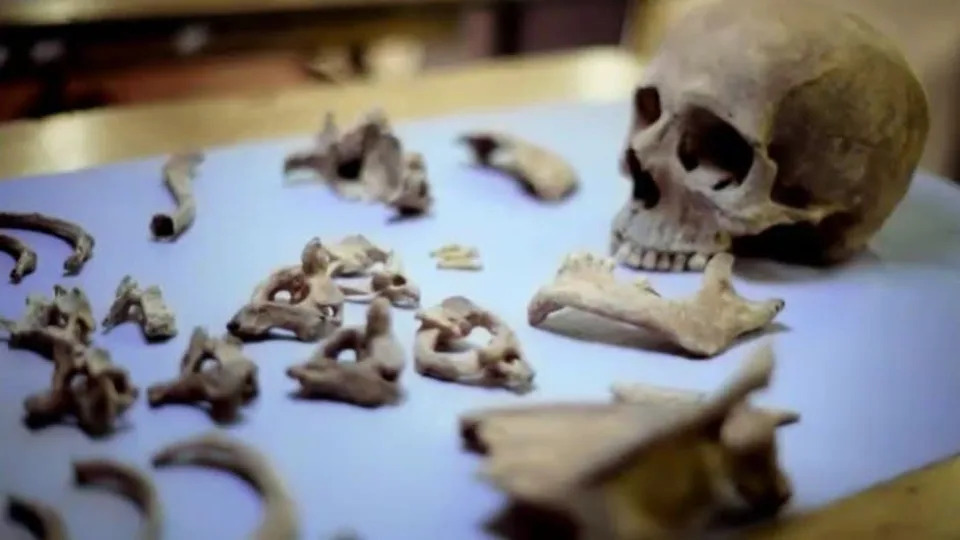
The remains were found in 2004 ahead of construction of the Chapelfield Shopping Centre
Bodies
found at the bottom of a medieval well were Ashkenazi Jews and victims
of 12th Century anti-Semitic violence, DNA evidence has suggested.
They were discovered in 2004 during an excavation of a site in the centre of Norwich.
The well contained the remains of at least 17 people, mostly children, six of whom have had their DNA analysed.
Dr Selina Brace from the Natural History Museum said she was "delighted" with the results of the research.
Scientists
from the museum, University College London, Mainz and Cambridge
Universities, and the Francis Crick Institute, conducted analysis on the
remains.
According to the researchers they have a strong genetic
link with modern Ashkenazi Jews, making them the oldest Jewish genomes
to have been sequenced.
The findings, published in the Current Biology journal,
indicate that four of the probable victims were relatives, including
three young sisters, aged five to 10 years old, 10 to 15 years old and a
young adult.
Prof
Caroline Wilkinson from Liverpool John Moores University reconstructed
face of a male adult (left) and a child (right) based on skeletal
remains
Their DNA included variants
associated with genetic diseases more commonly found in Ashkenazi Jewish
populations - one of two major ancestral Jewish groups - today.
According
to the study, the findings were consistent with them being victims of a
historically-recorded anti-Semitic massacre by local crusaders and
their supporters in Norwich on 6 February 1190 AD.
It was recorded
by the chronicler Ralph de Diceto in his Imagines Historiarum II where
he wrote: "Accordingly on 6th February [in 1190 AD] all the Jews who
were found in their own houses at Norwich were butchered; some had taken
refuge in the castle".
Dr Brace, a lead author on the paper,
said: "Twelve years after we first started analysing the remains of
these individuals, technology has caught up and helped us to understand
this historical cold case of who these people were and why we think they
were murdered."
Why were haredi political factions against the WZO anniversary event?
Members of the Zionist executive from
around the world gathered on stage in Basel singing Hatikvah, but where
were the members of haredi political factions?
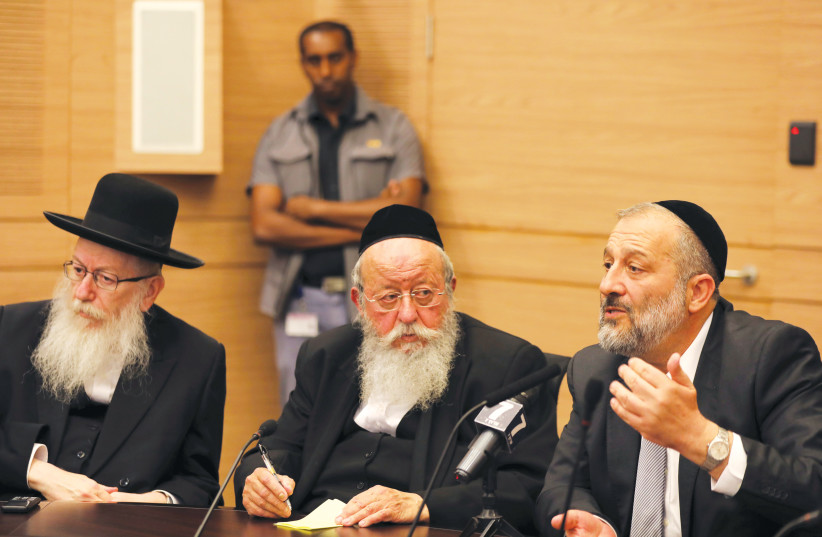
Shas leader Arye Deri (right) and UTJ leader Ya'acov Litzman (far left) attend a meeting in Jerusalem.
The Jerusalem Post
approached the two parties in order to understand why they decided to
ban the event. The only member was Yanki Deri, head of a WZO department
as representative of the Sephardic haredi Shas party and son of former
minister Aryeh Deri. He
participated in the event and in the gala evening but didn’t join the
members of the executive on stage during the singing of Hatikvah,
presumably because of the fact that a woman led the singing.
Eretz Hakodesh wouldn’t comment directly and answer the Post’s
questions regarding their absence from this historic event. Sources in
Eretz Hakodesh gave a few reasons explaining why they officially decided
to have their representatives stay away from the celebrations. The
first reason is the Kashrut of the event: close to 2,000 of the participants received three meals a day during the 48 hours of the conference.
The meals were all made by a Kosher European catering company, yet it wasn’t Mehadrin, a stricter version of Kashrut. Sources in the haredi-American party have said that the level of Kashrut wasn’t suitable for them. In addition, the
fact that a female singer performed on stage, they shared that they
wouldn’t feel comfortable sitting in the audience, let alone singing on
the stage. Another reason mentioned was the timing of the
conference, during the last days of August when children and families
are on summer vacation. Yet the same thing can be said for the rest of
the men and women that participated, who had to leave their families
during this time.
Another
source within Eretz Hakodesh mentioned the fact that the event was “a
waste of the organization’s money,” since it funded flights and hotels
for most of the participants.
Sources in the WZO executive said that “the
fact that the haredi members haven’t participated in the largest event
our movement hosted in decades, emphasizes that the haredi parties don’t
really believe in Zionism, but are just in it in order to receive funds
and influence on agenda regarding Judaism.”
Other
senior officials said that “if the Kosher food was good enough for
haredei participants from around the world such as Judge Ruthy Frier and
rabbis from around the world, it should be Kosher enough for the haredi
members.” An additional executive member stated that “if they really
wanted to come, the organization would find solutions to all of their
problems, yet they didn’t really want to come.Many of them were also asked by their leaders or constituents not to participate in this huge celebration of Zionism.”
The WZO declined to comment on the matter.
About
1,400 guests gathered in Basel, Switzerland, this week, to mark the
125th anniversary of the First Zionist Congress in a three-day event,
corresponding with the same dates in 1897. The conference was organized
by the World Zionist Organization in cooperation with the Swiss Federation of Jewish Communities and the Government of the Basel Canton. The
highlight of the event was at the Stadtcasino Hall, where the First
Zionist Congress took place. This is where the first 208 delegates
discussed their vision for the establishment of the Jewish state.
Rav Shraga Feivel did not seek a particular type ofJew. Everyone was welcome, everyone was made to feel comfortable, and everyone was important.
The Torah Vodaath Talmid
Rav Yaakov Kamenetsky put it thisway: “The average yeshiva is a ‘S'dom bed.’Boys arecut and stretched to fit the mold of that particularyeshiva.” Torah Vodaath, he continued, was not like that. Eachbochur maintained his individuality and, at the same time, becamepart of a group of bnei aliyah who wanted togrow together in every aspect of theiravodas Hashem.
“Eachyeshiva has its own unique approach,” says Rav Moshe Wolfson, “and it is usually understood that those who are not suited to that approach will not find their place inthat yeshiva. Rav Shraga Feivel, on the other hand, hada different approach for each talmid. The number of talmidimequaled the number of methods he employed. He fulfilled Rashi’s definition of ‘ish asher ruach bo’(‘a manin whom the spirit dwells’—Bamidbar 27:18), a leader whois able to relate to the spirit of each individual.”
Prominent anti-vax doctor has license permanently revoked
Dr. Aryeh Avni "poses a real danger to public safety," stated Jerusalem Court judge.
Former Dr. Aryeh Avni
Dr.
Aryeh Avni, a prominent figure in what is commonly known as the
"anti-vax" movement, has had his license to practice medicine
permanently revoked, after the Jerusalem District Court rejected his
appeal filed after the Health Ministry stripped him of his license a
year ago.
"We must distinguish between having an opinion and
incitement," stated Judge Nimrod Flax in his ruling, adding that Avni
had "conducted a smear campaign against health authorities in an effort
to persuade people not to abide by their directives. A doctor who
decides to act in such a way, delegitimizing the medical authorities,
places himself outside the health system."
Dr.
Avni had argued that his aim was solely to benefit the general public
and protect them from dangerous medications and vaccines. He has also
made inflammatory comments in the past such as, "Anyone who administers a
vaccine is like Mengele in my eyes." (Like the Polio vaccine is a hoax type of guy!)
He remains a prominent figure in
various circles, and disseminates his views via his website, "Harefuah
Henechonah" (The Right Form of Healing).
One of the main
criticisms of him centers around allegations that he offered people
forged COVID vaccine certificates and also provided peole with
exemptions from wearing masks.
The sentiments he expresses led to the
original ruling of 2021, in which Judge Amnon Strashnov stated that he
Avni "poses a real danger to public safety and health," and that
statements he has made constitute "a prescription for anarchy," due to
his exhortations to disregard the directives of the Health Ministry.
Reb Shraga Feivel: The Life and Times of Rabbi Shraga Feivel Mendlowitz, the Architect of Torah in America
"No individual played a greater role in Torah education in
America than Reb Shraga Feivel Mendlowitz ztvk"l"
A few days after the publication of The Life and Times of Rabbi Shraga Feivel Mendlowitz, I found a very respected Torah scholar at my morning minyan, in tallit and tefillin, poring over the book. This proved to me that the book was a “sefer,” and was to be studied as such.
Though The Life and Times of Rabbi Shraga Feivel Mendlowitz is a masterful portrayal of an extraordinary man, one gains only a partial view (efes katzehu tireh)
of Reb Shraga Feivel. On the other hand, it is amazing how Yonoson
Rosenblum, having never seen or heard Reb Shraga Feivel, was able to so
vividly and accurately transmit this multifaceted, complicated and
controversial figure.
Reb Shraga Feivel was raised in a rural Hungarian village of simple,
pious, hard-working folk. He went on to learn in the great Hungarian
yeshivot of Chust, Unsdorf and Pressburg. During his teenage years, he
was already master-planning a chinuch system for America, one
that was radically different from that which existed in Eastern Europe.
Having been exposed to a wide range of Jewish thought and philosophy,
including the Tanya, the Kuzari, Moreh Nevuchim and Nefesh HaChaim,
as well as the teachings of Rav Samson Raphael Hirsch, Reb Shraga
Feivel envisioned yeshivot that would incorporate these diverse views
into their curriculums. He implemented this vision in Torah Vodaath, the
yeshivah he founded in Williamsburg, New York, in 1926. Unfortunately,
in time, the direction of the yeshivah changed, yet Reb Shraga Feivel’s
original students imbibed a broad range of Jewish thought.
When Reb Shraga Feivel first established Mesivta Torah Vodaath, he
had to overcome much opposition. There were those who believed that
Yeshivat Rabbeinu Yitzchak Elchanan–which is today Yeshiva University’s
Rabbi Isaac Elchanan Theological Seminary–sufficed for the fledgling
American Orthodox community. Few felt that the community needed or could
support another yeshivah. There were also some vocal Americanized
rabbis who feared that creating another yeshivah would mark the
beginning of the ghettoization of America. Yeshivot were appropriate for
Lithuania and Poland, not New York. Despite the opposition, Reb Shraga
Feivel succeeded in establishing Torah Vodaath, which he headed until
his passing in 1948.
Reb Shraga Feivel also created Camp Mesivta, which was the first camp
to combine Torah learning and camping. More significantly, he founded
the Torah day school movement, Torah Umesorah, and paraphrasing Herbert
Hoover’s “chicken in every pot,” aspired to create a day school in every
Jewish community. To this end, he recruited Dr. Joseph Kaminetsky, the
principal of both Manhattan Day School and the Rabbi Dr. Leo Jung Jewish
Center Talmud Torah. Dr. Kaminetsky first met Reb Shraga Feivel at a
wedding. The well-known educator with a doctorate in education from
Columbia University came home from the wedding and told his incredulous
wife, “I am going to work for Torah Umesorah. I am giving up my present
positions in order to establish day schools through the United States.”
Over the next 30 years, while serving as the national director of Torah
Umesorah, Dr. Kaminetsky had to be away from home every other Shabbat.
Ultimately, Reb Shraga Feivel and Dr. Kaminetsky were responsible for
creating a vast network of Jewish day schools that continues to bring
thousands of students closer to Yiddishkeit.
…paraphrasing Herbert Hoover’s “chicken in every pot,” he aspired to create a day school in every Jewish community.
Reb Shraga Feivel was an eclectic, in the best sense of the word, and sought to combine serious learning with the spirit of chassidut. Though of Hungarian extraction, he hired roshei yeshivah
who espoused the Volozhin/Brisk method of learning; at the same time he
sought to fuse the learning with the warmth and fire of chassidut. He maintained that the Jew of the future needed to combine, in addition to the above, Reb Yisrael Salanter’s musar, Rav Samson Raphael Hirsch’s Torah im Derech Eretzand the Chatam Sofer’s meticulousness in observing mitzvot.He even urged some of his students to learn German in order to be able to study Rav Hirsch in the original.
Today, it is not uncommon to find roshei yeshivah taking on the role of rebbe and advisor and Chassidic rebbeim
establishing serious yeshivot that employ first-rate talmudic scholars;
this is due to the influence of Reb Shraga Feivel.
Rosenblum’s characterization of Reb Shraga Feivel as “the architect
of Torah in America,” is undoubtedly true; indeed, almost every yeshivah
in America was inspired and directly or indirectly funded by him.
Parenthetically, it should be noted that Bnei Brak would probably not
exist were it not for Reb Shraga Feivel. Reb Yitzchak Gershenkorn, the
first mayor of Bnei Brak, writes in his memoirs that after two years of
traveling the world over to raise funds for the establishment of the
city, he grew despondent at his lack of success. One erev Shabbat,
someone recommended that he see Reb Shraga Feivel. That very same day,
Reb Shraga Feivel raised enough money to begin building Bnei Brak. (Rav Shraga Feivel was laid to rest in Zichron Meier in Bnei Brak upon his request).
The late 1930s and early 1940s was a period in which parents urged
their sons to pursue degrees in law, medicine and accounting. Some even
encouraged their sons to become pulpit rabbis. As one of the “Mendlowitz
boys,” I, similar to my peers, would tell my parents that I was going
to go into chinuch after hearing a talk by Reb Shraga Feivel; our parents thought we were crazy. In those days, chinuch was not regarded as a viable career.
But Reb Shraga Feivel’s impact on individuals and communities was profound: In 1944, he inspired two of his quiet, laid-back talmidim,
Avraham Abba Friedman and Shalom Goldstein, to move to Detroit and
establish a day school. The idea was not enthusiastically supported by
the community’s leaders. But some 50 years later–as a result of these
students’ efforts–Detroit is an ir v’eim b’Yisrael. This same pattern occurred in many other cities throughout the United States.
Reb Shraga Feivel did not only inspire mesivta students with
his radical concept of a day school in every community, he motivated
some of the wealthiest philanthropists including Joseph Shapiro, Harry
Hershkowitz, Henry Hirsch, Joseph Rosenzweig, and Sam and Moe Feuerstein
(162-4.)
Some minor omissions in the book ought to be mentioned. When speaking about the dignitaries who delivered shiurim at
Torah Vodaath (218, 227), Rosenblum neglects to mention Chief Rabbi
Isaac Herzog. As I recall (I attended Torah Vodaath from 1940-51), when
Rabbi Herzog came to Torah Vodaath, a red carpet was spread out,
stretching from his limousine to the third-floor beit midrash. Rosenblum also mentions that Reb Shraga Feivel arranged for the singing of Rav Kook’s Shir Haemunah instead of the Hatikvah at the dedication celebration of the mesivta
(227). It should be noted that Reb Shraga Feivel was a great admirer of
Rav Kook and an avid student of his writings, frequently quoting him in
his Tanachshiurim. It was as if their souls were linked. Rav Shraga Feivel died on the third of Elul, the very day of Rav Kook’s yahrtzeit.
Rosenblum’s carefully researched volume is a treasure of
information. It is indispensable for anyone interested in Jewish
education and history in America. It is more than 50 years since the
passing of Reb Shraga Feivel. It is now universally recognized that a
true Torah education is the single most important factor in Jewish
continuity.No individual played a greater role in Torah education in
America than Reb Shraga Feivel Mendlowitz.
Mr. Greenwald was a disciple of Reb Shraga Feivel Mendlowitz from 1940 until the latter’s petirah
in 1948. During his successful career in healthcare, he was active in
establishing and serving as the president of over a score of yeshivot.
He presently serves as chairman of the international board of Sanz
Medical Center/Laniado Hospital in Netanya, Israel. He lives in Monsey,
NY, with his family.
NY Jewish social services organization accused of papering over sexual assault suit
Ohel Children’s Home and Family Services has
not properly investigated or disclosed allegations from 1980s against
manager, and has kept him on staff, claim survivor advocates
Activists
protest against alleged sexual assault at an Ohel facility in Brooklyn,
New York, August 21, 2022. (Luke Tress/Times of Israel)
NEW YORK — A Jewish social services organization in New York
City has been accused of hushing up a sexual assault lawsuit against one
of its employees and keeping the person on staff, against best practice
recommendations.
Sexual assault survivor advocates say Ohel Children’s Home and Family
Services has not properly informed clients, or parents and guardians
who use its services, of serious allegations against one of its veteran
managers.
Ohel says three separate probes cleared the employee, but has not
released detailed information about investigations into the case or made
investigators available for comment.
The alleged sexual abuse case, which dates to the 1980s, is one of
seven against the organization, and follows charges of misconduct at
Ohel in the past.
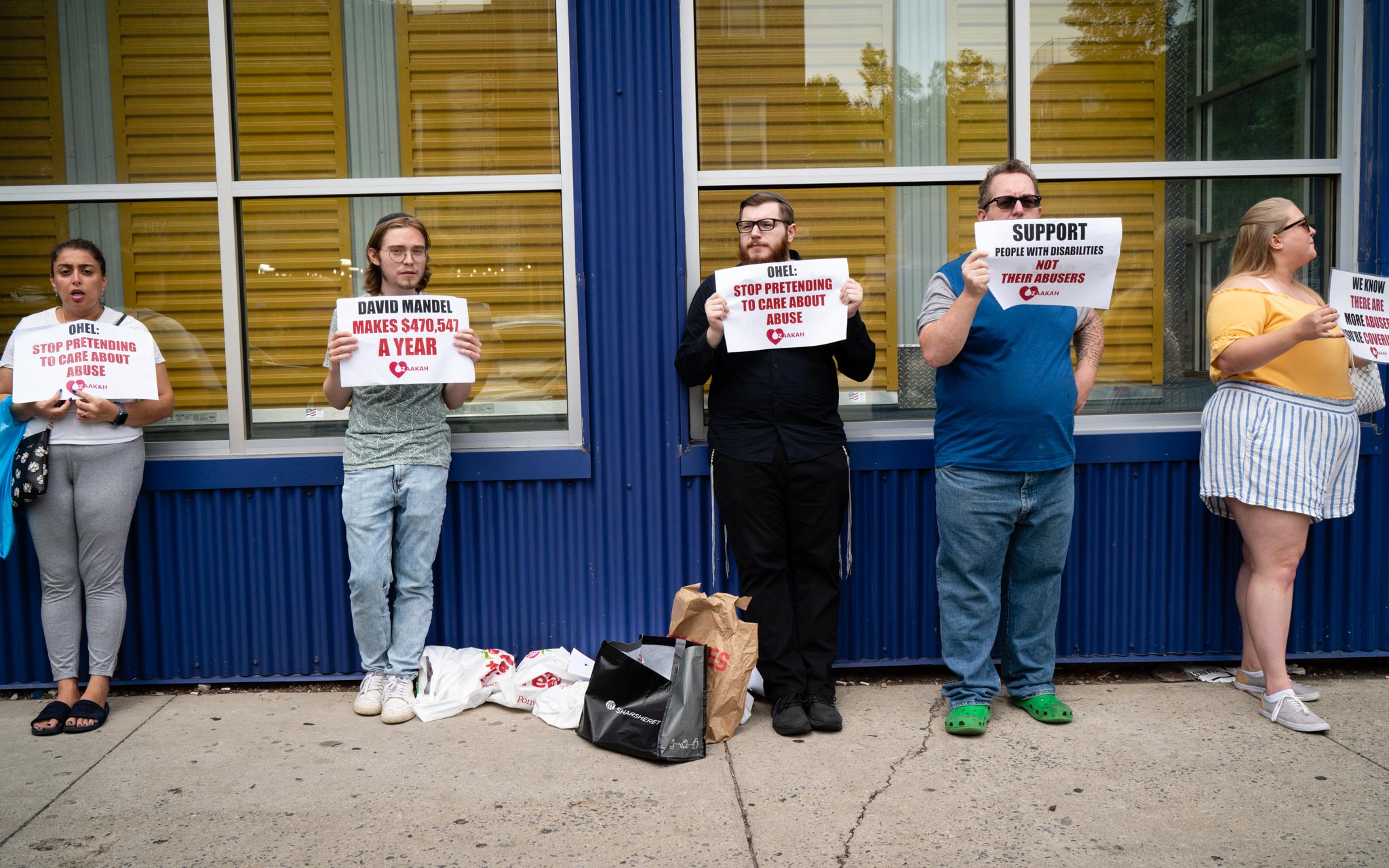
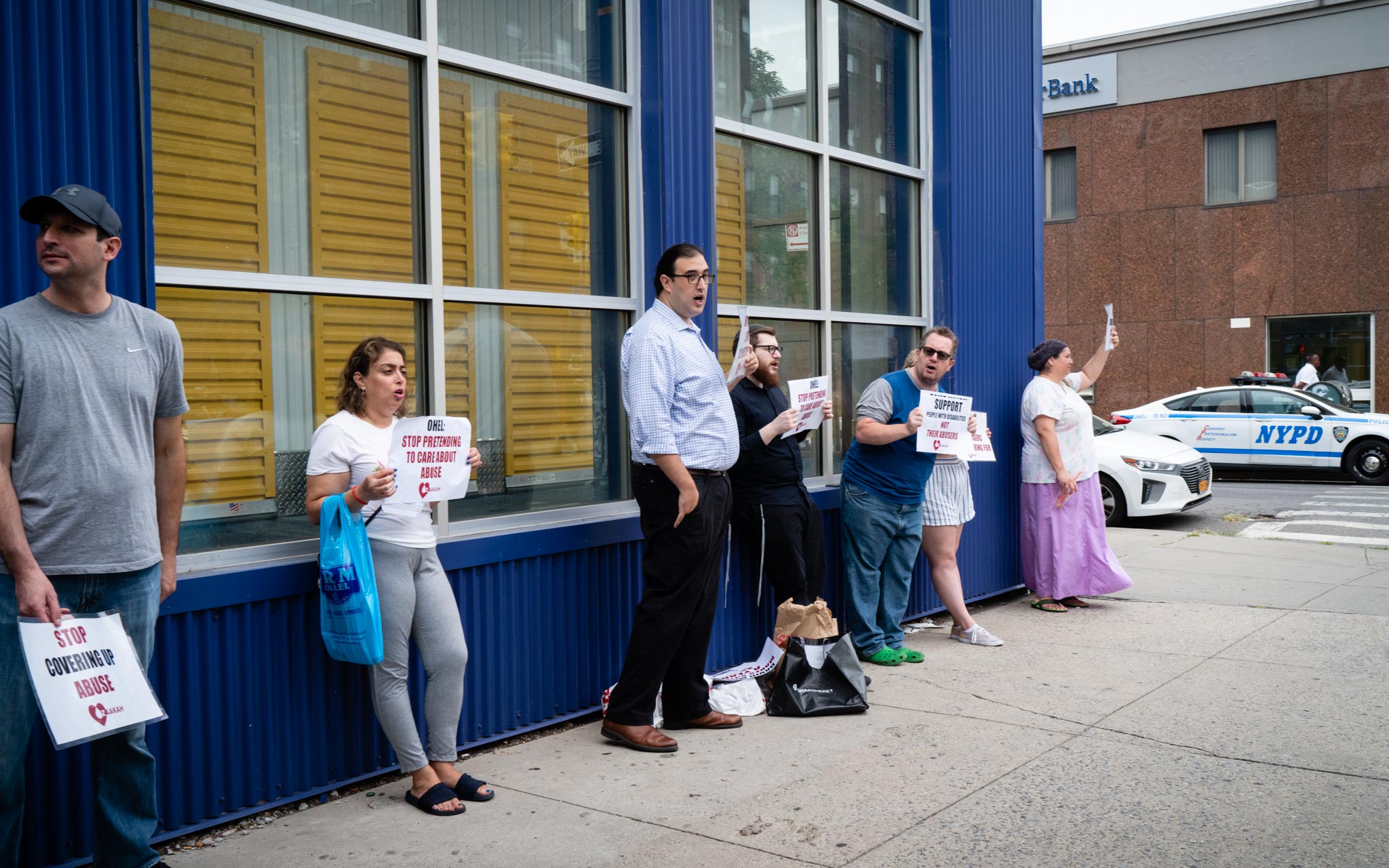
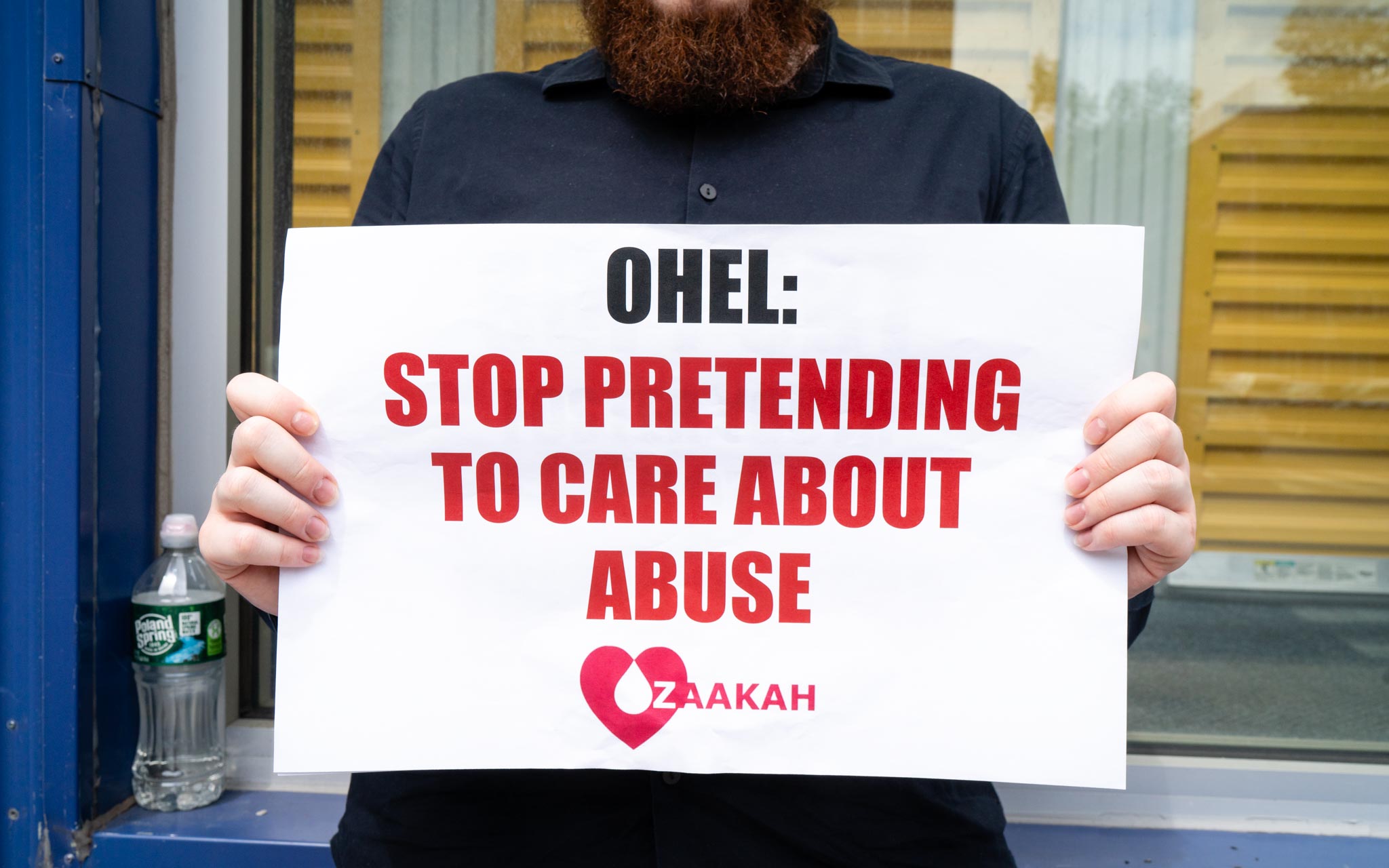
On Sunday, Za’akah, an advocacy group for sexual assault survivors in
the Orthodox Jewish community in New York, held a protest outside an
Ohel office to demand action.
Around 20 demonstrators held signs outside an Ohel facility in
Brooklyn’s Midwood neighborhood, chanting, “Protect victims, not
abusers,” “No excuse for child abuse,” and “Who are you protecting if
you’re not protecting kids?”
Activists protest against alleged sexual
assault at an Ohel facility in Brooklyn, New York, August 21, 2022.
(Luke Tress/Times of Israel)
“The reason why we’re here and the reason why we care about victims
of sexual abuse is because we know that sexual abuse destroys people,”
Asher Lovy, Za’akah’s director, told the protesters.
“It’s not something people just get over. They suffer for the rest of
their lives with depression, eating disorders, anxiety, suicide,
difficulties in relationships. This is why we come out here,” he said.
Ohel said in a response to the charges that it was “cooperating fully
and will work diligently to uncover any wrongdoing and to hold any
potential individuals fully accountable.”
“We have zero tolerance for any kind of abuse, and we take any kind
of allegations very seriously, as any such conduct is the antithesis to
the incredible, lifesaving work our staff does day in and day out,
providing support and care to the most vulnerable in our community,” an
Ohel spokesperson said.
The statement said the individual named in the case from the 1980s
had been investigated, put on leave, then returned to his position
because the reviews found “no basis to conclude that this employee
engaged in any inappropriate sexual conduct.”
Ohel is a large Brooklyn-based organization that offers services
including mental health counseling, care for children, bereavement and
trauma support programs, shelters for survivors of domestic abuse, older
adult counseling and support for people with disabilities. It says it
has served more than 23,000 people since its establishment in 1969, and
employed close to 2,000 people as of 2019, tax filings showed. The
organization serves all who seek help, but mainly caters to members of
the Jewish community.
New York City’s Administration for Children’s Services gave Ohel a safety rating of 98 out of 100 in 2021.
The accusations focus on a civil lawsuit filed in New York State
Supreme Court against Ohel in May 2021 that claims an Ohel program
director severely abused a child in an Ohel foster care facility in the
early 1980s. The plaintiff was 7 years old when the alleged abuse began.
Ohel is named as the defendant in the case.
The employee named in the case supervised children at the time and
regularly assaulted the plaintiff and other children who were living at
the facility, the lawsuit alleges, claiming the plaintiff was regularly
abused on Ohel grounds for about four years.
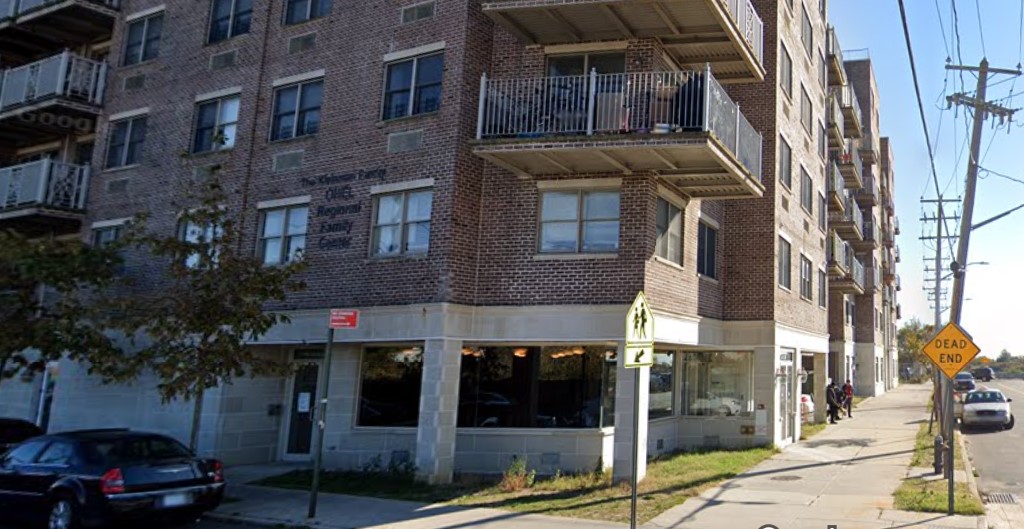
An Ohel facility in Far Rockaway, Queens, New York. (screen capture: Google Street View)
The plaintiff said he reported the sexual abuse to other staff
members at the time and was punished by being locked in his room, having
his belongings taken away, being given less food and was subjected to
threats. The plaintiff also alleged abuse by teenagers living at the
facility and by a foster family, and reported the abuse to staff. He
said he ran away from the foster care facility numerous times due to the
abuse.
The lawsuit alleges Ohel staff knew about the abuse, but failed to
protect the plaintiff, establish policies to protect residents,
supervise dangerous individuals or investigate sexual abuse. The lawsuit
demanded a jury trial and the case is still active.
Though the employee is named in court filings, The Times of Israel is
withholding publishing identifying information due to the fact that
litigation is ongoing.
The abuse allegation suit was filed in 2021 during a window of opportunity
opened by New York State’s Child Victims Act. The 2019 law expanded the
criminal statute of limitations for child abuse cases, meaning
survivors could file charges against alleged abusers at a later age than
was previously allowed, and opened a two-year “lookback window” during
which expired cases could be brought to civil court. The window ended in
November 2021.
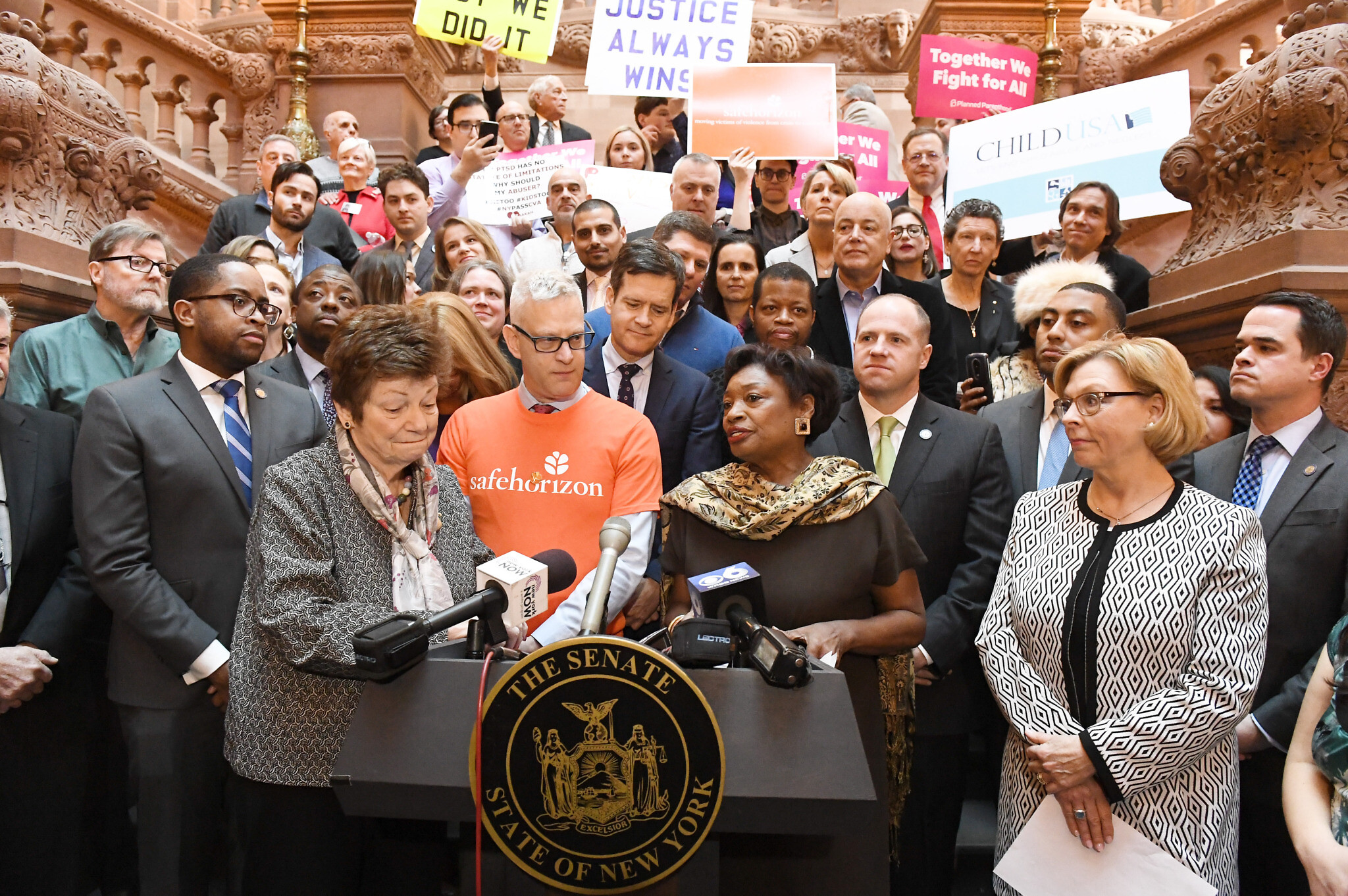
Senate Majority Leader Andrea
Stewart-Cousins, D-Yonkers, center, stands with with survivors and
advocates while speaking in favor of passing legislation authorizing the
Child Victims Act during a news conference at the state Capitol in
Albany, NY, on Monday, January 28, 2019. (AP/Hans Pennink)
There were more than 10,000 sexual assault allegations filed in New
York State during that period, and over 5,000 in New York City,
including against an array of social services organizations. There were
seven Child Victims Act cases filed against Ohel alleging abuse in the
1980s and 1990s.
Ohel’s director, David Mandel, said in an internal staff email ahead
of the Za’akah protest that the cases against Ohel were being fully
investigated. The email, which was seen by The Times of Israel, said the
“longtime employee” named in the case from the 1980s was put on leave
during a review by Ohel, and a separate review by an “outside firm.”
The email also said the New York State Justice Center, a state agency
dedicated to protecting people with special needs, had also
investigated.
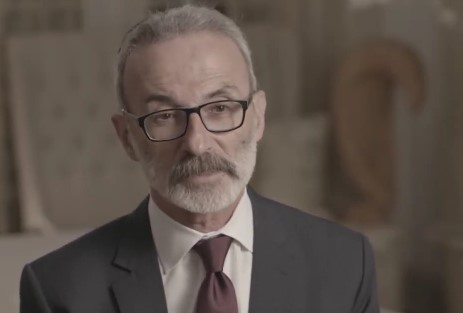
Ohel CEO David Mandel, seen in a video from 2018.
The three investigations indicated that “there was no basis to
conclude that this employee engaged in any inappropriate sexual conduct
with clients,” and he would be returned to his position “while the legal
process unfolds,” the email said.
Ohel issued a similar response citing the three investigations to The
Times of Israel, saying the reviews showed the “employee has no
allegations of any misconduct during his more than 40-year career with
Ohel.”
The Justice Center told The Times of Israel that it has no
jurisdiction for cases before the center was established in 2013,
however, and would therefore have no legal mechanism for investigating
the allegations in the lawsuit.
It’s unclear if there have been additional allegations against the
same individual since 2013. The Justice Center said privacy laws
preclude it from discussing any individual cases, and it could not
confirm or deny the existence of any other investigations.
Ohel did not respond to a request for more information about a
Justice Center investigation, did not make the results of any of the
investigations available and did not confirm if staff or parents had
been informed of the investigations when they took place.
Activists protest against alleged sexual
assault at an Ohel facility in Brooklyn, New York, August 21, 2022
Ohel has not informed the parents of children who use its services of
the allegations, and has kept the accused manager in his position,
according to Za’akah.
A 2015 tax filing showed the individual employed as a program
director making $161,403 the previous year. Tax filings from more recent
years do not list any employees at that salary range.
Rahel Bayar, a former sex crimes and child abuse prosecutor in New
York, said she was not familiar with the details of the Ohel case, but
in general, said external civilian investigators are limited because
they do not have subpoena power.
An organization should be transparent about any investigations,
reveal whatever findings it can, and at a minimum disclose the probe’s
scope, the parameters involved and who conducted it, she said.
She said that it would be premature for an organization to rule on a
case during ongoing civil or criminal proceedings, as discovery and
other legal processes could bring new information to light.
“In general, when there are allegations that lead to either a
criminal investigation or a [Child Victim’s Act] lawsuit, it would make
sense for the subject of that lawsuit or that criminal investigation to
be put on a form of leave during the pendency of that case or trial,”
she said.
Bayar said that any organization should inform parents, clients and
others about allegations of abuse by a staff member as soon as it
becomes aware of that information, and disclose how it plans to handle
the situation. Even if the organization cannot share much, clarity of
communication is key, she said.
The former prosecutor stressed that she was not commenting on the
Ohel case, or any other case, but speaking in general terms, and noted
that best practices are recommendations, not law.
The charges against Ohel are not the first allegations against the group. The New York Jewish Week said in a 2011 report
that Ohel had kept a case of a mother abusing her child quiet several
years before, instead of reporting the case to authorities as the law
requires. Ohel denied the report, calling it “inflammatory” and “driven by a misguided agenda.”
In 2009, the Awareness Center, an organization that fought sexual abuse in Jewish communities and has since closed, demanded the removal of Mandel, Ohel’s CEO.
The Awareness Center said it had received a number of complaints about Ohel, and shared a video
in which Mandel urged an audience to keep suspected abuse quiet and
inside the community, away from authorities, despite laws requiring
mandated reporting of abuse.